NihontoWatch Mon

NihontoWatch

Market
Encyclopedia
Kantei
NihontoWatch Mon

NihontoWatch

Market
Encyclopedia
Kantei

Description

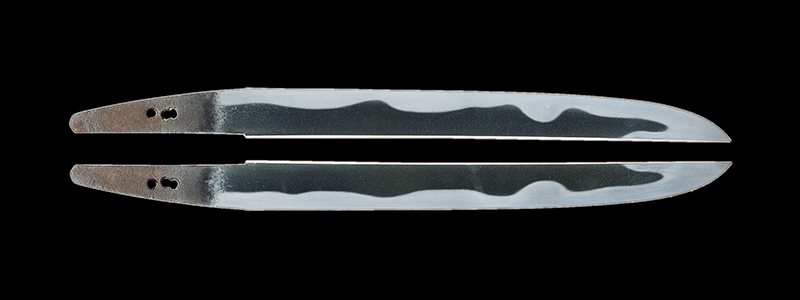
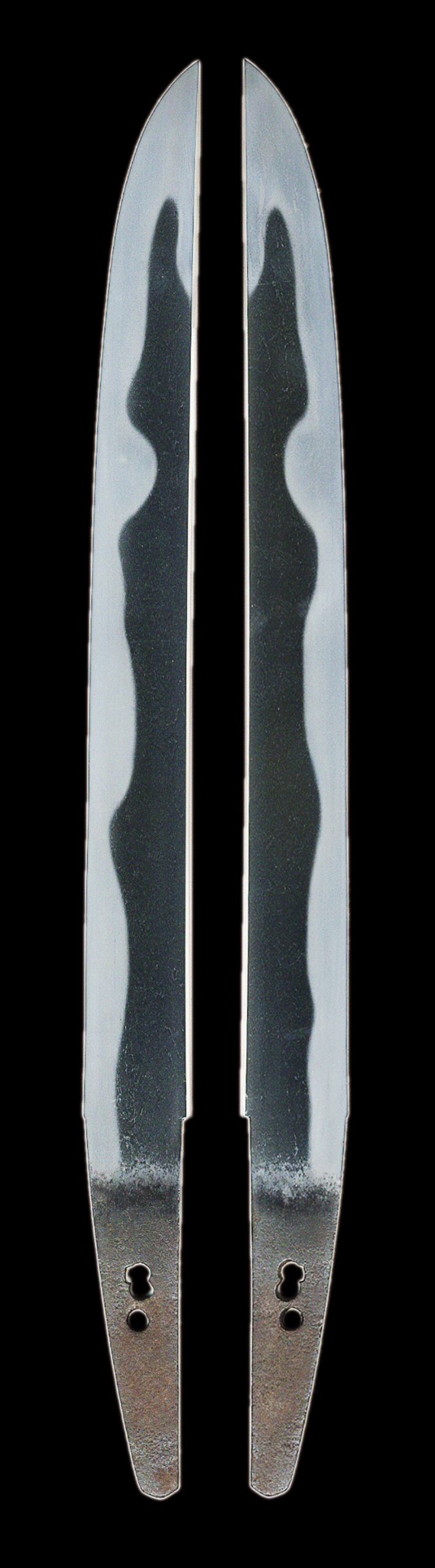
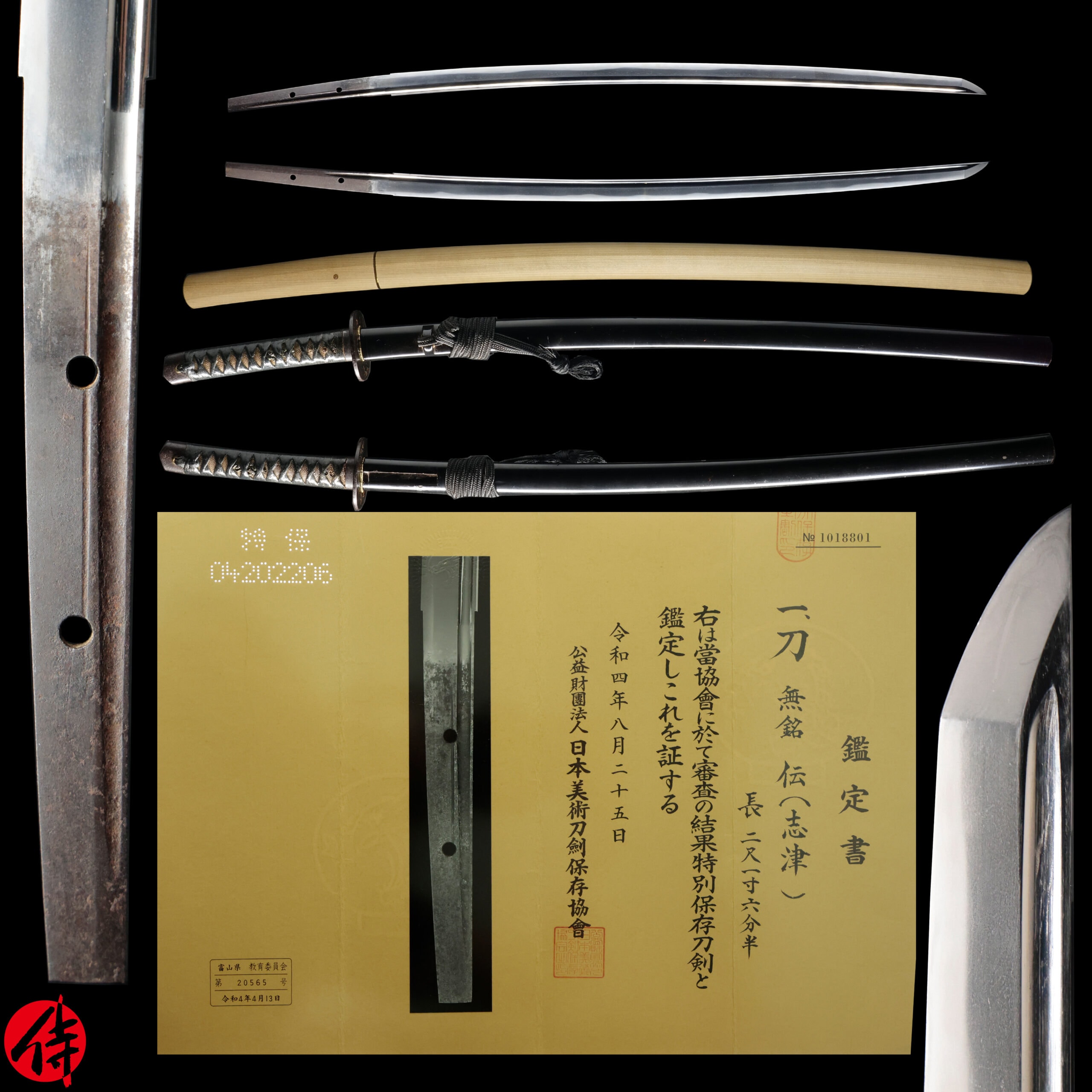
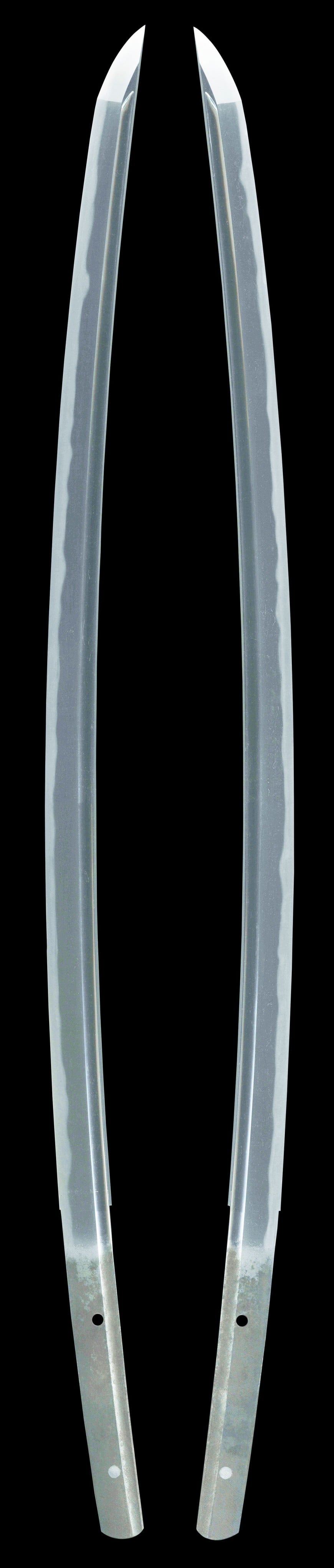
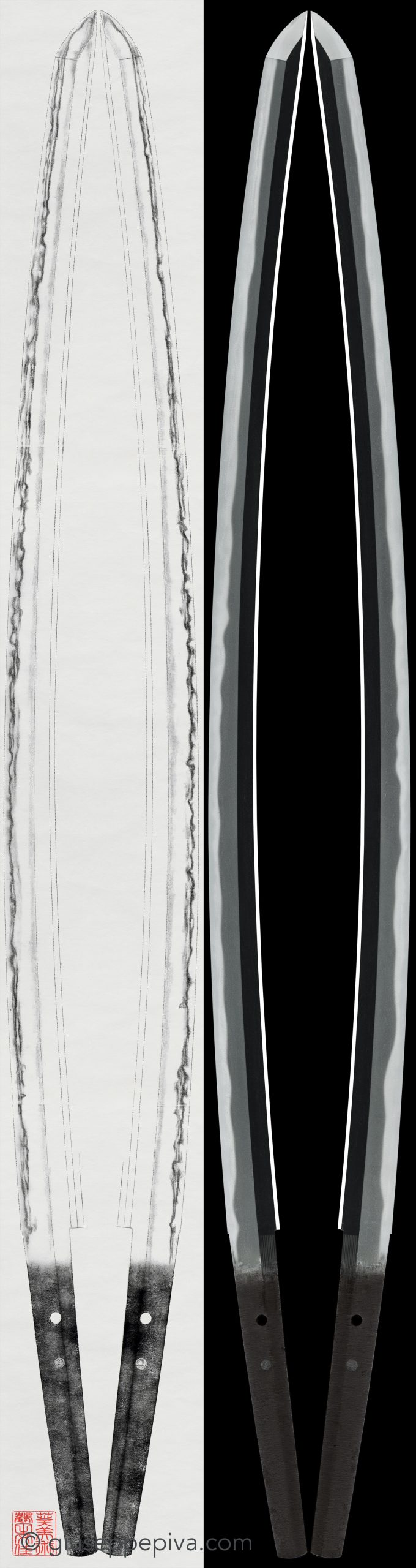
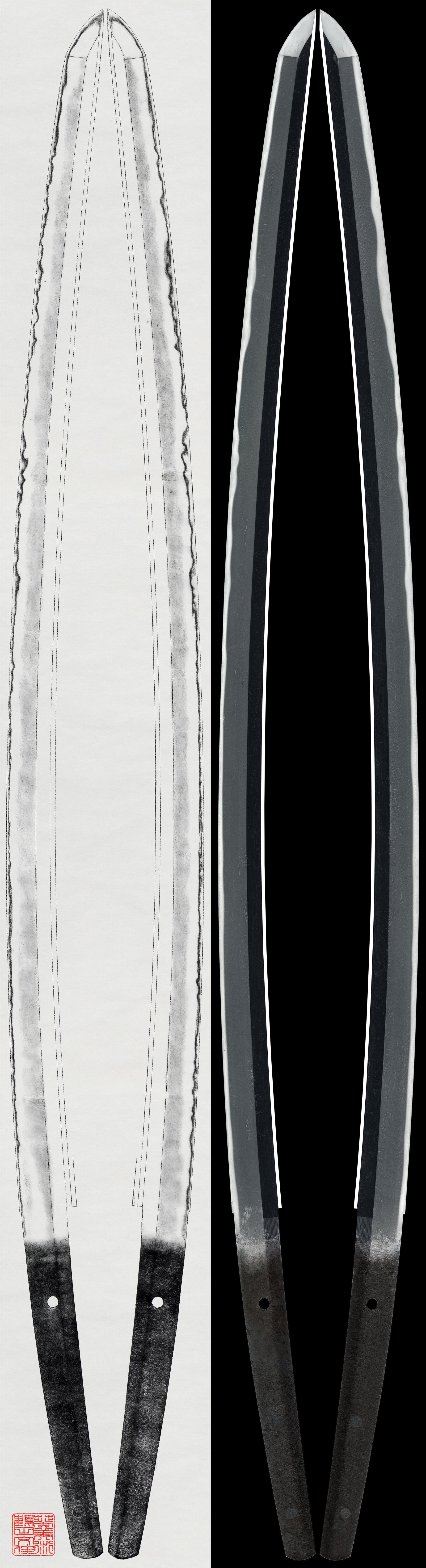
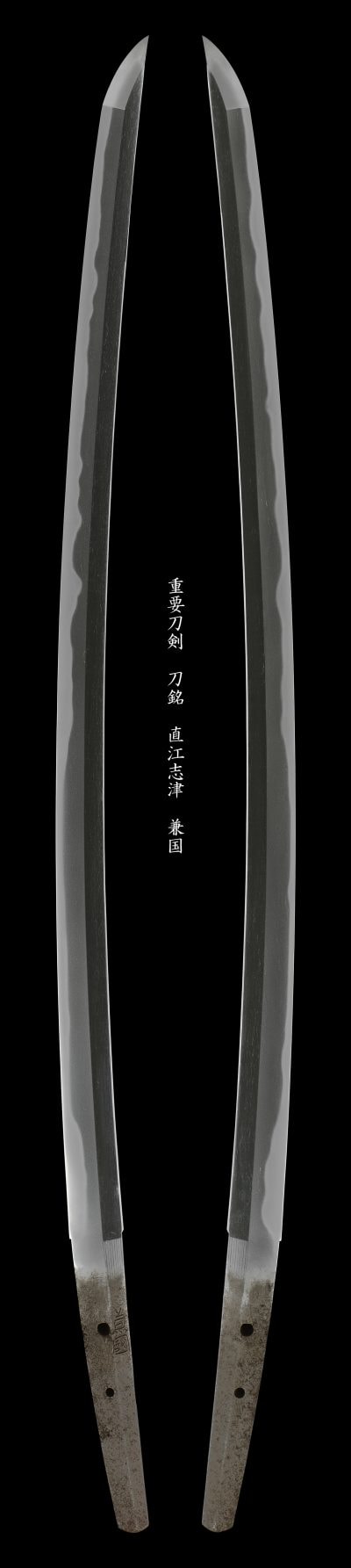
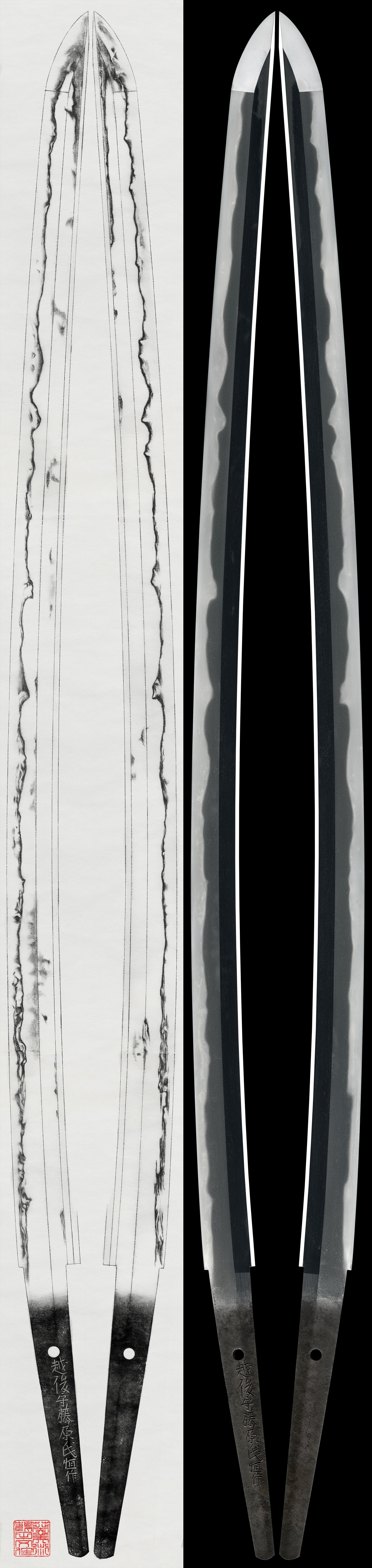
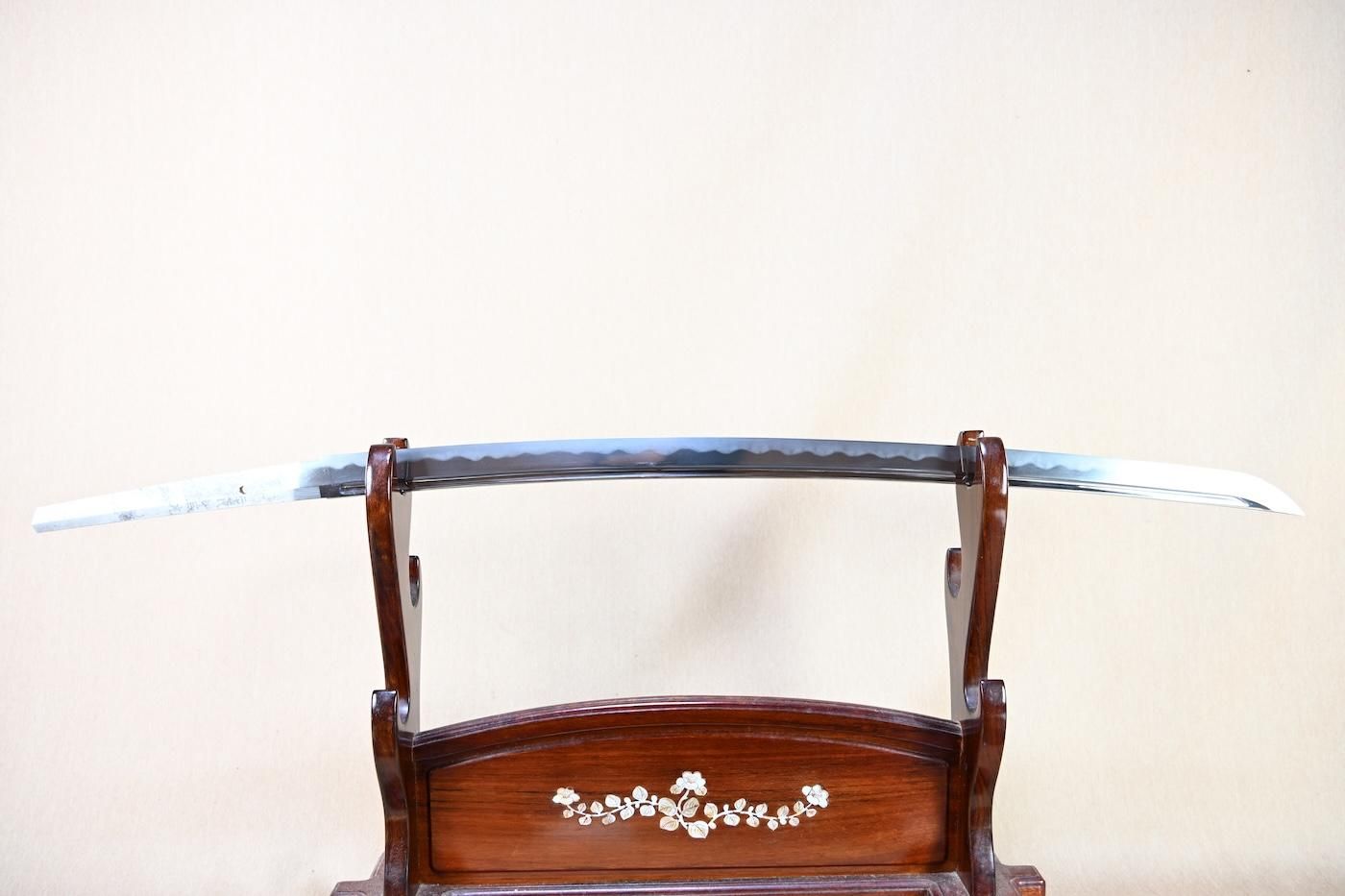
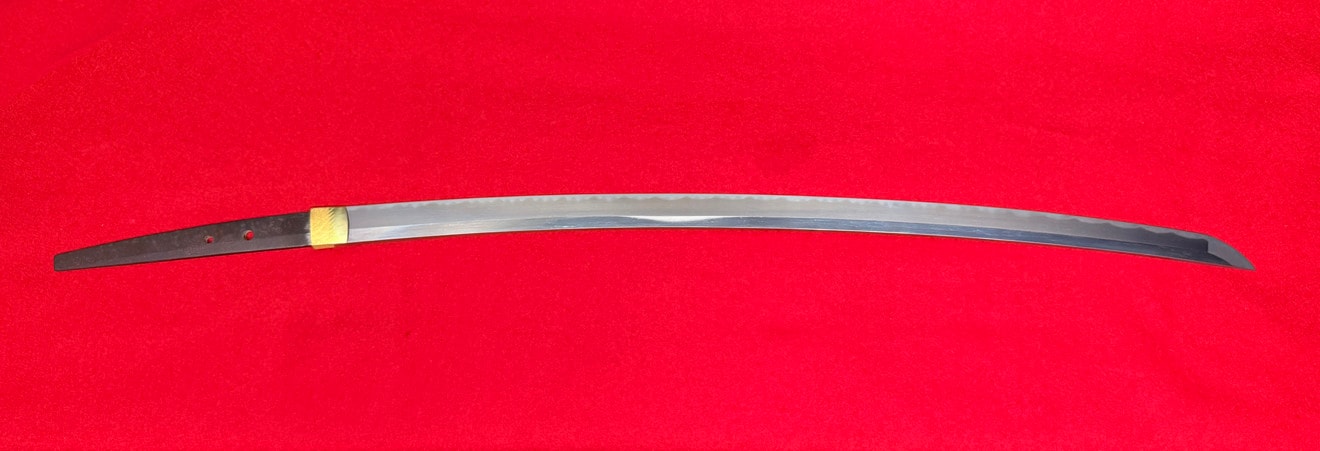
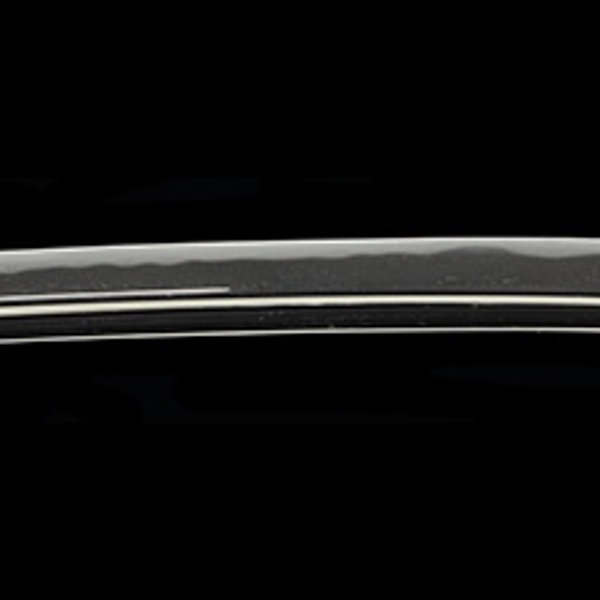
This is a Koto period tanto, attributed to Shizu, the founder of the Mino tradition. It is unsigned but exhibits the typical characteristics of Shizu Saburo Kanemitsu's work, known for its resemblance to Masamune's style. The blade features a normal width, thin kasane, and a plump fukura, with a vibrant hamon displaying nie, kinsuji, and sunagashi.

NihontoWatch MonNihontoWatch
MarketEncyclopediaKantei
Swords›Mino-den›Shizu›Koto Mumei (Shizu)
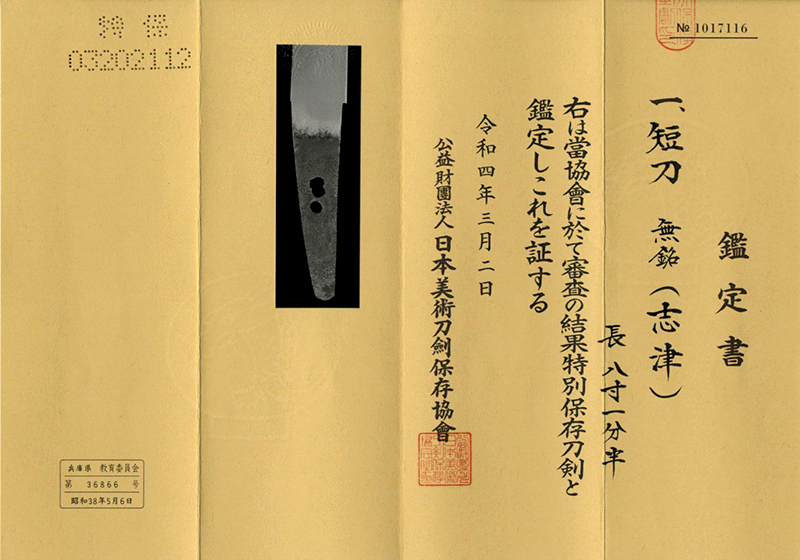
tantoTokubetsu Hozon
Shizu School

Koto Mumei (Shizu)

mumei · Mino · Nanbokucho · nagasa 24.6cm

SOLD
Shizu School — 1 of 4
Shizu School — 2 of 4
Shizu School — 3 of 4
Shizu School — 4 of 4
1 / 4
1 / 4
Shizu School — 1 of 4Shizu School — 2 of 4Shizu School — 3 of 4Shizu School — 4 of 4
Measurements & details
Smith
Shizu School
Type
Tanto
School
Shizu
Period
Nanbokucho
Province
Mino
Signature
Unsigned(0% of this smith's designated works are signed)
Measurements
Nagasa 24.6cmMotohaba 2.5cmKasane 0.4cm
Description

This is a Koto period tanto, attributed to Shizu, the founder of the Mino tradition. It is unsigned but exhibits the typical characteristics of Shizu Saburo Kanemitsu's work, known for its resemblance to Masamune's style. The blade features a normal width, thin kasane, and a plump fukura, with a vibrant hamon displaying nie, kinsuji, and sunagashi.

About the school

Shizu

志津

Mino-den · Mino

27 pieces on the market now

›

The Shizu tradition originated in Mino Province during the late Kamakura period when Kaneuji—originally of the Yamato Tegai school—relocated from his studies under Masamune of Sagami to the village of Shizu in Tagai District. Taking the place-name as his appellation, he became known as Shizu Saburō Kaneuji, and established a lineage that would become one of the most celebrated branches among the so-called Masamune Jittetsu (Ten Great Disciples of Masamune). While Kaneuji himself is often considered the paramount master of this group, the designation "Shizu" came to be applied broadly to unsigned works displaying the characteristic manner of this school, encompassing not only Kaneuji but also his contemporaries and successors working within the same stylistic orbit. A related category, Yamato Shizu, refers either to Kaneuji's early production before settling in Mino—when his work retained stronger Yamato Tegai characteristics—or to smiths of the Kanetsugu lineage who remained in Yamato rather than migrating to Mino. The collective hallmarks of Shizu workmanship reveal a distinctive synthesis of Sōshū-den brilliance and Yamato structural sensibilities. The forging typically displays flowing itame-hada mixed with mokume, frequently tending toward hada-dachi (standing grain), with areas where masame inclinations appear along the edge. A defining feature is the dense application of fine ji-nie, often described as thickly adhering, accompanied by abundant chikei that enter repeatedly to produce a notably clear and bright appearance. The hamon favors shallow notare as a foundation, mixed with gunome, ko-gunome, and pointed elements (togariba), forming compositions that range from gentle undulations to boldly disturbed patterns.

The temper is richly nie-based, with vigorous sunagashi streaming through the pattern, frequent kinsuji, and in many examples a "wet" quality (nureba) within the tempered area. Characteristic activities include hotsure along the habuchi, occasional nijūba (double-temper) effects that recall Yamato influence, and in some works the presence of linked gunome sequences. The bōshi commonly enters in midare-komi or notare-komi, turning back with pointed or rounded forms, and frequently displays hakikake at the tip. Among the upper tier of Sōshū-den productions, works attributed to the Shizu lineage are particularly valued for the way their gleaming ha-nie activities create patterns that are both vigorous and refined. The thick ji-nie and prominent chikei in the forging, combined with the bright, clear nioiguchi in the temper, result in blades that are described as saeru—possessing a luminous clarity that distinguishes superior examples. While the style stands closest to Masamune among his disciples, the Shizu manner retains its own individuality: the blending of Yamato characteristics into the Sōshū tradition produces a distinctive temperament in both ji and ha that connoisseurs recognize at a glance. Many extant examples survive only as greatly shortened (ō-suriage) and unsigned (mumei) blades, yet the workmanship in such pieces typically remains sound and well-preserved (kenzen), testifying to the fundamental excellence of forging and tempering that defines this celebrated school. Learn more →

10 recorded smiths454 designated works
Leading smiths
SmithEraDesignated
Kaneuji兼氏1319-1321156
Naoshizu直鎭1532-15550
Explore the Shizu school →

Historical context

Mino was founded, tradition holds, by immigrants: Kaneuji of the Yamato Tegai line settled at Shizu to work in the new Sōshū manner, so persuasively that later appraisers judged his best blades the closest of any to Masamune.

Mino in the Nanbokuchō period →

NBTHK Certificate
Tokubetsu Hozon Tōken特別保存刀剣
Sword Especially Worthy of Preservation
›

A Hozon-certified blade judged to show notably superior workmanship and a better state of preservation. The bar is higher: re-tempered blades and most unsigned Muromachi/Edo works are excluded.

About the NBTHK›

The NBTHK (Nihon Bijutsu Tōken Hozon Kyōkai, the Society for the Preservation of Japanese Art Swords) is a public-interest incorporated foundation founded in 1948 and supervised by Japan’s Agency for Cultural Affairs (Bunkachō); it is based at the Japanese Sword Museum in Tokyo. Its expert panels physically examine each submitted work (shinsa) and issue a certificate (kanteishō) ranking it by artistic and historical merit. NBTHK papers are the most widely recognized standard of authentication for Japanese swords and fittings.

NBTHK official site→
Seller
I
Iida Koendo
Established 1880 · 146 yrs on the market
🇯🇵Ships from Japan
›
✓Verified dealeriidakoendo.com
✓Ships worldwide✓English supportWire transfer
Return policy

Customer-initiated returns accepted within two days of arrival; return shipping paid by customer and fees non-refundable. Returns/refunds unavailable for overseas deliveries.
View all of Iida Koendo’s listings→View this item on the dealer’s site→

Previously sold — Shizu School

Samurai Museum
Tokuho
Katana - Tokuho - by Shizu School - Antique Japanese Sword Katana attributed to Den Shizu with NBTHK Tokubetsu Hozon CertificateKatana - Tokuho - by Shizu School - Antique Japanese Sword Katana attributed to Den Shizu with NBTHK Tokubetsu Hozon Certificate
Sold

Katana

ByShizu School
SOLD
Iida Koendo
Jūyō
Katana - Jūyō - by Shizu School - Koto Katana: Tokugawa Shogunate, Buzen Nakatsu Okudaira Family Transmission, O-Shizu Mumei (Den Shizu)Katana - Jūyō - by Shizu School - Koto Katana: Tokugawa Shogunate, Buzen Nakatsu Okudaira Family Transmission, O-Shizu Mumei (Den Shizu)
Sold

Katana

ByShizu School
SOLD
Iida Koendo
Jūyō
Katana - Jūyō - by Shizu School - Koto Katana: Mumei (Shizu)Katana - Jūyō - by Shizu School - Koto Katana: Mumei (Shizu)
Sold

Katana

ByShizu School
SOLD
Iida Koendo
Jūyō
Katana - Jūyō - by Shizu School - Koto KatanaKatana - Jūyō - by Shizu School - Koto Katana
Sold

Katana

ByShizu School
SOLD

More from the Shizu school

View all →
Samurai Nippon
Tokuho
Wakizashi - Tokuho - by Shizu Kaneuji - Naginata-naoshi Wakizashi: Mumei (Attributed to Shizu)Wakizashi - Tokuho - by Shizu Kaneuji - Naginata-naoshi Wakizashi: Mumei (Attributed to Shizu)

Wakizashi

ByShizu Kaneuji
¥1,550,000
Samurai Nippon
Jūyō
Katana - Jūyō - by Shizu Kaneuji - Shizu (Mumei)Katana - Jūyō - by Shizu Kaneuji - Shizu (Mumei)

Katana

ByShizu Kaneuji
¥9,500,000
Aoi Art
Tokuho
Katana - Tokuho - by Naoe Shizu School - Mumei (Attributed to Naoe Shizu)Katana - Tokuho - by Naoe Shizu School - Mumei (Attributed to Naoe Shizu)

Katana

ByNaoe Shizu School
¥2,200,000
Choshuya
Tokuho
Katana - Tokuho - by Naoe Shizu School - O-suriage Mumei, attributed to Naoe ShizuKatana - Tokuho - by Naoe Shizu School - O-suriage Mumei, attributed to Naoe Shizu

Katana

ByNaoe Shizu School
¥2,500,000
Aoi Art
Tokuho
Katana - Tokuho - by Yamato Shizu School - Yamato Shizu Kaneuji (with gold-inlaid attribution) Hon'ami (kao) (Koson)Katana - Tokuho - by Yamato Shizu School - Yamato Shizu Kaneuji (with gold-inlaid attribution) Hon'ami (kao) (Koson)

Katana

ByYamato Shizu School
¥2,300,000
Shoubudou
Tokuho
Wakizashi - Tokuho - by Naoe Shizu School - Mumei (Naoeshizu)Wakizashi - Tokuho - by Naoe Shizu School - Mumei (Naoeshizu)

Wakizashi

ByNaoe Shizu School
¥1,200,000
Sanmei
Tokuho
Katana - Tokuho - by Naoe Shizu School - Naoe-Shizu - Unsigned, attributedKatana - Tokuho - by Naoe Shizu School - Naoe-Shizu - Unsigned, attributed

Katana

ByNaoe Shizu School
¥1,350,000
Aoi Art
Jūyō
Katana - Jūyō - by Yamato Shizu School - Mumei (Unsigned)(Yamato-Shizu)Katana - Jūyō - by Yamato Shizu School - Mumei (Unsigned)(Yamato-Shizu)

Katana

ByYamato Shizu School
¥2,700,000

More from the Mino tradition

View all →
Toukentakarado
Tokuho
Naginata - Tokuho - by Aki Teruhiro School - Harima no Kami Fujiwara TeruhiroNaginata - Tokuho - by Aki Teruhiro School - Harima no Kami Fujiwara Teruhiro

Naginata

ByAki Teruhiro School
¥850,000
Supein Nihonto
Tokuho
Katana - Tokuho - by Sakakura Seki Masatoshi - Japanese Katana: Masatoshi – Sakakura Seki | NBTHK Tokubetsu HozonKatana - Tokuho - by Sakakura Seki Masatoshi - Japanese Katana: Masatoshi – Sakakura Seki | NBTHK Tokubetsu Hozon

Katana

BySakakura Seki Masatoshi
¥12,500
Samurai Museum
Tokuho
Katana - Tokuho - by Seki Ujifusa - Wakasa no Kami Fujiwara UjifusaKatana - Tokuho - by Seki Ujifusa - Wakasa no Kami Fujiwara Ujifusa

Katana

BySeki Ujifusa
¥18,862
Nihontocraft
Tokuho
Wakizashi - Tokuho - by Seki School - Wakizashi by Bizen no Kami Fujiwara UjifusaWakizashi - Tokuho - by Seki School - Wakizashi by Bizen no Kami Fujiwara Ujifusa

Wakizashi

BySeki School
¥5,700
Connoisseur Arms
Jūyō
Katana - Jūyō - by Kanemoto - Historic Katana by Sekino Magoroku KanemotoKatana - Jūyō - by Kanemoto - Historic Katana by Sekino Magoroku Kanemoto

Katana

ByKanemoto
Ask
Samurai Museum
Tokuho
Katana - Tokuho - by Seki Kanefusa - Late Muromachi Katana Signed by Kanefusa with NBTHK Tokubetsu Hozon CertificateKatana - Tokuho - by Seki Kanefusa - Late Muromachi Katana Signed by Kanefusa with NBTHK Tokubetsu Hozon Certificate

Katana

BySeki Kanefusa
¥22,634
Toushin
Tokuho
Wakizashi - Tokuho - by Seki Kanefusa - KanefusaWakizashi - Tokuho - by Seki Kanefusa - Kanefusa

Wakizashi

BySeki Kanefusa
¥1,650,000
Aoi Art
Hozon
Wakizashi - Hozon - by Aki Teruhiro School - Wakizashi (Sunobi Tanto): Harima no Kami Teruhiro SakuWakizashi - Hozon - by Aki Teruhiro School - Wakizashi (Sunobi Tanto): Harima no Kami Teruhiro Saku

Wakizashi

ByAki Teruhiro School
¥350,000

Swords

  • Katana
  • Wakizashi
  • Tantō
  • Tachi
  • Naginata
  • Yari

Fittings

  • Tsuba
  • Fuchi-Kashira
  • Kozuka
  • Menuki

Armor

  • Kabuto
  • Samurai Armor

By Certification

  • Tokujū
  • Jūyō
  • Tokuho
  • Hozon

Resources

  • Dealer Directory
  • Artist Directory
  • The Daily Kantei
  • Glossary
  • Browse All
Nihontowatch© 2026
TermsPrivacyCookiesAbout

Description

This is a Koto period tanto, attributed to Shizu, the founder of the Mino tradition. It is unsigned but exhibits the typical characteristics of Shizu Saburo Kanemitsu's work, known for its resemblance to Masamune's style. The blade features a normal width, thin kasane, and a plump fukura, with a vibrant hamon displaying nie, kinsuji, and sunagashi.

NihontoWatch MonNihontoWatch
MarketEncyclopediaKantei
Swords›Mino-den›Shizu›Koto Mumei (Shizu)
tantoTokubetsu Hozon
Shizu School

Koto Mumei (Shizu)

mumei · Mino · Nanbokucho · nagasa 24.6cm

SOLD
Shizu School — 1 of 4
Shizu School — 2 of 4
Shizu School — 3 of 4
Shizu School — 4 of 4
1 / 4
1 / 4
Shizu School — 1 of 4Shizu School — 2 of 4Shizu School — 3 of 4Shizu School — 4 of 4
Measurements & details
Smith
Shizu School
Type
Tanto
School
Shizu
Period
Nanbokucho
Province
Mino
Signature
Unsigned(0% of this smith's designated works are signed)
Measurements
Nagasa 24.6cmMotohaba 2.5cmKasane 0.4cm
Description

This is a Koto period tanto, attributed to Shizu, the founder of the Mino tradition. It is unsigned but exhibits the typical characteristics of Shizu Saburo Kanemitsu's work, known for its resemblance to Masamune's style. The blade features a normal width, thin kasane, and a plump fukura, with a vibrant hamon displaying nie, kinsuji, and sunagashi.

About the school

Shizu

志津

Mino-den · Mino

27 pieces on the market now

›

The Shizu tradition originated in Mino Province during the late Kamakura period when Kaneuji—originally of the Yamato Tegai school—relocated from his studies under Masamune of Sagami to the village of Shizu in Tagai District. Taking the place-name as his appellation, he became known as Shizu Saburō Kaneuji, and established a lineage that would become one of the most celebrated branches among the so-called Masamune Jittetsu (Ten Great Disciples of Masamune). While Kaneuji himself is often considered the paramount master of this group, the designation "Shizu" came to be applied broadly to unsigned works displaying the characteristic manner of this school, encompassing not only Kaneuji but also his contemporaries and successors working within the same stylistic orbit. A related category, Yamato Shizu, refers either to Kaneuji's early production before settling in Mino—when his work retained stronger Yamato Tegai characteristics—or to smiths of the Kanetsugu lineage who remained in Yamato rather than migrating to Mino. The collective hallmarks of Shizu workmanship reveal a distinctive synthesis of Sōshū-den brilliance and Yamato structural sensibilities. The forging typically displays flowing itame-hada mixed with mokume, frequently tending toward hada-dachi (standing grain), with areas where masame inclinations appear along the edge. A defining feature is the dense application of fine ji-nie, often described as thickly adhering, accompanied by abundant chikei that enter repeatedly to produce a notably clear and bright appearance. The hamon favors shallow notare as a foundation, mixed with gunome, ko-gunome, and pointed elements (togariba), forming compositions that range from gentle undulations to boldly disturbed patterns.

The temper is richly nie-based, with vigorous sunagashi streaming through the pattern, frequent kinsuji, and in many examples a "wet" quality (nureba) within the tempered area. Characteristic activities include hotsure along the habuchi, occasional nijūba (double-temper) effects that recall Yamato influence, and in some works the presence of linked gunome sequences. The bōshi commonly enters in midare-komi or notare-komi, turning back with pointed or rounded forms, and frequently displays hakikake at the tip. Among the upper tier of Sōshū-den productions, works attributed to the Shizu lineage are particularly valued for the way their gleaming ha-nie activities create patterns that are both vigorous and refined. The thick ji-nie and prominent chikei in the forging, combined with the bright, clear nioiguchi in the temper, result in blades that are described as saeru—possessing a luminous clarity that distinguishes superior examples. While the style stands closest to Masamune among his disciples, the Shizu manner retains its own individuality: the blending of Yamato characteristics into the Sōshū tradition produces a distinctive temperament in both ji and ha that connoisseurs recognize at a glance. Many extant examples survive only as greatly shortened (ō-suriage) and unsigned (mumei) blades, yet the workmanship in such pieces typically remains sound and well-preserved (kenzen), testifying to the fundamental excellence of forging and tempering that defines this celebrated school. Learn more →

10 recorded smiths454 designated works
Leading smiths
SmithEraDesignated
Kaneuji兼氏1319-1321156
Naoshizu直鎭1532-15550
Explore the Shizu school →

Historical context

Mino was founded, tradition holds, by immigrants: Kaneuji of the Yamato Tegai line settled at Shizu to work in the new Sōshū manner, so persuasively that later appraisers judged his best blades the closest of any to Masamune.

Mino in the Nanbokuchō period →

NBTHK Certificate
Tokubetsu Hozon Tōken特別保存刀剣
Sword Especially Worthy of Preservation
›

A Hozon-certified blade judged to show notably superior workmanship and a better state of preservation. The bar is higher: re-tempered blades and most unsigned Muromachi/Edo works are excluded.

About the NBTHK›

The NBTHK (Nihon Bijutsu Tōken Hozon Kyōkai, the Society for the Preservation of Japanese Art Swords) is a public-interest incorporated foundation founded in 1948 and supervised by Japan’s Agency for Cultural Affairs (Bunkachō); it is based at the Japanese Sword Museum in Tokyo. Its expert panels physically examine each submitted work (shinsa) and issue a certificate (kanteishō) ranking it by artistic and historical merit. NBTHK papers are the most widely recognized standard of authentication for Japanese swords and fittings.

NBTHK official site→
Seller
I
Iida Koendo
Established 1880 · 146 yrs on the market
🇯🇵Ships from Japan
›
✓Verified dealeriidakoendo.com
✓Ships worldwide✓English supportWire transfer
Return policy

Customer-initiated returns accepted within two days of arrival; return shipping paid by customer and fees non-refundable. Returns/refunds unavailable for overseas deliveries.

View all of Iida Koendo’s listings→View this item on the dealer’s site→

Previously sold — Shizu School

Samurai Museum
Tokuho
Katana - Tokuho - by Shizu School - Antique Japanese Sword Katana attributed to Den Shizu with NBTHK Tokubetsu Hozon CertificateKatana - Tokuho - by Shizu School - Antique Japanese Sword Katana attributed to Den Shizu with NBTHK Tokubetsu Hozon Certificate
Sold

Katana

ByShizu School
SOLD
Iida Koendo
Jūyō
Katana - Jūyō - by Shizu School - Koto Katana: Tokugawa Shogunate, Buzen Nakatsu Okudaira Family Transmission, O-Shizu Mumei (Den Shizu)Katana - Jūyō - by Shizu School - Koto Katana: Tokugawa Shogunate, Buzen Nakatsu Okudaira Family Transmission, O-Shizu Mumei (Den Shizu)
Sold

Katana

ByShizu School
SOLD
Iida Koendo
Jūyō
Katana - Jūyō - by Shizu School - Koto Katana: Mumei (Shizu)Katana - Jūyō - by Shizu School - Koto Katana: Mumei (Shizu)
Sold

Katana

ByShizu School
SOLD
Iida Koendo
Jūyō
Katana - Jūyō - by Shizu School - Koto KatanaKatana - Jūyō - by Shizu School - Koto Katana
Sold

Katana

ByShizu School
SOLD

More from the Shizu school

View all →
Samurai Nippon
Tokuho
Wakizashi - Tokuho - by Shizu Kaneuji - Naginata-naoshi Wakizashi: Mumei (Attributed to Shizu)Wakizashi - Tokuho - by Shizu Kaneuji - Naginata-naoshi Wakizashi: Mumei (Attributed to Shizu)

Wakizashi

ByShizu Kaneuji
¥1,550,000
Samurai Nippon
Jūyō
Katana - Jūyō - by Shizu Kaneuji - Shizu (Mumei)Katana - Jūyō - by Shizu Kaneuji - Shizu (Mumei)

Katana

ByShizu Kaneuji
¥9,500,000
Aoi Art
Tokuho
Katana - Tokuho - by Naoe Shizu School - Mumei (Attributed to Naoe Shizu)Katana - Tokuho - by Naoe Shizu School - Mumei (Attributed to Naoe Shizu)

Katana

ByNaoe Shizu School
¥2,200,000
Choshuya
Tokuho
Katana - Tokuho - by Naoe Shizu School - O-suriage Mumei, attributed to Naoe ShizuKatana - Tokuho - by Naoe Shizu School - O-suriage Mumei, attributed to Naoe Shizu

Katana

ByNaoe Shizu School
¥2,500,000
Aoi Art
Tokuho
Katana - Tokuho - by Yamato Shizu School - Yamato Shizu Kaneuji (with gold-inlaid attribution) Hon'ami (kao) (Koson)Katana - Tokuho - by Yamato Shizu School - Yamato Shizu Kaneuji (with gold-inlaid attribution) Hon'ami (kao) (Koson)

Katana

ByYamato Shizu School
¥2,300,000
Shoubudou
Tokuho
Wakizashi - Tokuho - by Naoe Shizu School - Mumei (Naoeshizu)Wakizashi - Tokuho - by Naoe Shizu School - Mumei (Naoeshizu)

Wakizashi

ByNaoe Shizu School
¥1,200,000
Sanmei
Tokuho
Katana - Tokuho - by Naoe Shizu School - Naoe-Shizu - Unsigned, attributedKatana - Tokuho - by Naoe Shizu School - Naoe-Shizu - Unsigned, attributed

Katana

ByNaoe Shizu School
¥1,350,000
Aoi Art
Jūyō
Katana - Jūyō - by Yamato Shizu School - Mumei (Unsigned)(Yamato-Shizu)Katana - Jūyō - by Yamato Shizu School - Mumei (Unsigned)(Yamato-Shizu)

Katana

ByYamato Shizu School
¥2,700,000

More from the Mino tradition

View all →
Toukentakarado
Tokuho
Naginata - Tokuho - by Aki Teruhiro School - Harima no Kami Fujiwara TeruhiroNaginata - Tokuho - by Aki Teruhiro School - Harima no Kami Fujiwara Teruhiro

Naginata

ByAki Teruhiro School
¥850,000
Supein Nihonto
Tokuho
Katana - Tokuho - by Sakakura Seki Masatoshi - Japanese Katana: Masatoshi – Sakakura Seki | NBTHK Tokubetsu HozonKatana - Tokuho - by Sakakura Seki Masatoshi - Japanese Katana: Masatoshi – Sakakura Seki | NBTHK Tokubetsu Hozon

Katana

BySakakura Seki Masatoshi
¥12,500
Samurai Museum
Tokuho
Katana - Tokuho - by Seki Ujifusa - Wakasa no Kami Fujiwara UjifusaKatana - Tokuho - by Seki Ujifusa - Wakasa no Kami Fujiwara Ujifusa

Katana

BySeki Ujifusa
¥18,862
Nihontocraft
Tokuho
Wakizashi - Tokuho - by Seki School - Wakizashi by Bizen no Kami Fujiwara UjifusaWakizashi - Tokuho - by Seki School - Wakizashi by Bizen no Kami Fujiwara Ujifusa

Wakizashi

BySeki School
¥5,700
Connoisseur Arms
Jūyō
Katana - Jūyō - by Kanemoto - Historic Katana by Sekino Magoroku KanemotoKatana - Jūyō - by Kanemoto - Historic Katana by Sekino Magoroku Kanemoto

Katana

ByKanemoto
Ask
Samurai Museum
Tokuho
Katana - Tokuho - by Seki Kanefusa - Late Muromachi Katana Signed by Kanefusa with NBTHK Tokubetsu Hozon CertificateKatana - Tokuho - by Seki Kanefusa - Late Muromachi Katana Signed by Kanefusa with NBTHK Tokubetsu Hozon Certificate

Katana

BySeki Kanefusa
¥22,634
Toushin
Tokuho
Wakizashi - Tokuho - by Seki Kanefusa - KanefusaWakizashi - Tokuho - by Seki Kanefusa - Kanefusa

Wakizashi

BySeki Kanefusa
¥1,650,000
Aoi Art
Hozon
Wakizashi - Hozon - by Aki Teruhiro School - Wakizashi (Sunobi Tanto): Harima no Kami Teruhiro SakuWakizashi - Hozon - by Aki Teruhiro School - Wakizashi (Sunobi Tanto): Harima no Kami Teruhiro Saku

Wakizashi

ByAki Teruhiro School
¥350,000

Swords

  • Katana
  • Wakizashi
  • Tantō
  • Tachi
  • Naginata
  • Yari

Fittings

  • Tsuba
  • Fuchi-Kashira
  • Kozuka
  • Menuki

Armor

  • Kabuto
  • Samurai Armor

By Certification

  • Tokujū
  • Jūyō
  • Tokuho
  • Hozon

Resources

  • Dealer Directory
  • Artist Directory
  • The Daily Kantei
  • Glossary
  • Browse All
Nihontowatch© 2026
TermsPrivacyCookiesAbout
NihontoWatch Mon

NihontoWatch

Market
Encyclopedia
Kantei
NihontoWatch Mon

NihontoWatch

Market
Encyclopedia
Kantei