NihontoWatch Mon

NihontoWatch

Market
Encyclopedia
Kantei
NihontoWatch Mon

NihontoWatch

Market
Encyclopedia
Kantei

Description

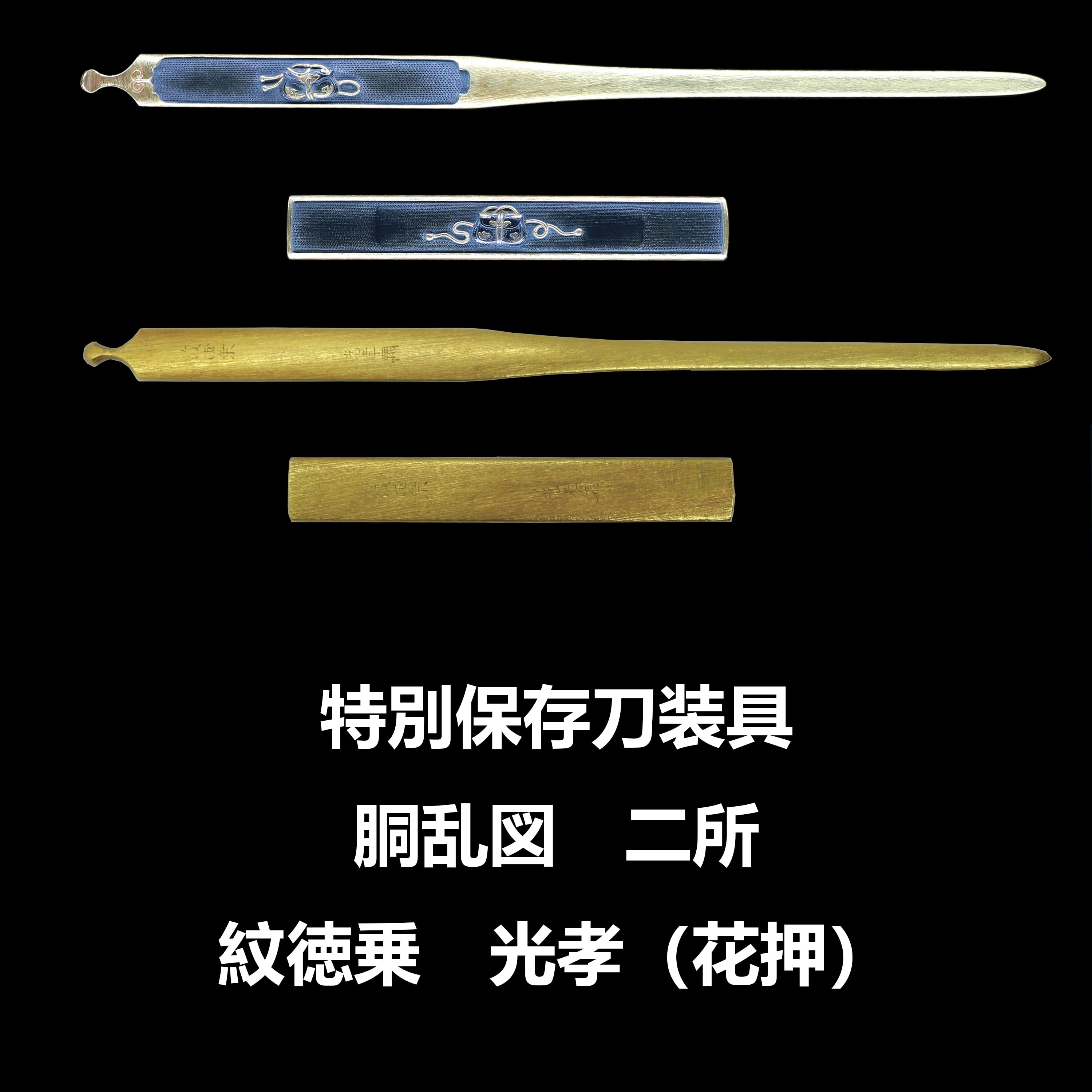
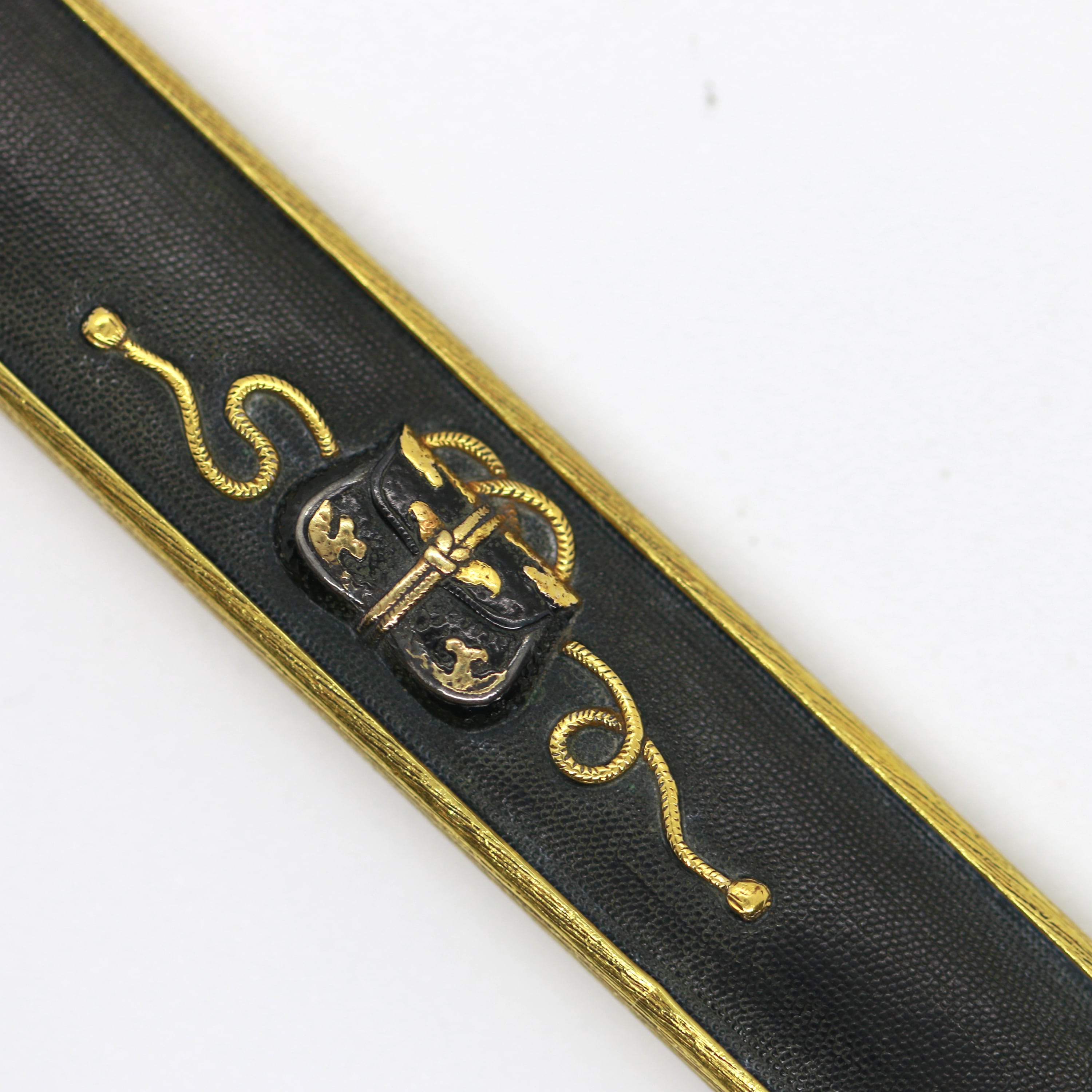
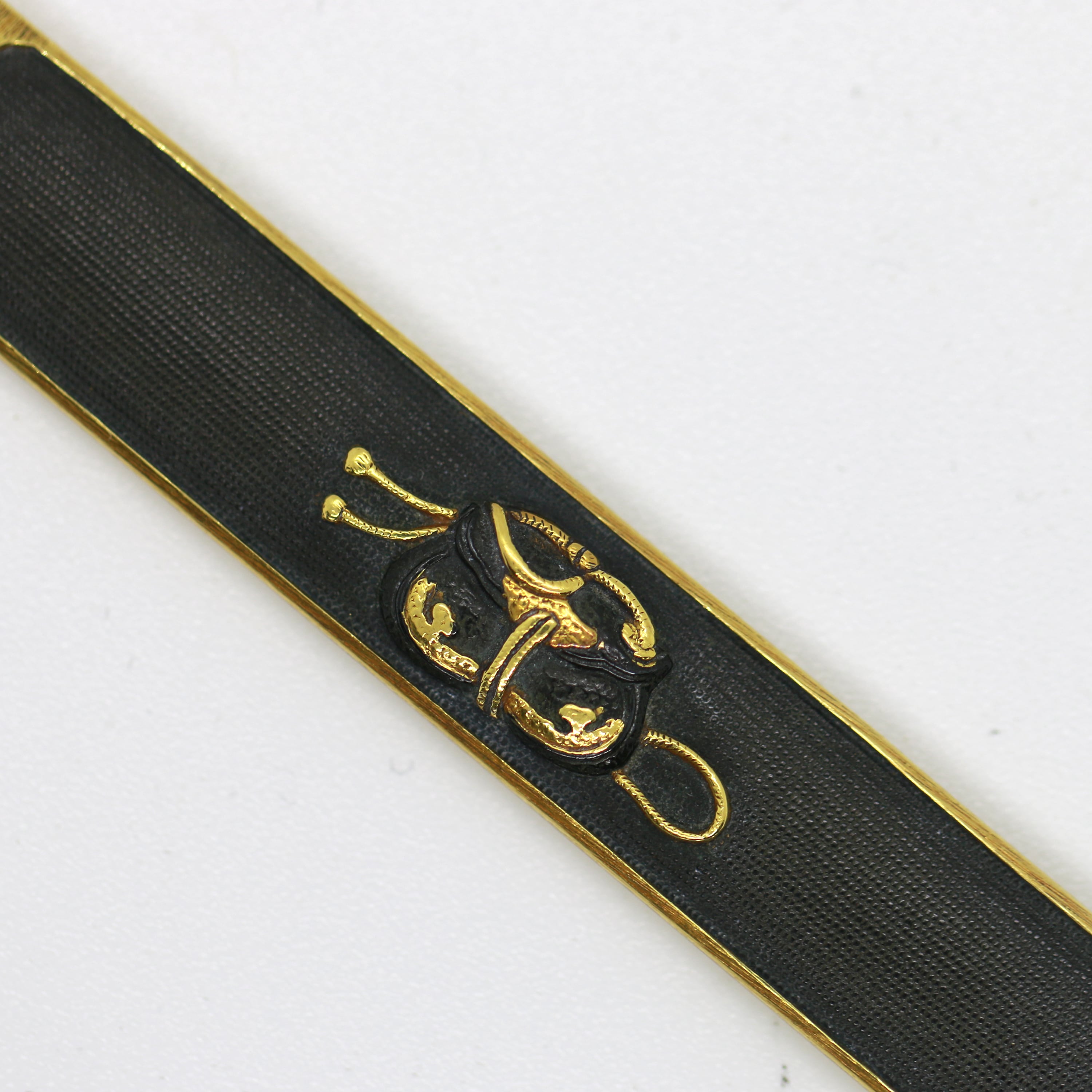
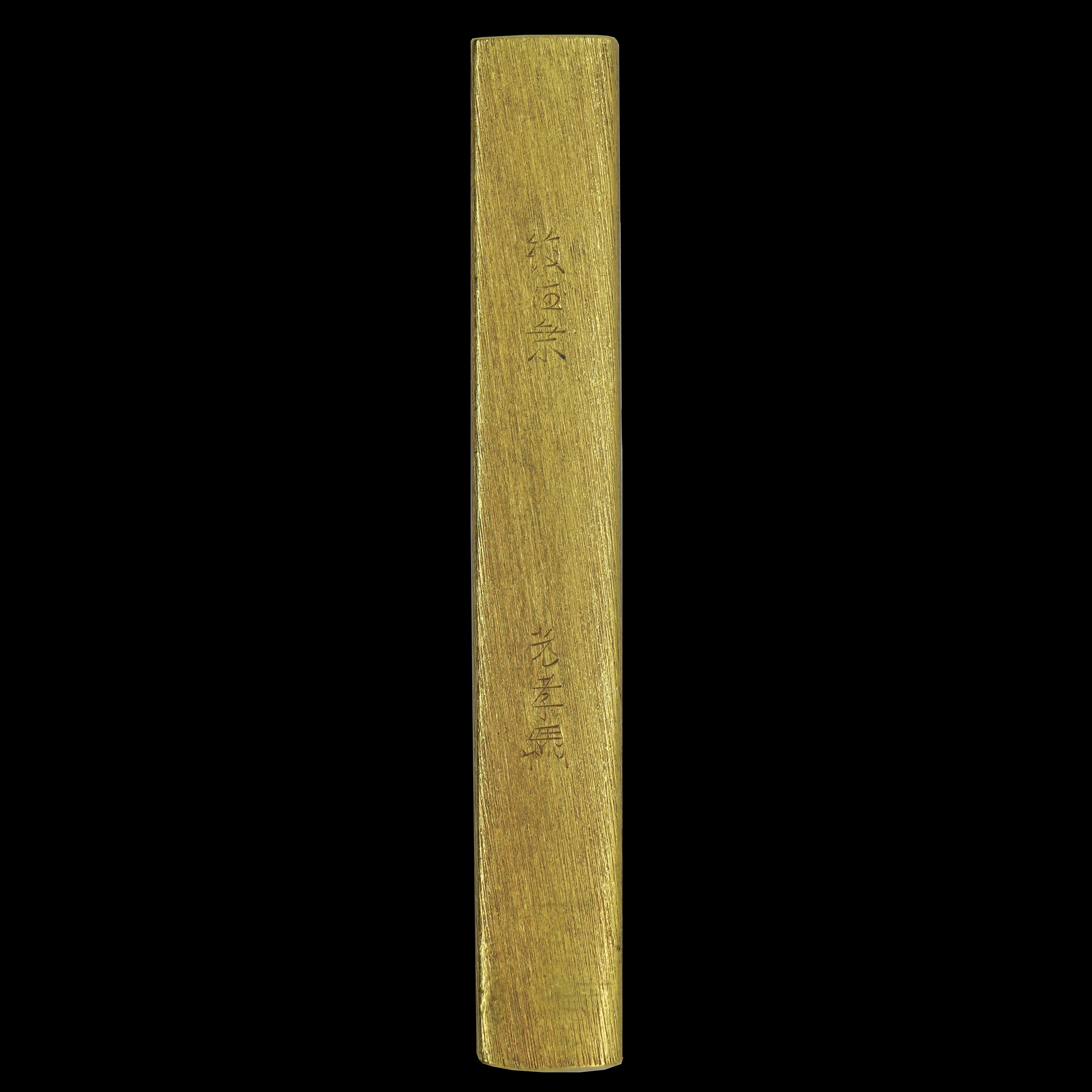
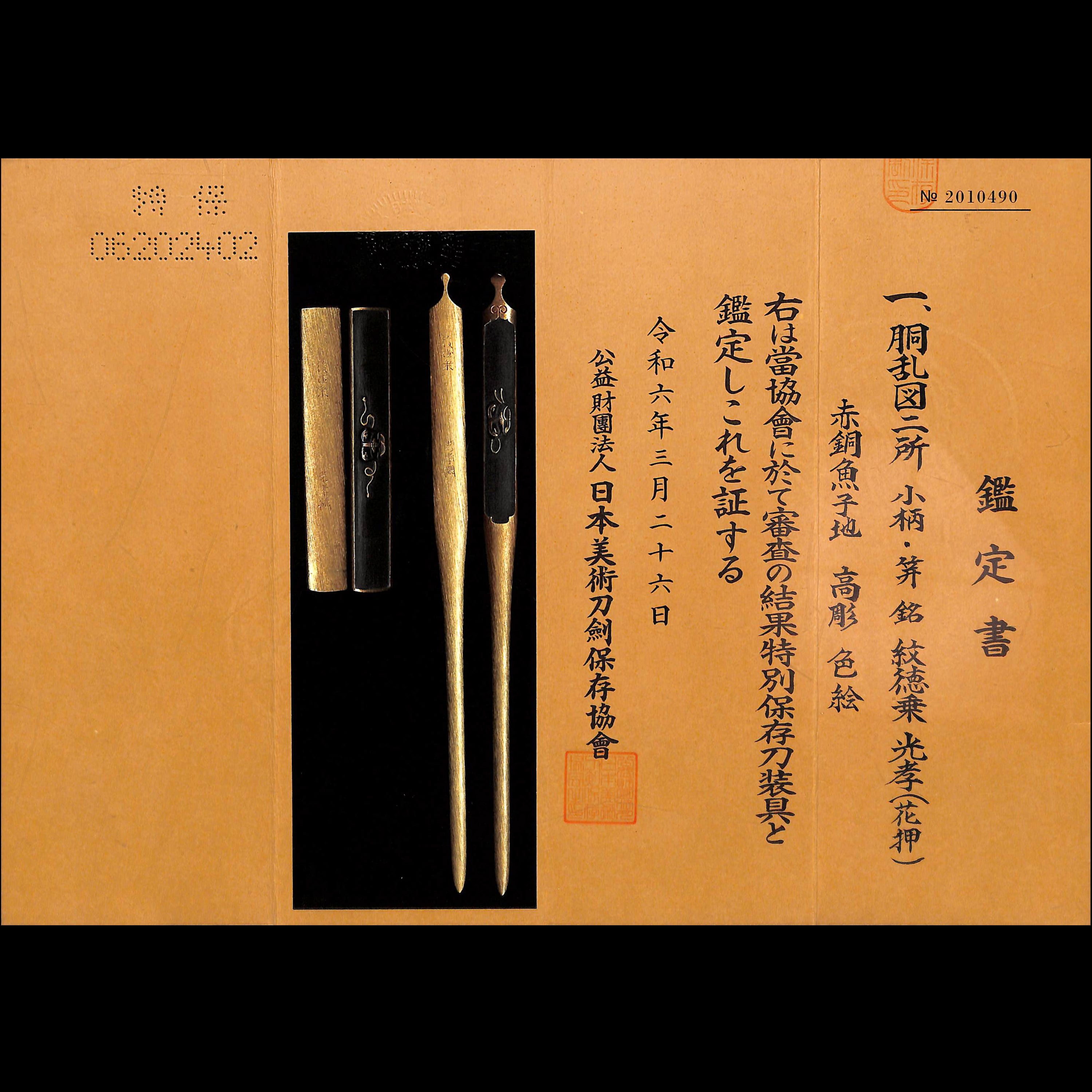
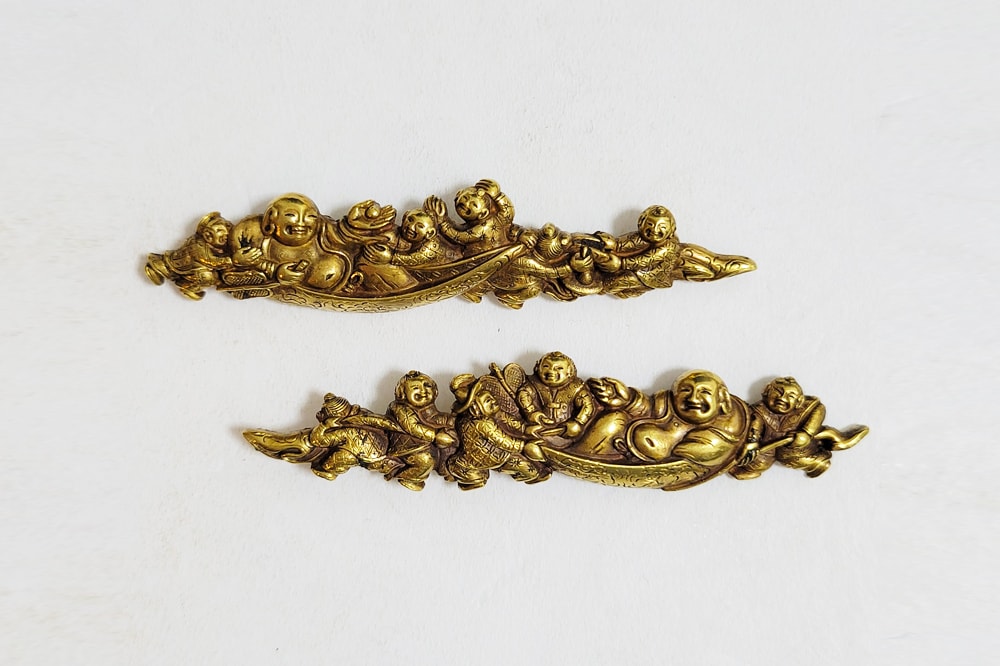
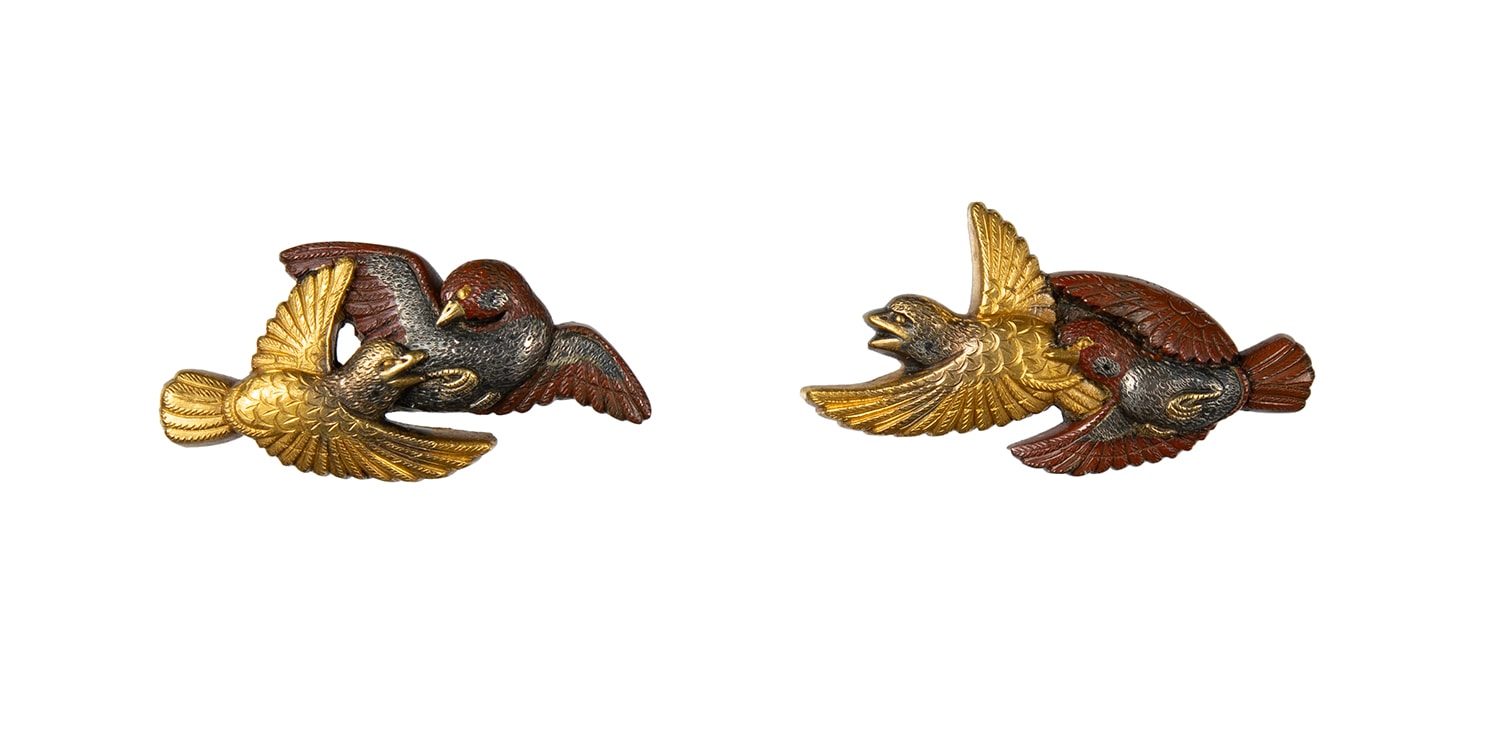
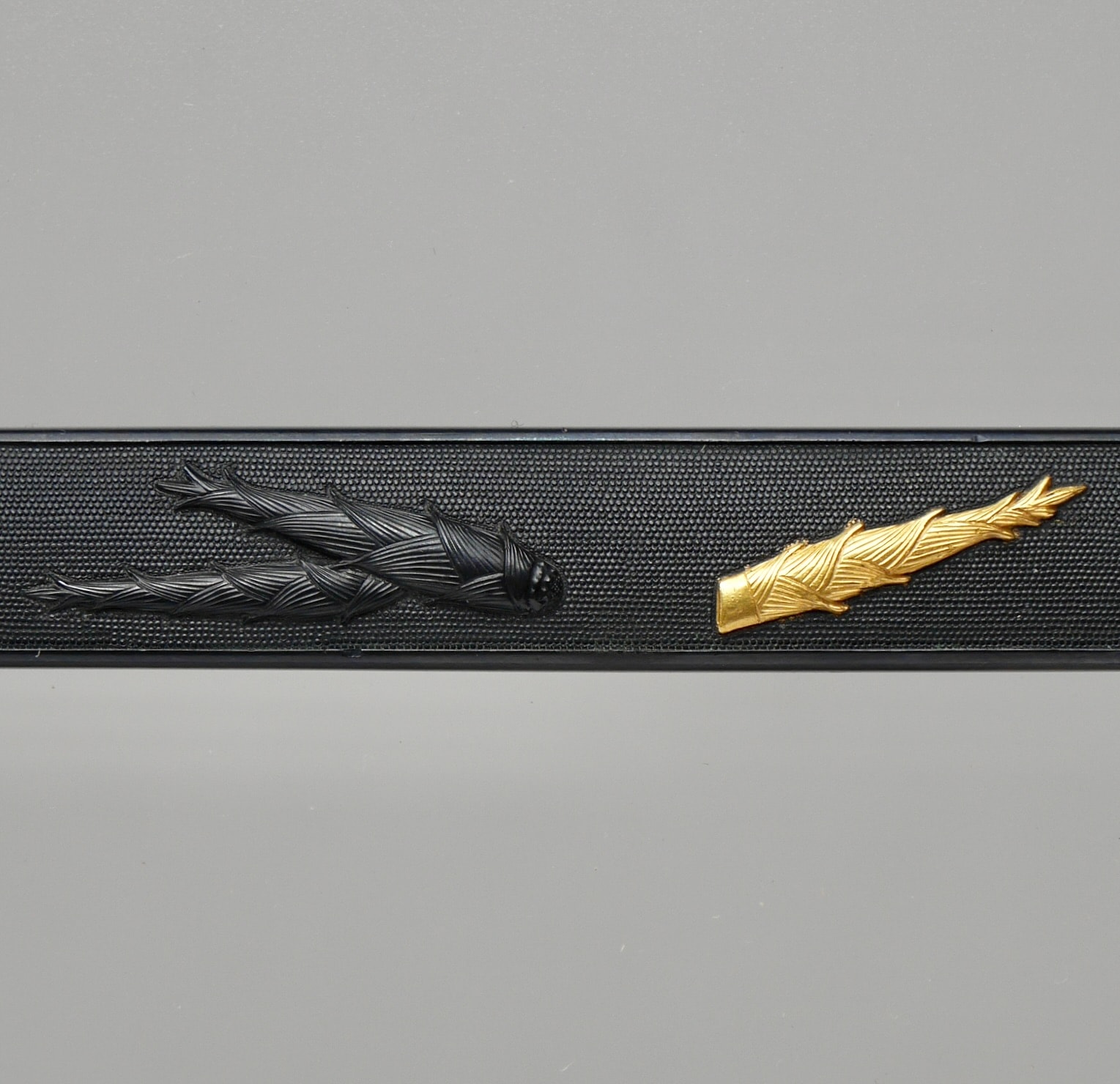
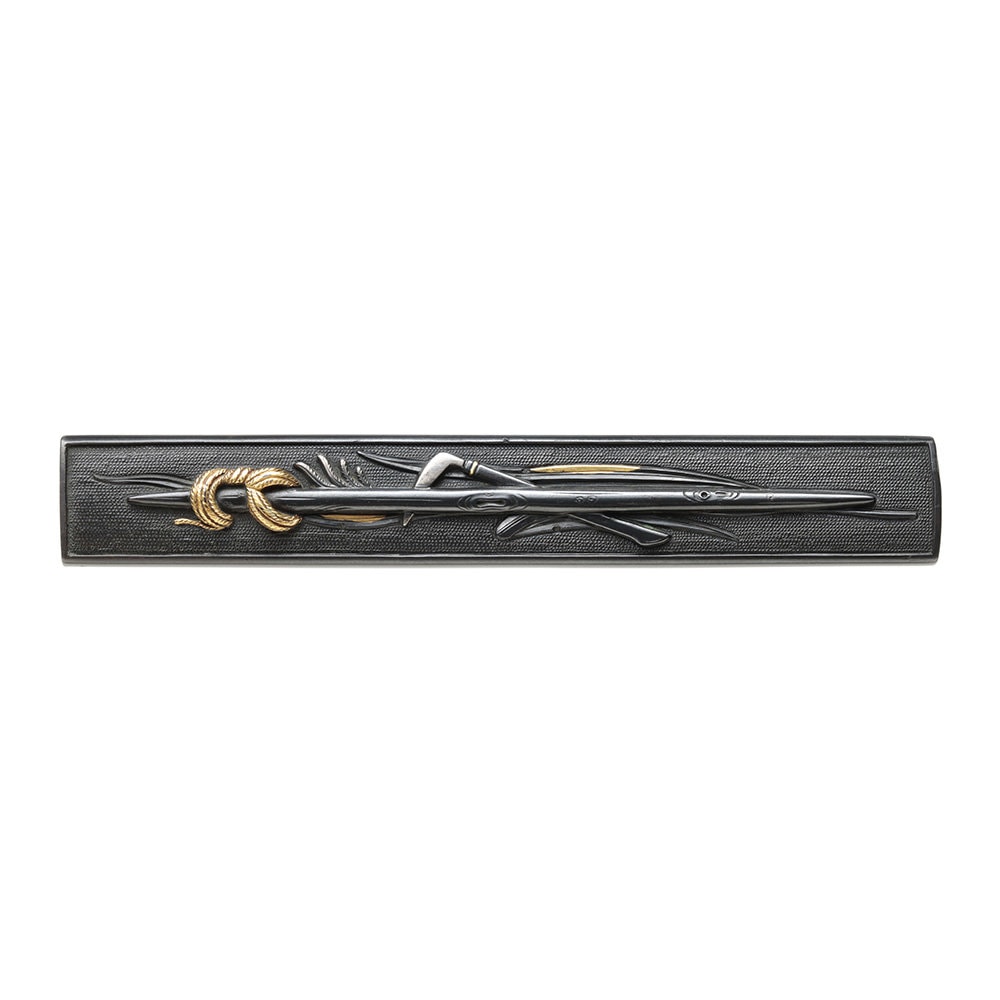
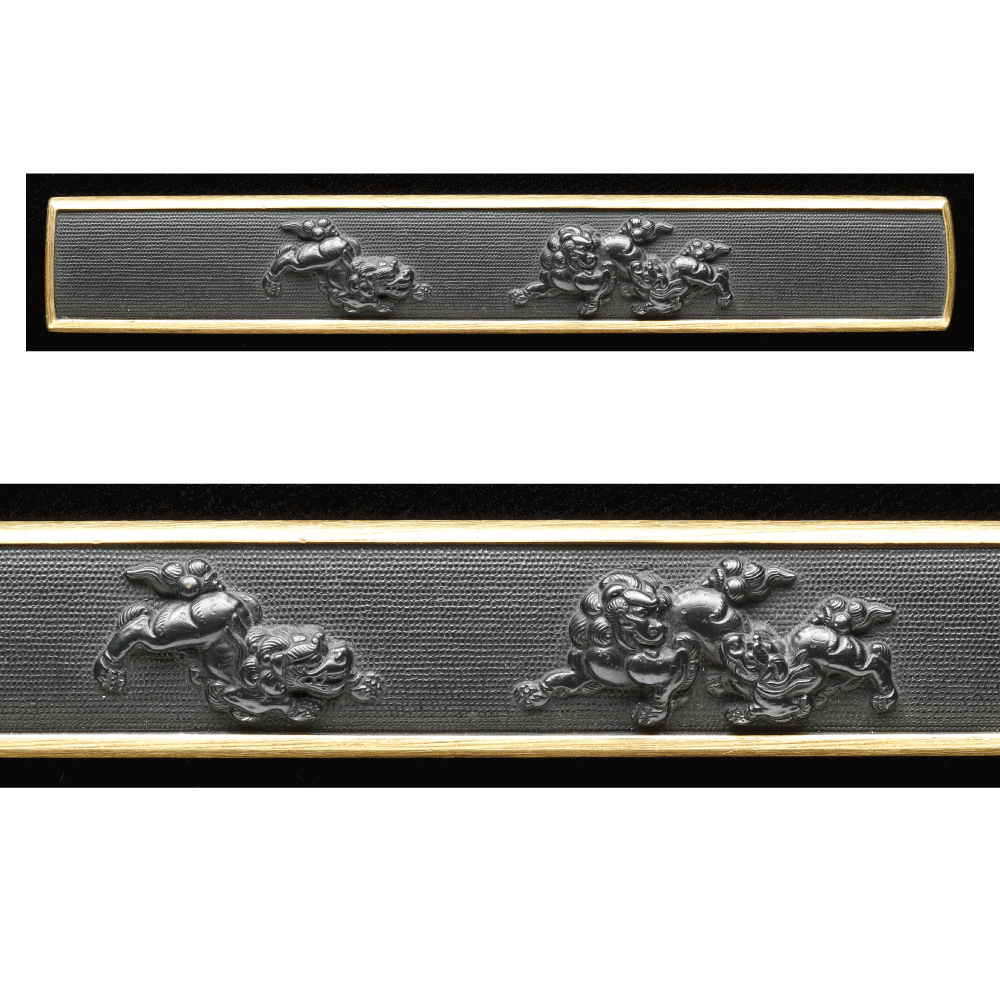
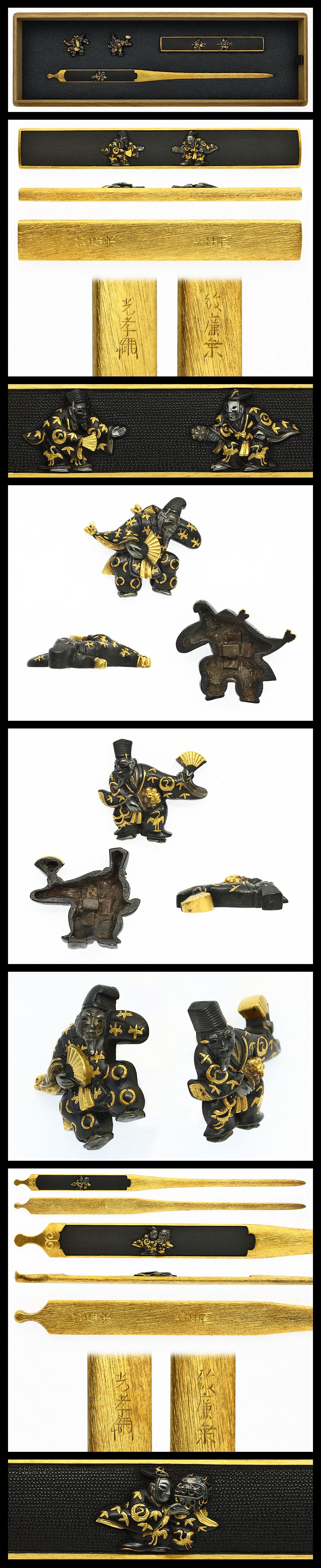
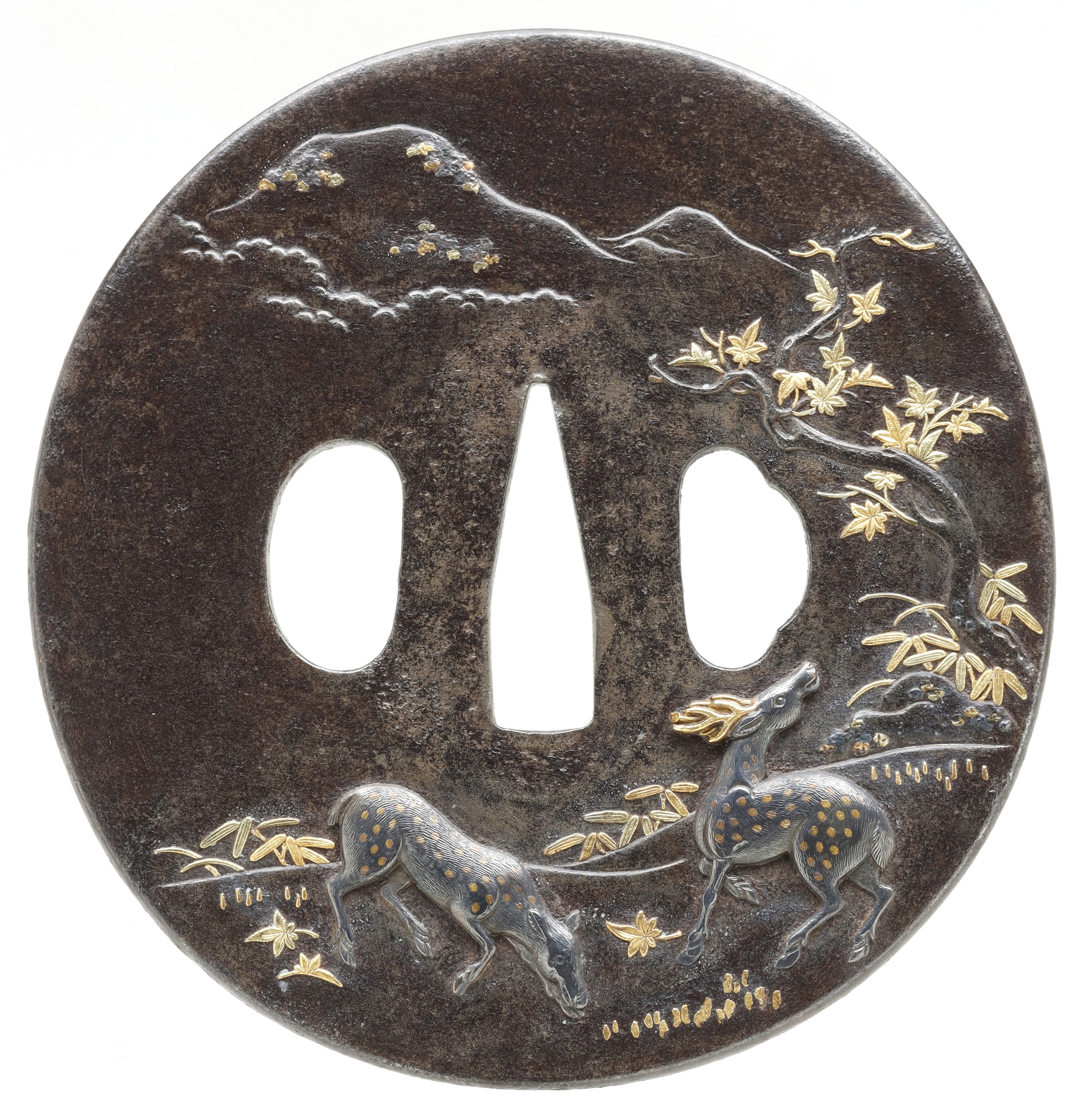
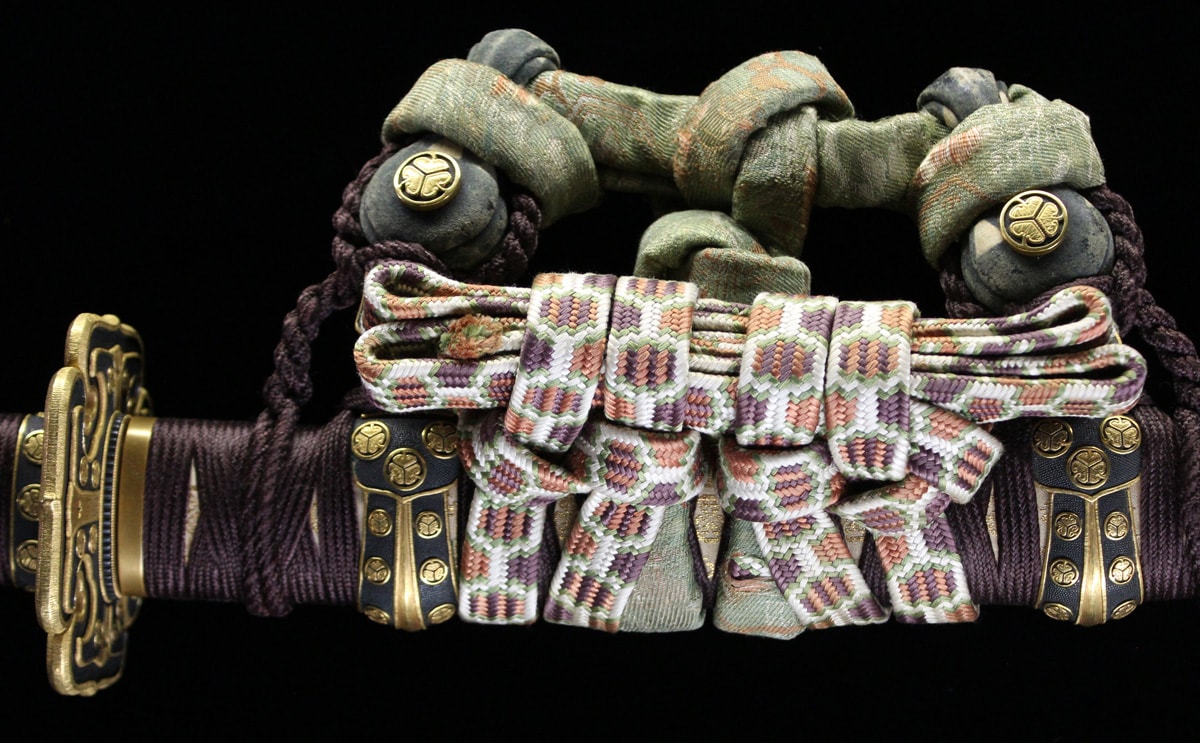
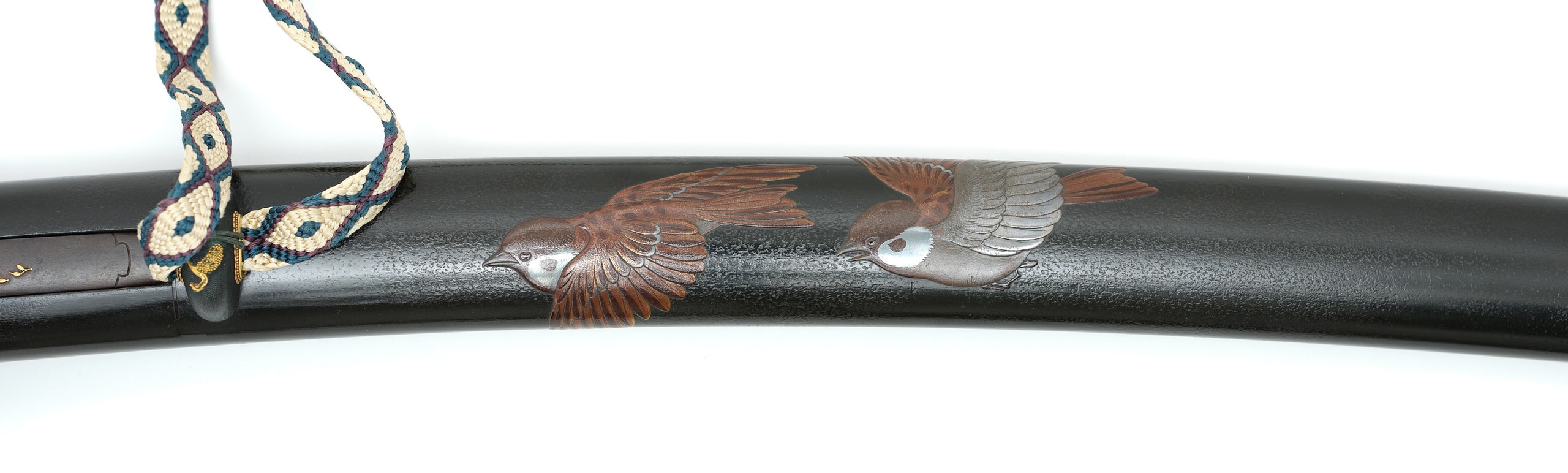
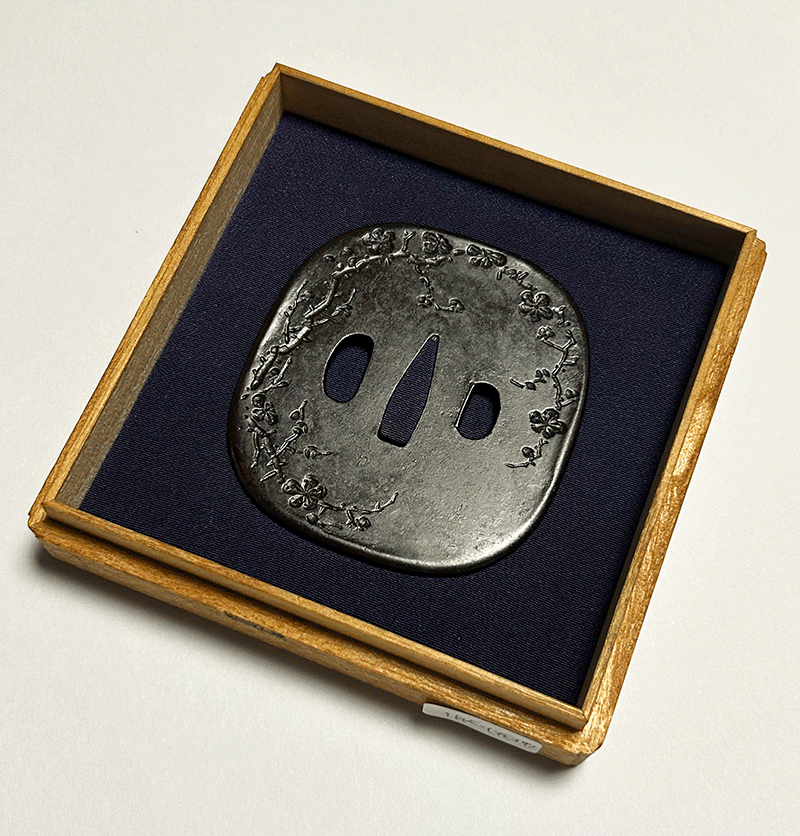
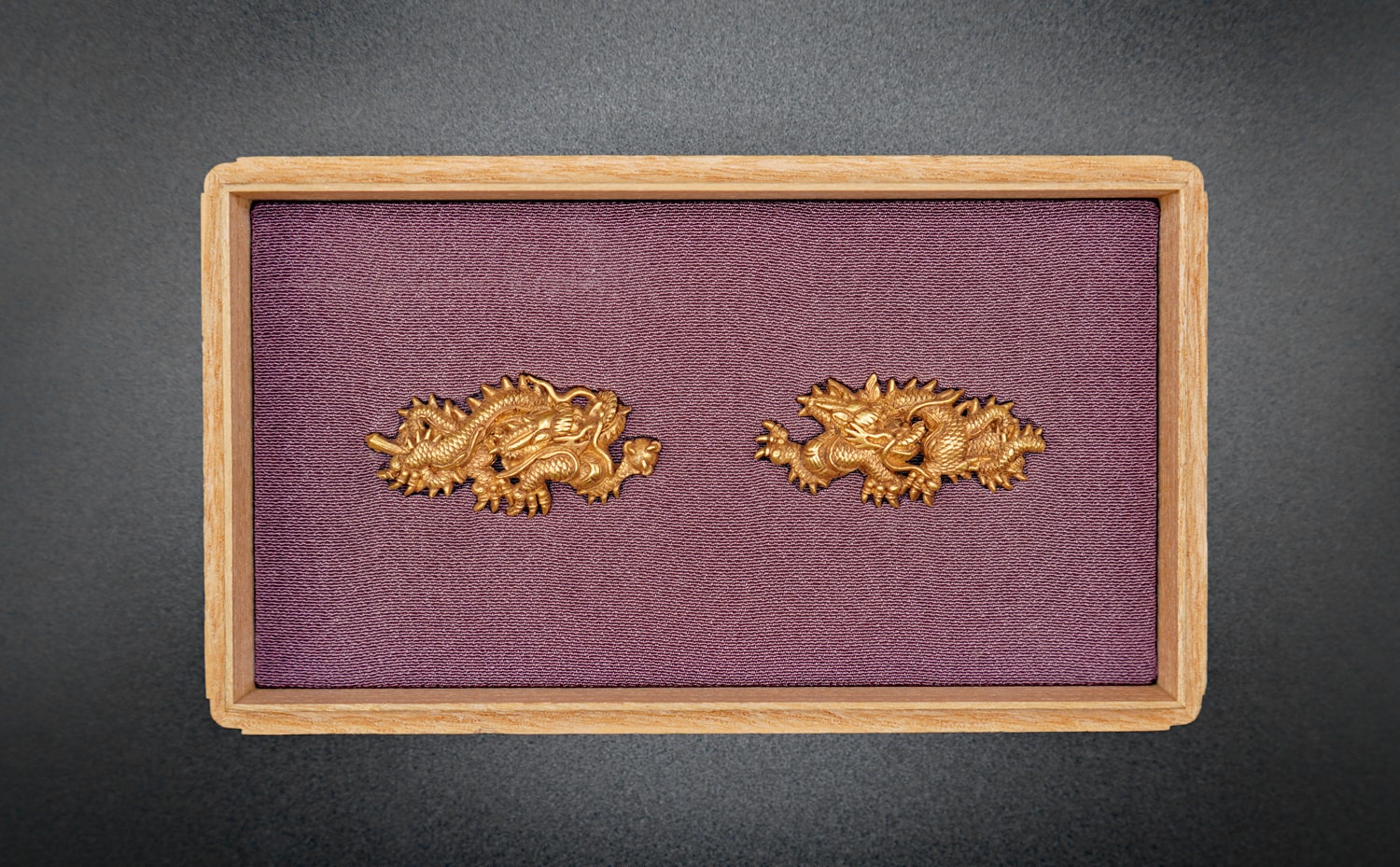
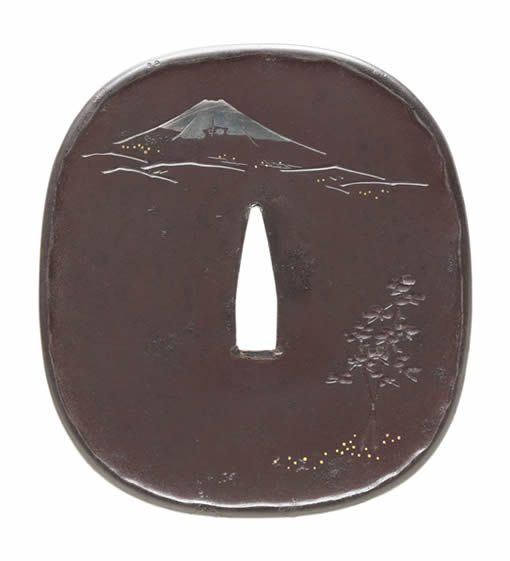
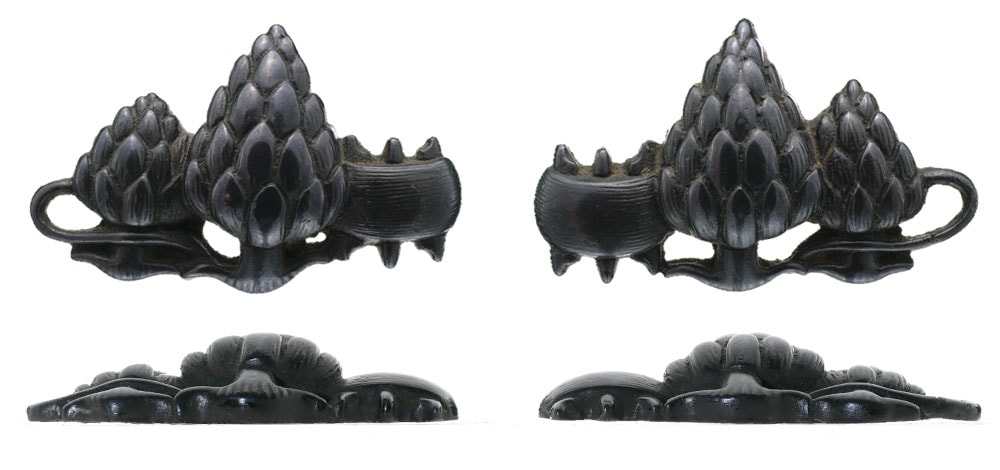
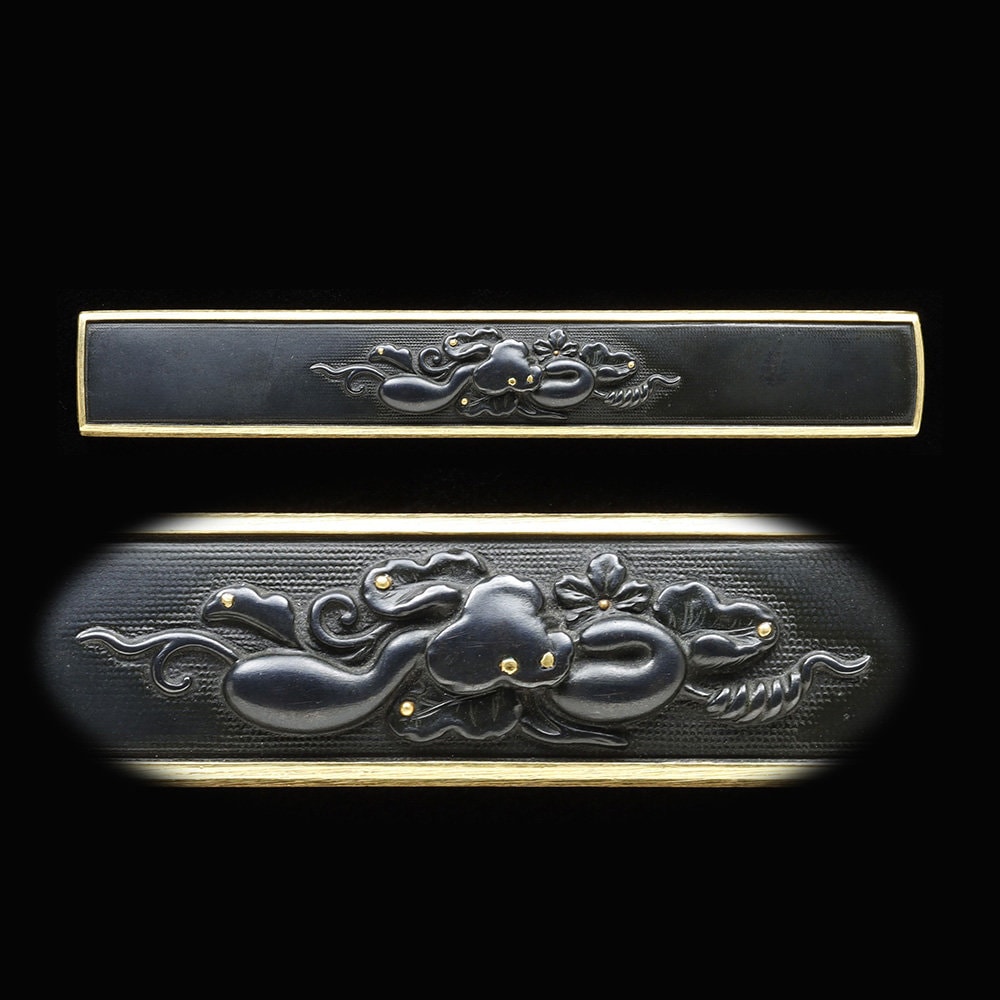
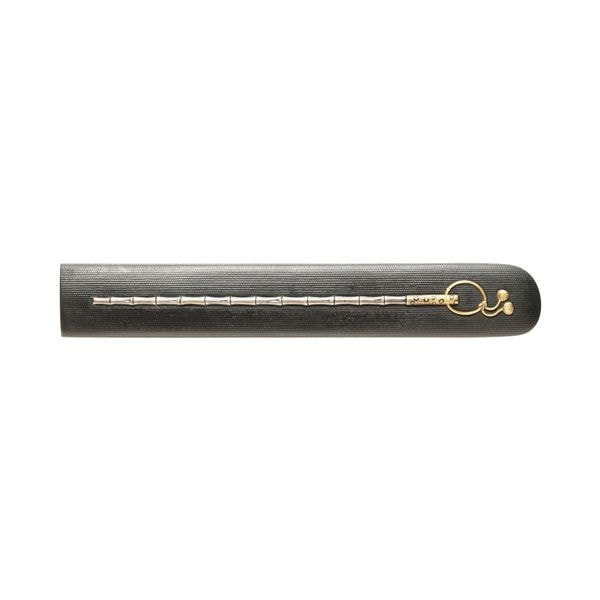
This is a set of two sword fittings (nishomono) depicting a dōran (pouch), attributed to Gotō Tokujō and authenticated by Gotō Mitsutaka. It is made of shakudō nanako with high-relief carving and colored enamel. The piece dates to the Azuchi-Momoyama period and holds a Tokubetsu Hozon Tosogu certification.

Certificate Reading

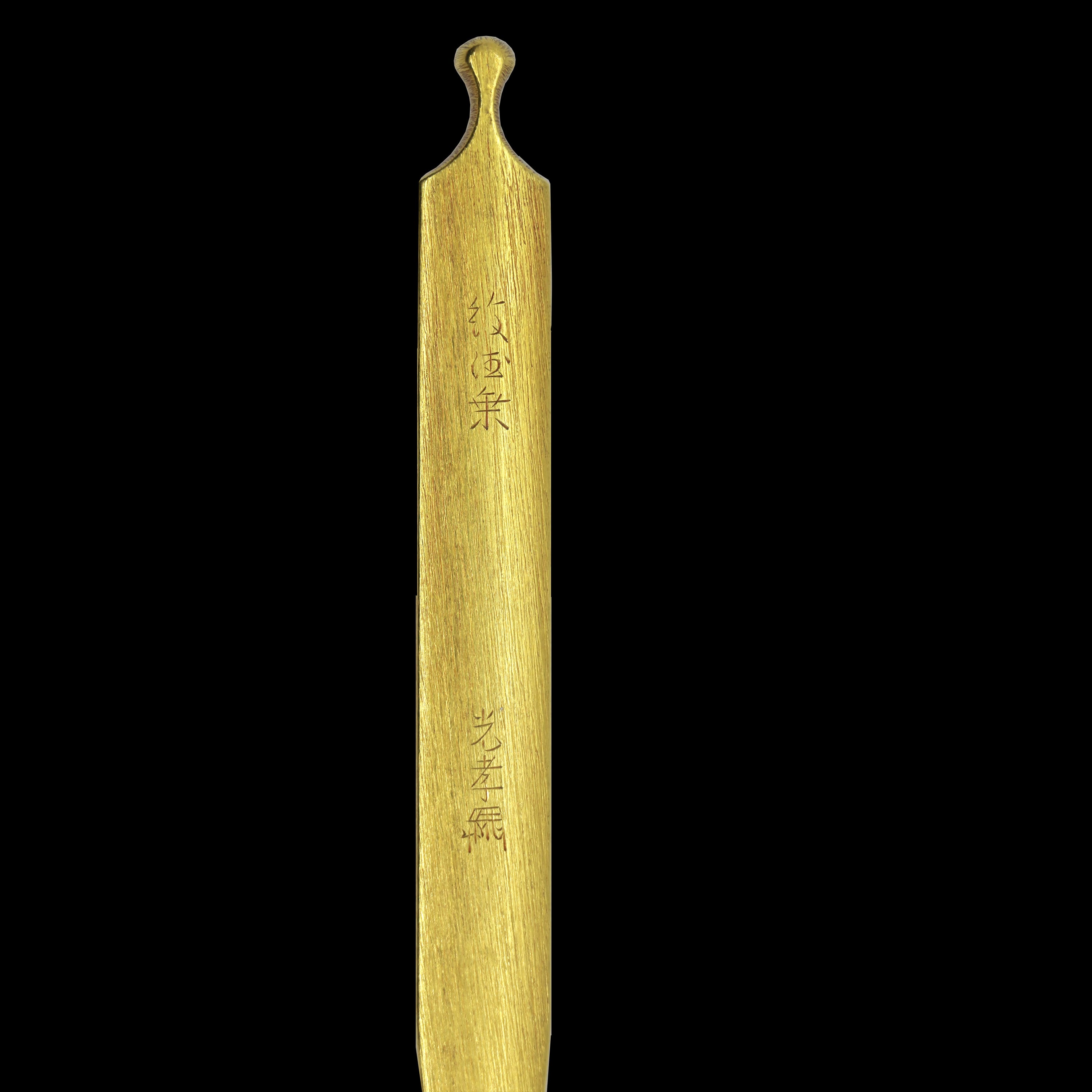
Certificate reading — 銘 紋徳乗 光孝(花押)

NihontoWatch MonNihontoWatch
MarketEncyclopediaKantei
Fittings›Iebori›Goto›Goto Main Line›Goto Tokujo›Nishomono Dōran-zu by Gotō Tokujō Mitsutaka
futatokoroTokubetsu Hozon
Goto Tokujo

Nishomono Dōran-zu by Gotō Tokujō Mitsutaka

mei · Gotō · Momoyama-Early Edo (1550-1631)

¥1,500,000
Visit seller website →
Goto Tokujo — 1 of 6
Goto Tokujo — 2 of 6
Goto Tokujo — 3 of 6
Goto Tokujo — 4 of 6
Goto Tokujo — 5 of 6
Goto Tokujo — 6 of 6
1 / 6
1 / 6
Goto Tokujo — 1 of 6Goto Tokujo — 2 of 6Goto Tokujo — 3 of 6Goto Tokujo — 4 of 6Goto Tokujo — 5 of 6Goto Tokujo — 6 of 6
Measurements & details
Maker

Goto Tokujo

Era

Momoyama-Early Edo (1550-1631)

Signature

Signed

Papers

Tokuho (NBTHK)

Description

This is a set of two sword fittings (nishomono) depicting a dōran (pouch), attributed to Gotō Tokujō and authenticated by Gotō Mitsutaka. It is made of shakudō nanako with high-relief carving and colored enamel. The piece dates to the Azuchi-Momoyama period and holds a Tokubetsu Hozon Tosogu certification.

About the maker

Goto Tokujo

後藤徳乗

Iebori · Yamashiro · around 1550-1631

2 pieces on the market now

›

Goto Tokujo, the fifth-generation head of the Goto mainline (soke), was the eldest son and heir of the fourth master, Mitsujo. He was born in Tenbun 19 (1550) and died in Kan'ei 8 (1631). His common name was first Genjiro, later changed to Shirobei; his personal name (imina) is recorded as Mitsumoto and also as Masaie, and he is additionally known by the name Koryo. Since the time of the first master, Yujo, the Goto family had served the Ashikaga shogunal house generation after generation. However, during Mitsujo's tenure the Ashikaga line was extinguished, and thereafter Mitsujo and Tokujo entered the service of Oda Nobunaga. Following Nobunaga's death, they served Toyotomi Hideyoshi and were charged with three official duties: oban (large gold coinage), fundo (weights and measures), and horimono (carved metalwork for sword fittings). In Tensho 16 (1588), Tokujo produced oban and koban gold coinage, striking upon them a paulownia hallmark known as the "Tokujo kiri" -- also called the "Taiko kiri" -- and writing his own name in ink upon the coins. Even after the advent of Tokugawa rule he continued in service to Ieyasu and Hidetada, and in his later years he was granted the honorary Buddhist rank of Hogen. Tokujo had five sons and four daughters; his eldest son, Eijo Masafusa, succeeded as the sixth head, while his third son, Kenjo, became the seventh head, and the fourth and fifth sons, Takujo and Kyujo, established separate branch houses. His daughters married into the Hon'ami, Kano, and Gold Guild (kinza) families, cementing the Goto house's central position among Momoyama-period cultural lineages.

Tokujo's work is executed predominantly on shakudo nanako-ji grounds -- surfaces of extraordinarily minute and dense nanako that serve as the foundation for the Goto house's formal repertoire. His principal technique is takabori with kin-iroe (high-relief carving finished with gold color application), frequently supplemented by gin-iroe and enriched on the reverse with kin'ura (gilt backing). For menuki and sculptural subjects, he employs yobori and nikubori (modeled and rounded relief carving), often with in'yo-ne undercutting that produces pronounced depth from the reverse and emphatic contrasts of ridge and hollow when tightened from the front. His solid-gold (kinmuku) pieces exhibit usu-kin-dashi (thin-gold raised work) of particular refinement, in which the modulation of sculpted volumes -- the nikudori -- stands out with exceptional clarity. Among his most celebrated formal subjects is the paulownia crest, executed with a special chisel called the mugibataki and said to be struck ten times; the distinctive chisel marks visible between the flowers are recognized as hallmarks of the Goto family's official house style (o-iebori). Whether rendering crawling dragons, auspicious figures such as Hotei and Idaten, or motifs drawn from nature, his compositions display a forceful method that conveys both impact and a powerful sense of motion.

The NBTHK consistently characterizes Tokujo's work as possessing a distinctive dignity and authority that is unmistakably of the Goto mainline tradition. His pieces are described as conveying the bold, sumptuous spirit characteristic of Momoyama taste -- powerfully expressed and of notably elevated dignity. The reliability and precision of his okakebori (official house-style carving) are held as exemplary, and the quality of execution is repeatedly affirmed as displaying the high technical level and refined, elegant dignity of the Momoyama-period Goto tradition. Several of his finest works were transmitted in the collections of illustrious houses, including the Hachisuka daimyo family and the wealthy Osaka merchant house of Konoike -- provenance that itself attests to the esteem in which his art was held. Tokujo stands as the pivotal figure who carried the Goto house through the transition from Ashikaga patronage to the unified realm of the Momoyama warlords, and his production -- whether signed or authenticated by later Goto masters through origami and kiwame-mei -- remains a benchmark against which the authority and sumptuousness of mainline Goto metalwork is measured.

Historical importance

Where Goto Tokujo stands among comparable artisans: across all of nihontō, and within tradition, era, and period. The tiers (Foremost · Leading · Major · Notable) weigh official designations from the NBTHK and Japan's Agency for Cultural Affairs, together with historical honors of lasting repute such as the Sansaku and Meibutsu-chō.

随一
Foremost
屈指
Leading
有数
Major
著名
Notable

Select a lens to see how it's measured.

Designation record
32 designated works
Jūyō Bijutsuhin
1
Tokubetsu Jūyō
1
Jūyō
30
2 works by Goto Tokujo on the market→
Goto Tokujo — full profileIebori school
About the school

Goto

後藤

Iebori · Yamashiro

317 pieces on the market now

›

The Goto house stands as the preeminent dynasty of sword-fitting makers in the history of Japanese metalwork, an unbroken lineage of seventeen generations spanning from the founding master Yujo (1440--1512), who served Ashikaga Yoshimasa amid the refined culture of Higashiyama, through the final head Hojo (1816--1856) in the closing years of the Tokugawa shogunate. From its inception the house served successive rulers -- Ashikaga shoguns, Oda Nobunaga, Toyotomi Hideyoshi, and the Tokugawa -- and its productions became known as iebori, the "house carving" distinguished from machibori made for ordinary public demand. The fourth master Kojo first introduced warrior subjects and employed preparatory drawings by Kano Motonobu and Eitoku; the fifth master Tokujo struck the celebrated "Tokujo kiri" hallmark upon oban gold coinage for Hideyoshi; the third master Joshin -- "not only a metalworker but also a warrior" -- was killed in battle against the Azai clan in 1562. The seventh master Kenjo, praised since ancient times as a restorer of the house's fortunes (the finest exponents being termed Yuko-ken), traveled to Kaga and laid the foundations for the later flourishing of the Kaga-Goto tradition, while the tenth master Renjo carried the mainline from Kyoto to Edo, where it would remain through the seventeenth generation. The eleventh master Tsujo bridged the formal tradition with the expressive spirit of the Genroku era, and the thirteenth master Enjo served as an authoritative appraiser, authenticating works by earlier masters across the entire succession. The collective technical vocabulary of the Goto house is built upon shakudo nanako-ji grounds of extraordinarily minute and dense stippling, upon which motifs are rendered in takabori with kin-iroe and gin-iroe, frequently supplemented by solid gold (kinmuku) construction and kin'ura gilt backing. The sculptural manner is characterized by what the NBTHK repeatedly describes as "high mountains and deep valleys" -- a modulation of volume in which modeling rises emphatically while recesses are cut deep and clean, producing forceful and crisply articulated relief.

" Sojo inherited and tightened these forms with controlled elegance; Joshin amplified them to conspicuously larger scale with claws that are "characteristically large and long, with the tips splayed open"; Eijo brought a finer, more delicate precision to compositions of equally grand ambition; and Kenjo introduced a distinctive shosha quality -- austere and urbane -- that distinguished his work from the first six generations. The later masters sustained this discipline: Teijo's calm restraint and distinctive coloristic effects, Renjo's forty-five years of deeply worked takabori capturing instantaneous warrior movements, Tsujo's innovative left-right spreading compositions, and Hojo's reintroduction of machibori aesthetics into the official house style all demonstrate the lineage's capacity for renewal within tradition. The Goto house's enduring significance resides not merely in the technical excellence of individual masters but in the institutional continuity of a critical tradition sustained across four centuries. Works from the "upper six generations" (kami roku-dai) through Eijo established the canonical repertoire of prescribed okitemono motifs -- dragons, lions, paulownia crests, Kurikara, and auspicious figures -- while successive heads served simultaneously as makers and authenticators, issuing origami certificates and kiwame-mei inscriptions that themselves constitute important documents of connoisseurship. Valuations reaching one thousand kan and transmission through such distinguished collections as the Konoike, Shimazu, Tokugawa, and Maeda houses attest to the unrivaled esteem in which Goto metalwork has been held. Even Sokujo, whose tenure lasted barely four years before his death at thirty-two, left a small but distinguished body of work authenticated across eight subsequent generations of headmasters. From Yujo's founding vision through Hojo's final flowering -- whose technical command the NBTHK judges the finest from the twelfth master onward, betraying "not the slightest hint of the approaching conclusion" of the unbroken line -- the Goto house represents the defining standard against which all Japanese metalwork is measured, the wellspring from which the entire sokeN kinkO tradition flows. Learn more →

61 recorded smiths775 designated works
Leading smiths
SmithEraDesignated
Goto Joshin後藤乗真1512-156268
Goto Yujo後藤祐乗1440-151241
Goto Kenjo後藤顕乗1586-166346
Goto Sojo後藤宗乗1461-153855
Goto Eijo後藤栄乗1577-161735
Explore the Goto school →
NBTHK Certificate
Tokubetsu Hozon Tōken特別保存刀剣
Sword Especially Worthy of Preservation
›

A Hozon-certified blade judged to show notably superior workmanship and a better state of preservation. The bar is higher: re-tempered blades and most unsigned Muromachi/Edo works are excluded.

Signed: 紋徳乗 光孝(花押) (Goto Tokujo)
As written on the certificate
About the NBTHK›

The NBTHK (Nihon Bijutsu Tōken Hozon Kyōkai, the Society for the Preservation of Japanese Art Swords) is a public-interest incorporated foundation founded in 1948 and supervised by Japan’s Agency for Cultural Affairs (Bunkachō); it is based at the Japanese Sword Museum in Tokyo. Its expert panels physically examine each submitted work (shinsa) and issue a certificate (kanteishō) ranking it by artistic and historical merit. NBTHK papers are the most widely recognized standard of authentication for Japanese swords and fittings.

NBTHK official site→
Seller
A
Ayakashi
🇯🇵Ships from Japan
›
✓Verified dealerayakashi.co.jp
Settles in JPY
✓Ships worldwide✓English supportWire transferCredit card
Return policy

Except where the item is defective, we do not accept returns as a rule. In the case of an error on our part, please contact us by email within 3 days of the item's arrival.

View all of Ayakashi’s listings→View this item on the dealer’s site→

More works by Goto Tokujo

View all →
Nihon Collection
Hozon
Kozuka - Hozon - by Goto Tokujo - Goto Tokujo - Hen with chickKozuka - Hozon - by Goto Tokujo - Goto Tokujo - Hen with chick

Kozuka

ByGoto Tokujo
¥2,500

Previously sold by Goto Tokujo

Eirakudo
Tokuho
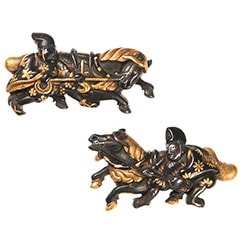
Menuki - Tokuho - by Goto Tokujo - Goto Tokujo Menuki: Design of Horse and SaddleMenuki - Tokuho - by Goto Tokujo - Goto Tokujo Menuki: Design of Horse and Saddle
Sold

Menuki

ByGoto Tokujo
SOLD
Choshuya
Tokuho
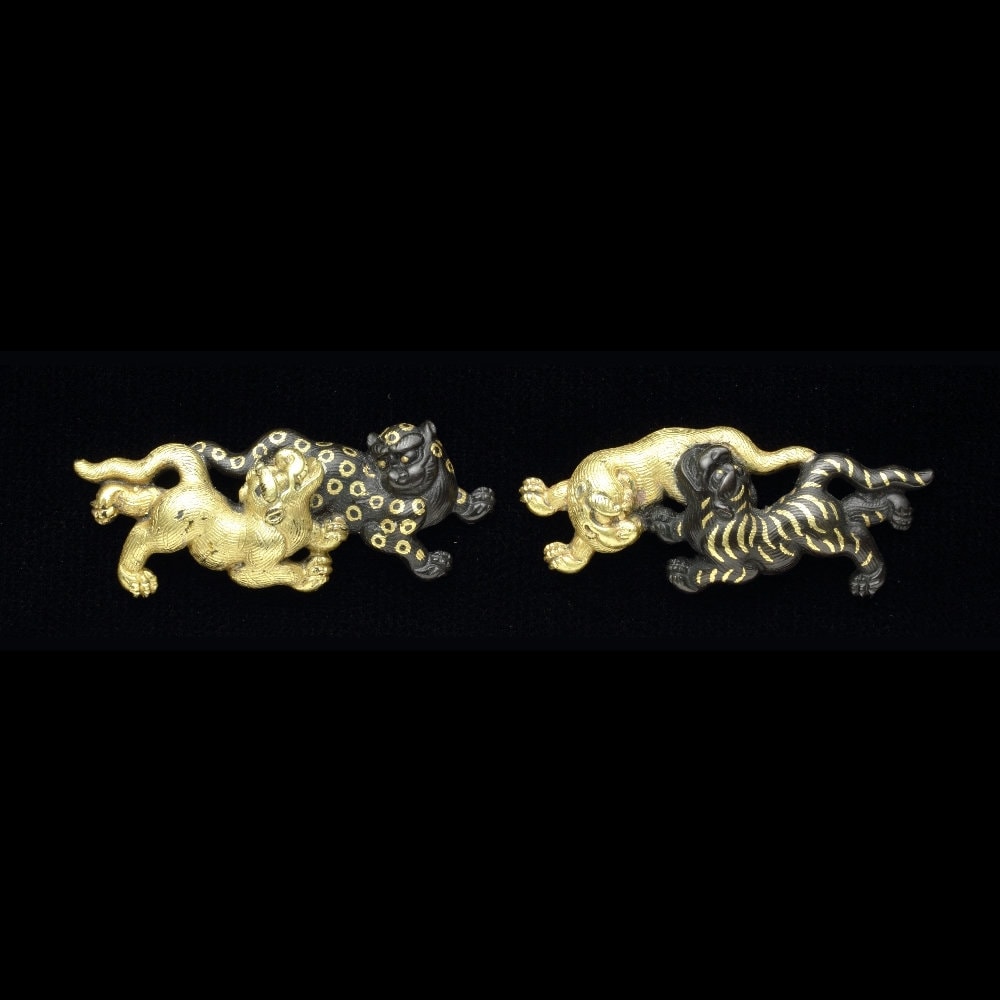
Menuki - Tokuho - by Goto Tokujo - Tiger and Leopard Design, Mumei, Goto TokujoMenuki - Tokuho - by Goto Tokujo - Tiger and Leopard Design, Mumei, Goto Tokujo
Sold

Menuki

ByGoto Tokujo
SOLD
Iida Koendo
Hozon
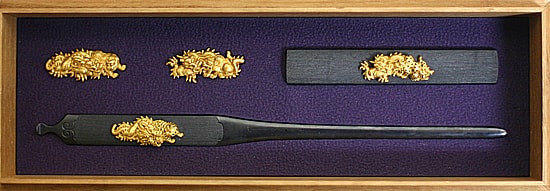
Mitokoromono - Hozon - by Goto Tokujo - Mitokoromono with Dragon and Tiger Design, Signed Tokujyo MitsutakaMitokoromono - Hozon - by Goto Tokujo - Mitokoromono with Dragon and Tiger Design, Signed Tokujyo Mitsutaka
Sold

Mitokoromono

ByGoto Tokujo
SOLD
World Seiyudo
Tokuho
Kozuka - Tokuho - by Goto Tokujo - Montokujyo Mitsutaka - Dancing Crane Design, NBTHK Tokubetsu Hozon TosoguKozuka - Tokuho - by Goto Tokujo - Montokujyo Mitsutaka - Dancing Crane Design, NBTHK Tokubetsu Hozon Tosogu
Sold

Kozuka

ByGoto Tokujo
SOLD

More Goto Main Line works

View all →
Aoi Art
Tokuho
Kozuka - Tokuho - by Goto Tsujo - MitsuyoshiKozuka - Tokuho - by Goto Tsujo - Mitsuyoshi

Kozuka

ByGoto Tsujo
¥500,000
Wakeidou
Tokuho
Menuki - Tokuho - by Goto Teijo - Mumei Teijyo - Twelve Zodiac Animals DesignMenuki - Tokuho - by Goto Teijo - Mumei Teijyo - Twelve Zodiac Animals Design

Menuki

ByGoto Teijo
¥380,000
Toushin
Tokubetsu Kichō
Futatokoro - Tokubetsu Kichō - by Goto Tsujo - Bundle of Rice Sheaves Design Futatokoro by Goto Mitsutoshi (Kao)Futatokoro - Tokubetsu Kichō - by Goto Tsujo - Bundle of Rice Sheaves Design Futatokoro by Goto Mitsutoshi (Kao)

Futatokoromono

ByGoto Tsujo
¥550,000
Choshuya
Tokuho
Kozuka - Tokuho - by Goto Eijo - Agricultural Tools Design, Signed Eijo saku Mitsumori (Kao)Kozuka - Tokuho - by Goto Eijo - Agricultural Tools Design, Signed Eijo saku Mitsumori (Kao)

Kozuka

ByGoto Eijo
¥350,000
Aoi Art
Jūyō
Gotokoromono - Jūyō - by Goto Enjo - Matching Set of Sword Fittings (Kōgai, Kozuka, Menuki): Okina Sanbasō DesignGotokoromono - Jūyō - by Goto Enjo - Matching Set of Sword Fittings (Kōgai, Kozuka, Menuki): Okina Sanbasō Design

Gotokoromono

ByGoto Enjo
¥4,000,000
Wakeidou
Hozon
Kozuka - Hozon - by Goto Shinjo - Mon Teijyo Mitsuyoshi (Kao) - Parent and Child Tiger and Leopard DesignKozuka - Hozon - by Goto Shinjo - Mon Teijyo Mitsuyoshi (Kao) - Parent and Child Tiger and Leopard Design

Kozuka

ByGoto Shinjo
¥580,000
Soryu
Hozon
Fuchi-Kashira - Hozon - by Goto Teijo - Fuchikashira signed "Teijo Saku Mitsuyoshi" with NBTHK Hozon TosoguFuchi-Kashira - Hozon - by Goto Teijo - Fuchikashira signed "Teijo Saku Mitsuyoshi" with NBTHK Hozon Tosogu

Fuchi-Kashira

ByGoto Teijo
¥2,800
Nihontocraft
Jūyō
Mitokoromono - Jūyō - by Goto Hojo - Goto Hojo MitokoromonoMitokoromono - Jūyō - by Goto Hojo - Goto Hojo Mitokoromono

Mitokoromono

ByGoto Hojo
¥27,000

More from the Goto school

View all →
Choshuya
Tokuho
Tsuba - Tokuho - by Goto Ichijo - Snow Crystal Design by Goto Hokyo Ichijo (with Kao)Tsuba - Tokuho - by Goto Ichijo - Snow Crystal Design by Goto Hokyo Ichijo (with Kao)

Tsuba

ByGoto Ichijo
Ask
Ginza Seikodo
Tokuho
Futatokoro - Tokuho - by Goto Ichijo - Fuchi-Kashira: Goto Hokyo Ichijo - Cranes in Flight motifFutatokoro - Tokuho - by Goto Ichijo - Fuchi-Kashira: Goto Hokyo Ichijo - Cranes in Flight motif

Futatokoromono

ByGoto Ichijo
¥1,900,000
Iida Koendo
Jūyō
Kozuka - Jūyō - by Goto Sojo - Tosogu: NBTHK Juyo Tosogu No.54 by Gotou SojyoKozuka - Jūyō - by Goto Sojo - Tosogu: NBTHK Juyo Tosogu No.54 by Gotou Sojyo

Kozuka

ByGoto Sojo
¥3,300,000
Yamasiroya
Tokujū
Koshirae - Tokuju - by Kaga-Goto Etsujo - Tachi Koshirae: Gold Nashiji Aoi-mon Scattered Gold Shell Maki-e Saya Itomaki Tachi Koshirae / Tsuba (Signed) Goto Etsujo (Kao)Koshirae - Tokuju - by Kaga-Goto Etsujo - Tachi Koshirae: Gold Nashiji Aoi-mon Scattered Gold Shell Maki-e Saya Itomaki Tachi Koshirae / Tsuba (Signed) Goto Etsujo (Kao)

Koshirae

ByKaga-Goto Etsujo
Ask
Ginza Seikodo
Jūyō
Kozuka - Jūyō - by Ichijo Ikkin - Funada Ikkin kaoKozuka - Jūyō - by Ichijo Ikkin - Funada Ikkin kao

Kozuka

ByIchijo Ikkin
Ask
Mandarin Mansion
Tokuho
Koshirae - Tokuho - by Araki Tomei - Araki Tōmei wakizashi koshiraeKoshirae - Tokuho - by Araki Tomei - Araki Tōmei wakizashi koshirae

Koshirae

ByAraki Tomei
Ask
Onihonto
Hozon
Fuchi-Kashira - Hozon - by Waki-Goto Seijo - Thunder and Cloud Dragon Fuchi Kashira By Goto SeijoFuchi-Kashira - Hozon - by Waki-Goto Seijo - Thunder and Cloud Dragon Fuchi Kashira By Goto Seijo

Fuchi-Kashira

ByWaki-Goto Seijo
¥1,250
Aoi Art
Jūyō
Gotokoromono - Jūyō - by Araki Tomei - Set of Tosogu: Tomei - Tsuba, Kozuka, Fuchi-Kashira, Menuki, Ura-gawara, Kurikata : Millet DesignGotokoromono - Jūyō - by Araki Tomei - Set of Tosogu: Tomei - Tsuba, Kozuka, Fuchi-Kashira, Menuki, Ura-gawara, Kurikata : Millet Design

Gotokoromono

ByAraki Tomei
¥12,500,000

More from the Iebori tradition

View all →
Onihonto
Tokuho
Menuki - Tokuho - by Goto School - Large NBTHK Goto Shishi MenukiMenuki - Tokuho - by Goto School - Large NBTHK Goto Shishi Menuki

Menuki

ByGoto School
¥1,500
Ginza Seikodo
Tokuho
Menuki - Tokuho - by Waki-Goto Tojo - Warikibata Mei Goto Tojo (kao)Menuki - Tokuho - by Waki-Goto Tojo - Warikibata Mei Goto Tojo (kao)

Menuki

ByWaki-Goto Tojo
¥650,000
Katanahanbai
Tokuho
Menuki - Tokuho - by Araki Tomei - Araki Tomei - Awa-ho (Millet Ear) DesignMenuki - Tokuho - by Araki Tomei - Araki Tomei - Awa-ho (Millet Ear) Design

Menuki

ByAraki Tomei
¥2,200,000
Aoi Art
Tokuho
Mitokoromono - Tokuho - by Goto Ichijo - Nitokoro mono (matched pair of Kogai and Kozuka): Kijuo IchijoMitokoromono - Tokuho - by Goto Ichijo - Nitokoro mono (matched pair of Kogai and Kozuka): Kijuo Ichijo

Mitokoromono

ByGoto Ichijo
¥1,250,000
Iida Koendo
Tokuho
Tsuba - Tokuho - by Goto Ichijo - Tosogu: HakuoTsuba - Tokuho - by Goto Ichijo - Tosogu: Hakuo

Tsuba

ByGoto Ichijo
¥1,320,000
Iida Koendo
Jūyō
Mitokoromono - Jūyō - by Goto Tobari Tomihisa - Tosogu: NBTHK Juyo Tosogu No.70 by Tobari TomihisaMitokoromono - Jūyō - by Goto Tobari Tomihisa - Tosogu: NBTHK Juyo Tosogu No.70 by Tobari Tomihisa

Mitokoromono

ByGoto Tobari Tomihisa
¥5,500,000
Katanahanbai
Tokuho
Futatokoro - Tokuho - by Goto Ichijo - Goto IchijoFutatokoro - Tokuho - by Goto Ichijo - Goto Ichijo

Futatokoromono

ByGoto Ichijo
¥2,200,000
Katanahanbai
Tokuho
Menuki - Tokuho - by Ko-Goto School - Solid Gold Crawling Dragon Menuki: KogotoMenuki - Tokuho - by Ko-Goto School - Solid Gold Crawling Dragon Menuki: Kogoto

Menuki

ByKo-Goto School
¥750,000

Swords

  • Katana
  • Wakizashi
  • Tantō
  • Tachi
  • Naginata
  • Yari

Fittings

  • Tsuba
  • Fuchi-Kashira
  • Kozuka
  • Menuki

Armor

  • Kabuto
  • Samurai Armor

By Certification

  • Tokujū
  • Jūyō
  • Tokuho
  • Hozon

Resources

  • Dealer Directory
  • Artist Directory
  • The Daily Kantei
  • Glossary
  • Browse All
Nihontowatch© 2026
TermsPrivacyCookiesAbout

Description

This is a set of two sword fittings (nishomono) depicting a dōran (pouch), attributed to Gotō Tokujō and authenticated by Gotō Mitsutaka. It is made of shakudō nanako with high-relief carving and colored enamel. The piece dates to the Azuchi-Momoyama period and holds a Tokubetsu Hozon Tosogu certification.

Certificate Reading

Certificate reading — 銘 紋徳乗 光孝(花押)

NihontoWatch MonNihontoWatch
MarketEncyclopediaKantei
Fittings›Iebori›Goto›Goto Main Line›Goto Tokujo›Nishomono Dōran-zu by Gotō Tokujō Mitsutaka
futatokoroTokubetsu Hozon
Goto Tokujo

Nishomono Dōran-zu by Gotō Tokujō Mitsutaka

mei · Gotō · Momoyama-Early Edo (1550-1631)

¥1,500,000
Visit seller website →
Goto Tokujo — 1 of 6
Goto Tokujo — 2 of 6
Goto Tokujo — 3 of 6
Goto Tokujo — 4 of 6
Goto Tokujo — 5 of 6
Goto Tokujo — 6 of 6
1 / 6
1 / 6
Goto Tokujo — 1 of 6Goto Tokujo — 2 of 6Goto Tokujo — 3 of 6Goto Tokujo — 4 of 6Goto Tokujo — 5 of 6Goto Tokujo — 6 of 6
Measurements & details
Maker

Goto Tokujo

Era

Momoyama-Early Edo (1550-1631)

Signature

Signed

Papers

Tokuho (NBTHK)

Description

This is a set of two sword fittings (nishomono) depicting a dōran (pouch), attributed to Gotō Tokujō and authenticated by Gotō Mitsutaka. It is made of shakudō nanako with high-relief carving and colored enamel. The piece dates to the Azuchi-Momoyama period and holds a Tokubetsu Hozon Tosogu certification.

About the maker

Goto Tokujo

後藤徳乗

Iebori · Yamashiro · around 1550-1631

2 pieces on the market now

›

Goto Tokujo, the fifth-generation head of the Goto mainline (soke), was the eldest son and heir of the fourth master, Mitsujo. He was born in Tenbun 19 (1550) and died in Kan'ei 8 (1631). His common name was first Genjiro, later changed to Shirobei; his personal name (imina) is recorded as Mitsumoto and also as Masaie, and he is additionally known by the name Koryo. Since the time of the first master, Yujo, the Goto family had served the Ashikaga shogunal house generation after generation. However, during Mitsujo's tenure the Ashikaga line was extinguished, and thereafter Mitsujo and Tokujo entered the service of Oda Nobunaga. Following Nobunaga's death, they served Toyotomi Hideyoshi and were charged with three official duties: oban (large gold coinage), fundo (weights and measures), and horimono (carved metalwork for sword fittings). In Tensho 16 (1588), Tokujo produced oban and koban gold coinage, striking upon them a paulownia hallmark known as the "Tokujo kiri" -- also called the "Taiko kiri" -- and writing his own name in ink upon the coins. Even after the advent of Tokugawa rule he continued in service to Ieyasu and Hidetada, and in his later years he was granted the honorary Buddhist rank of Hogen. Tokujo had five sons and four daughters; his eldest son, Eijo Masafusa, succeeded as the sixth head, while his third son, Kenjo, became the seventh head, and the fourth and fifth sons, Takujo and Kyujo, established separate branch houses. His daughters married into the Hon'ami, Kano, and Gold Guild (kinza) families, cementing the Goto house's central position among Momoyama-period cultural lineages.

Tokujo's work is executed predominantly on shakudo nanako-ji grounds -- surfaces of extraordinarily minute and dense nanako that serve as the foundation for the Goto house's formal repertoire. His principal technique is takabori with kin-iroe (high-relief carving finished with gold color application), frequently supplemented by gin-iroe and enriched on the reverse with kin'ura (gilt backing). For menuki and sculptural subjects, he employs yobori and nikubori (modeled and rounded relief carving), often with in'yo-ne undercutting that produces pronounced depth from the reverse and emphatic contrasts of ridge and hollow when tightened from the front. His solid-gold (kinmuku) pieces exhibit usu-kin-dashi (thin-gold raised work) of particular refinement, in which the modulation of sculpted volumes -- the nikudori -- stands out with exceptional clarity. Among his most celebrated formal subjects is the paulownia crest, executed with a special chisel called the mugibataki and said to be struck ten times; the distinctive chisel marks visible between the flowers are recognized as hallmarks of the Goto family's official house style (o-iebori). Whether rendering crawling dragons, auspicious figures such as Hotei and Idaten, or motifs drawn from nature, his compositions display a forceful method that conveys both impact and a powerful sense of motion.

The NBTHK consistently characterizes Tokujo's work as possessing a distinctive dignity and authority that is unmistakably of the Goto mainline tradition. His pieces are described as conveying the bold, sumptuous spirit characteristic of Momoyama taste -- powerfully expressed and of notably elevated dignity. The reliability and precision of his okakebori (official house-style carving) are held as exemplary, and the quality of execution is repeatedly affirmed as displaying the high technical level and refined, elegant dignity of the Momoyama-period Goto tradition. Several of his finest works were transmitted in the collections of illustrious houses, including the Hachisuka daimyo family and the wealthy Osaka merchant house of Konoike -- provenance that itself attests to the esteem in which his art was held. Tokujo stands as the pivotal figure who carried the Goto house through the transition from Ashikaga patronage to the unified realm of the Momoyama warlords, and his production -- whether signed or authenticated by later Goto masters through origami and kiwame-mei -- remains a benchmark against which the authority and sumptuousness of mainline Goto metalwork is measured.

Historical importance

Where Goto Tokujo stands among comparable artisans: across all of nihontō, and within tradition, era, and period. The tiers (Foremost · Leading · Major · Notable) weigh official designations from the NBTHK and Japan's Agency for Cultural Affairs, together with historical honors of lasting repute such as the Sansaku and Meibutsu-chō.

随一
Foremost
屈指
Leading
有数
Major
著名
Notable

Select a lens to see how it's measured.

Designation record
32 designated works
Jūyō Bijutsuhin
1
Tokubetsu Jūyō
1
Jūyō
30
2 works by Goto Tokujo on the market→
Goto Tokujo — full profileIebori school
About the school

Goto

後藤

Iebori · Yamashiro

317 pieces on the market now

›

The Goto house stands as the preeminent dynasty of sword-fitting makers in the history of Japanese metalwork, an unbroken lineage of seventeen generations spanning from the founding master Yujo (1440--1512), who served Ashikaga Yoshimasa amid the refined culture of Higashiyama, through the final head Hojo (1816--1856) in the closing years of the Tokugawa shogunate. From its inception the house served successive rulers -- Ashikaga shoguns, Oda Nobunaga, Toyotomi Hideyoshi, and the Tokugawa -- and its productions became known as iebori, the "house carving" distinguished from machibori made for ordinary public demand. The fourth master Kojo first introduced warrior subjects and employed preparatory drawings by Kano Motonobu and Eitoku; the fifth master Tokujo struck the celebrated "Tokujo kiri" hallmark upon oban gold coinage for Hideyoshi; the third master Joshin -- "not only a metalworker but also a warrior" -- was killed in battle against the Azai clan in 1562. The seventh master Kenjo, praised since ancient times as a restorer of the house's fortunes (the finest exponents being termed Yuko-ken), traveled to Kaga and laid the foundations for the later flourishing of the Kaga-Goto tradition, while the tenth master Renjo carried the mainline from Kyoto to Edo, where it would remain through the seventeenth generation. The eleventh master Tsujo bridged the formal tradition with the expressive spirit of the Genroku era, and the thirteenth master Enjo served as an authoritative appraiser, authenticating works by earlier masters across the entire succession. The collective technical vocabulary of the Goto house is built upon shakudo nanako-ji grounds of extraordinarily minute and dense stippling, upon which motifs are rendered in takabori with kin-iroe and gin-iroe, frequently supplemented by solid gold (kinmuku) construction and kin'ura gilt backing. The sculptural manner is characterized by what the NBTHK repeatedly describes as "high mountains and deep valleys" -- a modulation of volume in which modeling rises emphatically while recesses are cut deep and clean, producing forceful and crisply articulated relief.

" Sojo inherited and tightened these forms with controlled elegance; Joshin amplified them to conspicuously larger scale with claws that are "characteristically large and long, with the tips splayed open"; Eijo brought a finer, more delicate precision to compositions of equally grand ambition; and Kenjo introduced a distinctive shosha quality -- austere and urbane -- that distinguished his work from the first six generations. The later masters sustained this discipline: Teijo's calm restraint and distinctive coloristic effects, Renjo's forty-five years of deeply worked takabori capturing instantaneous warrior movements, Tsujo's innovative left-right spreading compositions, and Hojo's reintroduction of machibori aesthetics into the official house style all demonstrate the lineage's capacity for renewal within tradition. The Goto house's enduring significance resides not merely in the technical excellence of individual masters but in the institutional continuity of a critical tradition sustained across four centuries. Works from the "upper six generations" (kami roku-dai) through Eijo established the canonical repertoire of prescribed okitemono motifs -- dragons, lions, paulownia crests, Kurikara, and auspicious figures -- while successive heads served simultaneously as makers and authenticators, issuing origami certificates and kiwame-mei inscriptions that themselves constitute important documents of connoisseurship. Valuations reaching one thousand kan and transmission through such distinguished collections as the Konoike, Shimazu, Tokugawa, and Maeda houses attest to the unrivaled esteem in which Goto metalwork has been held. Even Sokujo, whose tenure lasted barely four years before his death at thirty-two, left a small but distinguished body of work authenticated across eight subsequent generations of headmasters. From Yujo's founding vision through Hojo's final flowering -- whose technical command the NBTHK judges the finest from the twelfth master onward, betraying "not the slightest hint of the approaching conclusion" of the unbroken line -- the Goto house represents the defining standard against which all Japanese metalwork is measured, the wellspring from which the entire sokeN kinkO tradition flows. Learn more →

61 recorded smiths775 designated works
Leading smiths
SmithEraDesignated
Goto Joshin後藤乗真1512-156268
Goto Yujo後藤祐乗1440-151241
Goto Kenjo後藤顕乗1586-166346
Goto Sojo後藤宗乗1461-153855
Goto Eijo後藤栄乗1577-161735
Explore the Goto school →
NBTHK Certificate
Tokubetsu Hozon Tōken特別保存刀剣
Sword Especially Worthy of Preservation
›

A Hozon-certified blade judged to show notably superior workmanship and a better state of preservation. The bar is higher: re-tempered blades and most unsigned Muromachi/Edo works are excluded.

Signed: 紋徳乗 光孝(花押) (Goto Tokujo)
As written on the certificate
About the NBTHK›

The NBTHK (Nihon Bijutsu Tōken Hozon Kyōkai, the Society for the Preservation of Japanese Art Swords) is a public-interest incorporated foundation founded in 1948 and supervised by Japan’s Agency for Cultural Affairs (Bunkachō); it is based at the Japanese Sword Museum in Tokyo. Its expert panels physically examine each submitted work (shinsa) and issue a certificate (kanteishō) ranking it by artistic and historical merit. NBTHK papers are the most widely recognized standard of authentication for Japanese swords and fittings.

NBTHK official site→
Seller
A
Ayakashi
🇯🇵Ships from Japan
›
✓Verified dealerayakashi.co.jp
Settles in JPY
✓Ships worldwide✓English supportWire transferCredit card
Return policy

Except where the item is defective, we do not accept returns as a rule. In the case of an error on our part, please contact us by email within 3 days of the item's arrival.

View all of Ayakashi’s listings→View this item on the dealer’s site→

More works by Goto Tokujo

View all →
Nihon Collection
Hozon
Kozuka - Hozon - by Goto Tokujo - Goto Tokujo - Hen with chickKozuka - Hozon - by Goto Tokujo - Goto Tokujo - Hen with chick

Kozuka

ByGoto Tokujo
¥2,500

Previously sold by Goto Tokujo

Eirakudo
Tokuho
Menuki - Tokuho - by Goto Tokujo - Goto Tokujo Menuki: Design of Horse and SaddleMenuki - Tokuho - by Goto Tokujo - Goto Tokujo Menuki: Design of Horse and Saddle
Sold

Menuki

ByGoto Tokujo
SOLD
Choshuya
Tokuho
Menuki - Tokuho - by Goto Tokujo - Tiger and Leopard Design, Mumei, Goto TokujoMenuki - Tokuho - by Goto Tokujo - Tiger and Leopard Design, Mumei, Goto Tokujo
Sold

Menuki

ByGoto Tokujo
SOLD
Iida Koendo
Hozon
Mitokoromono - Hozon - by Goto Tokujo - Mitokoromono with Dragon and Tiger Design, Signed Tokujyo MitsutakaMitokoromono - Hozon - by Goto Tokujo - Mitokoromono with Dragon and Tiger Design, Signed Tokujyo Mitsutaka
Sold

Mitokoromono

ByGoto Tokujo
SOLD
World Seiyudo
Tokuho
Kozuka - Tokuho - by Goto Tokujo - Montokujyo Mitsutaka - Dancing Crane Design, NBTHK Tokubetsu Hozon TosoguKozuka - Tokuho - by Goto Tokujo - Montokujyo Mitsutaka - Dancing Crane Design, NBTHK Tokubetsu Hozon Tosogu
Sold

Kozuka

ByGoto Tokujo
SOLD

More Goto Main Line works

View all →
Aoi Art
Tokuho
Kozuka - Tokuho - by Goto Tsujo - MitsuyoshiKozuka - Tokuho - by Goto Tsujo - Mitsuyoshi

Kozuka

ByGoto Tsujo
¥500,000
Wakeidou
Tokuho
Menuki - Tokuho - by Goto Teijo - Mumei Teijyo - Twelve Zodiac Animals DesignMenuki - Tokuho - by Goto Teijo - Mumei Teijyo - Twelve Zodiac Animals Design

Menuki

ByGoto Teijo
¥380,000
Toushin
Tokubetsu Kichō
Futatokoro - Tokubetsu Kichō - by Goto Tsujo - Bundle of Rice Sheaves Design Futatokoro by Goto Mitsutoshi (Kao)Futatokoro - Tokubetsu Kichō - by Goto Tsujo - Bundle of Rice Sheaves Design Futatokoro by Goto Mitsutoshi (Kao)

Futatokoromono

ByGoto Tsujo
¥550,000
Choshuya
Tokuho
Kozuka - Tokuho - by Goto Eijo - Agricultural Tools Design, Signed Eijo saku Mitsumori (Kao)Kozuka - Tokuho - by Goto Eijo - Agricultural Tools Design, Signed Eijo saku Mitsumori (Kao)

Kozuka

ByGoto Eijo
¥350,000
Aoi Art
Jūyō
Gotokoromono - Jūyō - by Goto Enjo - Matching Set of Sword Fittings (Kōgai, Kozuka, Menuki): Okina Sanbasō DesignGotokoromono - Jūyō - by Goto Enjo - Matching Set of Sword Fittings (Kōgai, Kozuka, Menuki): Okina Sanbasō Design

Gotokoromono

ByGoto Enjo
¥4,000,000
Wakeidou
Hozon
Kozuka - Hozon - by Goto Shinjo - Mon Teijyo Mitsuyoshi (Kao) - Parent and Child Tiger and Leopard DesignKozuka - Hozon - by Goto Shinjo - Mon Teijyo Mitsuyoshi (Kao) - Parent and Child Tiger and Leopard Design

Kozuka

ByGoto Shinjo
¥580,000
Soryu
Hozon
Fuchi-Kashira - Hozon - by Goto Teijo - Fuchikashira signed "Teijo Saku Mitsuyoshi" with NBTHK Hozon TosoguFuchi-Kashira - Hozon - by Goto Teijo - Fuchikashira signed "Teijo Saku Mitsuyoshi" with NBTHK Hozon Tosogu

Fuchi-Kashira

ByGoto Teijo
¥2,800
Nihontocraft
Jūyō
Mitokoromono - Jūyō - by Goto Hojo - Goto Hojo MitokoromonoMitokoromono - Jūyō - by Goto Hojo - Goto Hojo Mitokoromono

Mitokoromono

ByGoto Hojo
¥27,000

More from the Goto school

View all →
Choshuya
Tokuho
Tsuba - Tokuho - by Goto Ichijo - Snow Crystal Design by Goto Hokyo Ichijo (with Kao)Tsuba - Tokuho - by Goto Ichijo - Snow Crystal Design by Goto Hokyo Ichijo (with Kao)

Tsuba

ByGoto Ichijo
Ask
Ginza Seikodo
Tokuho
Futatokoro - Tokuho - by Goto Ichijo - Fuchi-Kashira: Goto Hokyo Ichijo - Cranes in Flight motifFutatokoro - Tokuho - by Goto Ichijo - Fuchi-Kashira: Goto Hokyo Ichijo - Cranes in Flight motif

Futatokoromono

ByGoto Ichijo
¥1,900,000
Iida Koendo
Jūyō
Kozuka - Jūyō - by Goto Sojo - Tosogu: NBTHK Juyo Tosogu No.54 by Gotou SojyoKozuka - Jūyō - by Goto Sojo - Tosogu: NBTHK Juyo Tosogu No.54 by Gotou Sojyo

Kozuka

ByGoto Sojo
¥3,300,000
Yamasiroya
Tokujū
Koshirae - Tokuju - by Kaga-Goto Etsujo - Tachi Koshirae: Gold Nashiji Aoi-mon Scattered Gold Shell Maki-e Saya Itomaki Tachi Koshirae / Tsuba (Signed) Goto Etsujo (Kao)Koshirae - Tokuju - by Kaga-Goto Etsujo - Tachi Koshirae: Gold Nashiji Aoi-mon Scattered Gold Shell Maki-e Saya Itomaki Tachi Koshirae / Tsuba (Signed) Goto Etsujo (Kao)

Koshirae

ByKaga-Goto Etsujo
Ask
Ginza Seikodo
Jūyō
Kozuka - Jūyō - by Ichijo Ikkin - Funada Ikkin kaoKozuka - Jūyō - by Ichijo Ikkin - Funada Ikkin kao

Kozuka

ByIchijo Ikkin
Ask
Mandarin Mansion
Tokuho
Koshirae - Tokuho - by Araki Tomei - Araki Tōmei wakizashi koshiraeKoshirae - Tokuho - by Araki Tomei - Araki Tōmei wakizashi koshirae

Koshirae

ByAraki Tomei
Ask
Onihonto
Hozon
Fuchi-Kashira - Hozon - by Waki-Goto Seijo - Thunder and Cloud Dragon Fuchi Kashira By Goto SeijoFuchi-Kashira - Hozon - by Waki-Goto Seijo - Thunder and Cloud Dragon Fuchi Kashira By Goto Seijo

Fuchi-Kashira

ByWaki-Goto Seijo
¥1,250
Aoi Art
Jūyō
Gotokoromono - Jūyō - by Araki Tomei - Set of Tosogu: Tomei - Tsuba, Kozuka, Fuchi-Kashira, Menuki, Ura-gawara, Kurikata : Millet DesignGotokoromono - Jūyō - by Araki Tomei - Set of Tosogu: Tomei - Tsuba, Kozuka, Fuchi-Kashira, Menuki, Ura-gawara, Kurikata : Millet Design

Gotokoromono

ByAraki Tomei
¥12,500,000

More from the Iebori tradition

View all →
Onihonto
Tokuho
Menuki - Tokuho - by Goto School - Large NBTHK Goto Shishi MenukiMenuki - Tokuho - by Goto School - Large NBTHK Goto Shishi Menuki

Menuki

ByGoto School
¥1,500
Ginza Seikodo
Tokuho
Menuki - Tokuho - by Waki-Goto Tojo - Warikibata Mei Goto Tojo (kao)Menuki - Tokuho - by Waki-Goto Tojo - Warikibata Mei Goto Tojo (kao)

Menuki

ByWaki-Goto Tojo
¥650,000
Katanahanbai
Tokuho
Menuki - Tokuho - by Araki Tomei - Araki Tomei - Awa-ho (Millet Ear) DesignMenuki - Tokuho - by Araki Tomei - Araki Tomei - Awa-ho (Millet Ear) Design

Menuki

ByAraki Tomei
¥2,200,000
Aoi Art
Tokuho
Mitokoromono - Tokuho - by Goto Ichijo - Nitokoro mono (matched pair of Kogai and Kozuka): Kijuo IchijoMitokoromono - Tokuho - by Goto Ichijo - Nitokoro mono (matched pair of Kogai and Kozuka): Kijuo Ichijo

Mitokoromono

ByGoto Ichijo
¥1,250,000
Iida Koendo
Tokuho
Tsuba - Tokuho - by Goto Ichijo - Tosogu: HakuoTsuba - Tokuho - by Goto Ichijo - Tosogu: Hakuo

Tsuba

ByGoto Ichijo
¥1,320,000
Iida Koendo
Jūyō
Mitokoromono - Jūyō - by Goto Tobari Tomihisa - Tosogu: NBTHK Juyo Tosogu No.70 by Tobari TomihisaMitokoromono - Jūyō - by Goto Tobari Tomihisa - Tosogu: NBTHK Juyo Tosogu No.70 by Tobari Tomihisa

Mitokoromono

ByGoto Tobari Tomihisa
¥5,500,000
Katanahanbai
Tokuho
Futatokoro - Tokuho - by Goto Ichijo - Goto IchijoFutatokoro - Tokuho - by Goto Ichijo - Goto Ichijo

Futatokoromono

ByGoto Ichijo
¥2,200,000
Katanahanbai
Tokuho
Menuki - Tokuho - by Ko-Goto School - Solid Gold Crawling Dragon Menuki: KogotoMenuki - Tokuho - by Ko-Goto School - Solid Gold Crawling Dragon Menuki: Kogoto

Menuki

ByKo-Goto School
¥750,000

Swords

  • Katana
  • Wakizashi
  • Tantō
  • Tachi
  • Naginata
  • Yari

Fittings

  • Tsuba
  • Fuchi-Kashira
  • Kozuka
  • Menuki

Armor

  • Kabuto
  • Samurai Armor

By Certification

  • Tokujū
  • Jūyō
  • Tokuho
  • Hozon

Resources

  • Dealer Directory
  • Artist Directory
  • The Daily Kantei
  • Glossary
  • Browse All
Nihontowatch© 2026
TermsPrivacyCookiesAbout
NihontoWatch Mon

NihontoWatch

Market
Encyclopedia
Kantei
NihontoWatch Mon

NihontoWatch

Market
Encyclopedia
Kantei