Hizen swords were a domain enterprise: the Nabeshima sent Tadayoshi to study under Umetada Myōju around 1596, then built a licensed school around him. Nine generations carried its famously consistent konuka-hada work into the Meiji era.
 NihontoWatchNihontoWatch
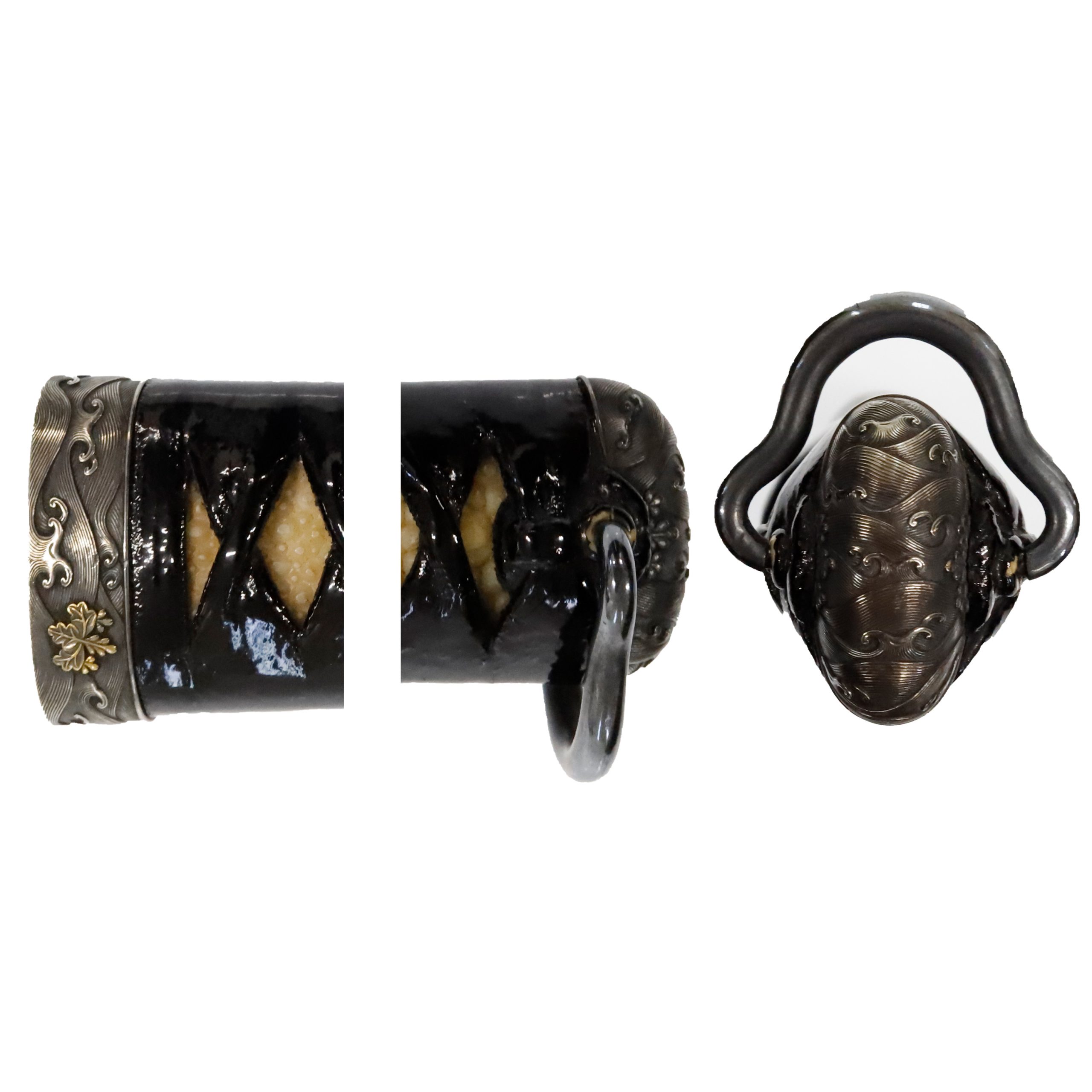
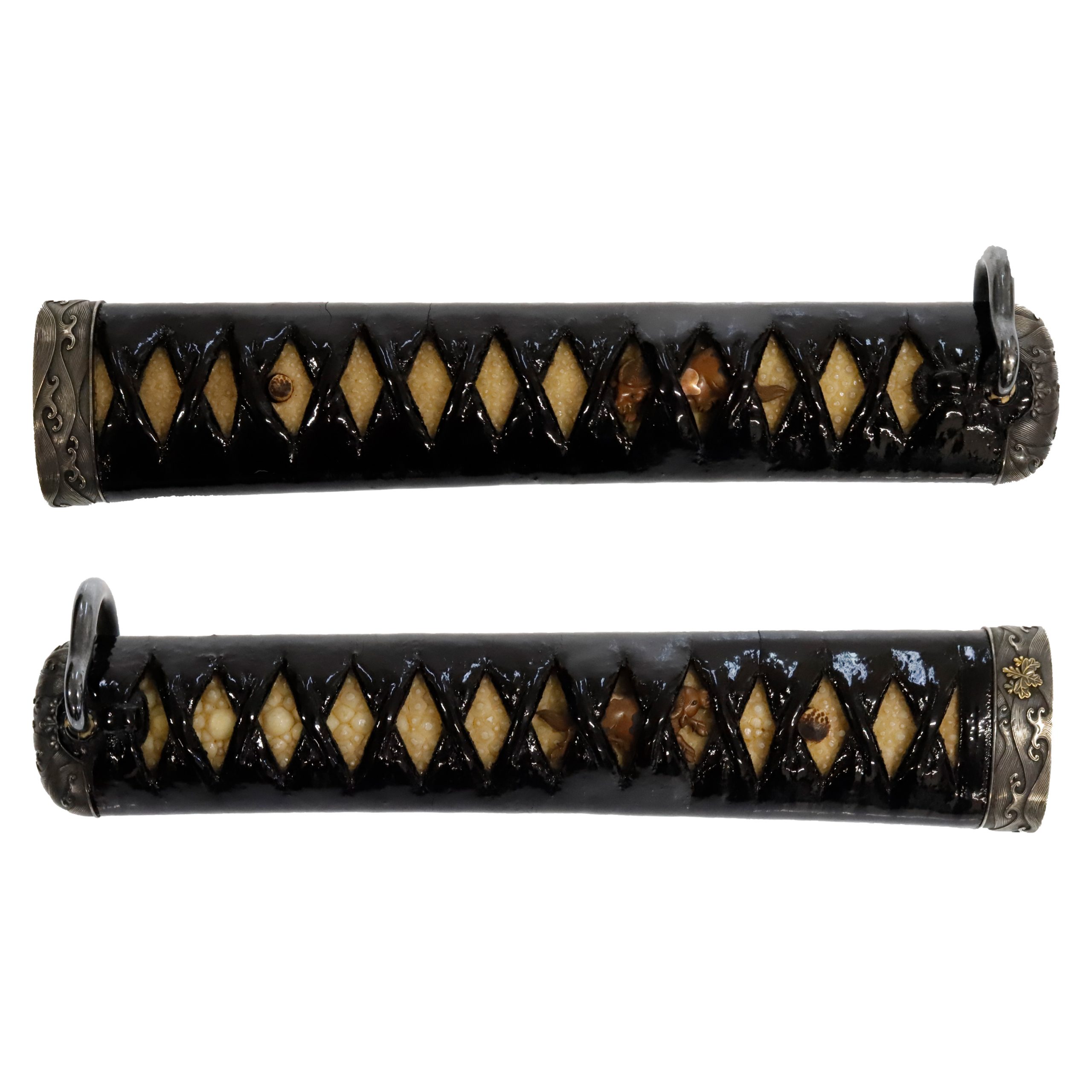
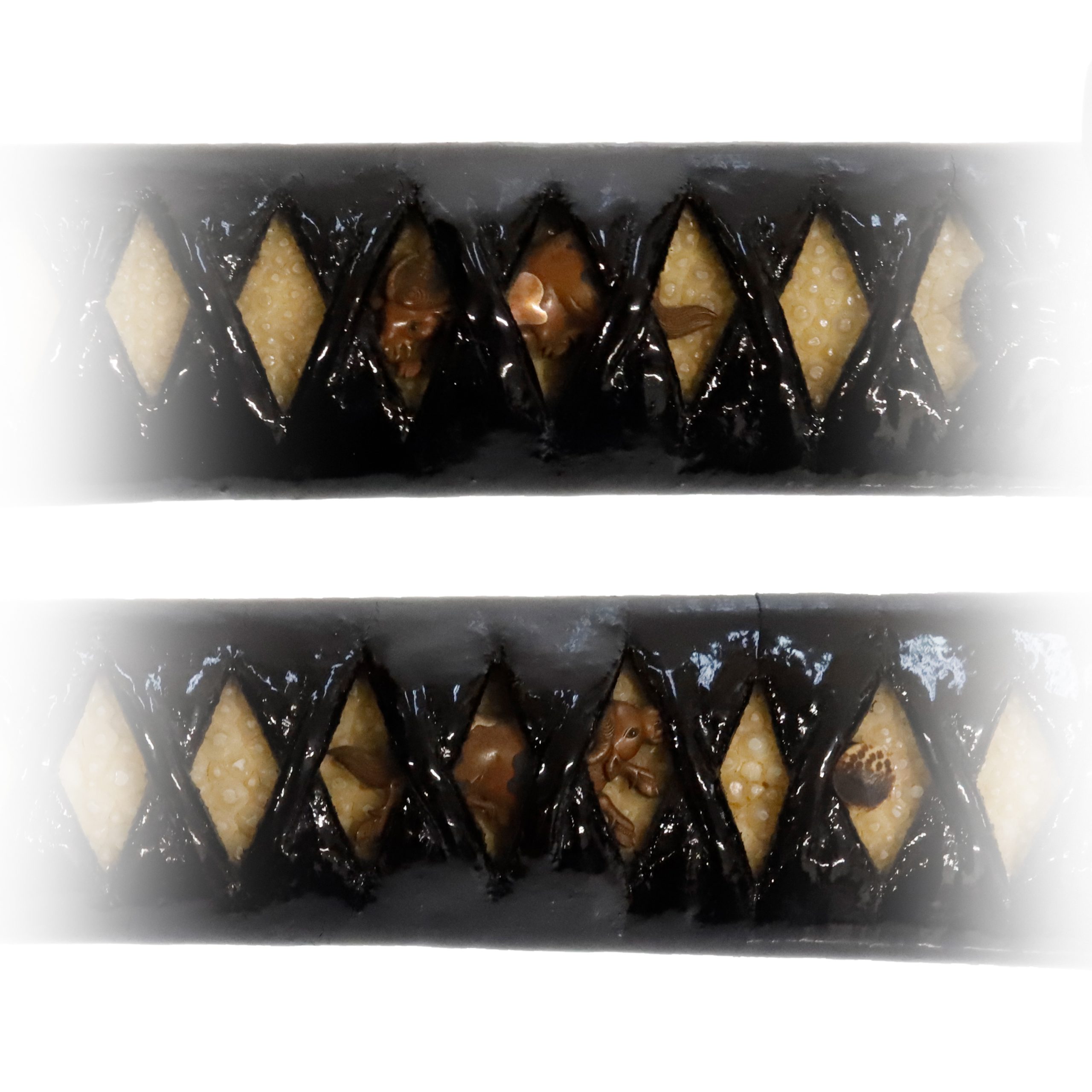
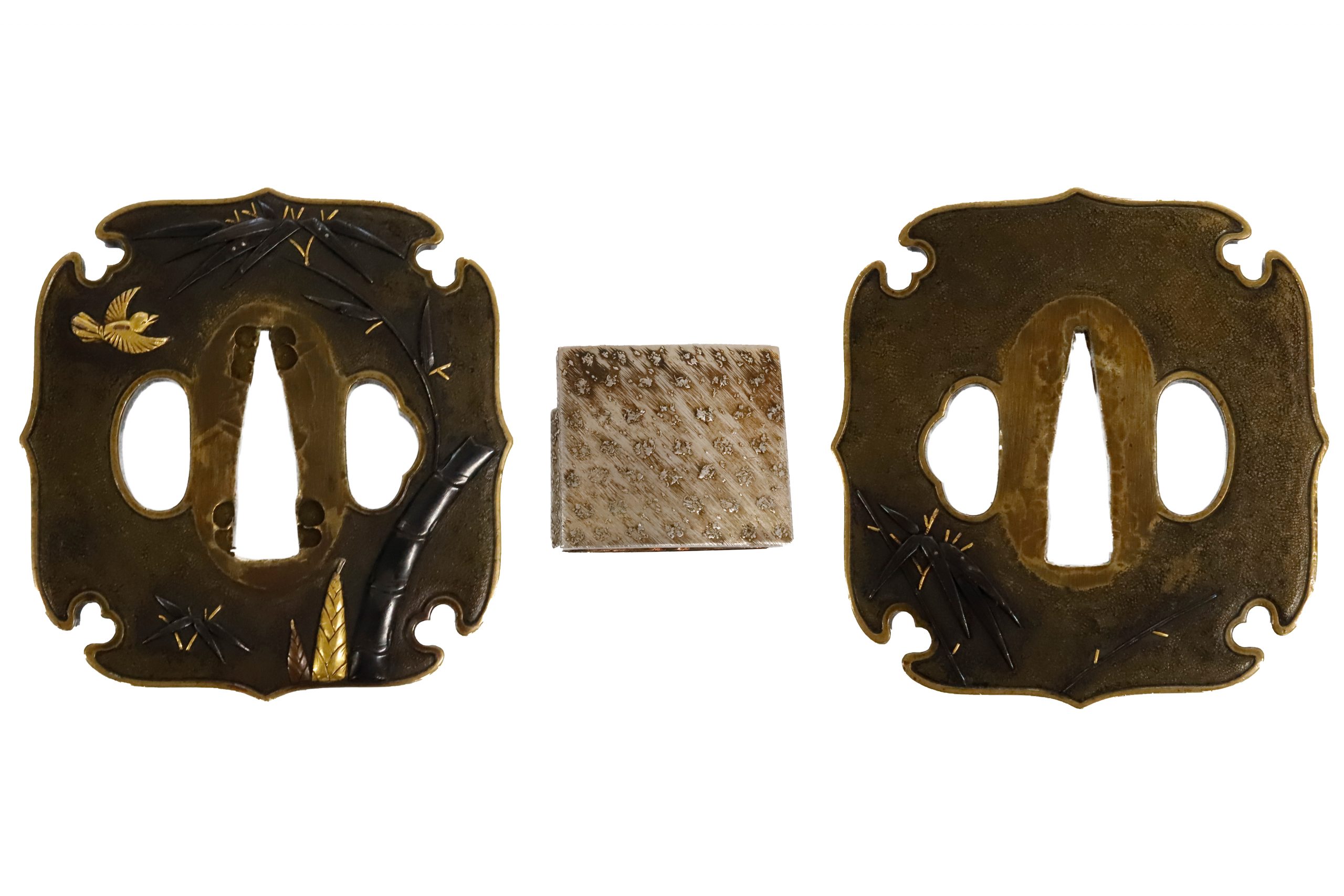
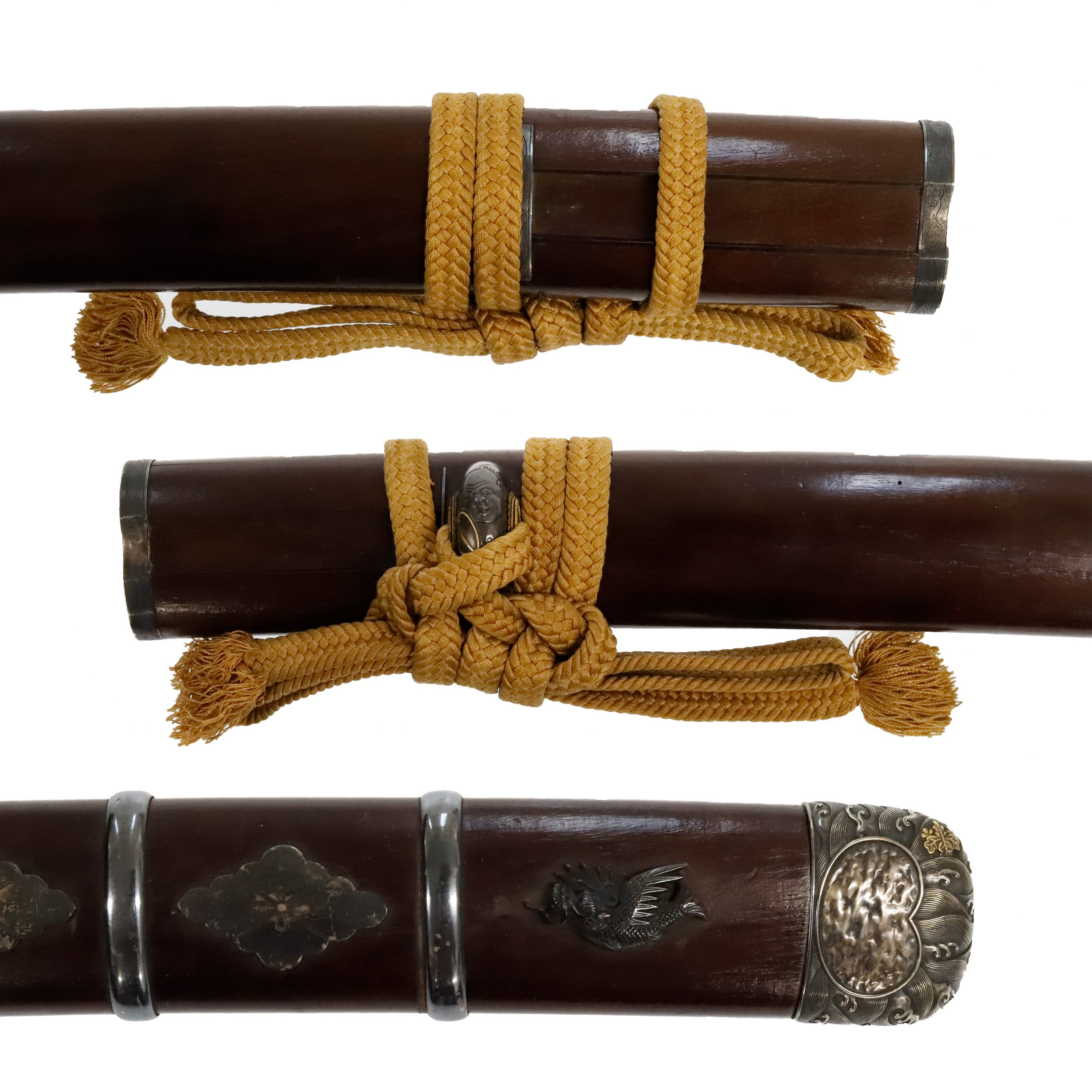
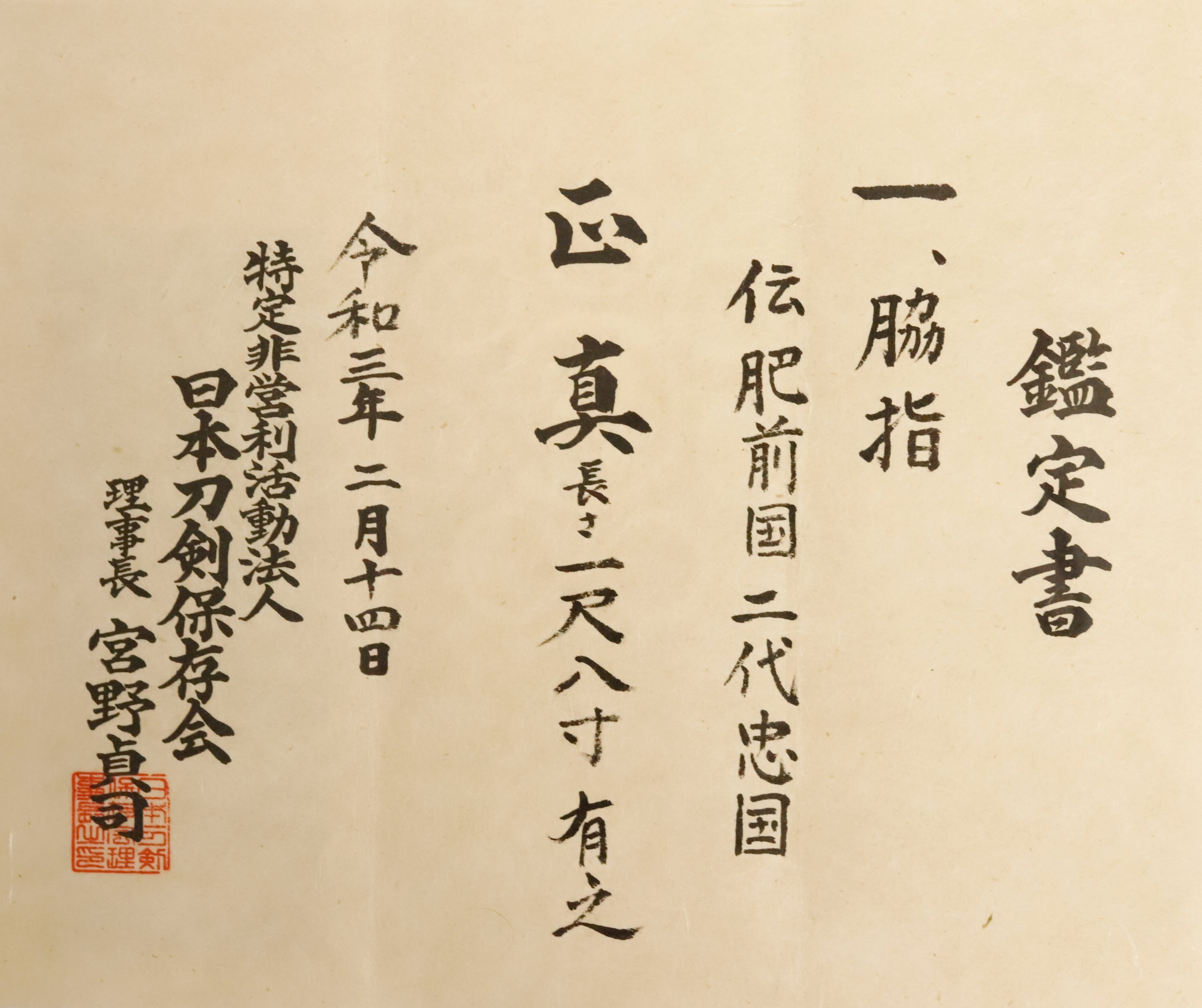
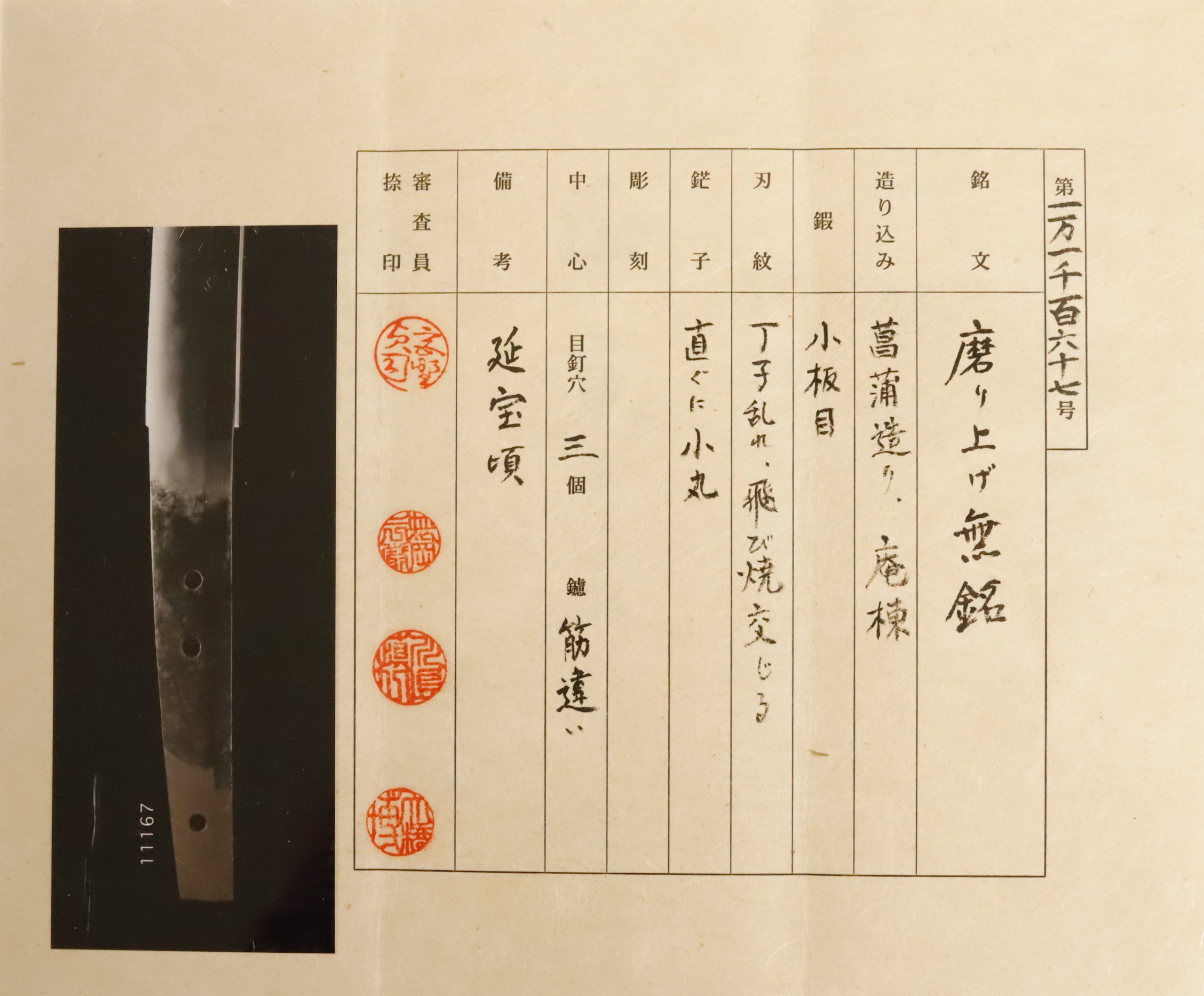
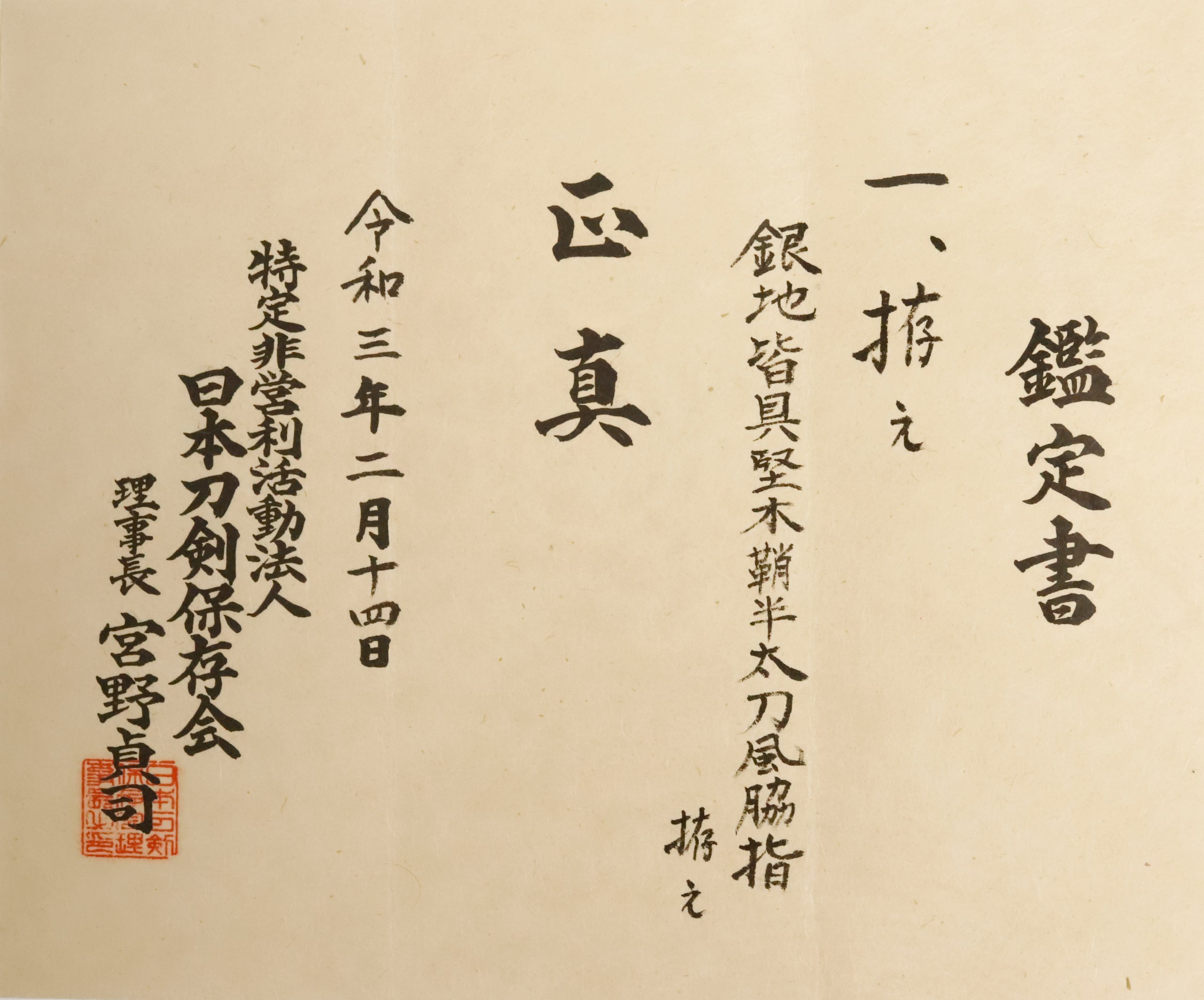
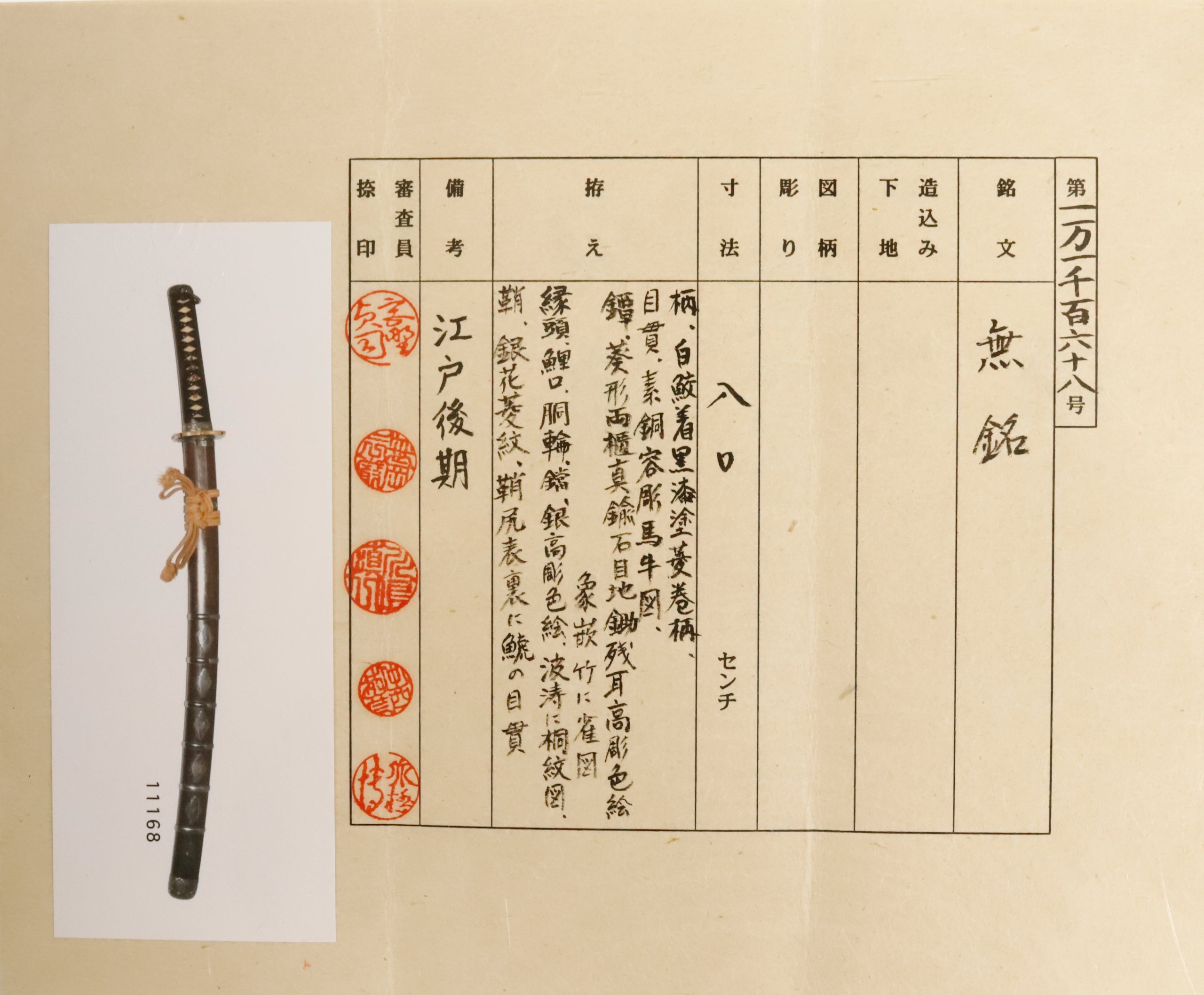
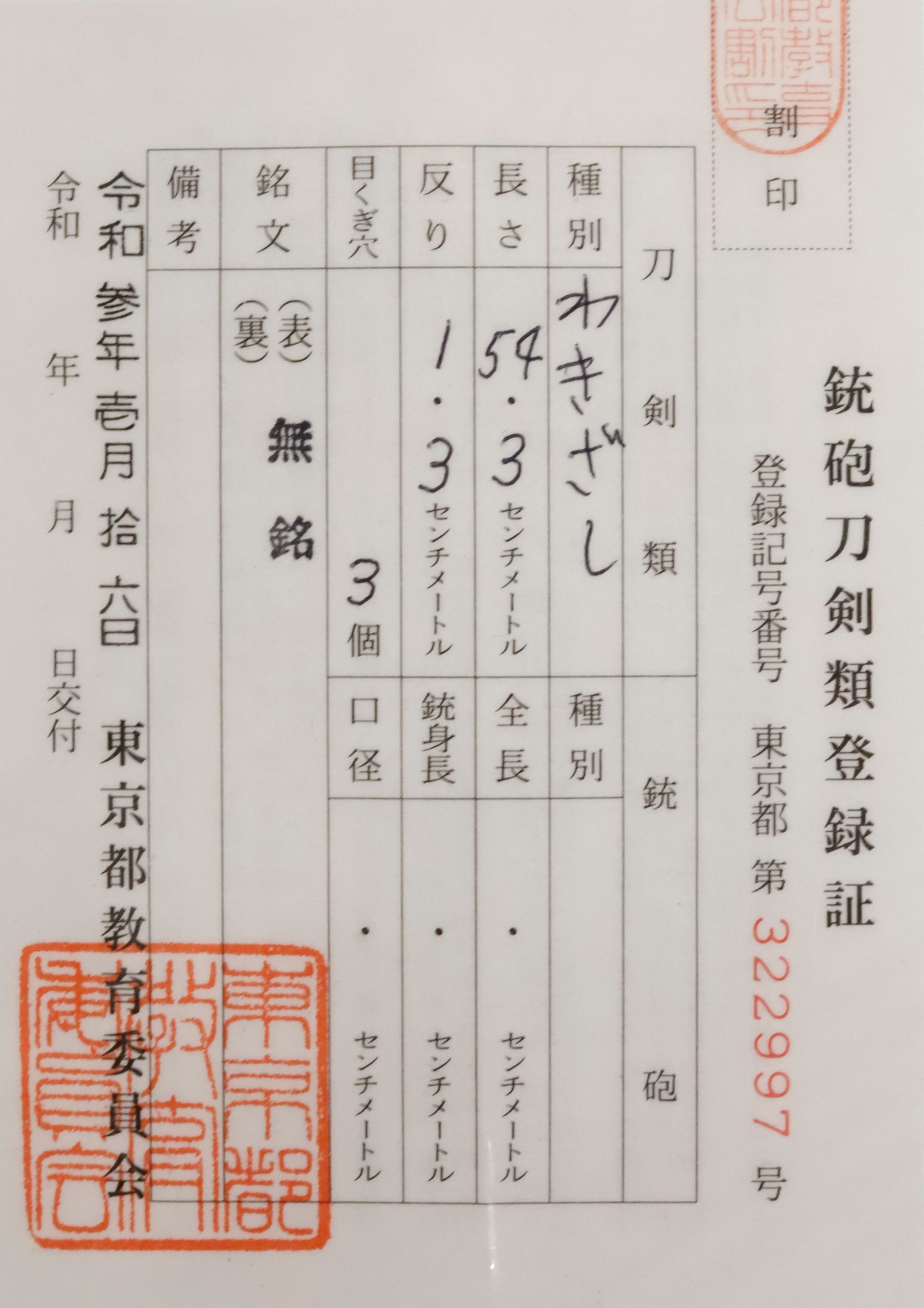
According to NTHK, which authenticates this blade, it was forged by the second-gen Hizenkoku Tadakuni(肥前国忠國) in the Enpo era(1673-1681: Early Edo Period). While there is no signature on the tang, the blade’s characteristic indicates that it was forged by him. Hizenkoku is an old name of the province in Saga prefecture today. The swordsmith’s name “忠國” (Tadakuni) lasted for three generations. The first-gen Tadakuni was born in 1598 as the second son of Hirosada, an apprentice of one of the greatest swordsmiths, the first-gen Tadayoshi. Tadakuni first signed as Hironori(広則) but changed it to Tadakuni when he was 34 years old after receiving the title of Harimano Daijyo(播磨大掾)in 1634. The first-gen Tadakuni was Okakaekaji for Ogi clan in Saga prefecture, meaning he exclusively forged swords for that clan. The second-gen Tadakuni learned a great sword-forging technique from his father, the first-gen Tadakuni, who died at the age of 94. The second-gen Tadakuni kept forging swords in Hizenkoku after taking over his father’s school. This blade has Choji Midare Hamon with Koitame Hada. The authentication paper mentions that the signature part was cut due to being shortened in the past(Suriage Mumei). The sword mounting of this blade is also authenticated by NTHK, saying that they were made in the late Edo period(about 150-200 years old). Curvature(Sori) For more detailed measurement of the blade/sword mounting Fuchi-Kashira The wave pattern and the Gosan-no-Kiri (五三の桐) are designed for this Fuchi Kashira. The Kiri (桐) pattern is composed of three standing straight inflorescences and three leaves. The number of flowers that are blooming at each inflorescence means the ranks of this design. It is also famous that one of the most popular Samurais in Japan: Toyotomi Hideyoshi used the Kiri pattern for his family crest. This plant pattern was once used by the imperial family and national leaders of the time. About the wave pattern, tides change their shape and landform washing, over and over again. It expresses a desire for the indomitable spirituality to challenge over and over again without giving up. Tsuka and Menuki A horse and a cow are designed for this Menuki. The cow has been familiar to people for their daily life. Cows were used as labor forces for agricultural work or transportation of supplies. Also, the cow is a member of the twelve signs of the Chinese and Japanese zodiac. Possibly the cow was one of the common motifs for sword mountings. The horse design has often been incorporated into boys’ Kimonos with the desire for healthy growth of them. Horses were used on battlefields, so they were very familiar with Samurais. Tsuba and Habaki Antique brass Tsuba that has Kozuka and Kougai holes. Four corners of the edge are shaped like a heart mark. It is called Inome Sukashi (猪の目透). The Inome pattern has been being used since ancient times. As its name implies, the eyes of the boar are the origin of this pattern. Some people believed that the Inome design works as an amulet to protect us from evil spirits or fire. Also, it is said it would bring good luck. Bamboo and a sparrow flying around bamboo leaves are depicted. Bamboo shoots are growing near this giant bamboo tree. As bamboos grow straight towards the sky, it has the meaning of strength and nobility. Also, bamboos are lush even in the cold season. Therefore, it has been regarded as the symbol of eternity and immortality. Authentication Paper NTHK, also known as Nihon Touken Hozon Kai (the Society for the Preservation of the Japanese Sword), is one of the oldest Japanese sword appraising organizations in modern-day Japan. They authenticated the blade and sword mounting(Koshirae) on Feb 14th in the third year of Reiwa(2021). They appraised them as the Kanteisho class, the blade worth preserving for Japanese society.
Offered by Samurai Museum
This piece has sold
107 on the market
Get an email when a new Hizen Tadakuni piece hits the market.

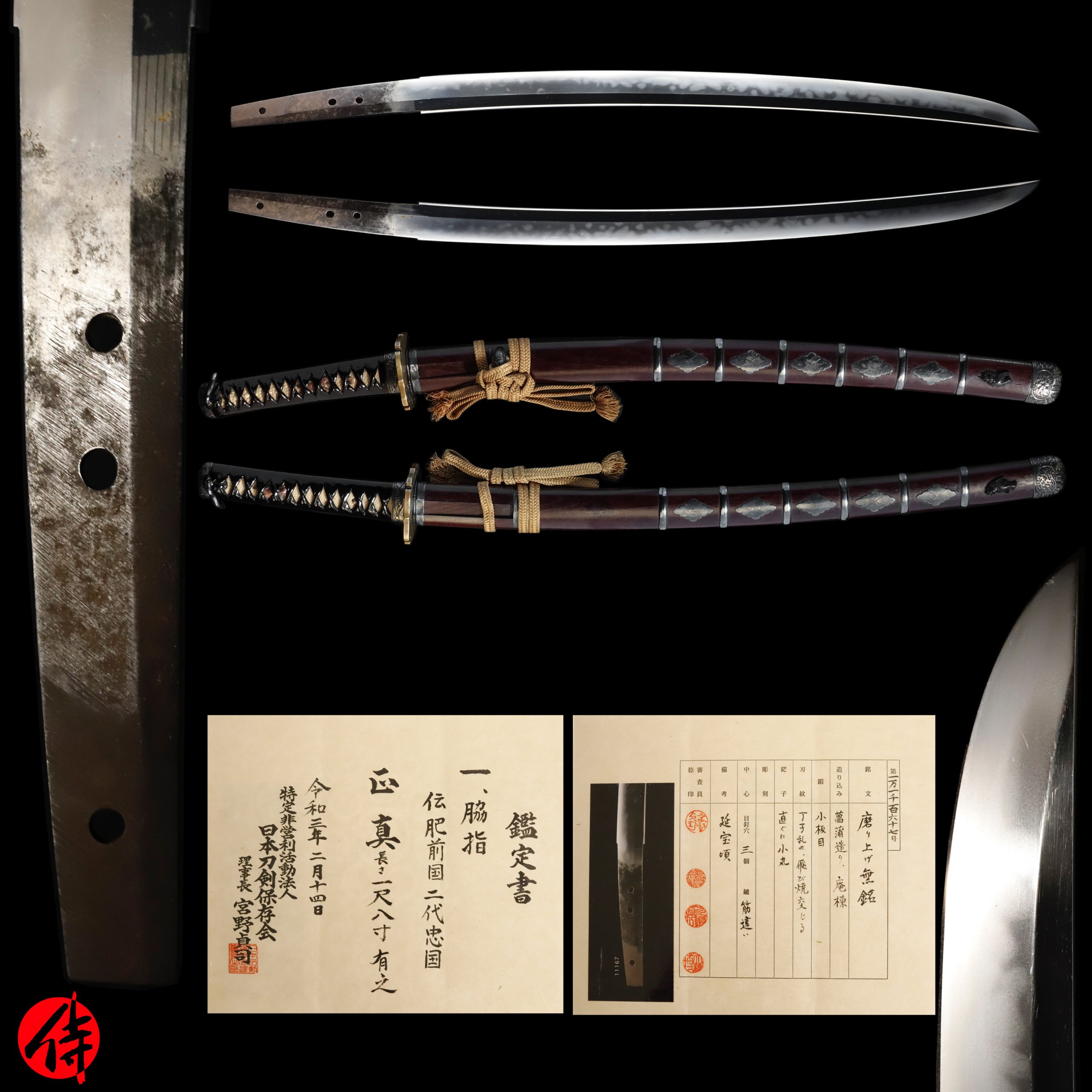
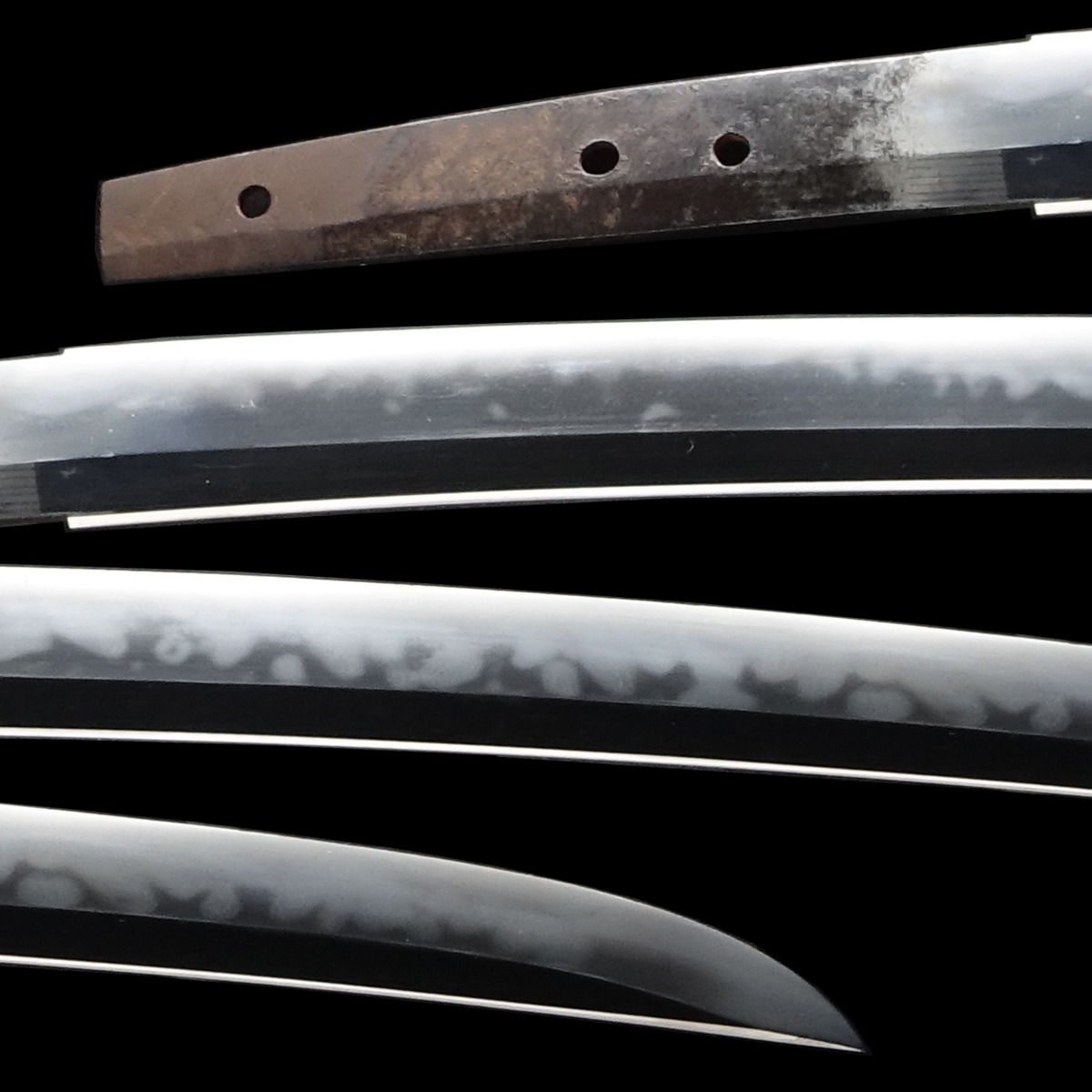
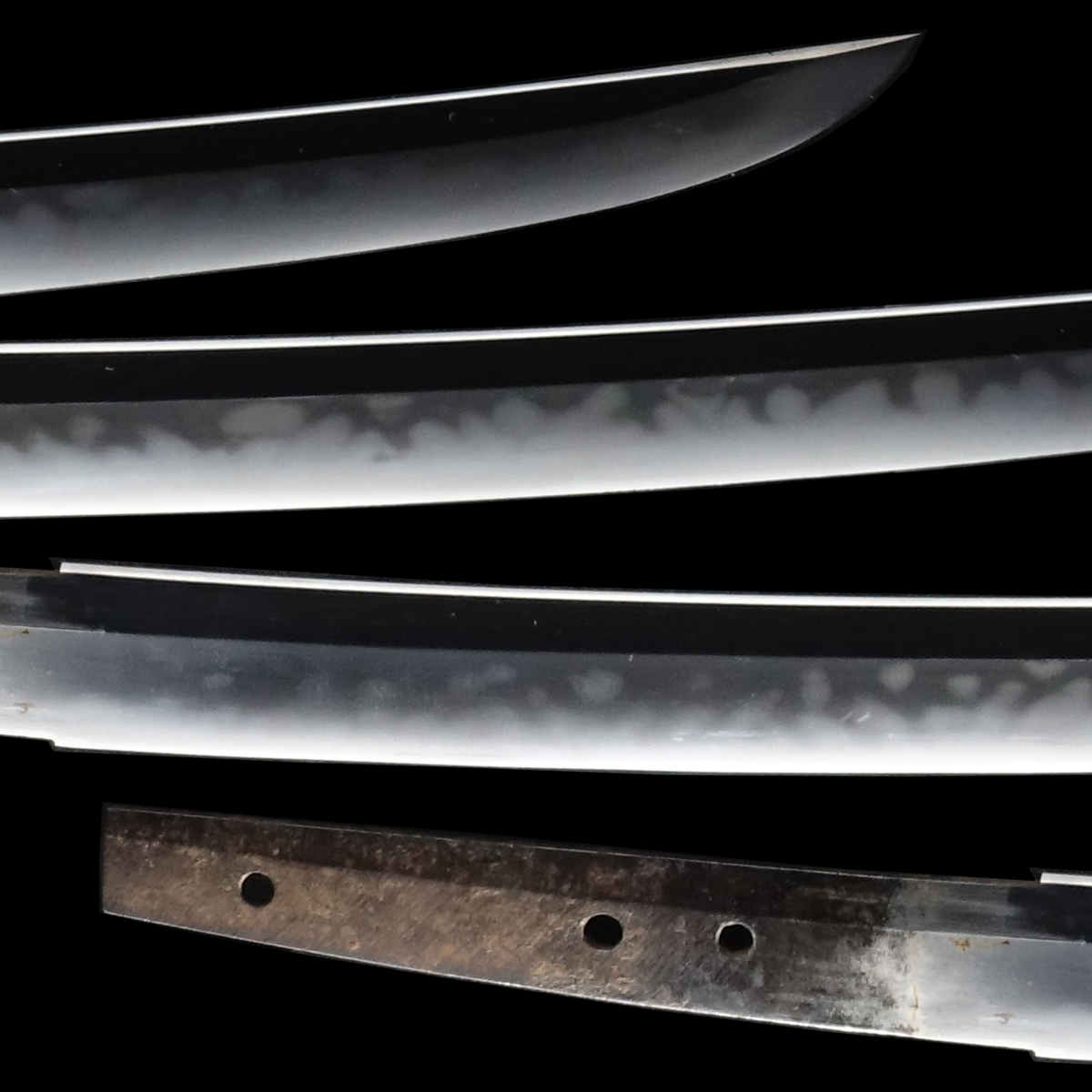
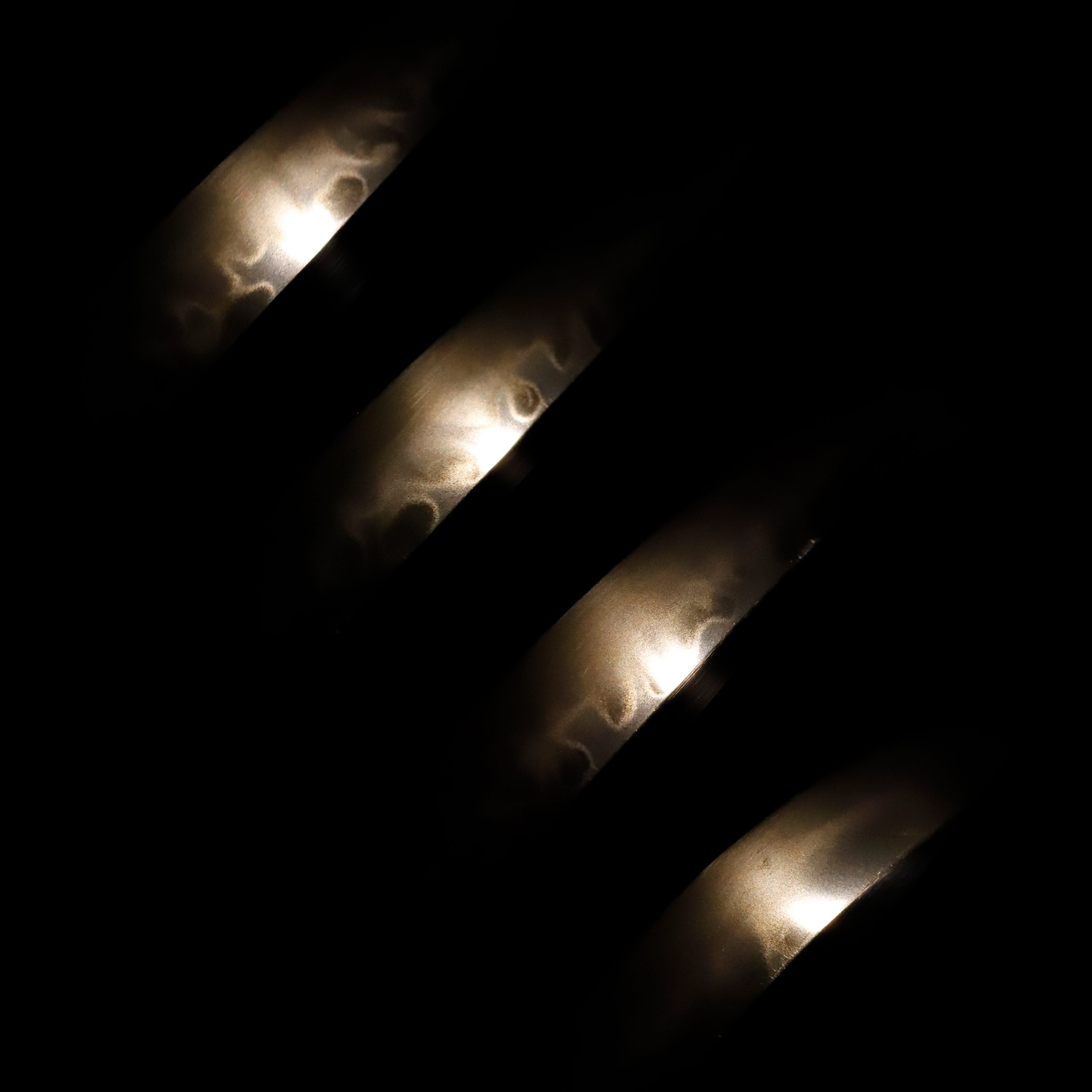
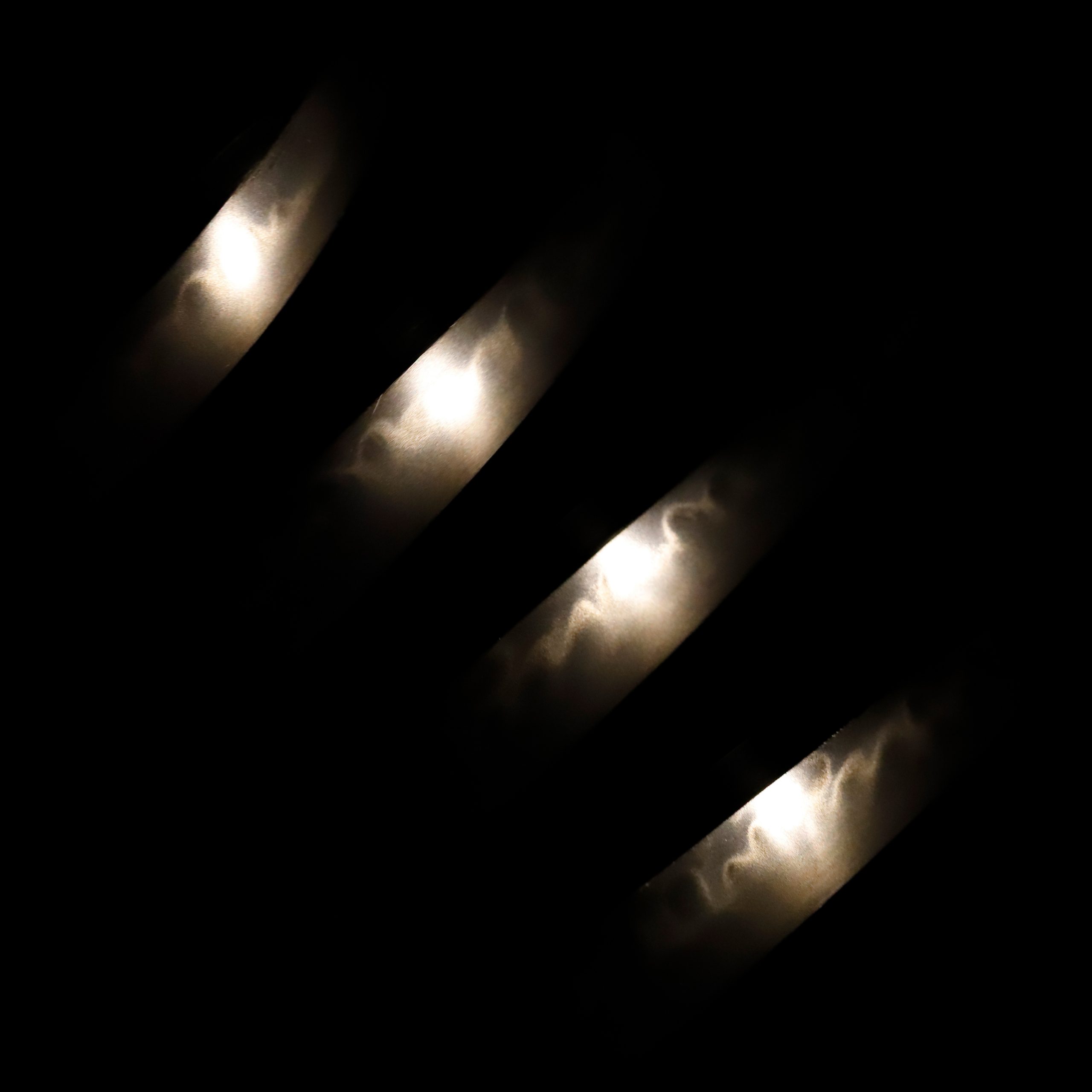
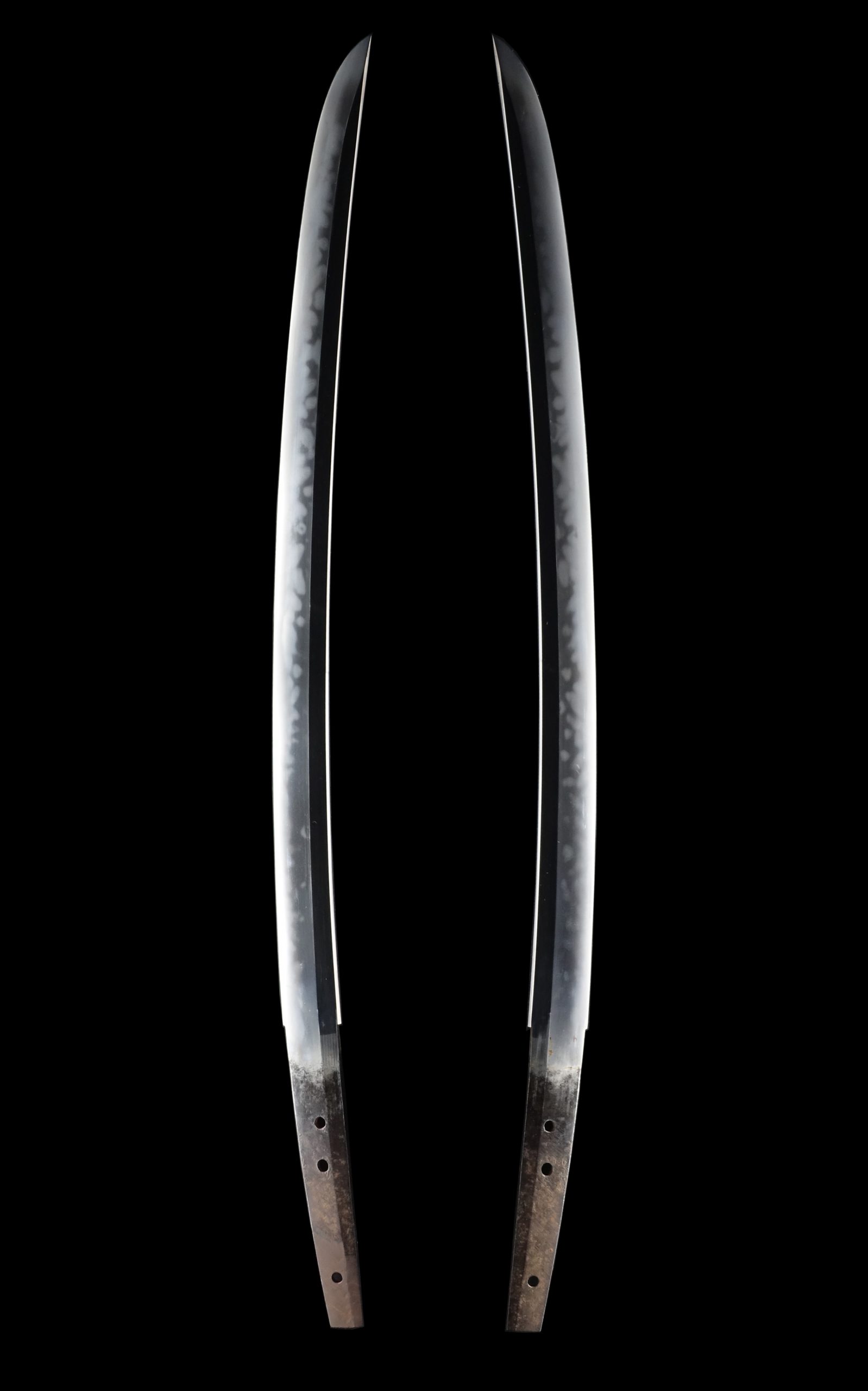
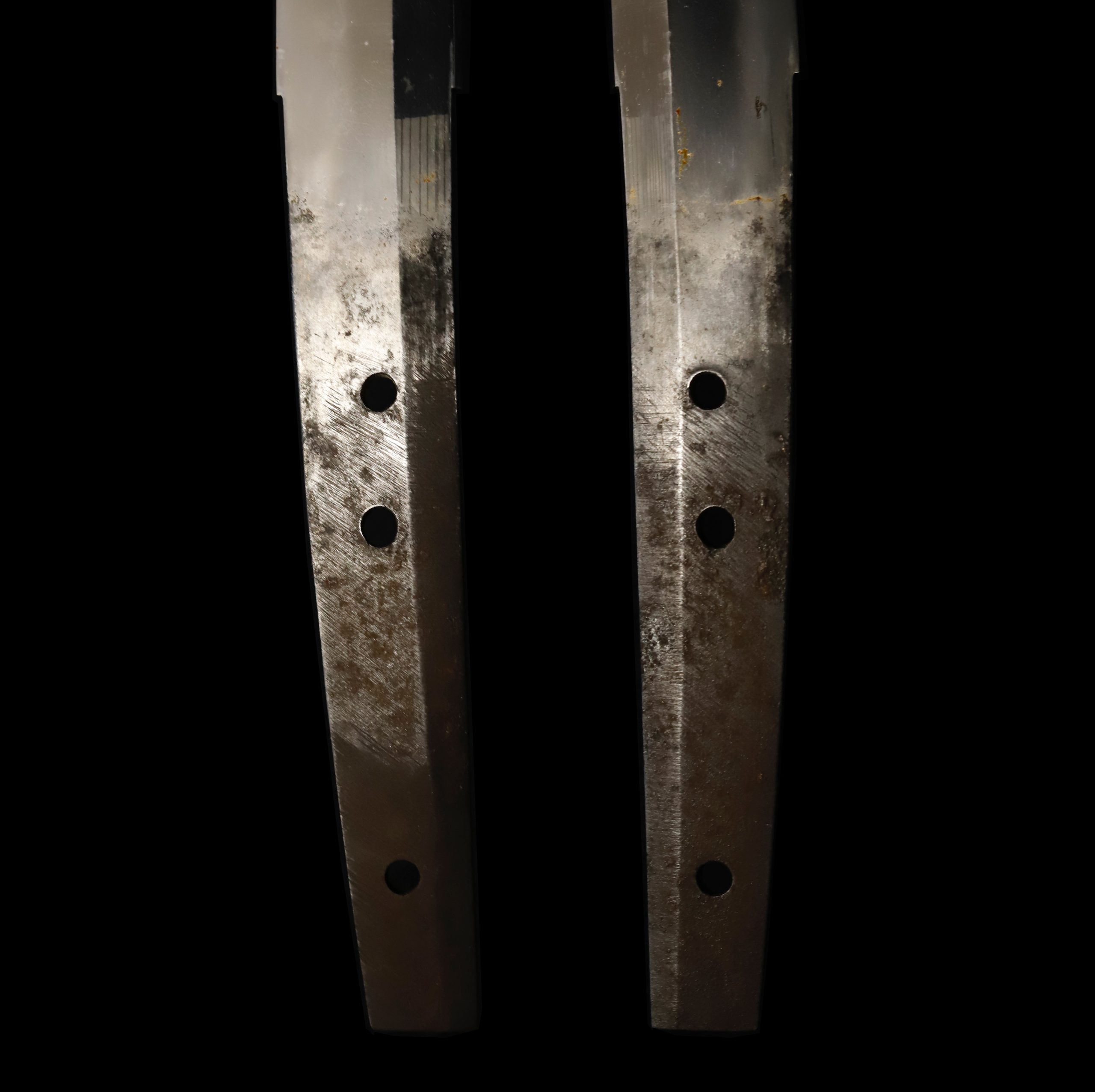
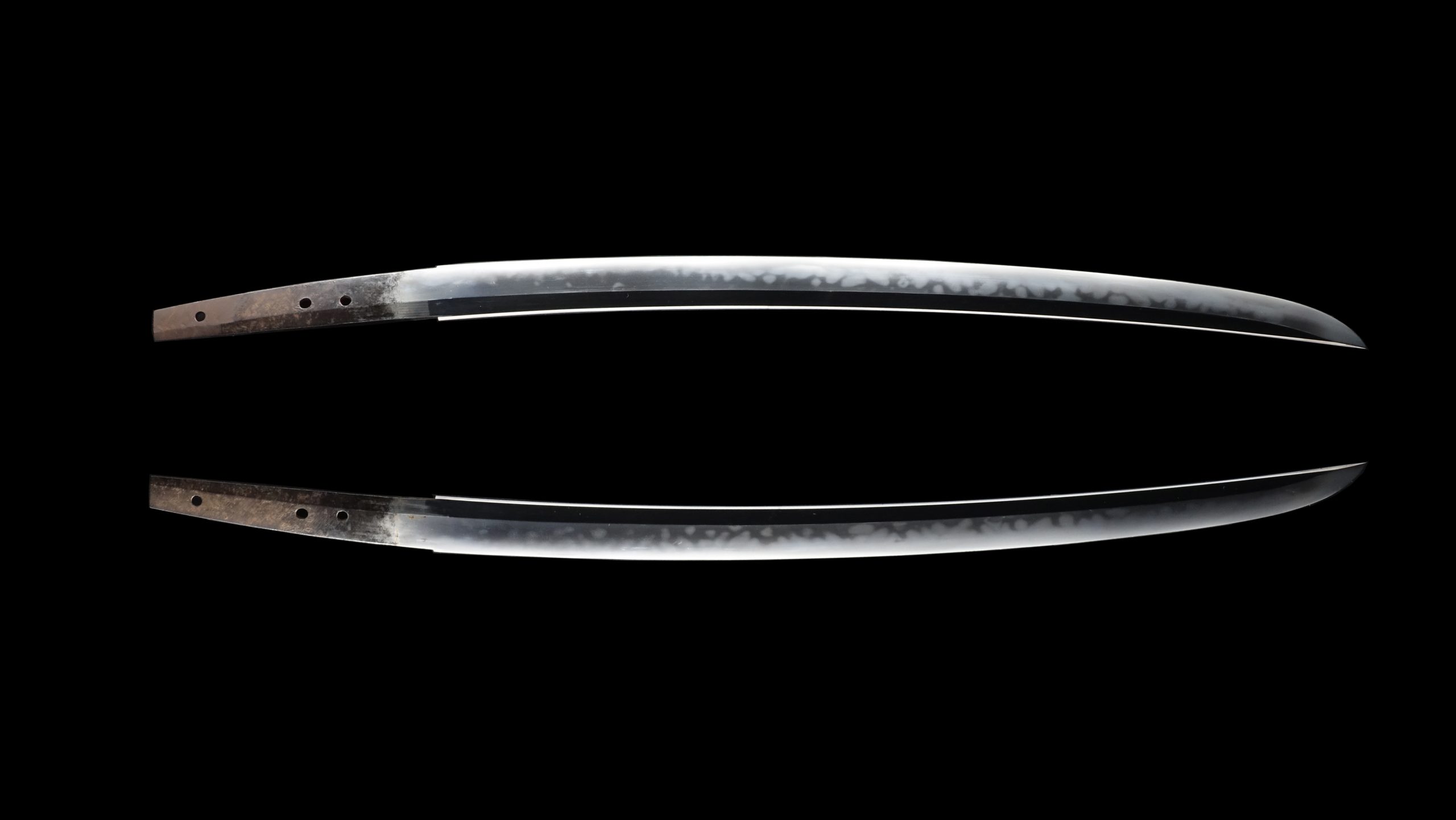
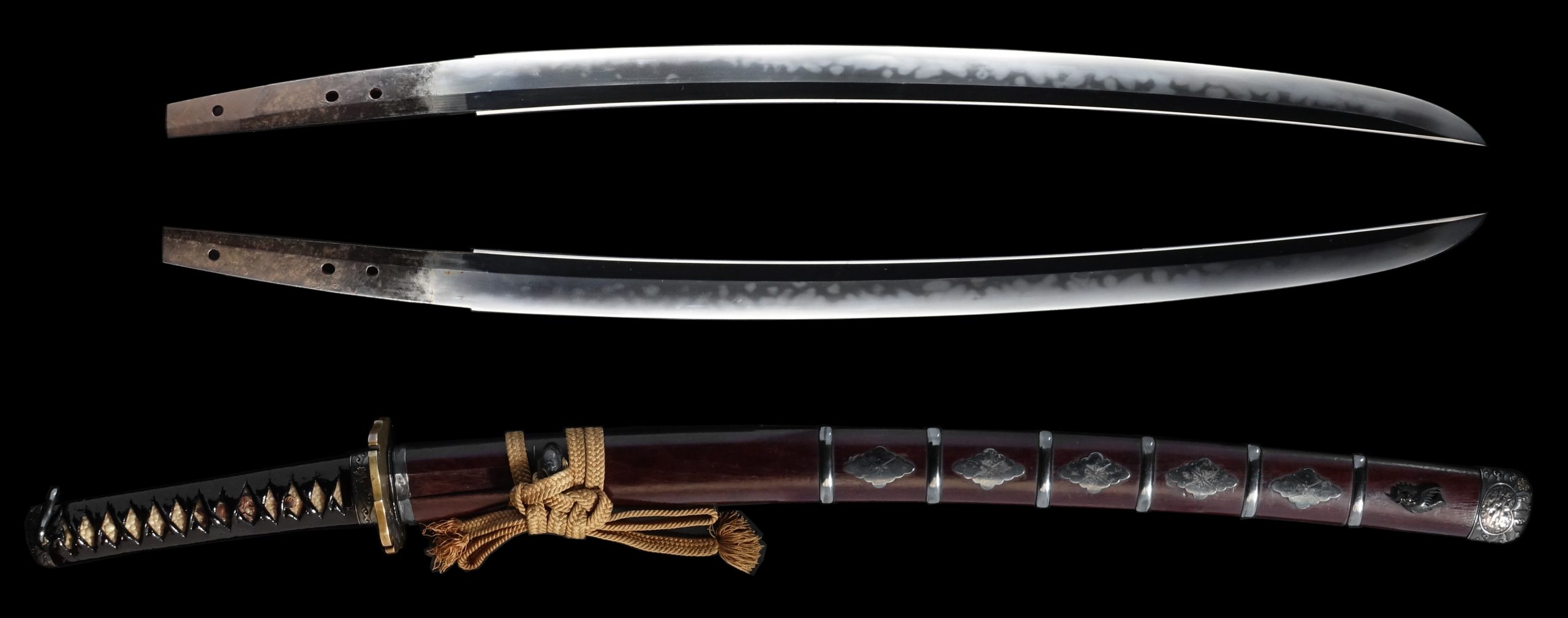
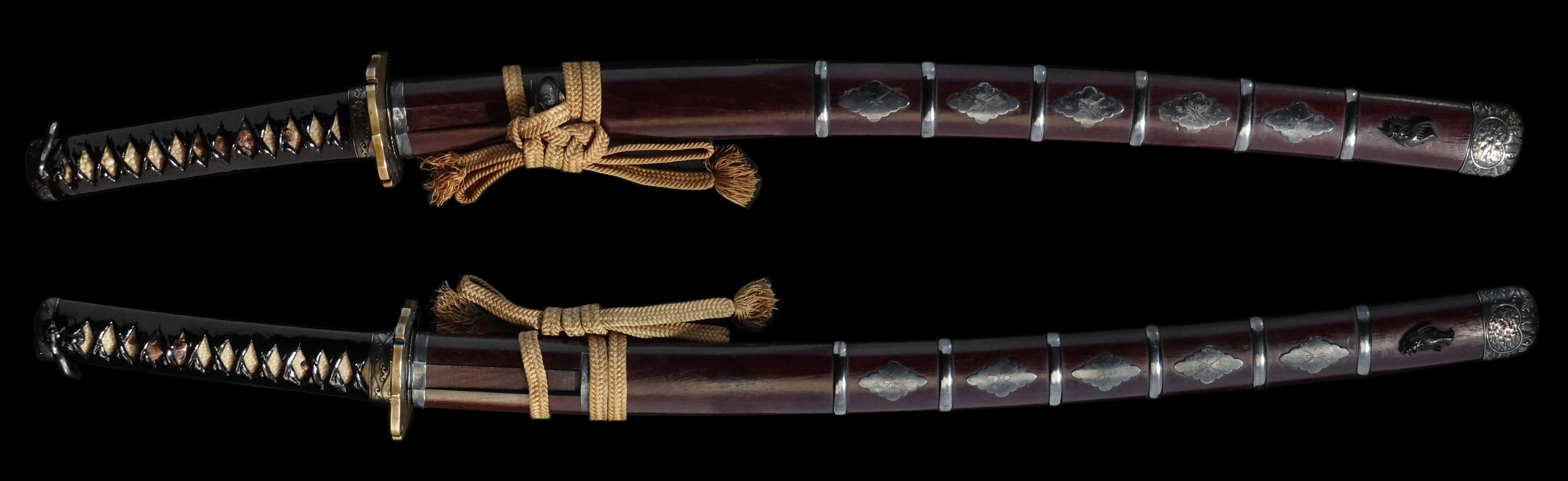
Shinto · Hizen · around 1673-1681
Fujishiro Jo saku · Tōken Taikan top 31%
The second-generation Harima no Kami Tadakuni of Hizen is known through three signed katana designated Juyo Token in 1964, 1992 and 1995. The published sources record that he was the son of the first-generation Tadakuni, used the common name Danzaemon, first signed Harukuni (治国), and took the name Tadakuni after his father retired. His dated works run from the eighth month of Enpo 5 (1677) to the second month of Jokyo 2 (1685), and his period of activity is placed in the Jokyo and Genroku eras; surviving works are described as rare. On most of his tangs he cut a chrysanthemum crest on the omote and a crab-and-peony crest on the ura, which the published sources take to indicate 「恐らく近衛家と深い関係があったものであろう」 (probably a close connection with the Konoe family). One of the three tangs also bears the inscription 「以南蛮鍛作」, made with imported nanban iron.
Like his father he worked in two manners, a midare-ba of gunome mixed with choji and a straight suguha, and the three designated blades show both. His jigane is consistently a well-packed ko-itame with very fine ji-nie adhering thickly and fine chikei. The katana of 1995 begins with a straight yakidashi and rises into gunome mixed with ko-notare, choji-like elements and ko-gunome, with abundant ashi and yo, deep nioi, thick nie with some coarser particles, kinsuji, and sunagashi running throughout; the nioiguchi is bright. The published sources read the deep nioi, thick nie and bright nioiguchi as evidence of his skill, and 「また刃中総体に砂流しのかかった態には, 忠国一派の伝統的な特色が察知される」 (in the sunagashi running throughout the ha, the traditional character of the Tadakuni line can be discerned). They add that the straight yakidashi is often found among other Hizen smiths, and call the blade a full display of the second generation's ability.
The katana of 1964 has a shallow notare with gunome and choji, deep nioi and well-formed ko-nie, sunagashi and ashi. Of it the published sources write that the technique 「ところがこの作刀に見る技術は, 父に優るものがあり, この時代の肥前刀工中でも屈指の一人であることがわかる」 (surpasses his father in places, showing him to be one of the foremost Hizen smiths of his day), and that besides midare work he was skilled in suguha as well.
The suguha side is represented by the katana of 1992, a blade with a somewhat wide mihaba, funbari at the base, thick kasane and deep sori, tempered in a chu-suguha with a hint of small ashi, ko-nie adhering evenly, fine kinsuji and sunagashi, and a bright nioiguchi. The published sources describe it as a refined work and place it at the summit of his small output: 「作品の少ない同作の中でも白眉であり」 (among the few works of this smith it is the finest).
Where Tadakuni stands among comparable artisans: across all of nihontō, and within tradition, era, and period. The tiers (Foremost · Leading · Major · Notable) weigh official designations from the NBTHK and Japan's Agency for Cultural Affairs, together with historical honors of lasting repute such as the Sansaku and Meibutsu-chō.
Select a lens to see how it's measured.
Shinto · Hizen
107 pieces on the market now
The Hizen school began with a single domain commission. In Keicho 1 (1596) the Nabeshima of Hizen ordered Hashimoto Shinzaemon, the smith who would sign Tadayoshi, up to Kyoto with the carver Munenaga; there he entered the gate of Umetada Myoju and studied forging while Munenaga learned the chisel. The two returned to the province in Keicho 3 (1598), and Tadayoshi settled in the castle town below Saga, where under the domain's patronage the line grew into the dominant sword-making house of Kyushu. His own work runs from Keicho 5 (1600) to his death in Kan'ei 9 (1632); in Genna 10 (1624) he received the court title Musashi Daijo, changed his name to Tadahiro, and shifted his clan name from Minamoto to Fujiwara, so that the late Musashi Daijo blades are the founder under a second name. From him the house became a true generational institution: his son the second-generation Omi Daijo Tadahiro carried it forward as its most prolific hand, the third-generation Mutsu no Kami Tadayoshi returned its highest finish, and a Tosa no Kami branch took the founder's signature when he set it aside. Around this main line grew a circle of disciples and collateral hands, the waki-Hizen or Soba-Hizen smiths, several of them, like Yoshiie and Hironori, working as daisaku substitute makers whose own signed pieces are therefore scarce. The school's signature is its steel. Over a ko-itame forged so tightly it shows no slackness, fine ji-nie gathers in minute particles until the surface takes on the rice-bran konuka-hada (also written komenuka-hada) that no other school produces, fine chikei entering throughout and the ji notably clear and bright.
The orthodox temper laid upon it is a chu-suguha or hiro-suguha, sometimes tinged with a shallow notare and ko-gunome, the nioiguchi deep with finely clustered ko-nie and tightened to a bright clarity, the boshi running straight to a quiet ko-maru. The founder aimed this suguha toward the Rai school yet departed from it, his nioiguchi tighter and his forging carrying more vigor; the third generation refined it to what the published sources call the strongest and most precise hand of the first three generations. Against that calm register the house also worked a showier one, the Hizen choji-midare mixing gunome, long ashi, kinsuji and sunagashi, a manner the published sources already find more often in the founder's late Musashi Daijo work than in his Tadayoshi years, and one the second generation made his own. The branches pushed further from the suguha standard: Tadakuni of the Ogi domain ran sunagashi more conspicuously than any other Hizen hand and reached toward old Ichimonji in his o-choji; Masahiro and Yukihiro favored a flamboyant long-ashi choji over the calm main line; and the Iyo no Jo Munetsugu line worked apart in the Soshu-den, building a midareba on notare with a pointed togariba and a jihada that tends to stand and tone slightly blackish. A collector seeks Hizen-to first for that steel, and reads it the same way the appraiser does: a bright suguha lying over a clear, tight konuka-hada identifies the school before the signature is consulted, and the quiet ko-maru boshi on the ura-signed tang confirms the main-line practice. Generation and branch are then told within that frame, the third generation's powerful sugata recalling not his father but his grandfather, the waki-Hizen hands set apart by their irregular temper, their sujikai file marks and a sashi-ura signature, the Munetsugu line by its Soshu togari. The main line, made in real numbers across so long a span, reaches the market more readily than any Kamakura master, so a papered example is within reach of a patient collector, while the founder's own work and the finest konuka-suguha of the third generation come to open hands only from time to time. Provenance runs back through the house the school served, blades recorded to Nabeshima Katsushige and Nabeshima Naomoto and passing onward to the Owari Tokugawa, the Satake and the Imperial families; documentary inscriptions sharpen the picture further, a Myoju soemei attesting the founder's discipleship, Umetada carving adding flowers to brocade on his late blades, and the gold-inlaid cutting tests of Yamano Kanjuro and Yamano Ka'emon, rare on Hizen work, naming the edge as well as the hand. Learn more →
| Smith | Era | Designated |
|---|---|---|
| Tadayoshi忠吉 | 1596-1632 | 155 |
| Tadayoshi忠吉 | 1660-1686 | 61 |
| Tadahiro忠廣 | 1633-1693 | 133 |
| Tadakuni忠國 | 1648-1652 | 32 |
| Masahiro正廣 | 1624-1655 | 30 |
Hizen: a domain enterprise
Hizen swords were a domain enterprise: the Nabeshima sent Tadayoshi to study under Umetada Myōju around 1596, then built a licensed school around him. Nine generations carried its famously consistent konuka-hada work into the Meiji era.
The NTHK’s principal certificate, issued for a blade of considerable quality. It confirms a genuine signature, or, for an unsigned (mumei) work, records the judges’ attribution to a smith or school. The paper carries a detailed worksheet with a numerical point score.
The NTHK (Nihon Tōken Hozon Kai, the Society for the Preservation of the Japanese Sword) is the oldest of Japan’s sword-appraisal bodies, founded in 1910, decades before the NBTHK. After the death of its long-serving head it divided into two successor societies, the NTHK and the NTHK-NPO, both of which continue to hold shinsa. NTHK certificates are known for a detailed worksheet that records a numerical point score alongside the judges’ written opinion, and the society is especially respected for its attribution of unsigned (mumei) work.
Returns/exchanges limited to defects caused by shipping (except willful misconduct or gross negligence by the company); customers must contact within 72 hours of receiving the product.