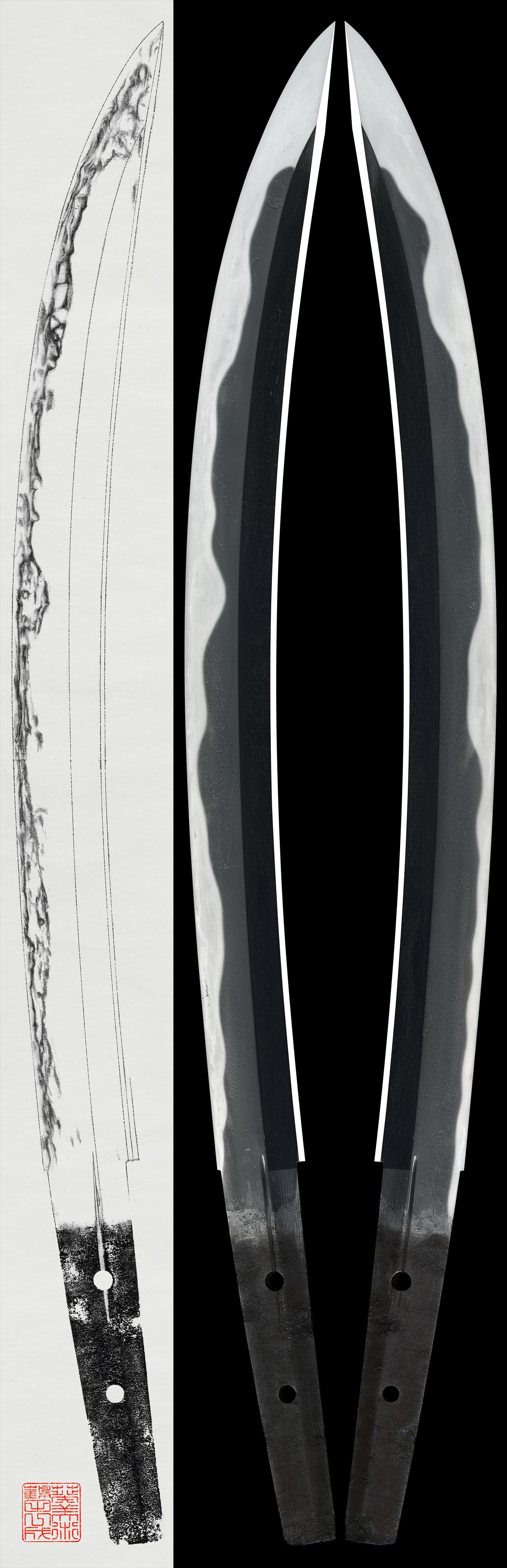
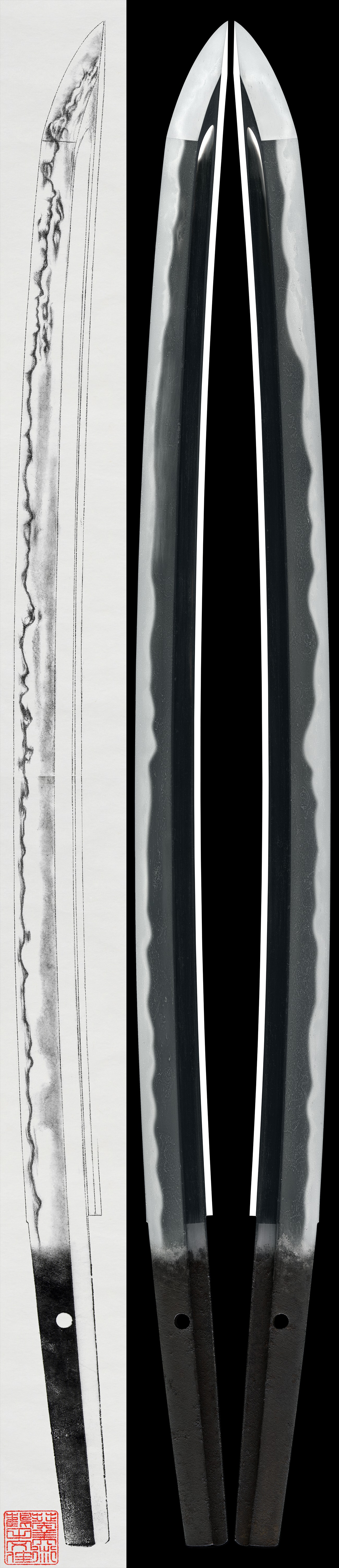
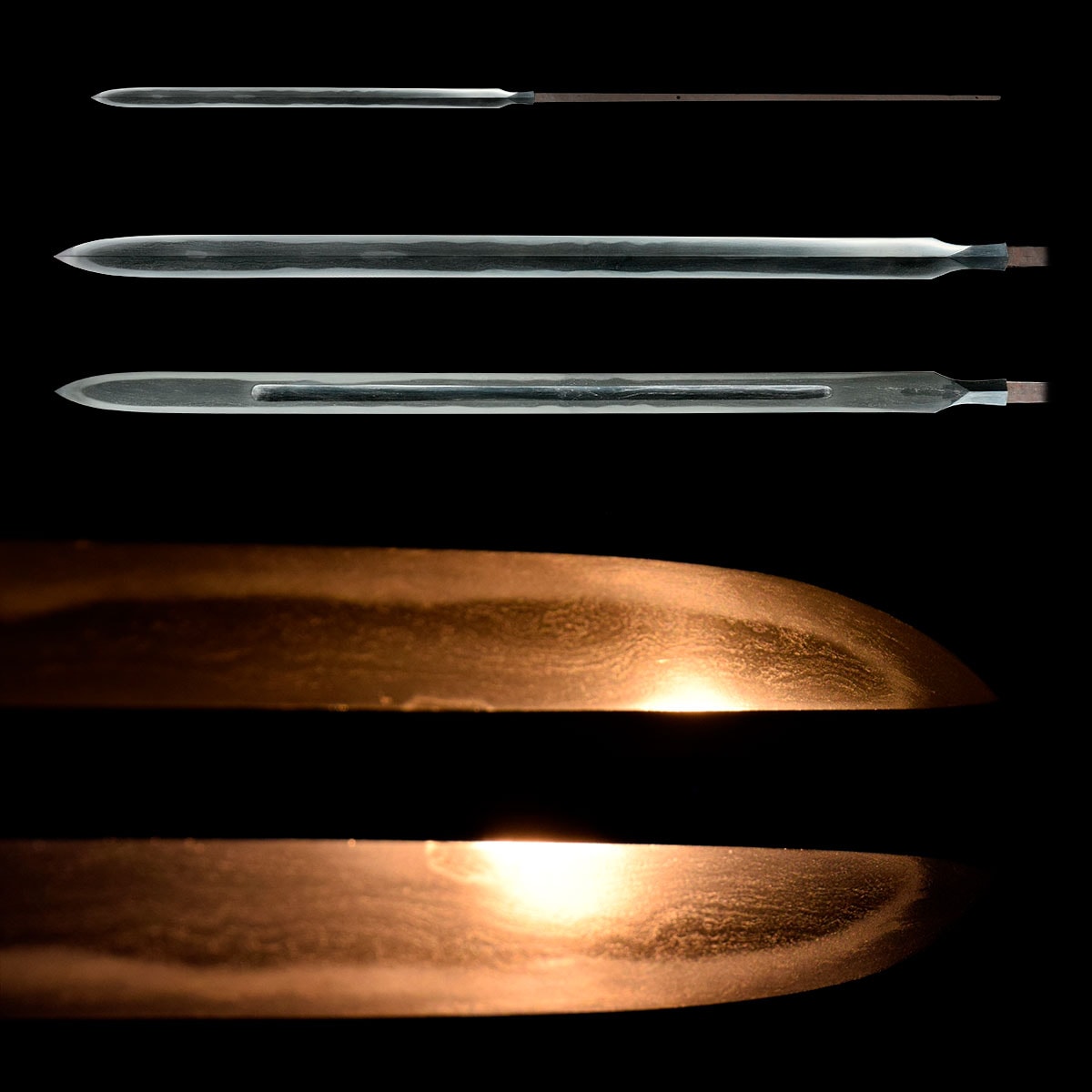
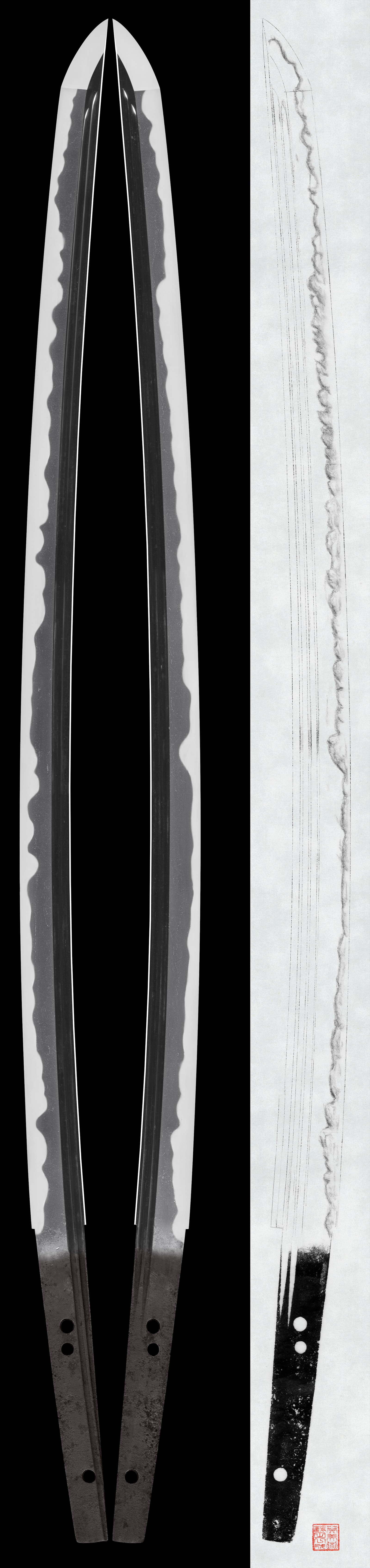
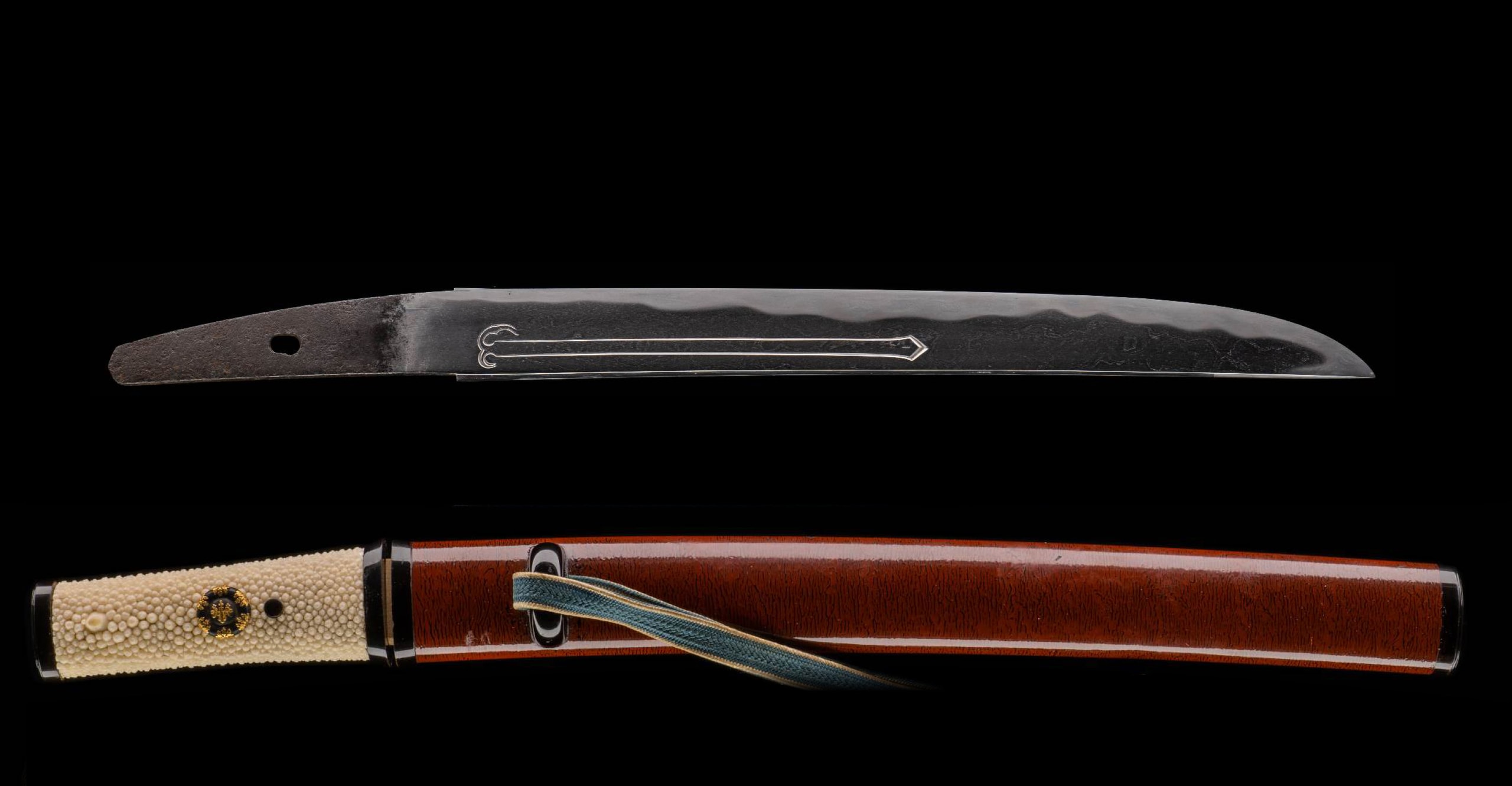
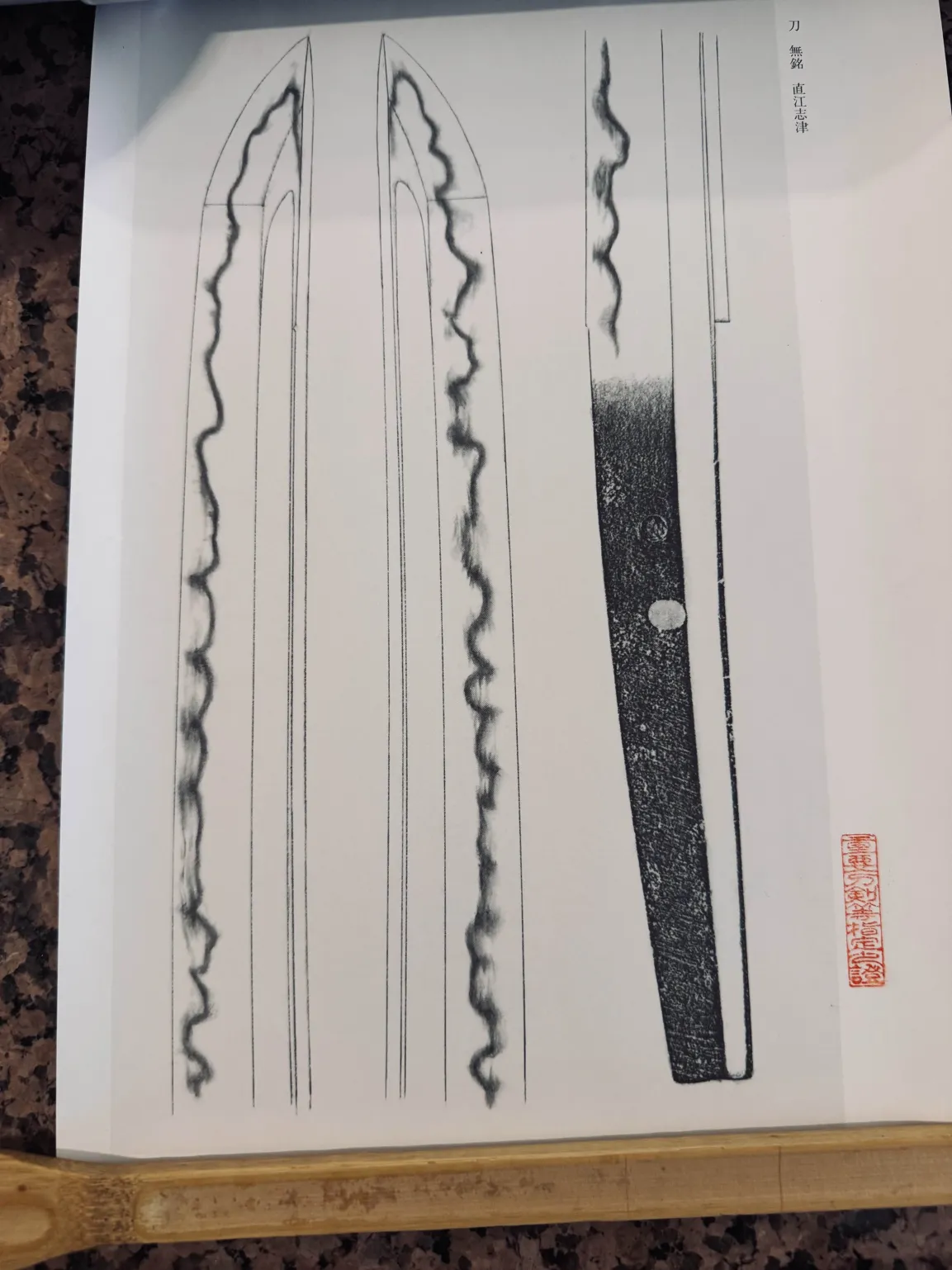
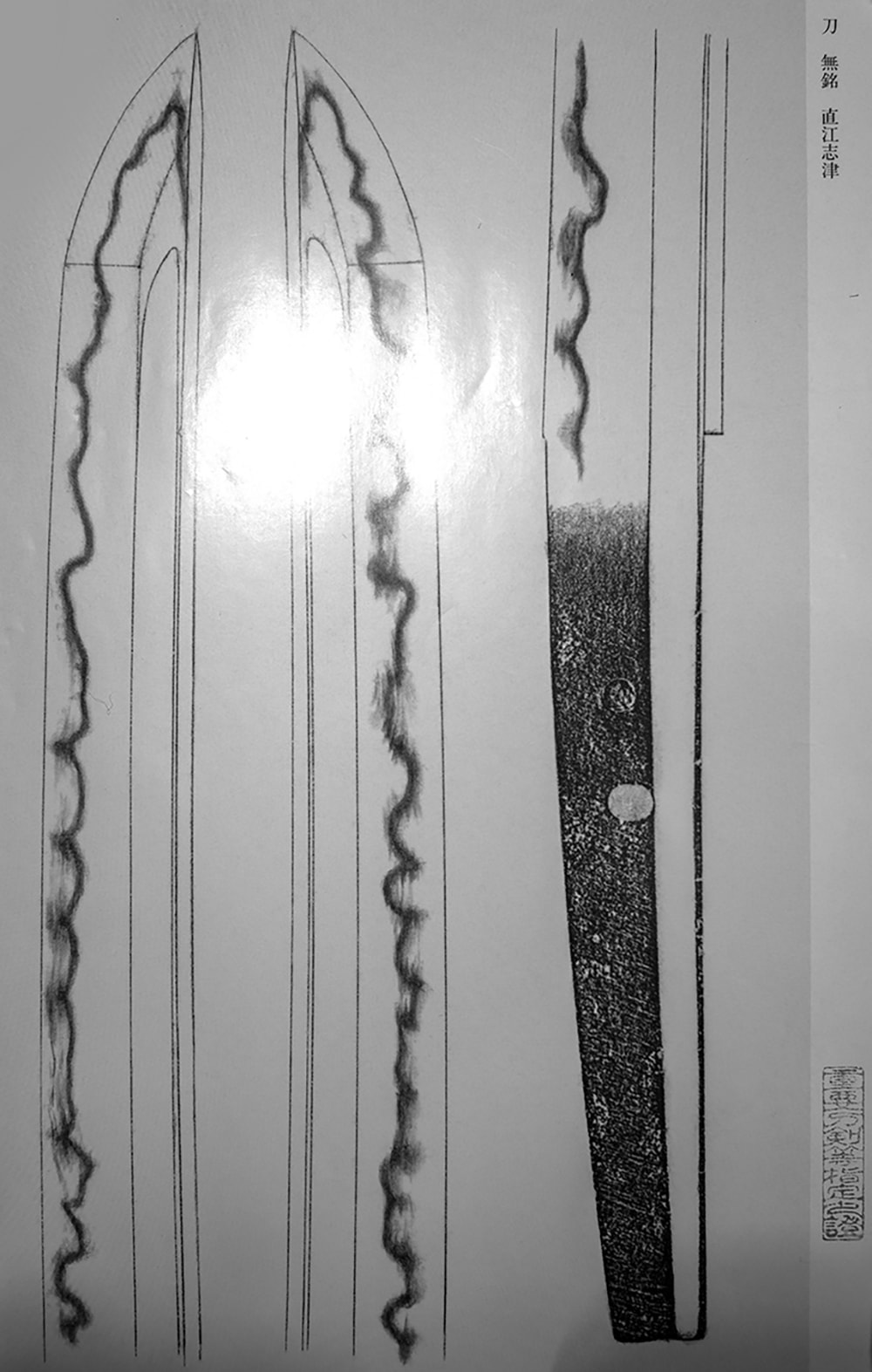
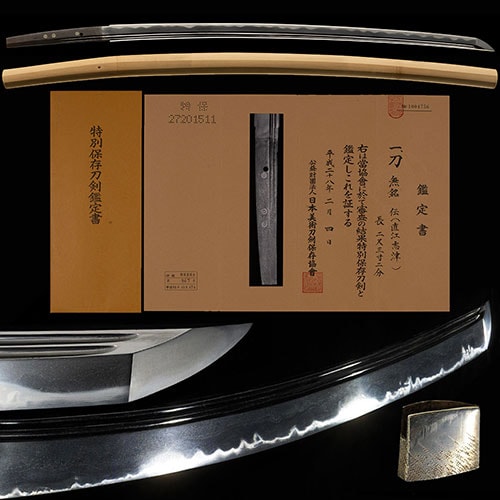
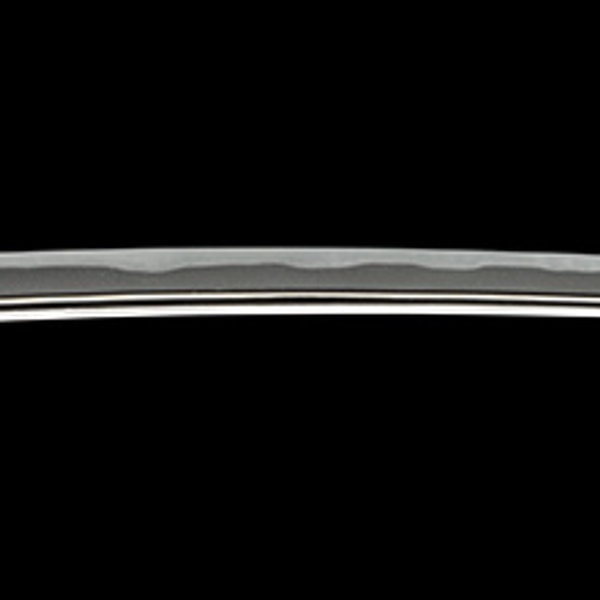
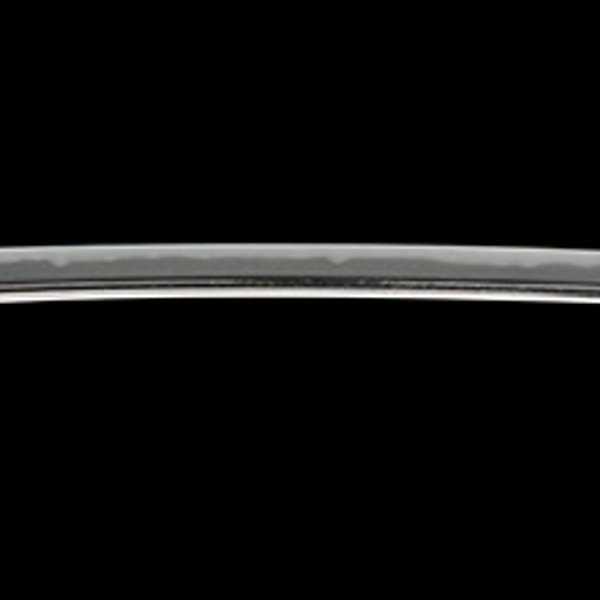
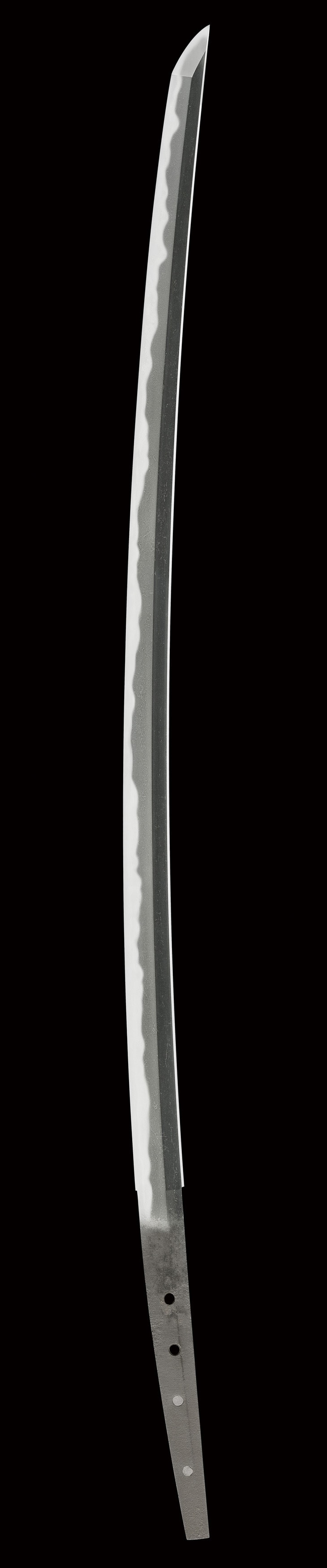
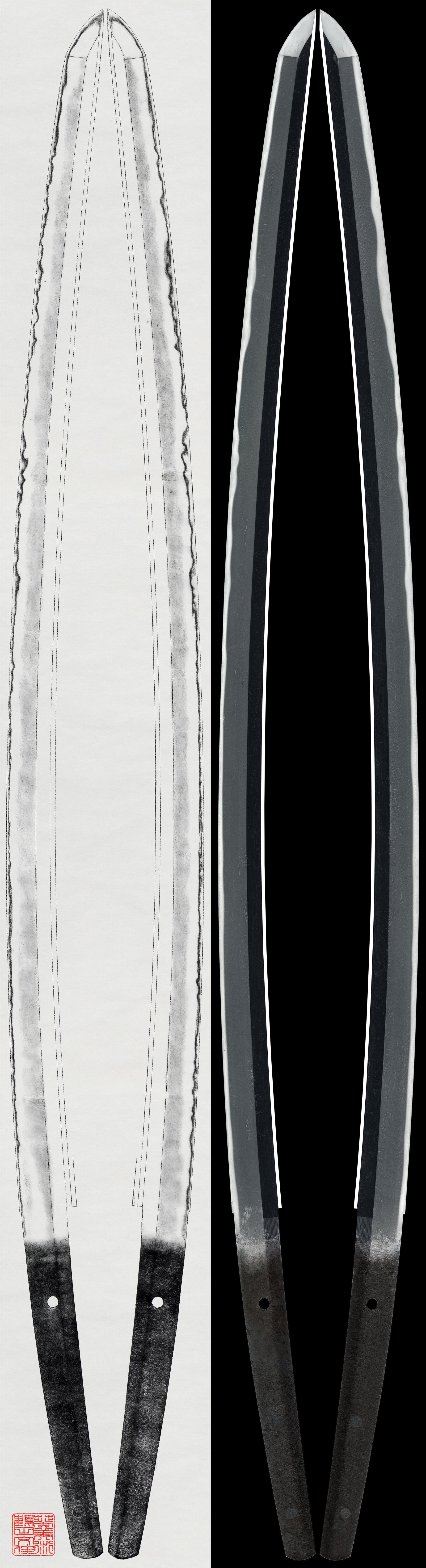
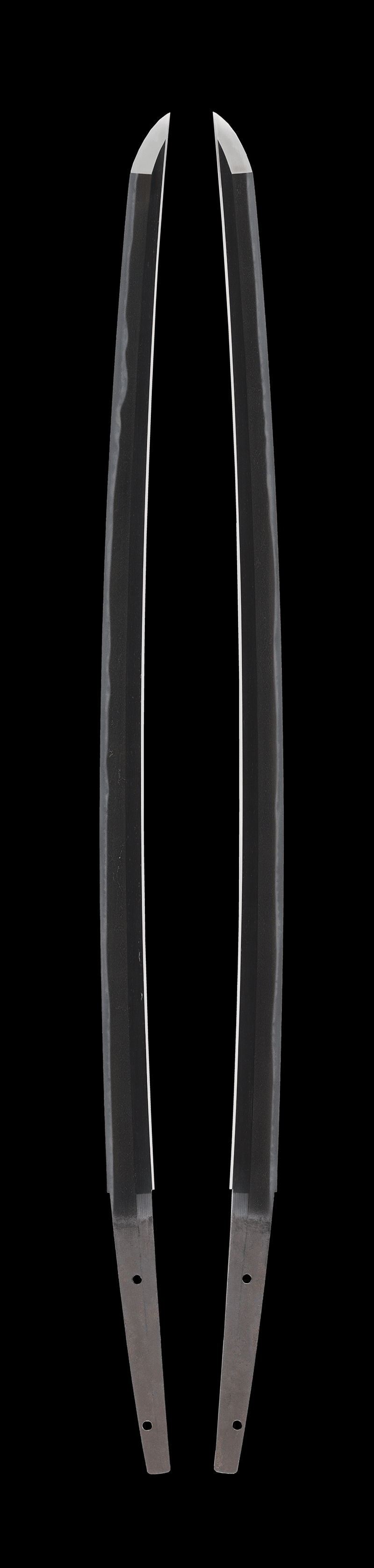
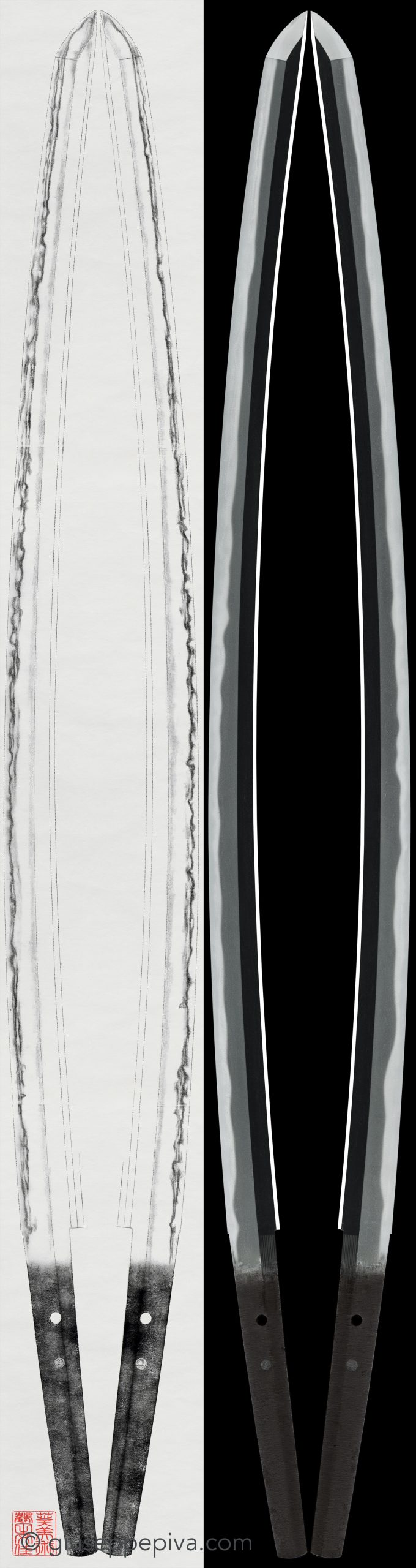
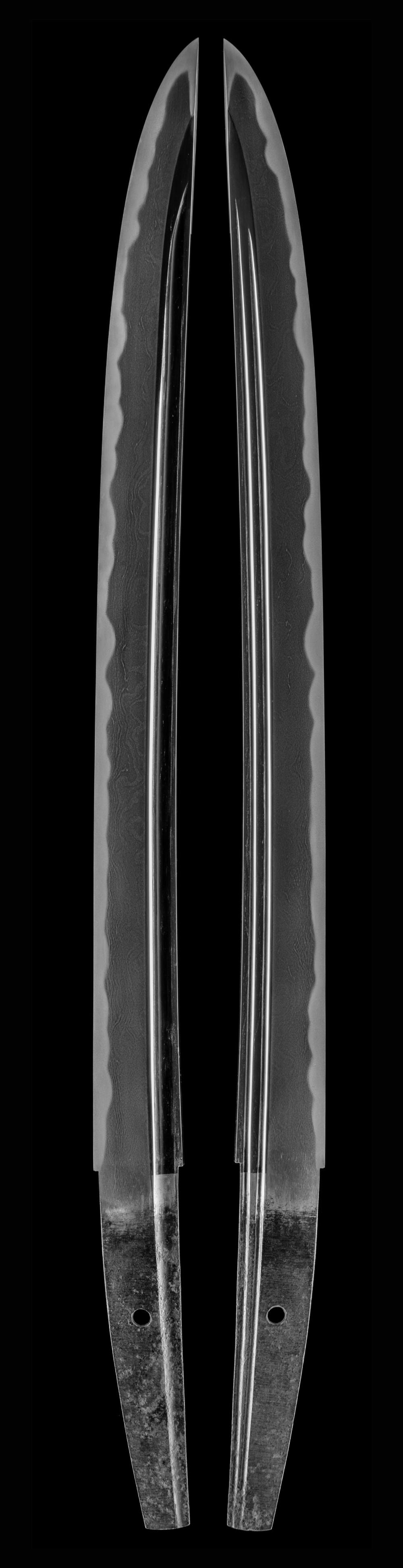
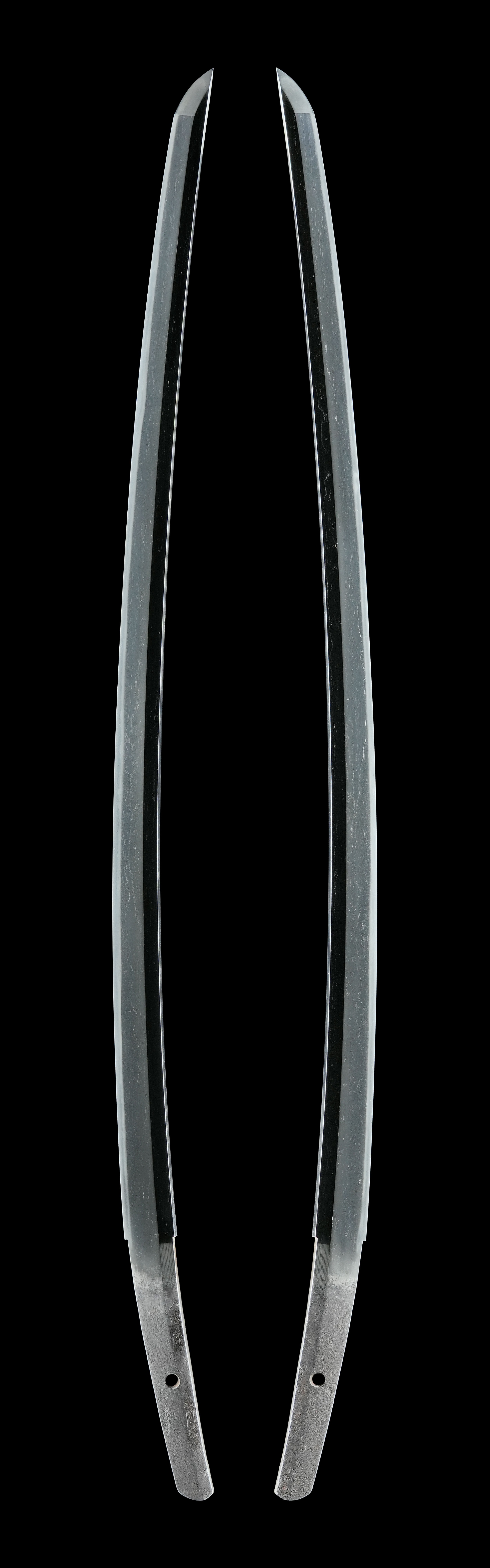
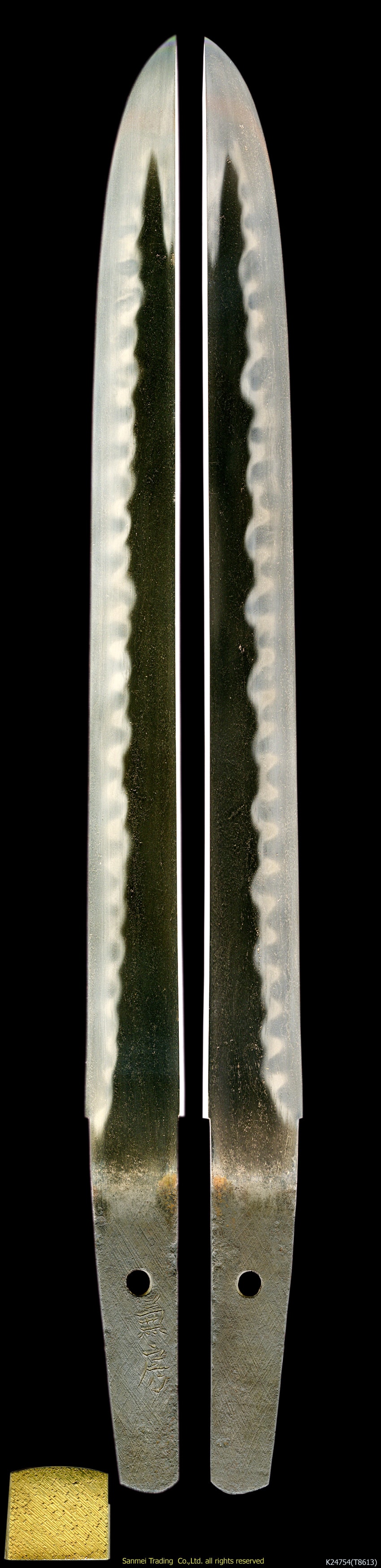
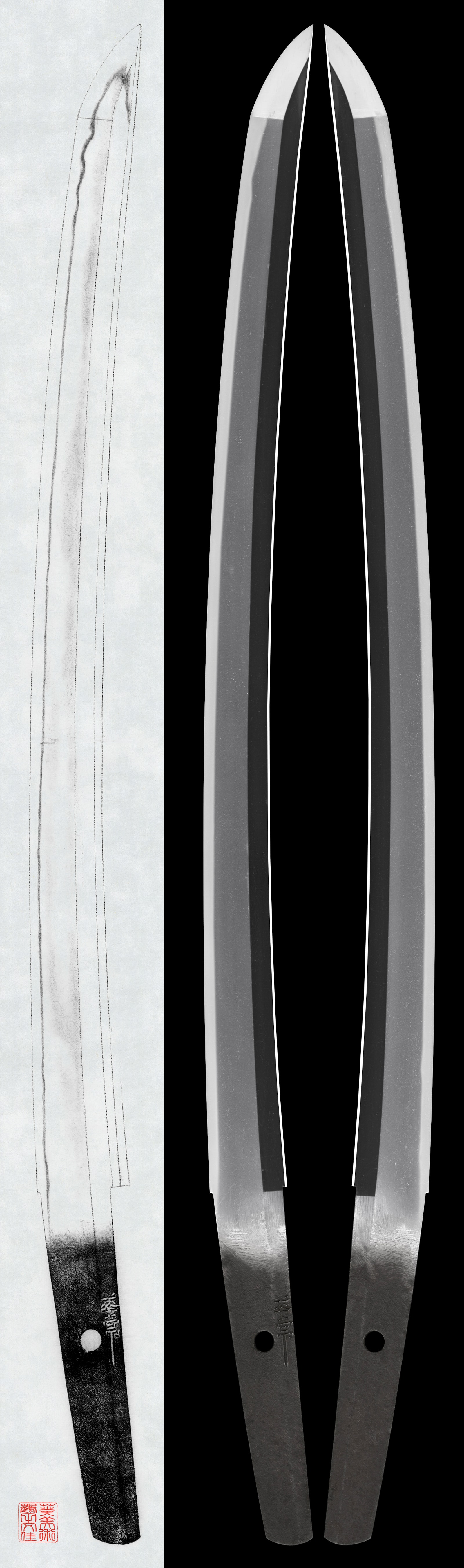
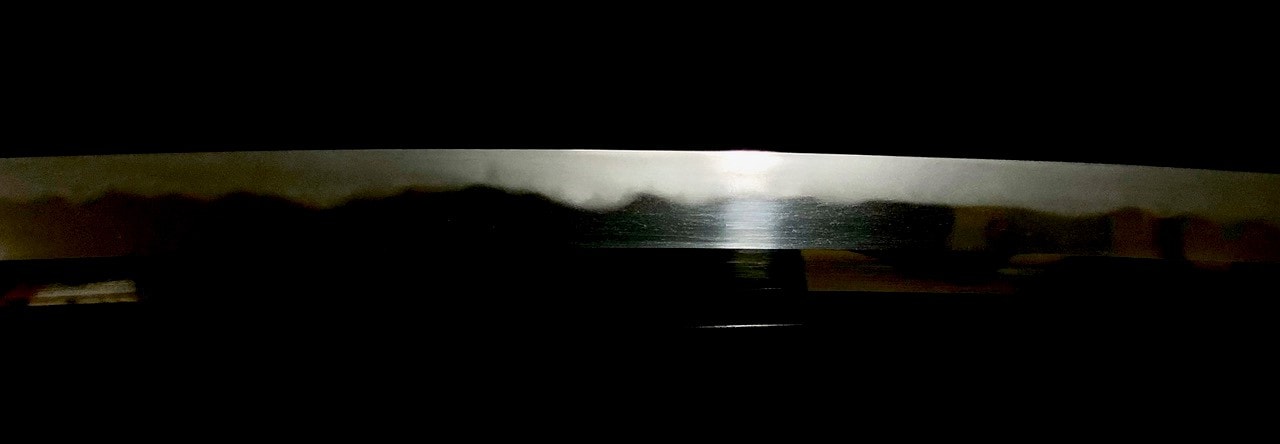
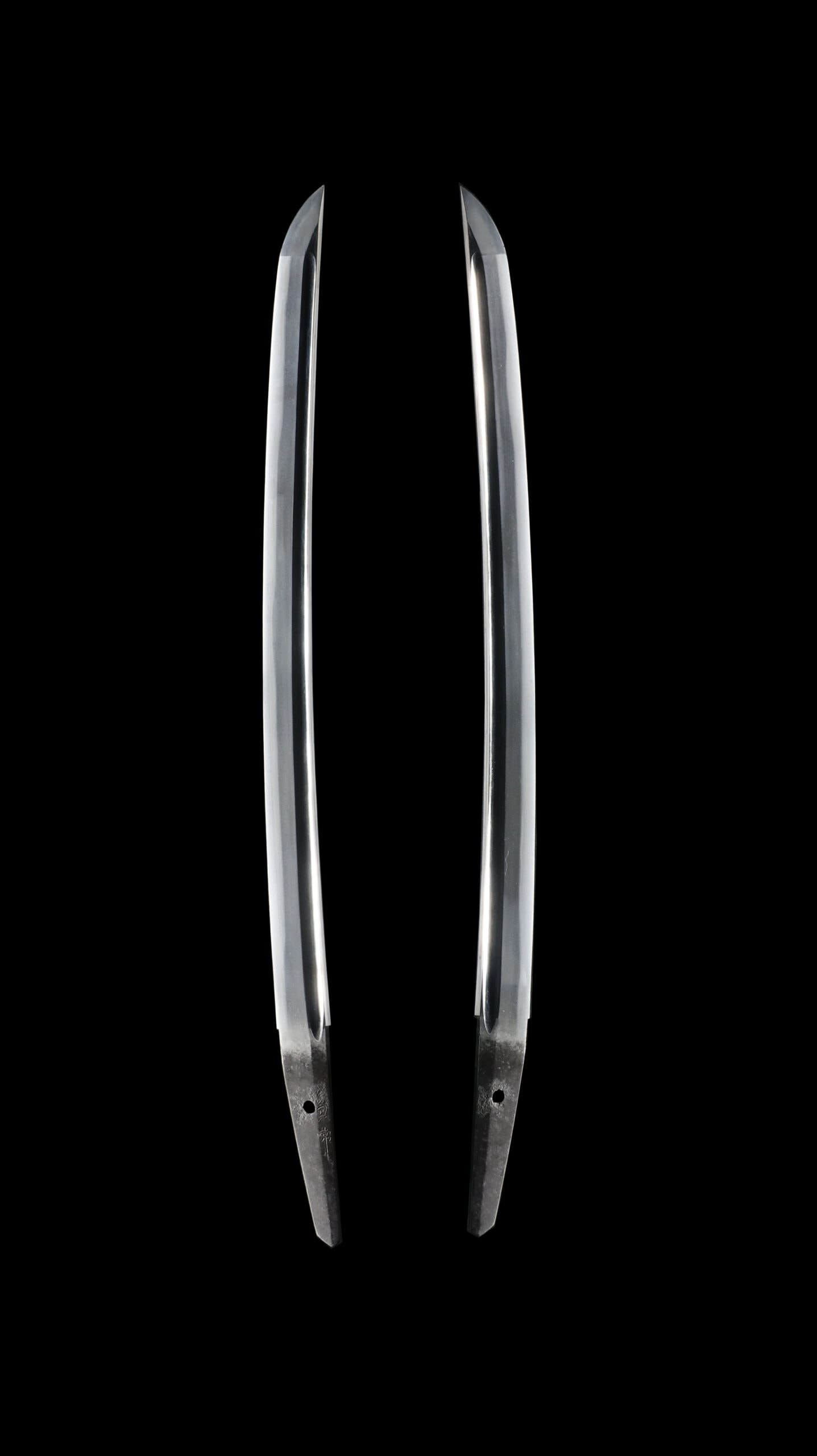
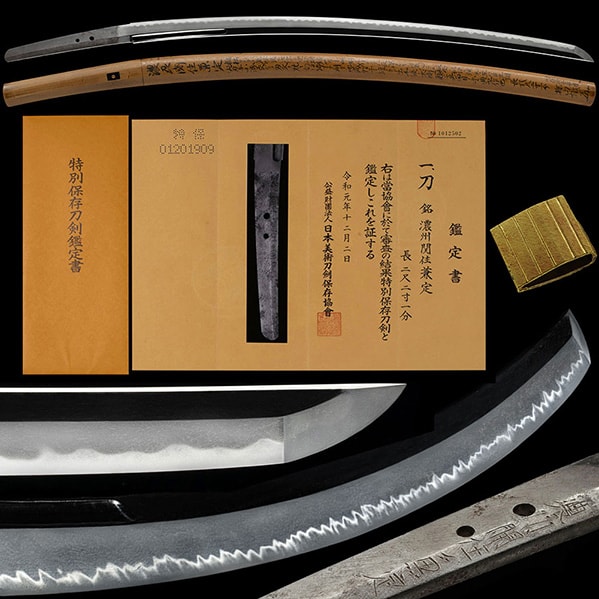
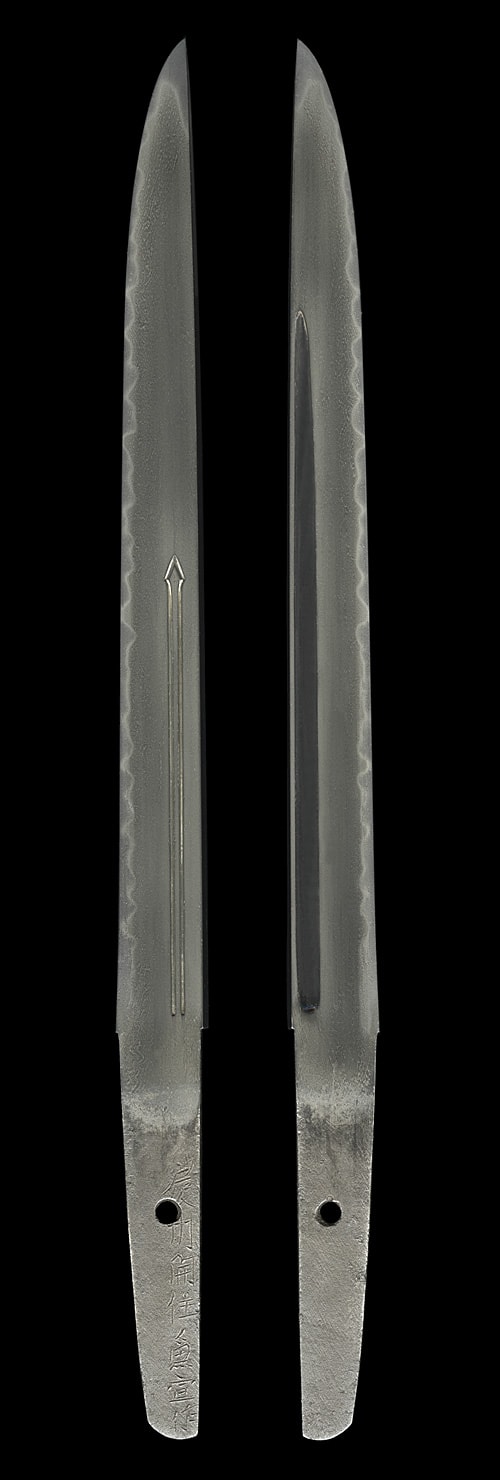
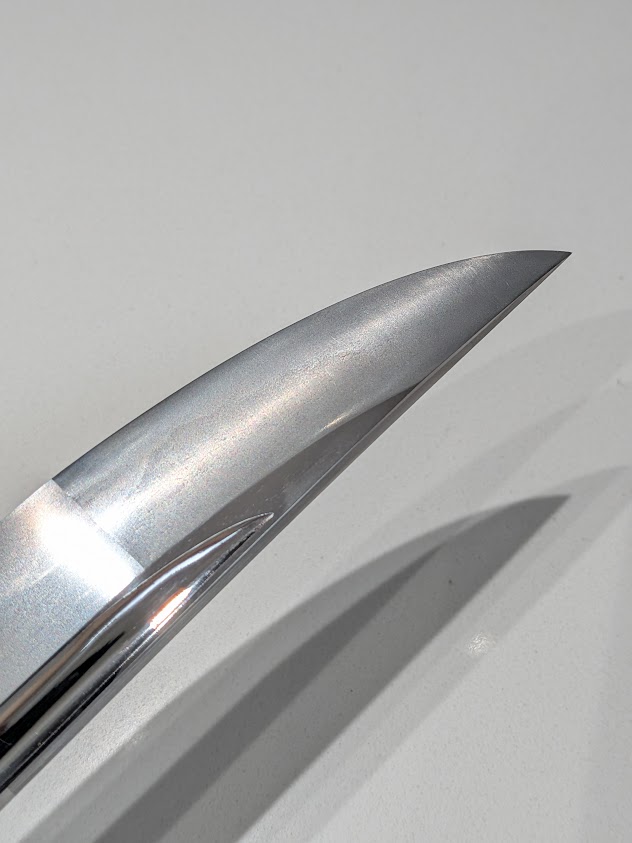
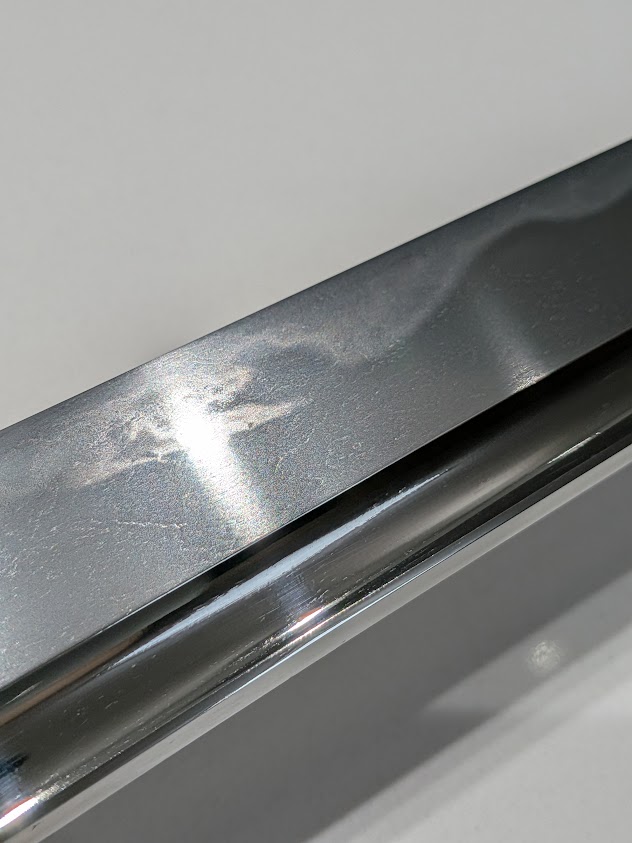
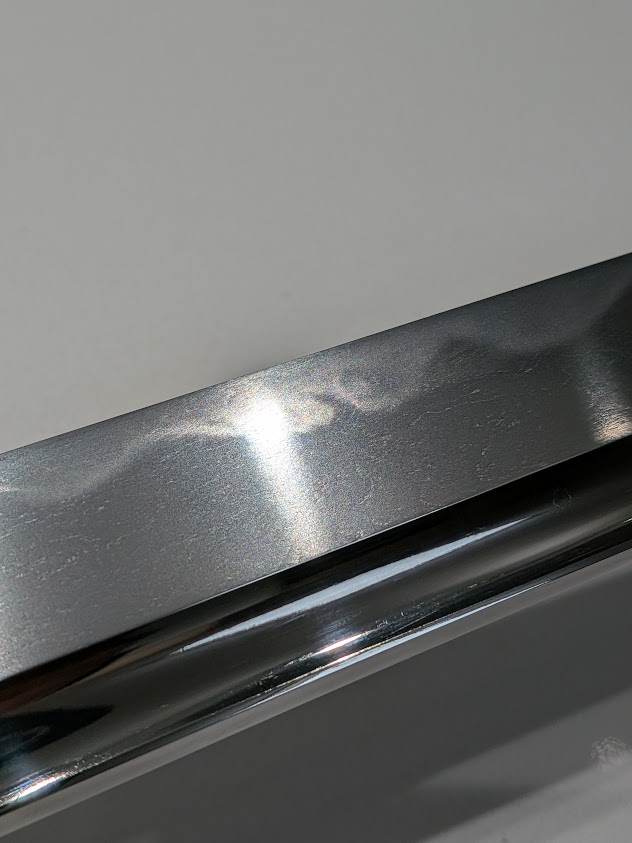
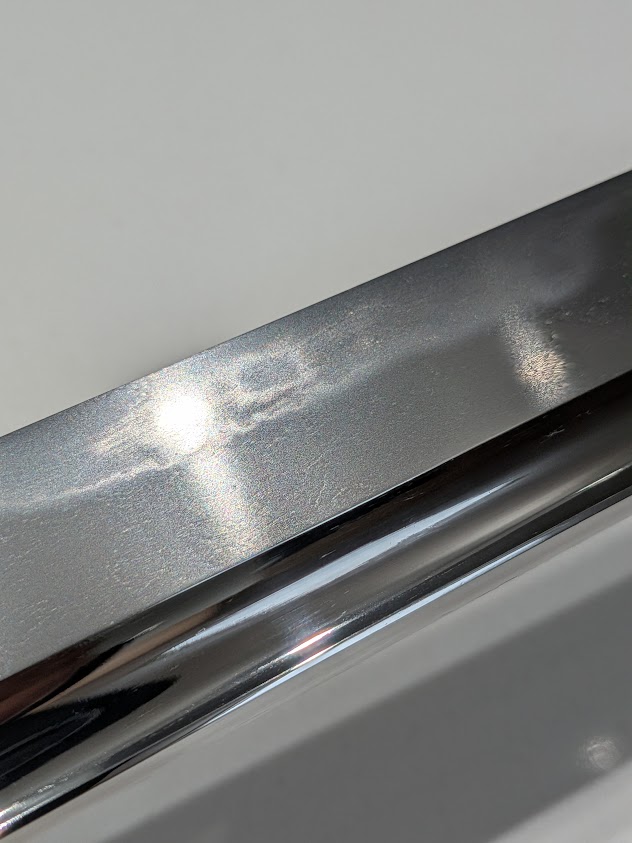
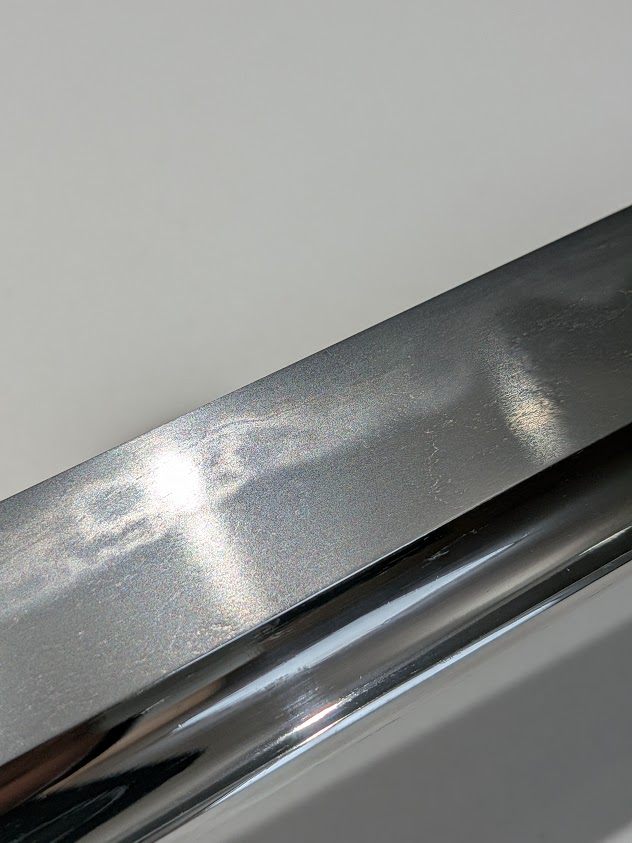
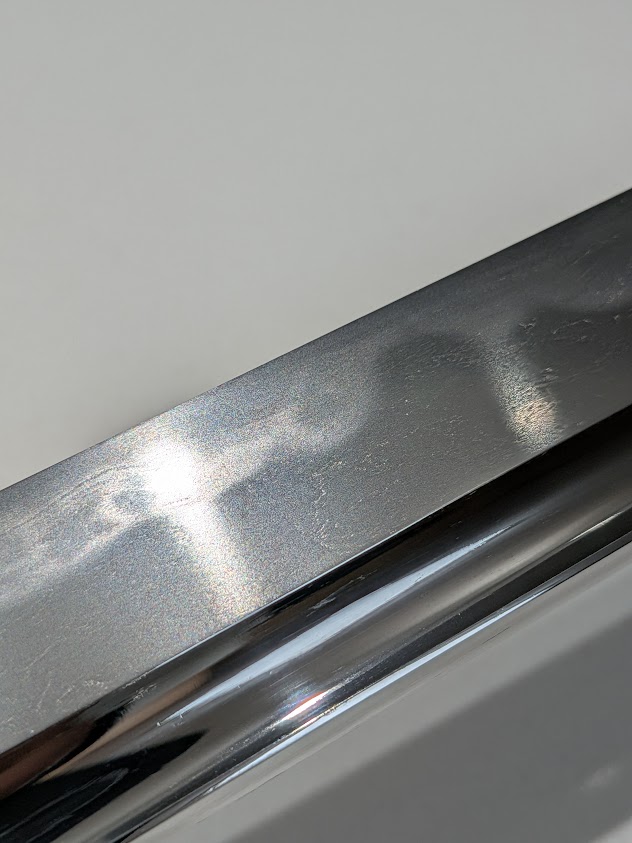
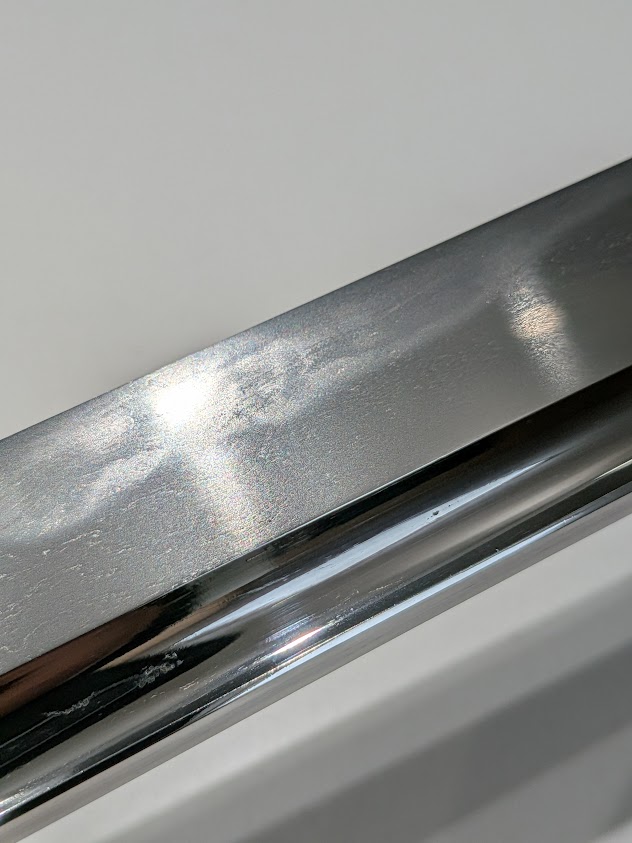
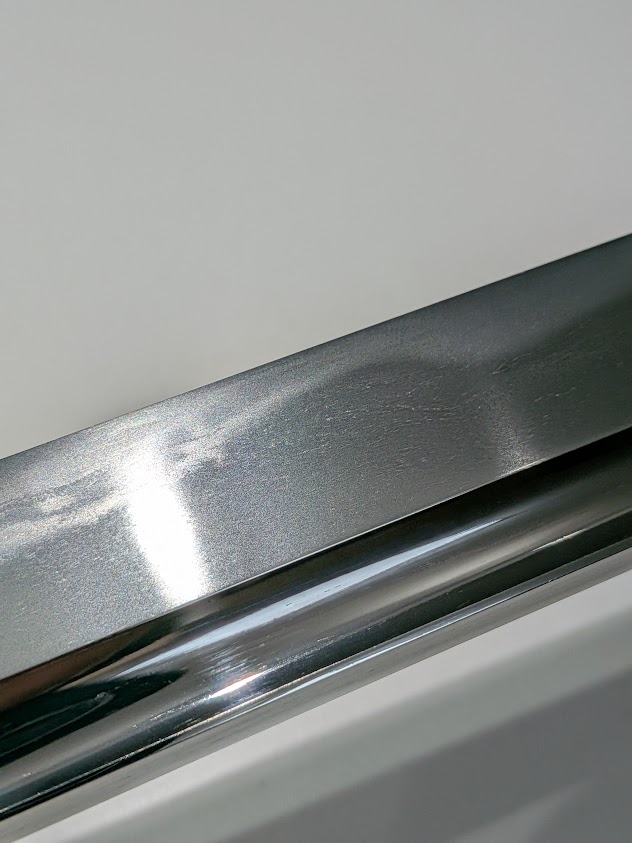
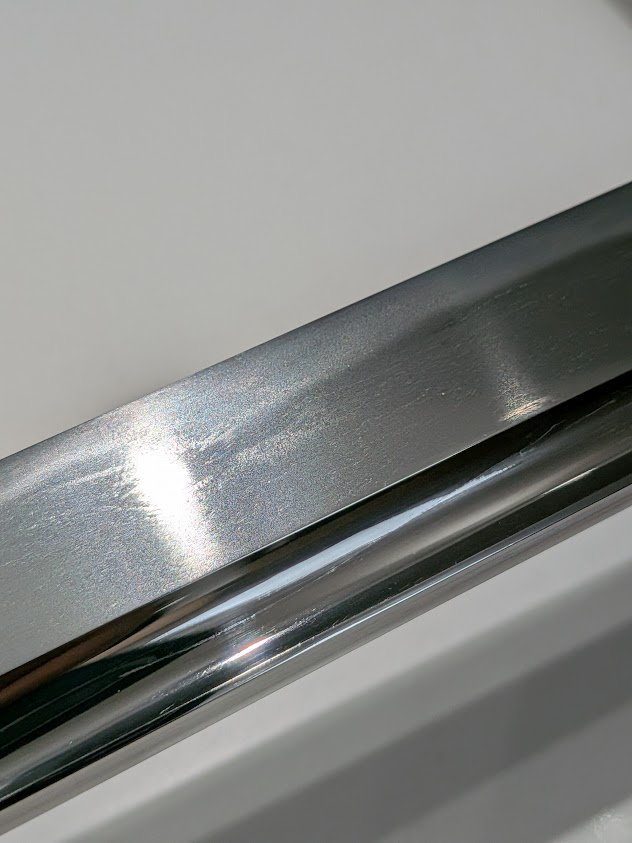
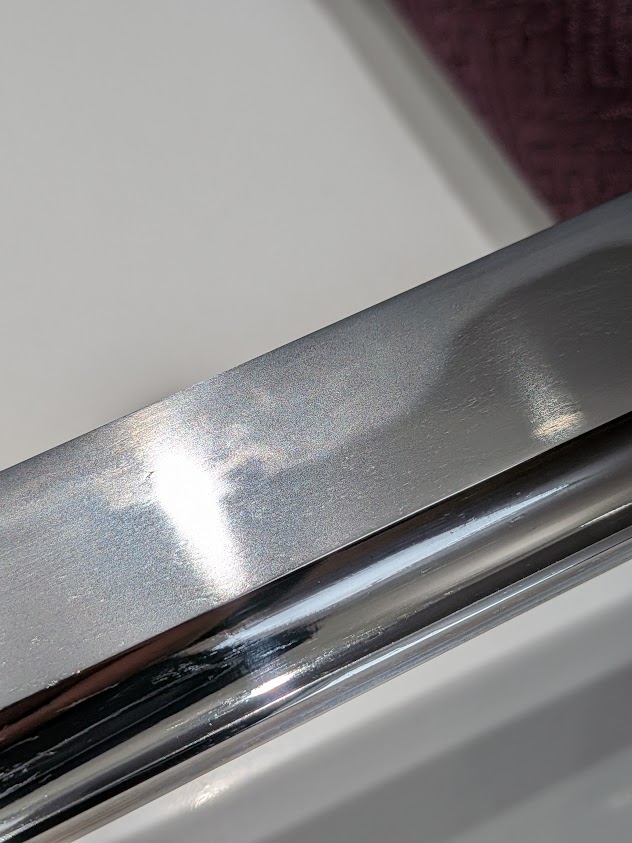
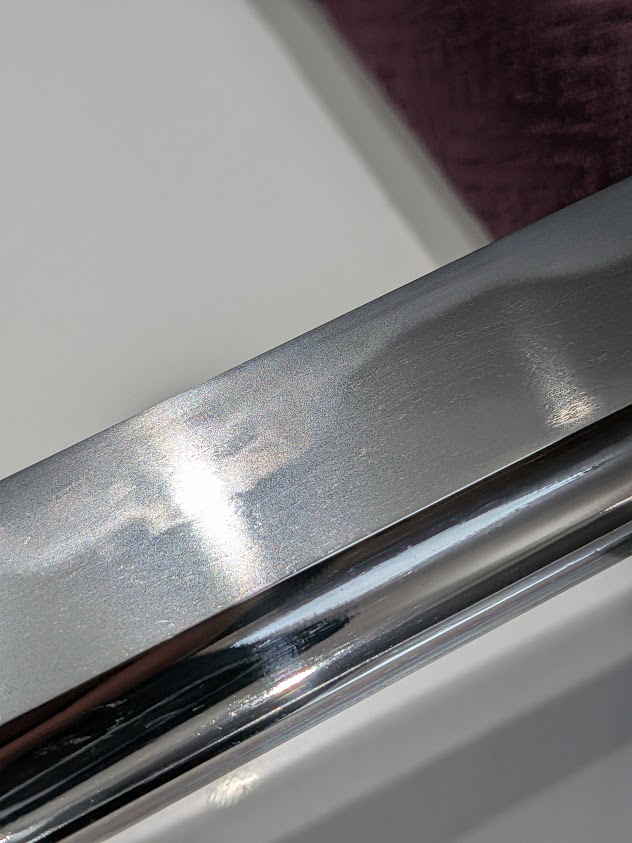
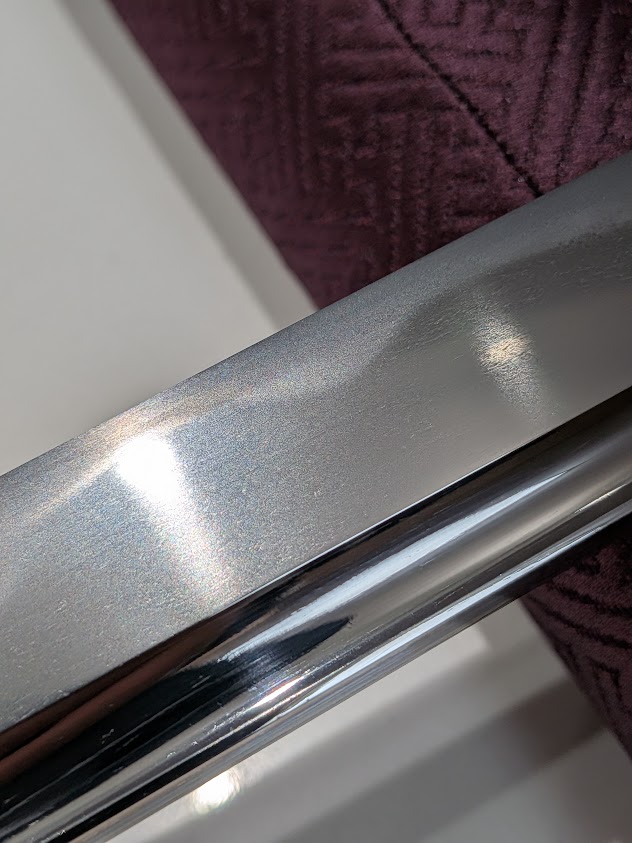
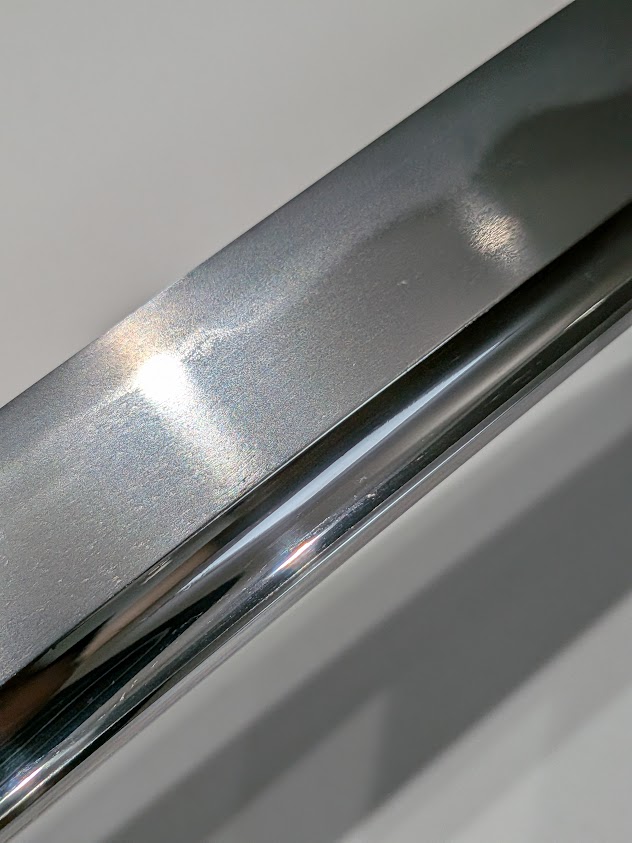
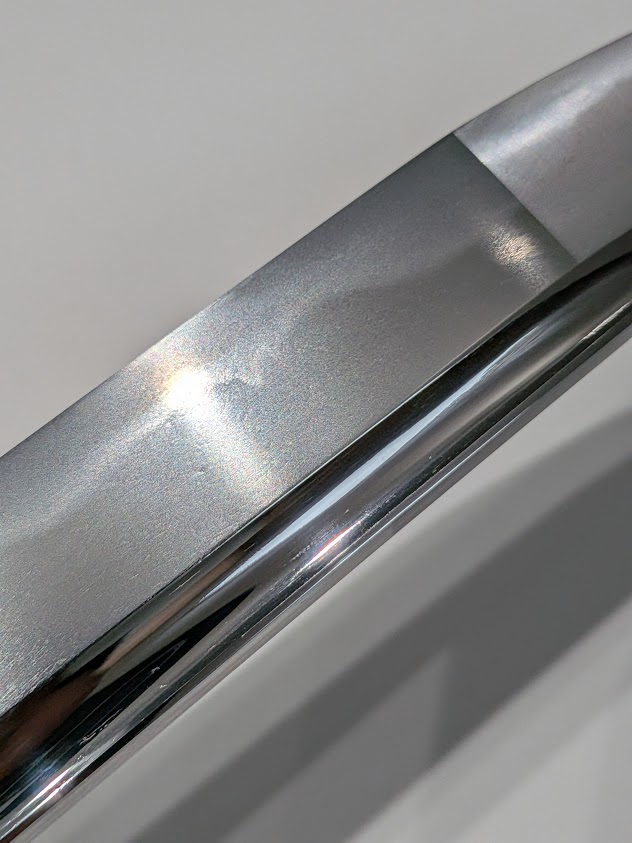
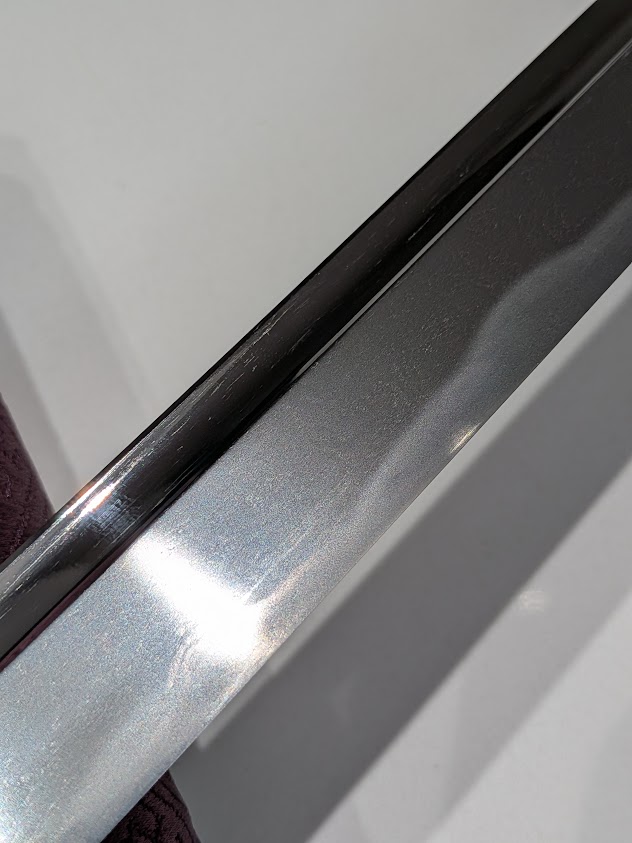
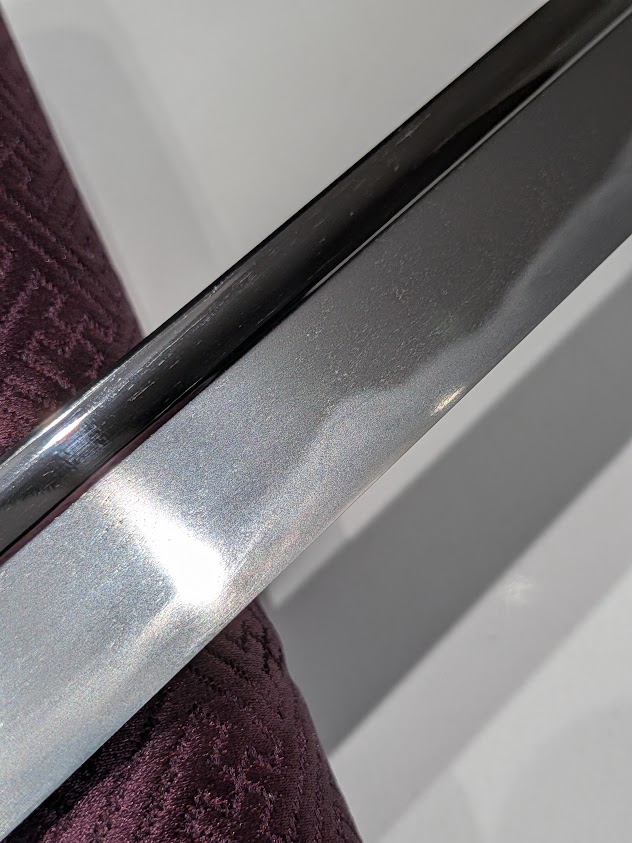
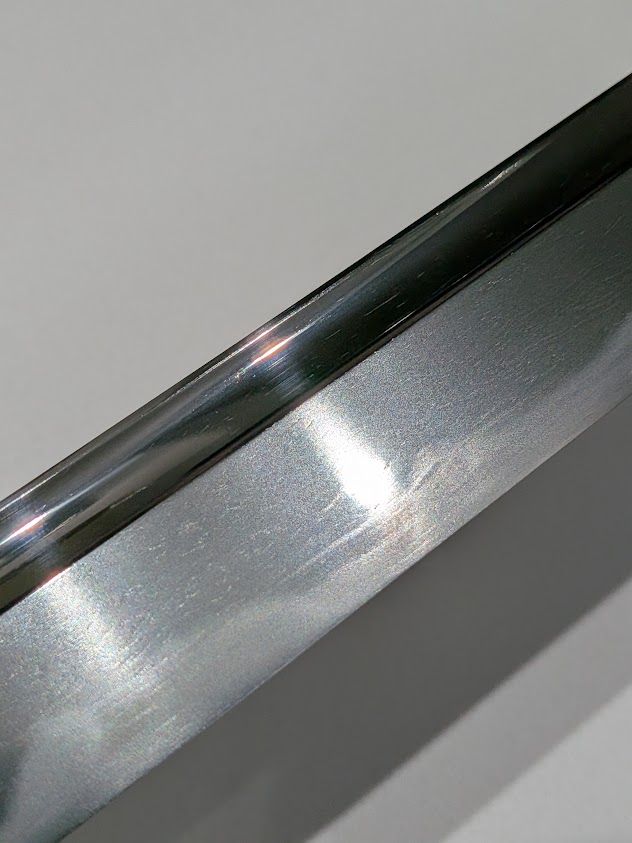
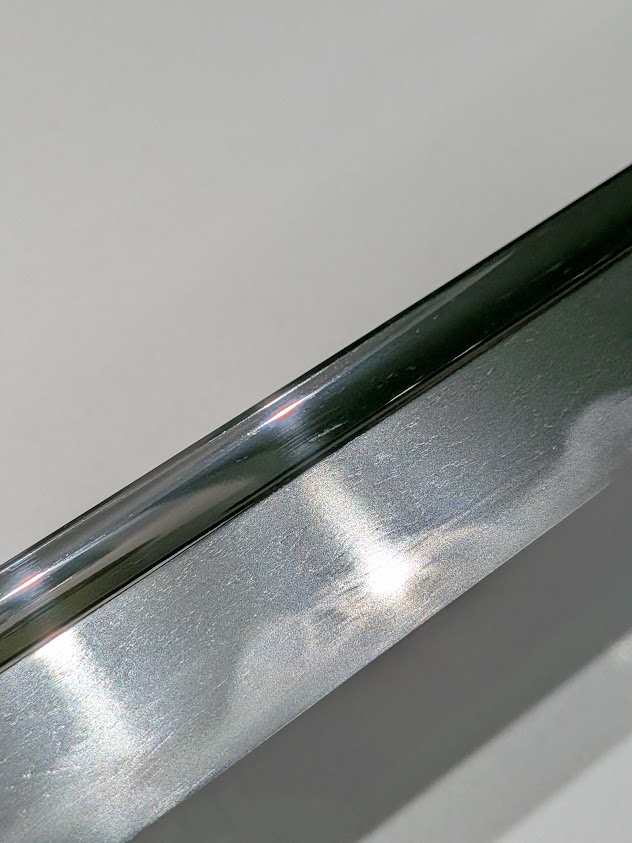
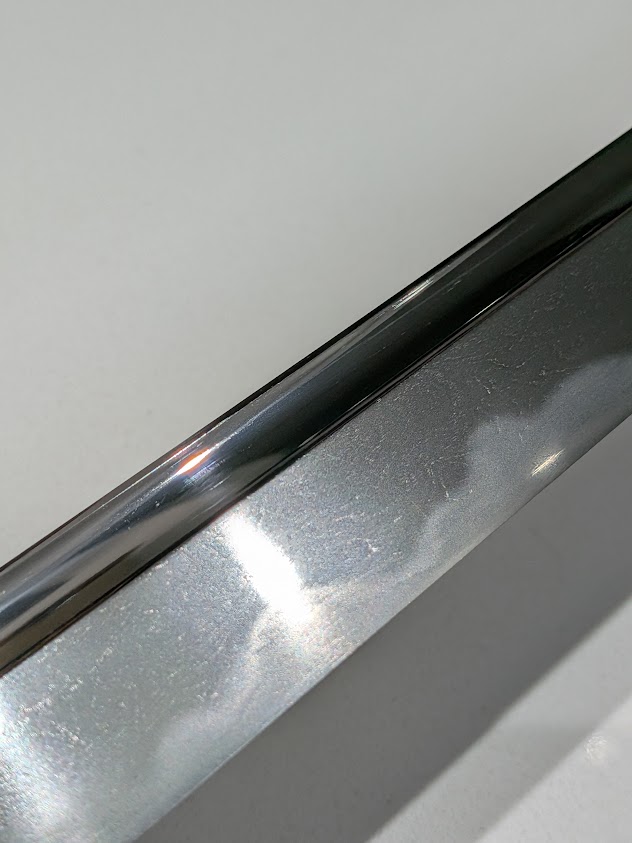
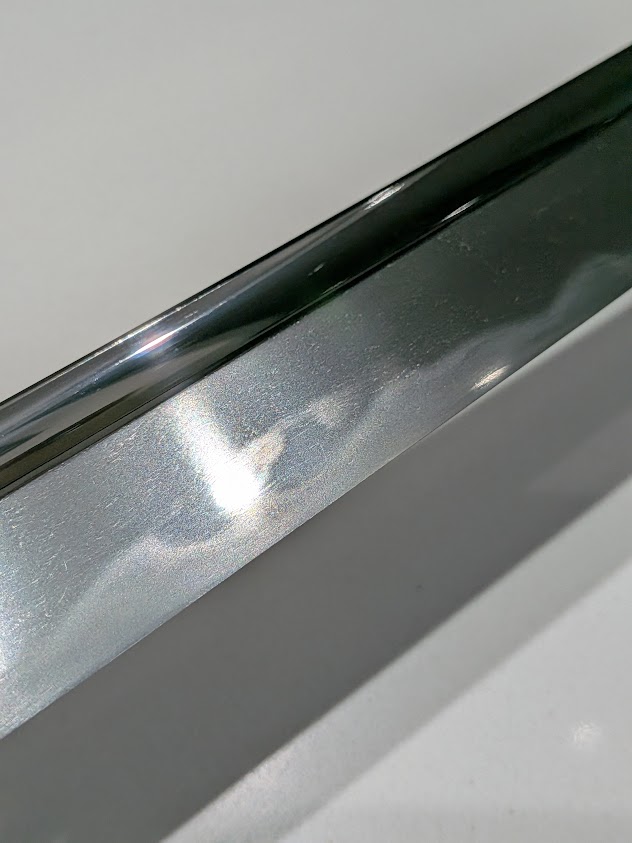
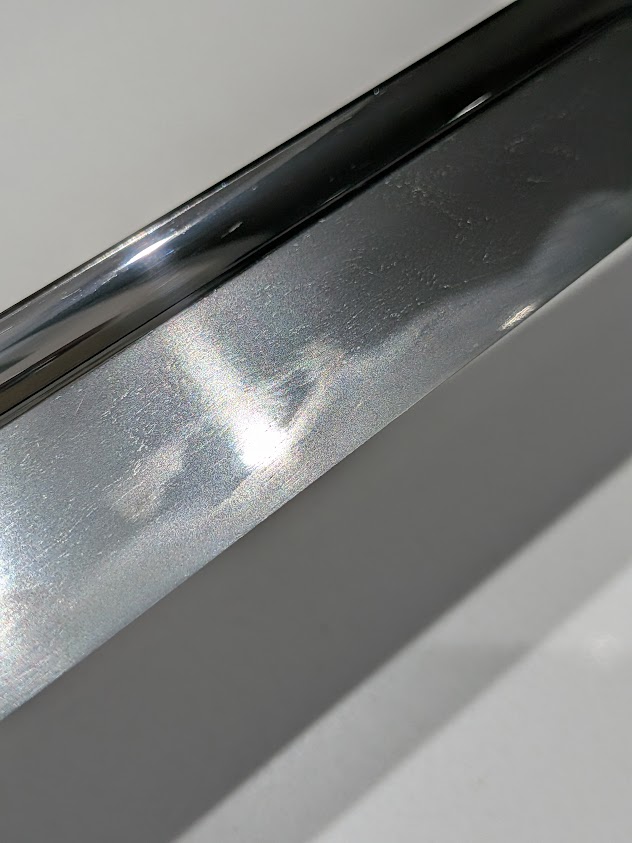
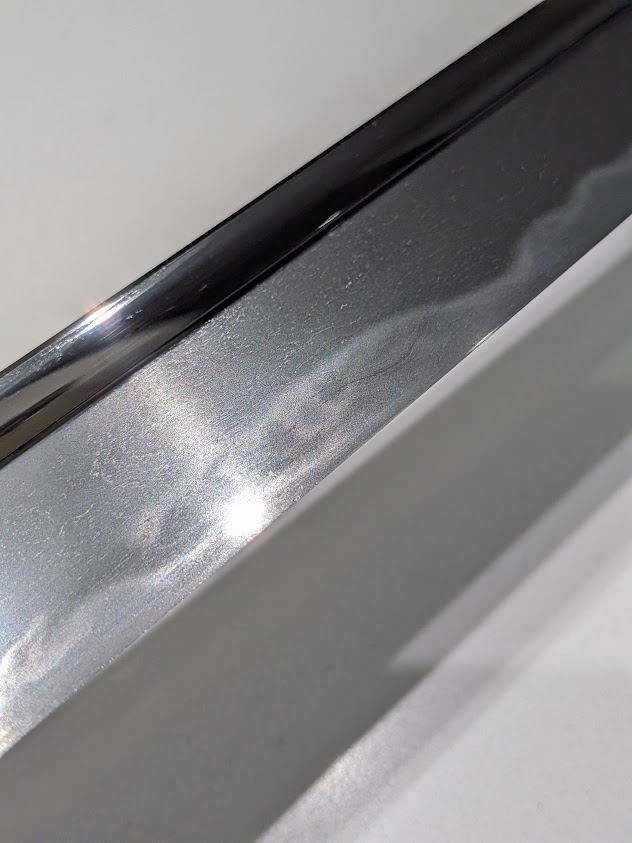
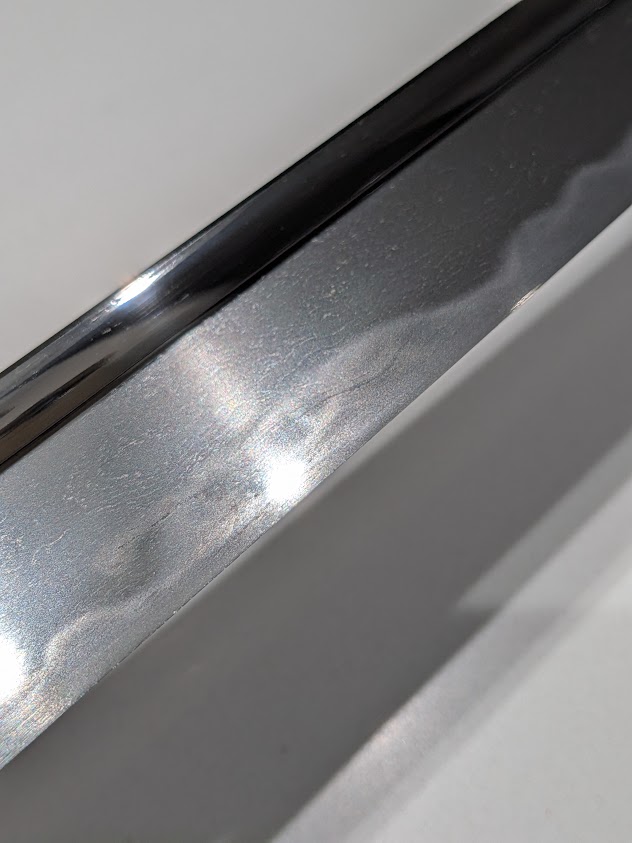
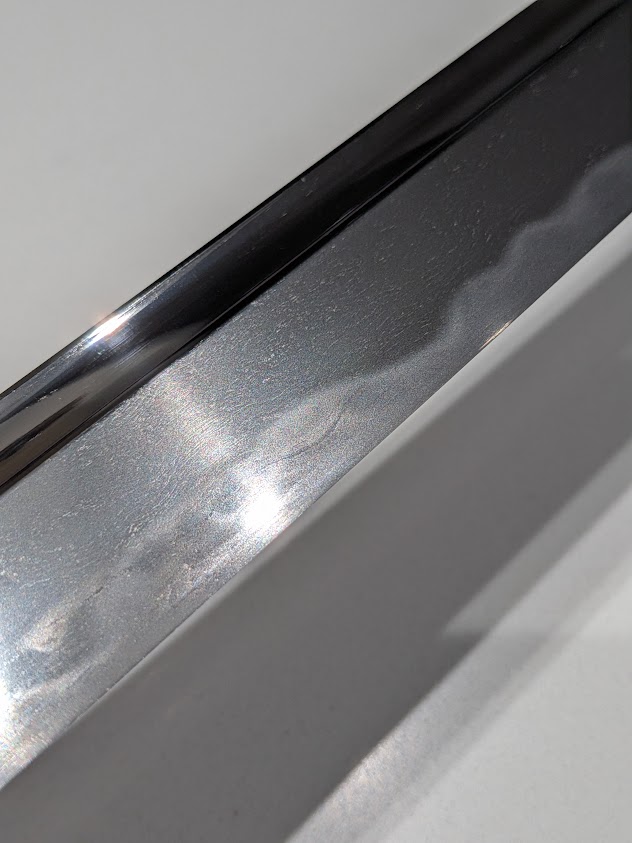
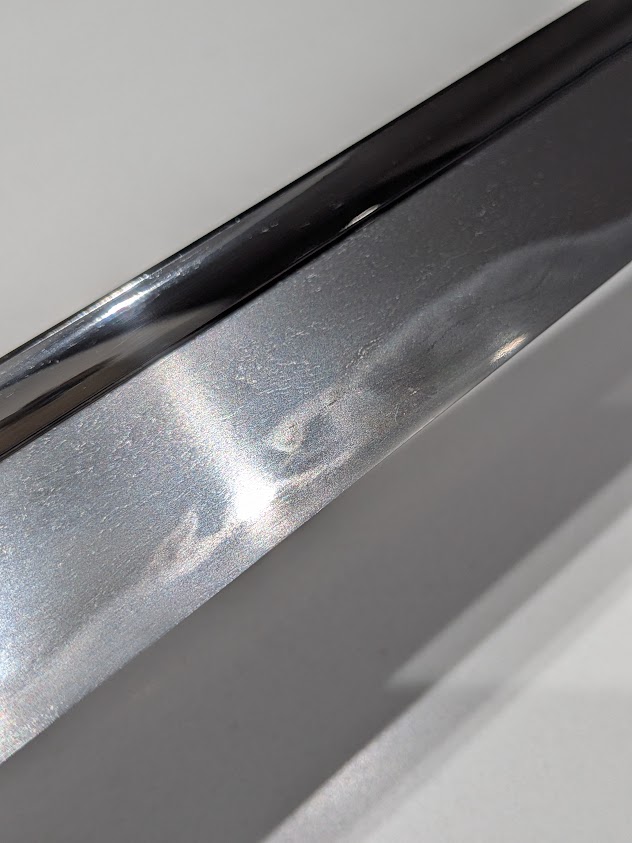
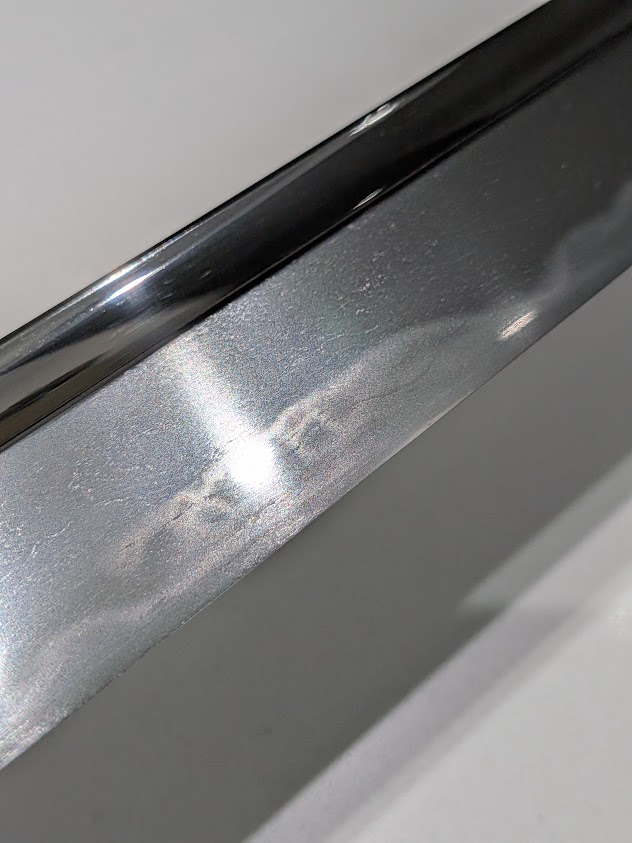
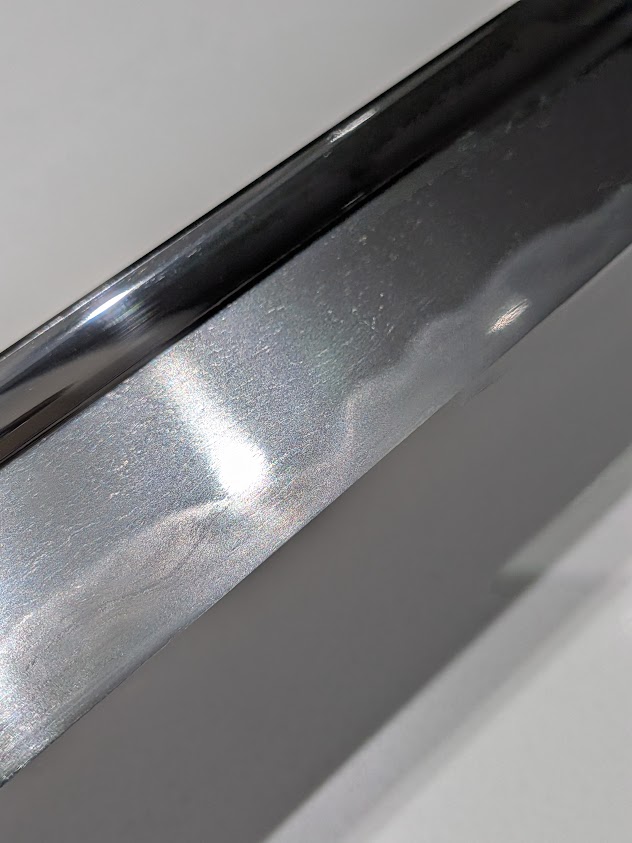
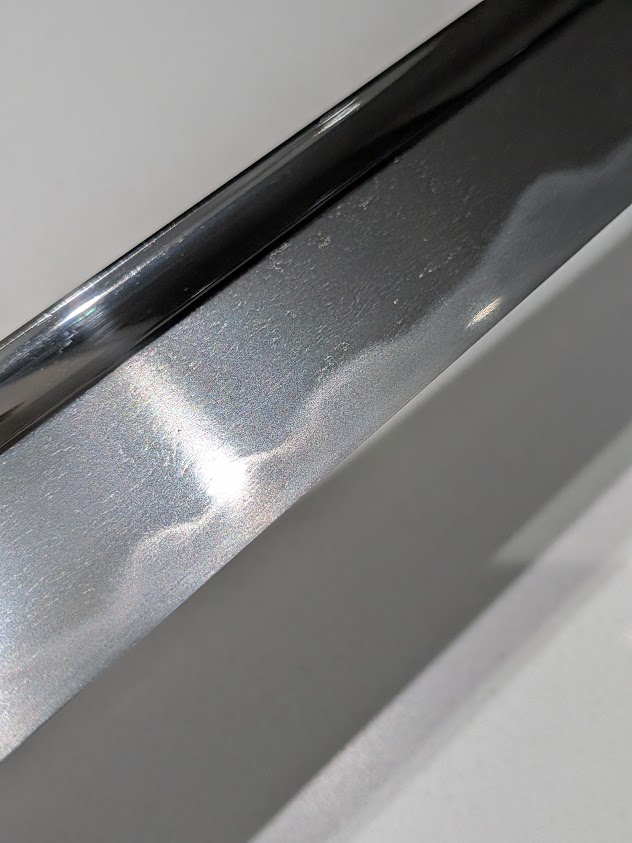
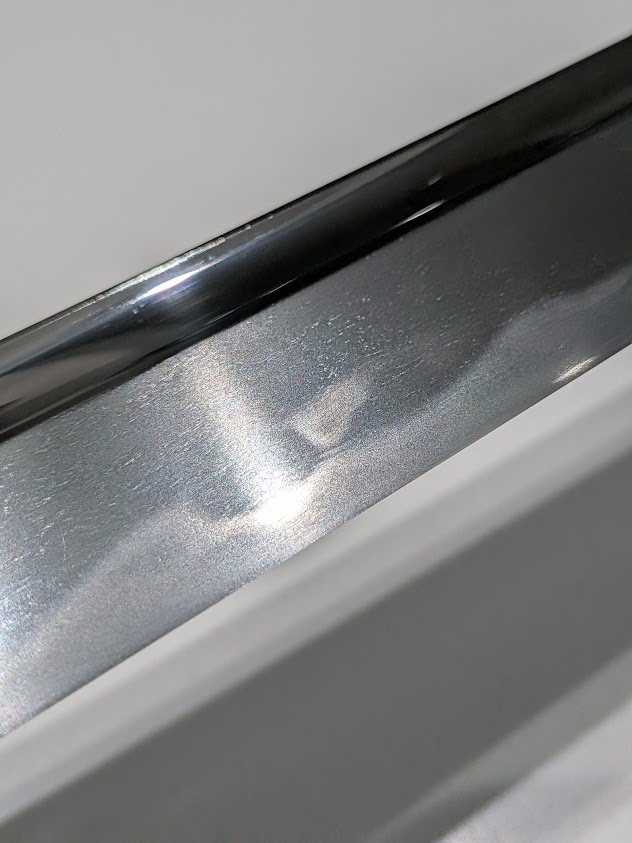
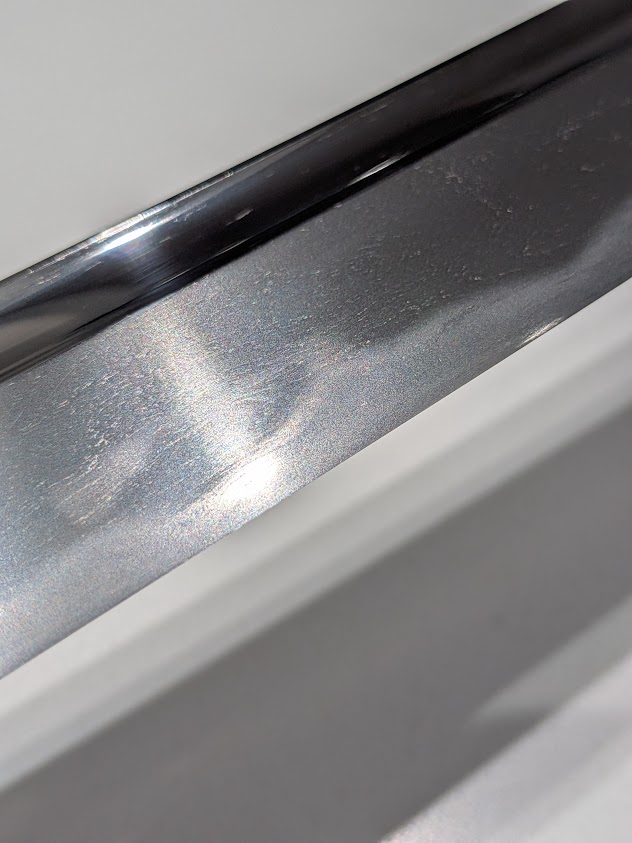
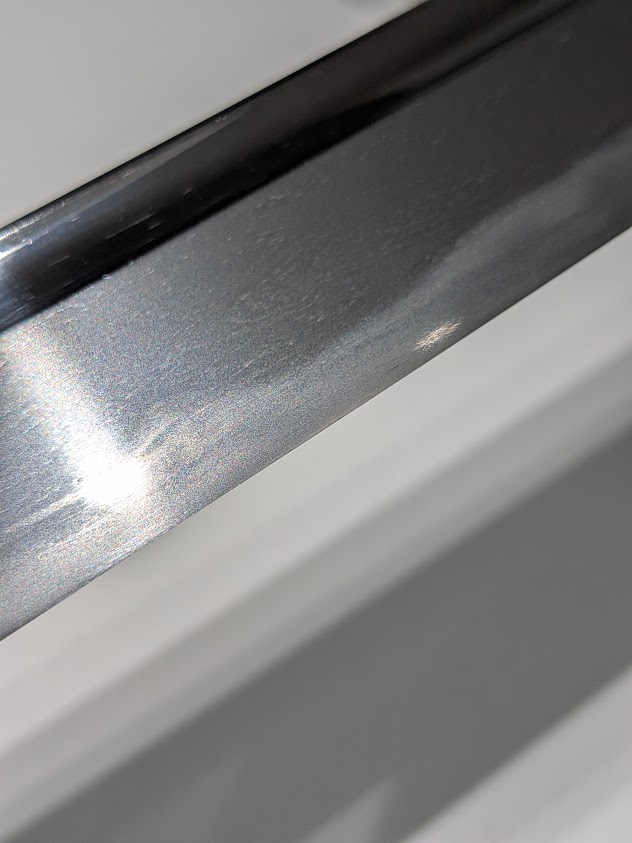
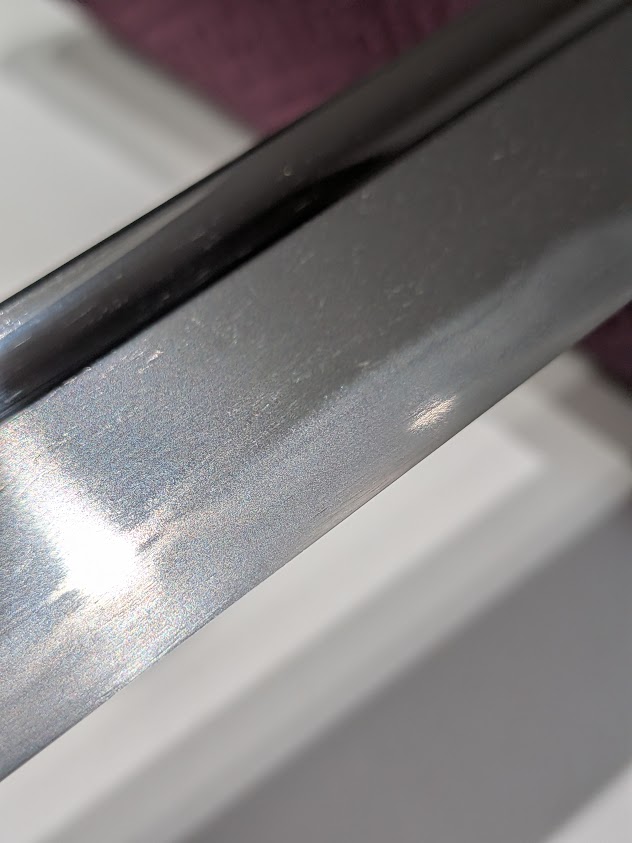
This is a katana attributed to the Naoe Shizu school, known for their work in the Mino province during the Nanbokucho period. The blade comes with a sayagaki (authentication inscription) by Kanzan. Naoe Shizu smiths were students of Shizu Saburo Kaneuji and produced swords in the style of their teacher, though often of slightly lower quality.
 NihontoWatchBETA
mumei · Naoe Shizu · Nanbokucho
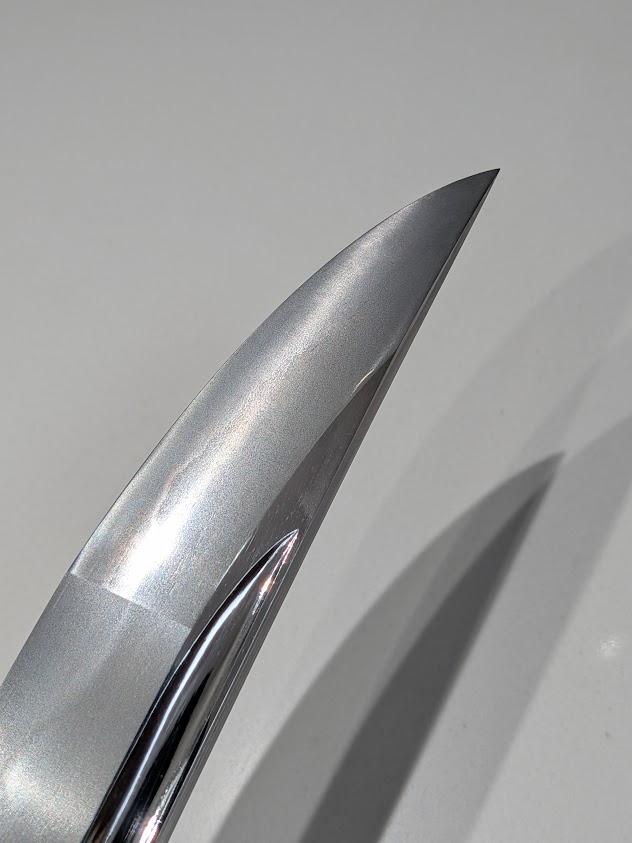
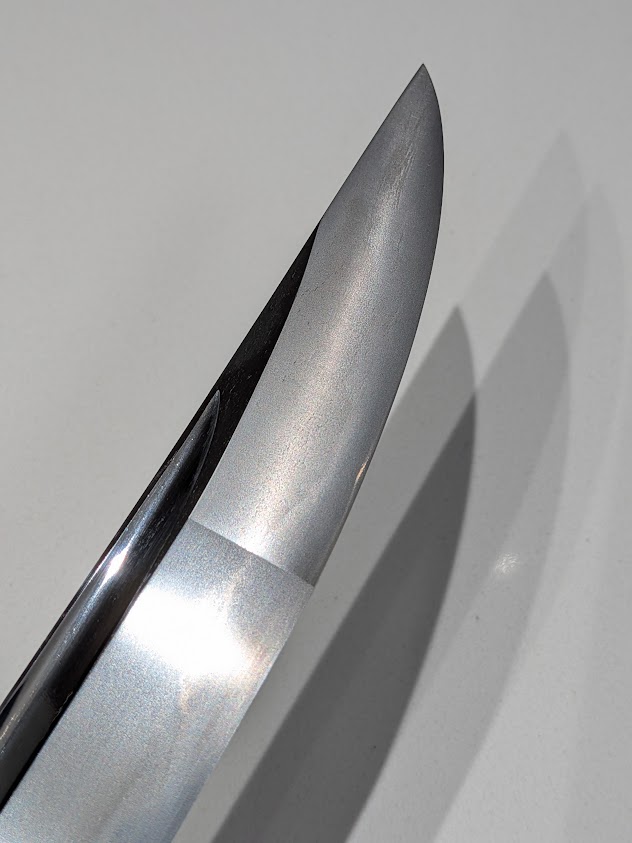
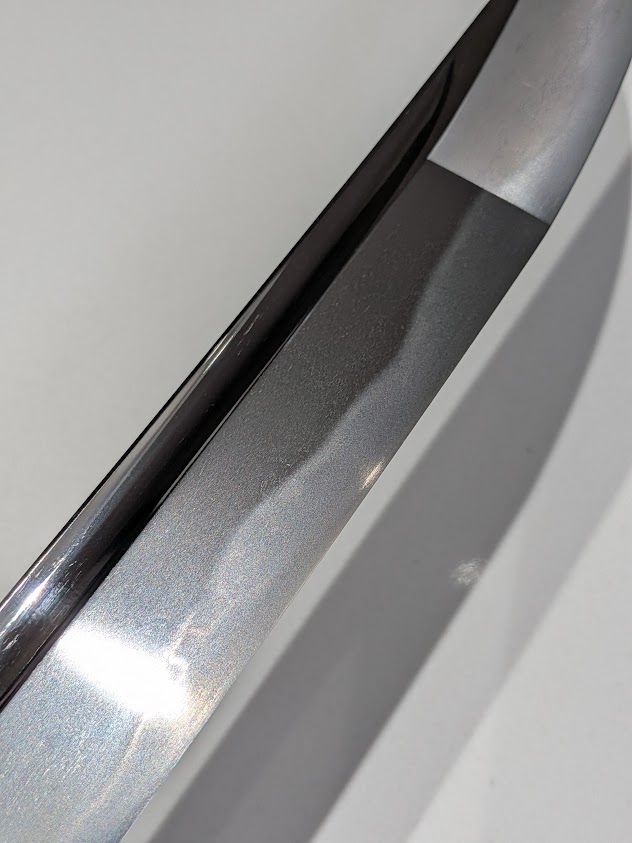
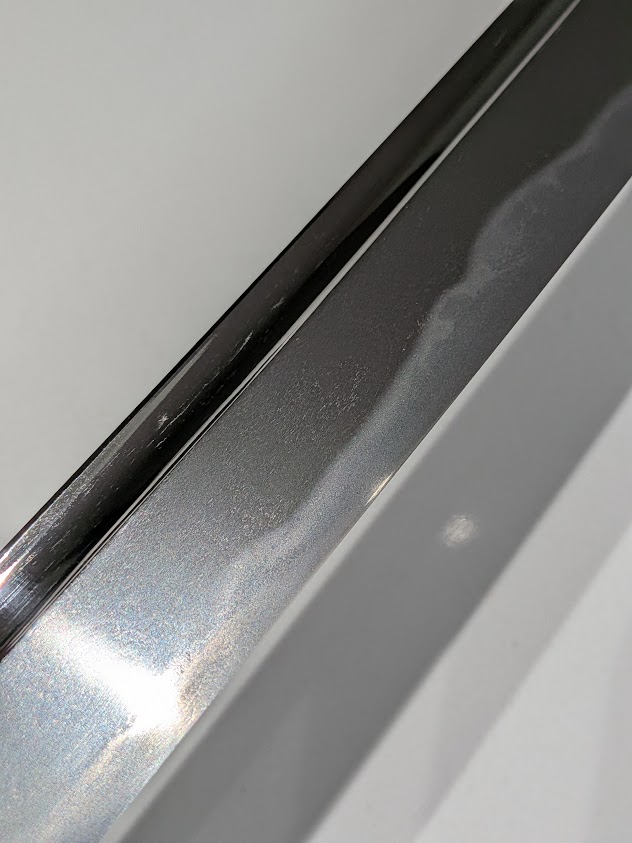
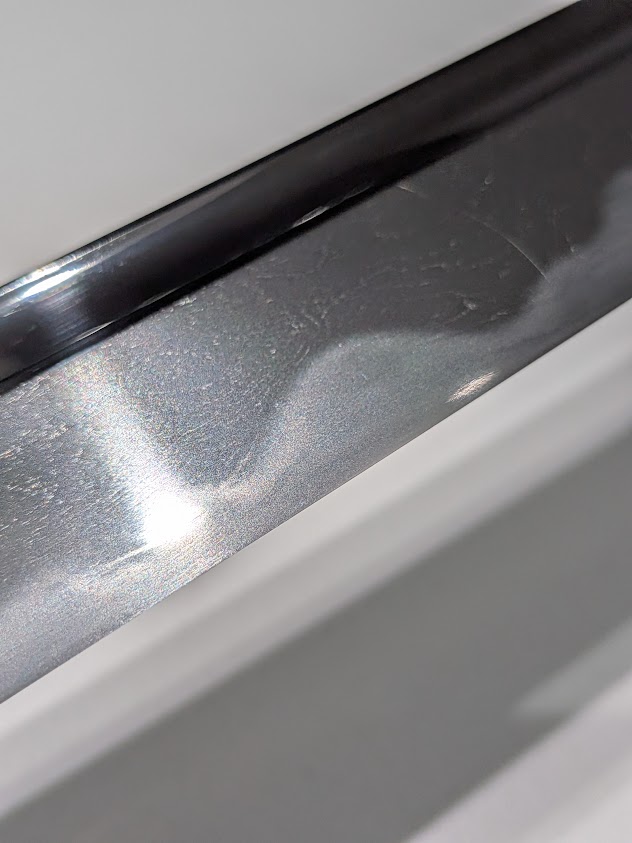
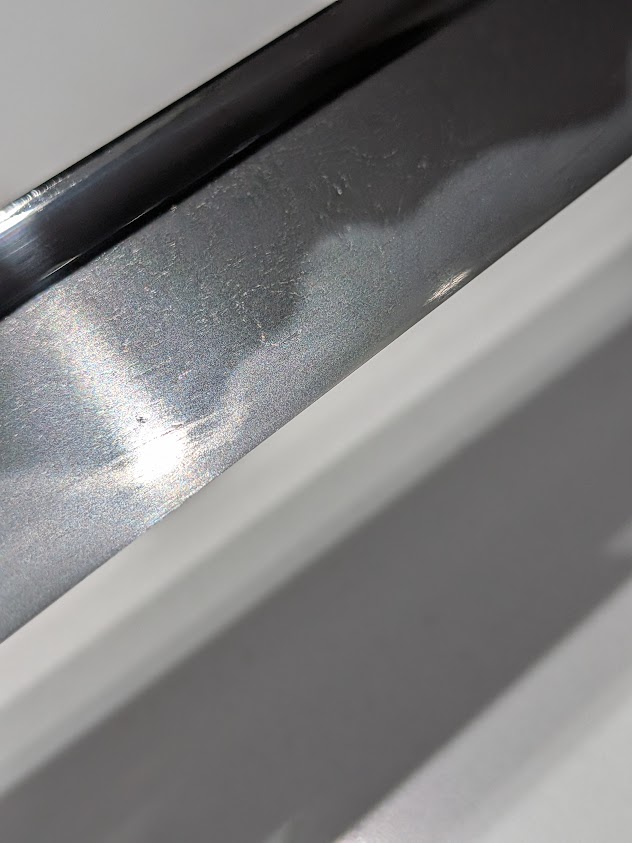
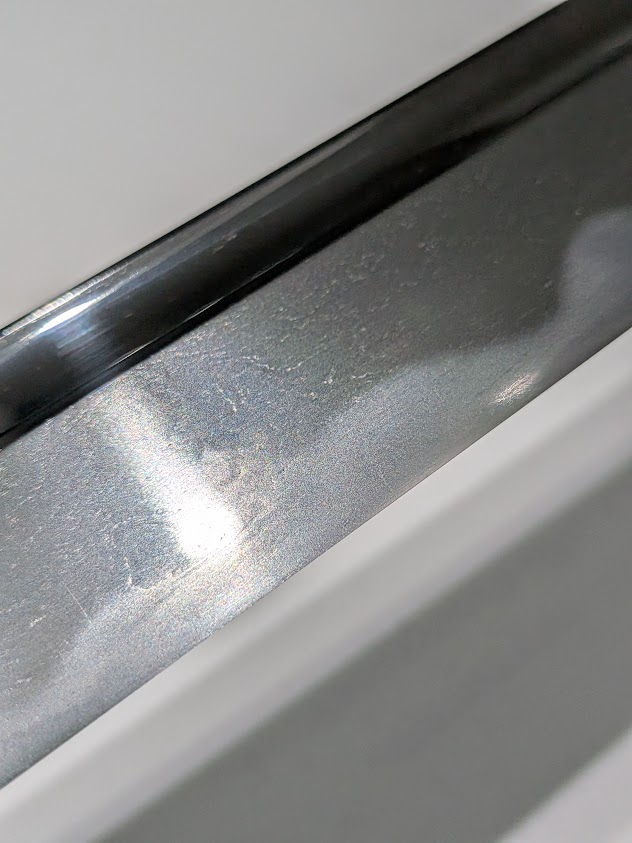
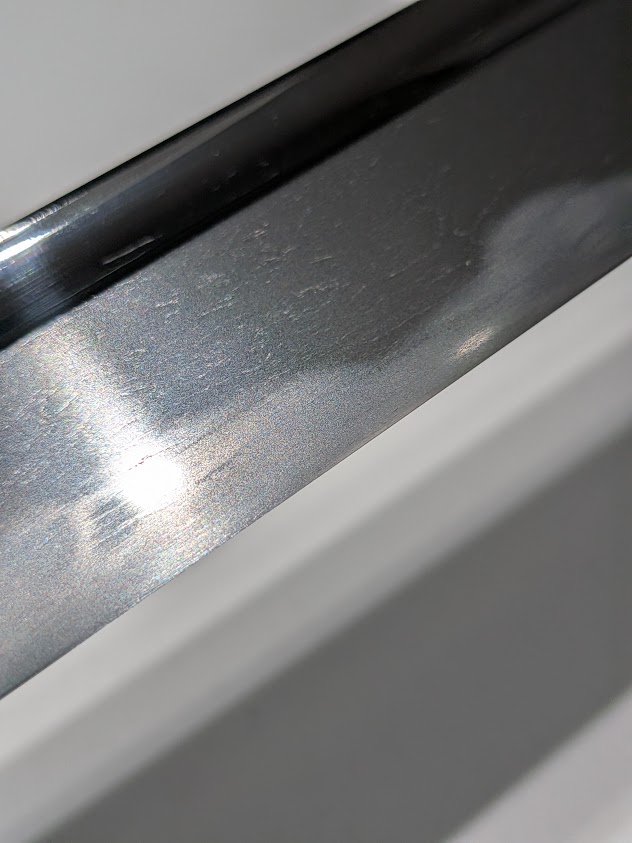
Mino-den · Mino
16 pieces on the market now
Within the province of Mino, in the decades of the Nanbokucho period, a body of smiths gathered at Naoe carrying forward the manner of Shizu Saburo Kaneuji, and from that locality they took the name Naoe Shizu. Kaneuji, originally a member of the Yamato Tegai group who studied under Masamune of Sagami and is counted among the Ten Disciples of Masamune (Masamune jittetsu), settled first at Shizu in Mino and established a flourishing school. Learn more →
| Smith | Era | Designated |
|---|---|---|
| Kanetomo兼友 | 1336-1340 | 11 |
| Kaneuji兼氏 | 1342-1345 | 3 |
| Kanenobu兼延 | 1368-1375 | 0 |
| Kaneuji兼氏 | 1394-1428 | 0 |
| Kanenobu兼延 | 1390-1394 | 0 |
A Hozon-certified blade judged to show notably superior workmanship and a better state of preservation. The bar is higher: re-tempered blades and most unsigned Muromachi/Edo works are excluded.
The NBTHK (Nihon Bijutsu Tōken Hozon Kyōkai, the Society for the Preservation of Japanese Art Swords) is a public-interest incorporated foundation founded in 1948 and supervised by Japan’s Agency for Cultural Affairs (Bunkachō); it is based at the Japanese Sword Museum in Tokyo. Its expert panels physically examine each submitted work (shinsa) and issue a certificate (kanteishō) ranking it by artistic and historical merit. NBTHK papers are the most widely recognized standard of authentication for Japanese swords and fittings.
NBTHK official siteThis is a katana attributed to the Naoe Shizu school, known for their work in the Mino province during the Nanbokucho period. The blade comes with a sayagaki (authentication inscription) by Kanzan. Naoe Shizu smiths were students of Shizu Saburo Kaneuji and produced swords in the style of their teacher, though often of slightly lower quality.
NihontoWatchBETAmumei · Naoe Shizu · Nanbokucho
Mino-den · Mino
16 pieces on the market now
Within the province of Mino, in the decades of the Nanbokucho period, a body of smiths gathered at Naoe carrying forward the manner of Shizu Saburo Kaneuji, and from that locality they took the name Naoe Shizu. Kaneuji, originally a member of the Yamato Tegai group who studied under Masamune of Sagami and is counted among the Ten Disciples of Masamune (Masamune jittetsu), settled first at Shizu in Mino and established a flourishing school. Learn more →
| Smith | Era | Designated |
|---|---|---|
| Kanetomo兼友 | 1336-1340 | 11 |
| Kaneuji兼氏 | 1342-1345 | 3 |
| Kanenobu兼延 | 1368-1375 | 0 |
| Kaneuji兼氏 | 1394-1428 | 0 |
| Kanenobu兼延 | 1390-1394 | 0 |
A Hozon-certified blade judged to show notably superior workmanship and a better state of preservation. The bar is higher: re-tempered blades and most unsigned Muromachi/Edo works are excluded.
The NBTHK (Nihon Bijutsu Tōken Hozon Kyōkai, the Society for the Preservation of Japanese Art Swords) is a public-interest incorporated foundation founded in 1948 and supervised by Japan’s Agency for Cultural Affairs (Bunkachō); it is based at the Japanese Sword Museum in Tokyo. Its expert panels physically examine each submitted work (shinsa) and issue a certificate (kanteishō) ranking it by artistic and historical merit. NBTHK papers are the most widely recognized standard of authentication for Japanese swords and fittings.
NBTHK official site