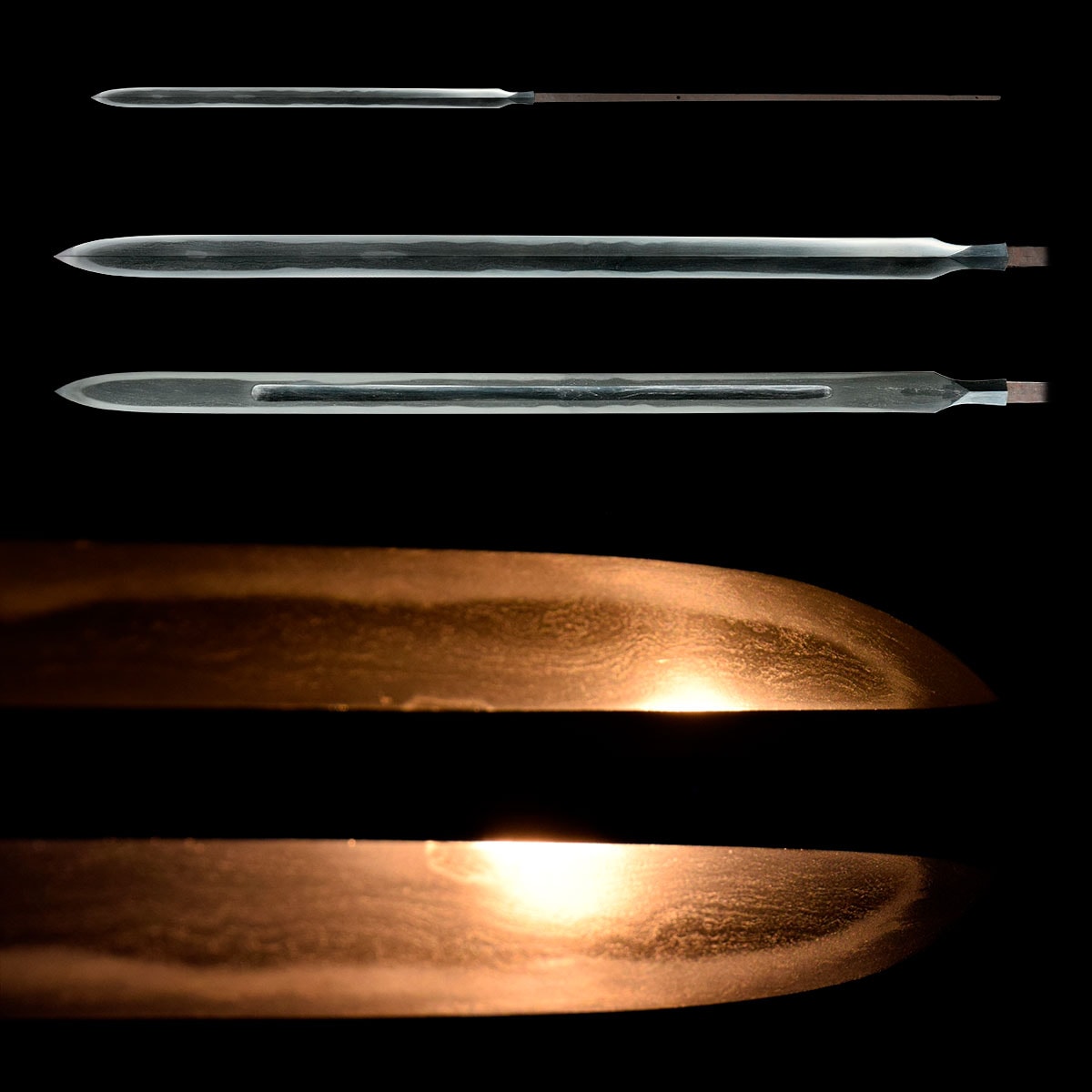
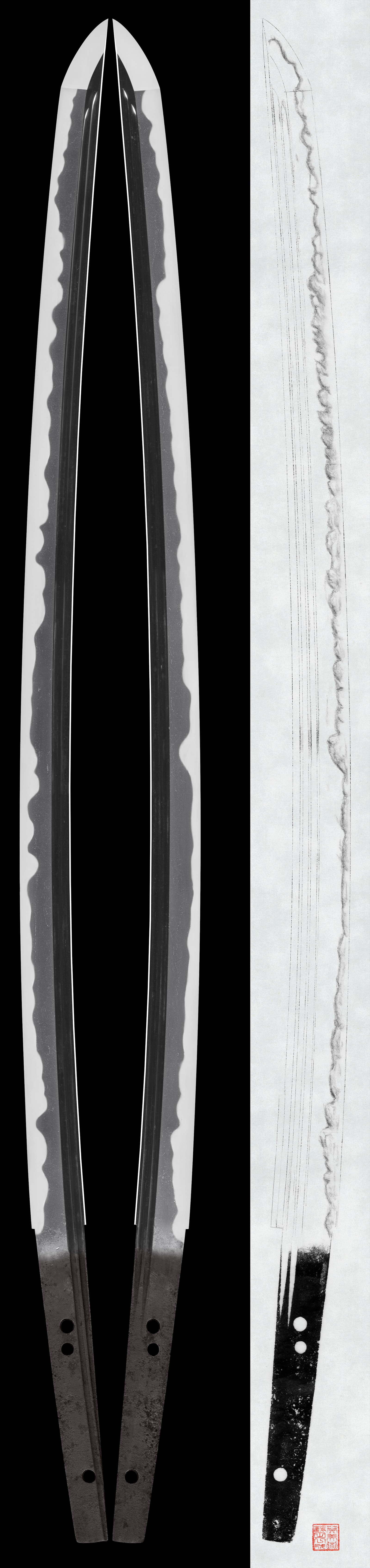
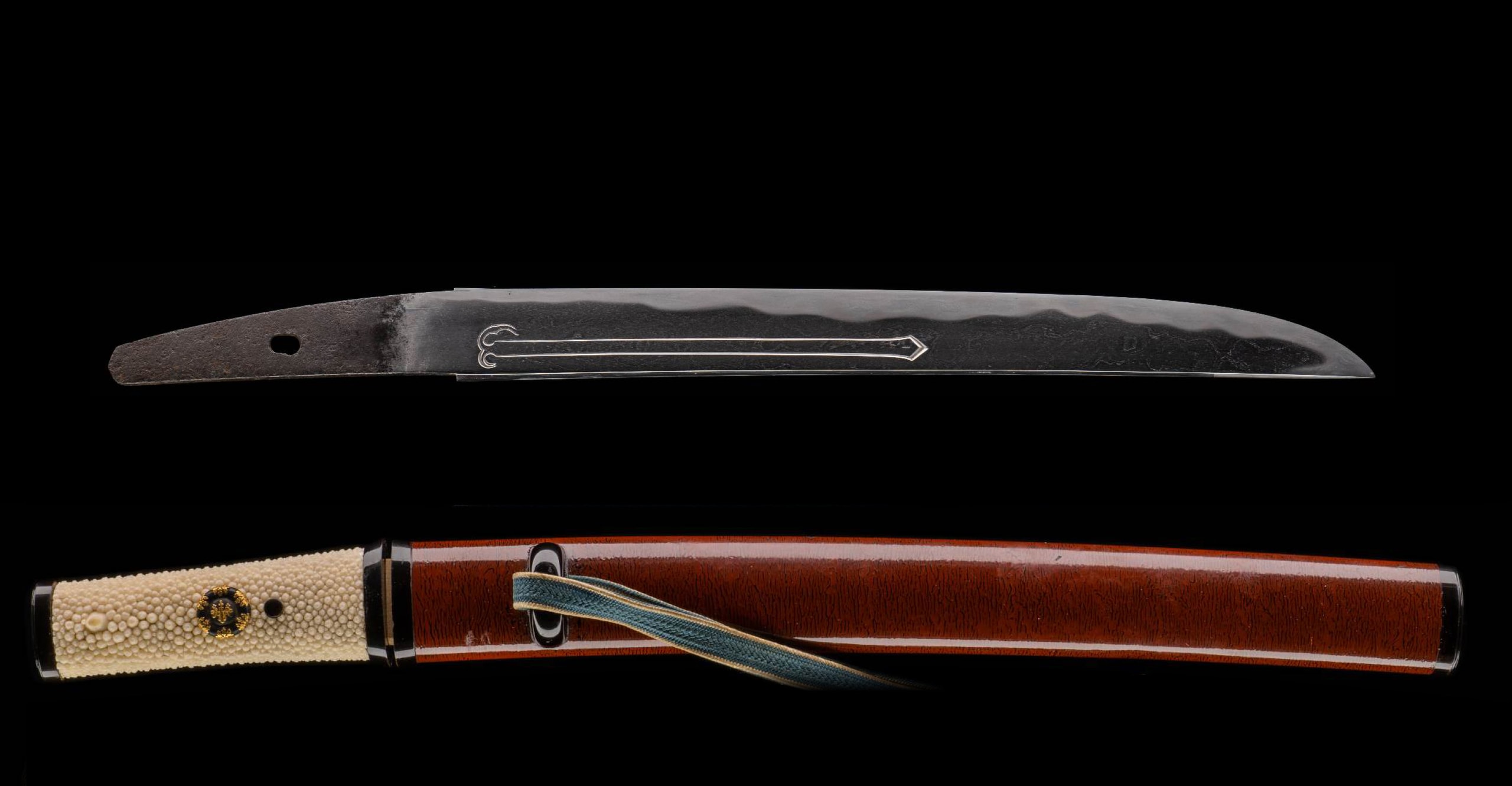
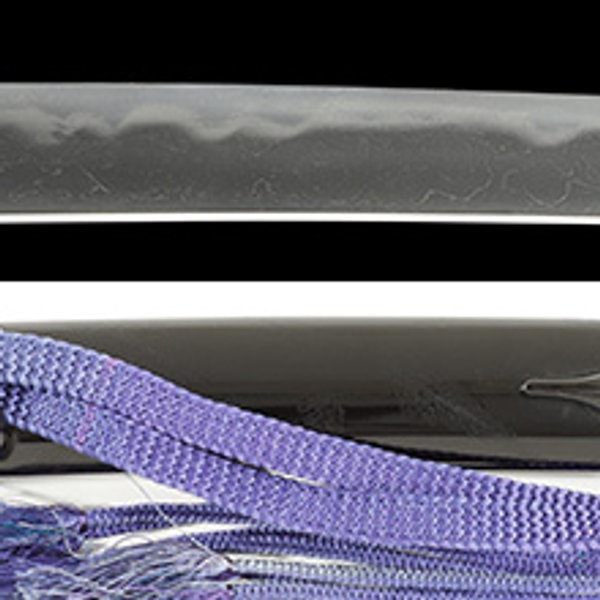
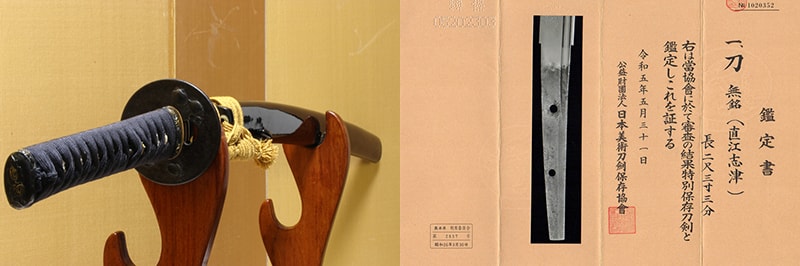
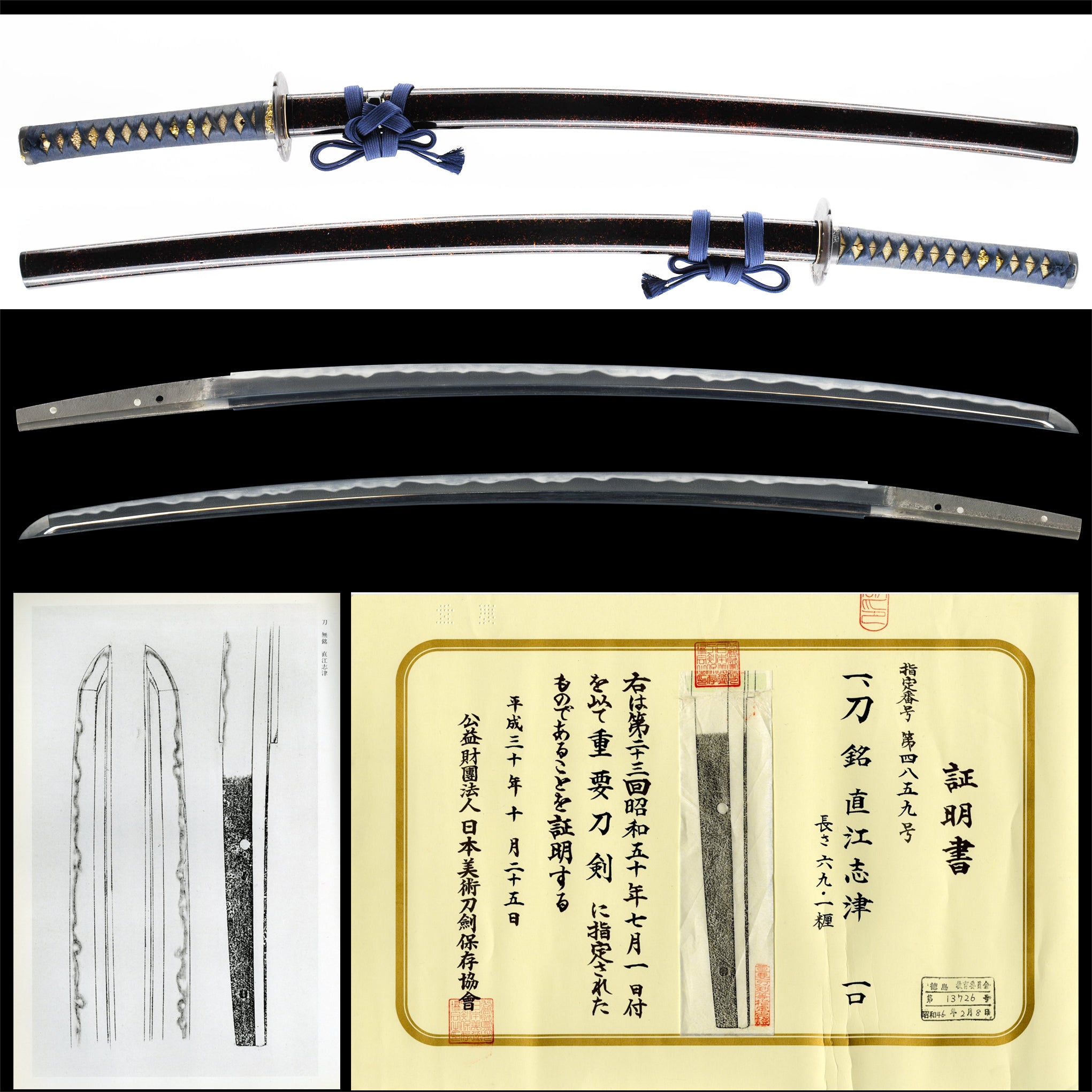
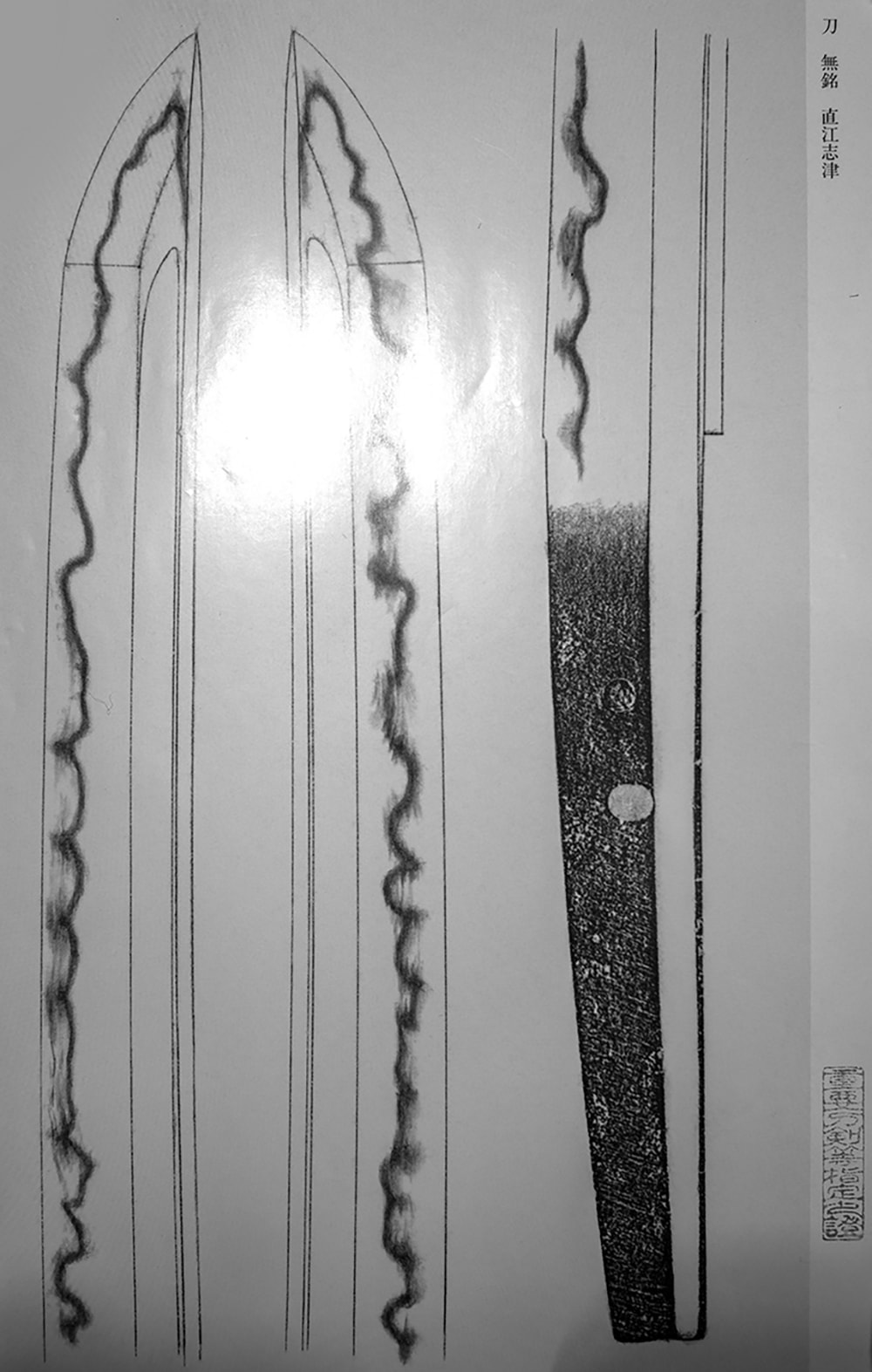
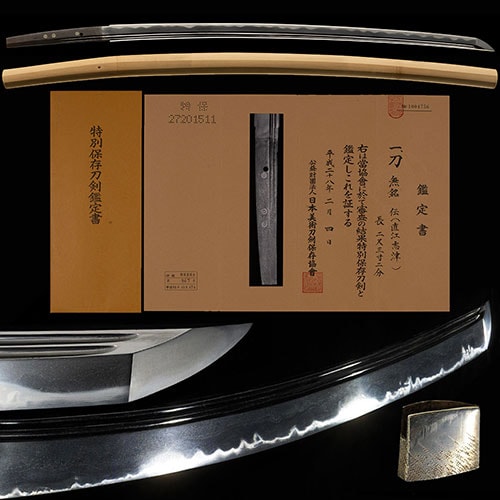
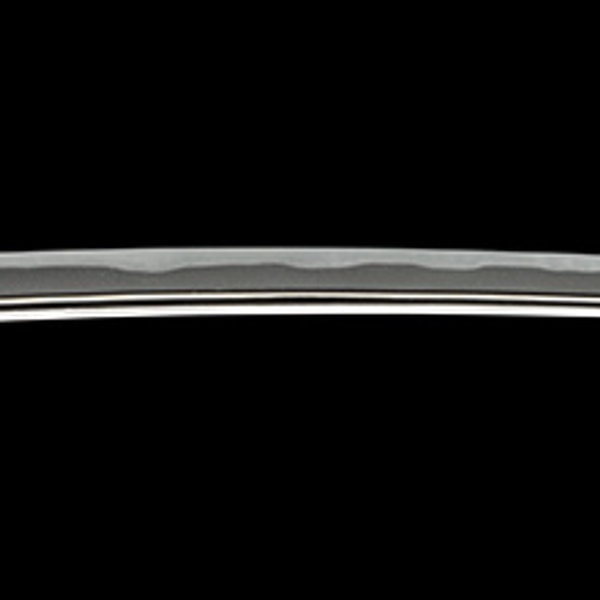
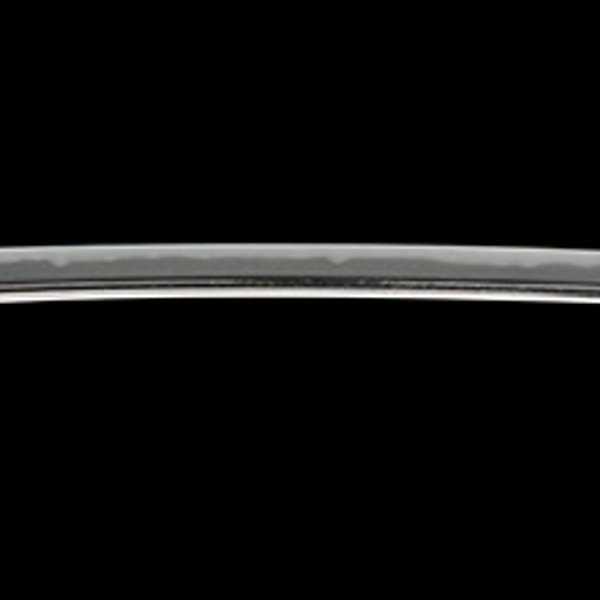
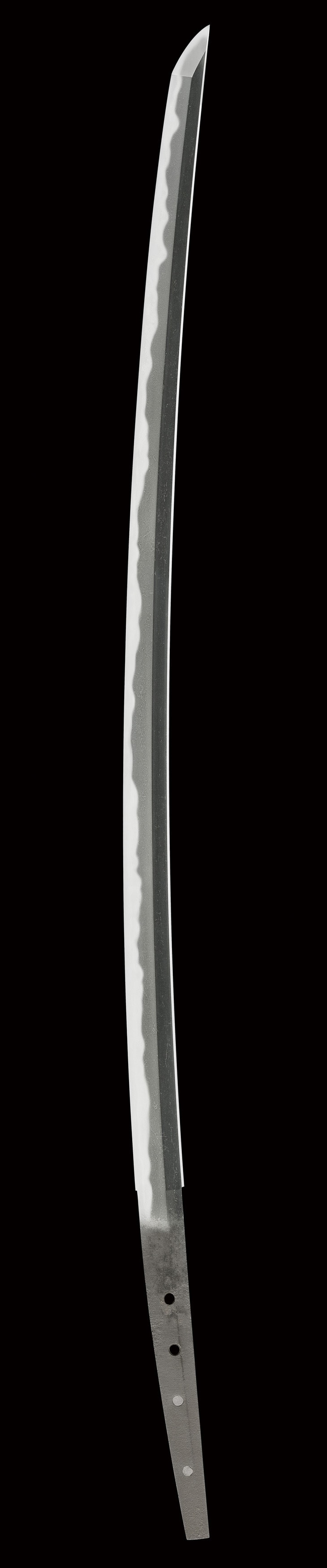
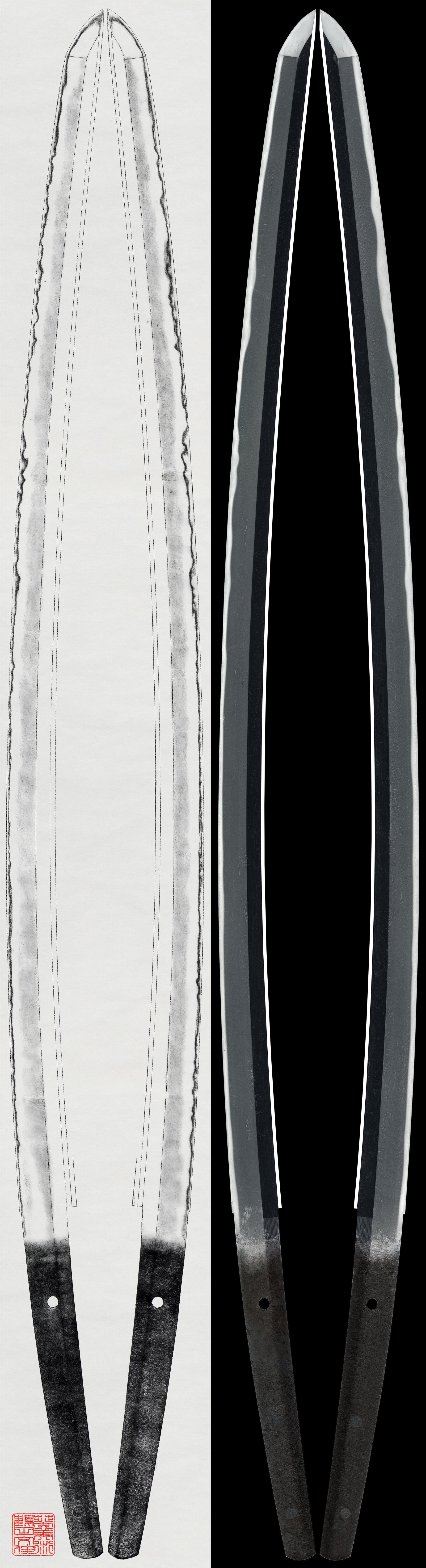
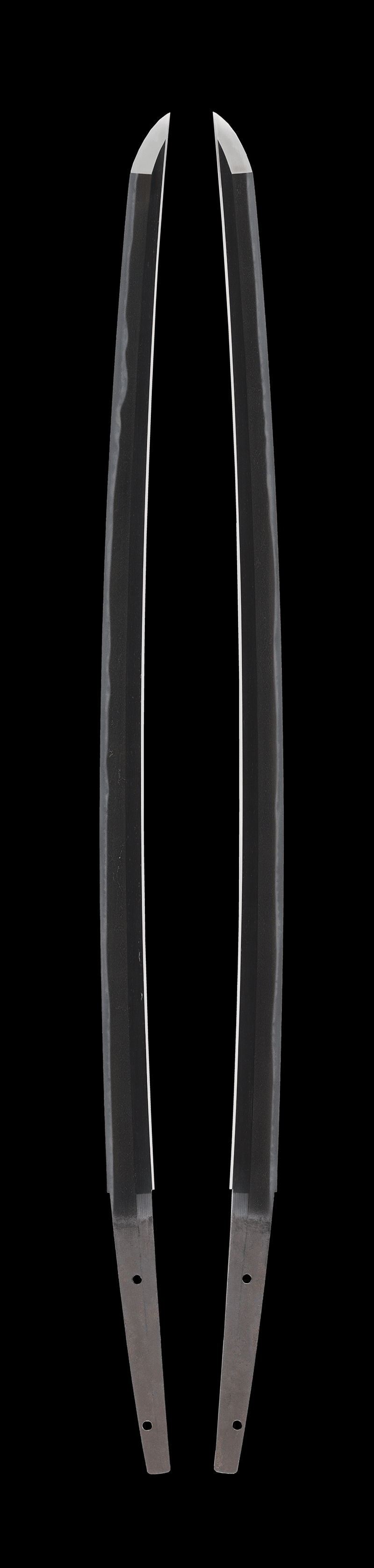
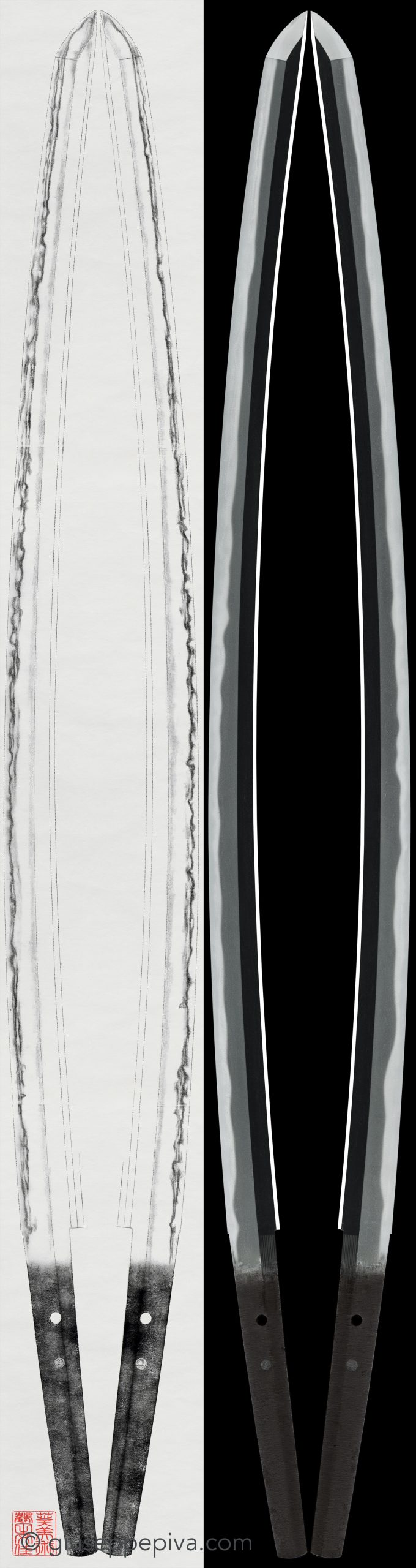
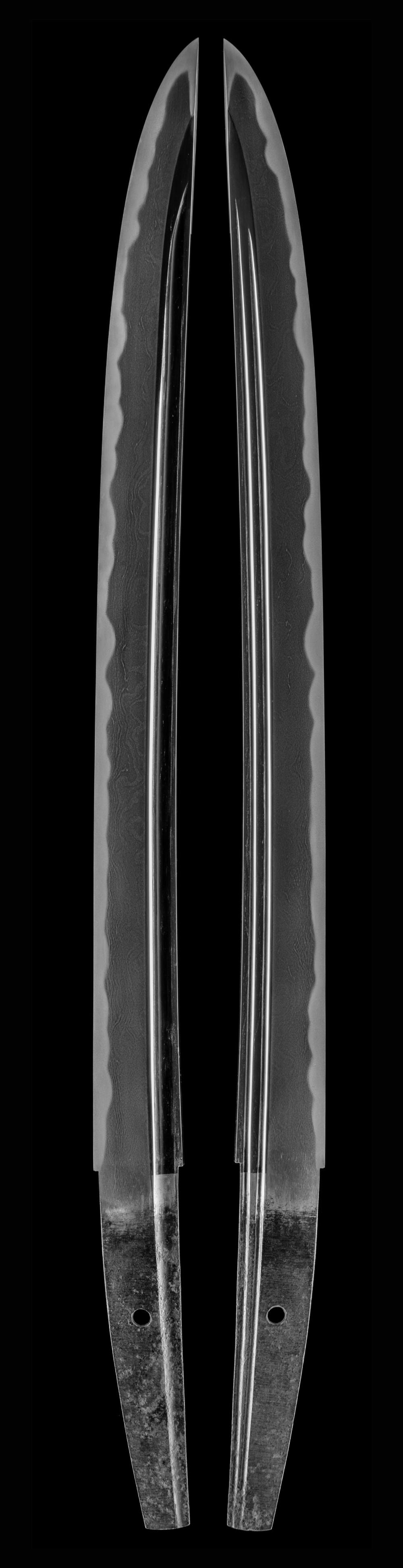
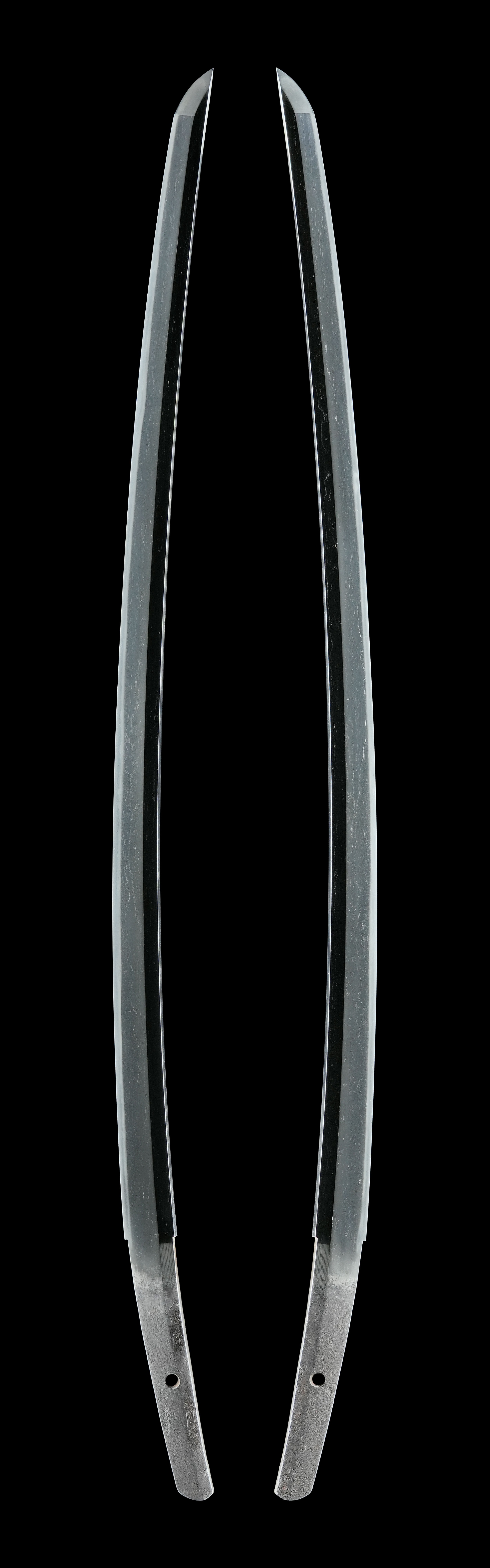
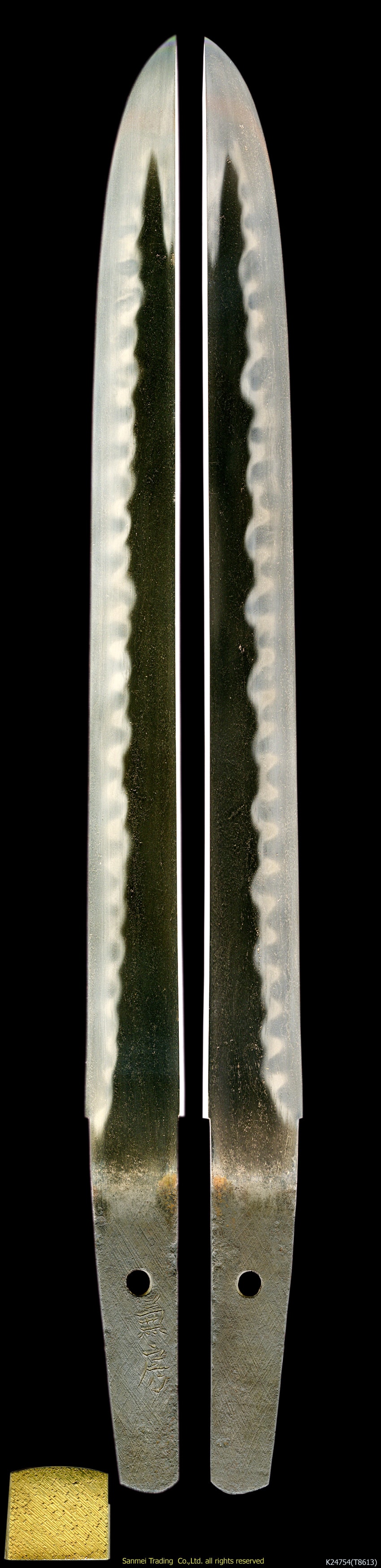
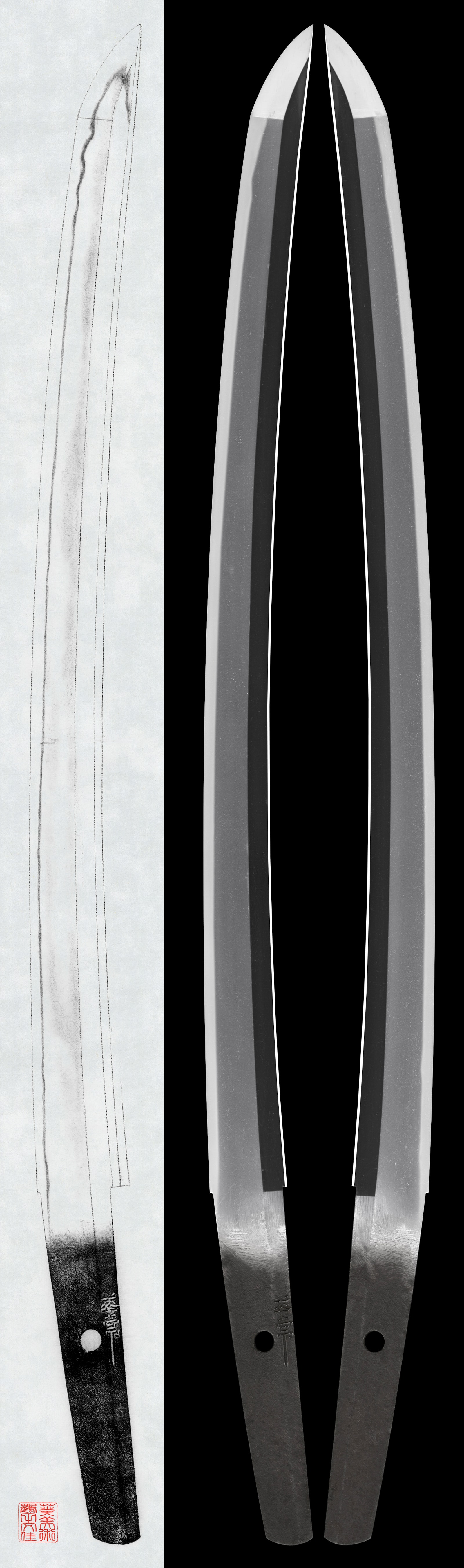
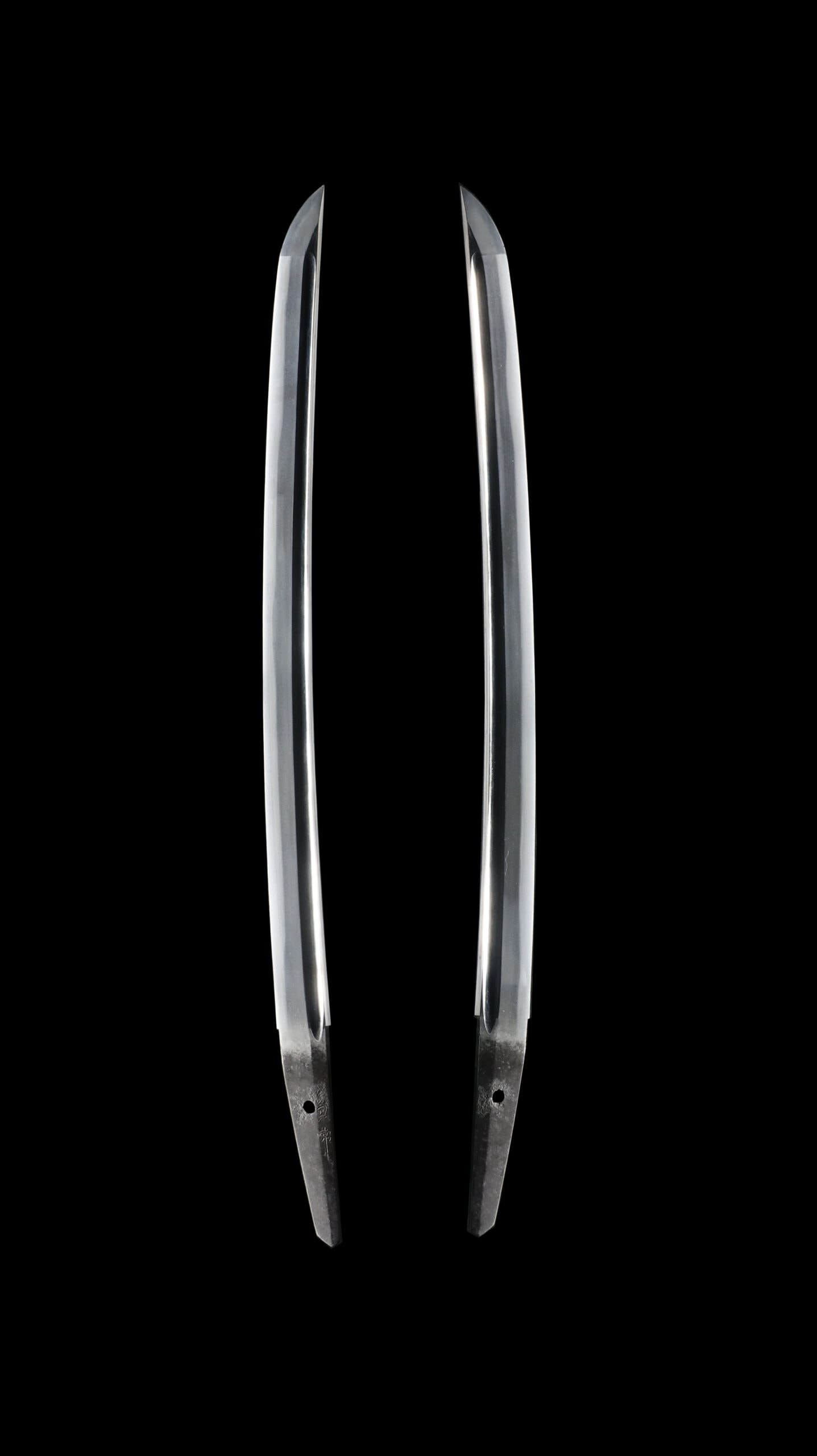
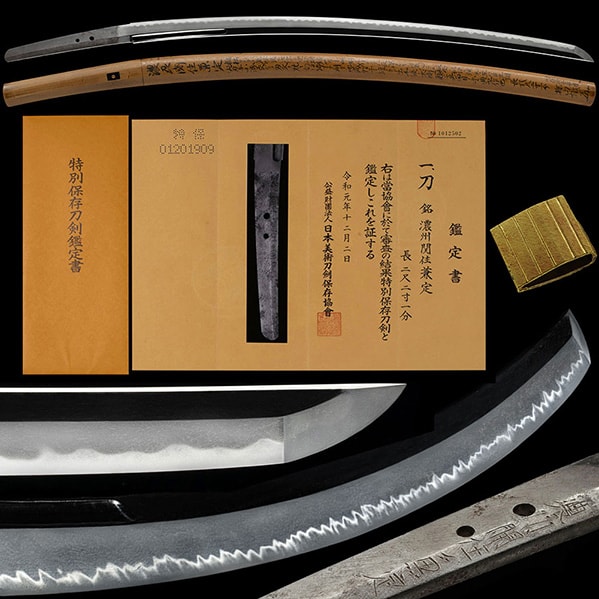
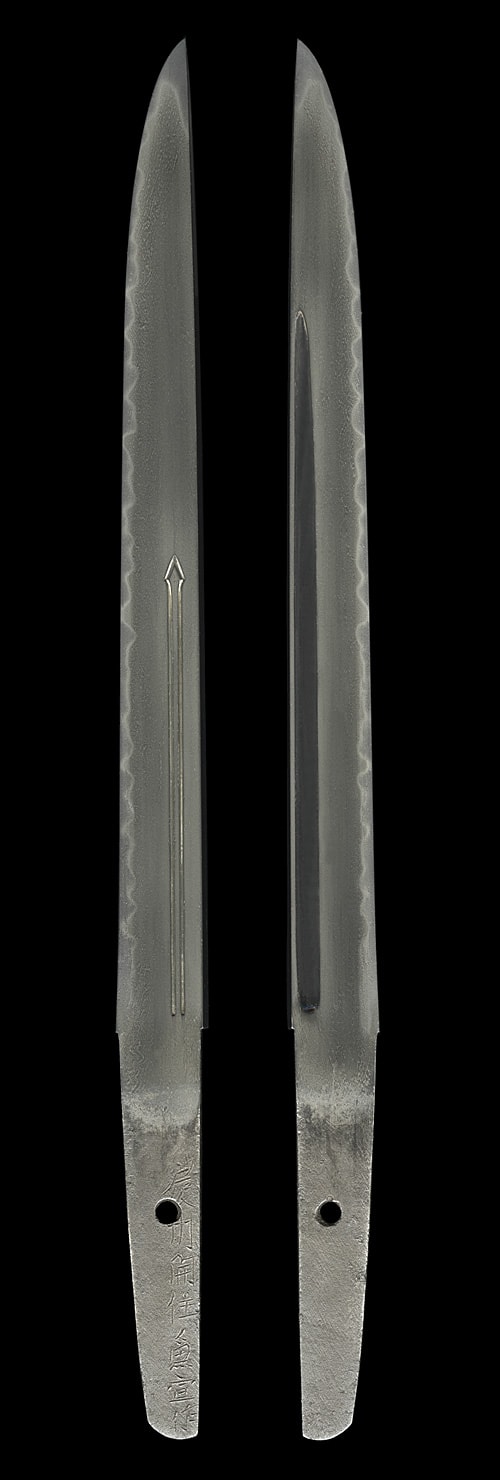
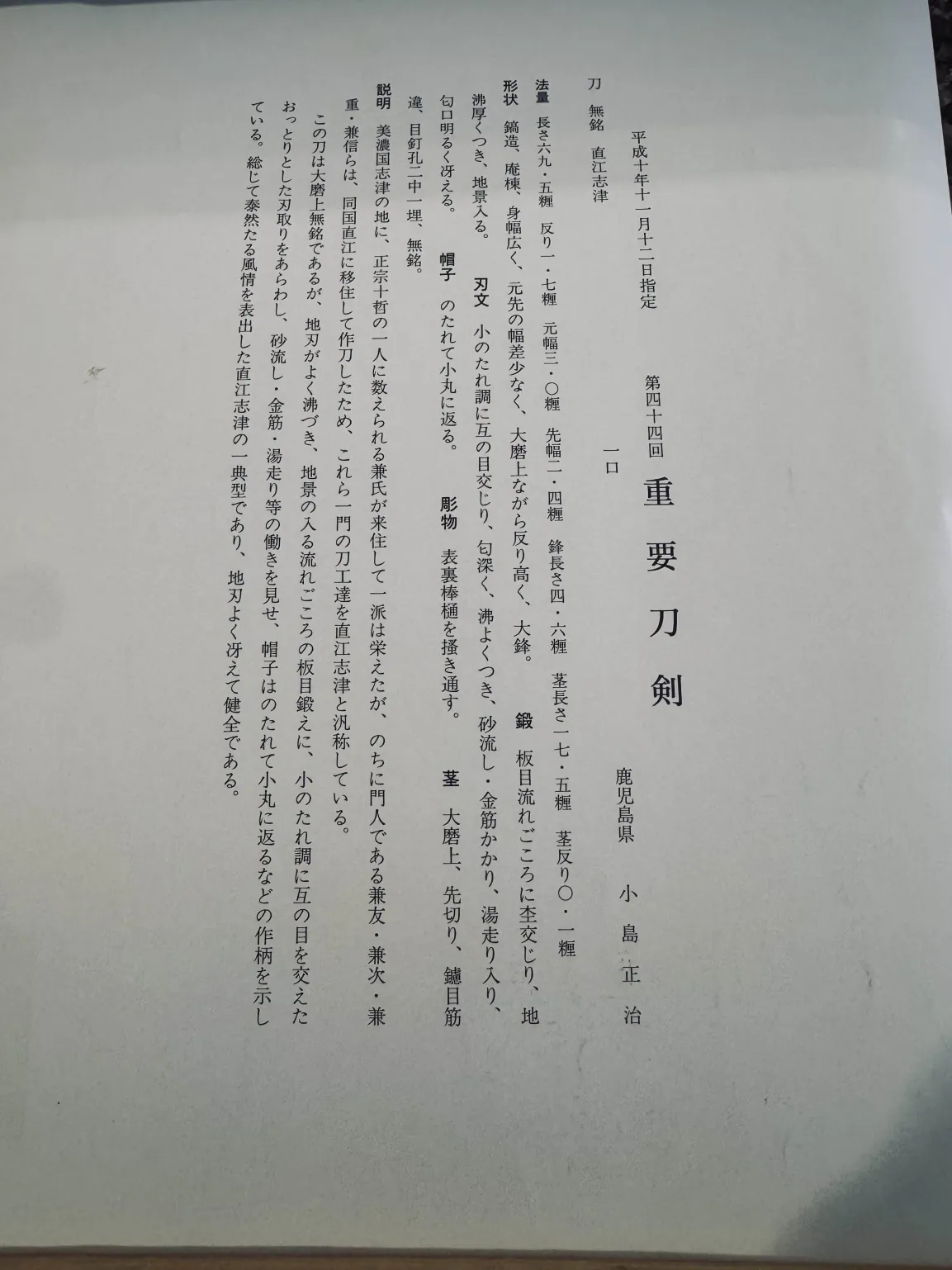
This is a katana attributed to the Naoe Shizu school in Mino province during the Koto period. The blade is mumei (unsigned) but exhibits characteristics of the school, including itame-hada with mokume, thick ji-nie, chikei, and a notare-style hamon with gunome. It has a Juyo Token designation.
 NihontoWatchBETA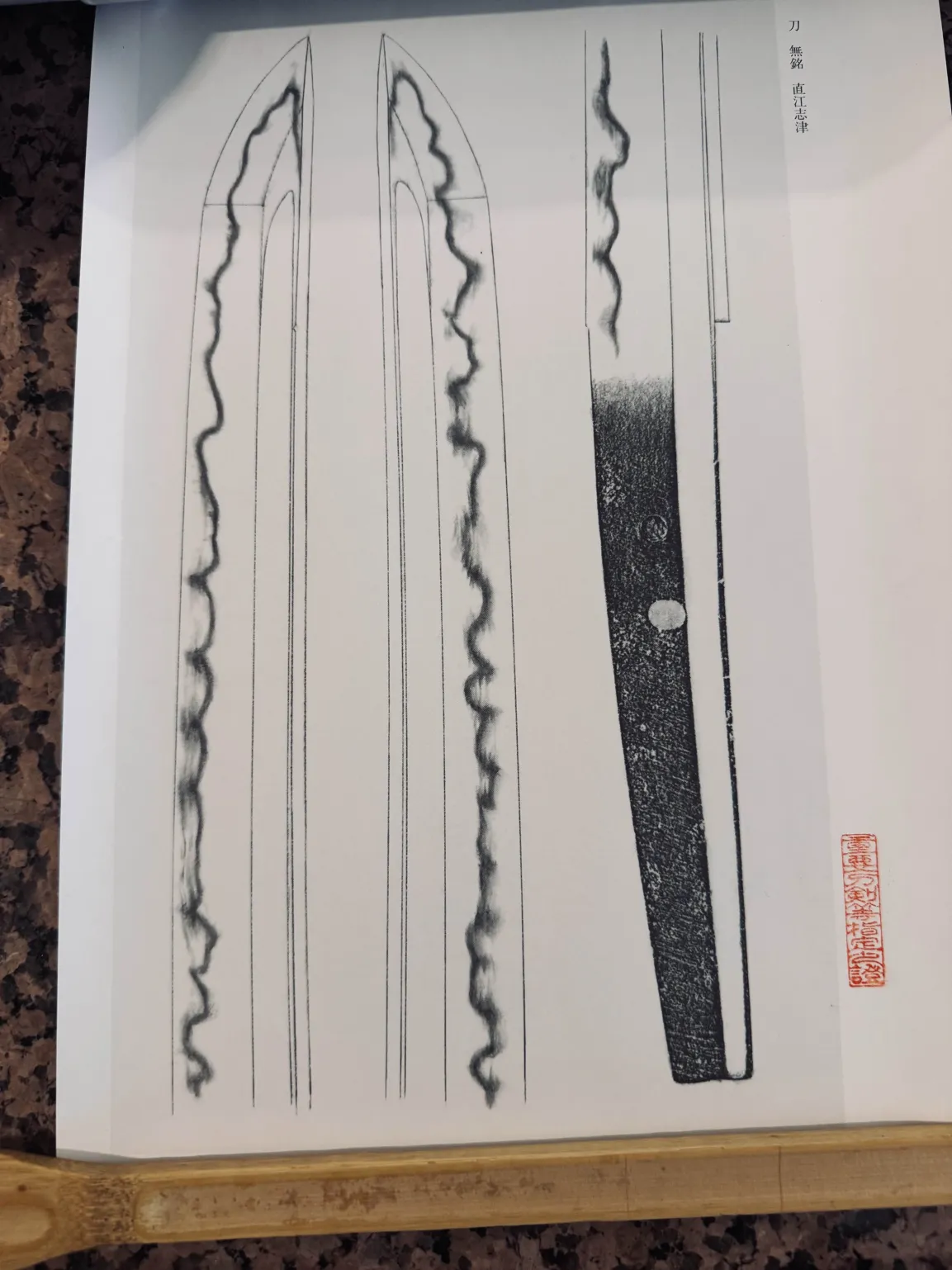
Mino-den · Mino
16 pieces on the market now
Within the province of Mino, in the decades of the Nanbokucho period, a body of smiths gathered at Naoe carrying forward the manner of Shizu Saburo Kaneuji, and from that locality they took the name Naoe Shizu. Kaneuji, originally a member of the Yamato Tegai group who studied under Masamune of Sagami and is counted among the Ten Disciples of Masamune (Masamune jittetsu), settled first at Shizu in Mino and established a flourishing school. Learn more →
| Smith | Era | Designated |
|---|---|---|
| Kanetomo兼友 | 1336-1340 | 11 |
| Kaneuji兼氏 | 1342-1345 | 3 |
| Kanenobu兼延 | 1368-1375 | 0 |
| Kaneuji兼氏 | 1394-1428 | 0 |
| Kanenobu兼延 | 1390-1394 | 0 |
We could not find an authenticity certificate on the seller’s listing. Japanese swords and fittings are normally papered by the NBTHK (or the NTHK). Without one, the attribution is the seller’s own assessment and has not been independently verified — treat it with caution and ask the dealer about certification before buying.
This is a katana attributed to the Naoe Shizu school in Mino province during the Koto period. The blade is mumei (unsigned) but exhibits characteristics of the school, including itame-hada with mokume, thick ji-nie, chikei, and a notare-style hamon with gunome. It has a Juyo Token designation.
NihontoWatchBETAMino-den · Mino
16 pieces on the market now
Within the province of Mino, in the decades of the Nanbokucho period, a body of smiths gathered at Naoe carrying forward the manner of Shizu Saburo Kaneuji, and from that locality they took the name Naoe Shizu. Kaneuji, originally a member of the Yamato Tegai group who studied under Masamune of Sagami and is counted among the Ten Disciples of Masamune (Masamune jittetsu), settled first at Shizu in Mino and established a flourishing school. Learn more →
| Smith | Era | Designated |
|---|---|---|
| Kanetomo兼友 | 1336-1340 | 11 |
| Kaneuji兼氏 | 1342-1345 | 3 |
| Kanenobu兼延 | 1368-1375 | 0 |
| Kaneuji兼氏 | 1394-1428 | 0 |
| Kanenobu兼延 | 1390-1394 | 0 |
We could not find an authenticity certificate on the seller’s listing. Japanese swords and fittings are normally papered by the NBTHK (or the NTHK). Without one, the attribution is the seller’s own assessment and has not been independently verified — treat it with caution and ask the dealer about certification before buying.