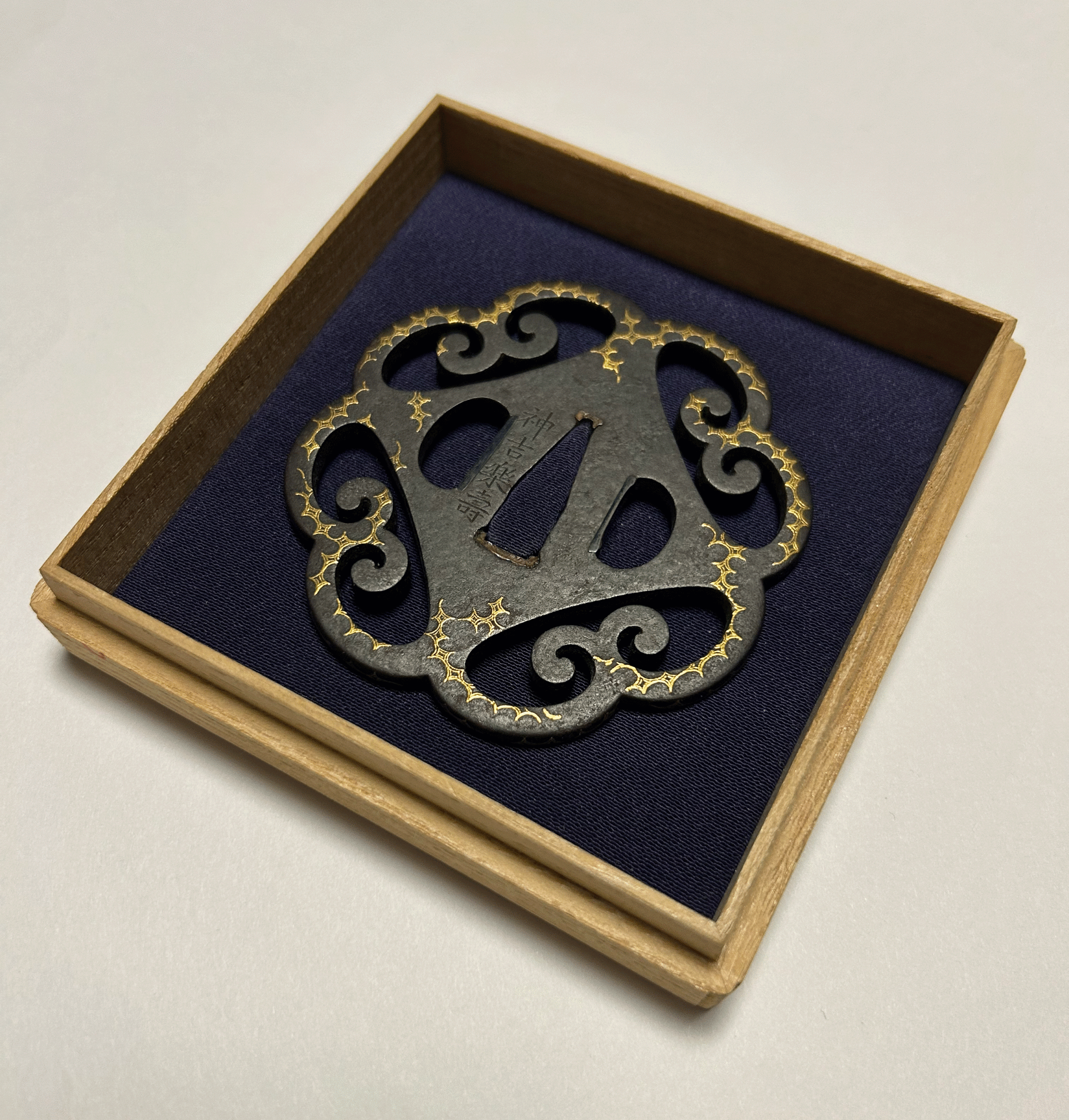
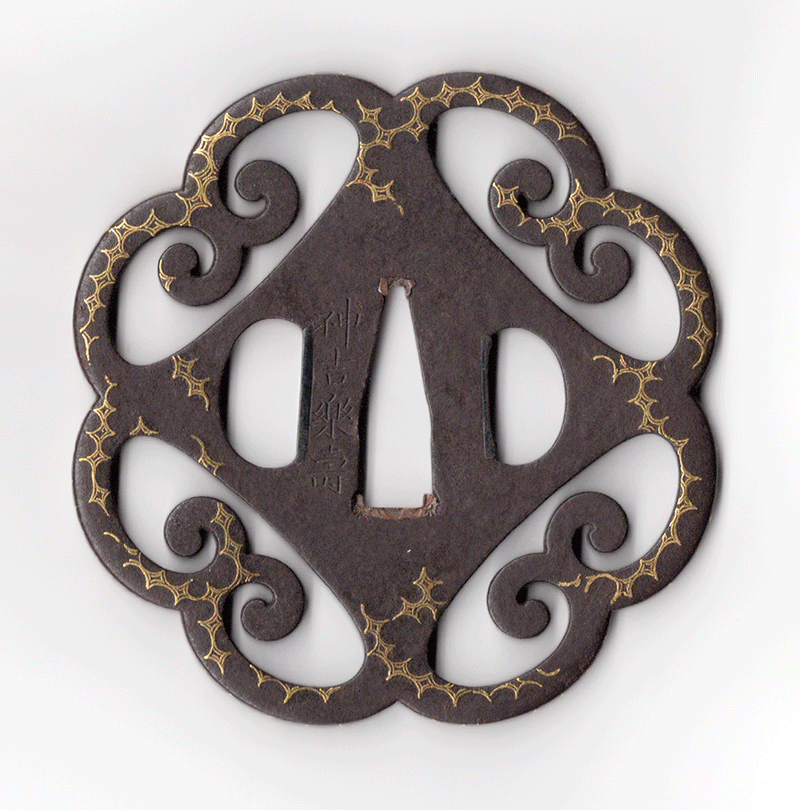
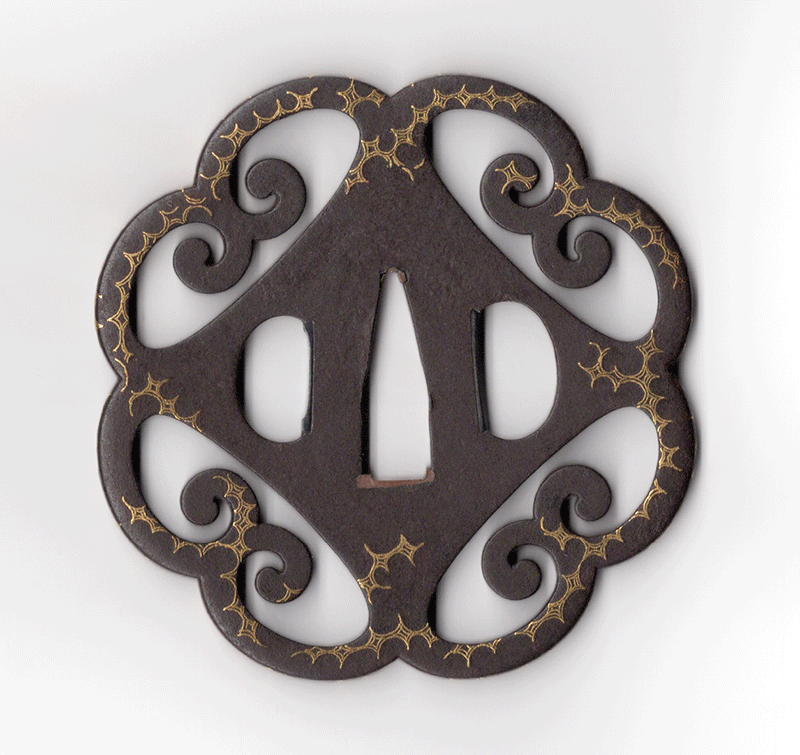
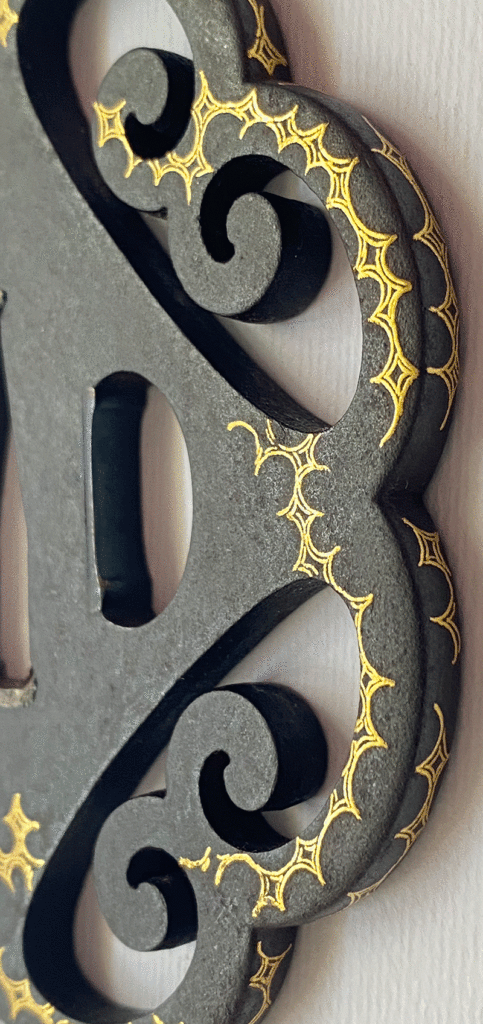
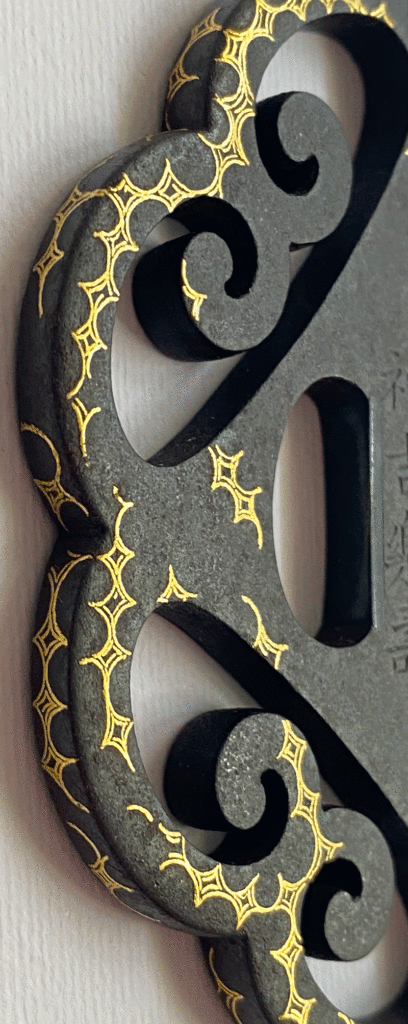
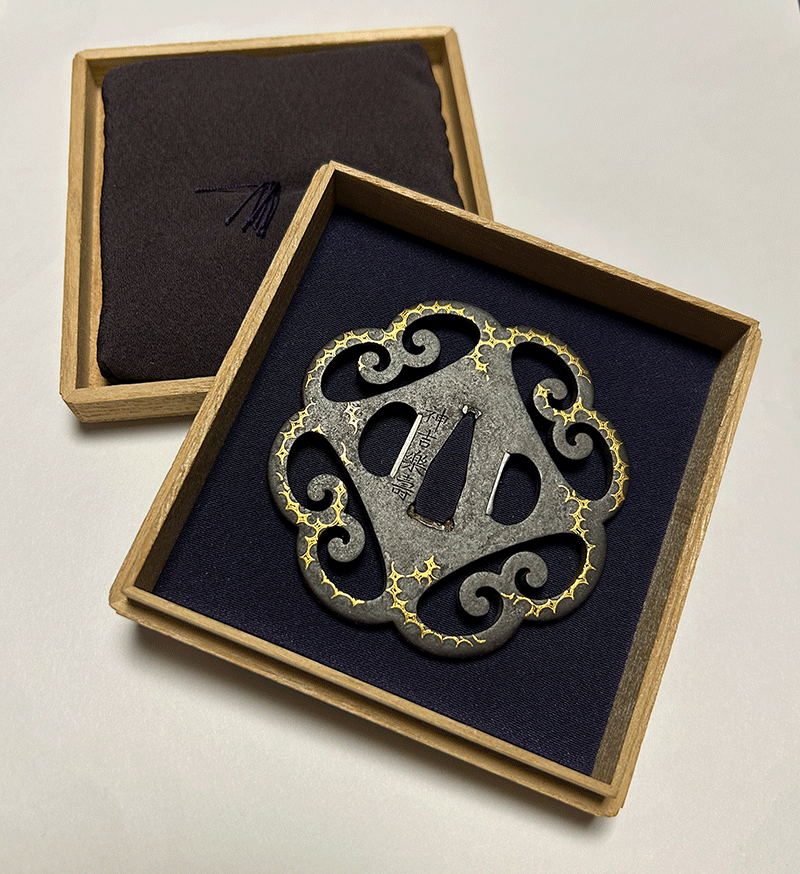
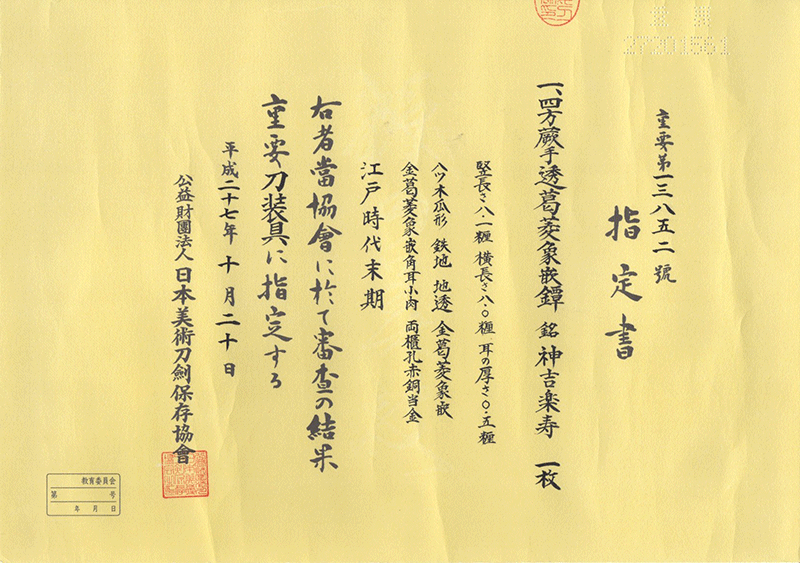
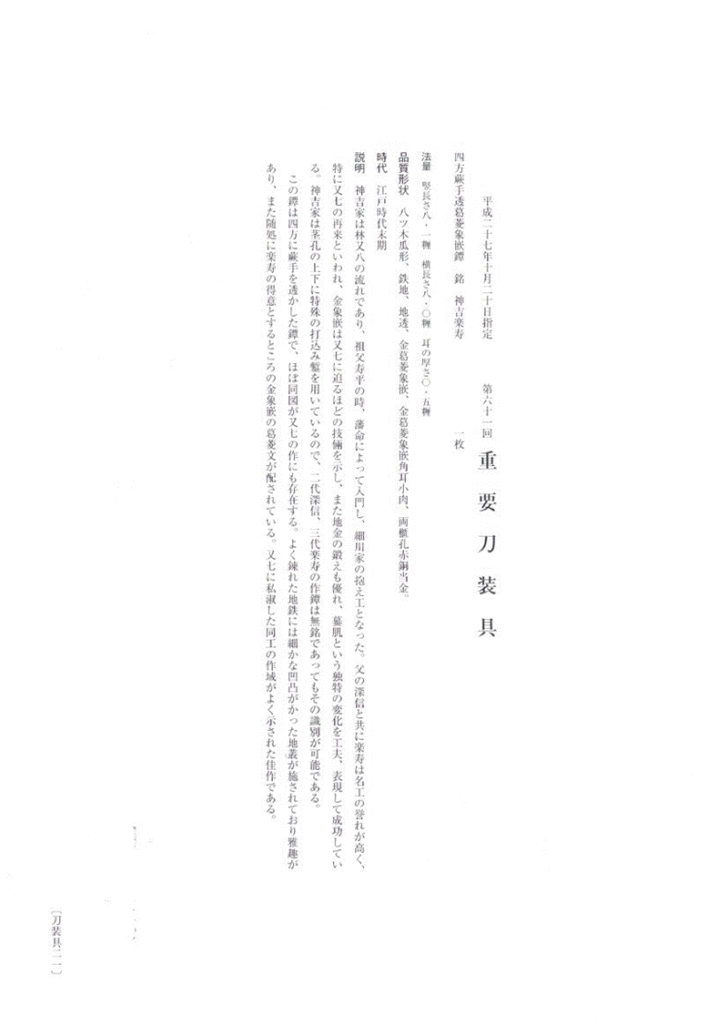
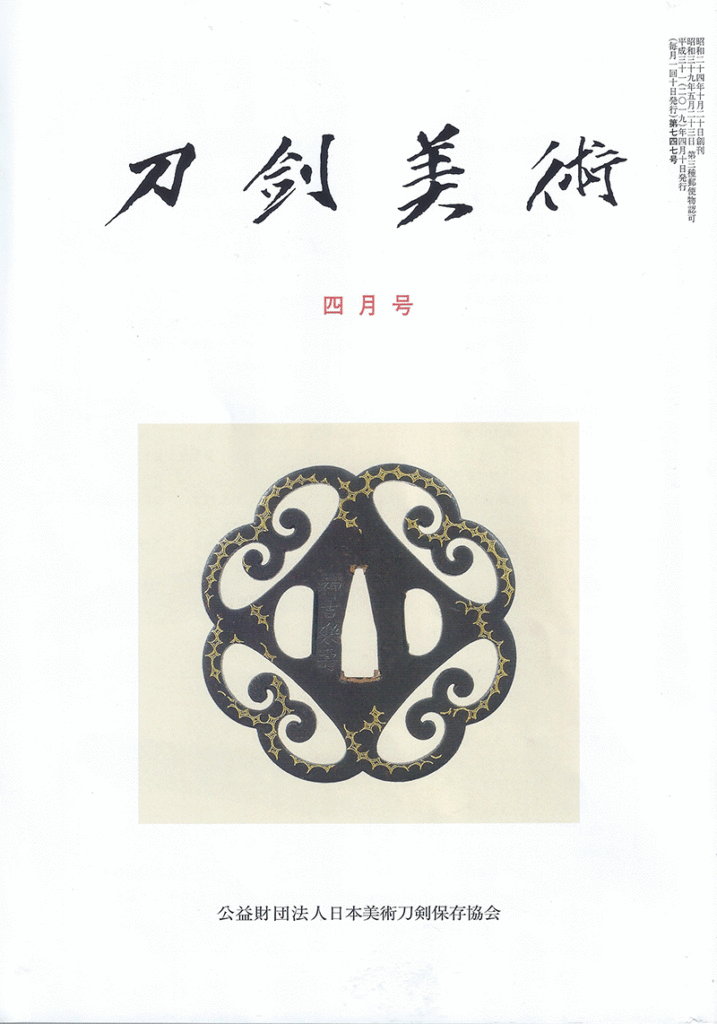
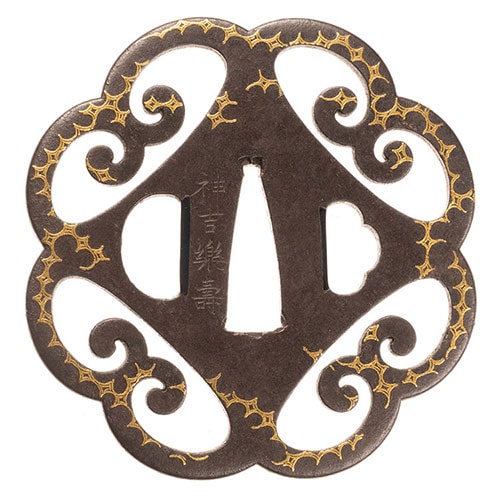
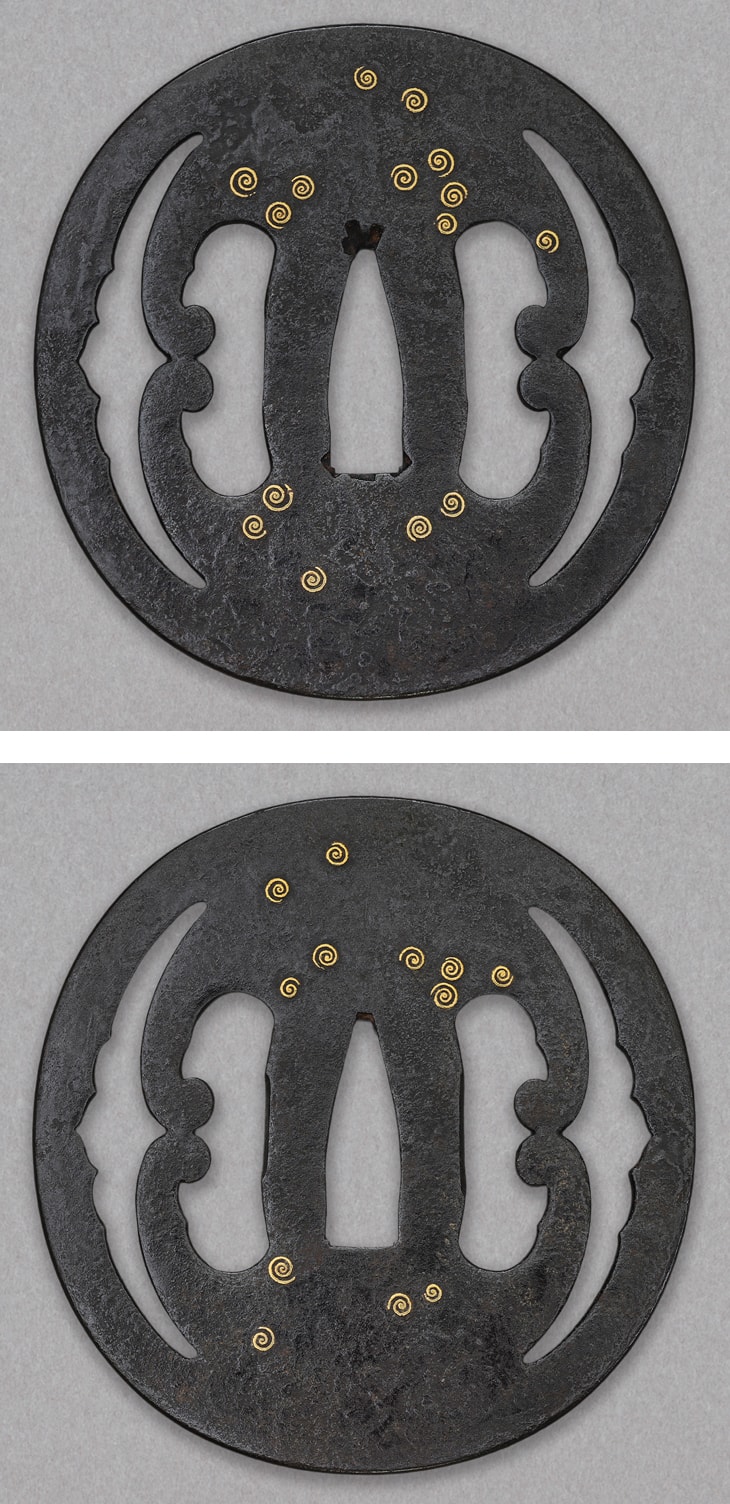
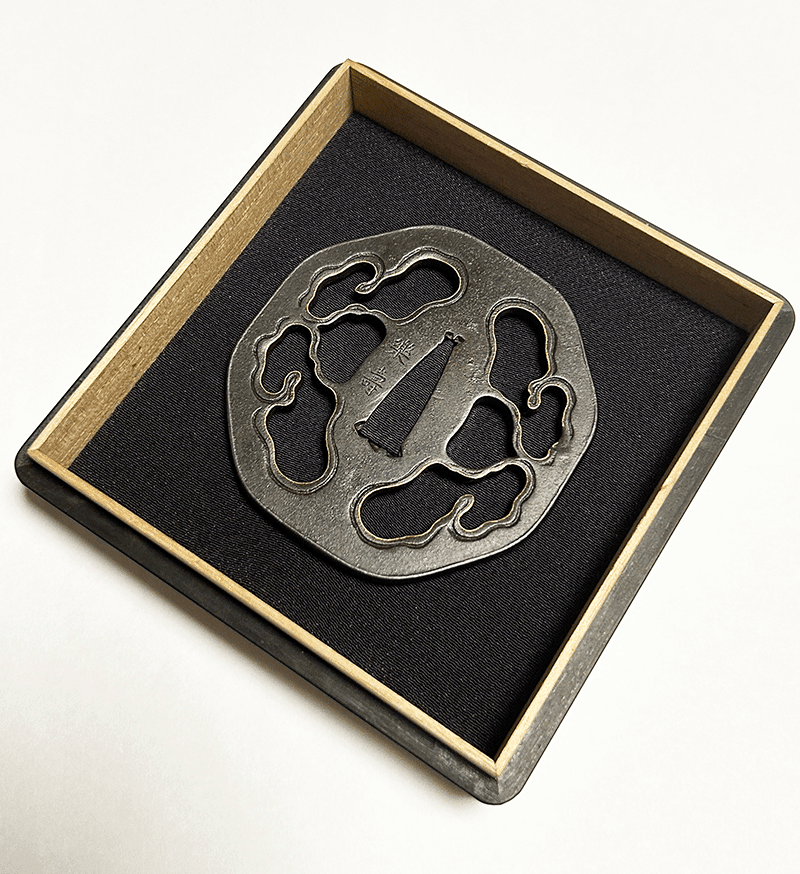
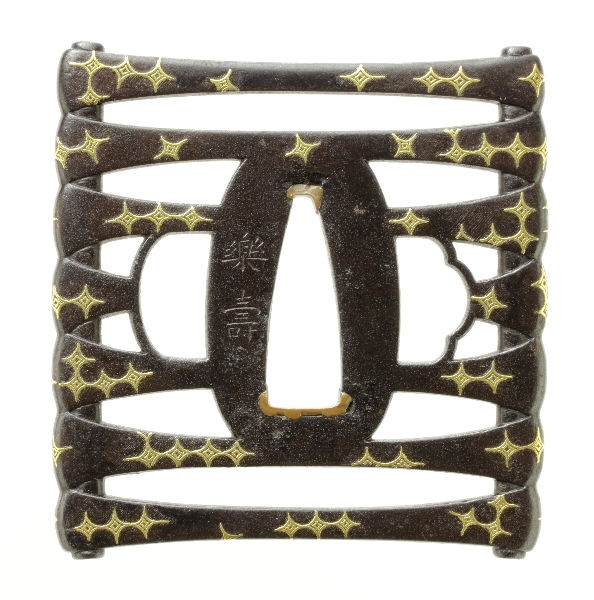
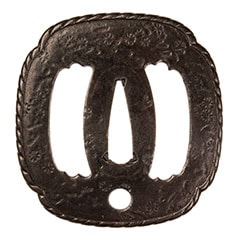
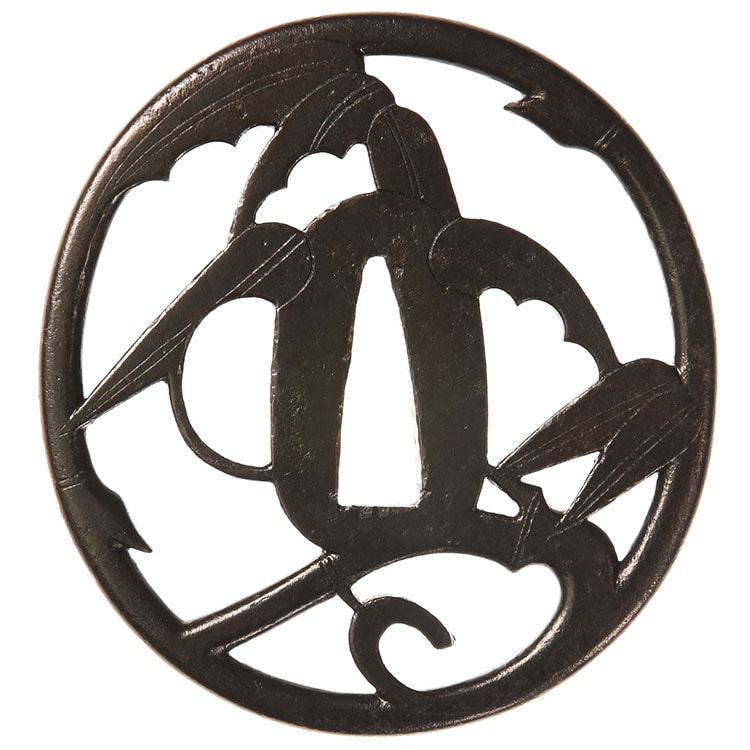
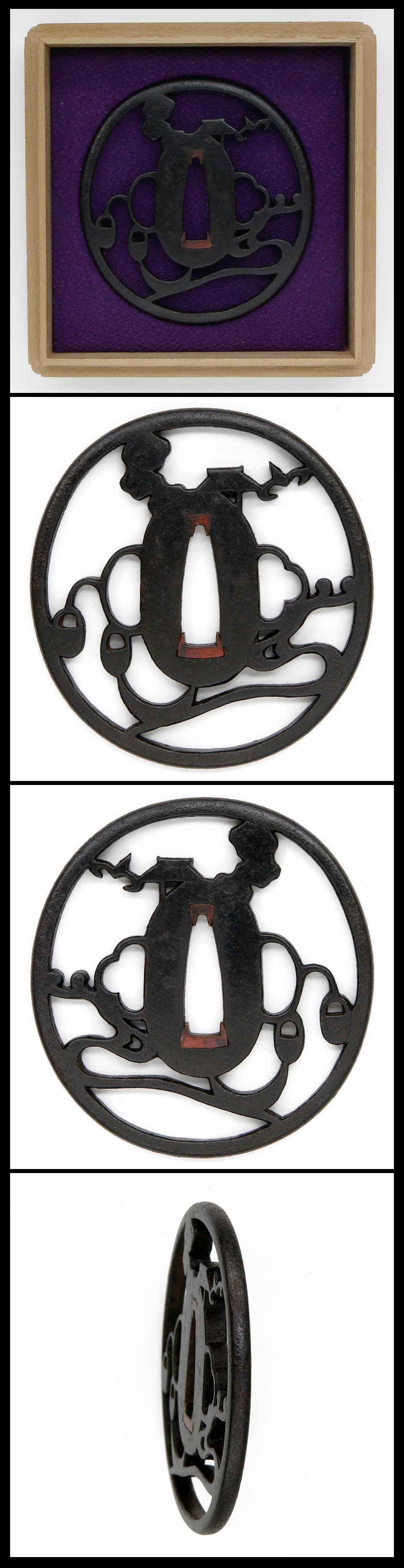
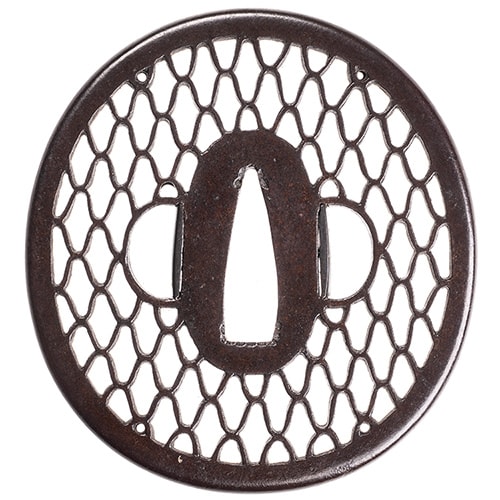
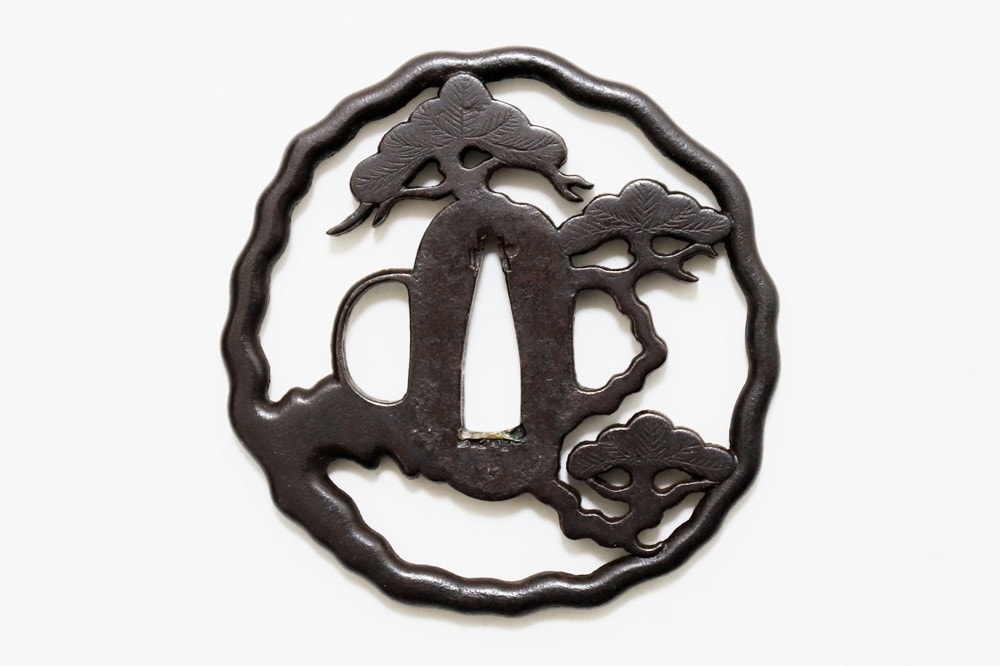
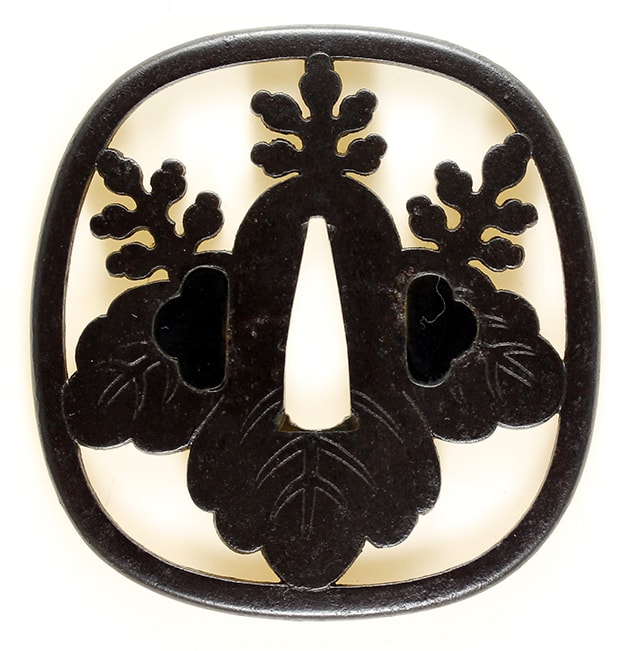
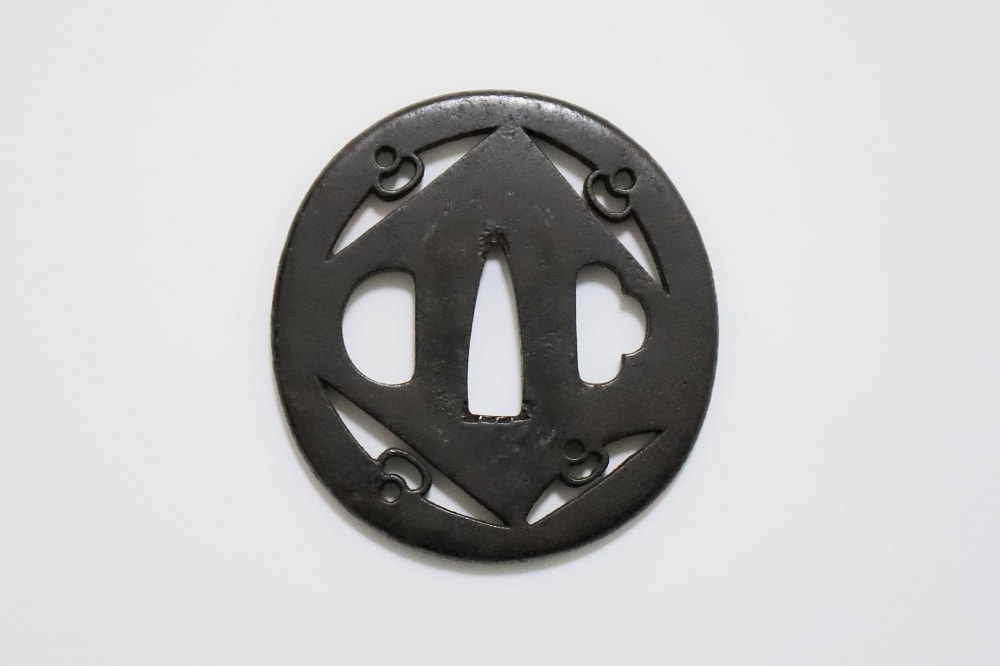
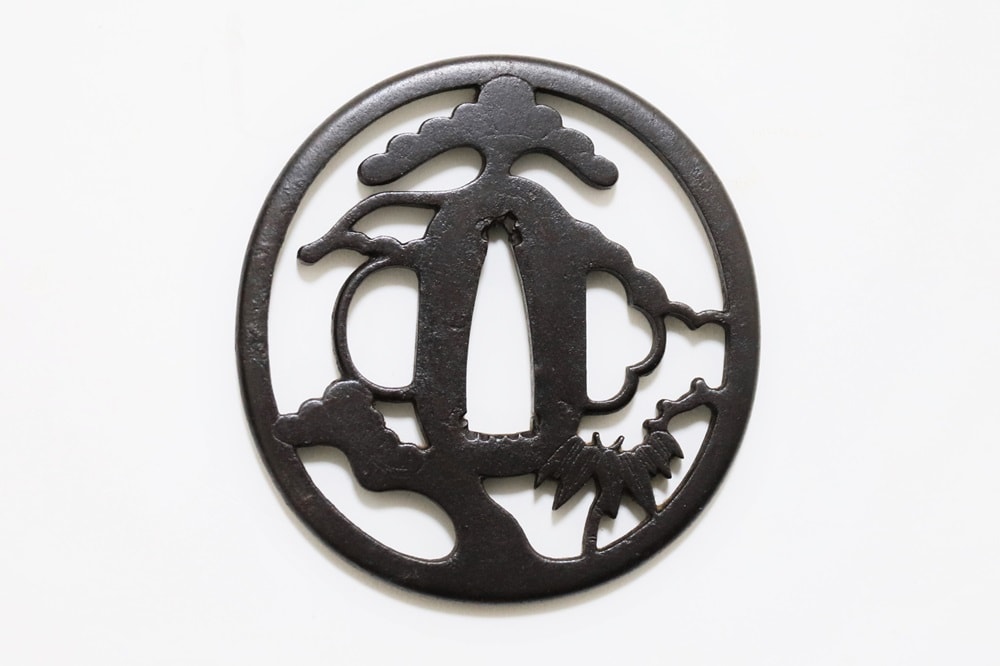
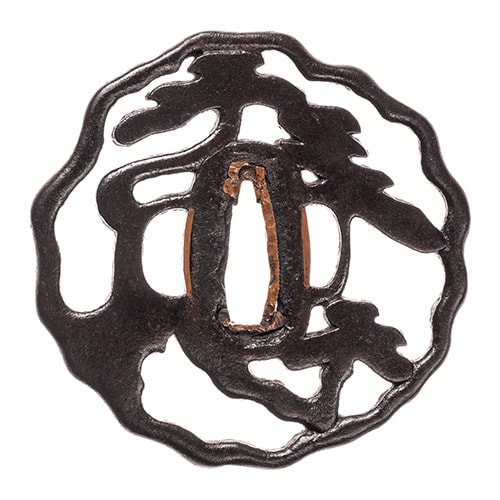
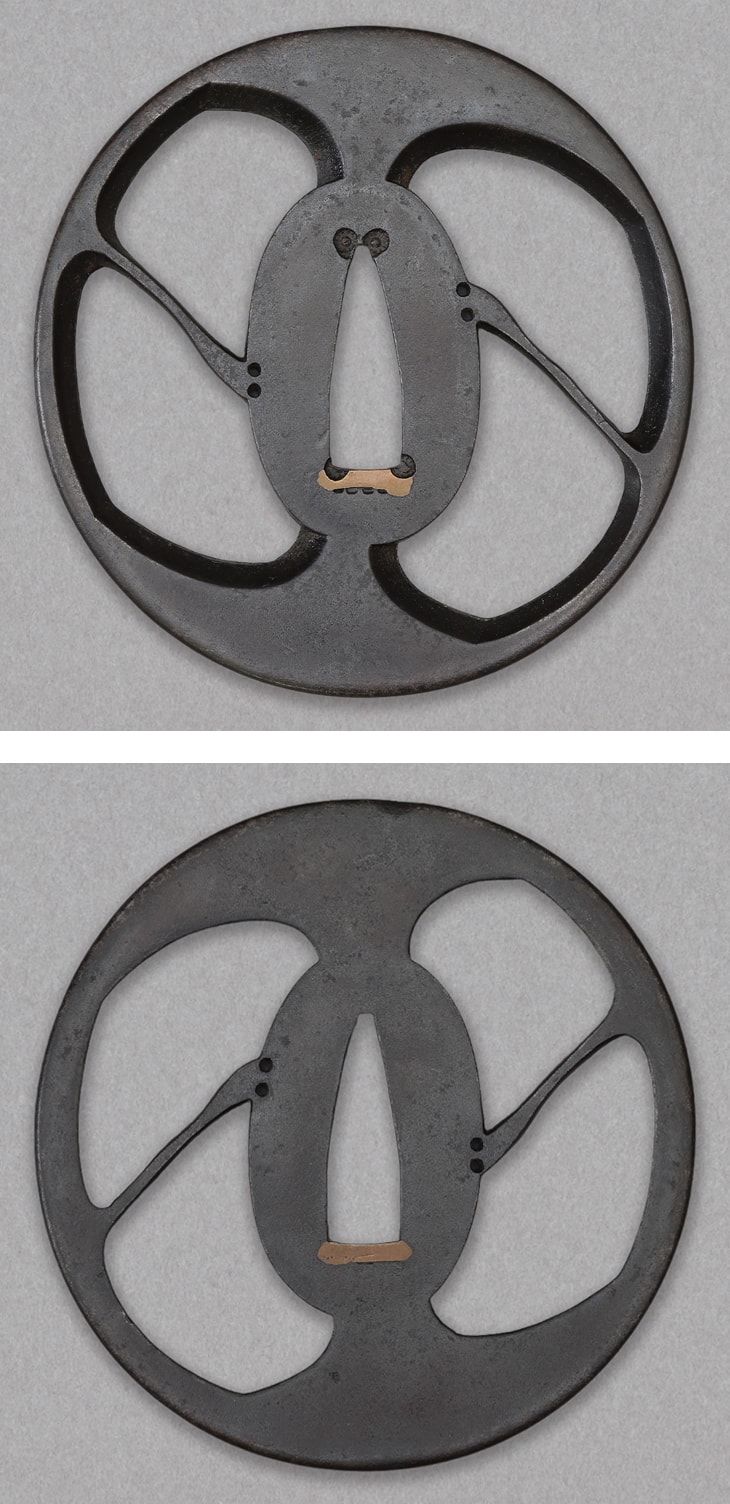
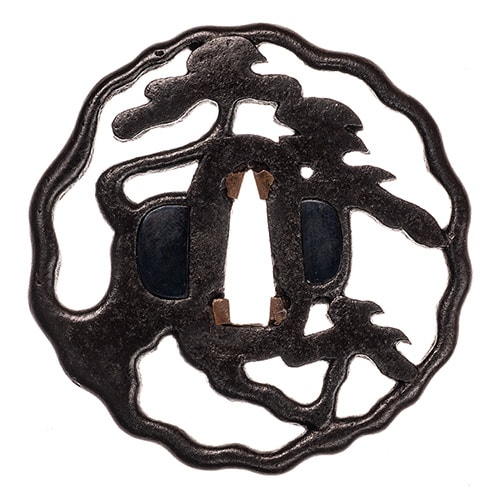
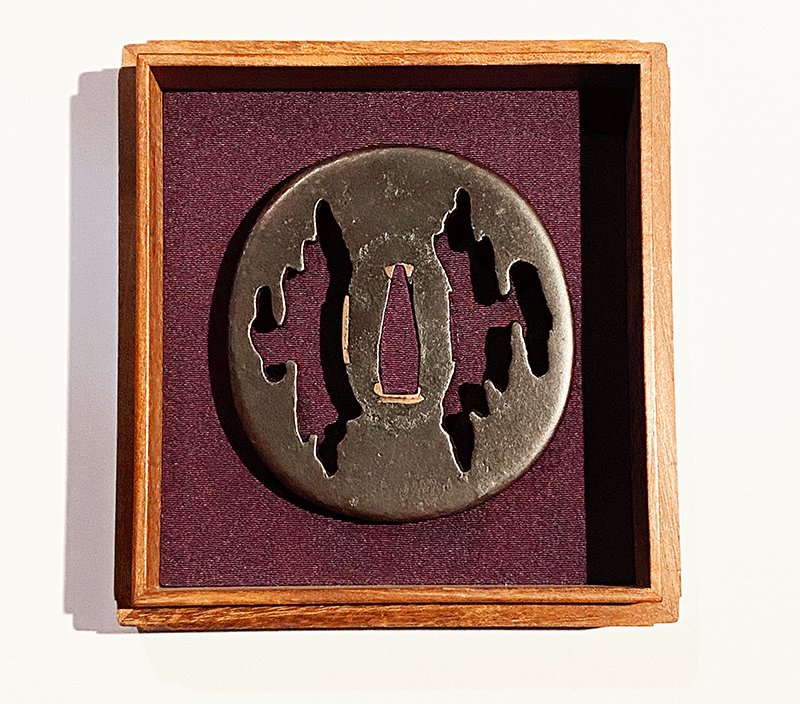
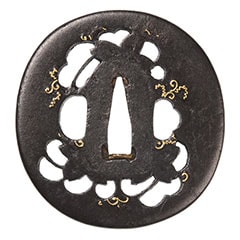
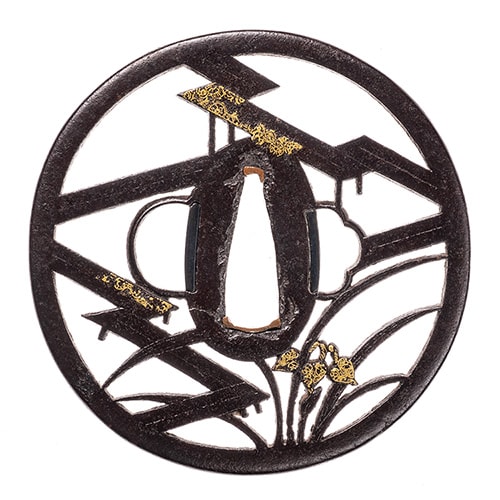
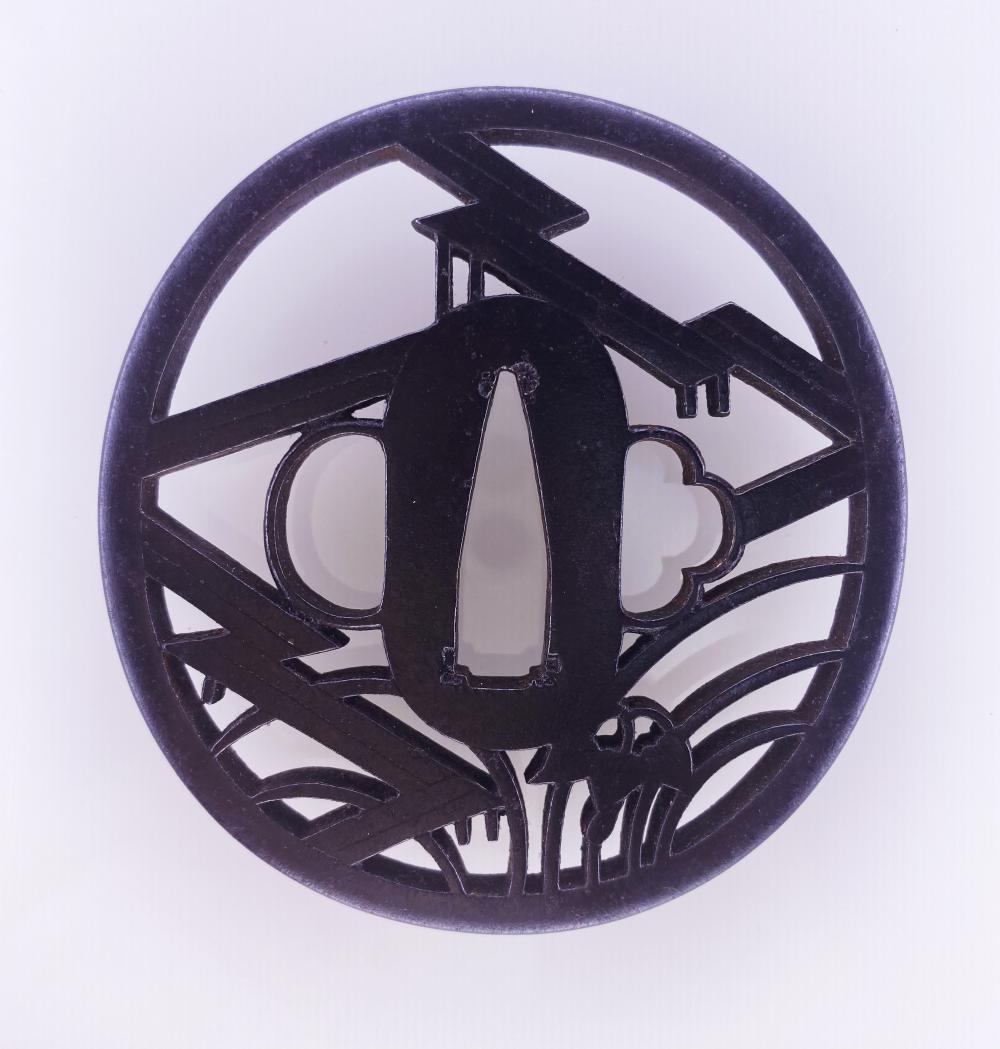
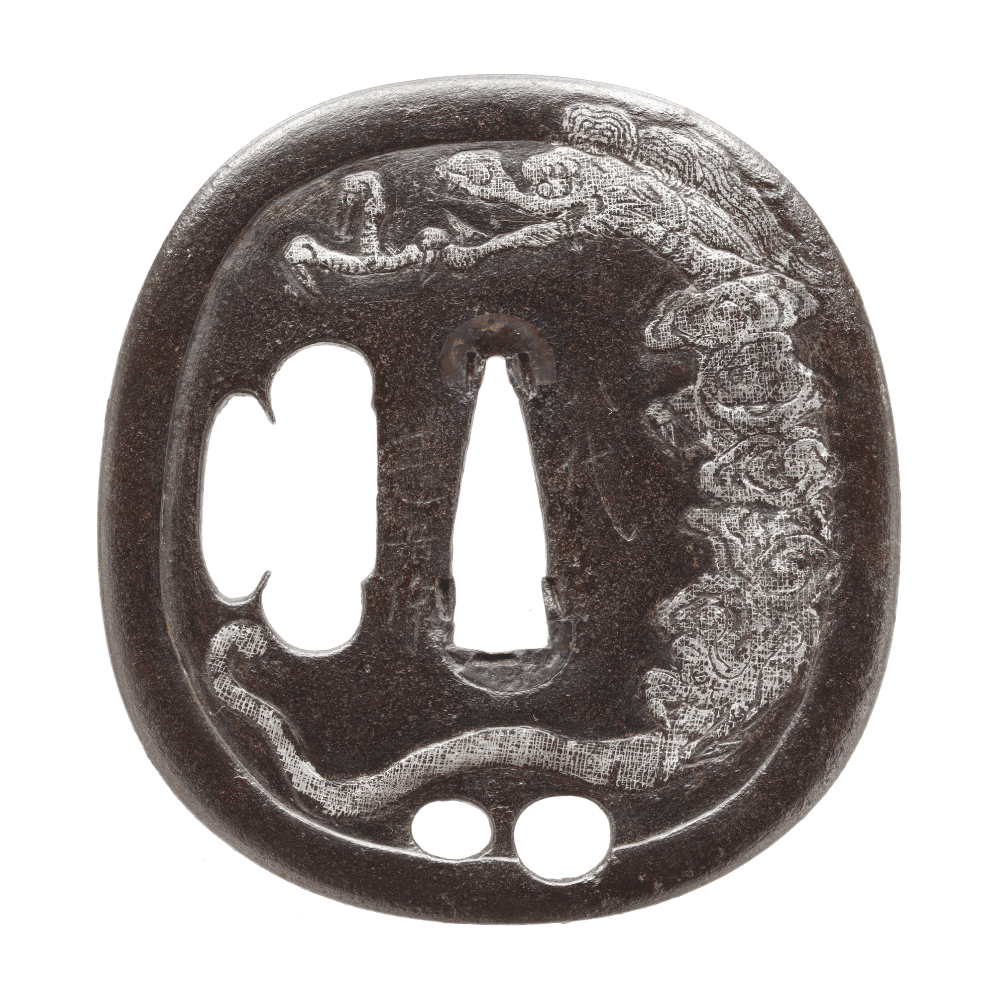
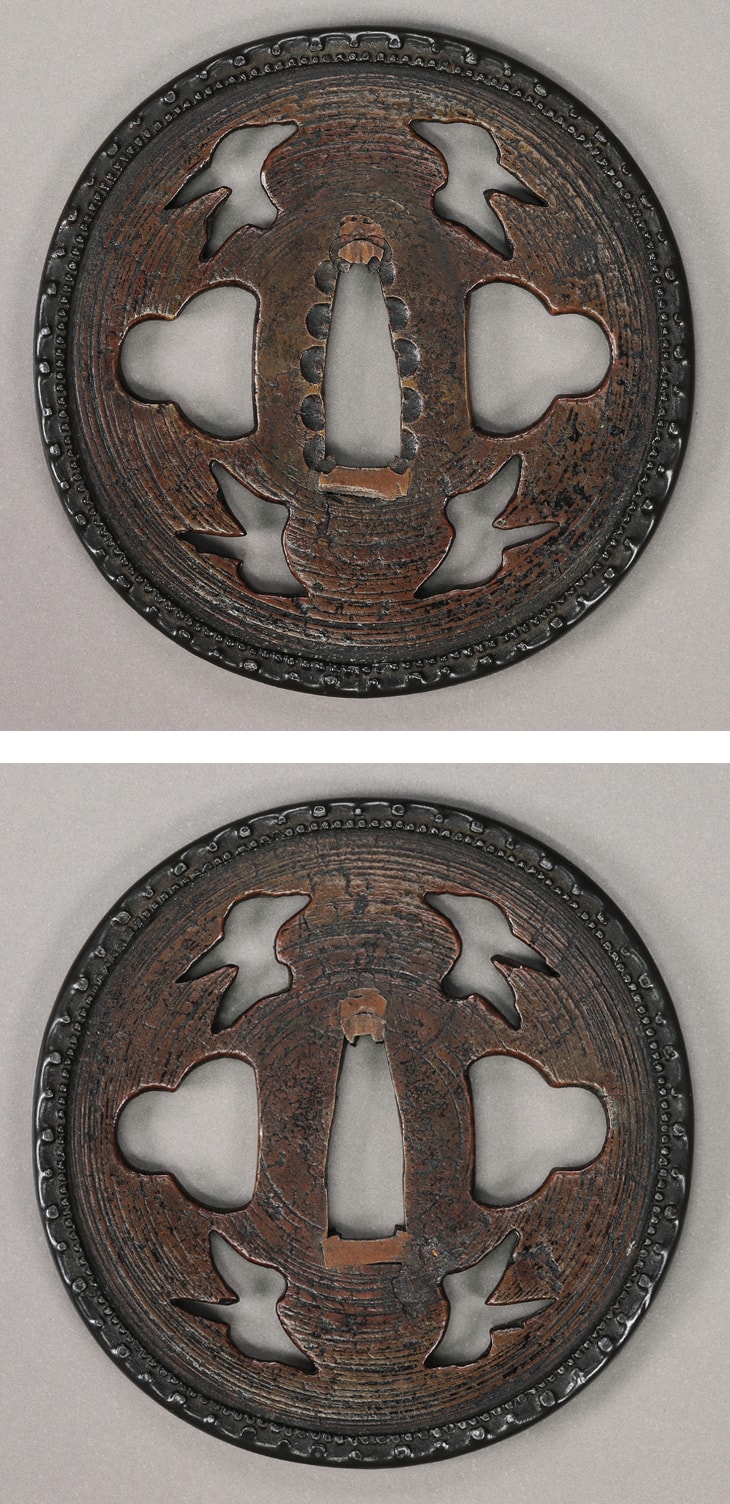
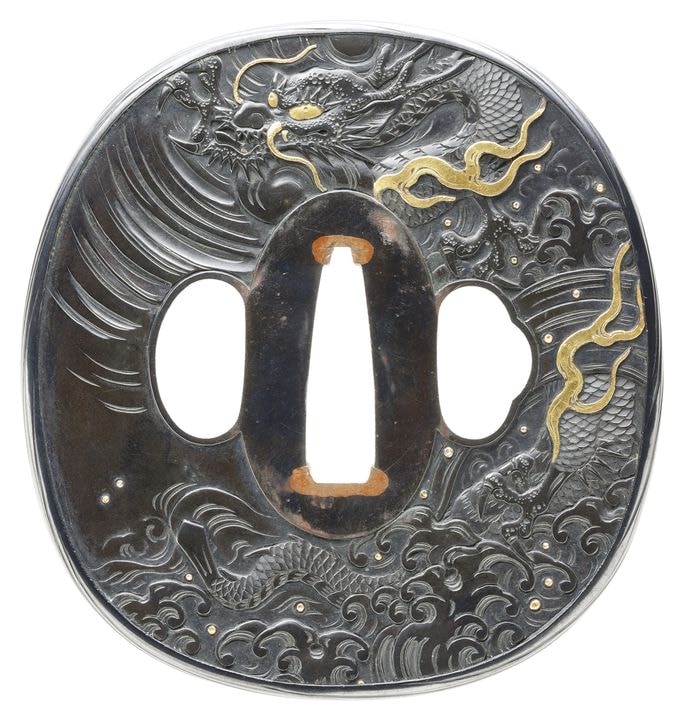
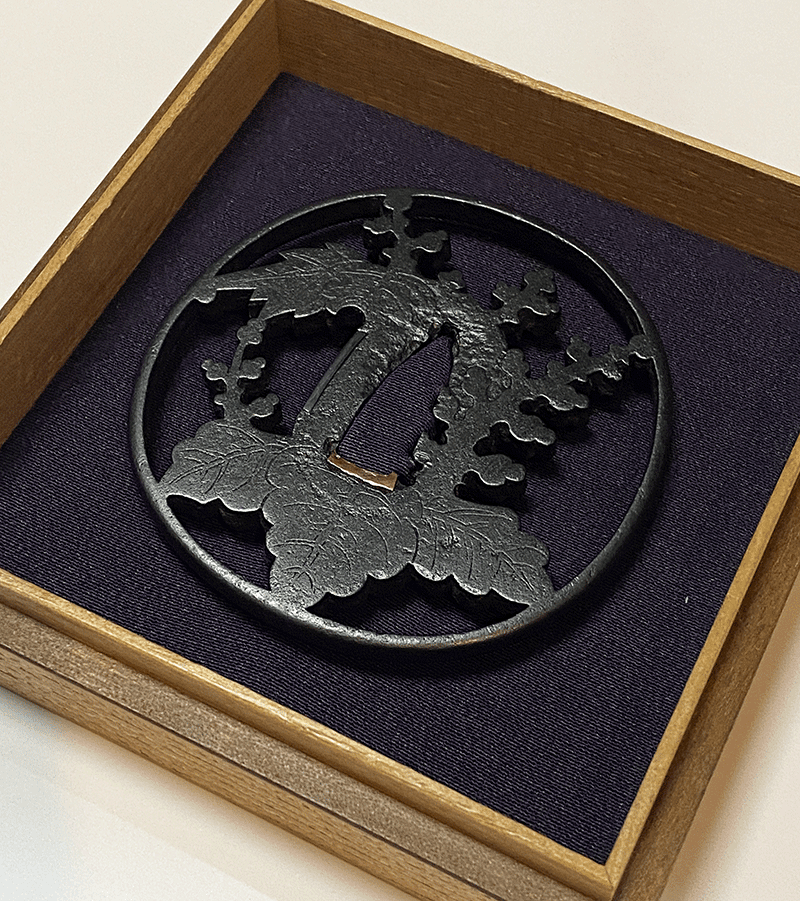
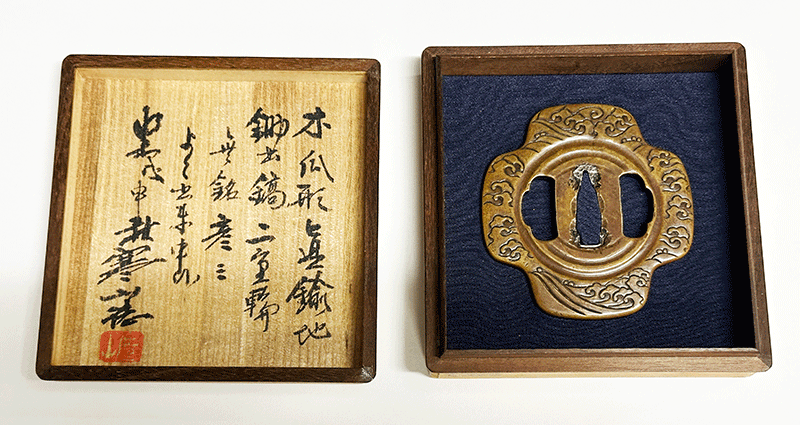
The Kamiyoshi (神吉) school is the fifth of the celebrated Higo kinko lineages, established in Higo Province under the patronage of the Hosokawa house during the mid-to-late Edo period. According to the NBTHK setsumei, the progenitor of the Kamiyoshi line was Kamiya Jinzaemon[[c:1]], who is said to have become a craftsman when Hosokawa Tadatoshi entered Higo. The school's formal artistic lineage, however, traces directly to Hayashi Matashichi (又七), founder of the Hayashi school. In the time of Juhei Tadamitsu — also known as Masatada (正忠) — the family received by domain order the transmitted traditions (soden) of the Hayashi house and devoted itself to reviving the manner of the Kasuga school (春日派), that is, the Hayashi school. Born in Horeki 4 (1754), Masatada initially studied tsuba making under Zenshichi, a pupil of the second-generation Nishigaki Kanshiro, before entering the school of the third-generation Hayashi Tohachi by official command. He thereafter became an appointed craftsman (kakae-ko) to the Hosokawa family, and from his house emerged the school's two greatest masters: his son, the second-generation Fukanobu (深信, 1786--1851), and his grandson, the third-generation Rakuju (楽寿, 1817--1884). The collective style of the Kamiyoshi school is anchored in the conscious revival of Hayashi-school aesthetics, rendered through a vocabulary of refined iron plate work, controlled openwork, and gold inlay of exceptional sophistication. Their iron plates display the purplish patina (murasabi) characteristic of Higo tsuba — described repeatedly in the setsumei as possessing a viscous, lustrous quality (nettori to shite tsuya ga ari) with subtly uneven surface clusters (jiso) that impart an elegant charm (gashu). The school is distinguished by several signature technical achievements: gama-hada (蟇肌, "toad-skin"), a distinctive surface texture devised and perfected by Rakuju; kareki-zogan (枯木象嵌, "withered-tree" inlay), a gold inlay technique extending from the plate onto the rim; and kuzubishi (葛菱, kudzu-diamond) and uzumaki (渦巻, whirlpool) motifs rendered in gold nunome-zogan. Rakuju's gold inlay was praised across multiple setsumei as approaching the level of the founding master Matashichi himself — the recurring epithet "a second coming of Matashichi" (Matashichi no sairai) appears as a fixed formula in the NBTHK appraisals.
The Kamiyoshi family further employed a distinctive punched-chisel treatment (uchikomi-tagane) above and below the nakago-ana — characteristically two strikes above and three below for Rakuju — enabling attribution of unsigned works by both Fukanobu and Rakuju. Favored design motifs include warabite (蕨手, bracken-hand) openwork, shadow butterflies (kage-cho sukashi), rain-dragons (uryu), auspicious clouds (zuiun), and tomoe forms, all drawn from the Hayashi-school repertoire. Fukanobu's works are consistently characterized as sincere and dignified (seijitsu de hinkaku no sugureta sakufu), never resorting to eccentricity or novelty, while Rakuju brought a more forceful and inventive energy to these inherited forms. The Kamiyoshi school occupies a place of singular importance within the Higo kinko canon as the lineage that most faithfully preserved and reinvigorated the Hayashi tradition into the late Edo period. That Juhei Tadamitsu is referred to as "the Kamiyoshi grandfather" and Juhei Fukanobu as "the Kamiyoshi father" — both epithets defined in relation to Rakuju — testifies to the commanding stature of the third-generation master within this lineage. Fukanobu, though fewer signed works survive, produced pieces of such accomplishment that the NBTHK describes his finest tsuba as the hakubi (白眉, "crowning achievement") among his oeuvre — notably a yatsu-warabite design in imitation of Matashichi with gold sayagata inlay and the Hosokawa kuyo-mon (九曜紋) crest. The father-and-son collaborative works (gassaku) by Fukanobu and Rakuju further demonstrate the school's integrated mastery. Rakuju's late works, produced after decades of striving toward the example of Matashichi, are described as having attained an elevated and refined quality (kosho na sakuhin). Several pieces are recorded as former possessions of the Hosokawa family itself, and the recurrence of the patron name Ogi Masakuni (荻昌国) in commissioned inscriptions attests to the school's intimate relationship with prominent supporters. In the NBTHK's assessment, the finest Kamiyoshi works approach the level of the Hayashi school's founding master — a judgment that secures the school's legacy as the most distinguished heir to the Matashichi tradition. Learn more →