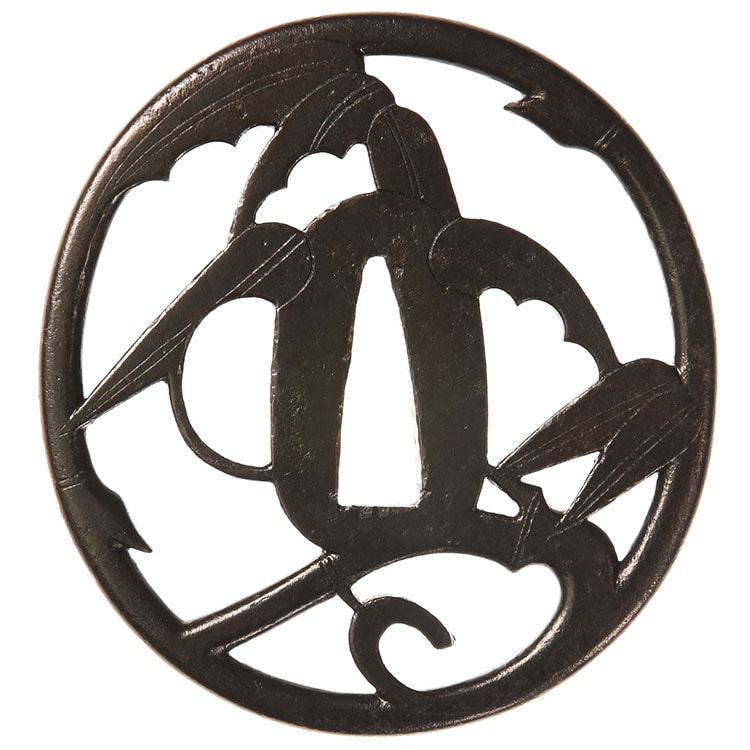
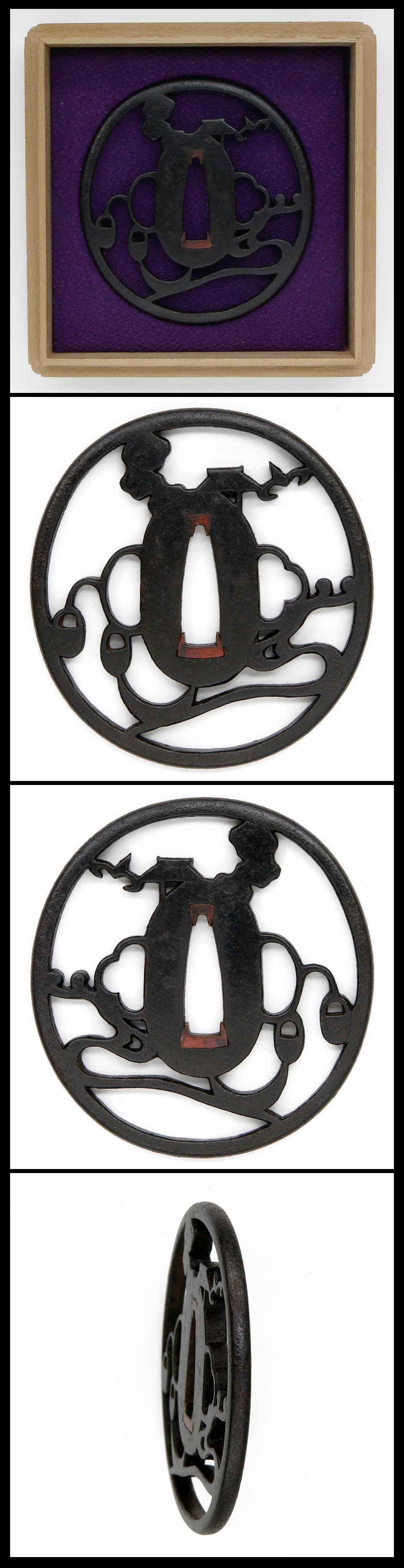
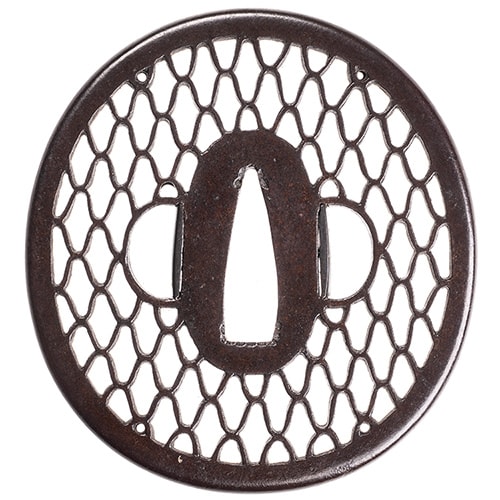
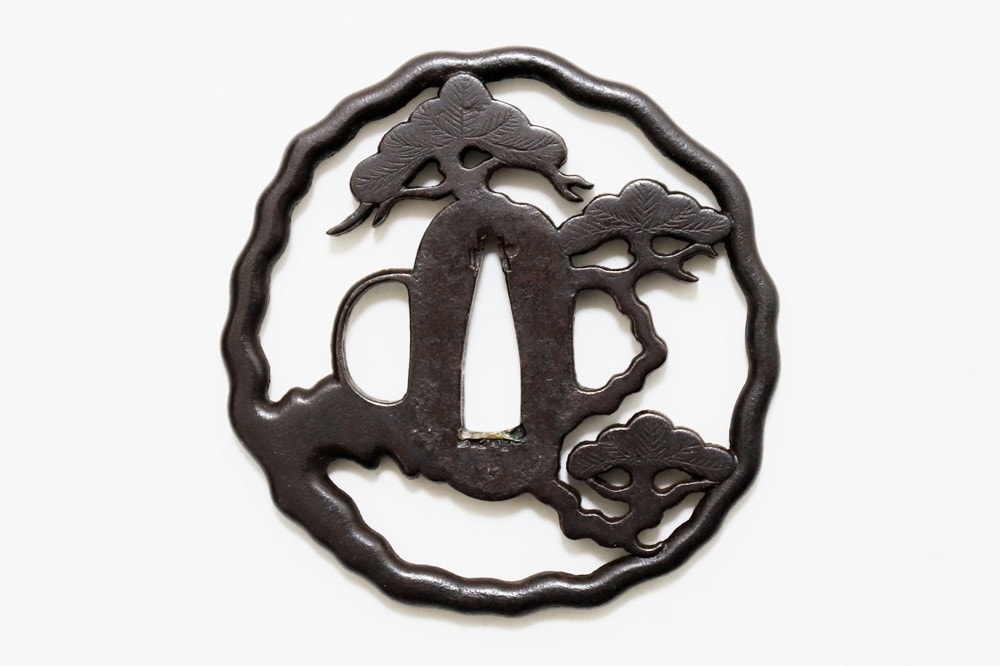
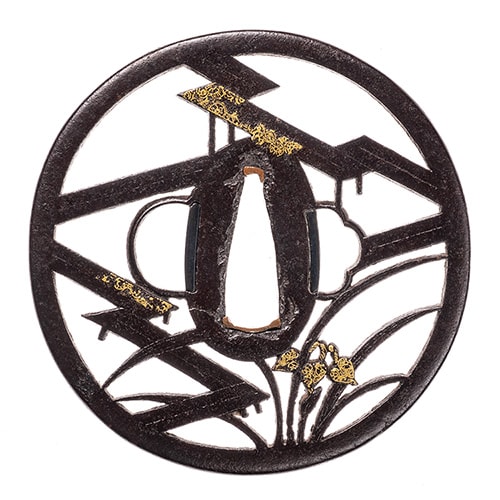
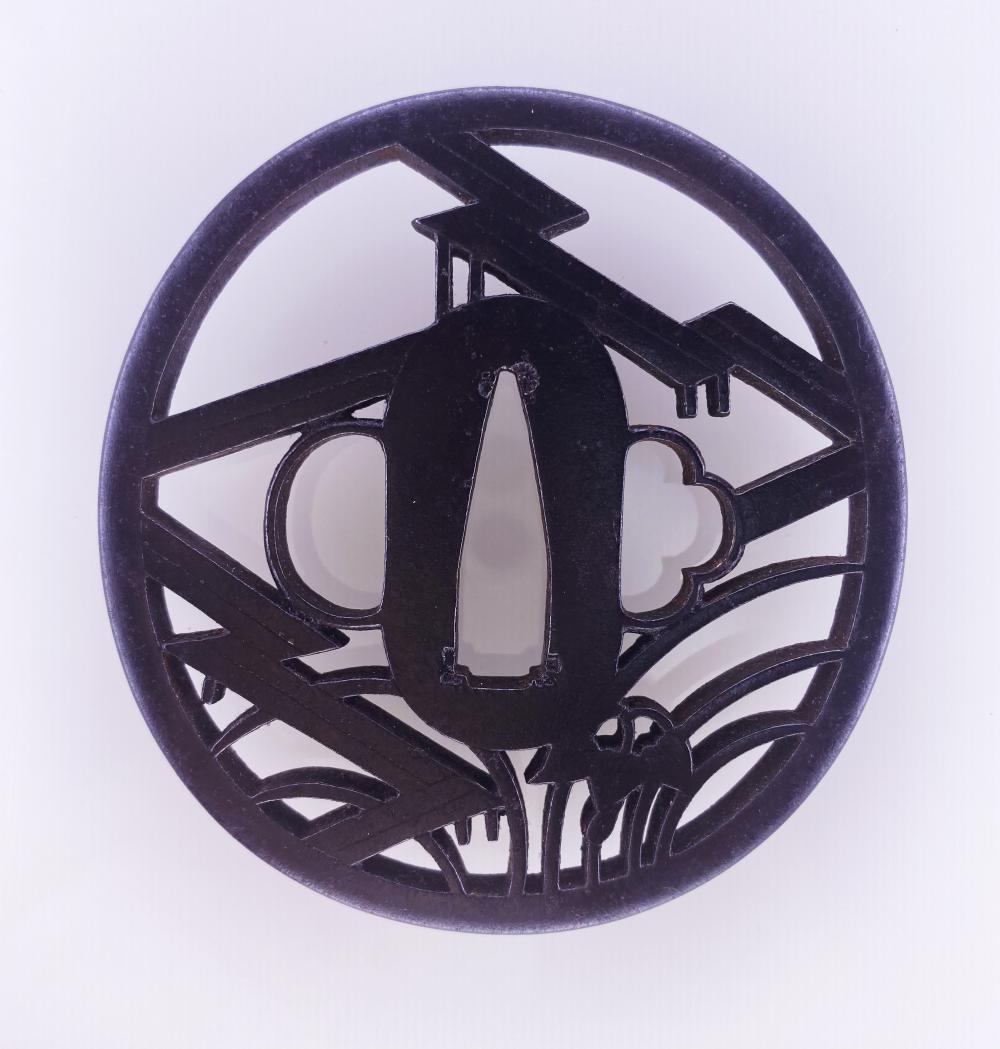
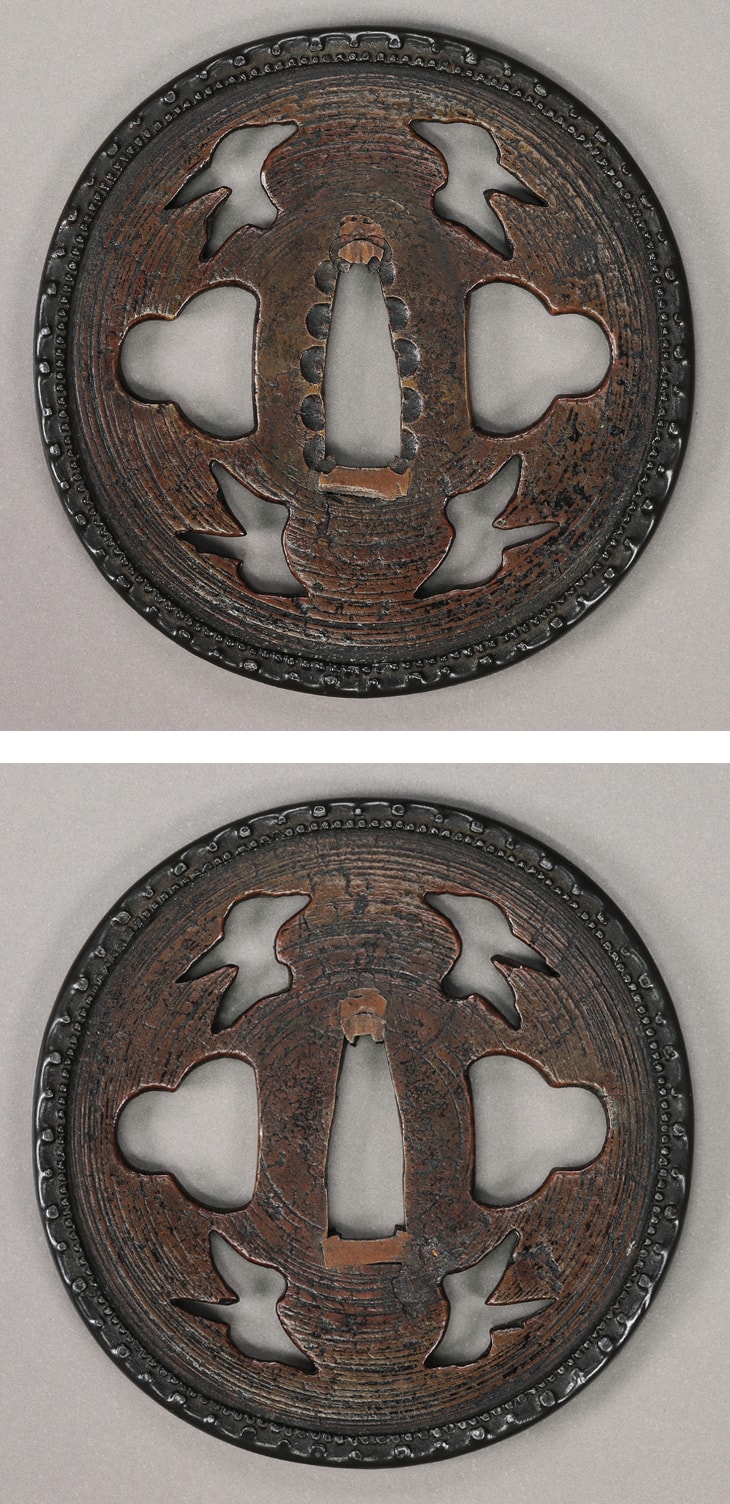
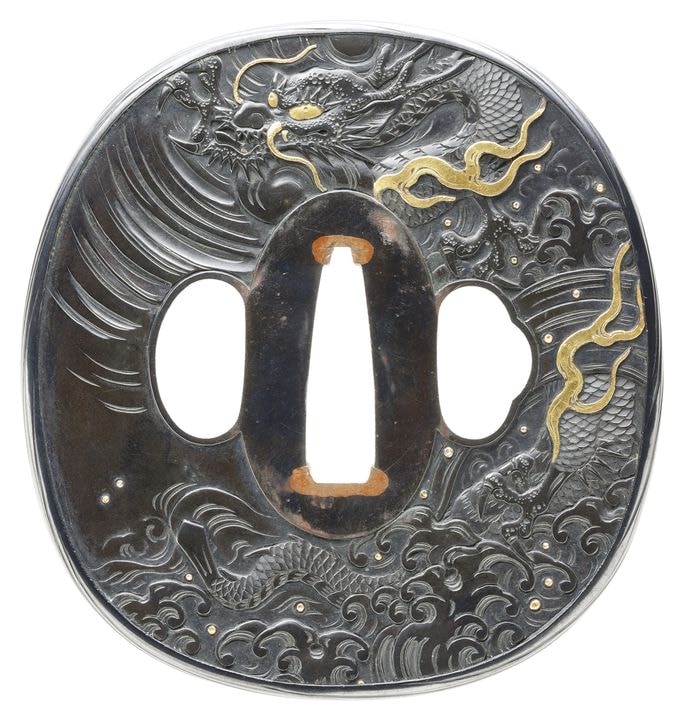
Kamiyoshi Rakuju, also recorded as Kanki Rakuju, was the third-generation master of the Kamiyoshi lineage, a branch descending from the celebrated Hayashi Matahachi of Province. The family's founder is said to have been Kamiya Jinzaemon, who entered the service of the Hosokawa house when Hosokawa Tadatoshi took possession of . In the time of Juhei Tadamitsu, the family received the transmitted traditions of the Hayashi house by domain order and devoted itself to reviving the manner of the Kasuga school. The second generation, Juhei Kunihira Fukanobu, was born in Tenmei 6 (1786) and died in Kaei 4 (1851) at the age of sixty-six; his works are characterized by sincerity and outstanding dignity, never resorting to ostentation or novelty for its own sake. Rakuju was Fukanobu's son, born in Bunka 14 (1817) and dying in Meiji 17 (1884) at the age of sixty-eight. Both father and son enjoyed a high reputation as master craftsmen, and several collaborative works by the pair are recorded. That Juhei Tadamitsu is referred to as "the Kamiyoshi grandfather" and Fukanobu as "the Kamiyoshi father" testifies to the great importance of Rakuju's presence within this lineage.
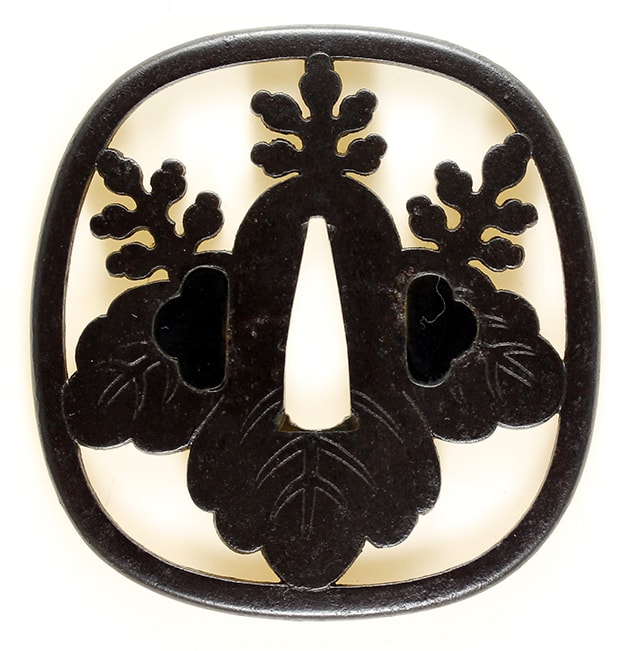
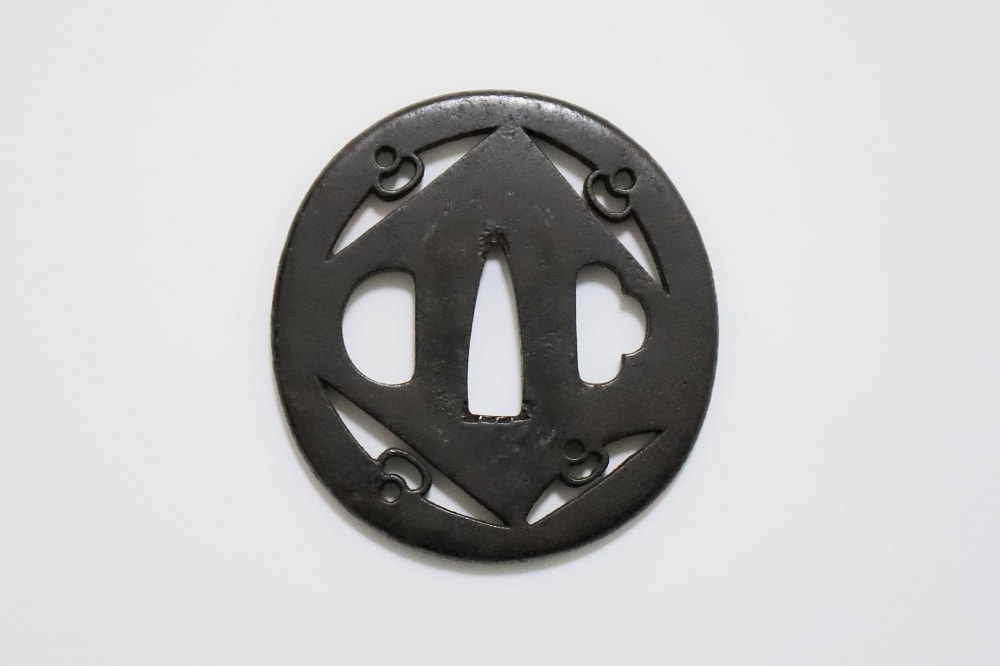
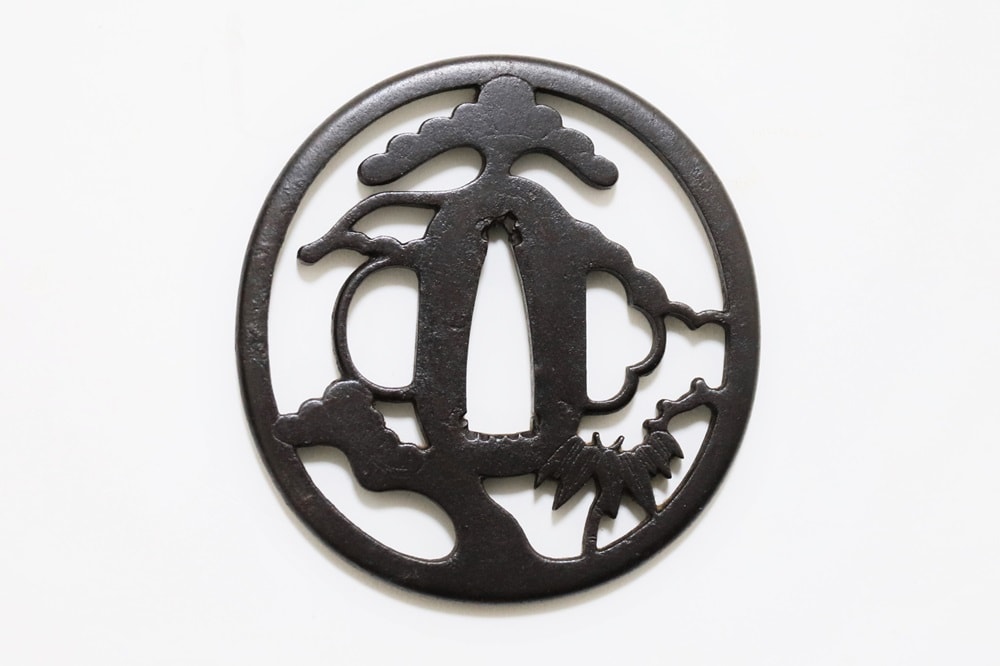
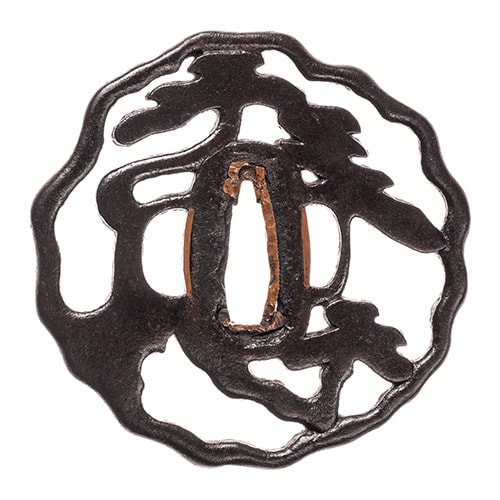
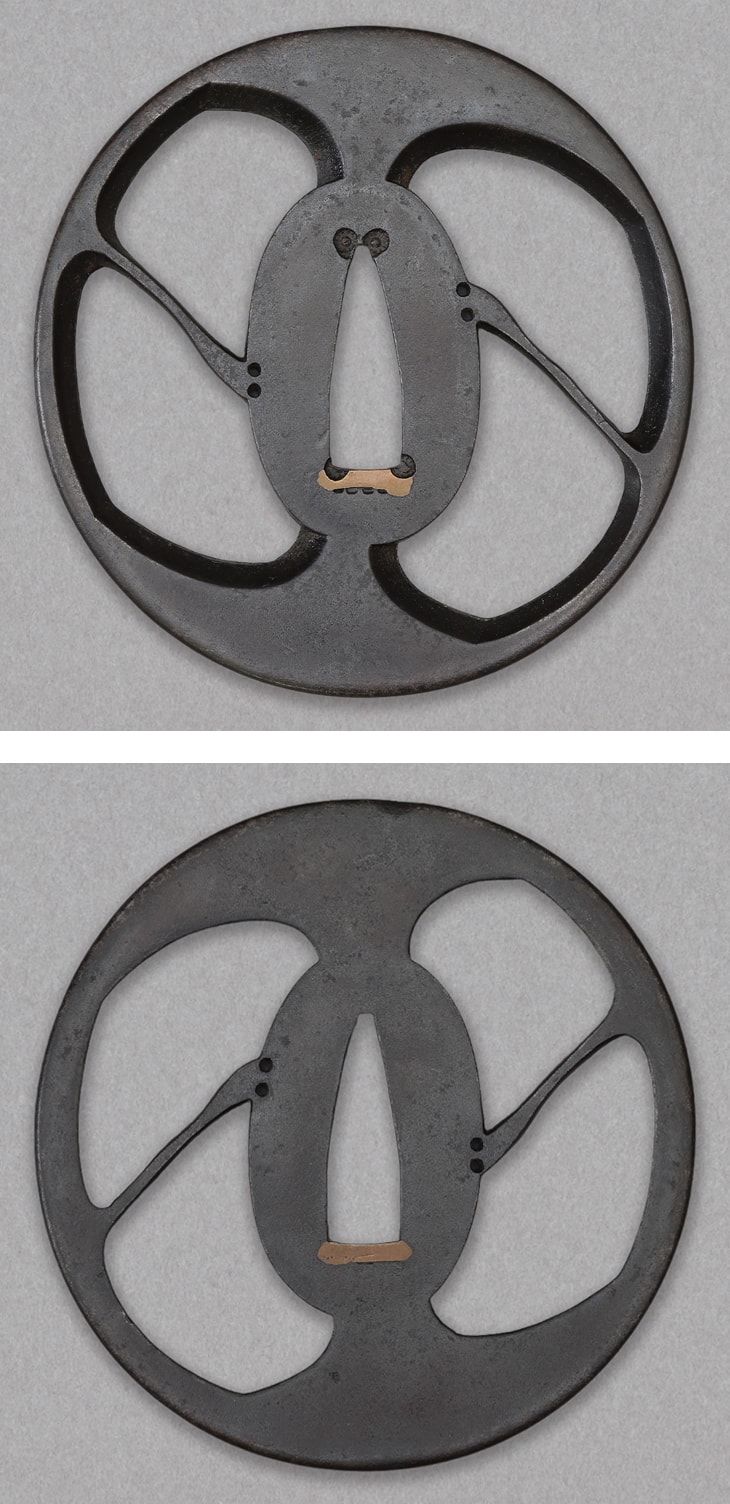
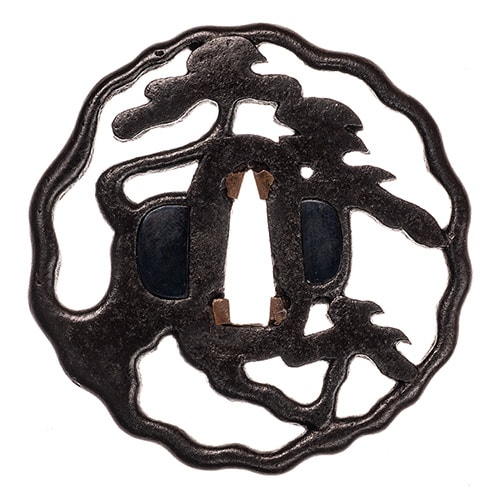
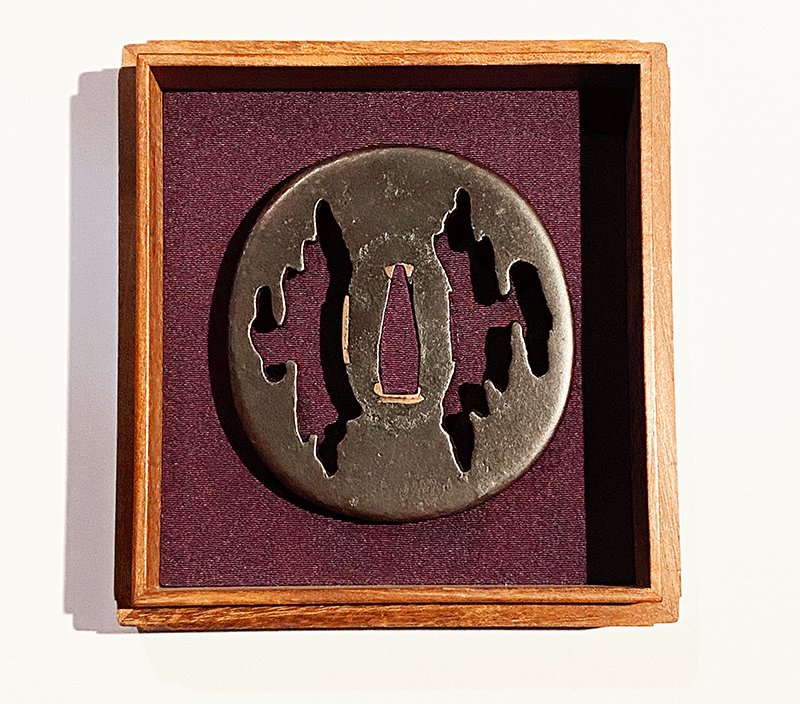
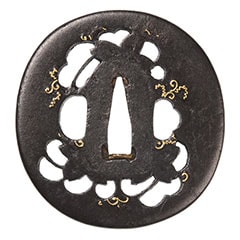
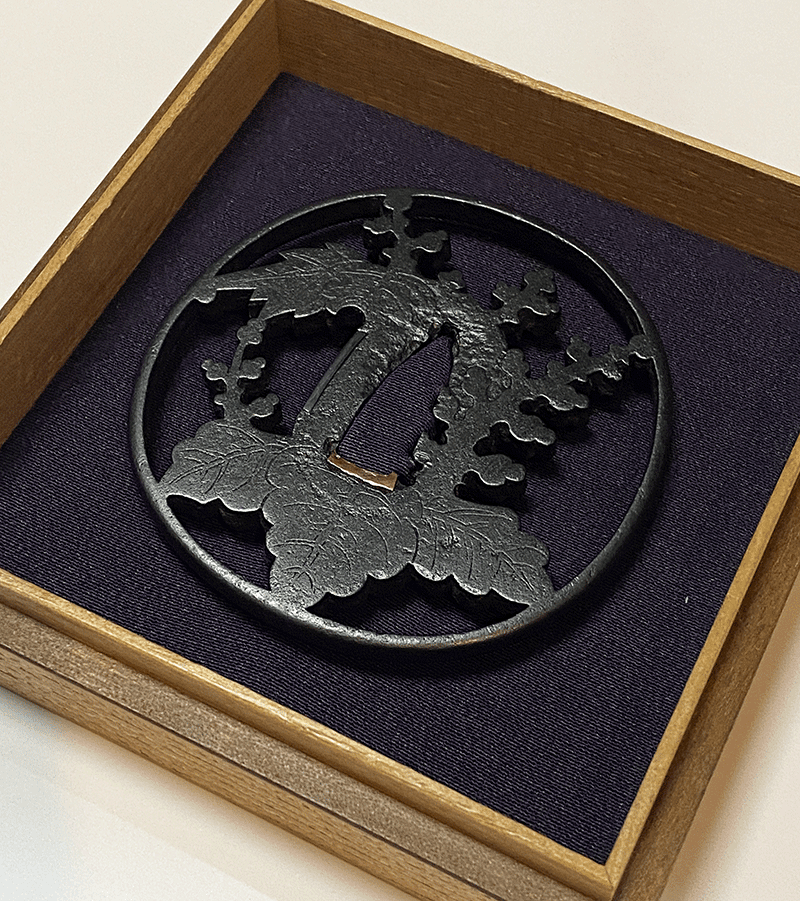
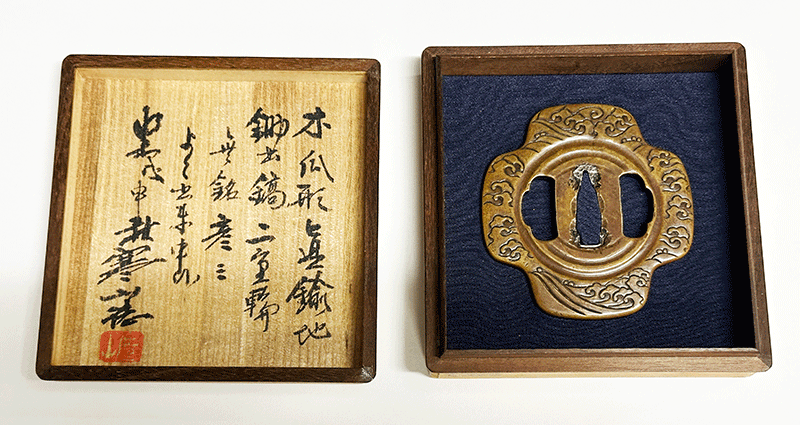
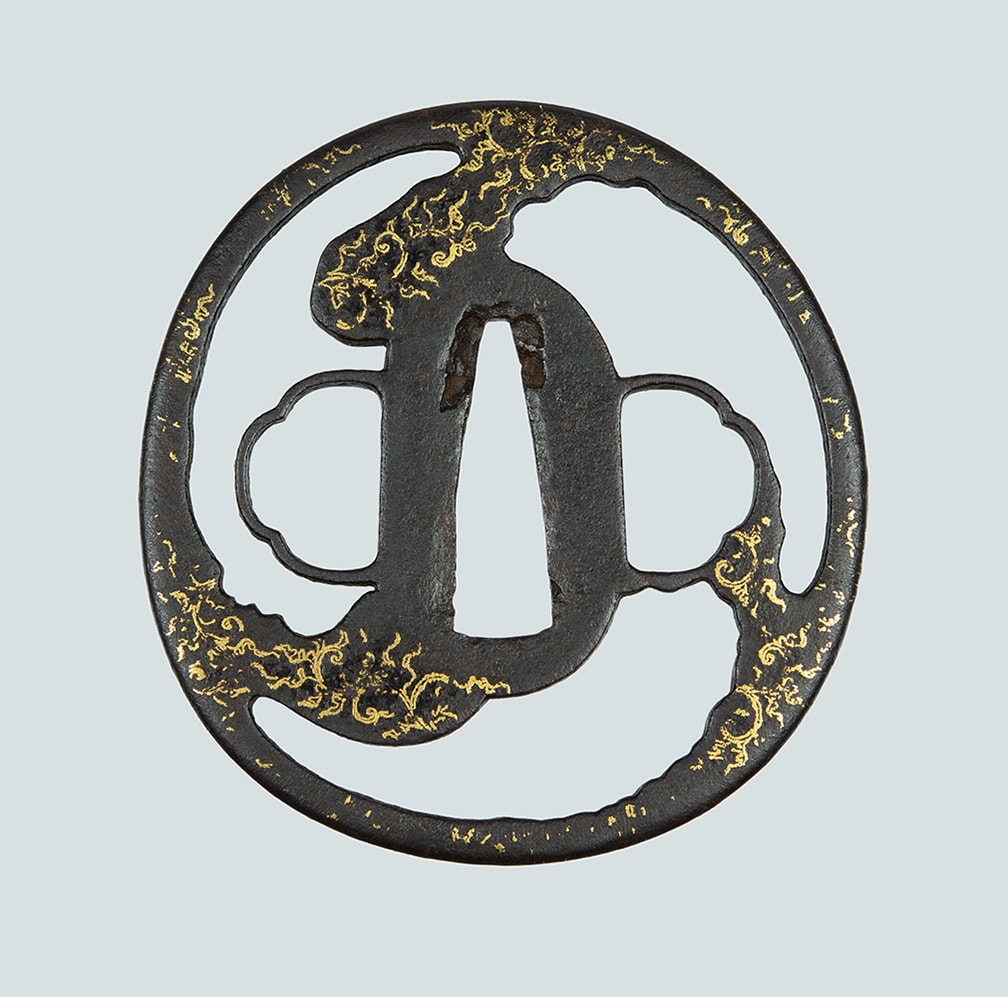
Rakuju's gold inlay was said to demonstrate such technical brilliance that he was called "a second coming of Matahachi," an expression of the highest praise within the tradition. His approaches the level of the founding master, displaying a suppleness and vigor that is both delicate and forceful. His forging of the plate metal is also excellent: the well-refined iron exhibits the purplish patina characteristic of , unctuous in appearance and lustrous, with subtly uneven clusters of texture that impart an elegant charm. He devised and successfully expressed a distinctive surface variation known as gama- ("toad-skin"), a special textural effect on the base metal that became one of his hallmarks. The Kamiyoshi family further employed a special uchikomi- (punch-chisel) treatment above and below the — characteristically two marks above and three below — which serves as a decisive identifying feature, enabling attribution of works by both Fukanobu and Rakuju even when unsigned. His openwork encompasses kage- ("shadow openwork") renderings of butterflies, rain-dragons, auspicious clouds, and warabite (bracken-hand) motifs, all drawn from patterns handed down within the Hayashi school, executed with freely controlled forms that deliberately leave chisel traces to express both refined elegance and strength.
Beyond his accomplishments as a metalworker, the Kinkoroku records that Rakuju's appraisal of metalwork was considered foremost in , and that regarding the construction of sword mountings he attained an especially deep mastery of the inner principles. Beginning with the 's personal mountings and extending throughout the domain household, most refined constructions were produced under his direction. His fully coordinated so- mountings — including celebrated copies of mountings favored by Miyamoto — are consonant with the aesthetic of the Hosokawa school of tea, combining pronounced martial character with restrained elegance. Several of his works are transmitted as former possessions of the Hosokawa family. The recurring appearance of the patron name "Ogi Masakuni" inscribed alongside Rakuju's signature on multiple designated works suggests the support of an important commissioning figure, though no other patron's name has been encountered in the manner. Rakuju stands as a representative figure in late- metalwork, an artisan whose spirited resolve to rival Matahachi yielded works of elevated and refined character.