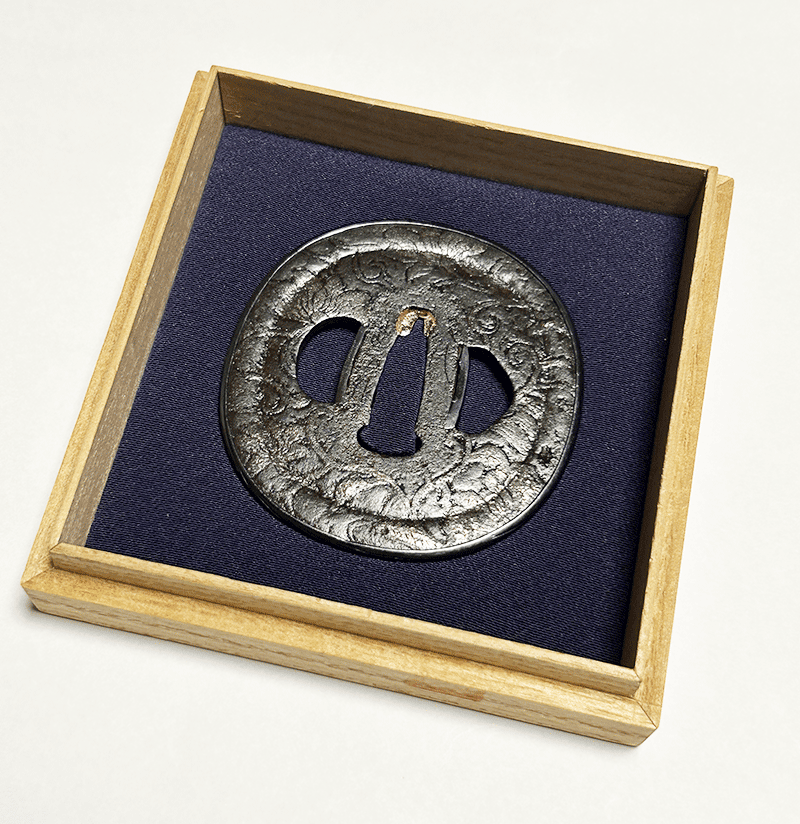
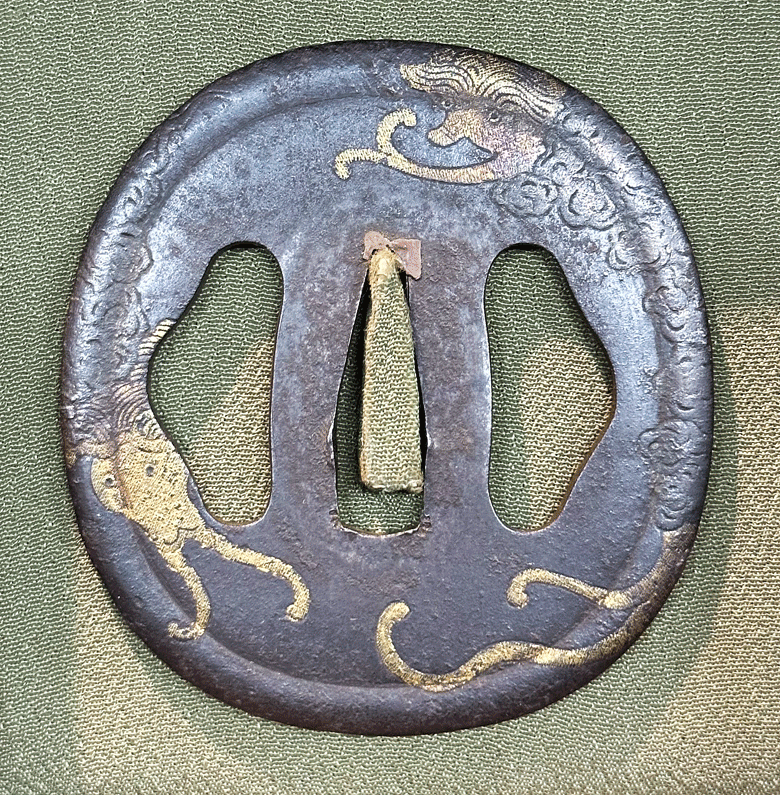
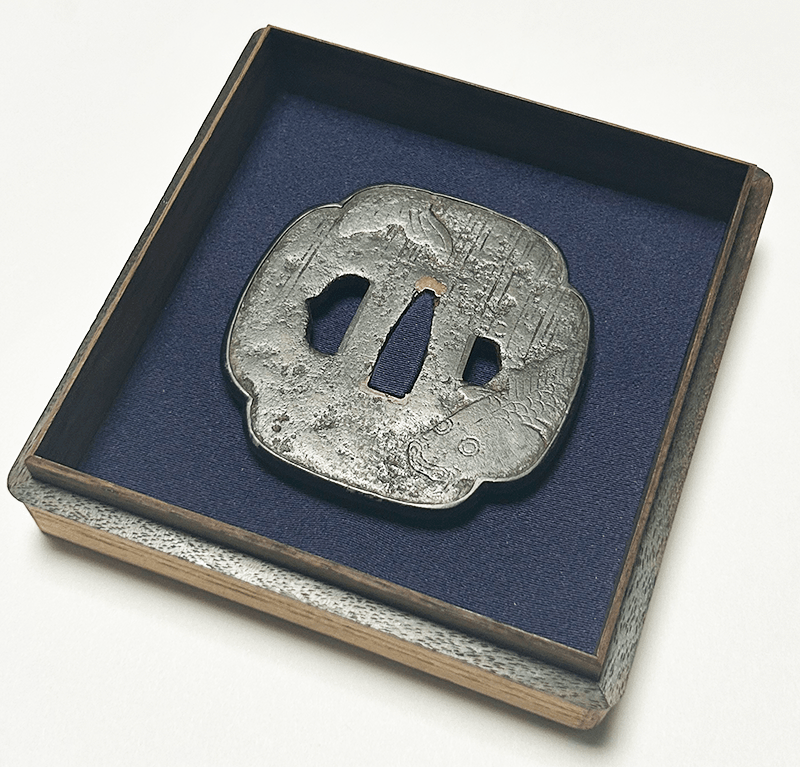
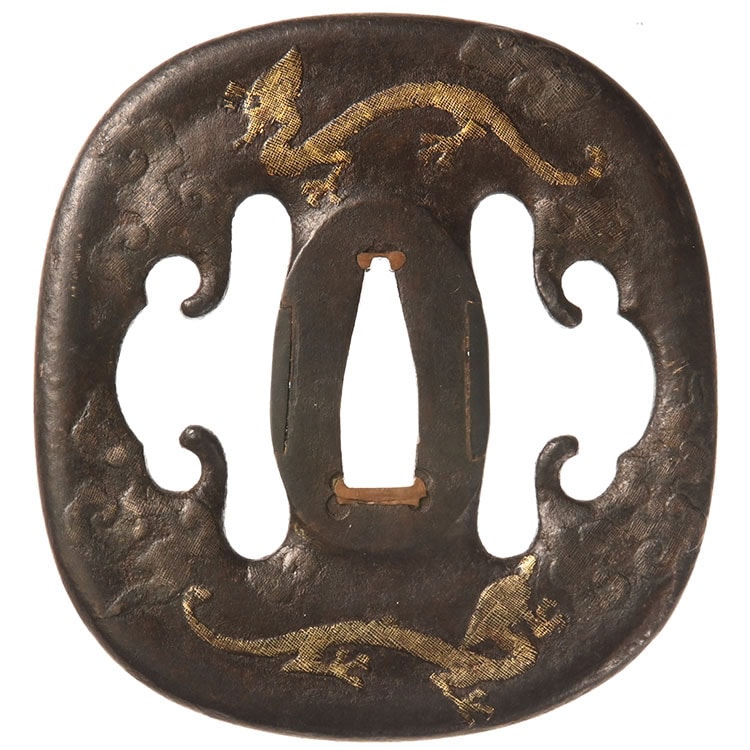
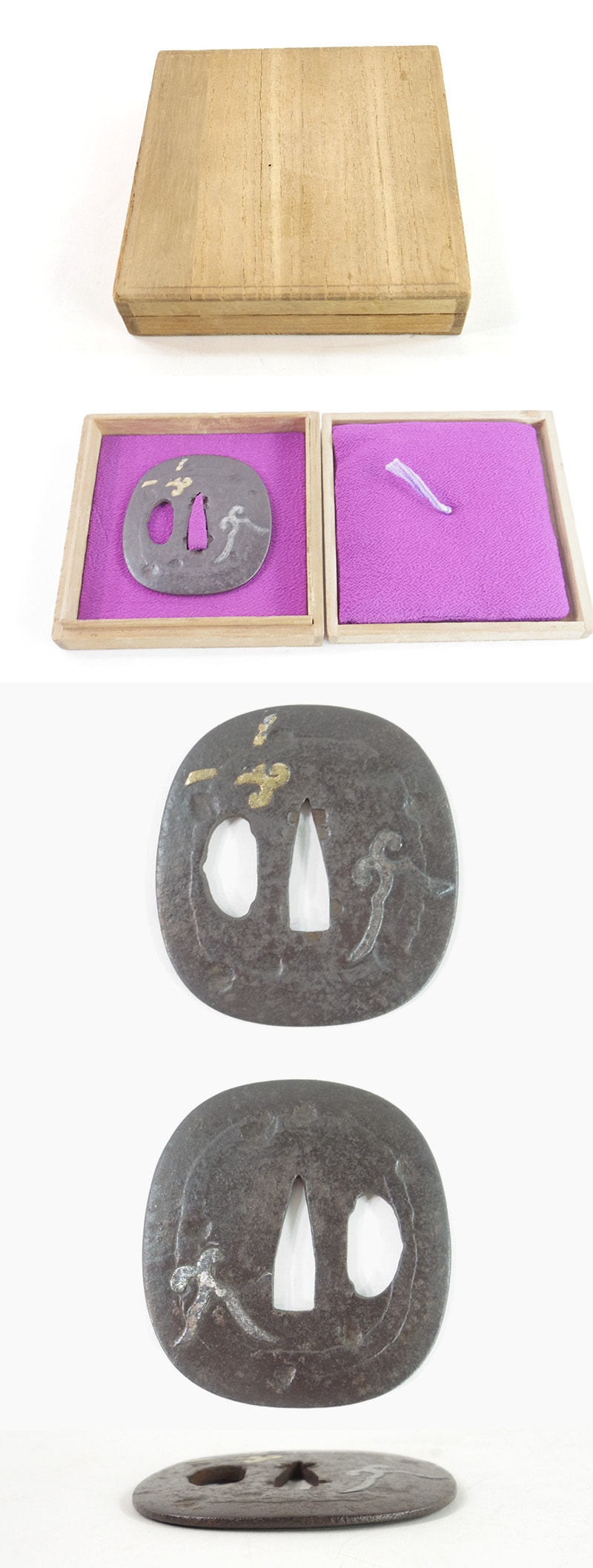
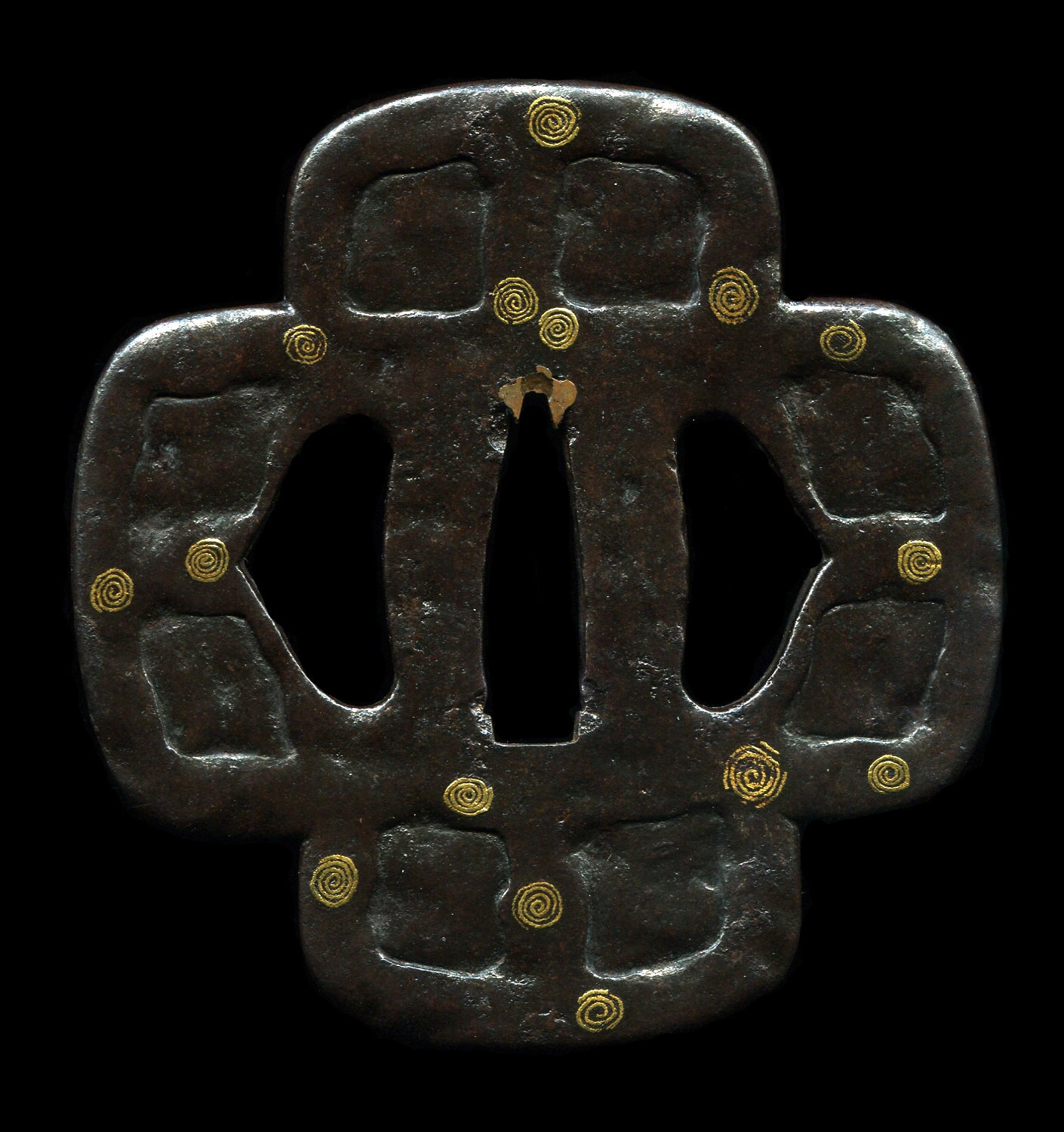
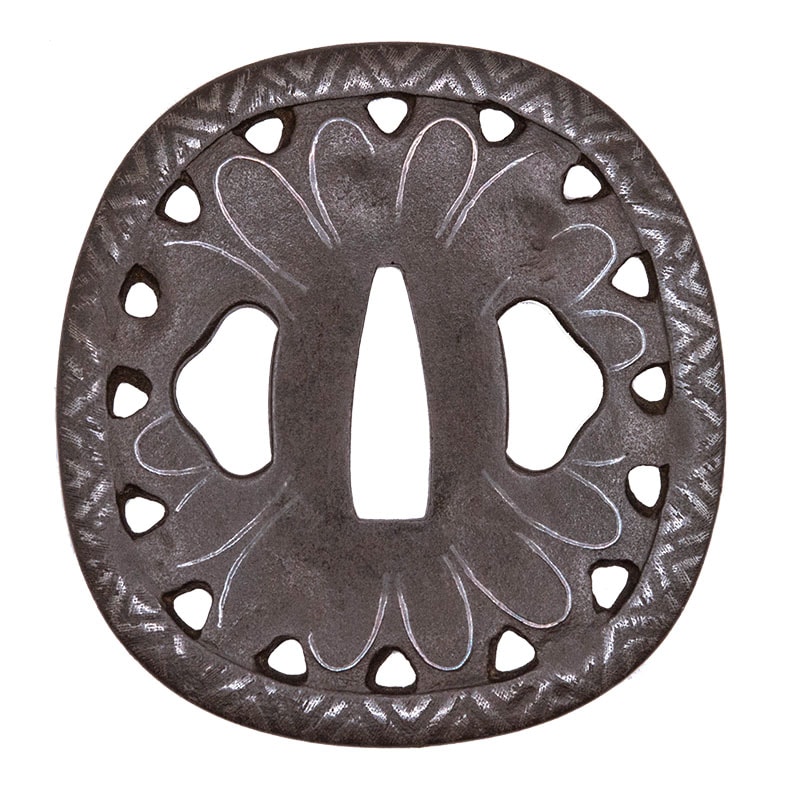
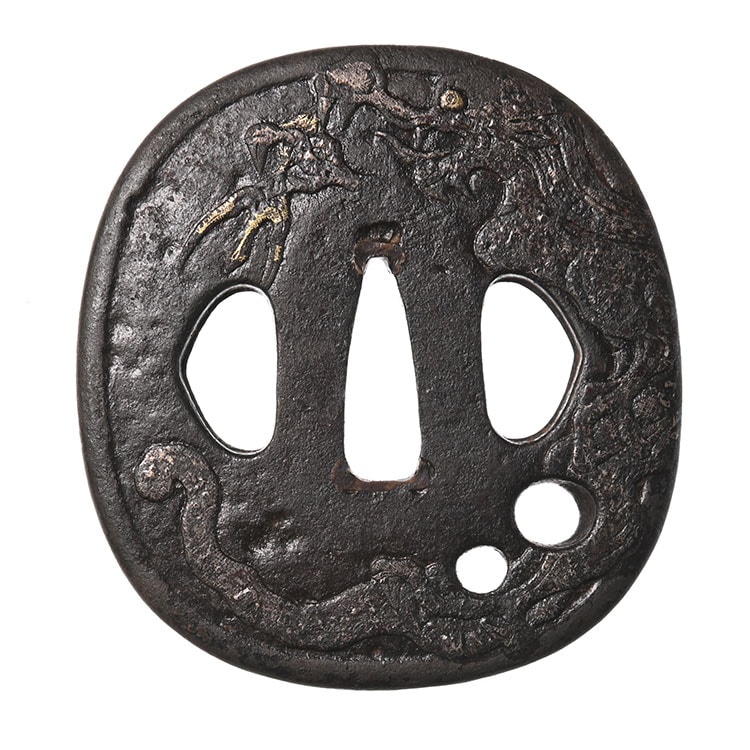
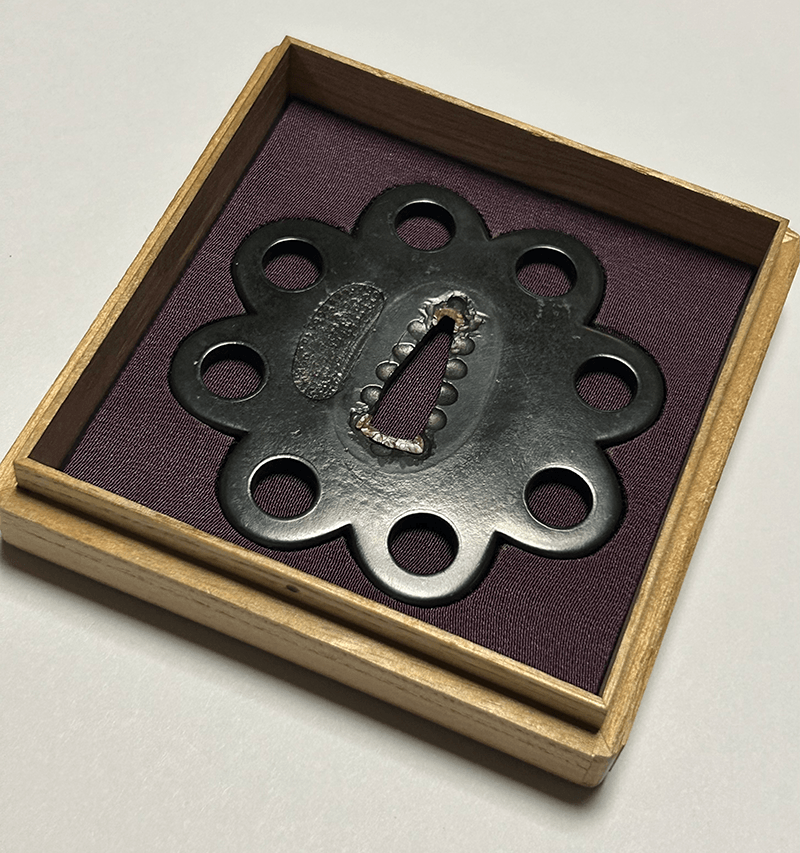
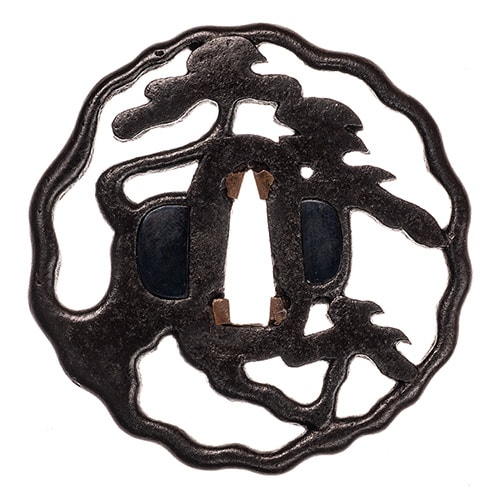
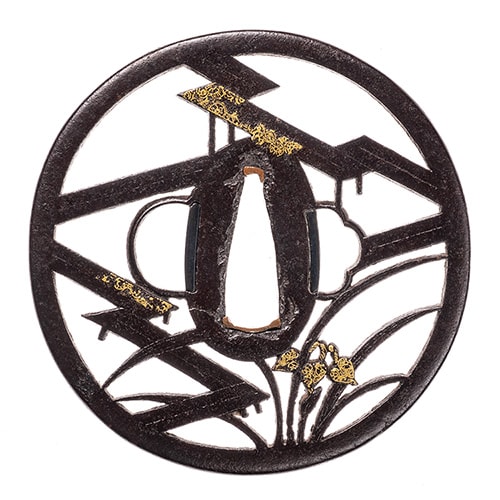
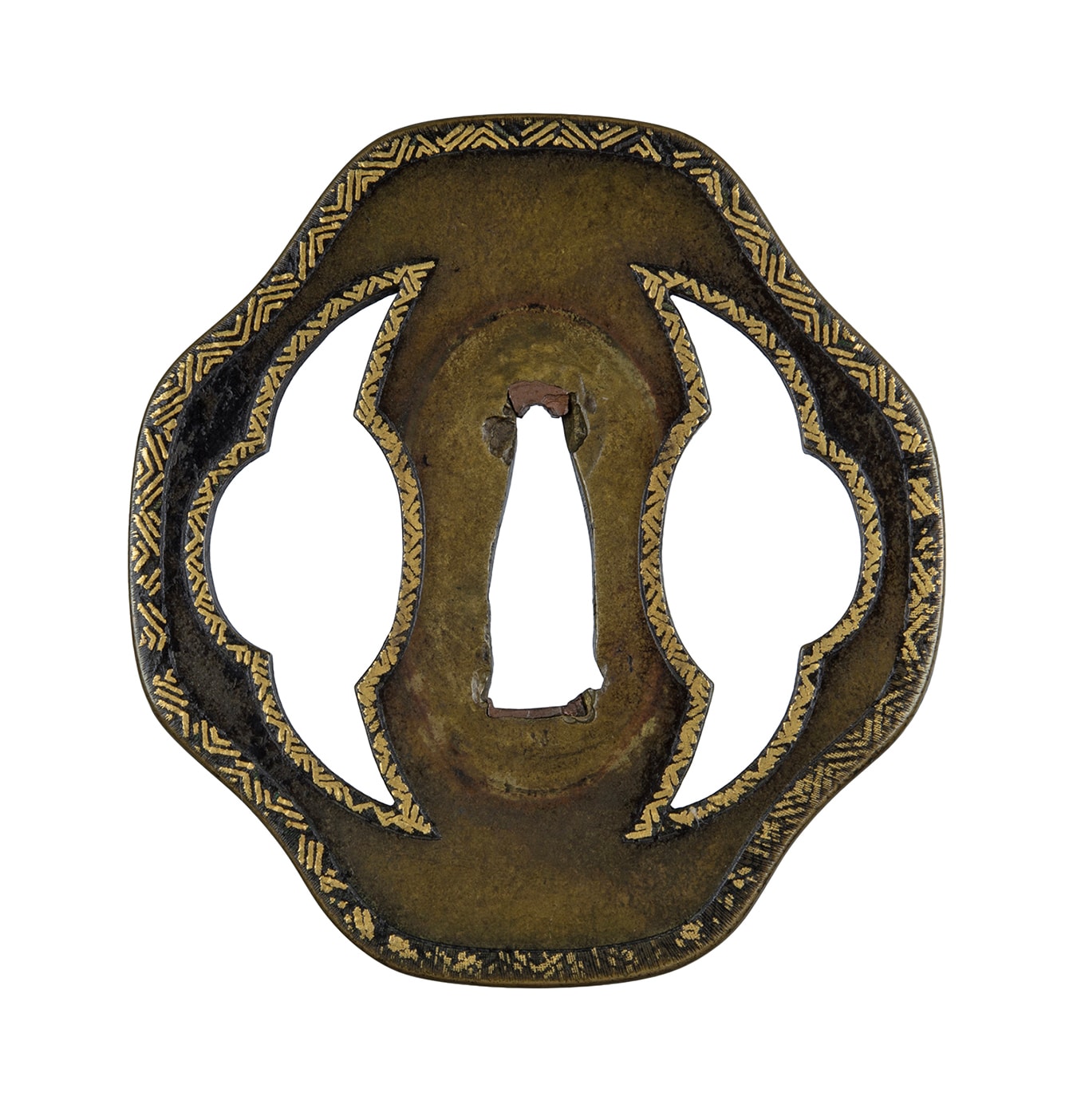
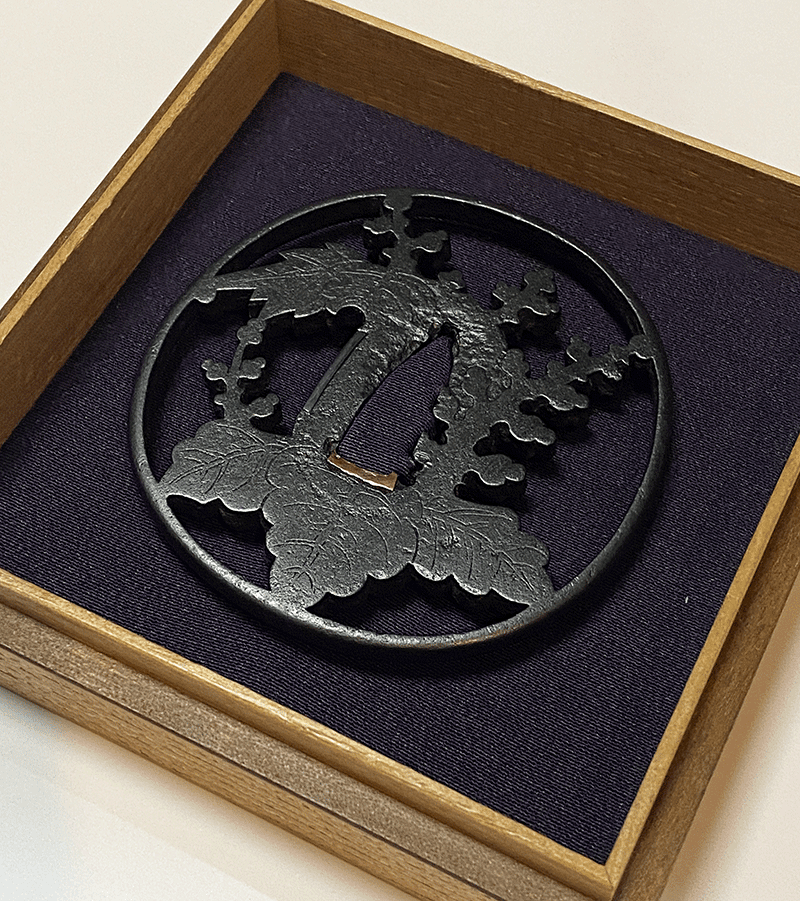
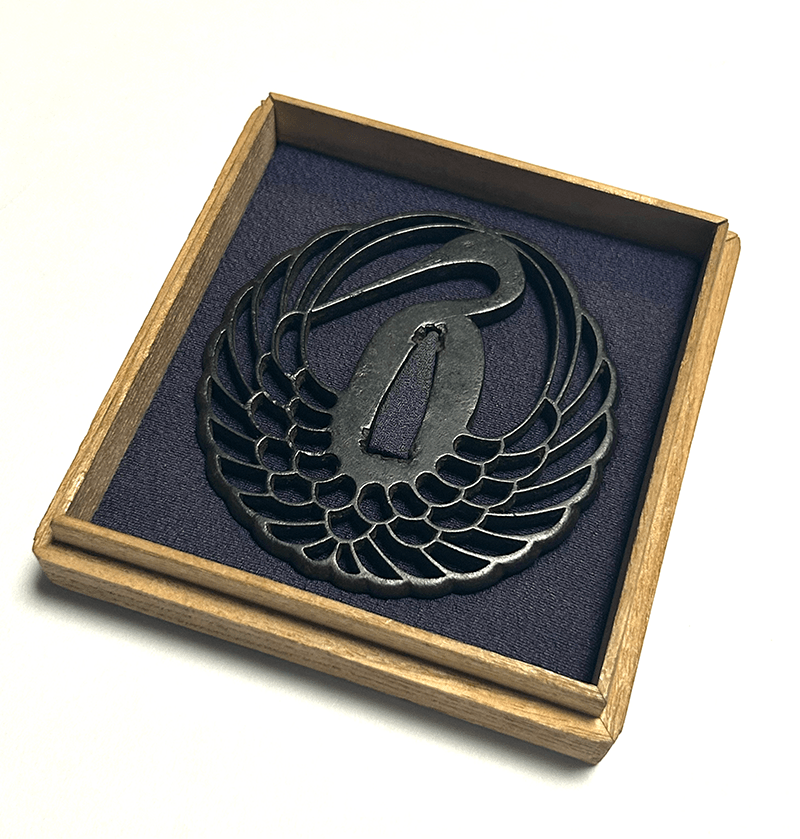
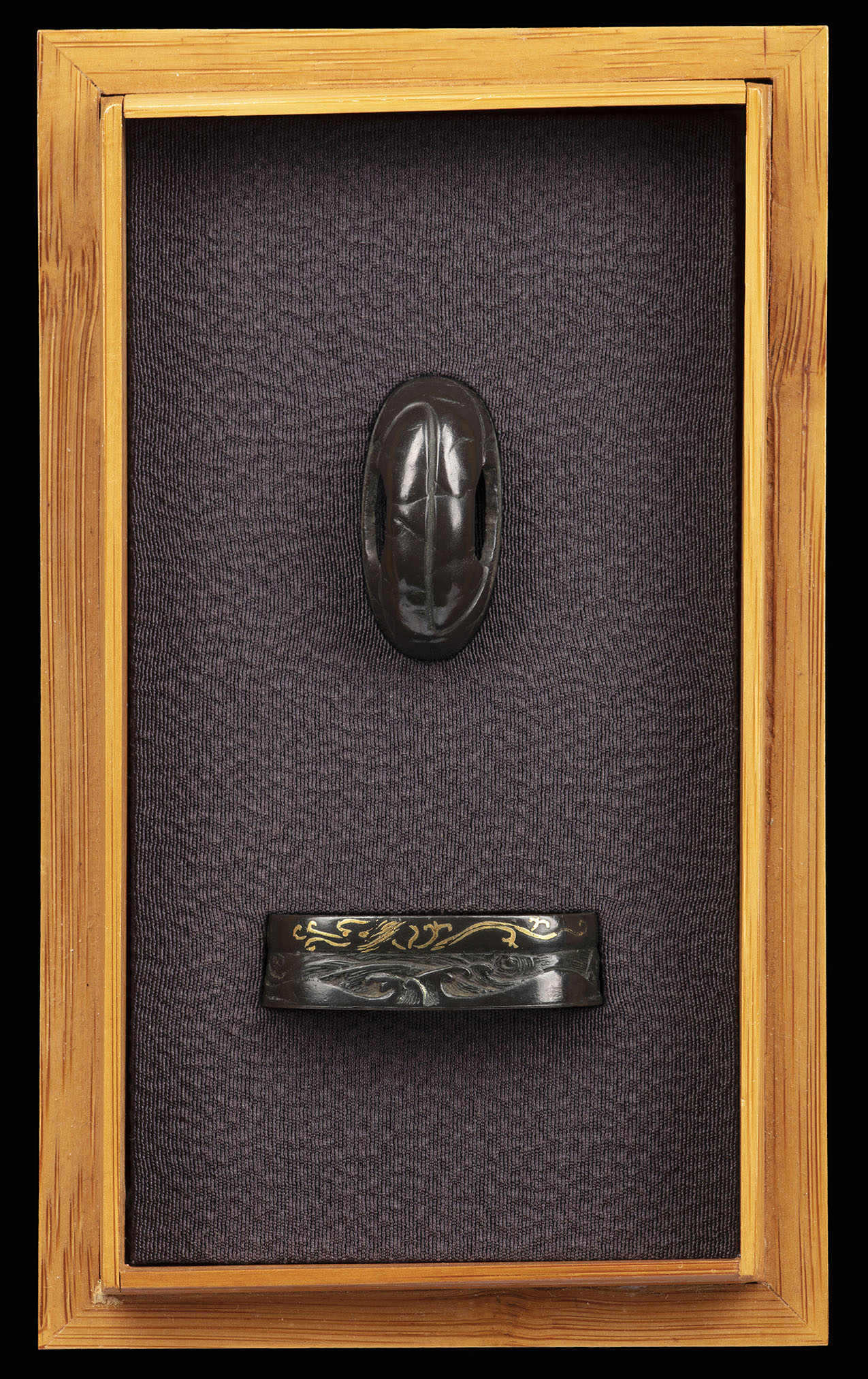
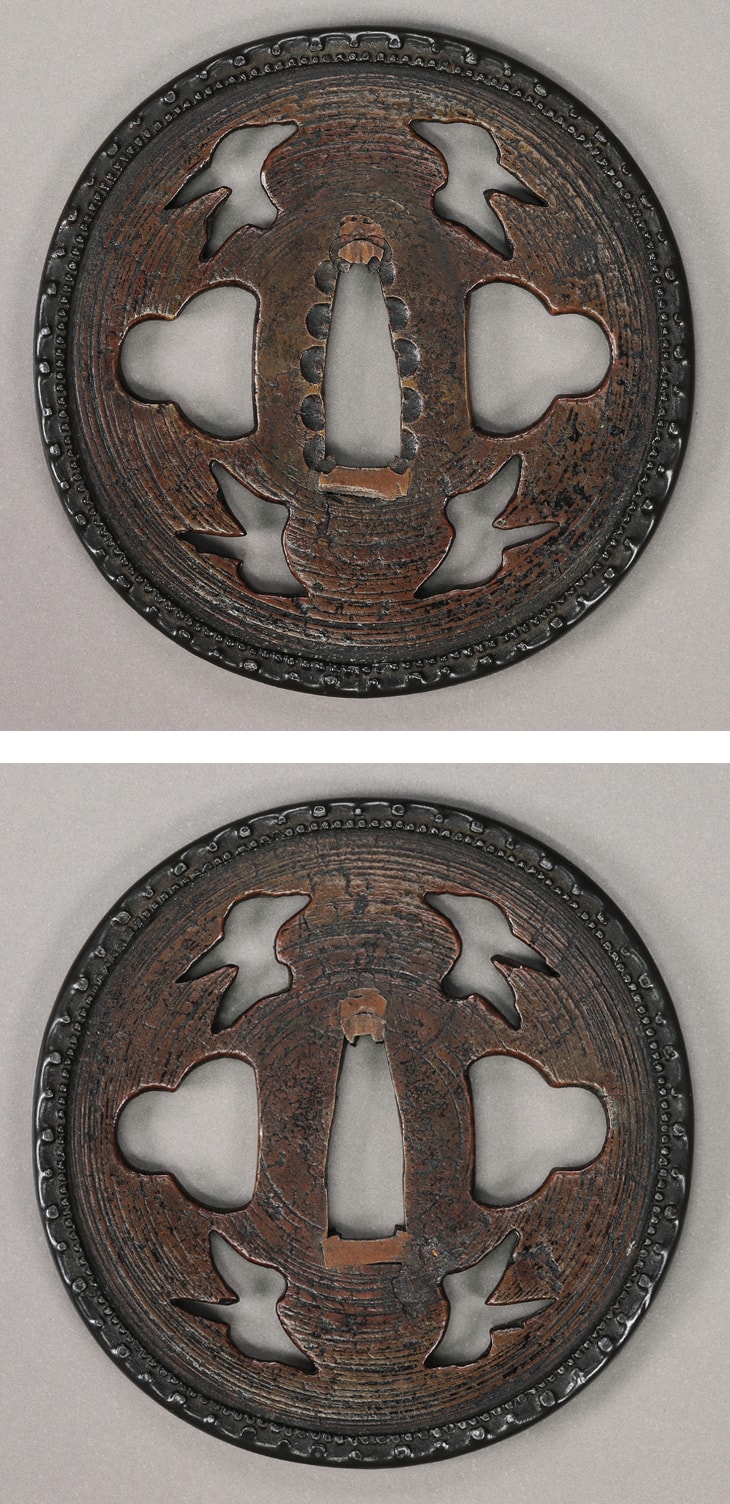
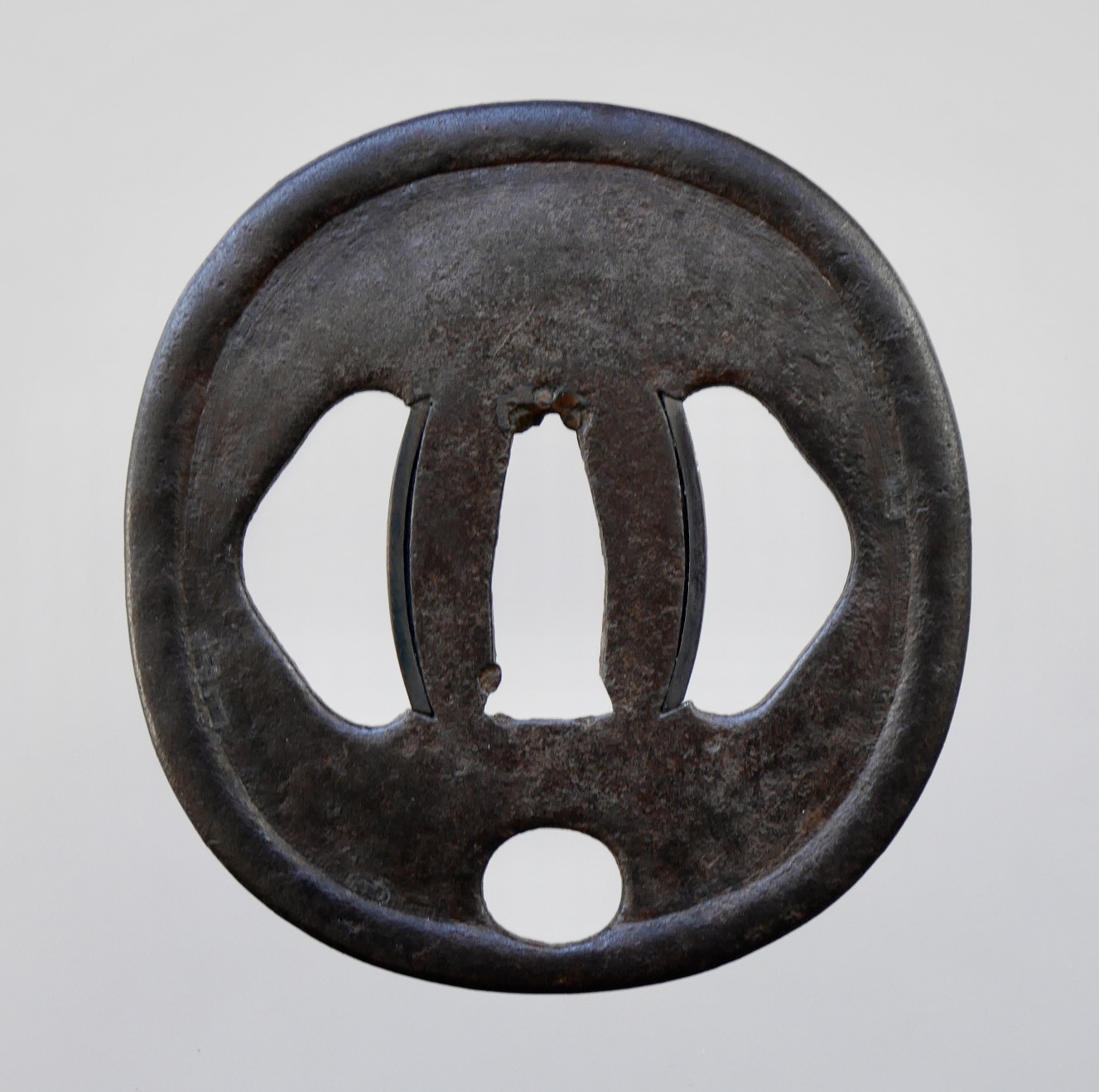
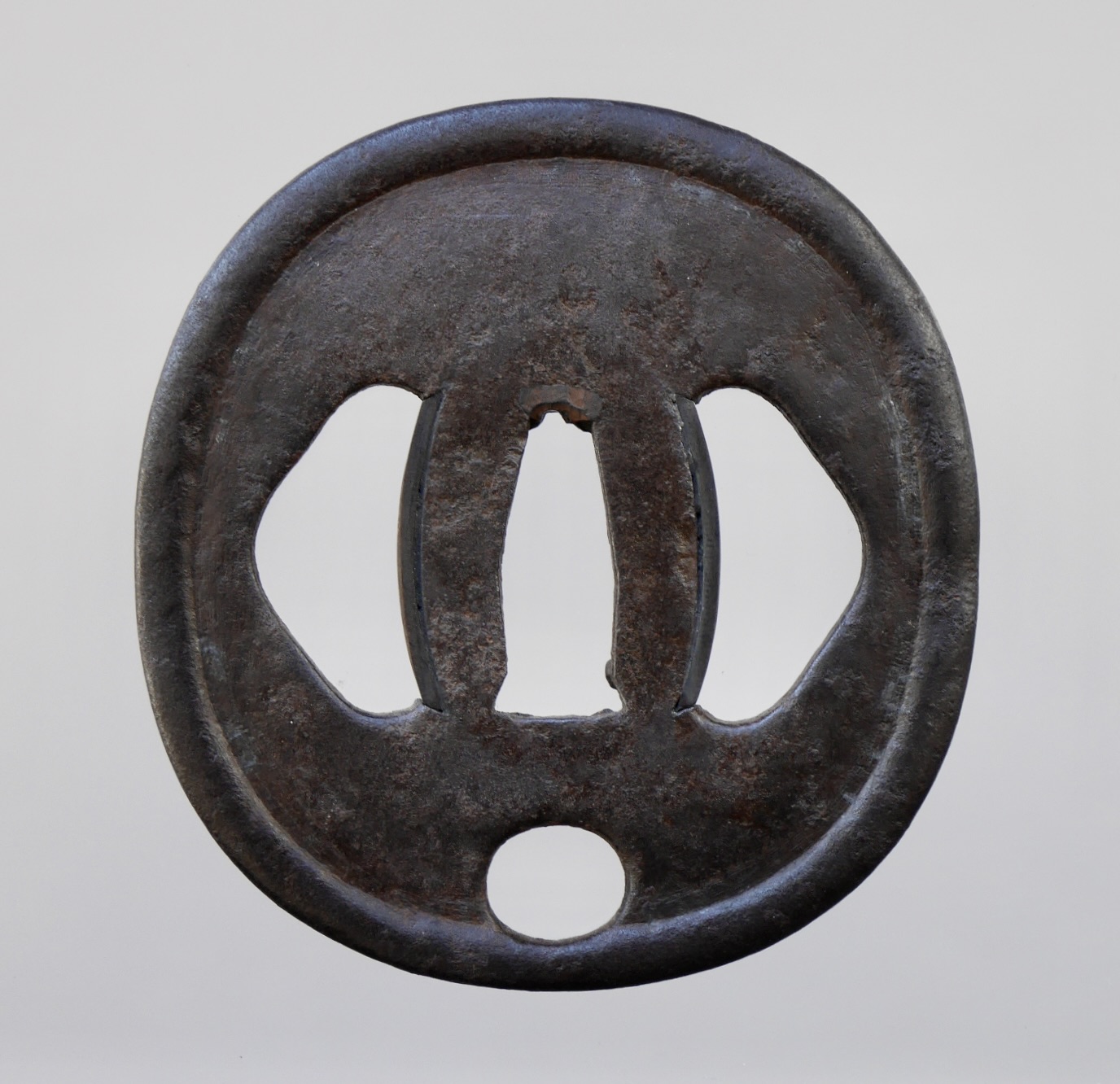
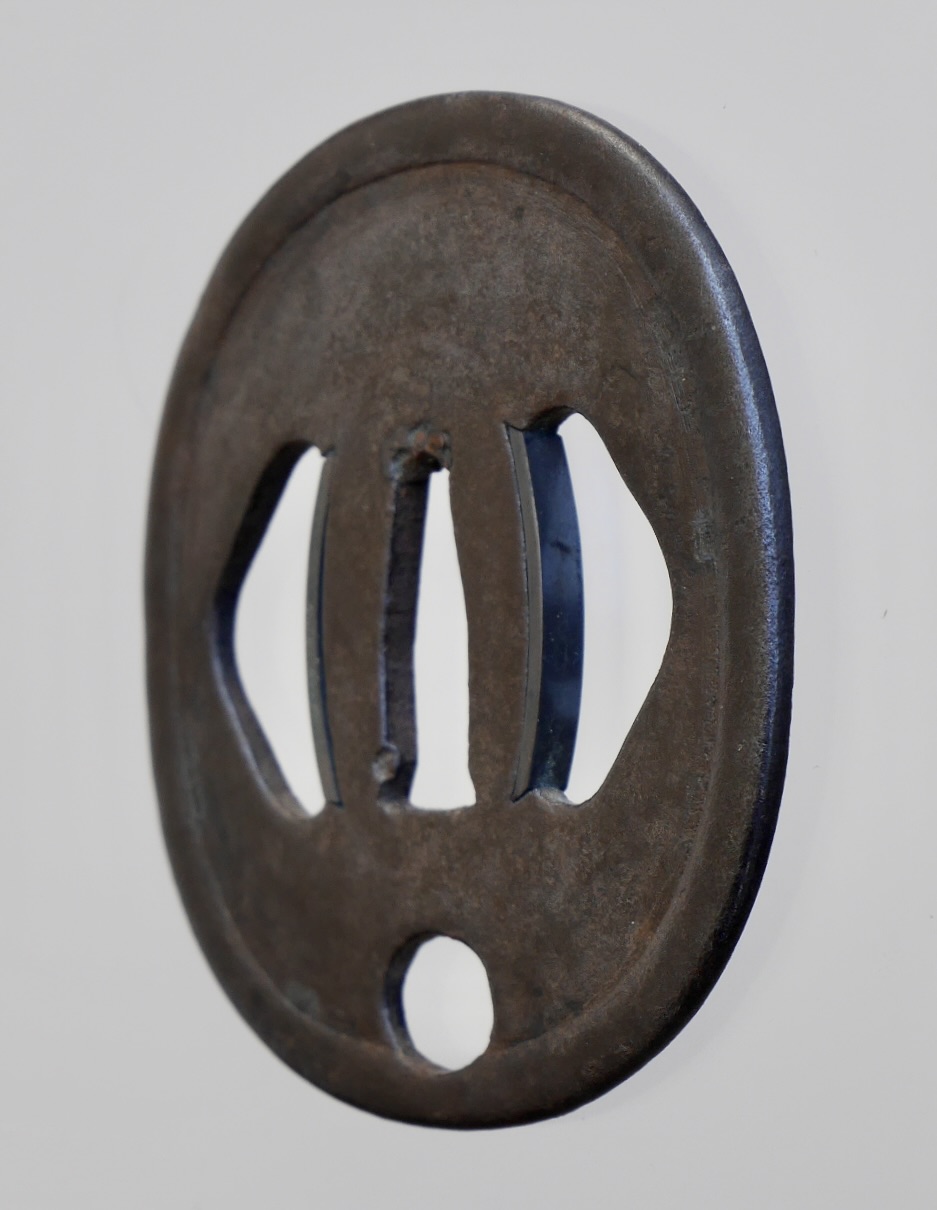
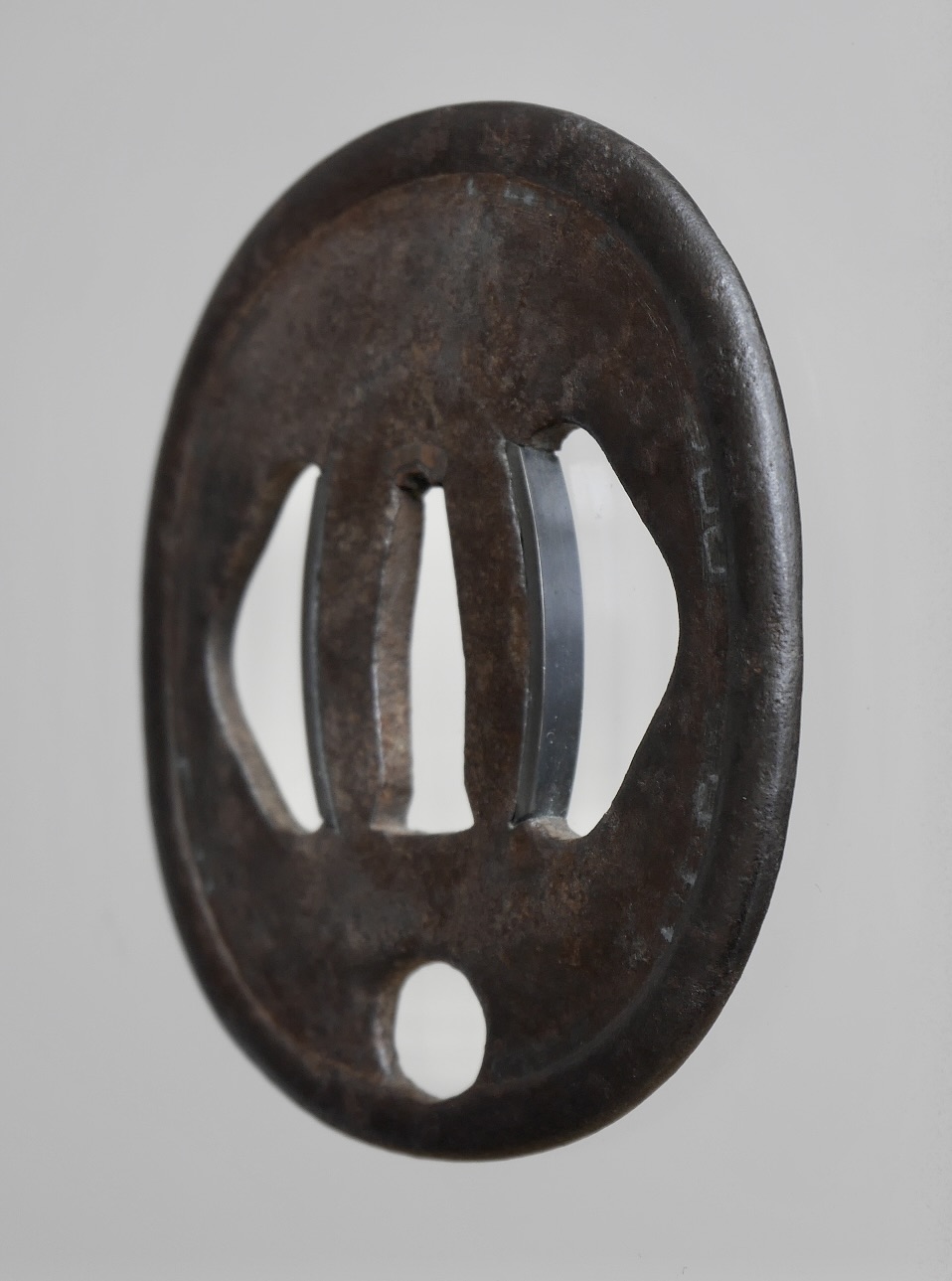
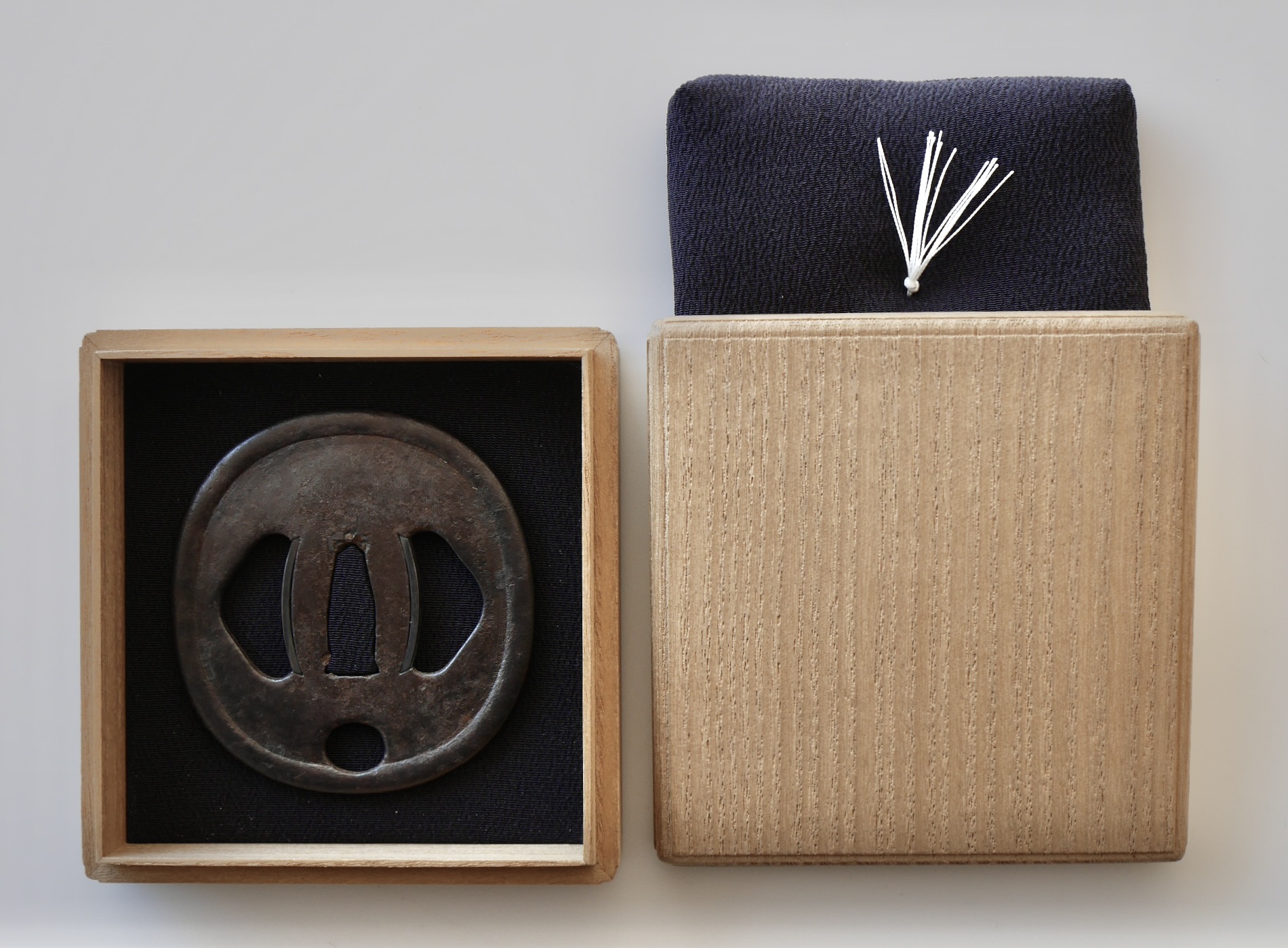
This is an unsigned tsuba attributed to the 2nd Generation Shimizu Jingo, a prominent tosogu maker of the Edo period. It features an iron ground with a long-oval shape, adorned with silver nunome-zogan depicting a thunder pattern. The tsuba is accompanied by an NBTHK Hozon Tosogu certificate, attributing it as "Mumei Jingo".
 NihontoWatch
mumei · Shimizu · Edo
Shimizu Jingoro
Edo
Unsigned
Hozon (NBTHK)
Higo · Higo · around 1620-1710
1 piece on the market now
Higo · Higo
23 pieces on the market now
The Shimizu school is one of the four mainline houses -- together with Hayashi, Hirata, and Nishigaki -- that represent the orthodox tradition of Higo kinko (肥後金工). Its founder, the first-generation Shimizu Jinbei, is traditionally said to have been a nephew of Hirata Hikozo, and to have studied under him. All four founding masters were retained by the great tea-master and warrior Hosokawa Sansai (Tadaoki) and received his direct guidance. Learn more →
| Smith | Era | Designated |
|---|---|---|
| Jingo甚五 | — | 14 |
| Nagatsugu永次 | 1691-1777 | 0 |
| Jingoro甚五郎 | 1620-1710 | 0 |
| Shigenaga茂永 | 1795-1854 | 0 |
| Jingo甚吾 | — | 0 |
Certifies a genuine fitting worth preserving: a correct signature, or, if unsigned, an identifiable era and school, with recognized artistic and craft value.
The NBTHK (Nihon Bijutsu Tōken Hozon Kyōkai, the Society for the Preservation of Japanese Art Swords) is a public-interest incorporated foundation founded in 1948 and supervised by Japan’s Agency for Cultural Affairs (Bunkachō); it is based at the Japanese Sword Museum in Tokyo. Its expert panels physically examine each submitted work (shinsa) and issue a certificate (kanteishō) ranking it by artistic and historical merit. NBTHK papers are the most widely recognized standard of authentication for Japanese swords and fittings.
NBTHK official siteReturns accepted within 7 days of delivery (return shipping paid by customer); items must arrive in original condition; international orders cannot be returned.
This is an unsigned tsuba attributed to the 2nd Generation Shimizu Jingo, a prominent tosogu maker of the Edo period. It features an iron ground with a long-oval shape, adorned with silver nunome-zogan depicting a thunder pattern. The tsuba is accompanied by an NBTHK Hozon Tosogu certificate, attributing it as "Mumei Jingo".
NihontoWatchmumei · Shimizu · Edo
Shimizu Jingoro
Edo
Unsigned
Hozon (NBTHK)
Higo · Higo · around 1620-1710
1 piece on the market now
Higo · Higo
23 pieces on the market now
The Shimizu school is one of the four mainline houses -- together with Hayashi, Hirata, and Nishigaki -- that represent the orthodox tradition of Higo kinko (肥後金工). Its founder, the first-generation Shimizu Jinbei, is traditionally said to have been a nephew of Hirata Hikozo, and to have studied under him. All four founding masters were retained by the great tea-master and warrior Hosokawa Sansai (Tadaoki) and received his direct guidance. Learn more →
| Smith | Era | Designated |
|---|---|---|
| Jingo甚五 | — | 14 |
| Nagatsugu永次 | 1691-1777 | 0 |
| Jingoro甚五郎 | 1620-1710 | 0 |
| Shigenaga茂永 | 1795-1854 | 0 |
| Jingo甚吾 | — | 0 |
Certifies a genuine fitting worth preserving: a correct signature, or, if unsigned, an identifiable era and school, with recognized artistic and craft value.
The NBTHK (Nihon Bijutsu Tōken Hozon Kyōkai, the Society for the Preservation of Japanese Art Swords) is a public-interest incorporated foundation founded in 1948 and supervised by Japan’s Agency for Cultural Affairs (Bunkachō); it is based at the Japanese Sword Museum in Tokyo. Its expert panels physically examine each submitted work (shinsa) and issue a certificate (kanteishō) ranking it by artistic and historical merit. NBTHK papers are the most widely recognized standard of authentication for Japanese swords and fittings.
NBTHK official siteReturns accepted within 7 days of delivery (return shipping paid by customer); items must arrive in original condition; international orders cannot be returned.