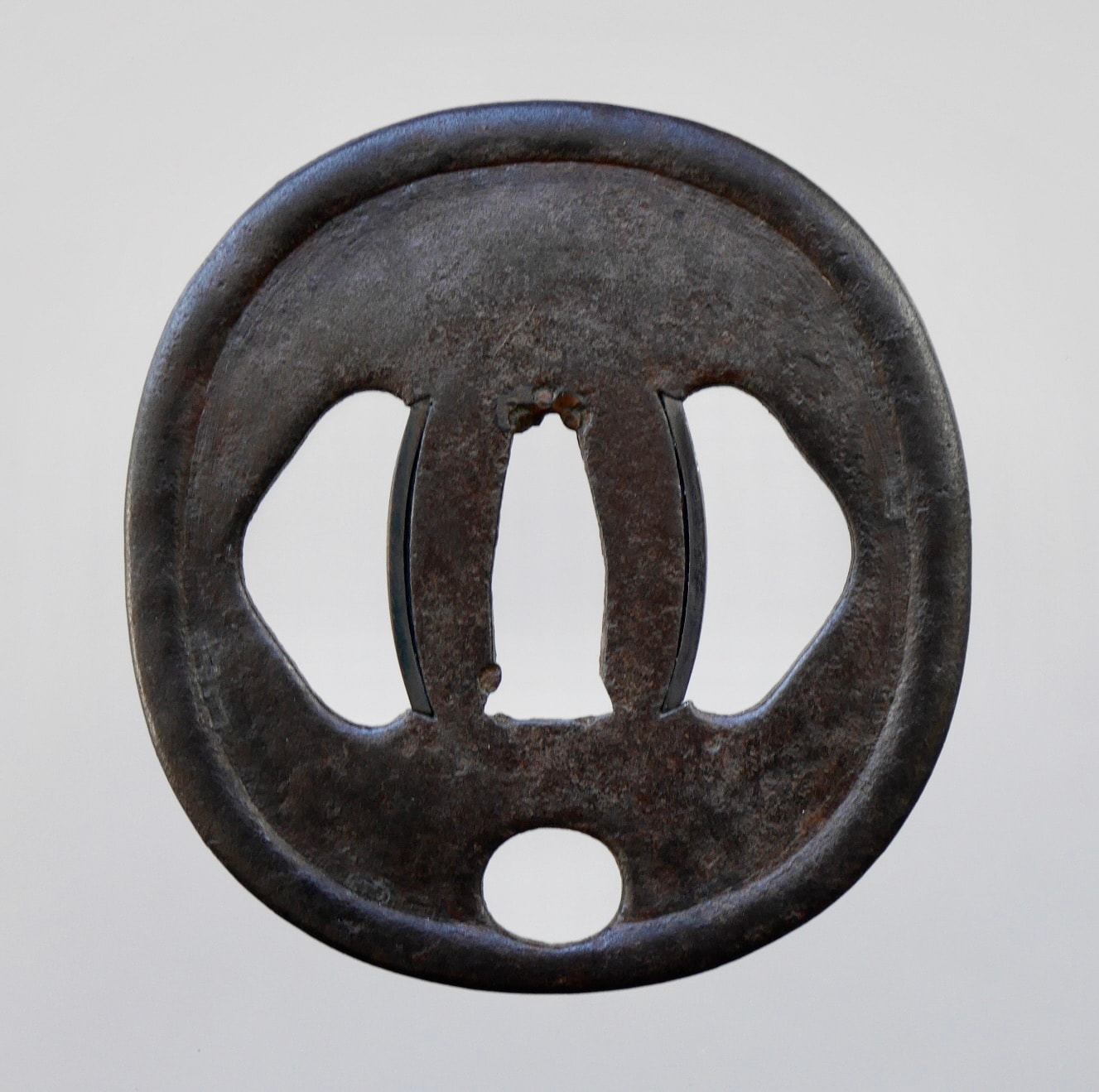
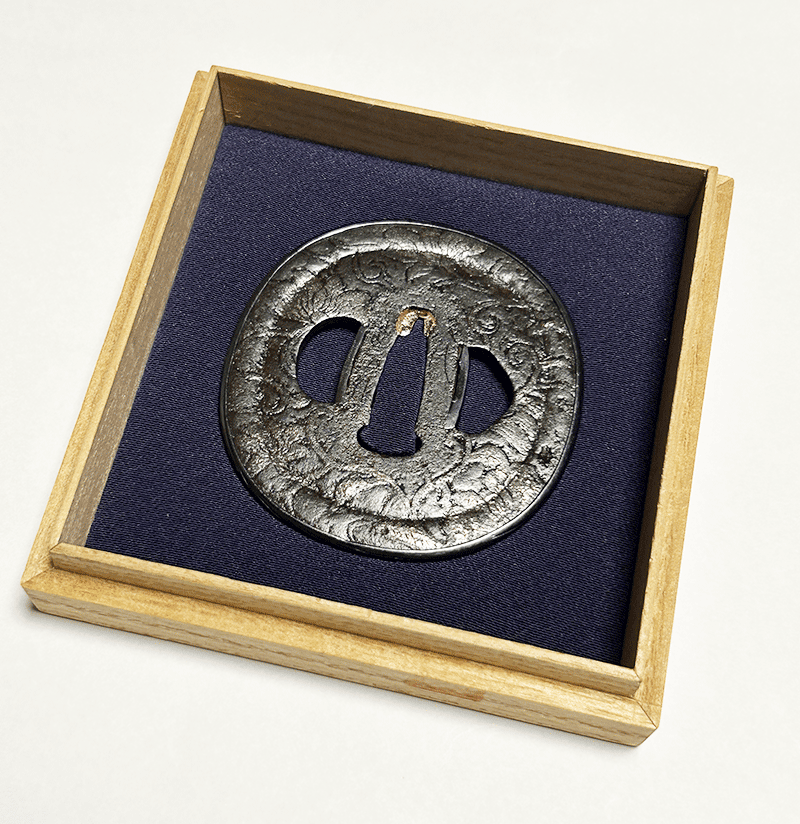
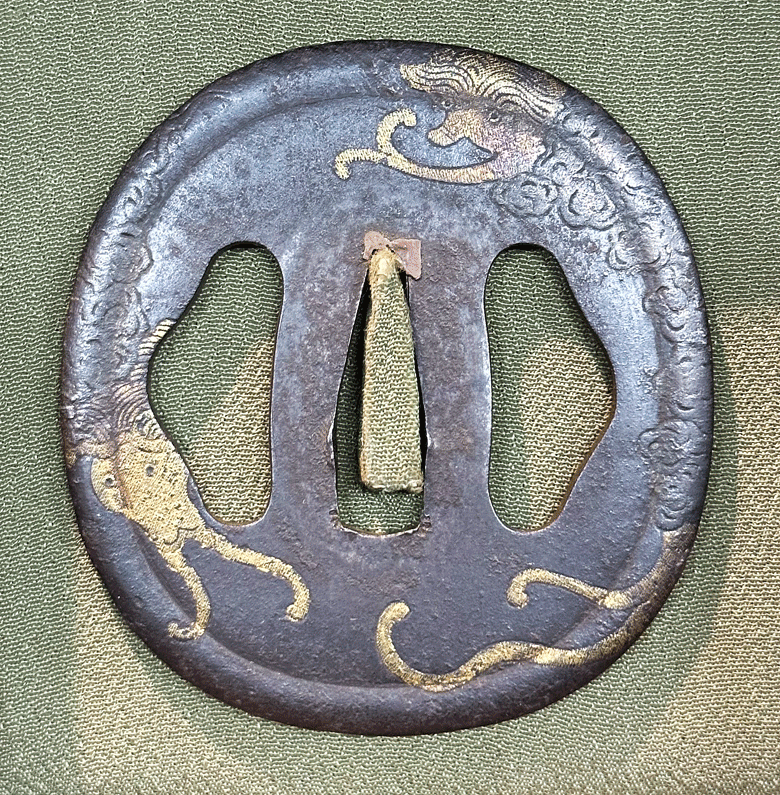
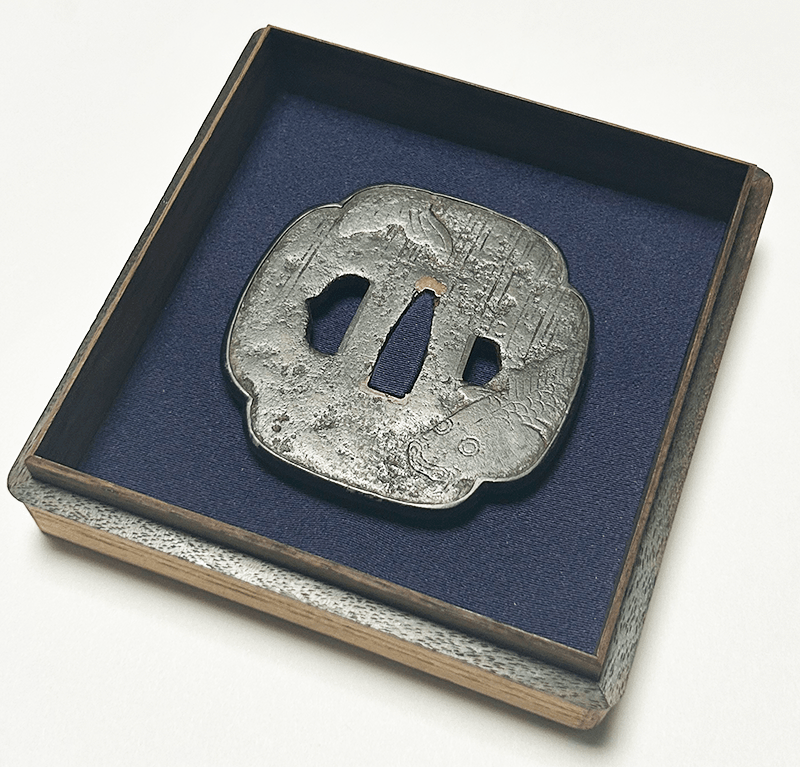
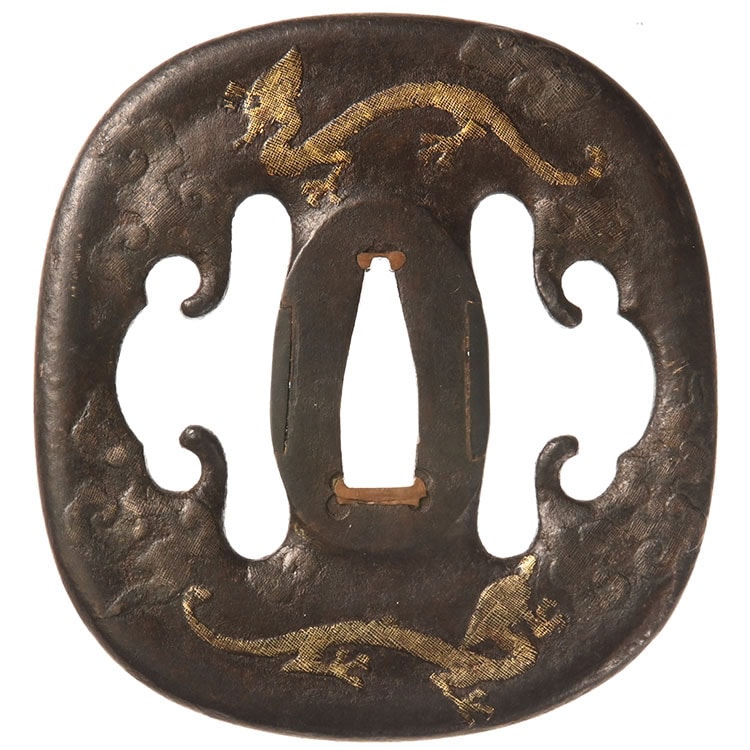
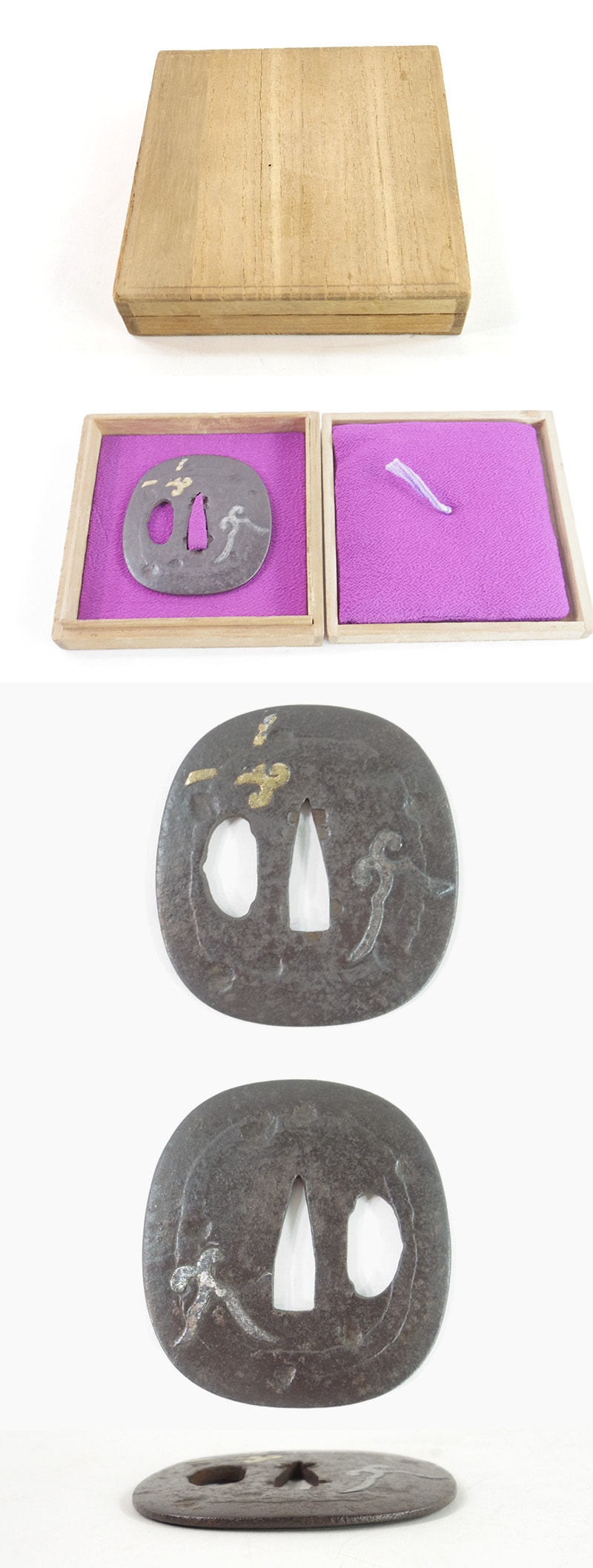
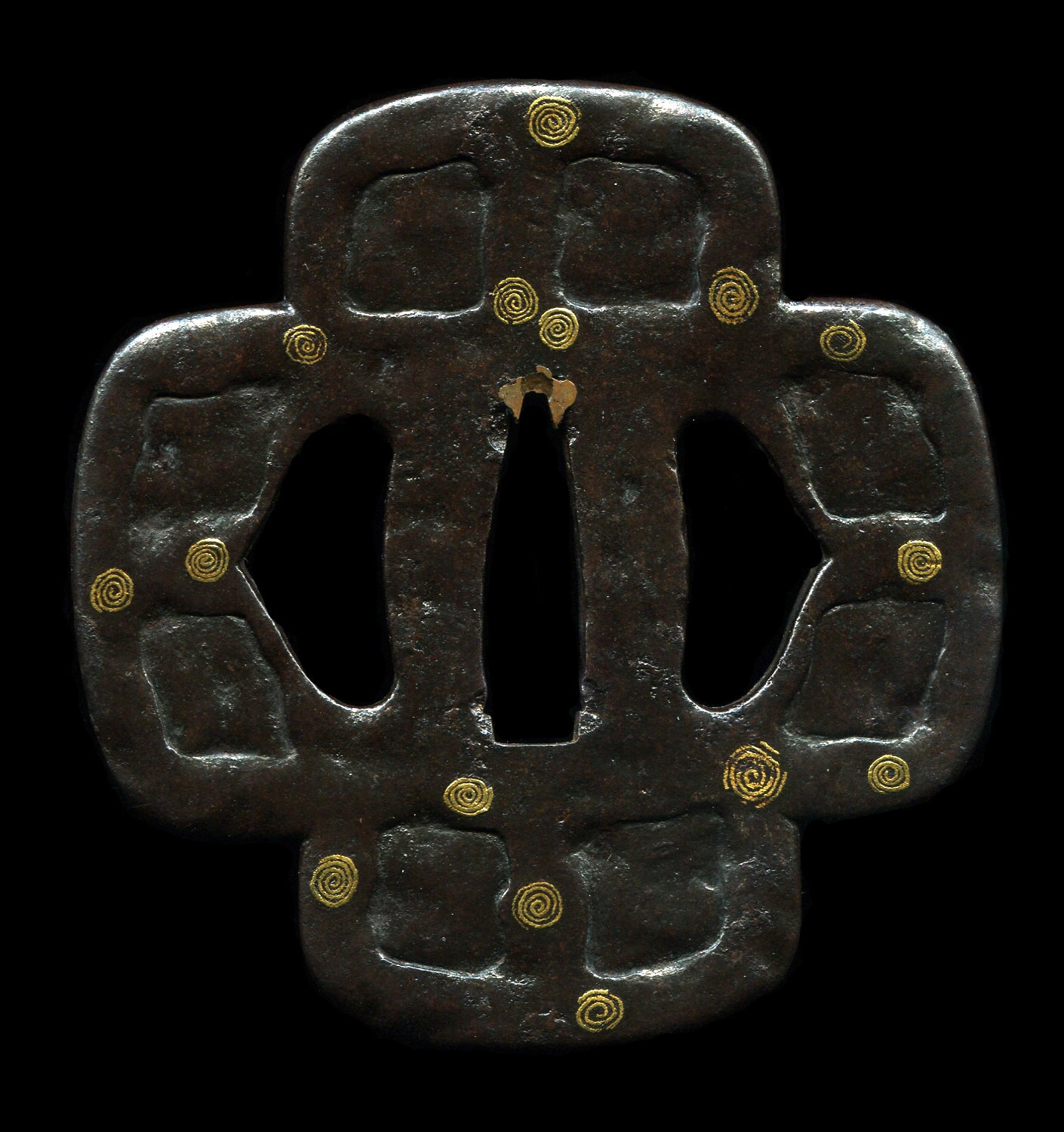
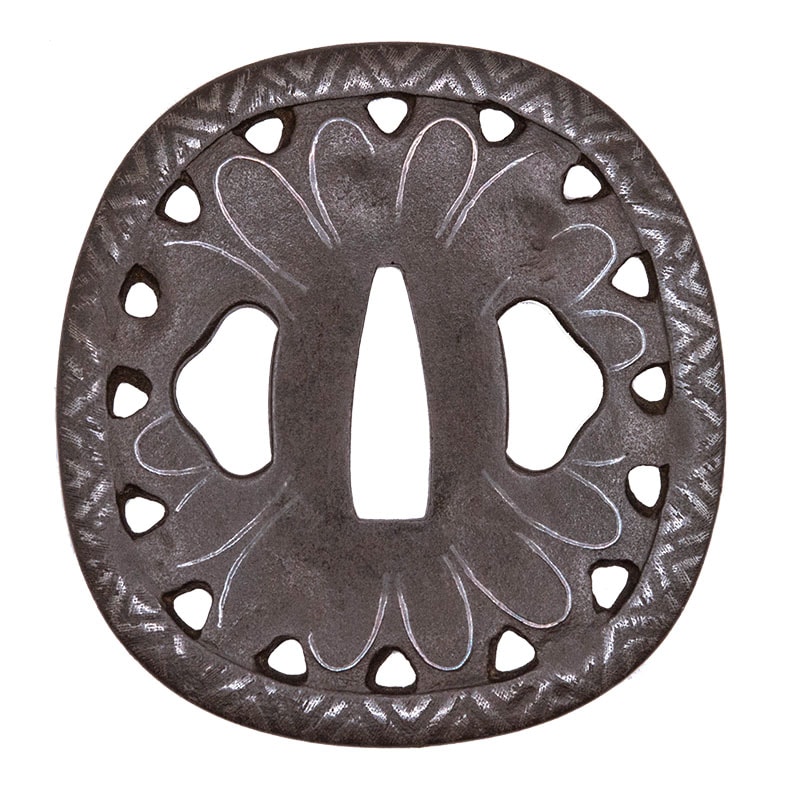
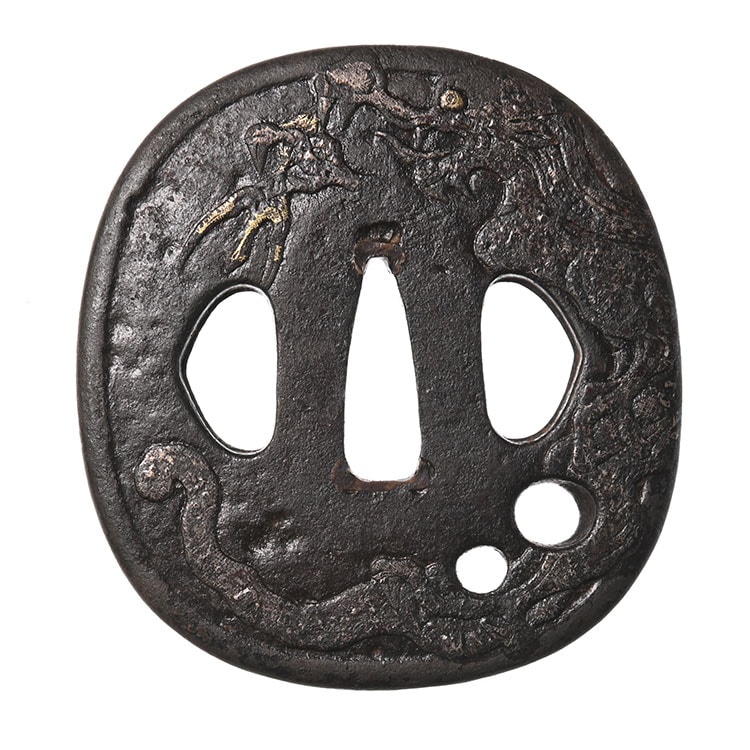
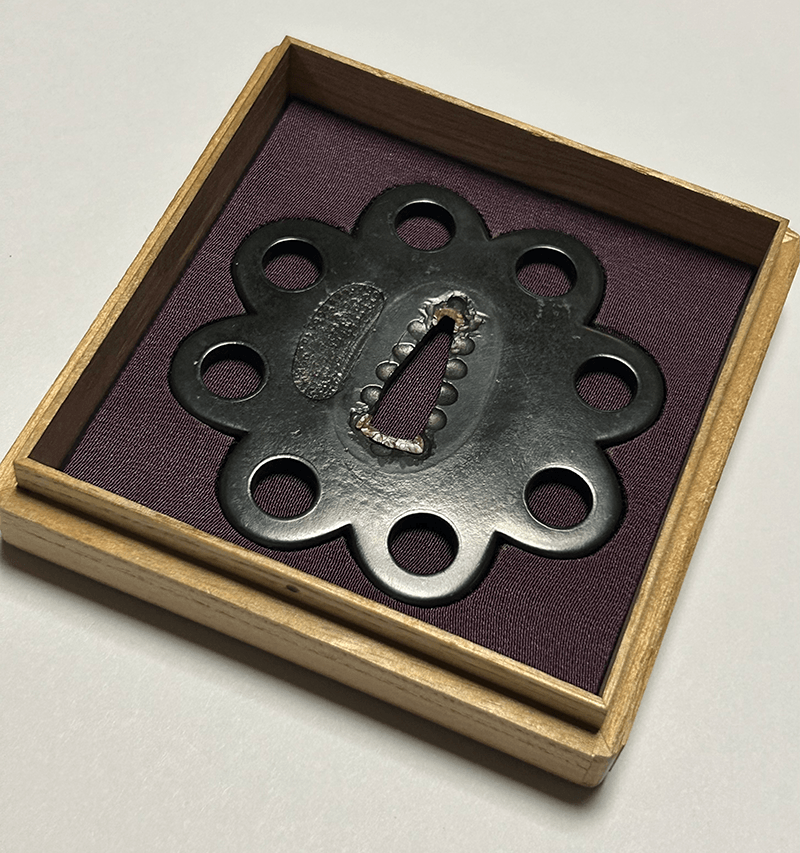
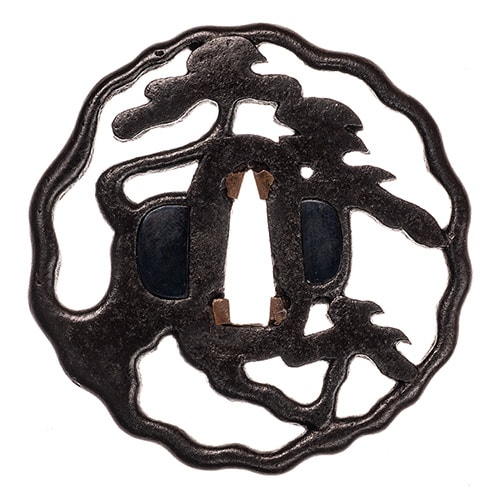
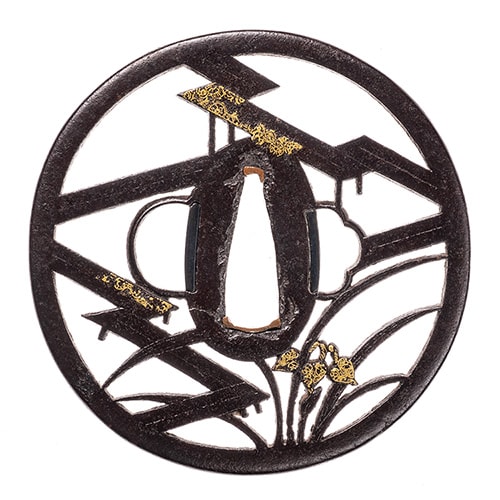
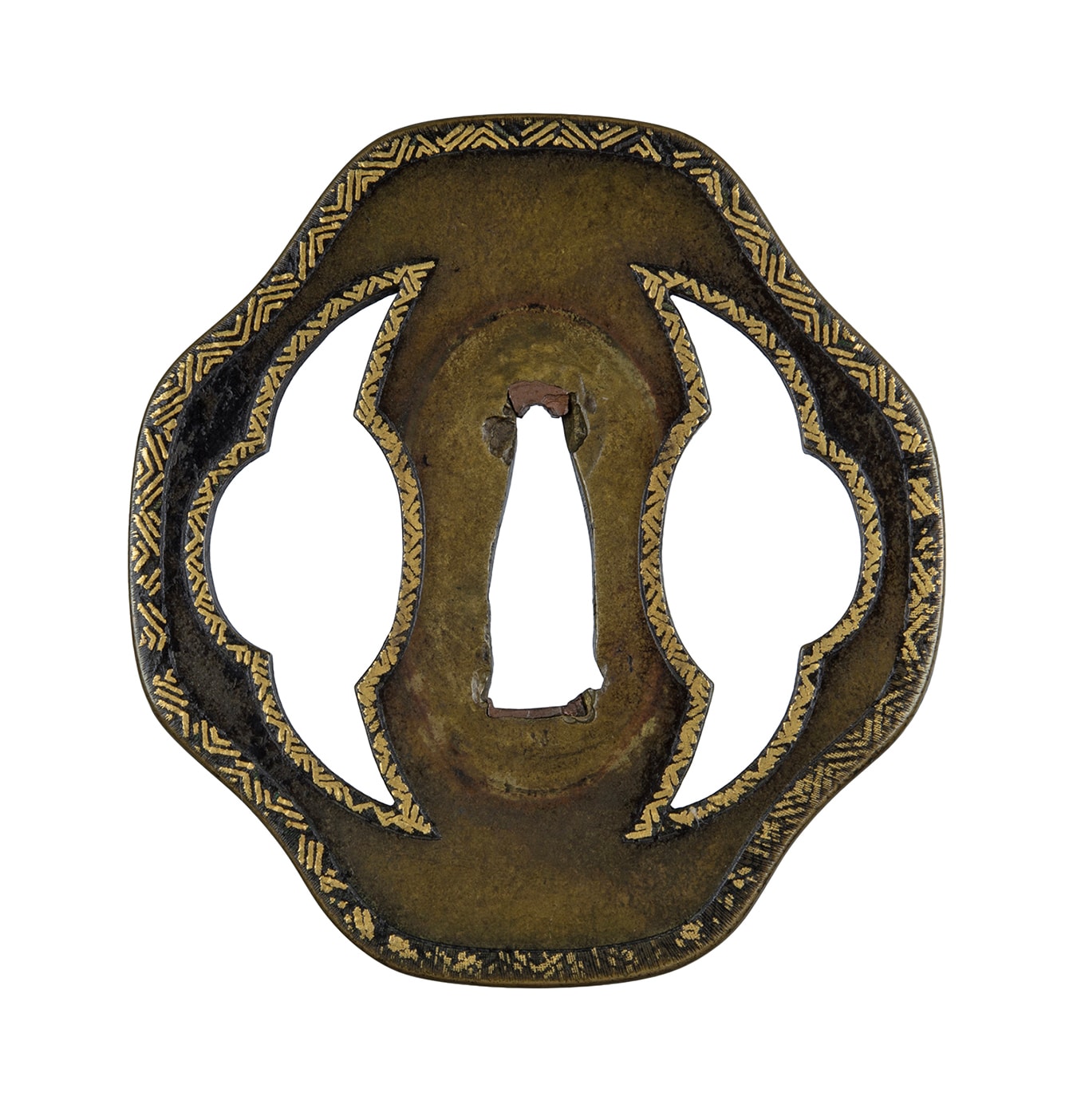
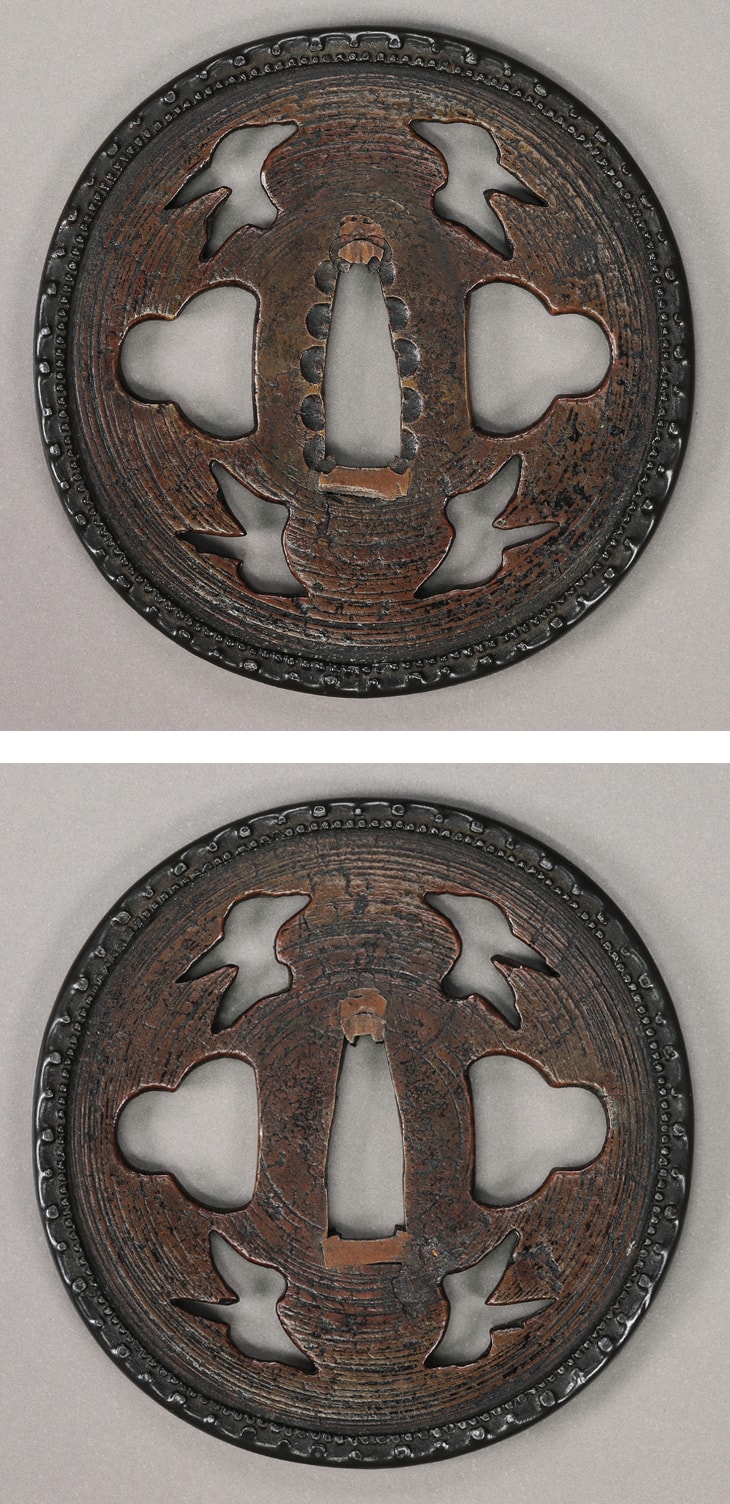
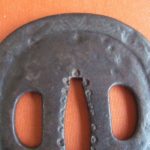
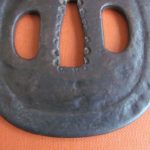
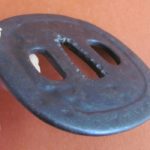
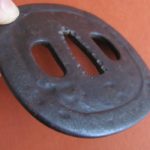
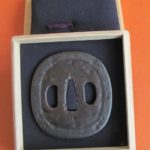
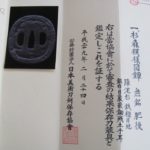
Iron tsuba with silver inlay papered to Nidai Jingo (2nd Generation). The raised rim is silver nunome hira-zogan in an ayasugi pattern. The plate is extensively worked with a hammer and is in exceptional condition.
 NihontoWatch
Shimizu Jingoro
Edo
Higo
Hozon (NBTHK)
Higo · Higo · around 1620-1710
1 piece on the market now
Higo · Higo
23 pieces on the market now
The Shimizu school is one of the four mainline houses -- together with Hayashi, Hirata, and Nishigaki -- that represent the orthodox tradition of Higo kinko (肥後金工). Its founder, the first-generation Shimizu Jinbei, is traditionally said to have been a nephew of Hirata Hikozo, and to have studied under him. All four founding masters were retained by the great tea-master and warrior Hosokawa Sansai (Tadaoki) and received his direct guidance. Learn more →
| Smith | Era | Designated |
|---|---|---|
| Jingo甚五 | — | 14 |
| Nagatsugu永次 | 1691-1777 | 0 |
| Jingoro甚五郎 | 1620-1710 | 0 |
| Shigenaga茂永 | 1795-1854 | 0 |
| Jingo甚吾 | — | 0 |
Certifies a genuine fitting worth preserving: a correct signature, or, if unsigned, an identifiable era and school, with recognized artistic and craft value.
The NBTHK (Nihon Bijutsu Tōken Hozon Kyōkai, the Society for the Preservation of Japanese Art Swords) is a public-interest incorporated foundation founded in 1948 and supervised by Japan’s Agency for Cultural Affairs (Bunkachō); it is based at the Japanese Sword Museum in Tokyo. Its expert panels physically examine each submitted work (shinsa) and issue a certificate (kanteishō) ranking it by artistic and historical merit. NBTHK papers are the most widely recognized standard of authentication for Japanese swords and fittings.
NBTHK official site3-day return window from receipt.
Iron tsuba with silver inlay papered to Nidai Jingo (2nd Generation). The raised rim is silver nunome hira-zogan in an ayasugi pattern. The plate is extensively worked with a hammer and is in exceptional condition.
NihontoWatchShimizu Jingoro
Edo
Higo
Hozon (NBTHK)
Higo · Higo · around 1620-1710
1 piece on the market now
Higo · Higo
23 pieces on the market now
The Shimizu school is one of the four mainline houses -- together with Hayashi, Hirata, and Nishigaki -- that represent the orthodox tradition of Higo kinko (肥後金工). Its founder, the first-generation Shimizu Jinbei, is traditionally said to have been a nephew of Hirata Hikozo, and to have studied under him. All four founding masters were retained by the great tea-master and warrior Hosokawa Sansai (Tadaoki) and received his direct guidance. Learn more →
| Smith | Era | Designated |
|---|---|---|
| Jingo甚五 | — | 14 |
| Nagatsugu永次 | 1691-1777 | 0 |
| Jingoro甚五郎 | 1620-1710 | 0 |
| Shigenaga茂永 | 1795-1854 | 0 |
| Jingo甚吾 | — | 0 |
Certifies a genuine fitting worth preserving: a correct signature, or, if unsigned, an identifiable era and school, with recognized artistic and craft value.
The NBTHK (Nihon Bijutsu Tōken Hozon Kyōkai, the Society for the Preservation of Japanese Art Swords) is a public-interest incorporated foundation founded in 1948 and supervised by Japan’s Agency for Cultural Affairs (Bunkachō); it is based at the Japanese Sword Museum in Tokyo. Its expert panels physically examine each submitted work (shinsa) and issue a certificate (kanteishō) ranking it by artistic and historical merit. NBTHK papers are the most widely recognized standard of authentication for Japanese swords and fittings.
NBTHK official site3-day return window from receipt.