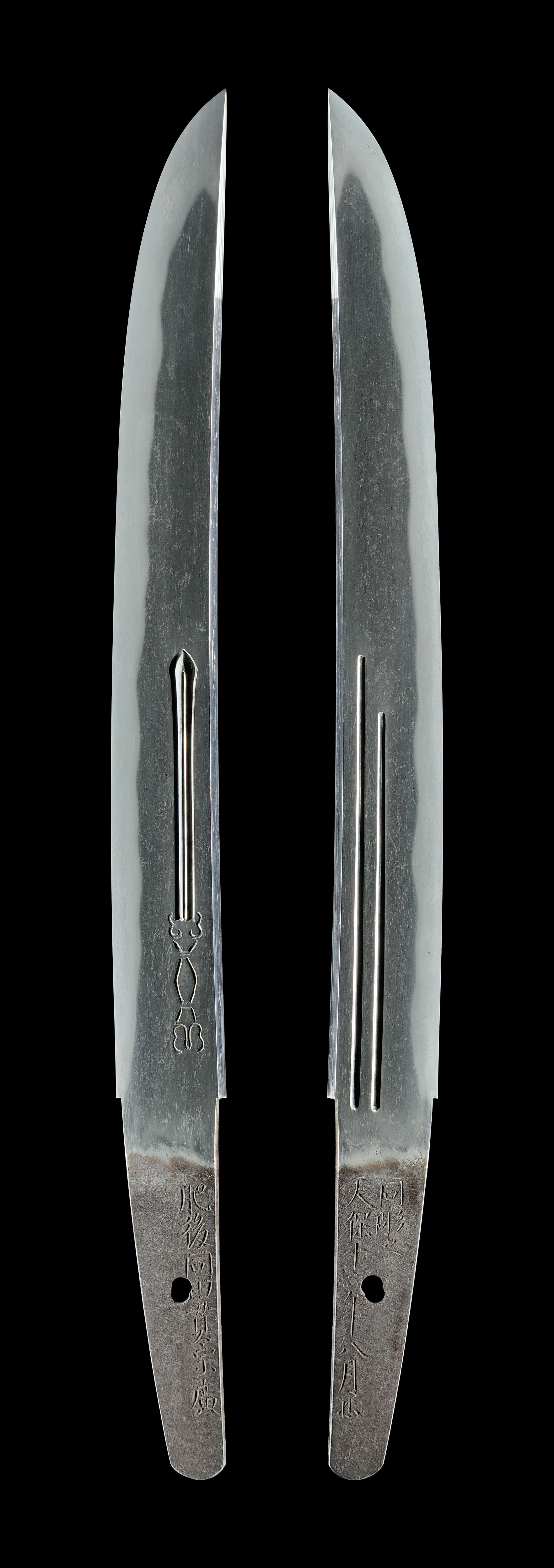
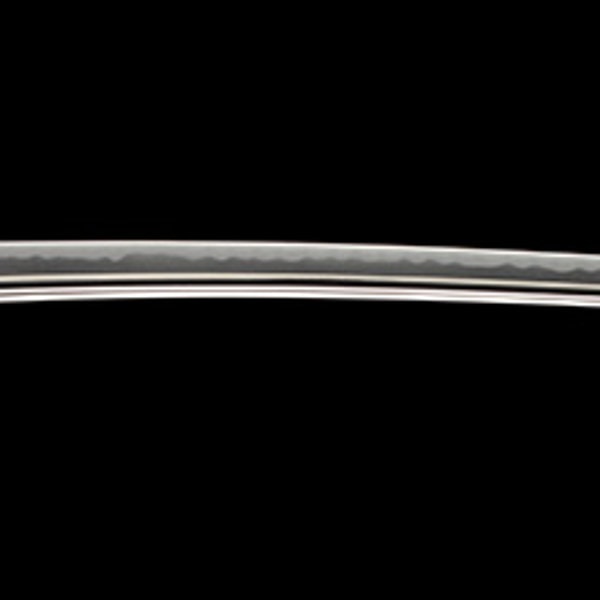
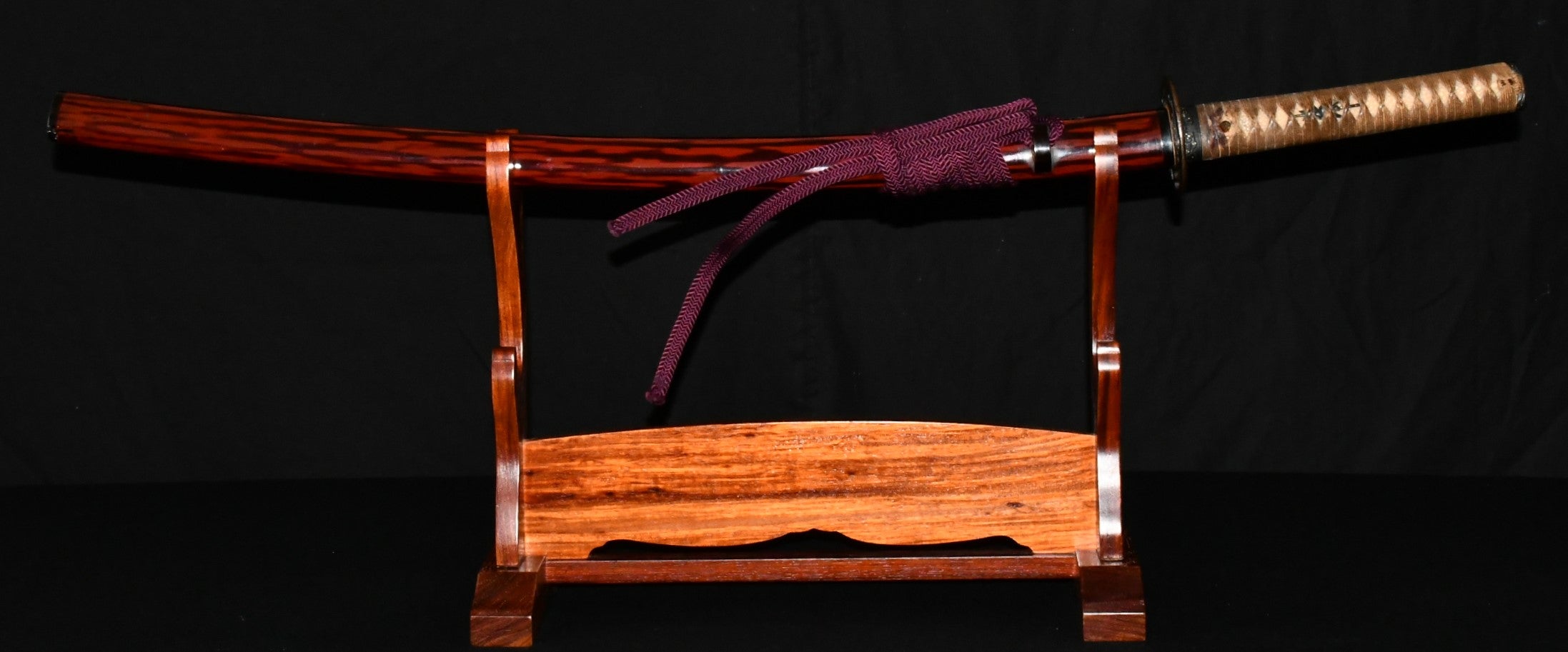
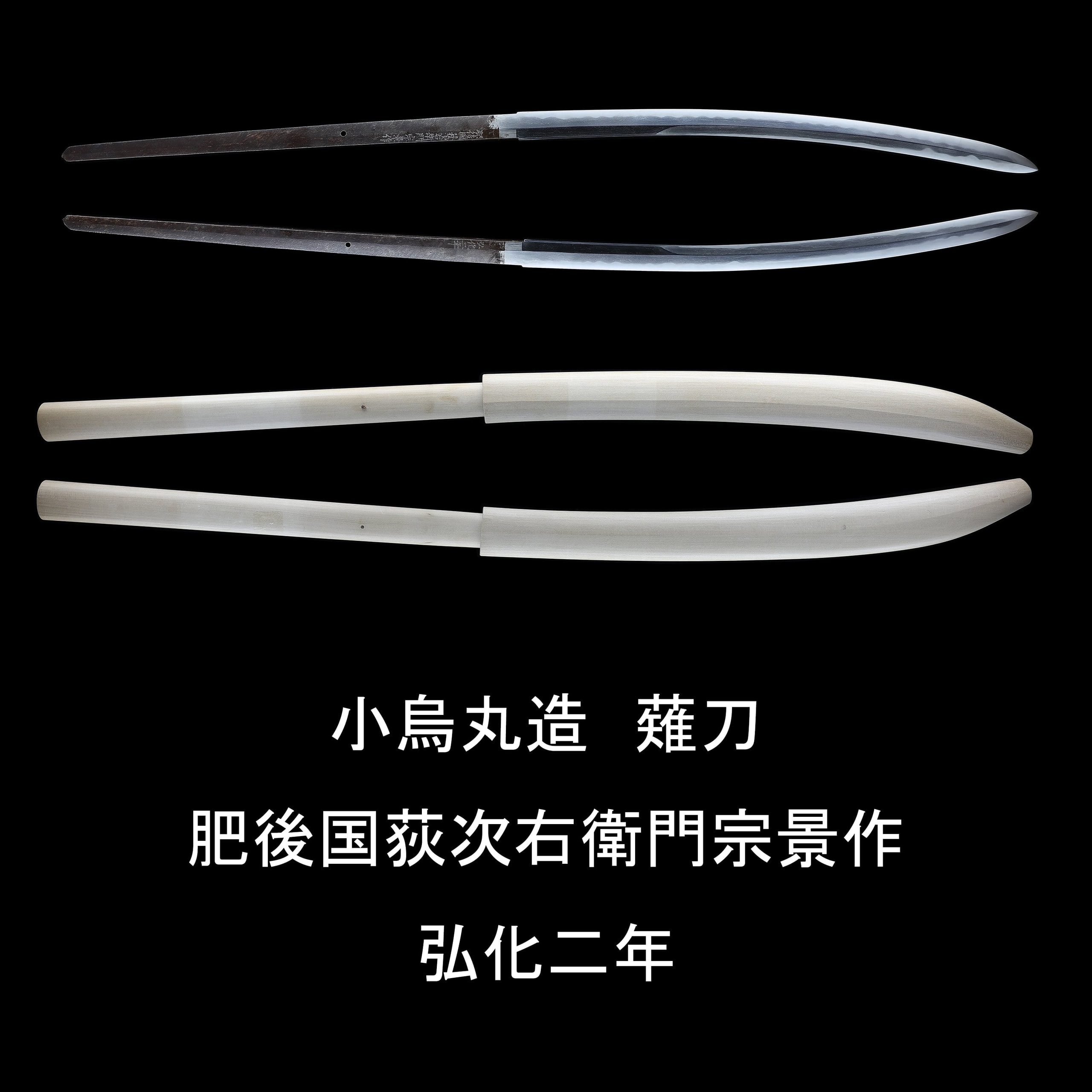
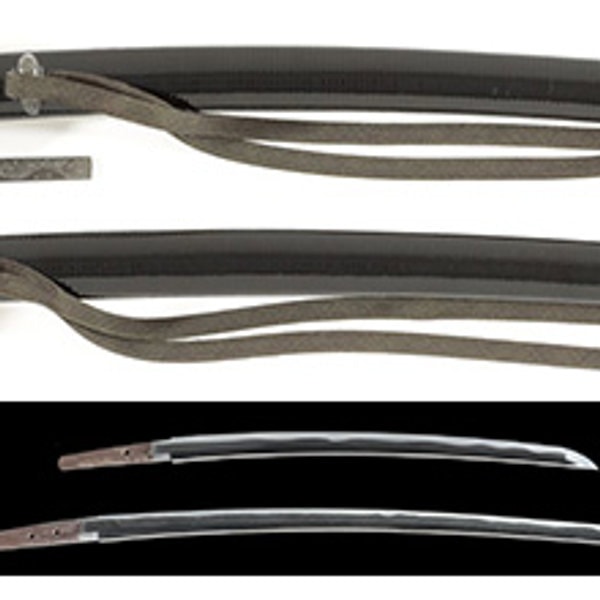
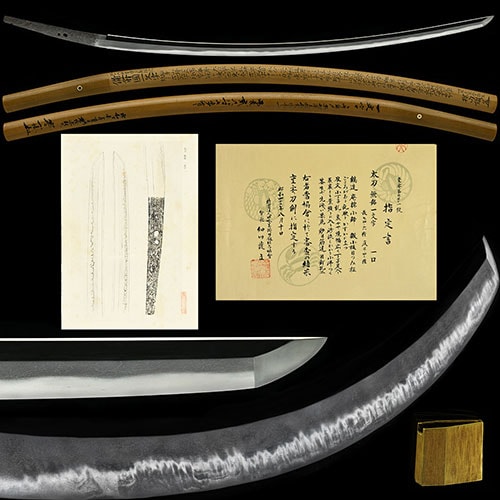
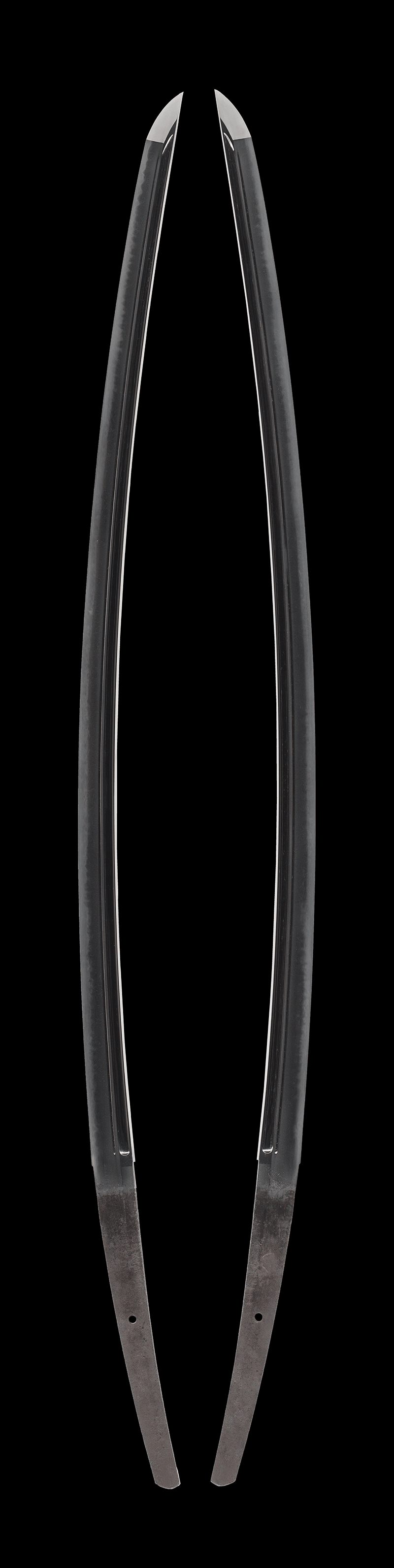
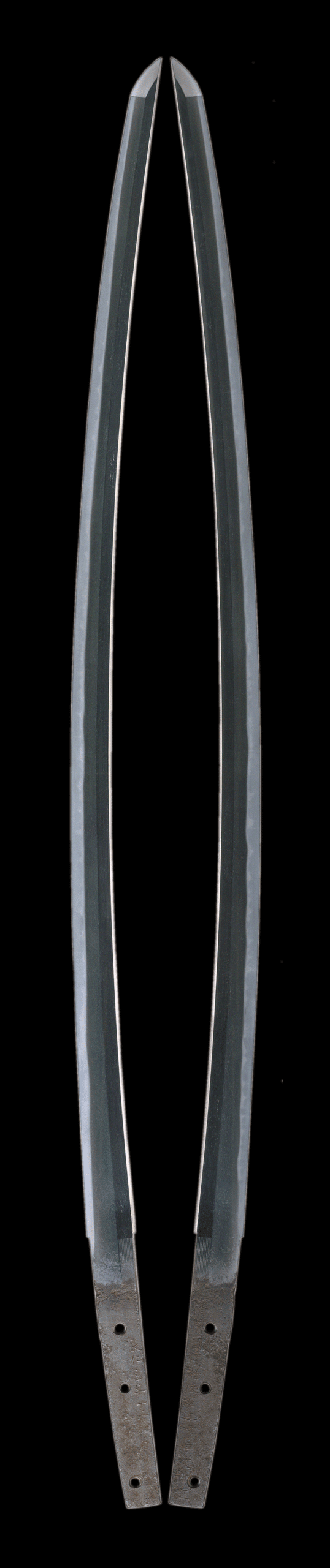
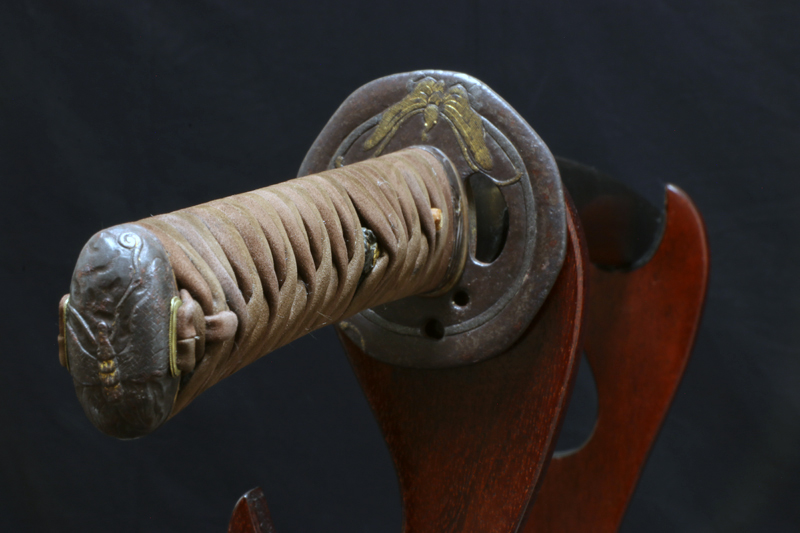
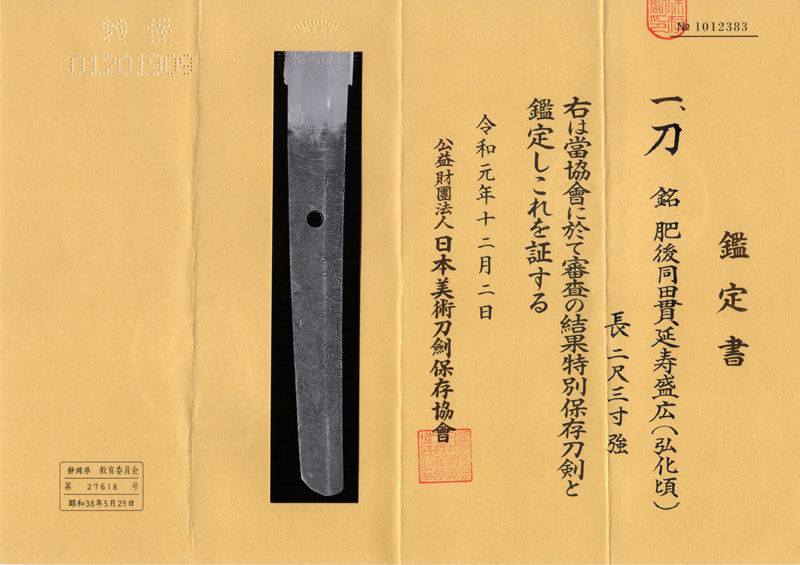
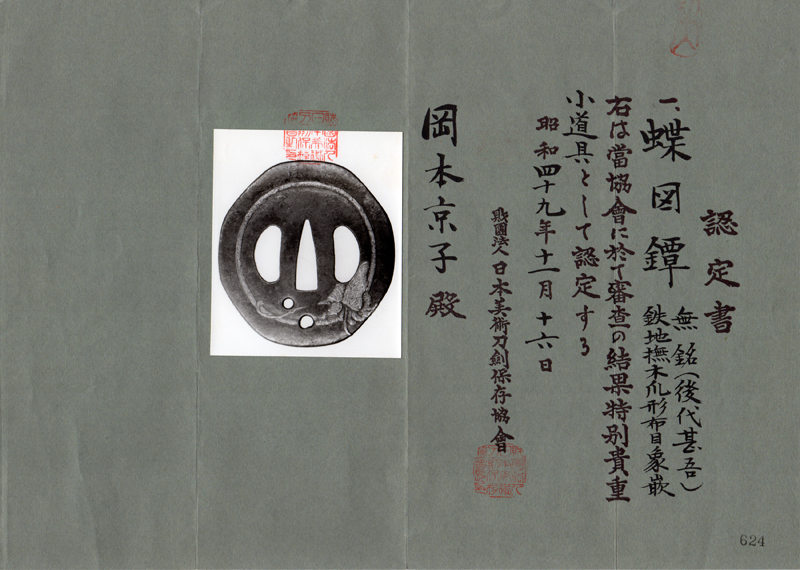
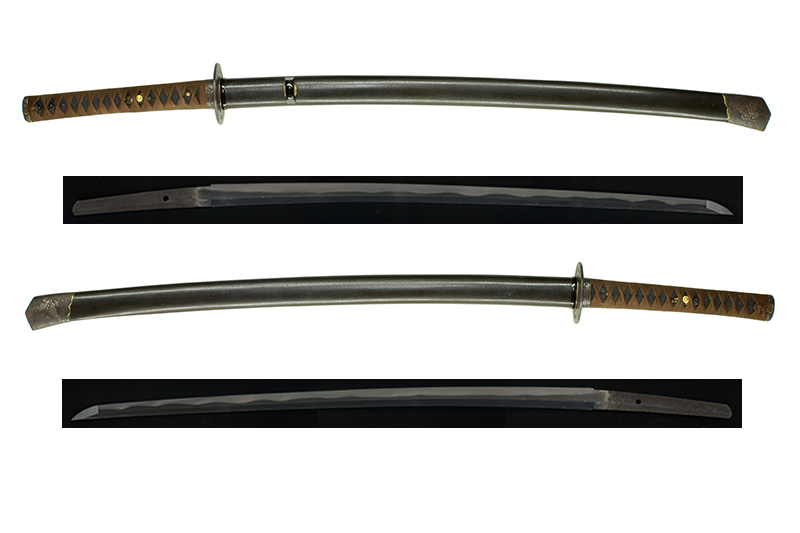
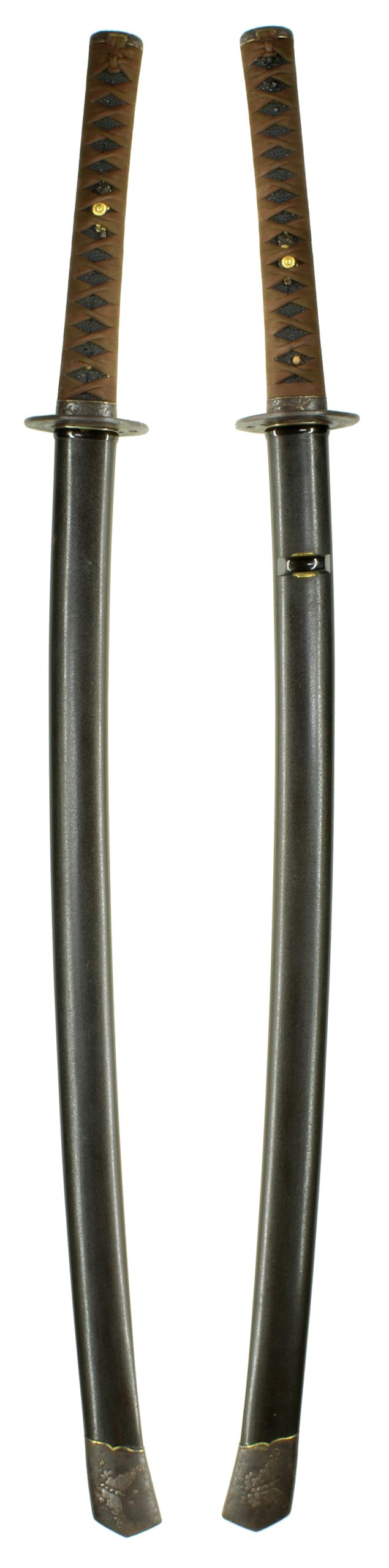
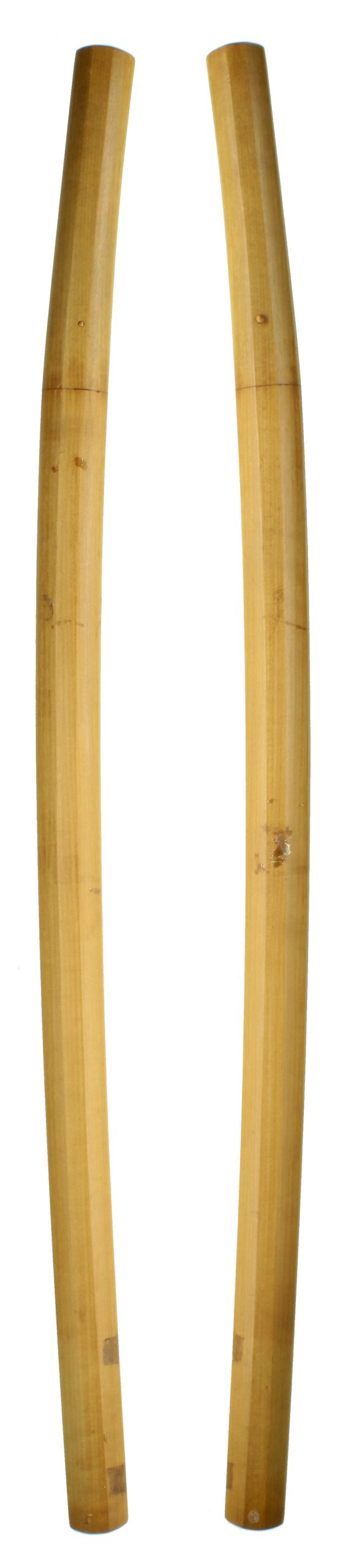
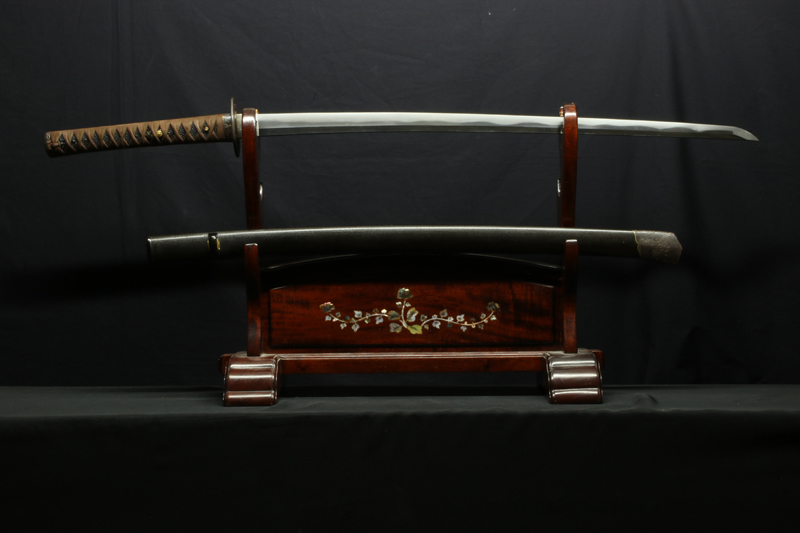
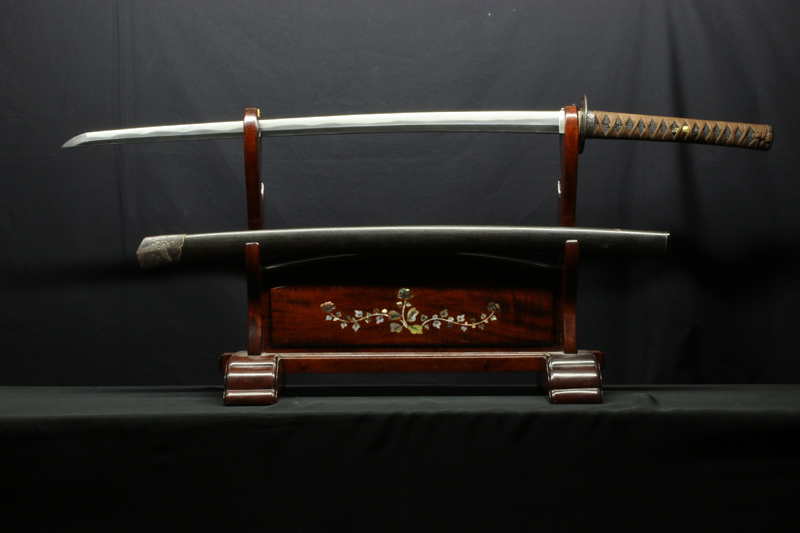
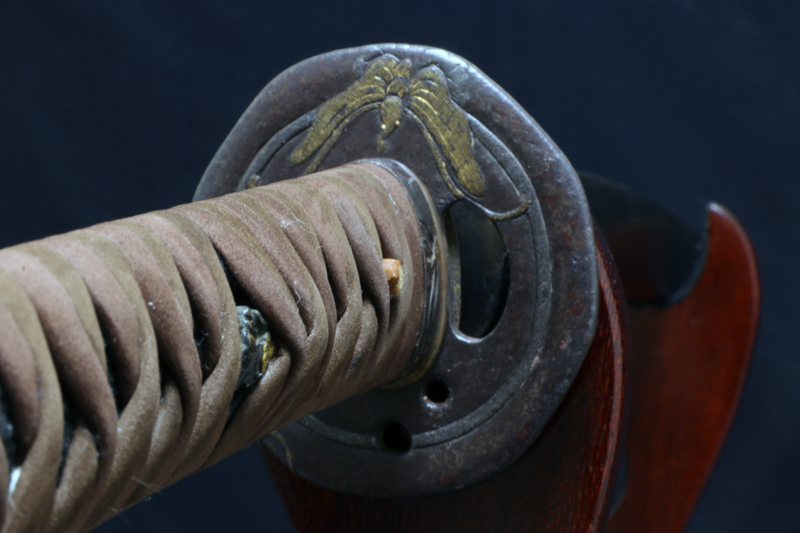
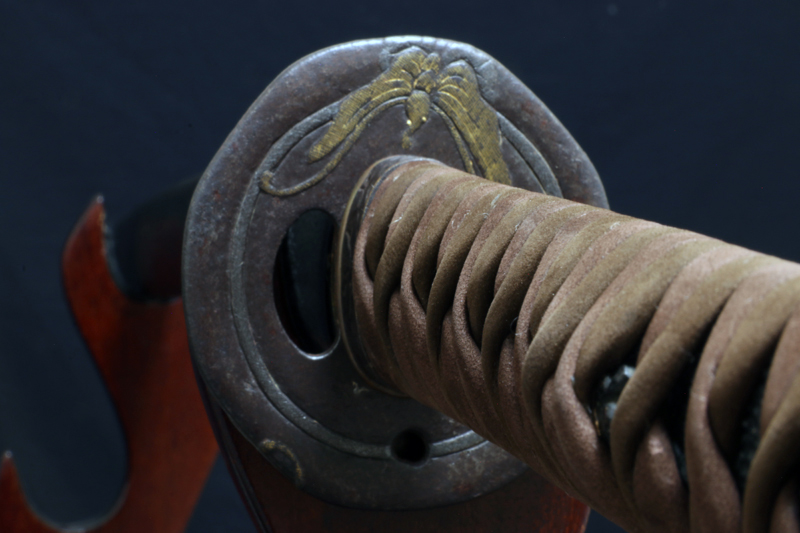
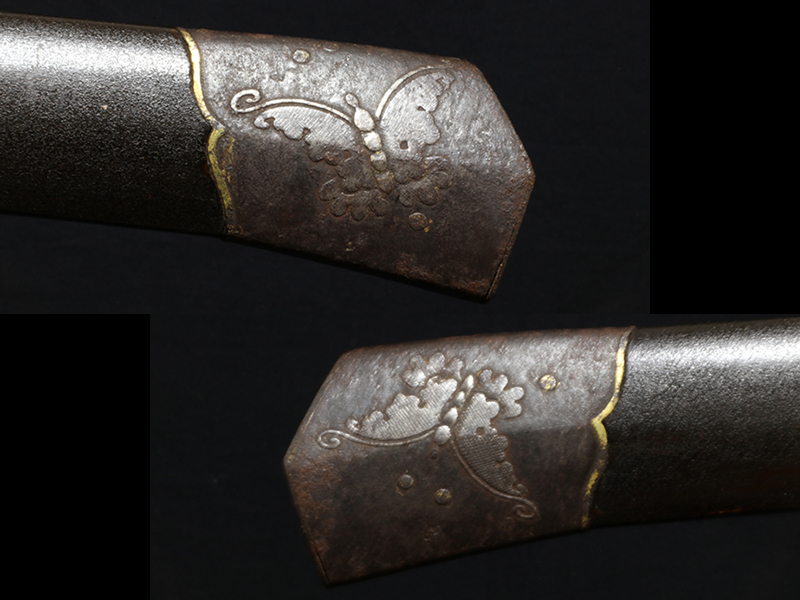
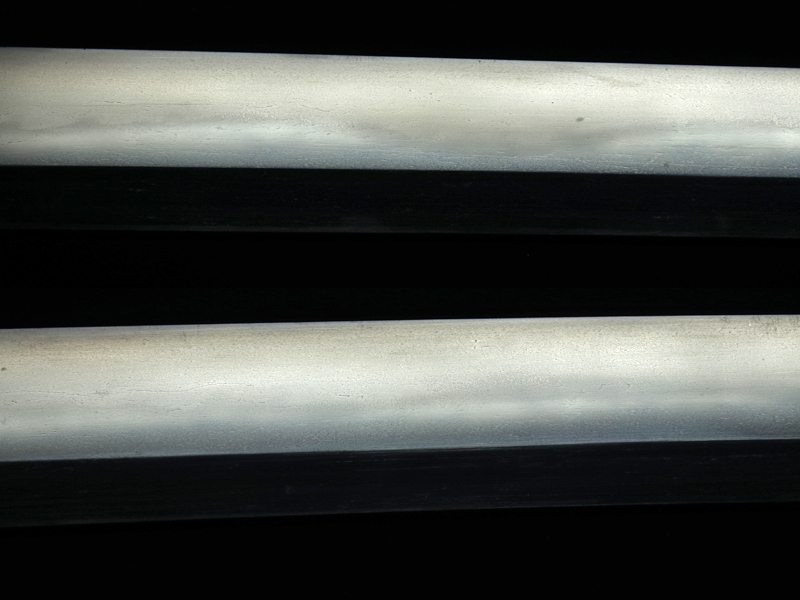
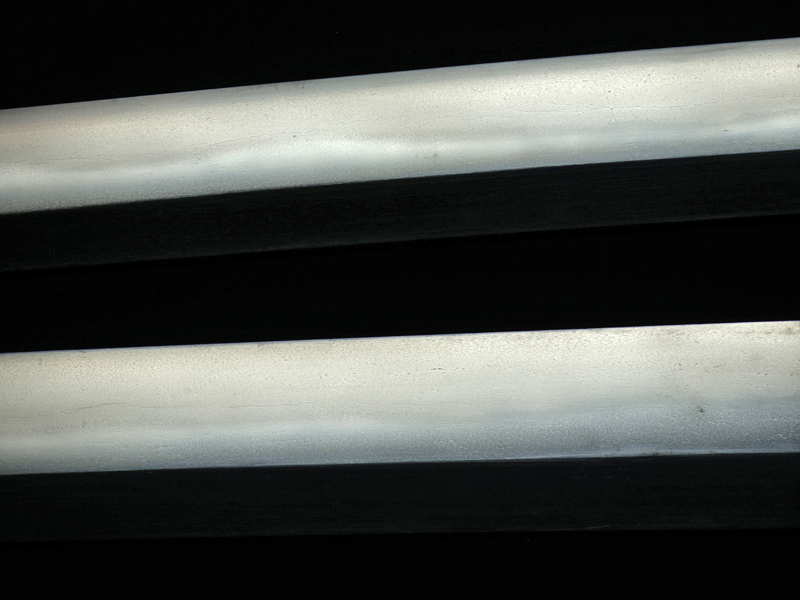
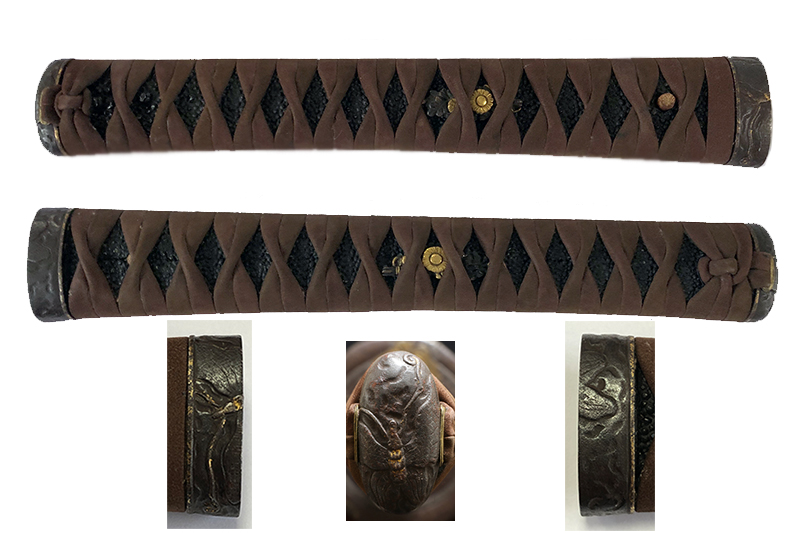
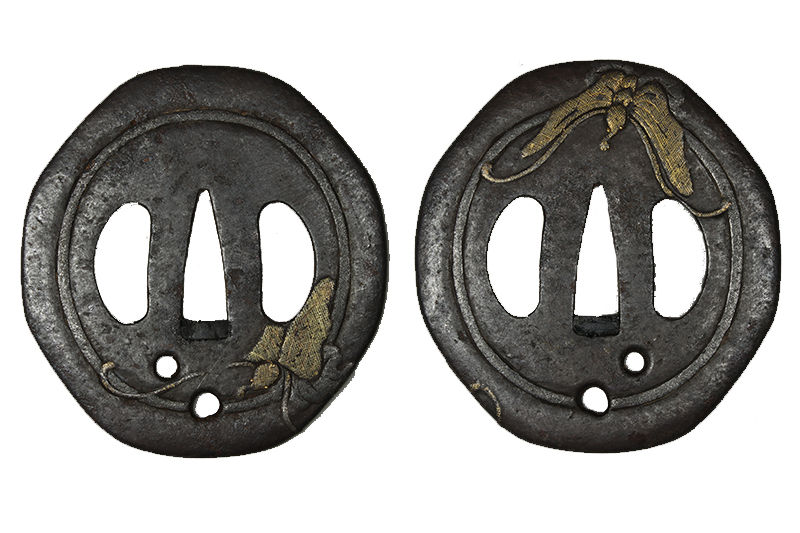
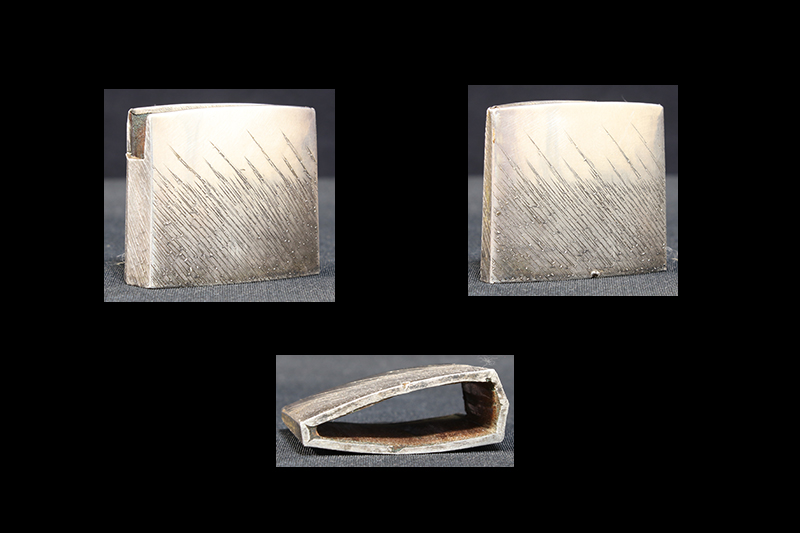
This is a katana by Higo Dotanuki Enju Munehiro, active in the Shin-Shinto period. It features a Higo koshirae and comes with a shirasaya. The blade has a ware-like hamon and is in old polish, but the hada and hamon are visible.
 NihontoWatchBETA
mei · Dotanuki Enju · Tenpo (1830-1844) · nagasa 70cm

Bizen-den · Higo · around 1830-1868
Tōken Taikan top 87%
1 piece on the market now
Bizen-den · Higo
12 pieces on the market now
The Dōtanuki (同田貫) line took shape in Kikuchi District of Higo Province toward the close of the Muromachi period and carried its activity forward into the shintō era, spanning the Momoyama transition into early Edo. Learn more →
| Smith | Era | Designated |
|---|---|---|
| Muneharu宗春 | 1865-1868 | 0 |
| Kunikatsu國勝 | 1558-1570 | 0 |
| Kagemasa景和 | 1596-1615 | 0 |
| Munehiro宗廣 | 1830-1868 | 0 |
| Kozukenosuke上野介 | 1596-1615 | 0 |
A Hozon-certified blade judged to show notably superior workmanship and a better state of preservation. The bar is higher: re-tempered blades and most unsigned Muromachi/Edo works are excluded.
The NBTHK (Nihon Bijutsu Tōken Hozon Kyōkai, the Society for the Preservation of Japanese Art Swords) is a public-interest incorporated foundation founded in 1948 and supervised by Japan’s Agency for Cultural Affairs (Bunkachō); it is based at the Japanese Sword Museum in Tokyo. Its expert panels physically examine each submitted work (shinsa) and issue a certificate (kanteishō) ranking it by artistic and historical merit. NBTHK papers are the most widely recognized standard of authentication for Japanese swords and fittings.
NBTHK official siteThree-day cooling-off period from receipt for refund or exchange. Return shipping and transfer fees are customer responsibility. Items showing use or condition changes are non-returnable.
This is a katana by Higo Dotanuki Enju Munehiro, active in the Shin-Shinto period. It features a Higo koshirae and comes with a shirasaya. The blade has a ware-like hamon and is in old polish, but the hada and hamon are visible.
NihontoWatchBETAmei · Dotanuki Enju · Tenpo (1830-1844) · nagasa 70cm
Bizen-den · Higo · around 1830-1868
Tōken Taikan top 87%
1 piece on the market now
Bizen-den · Higo
12 pieces on the market now
The Dōtanuki (同田貫) line took shape in Kikuchi District of Higo Province toward the close of the Muromachi period and carried its activity forward into the shintō era, spanning the Momoyama transition into early Edo. Learn more →
| Smith | Era | Designated |
|---|---|---|
| Muneharu宗春 | 1865-1868 | 0 |
| Kunikatsu國勝 | 1558-1570 | 0 |
| Kagemasa景和 | 1596-1615 | 0 |
| Munehiro宗廣 | 1830-1868 | 0 |
| Kozukenosuke上野介 | 1596-1615 | 0 |
A Hozon-certified blade judged to show notably superior workmanship and a better state of preservation. The bar is higher: re-tempered blades and most unsigned Muromachi/Edo works are excluded.
The NBTHK (Nihon Bijutsu Tōken Hozon Kyōkai, the Society for the Preservation of Japanese Art Swords) is a public-interest incorporated foundation founded in 1948 and supervised by Japan’s Agency for Cultural Affairs (Bunkachō); it is based at the Japanese Sword Museum in Tokyo. Its expert panels physically examine each submitted work (shinsa) and issue a certificate (kanteishō) ranking it by artistic and historical merit. NBTHK papers are the most widely recognized standard of authentication for Japanese swords and fittings.
NBTHK official siteThree-day cooling-off period from receipt for refund or exchange. Return shipping and transfer fees are customer responsibility. Items showing use or condition changes are non-returnable.