Hizen swords were a domain enterprise: the Nabeshima sent Tadayoshi to study under Umetada Myōju around 1596, then built a licensed school around him. Nine generations carried its famously consistent konuka-hada work into the Meiji era.
 NihontoWatchNihontoWatch
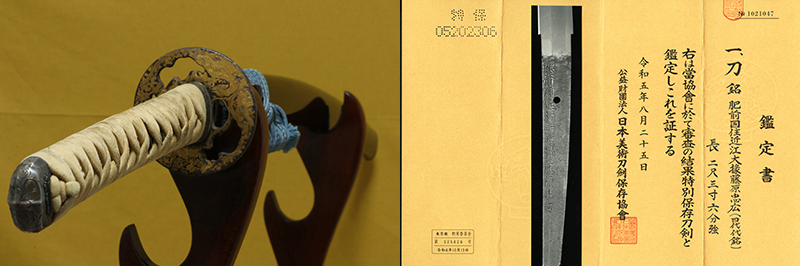
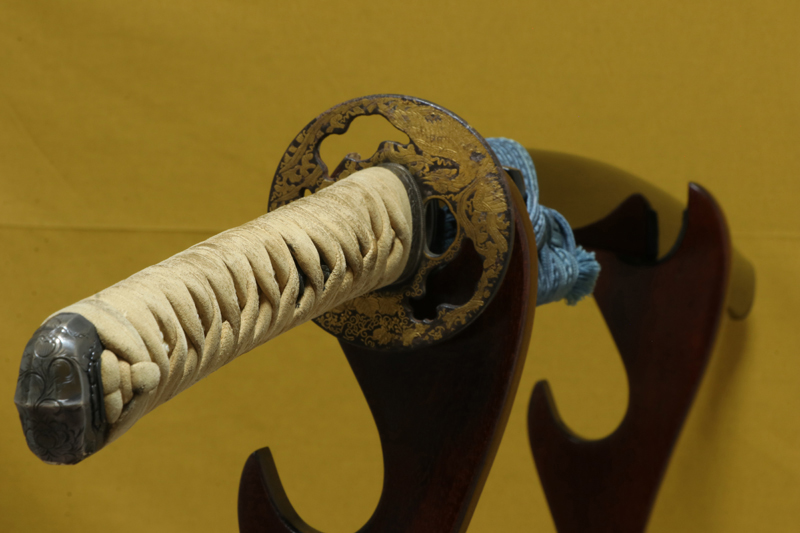
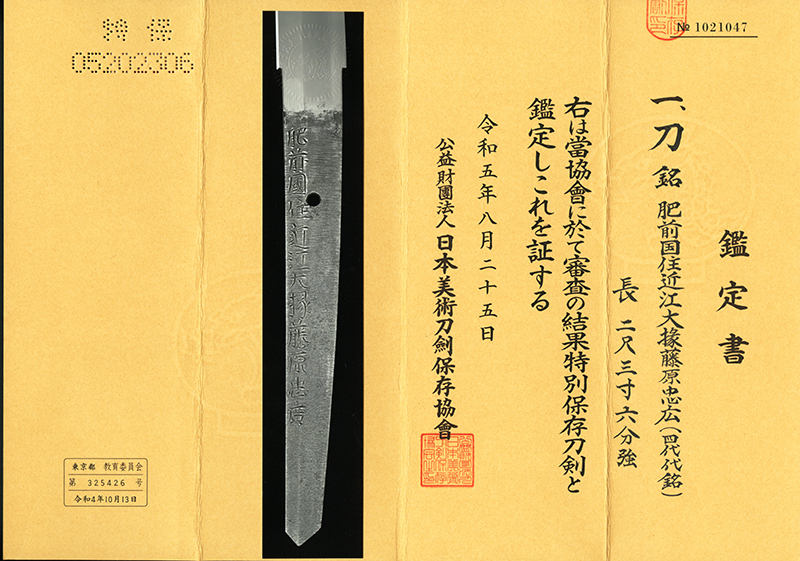
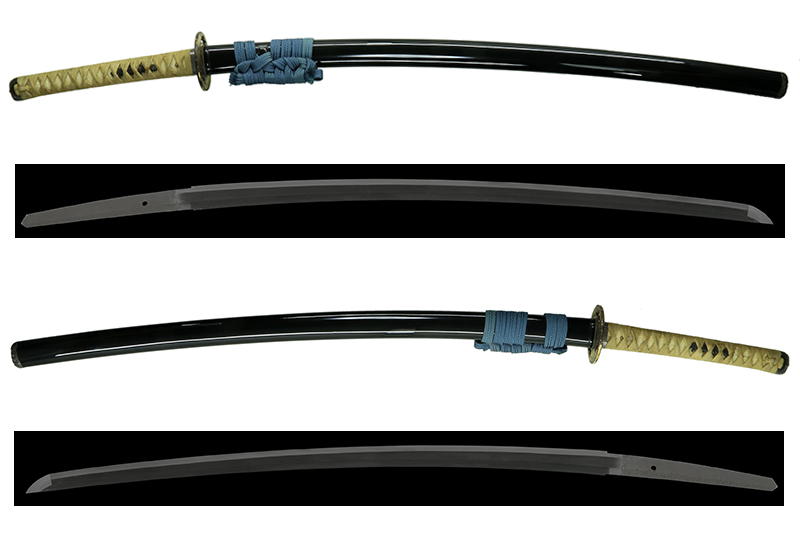
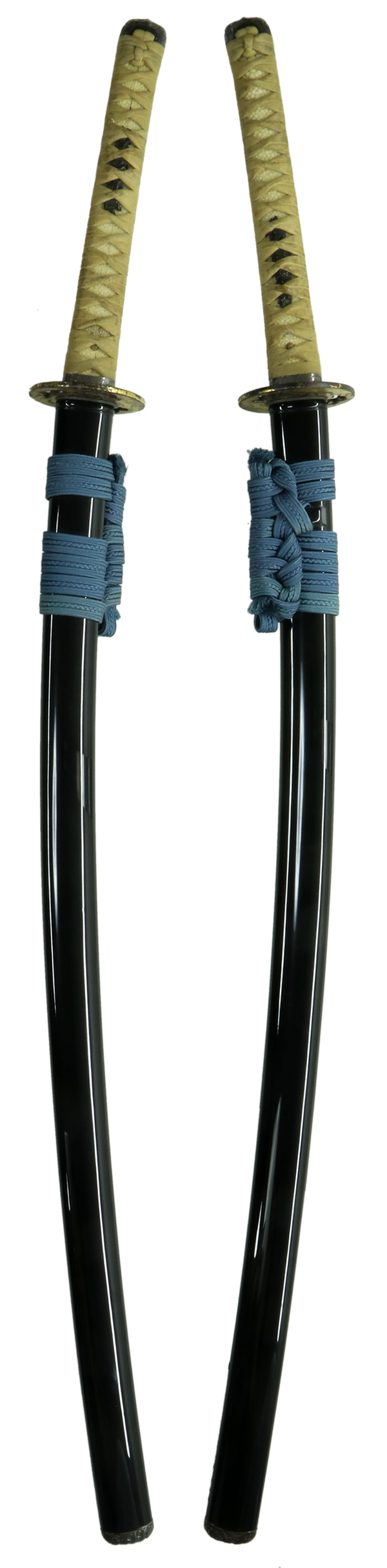
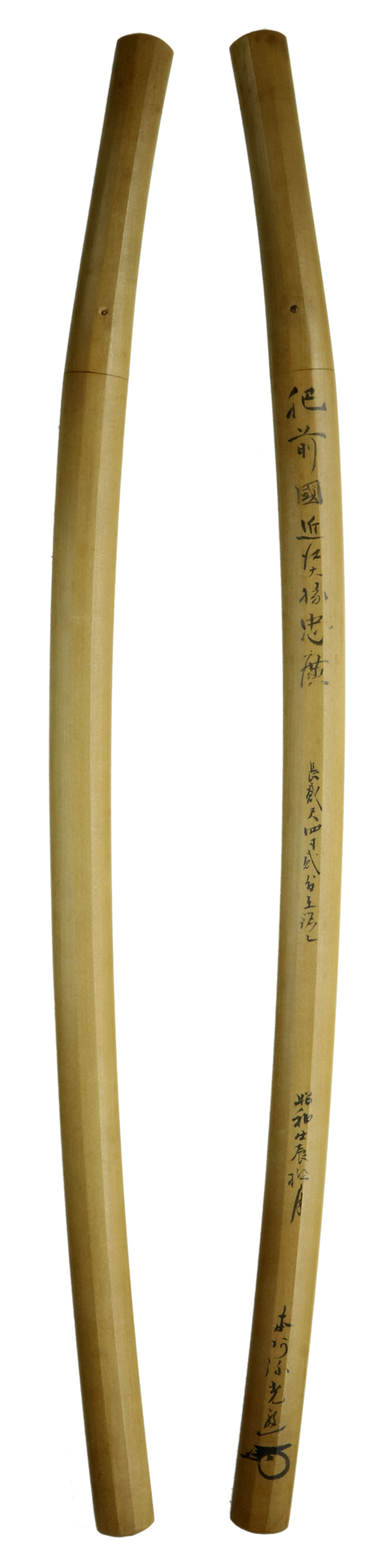
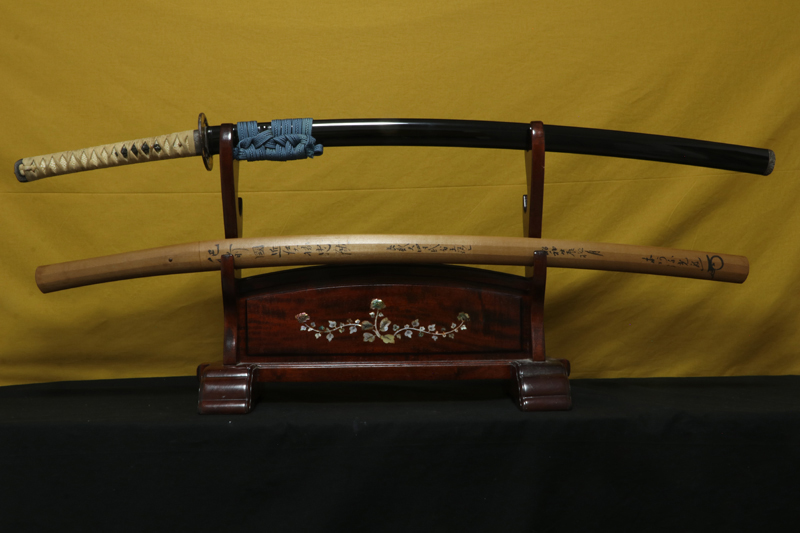
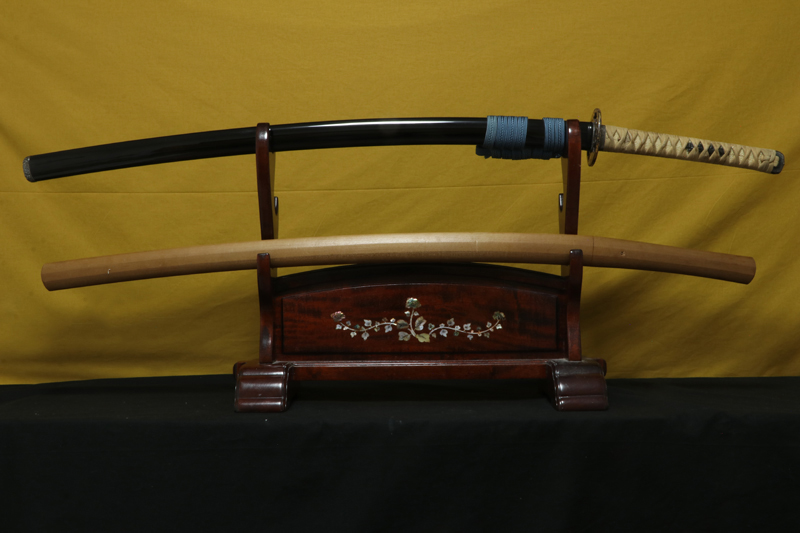
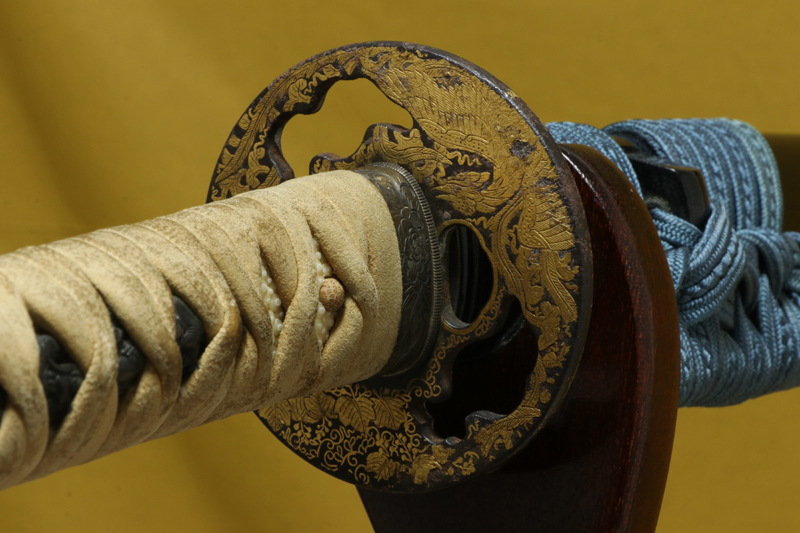
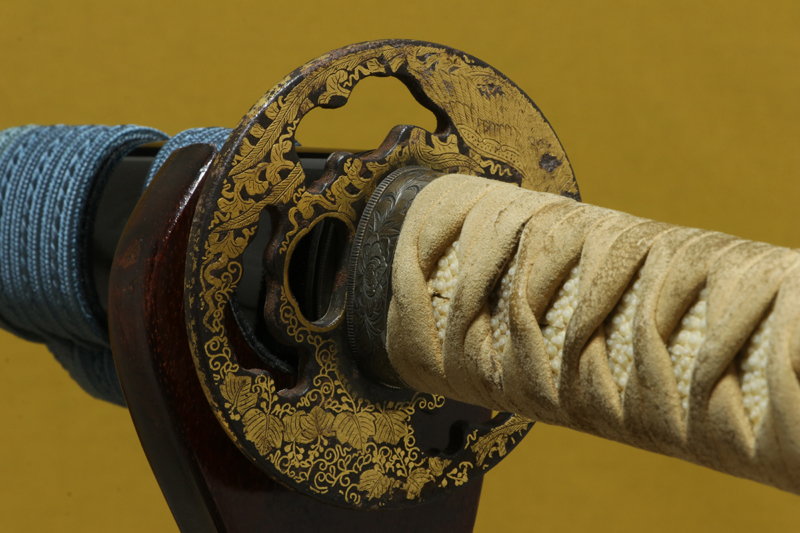
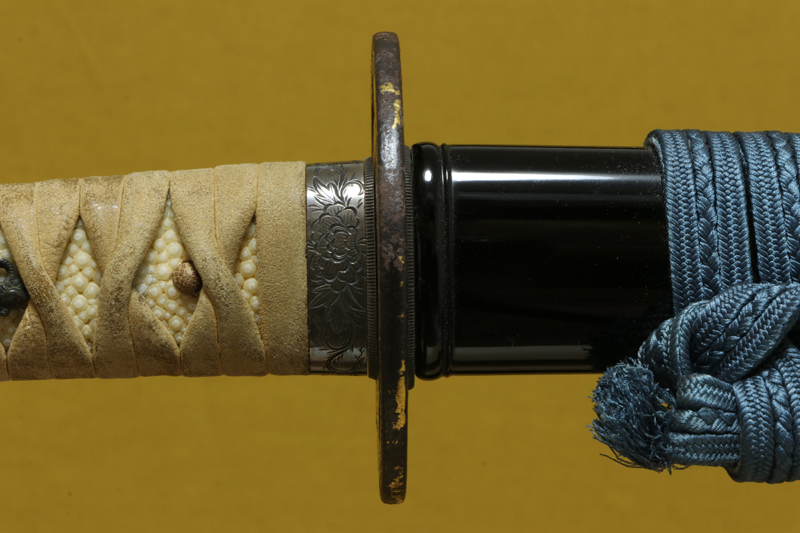
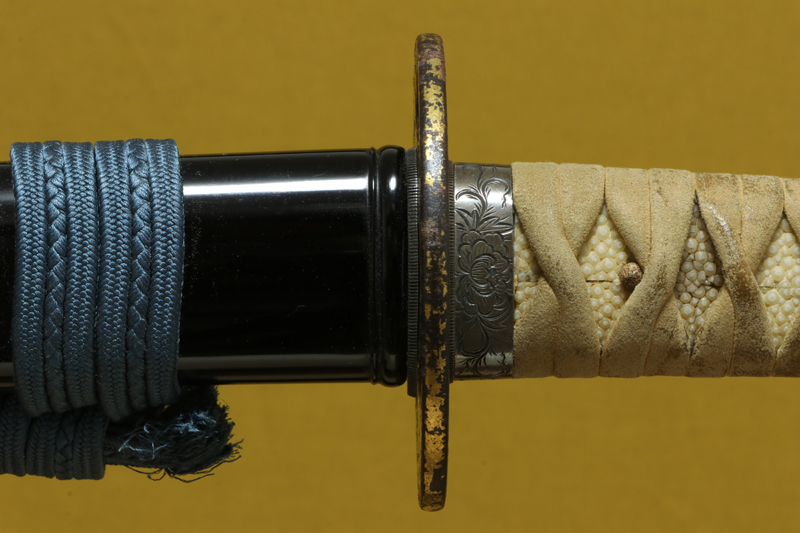
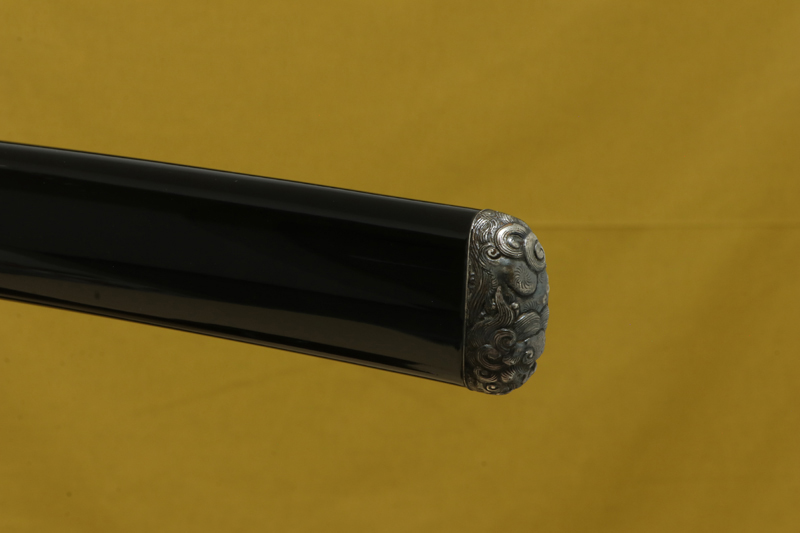
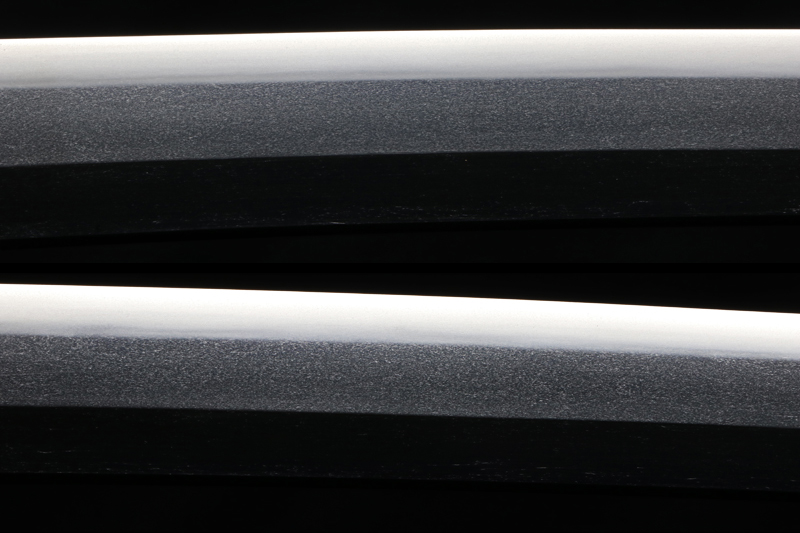
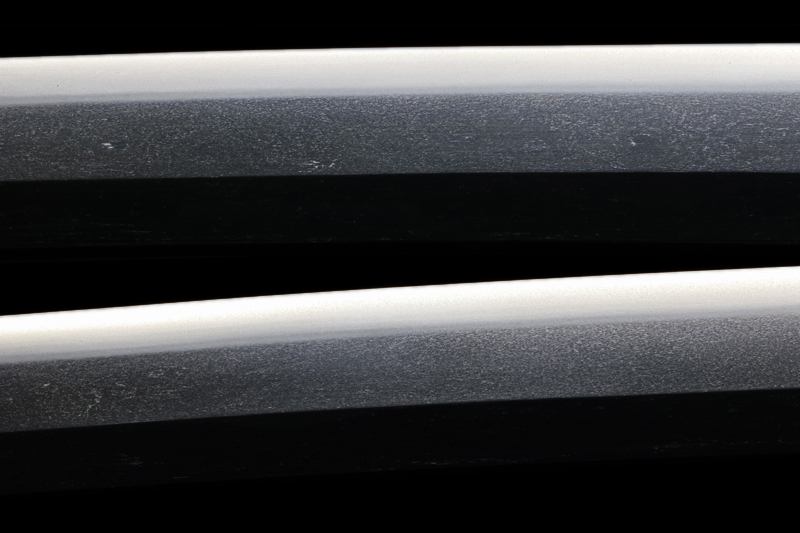
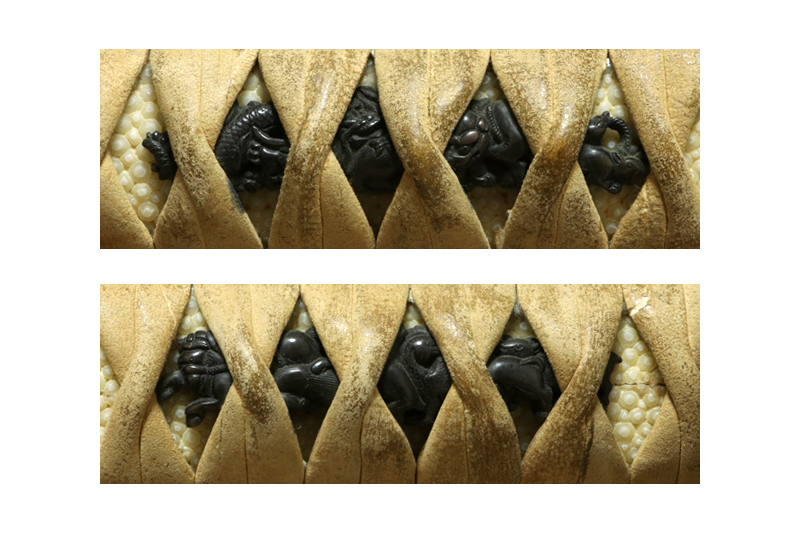
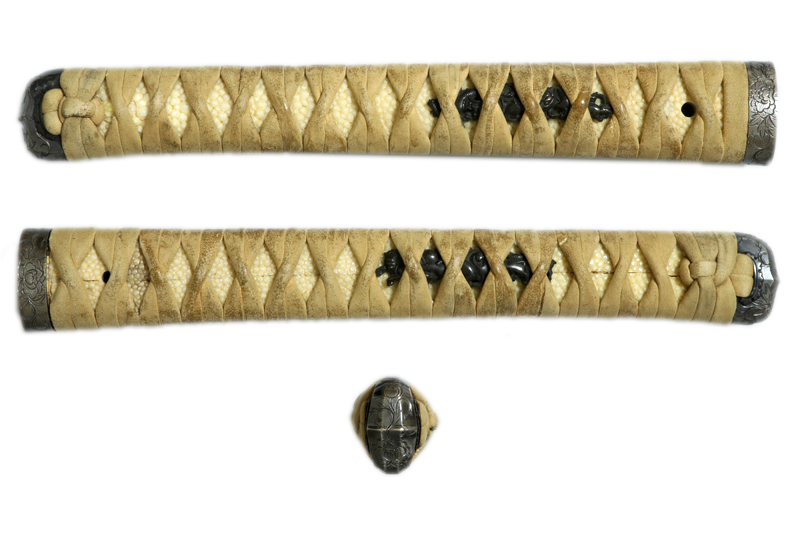
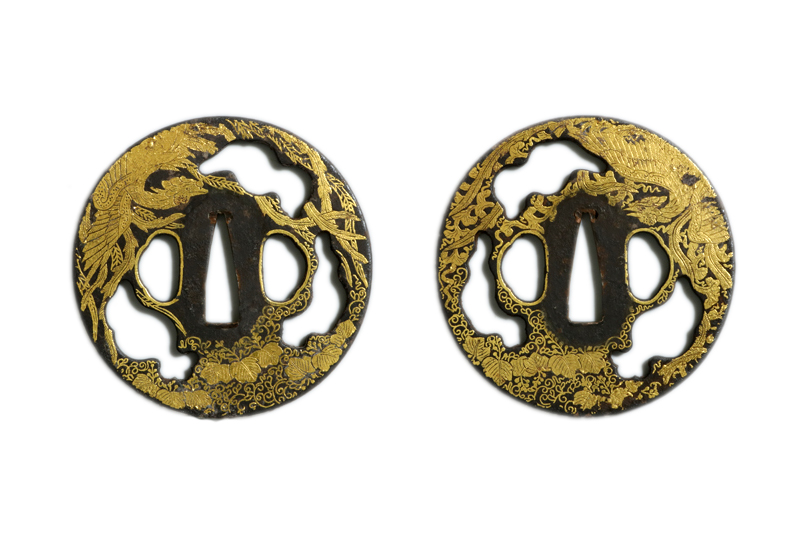
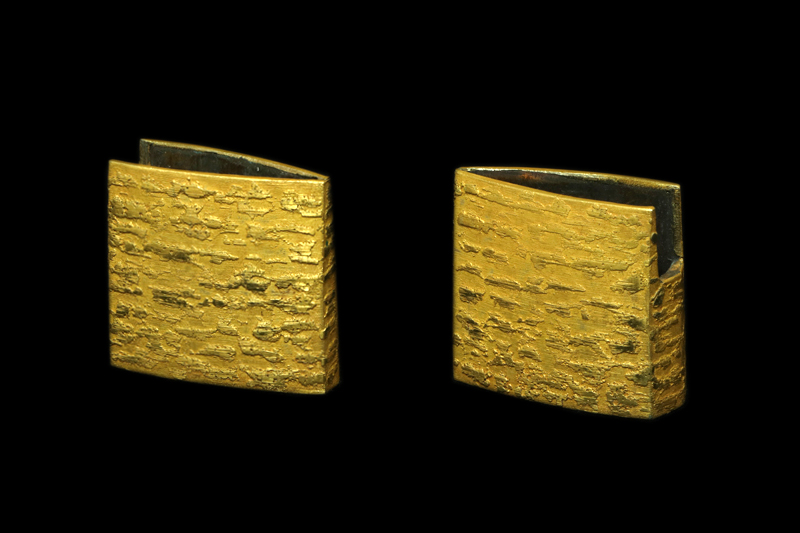
Tokubetsu Hozon token Hizenkuni ju Omidaijo Fujiwara Tadahiro(yonndai daimei) with Handachi-koshire and Shirosaya. 新刀上々作、大業物、新刀期肥前刀の代表刀工、近江大掾忠廣の刀です。 本作は孫の四代陸奥大掾忠吉が、代銘を切った物で、大変貴重な作品です。 付属する打刀拵もクオリティーが高く、コレクションに最高です。 This is a blade by Ōmi Daijō Tadahiro, a top-ranked smith (jōjō-saku), renowned for his sharp swords (ōwazamono), and one of the leading swordsmiths of the Shintō period in Hizen. This particular piece is an extremely rare work signed on behalf of him by his grandson, the 4th generation Mutsu Daijō Tadayoshi. The accompanying uchigatana koshirae (mounting) is also of high quality, making it an excellent addition to any collection. 「刀姿 sword figure」 鎬造り庵棟、身幅重尋常、中間反りで中鋒。茎は生で鑢目は切、茎尻は入山形。 「地鉄 jigane」 地鉄は小板目肌がよく詰んだ鍛えに地沸微塵に厚くつき、米糠肌状となり、細かな地景入る。 「刃紋 hamon」 刃文は中直刃を基調に浅く湾れ、匂深く小沸よくき砂流しかかり、刃中は金筋が良く入る。釯子は直ぐに入り小丸に返る。 「特徴 detailed」 近江大掾忠廣は、橋本平作郎といい、初代忠吉の子として生まれ、寛永九年(1632年)の父没後に忠廣を襲名しています。これは、父初代忠吉が元和十年(1624年)に 武蔵大掾を受領し忠廣へと銘を改め、忠吉銘は門人である後の土佐守に譲った為です。彼は寛永十八年(1641年)に近江大掾を受領、元禄六年(1693年)に八十歳で没する までの五十年以上の長きに渡って作刀を続けています。その為、寛永、寛文、元禄期とそれぞれの時代に応じた体配をした数多くの作品を残していますが、新刀の刀工中、初代 忠吉に次ぎ、2番目に多く重要刀剣に指定されており、如何に名刀が多いかが分かります。 近江大掾忠吉(四代)は、橋本源助といい、三代陸奥守忠吉の子で 寛文八年生まれ、後に新一郎と称しました。父が貞享三年に早世した為、鍛刀の技を祖父の近江大掾忠広に学び、元禄十三年に近江大掾を受領、二代の代作にも任じたと伝えられています。 本作は、その言い伝えの通り、祖父忠廣の作品に代銘を切った刀で、正に歴史の生き証人と言っても過言では無いでしょう。 刀身は傷欠点は無くコンディションも良好で、付属する拵もクオリティー高くコンディションも良く、肥前刀をコレクションされている方には、凄くお勧めの一振りです。 Ōmi Daijō Tadahiro, also known as Hashimoto Heisakuro, was born as the son of the first-generation Tadayoshi (Tadatsugu). After his father’s death in 1632 (Kanei 9), he succeeded to the name Tadahiro. This was because his father, the first-generation Tadayoshi, was granted the title “Musashi Daijō” in 1624 (Genna 10) and changed his name to Tadahiro. He passed the name “Tadayoshi” to his disciple, who later became Tosa no Kami. He was granted the title “Ōmi Daijō” in 1641 (Kanei 18) and continued making swords for over 50 years until his death at the age of 80 in 1693 (Genroku 6). As a result, he left behind numerous works reflecting the styles of the Kanei, Kanbun, and Genroku periods. Among swordsmiths of the Shintō (new sword) period, he ranks second only to the first-generation Tadayoshi in terms of the number of swords designated as Important Swords, demonstrating the high number of masterworks he produced. Ōmi Daijō Tadayoshi (4th generation), known as Gensuke Hashimoto, was born in Kanbun 8 (1668), the son of the 3rd generation Mutsu no Kami Tadayoshi. After his father passed away early in Jōkyō 3, young Gensuke studied swordsmithing under his grandfather, Ōmi Daijō Tadahiro. In Genroku 13 (1700), he formally received the title Ōmi Daijō and is said to have completed work on behalf of his grandfather’s name. This particular sword was forged by him under his grandfather’s name, just as the tradition tells—a true living witness to history. The blade is in excellent condition with no flaws or damage. The accompanying koshirae (mounting) is high-quality and well-preserved. For collectors of Hizen (Saga) swords, this is an exceptionally recommended piece. 「拵 Koshirae」 拵のコンディションは良いです。 ハバキ(habaki) :素銅地金着一重。 鍔(Tsuba) :鉄地鳳凰の図金象嵌。 縁頭(FuchiKashira) :銀無垢牡丹の図。 鐺(kojiri) : 銀無垢獅子の図。 目貫(menuki) :銀無垢龍の図。 柄(Tsuka) :鮫は親粒が付き巻鮫、柄巻は鹿革卯ノ花色の諸撮み巻。 鞘(Saya) :黒呂。 「刀剣の状態 condition of blade」 研:良好です。 傷:欠点に成るような傷は有りません。
Offered by Giheiya


Translated from the shop's Japanese ·
Rows still in Japanese are as written by the shop
Hizen (Saga) · Hizen · around 1633-1693
Fujishiro Jo-jo saku · Tōken Taikan top 14%
24 pieces on the market now
Tadahiro, called Heisakuro, was the legitimate son of the first-generation Hizen Tadayoshi and the second head of the main line at Saga. He was nineteen when his father, by then Musashi no Daijo Tadahiro, died in Kan'ei 9 (1632). The published sources credit both his own talent and the disciples his father had trained, who carried the young head of the house, and his dated work survives from Kan'ei 10. On the twenty-second day of the seventh month of Kan'ei 18 (1641) he received the title Omi no Daijo, and he worked until his death at eighty-one in Genroku 6 (1693). That career of more than sixty years left, in the words of the published sources, more works than any other Hizen smith[[c:1]].
His work falls into two manners, suguha and choji-midare, and the published sources hold him highly accomplished in both, with suguha his greatest specialty[[c:2]]. It is a comparatively straight chu-suguha of deep nioi with ko-nie adhering thickly, at times tinged with a shallow notare and a little ko-gunome, ashi and yo entering well, fine kinsuji and sunagashi running through it. In places the nioiguchi thickens into a band, and it stays bright and clear. The boshi runs straight to a ko-maru. The sugata has the balanced curvature of Hizen work, and on some blades it is broad, long and heavy, with a touch of funbari at the base.
The jigane is the Hizen komenuka-hada: a tightly forged ko-itame with no looseness, ji-nie laid dust-fine and thick, fine chikei entering, the steel clear. On his best blades the published sources describe forging of unmatched quality and both ji and ha clear and brilliant. He was also the first Hizen smith to add the soemei shinkitae saku, "made of truly forged steel", and the published sources observe that this begins with him among Hizen smiths[[c:3]]. Blades bearing it are often of especially fine forging.
His work divides by period as well as by manner. Before the title he signed every blade Hizen no kuni ju Fujiwara Tadahiro, the same form as his father's presentation signature, and the published sources separate the two hands by the strokes of 藤 and 廣. Many of these early blades are dated; after the title dated pieces become rare, so the Shoho, Keian and Enpo dates on record are prized. The early work is read as the vigor of youth, showing an unconstrained boldness beside his later production[[c:4]], and some of it comes close to his father's Musashi no Daijo work, which the published sources attribute to his father's collaborators still working beside him. His choji-midare runs through both periods. In choji the published sources rank him above even the first generation[[c:5]]: a wide temper of choji with gunome, the heads comparatively even so that the cloves stand shoulder to shoulder, long ashi entering thickly and nie gathering in the valleys. They call it the so-called Hizen long-legged choji[[c:6]]. A Tokubetsu Juyo katana dated the very day he received his title, its chu-suguha written in an archaic manner after Rai work, is read as a commemorative piece[[c:7]]. A small tanto by him, carved probably by Yoshinaga, was aimed at old work such as Rai Kunimitsu[[c:8]].
Within the Hizen main line his long career joins the founder to the later generations. He trained many pupils, and the published sources record that the third-generation and fourth-generation Tadayoshi served as his substitute makers and signers[[c:9]]. Joint works with his son Mutsu no Kami Tadayoshi, each signing one side of the tang, survive in comparatively large numbers. On some of these the published sources judge the forging and temper to be largely the son's hand. His deep-nioi suguha over the komenuka-hada became the measure by which later Hizen work is read.
Fujishiro ranks him Jo-jo saku. He has no National Treasures or Important Cultural Properties on record. His standing rests on 131 blades in the Tokubetsu Juyo and Juyo tiers, three of them Tokubetsu Juyo. The published sources call one of these work outstanding among his production[[c:10]], forceful and bold in both ji and ha. Recorded provenance runs through the Imperial Family and the Nabeshima house his line served. One katana was the personal sword of the domain lord Nabeshima Katsushige[[c:11]], and a naginata blade survives in its Nabeshima family mounting for a woman of the house. Because he was so prolific, signed Omi no Daijo Tadahiro blades appear on the market with some regularity. A papered Juyo example is within reach of a patient collector. A Tokubetsu Juyo blade, or one of the dated pre-title pieces, appears only from time to time.
Where Tadahiro stands among comparable artisans: across all of nihontō, and within tradition, era, and period. The tiers (Foremost · Leading · Major · Notable) weigh official designations from the NBTHK and Japan's Agency for Cultural Affairs, together with historical honors of lasting repute such as the Sansaku and Meibutsu-chō.
Select a lens to see how it's measured.
Years he was demonstrably active, proven by signed-and-dated blades
Shinto · Hizen
109 pieces on the market now
The Hizen school began with a single domain commission. In Keicho 1 (1596) the Nabeshima of Hizen ordered Hashimoto Shinzaemon, the smith who would sign Tadayoshi, up to Kyoto with the carver Munenaga; there he entered the gate of Umetada Myoju and studied forging while Munenaga learned the chisel. The two returned to the province in Keicho 3 (1598), and Tadayoshi settled in the castle town below Saga, where under the domain's patronage the line grew into the dominant sword-making house of Kyushu. His own work runs from Keicho 5 (1600) to his death in Kan'ei 9 (1632); in Genna 10 (1624) he received the court title Musashi Daijo, changed his name to Tadahiro, and shifted his clan name from Minamoto to Fujiwara, so that the late Musashi Daijo blades are the founder under a second name. From him the house became a true generational institution: his son the second-generation Omi Daijo Tadahiro carried it forward as its most prolific hand, the third-generation Mutsu no Kami Tadayoshi returned its highest finish, and a Tosa no Kami branch took the founder's signature when he set it aside. Around this main line grew a circle of disciples and collateral hands, the waki-Hizen or Soba-Hizen smiths, several of them, like Yoshiie and Hironori, working as daisaku substitute makers whose own signed pieces are therefore scarce. The school's signature is its steel. Over a ko-itame forged so tightly it shows no slackness, fine ji-nie gathers in minute particles until the surface takes on the rice-bran konuka-hada (also written komenuka-hada) that no other school produces, fine chikei entering throughout and the ji notably clear and bright.
The orthodox temper laid upon it is a chu-suguha or hiro-suguha, sometimes tinged with a shallow notare and ko-gunome, the nioiguchi deep with finely clustered ko-nie and tightened to a bright clarity, the boshi running straight to a quiet ko-maru. The founder aimed this suguha toward the Rai school yet departed from it, his nioiguchi tighter and his forging carrying more vigor; the third generation refined it to what the published sources call the strongest and most precise hand of the first three generations. Against that calm register the house also worked a showier one, the Hizen choji-midare mixing gunome, long ashi, kinsuji and sunagashi, a manner the published sources already find more often in the founder's late Musashi Daijo work than in his Tadayoshi years, and one the second generation made his own. The branches pushed further from the suguha standard: Tadakuni of the Ogi domain ran sunagashi more conspicuously than any other Hizen hand and reached toward old Ichimonji in his o-choji; Masahiro and Yukihiro favored a flamboyant long-ashi choji over the calm main line; and the Iyo no Jo Munetsugu line worked apart in the Soshu-den, building a midareba on notare with a pointed togariba and a jihada that tends to stand and tone slightly blackish. A collector seeks Hizen-to first for that steel, and reads it the same way the appraiser does: a bright suguha lying over a clear, tight konuka-hada identifies the school before the signature is consulted, and the quiet ko-maru boshi on the ura-signed tang confirms the main-line practice. Generation and branch are then told within that frame, the third generation's powerful sugata recalling not his father but his grandfather, the waki-Hizen hands set apart by their irregular temper, their sujikai file marks and a sashi-ura signature, the Munetsugu line by its Soshu togari. The main line, made in real numbers across so long a span, reaches the market more readily than any Kamakura master, so a papered example is within reach of a patient collector, while the founder's own work and the finest konuka-suguha of the third generation come to open hands only from time to time. Provenance runs back through the house the school served, blades recorded to Nabeshima Katsushige and Nabeshima Naomoto and passing onward to the Owari Tokugawa, the Satake and the Imperial families; documentary inscriptions sharpen the picture further, a Myoju soemei attesting the founder's discipleship, Umetada carving adding flowers to brocade on his late blades, and the gold-inlaid cutting tests of Yamano Kanjuro and Yamano Ka'emon, rare on Hizen work, naming the edge as well as the hand. Learn more →
| Smith | Era | Designated |
|---|---|---|
| Tadayoshi忠吉 | 1596-1632 | 155 |
| Tadayoshi忠吉 | 1660-1686 | 61 |
| Tadahiro忠廣 | 1633-1693 | 133 |
| Tadakuni忠國 | 1648-1652 | 32 |
| Masahiro正廣 | 1624-1655 | 30 |
Hizen: a domain enterprise
Hizen swords were a domain enterprise: the Nabeshima sent Tadayoshi to study under Umetada Myōju around 1596, then built a licensed school around him. Nine generations carried its famously consistent konuka-hada work into the Meiji era.
A Hozon-certified blade judged to show notably superior workmanship and a better state of preservation. The bar is higher: re-tempered blades and most unsigned Muromachi/Edo works are excluded.
The NBTHK (Nihon Bijutsu Tōken Hozon Kyōkai, the Society for the Preservation of Japanese Art Swords) is a public-interest incorporated foundation founded in 1948 and supervised by Japan’s Agency for Cultural Affairs (Bunkachō); it is based at the Japanese Sword Museum in Tokyo. Its expert panels physically examine each submitted work (shinsa) and issue a certificate (kanteishō) ranking it by artistic and historical merit. NBTHK papers are the most widely recognized standard of authentication for Japanese swords and fittings.
NBTHK official siteWithin 3 days of the item's arrival, we offer a refund or an exchange. Return shipping and the bank transfer fee for the refund are at the customer's expense.