Hizen swords were a domain enterprise: the Nabeshima sent Tadayoshi to study under Umetada Myōju around 1596, then built a licensed school around him. Nine generations carried its famously consistent konuka-hada work into the Meiji era.
 NihontoWatchNihontoWatch
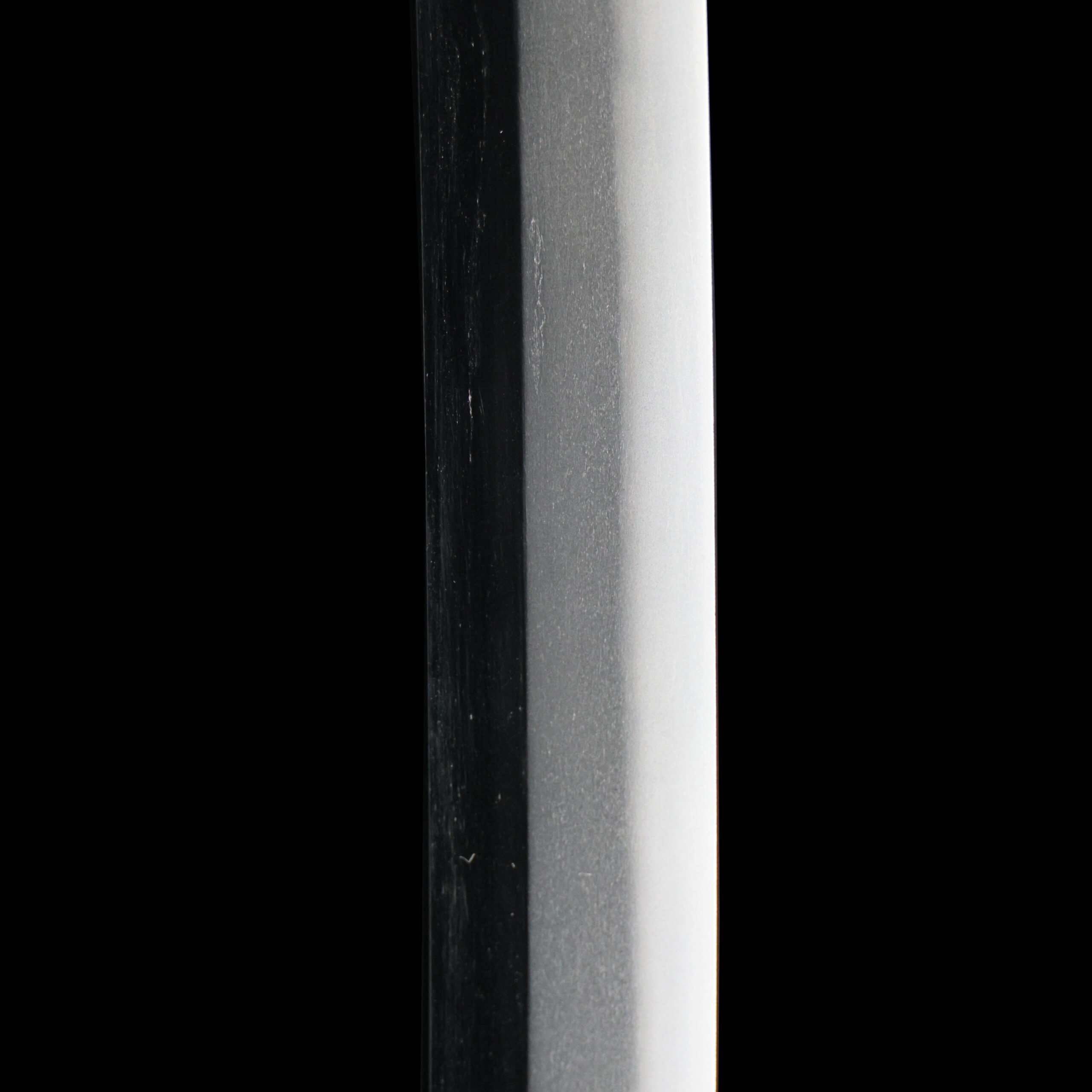
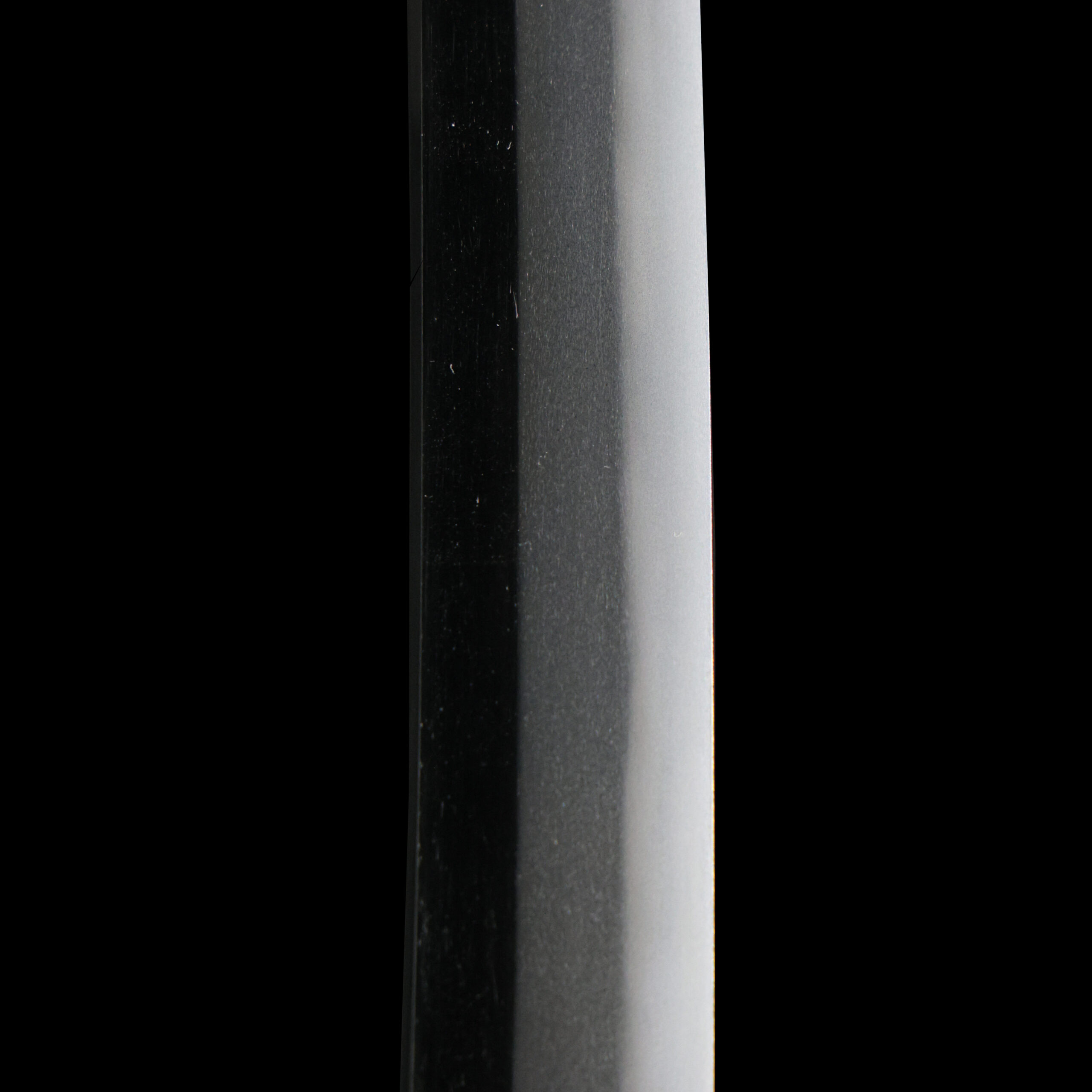
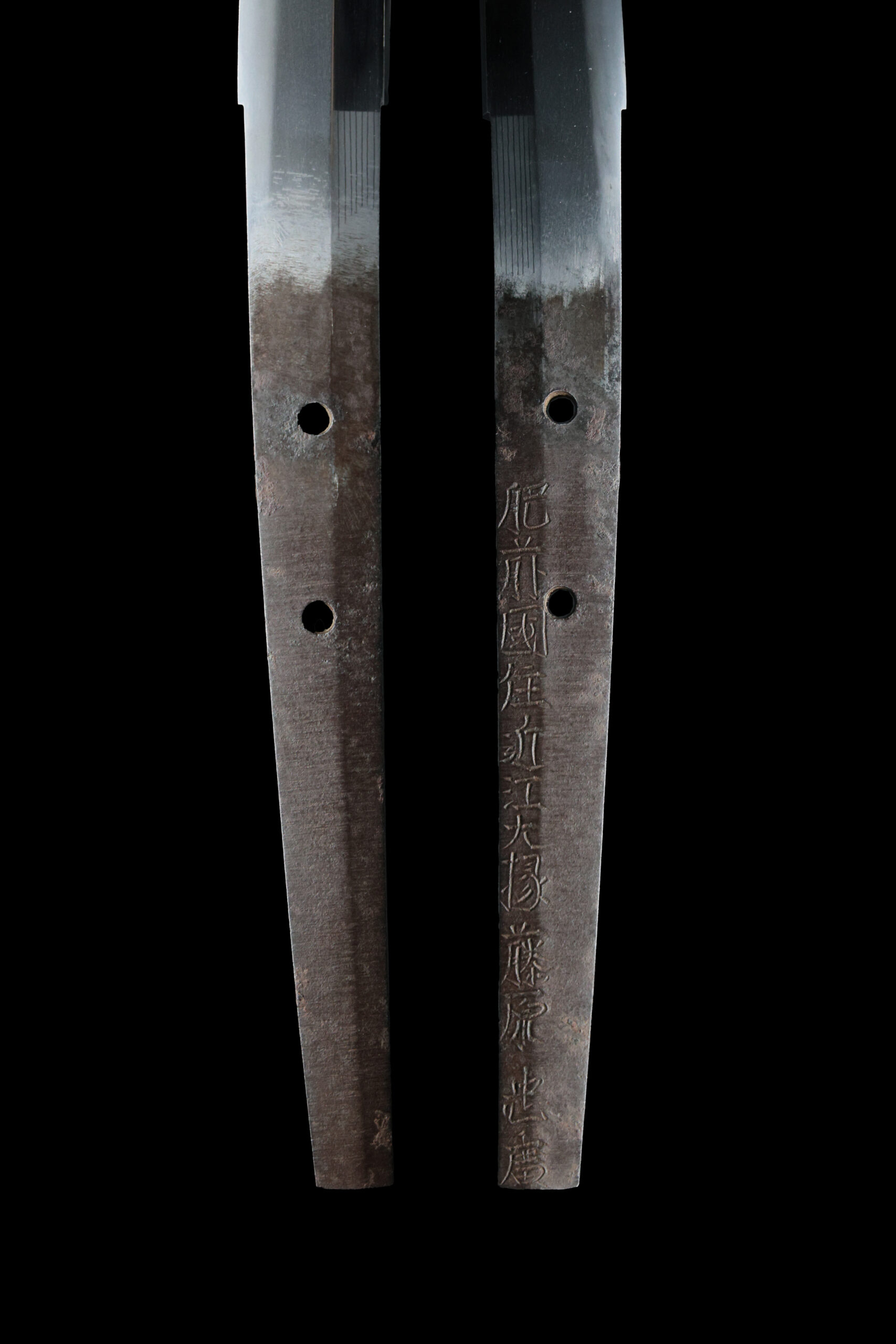
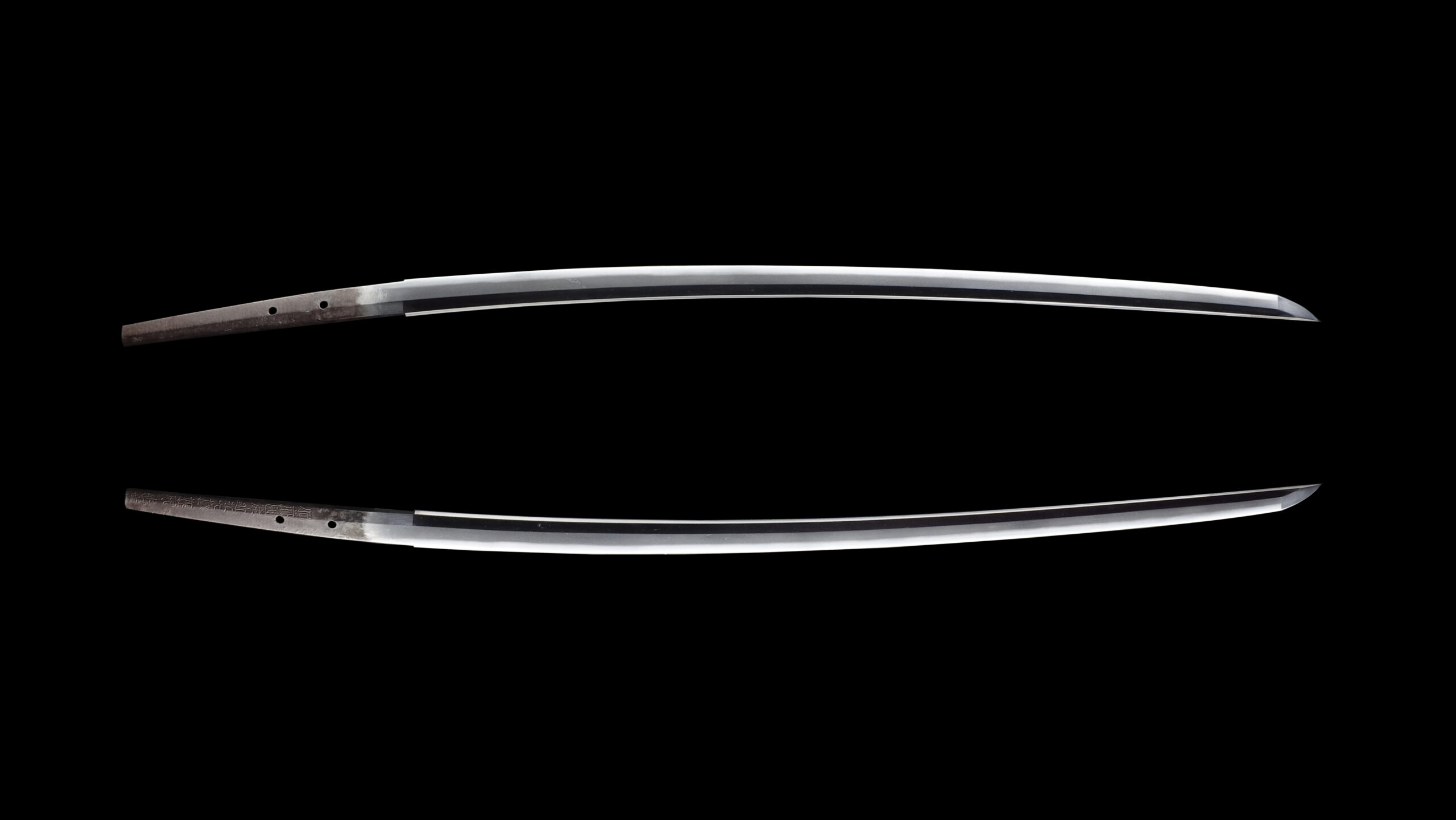
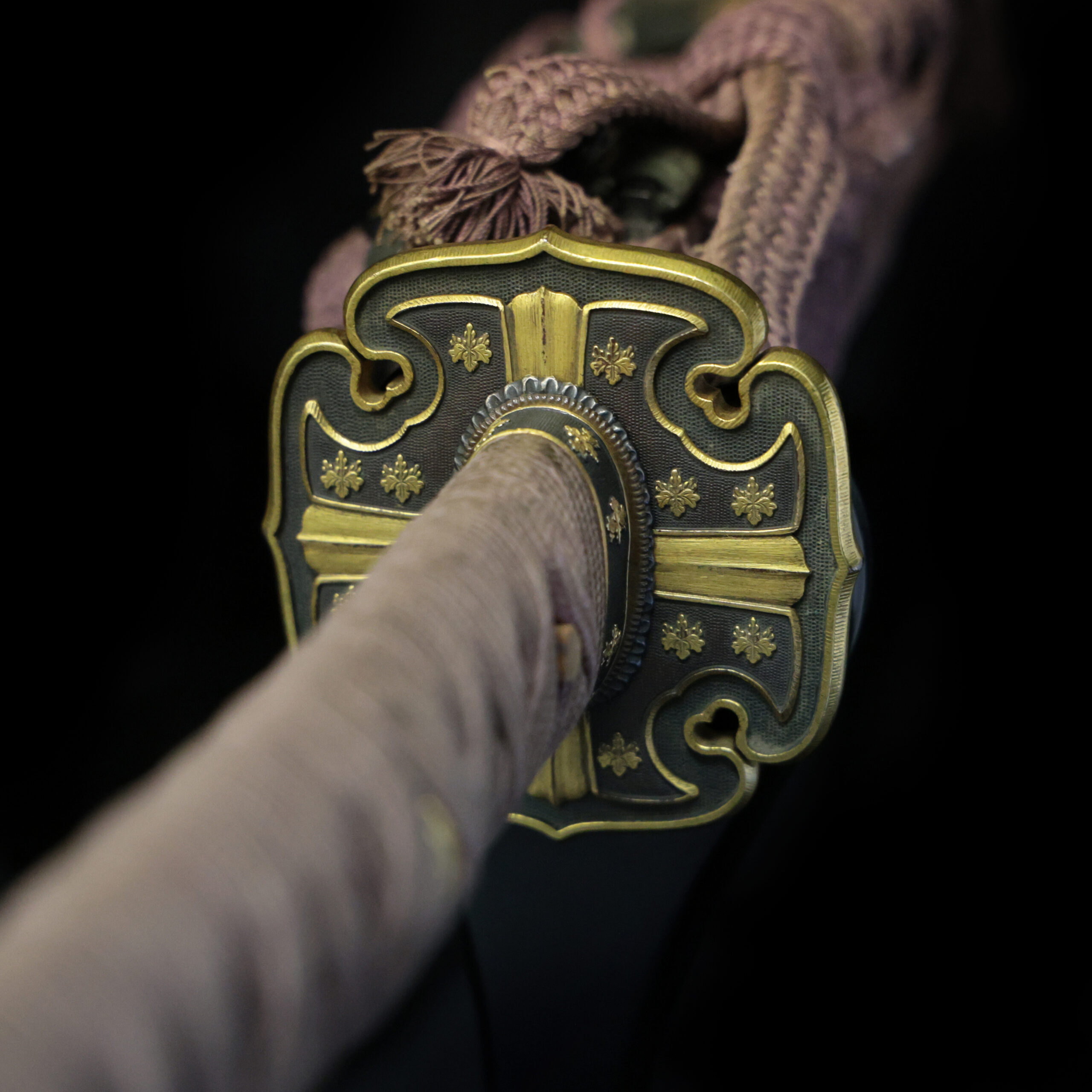
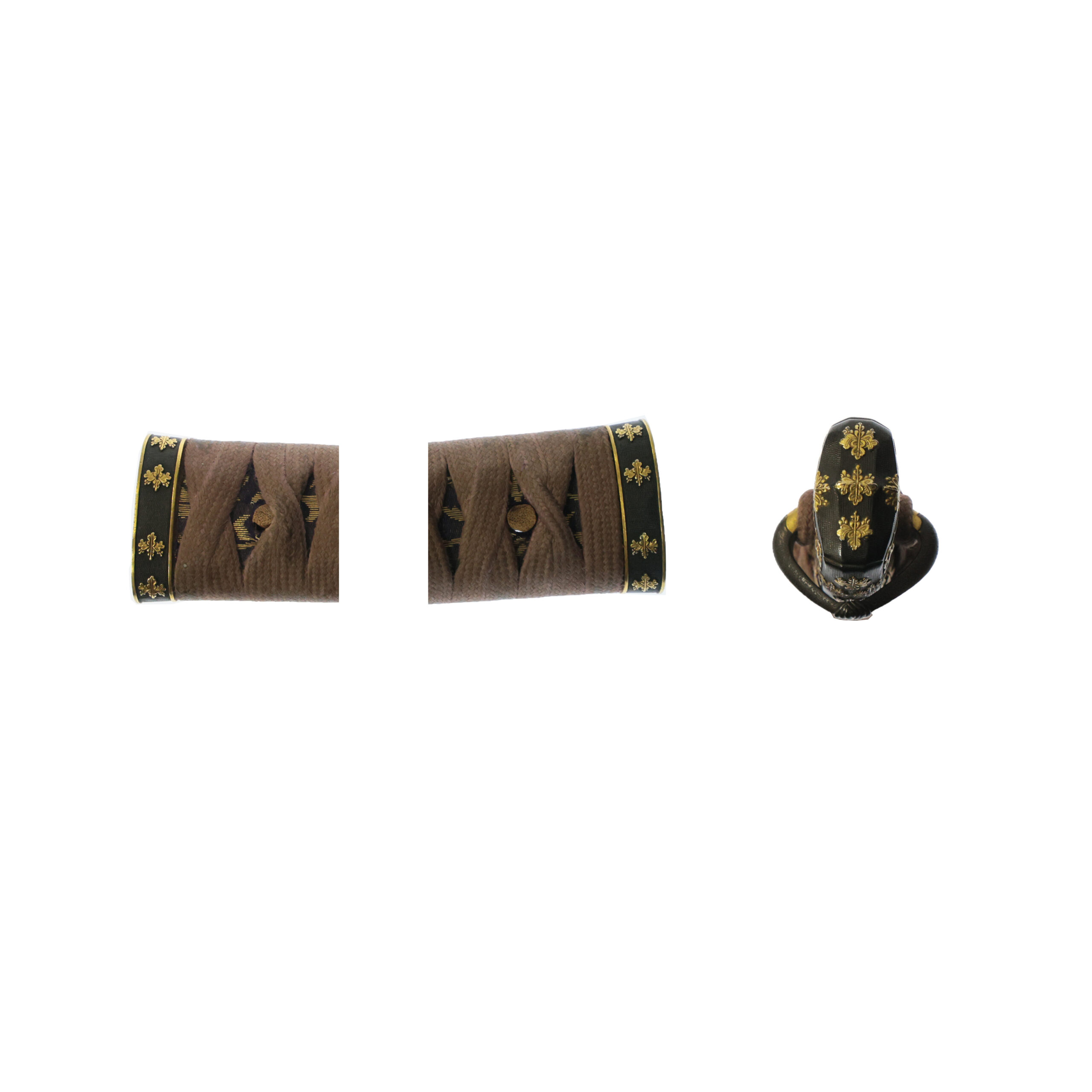
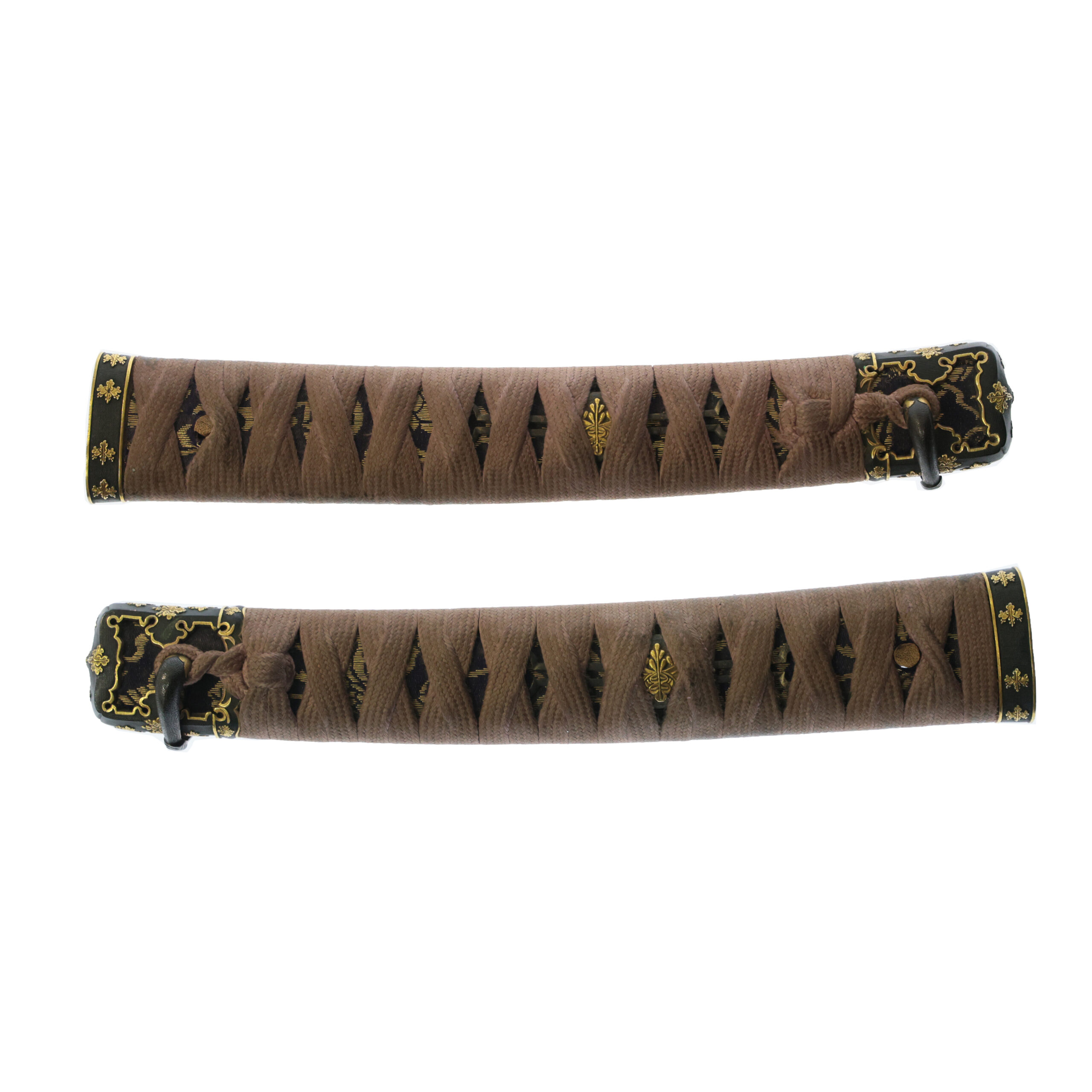
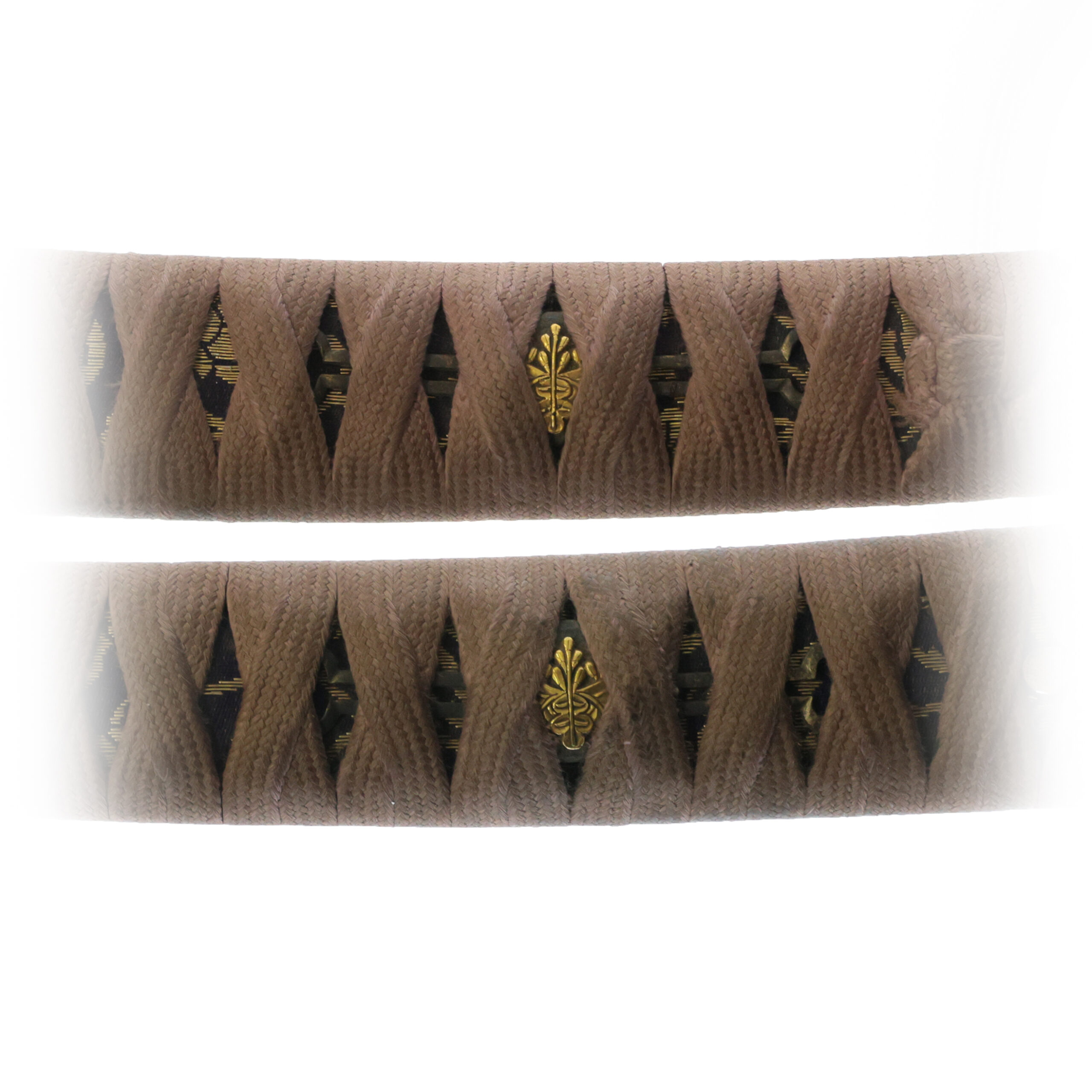
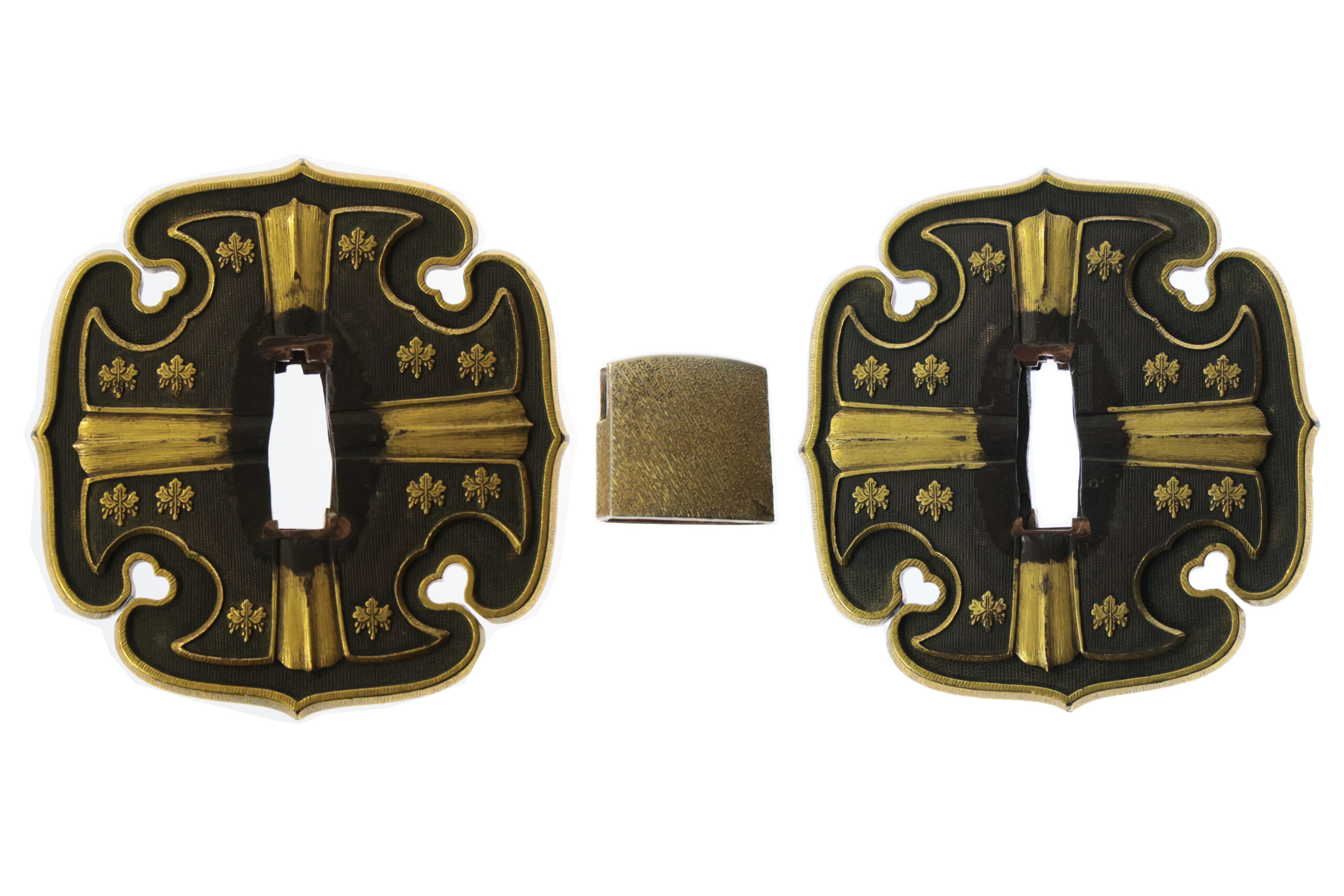
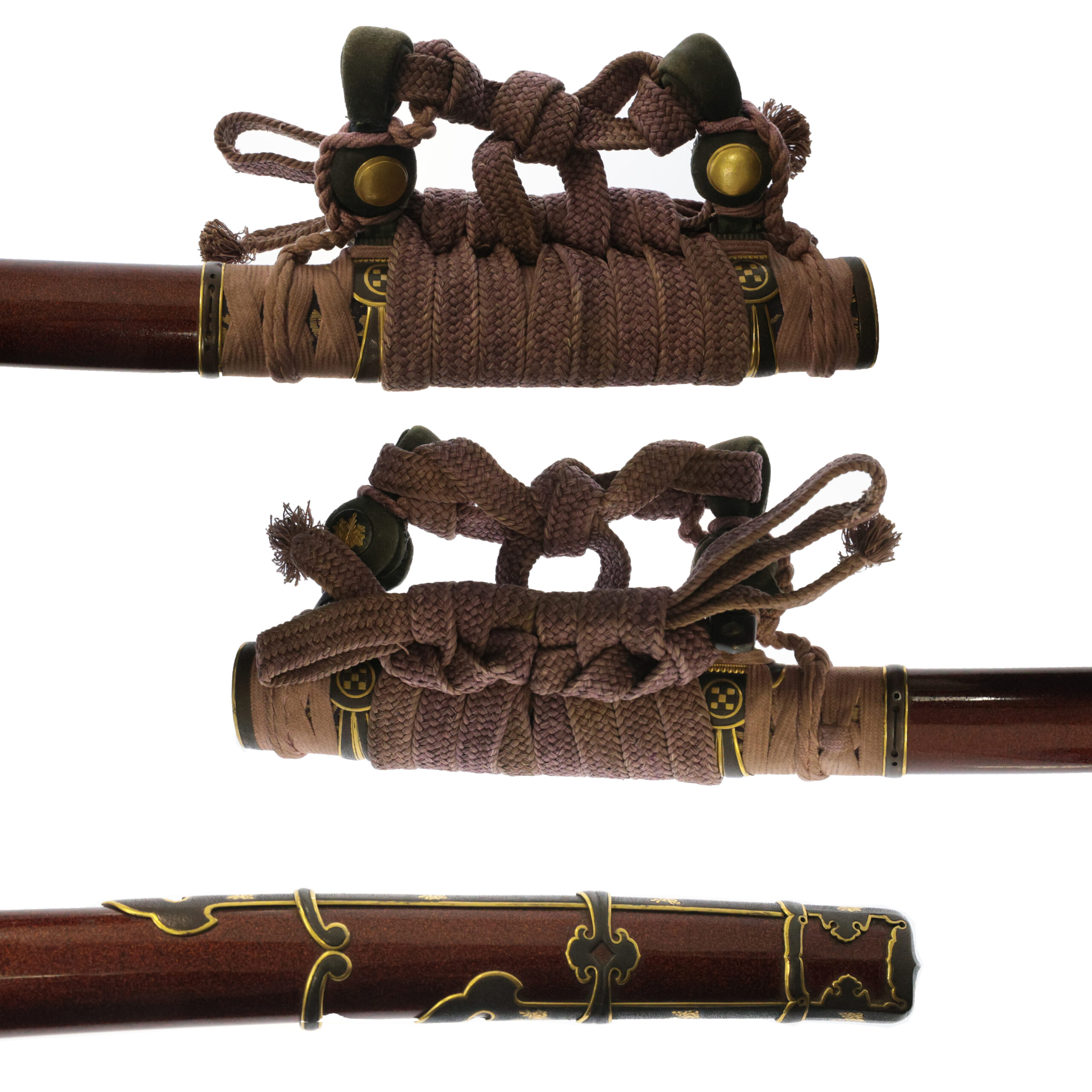
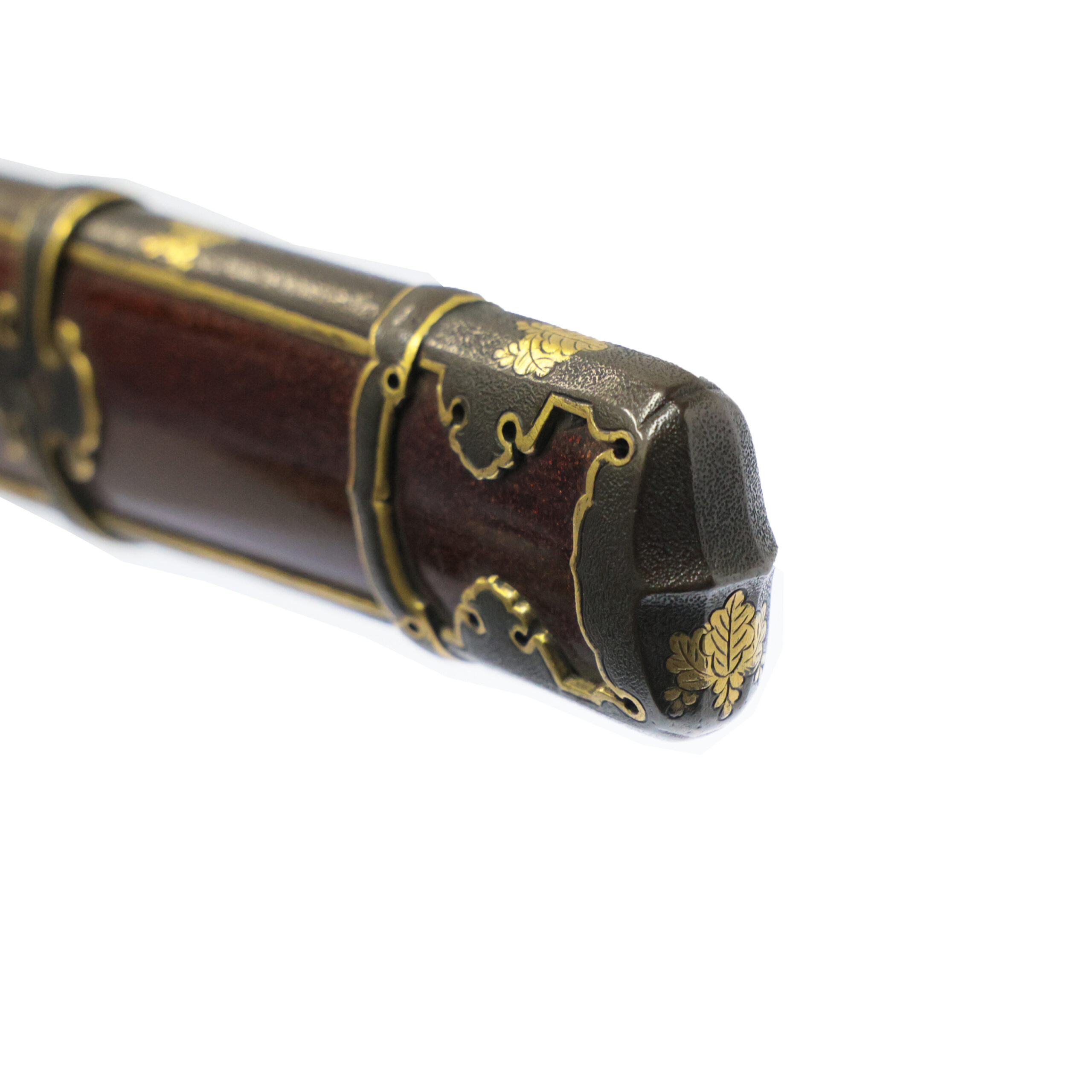
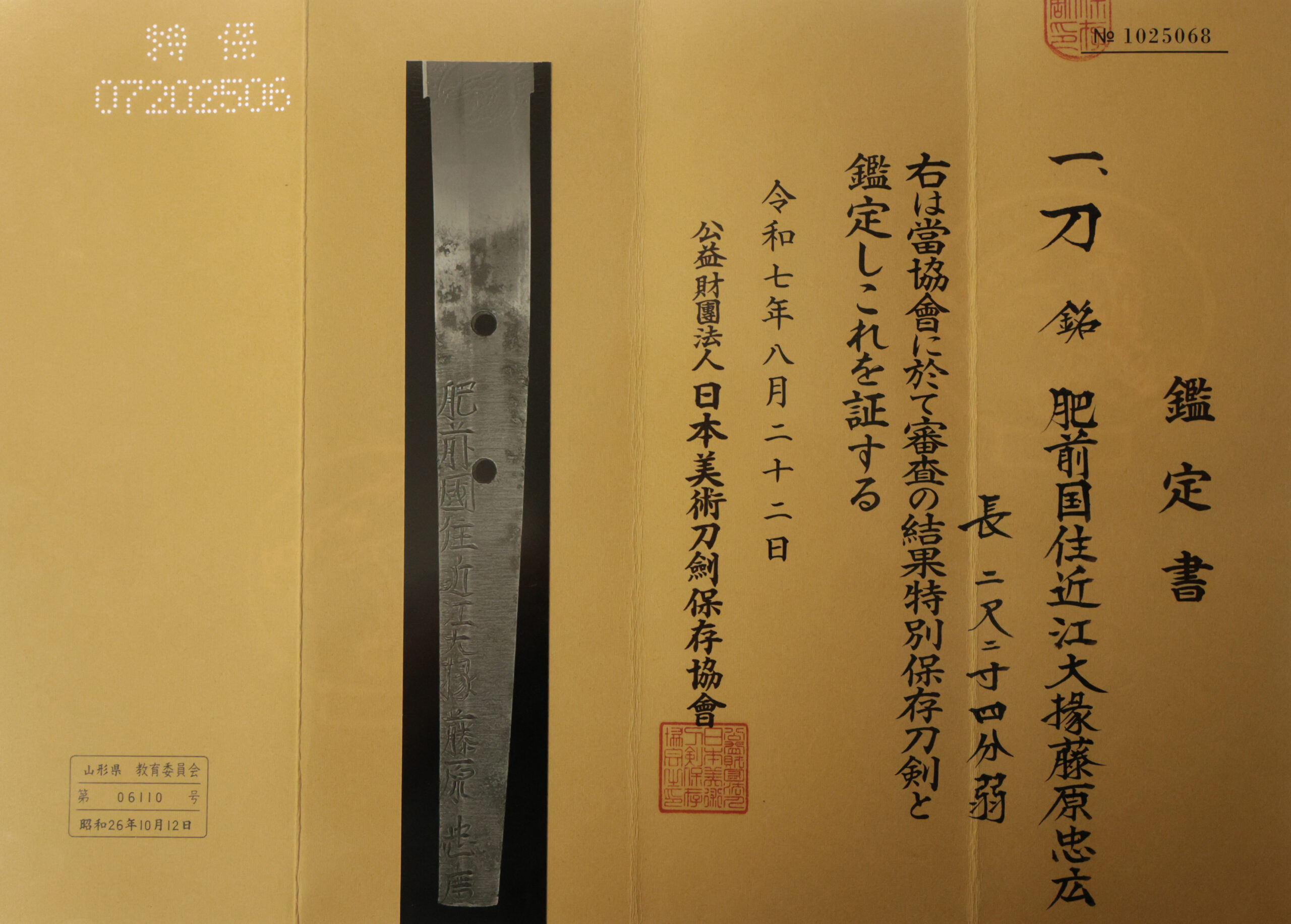
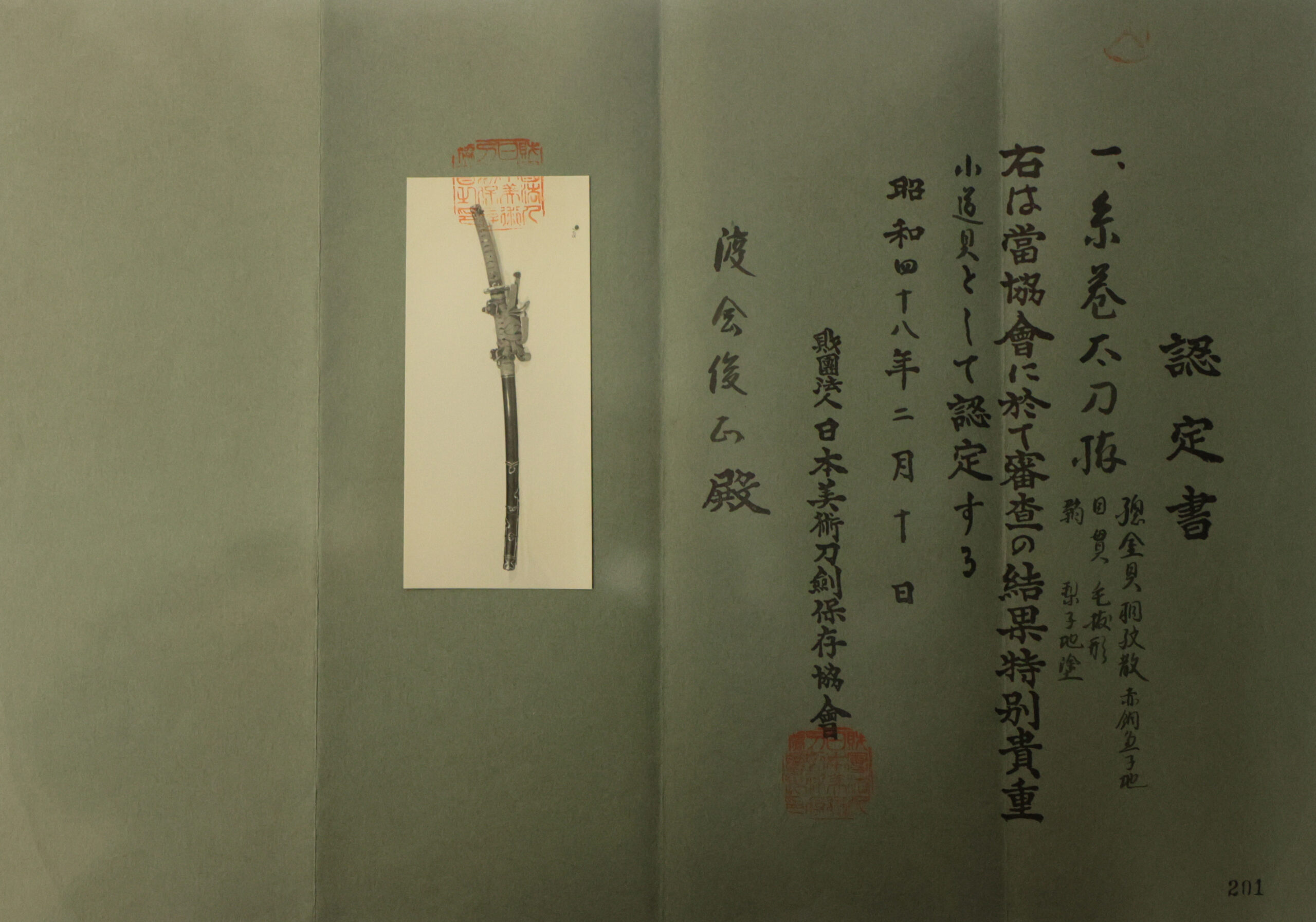
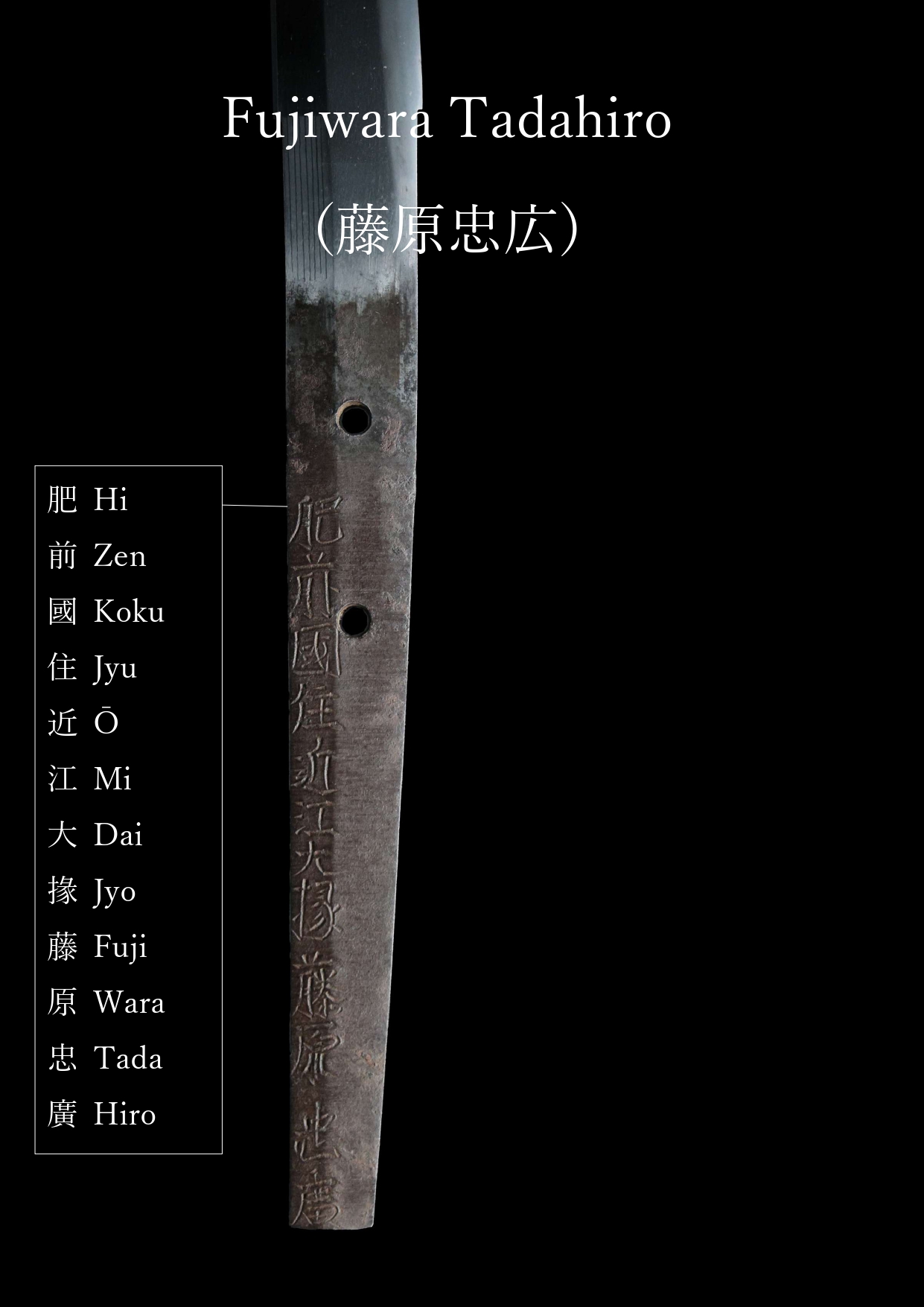
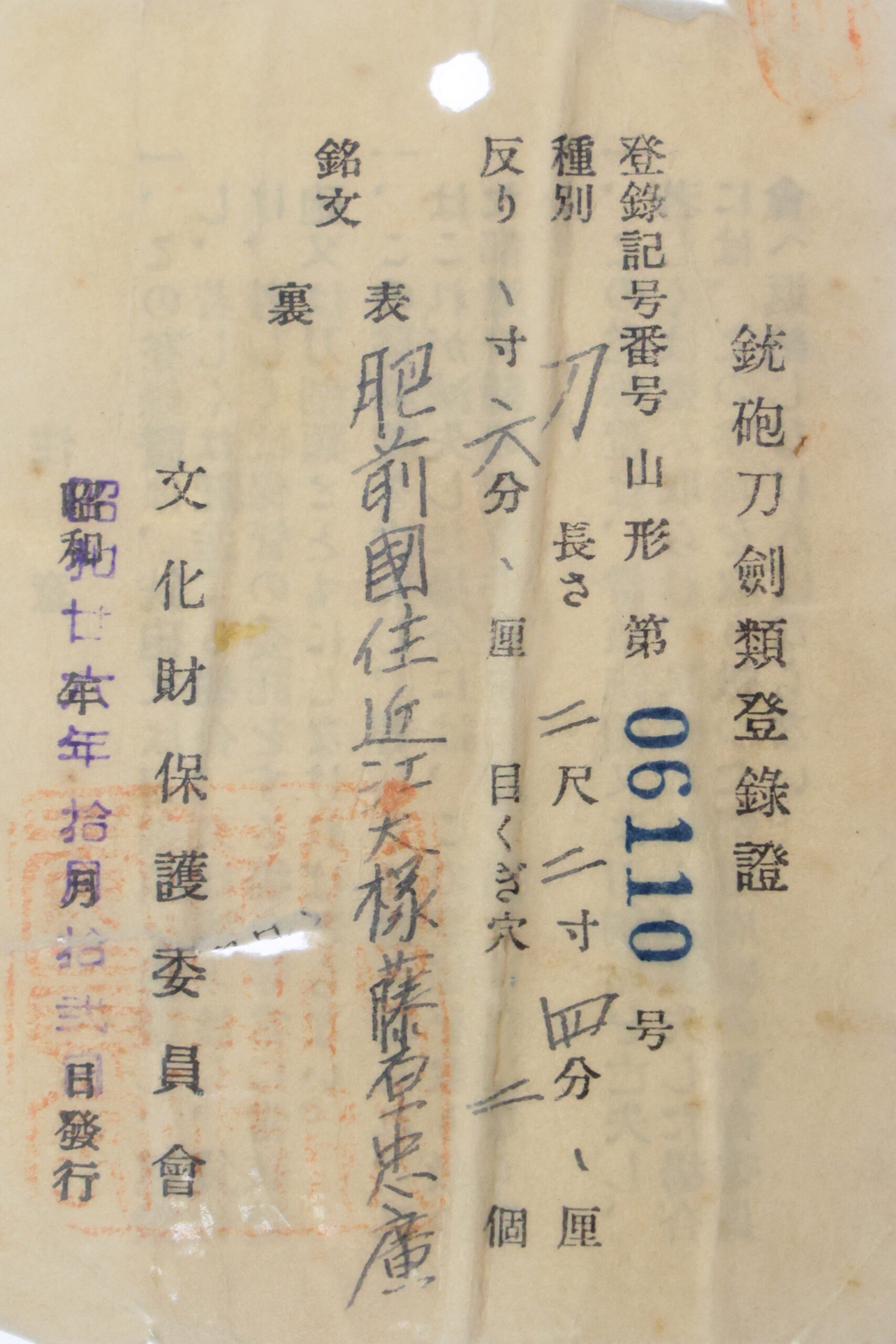
Hizen Koku Jyu Omi Daijyo Fujiwara Tadahiro This blade was signed by Hizen Koku Jyu Omi no Daijyo Fujiwara Tadahiro (肥前国住近江大掾藤原忠広), who is the first son of the first-gen Tadayoshi. It is said that Tadahiro was active in sword-forging during 1624-1688 (Early Edo Period). Tadayoshi (Father) is one of the most famous swordsmiths in the early Edo period and made Hizen province (today’s Saga prefecture) a prominent sword-forging place back then. Tadahiro learned sword-forging techniques under his father’s supervision until Tadayoshi died in 1632 (9th year of the Kan-Ei era). Tadahiro took over the school his father ran when he was only 19 years old, and he started to make a sword in the same year. This fact indicates that he was excellent at making swords, and the apprentices of his father (Tadayoshi) supported him to run the school. Tadahiro received the title of Omi Daijyo in 1641 (the sixth year of the Genroku era). He kept forging swords for almost 60 years for the Nabeshima clan, strong feudal lords. Tadahiro died at the age of 81 in 1693 and left a large number of excellent swords before his decease. He had many famous apprentices, such as the third-gen Mutsu Daijyo Tadayoshi, Harima Daijyo Tadakuni, and Kawachi Daijyo Masahiro. Fujiwara Tadahiro and other swordsmiths in the Hizen province worked under the auspices of Nabeshima clan. The swordsmiths in Hizen province were able to produce beautiful Jigane-patterned blades, also known as Hizen To, using and mixing carbon steel made in Netherland. The first-gen Tadayoshi (His father) The first-gen Tadayoshi was born and raised in the Saga domain. In 1596, under the domain’s order, he went to Kyoto to learn the sword-forging technique from Umetada Myojyu(埋忠明寿), one of the greatest swordsmiths in the early Edo period. He improved his craftsmanship and returned to the Saga domain two years later (1598). The first head of the Nabeshima clan, Nabeshima Katsushige, appreciated the work of the first-gen Tadayoshi very much. Then, Katsushige appointed him as his Okakaekaji, a swordsmith who exclusively forged swords for a specific domain or clan. And Tadayoshi started to stay near Saga castle, which is the headquarter of the Nabeshima clan. And, he founded Hizen Tadayoshi school, which trained more than 100 swordsmiths during the Edo period. Tadahiro is one of them. Tachi Koshirae This blade is stored in Tachi(太刀) Koshirae. Tachi was mainly used by an armored Samurai with one hand on horseback from the Heian period (794-1185 A.D.) until the early Muromachi period. TACHI was suspended loosely on the left waist with its edge facing the ground so that you could draw it faster to cut down soldiers on the ground. Because of its gorgeous looking, having a Tachi-style sword mounting became a social status among Samurai. It is appraised as a Tokubetsu Hozon Token (特別保存刀剣) issued by NBTHK (Nihon Bijutsu Touken Hozon Kyokai:日本美術刀剣保存協会). *Please keep in mind that there is a couple of Kitae Kizu on this blade. Koshirae This type of Koshirae is called a Tachi-koshirae (太刀拵え), designed to be worn hanging at the waist. It is not intended for practical combat; instead, its purpose was to signify the authority and dignity of the Samurai who carried it, or the powerful figures they served. As a result, it is characterized by the luxurious decorations and colors. Tsuka and Menuki These menuki are crafted in the kenukigata (毛抜形, hair-tweezer-shaped) style and feature the Gosan-no-Kiri mon (五三の桐紋, Paulownia crest) at the center. The kenukigata design, originating in the Heian period (794–1185), is a traditional form often seen in early tachi mountings. The paulownia tree (桐, kiri) has long been revered in Japan as a symbol of nobility, virtue, and prosperity, and is famously known as the crest of the Imperial family and the Toyotomi clan. Its graceful appearance made it a favored motif among samurai, representing authority and good fortune, and it was widely used as an auspicious decorative emblem. Tsuba and Habaki This Tsuba is made in a yotsu-mokkō-gata (四つ木瓜形) form, a classic outline derived from the rounded, lobed shape of a sliced gourd. At the four corners you can see inome (猪目, boar’s eye) cutouts, also described as inome-sukashi. Because of their curved point-and-lobe profile, they often look like small heart shapes at a glance, and they are not just decorative. Inome are widely used as an apotropaic motif, believed to help ward off evil and misfortune while also adding lightness and rhythm to the design. The plant-like motifs scattered across the surface are known as the Go-san no Kiri (五三の桐) crest. This design stylizes the leaves and blossoms of the paulownia tree and has long been associated with the Imperial court. It was later adopted by powerful military leaders, most notably Toyotomi Hideyoshi, and is widely recognized as a symbol of authority and prestige. The paulownia tree is also considered sacred, as it is said to be the tree upon which the mythical phoenix (鳳凰, hōō) alights. As such, the motif carries auspicious connotations of nobility and good fortune. In this piece, the scattered arrangement of these crests enhances both the decorative richness and the dignified character of the tsuba. Saya The Taiko Kanagu (太鼓金具) on this Saya is decorated with the Mitsuuroko family crest. The name Mitsuuroko comes from the way three connected triangles resembles the scales (uroko) of a snake, and ‘mitsu’ means three, so it came to be called Mitsuuroko (three scales). The motif has been used in Japan since ancient times and can even be seen in wall paintings from the Kofun period (古墳時代). It is well known for its protective, talismanic power against evil, and one of the most famous Samurai families to use this crest was the Hojo clan (北条氏). In addition, this Saya is finished woth Nashiji laquer (梨地塗り), a technique that creates a subtle, pear-skin texture with a softly shimmering surface, and decorated with Gosan no Kiri family crest (五三桐). Gosan-no-Kiri Monyou (五三の桐文様) is a popular design that the paulownia motif is used. This pattern was once used by the imperial family and people in authority at that time. Today, it is permitted to use by ordinary households and is appreciated as their family crests. According to a tradition, Houou (鳳凰, Fenghuang, a kind of sacred beast) rests its wings at the paulownia tree; therefore, it has come to be regarded as a holy plant. Authentication Paper They authenticated the blade on August 22nd in the 7th year of Reiwa (2025). They appraised it as Tokubetsu Hozon Touken, the blade especially worth preserving for Japanese society. Authentication Paper They authenticated the Daisho Koshirae on February 10th in the 48th year of Showa (1973). They appraised it as Tokubetsu Kicho Kodogu, an old form of the certificate.
Offered by Samurai Museum

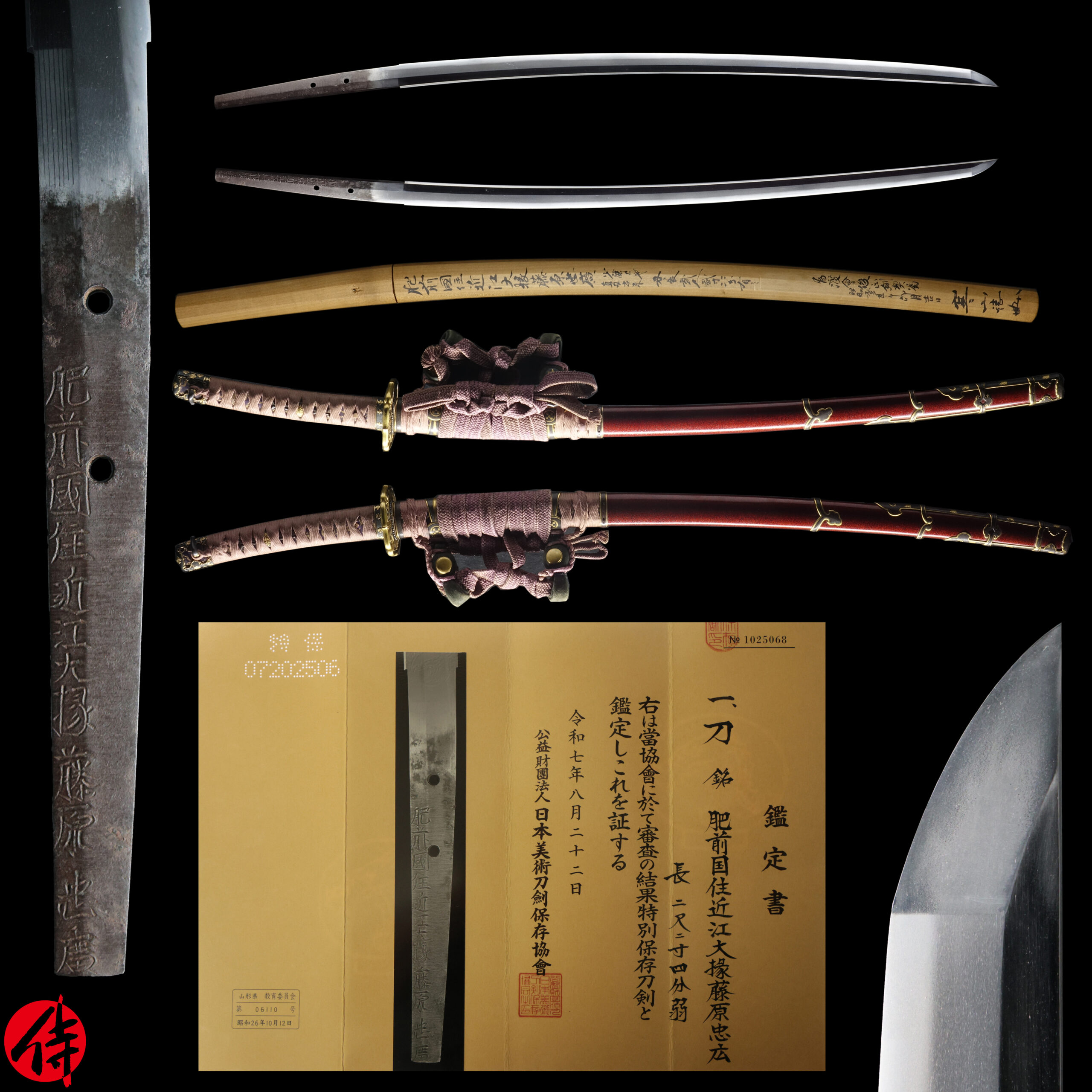
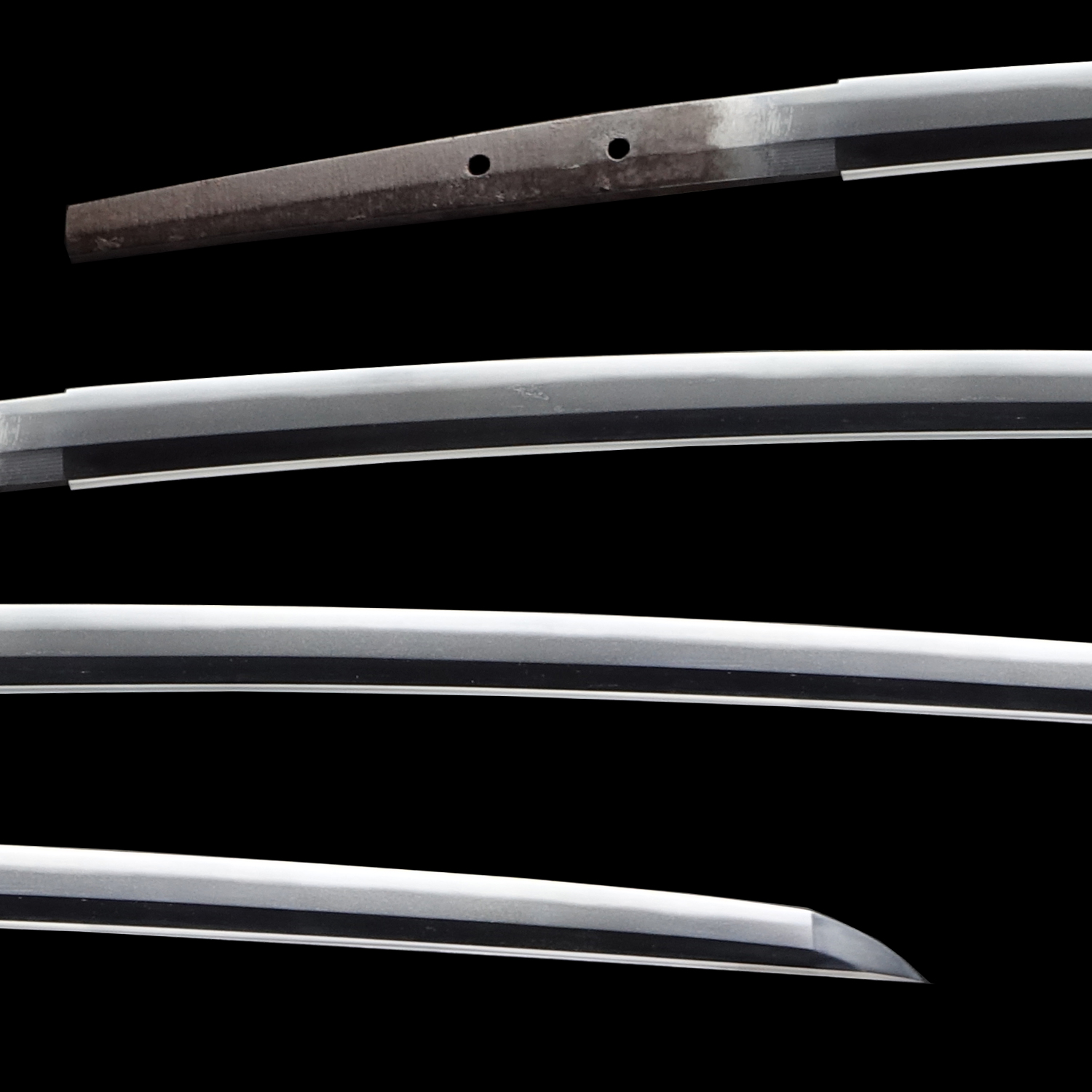
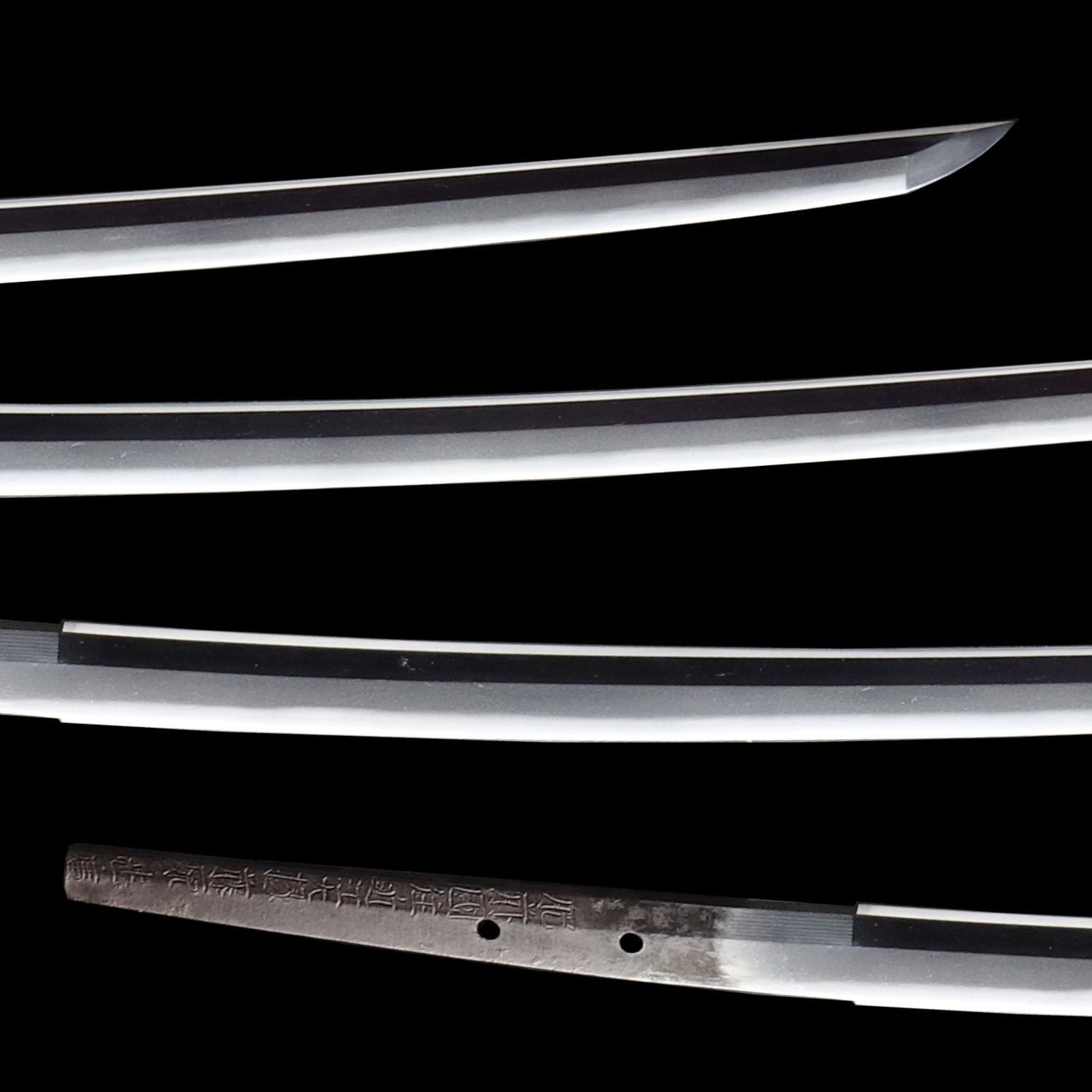
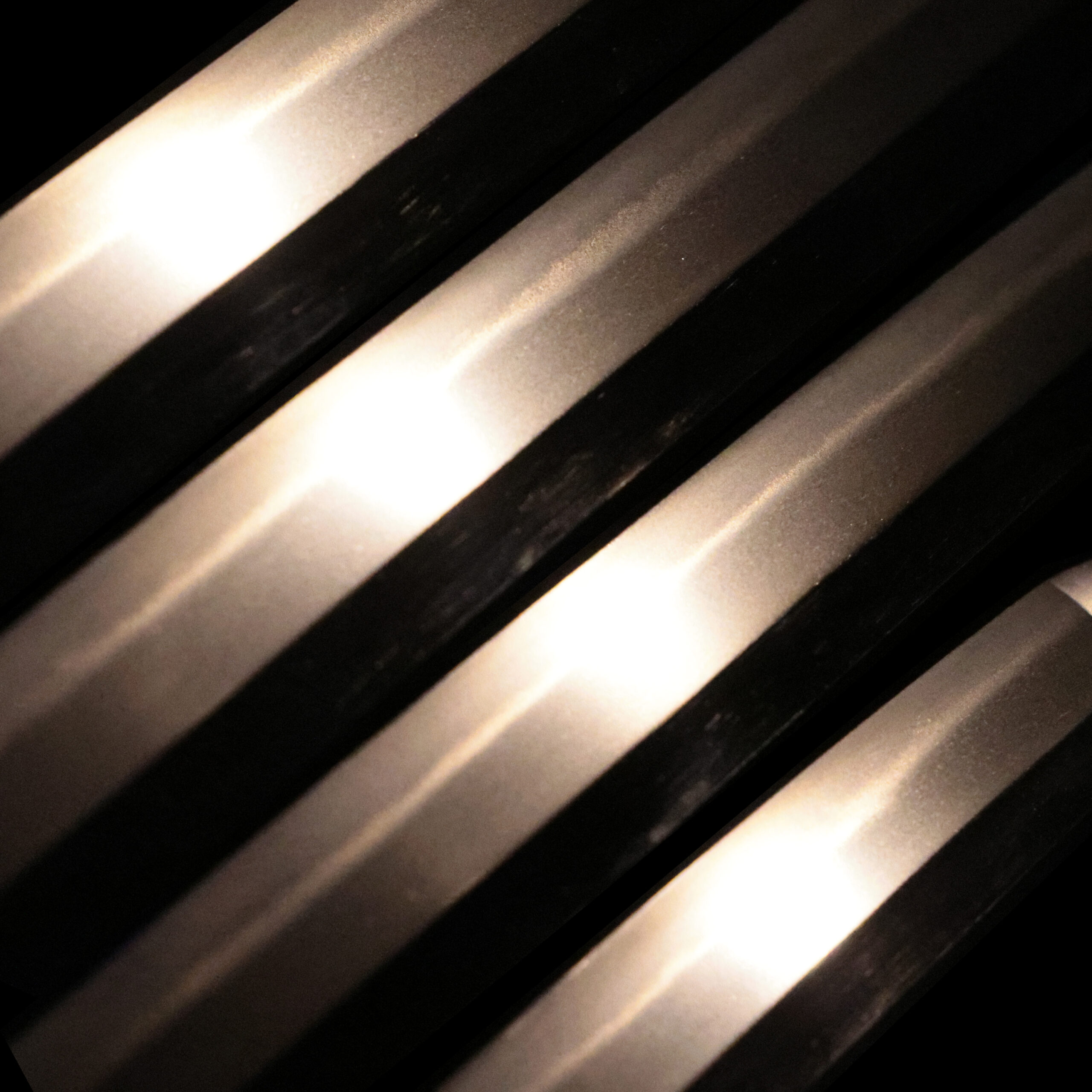
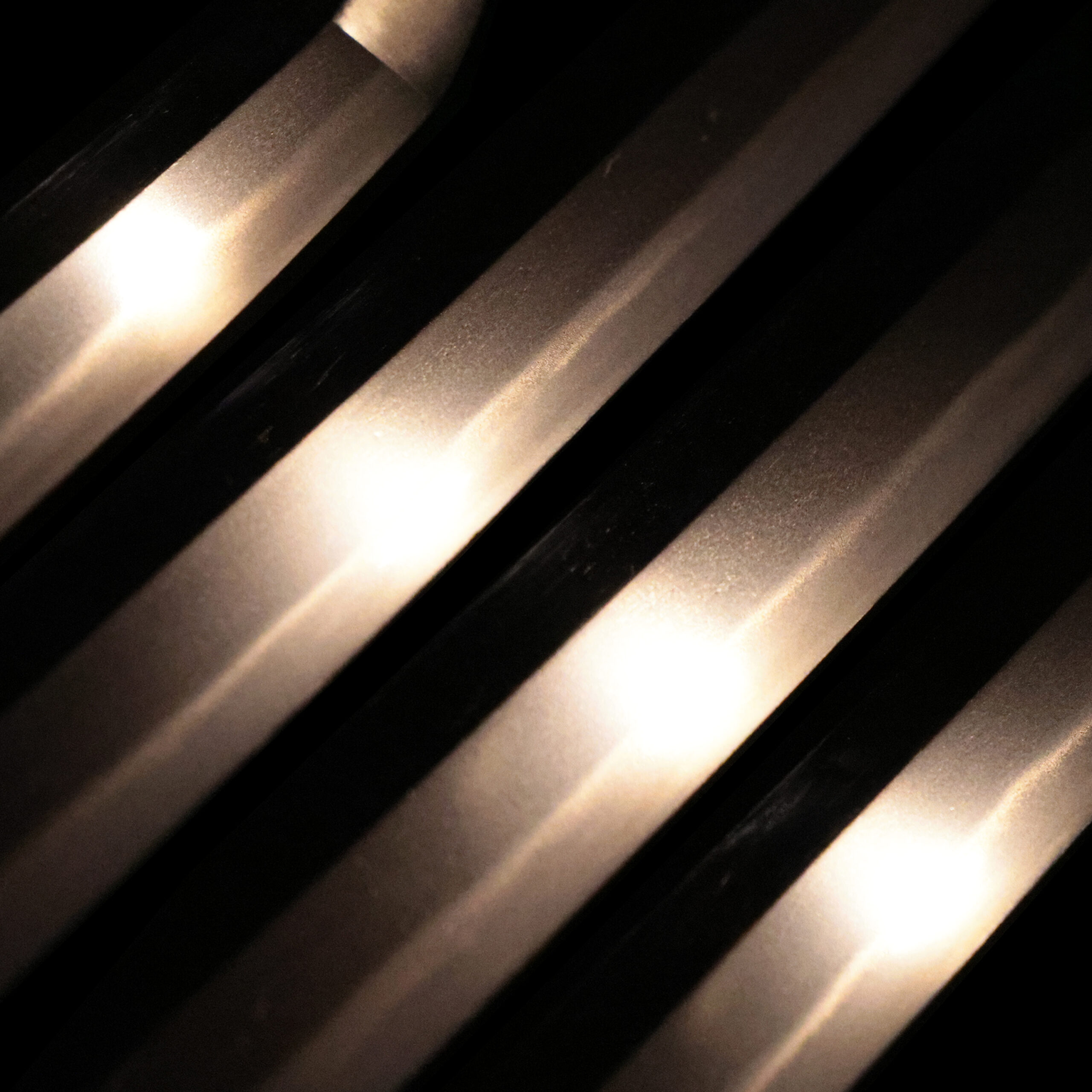
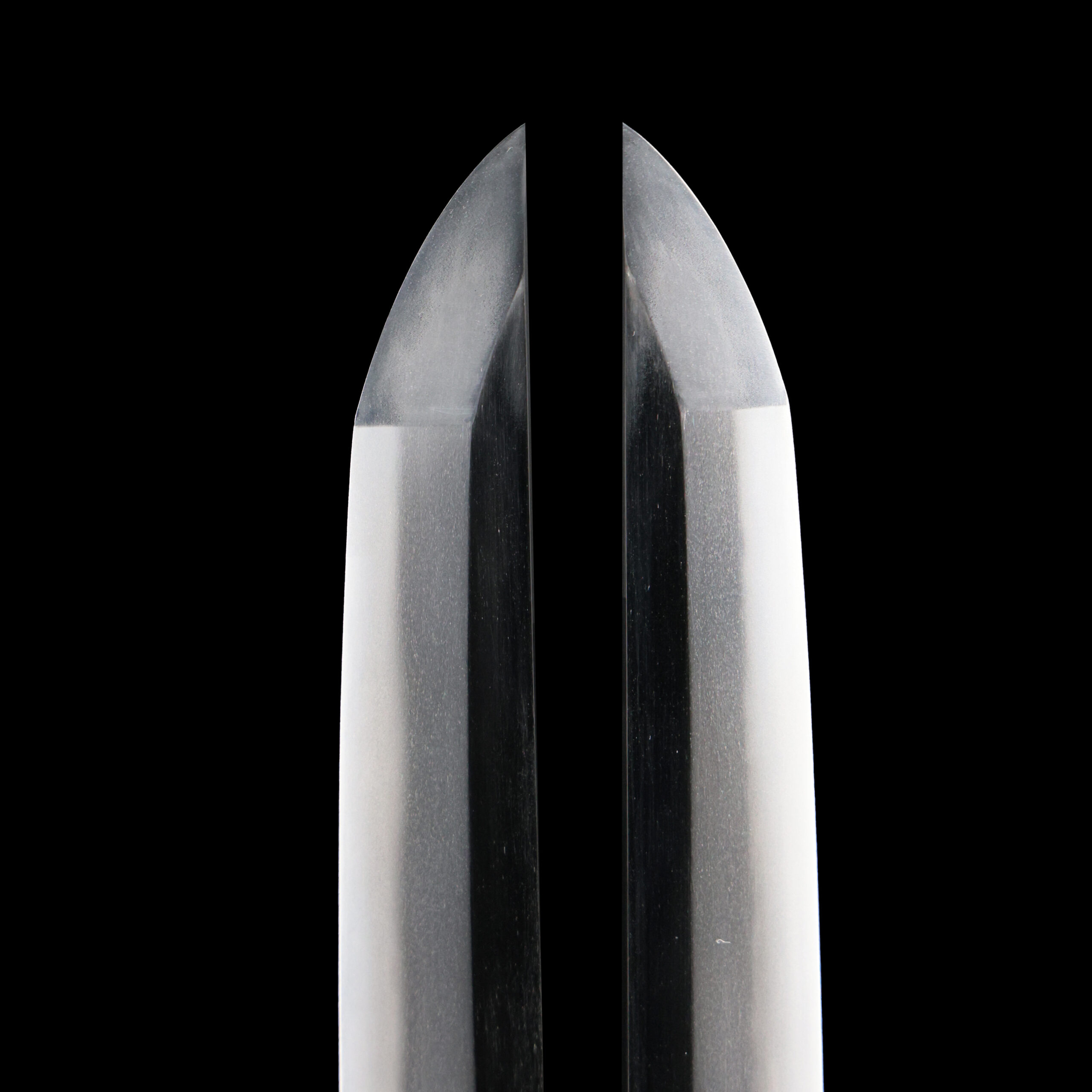
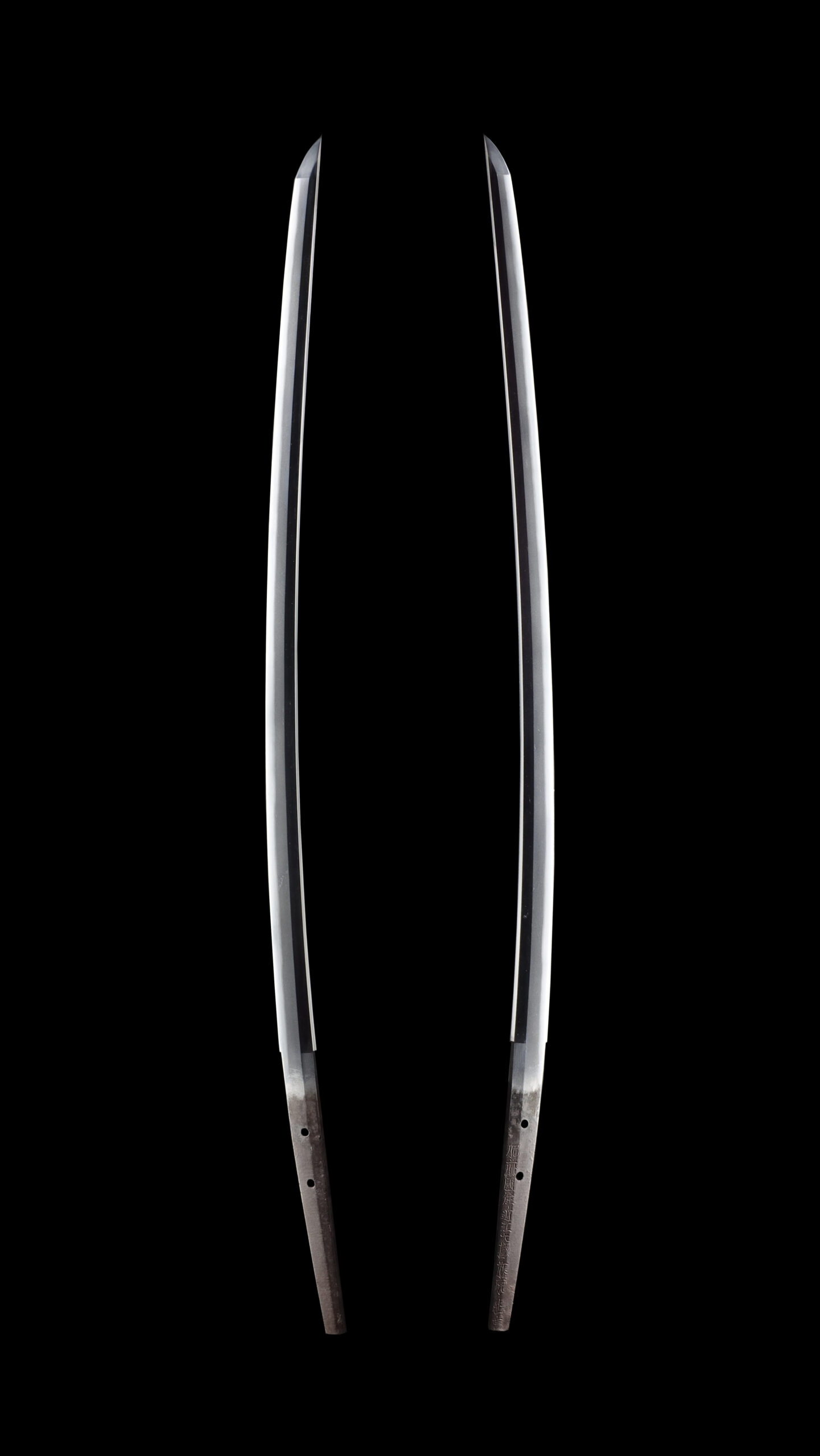
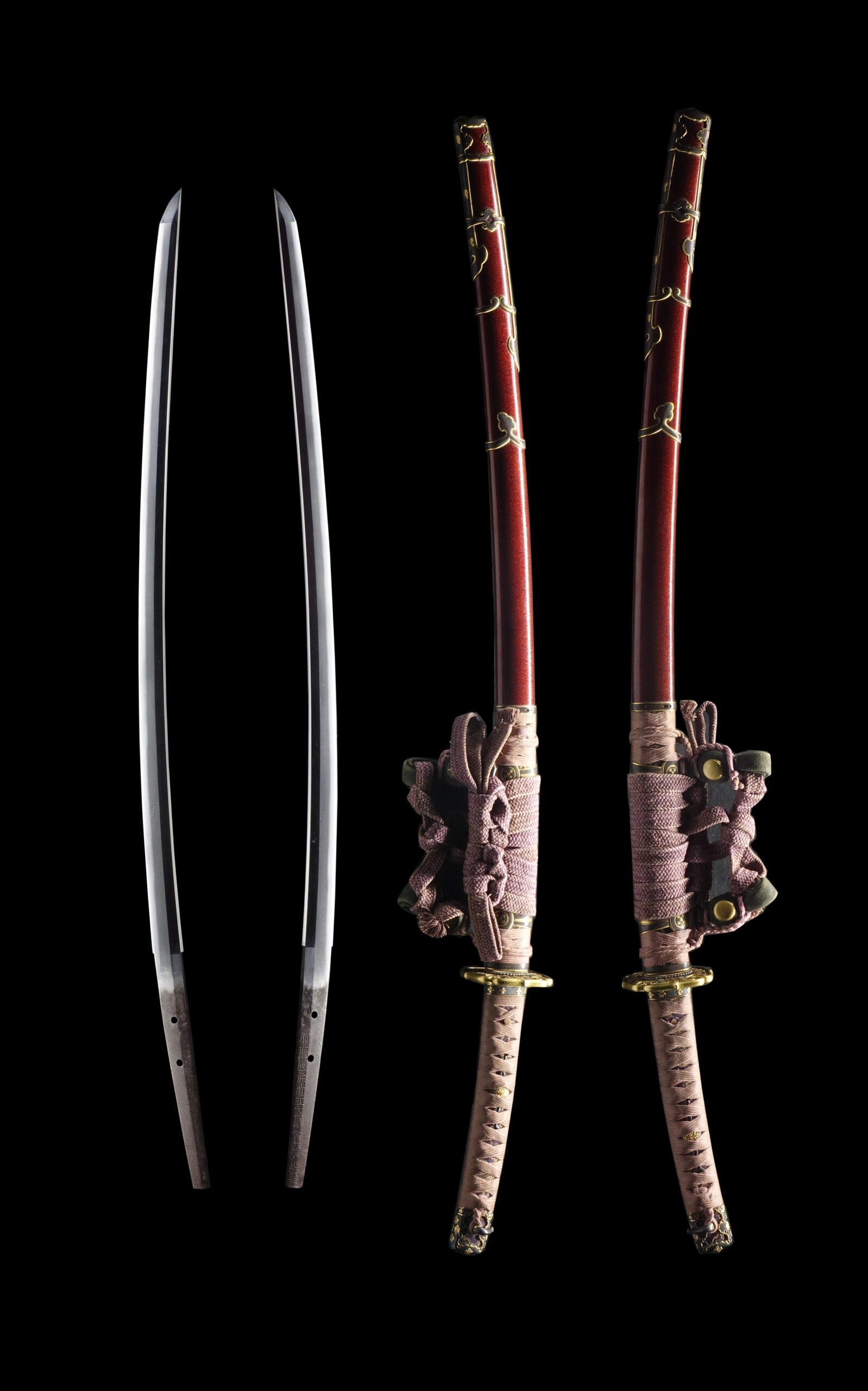
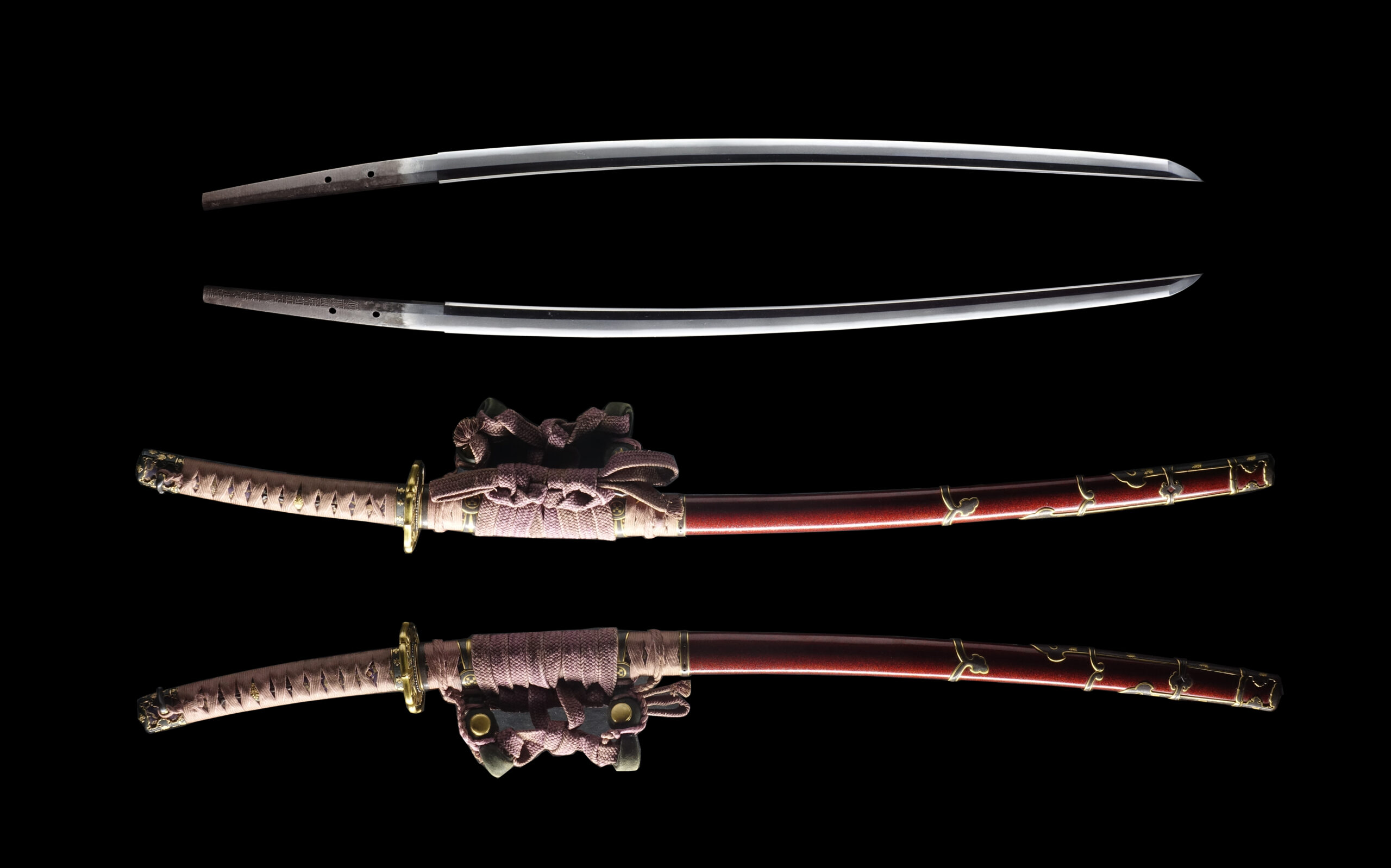
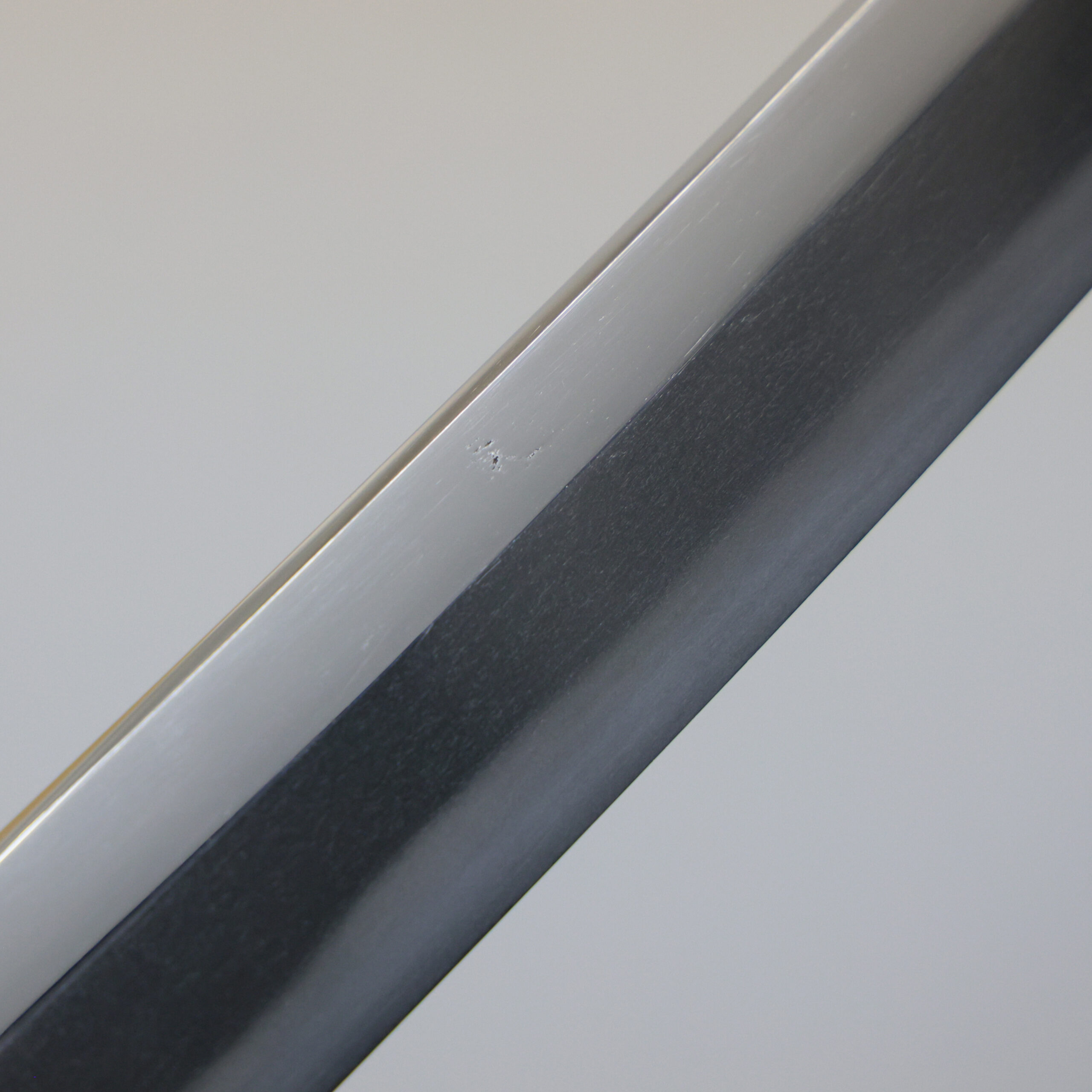
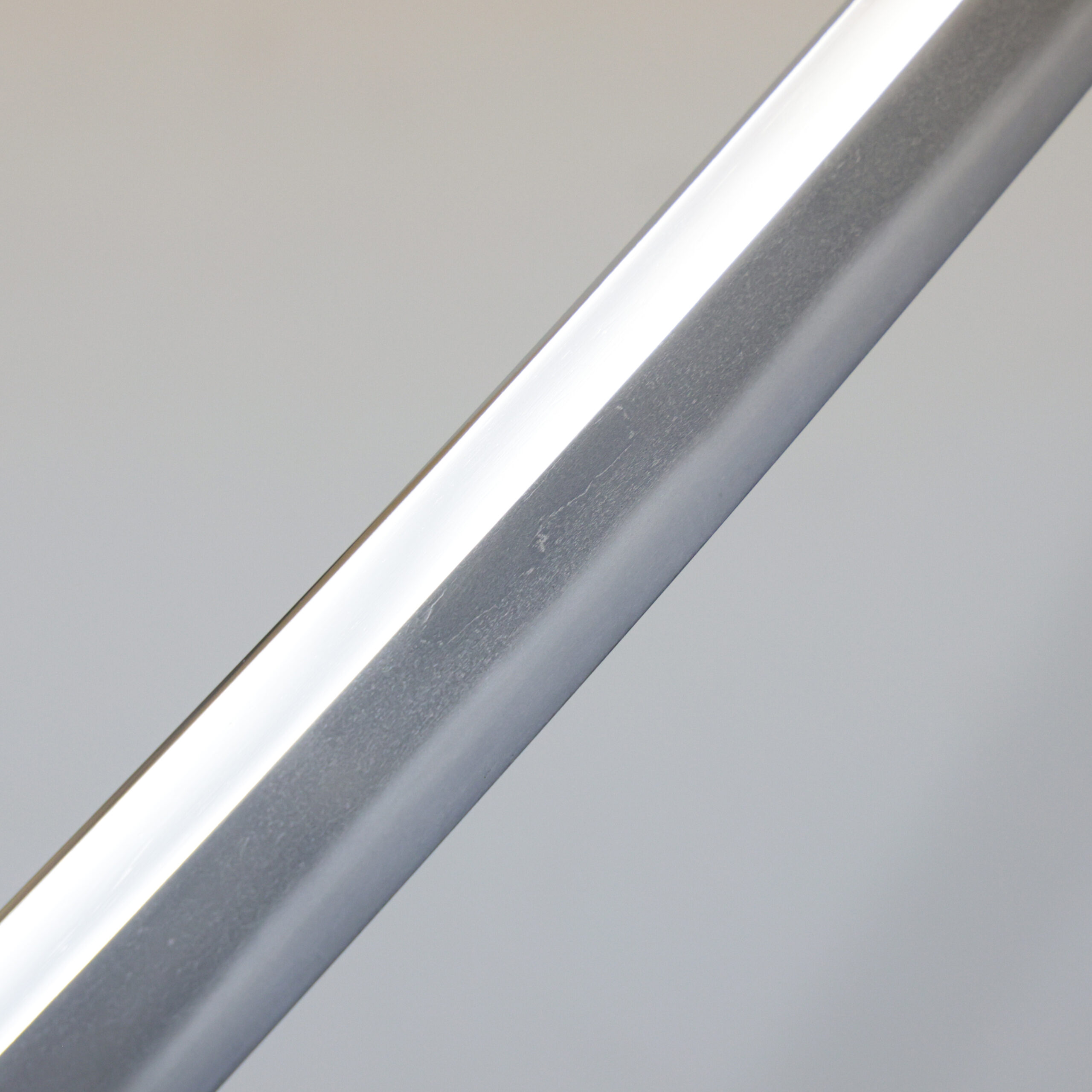
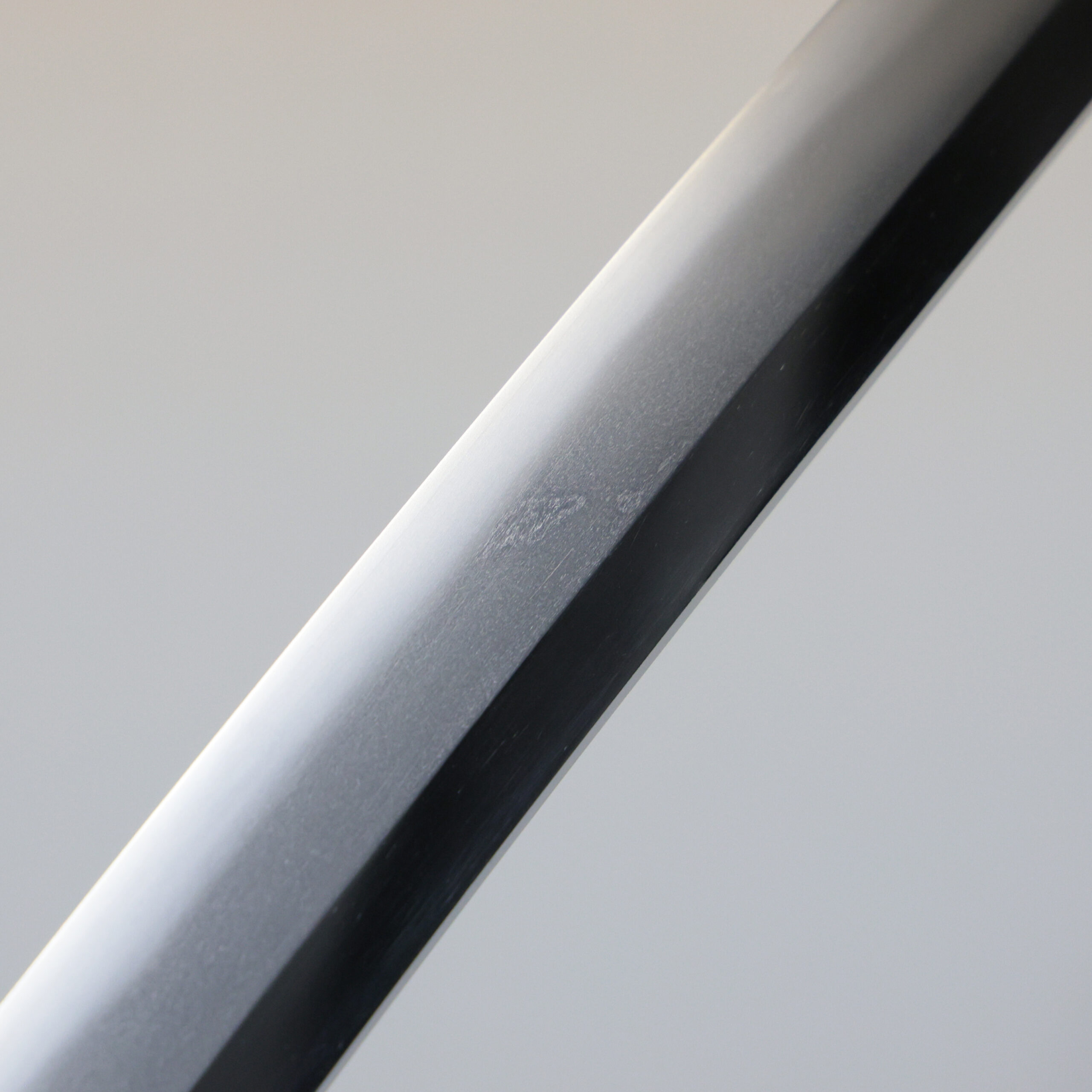
Hizen (Saga) · Hizen · around 1633-1693
Fujishiro Jo-jo saku · Tōken Taikan top 14%
23 pieces on the market now
Tadahiro, called Heisakuro, was the legitimate son of the first-generation Hizen Tadayoshi and the second head of the main line at Saga. He was nineteen when his father, by then Musashi no Daijo Tadahiro, died in Kan'ei 9 (1632). The published sources credit both his own talent and the disciples his father had trained, who carried the young head of the house, and his dated work survives from Kan'ei 10. On the twenty-second day of the seventh month of Kan'ei 18 (1641) he received the title Omi no Daijo, and he worked until his death at eighty-one in Genroku 6 (1693). That career of more than sixty years left, in the words of the published sources, more works than any other Hizen smith[[c:1]].
His work falls into two manners, suguha and choji-midare, and the published sources hold him highly accomplished in both, with suguha his greatest specialty[[c:2]]. It is a comparatively straight chu-suguha of deep nioi with ko-nie adhering thickly, at times tinged with a shallow notare and a little ko-gunome, ashi and yo entering well, fine kinsuji and sunagashi running through it. In places the nioiguchi thickens into a band, and it stays bright and clear. The boshi runs straight to a ko-maru. The sugata has the balanced curvature of Hizen work, and on some blades it is broad, long and heavy, with a touch of funbari at the base.
The jigane is the Hizen komenuka-hada: a tightly forged ko-itame with no looseness, ji-nie laid dust-fine and thick, fine chikei entering, the steel clear. On his best blades the published sources describe forging of unmatched quality and both ji and ha clear and brilliant. He was also the first Hizen smith to add the soemei shinkitae saku, "made of truly forged steel", and the published sources observe that this begins with him among Hizen smiths[[c:3]]. Blades bearing it are often of especially fine forging.
His work divides by period as well as by manner. Before the title he signed every blade Hizen no kuni ju Fujiwara Tadahiro, the same form as his father's presentation signature, and the published sources separate the two hands by the strokes of 藤 and 廣. Many of these early blades are dated; after the title dated pieces become rare, so the Shoho, Keian and Enpo dates on record are prized. The early work is read as the vigor of youth, showing an unconstrained boldness beside his later production[[c:4]], and some of it comes close to his father's Musashi no Daijo work, which the published sources attribute to his father's collaborators still working beside him. His choji-midare runs through both periods. In choji the published sources rank him above even the first generation[[c:5]]: a wide temper of choji with gunome, the heads comparatively even so that the cloves stand shoulder to shoulder, long ashi entering thickly and nie gathering in the valleys. They call it the so-called Hizen long-legged choji[[c:6]]. A Tokubetsu Juyo katana dated the very day he received his title, its chu-suguha written in an archaic manner after Rai work, is read as a commemorative piece[[c:7]]. A small tanto by him, carved probably by Yoshinaga, was aimed at old work such as Rai Kunimitsu[[c:8]].
Within the Hizen main line his long career joins the founder to the later generations. He trained many pupils, and the published sources record that the third-generation and fourth-generation Tadayoshi served as his substitute makers and signers[[c:9]]. Joint works with his son Mutsu no Kami Tadayoshi, each signing one side of the tang, survive in comparatively large numbers. On some of these the published sources judge the forging and temper to be largely the son's hand. His deep-nioi suguha over the komenuka-hada became the measure by which later Hizen work is read.
Fujishiro ranks him Jo-jo saku. He has no National Treasures or Important Cultural Properties on record. His standing rests on 131 blades in the Tokubetsu Juyo and Juyo tiers, three of them Tokubetsu Juyo. The published sources call one of these work outstanding among his production[[c:10]], forceful and bold in both ji and ha. Recorded provenance runs through the Imperial Family and the Nabeshima house his line served. One katana was the personal sword of the domain lord Nabeshima Katsushige[[c:11]], and a naginata blade survives in its Nabeshima family mounting for a woman of the house. Because he was so prolific, signed Omi no Daijo Tadahiro blades appear on the market with some regularity. A papered Juyo example is within reach of a patient collector. A Tokubetsu Juyo blade, or one of the dated pre-title pieces, appears only from time to time.
Where Tadahiro stands among comparable artisans: across all of nihontō, and within tradition, era, and period. The tiers (Foremost · Leading · Major · Notable) weigh official designations from the NBTHK and Japan's Agency for Cultural Affairs, together with historical honors of lasting repute such as the Sansaku and Meibutsu-chō.
Select a lens to see how it's measured.
Years he was demonstrably active, proven by signed-and-dated blades
Shinto · Hizen
109 pieces on the market now
The Hizen school began with a single domain commission. In Keicho 1 (1596) the Nabeshima of Hizen ordered Hashimoto Shinzaemon, the smith who would sign Tadayoshi, up to Kyoto with the carver Munenaga; there he entered the gate of Umetada Myoju and studied forging while Munenaga learned the chisel. The two returned to the province in Keicho 3 (1598), and Tadayoshi settled in the castle town below Saga, where under the domain's patronage the line grew into the dominant sword-making house of Kyushu. His own work runs from Keicho 5 (1600) to his death in Kan'ei 9 (1632); in Genna 10 (1624) he received the court title Musashi Daijo, changed his name to Tadahiro, and shifted his clan name from Minamoto to Fujiwara, so that the late Musashi Daijo blades are the founder under a second name. From him the house became a true generational institution: his son the second-generation Omi Daijo Tadahiro carried it forward as its most prolific hand, the third-generation Mutsu no Kami Tadayoshi returned its highest finish, and a Tosa no Kami branch took the founder's signature when he set it aside. Around this main line grew a circle of disciples and collateral hands, the waki-Hizen or Soba-Hizen smiths, several of them, like Yoshiie and Hironori, working as daisaku substitute makers whose own signed pieces are therefore scarce. The school's signature is its steel. Over a ko-itame forged so tightly it shows no slackness, fine ji-nie gathers in minute particles until the surface takes on the rice-bran konuka-hada (also written komenuka-hada) that no other school produces, fine chikei entering throughout and the ji notably clear and bright.
The orthodox temper laid upon it is a chu-suguha or hiro-suguha, sometimes tinged with a shallow notare and ko-gunome, the nioiguchi deep with finely clustered ko-nie and tightened to a bright clarity, the boshi running straight to a quiet ko-maru. The founder aimed this suguha toward the Rai school yet departed from it, his nioiguchi tighter and his forging carrying more vigor; the third generation refined it to what the published sources call the strongest and most precise hand of the first three generations. Against that calm register the house also worked a showier one, the Hizen choji-midare mixing gunome, long ashi, kinsuji and sunagashi, a manner the published sources already find more often in the founder's late Musashi Daijo work than in his Tadayoshi years, and one the second generation made his own. The branches pushed further from the suguha standard: Tadakuni of the Ogi domain ran sunagashi more conspicuously than any other Hizen hand and reached toward old Ichimonji in his o-choji; Masahiro and Yukihiro favored a flamboyant long-ashi choji over the calm main line; and the Iyo no Jo Munetsugu line worked apart in the Soshu-den, building a midareba on notare with a pointed togariba and a jihada that tends to stand and tone slightly blackish. A collector seeks Hizen-to first for that steel, and reads it the same way the appraiser does: a bright suguha lying over a clear, tight konuka-hada identifies the school before the signature is consulted, and the quiet ko-maru boshi on the ura-signed tang confirms the main-line practice. Generation and branch are then told within that frame, the third generation's powerful sugata recalling not his father but his grandfather, the waki-Hizen hands set apart by their irregular temper, their sujikai file marks and a sashi-ura signature, the Munetsugu line by its Soshu togari. The main line, made in real numbers across so long a span, reaches the market more readily than any Kamakura master, so a papered example is within reach of a patient collector, while the founder's own work and the finest konuka-suguha of the third generation come to open hands only from time to time. Provenance runs back through the house the school served, blades recorded to Nabeshima Katsushige and Nabeshima Naomoto and passing onward to the Owari Tokugawa, the Satake and the Imperial families; documentary inscriptions sharpen the picture further, a Myoju soemei attesting the founder's discipleship, Umetada carving adding flowers to brocade on his late blades, and the gold-inlaid cutting tests of Yamano Kanjuro and Yamano Ka'emon, rare on Hizen work, naming the edge as well as the hand. Learn more →
| Smith | Era | Designated |
|---|---|---|
| Tadayoshi忠吉 | 1596-1632 | 155 |
| Tadayoshi忠吉 | 1660-1686 | 61 |
| Tadahiro忠廣 | 1633-1693 | 133 |
| Masahiro正廣 | 1624-1655 | 30 |
| Tadakuni忠國 | 1648-1652 | 32 |
Hizen: a domain enterprise
Hizen swords were a domain enterprise: the Nabeshima sent Tadayoshi to study under Umetada Myōju around 1596, then built a licensed school around him. Nine generations carried its famously consistent konuka-hada work into the Meiji era.
A Hozon-certified blade judged to show notably superior workmanship and a better state of preservation. The bar is higher: re-tempered blades and most unsigned Muromachi/Edo works are excluded.
The NBTHK (Nihon Bijutsu Tōken Hozon Kyōkai, the Society for the Preservation of Japanese Art Swords) is a public-interest incorporated foundation founded in 1948 and supervised by Japan’s Agency for Cultural Affairs (Bunkachō); it is based at the Japanese Sword Museum in Tokyo. Its expert panels physically examine each submitted work (shinsa) and issue a certificate (kanteishō) ranking it by artistic and historical merit. NBTHK papers are the most widely recognized standard of authentication for Japanese swords and fittings.
NBTHK official siteReturns/exchanges limited to defects caused by shipping (except willful misconduct or gross negligence by the company); customers must contact within 72 hours of receiving the product.