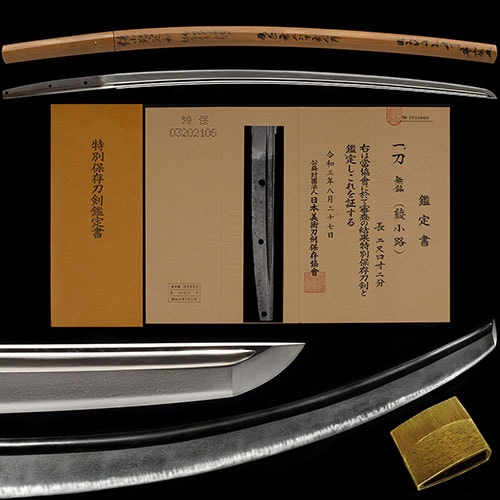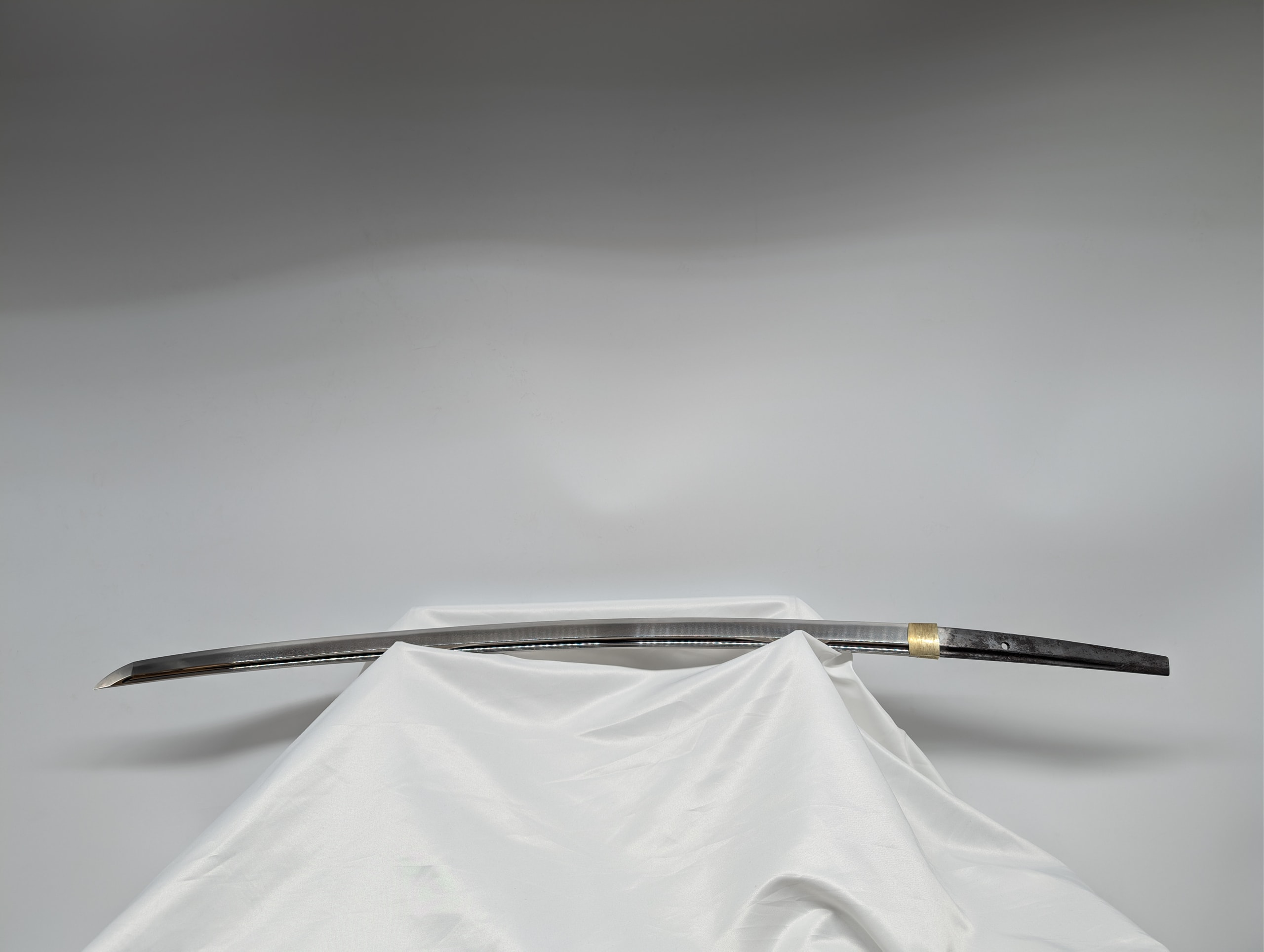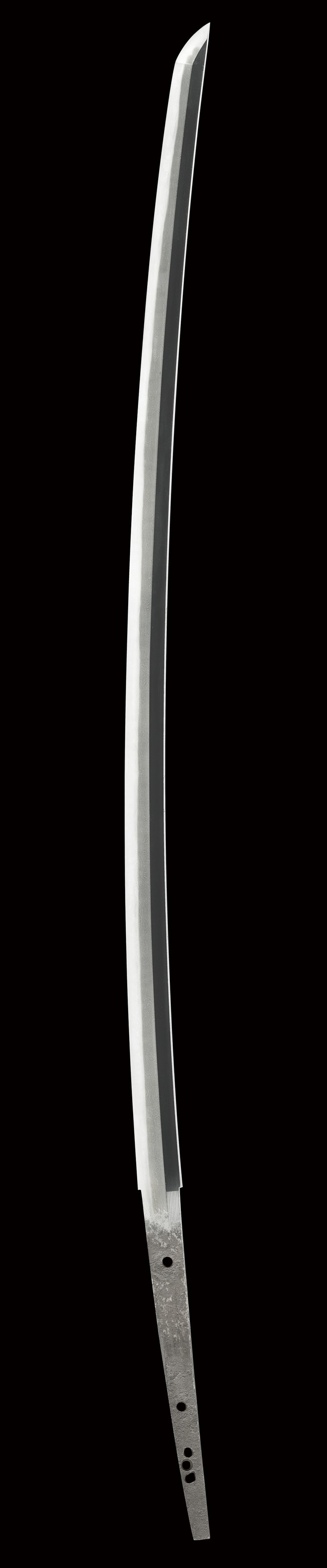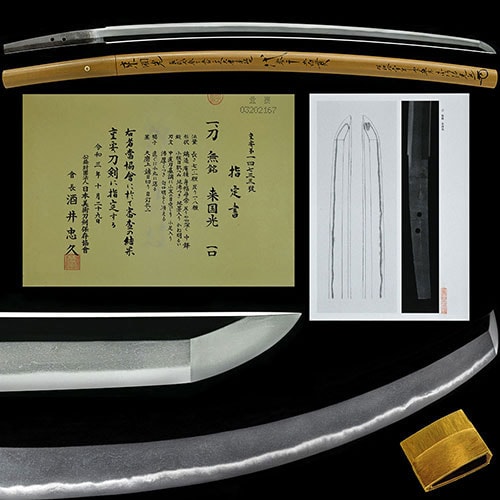
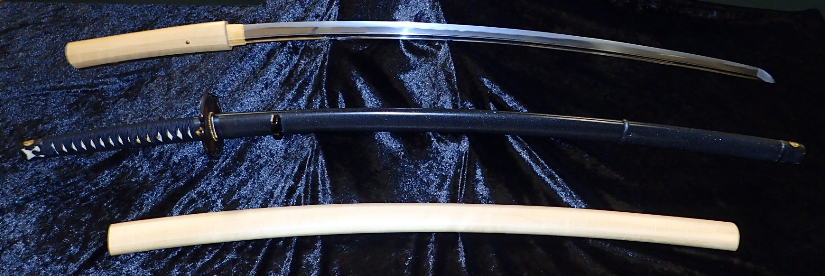

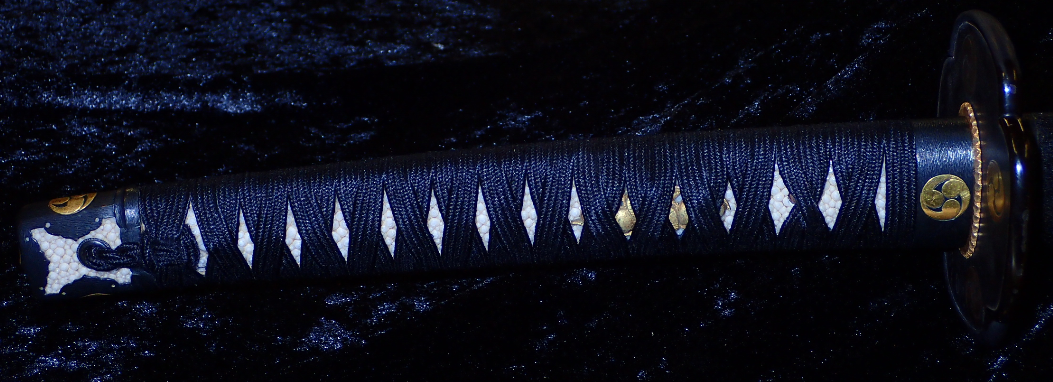
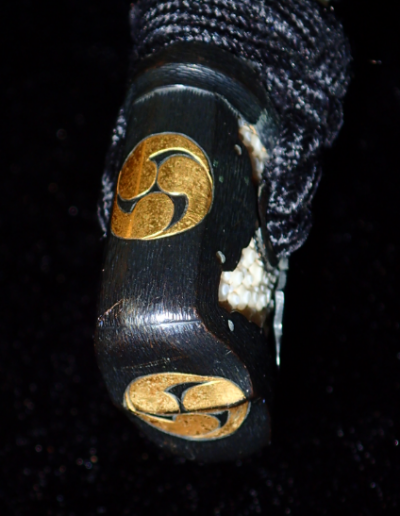
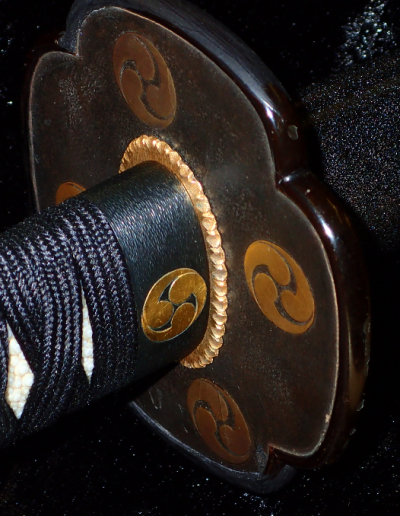
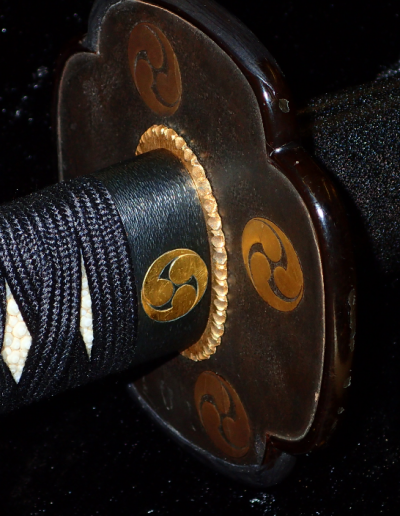






-, 66th Session — Designated December 15, 2020
, : Ayanokōji school (綾小路)
Measurements 74.1 cm, 2.8 cm, 3.1 cm, 2.1 cm, 3.1 cm, 19.2 cm, 0.2 cm
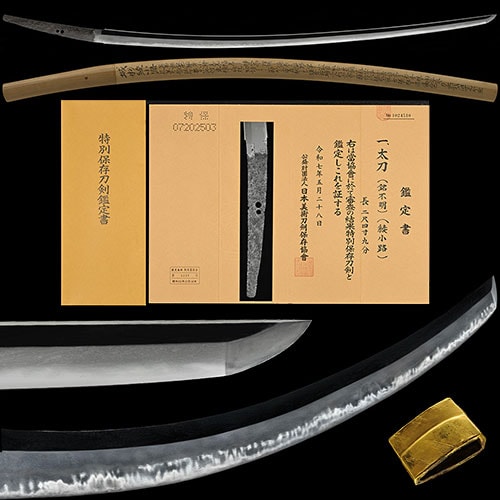
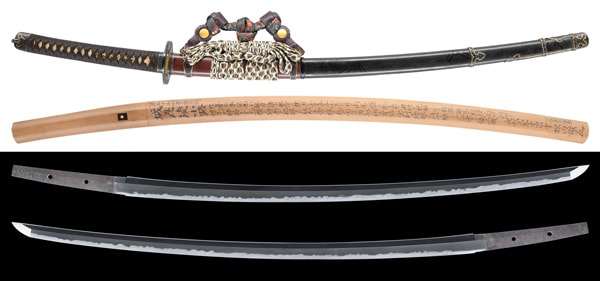
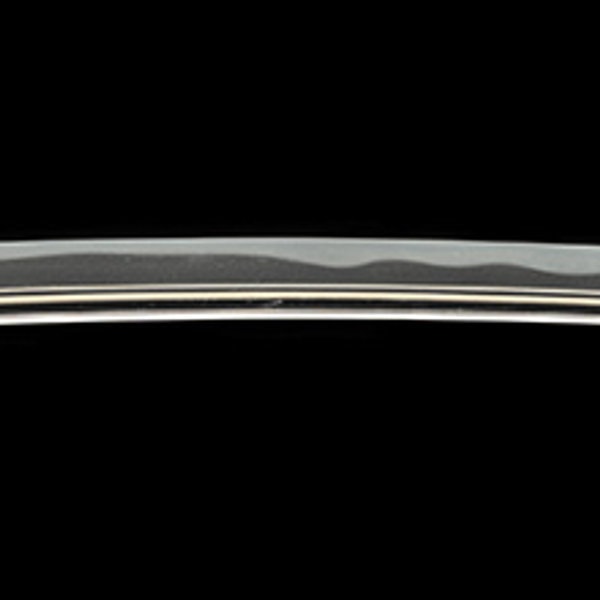
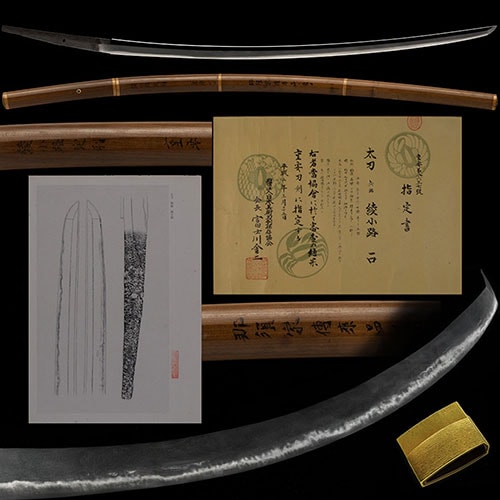
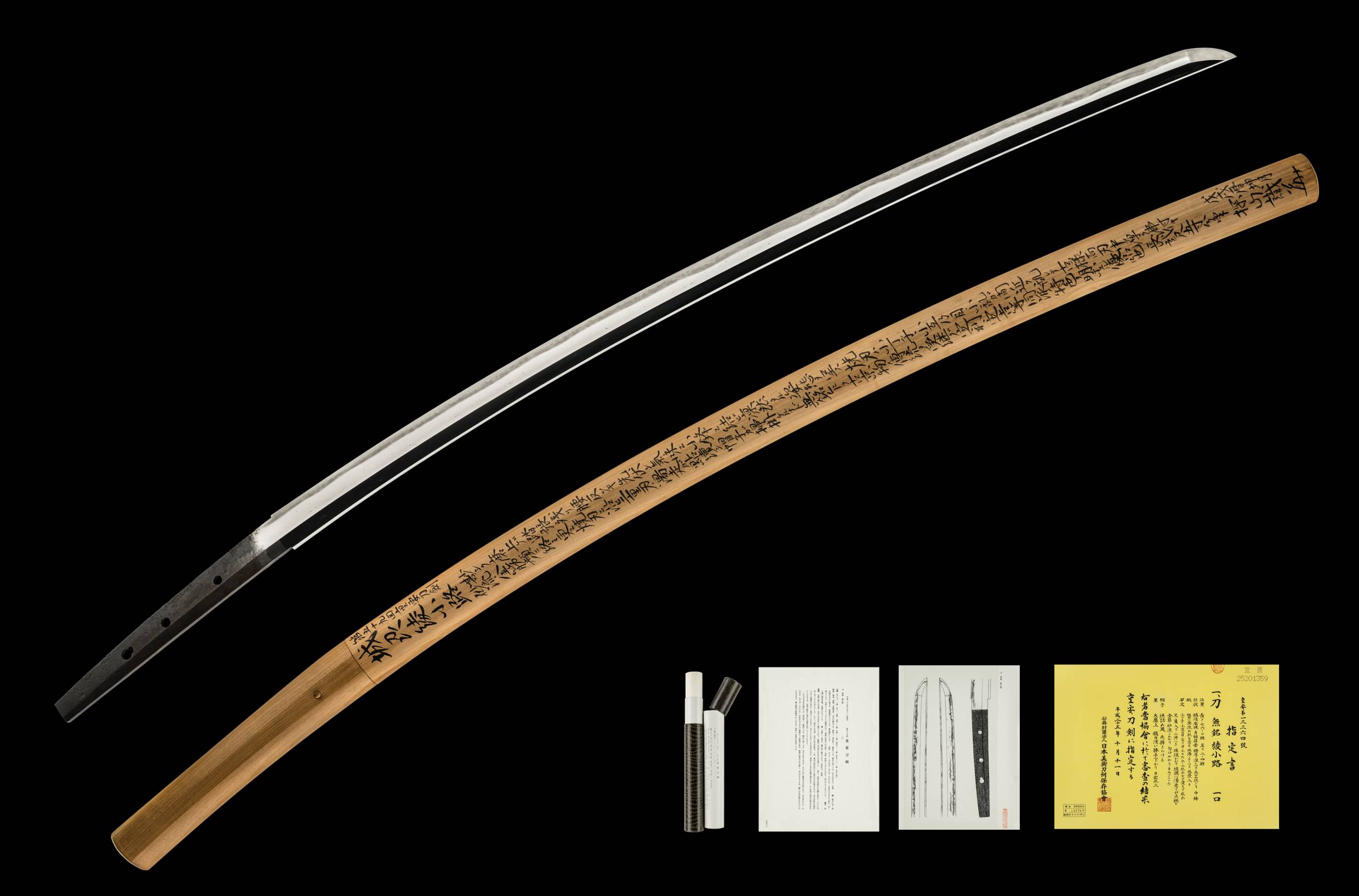
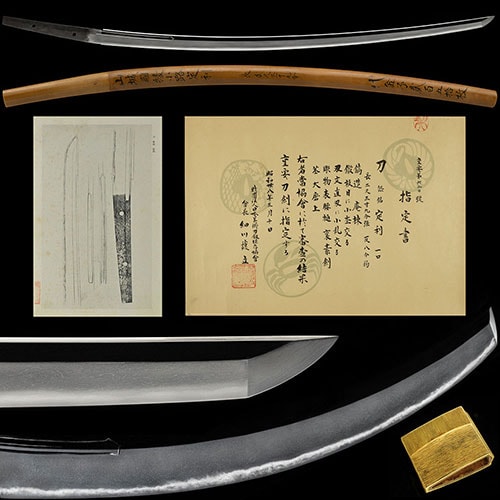
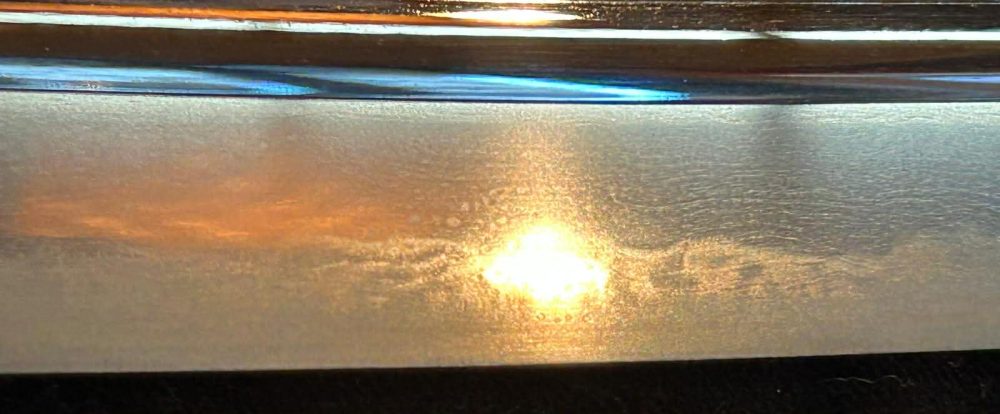
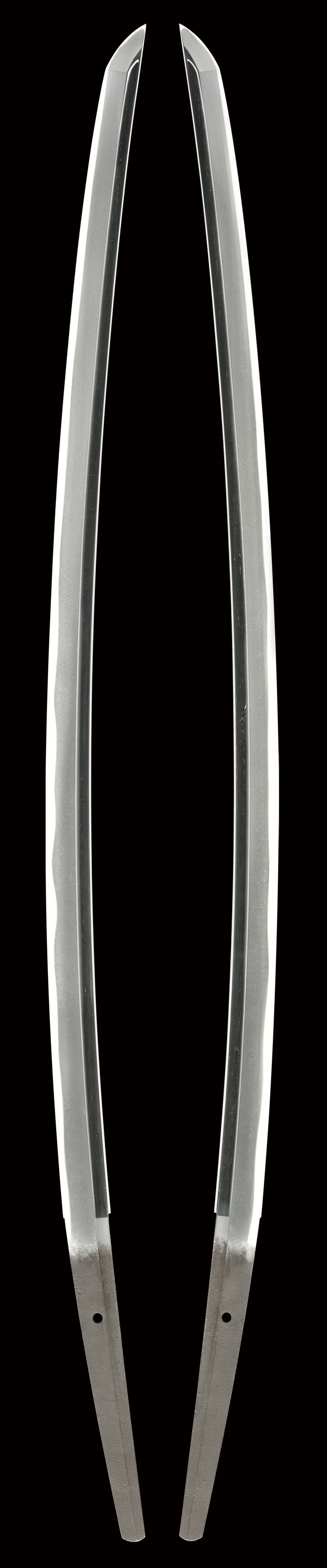
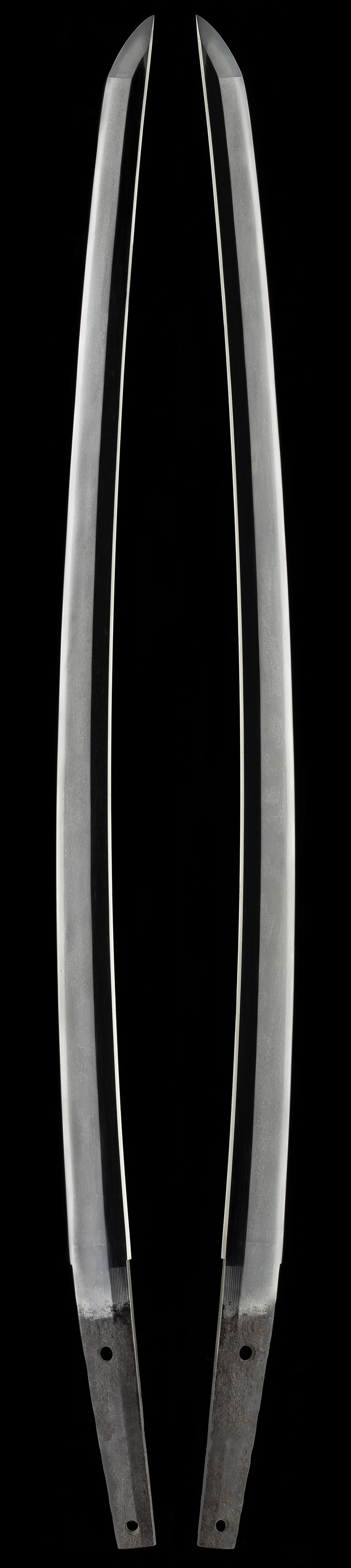
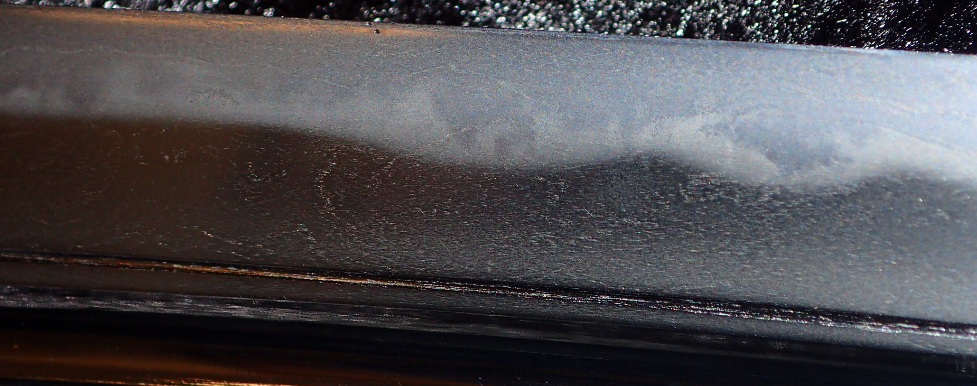
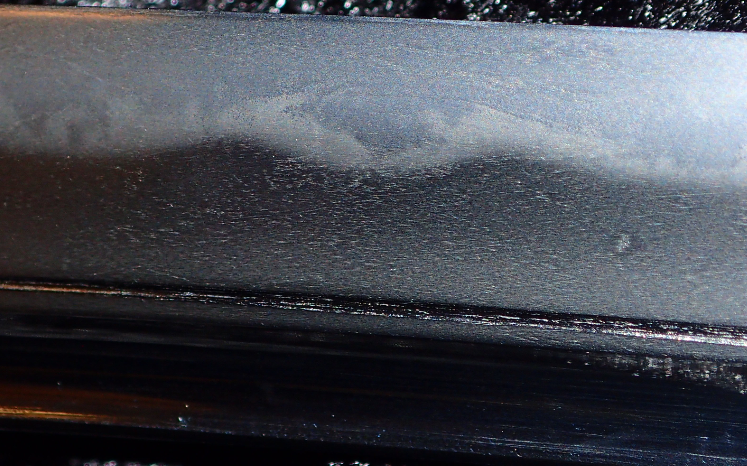
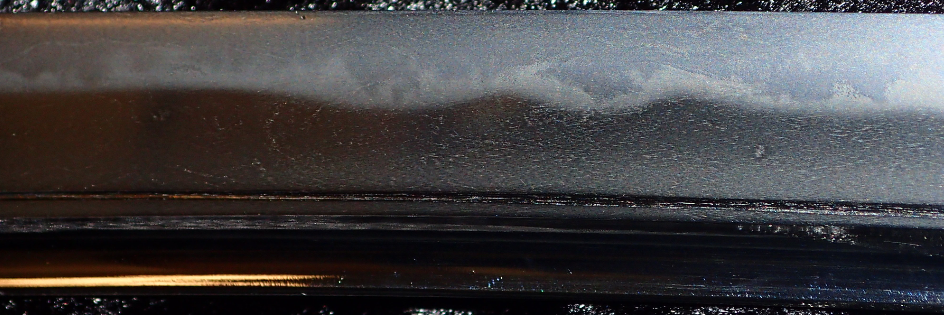
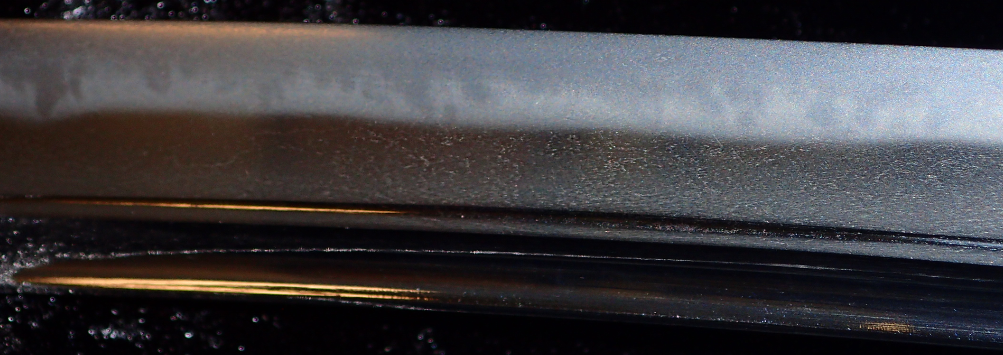
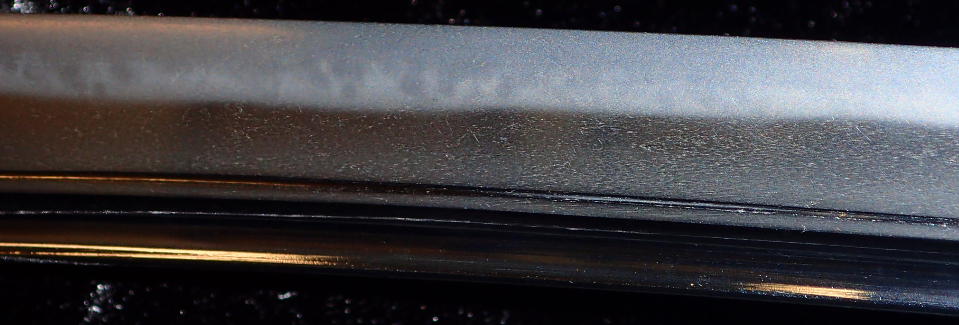
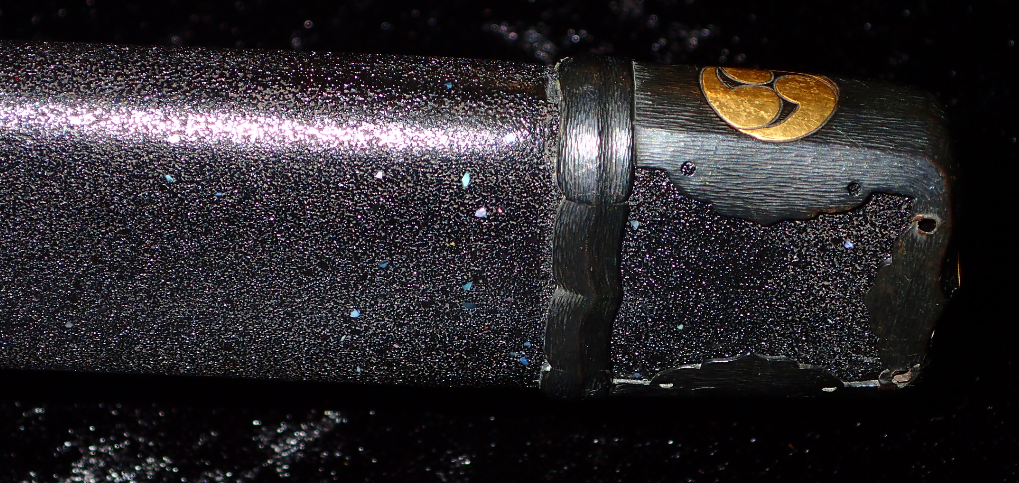
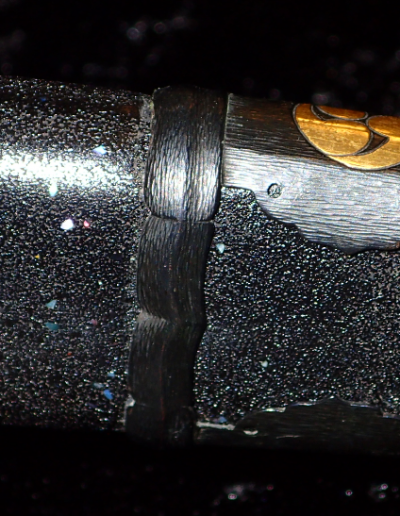
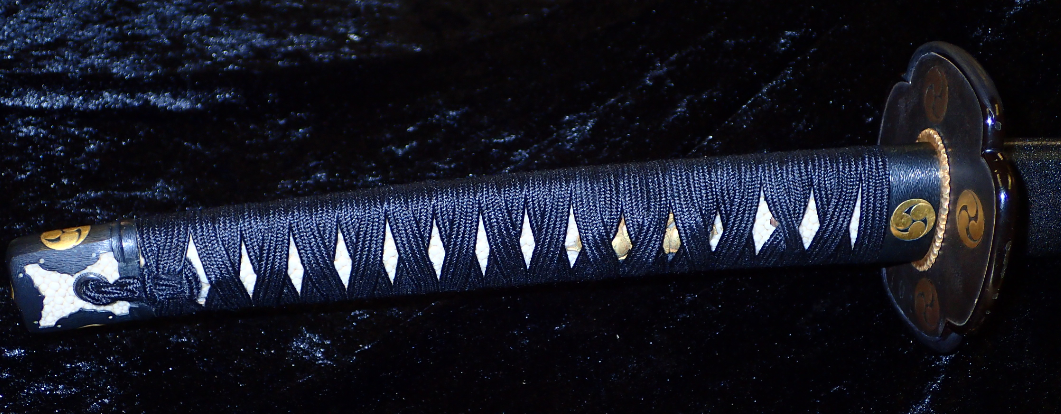
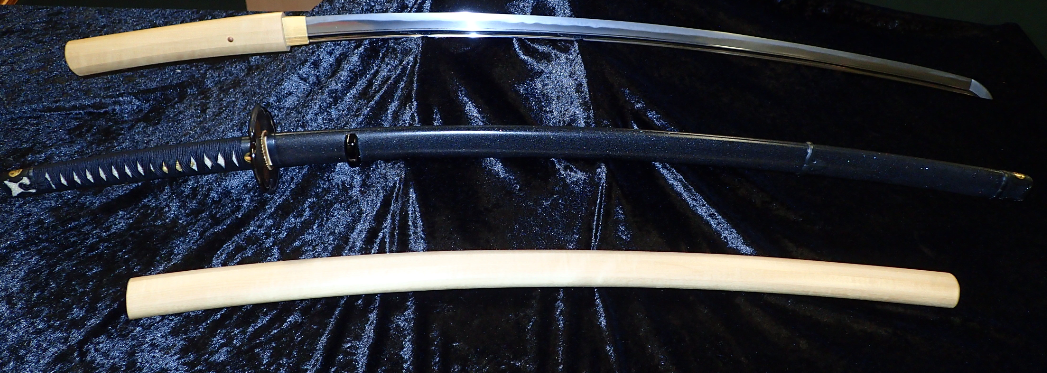
Description Keijō: , ; somewhat slender; slight widening from base to tip with only a small difference between and width; relatively thick ; deep ; a somewhat fukusari-inclined tip; . : mixed with ; abundant ; with ; standing out. : mixed with and ; vigorous ; mixed with ; ; small appearing well; some and ; is bright, and in places shows (moist/soft) tendency. : small ; on the a flavor; tip , with only slight ; on the the tip is . : on both sides, with accompanying , carved through (). : ; ; ; two ; unsigned.
Artisan Ayanokōji school (綾小路)
Era period
Explanation In Kyōto’s Ayanokōji district, smiths such as Sadatoshi and Sadayoshi resided and forged swords. In sword reference works Sadatoshi has traditionally been placed around the Bun’ei era (1264–1275). One theory further relates that Sadatoshi lived near Kuniyuki and that they even made substitute works for one another.
However, the styles seen in extant works by Sadatoshi and Sadayoshi have an archaic flavor that feels as though they follow the working range of the old Kyō-mono and Gojō lineages. Their are characterized by that becomes closely packed and complex in small patterns; moreover, minute additional tempering continues in dotted fashion along the , forming a -like impression, while the displays an tendency. For these reasons, they are appraised as dating earlier than the commonly accepted chronology.
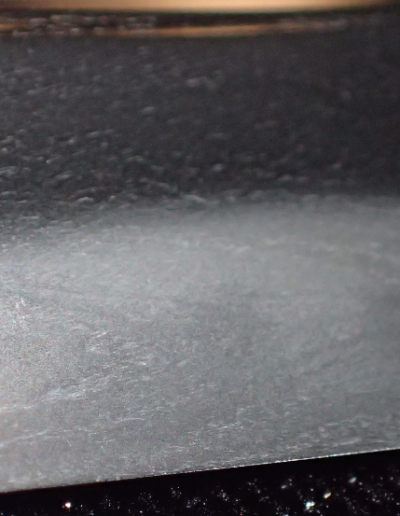
This blade is somewhat slender, with deep , showing a form that inclines toward fukusari at the tip and concludes in . The is mixed with , well covered with , with , and with pronounced . The is a small-patterned mixing and , with small appearing well and an tendency in the ; the has a flavor. Altogether, it clearly displays the distinctive traits of the Ayanokōji school, and the attribution is duly affirmed.
In particular, the complex and small-patterned -ba tempered in excellent-quality is deeply tasteful; together with its archaic elegance of form, it is a superior old sword.
by Sokuya Daisuke (簇谷大輔)