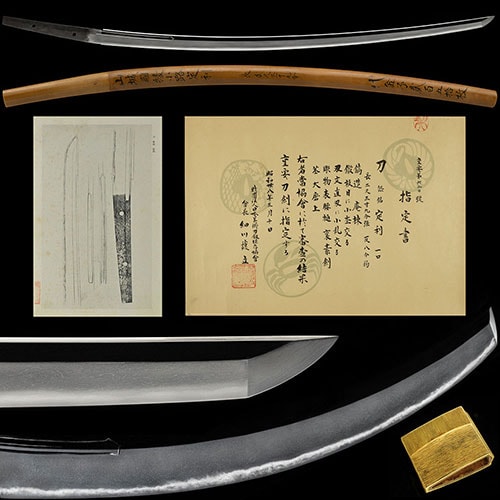
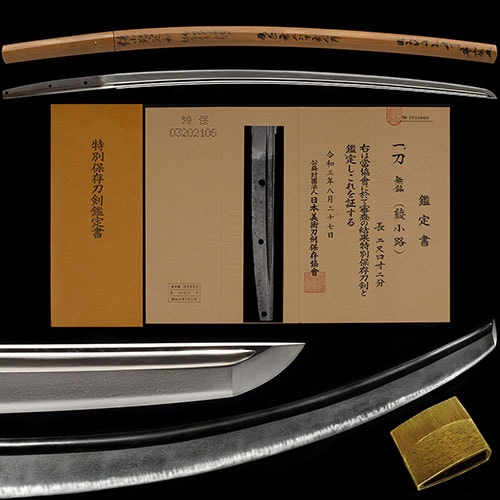
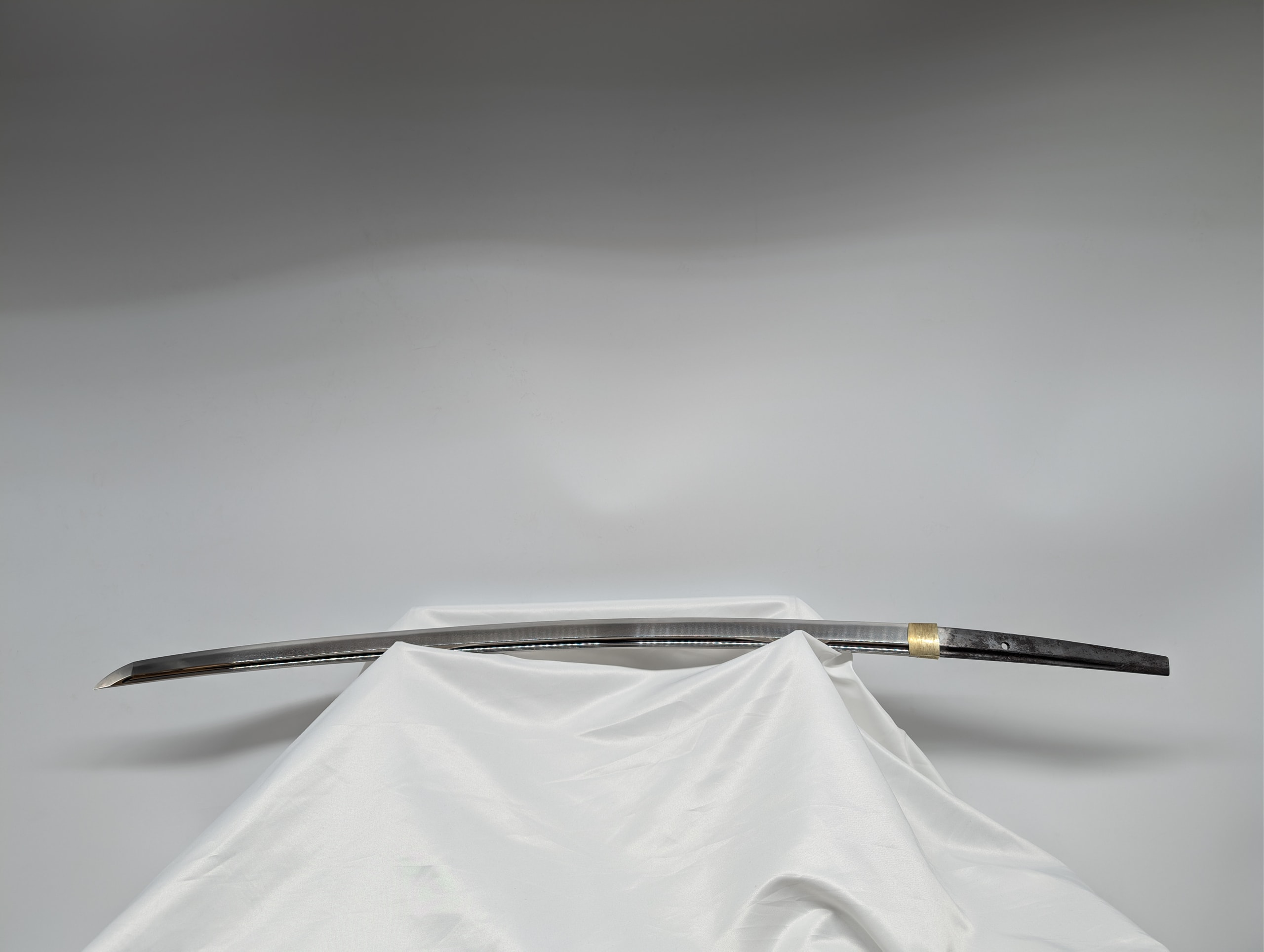
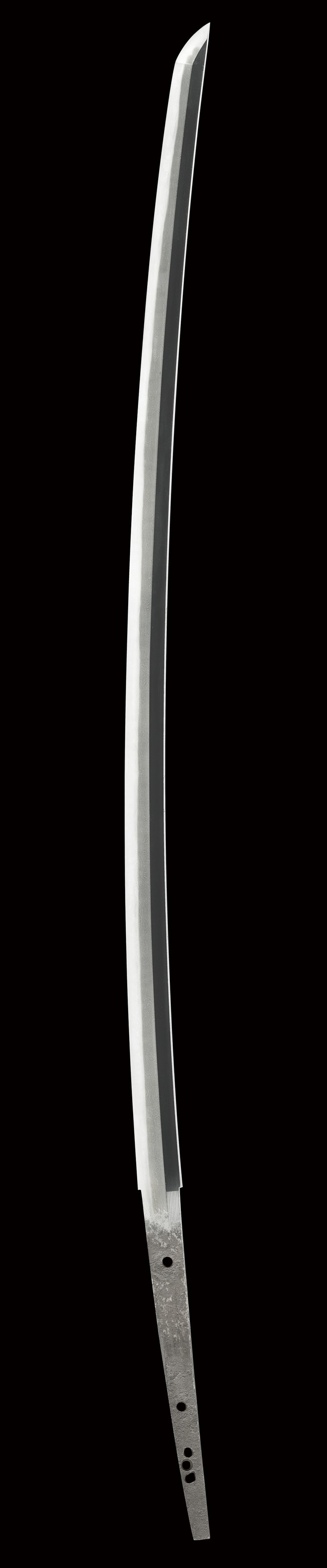
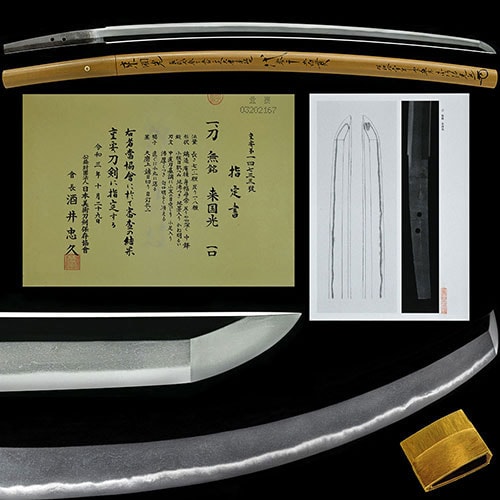
Working in the Kyoto Yamashiro tradition around the Kagen era of the late period, Sueyuki (末行) belonged to the Ayanokoji group, the early Kyoto school whose style is represented by Sadatoshi. The note that the name "Sueyuki" appears in the across several unrelated lineages (Ayanokoji, Senjuin, , , and ), but the workmanship of these blades, in , , and signature manner, places this smith firmly within the Ayanokoji group. The references describe him as a follower of Ayanokoji Sadatoshi, and one connects the quality of the and overall bearing to Sadayoshi of the group, inheriting the classically archaic style of the line.
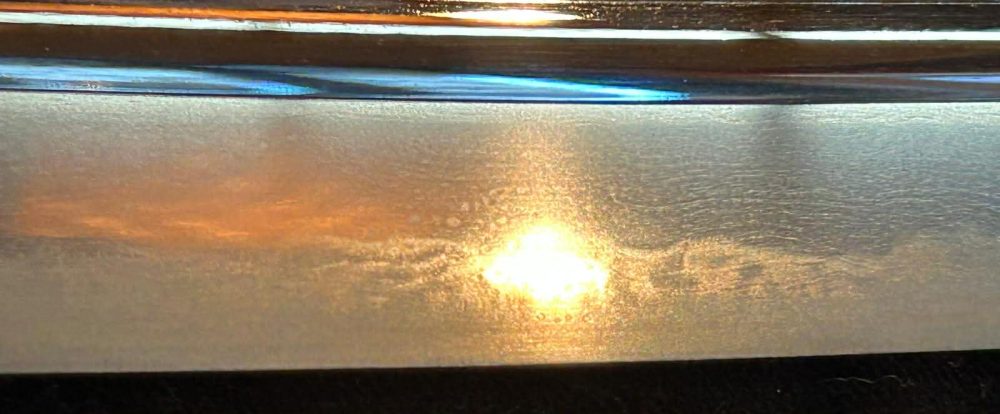
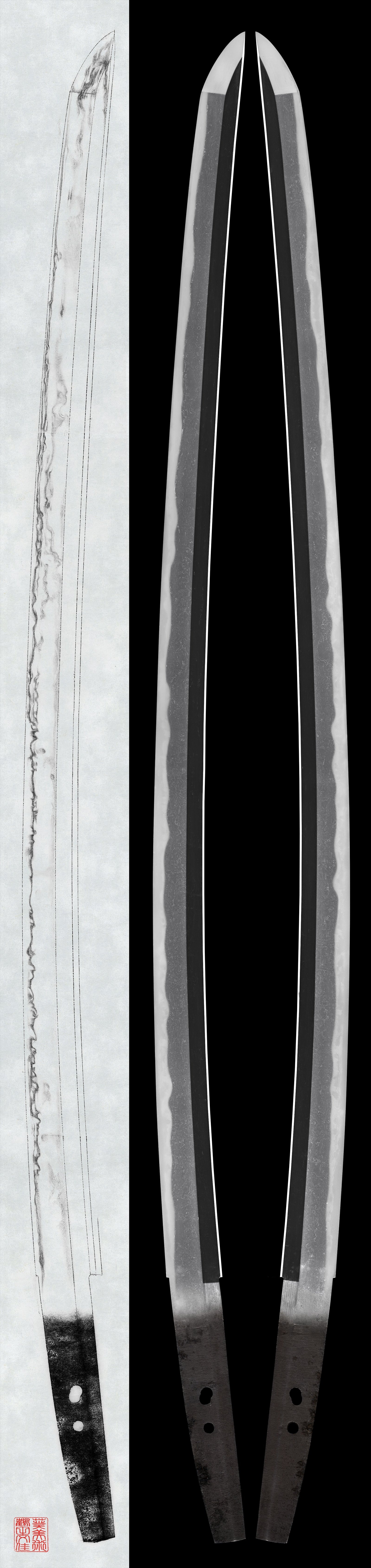
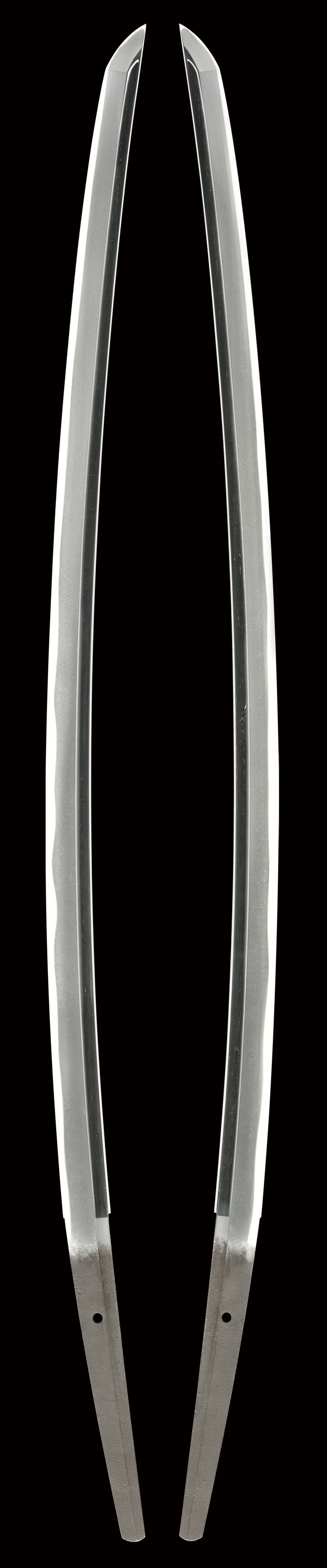
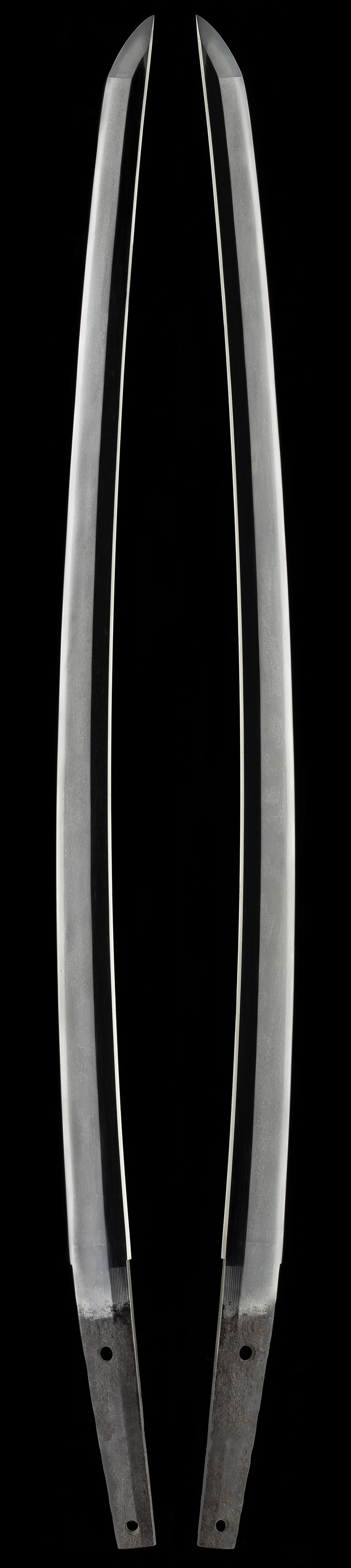
The forging is , in places tending toward or mixed with , , and a -like grain; fine adheres thickly, and a standing (or ) is a recurring feature typical of Kyo-mono. The is founded on mixed with , , -like forms, and shallow , with and entering and a bright . covers the , which shows , small , and that in places produce a -like impression, while and run as reliable . The varies from straight with and slight to tending toward . is an elegant with high and remaining .
For collectors, the decisive points are the Kyo character of the work: the densely adhering fine raising , the reverse-slanting (, Kyo-) tendency of the irregularities toward the point, and the -like curvature that separates this hand from and Bicchu production. Extant signed works are few, so the surviving two-character examples carry particular weight, and even the -tang is valued as the piece that should most properly be appraised as Sueyuki. One signed is traditionally said to have been formerly owned by the Mizoguchi family, lords of the Shibata domain.