NihontoWatch Mon

NihontoWatch

MarketAuctions
Encyclopedia
NihontoWatch Mon

NihontoWatch

MarketAuctions
Encyclopedia

Description

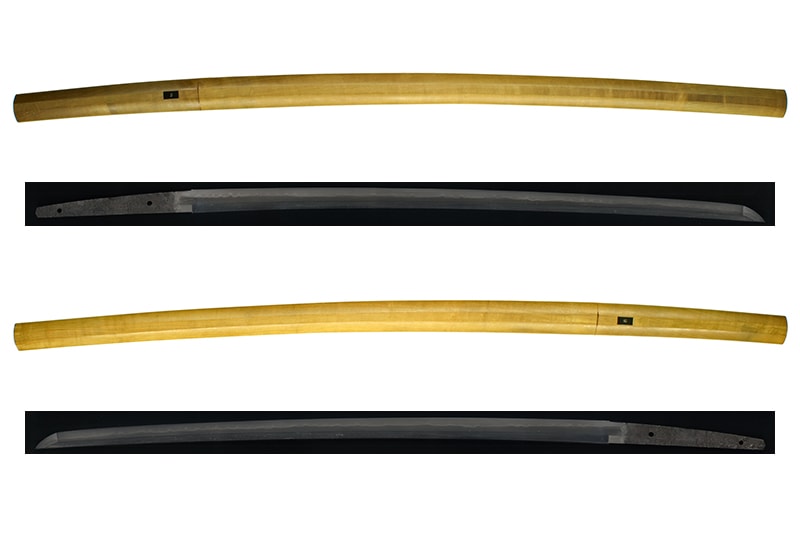
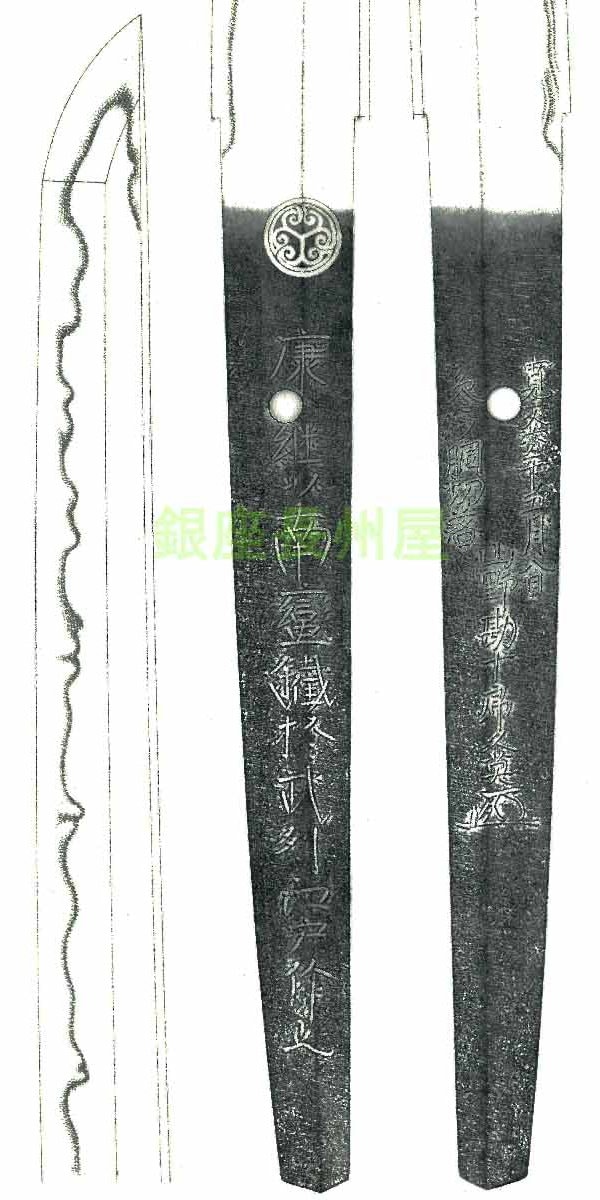
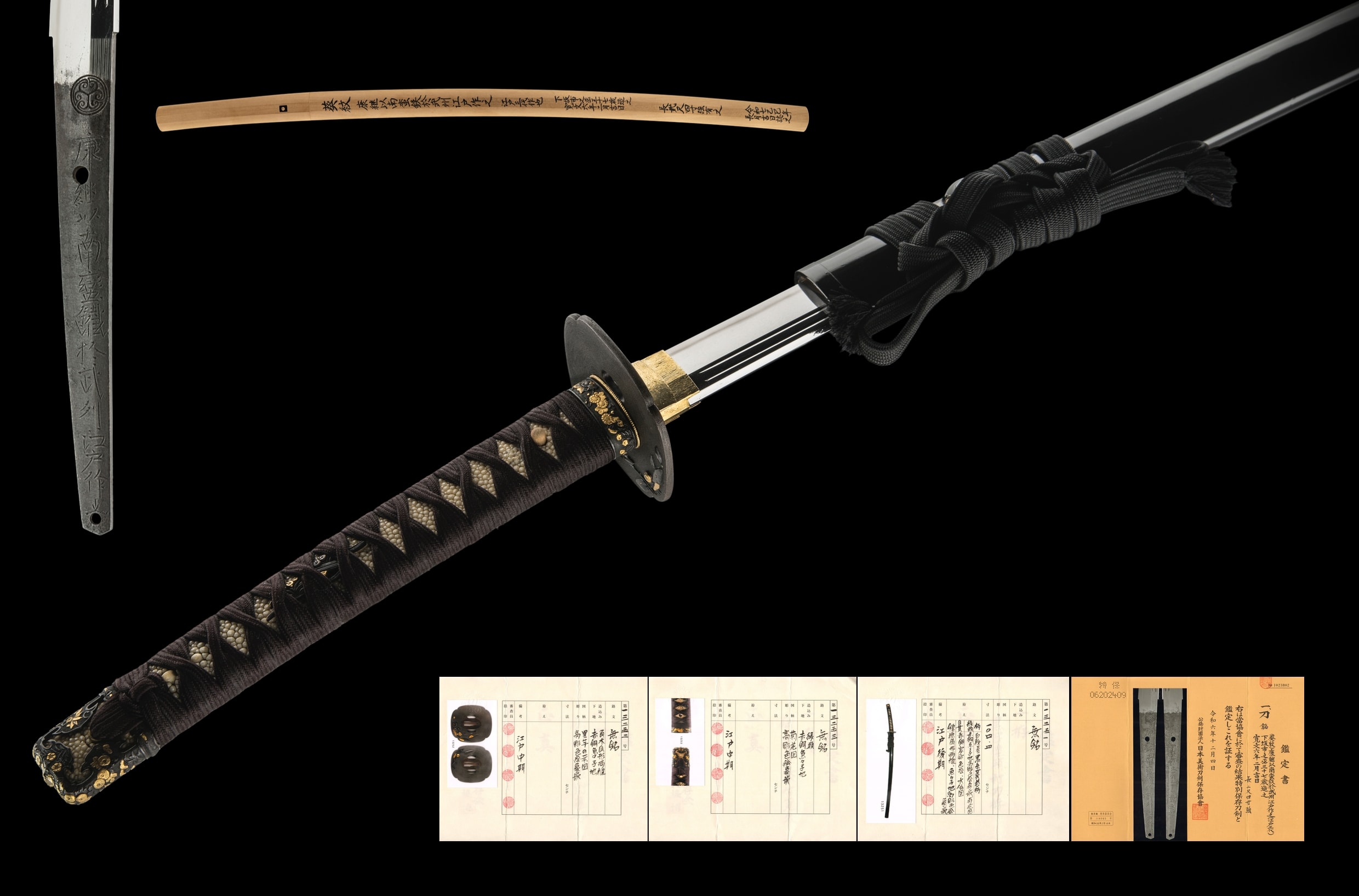
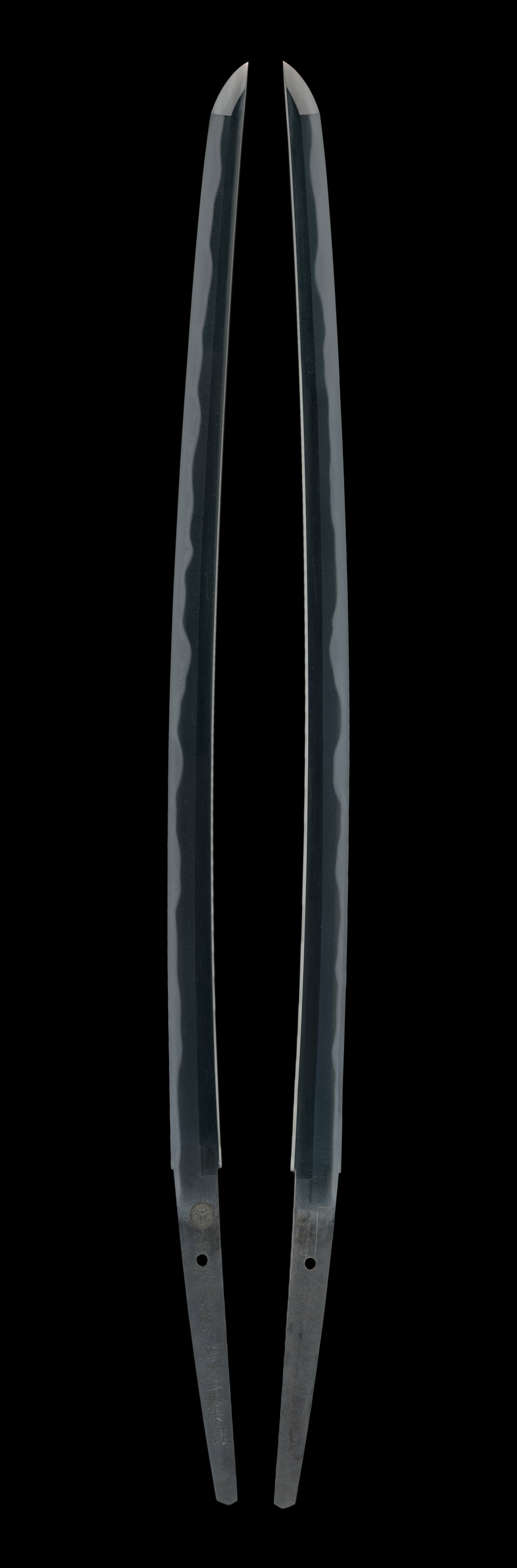
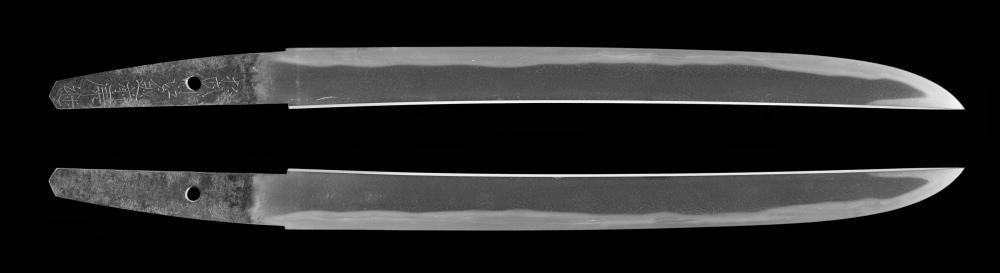
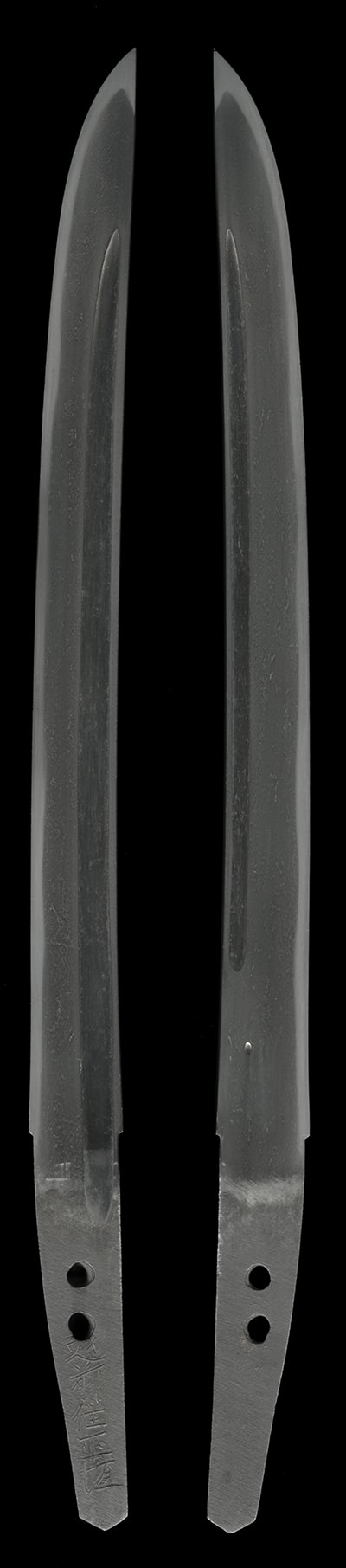
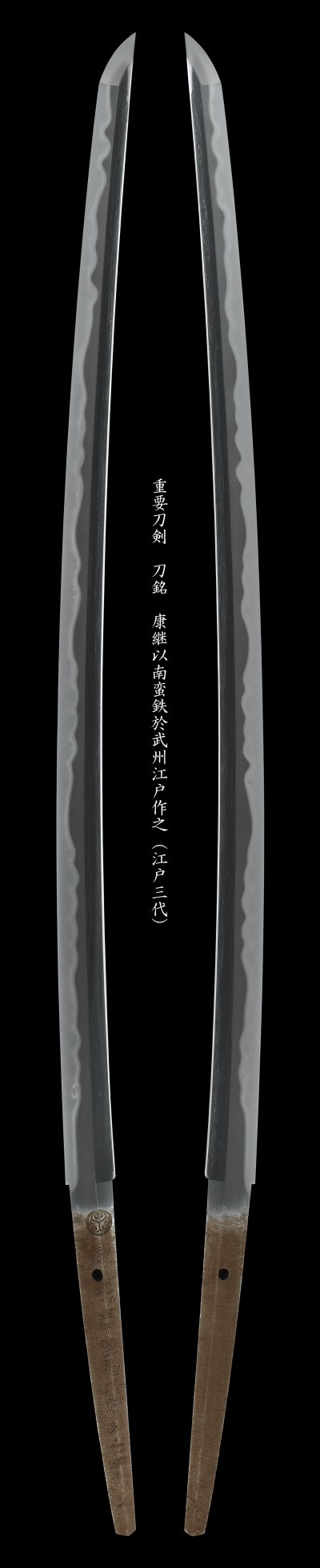
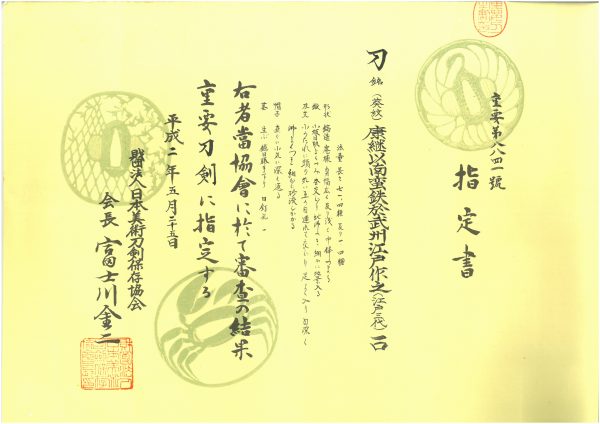
This is a katana made by the 3rd generation Yasutsugu in Edo, Musashi province. The blade features a straight hamon with small notare and gunome, and the steel is well-forged. It has been designated as a Juyo Token.

NBTHK Setsumei

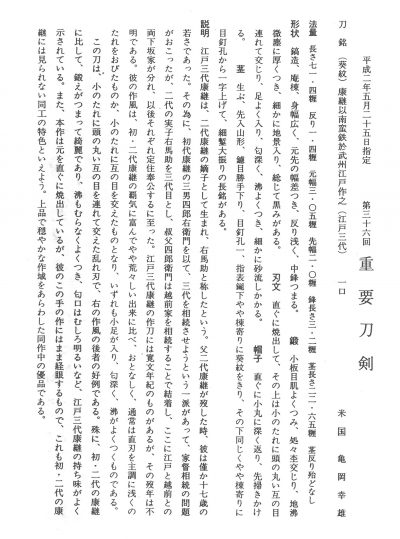
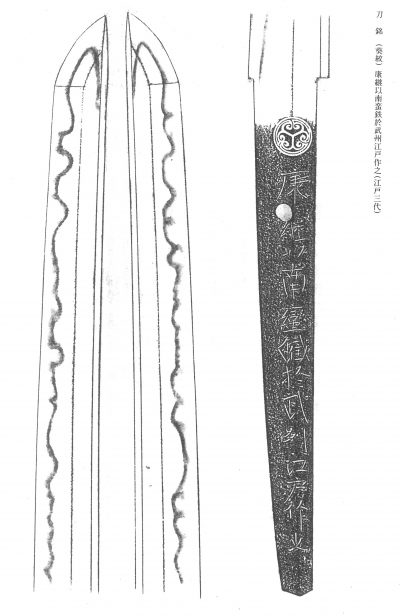
Juyo-Token, 36th Session — Designated May 25, 1990 Katana, mei: Edo third-generation Yasutsugu (康継) Measurements Nagasa 71.4 cm, sori 1.4 cm, motohaba 3.05 cm, sakihaba 2.0 cm, kissaki-nagasa 3.2 cm, nakago-nagasa 22.65 cm, nakago-sori almost none Description Keijo: shinogi-zukuri, iori-mune; wide mihaba with an evident taper from base to tip; shallow koshizori; compact chu-kissaki. Kitae: Well-forged ko-itame-hada, with patches of mokume mixed in; very fine, somewhat thickly applied ji-nie; fine chikei appear; overall the ground has a dark tone. Hamon: Begins with suguha yakidashi; above that, a small notare mixed with a succession of round-headed gunome; ashi enter well; the nioi is deep; nie adheres well; fine sunagashi is seen. Boshi: sugu ending in small maru with a deep return; the tip shows hakikake. Horimono: None. Nakago: ubu; iriyama-gata tip; katte-sagari filemarks; one mekugi-ana; on the omote below the mekugi-ana, slightly toward the mune, an aoi crest (aoi-mon) is cut; below that, likewise slightly toward the mune, beginning one character above the mekugi-ana, there is an inscription cut in large characters with a fine chisel. Artisan Edo third-generation Yasutsugu (Shimosaka lineage) Era Early Edo period (Kanbun era) Explanation The Edo third-generation Yasutsugu was born as the son of the second-generation Yasutsugu, and is said to have used the name Umanosuke. When his father, the second generation, died, he was only seventeen years old. Because of this, there arose a faction that sought to have Shiro’emon (the third son of the first-generation Yasutsugu) succeed as the third generation, and a dispute over succession occurred. Ultimately, the second generation’s natural son Umanosuke became the third generation, while his uncle Shiro’emon succeeded to the Echizen house; thus the two Shimosaka houses of Edo and Echizen were separated, and thereafter each became established in settled service. Works by the Edo third-generation Yasutsugu exist bearing Kanbun-era dates, but the year of his death is unknown. His style is quieter than the spirited and somewhat rough workmanship seen in the first and second generations. Typically, his blades either emphasize suguha with a shallow notare feeling, or take the form of a small notare mixed with gunome. In either case, they show small ashi, deep nioi, and abundant adhering nie. This katana displays a midareba in which a small notare is interwoven with a train of round-headed gunome, representing an excellent example of the latter of the two typical approaches described above. In particular, compared with the first and second generations, the forging here is tighter and more beautiful; the ji-nie is well applied without unevenness, and the hada is, if anything, rather bright—features that clearly demonstrate the distinctive character of the Edo third generation. Moreover, this work begins with suguha yakidashi at the base; such treatment is often encountered among works of this type, and may be regarded as a characteristic of this smith that is not seen in the first and second generations. It is a superior work among his productions, expressing an elegant and calm manner.

NihontoWatch MonNihontoWatch
MarketAuctionsEncyclopedia
Swords›Shimosaka›Yasutsugu›Juyo Token: Yasutsugu with Aoi Mon, Made in Edo, Musashi Province with Nanban Tetsu (3rd Generation Edo)
katanaJūyō
Shimosaka Yasutsugu

Juyo Token: Yasutsugu with Aoi Mon, Made in Edo, Musashi Province with Nanban Tetsu (3rd Generation Edo)

Kanbun (1661-1673) · nagasa 71.4cm · sori 1.4cm

Price on request
Visit seller website →
Shimosaka Yasutsugu — 1 of 4
Shimosaka Yasutsugu — 2 of 4
Shimosaka Yasutsugu — 3 of 4
Shimosaka Yasutsugu — 4 of 4
1 / 4
1 / 4
Shimosaka Yasutsugu — 1 of 4Shimosaka Yasutsugu — 2 of 4Shimosaka Yasutsugu — 3 of 4Shimosaka Yasutsugu — 4 of 4
Measurements & details
Smith
Shimosaka Yasutsugu
Type
Katana
School
Shimosaka
Period
Around 1661–1673(Kanbun)
Measurements
Nagasa 71.4cmSori 1.4cmMotohaba 3.05cmSakihaba 2cm
Description

This is a katana made by the 3rd generation Yasutsugu in Edo, Musashi province. The blade features a straight hamon with small notare and gunome, and the steel is well-forged. It has been designated as a Juyo Token.

NBTHK Zufu Commentary

Juyo #36

AI translation — may contain errors

-, 36th Session — Designated May 25, 1990

, : third-generation Yasutsugu (康継)

Measurements 71.4 cm, 1.4 cm, 3.05 cm, 2.0 cm, 3.2 cm, 22.65 cm, almost none

Description Keijo: , ; wide with an evident taper from base to tip; shallow ; compact . : Well-forged , with patches of mixed in; very fine, somewhat thickly applied ; fine appear; overall the ground has a dark tone. : Begins with ; above that, a small mixed with a succession of round-headed ; enter well; the is deep; adheres well; fine is seen. : ending in small with a deep return; the tip shows . : None. : ; tip; filemarks; one ; on the below the , slightly toward the , an crest () is cut; below that, likewise slightly toward the , beginning one character above the , there is an inscription cut in large characters with a fine chisel.

Artisan third-generation Yasutsugu (Shimosaka lineage)

Era Early period ( era)

Explanation The third-generation Yasutsugu was born as the son of the second-generation Yasutsugu, and is said to have used the name Umanosuke. When his father, the second generation, died, he was only seventeen years old. Because of this, there arose a faction that sought to have Shiro’emon (the third son of the first-generation Yasutsugu) succeed as the third generation, and a dispute over succession occurred. Ultimately, the second generation’s natural son Umanosuke became the third generation, while his uncle Shiro’emon succeeded to the house; thus the two Shimosaka houses of and were separated, and thereafter each became established in settled service. Works by the third-generation Yasutsugu exist bearing -era dates, but the year of his death is unknown. His style is quieter than the spirited and somewhat rough workmanship seen in the first and second generations. Typically, his blades either emphasize with a shallow feeling, or take the form of a small mixed with . In either case, they show small , deep , and abundant adhering . This displays a in which a small is interwoven with a train of round-headed , representing an excellent example of the latter of the two typical approaches described above. In particular, compared with the first and second generations, the forging here is tighter and more beautiful; the is well applied without unevenness, and the is, if anything, rather bright—features that clearly demonstrate the distinctive character of the third generation. Moreover, this work begins with at the base; such treatment is often encountered among works of this type, and may be regarded as a characteristic of this smith that is not seen in the first and second generations. It is a superior work among his productions, expressing an elegant and calm manner.

About the maker

Yasutsugu

康繼

Edo 3rd-generation Yasutsugu (Shimosaka line) · Musashi · around 1661-1673

Fujishiro Jo-jo saku · Tōken Taikan top 14%

4 pieces on the market now

›

Every surviving katana of the Edo third-generation Yasutsugu carries the same long signature beneath the hollyhock crest granted to his line by Ieyasu: an aoi-mon cut at the base of the tang and, below it, the inscription that he made the blade at Edo in Bushū using imported nanban-tetsu[[c:1]]. He was, the published sources record, born the legitimate son of the second-generation Yasutsugu and known by the name Umanosuke. When his father died he was only seventeen, and a faction sought to pass the headship instead to Shirōemon, the third son of the first generation. The dispute ended with Umanosuke confirmed as the third generation while his uncle Shirōemon took the Echizen line, and so the Shimosaka house divided into its Edo and Echizen branches, each settling thereafter into separate service. He worked in the Kanbun era, around the 1660s, though the year of his death is not known; the Shimosaka name itself descended from the first-generation smith to whom Ieyasu had granted both the hollyhock crest and the character Yasu.

His hand is defined first by contrast with his forebears. Against the spirited, somewhat rough and forceful workmanship of the first two generations, the published sources read the third generation as calmer and more cohesively composed, and they set out his temper as two recurring manners. The first takes suguha as its principal theme with a shallow notare overtone; the second is an undulating midare in which a small ko-notare mixes with gunome, sometimes with round-topped gunome connected in pairs. In either manner the same connoisseurship marks recur: small ashi enter the ha, the nioi runs deep, and nie adheres well. Above the hamachi he frequently begins the temper with a straight yakidashi, a starting form the published record names as a trait of this smith not seen in the first two generations and one that brings his work closer to the contemporary Edo smiths.

The jigane is itame, often a tightly forged ko-itame, with mokume and flowing nagare-hada mixed in and at times a tendency toward standing grain. Over it the ji-nie forms thickly and finely, chikei appear, and the steel inclines overall to a somewhat blackish, iron-like tone. The boshi runs straight into a small ko-maru and turns back deeply, at times with a swept hakikake at the point; the deep return is a habit the published sources trace directly to the first and second generations, who stand to him as grandfather and father. On a blade of the 39th Jūyō session the sources note a faint Sanpin reminiscence in the boshi, and they read it together with the darkish jigane and the subdued nioiguchi as the surviving traditional traits of Echizen work, observing that 「三品風の面影があるところなどには, 伝統的な越前物の特色」 is shown here.

The individual character of the third generation emerges where these two manners are weighed against his forebears. On a katana of the 36th session the sources find that, compared with the first and second generations, the forging is tighter and cleaner, the nie adheres evenly without patchiness, and the nioiguchi is, if anything, bright; their phrasing that the steel is 「鍛えがつまって綺麗であり」 and that the temper shows 「匂口はむしろ明るいなど」 names the points by which the third generation is told apart. A blade of the 62nd session carries the same reading further, its deeper nioiguchi and strong adherence of nie placing it close to the Edo work of the Hōjōji group and of Batetsu, the flavor in which 「持味があらわれた」, the published sources say, the fashions of the time clearly expressed. Across the signed blades a habit of the chisel is consistent enough to serve as a tell: the characters of the long signature grow smaller toward the end of the tang, which the sources name as 「字体の大きさが茎先にかけて次第に小さくなるのが銘字の手癖」.

He is read entirely against his own house rather than against any rival school, and the comparisons the sources draw are inward and historical. The earliest of these designated blades, from the 17th session, gives the impression of a Hōjōji work, the commentary remarking that the piece 「あたかも法城寺一派の作を見るような感がある」, and the same Hōjōji and Batetsu affinity returns at the 62nd session. Honesty about the third generation belongs to the same passage: the published sources record that his extant works are comparatively few, that they fall short of those by his father and forebears, and that sword-body carvings, frequent in the earlier generations, become almost absent in his hand. His place is therefore not as an innovator but as the Edo continuator of the Shimosaka line, a smith who held the suguha and ko-notare manners of the house steady while letting the cleaner forging and brighter nioi of his Edo contemporaries into the work.

The blades stand at the Jūyō level, eight of them on record, with no higher designation and his work rated Jō-jō saku in the Fujishiro appraisal. Among them one katana of the 23rd session, dated the twelfth month of Kanbun 7 in the year 1667, bears on the reverse a gold-inlaid cutting-test inscription by Yamano Kanjūrō Hisahide, the kind of saidan-mei that ties a blade to the testing culture of early Edo. No daimyō provenance and no institutional holder is recorded in the designation papers for these eight, so a clear sense of where they have rested is largely absent. What a collector may realistically encounter is one of these Jūyō katana, in the suguha or ko-notare manner described, on the ubu tang the aoi-mon and the long nanban-tetsu signature shrinking toward the tip. Such a blade reaches the market from time to time rather than often, and as the cleaner, brighter Edo face of a line that began with Ieyasu's own grant of the hollyhock crest, it carries the documentary weight of the Shimosaka name as much as the workmanship of any single hand.

Historical importance

Where Yasutsugu stands among comparable artisans: across all of nihontō, and within tradition, era, and period. The tiers (Foremost · Leading · Major · Notable) weigh official designations from the NBTHK and Japan's Agency for Cultural Affairs, together with historical honors of lasting repute such as the Sansaku and Meibutsu-chō.

随一
Foremost
屈指
Leading
有数
Major
著名
Notable

Select a lens to see how it's measured.

Designation record
8 designated works
Jūyō
8
4 works by Yasutsugu on the market→
Yasutsugu — full profileEdo 3rd-generation Yasutsugu (Shimosaka line) school
About the school

Shimosaka

下坂

Shinto · Echizen

52 pieces on the market now

›

The Shimosaka name began not as a single hand but as a trademark shared by a band of Echizen smiths at the dawn of the shinto era, and the designated record gathers their work under that one signature rather than parsing it into individuals. The published sources read the early inscriptions, the generic Echizen no Kuni Shimosaka and the titled Higo Daijo Fujiwara Shimosaka, as the product of a group, of which the first-generation Yasutsugu served as the representative. Learn more →

16 recorded smiths151 designated works
Leading smiths
SmithEraDesignated
Yasutsugu康繼1596-161573
Yasutsugu康繼1624-164427
Yasutsugu康繼1661-16738
Sadakuni貞國1596-161511
Shigetaka重高1596-16156
Explore the Shimosaka school →
NBTHK Certificate
Jūyō Tōken重要刀剣
Important Sword
›

A blade of top-grade workmanship and condition, formally judged to rank with a nationally recognized Important Art Object (Jūyō Bijutsuhin). Awarded only at the NBTHK’s competitive annual examination.

Of Japan’s roughly 2.5 million registered swords, only 12,307 (about 1 in 203) have ever attained Jūyō.

About the NBTHK›

The NBTHK (Nihon Bijutsu Tōken Hozon Kyōkai, the Society for the Preservation of Japanese Art Swords) is a public-interest incorporated foundation founded in 1948 and supervised by Japan’s Agency for Cultural Affairs (Bunkachō); it is based at the Japanese Sword Museum in Tokyo. Its expert panels physically examine each submitted work (shinsa) and issue a certificate (kanteishō) ranking it by artistic and historical merit. NBTHK papers are the most widely recognized standard of authentication for Japanese swords and fittings.

NBTHK official site→
Seller
G
Goushuya
🇯🇵Ships from Japan
›
✓Verified dealergoushuya-nihontou.com
Wire transfer
View all of Goushuya’s listings→View this item on the dealer’s site→

More works by Shimosaka Yasutsugu

View all →
Nipponto
Tokuho
Wakizashi - Tokuho - by Shimosaka Yasutsugu - Japanese Sword Wakizashi with Aoi-mon by Yasutsugu in Echizen (3rd Generation Echizen, 3rd son of 1st Generation Yasutsugu)Wakizashi - Tokuho - by Shimosaka Yasutsugu - Japanese Sword Wakizashi with Aoi-mon by Yasutsugu in Echizen (3rd Generation Echizen, 3rd son of 1st Generation Yasutsugu)

Wakizashi

ByShimosaka Yasutsugu
¥880,000
Toyuukai
Tokuho
Wakizashi - Tokuho - by Shimosaka Yasutsugu - (Aoi Mon) Yasutsugu (3rd Gen. Edo) made of Dutch Iron, made in Bushu Edo - NBTHK Tokubetsu HozonWakizashi - Tokuho - by Shimosaka Yasutsugu - (Aoi Mon) Yasutsugu (3rd Gen. Edo) made of Dutch Iron, made in Bushu Edo - NBTHK Tokubetsu Hozon

Wakizashi

ByShimosaka Yasutsugu
¥1,200,000
World Seiyudo
Tokuho
Naginata - Tokuho - by Shimosaka Yasutsugu - YasutsuguNaginata - Tokuho - by Shimosaka Yasutsugu - Yasutsugu

Naginata

ByShimosaka Yasutsugu
¥2,000,000

Previously sold by Shimosaka Yasutsugu

World Seiyudo
Tokuho
Katana - Tokuho - by Shimosaka Yasutsugu - 3rd Gen. YasutsuguKatana - Tokuho - by Shimosaka Yasutsugu - 3rd Gen. Yasutsugu
Sold

Katana

ByShimosaka Yasutsugu
SOLD
Choshuya
Katana - by Shimosaka Yasutsugu - Japanese Sword for Sale | Ginza Choshuya | Signed: (Aoi-mon) Yasutsugu made with Namban-tetsu in Bushu Edo, Kanbun 6th year, 5th month, 8th day, Mitsu-do Kiriochi, Yamano Kantaro Hisahide (Kao), 90Katana - by Shimosaka Yasutsugu - Japanese Sword for Sale | Ginza Choshuya | Signed: (Aoi-mon) Yasutsugu made with Namban-tetsu in Bushu Edo, Kanbun 6th year, 5th month, 8th day, Mitsu-do Kiriochi, Yamano Kantaro Hisahide (Kao), 90
Sold

Katana

ByShimosaka Yasutsugu
SOLD
Giheiya
Tokuho
Katana - Tokuho - by Shimosaka Yasutsugu - Tokubetsu Hozon Token: Yasutsugu made with Namban-tetsu in Bushu Edo, 2 shaku 4 sun 7 bu, in ShirasayaKatana - Tokuho - by Shimosaka Yasutsugu - Tokubetsu Hozon Token: Yasutsugu made with Namban-tetsu in Bushu Edo, 2 shaku 4 sun 7 bu, in Shirasaya
Sold

Katana

ByShimosaka Yasutsugu
SOLD
Choshuya
Wakizashi - by Shimosaka Yasutsugu - Yasutsugu (3rd Gen.) made with Namban-tetsu in Bushu Edo (Wazamono)Wakizashi - by Shimosaka Yasutsugu - Yasutsugu (3rd Gen.) made with Namban-tetsu in Bushu Edo (Wazamono)
Sold

Wakizashi

ByShimosaka Yasutsugu
SOLD
Giheiya
Tokuho
Katana - Tokuho - by Shimosaka Yasutsugu - Tokubetsu Hozon Token, Shinto Josaku, Aoi crest, Yasutsugu with Nanbantetsu, 1 Shaku 6 Sun 9 BuKatana - Tokuho - by Shimosaka Yasutsugu - Tokubetsu Hozon Token, Shinto Josaku, Aoi crest, Yasutsugu with Nanbantetsu, 1 Shaku 6 Sun 9 Bu
Sold

Katana

ByShimosaka Yasutsugu
SOLD
Tokka Biz
Tokuho
Katana - Tokuho - by Shimosaka Yasutsugu - Yasutsugu with Namban Steel in Bushu (kire)Katana - Tokuho - by Shimosaka Yasutsugu - Yasutsugu with Namban Steel in Bushu (kire)
Sold

Katana

ByShimosaka Yasutsugu
SOLD
Unique Japan
Tokuho
Katana - Tokuho - by Shimosaka Yasutsugu - Edo Sandai YasutsuguKatana - Tokuho - by Shimosaka Yasutsugu - Edo Sandai Yasutsugu
Sold

Katana

ByShimosaka Yasutsugu
SOLD
Eirakudo
Tokuho
Katana - Tokuho - by Shimosaka Yasutsugu - Yasutsugu - Aoimon, NanbantetsuKatana - Tokuho - by Shimosaka Yasutsugu - Yasutsugu - Aoimon, Nanbantetsu
Sold

Katana

ByShimosaka Yasutsugu
SOLD

More from the Shimosaka school

View all →
Nihonto.com
Tokuho
Daisho - Tokuho - by Shimosaka Yasutsugu - Daisho: Shodai Yasutsugu & Shodai KunisadaDaisho - Tokuho - by Shimosaka Yasutsugu - Daisho: Shodai Yasutsugu & Shodai Kunisada

Daishō

ByShimosaka Yasutsugu
Ask
Eirakudo
Tokuho
Tanto - Tokuho - by Shimosaka Yasutsugu - 1st Gen. Yasutsugu - Tokubetsu Hozon TokenTanto - Tokuho - by Shimosaka Yasutsugu - 1st Gen. Yasutsugu - Tokubetsu Hozon Token

Tantō

ByShimosaka Yasutsugu
¥5,000,000
Token-Net
Jūyō
Katana - Jūyō - by Shimosaka Yasutsugu - Oite Busyu Edo Echizen Yasutsugu motte Nanban-tetsu (1st Gen.)Katana - Jūyō - by Shimosaka Yasutsugu - Oite Busyu Edo Echizen Yasutsugu motte Nanban-tetsu (1st Gen.)

Katana

ByShimosaka Yasutsugu
¥9,800,000
Nihonto Australia
Tokuho
Katana - Tokuho - by Shimosaka Yasutsugu - 1st Generation Echizen Yasutsugu - Utsushi of Ataki Sadamune with NBTHK Tokubetsu Hozon CertificateKatana - Tokuho - by Shimosaka Yasutsugu - 1st Generation Echizen Yasutsugu - Utsushi of Ataki Sadamune with NBTHK Tokubetsu Hozon Certificate

Katana

ByShimosaka Yasutsugu
Ask
Choshuya
Tokuho
Wakizashi - Tokuho - by Shimosaka School - Yasutsugu, made in Bushu Edo with Nanbantetsu (Wazamono)Wakizashi - Tokuho - by Shimosaka School - Yasutsugu, made in Bushu Edo with Nanbantetsu (Wazamono)

Wakizashi

ByShimosaka School
¥900,000
Aoi Art
Tokuho
Katana - Tokuho - by Shimosaka Yasutsugu - Echizen Yasutsugu (2nd generation)Katana - Tokuho - by Shimosaka Yasutsugu - Echizen Yasutsugu (2nd generation)

Katana

ByShimosaka Yasutsugu
¥1,650,000
Touken Hataya
Tokuho
Wakizashi - Tokuho - by Shimosaka Yasutsugu - Tokubetsu Hozon Wakizashi by Yasutsugu of Echizen with Aoi MonWakizashi - Tokuho - by Shimosaka Yasutsugu - Tokubetsu Hozon Wakizashi by Yasutsugu of Echizen with Aoi Mon

Wakizashi

ByShimosaka Yasutsugu
¥400,000
Touken Sakata
Jūyō
Katana - Jūyō - by Shimosaka Yasutsugu - Yasutsugu Nyudo (2nd Gen.) made with Namban-tetsu in Bushu EdoKatana - Jūyō - by Shimosaka Yasutsugu - Yasutsugu Nyudo (2nd Gen.) made with Namban-tetsu in Bushu Edo

Katana

ByShimosaka Yasutsugu
¥6,700,000

Swords

  • Katana
  • Wakizashi
  • Tantō
  • Tachi
  • Naginata
  • Yari

Fittings

  • Tsuba
  • Fuchi-Kashira
  • Kozuka
  • Menuki

By Certification

  • Tokujū
  • Jūyō
  • Tokuho
  • Hozon

Resources

  • Dealer Directory
  • Artist Directory
  • Glossary
  • Browse All
Nihontowatch© 2026
TermsPrivacyCookiesAbout

Description

This is a katana made by the 3rd generation Yasutsugu in Edo, Musashi province. The blade features a straight hamon with small notare and gunome, and the steel is well-forged. It has been designated as a Juyo Token.

NBTHK Setsumei

Juyo-Token, 36th Session — Designated May 25, 1990 Katana, mei: Edo third-generation Yasutsugu (康継) Measurements Nagasa 71.4 cm, sori 1.4 cm, motohaba 3.05 cm, sakihaba 2.0 cm, kissaki-nagasa 3.2 cm, nakago-nagasa 22.65 cm, nakago-sori almost none Description Keijo: shinogi-zukuri, iori-mune; wide mihaba with an evident taper from base to tip; shallow koshizori; compact chu-kissaki. Kitae: Well-forged ko-itame-hada, with patches of mokume mixed in; very fine, somewhat thickly applied ji-nie; fine chikei appear; overall the ground has a dark tone. Hamon: Begins with suguha yakidashi; above that, a small notare mixed with a succession of round-headed gunome; ashi enter well; the nioi is deep; nie adheres well; fine sunagashi is seen. Boshi: sugu ending in small maru with a deep return; the tip shows hakikake. Horimono: None. Nakago: ubu; iriyama-gata tip; katte-sagari filemarks; one mekugi-ana; on the omote below the mekugi-ana, slightly toward the mune, an aoi crest (aoi-mon) is cut; below that, likewise slightly toward the mune, beginning one character above the mekugi-ana, there is an inscription cut in large characters with a fine chisel. Artisan Edo third-generation Yasutsugu (Shimosaka lineage) Era Early Edo period (Kanbun era) Explanation The Edo third-generation Yasutsugu was born as the son of the second-generation Yasutsugu, and is said to have used the name Umanosuke. When his father, the second generation, died, he was only seventeen years old. Because of this, there arose a faction that sought to have Shiro’emon (the third son of the first-generation Yasutsugu) succeed as the third generation, and a dispute over succession occurred. Ultimately, the second generation’s natural son Umanosuke became the third generation, while his uncle Shiro’emon succeeded to the Echizen house; thus the two Shimosaka houses of Edo and Echizen were separated, and thereafter each became established in settled service. Works by the Edo third-generation Yasutsugu exist bearing Kanbun-era dates, but the year of his death is unknown. His style is quieter than the spirited and somewhat rough workmanship seen in the first and second generations. Typically, his blades either emphasize suguha with a shallow notare feeling, or take the form of a small notare mixed with gunome. In either case, they show small ashi, deep nioi, and abundant adhering nie. This katana displays a midareba in which a small notare is interwoven with a train of round-headed gunome, representing an excellent example of the latter of the two typical approaches described above. In particular, compared with the first and second generations, the forging here is tighter and more beautiful; the ji-nie is well applied without unevenness, and the hada is, if anything, rather bright—features that clearly demonstrate the distinctive character of the Edo third generation. Moreover, this work begins with suguha yakidashi at the base; such treatment is often encountered among works of this type, and may be regarded as a characteristic of this smith that is not seen in the first and second generations. It is a superior work among his productions, expressing an elegant and calm manner.

NihontoWatch MonNihontoWatch
MarketAuctionsEncyclopedia
Swords›Shimosaka›Yasutsugu›Juyo Token: Yasutsugu with Aoi Mon, Made in Edo, Musashi Province with Nanban Tetsu (3rd Generation Edo)
katanaJūyō
Shimosaka Yasutsugu

Juyo Token: Yasutsugu with Aoi Mon, Made in Edo, Musashi Province with Nanban Tetsu (3rd Generation Edo)

Kanbun (1661-1673) · nagasa 71.4cm · sori 1.4cm

Price on request
Visit seller website →
Shimosaka Yasutsugu — 1 of 4
Shimosaka Yasutsugu — 2 of 4
Shimosaka Yasutsugu — 3 of 4
Shimosaka Yasutsugu — 4 of 4
1 / 4
1 / 4
Shimosaka Yasutsugu — 1 of 4Shimosaka Yasutsugu — 2 of 4Shimosaka Yasutsugu — 3 of 4Shimosaka Yasutsugu — 4 of 4
Measurements & details
Smith
Shimosaka Yasutsugu
Type
Katana
School
Shimosaka
Period
Around 1661–1673(Kanbun)
Measurements
Nagasa 71.4cmSori 1.4cmMotohaba 3.05cmSakihaba 2cm
Description

This is a katana made by the 3rd generation Yasutsugu in Edo, Musashi province. The blade features a straight hamon with small notare and gunome, and the steel is well-forged. It has been designated as a Juyo Token.

NBTHK Zufu Commentary

Juyo #36

AI translation — may contain errors

-, 36th Session — Designated May 25, 1990

, : third-generation Yasutsugu (康継)

Measurements 71.4 cm, 1.4 cm, 3.05 cm, 2.0 cm, 3.2 cm, 22.65 cm, almost none

Description Keijo: , ; wide with an evident taper from base to tip; shallow ; compact . : Well-forged , with patches of mixed in; very fine, somewhat thickly applied ; fine appear; overall the ground has a dark tone. : Begins with ; above that, a small mixed with a succession of round-headed ; enter well; the is deep; adheres well; fine is seen. : ending in small with a deep return; the tip shows . : None. : ; tip; filemarks; one ; on the below the , slightly toward the , an crest () is cut; below that, likewise slightly toward the , beginning one character above the , there is an inscription cut in large characters with a fine chisel.

Artisan third-generation Yasutsugu (Shimosaka lineage)

Era Early period ( era)

Explanation The third-generation Yasutsugu was born as the son of the second-generation Yasutsugu, and is said to have used the name Umanosuke. When his father, the second generation, died, he was only seventeen years old. Because of this, there arose a faction that sought to have Shiro’emon (the third son of the first-generation Yasutsugu) succeed as the third generation, and a dispute over succession occurred. Ultimately, the second generation’s natural son Umanosuke became the third generation, while his uncle Shiro’emon succeeded to the house; thus the two Shimosaka houses of and were separated, and thereafter each became established in settled service. Works by the third-generation Yasutsugu exist bearing -era dates, but the year of his death is unknown. His style is quieter than the spirited and somewhat rough workmanship seen in the first and second generations. Typically, his blades either emphasize with a shallow feeling, or take the form of a small mixed with . In either case, they show small , deep , and abundant adhering . This displays a in which a small is interwoven with a train of round-headed , representing an excellent example of the latter of the two typical approaches described above. In particular, compared with the first and second generations, the forging here is tighter and more beautiful; the is well applied without unevenness, and the is, if anything, rather bright—features that clearly demonstrate the distinctive character of the third generation. Moreover, this work begins with at the base; such treatment is often encountered among works of this type, and may be regarded as a characteristic of this smith that is not seen in the first and second generations. It is a superior work among his productions, expressing an elegant and calm manner.

About the maker

Yasutsugu

康繼

Edo 3rd-generation Yasutsugu (Shimosaka line) · Musashi · around 1661-1673

Fujishiro Jo-jo saku · Tōken Taikan top 14%

4 pieces on the market now

›

Every surviving katana of the Edo third-generation Yasutsugu carries the same long signature beneath the hollyhock crest granted to his line by Ieyasu: an aoi-mon cut at the base of the tang and, below it, the inscription that he made the blade at Edo in Bushū using imported nanban-tetsu[[c:1]]. He was, the published sources record, born the legitimate son of the second-generation Yasutsugu and known by the name Umanosuke. When his father died he was only seventeen, and a faction sought to pass the headship instead to Shirōemon, the third son of the first generation. The dispute ended with Umanosuke confirmed as the third generation while his uncle Shirōemon took the Echizen line, and so the Shimosaka house divided into its Edo and Echizen branches, each settling thereafter into separate service. He worked in the Kanbun era, around the 1660s, though the year of his death is not known; the Shimosaka name itself descended from the first-generation smith to whom Ieyasu had granted both the hollyhock crest and the character Yasu.

His hand is defined first by contrast with his forebears. Against the spirited, somewhat rough and forceful workmanship of the first two generations, the published sources read the third generation as calmer and more cohesively composed, and they set out his temper as two recurring manners. The first takes suguha as its principal theme with a shallow notare overtone; the second is an undulating midare in which a small ko-notare mixes with gunome, sometimes with round-topped gunome connected in pairs. In either manner the same connoisseurship marks recur: small ashi enter the ha, the nioi runs deep, and nie adheres well. Above the hamachi he frequently begins the temper with a straight yakidashi, a starting form the published record names as a trait of this smith not seen in the first two generations and one that brings his work closer to the contemporary Edo smiths.

The jigane is itame, often a tightly forged ko-itame, with mokume and flowing nagare-hada mixed in and at times a tendency toward standing grain. Over it the ji-nie forms thickly and finely, chikei appear, and the steel inclines overall to a somewhat blackish, iron-like tone. The boshi runs straight into a small ko-maru and turns back deeply, at times with a swept hakikake at the point; the deep return is a habit the published sources trace directly to the first and second generations, who stand to him as grandfather and father. On a blade of the 39th Jūyō session the sources note a faint Sanpin reminiscence in the boshi, and they read it together with the darkish jigane and the subdued nioiguchi as the surviving traditional traits of Echizen work, observing that 「三品風の面影があるところなどには, 伝統的な越前物の特色」 is shown here.

The individual character of the third generation emerges where these two manners are weighed against his forebears. On a katana of the 36th session the sources find that, compared with the first and second generations, the forging is tighter and cleaner, the nie adheres evenly without patchiness, and the nioiguchi is, if anything, bright; their phrasing that the steel is 「鍛えがつまって綺麗であり」 and that the temper shows 「匂口はむしろ明るいなど」 names the points by which the third generation is told apart. A blade of the 62nd session carries the same reading further, its deeper nioiguchi and strong adherence of nie placing it close to the Edo work of the Hōjōji group and of Batetsu, the flavor in which 「持味があらわれた」, the published sources say, the fashions of the time clearly expressed. Across the signed blades a habit of the chisel is consistent enough to serve as a tell: the characters of the long signature grow smaller toward the end of the tang, which the sources name as 「字体の大きさが茎先にかけて次第に小さくなるのが銘字の手癖」.

He is read entirely against his own house rather than against any rival school, and the comparisons the sources draw are inward and historical. The earliest of these designated blades, from the 17th session, gives the impression of a Hōjōji work, the commentary remarking that the piece 「あたかも法城寺一派の作を見るような感がある」, and the same Hōjōji and Batetsu affinity returns at the 62nd session. Honesty about the third generation belongs to the same passage: the published sources record that his extant works are comparatively few, that they fall short of those by his father and forebears, and that sword-body carvings, frequent in the earlier generations, become almost absent in his hand. His place is therefore not as an innovator but as the Edo continuator of the Shimosaka line, a smith who held the suguha and ko-notare manners of the house steady while letting the cleaner forging and brighter nioi of his Edo contemporaries into the work.

The blades stand at the Jūyō level, eight of them on record, with no higher designation and his work rated Jō-jō saku in the Fujishiro appraisal. Among them one katana of the 23rd session, dated the twelfth month of Kanbun 7 in the year 1667, bears on the reverse a gold-inlaid cutting-test inscription by Yamano Kanjūrō Hisahide, the kind of saidan-mei that ties a blade to the testing culture of early Edo. No daimyō provenance and no institutional holder is recorded in the designation papers for these eight, so a clear sense of where they have rested is largely absent. What a collector may realistically encounter is one of these Jūyō katana, in the suguha or ko-notare manner described, on the ubu tang the aoi-mon and the long nanban-tetsu signature shrinking toward the tip. Such a blade reaches the market from time to time rather than often, and as the cleaner, brighter Edo face of a line that began with Ieyasu's own grant of the hollyhock crest, it carries the documentary weight of the Shimosaka name as much as the workmanship of any single hand.
Historical importance

Where Yasutsugu stands among comparable artisans: across all of nihontō, and within tradition, era, and period. The tiers (Foremost · Leading · Major · Notable) weigh official designations from the NBTHK and Japan's Agency for Cultural Affairs, together with historical honors of lasting repute such as the Sansaku and Meibutsu-chō.

随一
Foremost
屈指
Leading
有数
Major
著名
Notable

Select a lens to see how it's measured.

Designation record
8 designated works
Jūyō
8
4 works by Yasutsugu on the market→
Yasutsugu — full profileEdo 3rd-generation Yasutsugu (Shimosaka line) school
About the school

Shimosaka

下坂

Shinto · Echizen

52 pieces on the market now

›

The Shimosaka name began not as a single hand but as a trademark shared by a band of Echizen smiths at the dawn of the shinto era, and the designated record gathers their work under that one signature rather than parsing it into individuals. The published sources read the early inscriptions, the generic Echizen no Kuni Shimosaka and the titled Higo Daijo Fujiwara Shimosaka, as the product of a group, of which the first-generation Yasutsugu served as the representative. Learn more →

16 recorded smiths151 designated works
Leading smiths
SmithEraDesignated
Yasutsugu康繼1596-161573
Yasutsugu康繼1624-164427
Yasutsugu康繼1661-16738
Sadakuni貞國1596-161511
Shigetaka重高1596-16156
Explore the Shimosaka school →
NBTHK Certificate
Jūyō Tōken重要刀剣
Important Sword
›

A blade of top-grade workmanship and condition, formally judged to rank with a nationally recognized Important Art Object (Jūyō Bijutsuhin). Awarded only at the NBTHK’s competitive annual examination.

Of Japan’s roughly 2.5 million registered swords, only 12,307 (about 1 in 203) have ever attained Jūyō.

About the NBTHK›

The NBTHK (Nihon Bijutsu Tōken Hozon Kyōkai, the Society for the Preservation of Japanese Art Swords) is a public-interest incorporated foundation founded in 1948 and supervised by Japan’s Agency for Cultural Affairs (Bunkachō); it is based at the Japanese Sword Museum in Tokyo. Its expert panels physically examine each submitted work (shinsa) and issue a certificate (kanteishō) ranking it by artistic and historical merit. NBTHK papers are the most widely recognized standard of authentication for Japanese swords and fittings.

NBTHK official site→
Seller
G
Goushuya
🇯🇵Ships from Japan
›
✓Verified dealergoushuya-nihontou.com
Wire transfer
View all of Goushuya’s listings→View this item on the dealer’s site→

More works by Shimosaka Yasutsugu

View all →
Nipponto
Tokuho
Wakizashi - Tokuho - by Shimosaka Yasutsugu - Japanese Sword Wakizashi with Aoi-mon by Yasutsugu in Echizen (3rd Generation Echizen, 3rd son of 1st Generation Yasutsugu)Wakizashi - Tokuho - by Shimosaka Yasutsugu - Japanese Sword Wakizashi with Aoi-mon by Yasutsugu in Echizen (3rd Generation Echizen, 3rd son of 1st Generation Yasutsugu)

Wakizashi

ByShimosaka Yasutsugu
¥880,000
Toyuukai
Tokuho
Wakizashi - Tokuho - by Shimosaka Yasutsugu - (Aoi Mon) Yasutsugu (3rd Gen. Edo) made of Dutch Iron, made in Bushu Edo - NBTHK Tokubetsu HozonWakizashi - Tokuho - by Shimosaka Yasutsugu - (Aoi Mon) Yasutsugu (3rd Gen. Edo) made of Dutch Iron, made in Bushu Edo - NBTHK Tokubetsu Hozon

Wakizashi

ByShimosaka Yasutsugu
¥1,200,000
World Seiyudo
Tokuho
Naginata - Tokuho - by Shimosaka Yasutsugu - YasutsuguNaginata - Tokuho - by Shimosaka Yasutsugu - Yasutsugu

Naginata

ByShimosaka Yasutsugu
¥2,000,000

Previously sold by Shimosaka Yasutsugu

World Seiyudo
Tokuho
Katana - Tokuho - by Shimosaka Yasutsugu - 3rd Gen. YasutsuguKatana - Tokuho - by Shimosaka Yasutsugu - 3rd Gen. Yasutsugu
Sold

Katana

ByShimosaka Yasutsugu
SOLD
Choshuya
Katana - by Shimosaka Yasutsugu - Japanese Sword for Sale | Ginza Choshuya | Signed: (Aoi-mon) Yasutsugu made with Namban-tetsu in Bushu Edo, Kanbun 6th year, 5th month, 8th day, Mitsu-do Kiriochi, Yamano Kantaro Hisahide (Kao), 90Katana - by Shimosaka Yasutsugu - Japanese Sword for Sale | Ginza Choshuya | Signed: (Aoi-mon) Yasutsugu made with Namban-tetsu in Bushu Edo, Kanbun 6th year, 5th month, 8th day, Mitsu-do Kiriochi, Yamano Kantaro Hisahide (Kao), 90
Sold

Katana

ByShimosaka Yasutsugu
SOLD
Giheiya
Tokuho
Katana - Tokuho - by Shimosaka Yasutsugu - Tokubetsu Hozon Token: Yasutsugu made with Namban-tetsu in Bushu Edo, 2 shaku 4 sun 7 bu, in ShirasayaKatana - Tokuho - by Shimosaka Yasutsugu - Tokubetsu Hozon Token: Yasutsugu made with Namban-tetsu in Bushu Edo, 2 shaku 4 sun 7 bu, in Shirasaya
Sold

Katana

ByShimosaka Yasutsugu
SOLD
Choshuya
Wakizashi - by Shimosaka Yasutsugu - Yasutsugu (3rd Gen.) made with Namban-tetsu in Bushu Edo (Wazamono)Wakizashi - by Shimosaka Yasutsugu - Yasutsugu (3rd Gen.) made with Namban-tetsu in Bushu Edo (Wazamono)
Sold

Wakizashi

ByShimosaka Yasutsugu
SOLD
Giheiya
Tokuho
Katana - Tokuho - by Shimosaka Yasutsugu - Tokubetsu Hozon Token, Shinto Josaku, Aoi crest, Yasutsugu with Nanbantetsu, 1 Shaku 6 Sun 9 BuKatana - Tokuho - by Shimosaka Yasutsugu - Tokubetsu Hozon Token, Shinto Josaku, Aoi crest, Yasutsugu with Nanbantetsu, 1 Shaku 6 Sun 9 Bu
Sold

Katana

ByShimosaka Yasutsugu
SOLD
Tokka Biz
Tokuho
Katana - Tokuho - by Shimosaka Yasutsugu - Yasutsugu with Namban Steel in Bushu (kire)Katana - Tokuho - by Shimosaka Yasutsugu - Yasutsugu with Namban Steel in Bushu (kire)
Sold

Katana

ByShimosaka Yasutsugu
SOLD
Unique Japan
Tokuho
Katana - Tokuho - by Shimosaka Yasutsugu - Edo Sandai YasutsuguKatana - Tokuho - by Shimosaka Yasutsugu - Edo Sandai Yasutsugu
Sold

Katana

ByShimosaka Yasutsugu
SOLD
Eirakudo
Tokuho
Katana - Tokuho - by Shimosaka Yasutsugu - Yasutsugu - Aoimon, NanbantetsuKatana - Tokuho - by Shimosaka Yasutsugu - Yasutsugu - Aoimon, Nanbantetsu
Sold

Katana

ByShimosaka Yasutsugu
SOLD

More from the Shimosaka school

View all →
Nihonto.com
Tokuho
Daisho - Tokuho - by Shimosaka Yasutsugu - Daisho: Shodai Yasutsugu & Shodai KunisadaDaisho - Tokuho - by Shimosaka Yasutsugu - Daisho: Shodai Yasutsugu & Shodai Kunisada

Daishō

ByShimosaka Yasutsugu
Ask
Eirakudo
Tokuho
Tanto - Tokuho - by Shimosaka Yasutsugu - 1st Gen. Yasutsugu - Tokubetsu Hozon TokenTanto - Tokuho - by Shimosaka Yasutsugu - 1st Gen. Yasutsugu - Tokubetsu Hozon Token

Tantō

ByShimosaka Yasutsugu
¥5,000,000
Token-Net
Jūyō
Katana - Jūyō - by Shimosaka Yasutsugu - Oite Busyu Edo Echizen Yasutsugu motte Nanban-tetsu (1st Gen.)Katana - Jūyō - by Shimosaka Yasutsugu - Oite Busyu Edo Echizen Yasutsugu motte Nanban-tetsu (1st Gen.)

Katana

ByShimosaka Yasutsugu
¥9,800,000
Nihonto Australia
Tokuho
Katana - Tokuho - by Shimosaka Yasutsugu - 1st Generation Echizen Yasutsugu - Utsushi of Ataki Sadamune with NBTHK Tokubetsu Hozon CertificateKatana - Tokuho - by Shimosaka Yasutsugu - 1st Generation Echizen Yasutsugu - Utsushi of Ataki Sadamune with NBTHK Tokubetsu Hozon Certificate

Katana

ByShimosaka Yasutsugu
Ask
Choshuya
Tokuho
Wakizashi - Tokuho - by Shimosaka School - Yasutsugu, made in Bushu Edo with Nanbantetsu (Wazamono)Wakizashi - Tokuho - by Shimosaka School - Yasutsugu, made in Bushu Edo with Nanbantetsu (Wazamono)

Wakizashi

ByShimosaka School
¥900,000
Aoi Art
Tokuho
Katana - Tokuho - by Shimosaka Yasutsugu - Echizen Yasutsugu (2nd generation)Katana - Tokuho - by Shimosaka Yasutsugu - Echizen Yasutsugu (2nd generation)

Katana

ByShimosaka Yasutsugu
¥1,650,000
Touken Hataya
Tokuho
Wakizashi - Tokuho - by Shimosaka Yasutsugu - Tokubetsu Hozon Wakizashi by Yasutsugu of Echizen with Aoi MonWakizashi - Tokuho - by Shimosaka Yasutsugu - Tokubetsu Hozon Wakizashi by Yasutsugu of Echizen with Aoi Mon

Wakizashi

ByShimosaka Yasutsugu
¥400,000
Touken Sakata
Jūyō
Katana - Jūyō - by Shimosaka Yasutsugu - Yasutsugu Nyudo (2nd Gen.) made with Namban-tetsu in Bushu EdoKatana - Jūyō - by Shimosaka Yasutsugu - Yasutsugu Nyudo (2nd Gen.) made with Namban-tetsu in Bushu Edo

Katana

ByShimosaka Yasutsugu
¥6,700,000

Swords

  • Katana
  • Wakizashi
  • Tantō
  • Tachi
  • Naginata
  • Yari

Fittings

  • Tsuba
  • Fuchi-Kashira
  • Kozuka
  • Menuki

By Certification

  • Tokujū
  • Jūyō
  • Tokuho
  • Hozon

Resources

  • Dealer Directory
  • Artist Directory
  • Glossary
  • Browse All
Nihontowatch© 2026
TermsPrivacyCookiesAbout
NihontoWatch Mon

NihontoWatch

MarketAuctions
Encyclopedia
NihontoWatch Mon

NihontoWatch

MarketAuctions
Encyclopedia