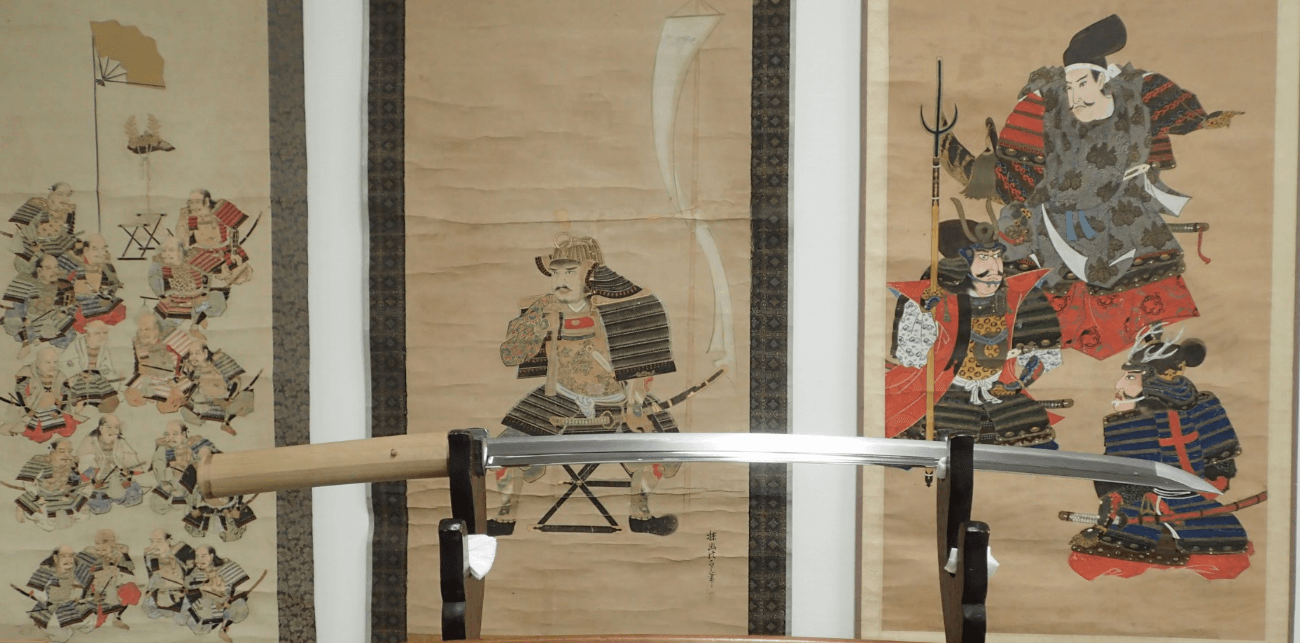
Edo was the sword’s age of connoisseurship: the Hon’ami appraisers, the shogunal register of famous blades of 1719, and a thriving literature turned the sword into an object of study even as it ceased to be drawn in war.
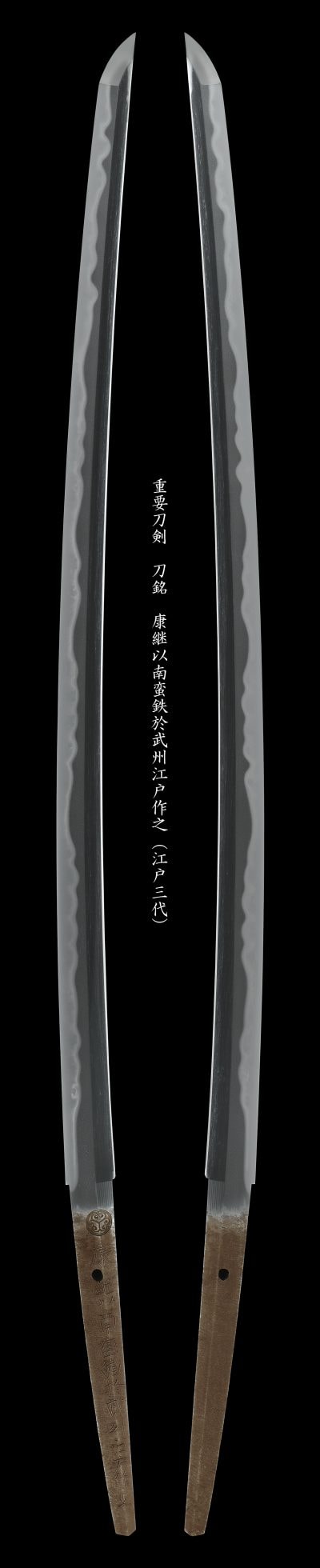
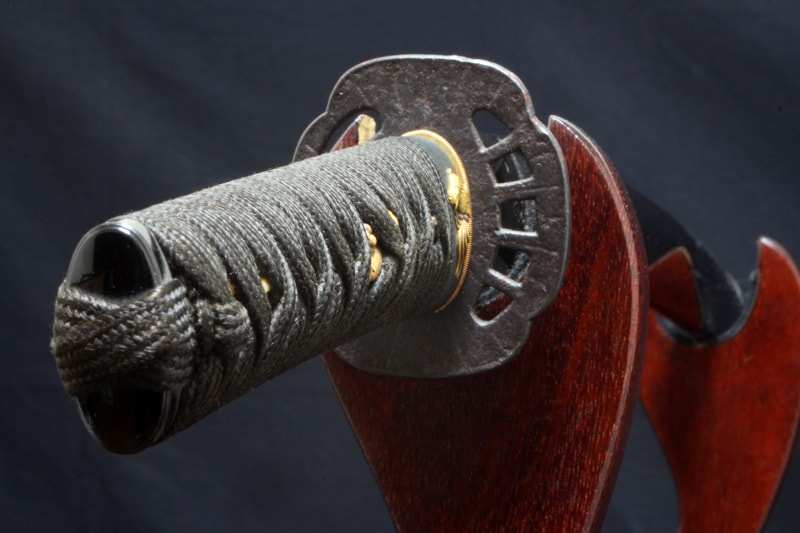
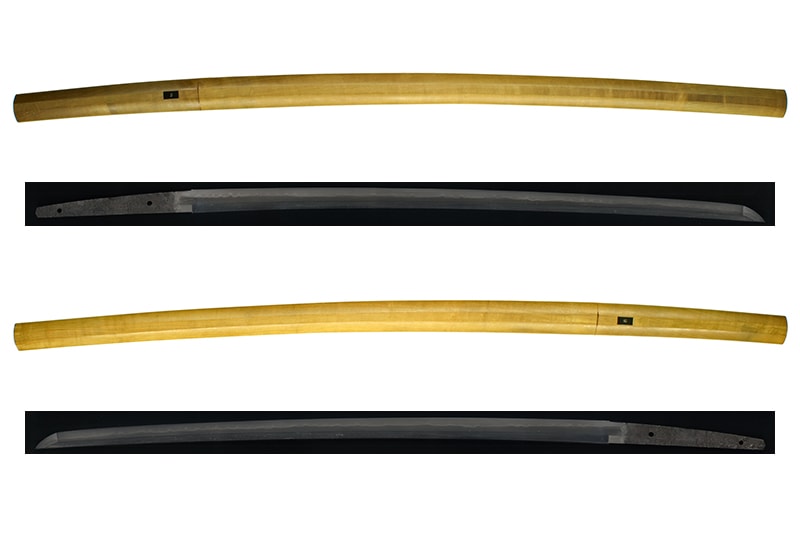
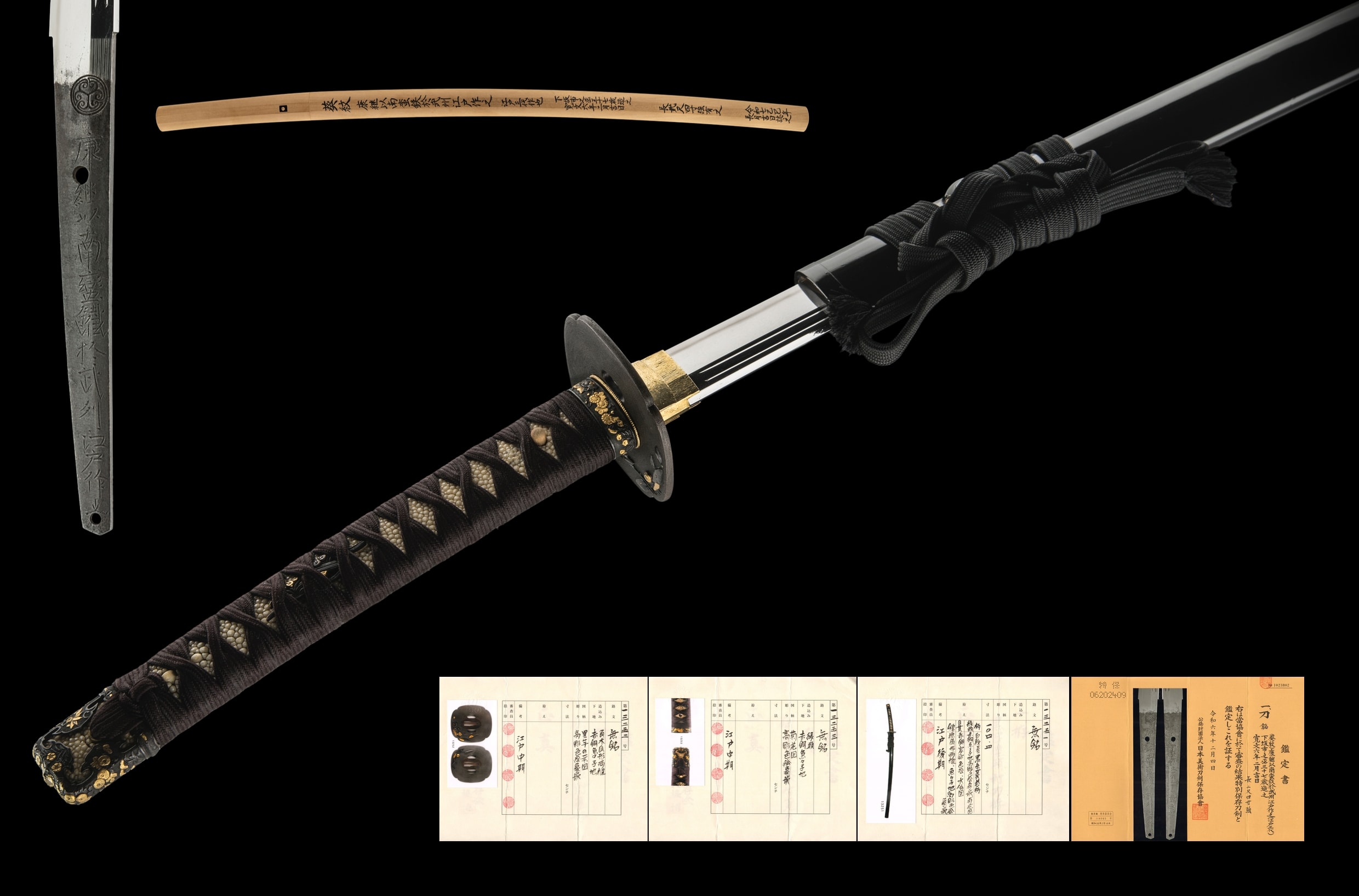
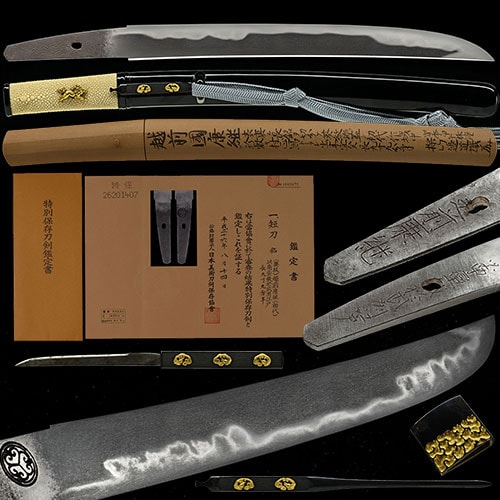
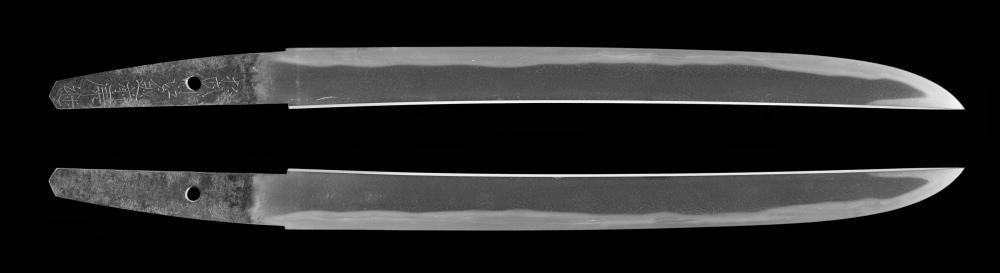
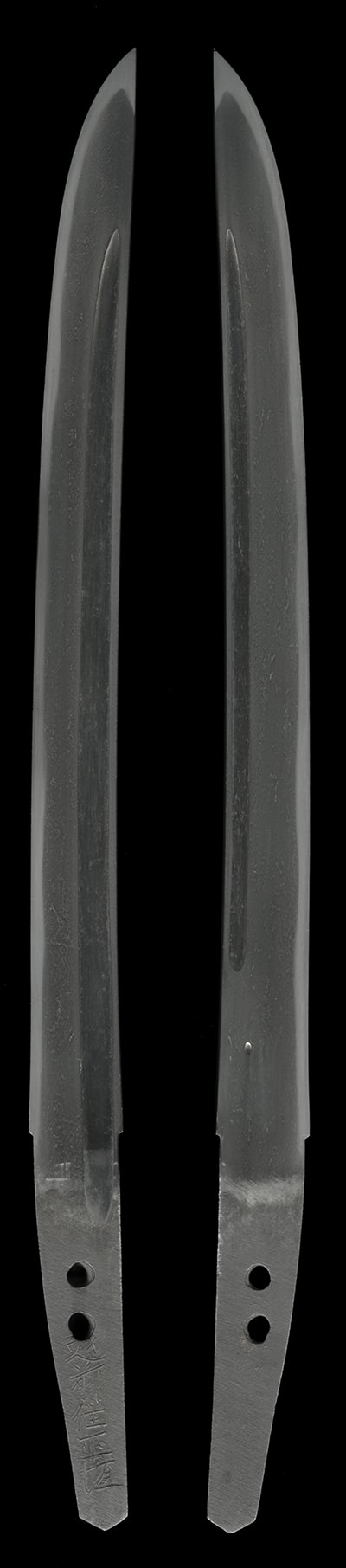
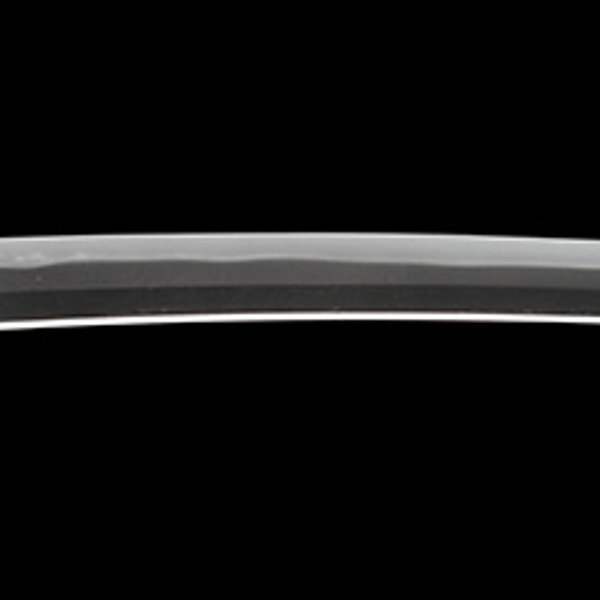
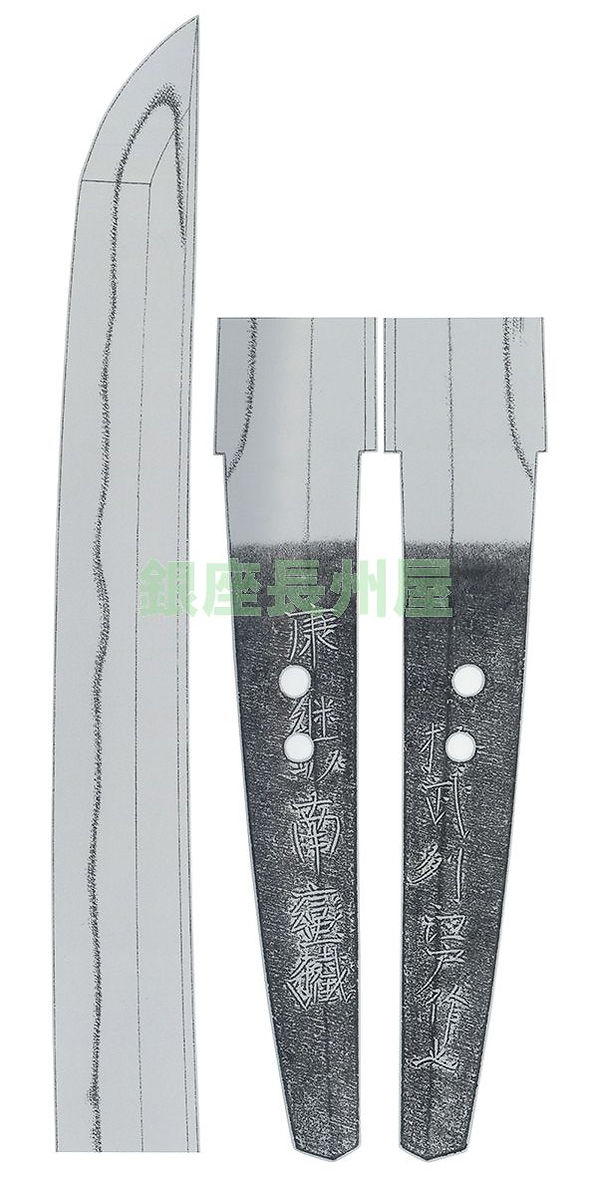
This listing features a wakizashi by the 3rd generation Yasutsugu, made in Edo, Musashi Province, using Namban-tetsu (southern barbarian steel). The 3rd generation Yasutsugu, born in Kanei 7 (1630), inherited the Edo residence at age seventeen after his father, the 2nd generation Yasutsugu, passed away. He was highly skilled, having trained under his father and collaborated with other Wazamono smiths in Edo, creating blades with excellent cutting ability and beautiful jigane and hamon.
 NihontoWatch
mei · Edo
Edo 3rd-generation Yasutsugu (Shimosaka line) · Musashi · around 1661-1673
Fujishiro Jo-jo saku · Tōken Taikan top 14%
3 pieces on the market now
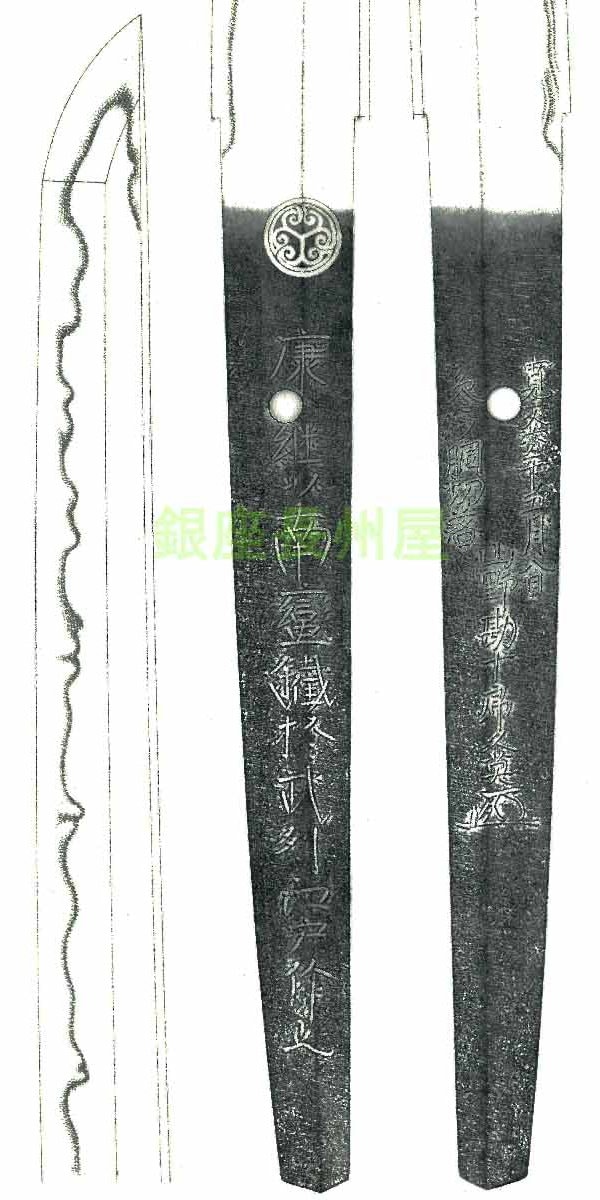
Every surviving katana of the Edo third-generation Yasutsugu carries the same long signature beneath the hollyhock crest granted to his line by Ieyasu: an aoi-mon cut at the base of the tang and, below it, the inscription that he made the blade at Edo in Bushū using imported nanban-tetsu[[c:1]]. He was, the published sources record, born the legitimate son of the second-generation Yasutsugu and known by the name Umanosuke. When his father died he was only seventeen, and a faction sought to pass the headship instead to Shirōemon, the third son of the first generation. The dispute ended with Umanosuke confirmed as the third generation while his uncle Shirōemon took the Echizen line, and so the Shimosaka house divided into its Edo and Echizen branches, each settling thereafter into separate service. He worked in the Kanbun era, around the 1660s, though the year of his death is not known; the Shimosaka name itself descended from the first-generation smith to whom Ieyasu had granted both the hollyhock crest and the character Yasu.
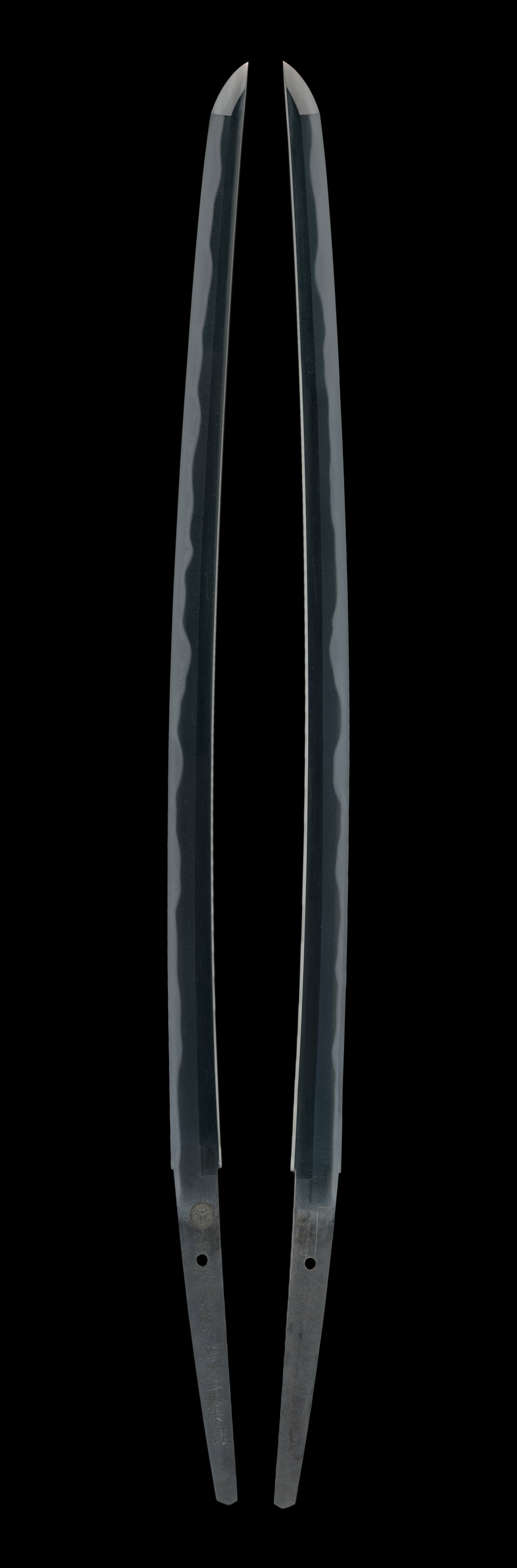
His hand is defined first by contrast with his forebears. Against the spirited, somewhat rough and forceful workmanship of the first two generations, the published sources read the third generation as calmer and more cohesively composed, and they set out his temper as two recurring manners. The first takes suguha as its principal theme with a shallow notare overtone; the second is an undulating midare in which a small ko-notare mixes with gunome, sometimes with round-topped gunome connected in pairs. In either manner the same connoisseurship marks recur: small ashi enter the ha, the nioi runs deep, and nie adheres well. Above the hamachi he frequently begins the temper with a straight yakidashi, a starting form the published record names as a trait of this smith not seen in the first two generations and one that brings his work closer to the contemporary Edo smiths.
The jigane is itame, often a tightly forged ko-itame, with mokume and flowing nagare-hada mixed in and at times a tendency toward standing grain. Over it the ji-nie forms thickly and finely, chikei appear, and the steel inclines overall to a somewhat blackish, iron-like tone. The boshi runs straight into a small ko-maru and turns back deeply, at times with a swept hakikake at the point; the deep return is a habit the published sources trace directly to the first and second generations, who stand to him as grandfather and father. On a blade of the 39th Jūyō session the sources note a faint Sanpin reminiscence in the boshi, and they read it together with the darkish jigane and the subdued nioiguchi as the surviving traditional traits of Echizen work, observing that 「三品風の面影があるところなどには, 伝統的な越前物の特色」 is shown here.
The individual character of the third generation emerges where these two manners are weighed against his forebears. On a katana of the 36th session the sources find that, compared with the first and second generations, the forging is tighter and cleaner, the nie adheres evenly without patchiness, and the nioiguchi is, if anything, bright; their phrasing that the steel is 「鍛えがつまって綺麗であり」 and that the temper shows 「匂口はむしろ明るいなど」 names the points by which the third generation is told apart. A blade of the 62nd session carries the same reading further, its deeper nioiguchi and strong adherence of nie placing it close to the Edo work of the Hōjōji group and of Batetsu, the flavor in which 「持味があらわれた」, the published sources say, the fashions of the time clearly expressed. Across the signed blades a habit of the chisel is consistent enough to serve as a tell: the characters of the long signature grow smaller toward the end of the tang, which the sources name as 「字体の大きさが茎先にかけて次第に小さくなるのが銘字の手癖」.
He is read entirely against his own house rather than against any rival school, and the comparisons the sources draw are inward and historical. The earliest of these designated blades, from the 17th session, gives the impression of a Hōjōji work, the commentary remarking that the piece 「あたかも法城寺一派の作を見るような感がある」, and the same Hōjōji and Batetsu affinity returns at the 62nd session. Honesty about the third generation belongs to the same passage: the published sources record that his extant works are comparatively few, that they fall short of those by his father and forebears, and that sword-body carvings, frequent in the earlier generations, become almost absent in his hand. His place is therefore not as an innovator but as the Edo continuator of the Shimosaka line, a smith who held the suguha and ko-notare manners of the house steady while letting the cleaner forging and brighter nioi of his Edo contemporaries into the work.
The blades stand at the Jūyō level, eight of them on record, with no higher designation and his work rated Jō-jō saku in the Fujishiro appraisal. Among them one katana of the 23rd session, dated the twelfth month of Kanbun 7 in the year 1667, bears on the reverse a gold-inlaid cutting-test inscription by Yamano Kanjūrō Hisahide, the kind of saidan-mei that ties a blade to the testing culture of early Edo. No daimyō provenance and no institutional holder is recorded in the designation papers for these eight, so a clear sense of where they have rested is largely absent. What a collector may realistically encounter is one of these Jūyō katana, in the suguha or ko-notare manner described, on the ubu tang the aoi-mon and the long nanban-tetsu signature shrinking toward the tip. Such a blade reaches the market from time to time rather than often, and as the cleaner, brighter Edo face of a line that began with Ieyasu's own grant of the hollyhock crest, it carries the documentary weight of the Shimosaka name as much as the workmanship of any single hand.
Where Yasutsugu stands among comparable artisans: across all of nihontō, and within tradition, era, and period. The tiers (Foremost · Leading · Major · Notable) weigh official designations from the NBTHK and Japan's Agency for Cultural Affairs, together with historical honors of lasting repute such as the Sansaku and Meibutsu-chō.
Select a lens to see how it's measured.
Shinto · Echizen
55 pieces on the market now
The Shimosaka name began not as a single hand but as a trademark shared by a band of Echizen smiths at the dawn of the shinto era, and the designated record gathers their work under that one signature rather than parsing it into individuals. The published sources read the early inscriptions, the generic Echizen no Kuni Shimosaka and the titled Higo Daijo Fujiwara Shimosaka, as the product of a group, of which the first-generation Yasutsugu served as the representative. Born in Shimosaka village of Sakata district in Omi, Yasutsugu moved to Echizen under the patronage of Yuki Hideyasu, signing in his early years Higo no Daijo Shimosaka before his Keicho 10 to 11 summons to Edo, where he forged before Ieyasu and Hidetada and received the character Yasu and the right to cut the Tokugawa hollyhock crest on his nakago. The titled signature was carried by several Echizen hands at once, and the texts list Yasutsugu, Sadakuni and Kanenori among the smiths whose chisel movement and brush intent are too alike to part on present evidence. From this band the Echizen Yasutsugu line descended, dividing after the second generation into the Edo and Echizen Shimosaka houses, and around it formed the deep relief carving the province made its own. The school is recognized first in its steel. The forging is itame mixed with mokume that stands and opens, often flowing into nagare, carrying thick ji-nie and fine chikei, the kane taking on the blackish cast the sources name outright as Echizen-gane; the same dark, standing jihada recurs from Yasutsugu through his son, through Sadatsugu, Shigetaka and the unnamed Shimosaka hands, and the commentary returns to it as the group's signature. Over it the hamon favors a suguha to chu-suguha or shallow notare into which linked gunome and ko-gunome mix, ko-ashi and yo entering, the nie thick and gathering unevenly into rough patches, kinsuji and sunagashi streaming through, the nioiguchi tending to a sinking shizumi.
The boshi is the steadiest tell, running to a ko-maru swept in hakikake and turning back long, with a Sanpin-flavored reminiscence of the Mishina and Echizen-Seki inheritance. Yet the house is not uniform: Sadakuni works an austere suguha over an unusually refined ji with little of the blackish mokume, Sadatsugu fires the brightest, most choji-laden midare of the circle, and the third generation cleans the forging and brightens the nioiguchi toward his Edo contemporaries. Binding the registers is the carving, the deep Echizen-bori and Kinai-bori of kurikara, Fudo Myoo, bonji and gomabashi set in relief within the hi, which Sadakuni may have first supplied to Yasutsugu's blades. For the collector the school rewards reading by register rather than by a single famous holding. Yasutsugu is its summit, rated Jo-jo saku, retained smith to the shogunal house, whose Sadamune and Toshiro copies (the Namazuo, the lost Oyako, the Shishi) show his own Echizen hand under the model, and whose best katana carry the possession inscriptions of his patron Honda Hida no Kami Narishige and provenance in the Echizen and Kishu Tokugawa houses. The second generation follows so faithfully that his finest blades part from the father chiefly by the form of the character tsugu; the Edo third generation continues the suguha and ko-notare manners with a straight yakidashi and a Hojoji affinity. Around them the specialists define the edges of the idiom: Sadakuni and his quiet suguha with a pair of tanto in the Imperial Collection, Sadatsugu with his Narishige-crested cutting-test blades, and Shigetaka, the most skilled of Yasutsugu's pupils, whose chestnut-tailed kurijiri nakago and Kinai carving (the Honebami and Hossho copies among his masterworks) name him at a glance and whose finest work approaches the master. A signed Shimosaka blade, whether a titled Yasutsugu beneath the aoi-mon, a named piece by one of the band, or a Higo Daijo pre-Yasutsugu register, comes to market only from time to time, valued as the wellspring from which the Echizen Yasutsugu line and its carving tradition arose. Learn more →
| Smith | Era | Designated |
|---|---|---|
| Yasutsugu康繼 | 1596-1615 | 73 |
| Yasutsugu康繼 | 1624-1644 | 27 |
| Yasutsugu康繼 | 1661-1673 | 8 |
| Sadakuni貞國 | 1596-1615 | 11 |
| Shigetaka重高 | 1596-1615 | 6 |
The Edo period (1615 to 1868)
Edo was the sword’s age of connoisseurship: the Hon’ami appraisers, the shogunal register of famous blades of 1719, and a thriving literature turned the sword into an object of study even as it ceased to be drawn in war.
We could not find an authenticity certificate on the seller’s listing. Japanese swords and fittings are normally papered by the NBTHK (or the NTHK). Without one, the attribution is the seller’s own assessment and has not been independently verified — treat it with caution and ask the dealer about certification before buying.
If, due to our fault, the item differs significantly from its proper condition, the item may be returned. Cooling-off is within one week of the item's arrival.
This listing features a wakizashi by the 3rd generation Yasutsugu, made in Edo, Musashi Province, using Namban-tetsu (southern barbarian steel). The 3rd generation Yasutsugu, born in Kanei 7 (1630), inherited the Edo residence at age seventeen after his father, the 2nd generation Yasutsugu, passed away. He was highly skilled, having trained under his father and collaborated with other Wazamono smiths in Edo, creating blades with excellent cutting ability and beautiful jigane and hamon.
NihontoWatchmei · Edo
Edo 3rd-generation Yasutsugu (Shimosaka line) · Musashi · around 1661-1673
Fujishiro Jo-jo saku · Tōken Taikan top 14%
3 pieces on the market now
Every surviving katana of the Edo third-generation Yasutsugu carries the same long signature beneath the hollyhock crest granted to his line by Ieyasu: an aoi-mon cut at the base of the tang and, below it, the inscription that he made the blade at Edo in Bushū using imported nanban-tetsu[[c:1]]. He was, the published sources record, born the legitimate son of the second-generation Yasutsugu and known by the name Umanosuke. When his father died he was only seventeen, and a faction sought to pass the headship instead to Shirōemon, the third son of the first generation. The dispute ended with Umanosuke confirmed as the third generation while his uncle Shirōemon took the Echizen line, and so the Shimosaka house divided into its Edo and Echizen branches, each settling thereafter into separate service. He worked in the Kanbun era, around the 1660s, though the year of his death is not known; the Shimosaka name itself descended from the first-generation smith to whom Ieyasu had granted both the hollyhock crest and the character Yasu.
His hand is defined first by contrast with his forebears. Against the spirited, somewhat rough and forceful workmanship of the first two generations, the published sources read the third generation as calmer and more cohesively composed, and they set out his temper as two recurring manners. The first takes suguha as its principal theme with a shallow notare overtone; the second is an undulating midare in which a small ko-notare mixes with gunome, sometimes with round-topped gunome connected in pairs. In either manner the same connoisseurship marks recur: small ashi enter the ha, the nioi runs deep, and nie adheres well. Above the hamachi he frequently begins the temper with a straight yakidashi, a starting form the published record names as a trait of this smith not seen in the first two generations and one that brings his work closer to the contemporary Edo smiths.
The jigane is itame, often a tightly forged ko-itame, with mokume and flowing nagare-hada mixed in and at times a tendency toward standing grain. Over it the ji-nie forms thickly and finely, chikei appear, and the steel inclines overall to a somewhat blackish, iron-like tone. The boshi runs straight into a small ko-maru and turns back deeply, at times with a swept hakikake at the point; the deep return is a habit the published sources trace directly to the first and second generations, who stand to him as grandfather and father. On a blade of the 39th Jūyō session the sources note a faint Sanpin reminiscence in the boshi, and they read it together with the darkish jigane and the subdued nioiguchi as the surviving traditional traits of Echizen work, observing that 「三品風の面影があるところなどには, 伝統的な越前物の特色」 is shown here.
The individual character of the third generation emerges where these two manners are weighed against his forebears. On a katana of the 36th session the sources find that, compared with the first and second generations, the forging is tighter and cleaner, the nie adheres evenly without patchiness, and the nioiguchi is, if anything, bright; their phrasing that the steel is 「鍛えがつまって綺麗であり」 and that the temper shows 「匂口はむしろ明るいなど」 names the points by which the third generation is told apart. A blade of the 62nd session carries the same reading further, its deeper nioiguchi and strong adherence of nie placing it close to the Edo work of the Hōjōji group and of Batetsu, the flavor in which 「持味があらわれた」, the published sources say, the fashions of the time clearly expressed. Across the signed blades a habit of the chisel is consistent enough to serve as a tell: the characters of the long signature grow smaller toward the end of the tang, which the sources name as 「字体の大きさが茎先にかけて次第に小さくなるのが銘字の手癖」.
He is read entirely against his own house rather than against any rival school, and the comparisons the sources draw are inward and historical. The earliest of these designated blades, from the 17th session, gives the impression of a Hōjōji work, the commentary remarking that the piece 「あたかも法城寺一派の作を見るような感がある」, and the same Hōjōji and Batetsu affinity returns at the 62nd session. Honesty about the third generation belongs to the same passage: the published sources record that his extant works are comparatively few, that they fall short of those by his father and forebears, and that sword-body carvings, frequent in the earlier generations, become almost absent in his hand. His place is therefore not as an innovator but as the Edo continuator of the Shimosaka line, a smith who held the suguha and ko-notare manners of the house steady while letting the cleaner forging and brighter nioi of his Edo contemporaries into the work.
The blades stand at the Jūyō level, eight of them on record, with no higher designation and his work rated Jō-jō saku in the Fujishiro appraisal. Among them one katana of the 23rd session, dated the twelfth month of Kanbun 7 in the year 1667, bears on the reverse a gold-inlaid cutting-test inscription by Yamano Kanjūrō Hisahide, the kind of saidan-mei that ties a blade to the testing culture of early Edo. No daimyō provenance and no institutional holder is recorded in the designation papers for these eight, so a clear sense of where they have rested is largely absent. What a collector may realistically encounter is one of these Jūyō katana, in the suguha or ko-notare manner described, on the ubu tang the aoi-mon and the long nanban-tetsu signature shrinking toward the tip. Such a blade reaches the market from time to time rather than often, and as the cleaner, brighter Edo face of a line that began with Ieyasu's own grant of the hollyhock crest, it carries the documentary weight of the Shimosaka name as much as the workmanship of any single hand.
Where Yasutsugu stands among comparable artisans: across all of nihontō, and within tradition, era, and period. The tiers (Foremost · Leading · Major · Notable) weigh official designations from the NBTHK and Japan's Agency for Cultural Affairs, together with historical honors of lasting repute such as the Sansaku and Meibutsu-chō.
Select a lens to see how it's measured.
Shinto · Echizen
55 pieces on the market now
The Shimosaka name began not as a single hand but as a trademark shared by a band of Echizen smiths at the dawn of the shinto era, and the designated record gathers their work under that one signature rather than parsing it into individuals. The published sources read the early inscriptions, the generic Echizen no Kuni Shimosaka and the titled Higo Daijo Fujiwara Shimosaka, as the product of a group, of which the first-generation Yasutsugu served as the representative. Born in Shimosaka village of Sakata district in Omi, Yasutsugu moved to Echizen under the patronage of Yuki Hideyasu, signing in his early years Higo no Daijo Shimosaka before his Keicho 10 to 11 summons to Edo, where he forged before Ieyasu and Hidetada and received the character Yasu and the right to cut the Tokugawa hollyhock crest on his nakago. The titled signature was carried by several Echizen hands at once, and the texts list Yasutsugu, Sadakuni and Kanenori among the smiths whose chisel movement and brush intent are too alike to part on present evidence. From this band the Echizen Yasutsugu line descended, dividing after the second generation into the Edo and Echizen Shimosaka houses, and around it formed the deep relief carving the province made its own. The school is recognized first in its steel. The forging is itame mixed with mokume that stands and opens, often flowing into nagare, carrying thick ji-nie and fine chikei, the kane taking on the blackish cast the sources name outright as Echizen-gane; the same dark, standing jihada recurs from Yasutsugu through his son, through Sadatsugu, Shigetaka and the unnamed Shimosaka hands, and the commentary returns to it as the group's signature. Over it the hamon favors a suguha to chu-suguha or shallow notare into which linked gunome and ko-gunome mix, ko-ashi and yo entering, the nie thick and gathering unevenly into rough patches, kinsuji and sunagashi streaming through, the nioiguchi tending to a sinking shizumi.
The boshi is the steadiest tell, running to a ko-maru swept in hakikake and turning back long, with a Sanpin-flavored reminiscence of the Mishina and Echizen-Seki inheritance. Yet the house is not uniform: Sadakuni works an austere suguha over an unusually refined ji with little of the blackish mokume, Sadatsugu fires the brightest, most choji-laden midare of the circle, and the third generation cleans the forging and brightens the nioiguchi toward his Edo contemporaries. Binding the registers is the carving, the deep Echizen-bori and Kinai-bori of kurikara, Fudo Myoo, bonji and gomabashi set in relief within the hi, which Sadakuni may have first supplied to Yasutsugu's blades. For the collector the school rewards reading by register rather than by a single famous holding. Yasutsugu is its summit, rated Jo-jo saku, retained smith to the shogunal house, whose Sadamune and Toshiro copies (the Namazuo, the lost Oyako, the Shishi) show his own Echizen hand under the model, and whose best katana carry the possession inscriptions of his patron Honda Hida no Kami Narishige and provenance in the Echizen and Kishu Tokugawa houses. The second generation follows so faithfully that his finest blades part from the father chiefly by the form of the character tsugu; the Edo third generation continues the suguha and ko-notare manners with a straight yakidashi and a Hojoji affinity. Around them the specialists define the edges of the idiom: Sadakuni and his quiet suguha with a pair of tanto in the Imperial Collection, Sadatsugu with his Narishige-crested cutting-test blades, and Shigetaka, the most skilled of Yasutsugu's pupils, whose chestnut-tailed kurijiri nakago and Kinai carving (the Honebami and Hossho copies among his masterworks) name him at a glance and whose finest work approaches the master. A signed Shimosaka blade, whether a titled Yasutsugu beneath the aoi-mon, a named piece by one of the band, or a Higo Daijo pre-Yasutsugu register, comes to market only from time to time, valued as the wellspring from which the Echizen Yasutsugu line and its carving tradition arose. Learn more →
| Smith | Era | Designated |
|---|---|---|
| Yasutsugu康繼 | 1596-1615 | 73 |
| Yasutsugu康繼 | 1624-1644 | 27 |
| Yasutsugu康繼 | 1661-1673 | 8 |
| Sadakuni貞國 | 1596-1615 | 11 |
| Shigetaka重高 | 1596-1615 | 6 |
The Edo period (1615 to 1868)
Edo was the sword’s age of connoisseurship: the Hon’ami appraisers, the shogunal register of famous blades of 1719, and a thriving literature turned the sword into an object of study even as it ceased to be drawn in war.
We could not find an authenticity certificate on the seller’s listing. Japanese swords and fittings are normally papered by the NBTHK (or the NTHK). Without one, the attribution is the seller’s own assessment and has not been independently verified — treat it with caution and ask the dealer about certification before buying.
If, due to our fault, the item differs significantly from its proper condition, the item may be returned. Cooling-off is within one week of the item's arrival.