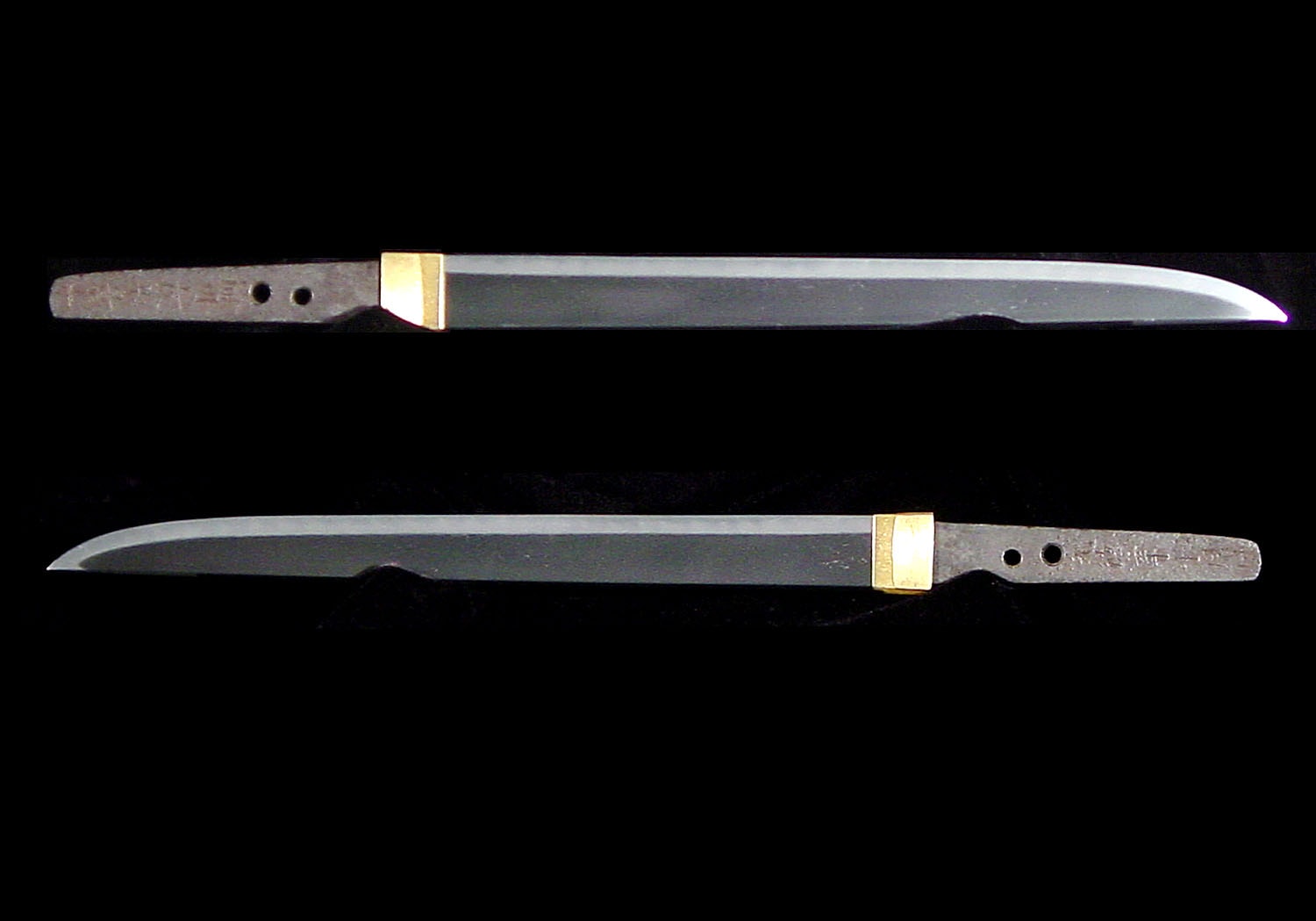
Sixty years of war between two courts drove blades long and broad, and Osafune met the demand: Kanemitsu and Chōgi led forges serving the provincial warriors who did the fighting, while Sōshū influence arrived with the armies to create Sōden-Bizen.
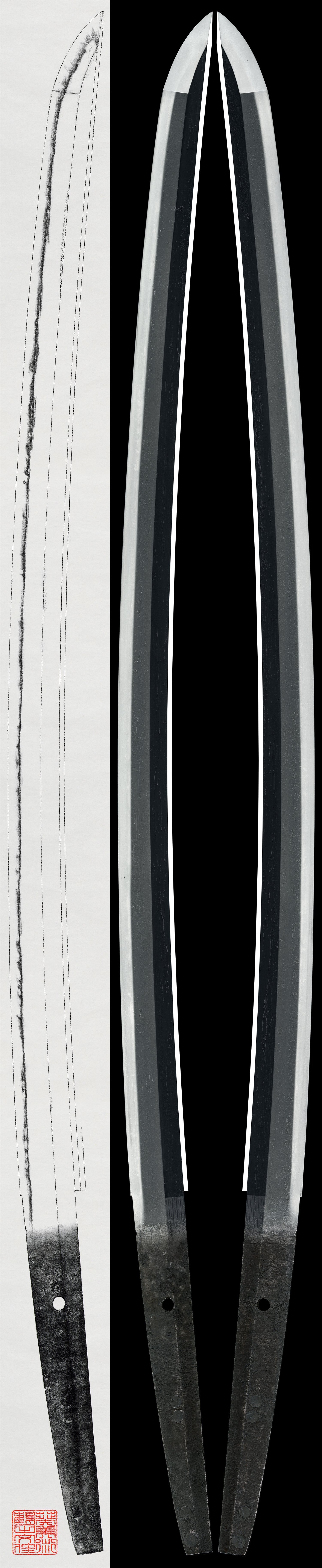
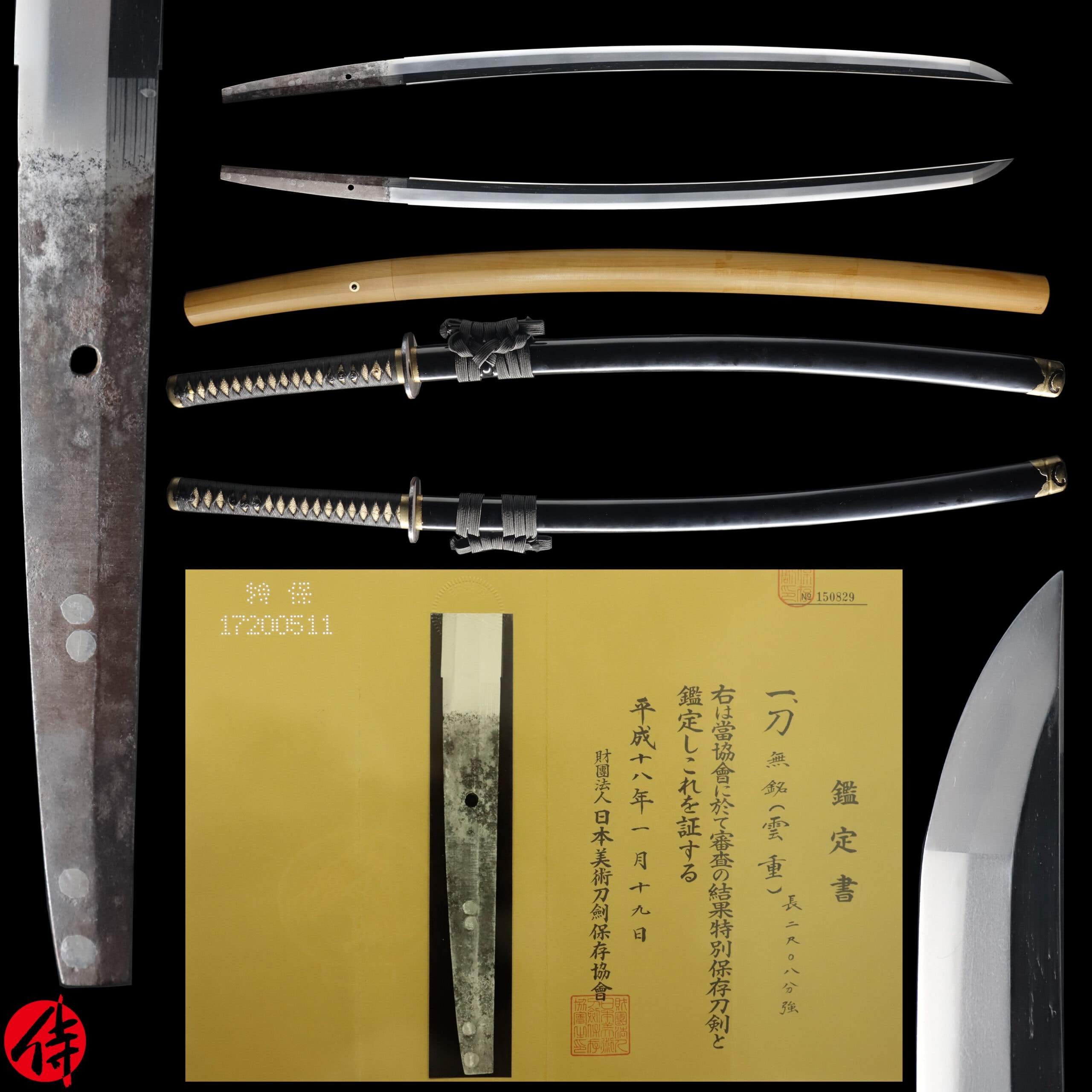
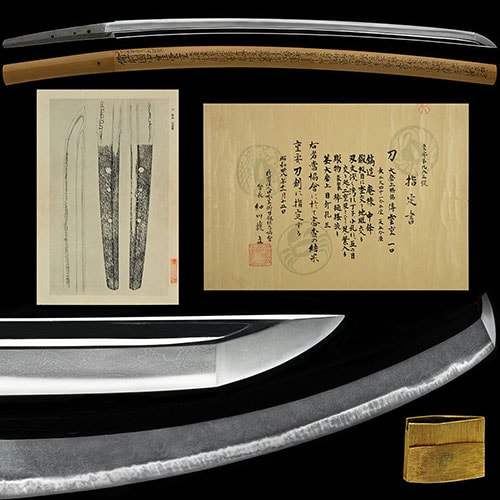
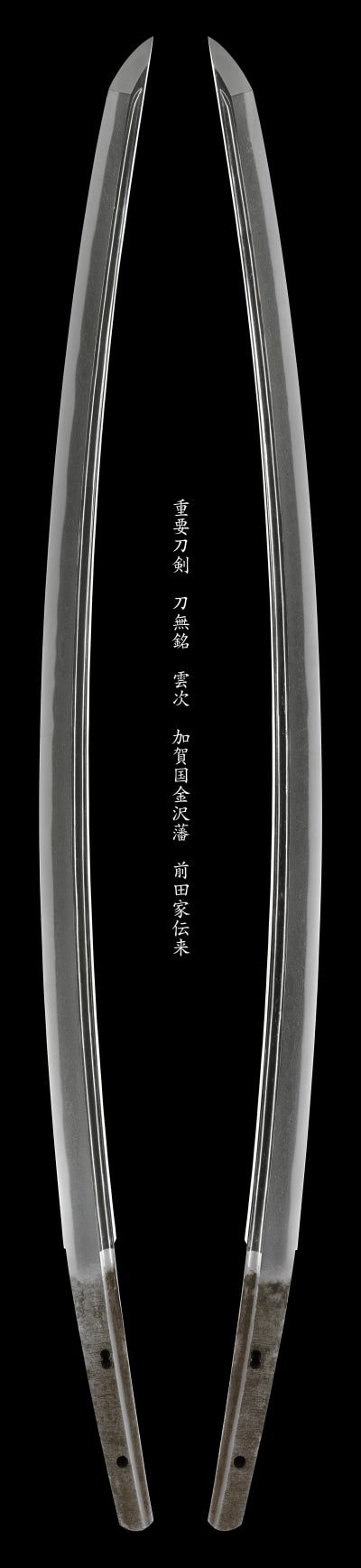
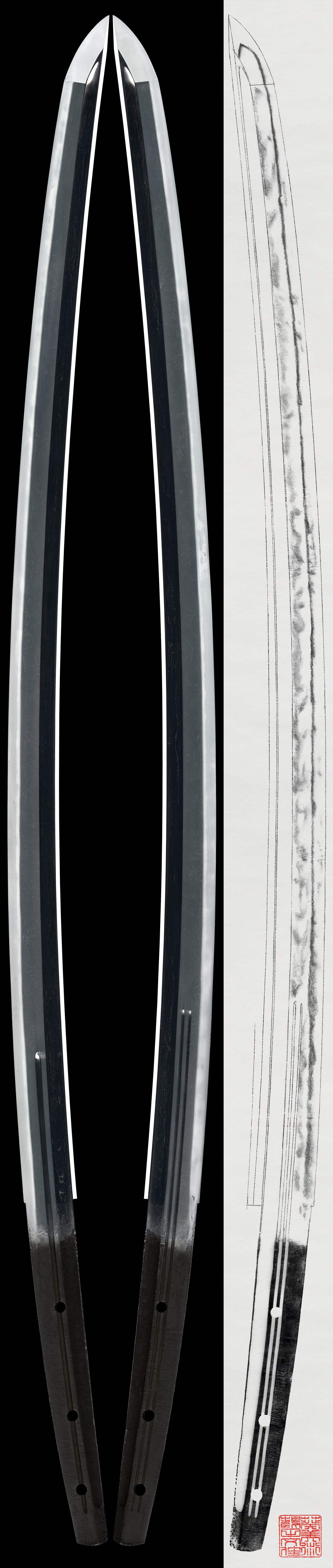
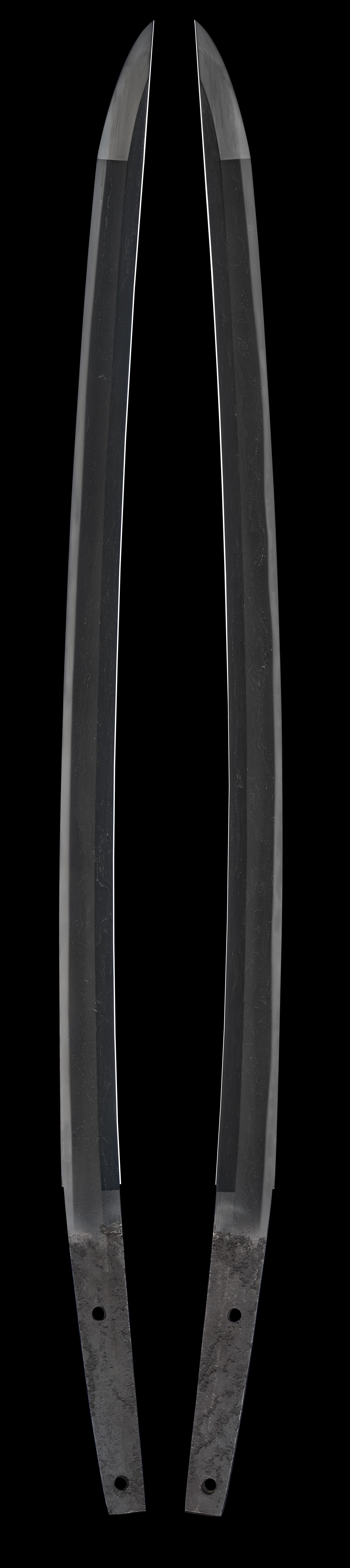
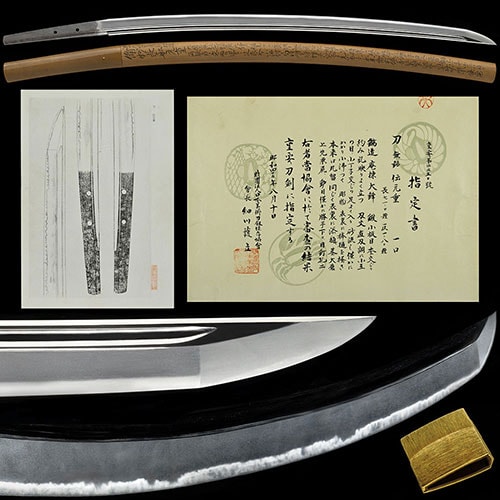
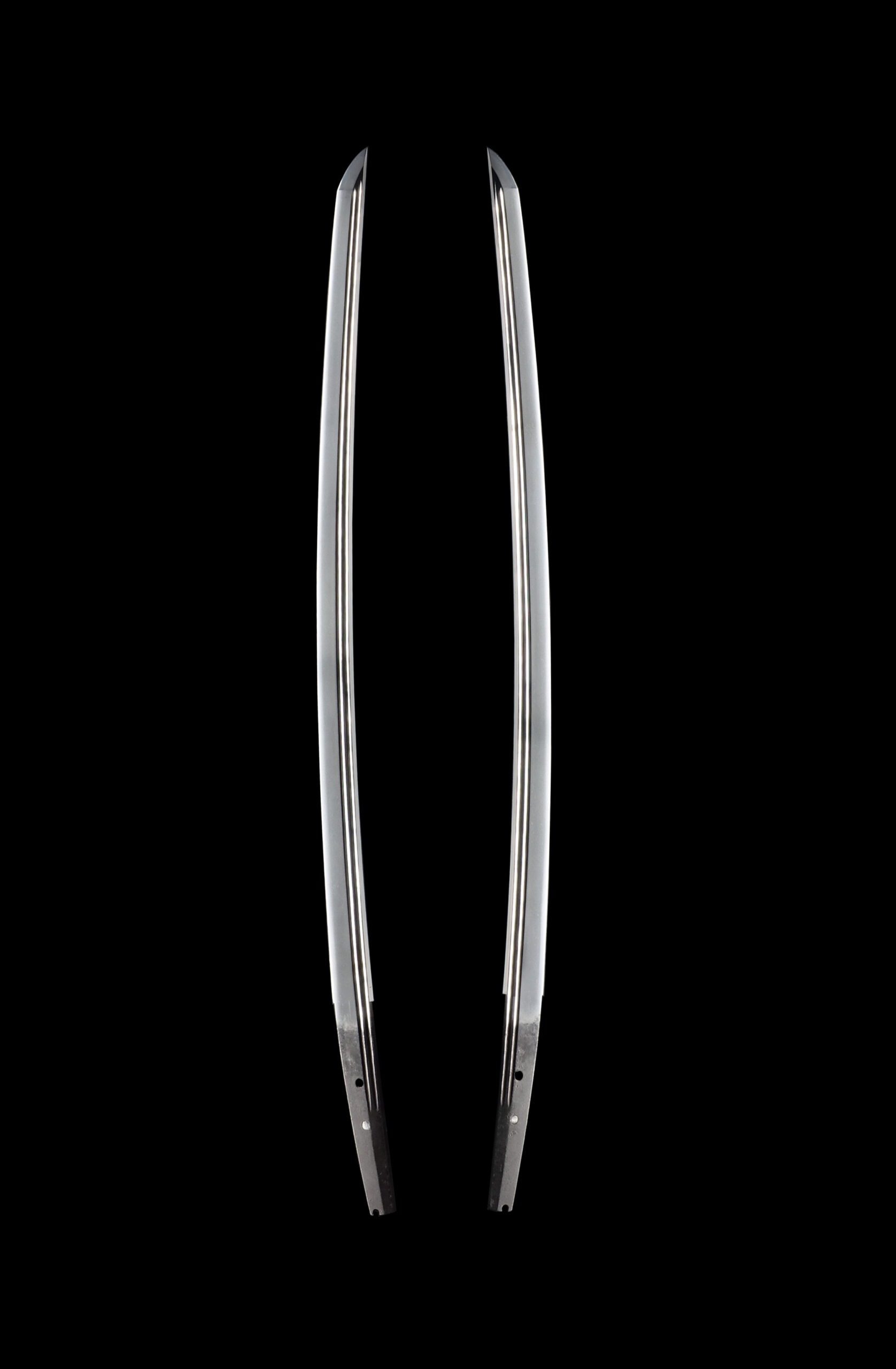
This is a masterpiece katana by Unju, a smith from the Ukai school in Bizen province, active during the Nanbokucho period. Originally a long tachi, it features a magnificent form with a wide mihaba and large kissaki. The jigane is refined with fine jinie, and the hamon is a bright suguha style mixed with small gunome, showing characteristics of the Un-type smiths. It is accompanied by a Tokubetsu Hozon Token certificate.
 NihontoWatch
mumei · Ukai · Nanbokucho · nagasa 79cm · sori 1.6cm
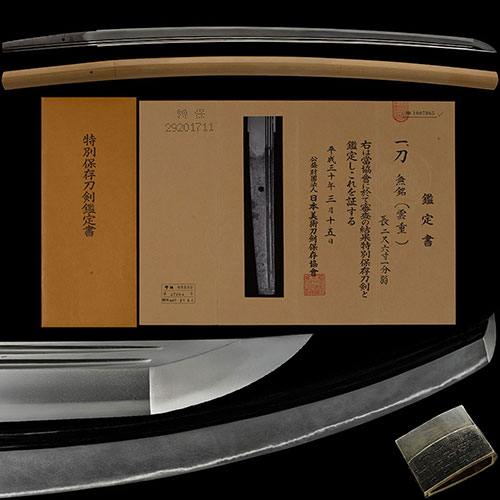
Bizen Ukai (Unrui / cloud group) · Bizen · around 1352-1375
Fujishiro Jo-jo saku · Tōken Taikan top 21%
Unju, whose name is read variously as Unshige and Kumoshige, was the third-generation hand of the Bizen Ukai group, the smiths of Ukan-shō whose signatures begin with the character for cloud and who are therefore called the Unrui, the cloud group. The single dated Tokubetsu Jūyō tachi, inscribed Jōji 7 in the second month of 1368, fixes him squarely in the mid-Nanbokuchō, succeeding the line's founder Unshō and his successor Unji. The published sources set the group apart from everything around it: their manner, they write, differs from the mainstream Osafune work of the day and stands instead close to the Yamashiro Rai school and the Bitchū Aoe school, so that within an essentially Bizen character there is mixed the flavor of Kyoto Rai and of Bitchū Aoe, a temperament strong enough that they call the cloud group plainly the most unusual presence among Bizen swords. The Meikan records Unju as a son of the second Unshō, and dated work survives bearing the Bunwa, Jōji and Ōan eras.
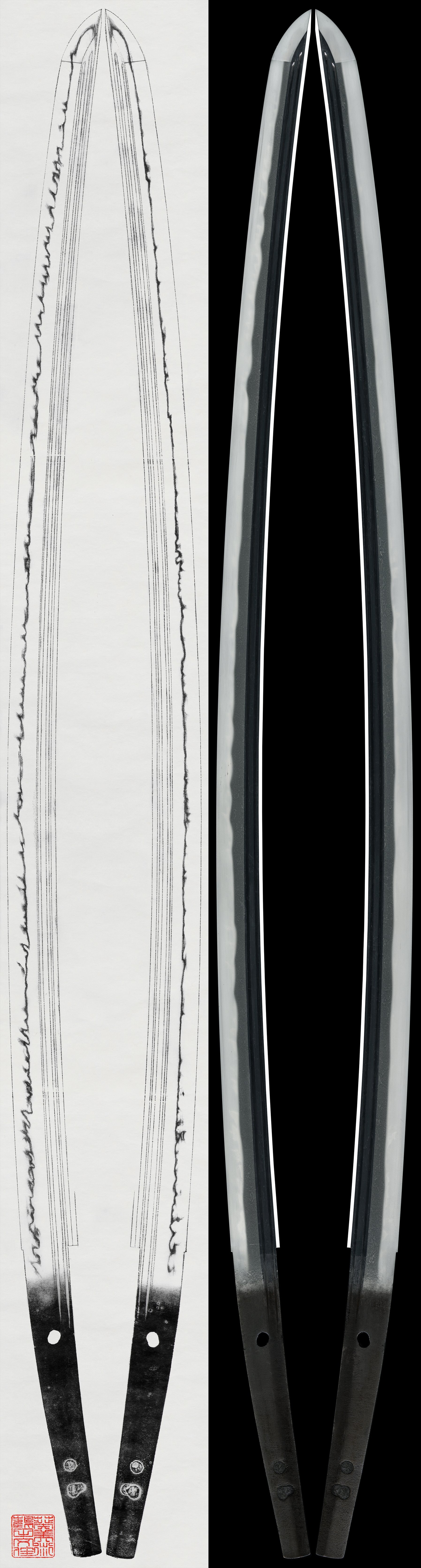
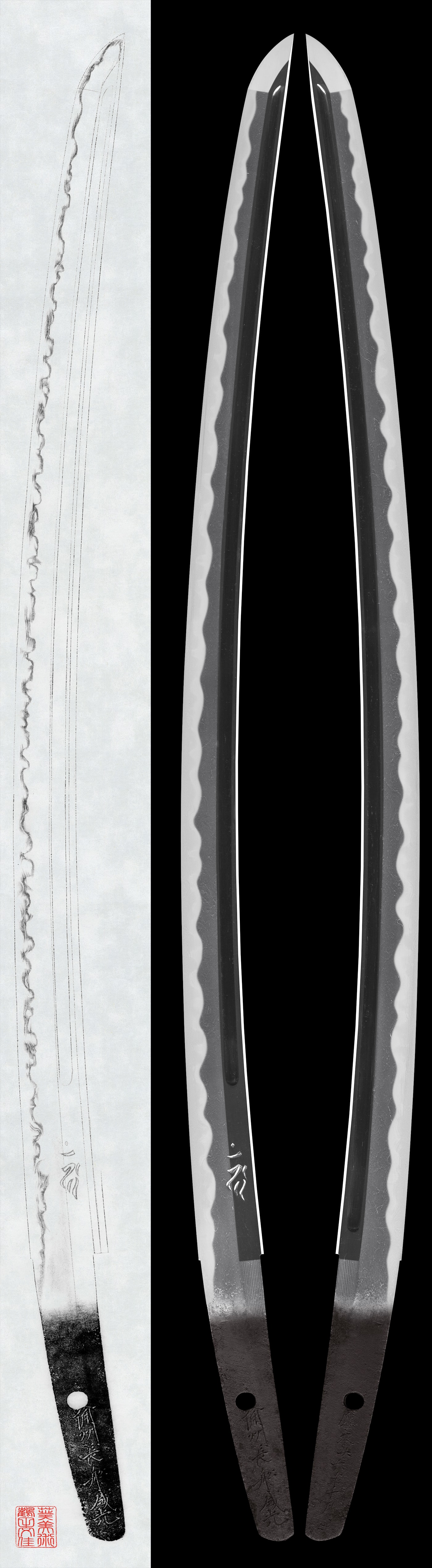
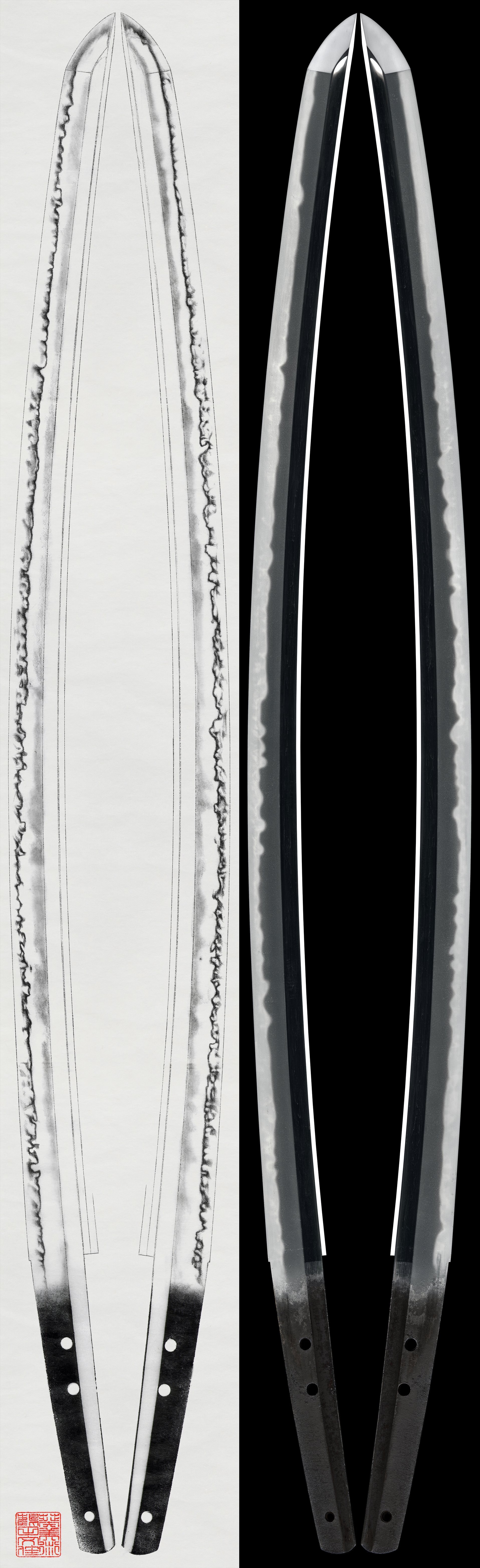
His characteristic hand is the opposite of the flamboyant clove-flower for which mid-Nanbokuchō Osafune is known. Unju's forte is the suguha and the suguha-toned line, shallowly notare, on which ride ko-gunome, ko-chōji and a small midare, with ashi and yō entering and ko-nie adhering. What lifts that quiet edge out of plain Bizen is the nie activity worked through it: sunagashi and kinsuji run frequently in the ha, with hotsure, kuichigai-ba and uchi-noke, an activity foreign to the nioi-based Osafune chōji and proper instead to the Rai and Yamato strains the sources attach to his group. On the Jōji 7 tachi the temper crowds in hotsure, kuichigai-ba, uchi-noke, nijūba and yubashiri, with deep nioi and vigorous nie, some of it coarse. The bōshi is a sugu ko-maru or, on the Yamato-cast pieces, a yakizume sweep.
The jigane is where the group's Kyoto leaning shows most plainly. Unju forges an itame, frequently mixed with mokume and standing somewhat, with ji-nie well applied and chikei entering, and over it a faint utsuri rather than the bright midare-utsuri of standard Bizen. The published sources note that the cloud group's steel differs from other contemporary Bizen in its mokume cast, its ji-nie and its scant utsuri, the inheritance of a line that, in the persons of Unshō and Unji, is said to have gone up to Kyoto to train and afterward served Retired Emperor Go-Daigo. On the most Yamato-leaning blades the forging runs almost entirely into masame, the edge breaks into kuichigai-ba and hotsure, and the bōshi finishes yakizume, a strain the published sources read as Yamato workmanship within an otherwise Bizen body.
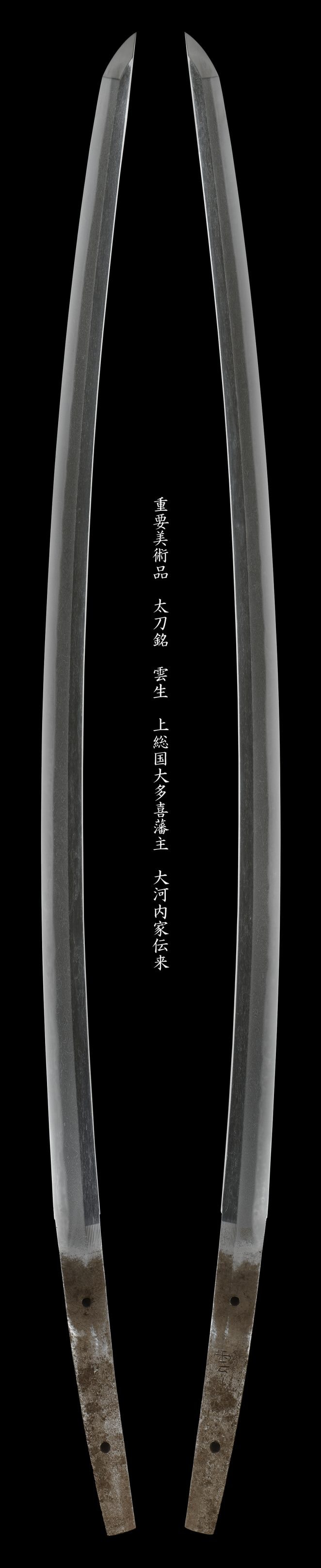
He survives in two faces. The first is the small group of ubu, signed pieces, several carrying a written-down date: the Jōji 7 tachi, a Jōji 6 tantō, a Bunwa tachi, a Jōji naginata. On these the deep, thickly built tang on the edge side, the steeply angled file marks, the reverse-chisel emphasis of the signature characters, and above all the practice of cutting the date straight down beneath the long signature are, the sources say, features that answer entirely to Aoe practice, "matters entirely in accord with Aoe work"[[c:1]]. The second face, far the larger, is the body of ō-suriage mumei katana attributed to him, broad Nanbokuchō blades with shallow sori and extended points, the silhouette of greatly shortened ōdachi. On these the published commentary accepts the traditional attribution from period and lineage, observing that the rounded bōshi and the suguha with small chōji-ashi are points of appreciation of the cloud group, "the things to look for in Unrui"[[c:2]], rather than a feature unique to Unju alone.
What sets Unju apart is exactly what the judges name when they reach for a comparison. His ji and ha are repeatedly said to be of a kind that at a glance could be taken for Aoe, "a workmanship that, at first sight, could be mistaken for Aoe"[[c:3]], and his group is placed close to the Yamashiro Rai school, so that the dated tantō's quiet suguha over a tight, faintly reflective jigane reads almost as a Bitchū piece until the Bizen ji-nie and the cloud-group signature settle it. The sources sum the whole effect in a single phrase: that within a Bizen temperament are mixed the airs of Kyoto Rai and Bitchū Aoe, "an individuality so strong it is distinctive among Bizen works"[[c:4]]. He stands at the third remove from the Kyoto-trained founders, carrying their restrained idiom forward while the broadening shapes and deepening nie of his own generation, touched by the transmitted Sōshū manner, press it toward the Nanbokuchō.
For the collector Unju is a rare and individual name rather than a flowing supply. Fujishiro grades him Jō-jō saku. He has no National Treasures and no Important Cultural Properties; his record runs instead through a single Tokubetsu Jūyō, a body of Jūyō, and three prewar Jūyō Bijutsuhin, some fifty-seven blades across the Tokubetsu Jūyō and Jūyō tiers and sixty designated works on record in all. Only thirteen of these are signed, and dated signed work is rarer still, which is why the published sources prize the inscribed pieces for their documentary value as much as their quality. His blades are preserved in long-held collections and institutions, among them the Kurokawa Institute of Ancient Cultures; one naginata-naoshi wakizashi carries a handachi mounting said to descend in the Date family, and the prewar designations passed through the Nanbu and Iwasaki houses. Because almost none can ever trade, and because his mumei katana surface only seldom and his signed and dated pieces seldomer, a privately held Unju is a notable thing for a collector to encounter, a document of the most Kyoto-inflected corner of Bizen.
Where Unju stands among comparable artisans: across all of nihontō, and within tradition, era, and period. The tiers (Foremost · Leading · Major · Notable) weigh official designations from the NBTHK and Japan's Agency for Cultural Affairs, together with historical honors of lasting repute such as the Sansaku and Meibutsu-chō.
Select a lens to see how it's measured.
Years he was demonstrably active, proven by signed-and-dated blades
Bizen-den · Bizen
7 pieces on the market now
At Ukan-no-shō in Bizen Province, a place name later written Ukai, a small group of smiths worked from the close of the Kamakura period into the first decades of Nanbokuchō, every one of them setting the character Un, the cloud, at the head of his name; for that habit the published sources know them equally as the Ukai school and as the Unrui, the cloud group. Unshō is named the line's de facto founder, his years fixed around Kengen and Kagen (1302 to 1306) through the dated blades of his son Unji, who alone among the early hands left work inscribed with eras, the Shōwa, Bunpō and Kenmu nengō; Unju, read also Unshige, carries the line a third remove into the mid-Nanbokuchō, his dated Jōji tachi of 1368 set against the founders before him. Tradition holds that Unshō and Unji went up to the capital, learned forging from the Yamashiro smiths, and served Retired Emperor Go-Daigo as duty smiths, and the rare blades with a sixteen-petal chrysanthemum crest below the habaki lend that account its weight. The make that resulted stands apart from the Osafune mainstream: within an essentially Bizen body the members describe a Yamashiro cast intermingled, with no small influence from the Aoe school of neighboring Bitchū besides, so that the published sources call the line a distinctive presence among Bizen works. The shared vocabulary begins with the curvature: a slender tachi with funbari at the base and a small point, arching evenly in a high wa-zori where the Osafune work of the same generation runs koshizori, the papers reading that even arch as close to Kyoto work. Against the chōji of the mainline the Ukai hands temper suguha, narrow to medium, mixed with ko-gunome, ko-chōji, shallow notare and a small midare, the ashi and yō entering thickly and slanting in reverse in the Aoe manner; kinsuji, sunagashi and hotsure work along the edge, and the nioiguchi now tightens under ko-nie, now sinks subdued. The jigane is itame mixed with mokume, knit to ko-itame on the finer blades, with ji-nie, fine chikei and a steel color tending blackish, across which stands a midare-utsuri; the group's own signature is what the papers call the black jifu-utsuri peculiar to the Unrui, as if pressed in with the pad of a finger.
The bōshi turns back round, ko-maru, and the round turn that does not point is held the school's particularity even where the make breathes Aoe. Within that common ground the members divide by temper: Unshō's yakiba is mostly low and quiet in its activity; Unji is the nie hand, his line wider and strongly nie-laden with ashi and yō standing out, his hada flowing and at times masa-tinged; Unju presses the idiom toward the Nanbokuchō with deepening nie and a scantier utsuri, his most Yamato-leaning blades running almost into masame with kuichigai-ba and a yakizume sweep. To kantei Ukai work is to read the line as the closest to Kyoto work among Bizen products: the wa-zori and even arch, the dark jifu-utsuri, the suguha laced with saka-ashi, and the round bōshi that settles a blade which might at first sight be confounded with the Rai school or with neighboring Aoe. The judges separate the hands by the activity of the ha, hotsure and stronger nie carrying an unsigned blade to Unji rather than Unshō, the reverse-chisel strokes of the mei and the date cut straight beneath a long signature answering to Aoe practice on Unju's signed pieces. Among the members Unji is the name a collector is likeliest to meet and the chronological anchor of the whole group, Unshō the founder whose stronger blades approach his successor, Unju the rare and individual third hand. What survives privately is most often an ō-suriage mumei katana attributed on the silhouette and the cloud-group traits, or, far less often, a signed tachi; provenance runs through the Uesugi hand-picked thirty-five, the Mōri, Ikeda, Maeda and Date houses and the Imperial Family, while the patrimonial pieces and museum holdings do not move. Learn more →
| Smith | Era | Designated |
|---|---|---|
| Unsho雲生 | 1303-1306 | 72 |
| Unji雲次 | 1315-1335 | 131 |
| Unju雲重 | 1352-1375 | 60 |
| Unsho雲生 | 1317-1319 | 0 |
| Unju雲重 | 1384-1394 | 0 |
Bizen in the Nanbokuchō period
Sixty years of war between two courts drove blades long and broad, and Osafune met the demand: Kanemitsu and Chōgi led forges serving the provincial warriors who did the fighting, while Sōshū influence arrived with the armies to create Sōden-Bizen.
A Hozon-certified blade judged to show notably superior workmanship and a better state of preservation. The bar is higher: re-tempered blades and most unsigned Muromachi/Edo works are excluded.
The NBTHK (Nihon Bijutsu Tōken Hozon Kyōkai, the Society for the Preservation of Japanese Art Swords) is a public-interest incorporated foundation founded in 1948 and supervised by Japan’s Agency for Cultural Affairs (Bunkachō); it is based at the Japanese Sword Museum in Tokyo. Its expert panels physically examine each submitted work (shinsa) and issue a certificate (kanteishō) ranking it by artistic and historical merit. NBTHK papers are the most widely recognized standard of authentication for Japanese swords and fittings.
NBTHK official siteReturns/exchanges/cancellations not accepted after shipment except for significant defects; if defective, return/exchange possible within 3 days of arrival (return shipping paid by customer).

This is a masterpiece katana by Unju, a smith from the Ukai school in Bizen province, active during the Nanbokucho period. Originally a long tachi, it features a magnificent form with a wide mihaba and large kissaki. The jigane is refined with fine jinie, and the hamon is a bright suguha style mixed with small gunome, showing characteristics of the Un-type smiths. It is accompanied by a Tokubetsu Hozon Token certificate.
NihontoWatchmumei · Ukai · Nanbokucho · nagasa 79cm · sori 1.6cm
Bizen Ukai (Unrui / cloud group) · Bizen · around 1352-1375
Fujishiro Jo-jo saku · Tōken Taikan top 21%
Unju, whose name is read variously as Unshige and Kumoshige, was the third-generation hand of the Bizen Ukai group, the smiths of Ukan-shō whose signatures begin with the character for cloud and who are therefore called the Unrui, the cloud group. The single dated Tokubetsu Jūyō tachi, inscribed Jōji 7 in the second month of 1368, fixes him squarely in the mid-Nanbokuchō, succeeding the line's founder Unshō and his successor Unji. The published sources set the group apart from everything around it: their manner, they write, differs from the mainstream Osafune work of the day and stands instead close to the Yamashiro Rai school and the Bitchū Aoe school, so that within an essentially Bizen character there is mixed the flavor of Kyoto Rai and of Bitchū Aoe, a temperament strong enough that they call the cloud group plainly the most unusual presence among Bizen swords. The Meikan records Unju as a son of the second Unshō, and dated work survives bearing the Bunwa, Jōji and Ōan eras.
His characteristic hand is the opposite of the flamboyant clove-flower for which mid-Nanbokuchō Osafune is known. Unju's forte is the suguha and the suguha-toned line, shallowly notare, on which ride ko-gunome, ko-chōji and a small midare, with ashi and yō entering and ko-nie adhering. What lifts that quiet edge out of plain Bizen is the nie activity worked through it: sunagashi and kinsuji run frequently in the ha, with hotsure, kuichigai-ba and uchi-noke, an activity foreign to the nioi-based Osafune chōji and proper instead to the Rai and Yamato strains the sources attach to his group. On the Jōji 7 tachi the temper crowds in hotsure, kuichigai-ba, uchi-noke, nijūba and yubashiri, with deep nioi and vigorous nie, some of it coarse. The bōshi is a sugu ko-maru or, on the Yamato-cast pieces, a yakizume sweep.
The jigane is where the group's Kyoto leaning shows most plainly. Unju forges an itame, frequently mixed with mokume and standing somewhat, with ji-nie well applied and chikei entering, and over it a faint utsuri rather than the bright midare-utsuri of standard Bizen. The published sources note that the cloud group's steel differs from other contemporary Bizen in its mokume cast, its ji-nie and its scant utsuri, the inheritance of a line that, in the persons of Unshō and Unji, is said to have gone up to Kyoto to train and afterward served Retired Emperor Go-Daigo. On the most Yamato-leaning blades the forging runs almost entirely into masame, the edge breaks into kuichigai-ba and hotsure, and the bōshi finishes yakizume, a strain the published sources read as Yamato workmanship within an otherwise Bizen body.
He survives in two faces. The first is the small group of ubu, signed pieces, several carrying a written-down date: the Jōji 7 tachi, a Jōji 6 tantō, a Bunwa tachi, a Jōji naginata. On these the deep, thickly built tang on the edge side, the steeply angled file marks, the reverse-chisel emphasis of the signature characters, and above all the practice of cutting the date straight down beneath the long signature are, the sources say, features that answer entirely to Aoe practice, "matters entirely in accord with Aoe work"[[c:1]]. The second face, far the larger, is the body of ō-suriage mumei katana attributed to him, broad Nanbokuchō blades with shallow sori and extended points, the silhouette of greatly shortened ōdachi. On these the published commentary accepts the traditional attribution from period and lineage, observing that the rounded bōshi and the suguha with small chōji-ashi are points of appreciation of the cloud group, "the things to look for in Unrui"[[c:2]], rather than a feature unique to Unju alone.
What sets Unju apart is exactly what the judges name when they reach for a comparison. His ji and ha are repeatedly said to be of a kind that at a glance could be taken for Aoe, "a workmanship that, at first sight, could be mistaken for Aoe"[[c:3]], and his group is placed close to the Yamashiro Rai school, so that the dated tantō's quiet suguha over a tight, faintly reflective jigane reads almost as a Bitchū piece until the Bizen ji-nie and the cloud-group signature settle it. The sources sum the whole effect in a single phrase: that within a Bizen temperament are mixed the airs of Kyoto Rai and Bitchū Aoe, "an individuality so strong it is distinctive among Bizen works"[[c:4]]. He stands at the third remove from the Kyoto-trained founders, carrying their restrained idiom forward while the broadening shapes and deepening nie of his own generation, touched by the transmitted Sōshū manner, press it toward the Nanbokuchō.
For the collector Unju is a rare and individual name rather than a flowing supply. Fujishiro grades him Jō-jō saku. He has no National Treasures and no Important Cultural Properties; his record runs instead through a single Tokubetsu Jūyō, a body of Jūyō, and three prewar Jūyō Bijutsuhin, some fifty-seven blades across the Tokubetsu Jūyō and Jūyō tiers and sixty designated works on record in all. Only thirteen of these are signed, and dated signed work is rarer still, which is why the published sources prize the inscribed pieces for their documentary value as much as their quality. His blades are preserved in long-held collections and institutions, among them the Kurokawa Institute of Ancient Cultures; one naginata-naoshi wakizashi carries a handachi mounting said to descend in the Date family, and the prewar designations passed through the Nanbu and Iwasaki houses. Because almost none can ever trade, and because his mumei katana surface only seldom and his signed and dated pieces seldomer, a privately held Unju is a notable thing for a collector to encounter, a document of the most Kyoto-inflected corner of Bizen.
Where Unju stands among comparable artisans: across all of nihontō, and within tradition, era, and period. The tiers (Foremost · Leading · Major · Notable) weigh official designations from the NBTHK and Japan's Agency for Cultural Affairs, together with historical honors of lasting repute such as the Sansaku and Meibutsu-chō.
Select a lens to see how it's measured.
Years he was demonstrably active, proven by signed-and-dated blades
Bizen-den · Bizen
7 pieces on the market now
At Ukan-no-shō in Bizen Province, a place name later written Ukai, a small group of smiths worked from the close of the Kamakura period into the first decades of Nanbokuchō, every one of them setting the character Un, the cloud, at the head of his name; for that habit the published sources know them equally as the Ukai school and as the Unrui, the cloud group. Unshō is named the line's de facto founder, his years fixed around Kengen and Kagen (1302 to 1306) through the dated blades of his son Unji, who alone among the early hands left work inscribed with eras, the Shōwa, Bunpō and Kenmu nengō; Unju, read also Unshige, carries the line a third remove into the mid-Nanbokuchō, his dated Jōji tachi of 1368 set against the founders before him. Tradition holds that Unshō and Unji went up to the capital, learned forging from the Yamashiro smiths, and served Retired Emperor Go-Daigo as duty smiths, and the rare blades with a sixteen-petal chrysanthemum crest below the habaki lend that account its weight. The make that resulted stands apart from the Osafune mainstream: within an essentially Bizen body the members describe a Yamashiro cast intermingled, with no small influence from the Aoe school of neighboring Bitchū besides, so that the published sources call the line a distinctive presence among Bizen works. The shared vocabulary begins with the curvature: a slender tachi with funbari at the base and a small point, arching evenly in a high wa-zori where the Osafune work of the same generation runs koshizori, the papers reading that even arch as close to Kyoto work. Against the chōji of the mainline the Ukai hands temper suguha, narrow to medium, mixed with ko-gunome, ko-chōji, shallow notare and a small midare, the ashi and yō entering thickly and slanting in reverse in the Aoe manner; kinsuji, sunagashi and hotsure work along the edge, and the nioiguchi now tightens under ko-nie, now sinks subdued. The jigane is itame mixed with mokume, knit to ko-itame on the finer blades, with ji-nie, fine chikei and a steel color tending blackish, across which stands a midare-utsuri; the group's own signature is what the papers call the black jifu-utsuri peculiar to the Unrui, as if pressed in with the pad of a finger.
The bōshi turns back round, ko-maru, and the round turn that does not point is held the school's particularity even where the make breathes Aoe. Within that common ground the members divide by temper: Unshō's yakiba is mostly low and quiet in its activity; Unji is the nie hand, his line wider and strongly nie-laden with ashi and yō standing out, his hada flowing and at times masa-tinged; Unju presses the idiom toward the Nanbokuchō with deepening nie and a scantier utsuri, his most Yamato-leaning blades running almost into masame with kuichigai-ba and a yakizume sweep. To kantei Ukai work is to read the line as the closest to Kyoto work among Bizen products: the wa-zori and even arch, the dark jifu-utsuri, the suguha laced with saka-ashi, and the round bōshi that settles a blade which might at first sight be confounded with the Rai school or with neighboring Aoe. The judges separate the hands by the activity of the ha, hotsure and stronger nie carrying an unsigned blade to Unji rather than Unshō, the reverse-chisel strokes of the mei and the date cut straight beneath a long signature answering to Aoe practice on Unju's signed pieces. Among the members Unji is the name a collector is likeliest to meet and the chronological anchor of the whole group, Unshō the founder whose stronger blades approach his successor, Unju the rare and individual third hand. What survives privately is most often an ō-suriage mumei katana attributed on the silhouette and the cloud-group traits, or, far less often, a signed tachi; provenance runs through the Uesugi hand-picked thirty-five, the Mōri, Ikeda, Maeda and Date houses and the Imperial Family, while the patrimonial pieces and museum holdings do not move. Learn more →
| Smith | Era | Designated |
|---|---|---|
| Unsho雲生 | 1303-1306 | 72 |
| Unji雲次 | 1315-1335 | 131 |
| Unju雲重 | 1352-1375 | 60 |
| Unsho雲生 | 1317-1319 | 0 |
| Unju雲重 | 1384-1394 | 0 |
Bizen in the Nanbokuchō period
Sixty years of war between two courts drove blades long and broad, and Osafune met the demand: Kanemitsu and Chōgi led forges serving the provincial warriors who did the fighting, while Sōshū influence arrived with the armies to create Sōden-Bizen.
A Hozon-certified blade judged to show notably superior workmanship and a better state of preservation. The bar is higher: re-tempered blades and most unsigned Muromachi/Edo works are excluded.
The NBTHK (Nihon Bijutsu Tōken Hozon Kyōkai, the Society for the Preservation of Japanese Art Swords) is a public-interest incorporated foundation founded in 1948 and supervised by Japan’s Agency for Cultural Affairs (Bunkachō); it is based at the Japanese Sword Museum in Tokyo. Its expert panels physically examine each submitted work (shinsa) and issue a certificate (kanteishō) ranking it by artistic and historical merit. NBTHK papers are the most widely recognized standard of authentication for Japanese swords and fittings.
NBTHK official siteReturns/exchanges/cancellations not accepted after shipment except for significant defects; if defective, return/exchange possible within 3 days of arrival (return shipping paid by customer).