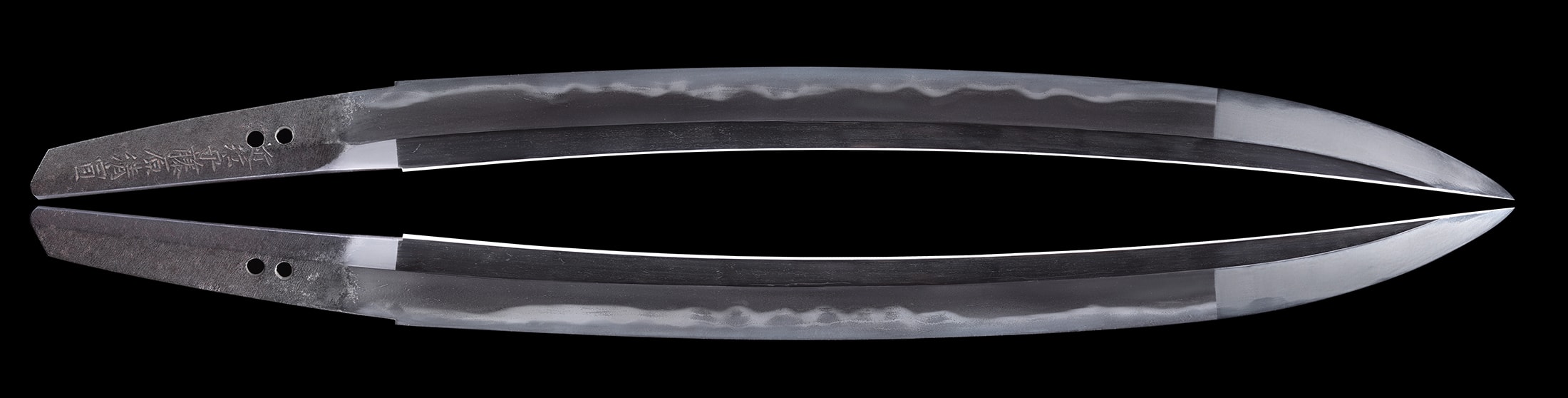
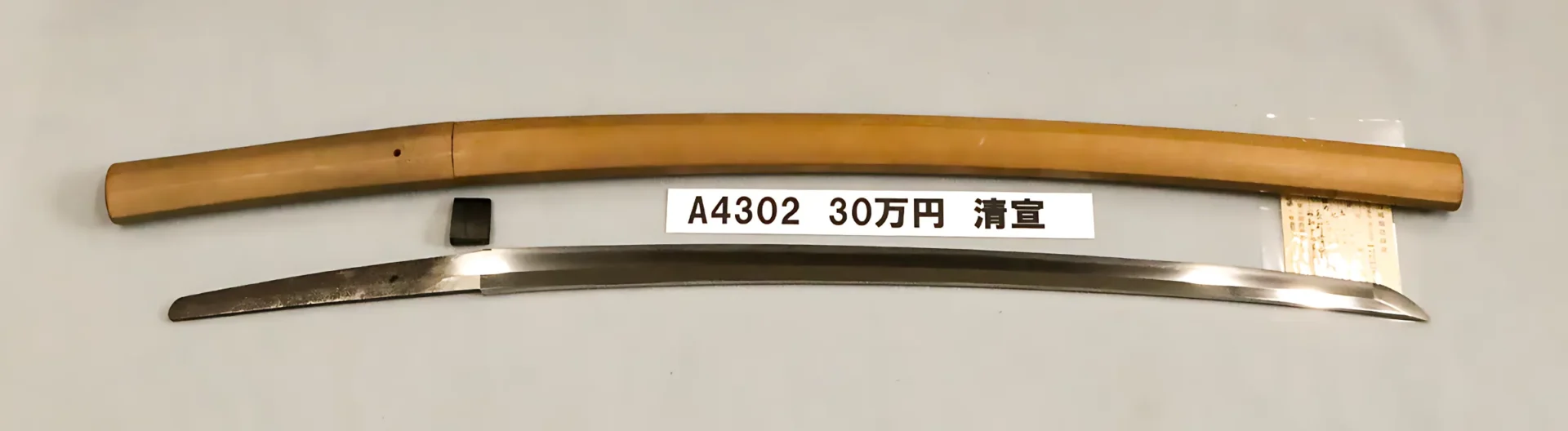
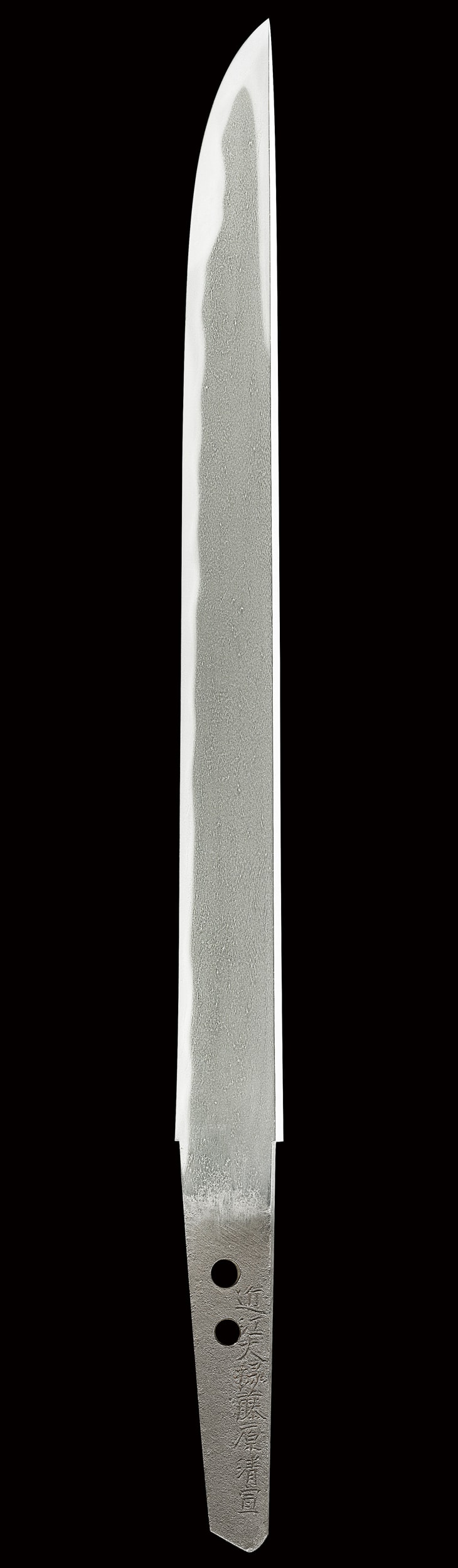
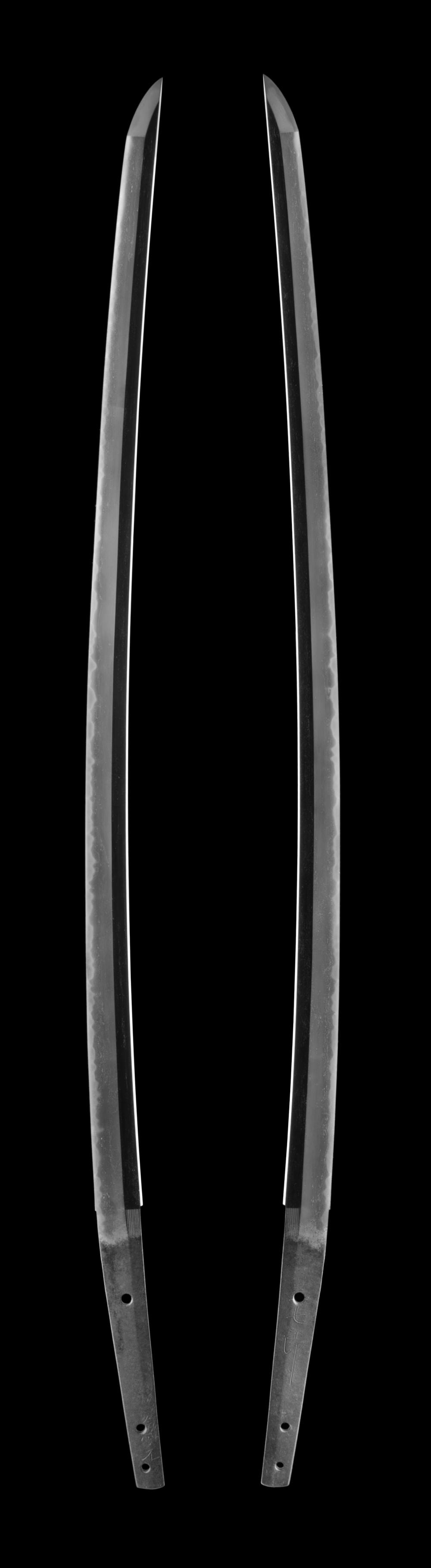
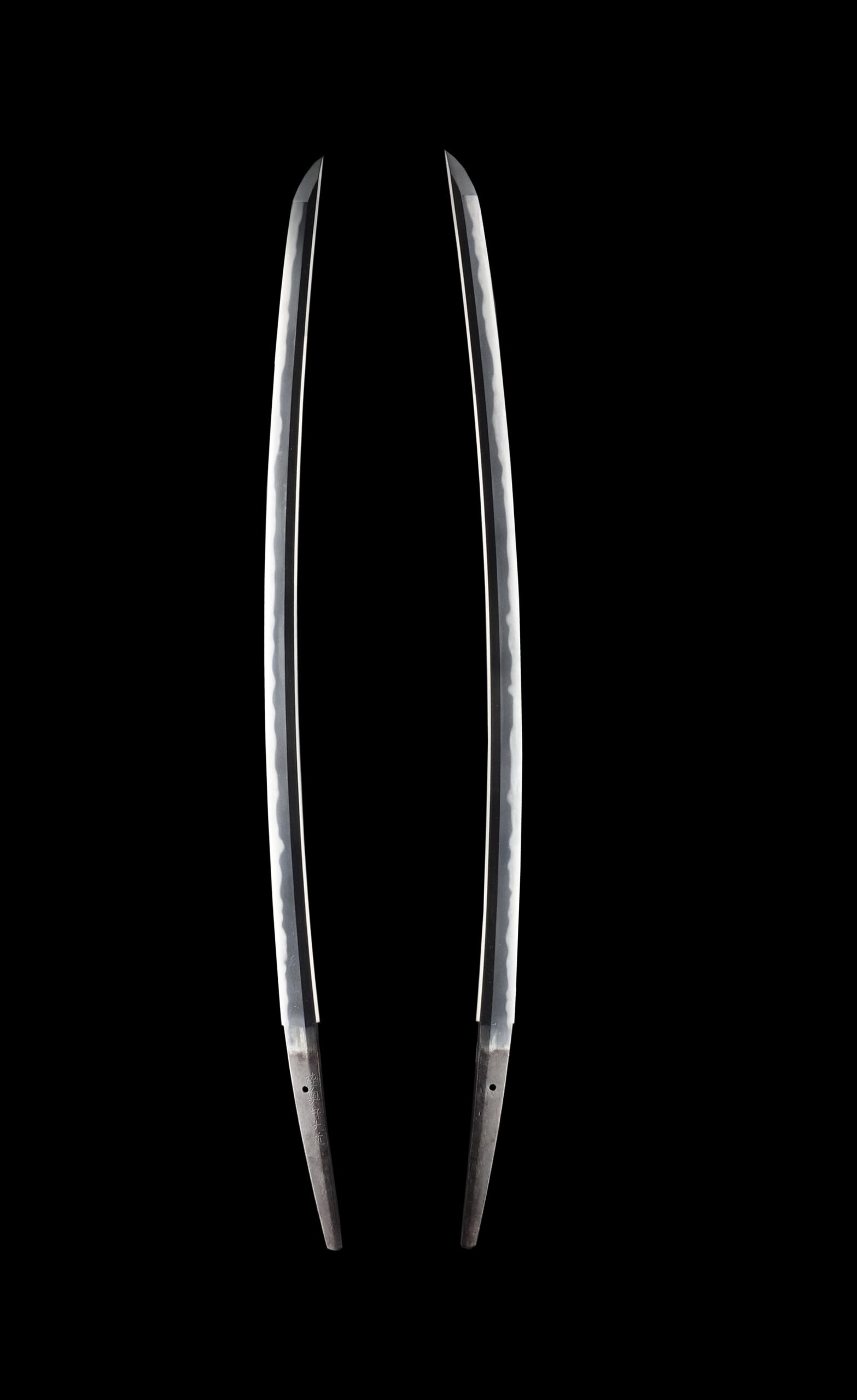
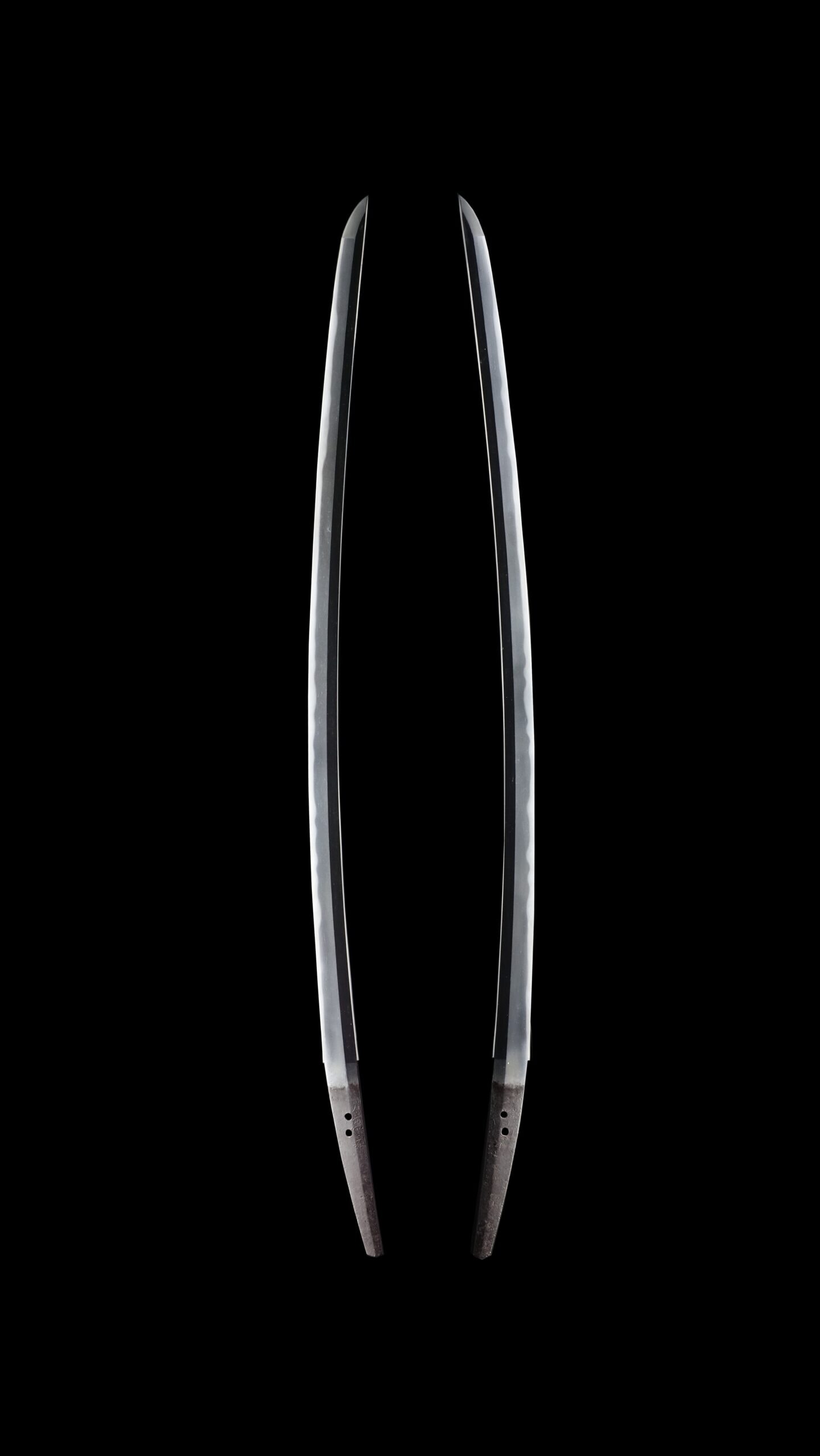
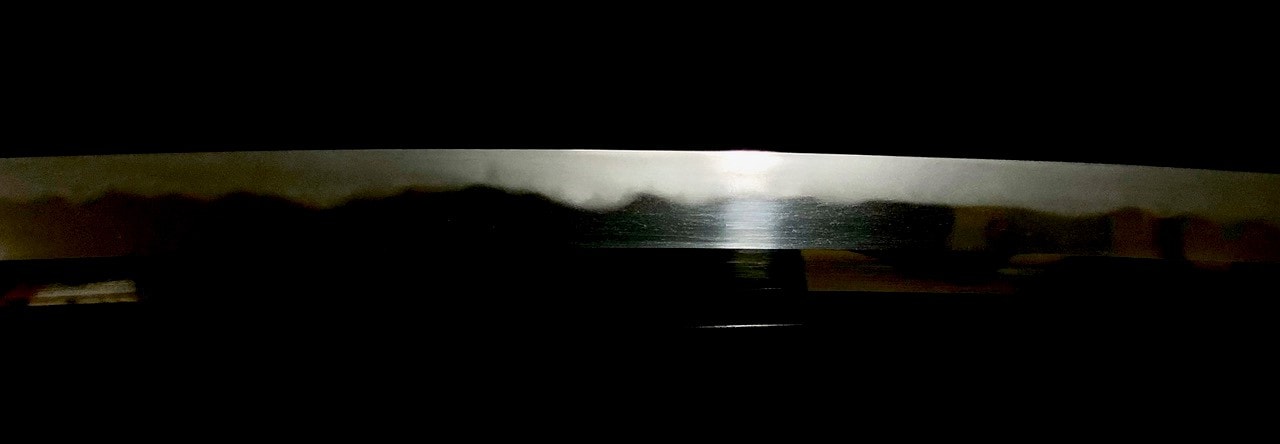
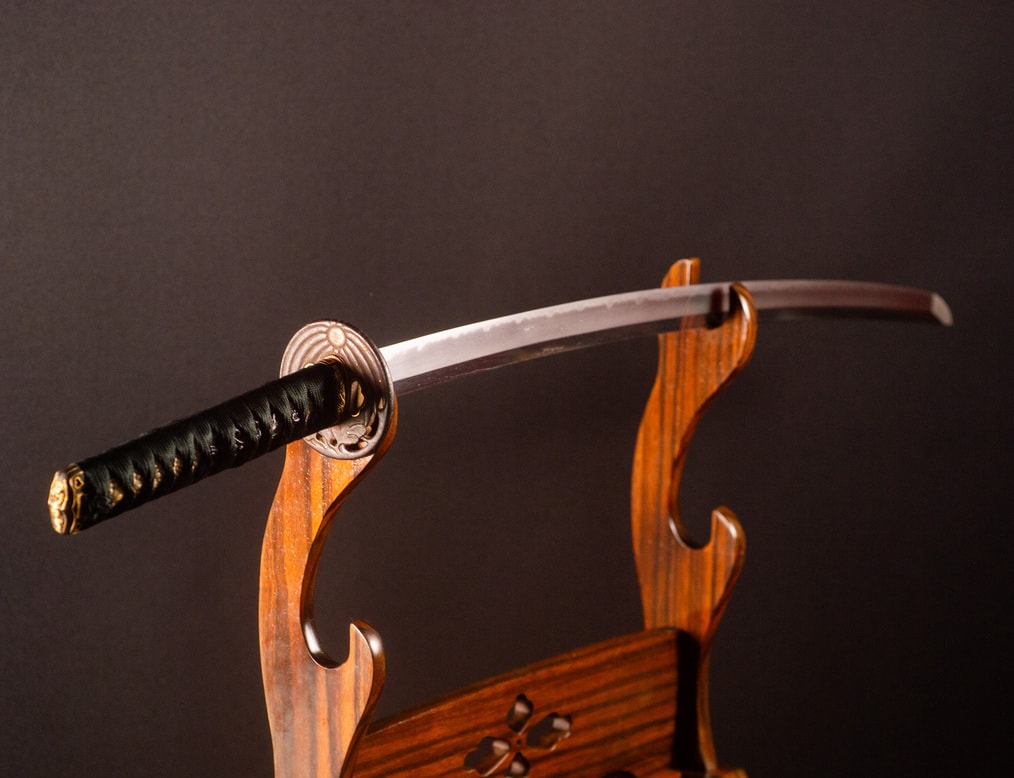
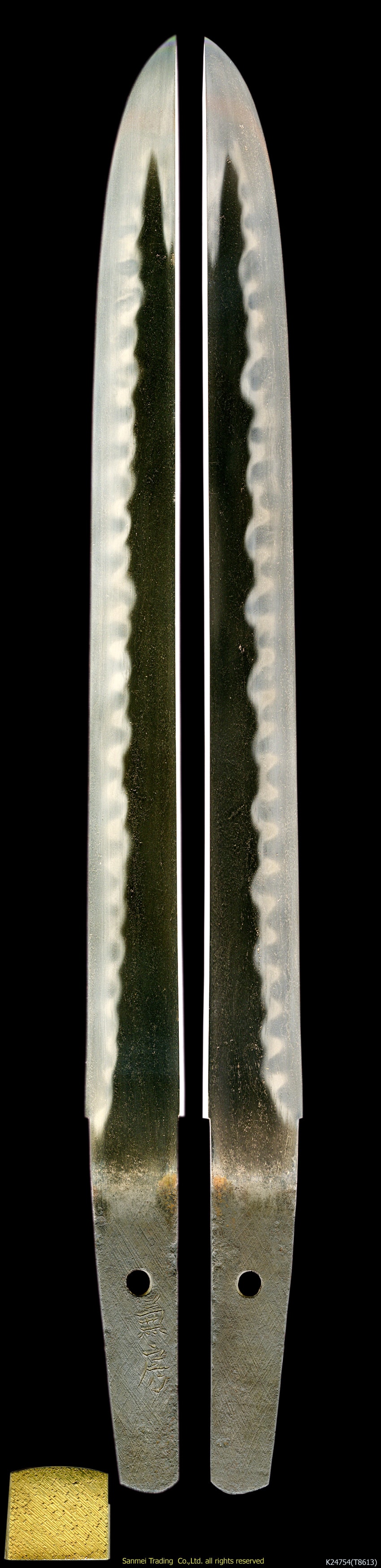
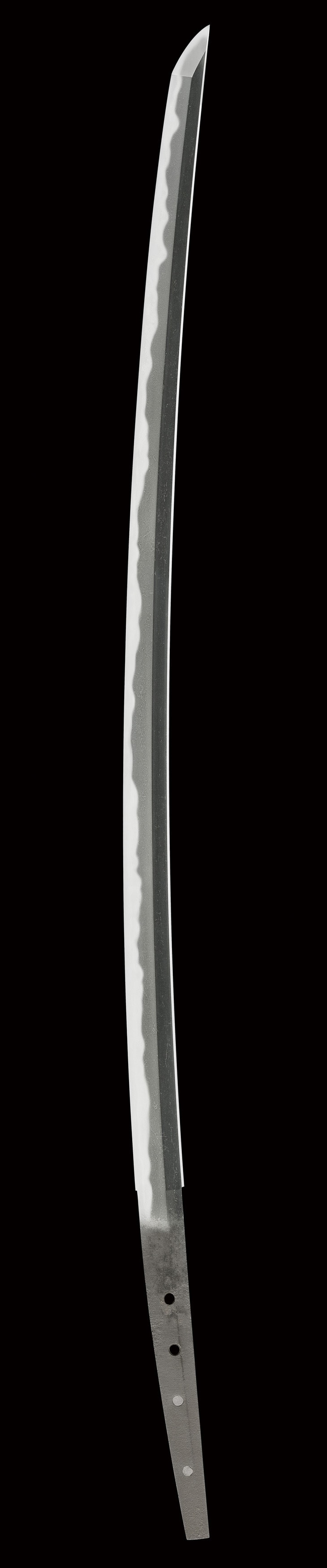
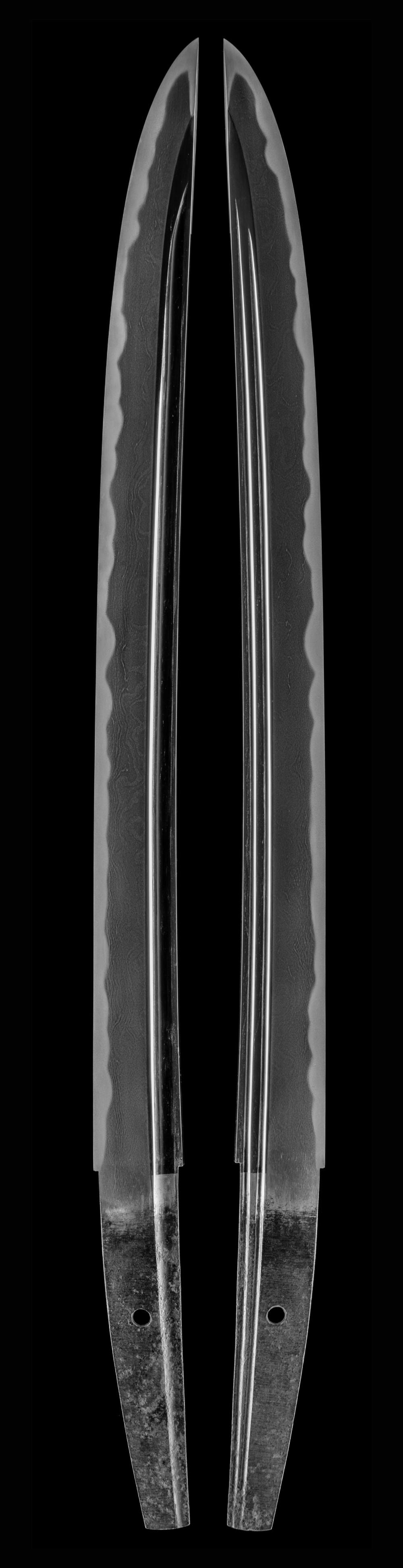
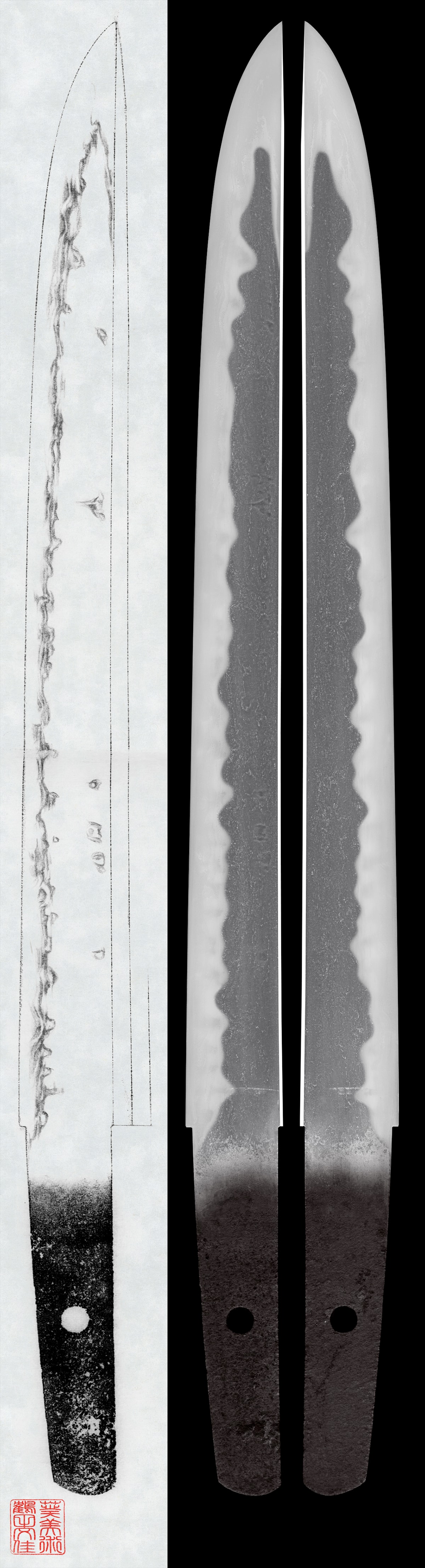
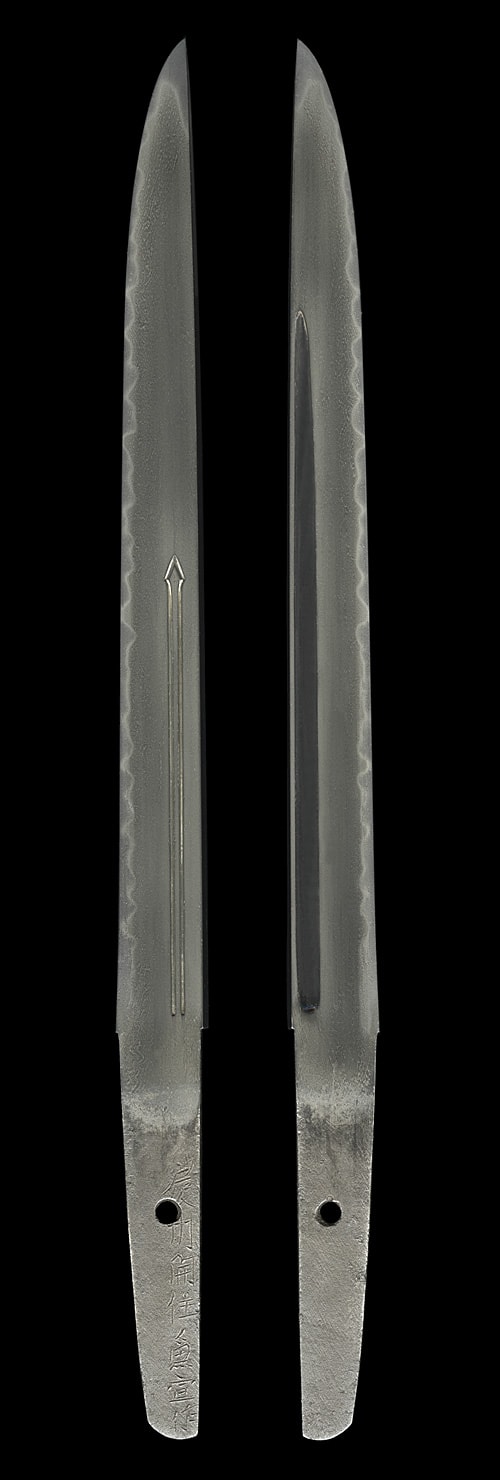
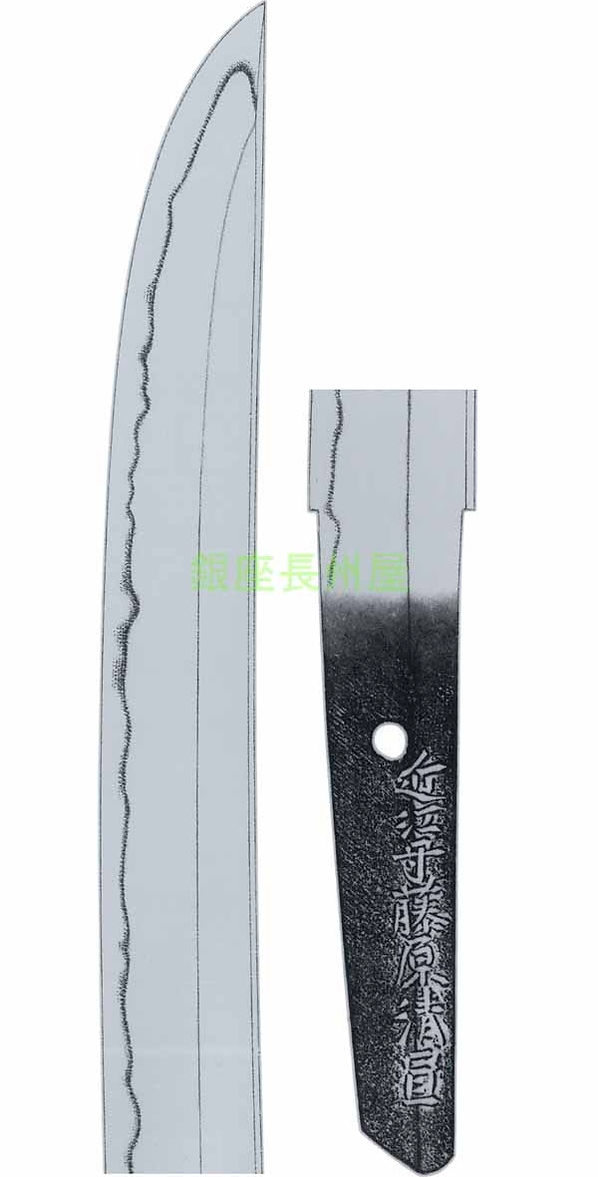
This wakizashi is signed by Omi no Kami Fujiwara Kiyonobu, a swordsmith from Mino province active during the early Edo period, around the Keicho era. The blade features a powerful shobu-zukuri shape, suggesting it was forged with battlefield use in mind. It embodies a severe yet pure aesthetic, reflecting the spirit of the samurai class.
 NihontoWatch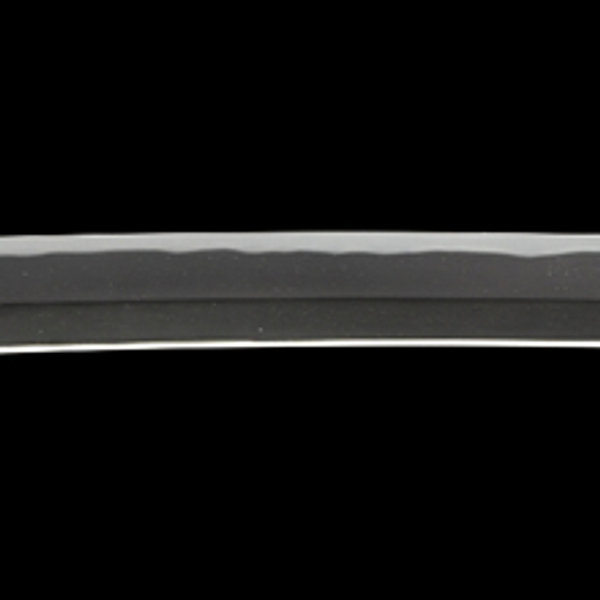
Mino-den · Mino · around 1624-1644
Tōken Taikan top 76%
3 pieces on the market now
Where Kiyonobu stands among comparable artisans: across all of nihontō, and within tradition, era, and period. The tiers (Foremost · Leading · Major · Notable) weigh official designations from the NBTHK and Japan's Agency for Cultural Affairs, together with historical honors of lasting repute such as the Sansaku and Meibutsu-chō.
Select a lens to see how it's measured.
Mino-den · Mino
151 pieces on the market now
Seki (関), in Mino Province, grew from two roots set down in the Nanbokuchō period and rose to become the great center of mass sword production in the late medieval age. Learn more →
| Smith | Era | Designated |
|---|---|---|
| Kinju金重 | 1340-1346 | 45 |
| Ujifusa氏房 | 1596-1615 | 16 |
| Kaneyuki金行 | 1350-1352 | 10 |
| Ujifusa氏房 | 1571-1592 | 9 |
| Kanekore兼之 | 1504-1555 | 7 |
We could not find an authenticity certificate on the seller’s listing. Japanese swords and fittings are normally papered by the NBTHK (or the NTHK). Without one, the attribution is the seller’s own assessment and has not been independently verified — treat it with caution and ask the dealer about certification before buying.
If, due to our fault, the item differs significantly from its proper condition, the item may be returned. Cooling-off is within one week of the item's arrival.
This wakizashi is signed by Omi no Kami Fujiwara Kiyonobu, a swordsmith from Mino province active during the early Edo period, around the Keicho era. The blade features a powerful shobu-zukuri shape, suggesting it was forged with battlefield use in mind. It embodies a severe yet pure aesthetic, reflecting the spirit of the samurai class.
NihontoWatchMino-den · Mino · around 1624-1644
Tōken Taikan top 76%
3 pieces on the market now
Where Kiyonobu stands among comparable artisans: across all of nihontō, and within tradition, era, and period. The tiers (Foremost · Leading · Major · Notable) weigh official designations from the NBTHK and Japan's Agency for Cultural Affairs, together with historical honors of lasting repute such as the Sansaku and Meibutsu-chō.
Select a lens to see how it's measured.
Mino-den · Mino
151 pieces on the market now
Seki (関), in Mino Province, grew from two roots set down in the Nanbokuchō period and rose to become the great center of mass sword production in the late medieval age. Learn more →
| Smith | Era | Designated |
|---|---|---|
| Kinju金重 | 1340-1346 | 45 |
| Ujifusa氏房 | 1596-1615 | 16 |
| Kaneyuki金行 | 1350-1352 | 10 |
| Ujifusa氏房 | 1571-1592 | 9 |
| Kanekore兼之 | 1504-1555 | 7 |
We could not find an authenticity certificate on the seller’s listing. Japanese swords and fittings are normally papered by the NBTHK (or the NTHK). Without one, the attribution is the seller’s own assessment and has not been independently verified — treat it with caution and ask the dealer about certification before buying.
If, due to our fault, the item differs significantly from its proper condition, the item may be returned. Cooling-off is within one week of the item's arrival.