Minamoto Masakage learned forging methods from Minamoto Masao, a high disciple of Minamoto Kiyomaro, and Suishinshi Masatsugu, a pupil of Suishinshi Masahide. He resided in Echigo Takada, and his home province was Etchu Toyama. He signed his mei as Minamoto Masakage, Masakage, Gyokusinsai Masakage Zo, Gyokusinsai Masakage Saku, Goto Minamoto Masakage Saku No, and so on. He left works featuring well-refined, beautiful kitaehada with Yamato-den suguha and gunome.
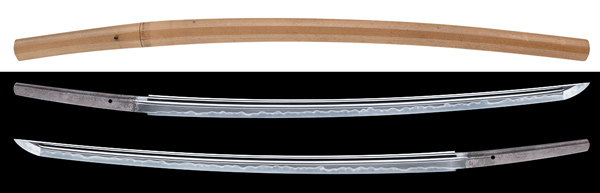
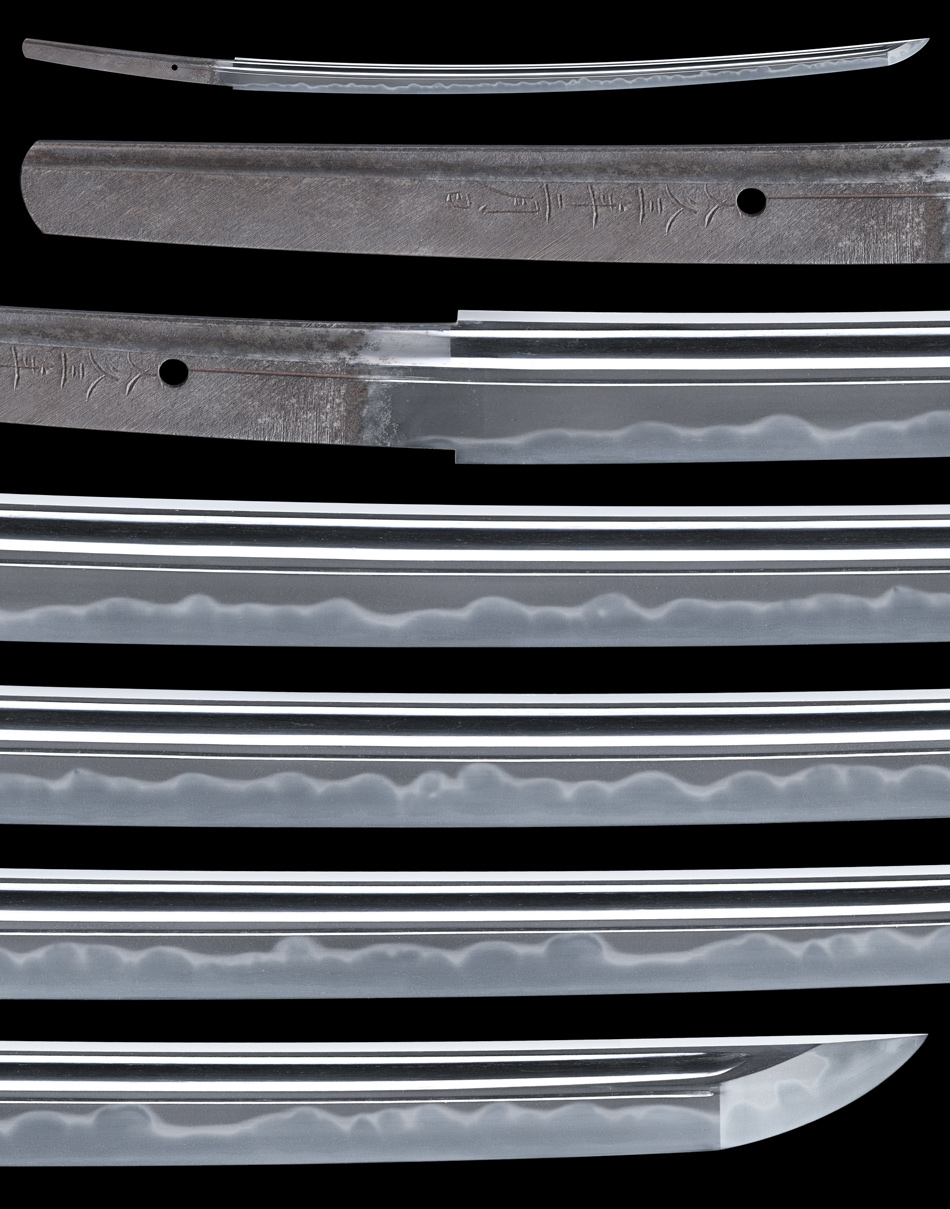
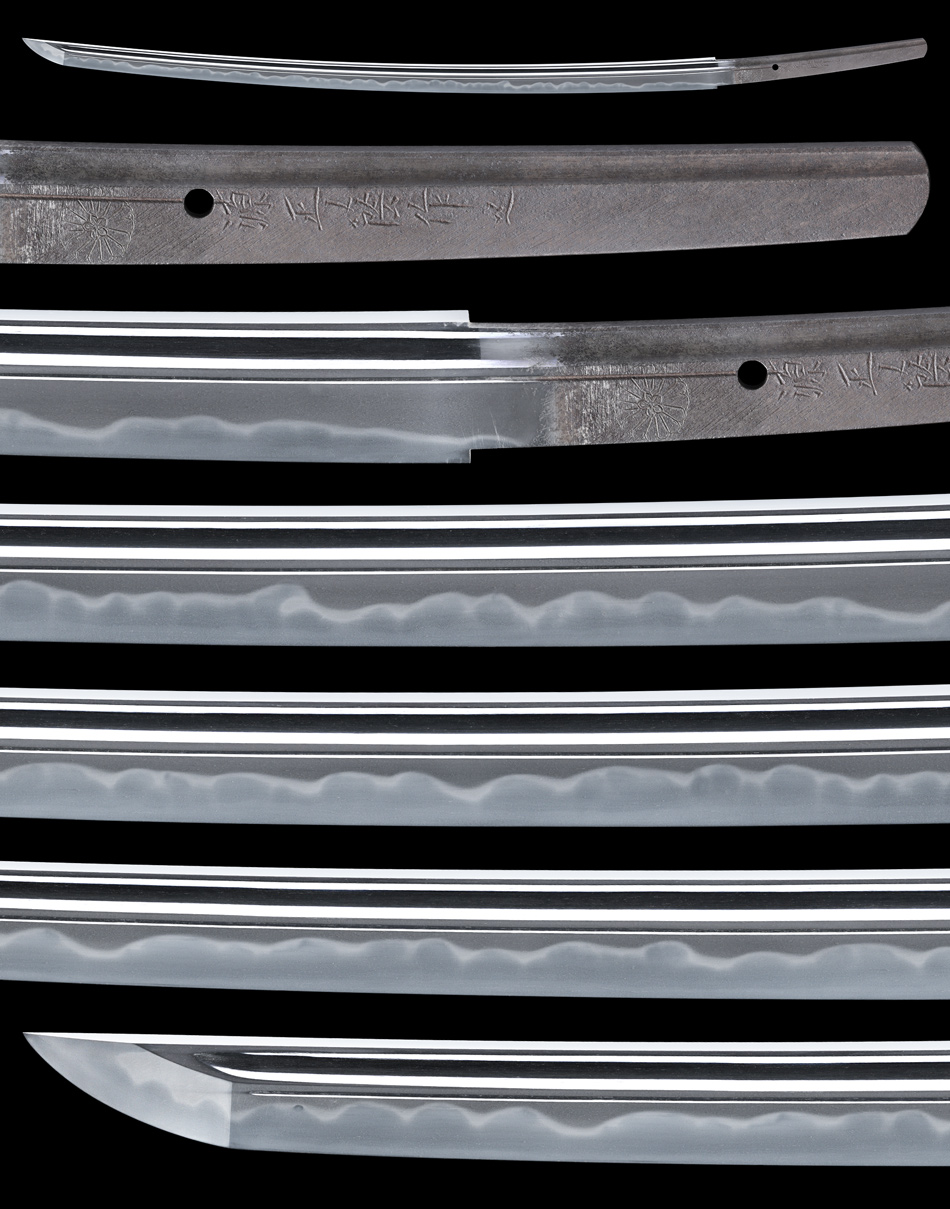
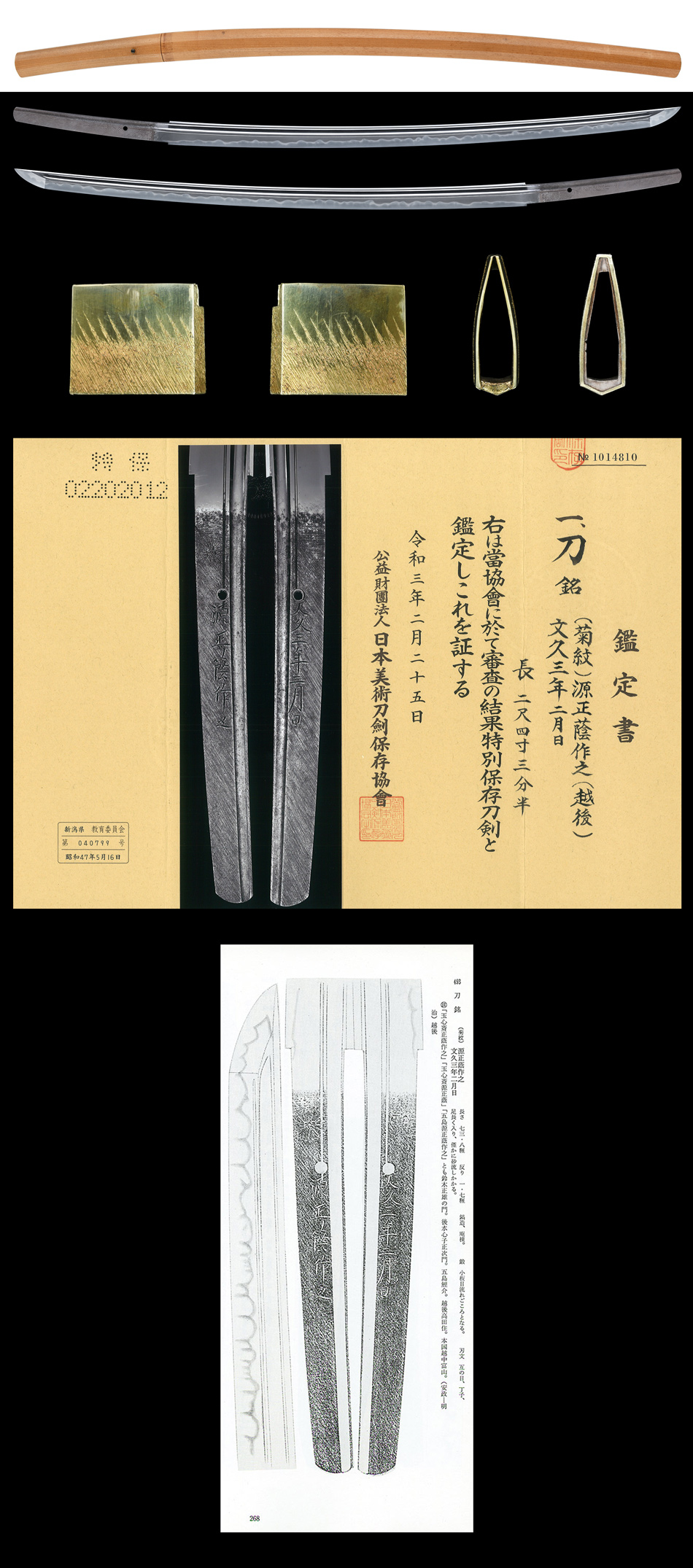
This work has a nagasa of 2 shaku 4 sun 3 bu 5 rin, exceeding standard length, with moderate sori, and is a truly beautiful, grand, and healthy katana with a firm motohaba, sakihaba, and kasane, and a significantly extended chu-kissaki. The well-refined kitae is ko-itame, which is moist, clear, and beautiful. As per Kanzan Sensei's assessment, the hamon displays various scenery such as round-topped gunome, angular gunome, and choji, and within the ha, ashi and a slight amount of sunagashi work together. The boshi continues with the same momentum as the yakiba, returning in midare. Bohi and soehi carvings are applied to the omote and ura, and the nakago is finished with kesho-yasuri and inscribed with a mei. There is no room for doubt that the smith who produced such a magnificent blade as this during the Bakumatsu period of upheaval, a turning point for Japan, possessed rare talent and skill and forged with high aspirations. Furthermore, surviving works by this smith are extremely few, and I introduce this here as a precious masterpiece katana by Minamoto Masakage. Shirasaya, gold single-layer habaki, Tokubetsu Hozon Token Kanteisho.
Details from the shop
Stock number
KA-100121
Paper(Certificate)
[N.B.T.H.K] Tokubetsu Hozon Token
Country · Era
Echigo (Nigata) · Late Edo period 1863
Blade length(Cutting edge)
73.8cm
Curve(SORI)
1.7cm
Width at the hamachi(Moto-Haba)
3.4cm
Thickness at the Moto-Kasane
0.88cm
Wide at the Kissaki(Saki-Haba)
2.85cm
Thickness at the Saki-Kasane
0.65cm
Habaki
One parts, gold foil Habaki
Sword tang(Nakago)
Unaltered,Sujikaiyasuri with Keshoyasuri file pattern
Unaltered,Sujikaiyasuri with Keshoyasuri file pattern
Mekugi-ana
1
Shape
Shinogizukuri, Iorimune, Chu-kissaki
Jigane
Ko-Itame
Hamon
Gunome and Choji
Hamon
midarete turn
Registration
Nigata
Description from World Seiyudo
Machine translation from the shop's Japanese · may contain errors ·
Minamoto Masakage learned forging methods from Minamoto Masao, a high disciple of Minamoto Kiyomaro, and Suishinshi Masatsugu, a pupil of Suishinshi Masahide. He resided in Echigo Takada, and his home province was Etchu Toyama. He signed his mei as Minamoto Masakage, Masakage, Gyokusinsai Masakage Zo, Gyokusinsai Masakage Saku, Goto Minamoto Masakage Saku No, and so on. He left works featuring well-refined, beautiful kitaehada with Yamato-den suguha and gunome.
This work has a nagasa of 2 shaku 4 sun 3 bu 5 rin, exceeding standard length, with moderate sori, and is a truly beautiful, grand, and healthy katana with a firm motohaba, sakihaba, and kasane, and a significantly extended chu-kissaki. The well-refined kitae is ko-itame, which is moist, clear, and beautiful. As per Kanzan Sensei's assessment, the hamon displays various scenery such as round-topped gunome, angular gunome, and choji, and within the ha, ashi and a slight amount of sunagashi work together. The boshi continues with the same momentum as the yakiba, returning in midare. Bohi and soehi carvings are applied to the omote and ura, and the nakago is finished with kesho-yasuri and inscribed with a mei. There is no room for doubt that the smith who produced such a magnificent blade as this during the Bakumatsu period of upheaval, a turning point for Japan, possessed rare talent and skill and forged with high aspirations. Furthermore, surviving works by this smith are extremely few, and I introduce this here as a precious masterpiece katana by Minamoto Masakage. Shirasaya, gold single-layer habaki, Tokubetsu Hozon Token Kanteisho.
For two and a half centuries of peace the sword was the warrior’s legal badge rather than his weapon. Each great city developed its own manner, Edo’s tested strength against Ōsaka’s polished brilliance, until demand thinned in the era’s last decades.
A Hozon-certified blade judged to show notably superior workmanship and a better state of preservation. The bar is higher: re-tempered blades and most unsigned Muromachi/Edo works are excluded.
About the NBTHK›
The NBTHK (Nihon Bijutsu Tōken Hozon Kyōkai, the Society for the Preservation of Japanese Art Swords) is a public-interest incorporated foundation founded in 1948 and supervised by Japan’s Agency for Cultural Affairs (Bunkachō); it is based at the Japanese Sword Museum in Tokyo. Its expert panels physically examine each submitted work (shinsa) and issue a certificate (kanteishō) ranking it by artistic and historical merit. NBTHK papers are the most widely recognized standard of authentication for Japanese swords and fittings.
No cooling-off period or returns; refund only if the purchased sword is proven fake, capped at purchase price (excludes commission sales, accessories, auction items).


 NihontoWatch