Edo was the sword’s age of connoisseurship: the Hon’ami appraisers, the shogunal register of famous blades of 1719, and a thriving literature turned the sword into an object of study even as it ceased to be drawn in war.
 NihontoWatchNihontoWatch
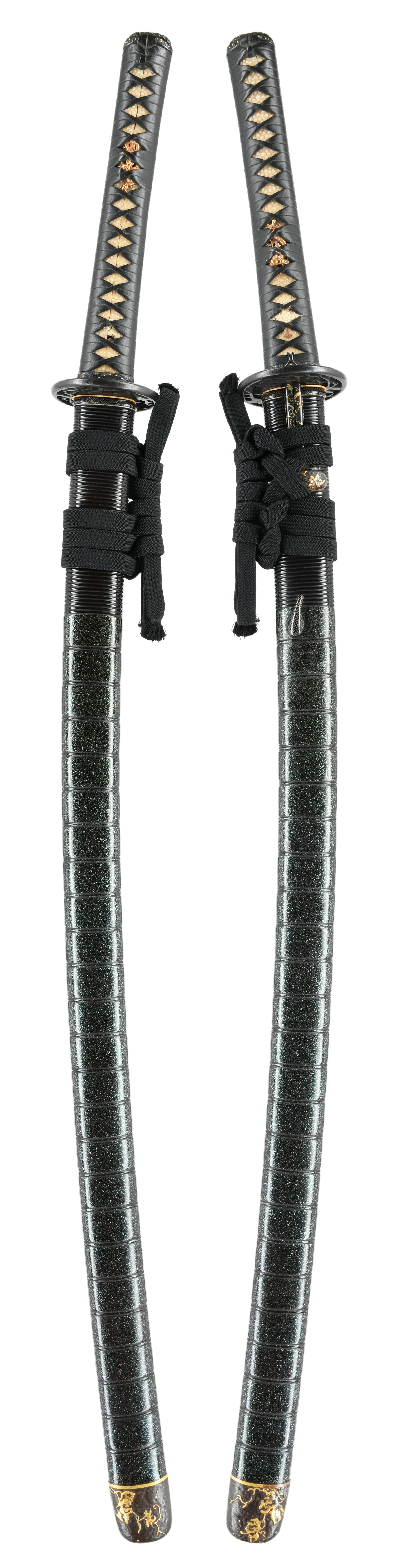
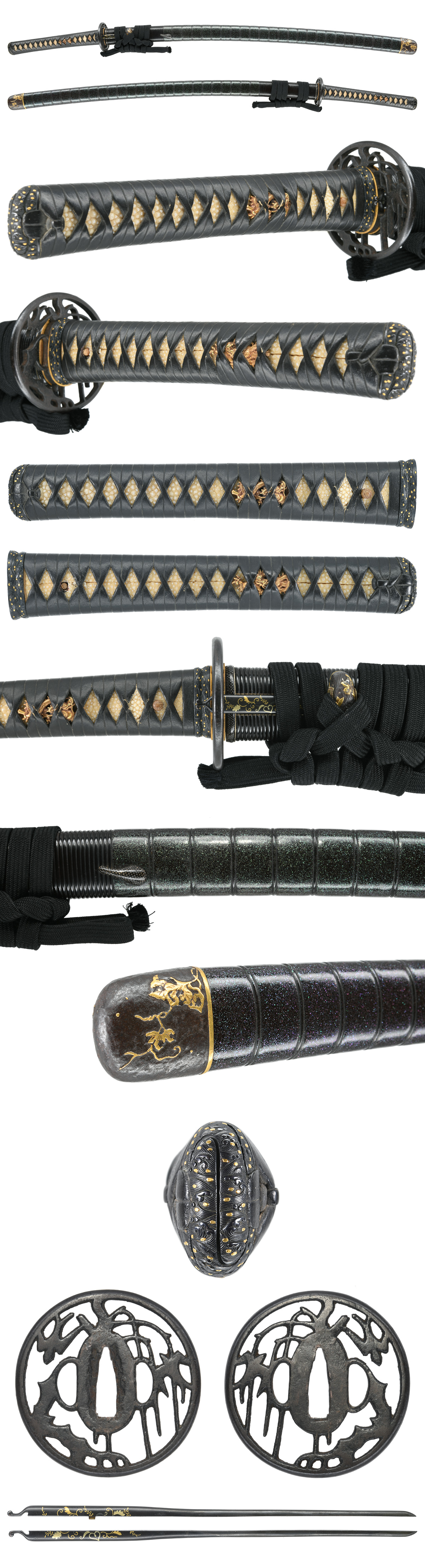
Stock No:KA-080925Paper(Certificate): [N.B.T.H.K] Hozon TokenCountry(Kuni)/Period(Jidai): Musashi(Tokyo), Early Edo period about 1624~Blade length(Cutting edge): 69.4cmCurve(SORI): 1.7cmWidth at the hamachi(Moto-Haba): 2.94cmThickness at the Moto-Kasane: 0.66cmWide at the Kissaki(Saki-Haba): 2.50cmThickness at the Saki-Kasane: 0.60cmHabaki: Two parts, Gold plated HabakiSword tang(Nakago): Kiri file patternRivet Holes(Mekugiana): 2Length of Koshirae : about 99.5cmShape(Taihai): Shinogizukuri, Iorimune,Chu-kissakiJigane(Hada): Ko-itameTemper patterns(Hamon): SuguhaTemper patterns in the point(Bohshi): Sugu then Hakikake round tipRegistration Card: Miyazaki【Additional Information】二代康継は、初代康継嫡子。列位は初代の最上作に次いで高く、新刀上作、良業物に数えられます。晩年入道後は康悦と号します。康継入道、康継入道作、越前康継、以南蛮鉄於武州江戸越前康継、康継入道 於武州江戸作之などと銘を切ります。葵紋を切るもの、記内の彫が有るものも現存します。初代康継は近江国(滋賀県)坂田郡下坂の出身で, 越前福井に移住し、松平家の抱え鍛冶となります。はじめ肥後大掾下坂と名乗りましたが、慶長十一年ごろ、徳川家康,秀忠により江戸に召し出されて作刀し、康の字を賜り康継と改銘します。以後、徳川将軍家の抱え鍛冶となり、康継銘は幕末まで代々続きます。初代、二代は沸の強い相州物の作風を得意とします。三代目からは江戸と越前に分派しました。本作体配は、刃長が二尺二寸九分で、身幅、重ね共に尋常、反り適度に利き、中切っ先がやや延びごころとなる刀姿の一振です。地鉄は小板目肌で良く練られ、精良に詰み、地沸微塵に付きます。刃文は直刃で、刃中に鼠足、互の目足などが入って働きます。刃縁にふんわりと小沸が均一によく付いて匂口明るく冴えます。帽子はそのまま直ぐで、先掃きかけて返ります。茎は切鑢目、錆味落ち着きをみせ、磨上げながら雰囲気よく残ります。拵は腰刻み、印籠刻鞘に、青貝微塵塗となる大変緻密な出来口で、秀麗な一作が附いております。本刀は二代康継に鑑せられた一刀で、精良に整う地と明るく冴えた抜群の焼刃がよく纏まっています。精巧に製作された拵と合わせて内外お楽しみいただける逸品です。白鞘、金着二重はばき、印籠刻青貝微塵塗鞘打刀拵、保存刀剣鑑定書。
NihontoWatchOffered by World Seiyudo
This piece has sold
Get an email when a new Shimosaka Yasutsugu piece hits the market.

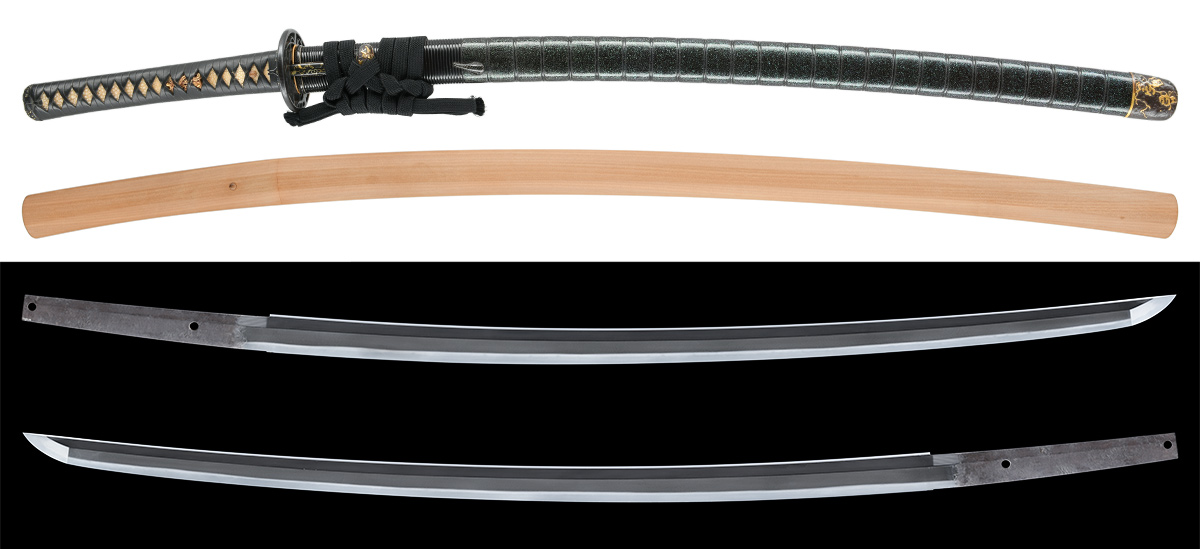

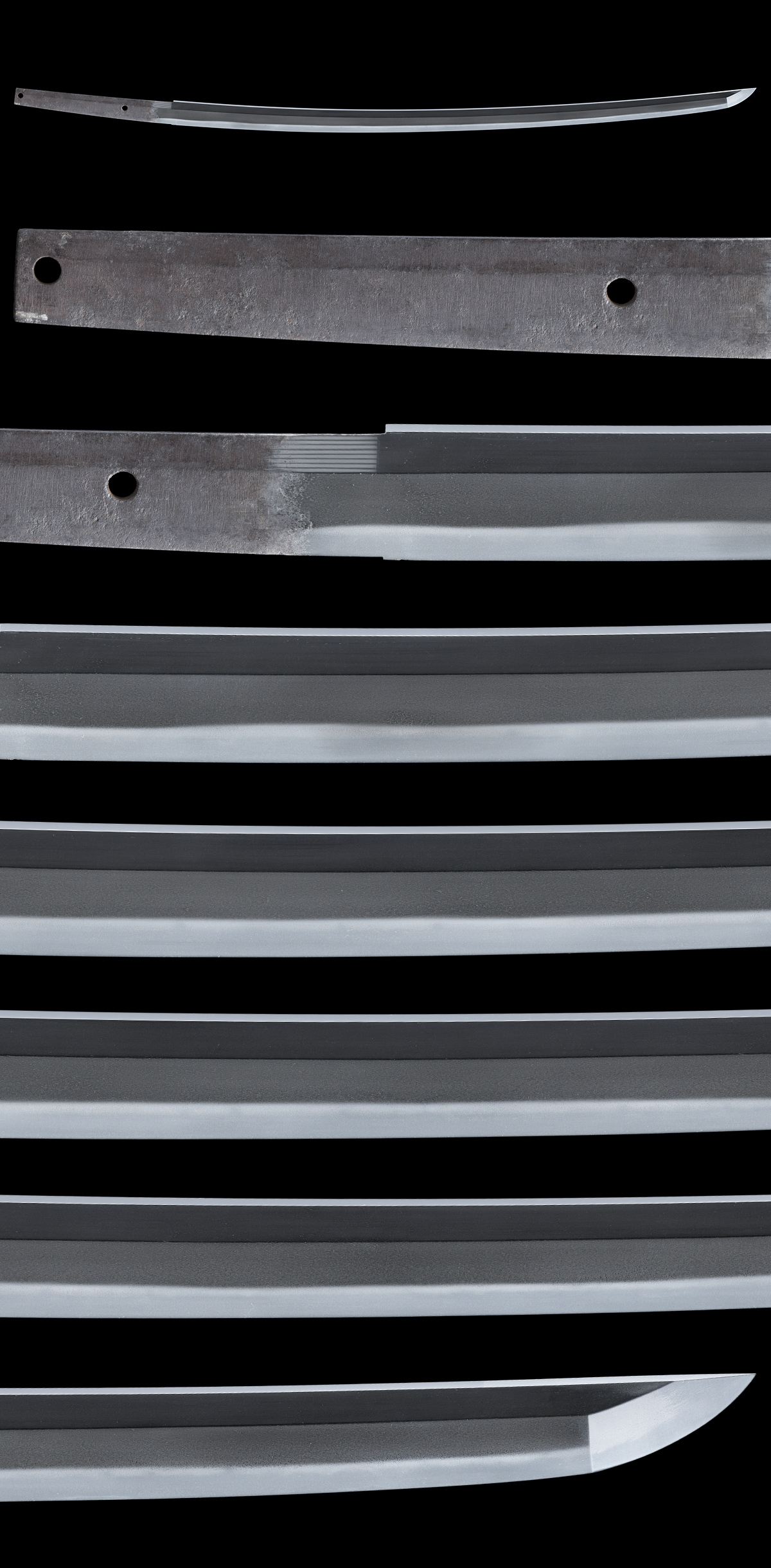
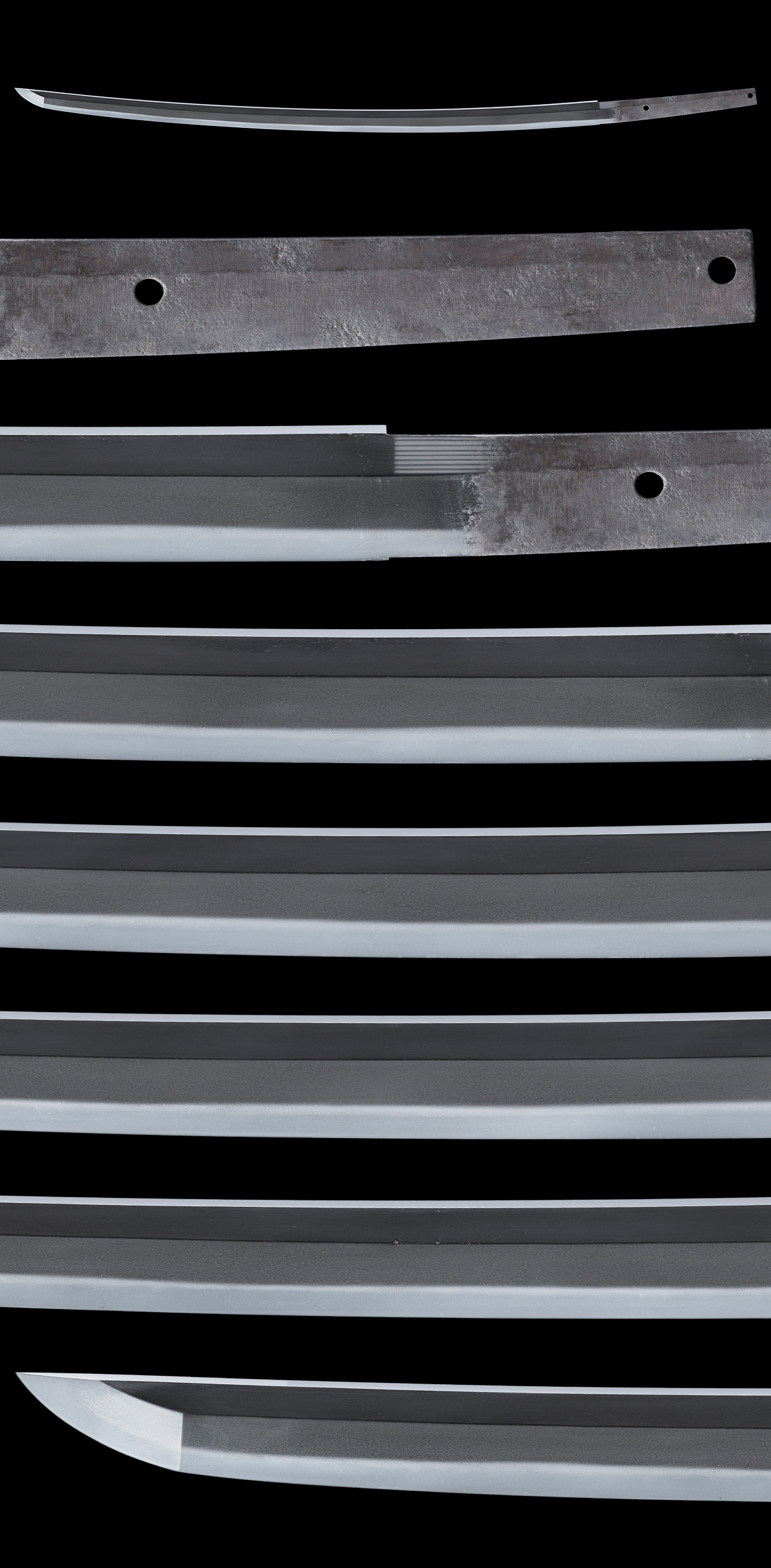
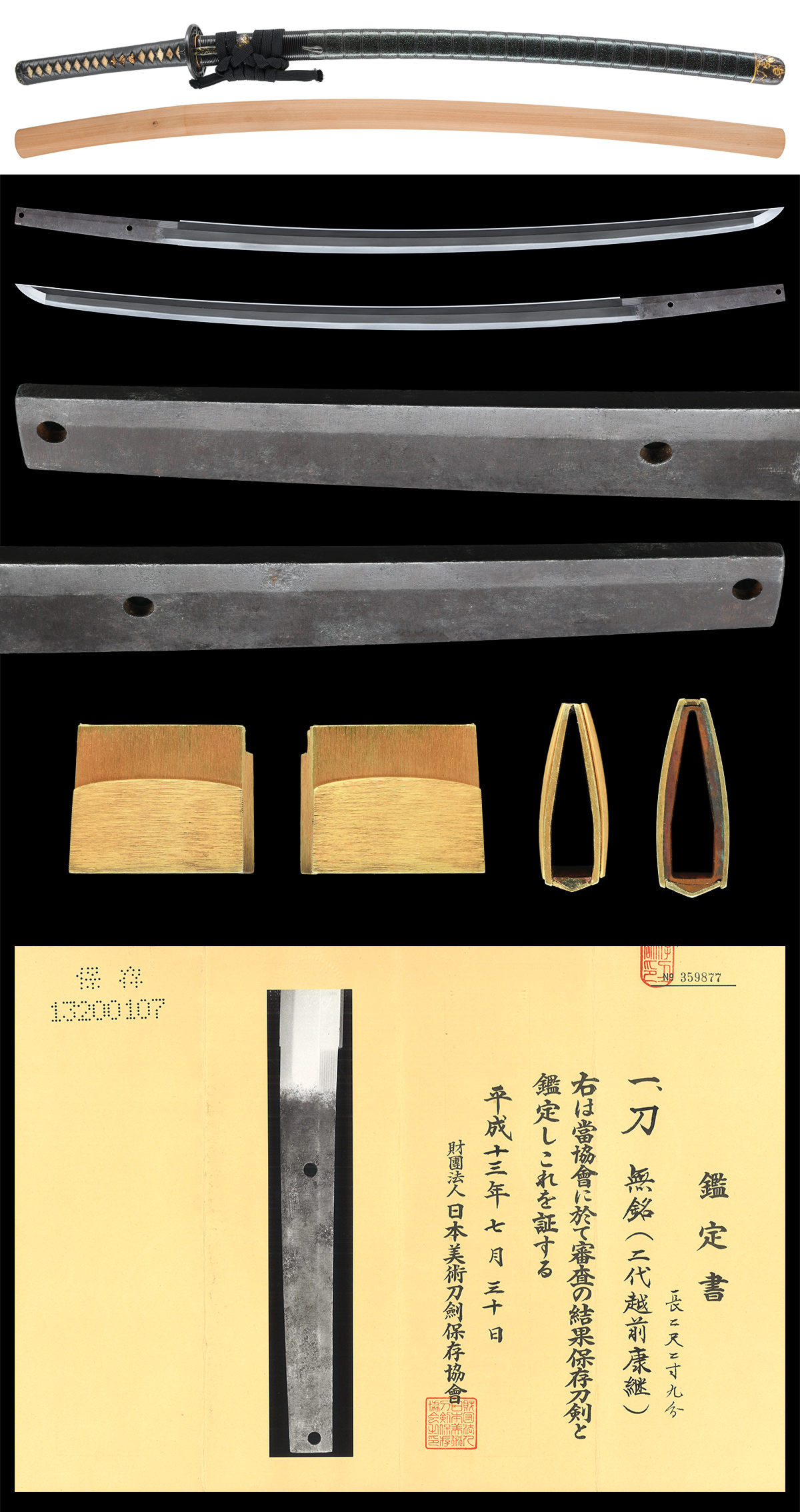
Shinto · Echizen · around 1660-1673
Tōken Taikan top 14%
4 pieces on the market now
Where Yasutsugu stands among comparable artisans: across all of nihontō, and within tradition, era, and period. The tiers (Foremost · Leading · Major · Notable) weigh official designations from the NBTHK and Japan's Agency for Cultural Affairs, together with historical honors of lasting repute such as the Sansaku and Meibutsu-chō.
Select a lens to see how it's measured.
Years he was demonstrably active, proven by signed-and-dated blades
Shinto · Echizen
39 pieces on the market now
The Shimosaka name began not as a single hand but as a trademark shared by a band of Echizen smiths at the dawn of the shinto era, and the designated record gathers their work under that one signature rather than parsing it into individuals. The published sources read the early inscriptions, the generic Echizen no Kuni Shimosaka and the titled Higo Daijo Fujiwara Shimosaka, as the product of a group, of which the first-generation Yasutsugu served as the representative. Born in Shimosaka village of Sakata district in Omi, Yasutsugu moved to Echizen under the patronage of Yuki Hideyasu, signing in his early years Higo no Daijo Shimosaka before his Keicho 10 to 11 summons to Edo, where he forged before Ieyasu and Hidetada and received the character Yasu and the right to cut the Tokugawa hollyhock crest on his nakago. The titled signature was carried by several Echizen hands at once, and the texts list Yasutsugu, Sadakuni and Kanenori among the smiths whose chisel movement and brush intent are too alike to part on present evidence. From this band the Echizen Yasutsugu line descended, dividing after the second generation into the Edo and Echizen Shimosaka houses, and around it formed the deep relief carving the province made its own. The school is recognized first in its steel. The forging is itame mixed with mokume that stands and opens, often flowing into nagare, carrying thick ji-nie and fine chikei, the kane taking on the blackish cast the sources name outright as Echizen-gane; the same dark, standing jihada recurs from Yasutsugu through his son, through Sadatsugu, Shigetaka and the unnamed Shimosaka hands, and the commentary returns to it as the group's signature. Over it the hamon favors a suguha to chu-suguha or shallow notare into which linked gunome and ko-gunome mix, ko-ashi and yo entering, the nie thick and gathering unevenly into rough patches, kinsuji and sunagashi streaming through, the nioiguchi tending to a sinking shizumi.
The boshi is the steadiest tell, running to a ko-maru swept in hakikake and turning back long, with a Sanpin-flavored reminiscence of the Mishina and Echizen-Seki inheritance. Yet the house is not uniform: Sadakuni works an austere suguha over an unusually refined ji with little of the blackish mokume, Sadatsugu fires the brightest, most choji-laden midare of the circle, and the third generation cleans the forging and brightens the nioiguchi toward his Edo contemporaries. Binding the registers is the carving, the deep Echizen-bori and Kinai-bori of kurikara, Fudo Myoo, bonji and gomabashi set in relief within the hi, which Sadakuni may have first supplied to Yasutsugu's blades. For the collector the school rewards reading by register rather than by a single famous holding. Yasutsugu is its summit, rated Jo-jo saku, retained smith to the shogunal house, whose Sadamune and Toshiro copies (the Namazuo, the lost Oyako, the Shishi) show his own Echizen hand under the model, and whose best katana carry the possession inscriptions of his patron Honda Hida no Kami Narishige and provenance in the Echizen and Kishu Tokugawa houses. The second generation follows so faithfully that his finest blades part from the father chiefly by the form of the character tsugu; the Edo third generation continues the suguha and ko-notare manners with a straight yakidashi and a Hojoji affinity. Around them the specialists define the edges of the idiom: Sadakuni and his quiet suguha with a pair of tanto recorded in Honma's inventory of the Imperial collection, Sadatsugu with his Narishige-crested cutting-test blades, and Shigetaka, the most skilled of Yasutsugu's pupils, whose chestnut-tailed kurijiri nakago and Kinai carving (the Honebami and Hossho copies among his masterworks) name him at a glance and whose finest work approaches the master. A signed Shimosaka blade, whether a titled Yasutsugu beneath the aoi-mon, a named piece by one of the band, or a Higo Daijo pre-Yasutsugu register, comes to market only from time to time, valued as the wellspring from which the Echizen Yasutsugu line and its carving tradition arose. Learn more →
| Smith | Era | Designated |
|---|---|---|
| Yasutsugu康繼 | 1596-1615 | 76 |
| Yasutsugu康繼 | 1624-1644 | 25 |
| Sadakuni貞國 | 1596-1615 | 11 |
| Yasutsugu康繼 | 1661-1673 | 8 |
| Shigetaka重高 | 1596-1615 | 7 |
The Edo period (1615 to 1868)
Edo was the sword’s age of connoisseurship: the Hon’ami appraisers, the shogunal register of famous blades of 1719, and a thriving literature turned the sword into an object of study even as it ceased to be drawn in war.
Certifies a genuine blade worth preserving: a signature confirmed correct, or, if unsigned, an era, province, and school that the NBTHK can reliably identify.
The NBTHK (Nihon Bijutsu Tōken Hozon Kyōkai, the Society for the Preservation of Japanese Art Swords) is a public-interest incorporated foundation founded in 1948 and supervised by Japan’s Agency for Cultural Affairs (Bunkachō); it is based at the Japanese Sword Museum in Tokyo. Its expert panels physically examine each submitted work (shinsa) and issue a certificate (kanteishō) ranking it by artistic and historical merit. NBTHK papers are the most widely recognized standard of authentication for Japanese swords and fittings.
NBTHK official siteNo cooling-off period or returns; refund only if the purchased sword is proven fake, capped at purchase price (excludes commission sales, accessories, auction items).