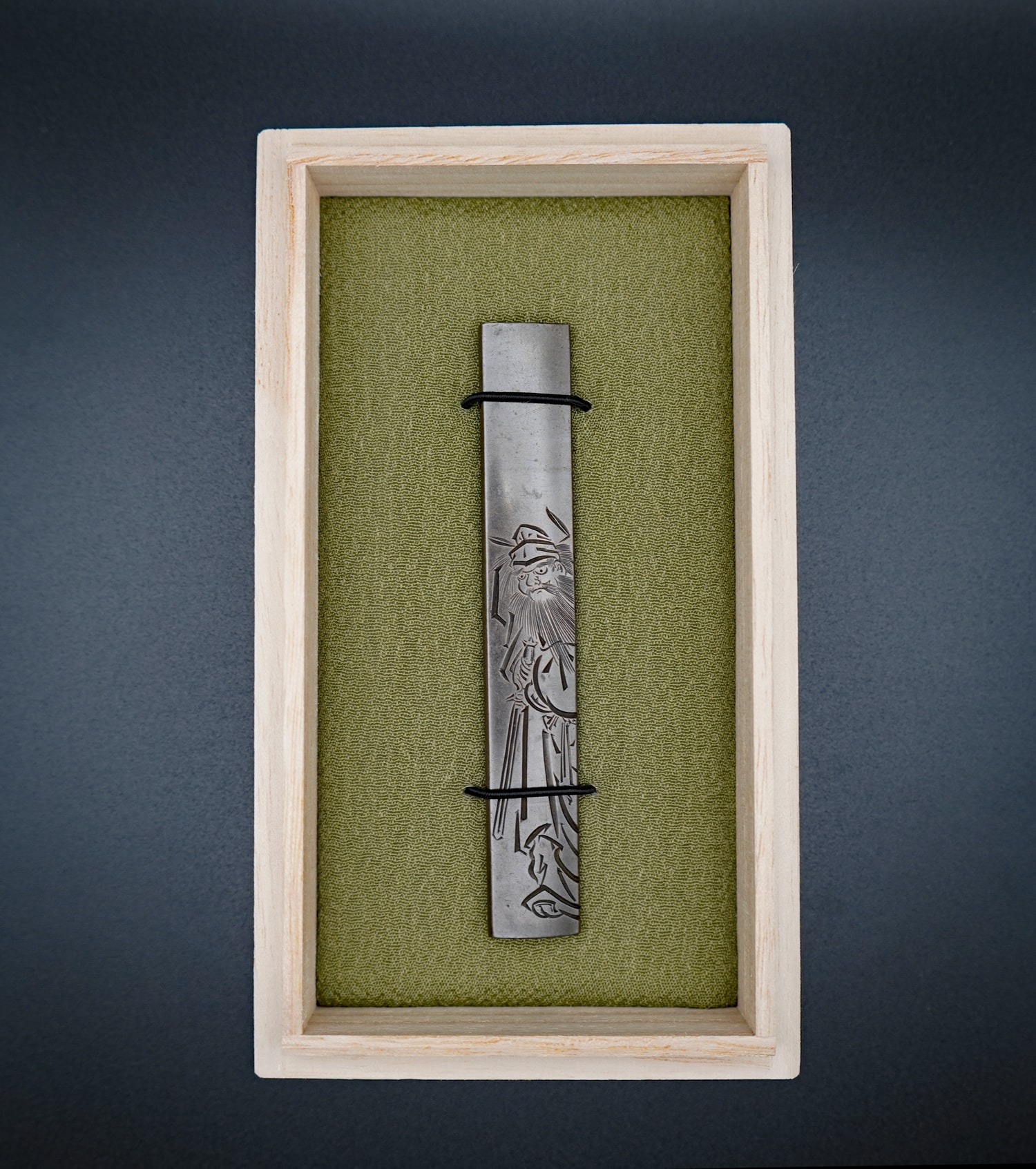
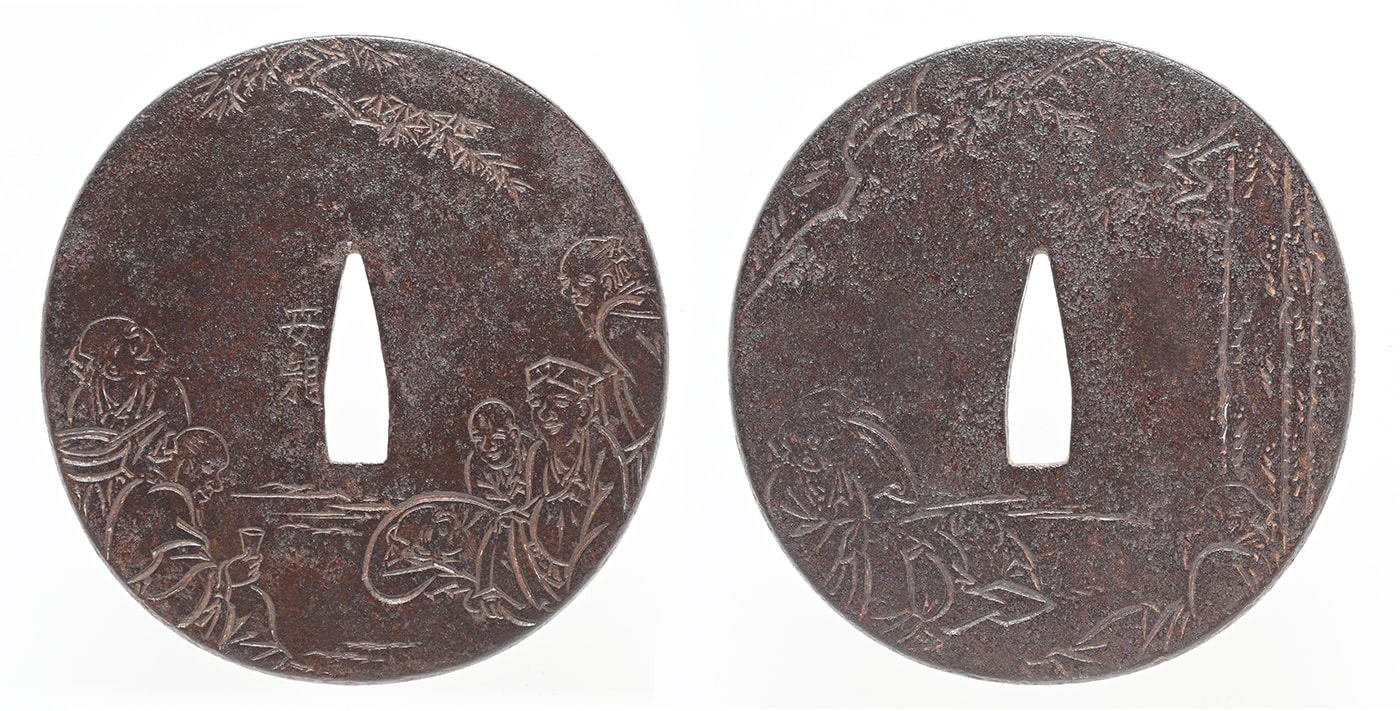
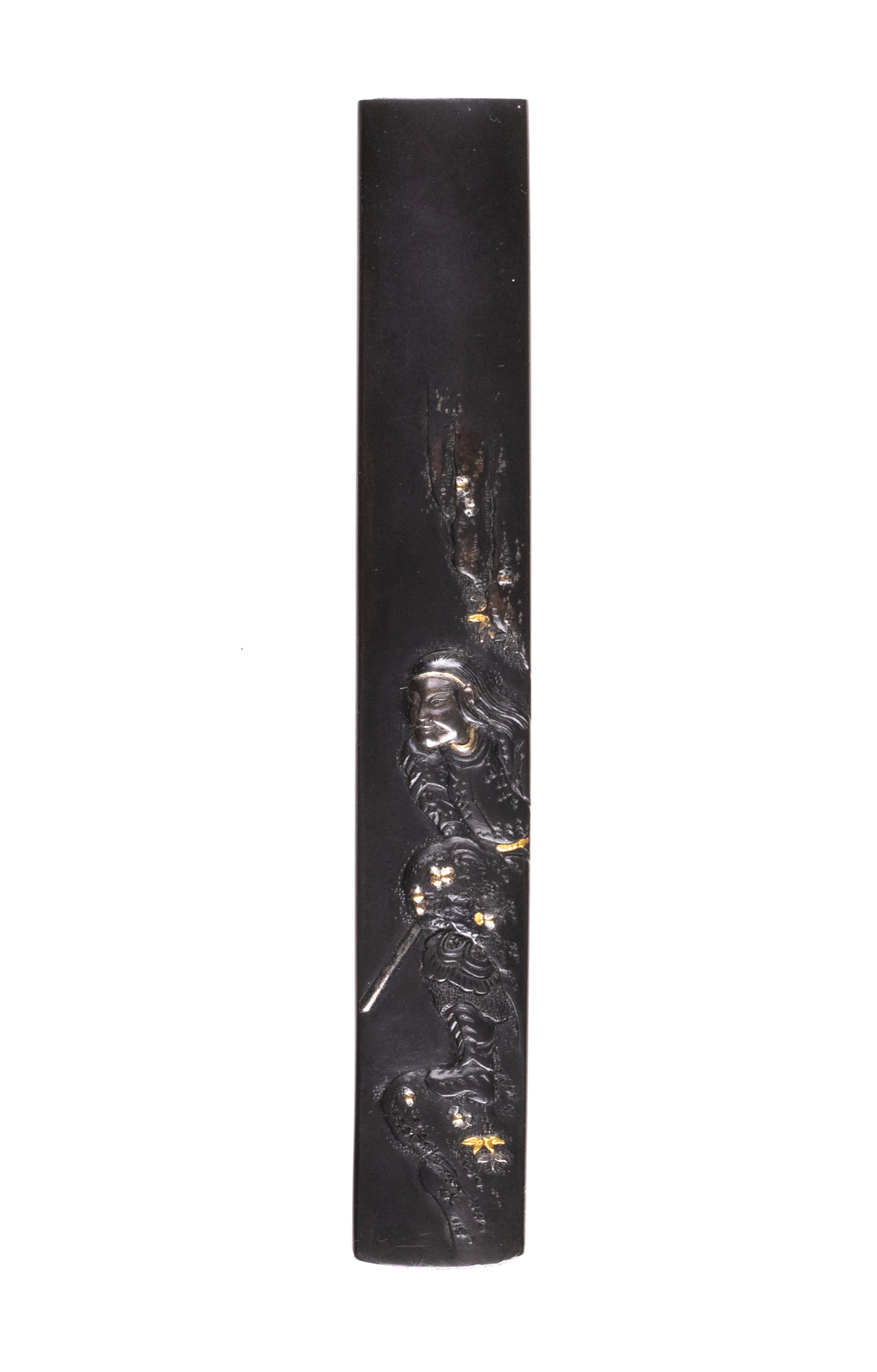
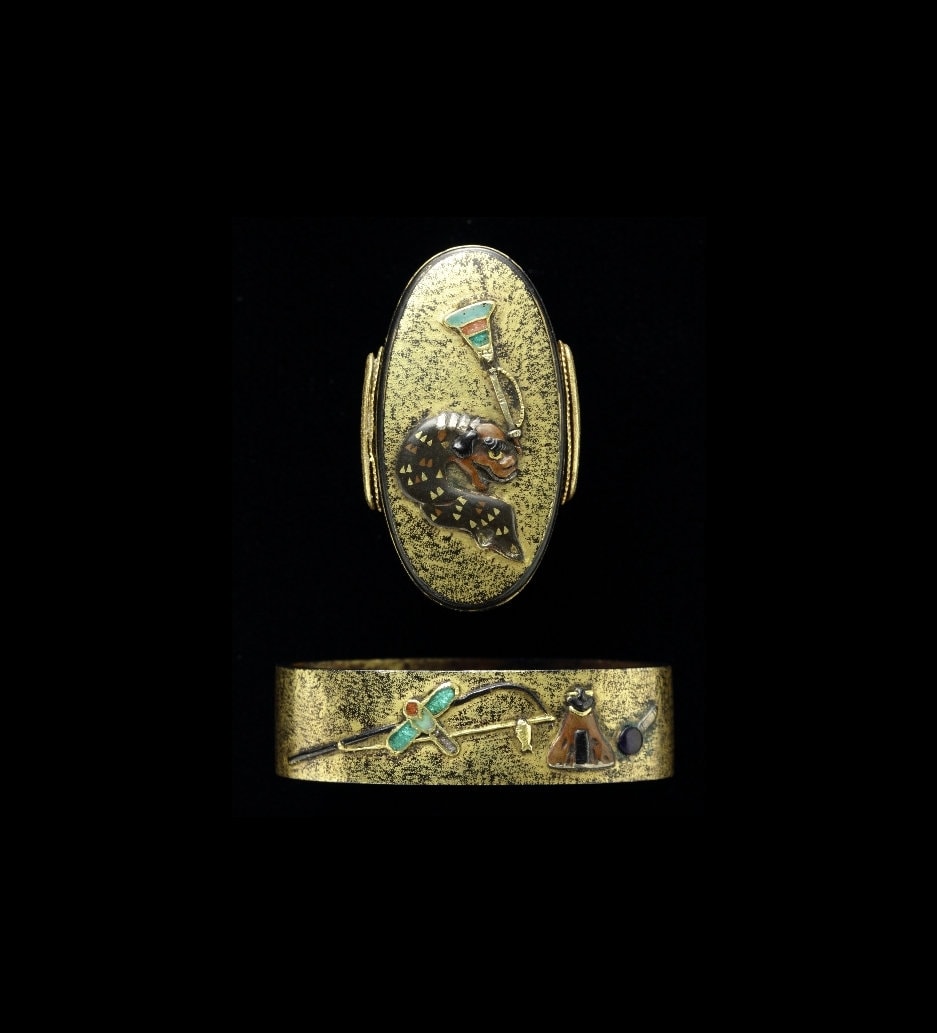
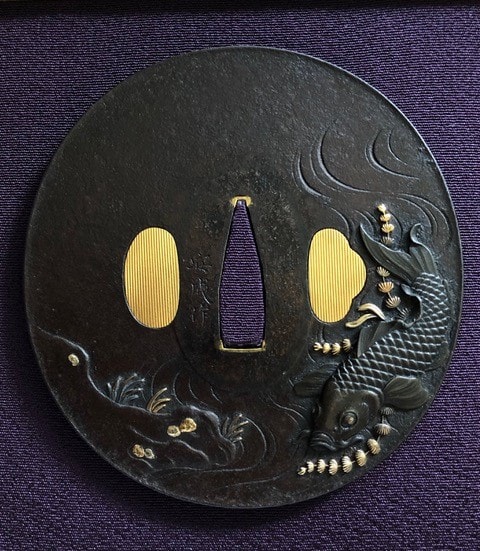
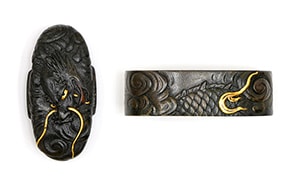
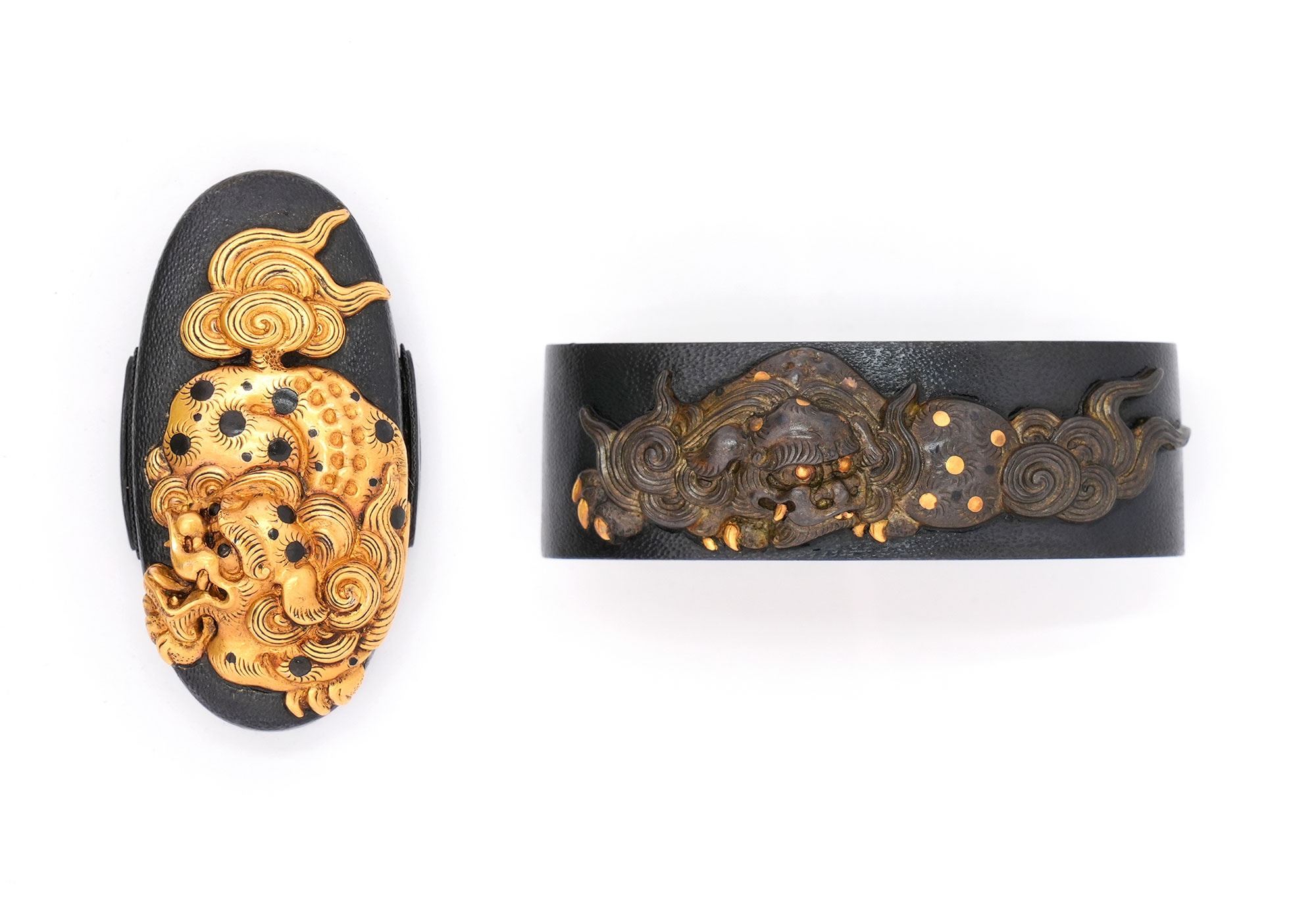
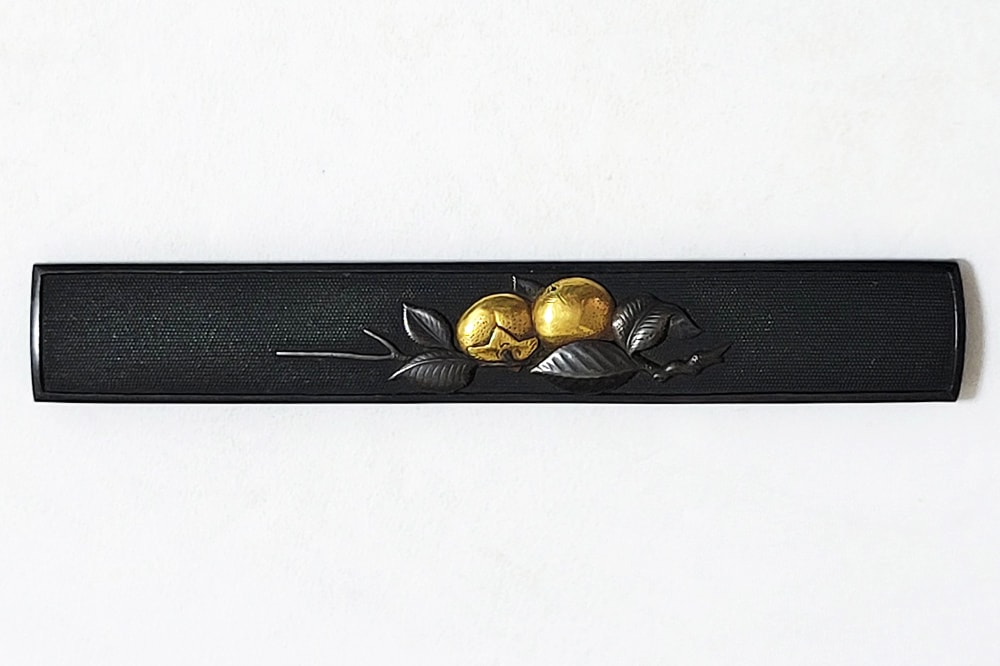
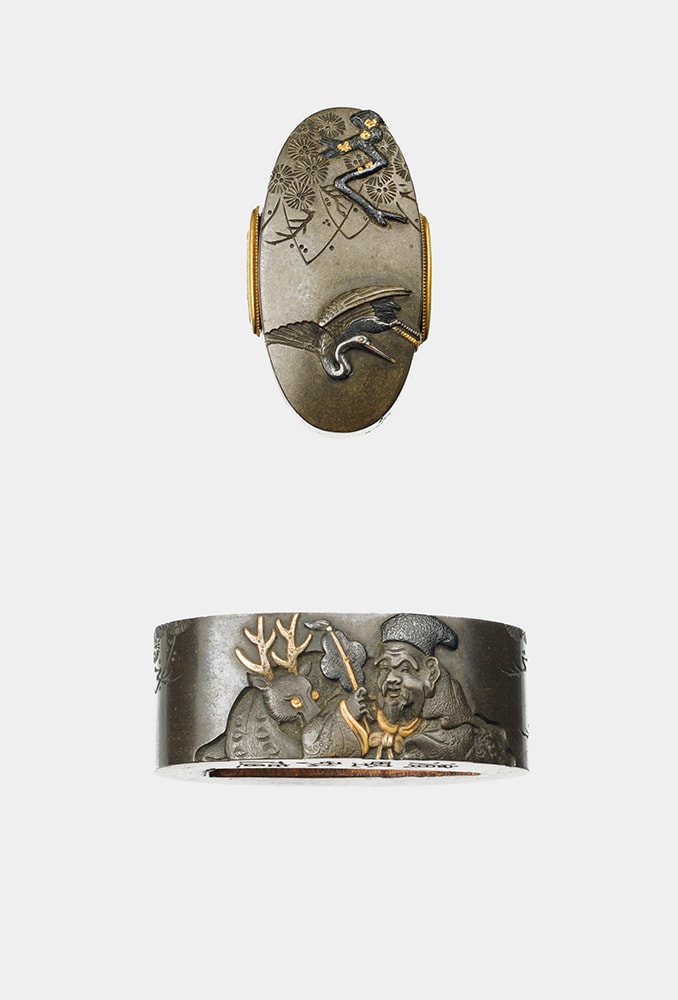
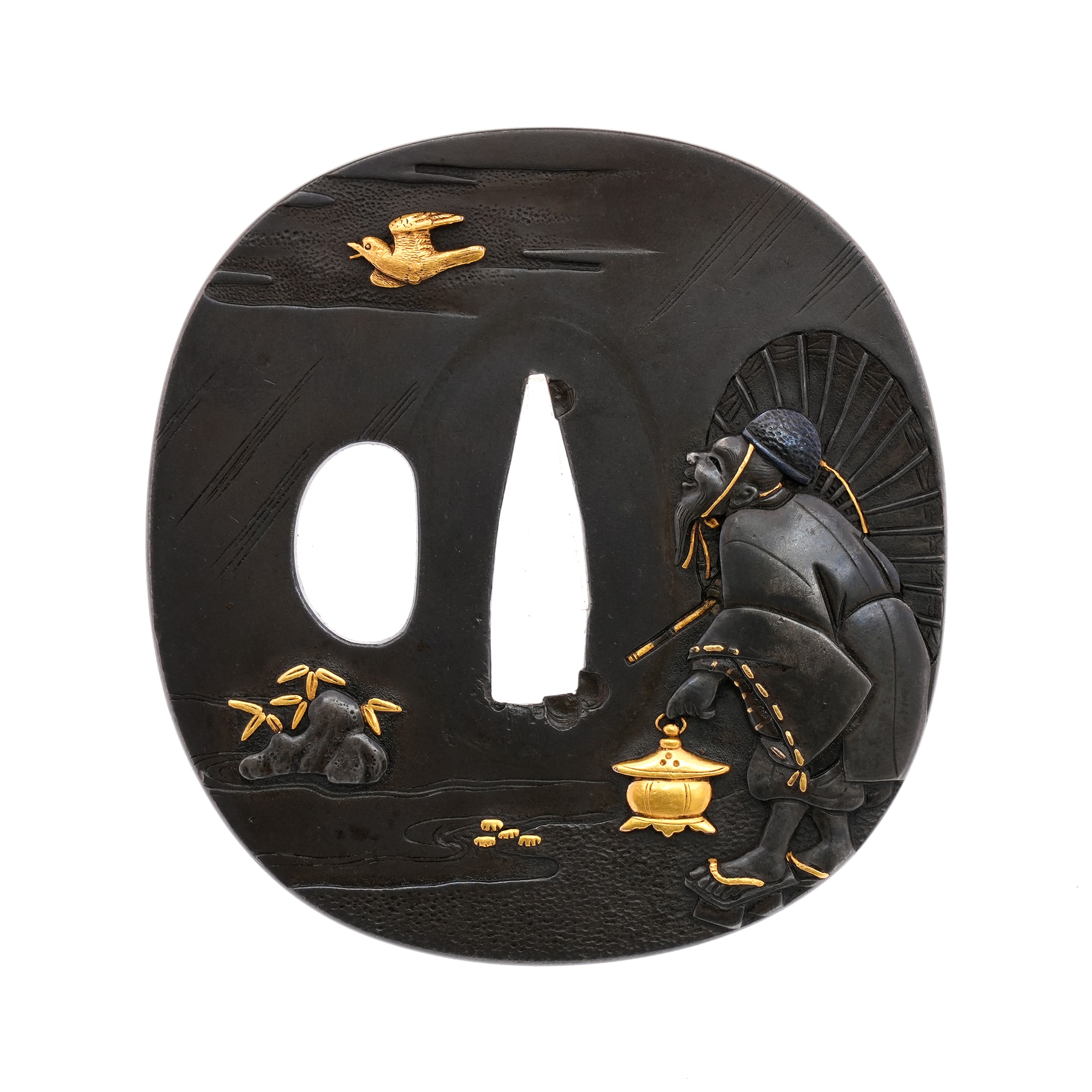
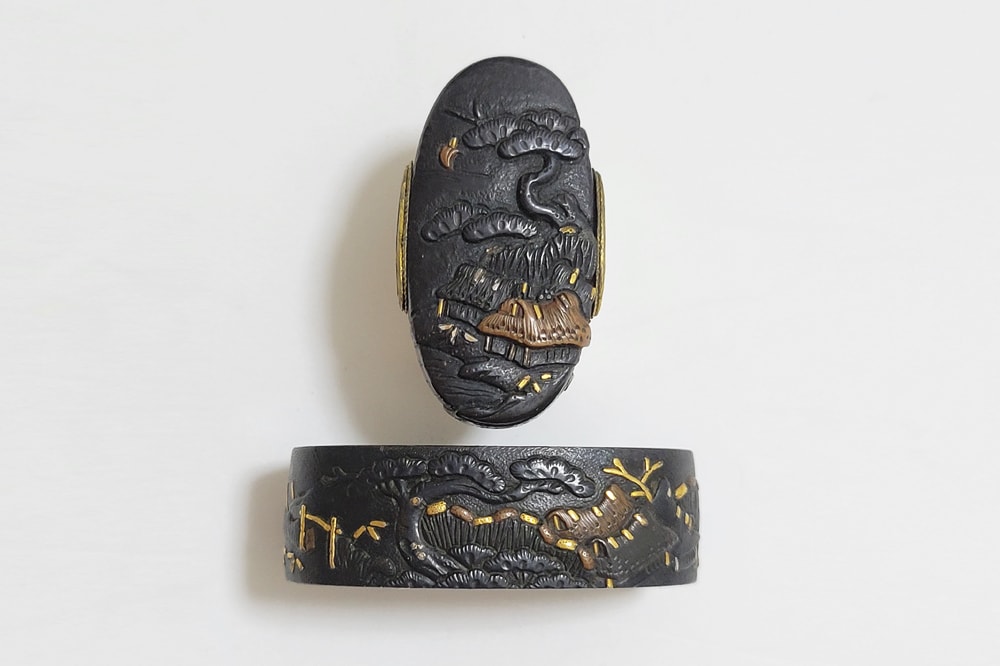
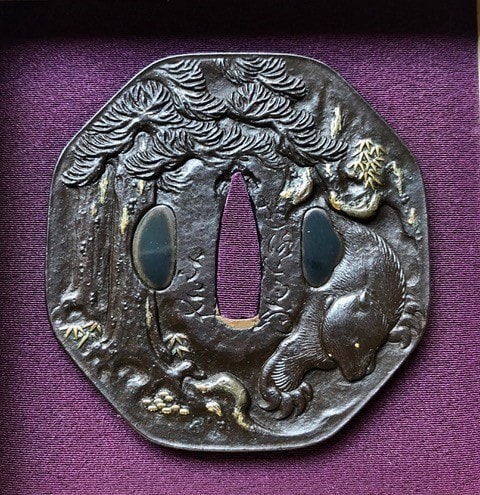
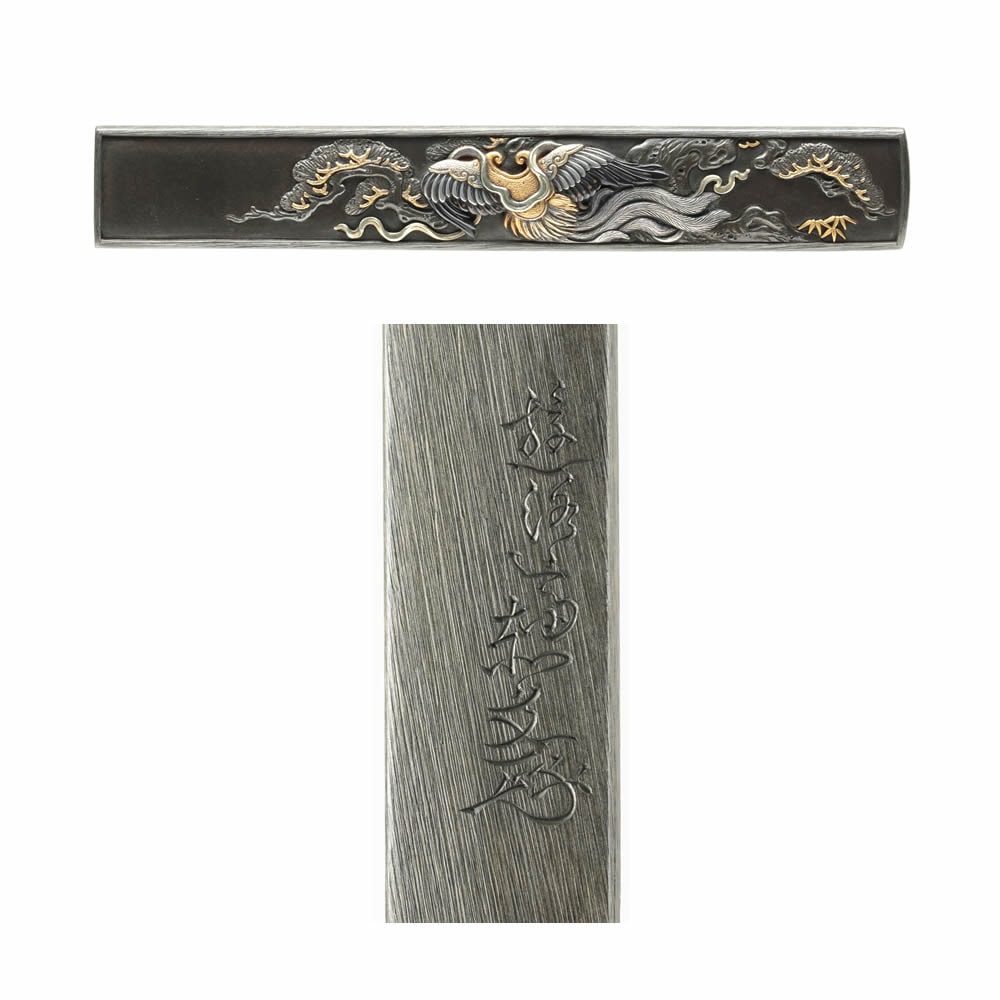
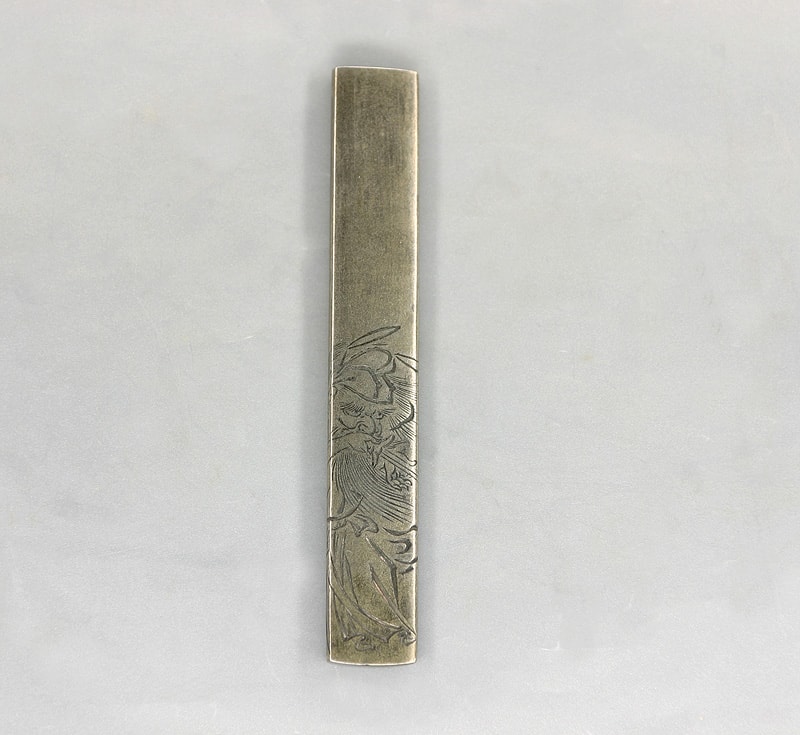
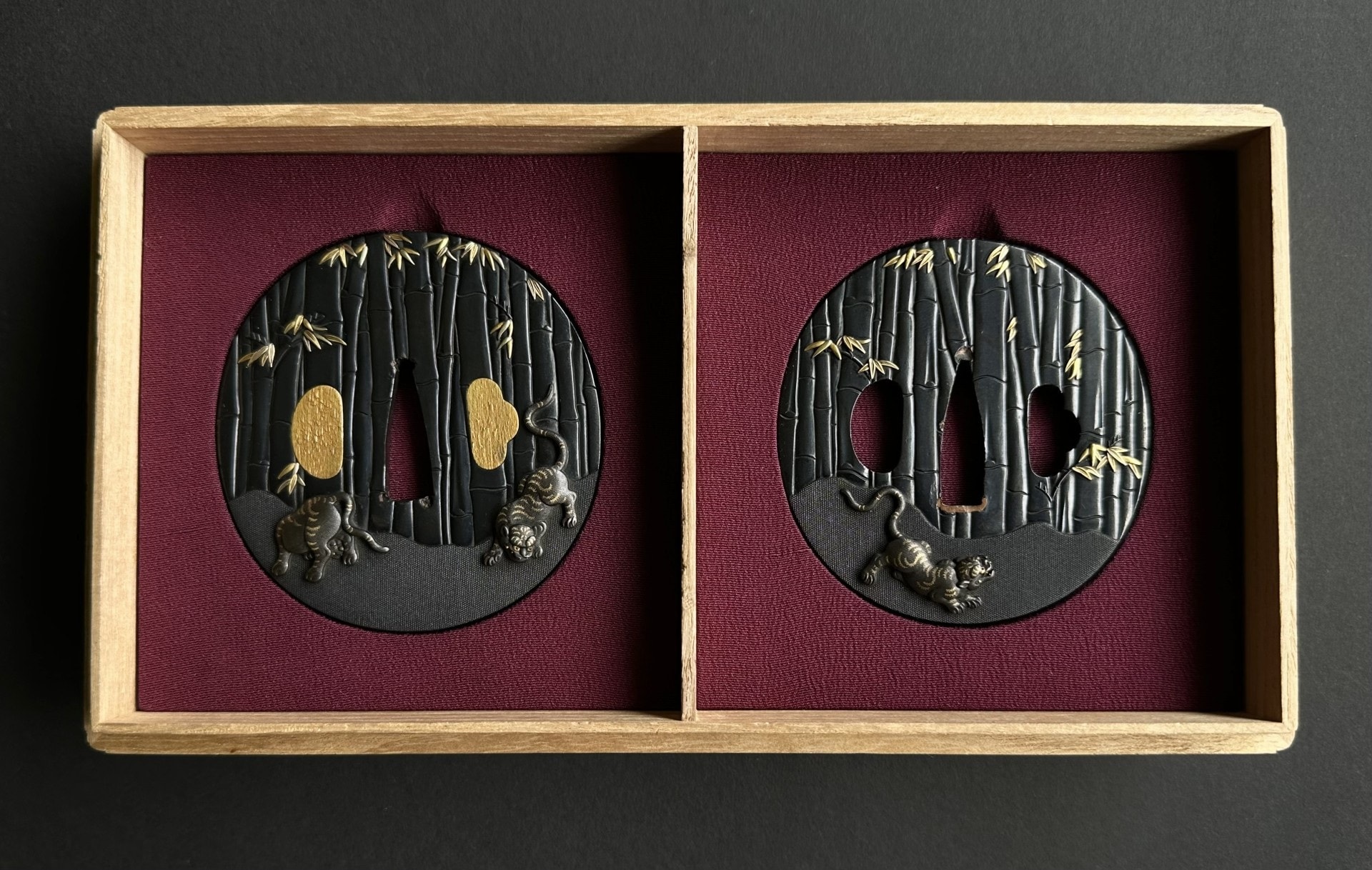
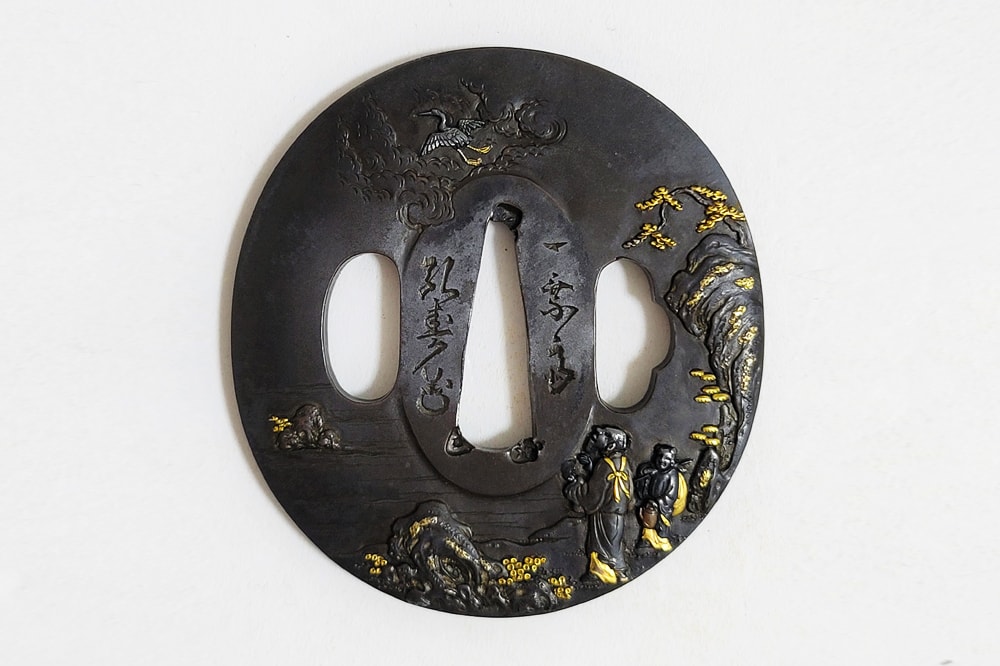
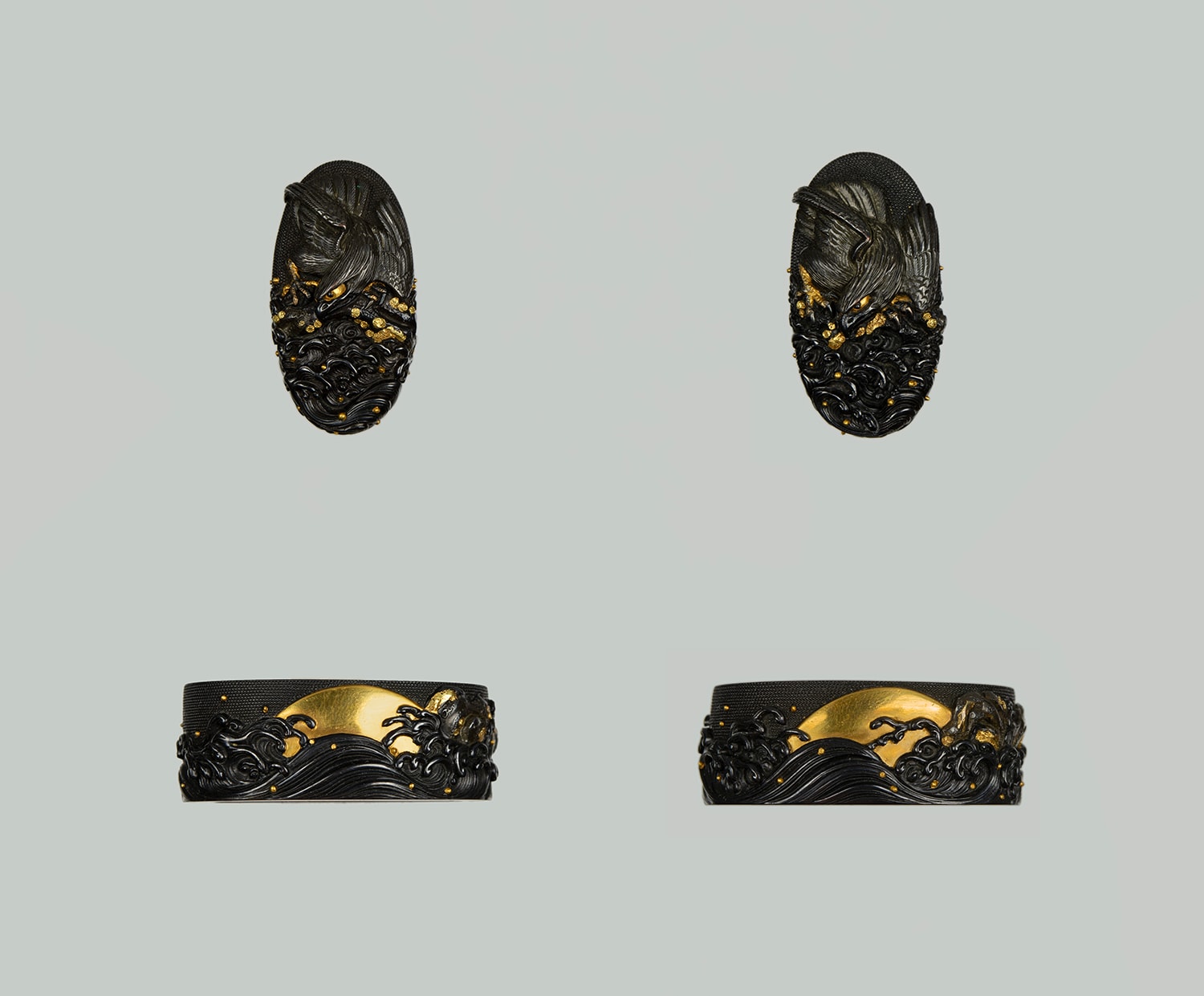
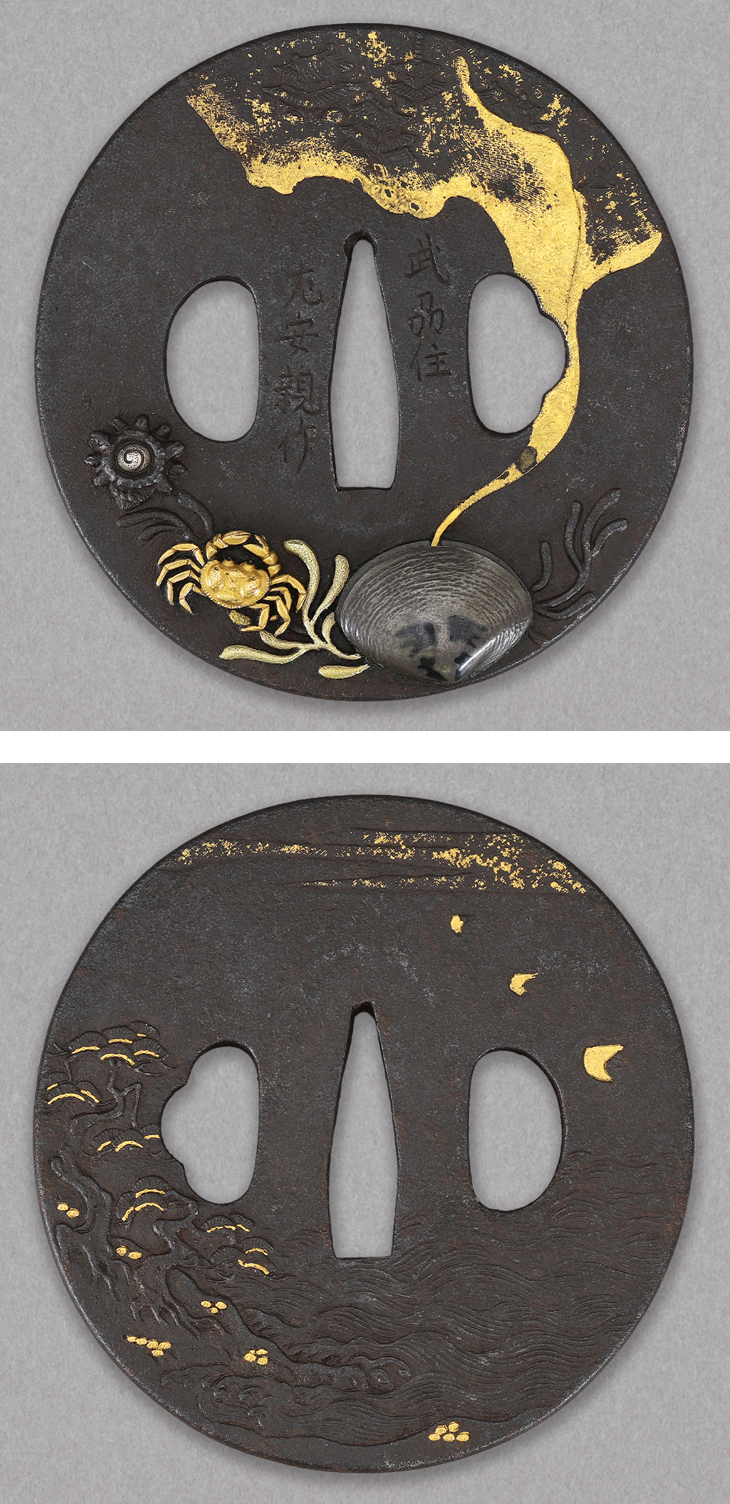
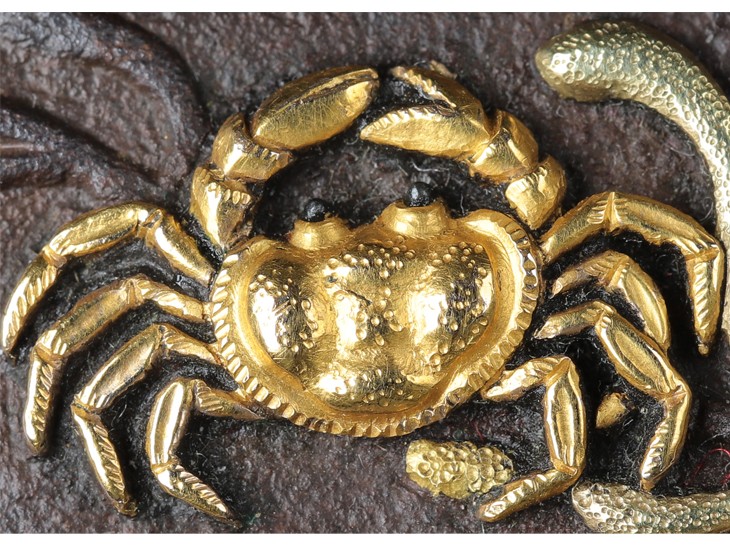
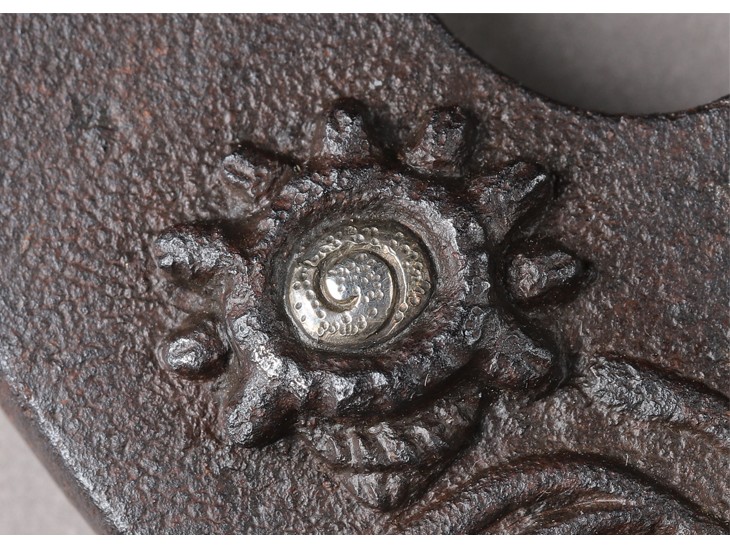
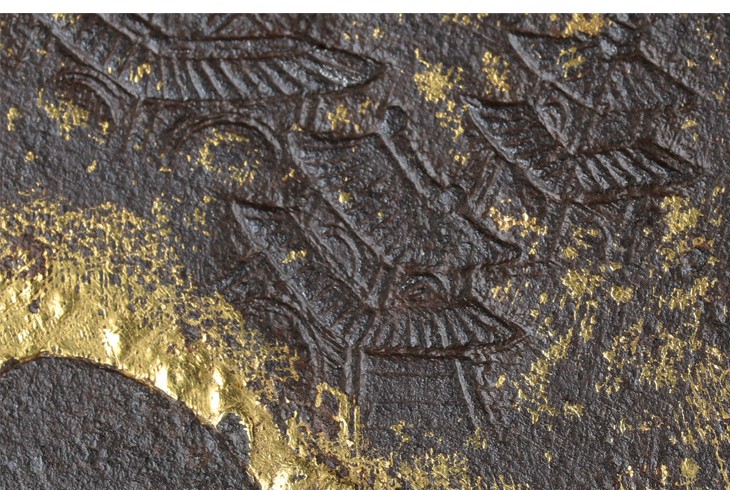
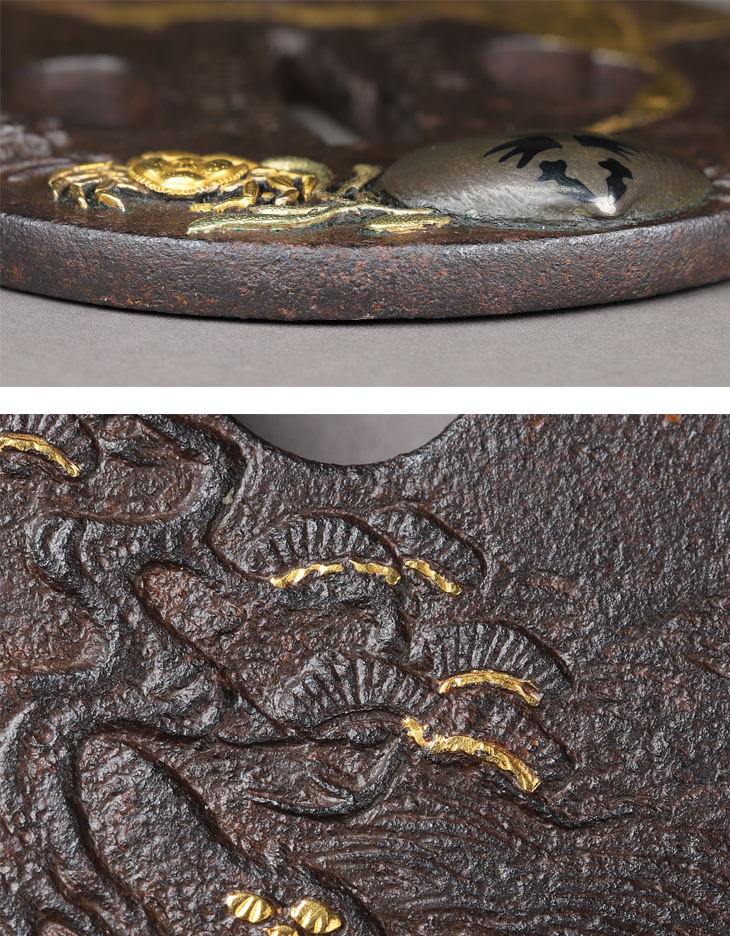
This is an iron tsuba featuring a mirage design, signed by Sayanaga of Musashi province. It is an early work by Sayanaga, made before his transition to the Nara style, and still shows influences from his Shonai period. The tsuba depicts the legend of a mirage appearing from the breath exhaled by a giant clam, with careful carving and inlay work.
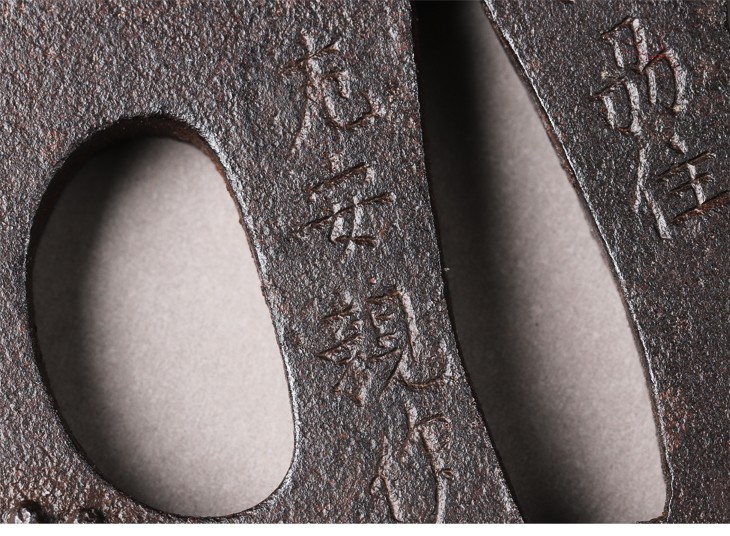
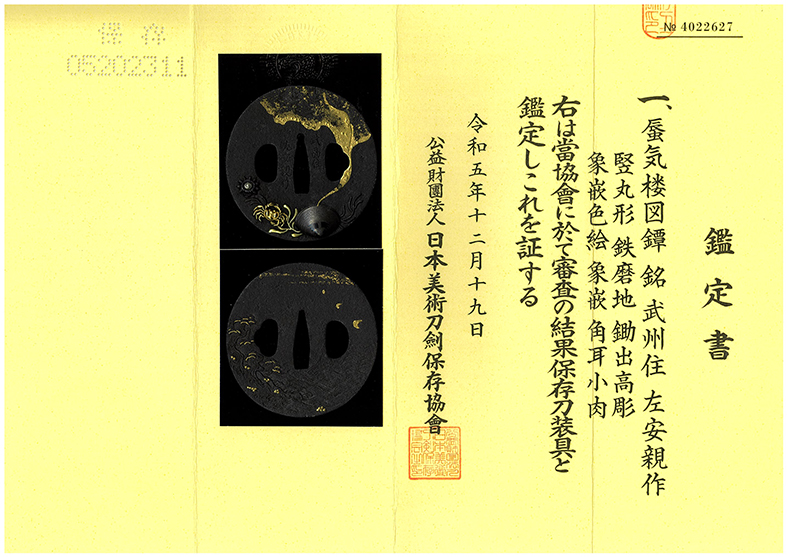
Certificate reading — 銘 武州住 左安親作
 NihontoWatch
mei · Bunka-Bunsei (c.1804-1830)
Tsuchiya Yasuchika
Bunka-Bunsei (c.1804-1830)
Musashi
Signed
Hozon (NBTHK)
Machibori · Hitachi (Mito) · around 1804-1830
4 pieces on the market now
Machibori · Musashi (Edo)
17 pieces on the market now
The Tsuchiya school is a branch of the Nara kinkō tradition, established in Edo (Musashi Province) by Tsuchiya Yasuchika, counted among the Nara Sansaku (Three Great Masters of Nara). Six generations of main-line heads carried the name Yasuchika (安親), perpetuating a continuous workshop lineage from the Genroku era through the late Edo period. The Shōnai Kinkō Meifu records Yasutsugu (安族) as a pupil of the first-generation Yasuchika who served as a cooperative assistant craftsman in Edo before returning to Shōnai[[c:2]], where his descendants continued in metalwork. The sixth-generation head, Tsuchiya Masachika — also known as Hōgen Yasuchika — was the eldest son of Kunichika (the fifth-generation head), born in Shimotsuke Province at Shimodate. He "traveled widely to study and refine his skills[[c:3]]," establishing himself at Shiba-Shinbashi in Edo and serving as domain craftsman to the Satake family of Akita. He was granted the court title Hōgen, used the art names Sekienji and Tōsen, and died in Man'en 2 (1861).
A further branch member, Tsuchiya Morichika I, signed under the extended form Tōensha Tsuchiya Kōsen Morichika. The school's collective style is rooted in the Nara tradition's carving vocabulary, with sukidashi-takabori (relief carving raised from the ground) as its foundational technique. Iron and shakudō are the primary ground metals, frequently worked in ishime-ji or tsuchime-ji (hammered ground), with rich iroe in gold, silver, shibuichi, and suaka. " The pictorial sensibility favors literary and allusive compositions; Morichika's Five Seasonal Festivals suite expresses each observance "through evocative images of associated objects and settings that allude to the observances[[c:5]]" rather than depicting ceremonial scenes literally. " The setsumei consistently position the Tsuchiya school as a vehicle for the continuation of Nara-school principles across the mid- and late Edo periods. " Commissioned works for daimyō patrons — the Satake family of Akita and the Matsui family of Maebashi — attest to the enduring esteem in which the Tsuchiya line was held by the upper warrior class. Learn more →
| Smith | Era | Designated |
|---|---|---|
| Yasuchika安親 | 1804-1830 | 0 |
| Yasuchika安親 | 1718-1778 | 0 |
| Yasunari安成 | — | 0 |
| Yasunori安則 | — | 0 |
| Kunichika国親 | — | 0 |
Certifies a genuine fitting worth preserving: a correct signature, or, if unsigned, an identifiable era and school, with recognized artistic and craft value.
The NBTHK (Nihon Bijutsu Tōken Hozon Kyōkai, the Society for the Preservation of Japanese Art Swords) is a public-interest incorporated foundation founded in 1948 and supervised by Japan’s Agency for Cultural Affairs (Bunkachō); it is based at the Japanese Sword Museum in Tokyo. Its expert panels physically examine each submitted work (shinsa) and issue a certificate (kanteishō) ranking it by artistic and historical merit. NBTHK papers are the most widely recognized standard of authentication for Japanese swords and fittings.
NBTHK official siteFor one-of-a-kind items such as swords, sword fittings, and antiques, please contact us about a return within 3 days of the item's arrival and ship it back within 8 days. Refunds are issued the same day the returned item arrives.
¥550,000
This is an iron tsuba featuring a mirage design, signed by Sayanaga of Musashi province. It is an early work by Sayanaga, made before his transition to the Nara style, and still shows influences from his Shonai period. The tsuba depicts the legend of a mirage appearing from the breath exhaled by a giant clam, with careful carving and inlay work.
Certificate reading — 銘 武州住 左安親作
NihontoWatchmei · Bunka-Bunsei (c.1804-1830)
Tsuchiya Yasuchika
Bunka-Bunsei (c.1804-1830)
Musashi
Signed
Hozon (NBTHK)
Machibori · Hitachi (Mito) · around 1804-1830
4 pieces on the market now
Machibori · Musashi (Edo)
17 pieces on the market now
The Tsuchiya school is a branch of the Nara kinkō tradition, established in Edo (Musashi Province) by Tsuchiya Yasuchika, counted among the Nara Sansaku (Three Great Masters of Nara). Six generations of main-line heads carried the name Yasuchika (安親), perpetuating a continuous workshop lineage from the Genroku era through the late Edo period. The Shōnai Kinkō Meifu records Yasutsugu (安族) as a pupil of the first-generation Yasuchika who served as a cooperative assistant craftsman in Edo before returning to Shōnai[[c:2]], where his descendants continued in metalwork. The sixth-generation head, Tsuchiya Masachika — also known as Hōgen Yasuchika — was the eldest son of Kunichika (the fifth-generation head), born in Shimotsuke Province at Shimodate. He "traveled widely to study and refine his skills[[c:3]]," establishing himself at Shiba-Shinbashi in Edo and serving as domain craftsman to the Satake family of Akita. He was granted the court title Hōgen, used the art names Sekienji and Tōsen, and died in Man'en 2 (1861).
A further branch member, Tsuchiya Morichika I, signed under the extended form Tōensha Tsuchiya Kōsen Morichika. The school's collective style is rooted in the Nara tradition's carving vocabulary, with sukidashi-takabori (relief carving raised from the ground) as its foundational technique. Iron and shakudō are the primary ground metals, frequently worked in ishime-ji or tsuchime-ji (hammered ground), with rich iroe in gold, silver, shibuichi, and suaka. " The pictorial sensibility favors literary and allusive compositions; Morichika's Five Seasonal Festivals suite expresses each observance "through evocative images of associated objects and settings that allude to the observances[[c:5]]" rather than depicting ceremonial scenes literally. " The setsumei consistently position the Tsuchiya school as a vehicle for the continuation of Nara-school principles across the mid- and late Edo periods. " Commissioned works for daimyō patrons — the Satake family of Akita and the Matsui family of Maebashi — attest to the enduring esteem in which the Tsuchiya line was held by the upper warrior class. Learn more →
| Smith | Era | Designated |
|---|---|---|
| Yasuchika安親 | 1804-1830 | 0 |
| Yasuchika安親 | 1718-1778 | 0 |
| Yasunari安成 | — | 0 |
| Yasunori安則 | — | 0 |
| Kunichika国親 | — | 0 |
Certifies a genuine fitting worth preserving: a correct signature, or, if unsigned, an identifiable era and school, with recognized artistic and craft value.
The NBTHK (Nihon Bijutsu Tōken Hozon Kyōkai, the Society for the Preservation of Japanese Art Swords) is a public-interest incorporated foundation founded in 1948 and supervised by Japan’s Agency for Cultural Affairs (Bunkachō); it is based at the Japanese Sword Museum in Tokyo. Its expert panels physically examine each submitted work (shinsa) and issue a certificate (kanteishō) ranking it by artistic and historical merit. NBTHK papers are the most widely recognized standard of authentication for Japanese swords and fittings.
NBTHK official siteFor one-of-a-kind items such as swords, sword fittings, and antiques, please contact us about a return within 3 days of the item's arrival and ship it back within 8 days. Refunds are issued the same day the returned item arrives.
¥550,000