 NihontoWatchNihontoWatch
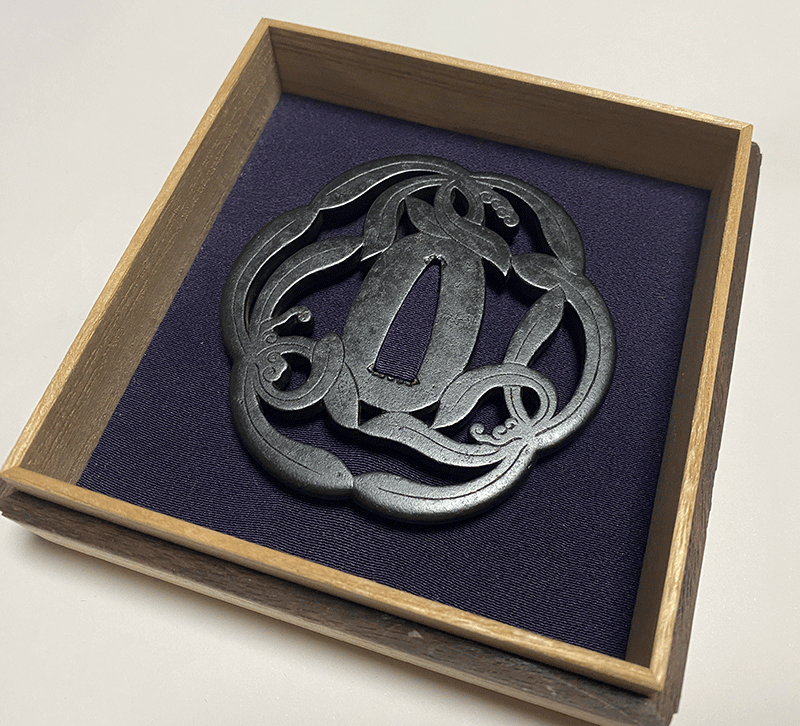
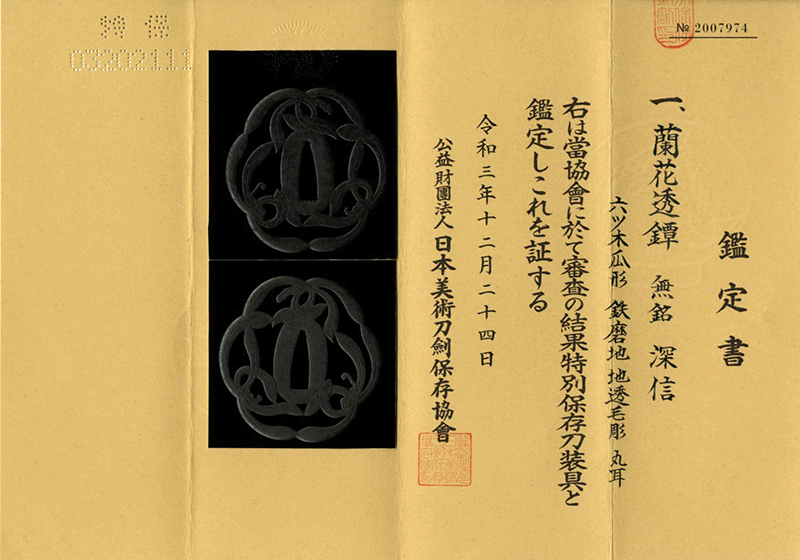
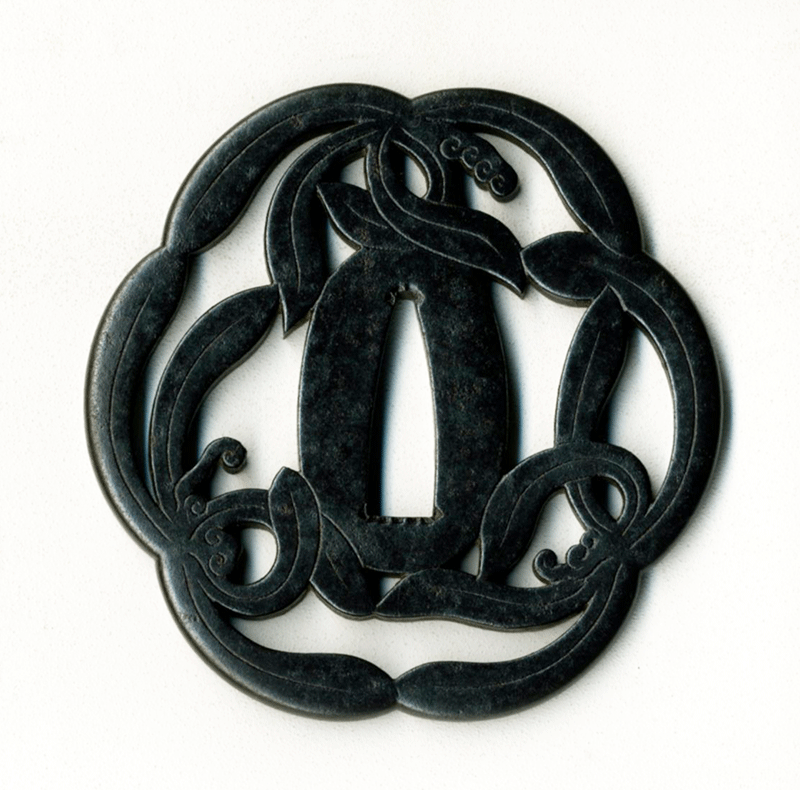
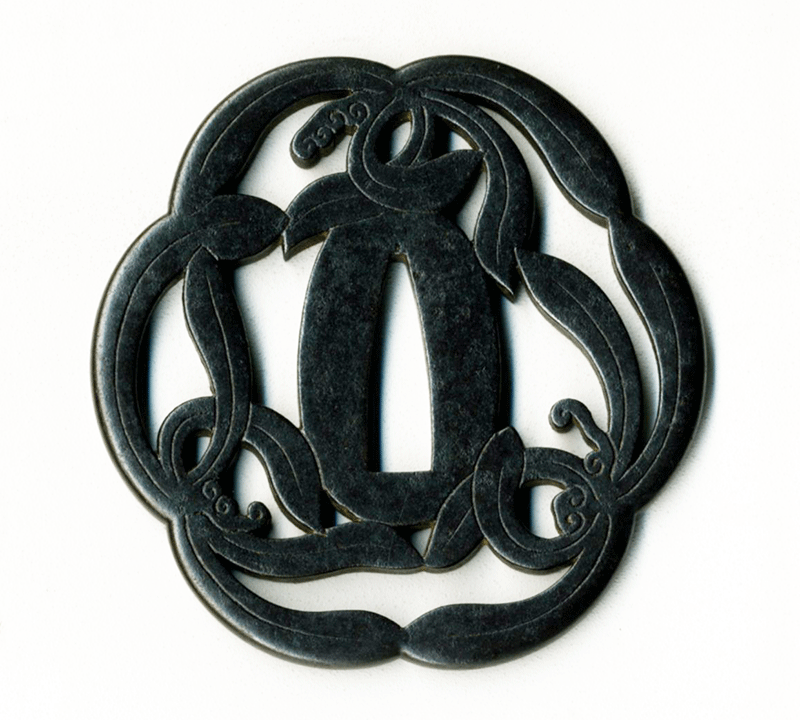
鑑定書内容:財)日本美術刀剣保存協会 特別保存刀装具[N.B.T.H.K]Tokubetsu Hozon Tousougu 江戸時代隆盛を誇った肥後国林派の神吉深信の特別保存刀装具指定作品。深信は寿平忠光の長男として天明六年(一七八六)に生まれる。はじめ国平と名乗り、文政四年(一八二一)父の没後に寿平と改名した。神吉家は林又七の流れであり、初代寿平正忠の時、藩命によって林家に入門し、肥後細川家の抱え工となった。忠光を初代として深信を二代、楽寿を三代として幕末にあって肥後金工の掉尾を飾った。本作は艶のある錆色の鉄磨地に満開の蘭の花弁と芯を六つ木瓜型に造形しており、丁寧な毛彫を添えて柔らかい風合いを醸し出している。本図案は林各代や他の肥後鐔には見られず、「神吉鐔繪本」に所載され、古来神吉家の創始であると云われる独自の意匠である。中心孔の状態より未使用と鑑せられ、二代深信の作であることを示す上方に4つ、下方に7つの鏨や製作当時の姿を今日に伝える大変貴重な逸品である。
NihontoWatchOffered by Iida Koendo

Higo · Higo
Where Fukanobu stands among comparable artisans: across all of nihontō, and within tradition, era, and period. The tiers (Foremost · Leading · Major · Notable) weigh official designations from the NBTHK and Japan's Agency for Cultural Affairs, together with historical honors of lasting repute such as the Sansaku and Meibutsu-chō.
Select a lens to see how it's measured.
Higo · Higo
6 pieces on the market now
The Kamiyoshi (神吉) school is the fifth of the celebrated Higo kinko lineages, established in Higo Province under the patronage of the Hosokawa house during the mid-to-late Edo period. According to the NBTHK setsumei, the progenitor of the Kamiyoshi line was Kamiya Jinzaemon[[c:1]], who is said to have become a craftsman when Hosokawa Tadatoshi entered Higo. The school's formal artistic lineage, however, traces directly to Hayashi Matashichi (又七), founder of the Hayashi school. In the time of Juhei Tadamitsu — also known as Masatada (正忠) — the family received by domain order the transmitted traditions (soden) of the Hayashi house and devoted itself to reviving the manner of the Kasuga school (春日派), that is, the Hayashi school. Born in Horeki 4 (1754), Masatada initially studied tsuba making under Zenshichi, a pupil of the second-generation Nishigaki Kanshiro, before entering the school of the third-generation Hayashi Tohachi by official command. He thereafter became an appointed craftsman (kakae-ko) to the Hosokawa family, and from his house emerged the school's two greatest masters: his son, the second-generation Fukanobu (深信, 1786--1851), and his grandson, the third-generation Rakuju (楽寿, 1817--1884). The collective style of the Kamiyoshi school is anchored in the conscious revival of Hayashi-school aesthetics, rendered through a vocabulary of refined iron plate work, controlled openwork, and gold inlay of exceptional sophistication. Their iron plates display the purplish patina (murasabi) characteristic of Higo tsuba — described repeatedly in the setsumei as possessing a viscous, lustrous quality (nettori to shite tsuya ga ari) with subtly uneven surface clusters (jiso) that impart an elegant charm (gashu). The school is distinguished by several signature technical achievements: gama-hada (蟇肌, "toad-skin"), a distinctive surface texture devised and perfected by Rakuju; kareki-zogan (枯木象嵌, "withered-tree" inlay), a gold inlay technique extending from the plate onto the rim; and kuzubishi (葛菱, kudzu-diamond) and uzumaki (渦巻, whirlpool) motifs rendered in gold nunome-zogan. Rakuju's gold inlay was praised across multiple setsumei as approaching the level of the founding master Matashichi himself — the recurring epithet "a second coming of Matashichi" (Matashichi no sairai) appears as a fixed formula in the NBTHK appraisals.
The Kamiyoshi family further employed a distinctive punched-chisel treatment (uchikomi-tagane) above and below the nakago-ana — characteristically two strikes above and three below for Rakuju — enabling attribution of unsigned works by both Fukanobu and Rakuju. Favored design motifs include warabite (蕨手, bracken-hand) openwork, shadow butterflies (kage-cho sukashi), rain-dragons (uryu), auspicious clouds (zuiun), and tomoe forms, all drawn from the Hayashi-school repertoire. Fukanobu's works are consistently characterized as sincere and dignified (seijitsu de hinkaku no sugureta sakufu), never resorting to eccentricity or novelty, while Rakuju brought a more forceful and inventive energy to these inherited forms. The Kamiyoshi school occupies a place of singular importance within the Higo kinko canon as the lineage that most faithfully preserved and reinvigorated the Hayashi tradition into the late Edo period. That Juhei Tadamitsu is referred to as "the Kamiyoshi grandfather" and Juhei Fukanobu as "the Kamiyoshi father" — both epithets defined in relation to Rakuju — testifies to the commanding stature of the third-generation master within this lineage. Fukanobu, though fewer signed works survive, produced pieces of such accomplishment that the NBTHK describes his finest tsuba as the hakubi (白眉, "crowning achievement") among his oeuvre — notably a yatsu-warabite design in imitation of Matashichi with gold sayagata inlay and the Hosokawa kuyo-mon (九曜紋) crest. The father-and-son collaborative works (gassaku) by Fukanobu and Rakuju further demonstrate the school's integrated mastery. Rakuju's late works, produced after decades of striving toward the example of Matashichi, are described as having attained an elevated and refined quality (kosho na sakuhin). Several pieces are recorded as former possessions of the Hosokawa family itself, and the recurrence of the patron name Ogi Masakuni (荻昌国) in commissioned inscriptions attests to the school's intimate relationship with prominent supporters. In the NBTHK's assessment, the finest Kamiyoshi works approach the level of the Hayashi school's founding master — a judgment that secures the school's legacy as the most distinguished heir to the Matashichi tradition. Learn more →
| Smith | Era | Designated |
|---|---|---|
| Rakuju楽寿 | — | 13 |
| Fukanobu深信 | — | 3 |
| Masatada正忠 | — | 1 |
A Hozon-certified fitting of notably superior craftsmanship and condition, often with signature or workmanship of high reference value.
The NBTHK (Nihon Bijutsu Tōken Hozon Kyōkai, the Society for the Preservation of Japanese Art Swords) is a public-interest incorporated foundation founded in 1948 and supervised by Japan’s Agency for Cultural Affairs (Bunkachō); it is based at the Japanese Sword Museum in Tokyo. Its expert panels physically examine each submitted work (shinsa) and issue a certificate (kanteishō) ranking it by artistic and historical merit. NBTHK papers are the most widely recognized standard of authentication for Japanese swords and fittings.
NBTHK official siteFor returns at the customer's convenience, please notify us within two days of the item's arrival. Items that have been altered cannot be accepted. Return shipping is at the customer's expense. Costs other than the item price (bank transfer fees, cash-on-delivery fees, etc.) cannot be refunded. Items delivered overseas cannot be returned or refunded.