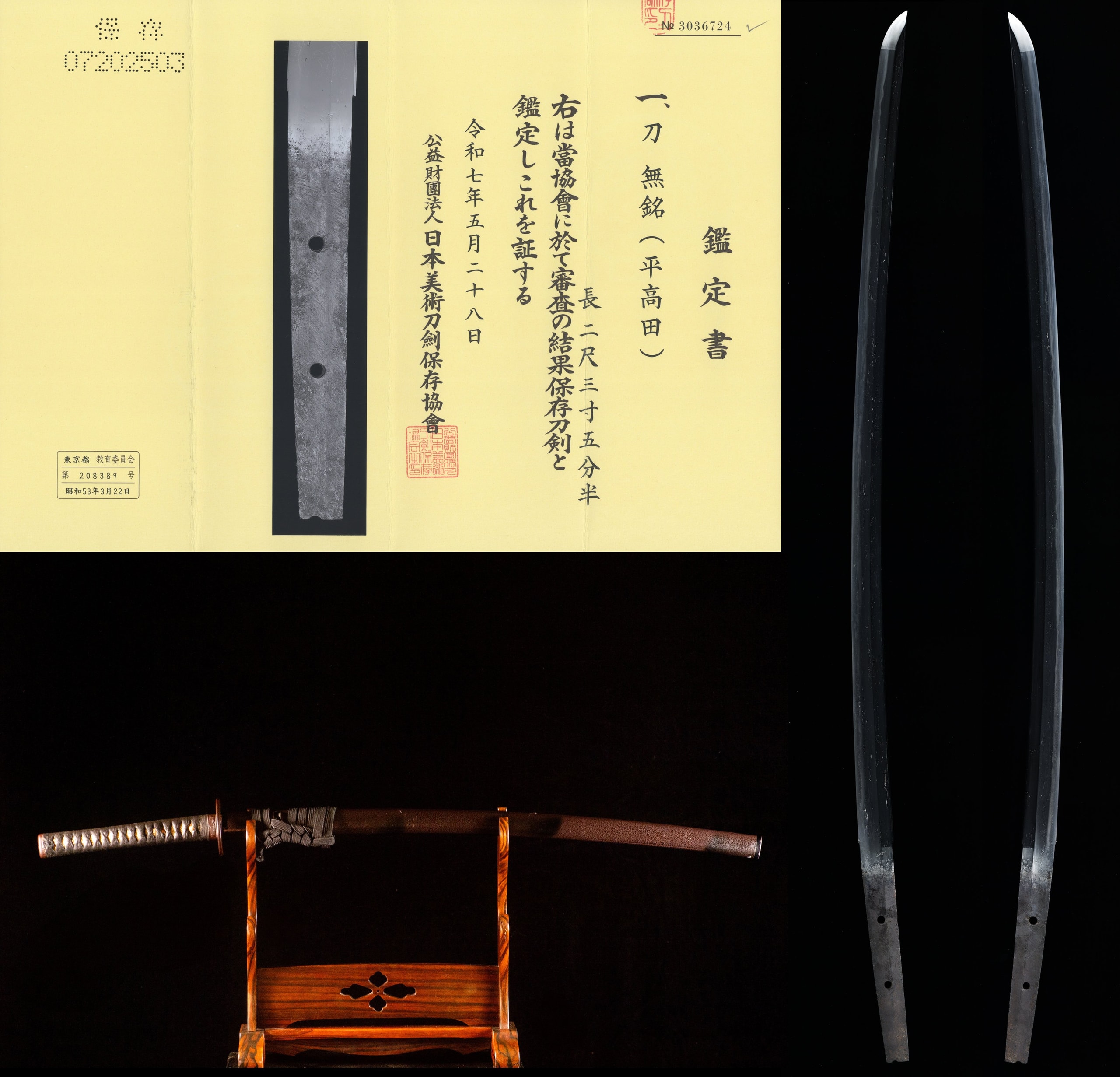
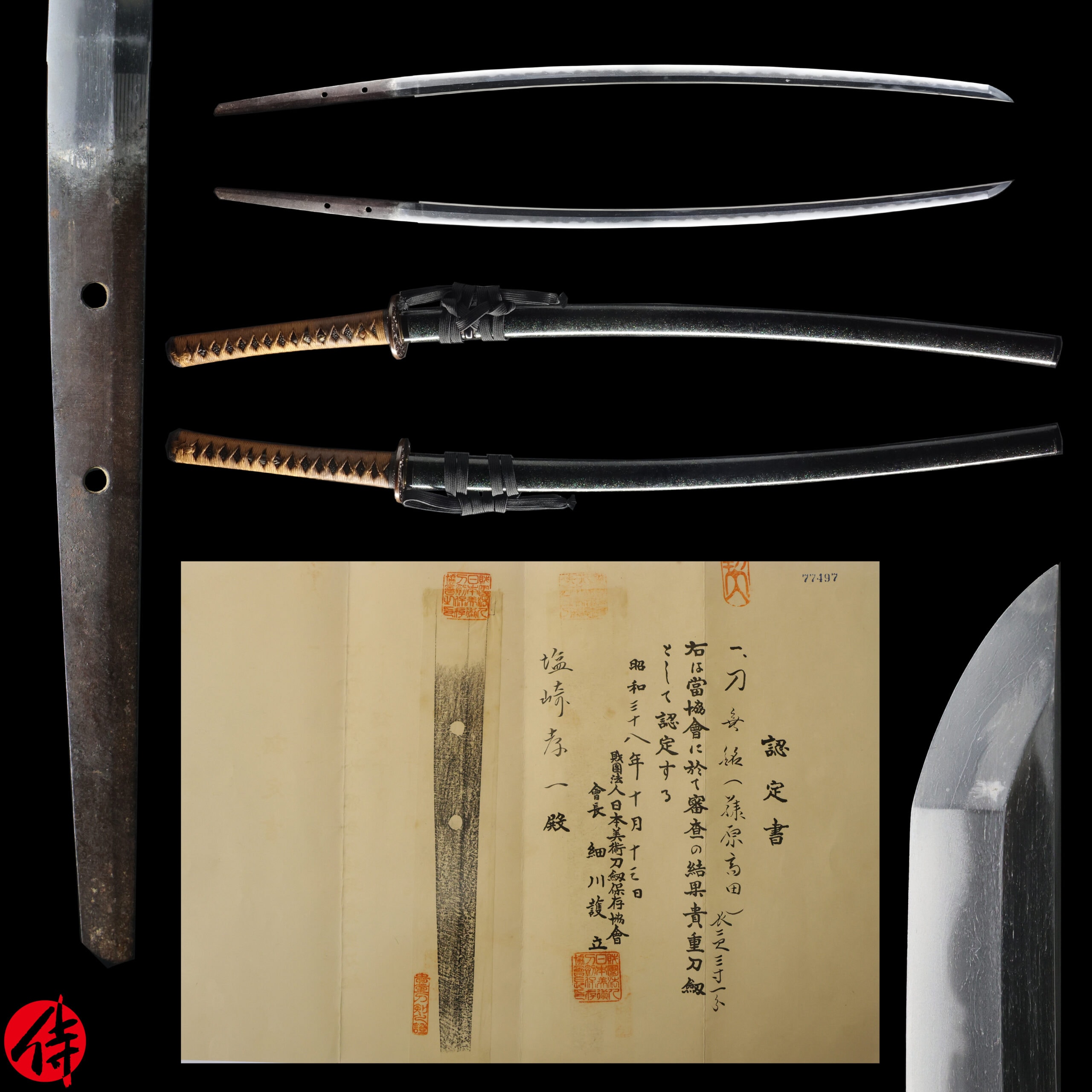
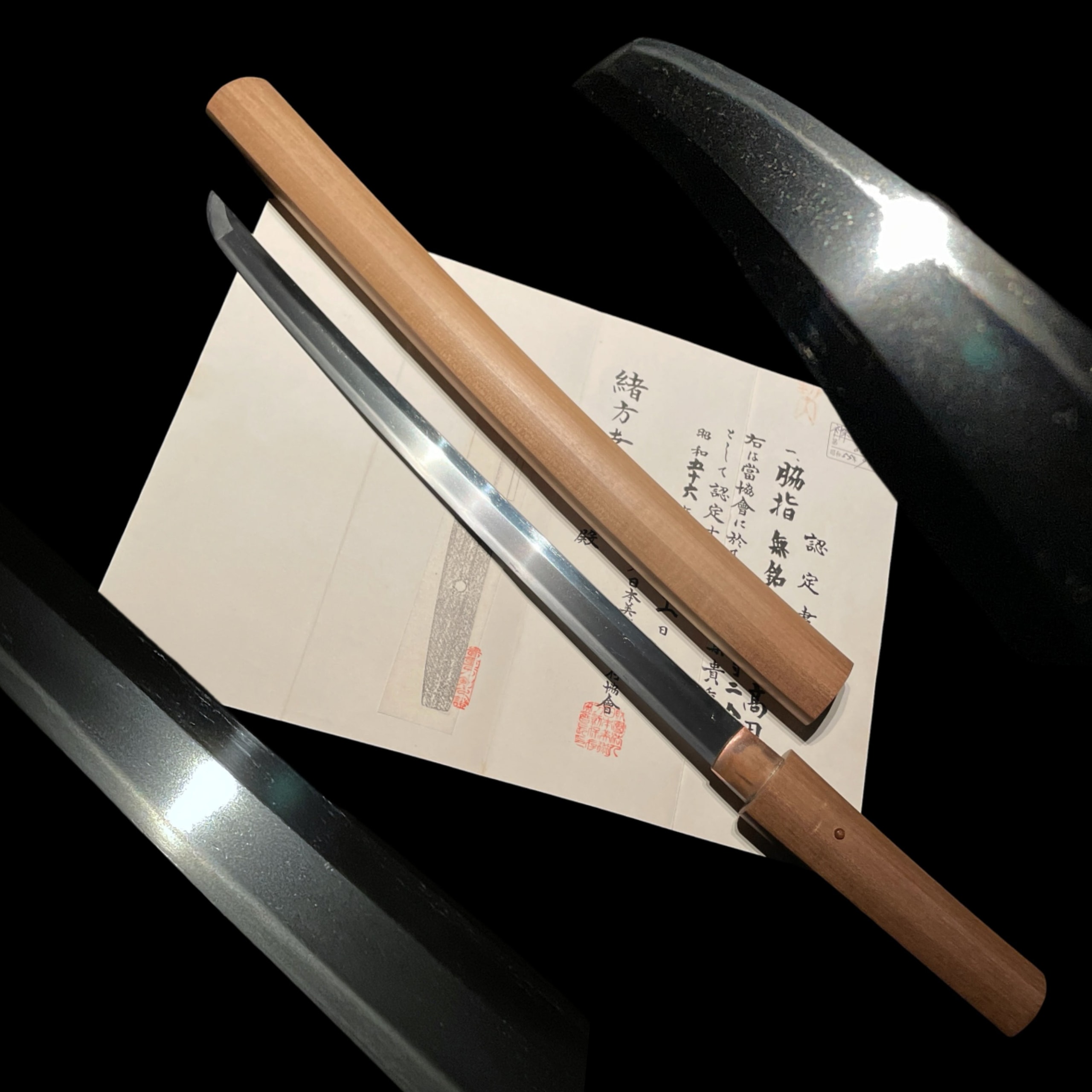
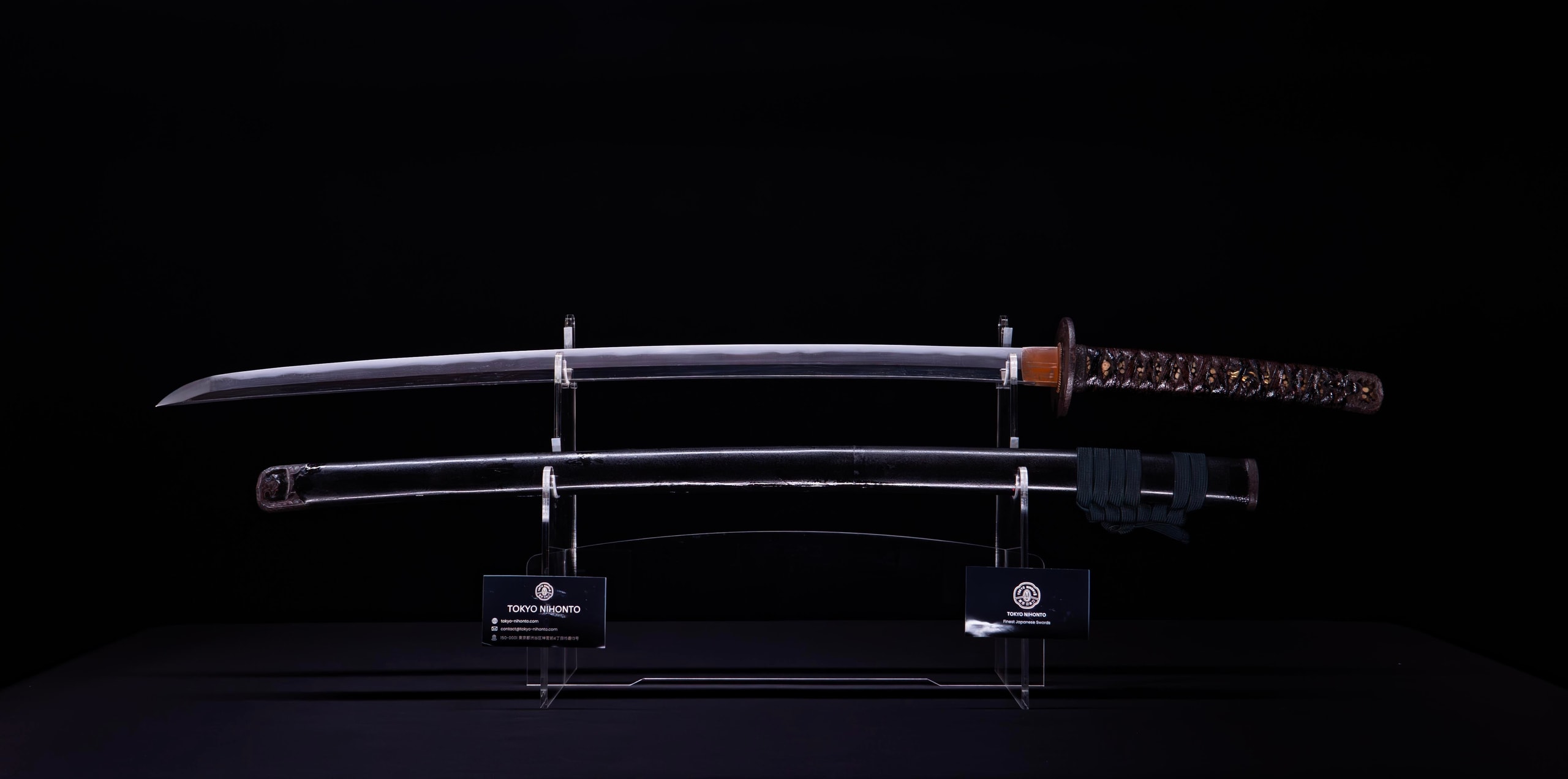
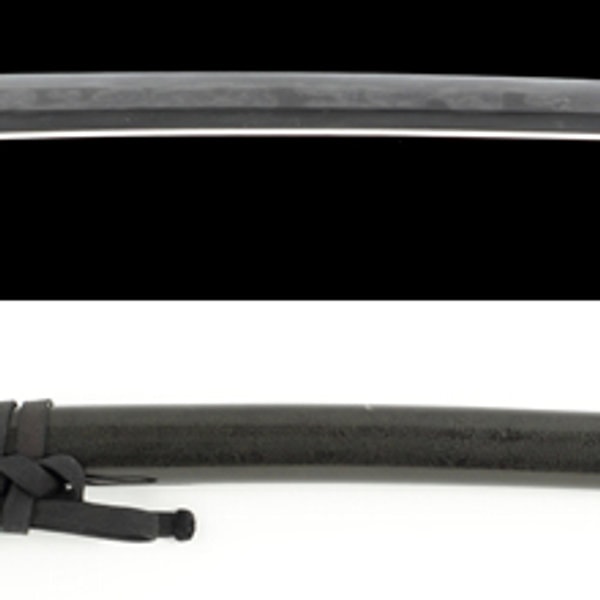
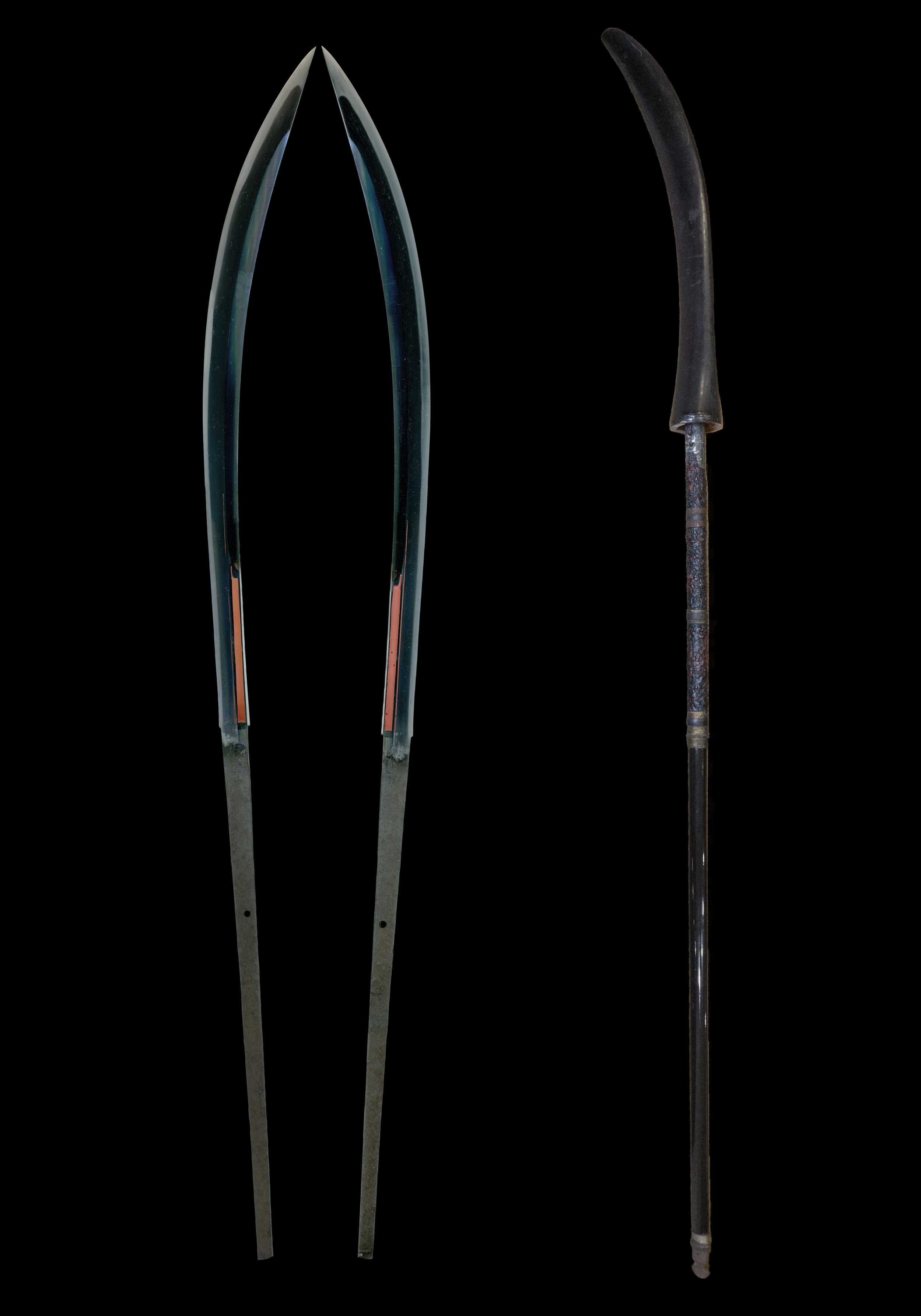
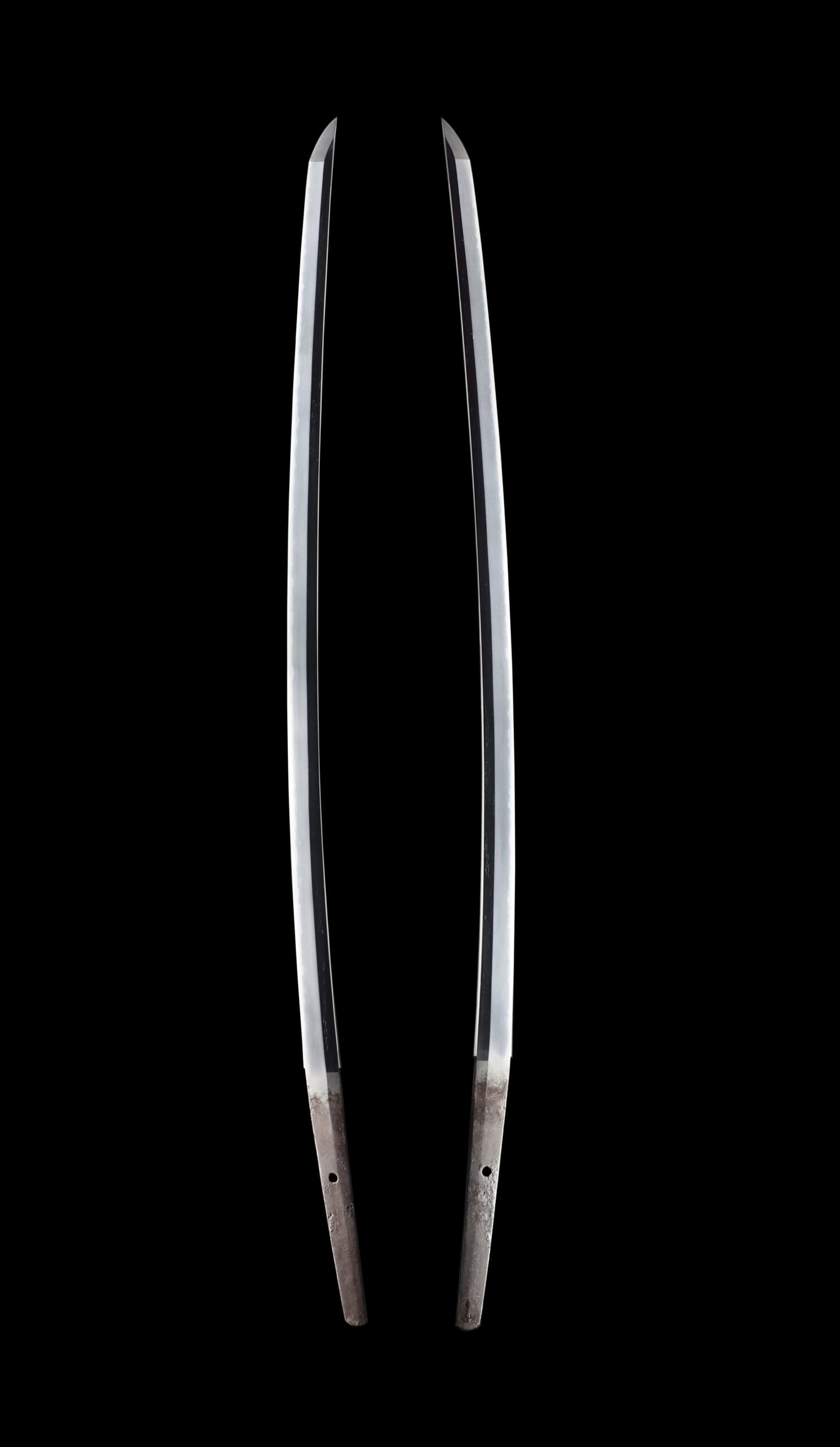
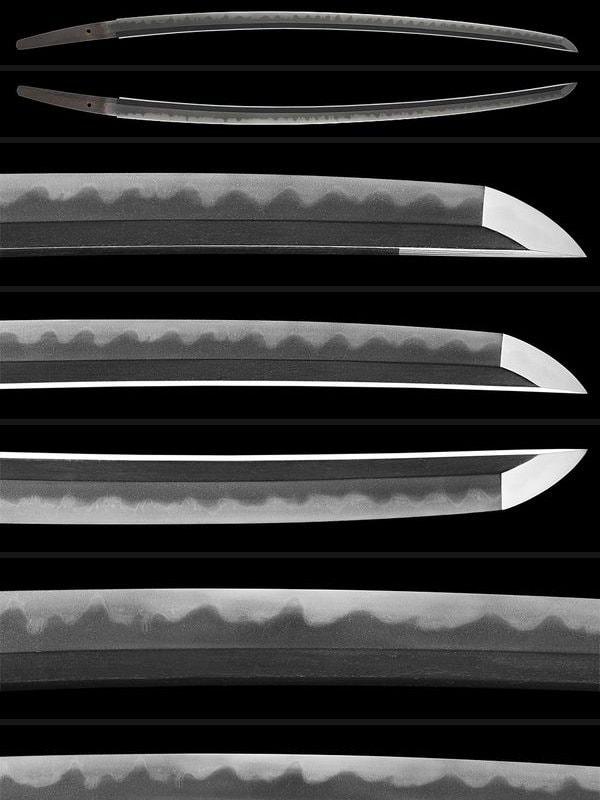
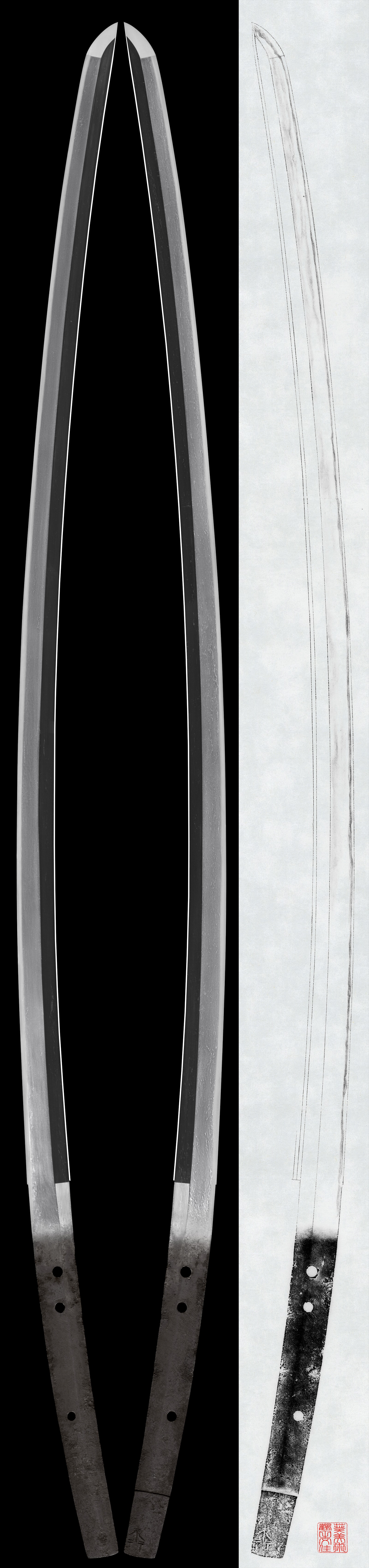
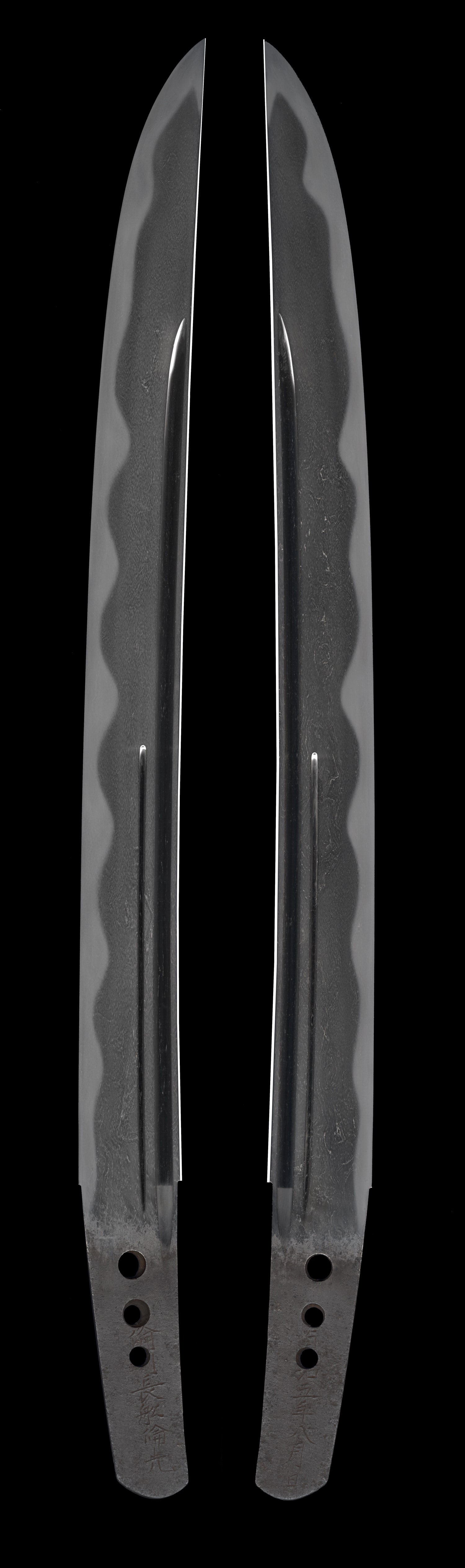
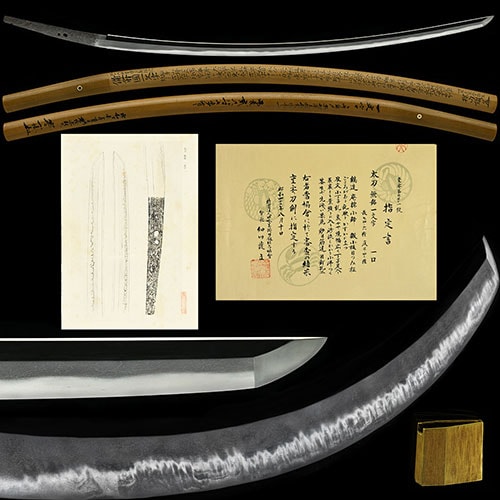
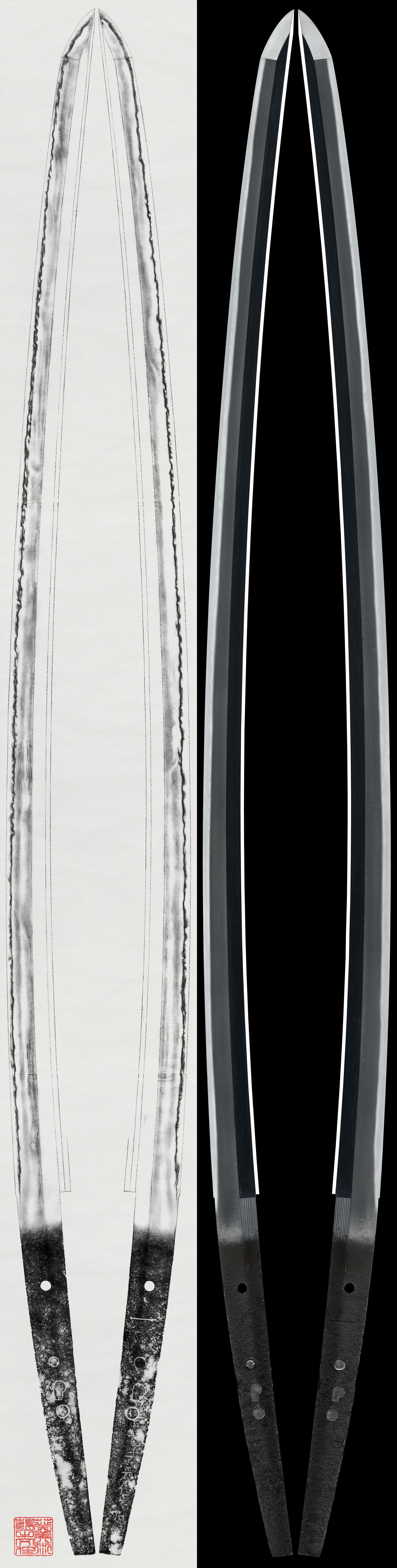
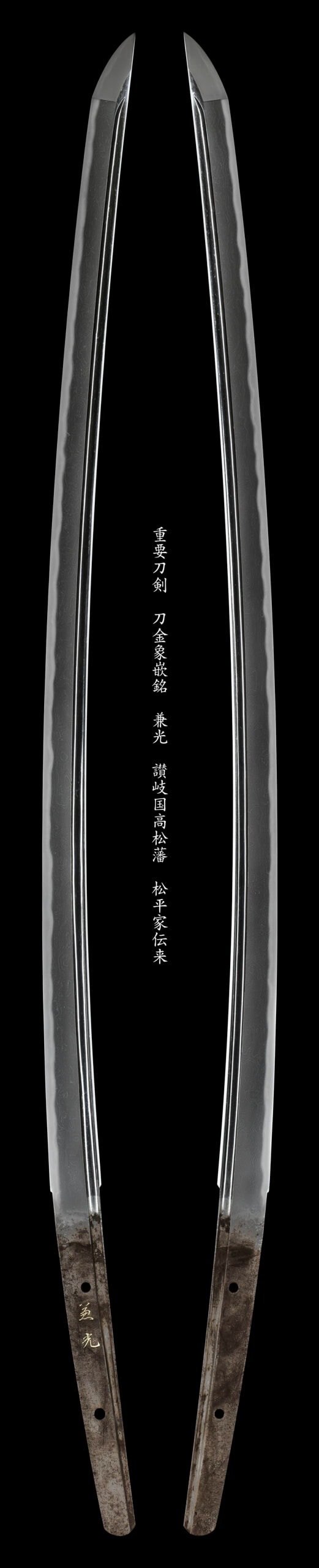
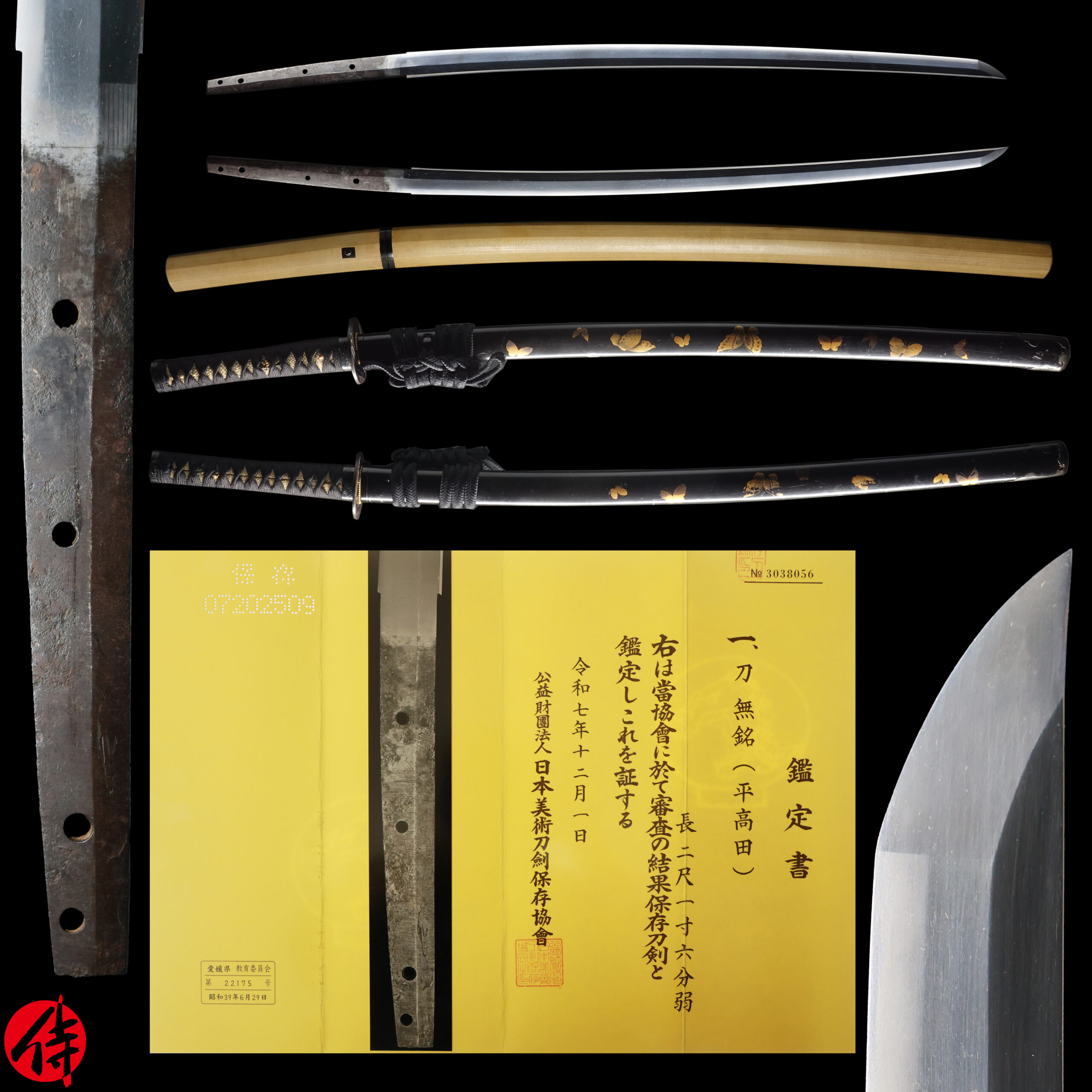
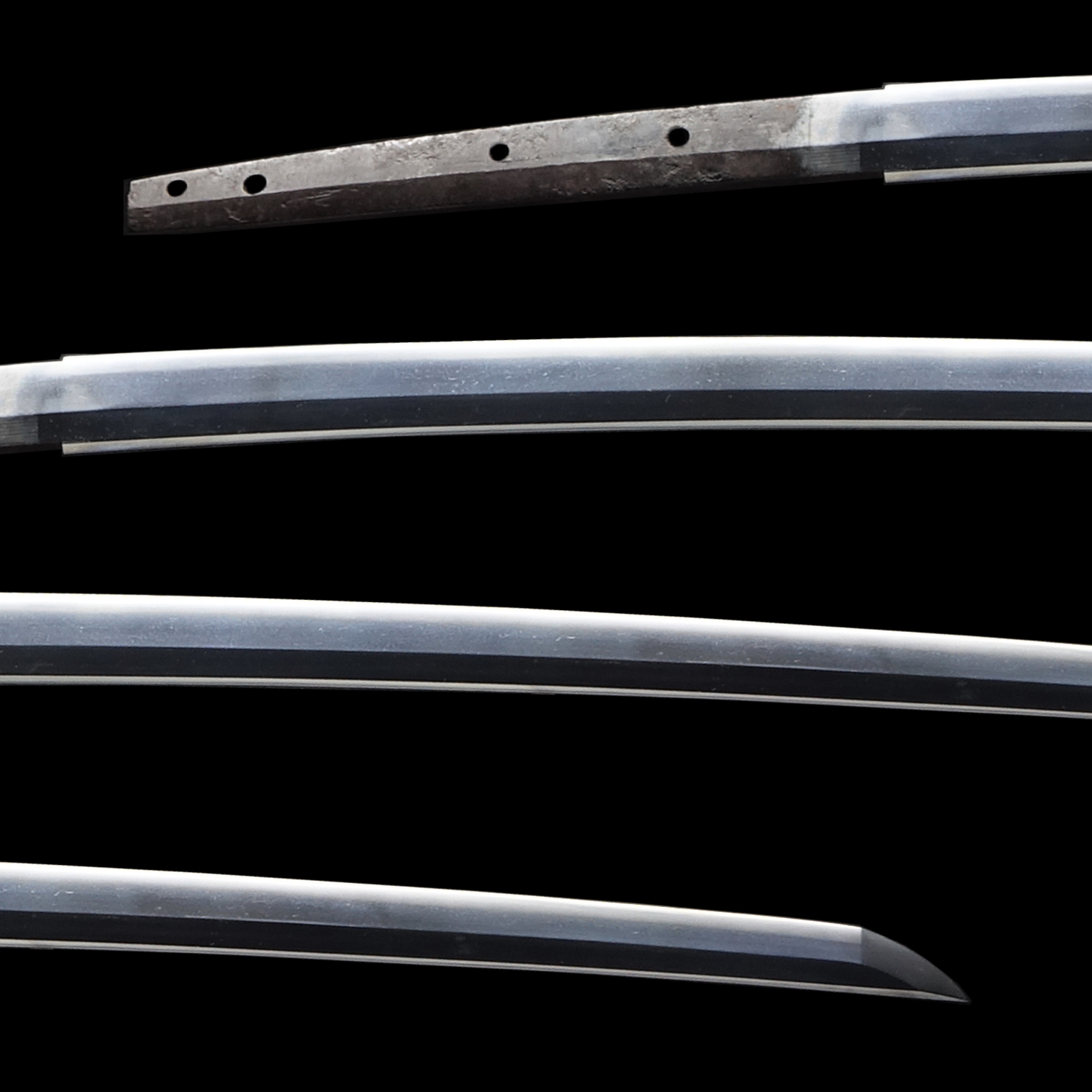
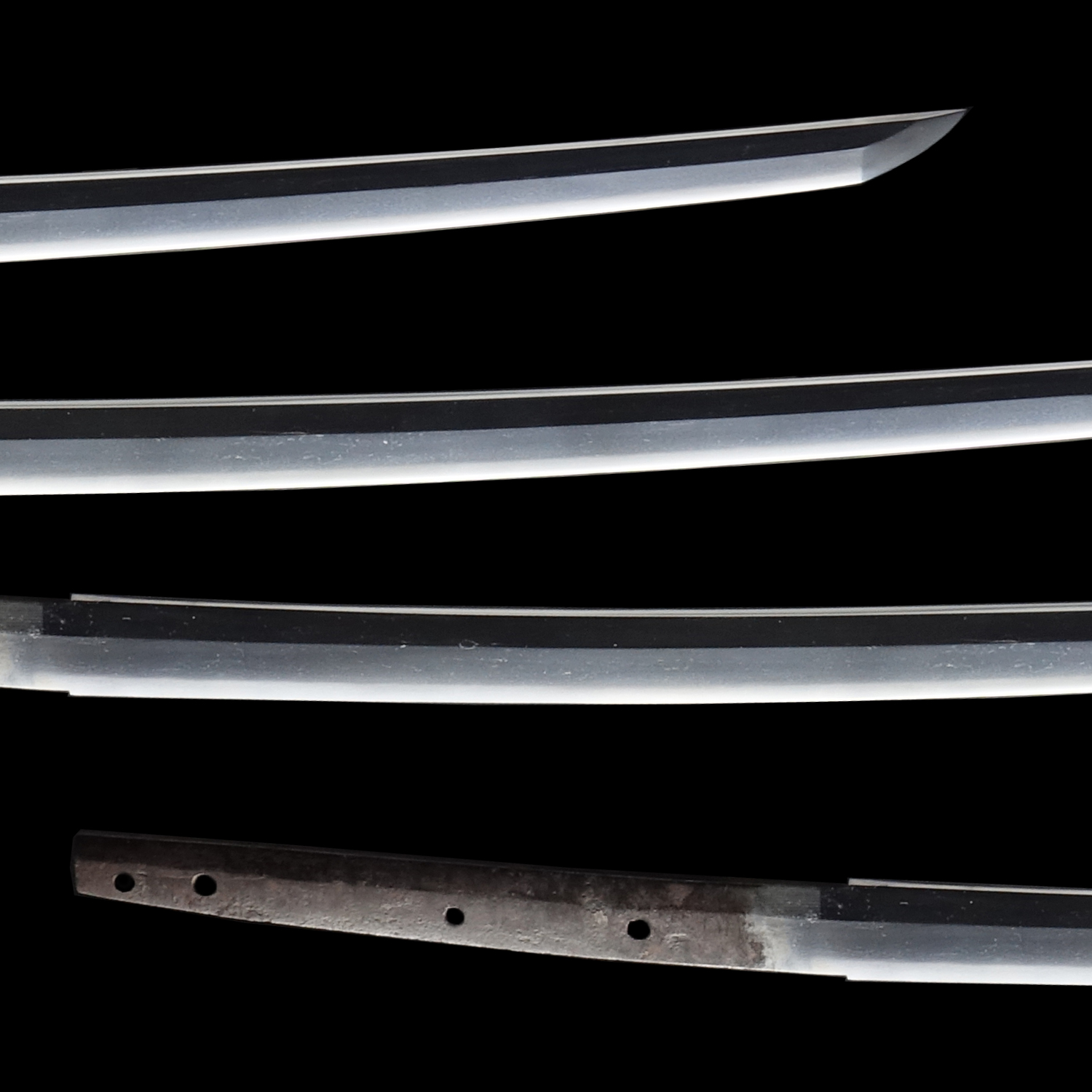
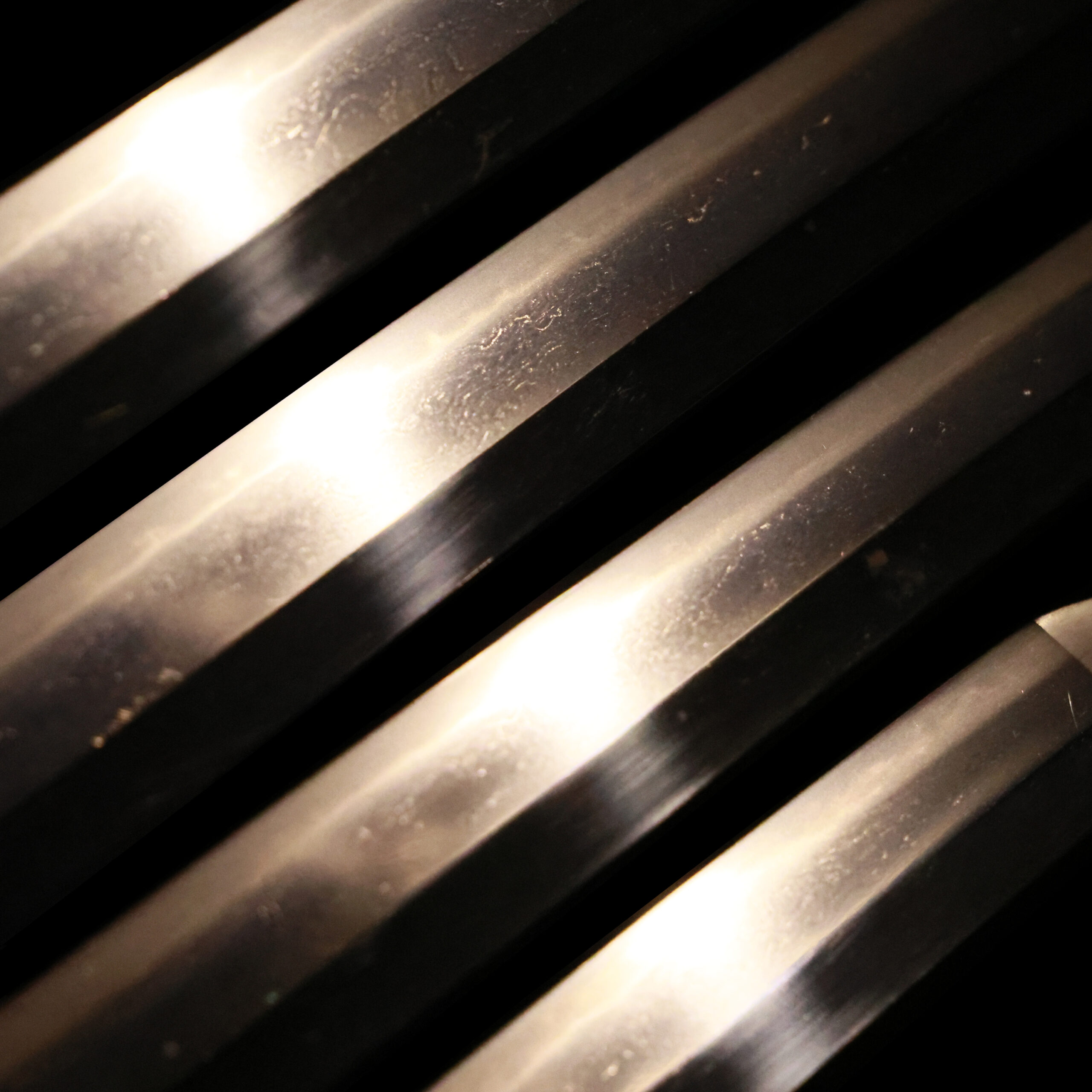
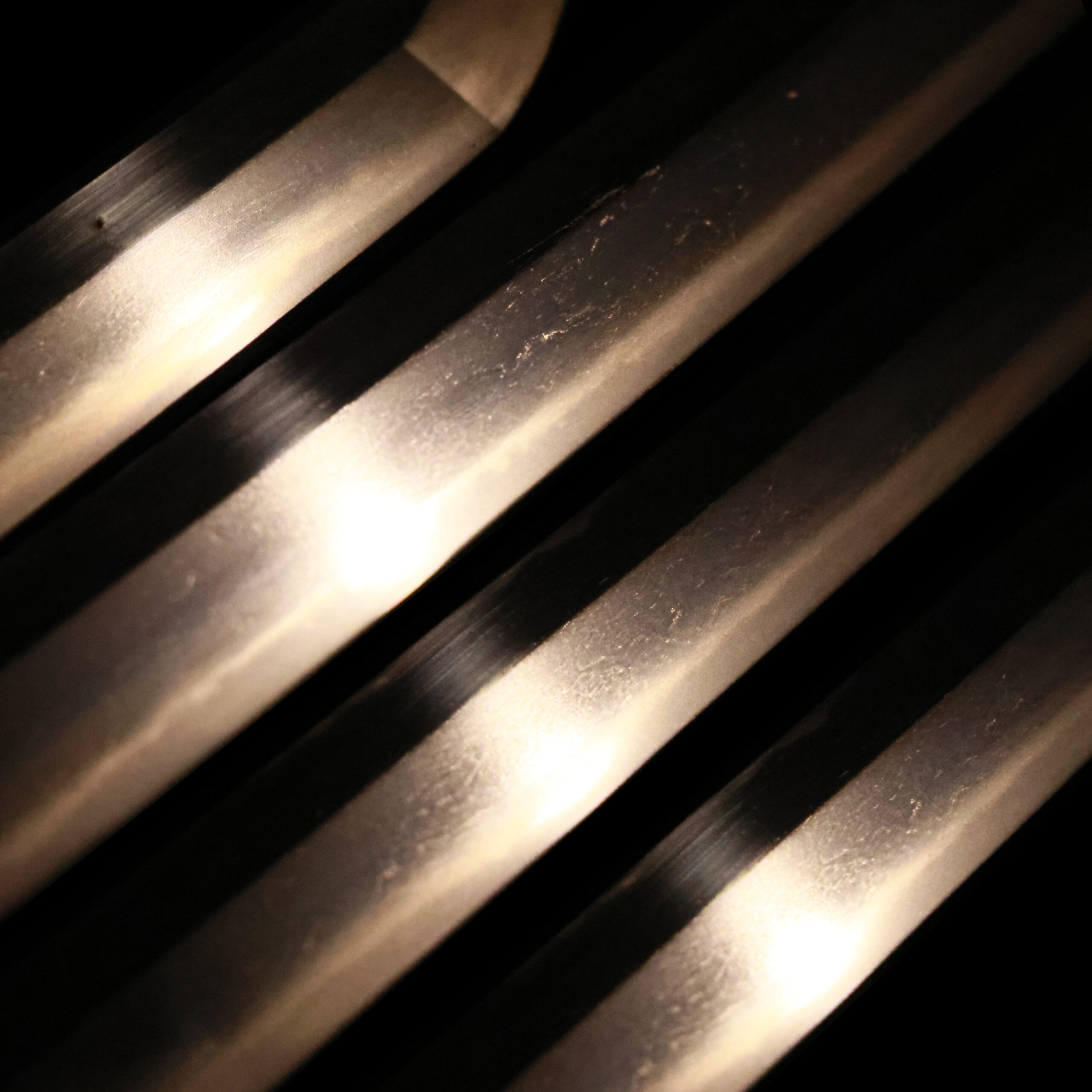
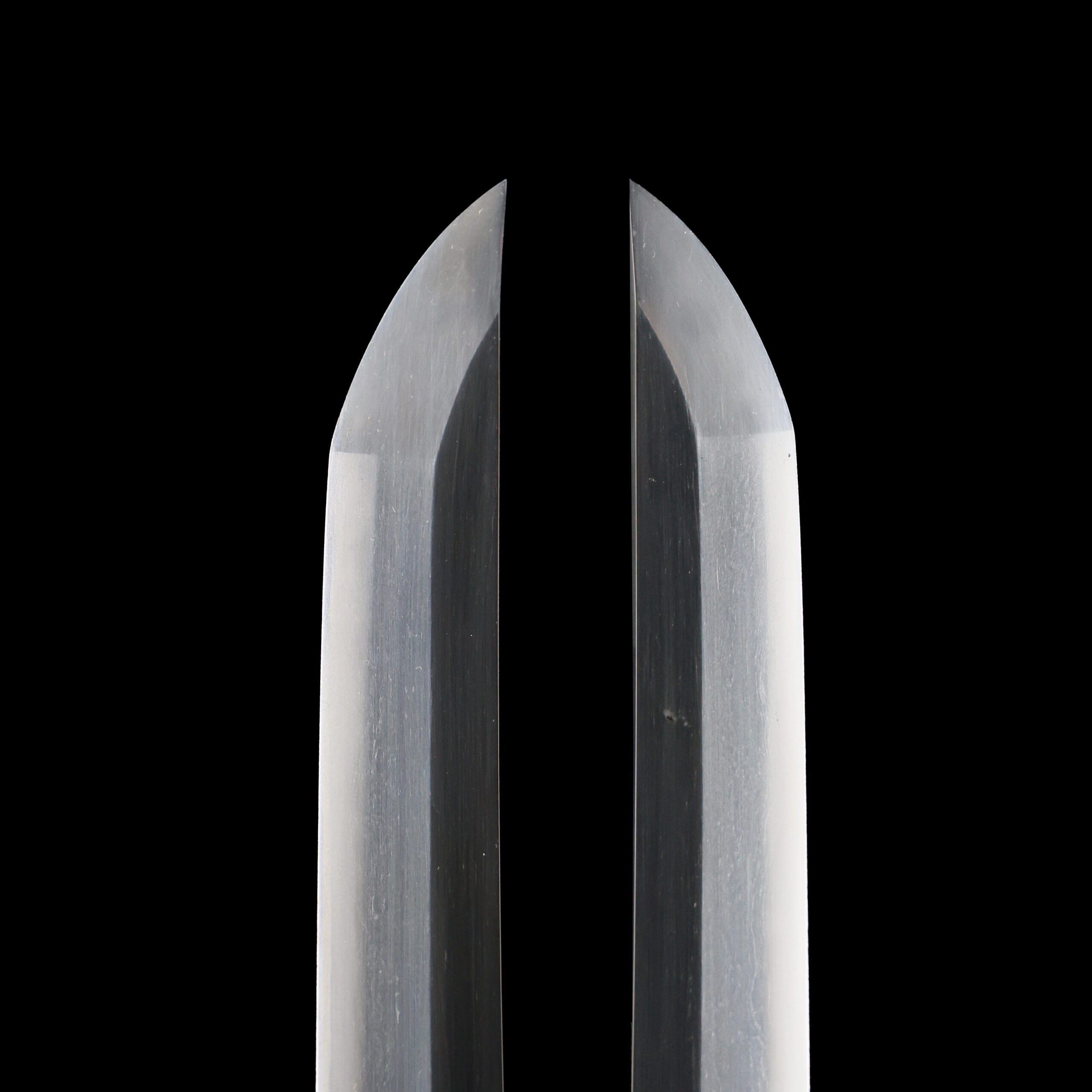
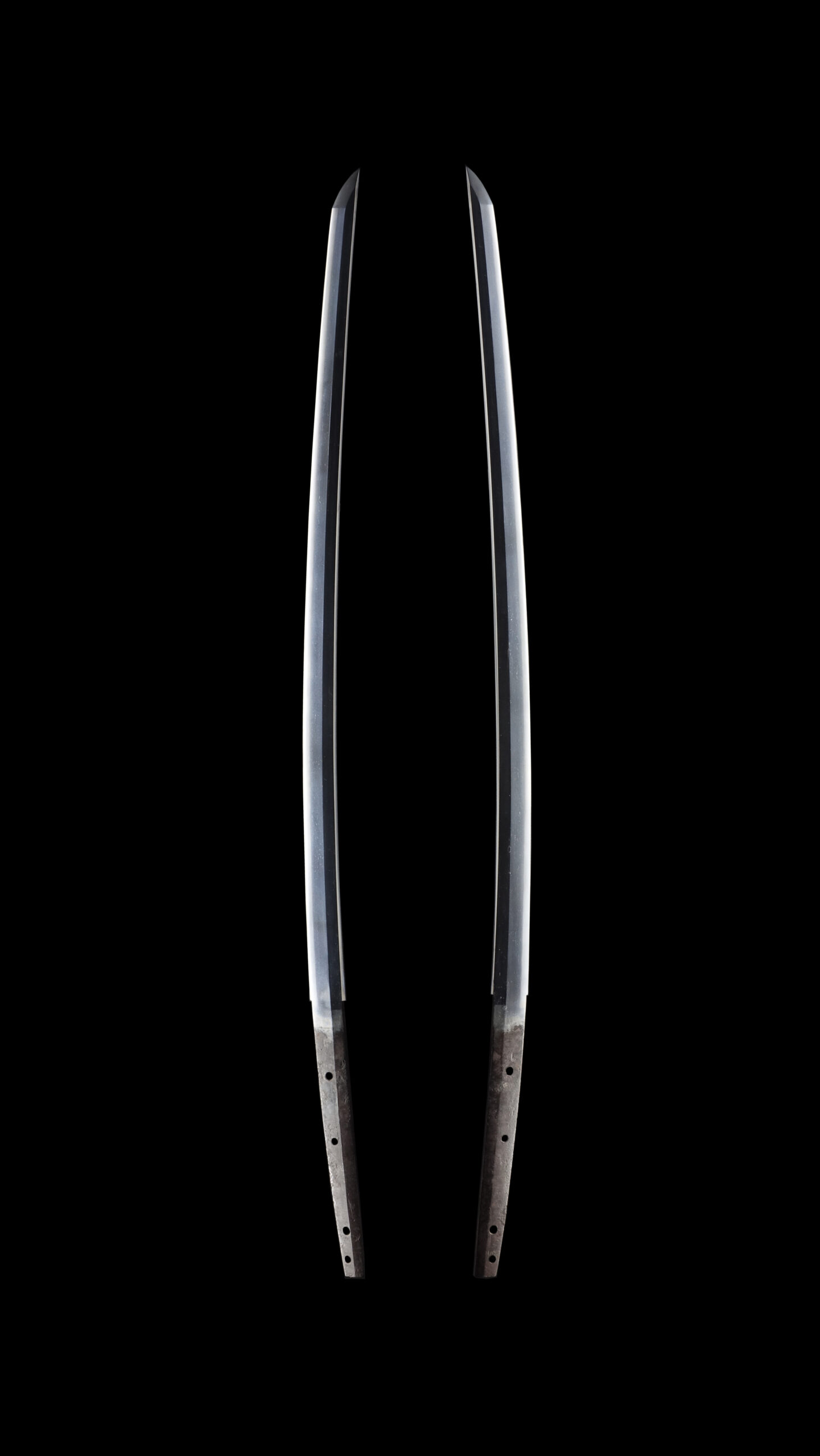
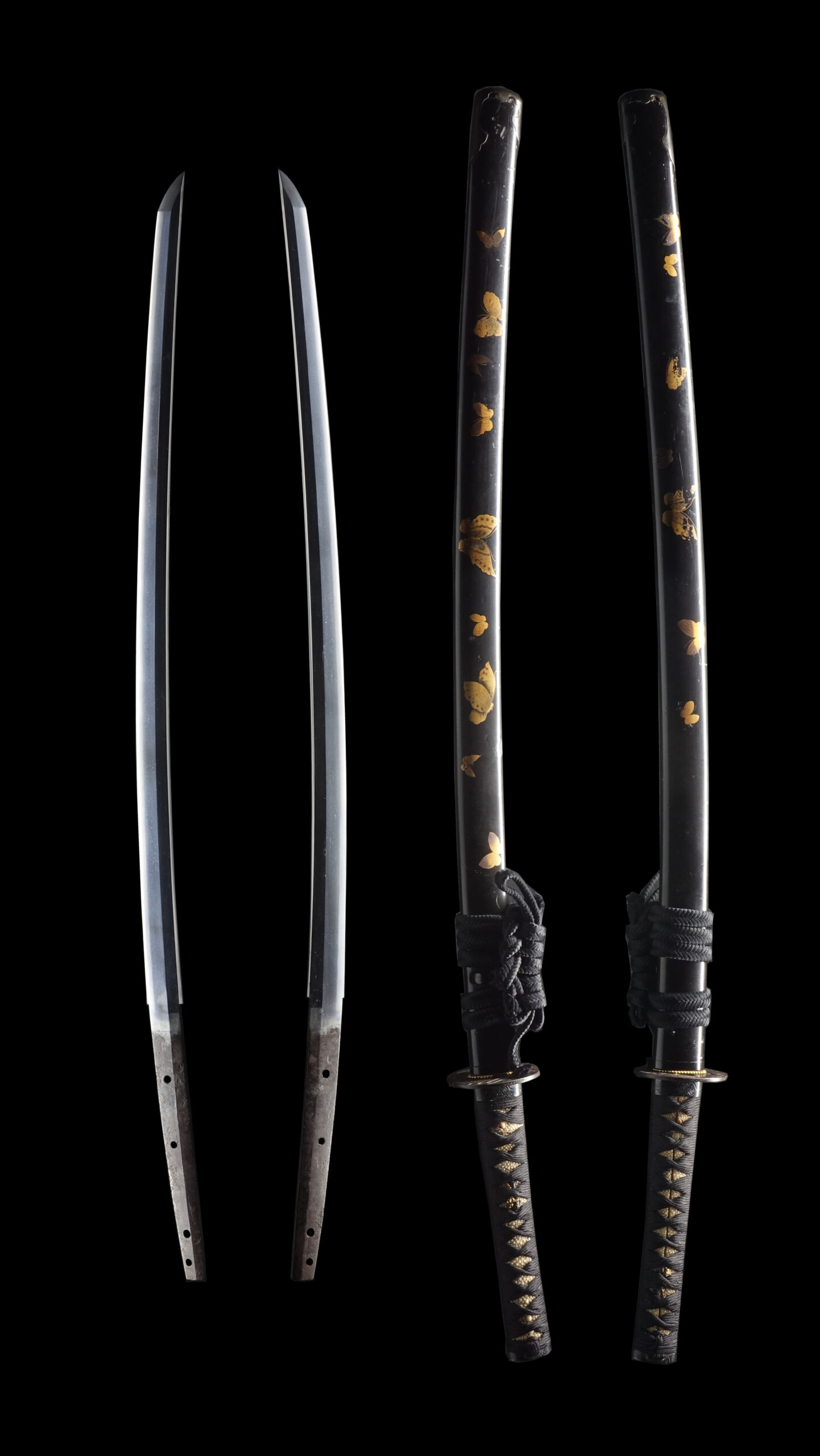
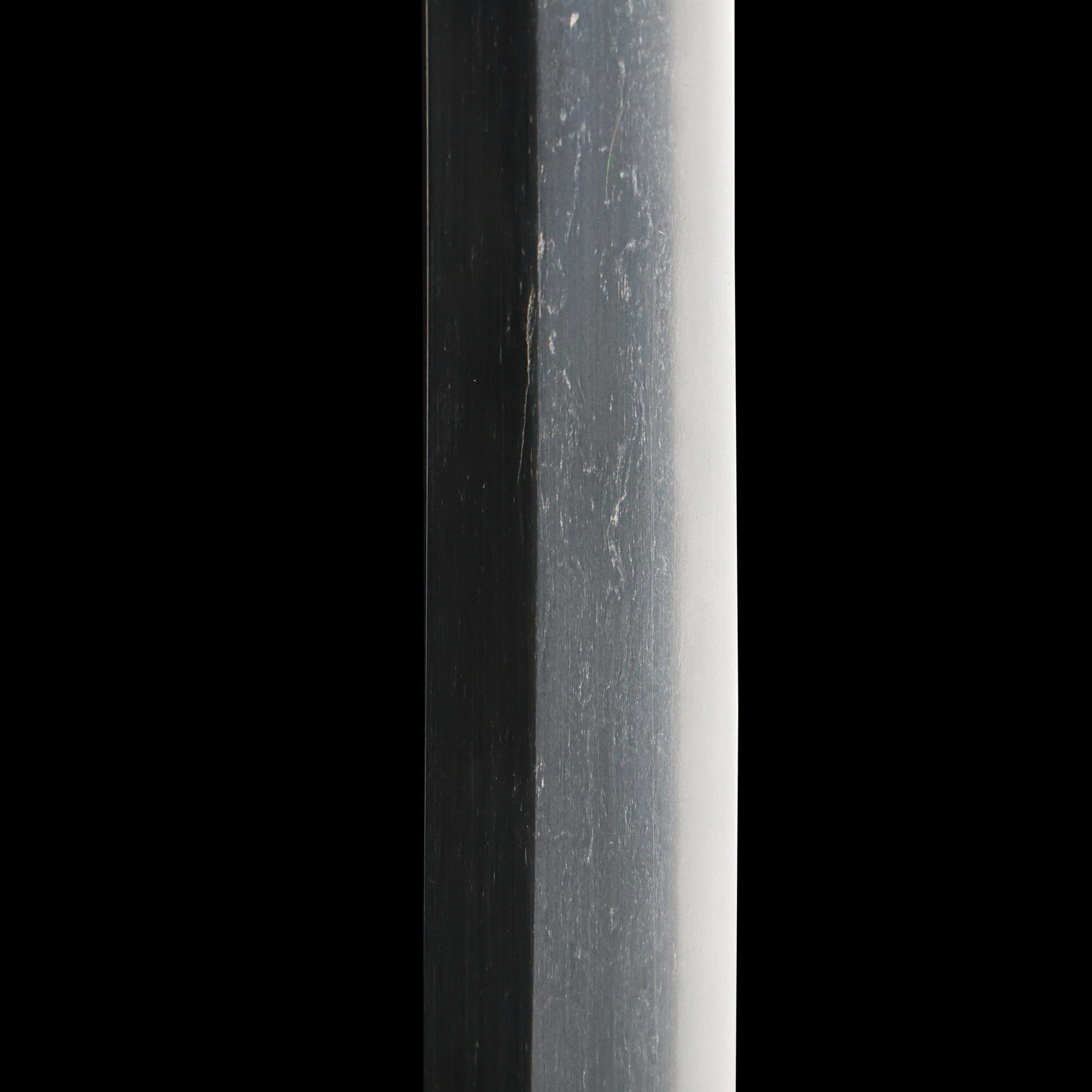
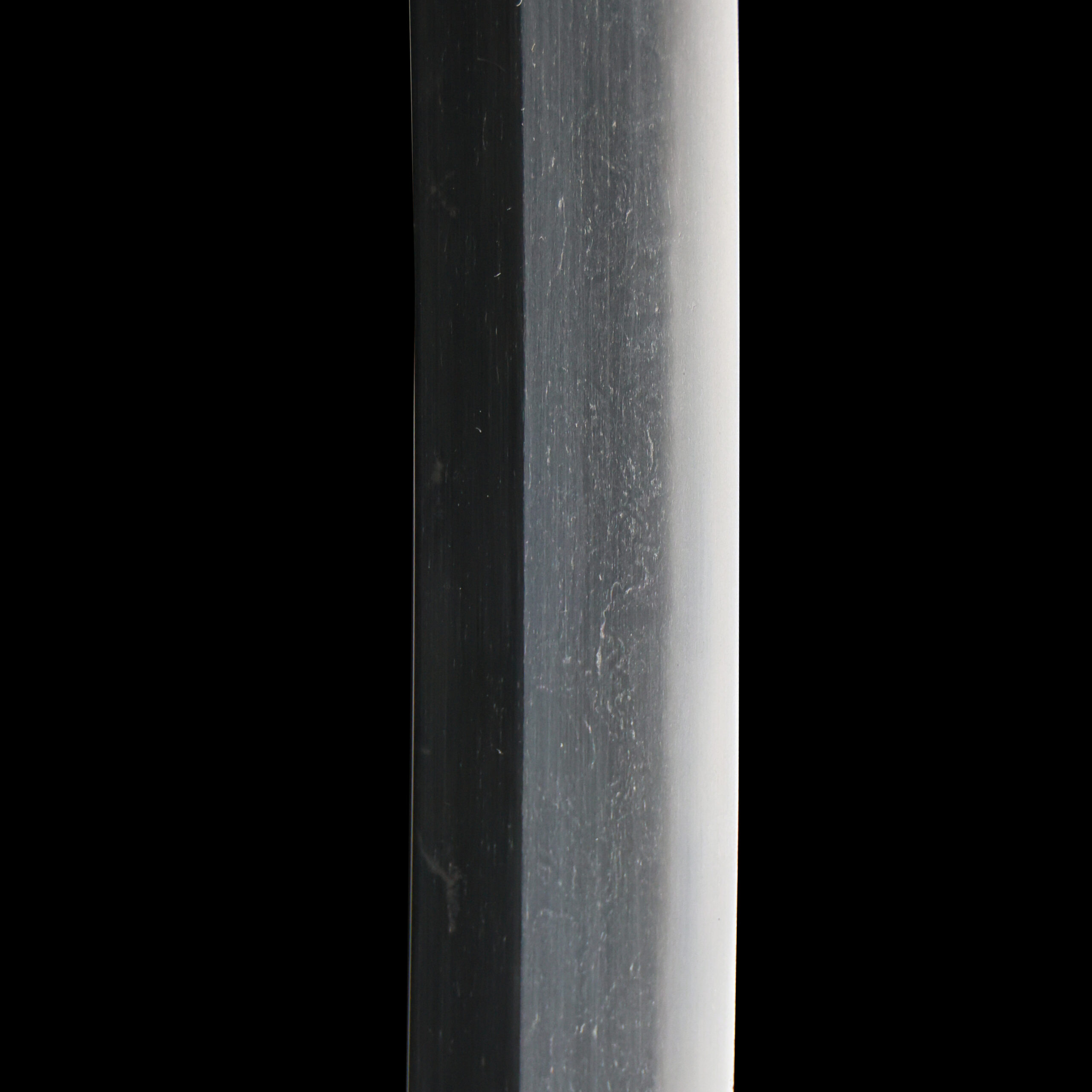
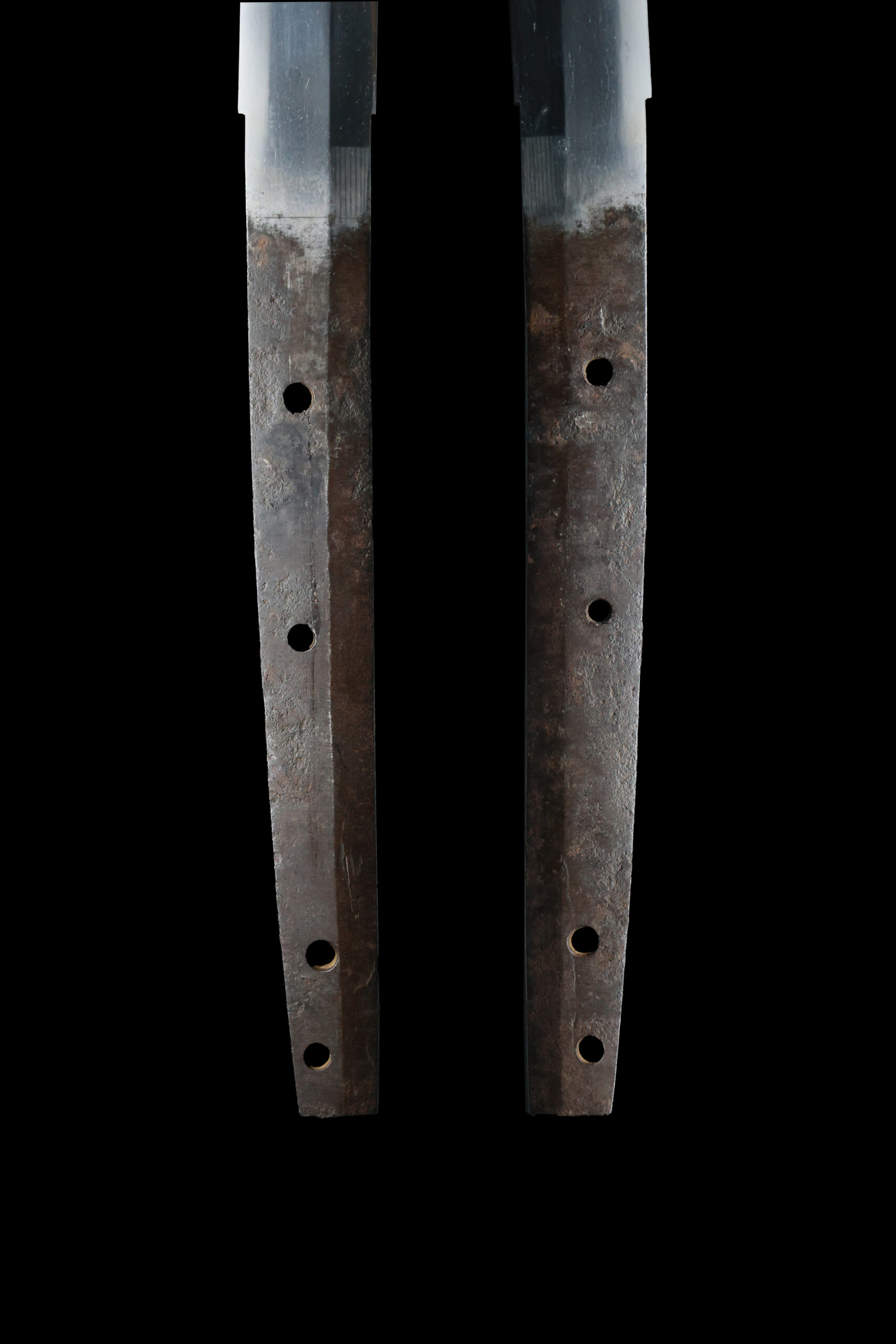
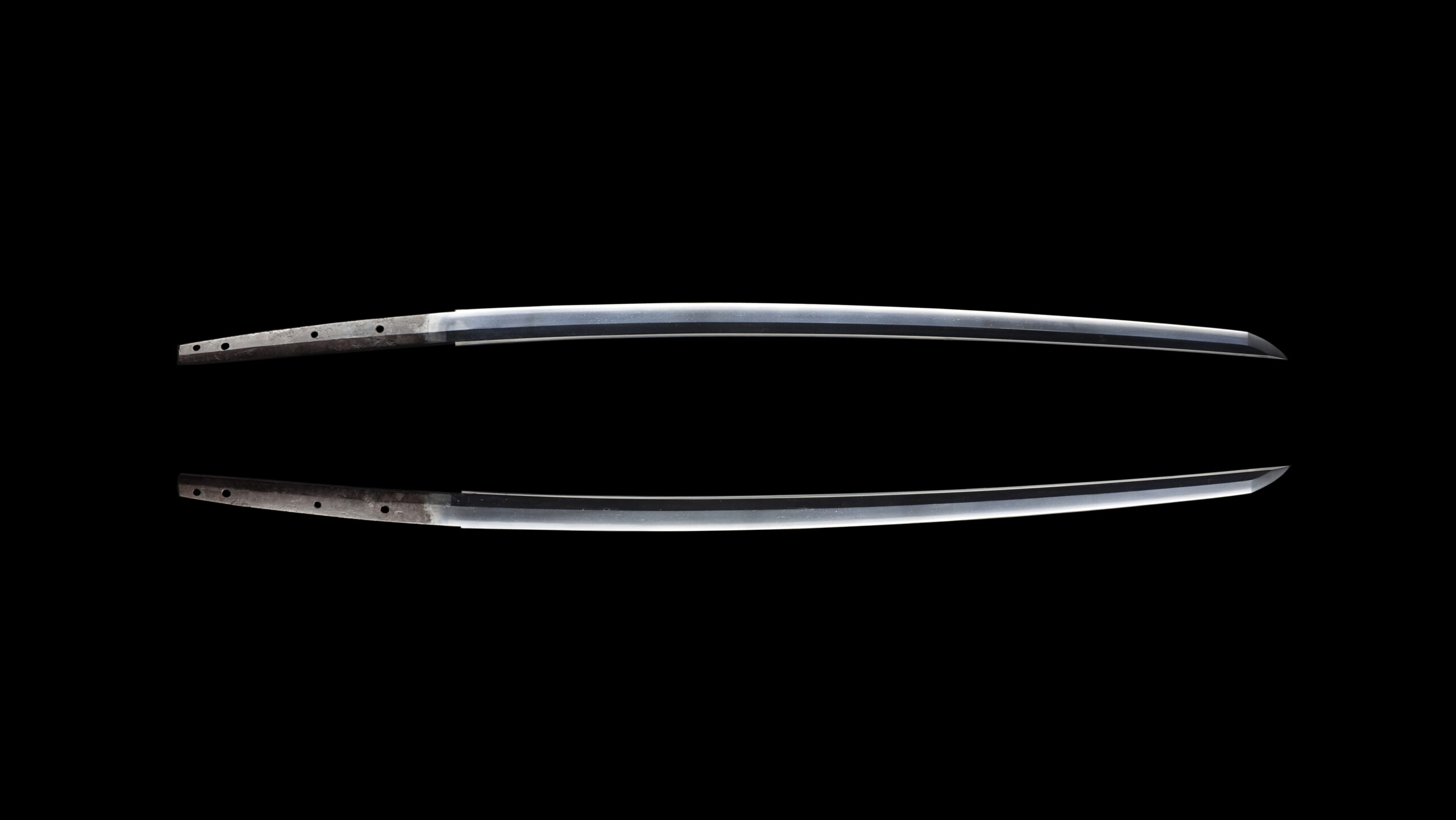
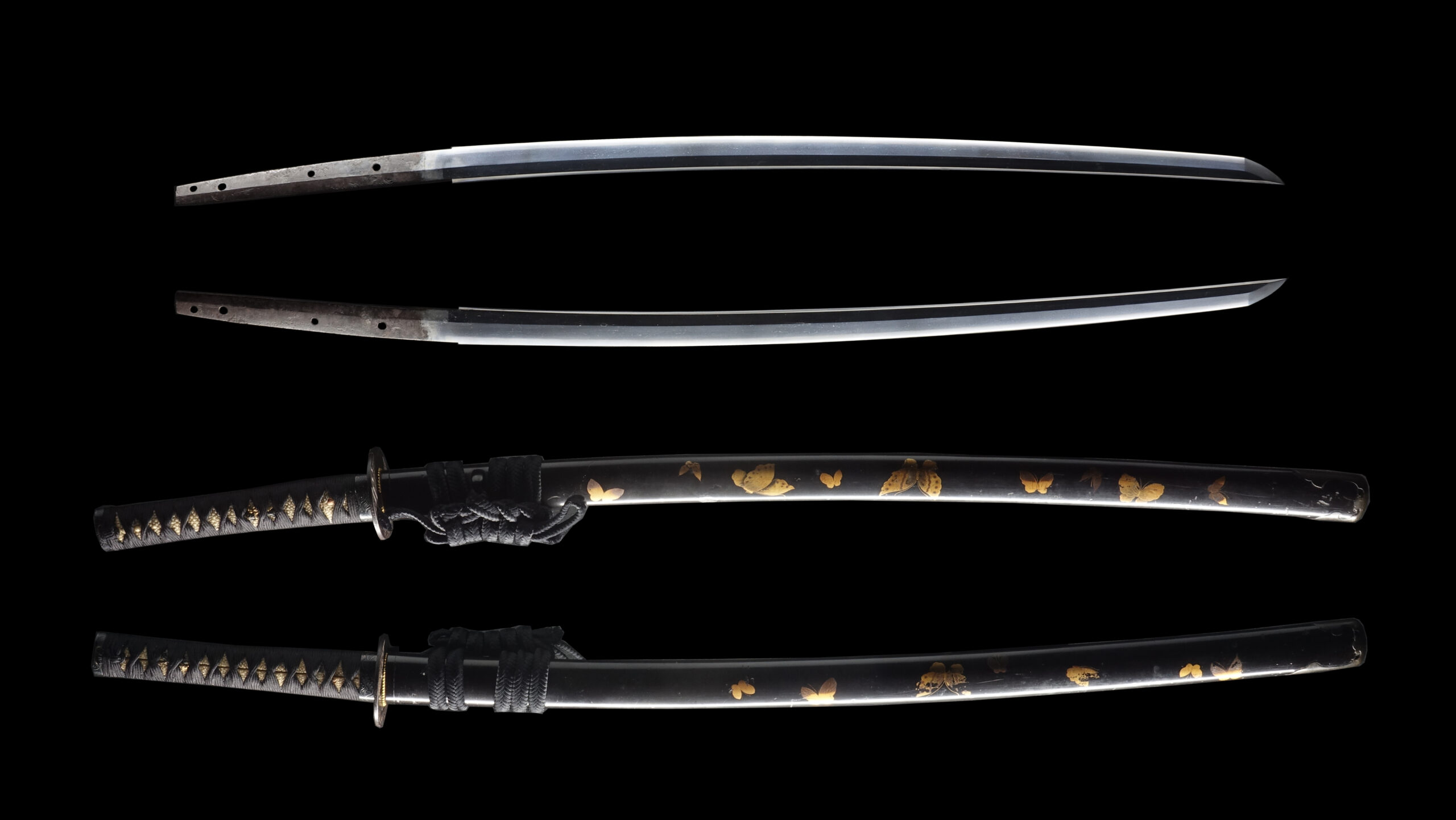
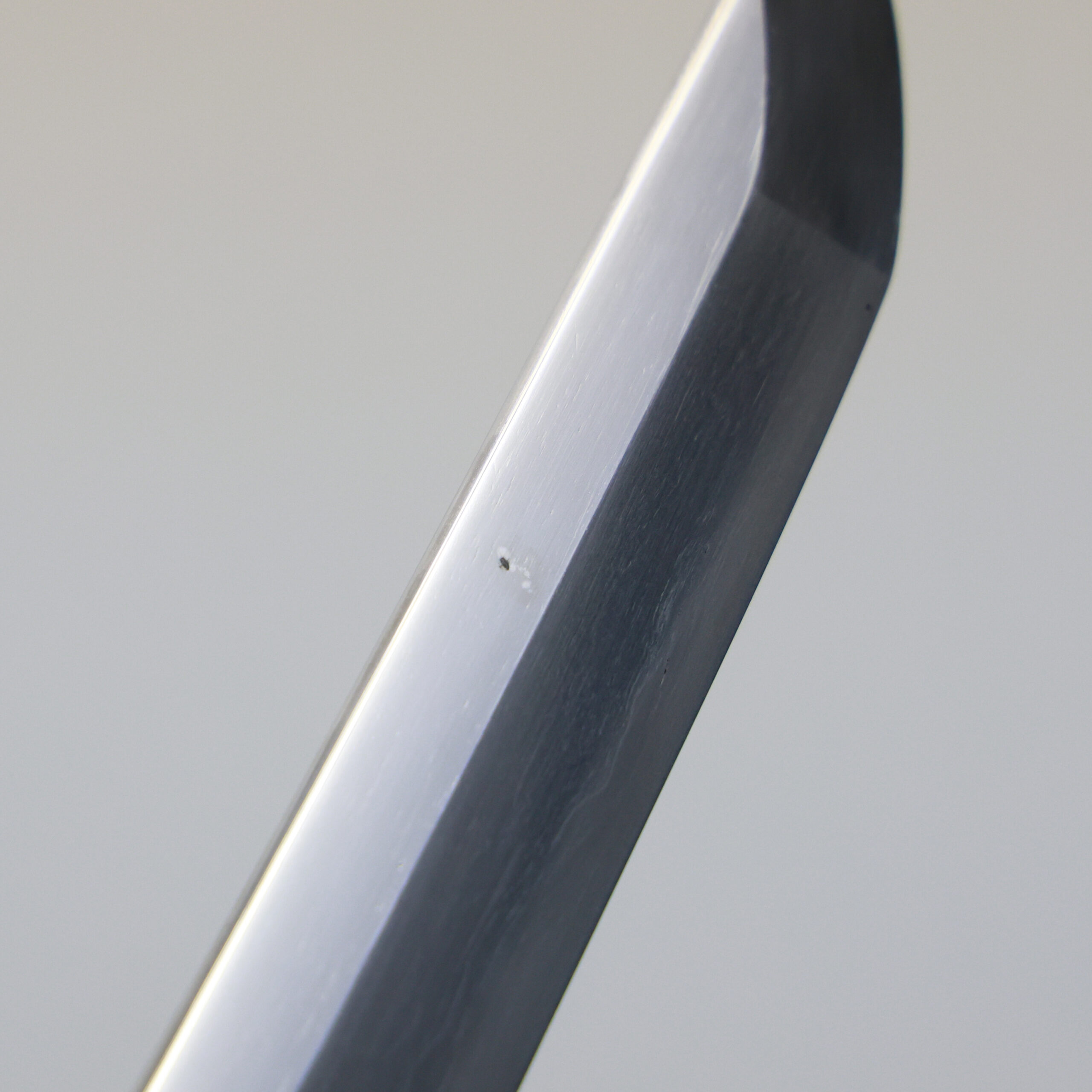
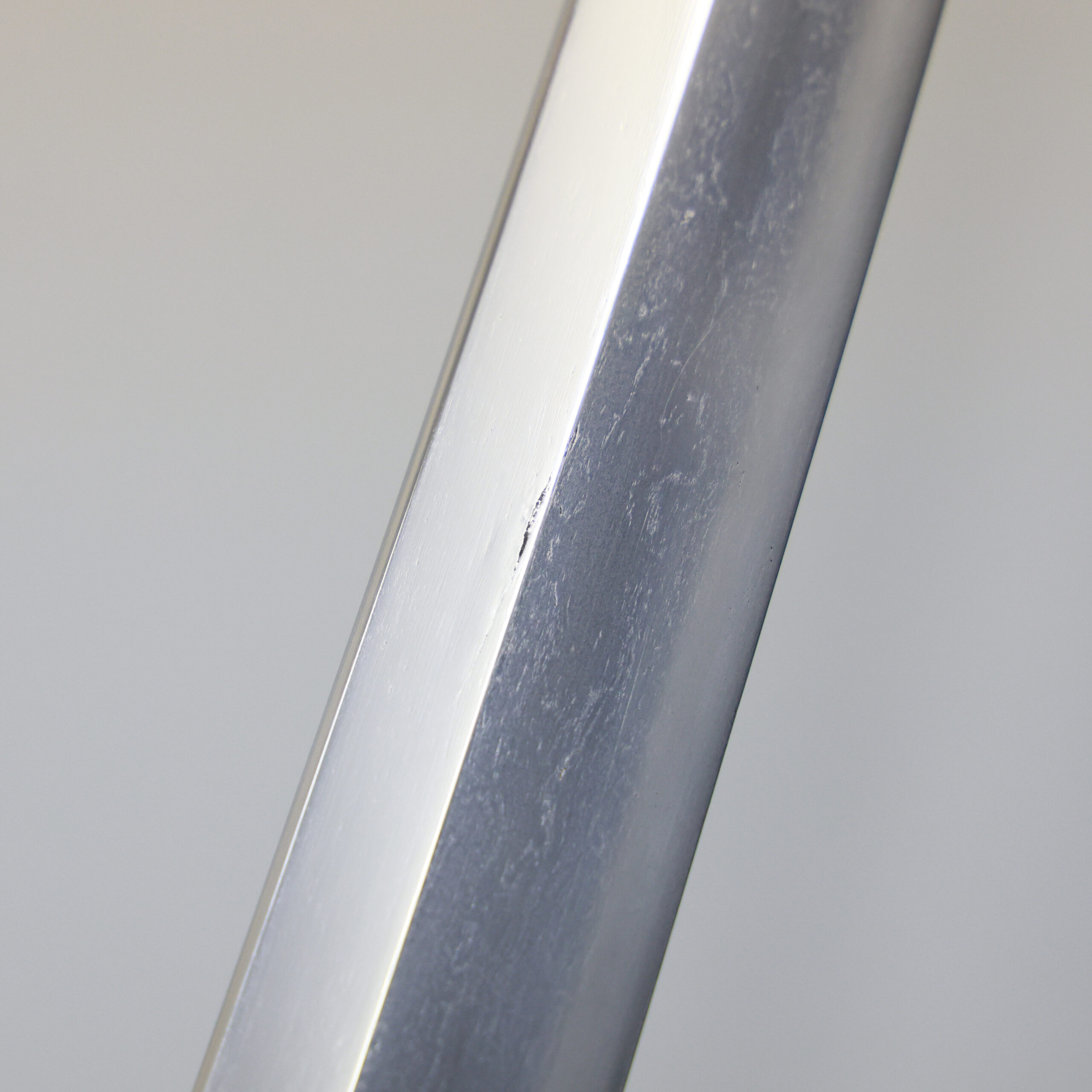
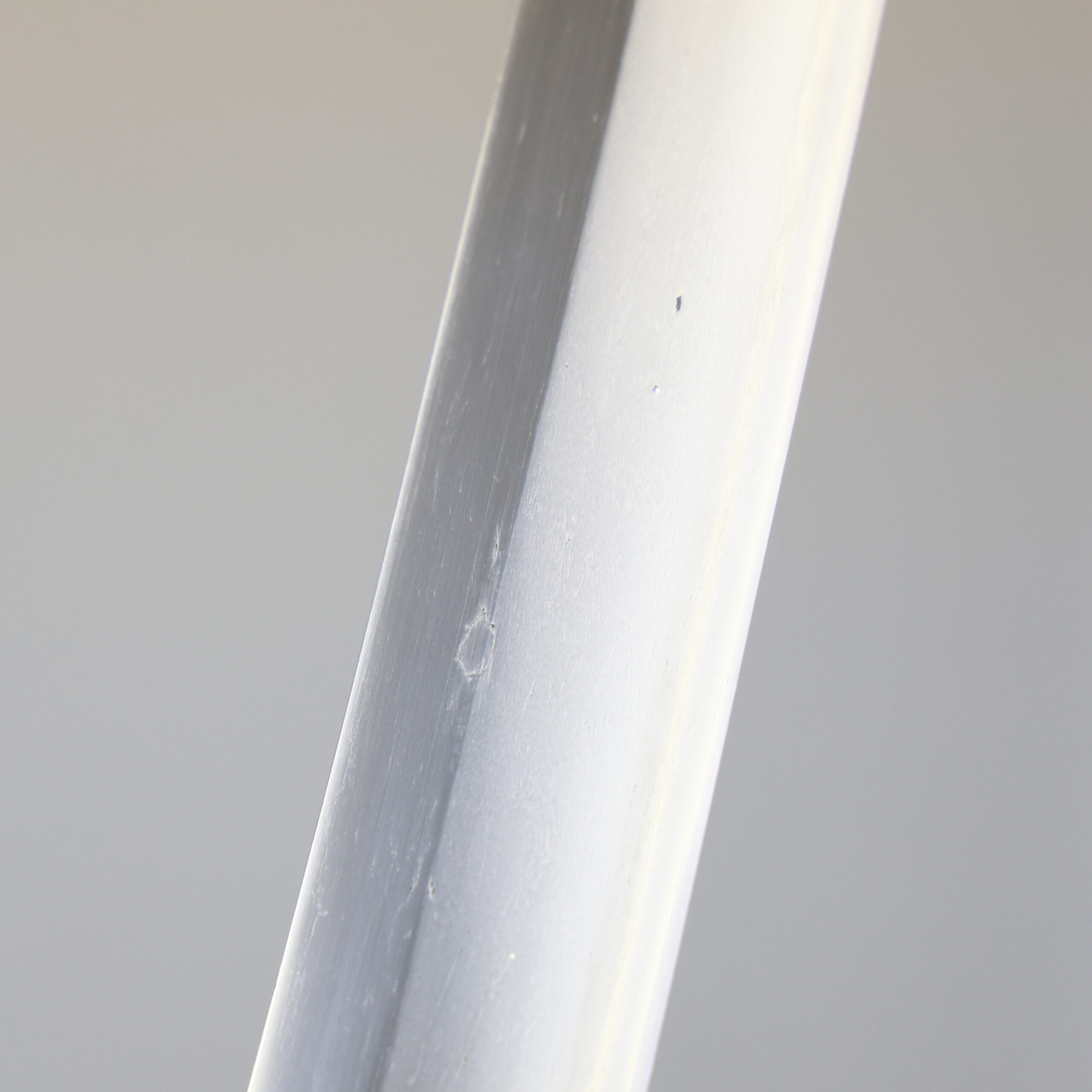
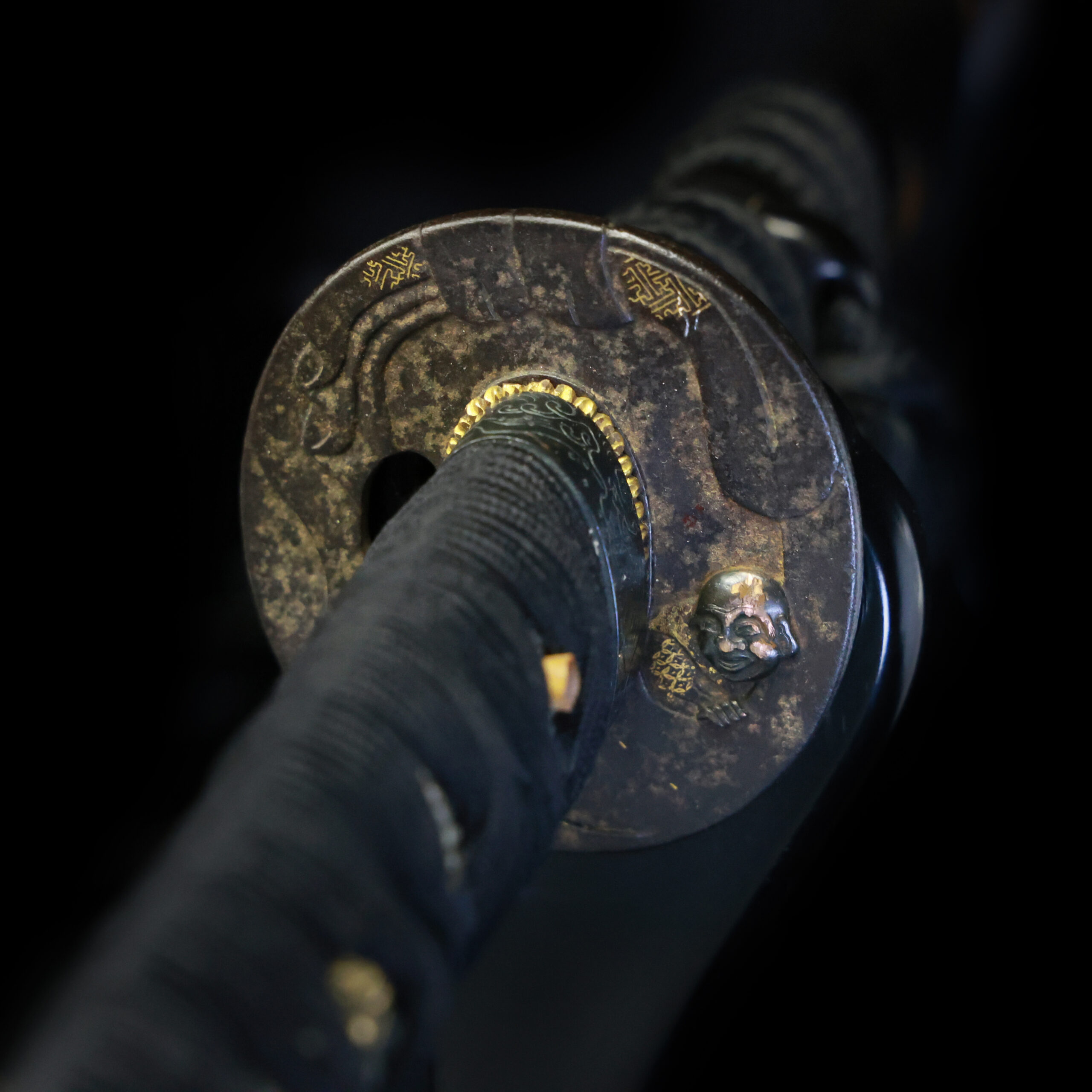
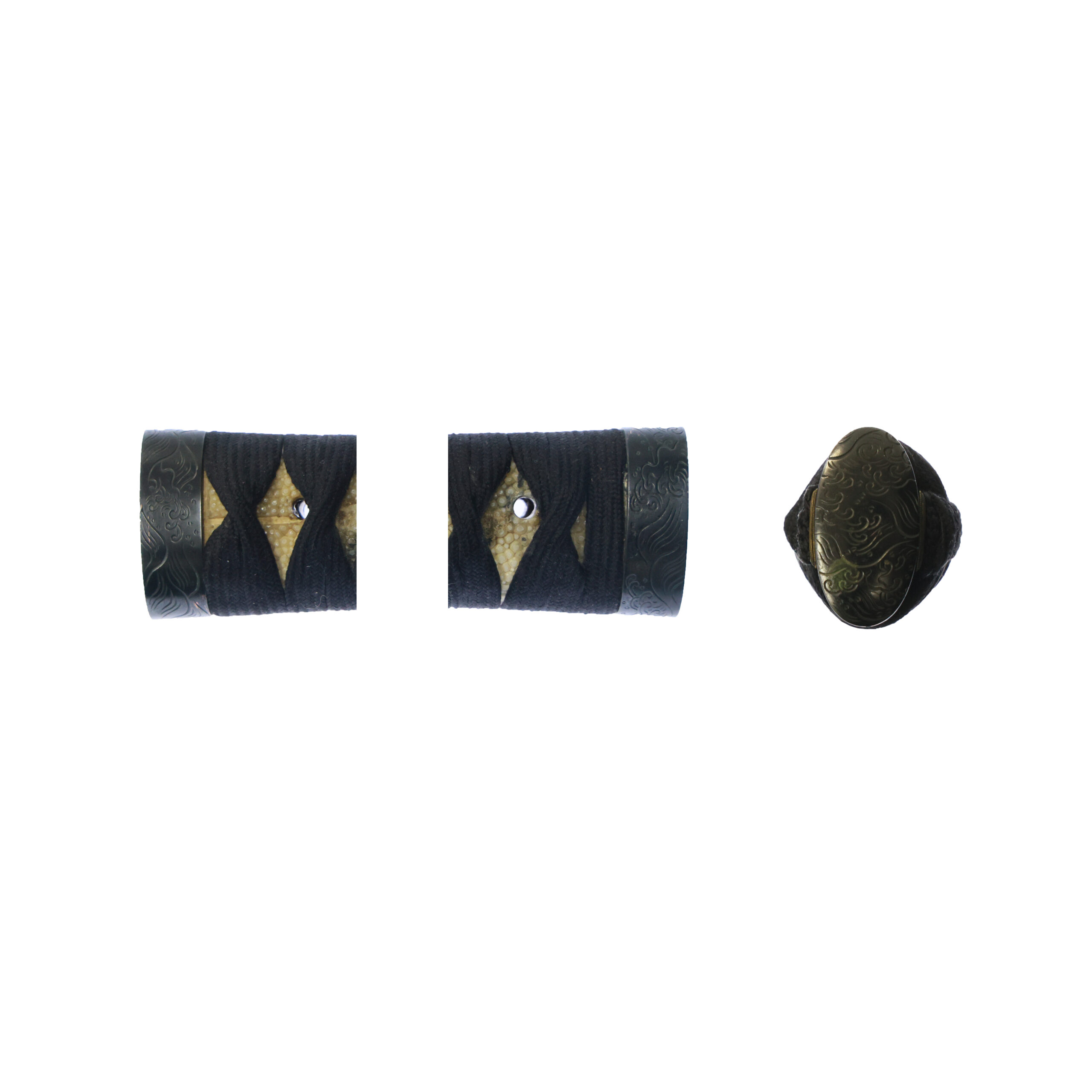
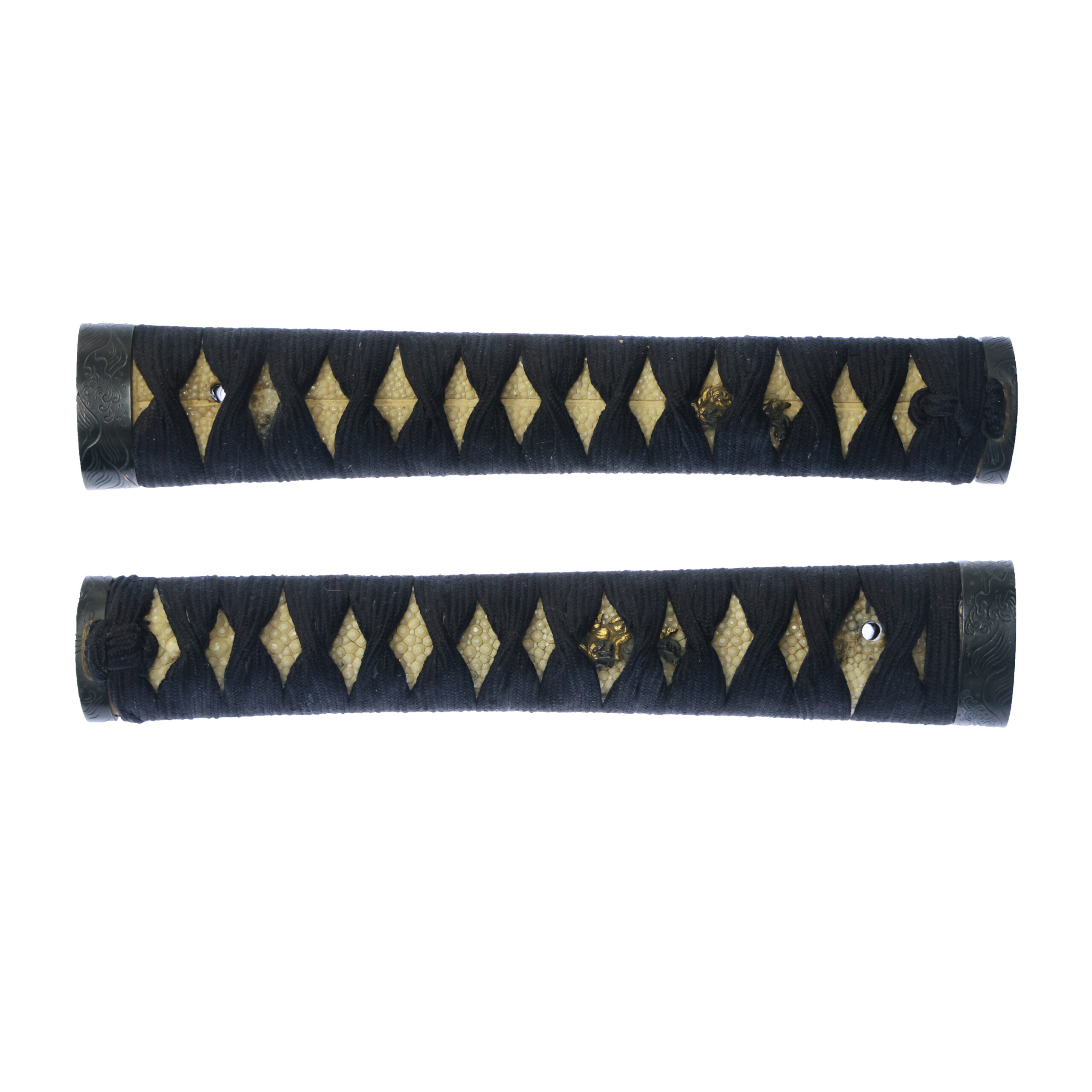
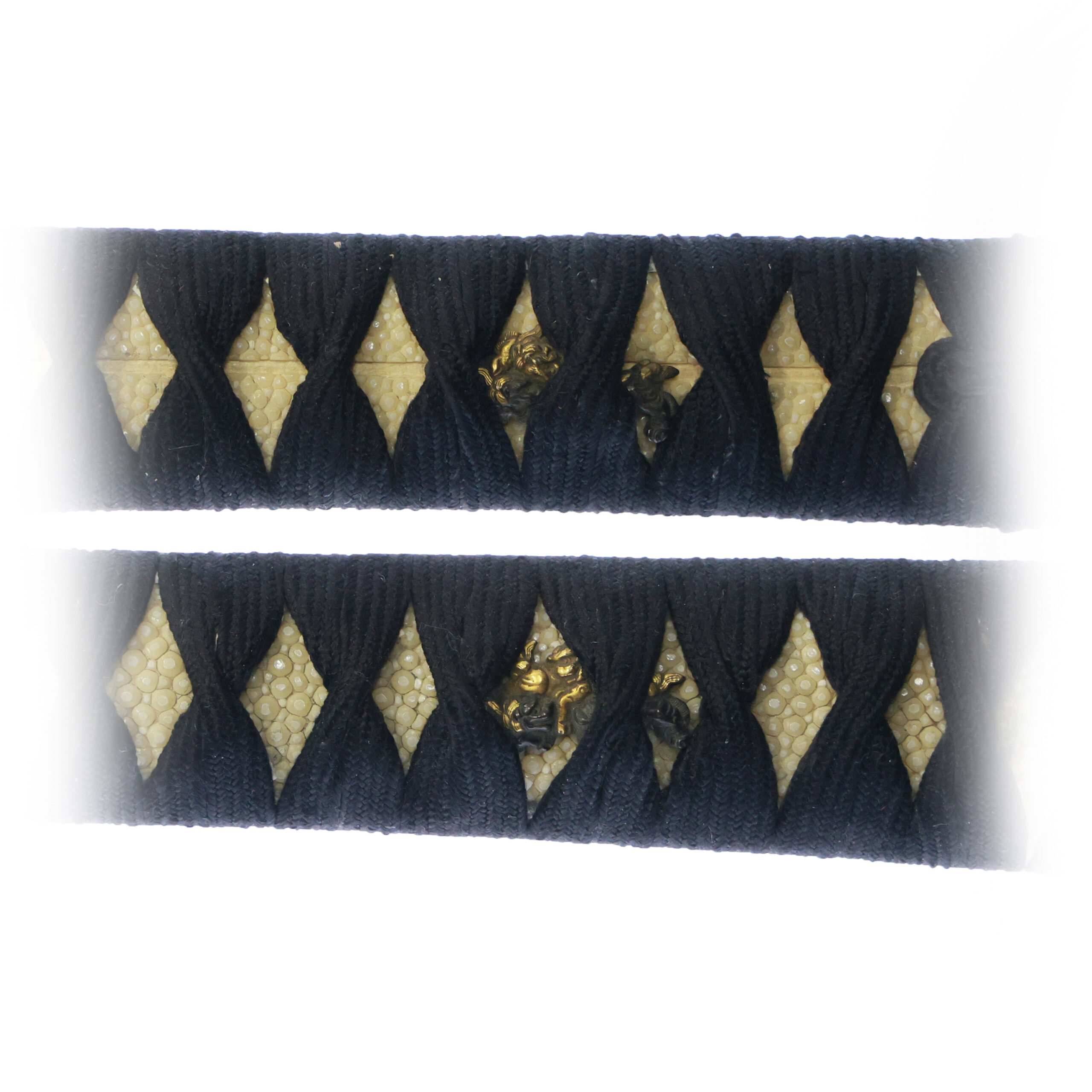
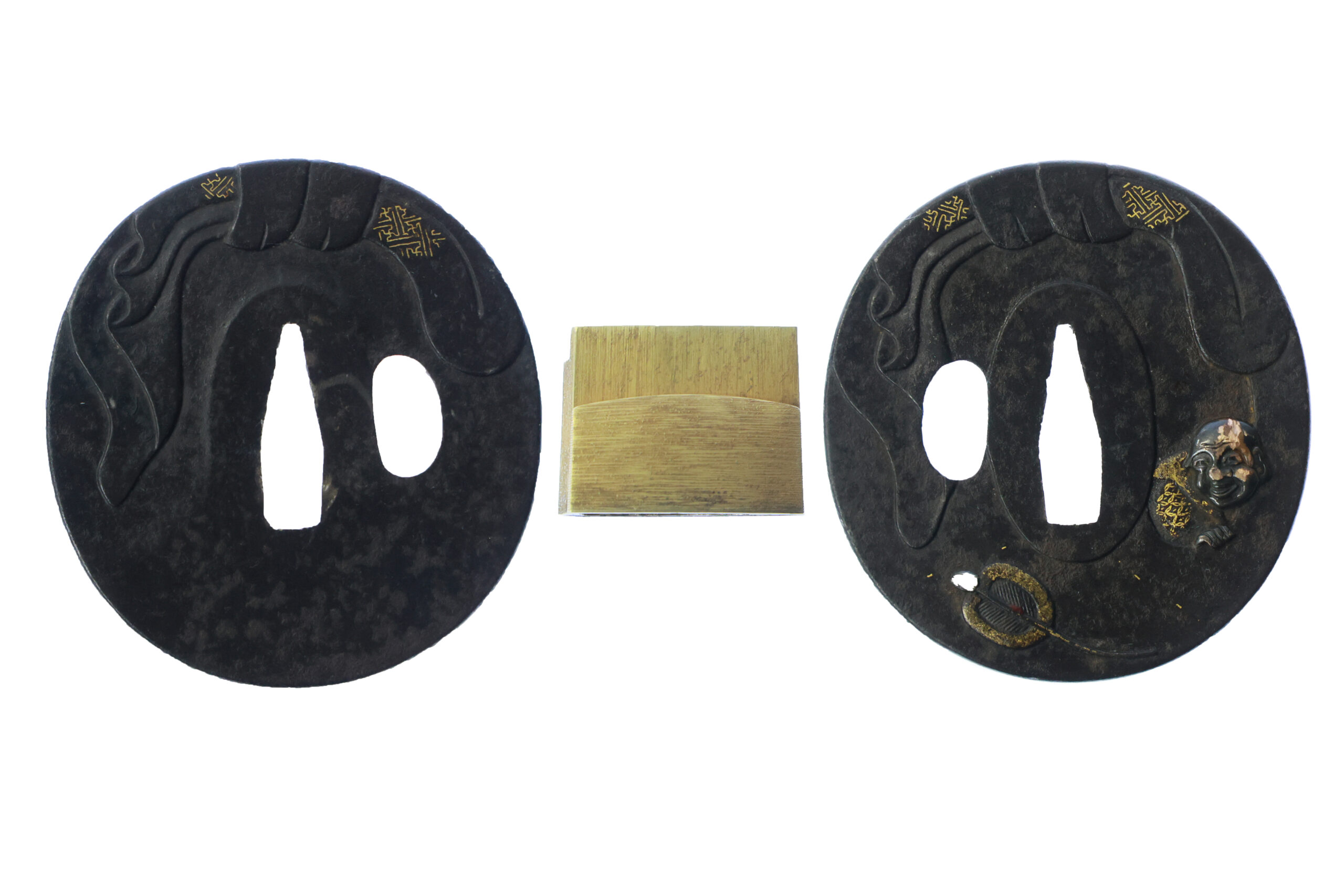
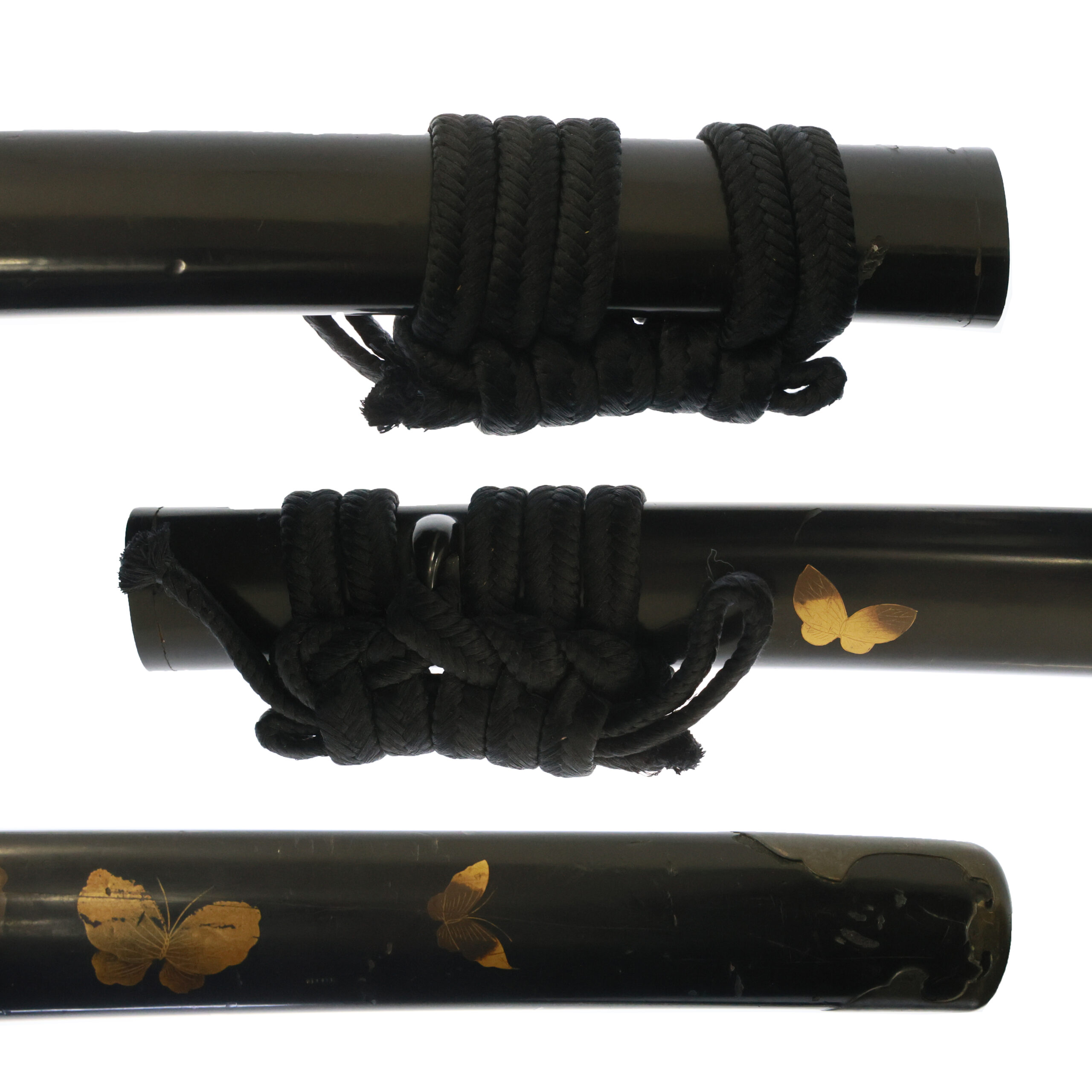
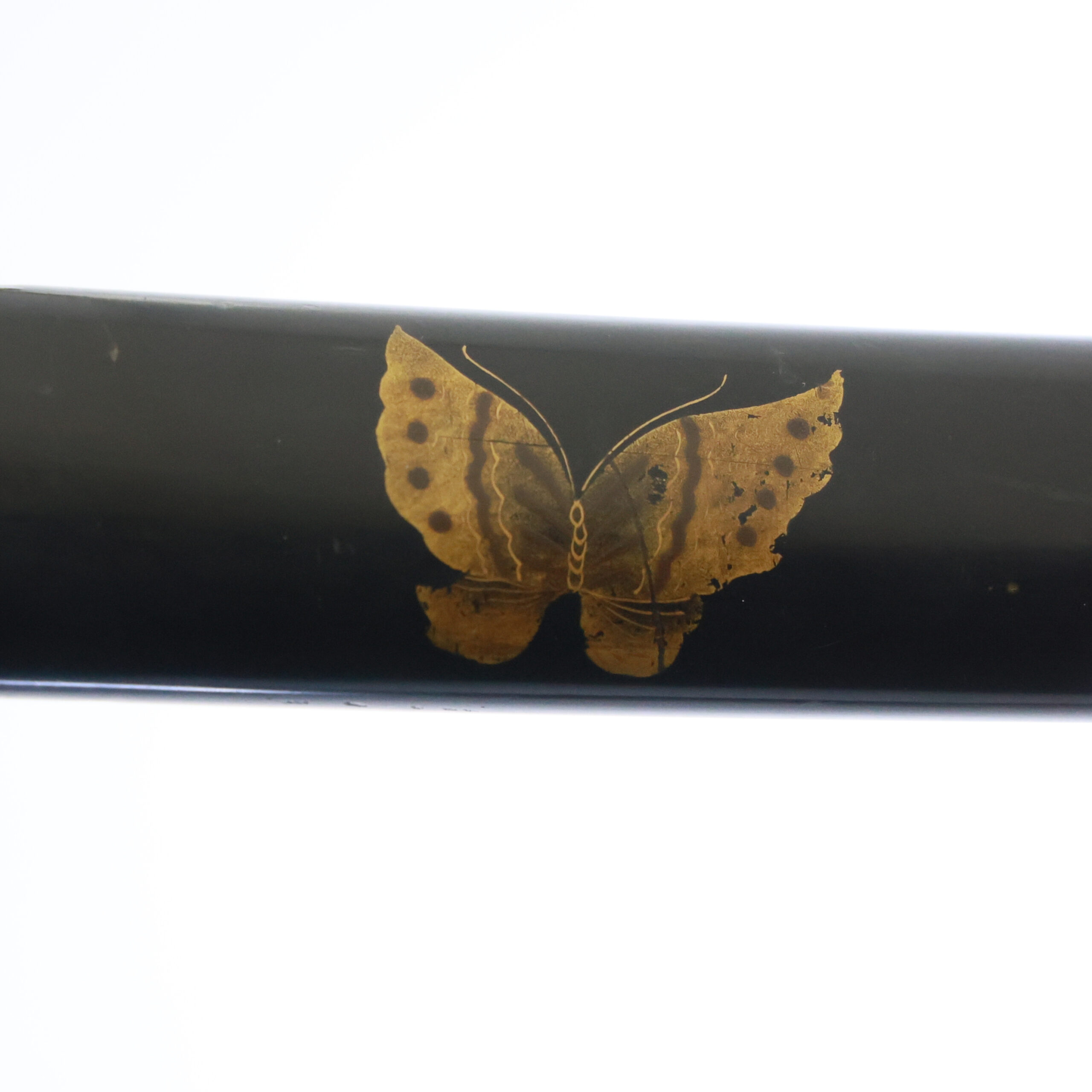
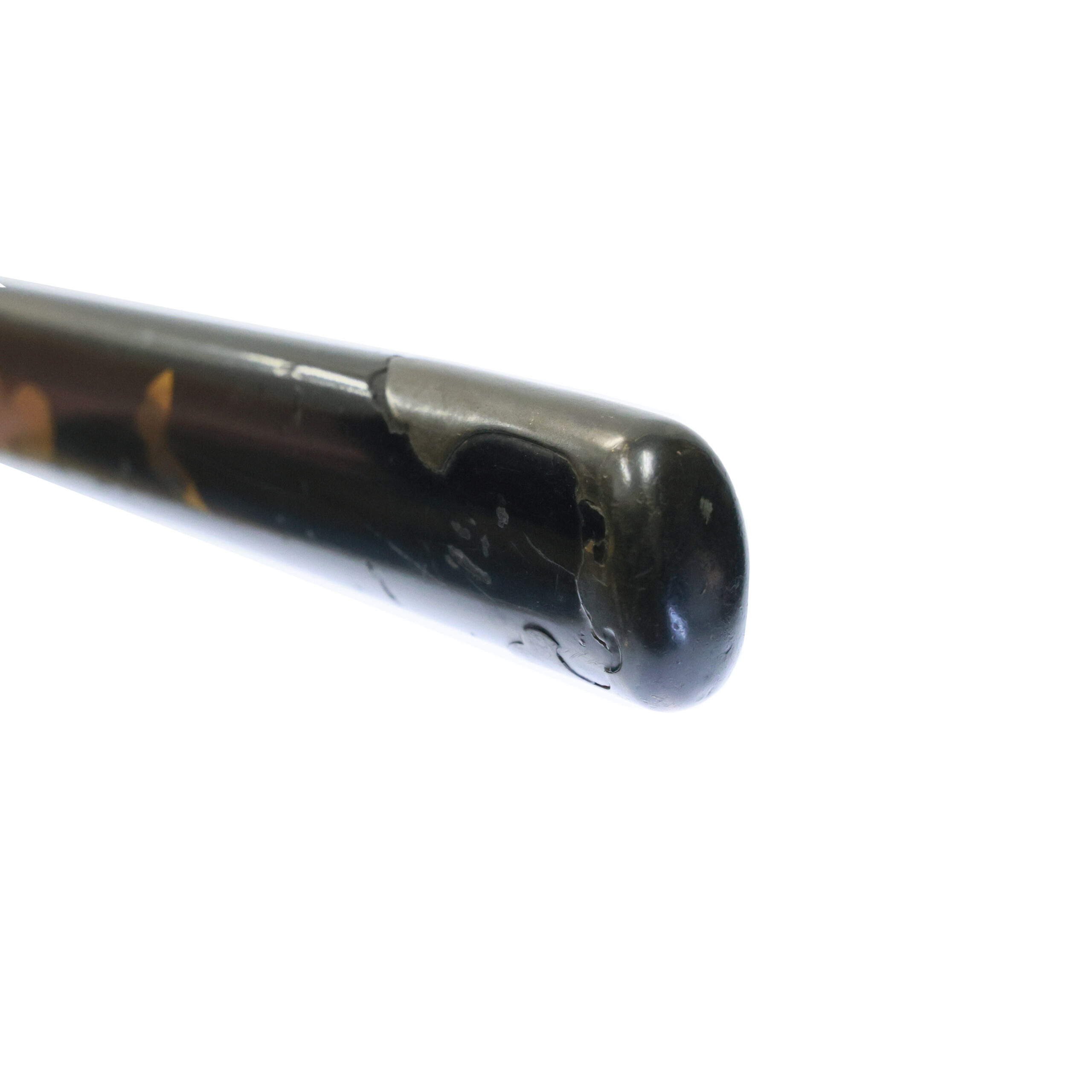
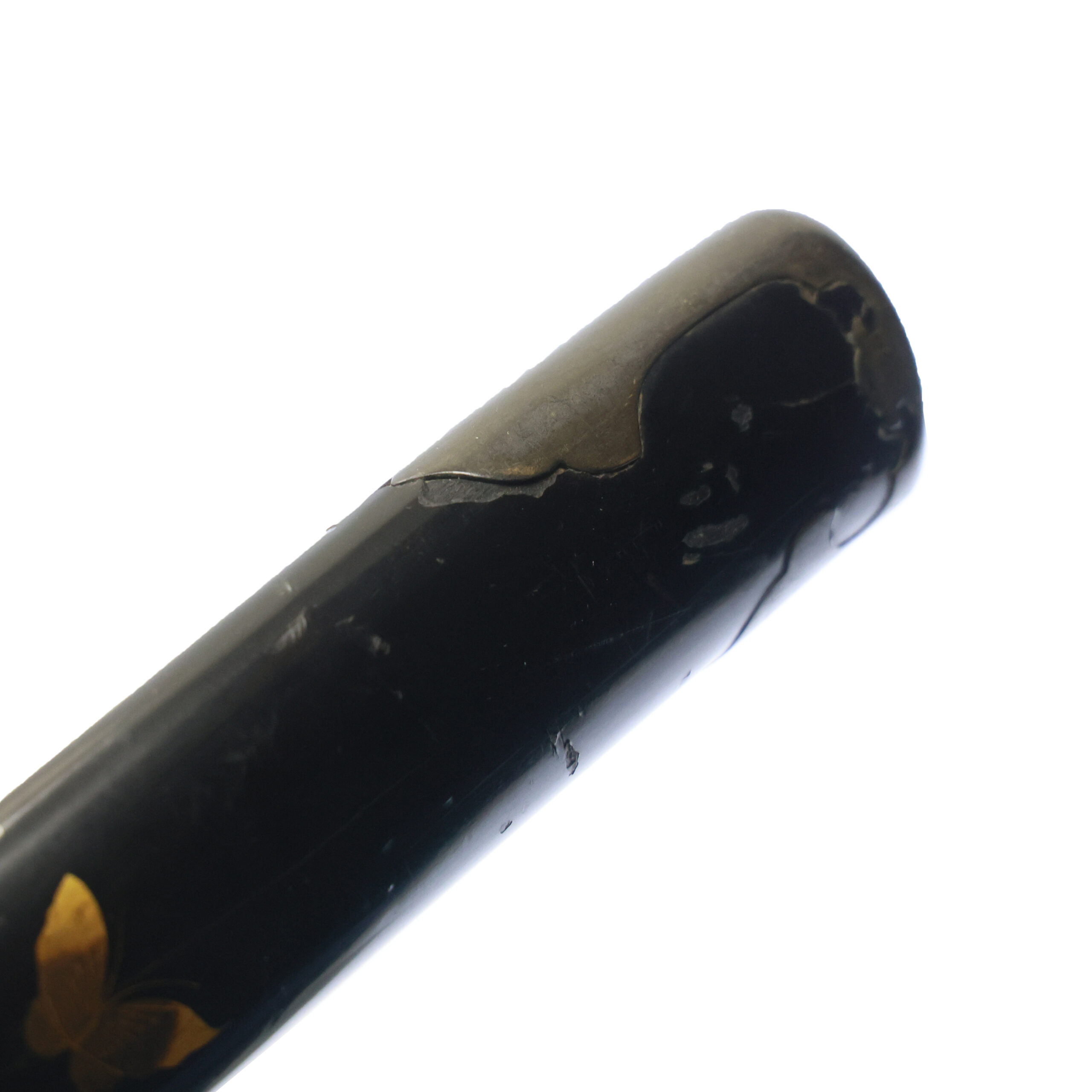
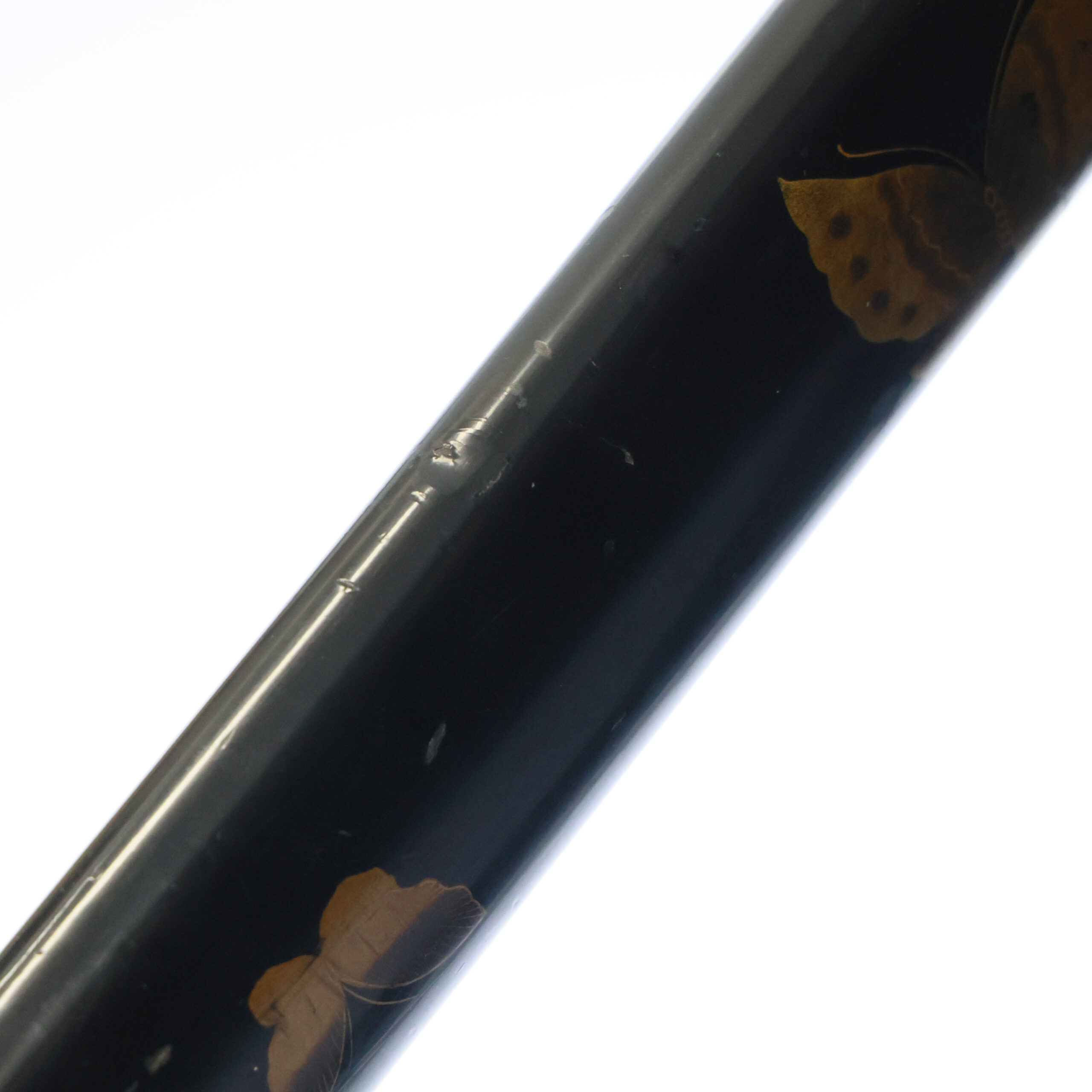
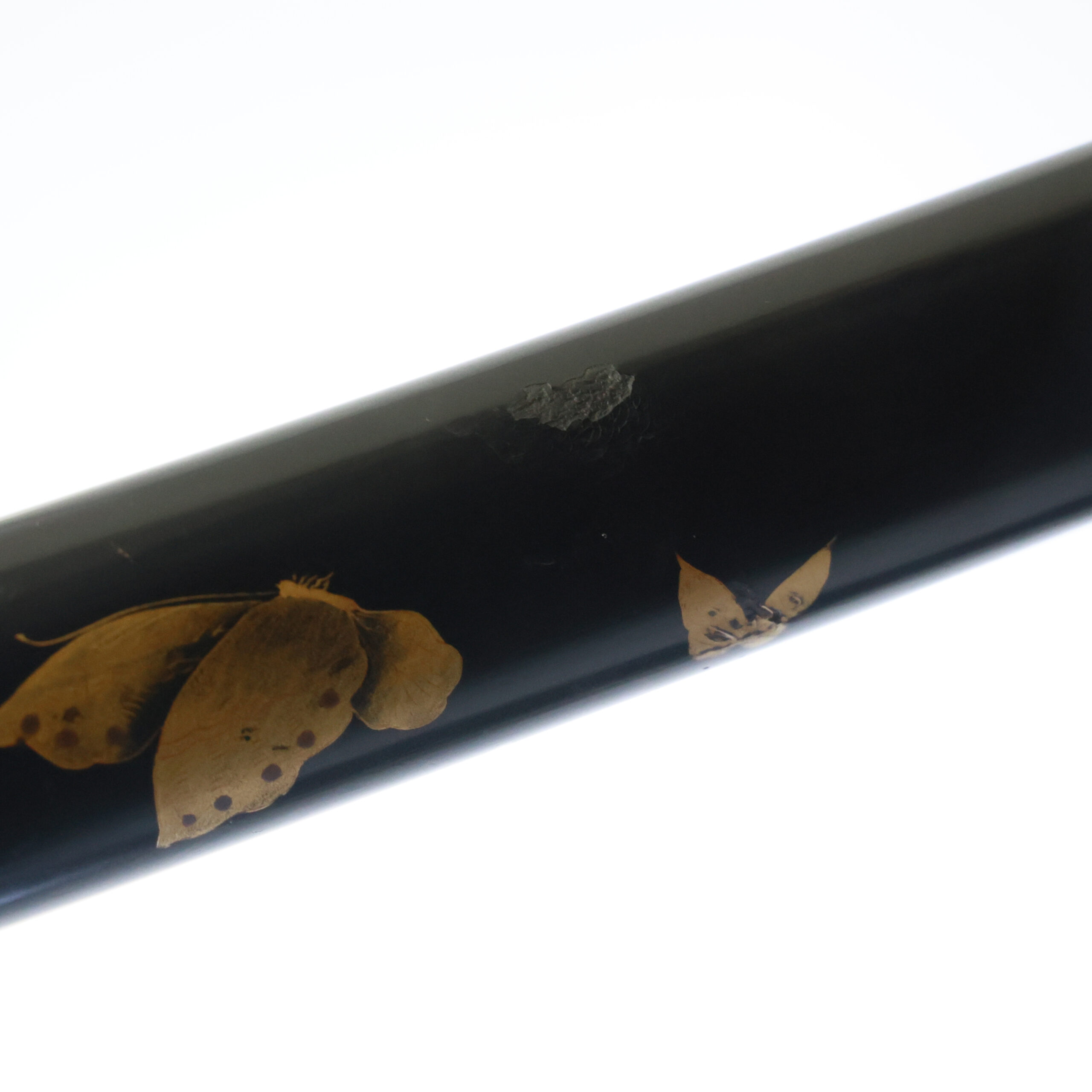
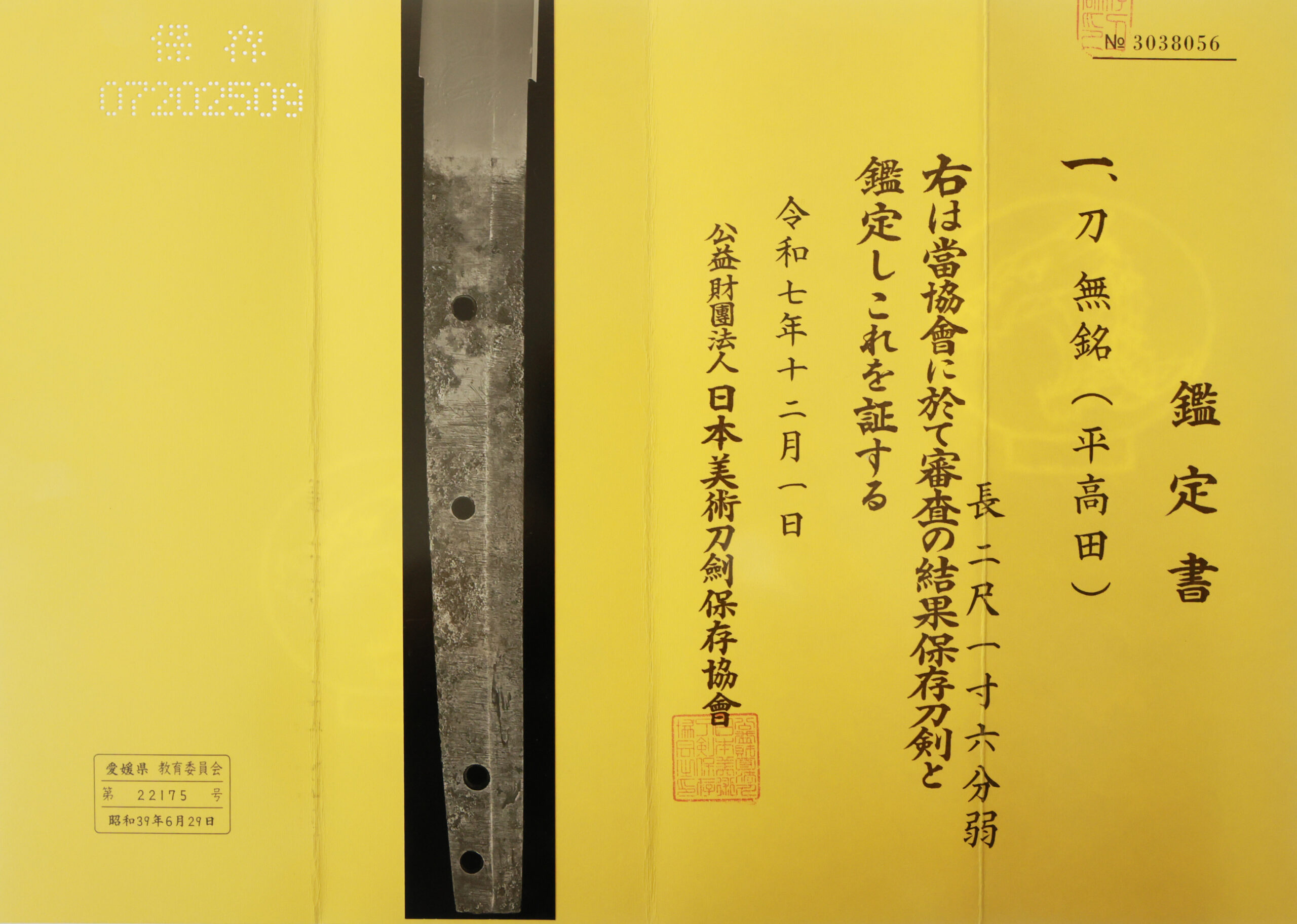
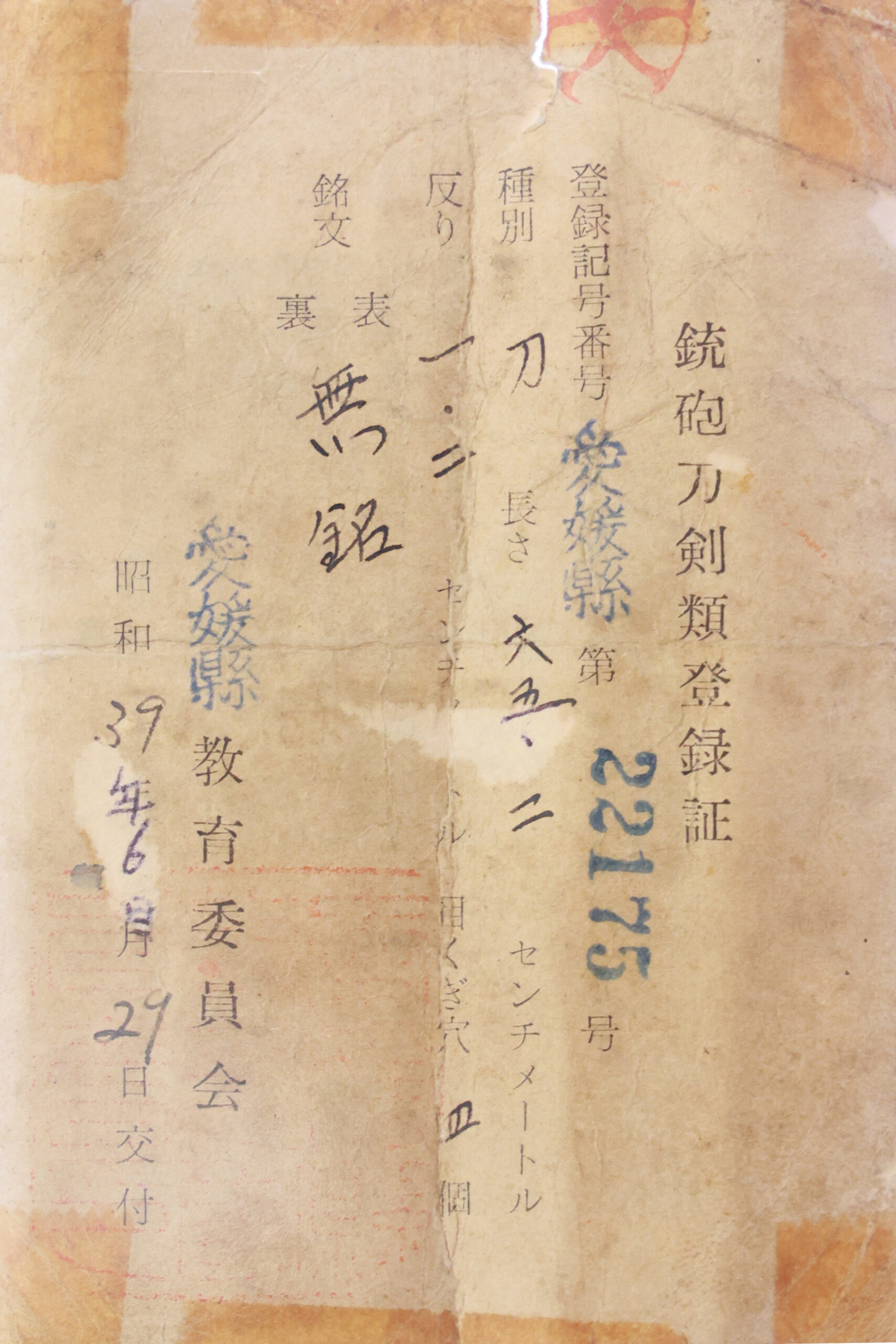
This antique Japanese Katana is attributed to Taira Takada, a prestigious school founded in Bungo province during the Nanbokucho period. Forged in the late Muromachi period, it is appraised as a Hozon Token by NBTHK. The sword comes with a Koshirae mounting featuring a wave motif Fuchi-Kashira and Kara Jishi Menuki, and a black lacquer Saya decorated with gold butterflies.
 NihontoWatch
mumei · Takada · Muromachi · nagasa 65.2cm · sori 1.2cm
Bizen-den · Bungo
45 pieces on the market now
In Bungo Province on Kyushu, the early Kamakura masters Sadahide and Yukihira appeared and then, for a span, distinguished makers ceased; the setsumei repeatedly mark this gap before the line that became the Takada school took hold. The school was founded in the Nanbokuchō period by Tomoyuki, who arose at Takada Manor (Takada-shō) and signed in the long form "Hōshū Takada-shō Fujiwara Tomoyuki," with dated work surviving from the Shōhei (1349) and Jōji eras into the 1360s. Learn more →
| Smith | Era | Designated |
|---|---|---|
| Tomoyuki友行 | 1350-1367 | 15 |
| Kunifusa國房 | 1615-1624 | 5 |
| Akiyuki鑑行 | 1532-1555 | 0 |
| Kagenari景也 | 1661-1673 | 0 |
| Chikayuki及行 | 1661-1673 | 0 |
Certifies a genuine blade worth preserving: a signature confirmed correct, or, if unsigned, an era, province, and school that the NBTHK can reliably identify.
The NBTHK (Nihon Bijutsu Tōken Hozon Kyōkai, the Society for the Preservation of Japanese Art Swords) is a public-interest incorporated foundation founded in 1948 and supervised by Japan’s Agency for Cultural Affairs (Bunkachō); it is based at the Japanese Sword Museum in Tokyo. Its expert panels physically examine each submitted work (shinsa) and issue a certificate (kanteishō) ranking it by artistic and historical merit. NBTHK papers are the most widely recognized standard of authentication for Japanese swords and fittings.
NBTHK official siteReturns/exchanges limited to defects caused by shipping (except willful misconduct or gross negligence by the company); customers must contact within 72 hours of receiving the product.
This antique Japanese Katana is attributed to Taira Takada, a prestigious school founded in Bungo province during the Nanbokucho period. Forged in the late Muromachi period, it is appraised as a Hozon Token by NBTHK. The sword comes with a Koshirae mounting featuring a wave motif Fuchi-Kashira and Kara Jishi Menuki, and a black lacquer Saya decorated with gold butterflies.
NihontoWatchmumei · Takada · Muromachi · nagasa 65.2cm · sori 1.2cm
Bizen-den · Bungo
45 pieces on the market now
In Bungo Province on Kyushu, the early Kamakura masters Sadahide and Yukihira appeared and then, for a span, distinguished makers ceased; the setsumei repeatedly mark this gap before the line that became the Takada school took hold. The school was founded in the Nanbokuchō period by Tomoyuki, who arose at Takada Manor (Takada-shō) and signed in the long form "Hōshū Takada-shō Fujiwara Tomoyuki," with dated work surviving from the Shōhei (1349) and Jōji eras into the 1360s. Learn more →
| Smith | Era | Designated |
|---|---|---|
| Tomoyuki友行 | 1350-1367 | 15 |
| Kunifusa國房 | 1615-1624 | 5 |
| Akiyuki鑑行 | 1532-1555 | 0 |
| Kagenari景也 | 1661-1673 | 0 |
| Chikayuki及行 | 1661-1673 | 0 |
Certifies a genuine blade worth preserving: a signature confirmed correct, or, if unsigned, an era, province, and school that the NBTHK can reliably identify.
The NBTHK (Nihon Bijutsu Tōken Hozon Kyōkai, the Society for the Preservation of Japanese Art Swords) is a public-interest incorporated foundation founded in 1948 and supervised by Japan’s Agency for Cultural Affairs (Bunkachō); it is based at the Japanese Sword Museum in Tokyo. Its expert panels physically examine each submitted work (shinsa) and issue a certificate (kanteishō) ranking it by artistic and historical merit. NBTHK papers are the most widely recognized standard of authentication for Japanese swords and fittings.
NBTHK official siteReturns/exchanges limited to defects caused by shipping (except willful misconduct or gross negligence by the company); customers must contact within 72 hours of receiving the product.