 NihontoWatchNihontoWatch
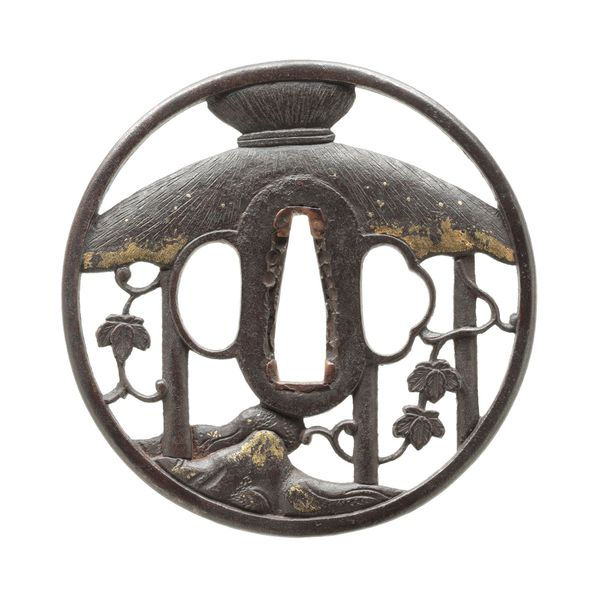
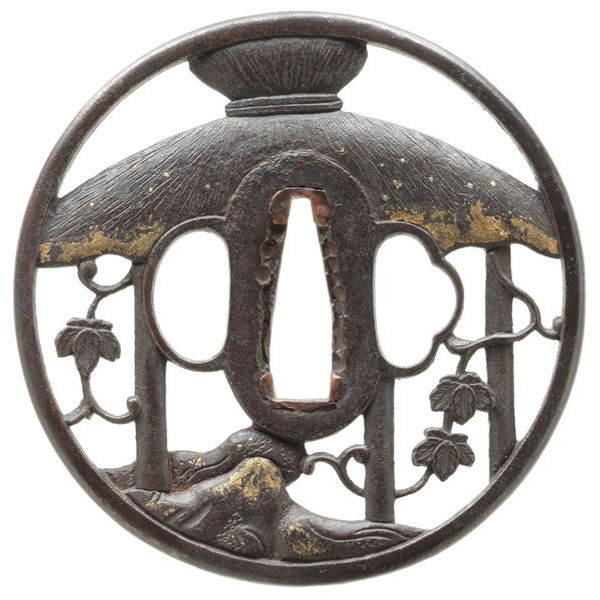
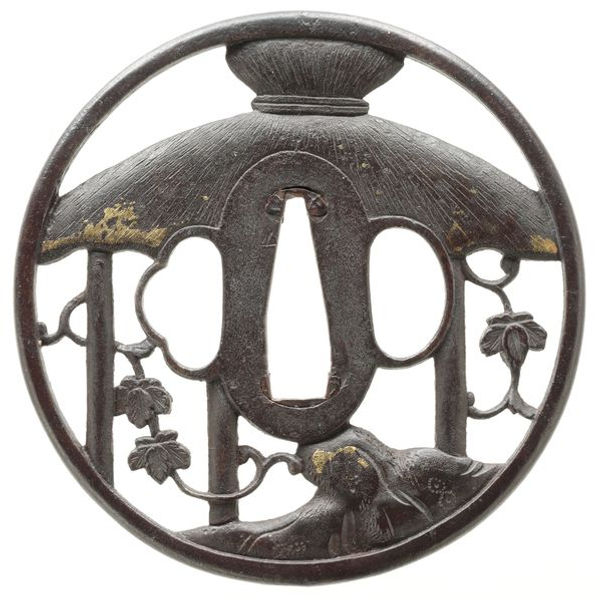
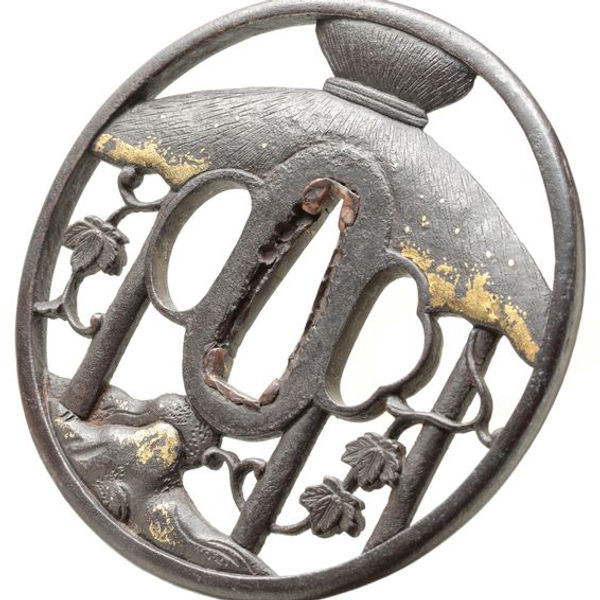
A small pavilion entwined with kudzu vines is called "Shigure-tei." This is another name for the Ogurayama villa where the early Kamakura period poet Fujiwara no Sadaie is said to have compiled the "Hyakunin Isshu." There is a theory that the name Shigure-tei is derived from the poem "Itsuwari no naki yo nari keri kannazuki taga makoto yori shigure someken." The old-style marugata jitetsu is well-forged and has a deep rust color. The kebori and kin-nunome-zogan applied with varying intensity to the thick, rounded roof evoke the moist atmosphere of a passing autumn shower, creating a profoundly tasteful effect. The rock placed below the seppa-dai on the reverse side also looks like a prostrate woman, calling to mind the Noh play "Sadaie" created by the Muromachi period Noh performer Konparu Zenchiku.
NihontoWatchOffered by Choshuya

We couldn’t find current papers for this piece. Ask the dealer whether it has been, or can be, submitted to shinsa. — Hoshi

Machine translation of the shop's Japanese ·
Machine translation from the shop's Japanese · may contain errors ·
Iron-tsuba · Yamashiro
12 pieces on the market now
We could not find an authenticity certificate on the seller’s listing. Japanese swords and fittings are normally papered by the NBTHK (or the NTHK). Without one, the attribution is the seller’s own assessment and has not been independently verified — treat it with caution and ask the dealer about certification before buying.
If, due to our fault, the item differs significantly from its proper condition, the item may be returned. Cooling-off is within one week of the item's arrival.
Price on request