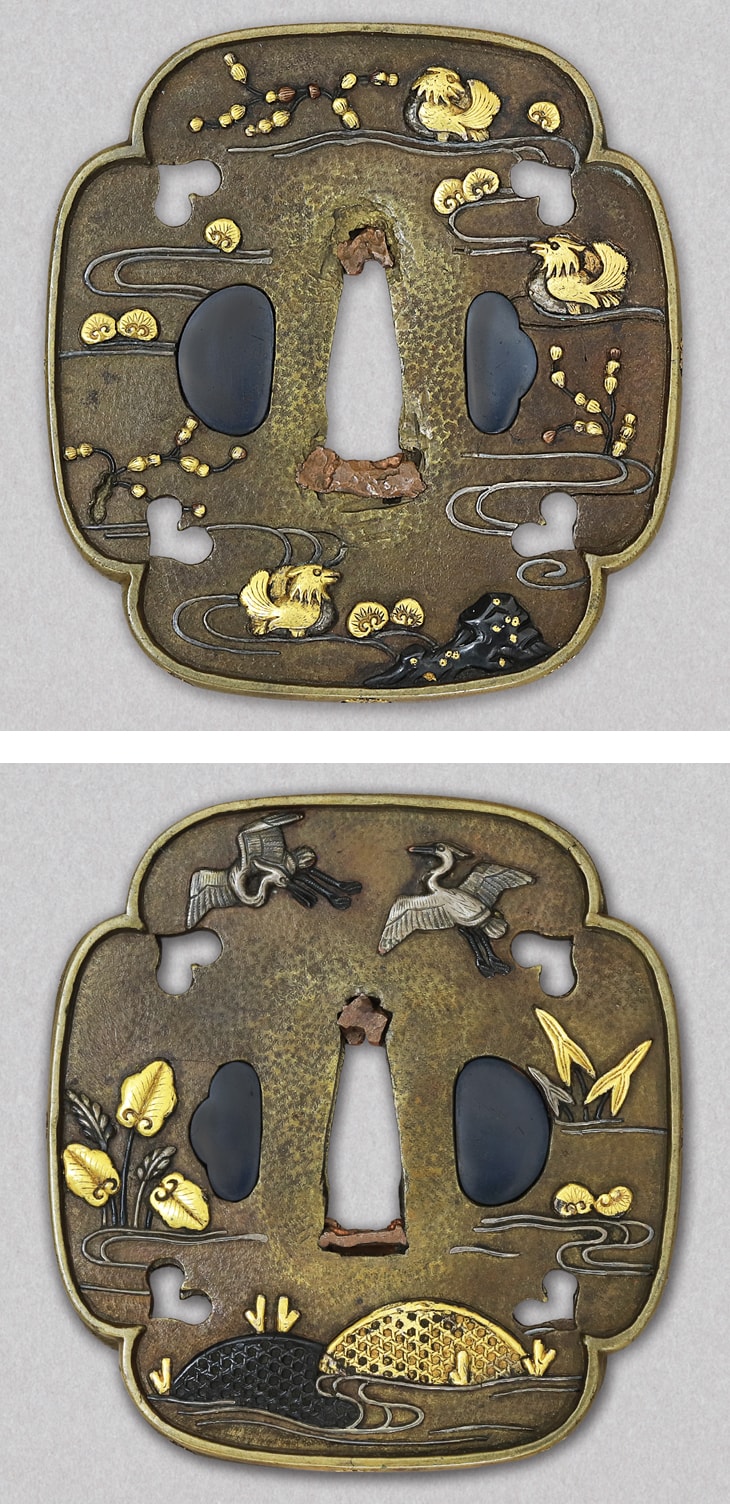
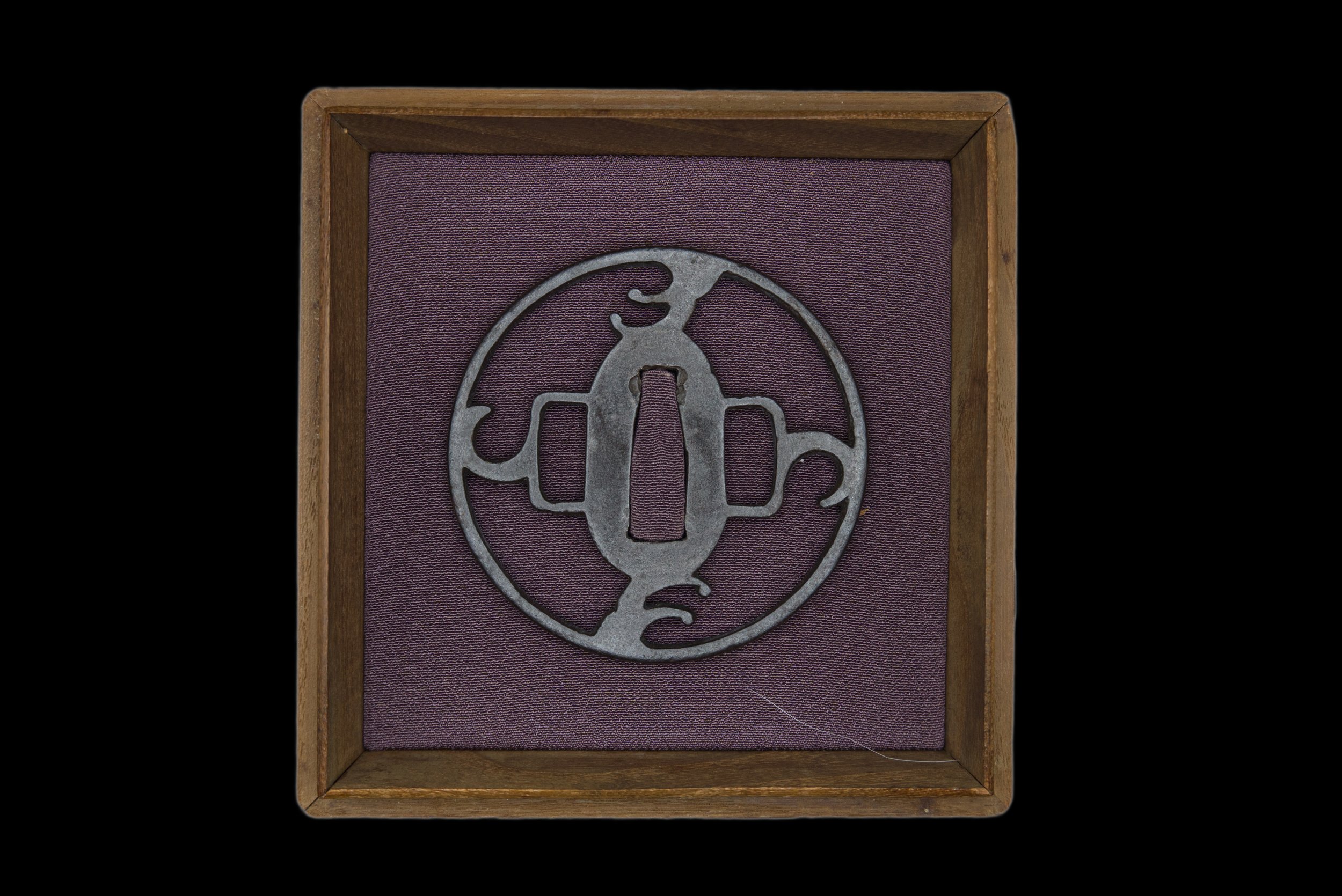
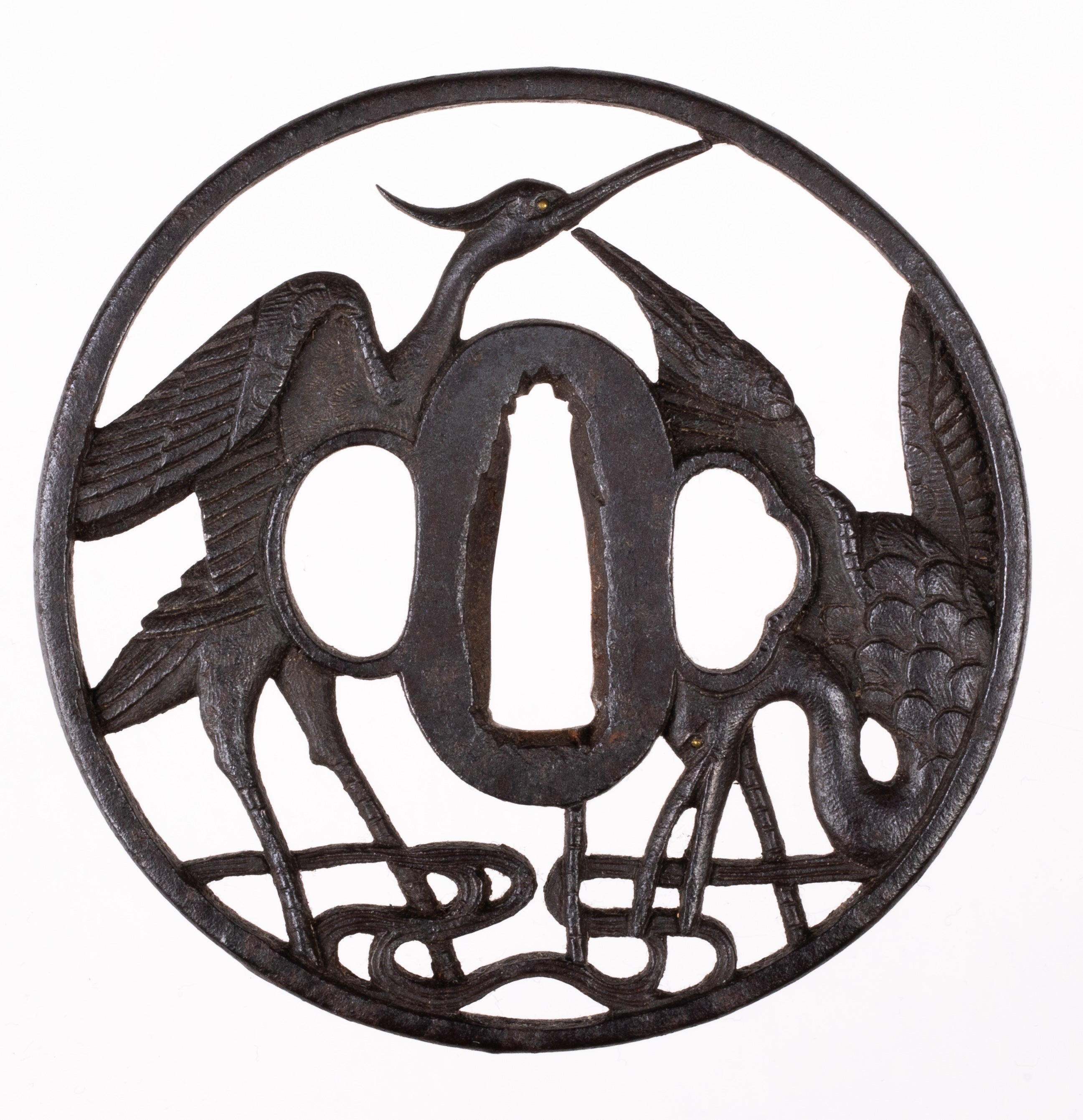
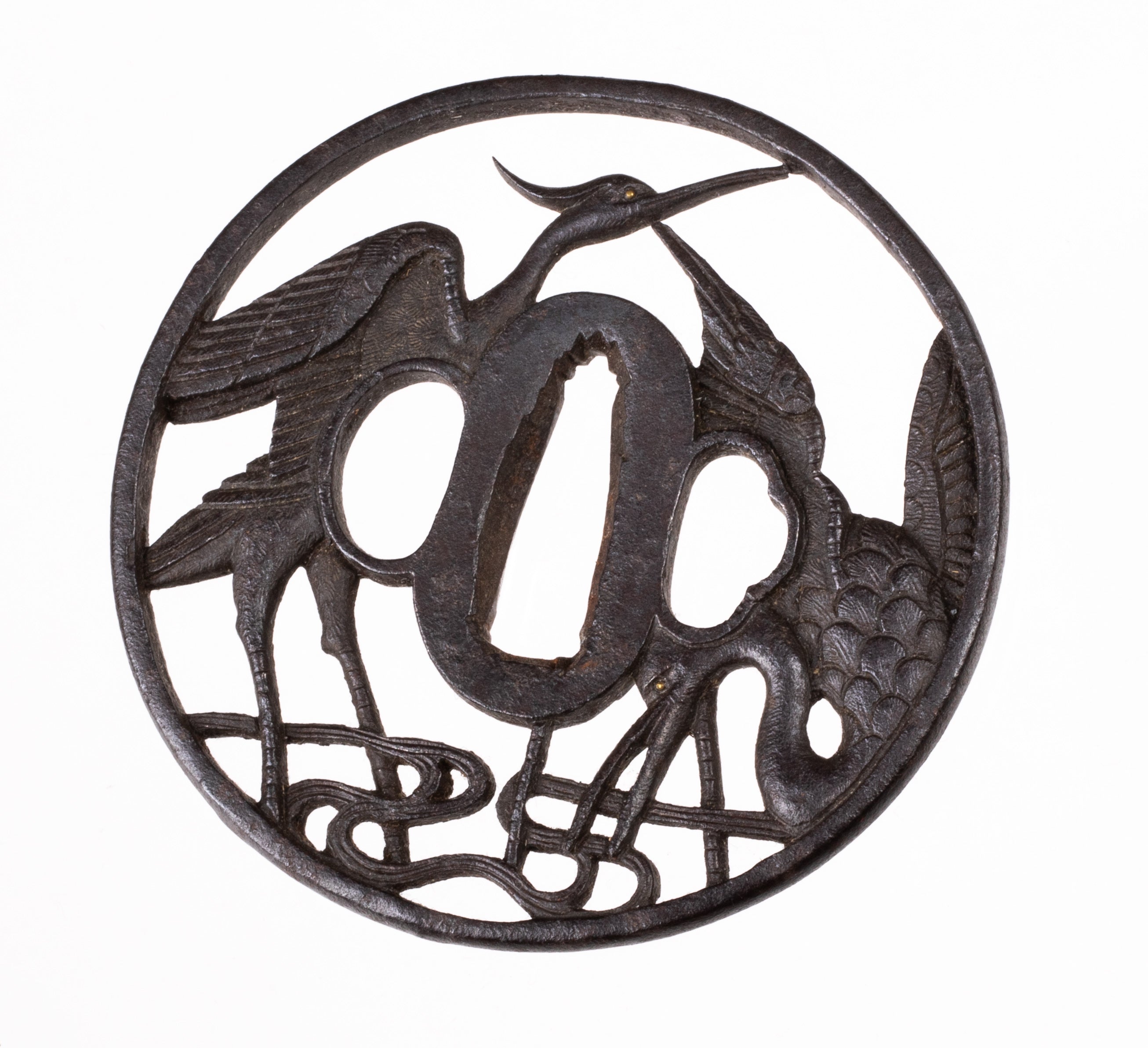
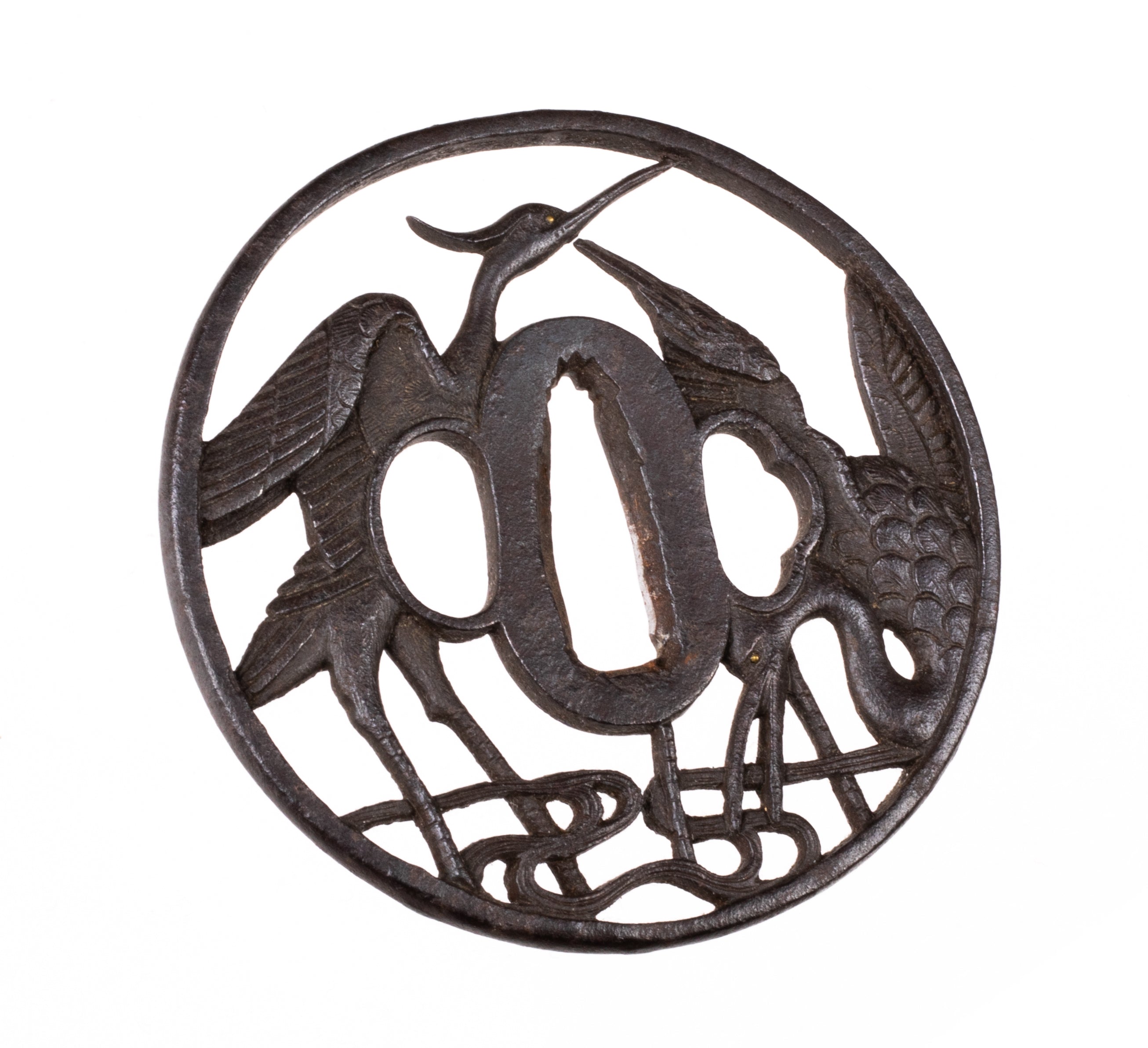
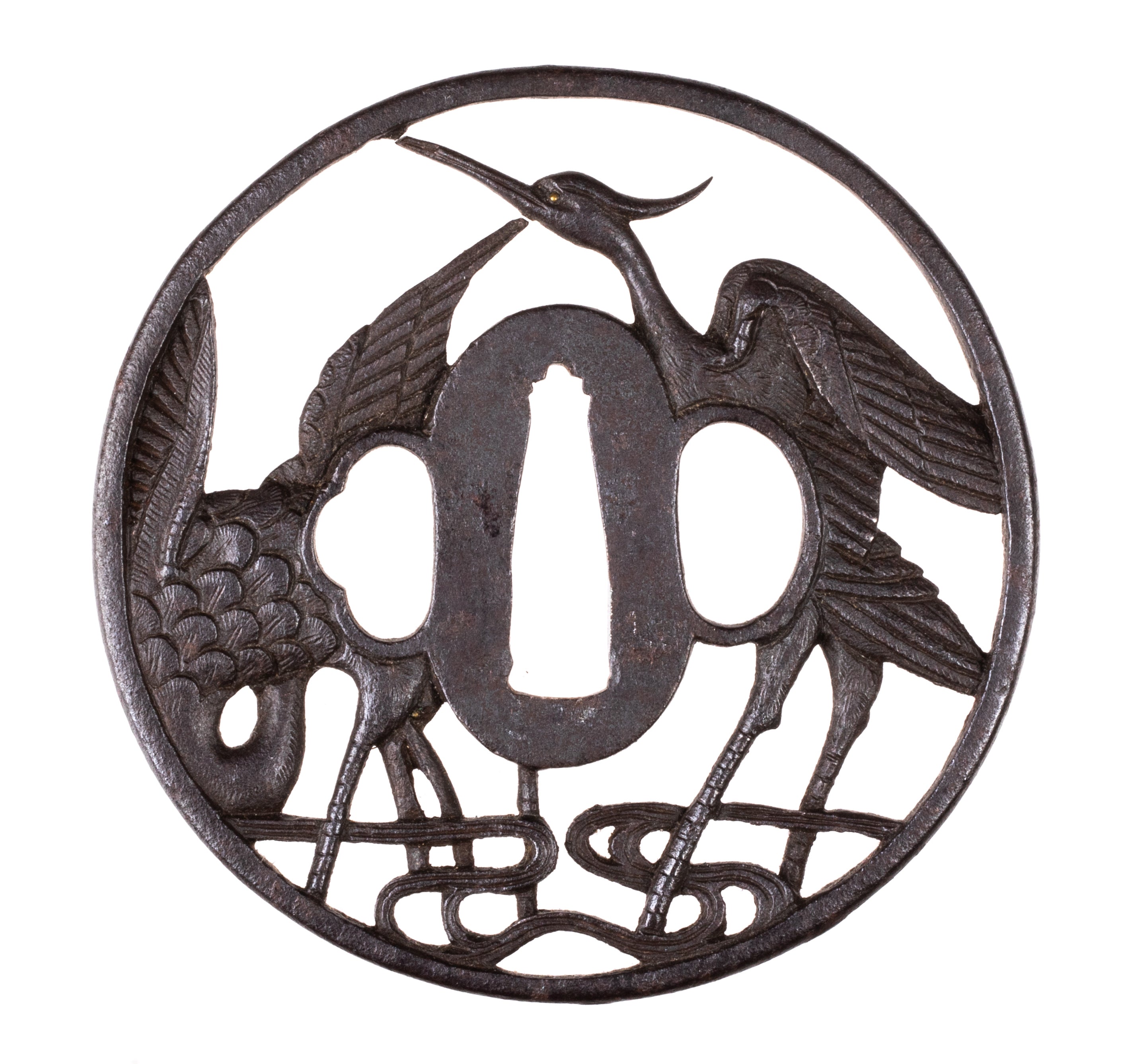
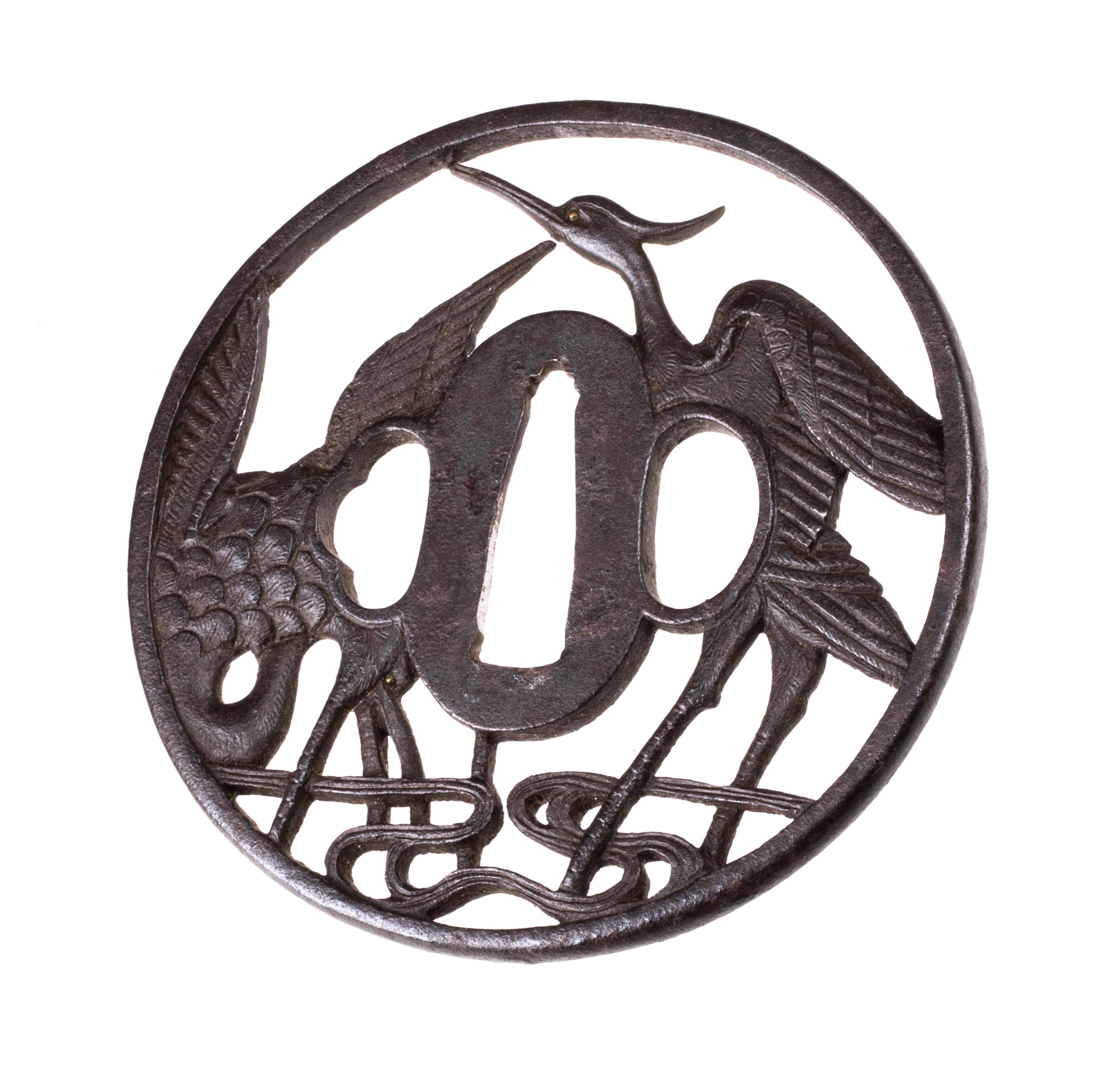
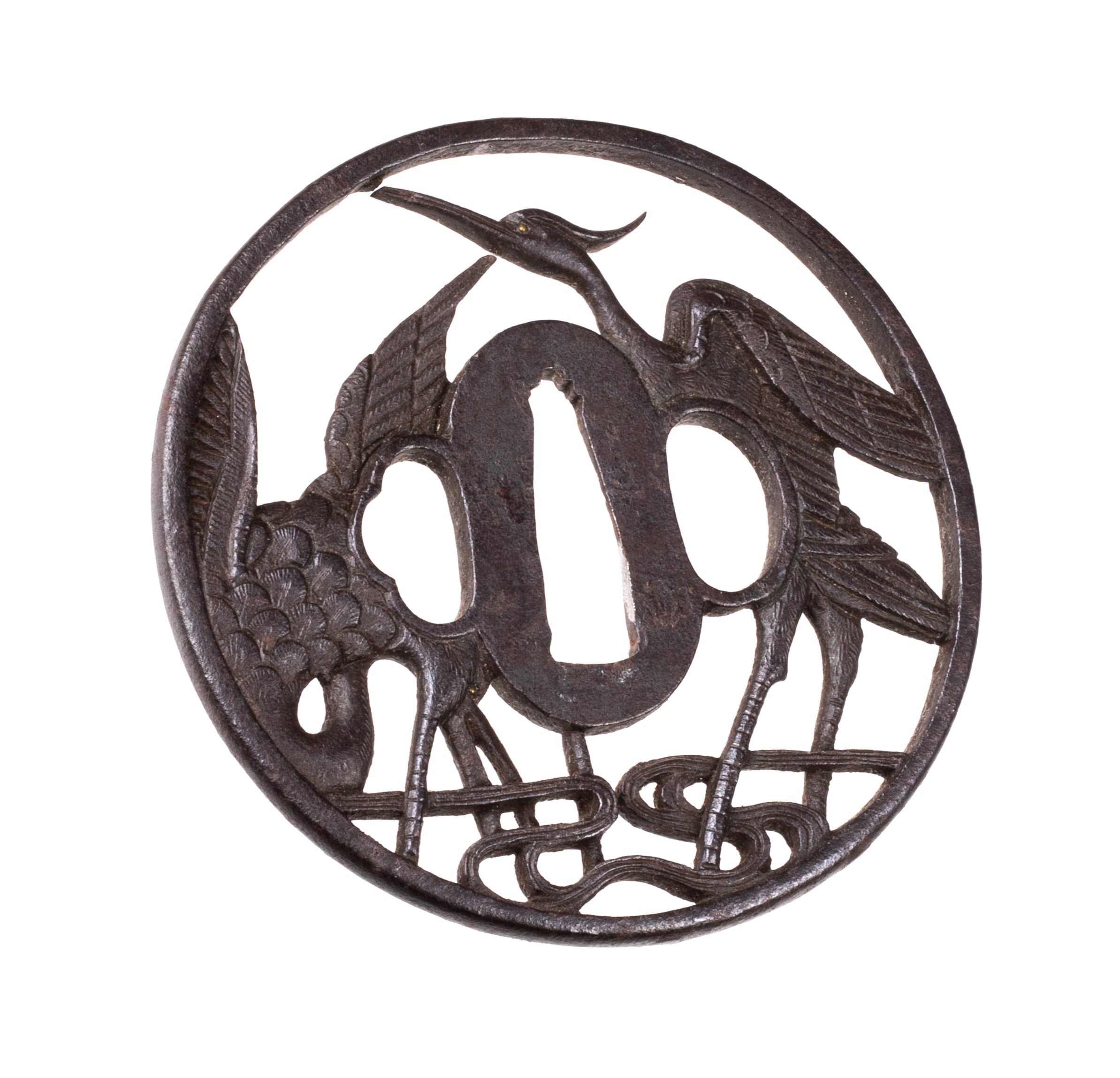
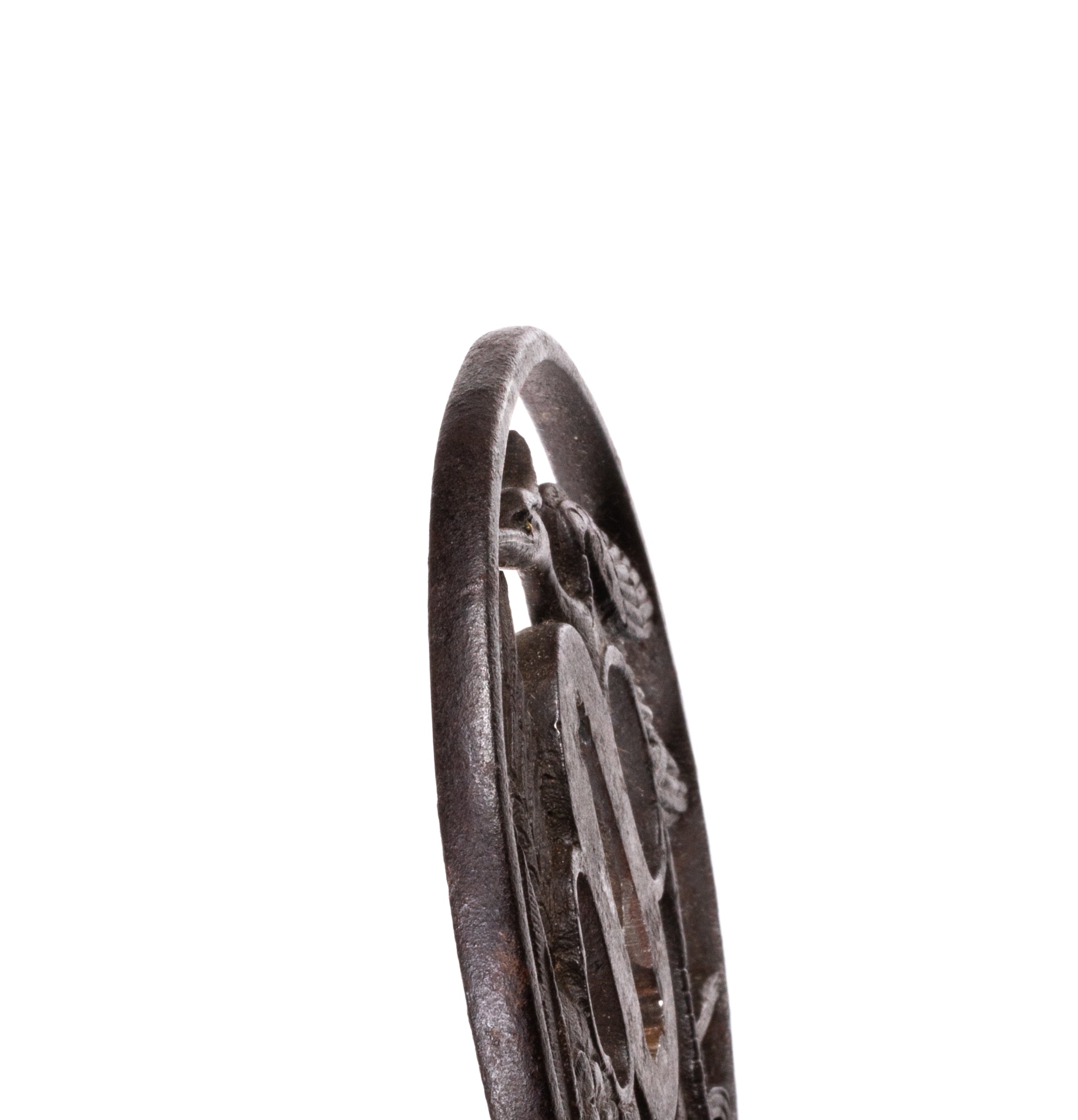
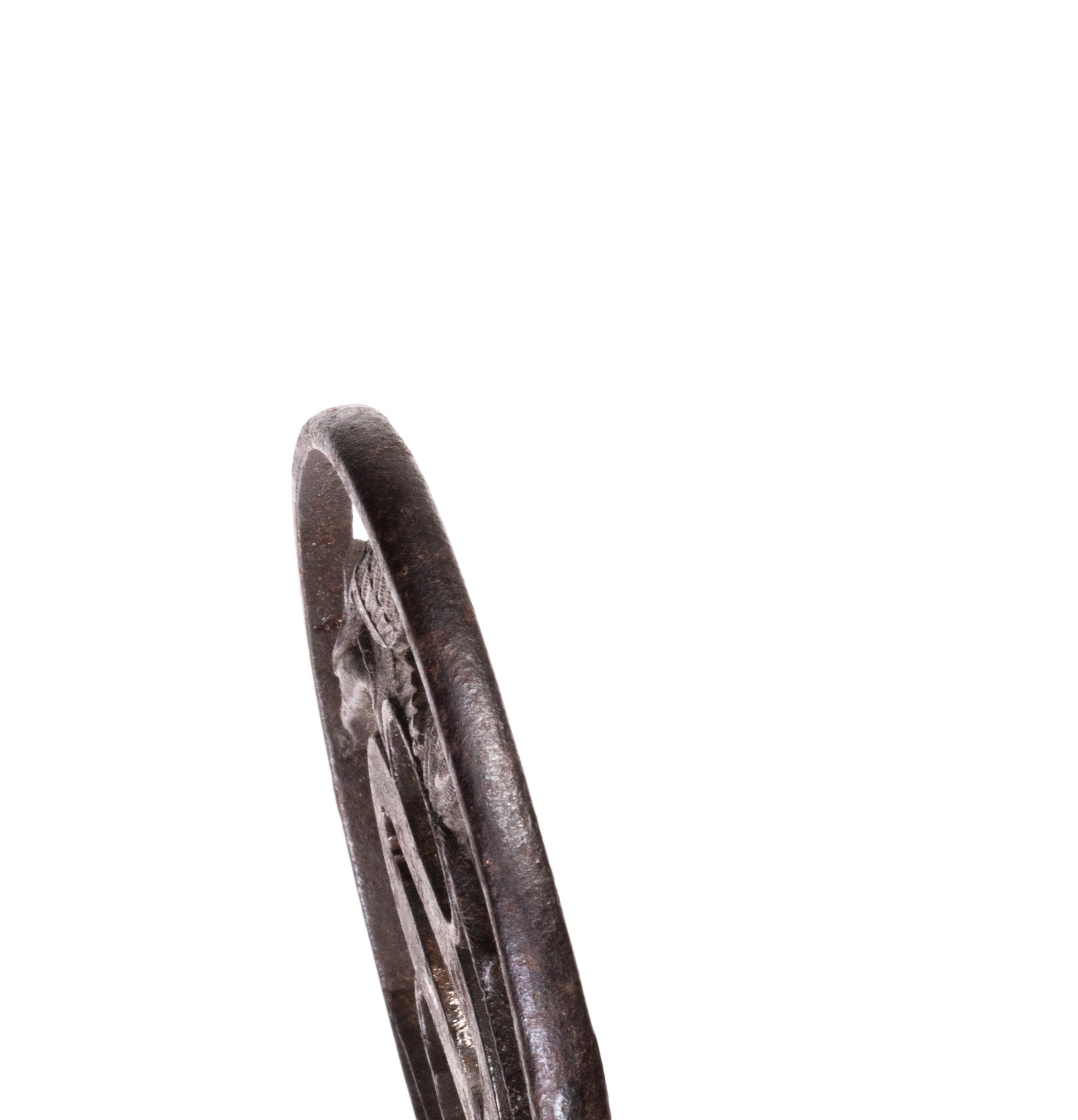
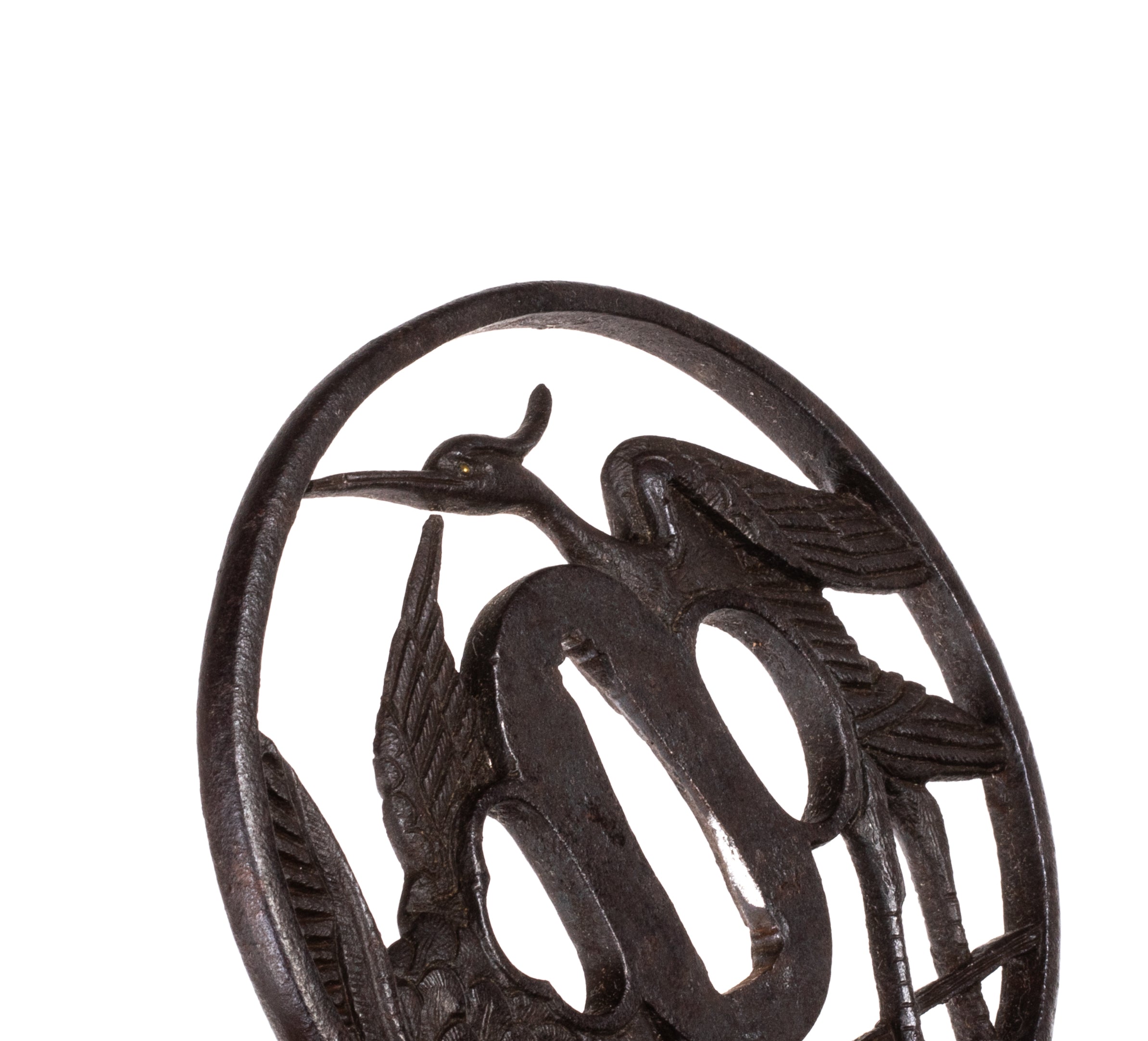
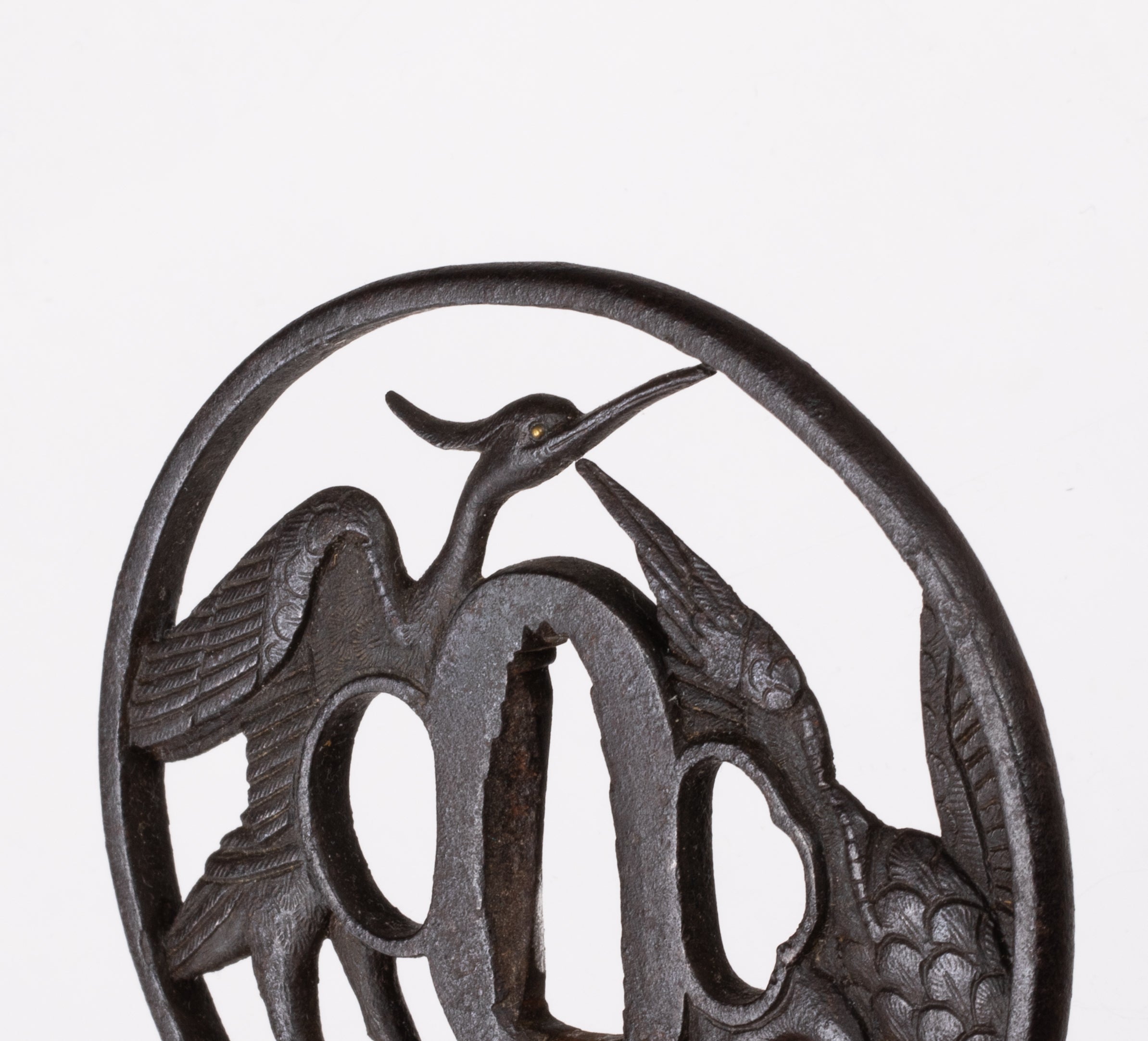
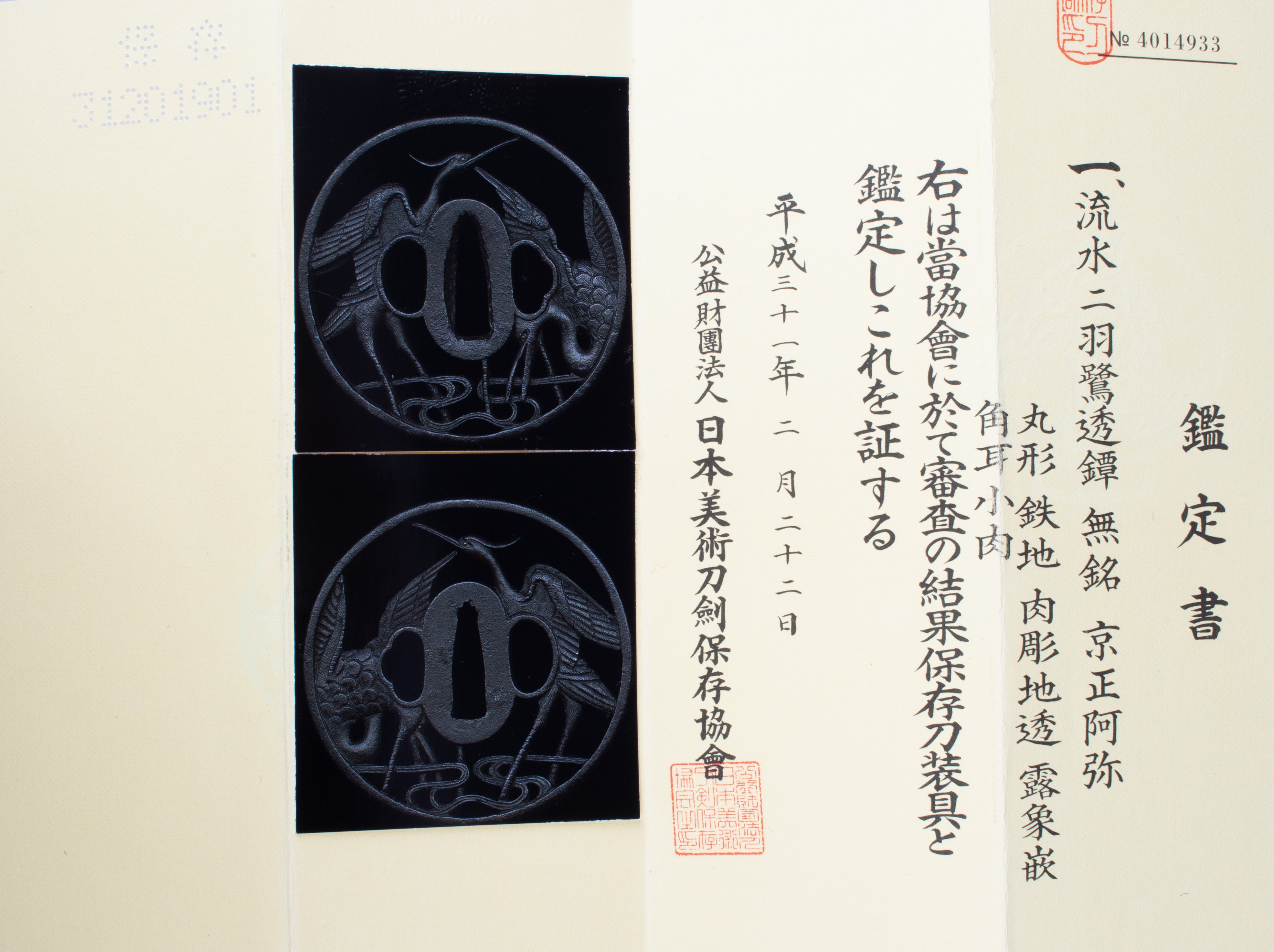
An iron tsuba from the Kyo Shoami school, decorated with two herons in a stream. The eyes are inlaid with soft metal, possibly brass or gold. Made during the Edo period, the tsuba has a small crack near the beak of the upper heron where it was attached to the mimi. It comes with NBTHK Hozon Tosogu certification.
 NihontoWatch
mumei · Kyo Shoami · Edo
Kyo-Shoami School
Edo
Unsigned
Hozon (NBTHK)
Iron-tsuba · Yamashiro
14 pieces on the market now
Certifies a genuine fitting worth preserving: a correct signature, or, if unsigned, an identifiable era and school, with recognized artistic and craft value.
The NBTHK (Nihon Bijutsu Tōken Hozon Kyōkai, the Society for the Preservation of Japanese Art Swords) is a public-interest incorporated foundation founded in 1948 and supervised by Japan’s Agency for Cultural Affairs (Bunkachō); it is based at the Japanese Sword Museum in Tokyo. Its expert panels physically examine each submitted work (shinsa) and issue a certificate (kanteishō) ranking it by artistic and historical merit. NBTHK papers are the most widely recognized standard of authentication for Japanese swords and fittings.
NBTHK official site30-day refund policy. Items must be returned in original condition and packaging; customized products are non-returnable. 2-week inspection window with full item refund (shipping costs non-refundable). Customer pays return shipping.
An iron tsuba from the Kyo Shoami school, decorated with two herons in a stream. The eyes are inlaid with soft metal, possibly brass or gold. Made during the Edo period, the tsuba has a small crack near the beak of the upper heron where it was attached to the mimi. It comes with NBTHK Hozon Tosogu certification.
NihontoWatchmumei · Kyo Shoami · Edo
Kyo-Shoami School
Edo
Unsigned
Hozon (NBTHK)
Iron-tsuba · Yamashiro
14 pieces on the market now
Certifies a genuine fitting worth preserving: a correct signature, or, if unsigned, an identifiable era and school, with recognized artistic and craft value.
The NBTHK (Nihon Bijutsu Tōken Hozon Kyōkai, the Society for the Preservation of Japanese Art Swords) is a public-interest incorporated foundation founded in 1948 and supervised by Japan’s Agency for Cultural Affairs (Bunkachō); it is based at the Japanese Sword Museum in Tokyo. Its expert panels physically examine each submitted work (shinsa) and issue a certificate (kanteishō) ranking it by artistic and historical merit. NBTHK papers are the most widely recognized standard of authentication for Japanese swords and fittings.
NBTHK official site30-day refund policy. Items must be returned in original condition and packaging; customized products are non-returnable. 2-week inspection window with full item refund (shipping costs non-refundable). Customer pays return shipping.


![Tsuba - Hozon - by Kyo-Shoami School - Kyo-Shoami Ashi-sagi-sukashi Tsuba [NBTHK] Hozon Tosogu](/_next/image?url=https%3A%2F%2Fitbhfhyptogxcjbjfzwx.supabase.co%2Fstorage%2Fv1%2Fobject%2Fpublic%2Flisting-images%2Fworld-seiyudo%2FL32849%2F00.jpg&w=2560&q=90)
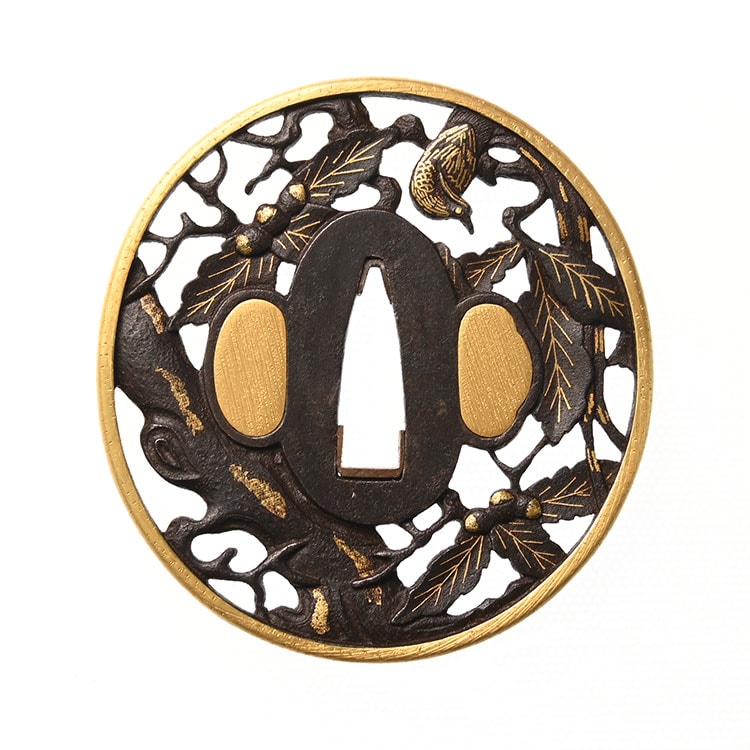
![Tsuba - Tokuho - by Kyo-Shoami School - Mumei Kyo-shoami Tochigai-kiku-Sukashi Tsuba [NBTHK Tokubetsu Hozon Tosogu]](/_next/image?url=https%3A%2F%2Fitbhfhyptogxcjbjfzwx.supabase.co%2Fstorage%2Fv1%2Fobject%2Fpublic%2Flisting-images%2Fworld-seiyudo%2FL32544%2F00.jpg&w=2560&q=90)