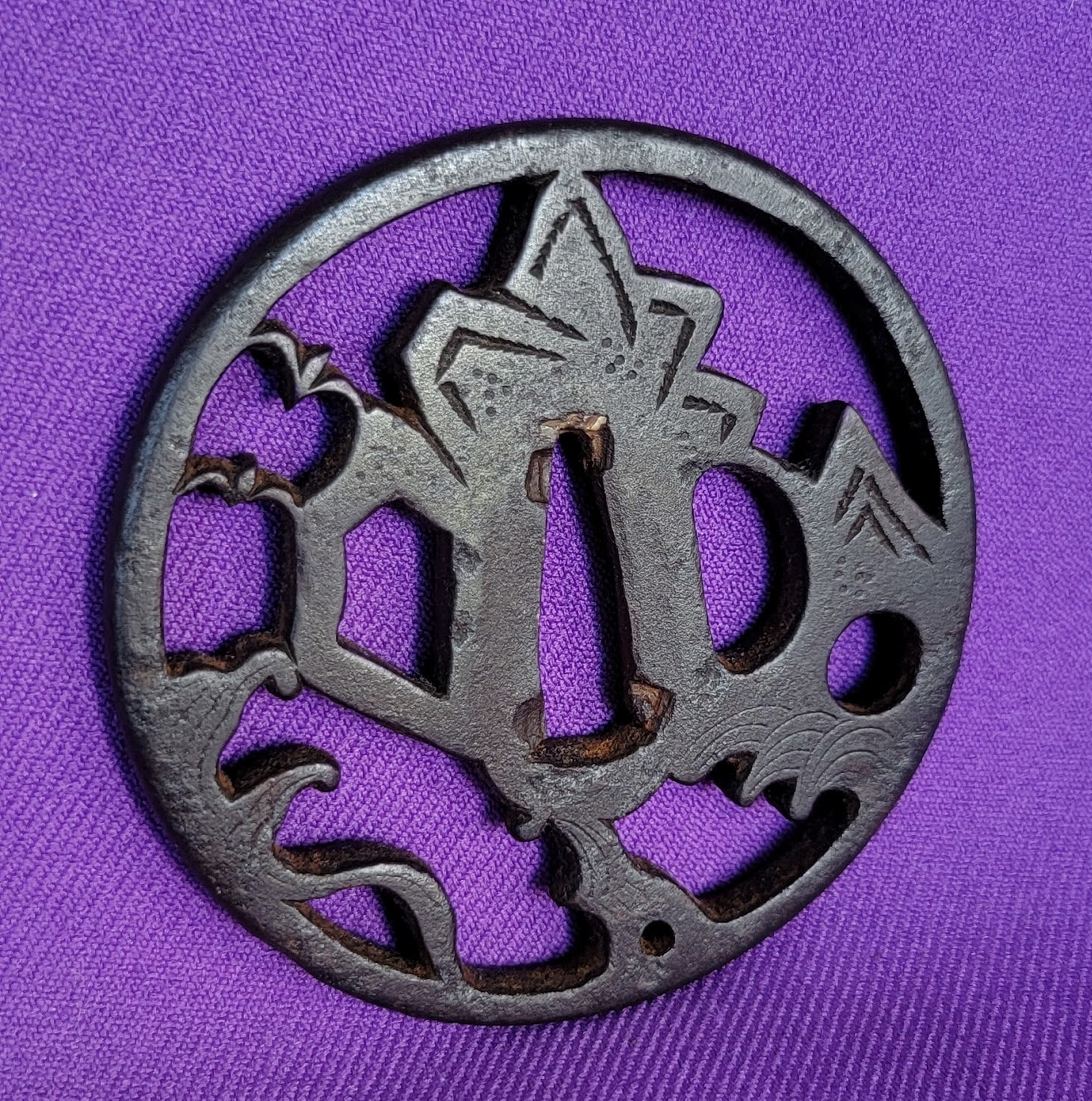
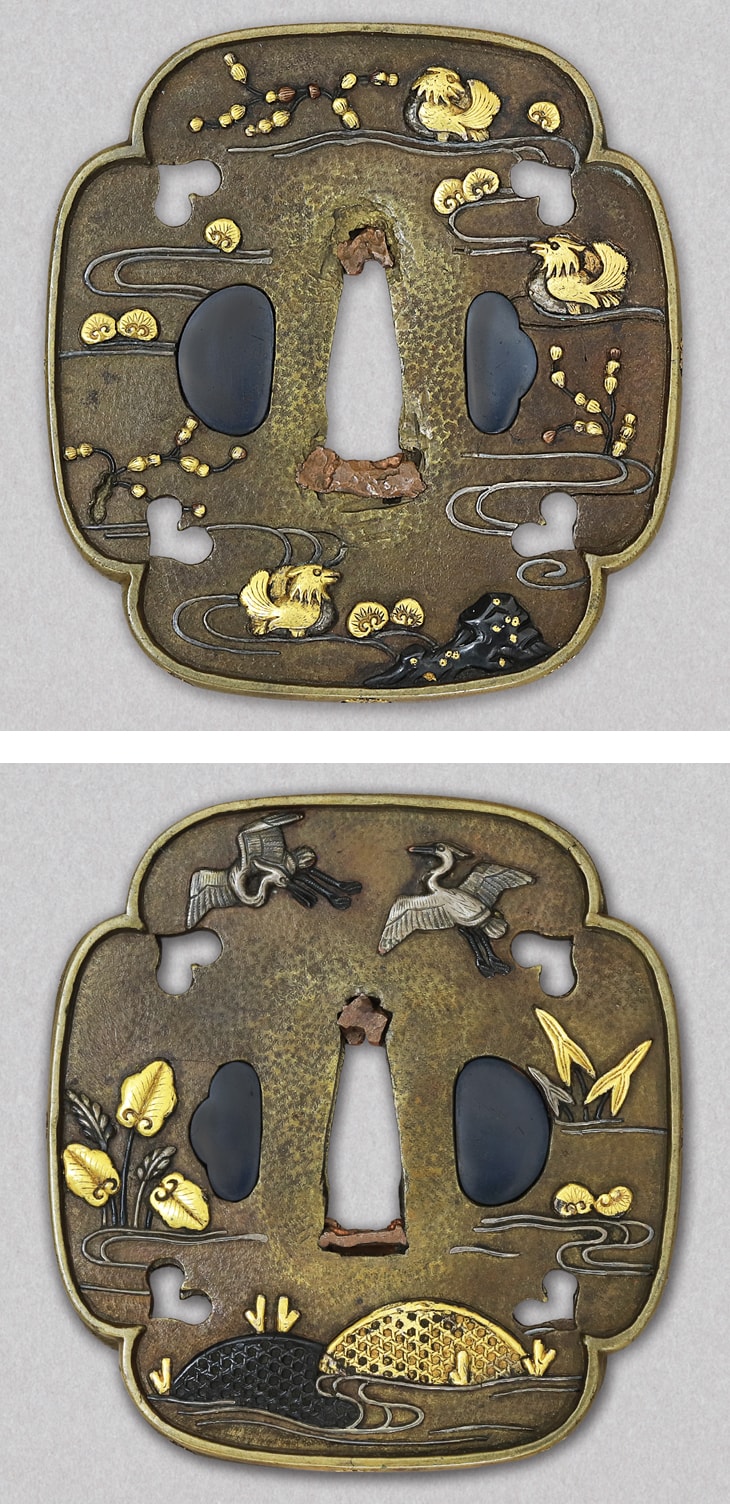
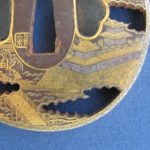
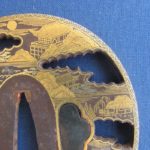
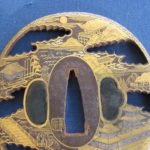
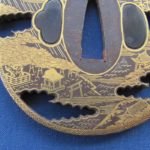
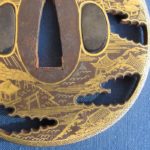
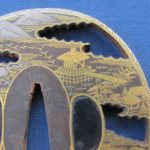
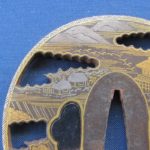
This is a spectacular Kenjo tsuba, made as a gift for an important person, featuring the Omi Hakkei (Eight Views of Omi) theme. It is signed with a kao by an artist identified as Ryu (also Seimin Ryu and Kazunori Ryuashi) and dates to the Meiji or early 20th century. The tsuba is made of iron with intricate gold and silver inlay, showcasing exceptional craftsmanship and is in nearly perfect condition. It comes with an NBTHK Hozon paper from 2008, attributing it to Kyo Kenjo.
 NihontoWatch
mei · Kyo Shoami · Meiji
Ryu
Meiji
Shiga
Signed
Hozon (NBTHK)
Certifies a genuine fitting worth preserving: a correct signature, or, if unsigned, an identifiable era and school, with recognized artistic and craft value.
The NBTHK (Nihon Bijutsu Tōken Hozon Kyōkai, the Society for the Preservation of Japanese Art Swords) is a public-interest incorporated foundation founded in 1948 and supervised by Japan’s Agency for Cultural Affairs (Bunkachō); it is based at the Japanese Sword Museum in Tokyo. Its expert panels physically examine each submitted work (shinsa) and issue a certificate (kanteishō) ranking it by artistic and historical merit. NBTHK papers are the most widely recognized standard of authentication for Japanese swords and fittings.
NBTHK official site3-day return window from receipt.
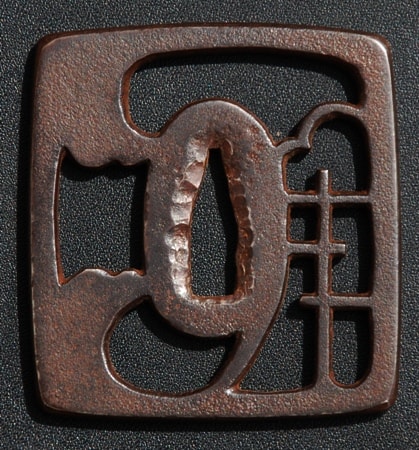
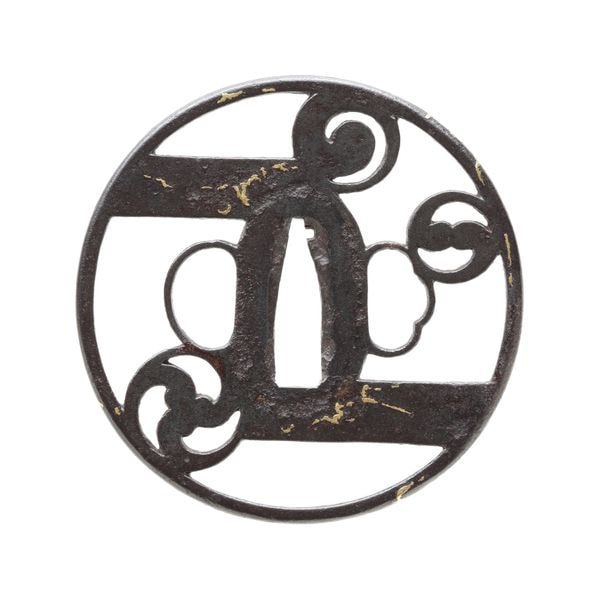
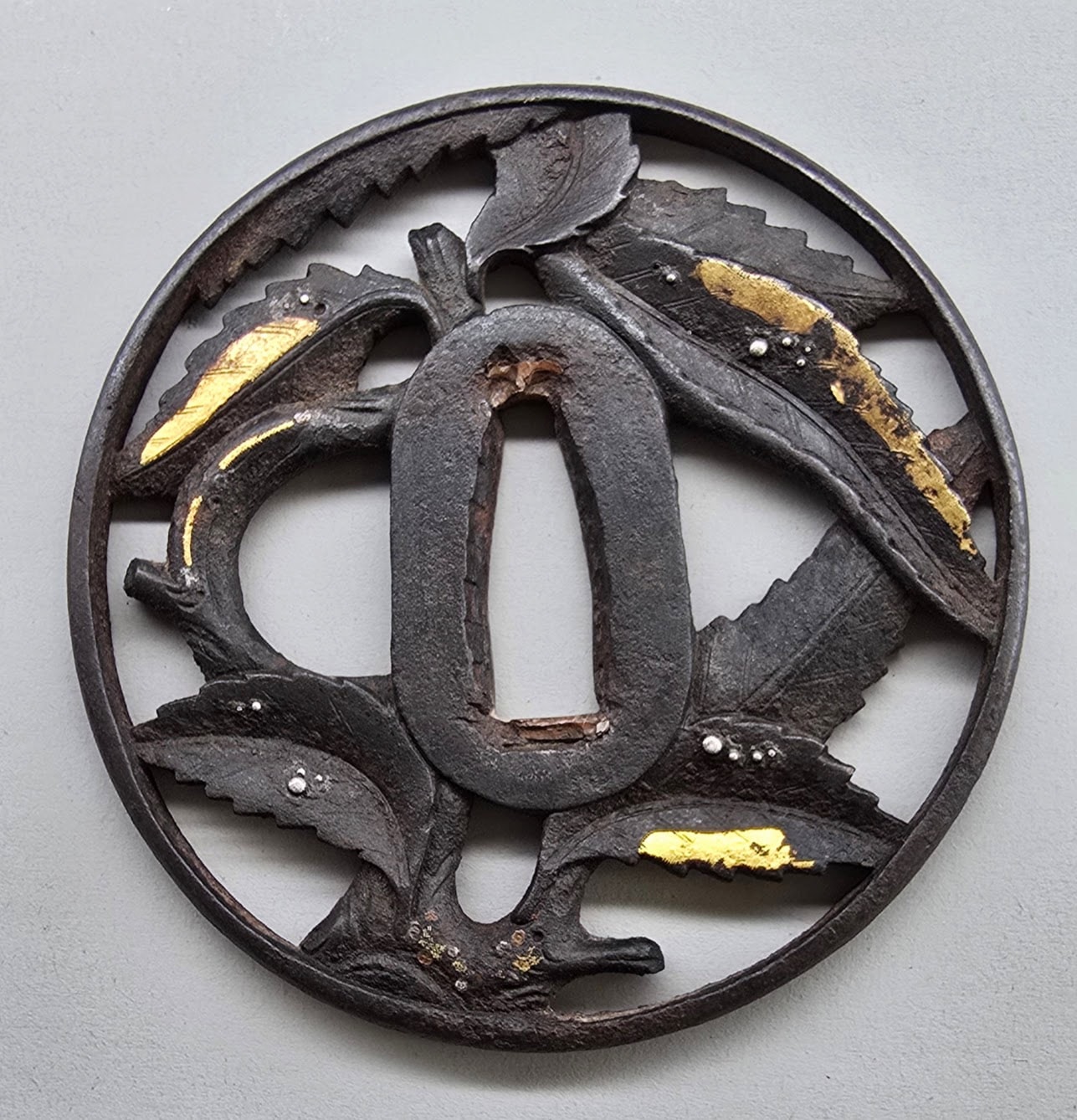
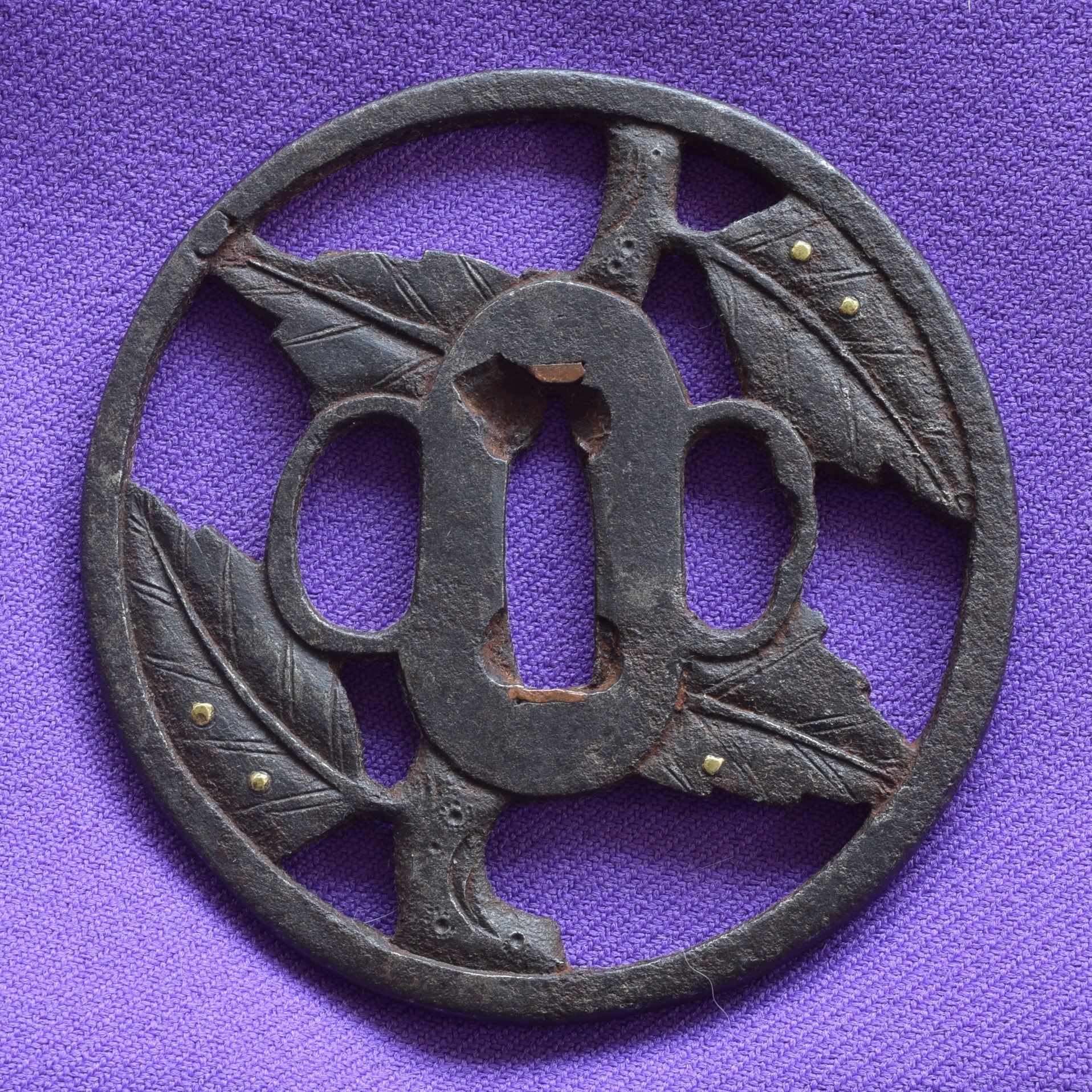
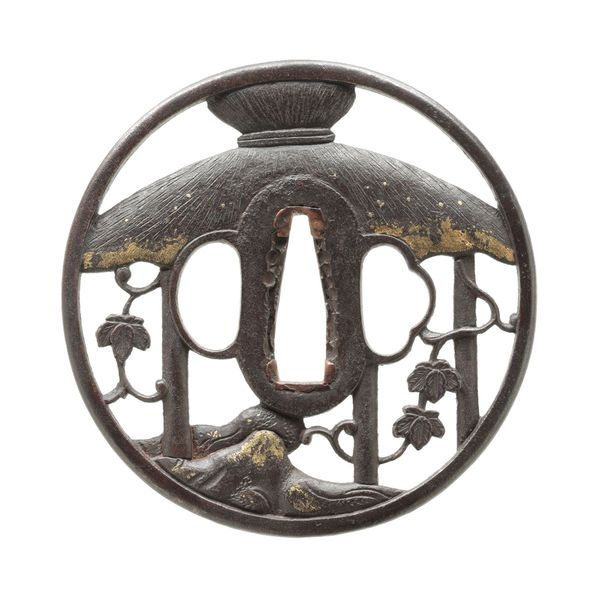
This is a spectacular Kenjo tsuba, made as a gift for an important person, featuring the Omi Hakkei (Eight Views of Omi) theme. It is signed with a kao by an artist identified as Ryu (also Seimin Ryu and Kazunori Ryuashi) and dates to the Meiji or early 20th century. The tsuba is made of iron with intricate gold and silver inlay, showcasing exceptional craftsmanship and is in nearly perfect condition. It comes with an NBTHK Hozon paper from 2008, attributing it to Kyo Kenjo.
NihontoWatchmei · Kyo Shoami · Meiji
Ryu
Meiji
Shiga
Signed
Hozon (NBTHK)
Certifies a genuine fitting worth preserving: a correct signature, or, if unsigned, an identifiable era and school, with recognized artistic and craft value.
The NBTHK (Nihon Bijutsu Tōken Hozon Kyōkai, the Society for the Preservation of Japanese Art Swords) is a public-interest incorporated foundation founded in 1948 and supervised by Japan’s Agency for Cultural Affairs (Bunkachō); it is based at the Japanese Sword Museum in Tokyo. Its expert panels physically examine each submitted work (shinsa) and issue a certificate (kanteishō) ranking it by artistic and historical merit. NBTHK papers are the most widely recognized standard of authentication for Japanese swords and fittings.
NBTHK official site3-day return window from receipt.