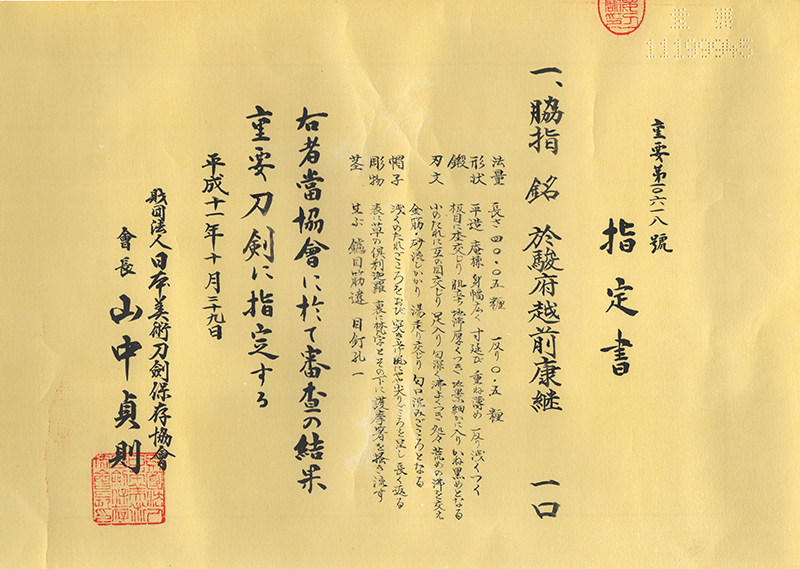
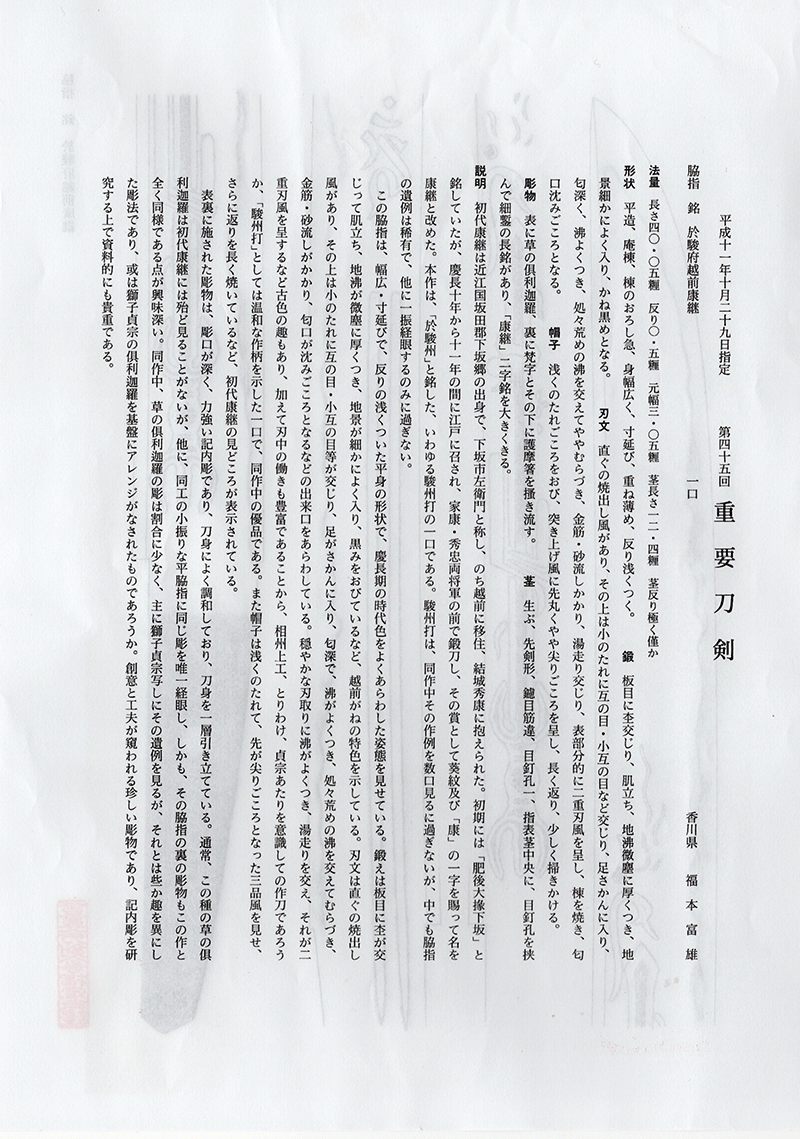


-, 45th Session — Designated October 29, 1999
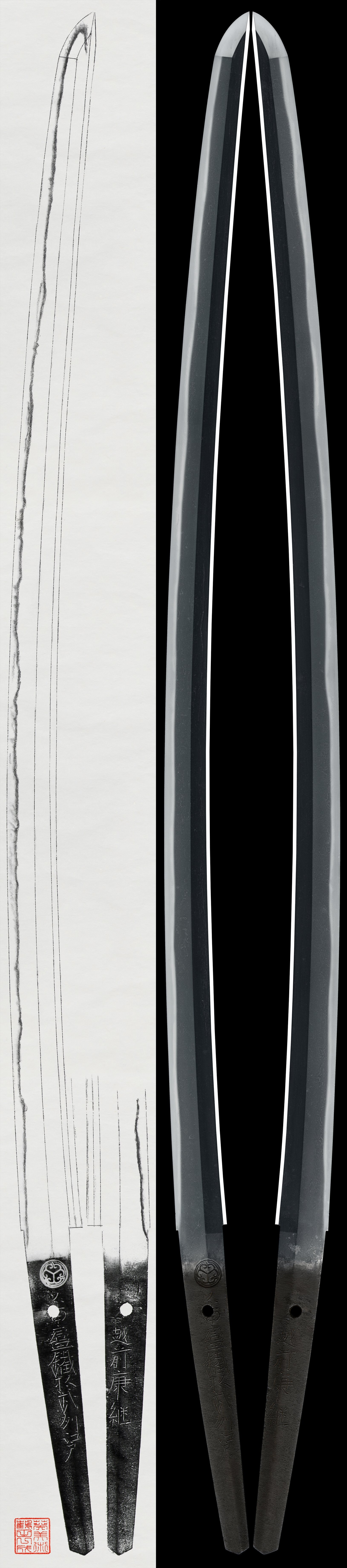
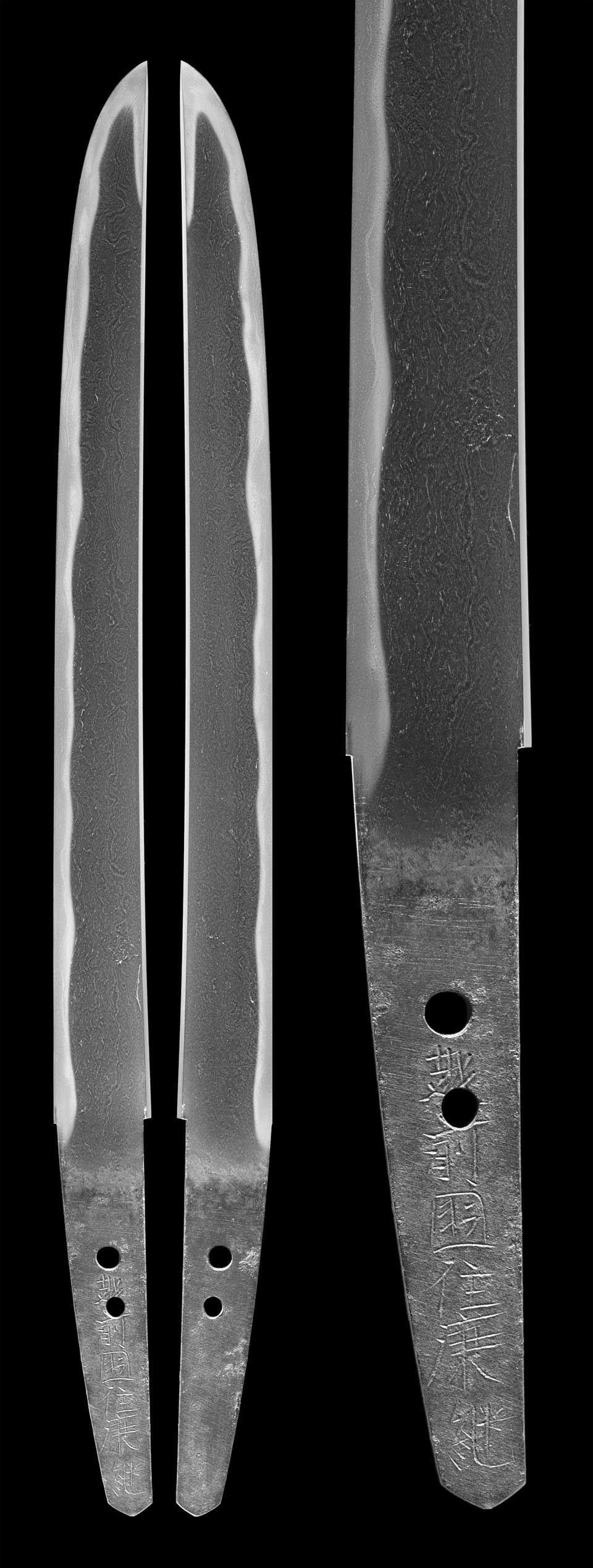
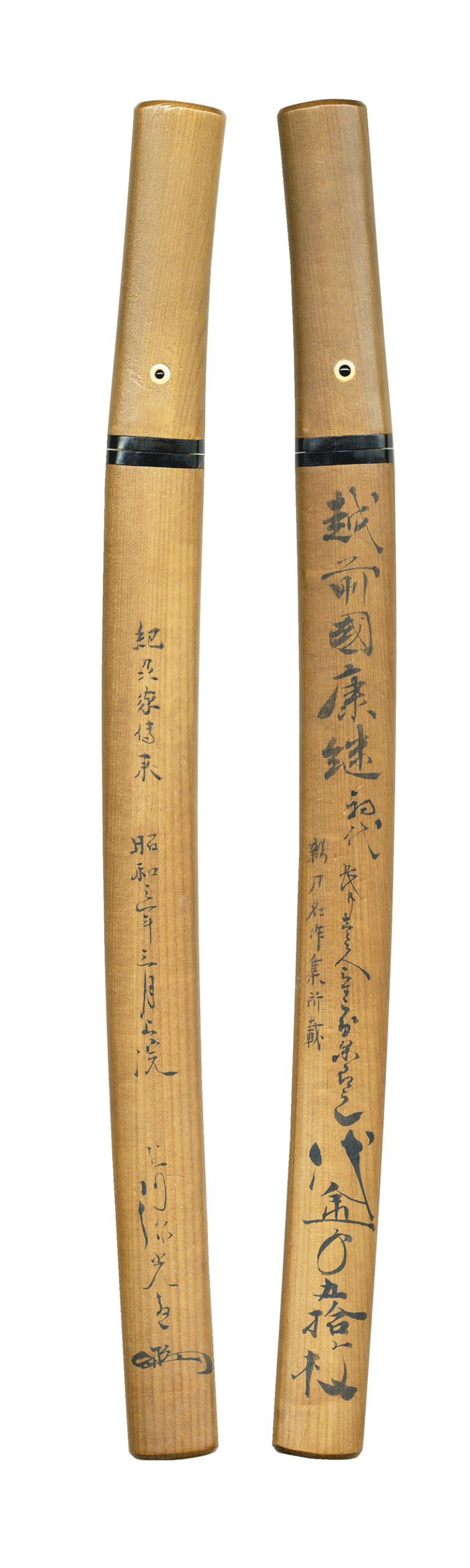
, : Sunpu Yasutsugu (於駿府越前康継)
Measurements 40.05 cm, 0.5 cm, 3.05 cm, 12.4 cm, extremely slight
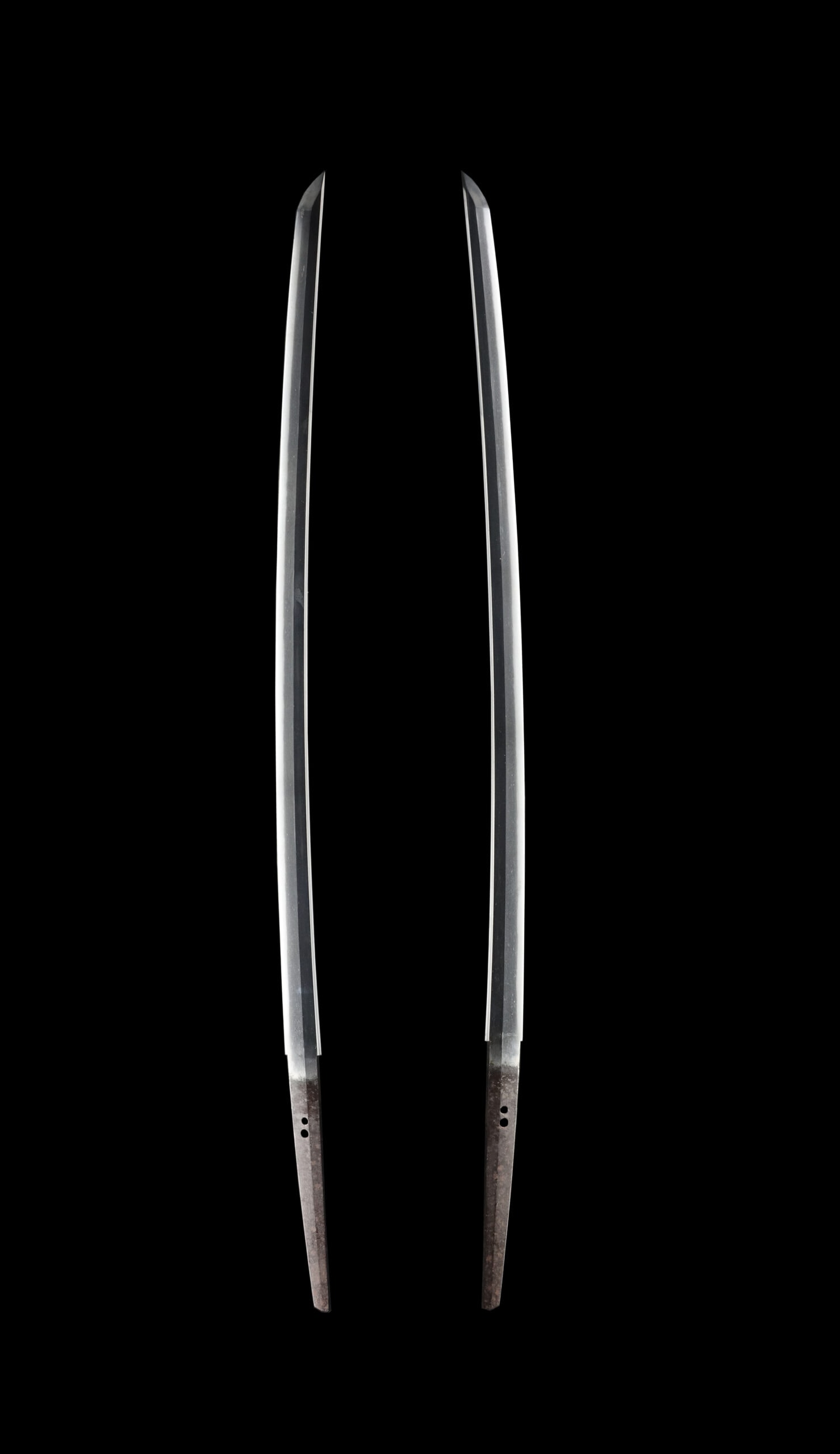
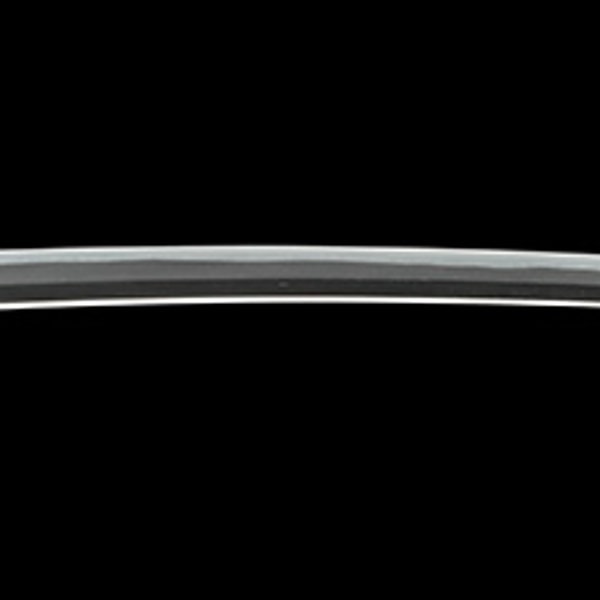
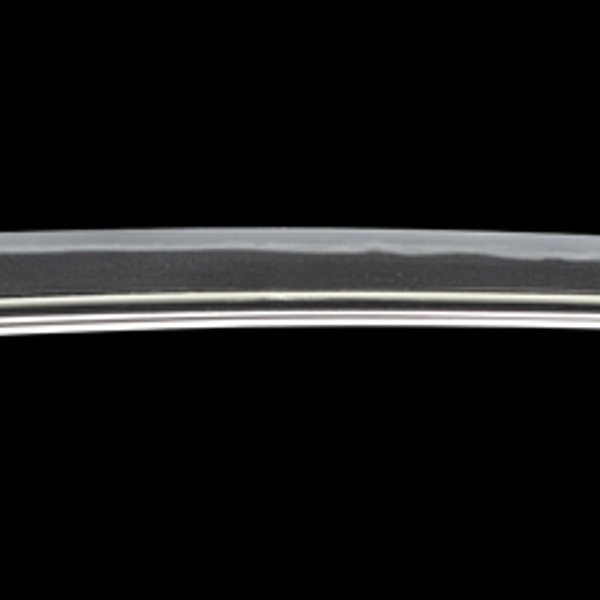
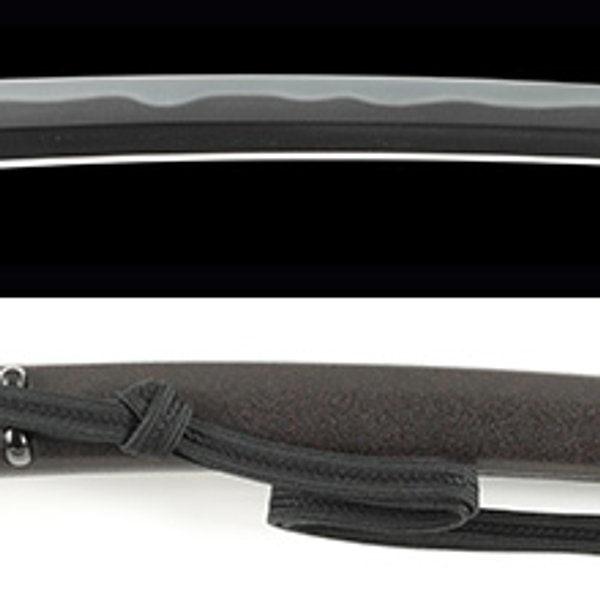
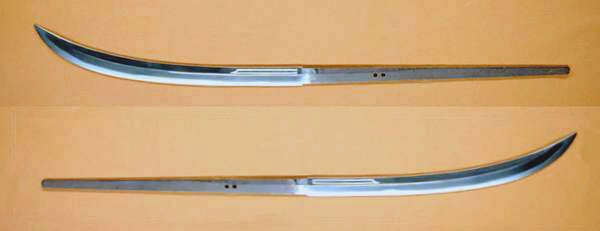
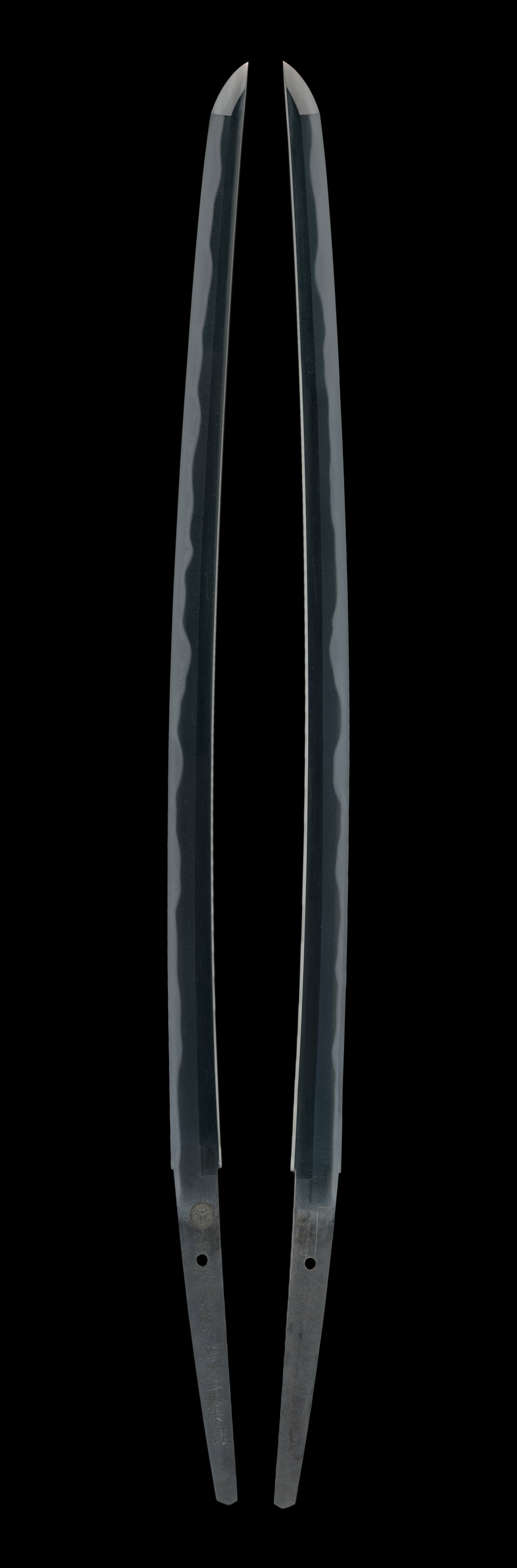
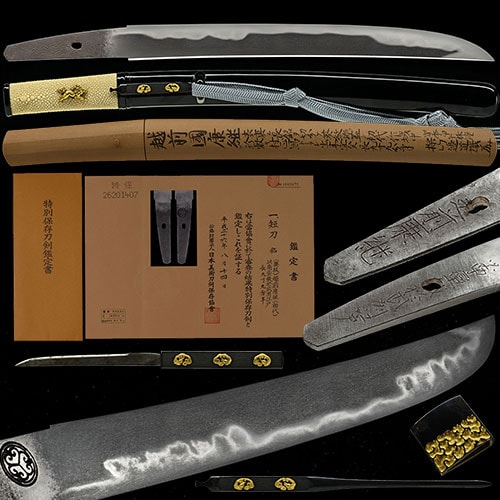
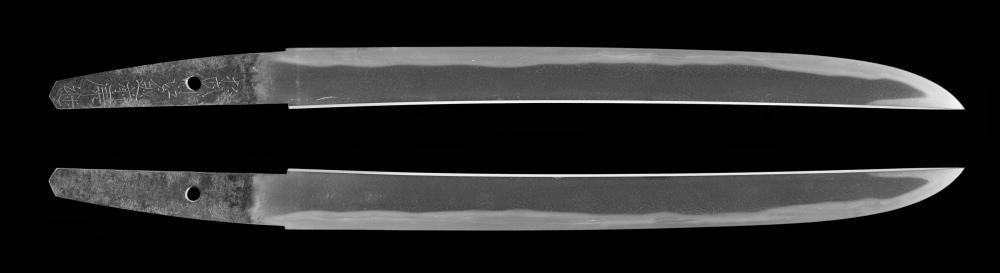
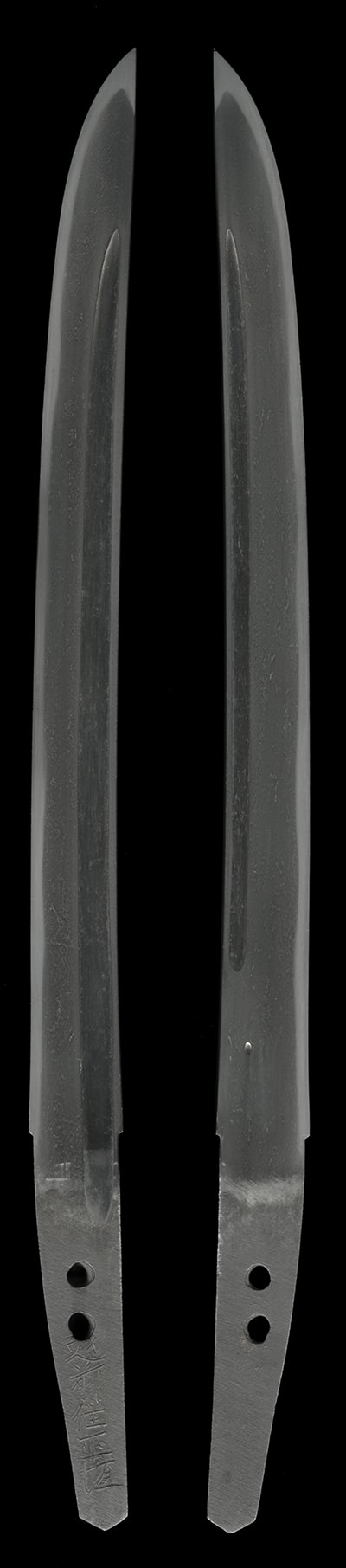
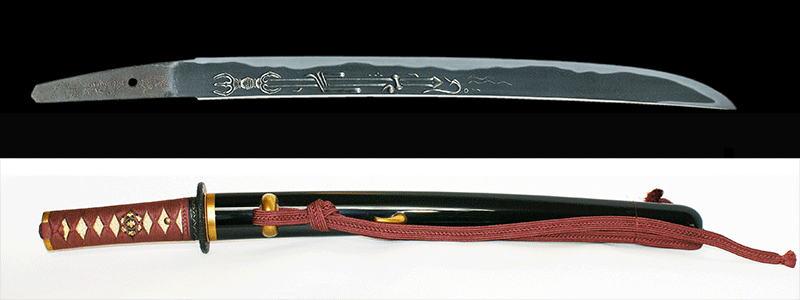
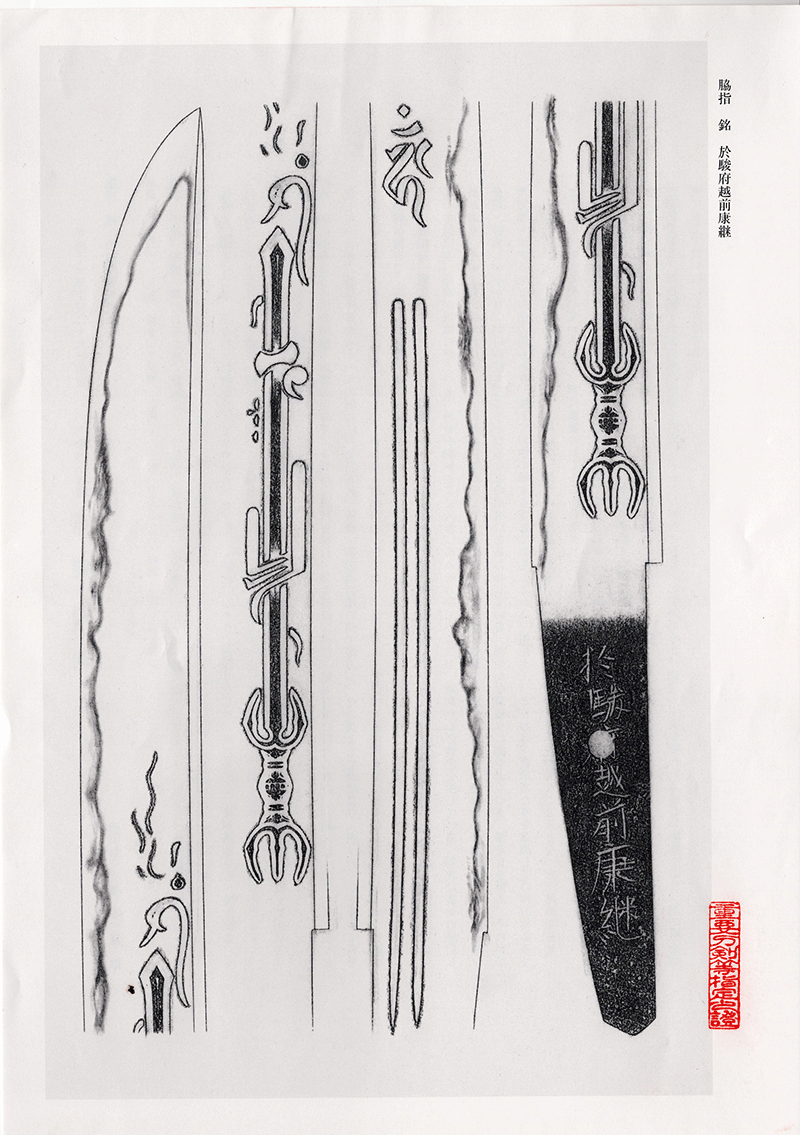
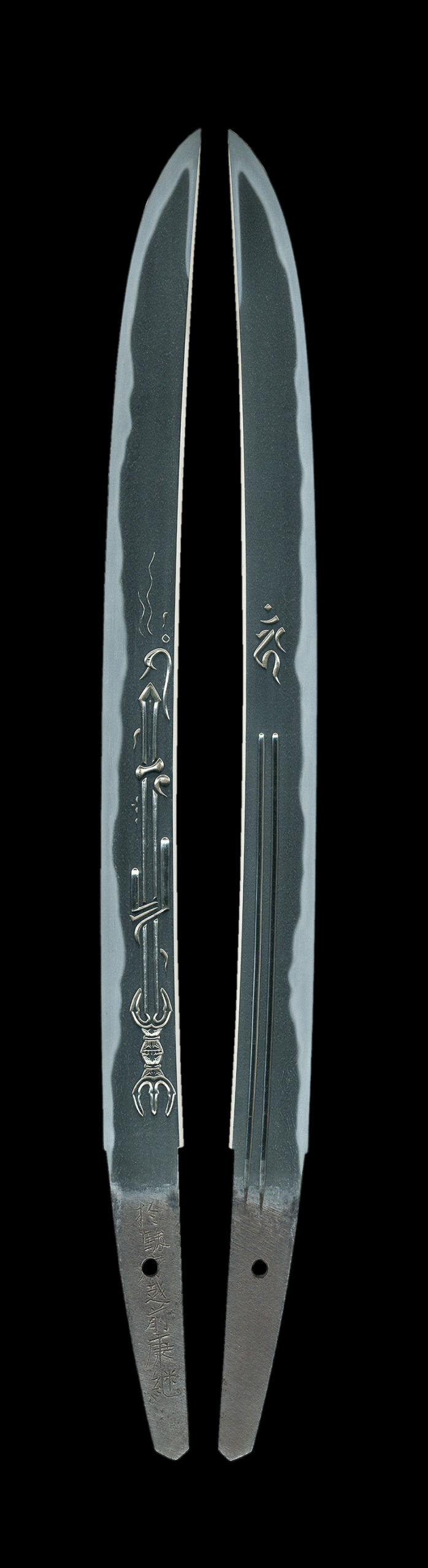
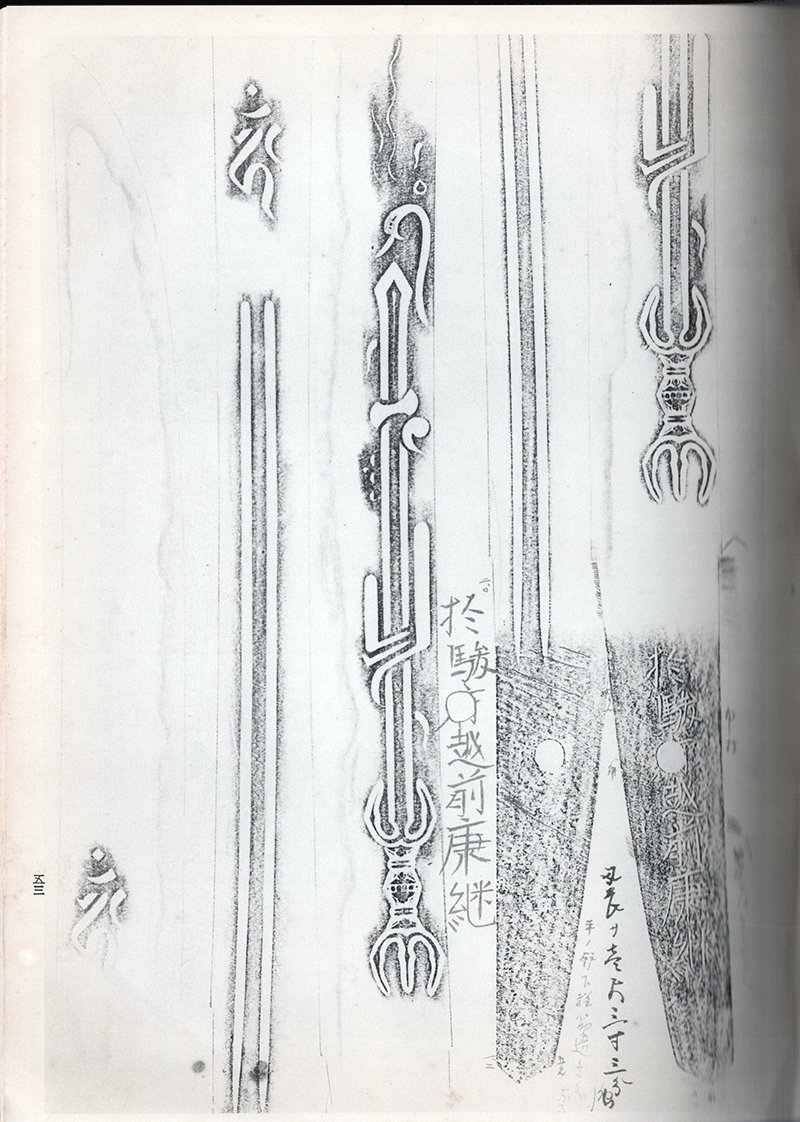
Description Keijō: , ; steeply angled -drop; wide with proportion; slightly thin ; shallow . : mixed with , with ; fine adhering thickly; fine well inserted; the steel shows a somewhat blackish tone. : Begins with a impression of ; above this, mixed with and ; plentiful ; deep with well adhering, and here and there mixed with slightly coarse producing some unevenness; and appear; mixed with ; on the , portions show a -like effect; is present; the tends toward (subdued). : With a shallow -like tendency; shows a impression, turning with a slight pointed tendency; long ; with slight . : : grass-style ; : a , and below it carved kaki-nagashi. : ; tip ; ; one ; on the at the center of the tang, straddling the , there is a long inscription in fine chisel-work, and the two characters “Yasutsugu” are cut large.
Artisan Yasutsugu (越前康継),
Era Early , Keichō era (early 17th century)
Explanation The first-generation Yasutsugu was originally from Shimosaka-gō in Sakata District, Ōmi Province, and called himself Shimosaka Izaemon. He later moved to and entered the service of Yūki Hideyasu. In his early period he signed “ Daijō Shimosaka,” but between Keichō 10 and 11 (1605–1606) he was summoned to , where he forged swords in the presence of both shōguns Ieyasu and Hidetada. As a reward he received permission to use the hollyhock crest () and was granted the character “,” at which time he changed his name to Yasutsugu.
This work is one blade of the so-called Sunshū-uchi group, bearing the signature “O Sunshū” (“Made at Sunpu”). Among Yasutsugu’s works, only a few examples of Sunshū-uchi are known; and within those, surviving examples in form are extraordinarily rare—indeed, only one other blade is known to the present writer.
This is wide and , and its flat-bodied form with shallow vividly expresses the period character of the Keichō era. The forging shows mixed with with conspicuous , while fine adheres thickly; fine enters well; and the steel takes on a darkish cast—features that reveal the characteristic nature of steel (). The temper begins with a -like impression, above which is mixed with and ; enter vigorously; the is deep; adheres well; and in places slightly coarse is intermingled, producing unevenness. Moreover, and appear, is mixed in, parts of the show a -like effect, and even is present—together with a tending toward .
With its gentle outline yet plentiful internal activity, and with that at times presents a -like effect suggestive of an older taste, this work appears to have been forged with the upper masters ( jōkō) in mind—especially around the level of Sadamune. Even so, as a Sunshū-uchi piece it displays a notably mild and harmonious manner, and it is an excellent example among Yasutsugu’s works. The shows a shallow with a tip tending slightly toward pointedness, in a manner reminiscent of “” style, and furthermore it is tempered with a long —features that clearly present points of interest characteristic of the first-generation Yasutsugu.
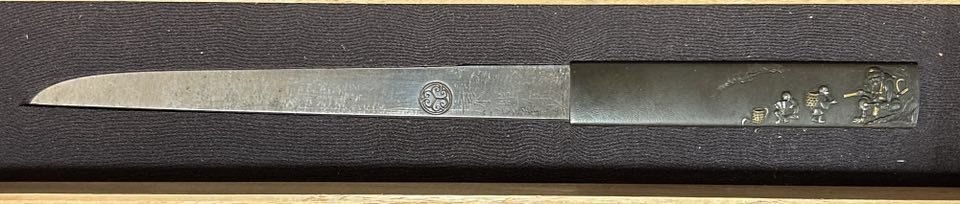
The carvings on both sides are deeply cut and powerfully executed in Kinai-bori, harmonizing well with the blade and further enhancing it. Ordinarily, this kind of grass-style is scarcely seen in the work of the first-generation Yasutsugu. However, the present writer has encountered one other small by the smith with the carving, and notably, the carving on that blade’s reverse side is entirely the as on this work—an intriguing point. Within Yasutsugu’s oeuvre, grass-style carvings are comparatively few; surviving examples are seen chiefly on works made as of the “Shishi Sadamune,” yet the present carving differs somewhat in feeling and method. It may be an arrangement devised on the basis of the Shishi Sadamune . In any case, this is a rare carving in which originality and ingenuity may be observed, and it is also valuable as documentary material for the study of Kinai-bori.