Edo was the sword’s age of connoisseurship: the Hon’ami appraisers, the shogunal register of famous blades of 1719, and a thriving literature turned the sword into an object of study even as it ceased to be drawn in war.
 NihontoWatchNihontoWatch
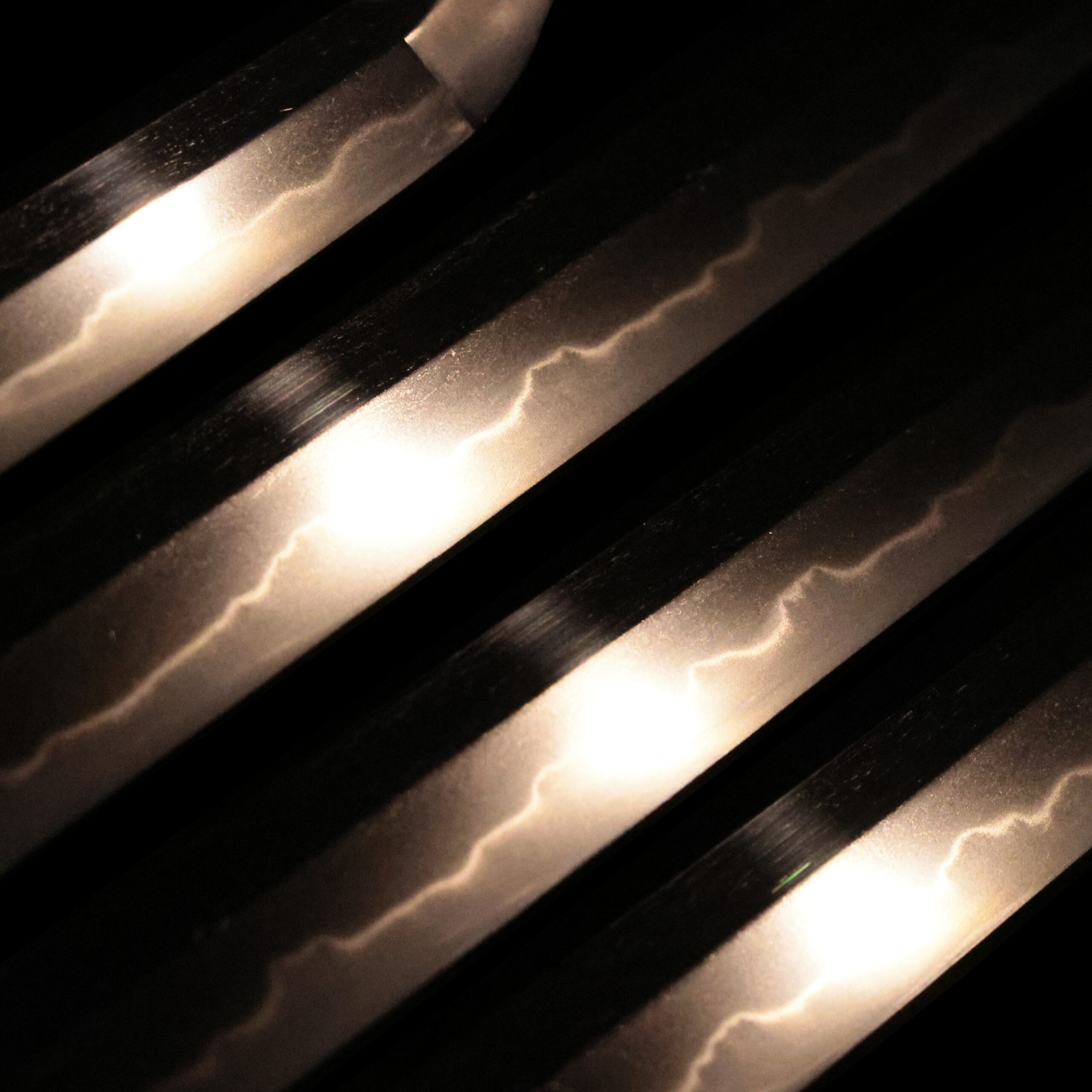
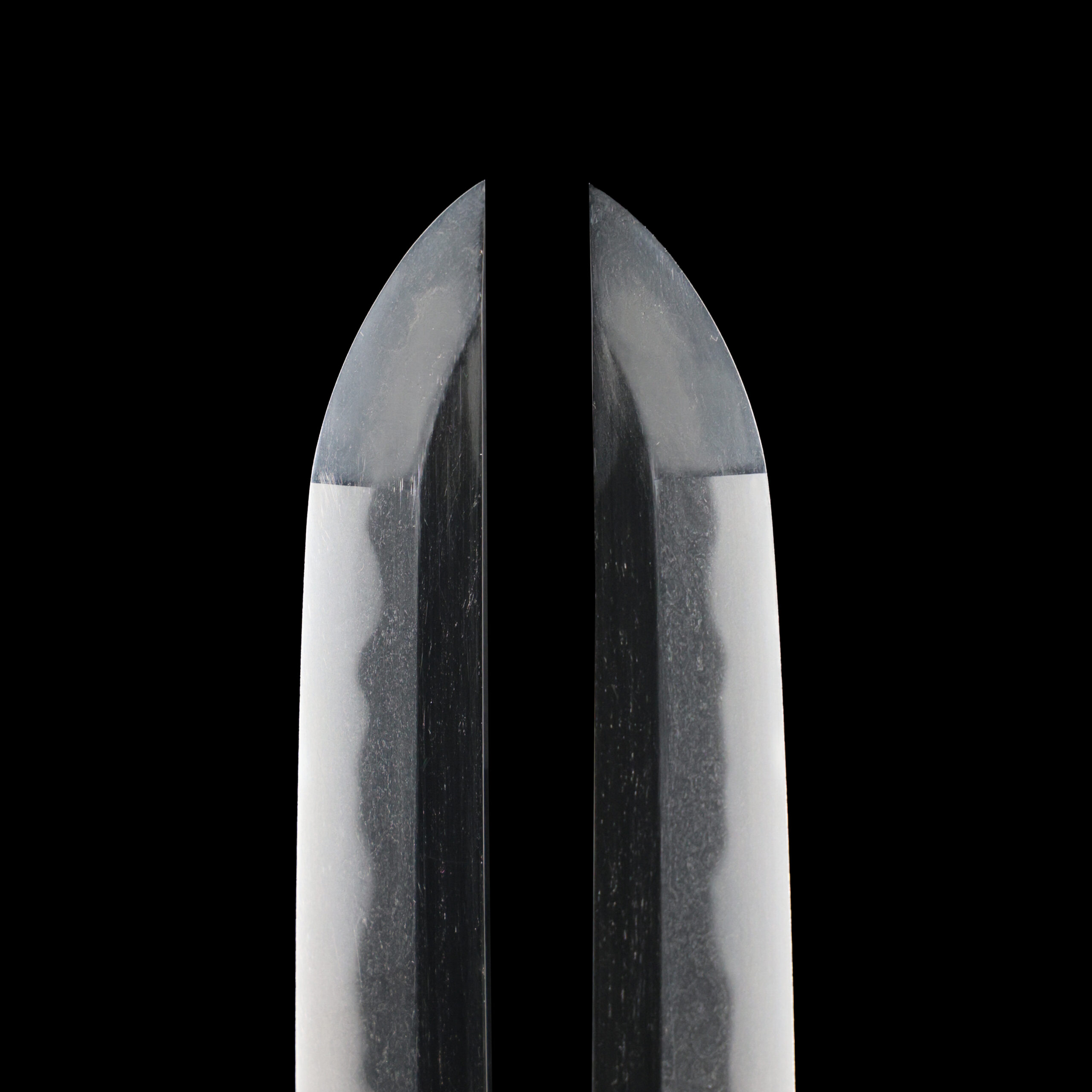
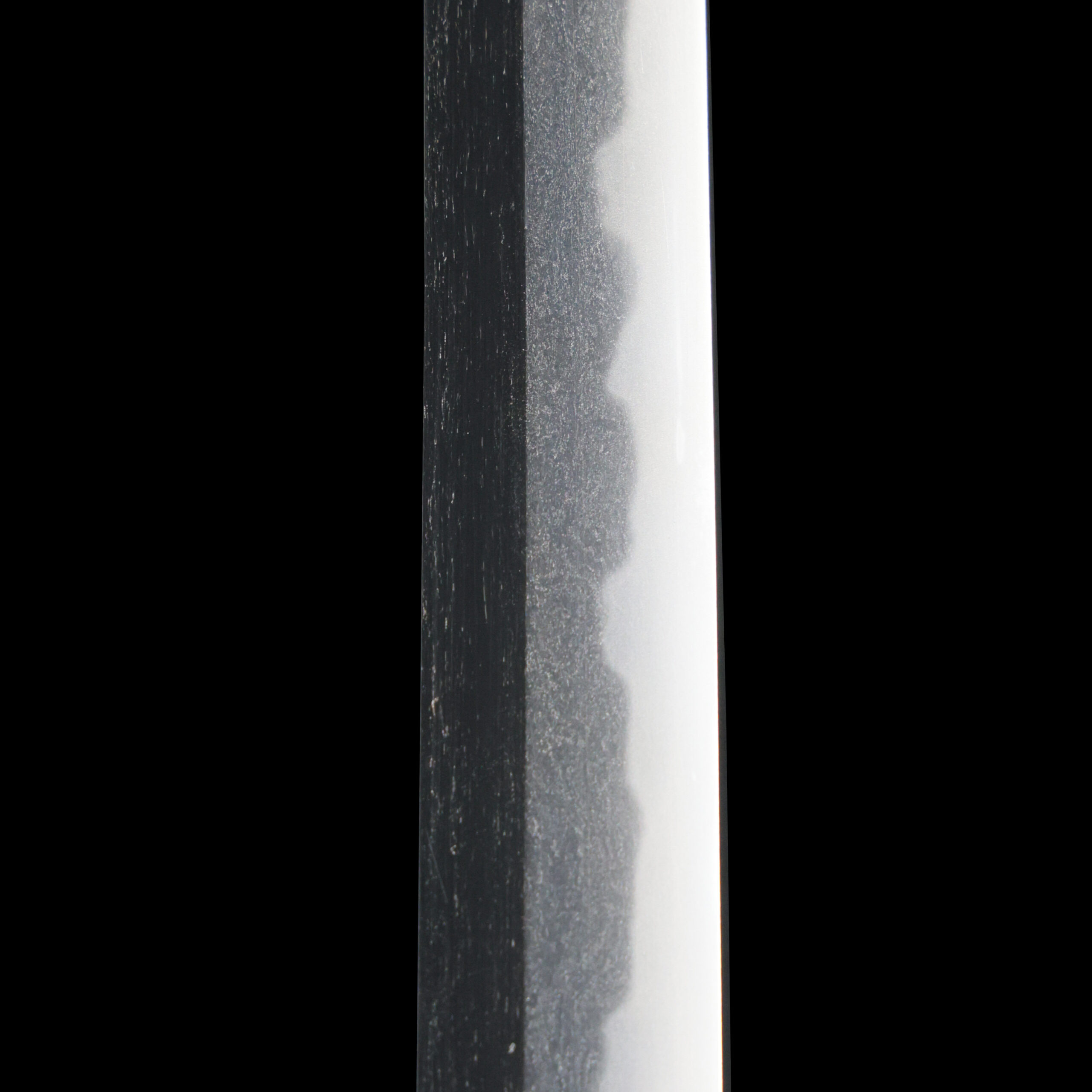
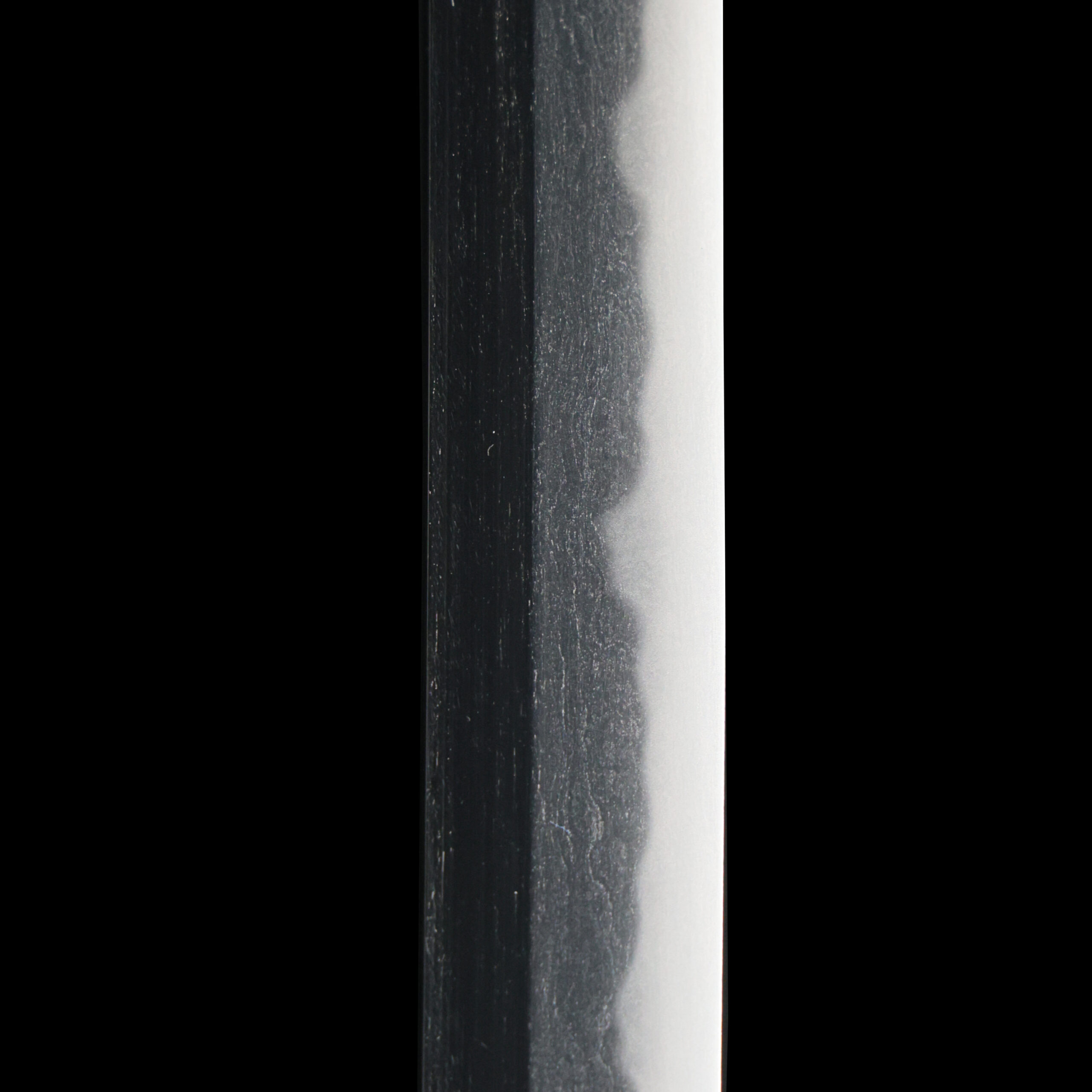
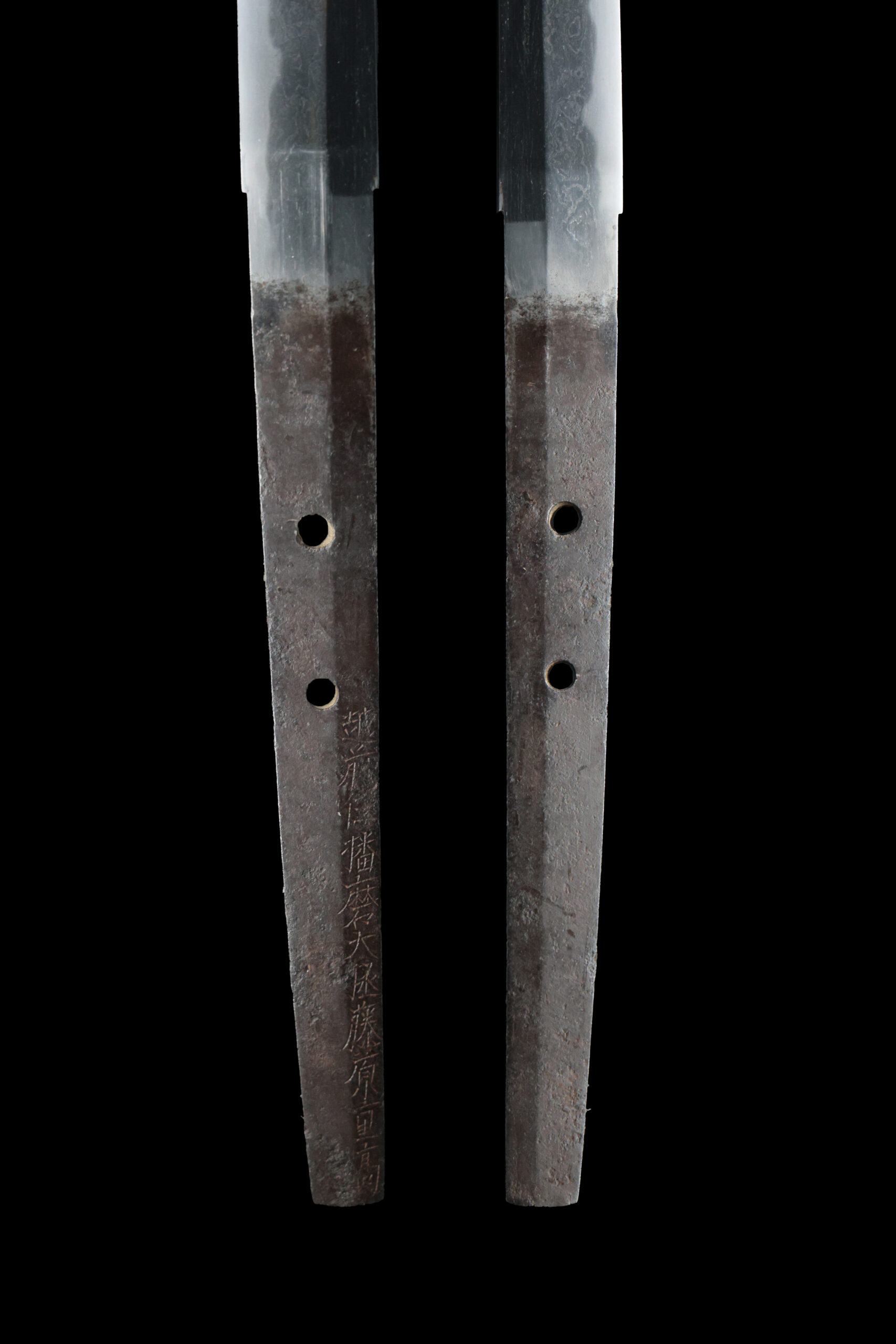
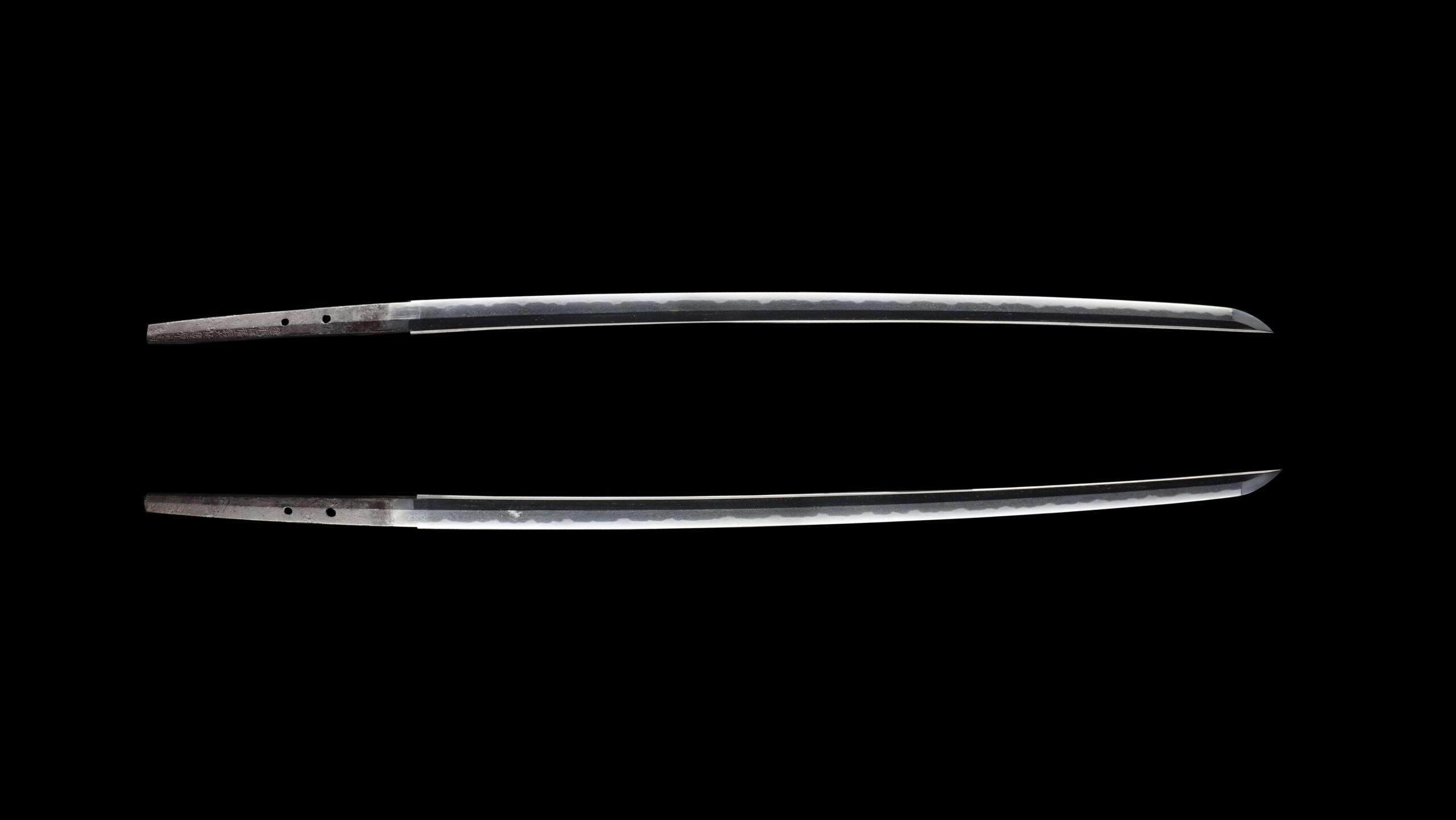
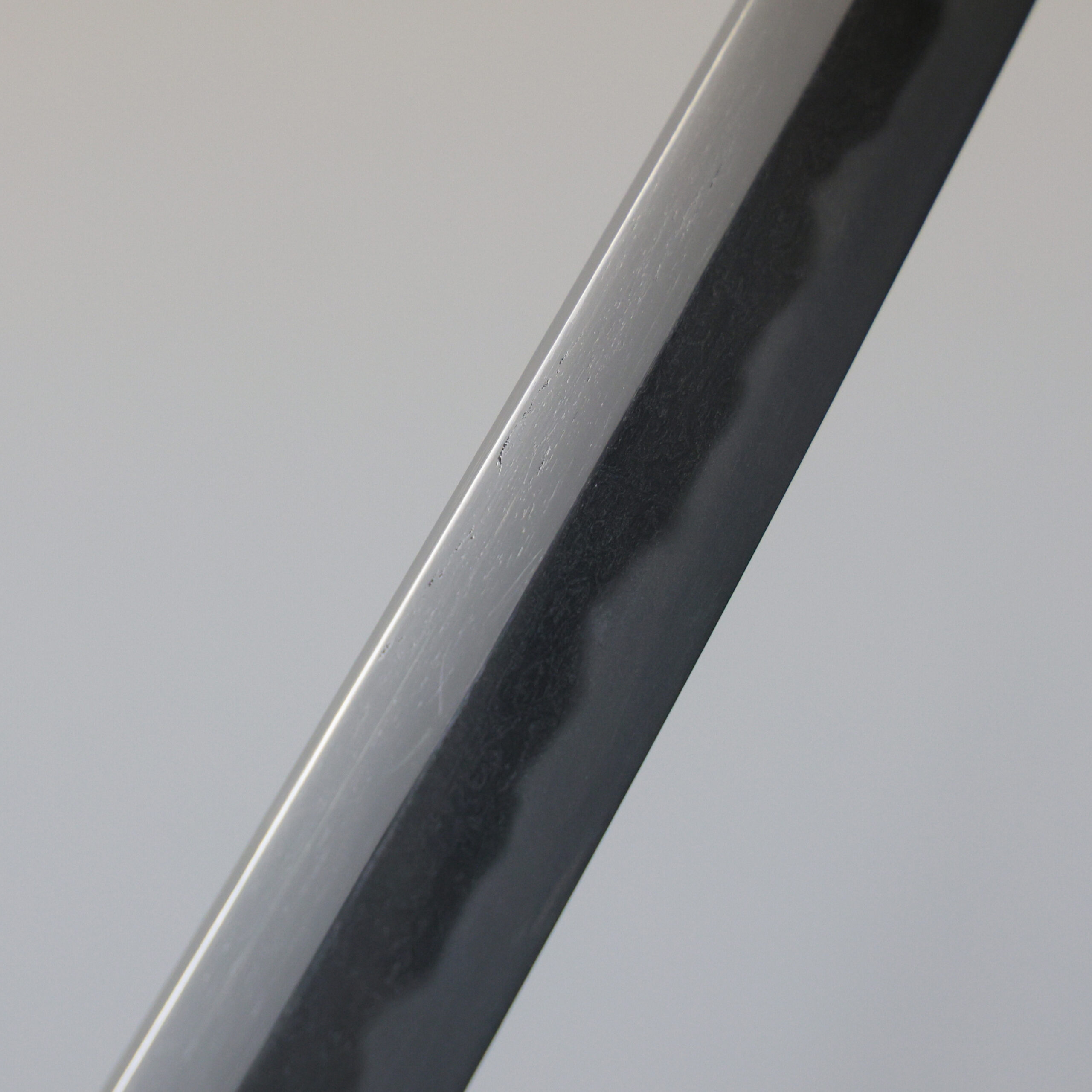
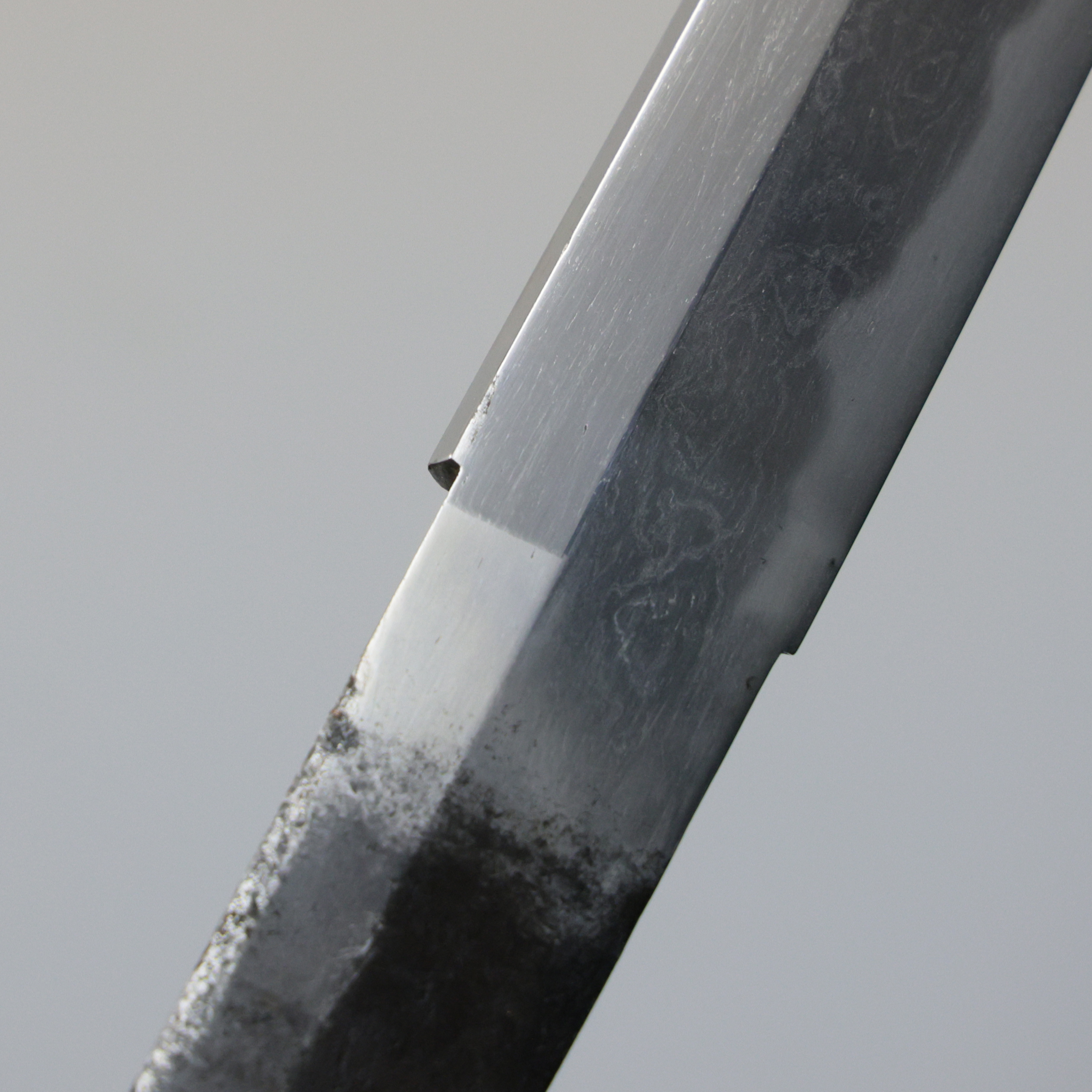
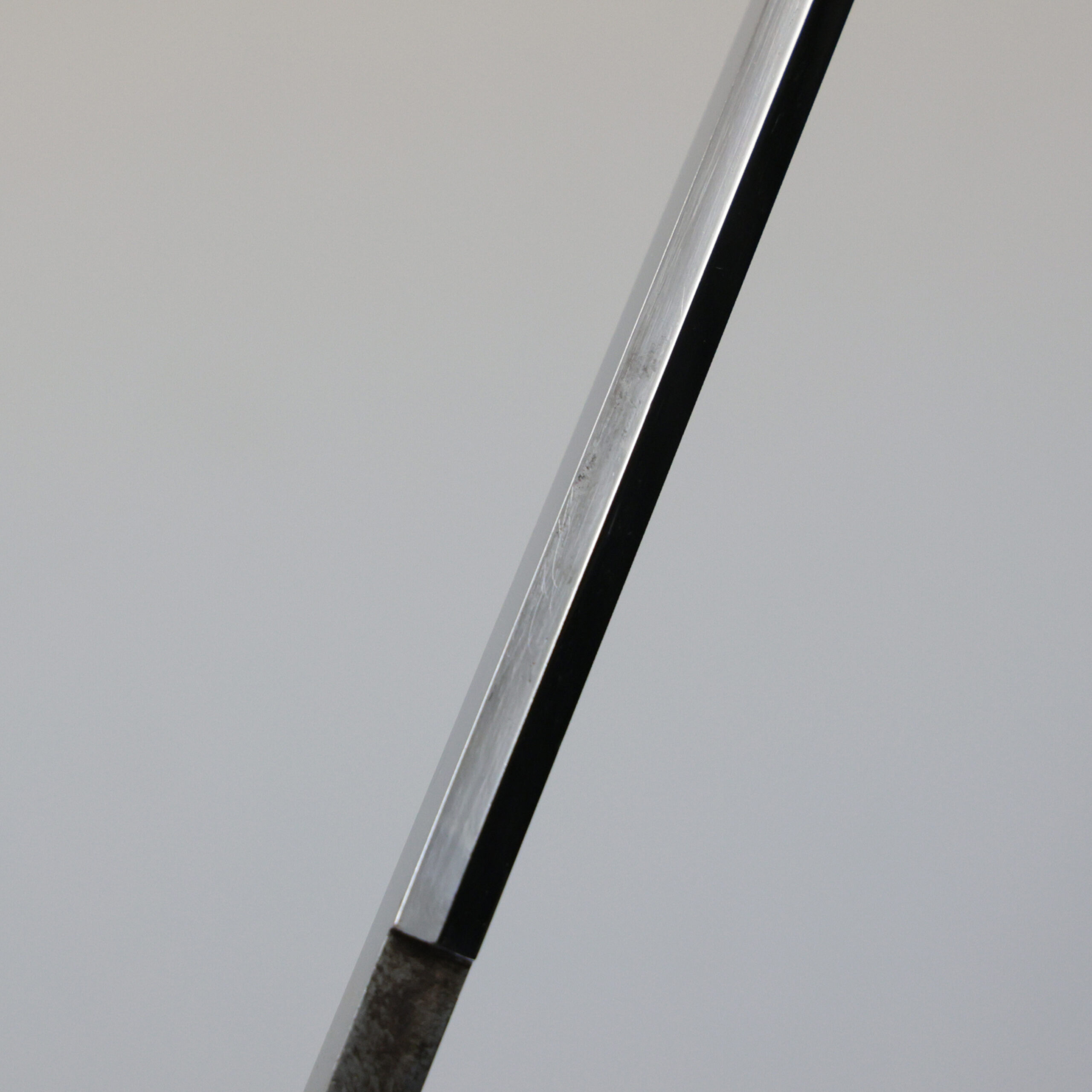
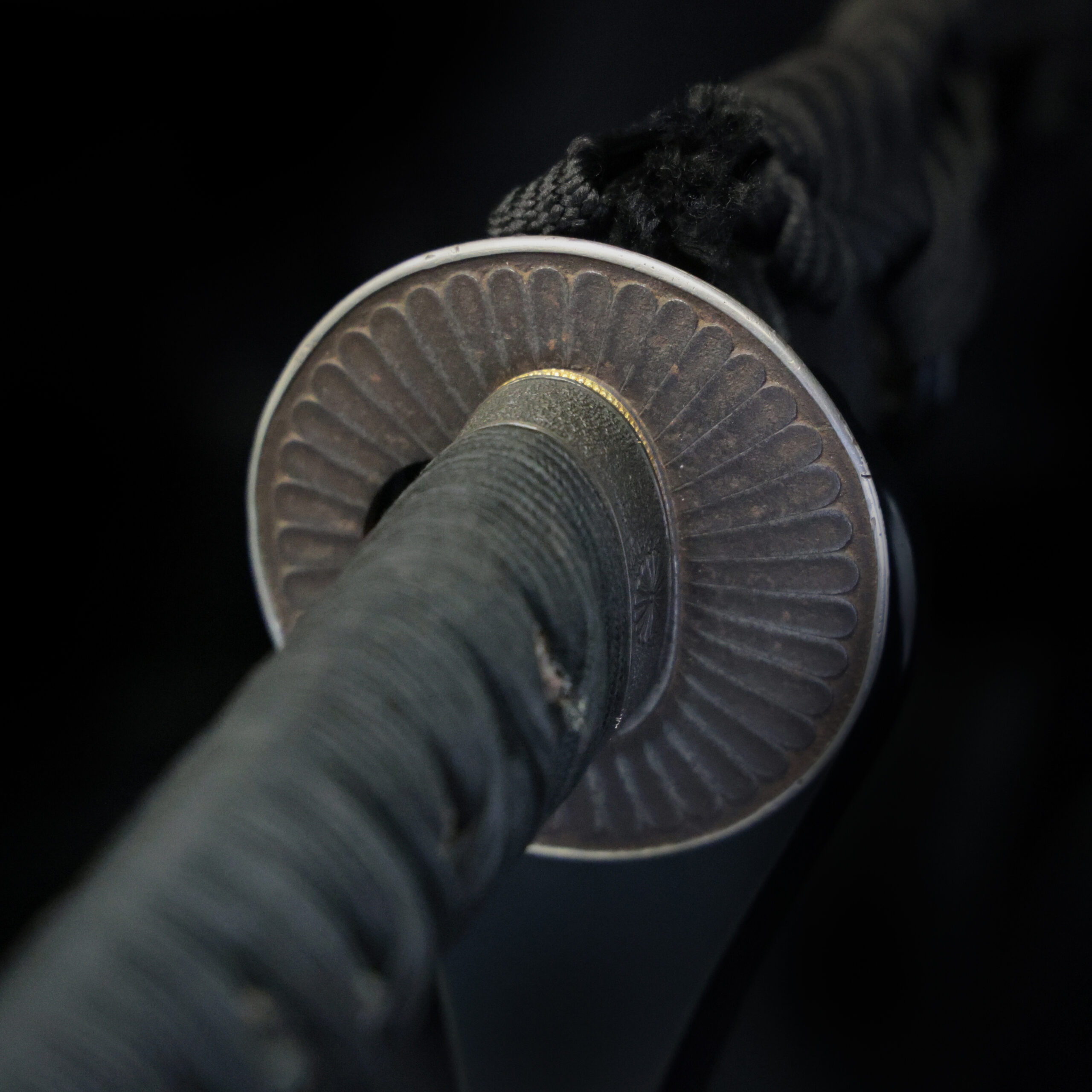
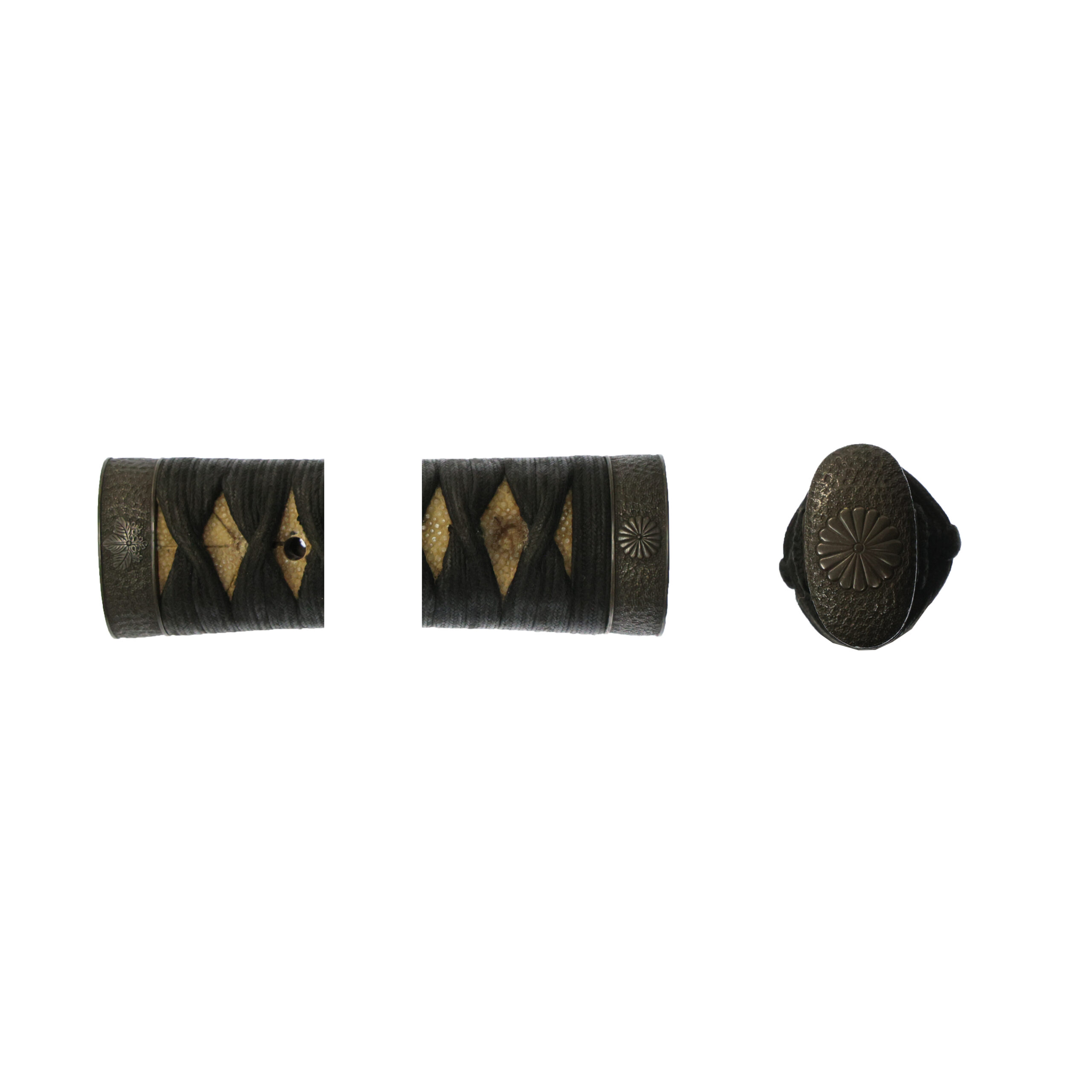
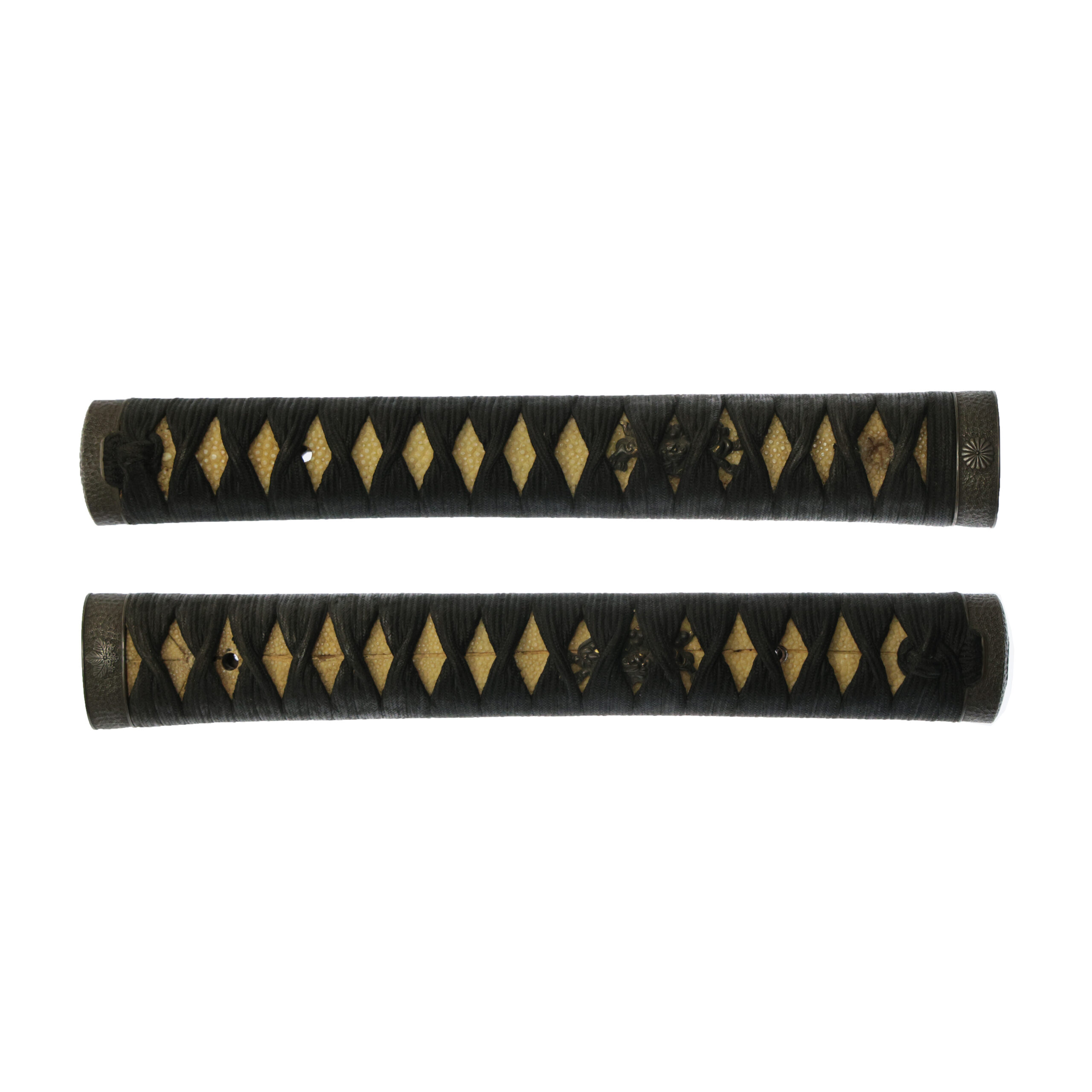
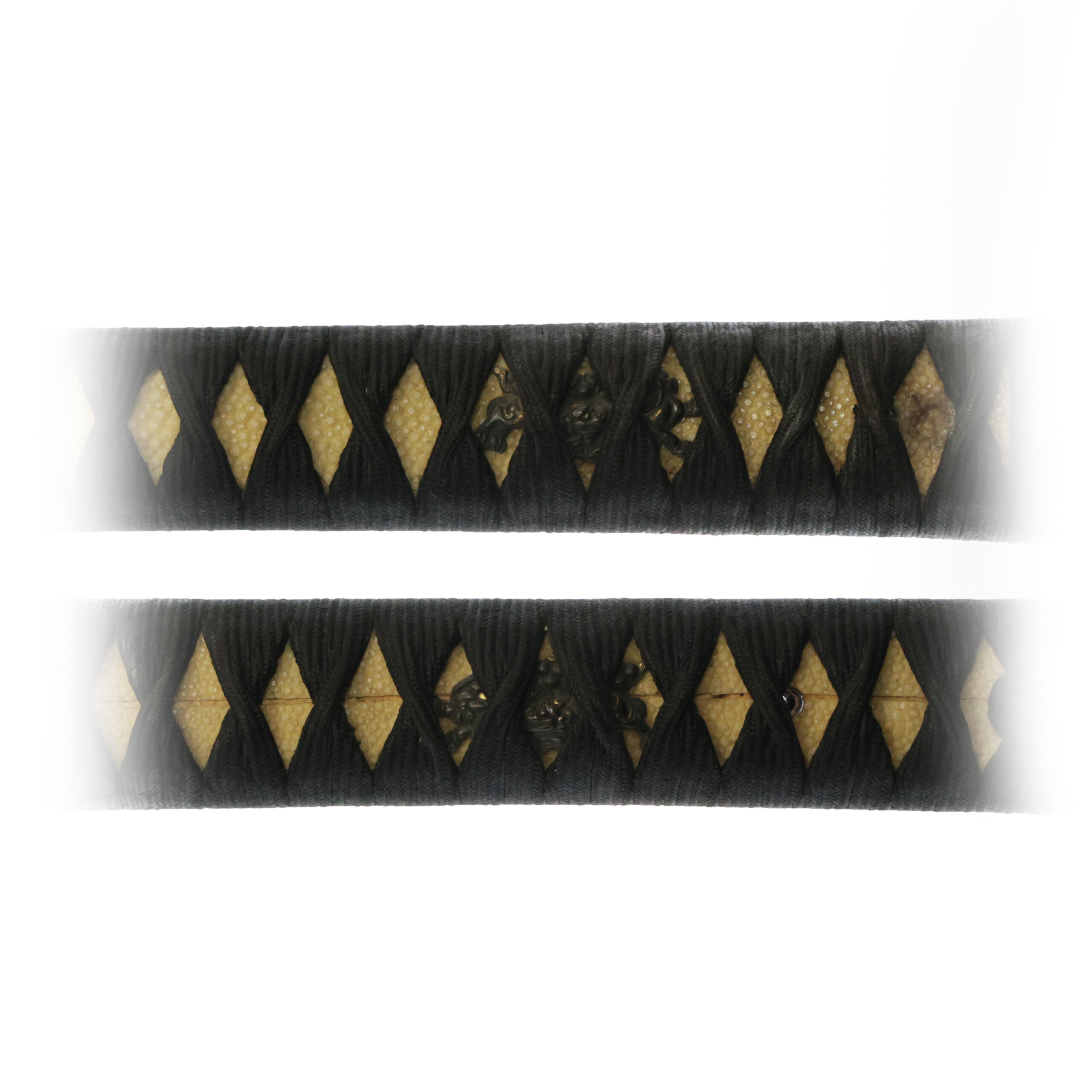
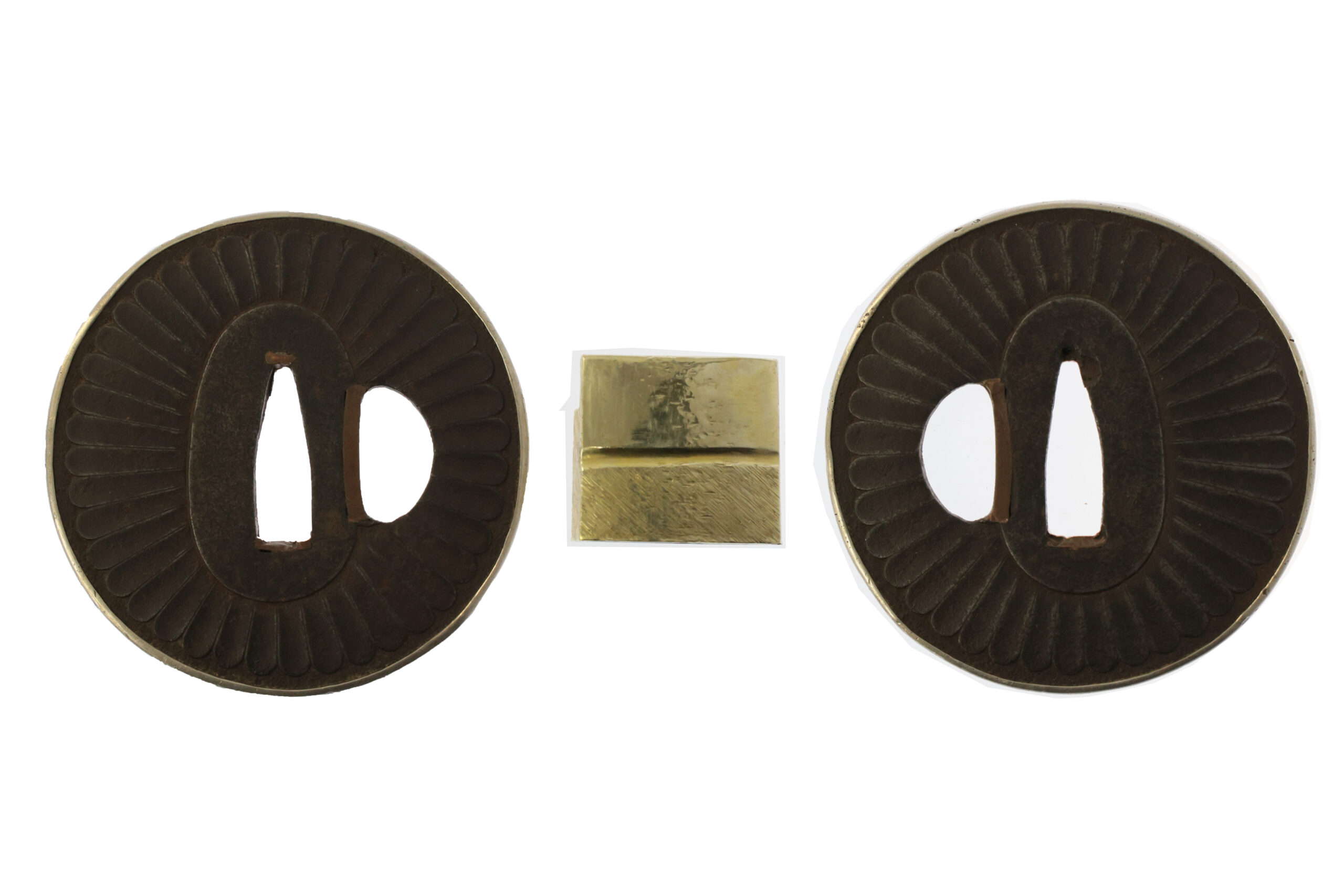
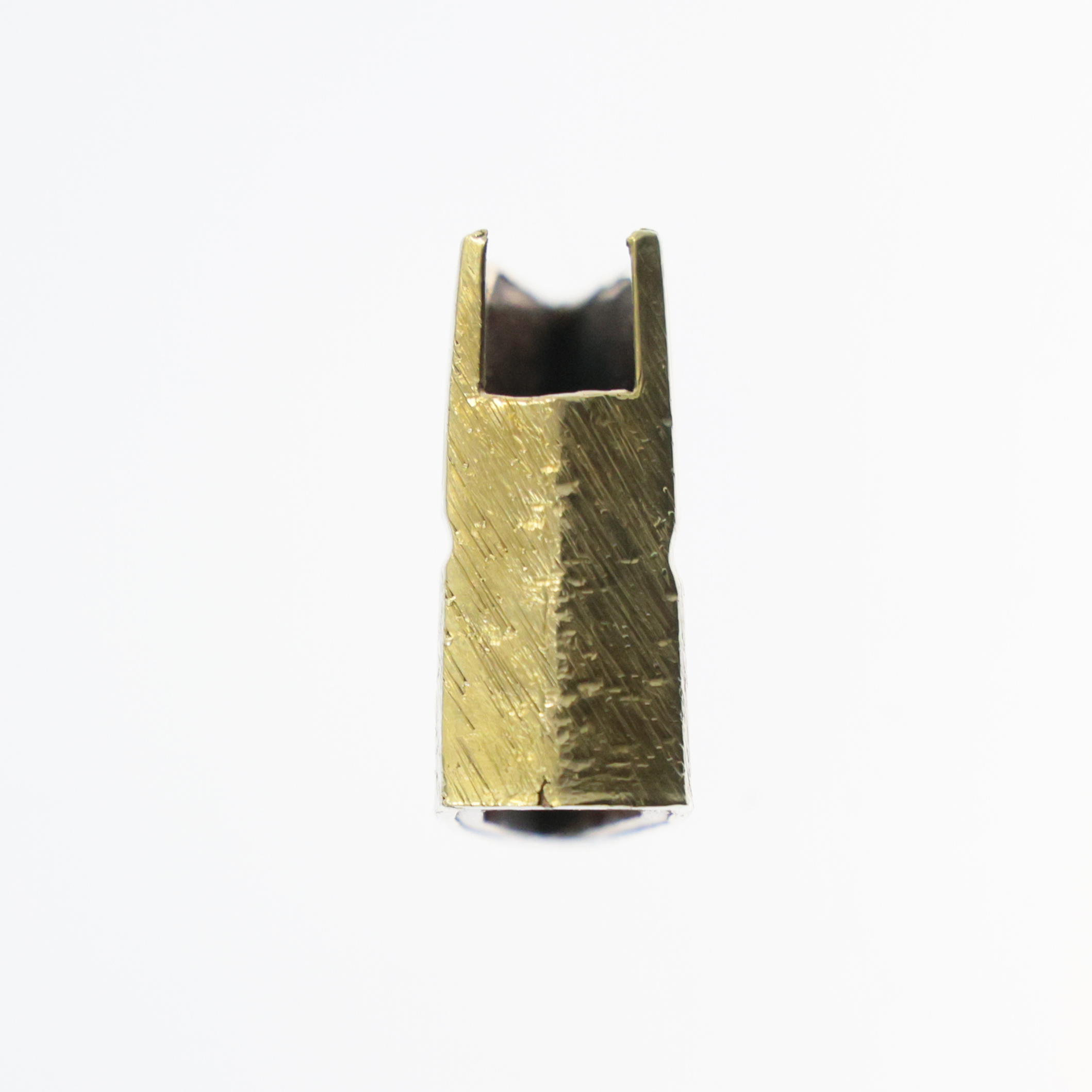
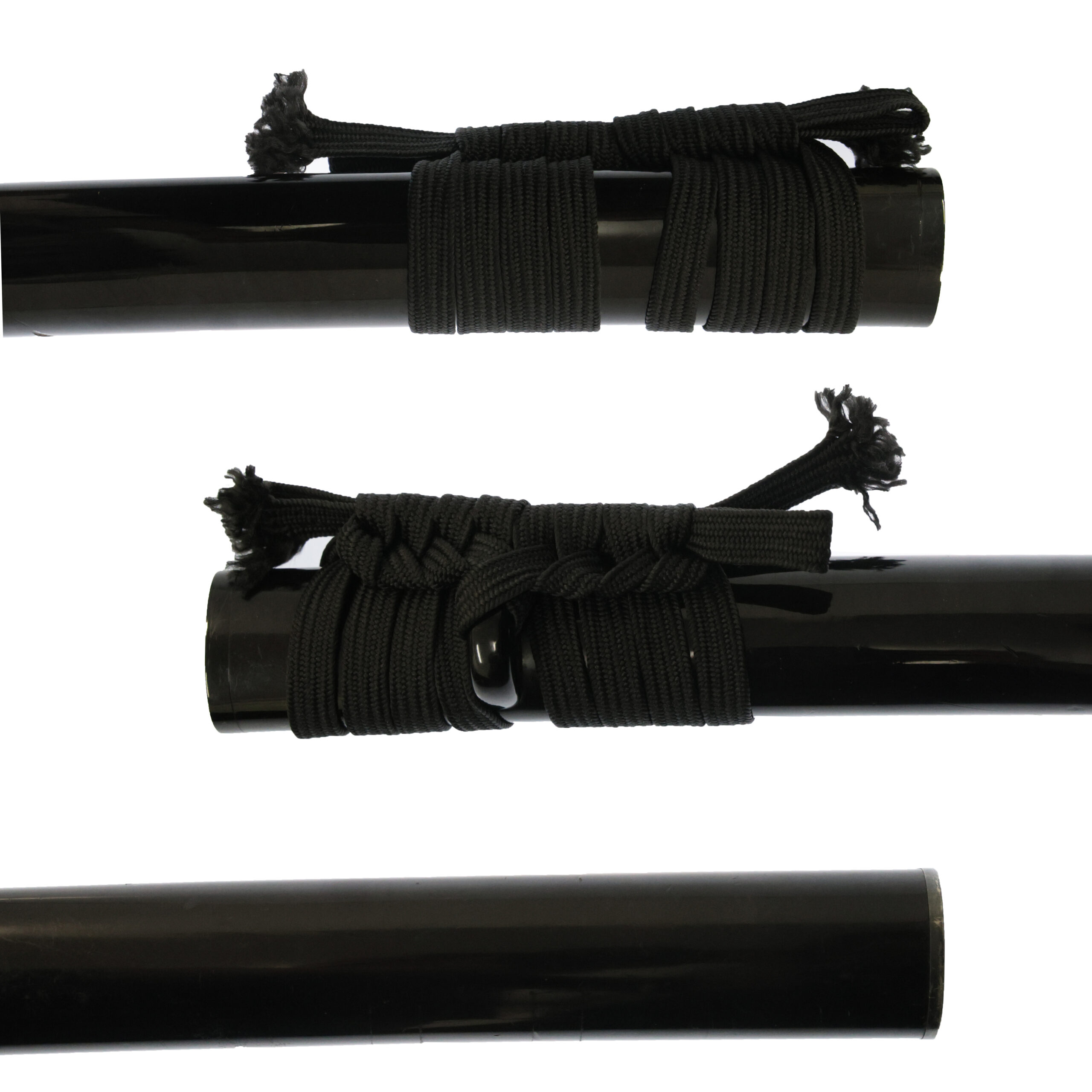
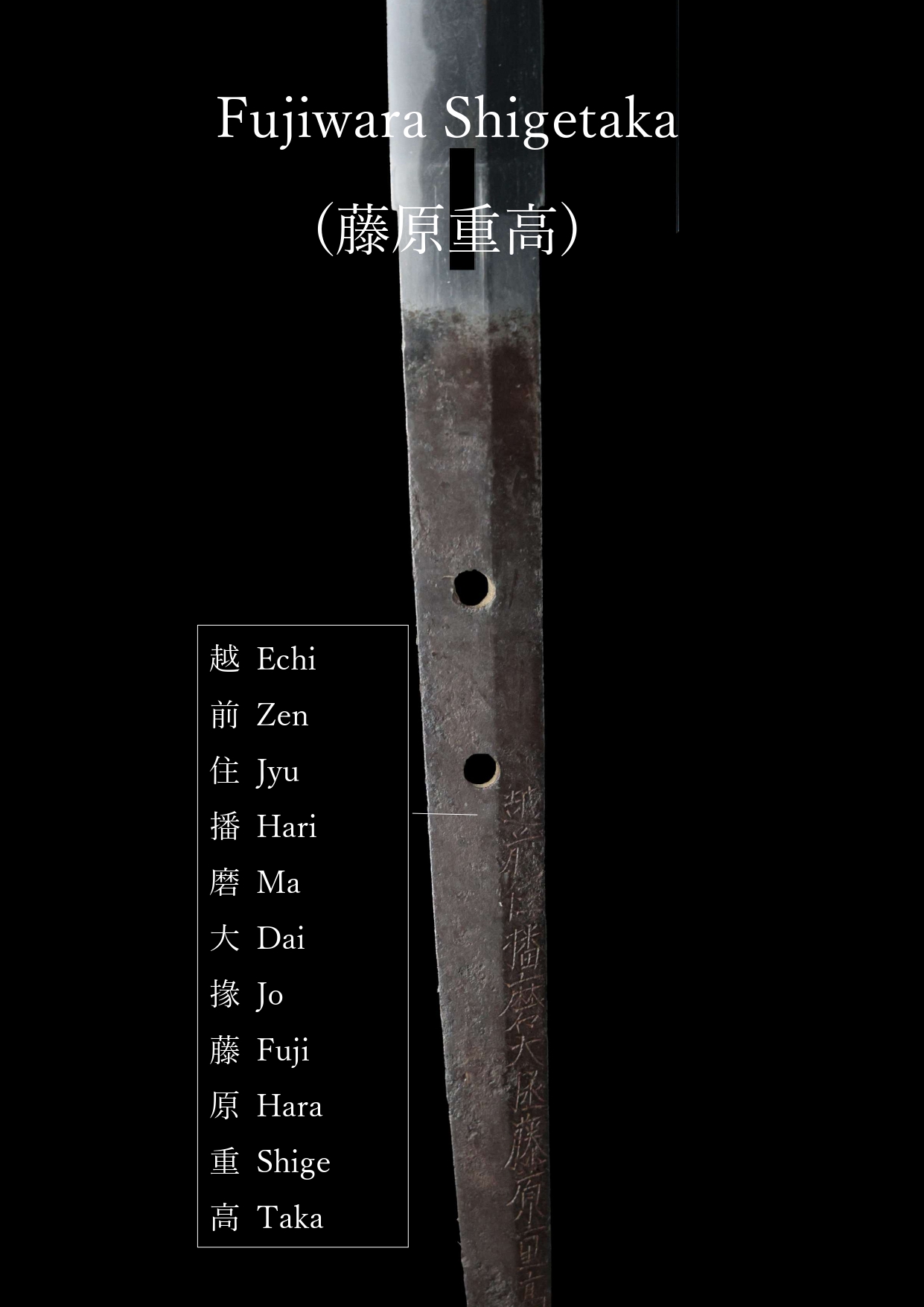
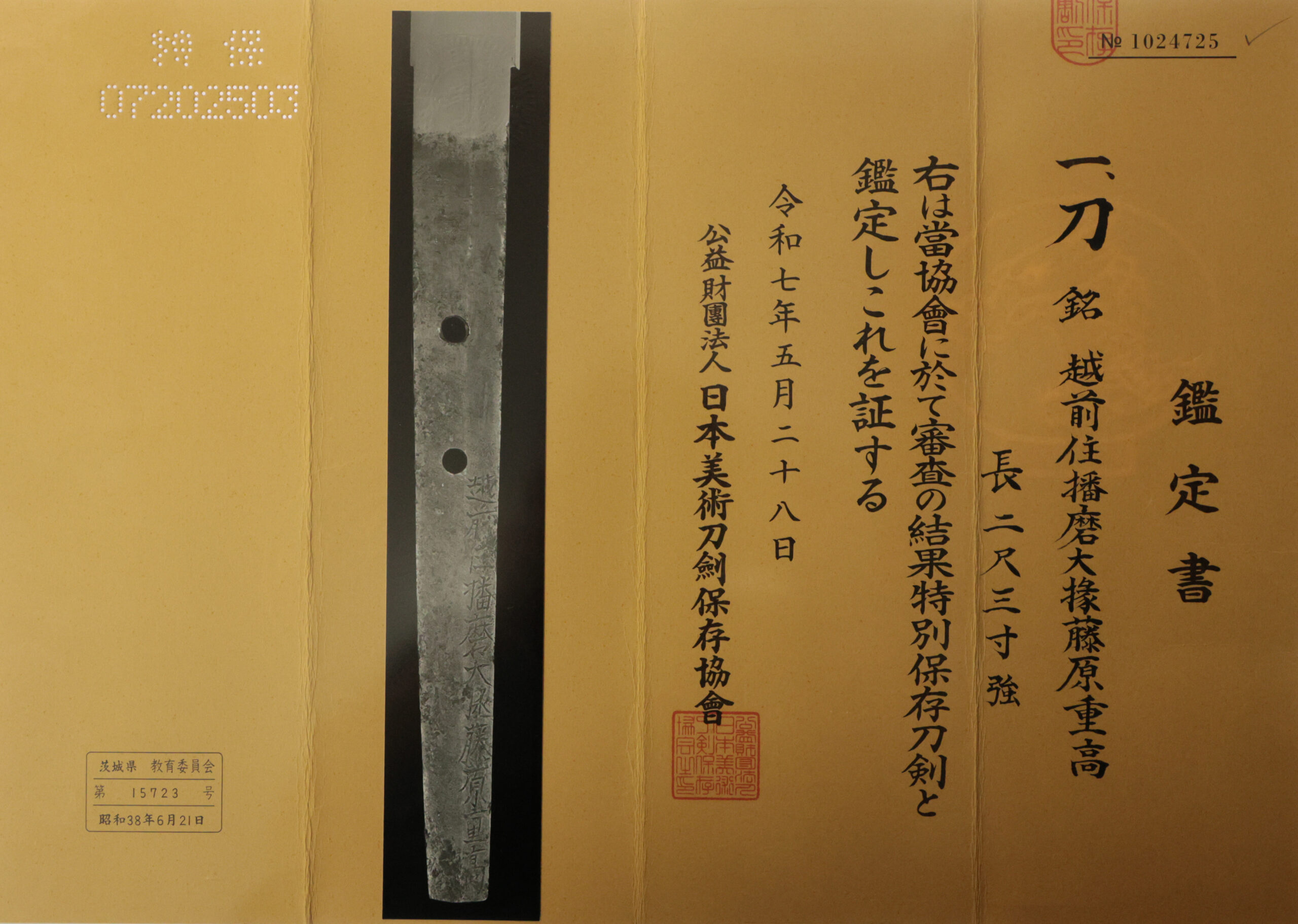
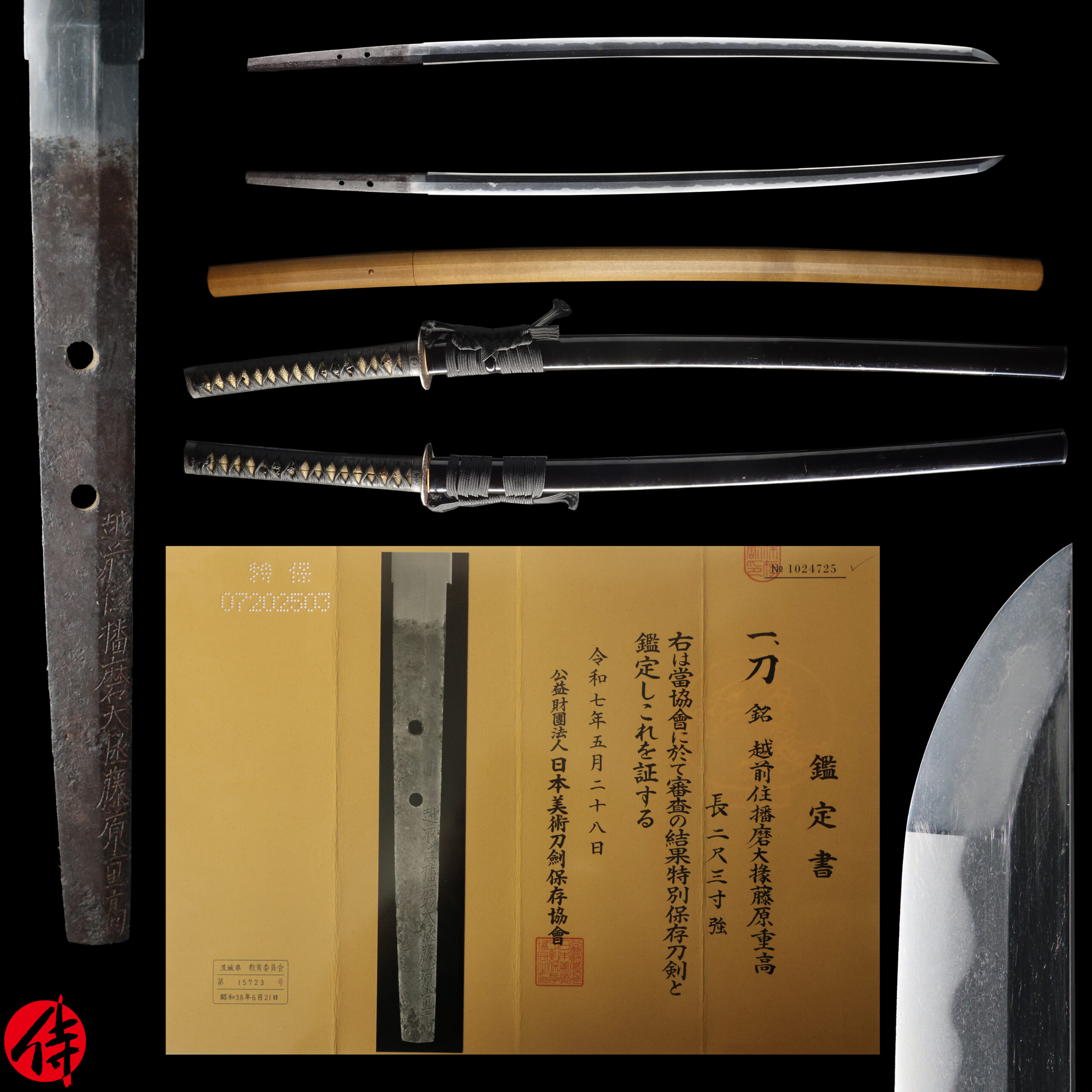
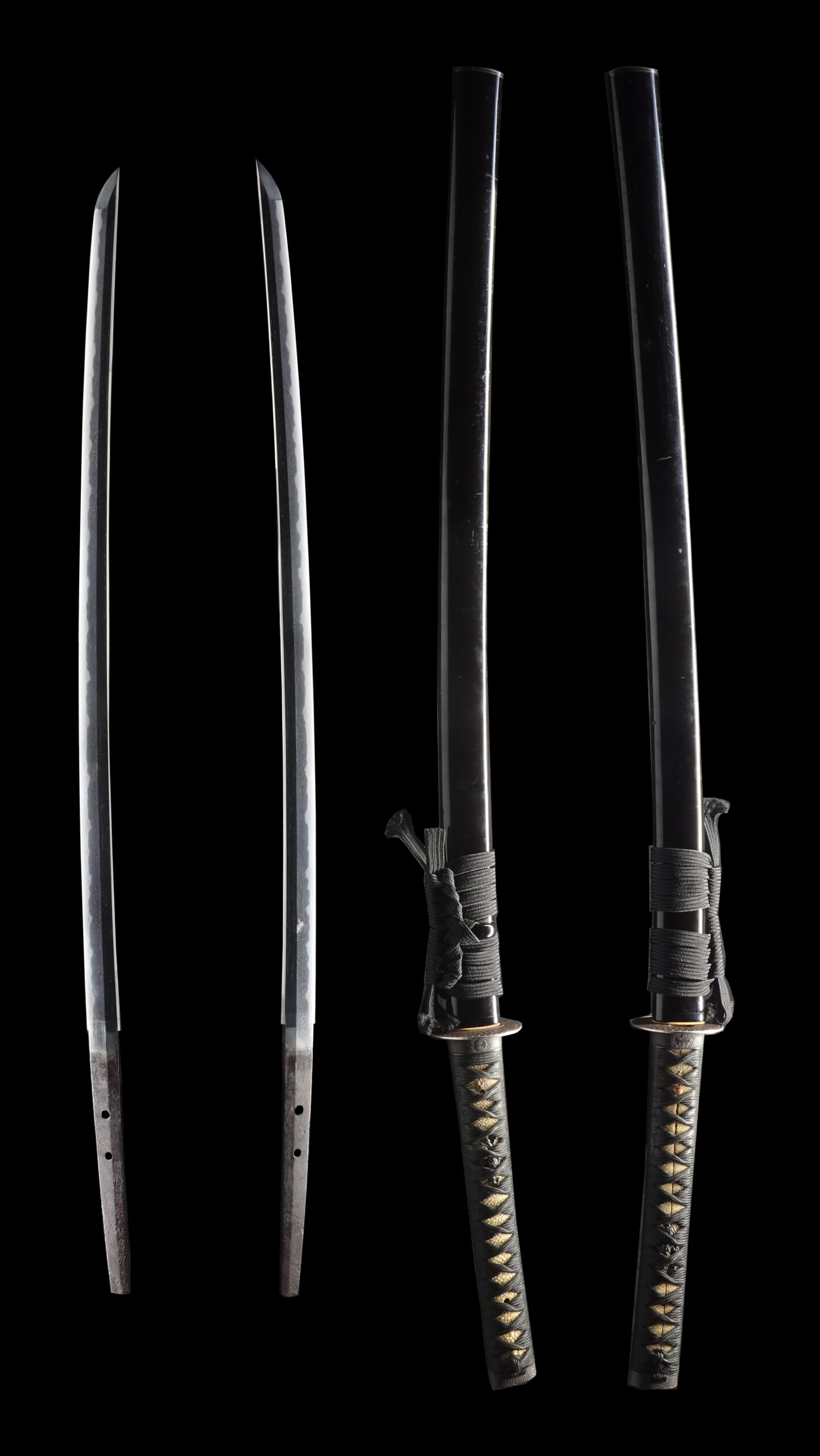
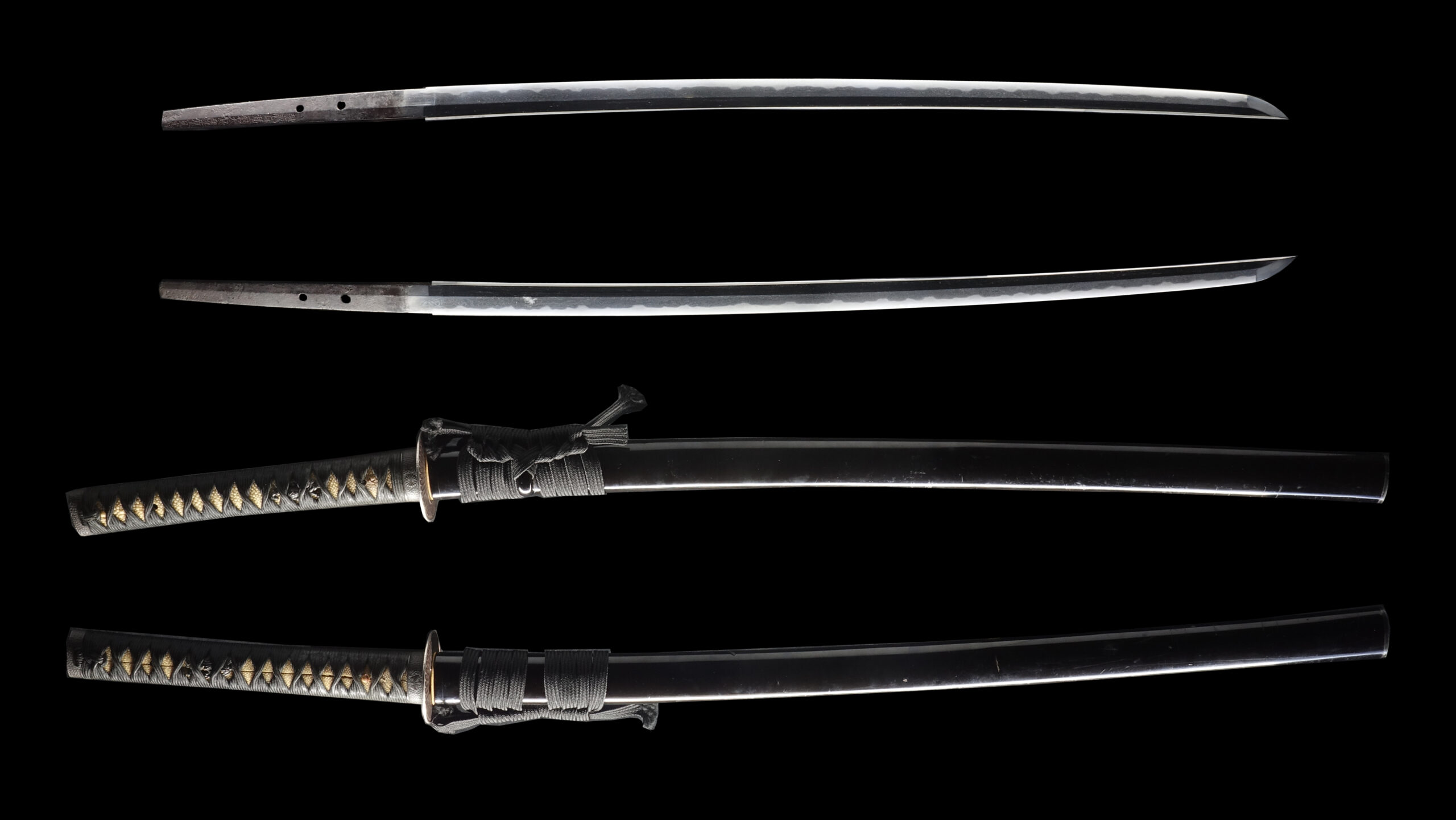
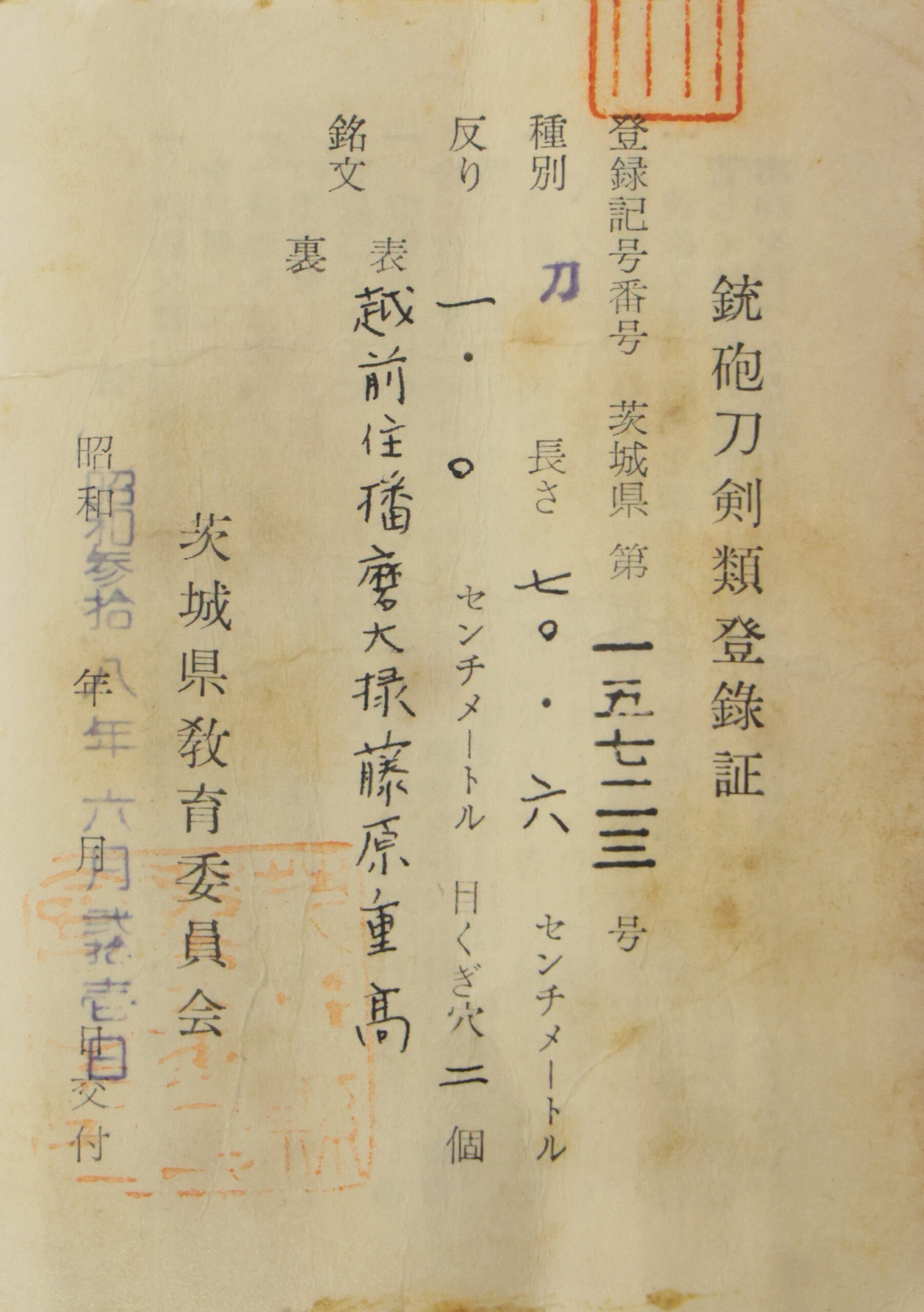
This blade was signed Echizen-jū Harima Daijō Fujiwara Shigetaka (越前住播磨大掾藤原重高). “Echizen-jū” indicates that the smith resided in Echizen Province (present-day Fukui Prefecture), while “Harima Daijō” is an honorary court title granted in recognition of exceptional craftsmanship. It was common for Japanese swordsmiths to include both their place of residence and official title in their signatures. The name Shigetaka (重高) was passed down through 11 generations until the end of the Edo period (late 19th century) and represents one of the most prominent swordsmith lineages in Echizen. Among these, only the first and second generations used the clan name “Fujiwara (藤原)” in their signatures, and both are known to have held the title Harima Daijō (播磨大掾). Based on these characteristics, this blade is attributed to either the first or second generation Shigetaka. The first generation was active around 1600–1624, and the second generation from 1624–1661. The third generation (1661–1681) is also highly regarded and considered comparable in skill to the earlier masters. The first-generation Shigetaka is said to have been born in the Shinshū region (present-day Nagano Prefecture). He later moved to Mino Province (present-day Gifu Prefecture), one of Japan’s major sword-producing centers, where he trained under Kanenori (兼則), a highly respected swordsmith. Toward the end of the Muromachi period (late 16th century), Shigetaka and his master relocated to Echizen Province. From that time onward, successive generations of the Shigetaka lineage remained in Echizen, producing high-quality blades under the patronage of the Matsudaira clan, the ruling family of the region. Echizen Province was prosperous during the Edo period, being ruled by the Echizen Matsudaira clan, a direct retainer of Tokugawa clan who ruled the Edo government. Many skilled swordsmiths from different regions moved to Echizen because of the high demand among the Samurai. Many renowned swordsmiths, such as the first-gen Shigetaka, were originally from the Mino province (Gifu prefecture). They are called Echizen Seki swordsmiths. It is appraised as a Tokubetsu Hozon Token (特別保存刀剣) issued by NBTHK (Nihon Bijutsu Touken Hozon Kyokai:日本美術刀剣保存協会). *Please keep in mind that there are a couple of Kitae Kizu and small rust on this blade. Fuchi-Kashira This fuchi-kashira is decorated with chrysanthemum crests (kikka-mon, 菊花紋) and the Go-shichi no Kiri (五七の桐) motif, both of which have long been associated in Japan with nobility, authority, and auspicious symbolism. The chrysanthemum crest is closely linked to the Imperial family, while the paulownia motif has historically been used by the Imperial court and later by powerful political and military leaders. Together, these motifs lend the piece a dignified and prestigious character. The Go-shichi no Kiri motif—literally “five-seven-five,” referring to the arrangement of its paulownia flowers—appears in several variations. Designs with fewer flowers were more commonly used by the general public, whereas those with a greater number of blossoms were associated with higher rank and prestige. According to tradition, the hōō (鳳凰, Fenghuang), a mythical phoenix-like creature, is said to rest only upon the paulownia tree, further reinforcing its status as a sacred and noble symbol. Tsuka and Menuki The theme of the Menuki is Karajishi (唐獅子, lion). The Shishi (獅子) means a lion in Japanese, and the Karajishi is a lion brought from the continent to Japan in the Toh period (唐, Tang dynasty, 618-907). The Karajishi typically has curly hair for its head, neck, body, and tail, as seen on this work. In Buddhism, the Karajishi is regarded as a symbol of wisdom, and Monju Bosatu (文殊菩薩, Manjushri Bodhisattva) rides lions. According to a theory, the Karajishi is the origin of Komainu (狛犬, stone guardian dogs that exorcize evil spirits). It shows this animal motif has been familiar to Japanese people since ancient times. Tsuba and Habaki This tsuba is made of iron and formed in a circular shape, featuring a design of chrysanthemum petals radiating outward. The chrysanthemum (菊, kiku) has long been regarded as a symbol of longevity and vitality. In ancient China, it was believed to possess medicinal properties that could promote a long life, and this concept was introduced to Japan during the Nara period (710–794). Since then, the chrysanthemum has been deeply appreciated as one of the flowers representing autumn. Its radially arranged petals have often been likened to the sun, reinforcing its association with eternal youth, longevity, and good health. The chrysanthemum crest, known as Kiku no Gomon (菊の御紋), has historically been used by the Emperor and the Imperial family, and is therefore recognized as a highly prestigious and noble motif. From the Kamakura period (1185–1333) through the Warring States period (1467–1615), this crest was sometimes bestowed by the Emperor upon warlords in recognition of their distinguished service. For example, Ashikaga Takauji (1305–1358), the first shogun of the Muromachi shogunate, is said to have been granted the chrysanthemum crest for his role in overthrowing the Kamakura shogunate in cooperation with Emperor Go-Daigo (1288–1339). Similarly, Toyotomi Hideyoshi (1537–1598) is also believed to have been granted the chrysanthemum crest by Emperor Go-Yōzei. Receiving such a crest was considered an extraordinary honor, as the Emperor was revered as a divine figure, and this association underscores the deep connection between the chrysanthemum motif and samurai culture. ※ Please note that the surface of this Habaki has some minor damage. Saya This Saya is covered with black lacquer. Due to its high waterproof effect, lacquer has been used since ancient times in Asia. The blade of a Japanese sword is made of iron, and moisture is the greatest enemy of iron. For the purpose of carrying the blade without degrading it, people devised a method of coating the scabbard with lacquer. To prevent not only moisture but also rain and snow from penetrating the inside of the scabbard, it was necessary to apply multiple layers of lacquer. The Nushi (塗師, lacquerers) was born precisely because advanced techniques were required to handle the complicated processes. ※ Please note that the surface of this Saya has some minor damage. Authentication Paper They authenticated the blade on May 28th in the 7th year of Reiwa (2025). They appraised it as Tokubetsu Hozon Touken, the blade especially worth preserving for Japanese society.
Offered by Samurai Museum
This piece has sold
39 on the market
Get an email when new Shimosaka School work hits the market.

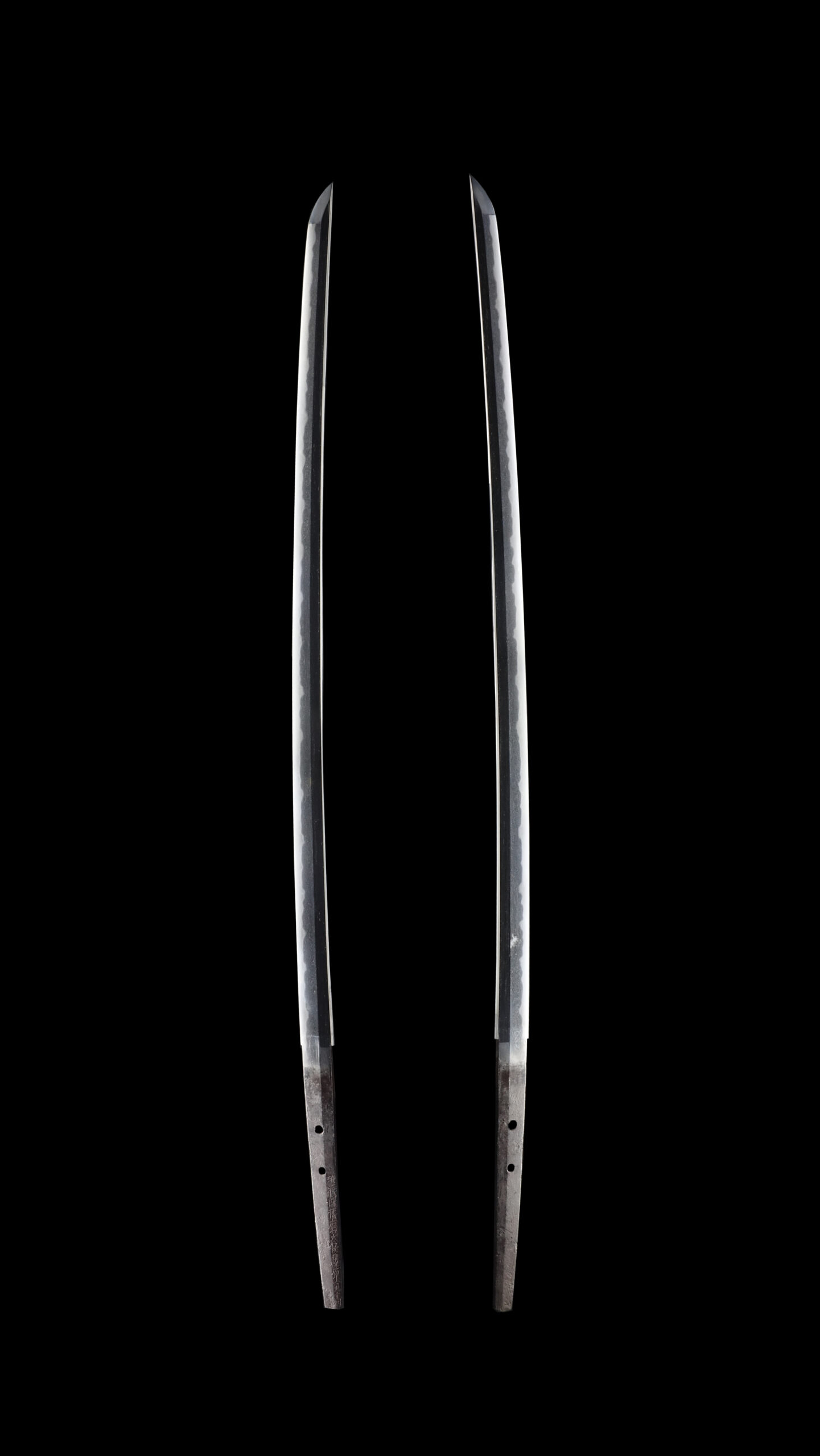
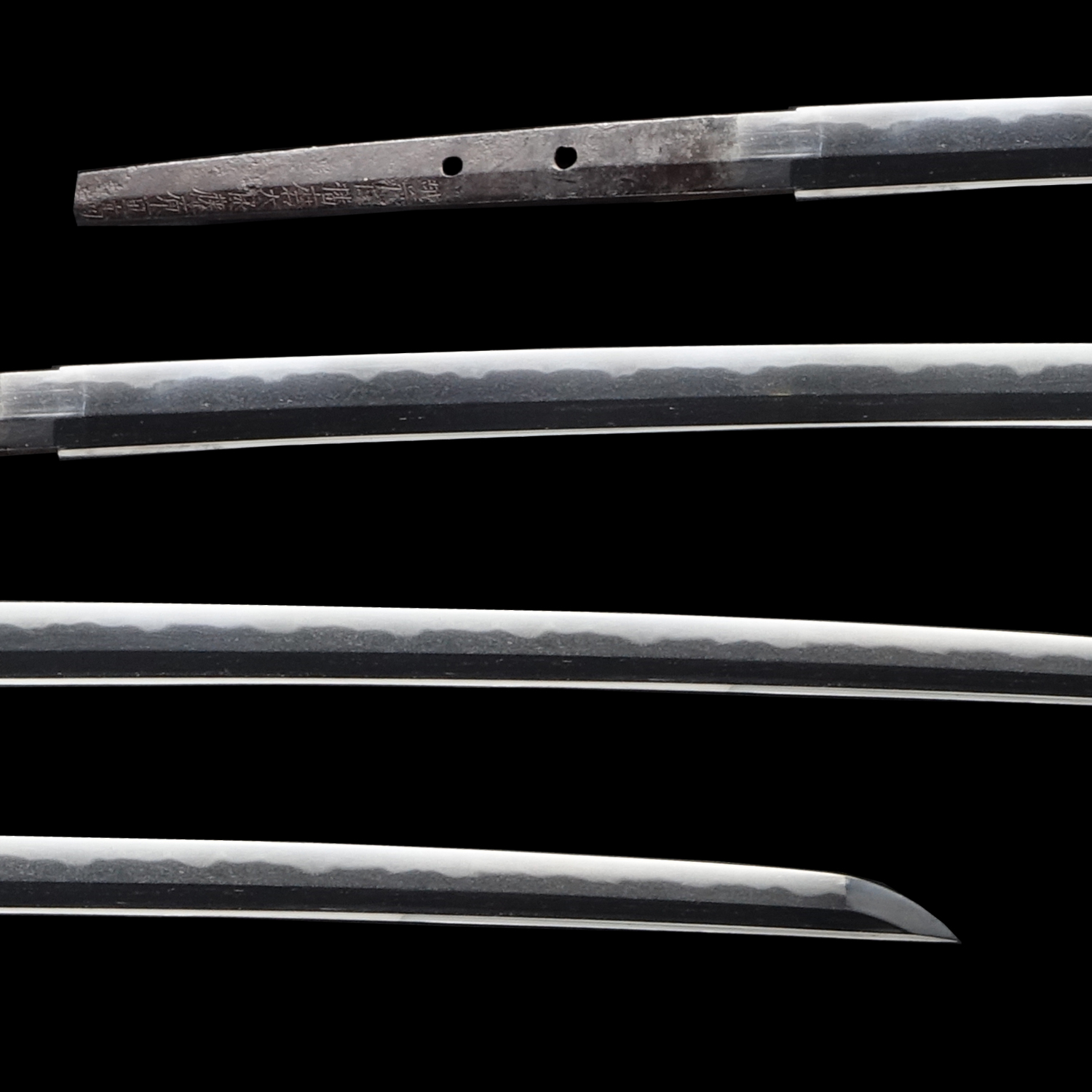
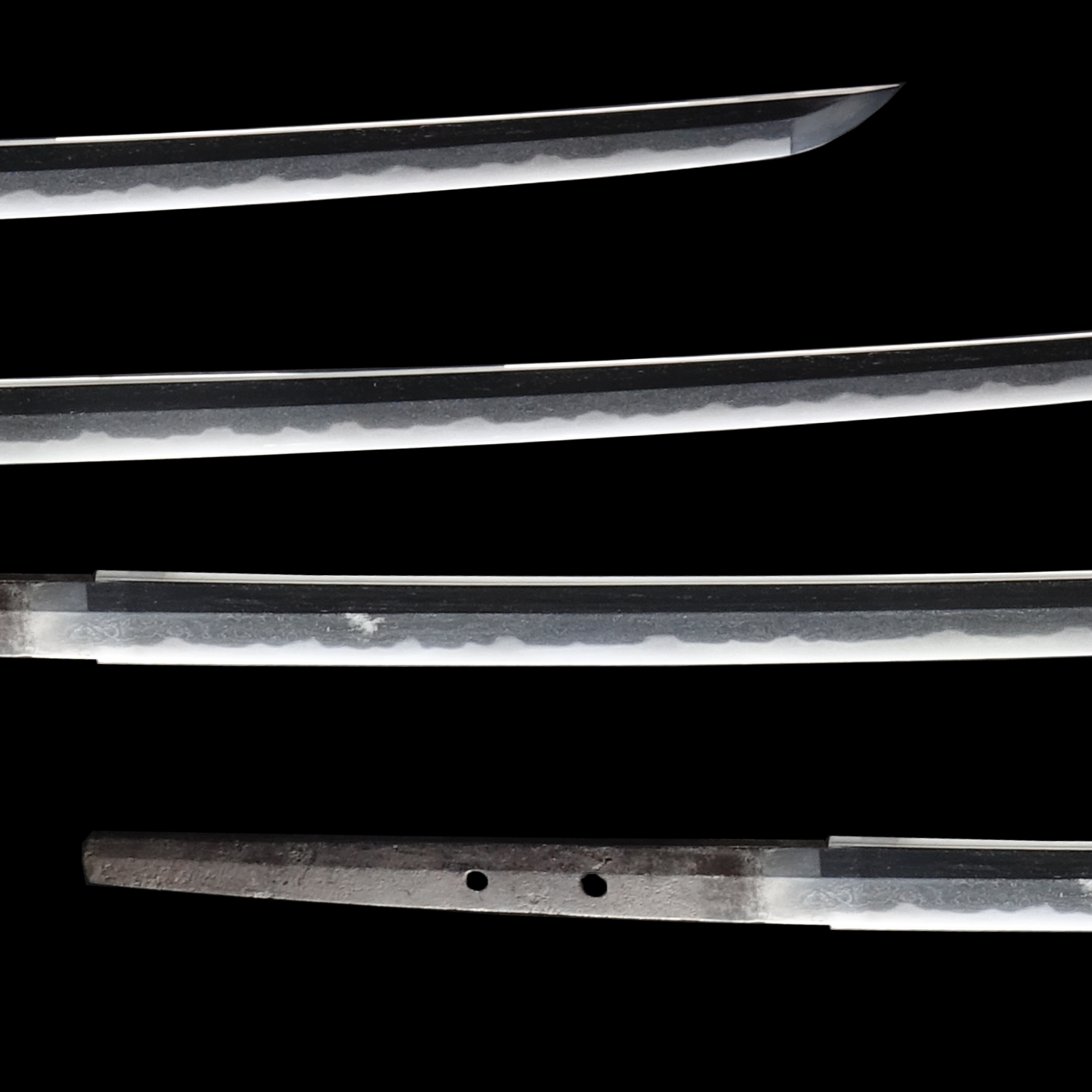
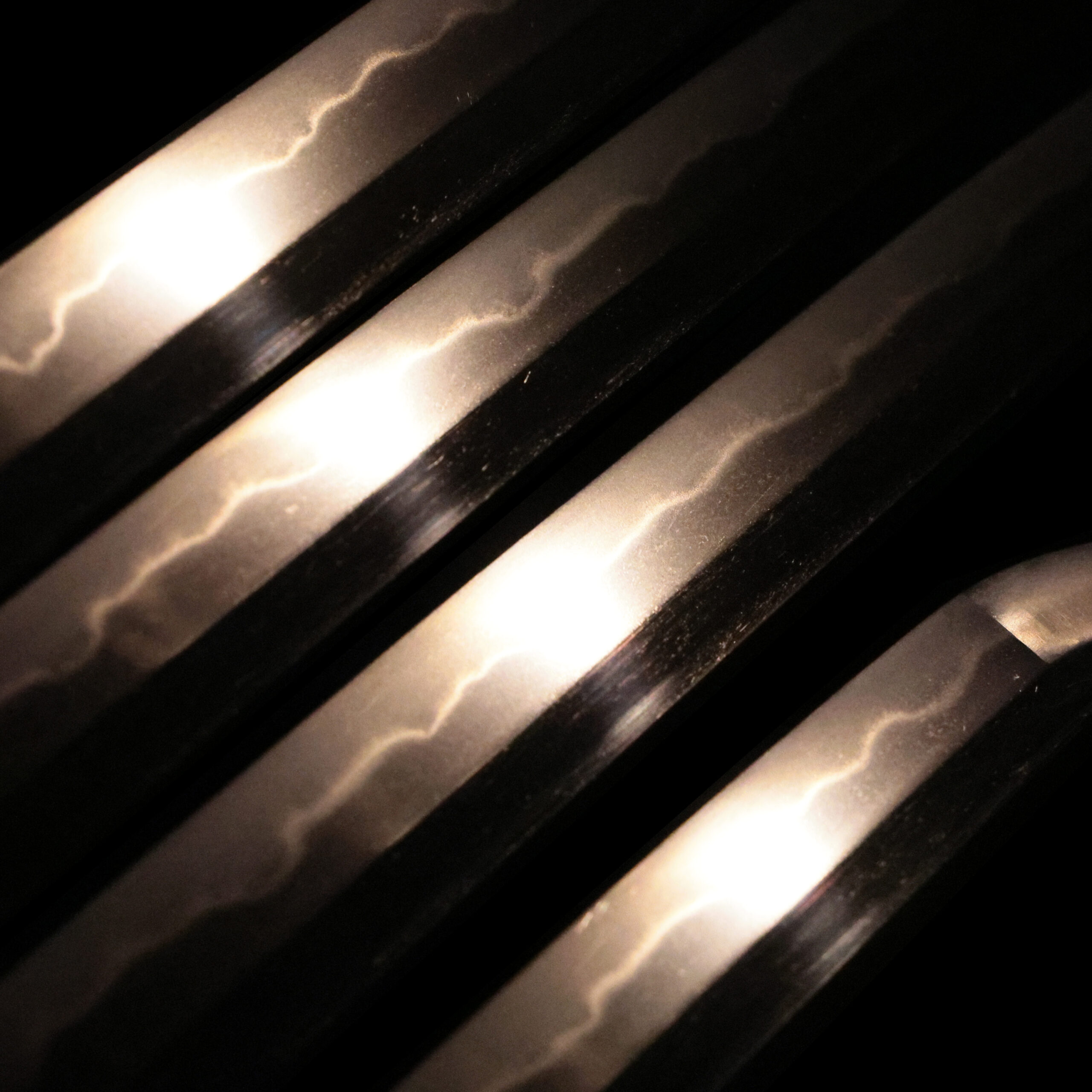
Shinto · Echizen
39 pieces on the market now
The Shimosaka name began not as a single hand but as a trademark shared by a band of Echizen smiths at the dawn of the shinto era, and the designated record gathers their work under that one signature rather than parsing it into individuals. The published sources read the early inscriptions, the generic Echizen no Kuni Shimosaka and the titled Higo Daijo Fujiwara Shimosaka, as the product of a group, of which the first-generation Yasutsugu served as the representative. Born in Shimosaka village of Sakata district in Omi, Yasutsugu moved to Echizen under the patronage of Yuki Hideyasu, signing in his early years Higo no Daijo Shimosaka before his Keicho 10 to 11 summons to Edo, where he forged before Ieyasu and Hidetada and received the character Yasu and the right to cut the Tokugawa hollyhock crest on his nakago. The titled signature was carried by several Echizen hands at once, and the texts list Yasutsugu, Sadakuni and Kanenori among the smiths whose chisel movement and brush intent are too alike to part on present evidence. From this band the Echizen Yasutsugu line descended, dividing after the second generation into the Edo and Echizen Shimosaka houses, and around it formed the deep relief carving the province made its own. The school is recognized first in its steel. The forging is itame mixed with mokume that stands and opens, often flowing into nagare, carrying thick ji-nie and fine chikei, the kane taking on the blackish cast the sources name outright as Echizen-gane; the same dark, standing jihada recurs from Yasutsugu through his son, through Sadatsugu, Shigetaka and the unnamed Shimosaka hands, and the commentary returns to it as the group's signature. Over it the hamon favors a suguha to chu-suguha or shallow notare into which linked gunome and ko-gunome mix, ko-ashi and yo entering, the nie thick and gathering unevenly into rough patches, kinsuji and sunagashi streaming through, the nioiguchi tending to a sinking shizumi.
The boshi is the steadiest tell, running to a ko-maru swept in hakikake and turning back long, with a Sanpin-flavored reminiscence of the Mishina and Echizen-Seki inheritance. Yet the house is not uniform: Sadakuni works an austere suguha over an unusually refined ji with little of the blackish mokume, Sadatsugu fires the brightest, most choji-laden midare of the circle, and the third generation cleans the forging and brightens the nioiguchi toward his Edo contemporaries. Binding the registers is the carving, the deep Echizen-bori and Kinai-bori of kurikara, Fudo Myoo, bonji and gomabashi set in relief within the hi, which Sadakuni may have first supplied to Yasutsugu's blades. For the collector the school rewards reading by register rather than by a single famous holding. Yasutsugu is its summit, rated Jo-jo saku, retained smith to the shogunal house, whose Sadamune and Toshiro copies (the Namazuo, the lost Oyako, the Shishi) show his own Echizen hand under the model, and whose best katana carry the possession inscriptions of his patron Honda Hida no Kami Narishige and provenance in the Echizen and Kishu Tokugawa houses. The second generation follows so faithfully that his finest blades part from the father chiefly by the form of the character tsugu; the Edo third generation continues the suguha and ko-notare manners with a straight yakidashi and a Hojoji affinity. Around them the specialists define the edges of the idiom: Sadakuni and his quiet suguha with a pair of tanto recorded in Honma's inventory of the Imperial collection, Sadatsugu with his Narishige-crested cutting-test blades, and Shigetaka, the most skilled of Yasutsugu's pupils, whose chestnut-tailed kurijiri nakago and Kinai carving (the Honebami and Hossho copies among his masterworks) name him at a glance and whose finest work approaches the master. A signed Shimosaka blade, whether a titled Yasutsugu beneath the aoi-mon, a named piece by one of the band, or a Higo Daijo pre-Yasutsugu register, comes to market only from time to time, valued as the wellspring from which the Echizen Yasutsugu line and its carving tradition arose. Learn more →
| Smith | Era | Designated |
|---|---|---|
| Yasutsugu康繼 | 1596-1615 | 76 |
| Yasutsugu康繼 | 1624-1644 | 25 |
| Sadakuni貞國 | 1596-1615 | 11 |
| Yasutsugu康繼 | 1661-1673 | 8 |
| Shigetaka重高 | 1596-1615 | 7 |
The Edo period (1615 to 1868)
Edo was the sword’s age of connoisseurship: the Hon’ami appraisers, the shogunal register of famous blades of 1719, and a thriving literature turned the sword into an object of study even as it ceased to be drawn in war.
A Hozon-certified blade judged to show notably superior workmanship and a better state of preservation. The bar is higher: re-tempered blades and most unsigned Muromachi/Edo works are excluded.
The NBTHK (Nihon Bijutsu Tōken Hozon Kyōkai, the Society for the Preservation of Japanese Art Swords) is a public-interest incorporated foundation founded in 1948 and supervised by Japan’s Agency for Cultural Affairs (Bunkachō); it is based at the Japanese Sword Museum in Tokyo. Its expert panels physically examine each submitted work (shinsa) and issue a certificate (kanteishō) ranking it by artistic and historical merit. NBTHK papers are the most widely recognized standard of authentication for Japanese swords and fittings.
NBTHK official siteReturns/exchanges limited to defects caused by shipping (except willful misconduct or gross negligence by the company); customers must contact within 72 hours of receiving the product.
Certificate reading — 銘 越前住播磨大掾藤原重高