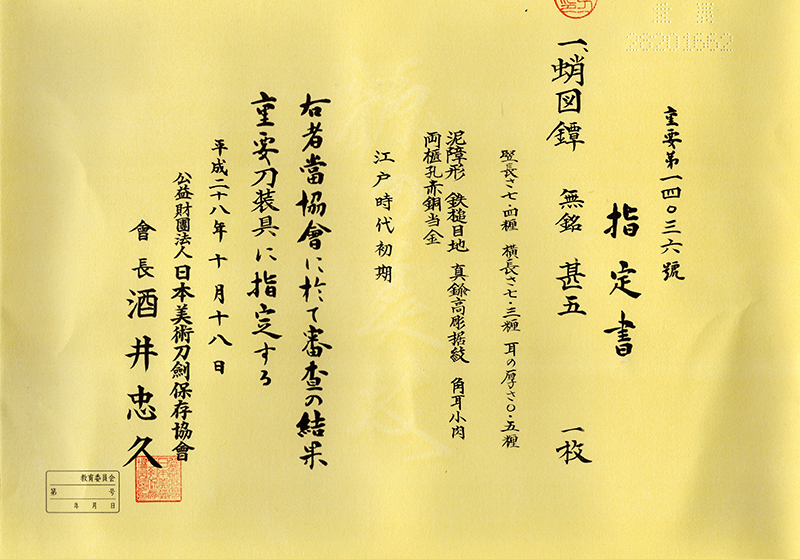
-Tōsōgu, 62nd Session — Designated October 18, 2016
, : Jingo (甚五)
Category: ** Tōsōgu VIII
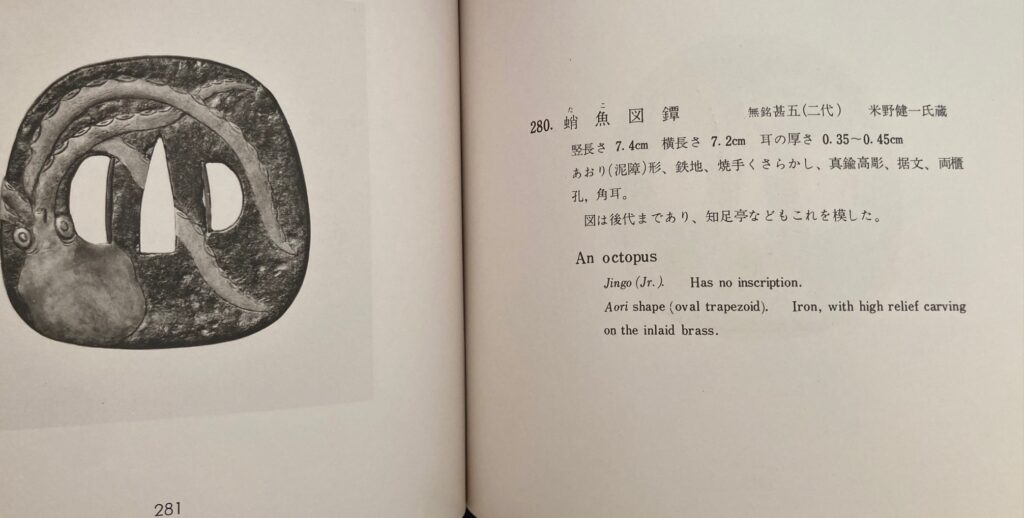
Measurements: ** 7.4 cm; 7.3 cm; mimi thickness 0.5 cm
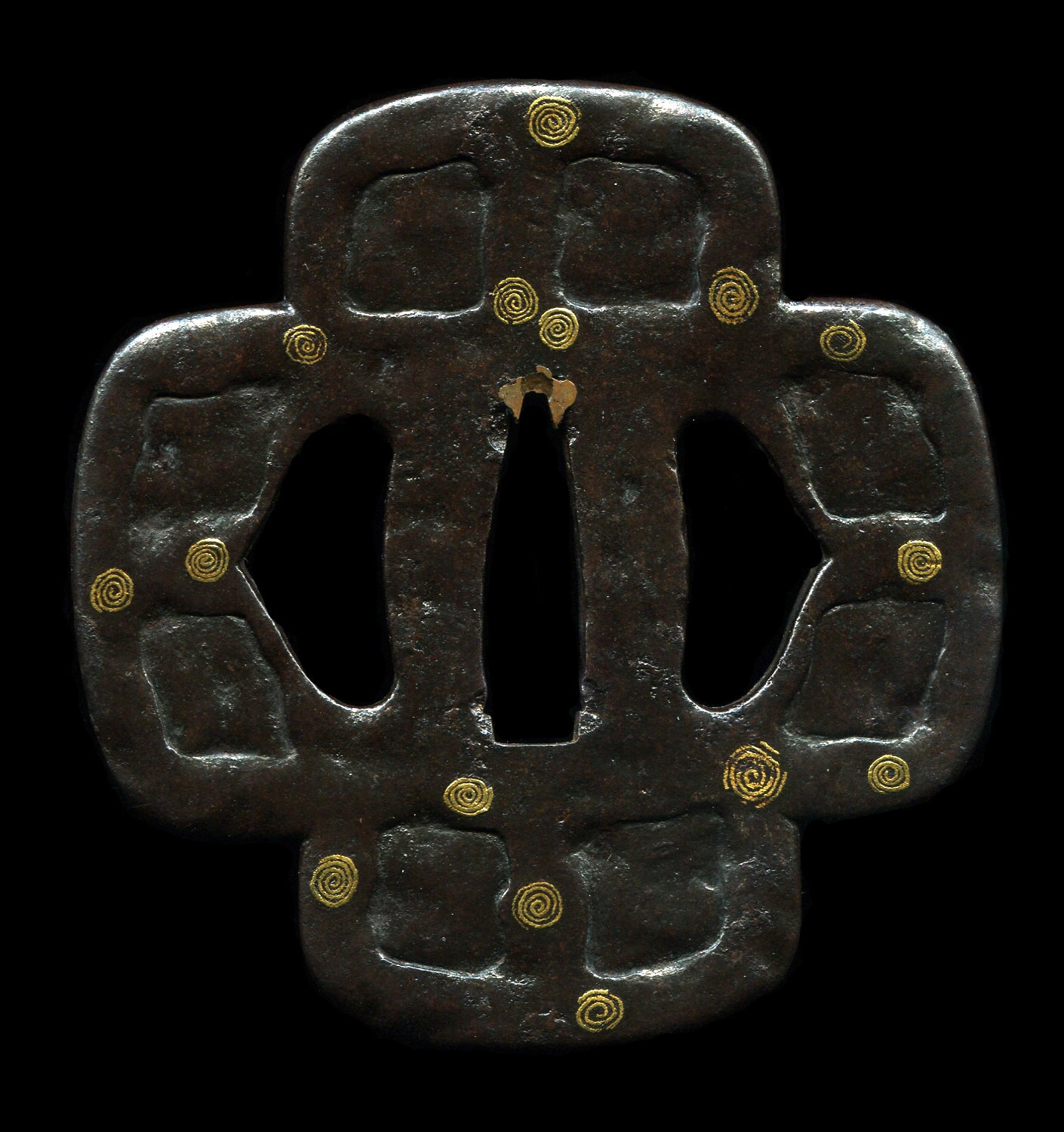
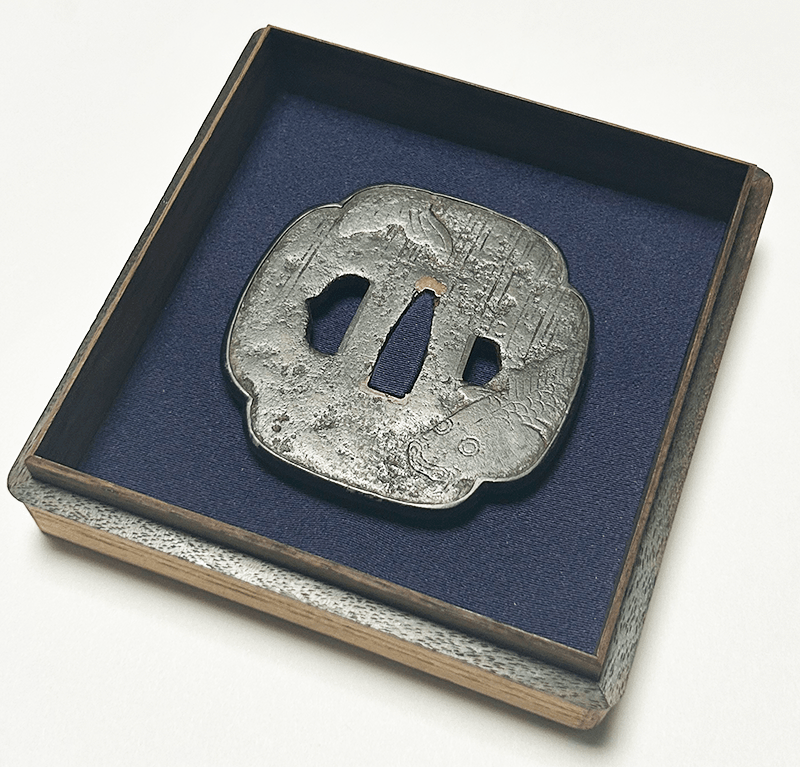
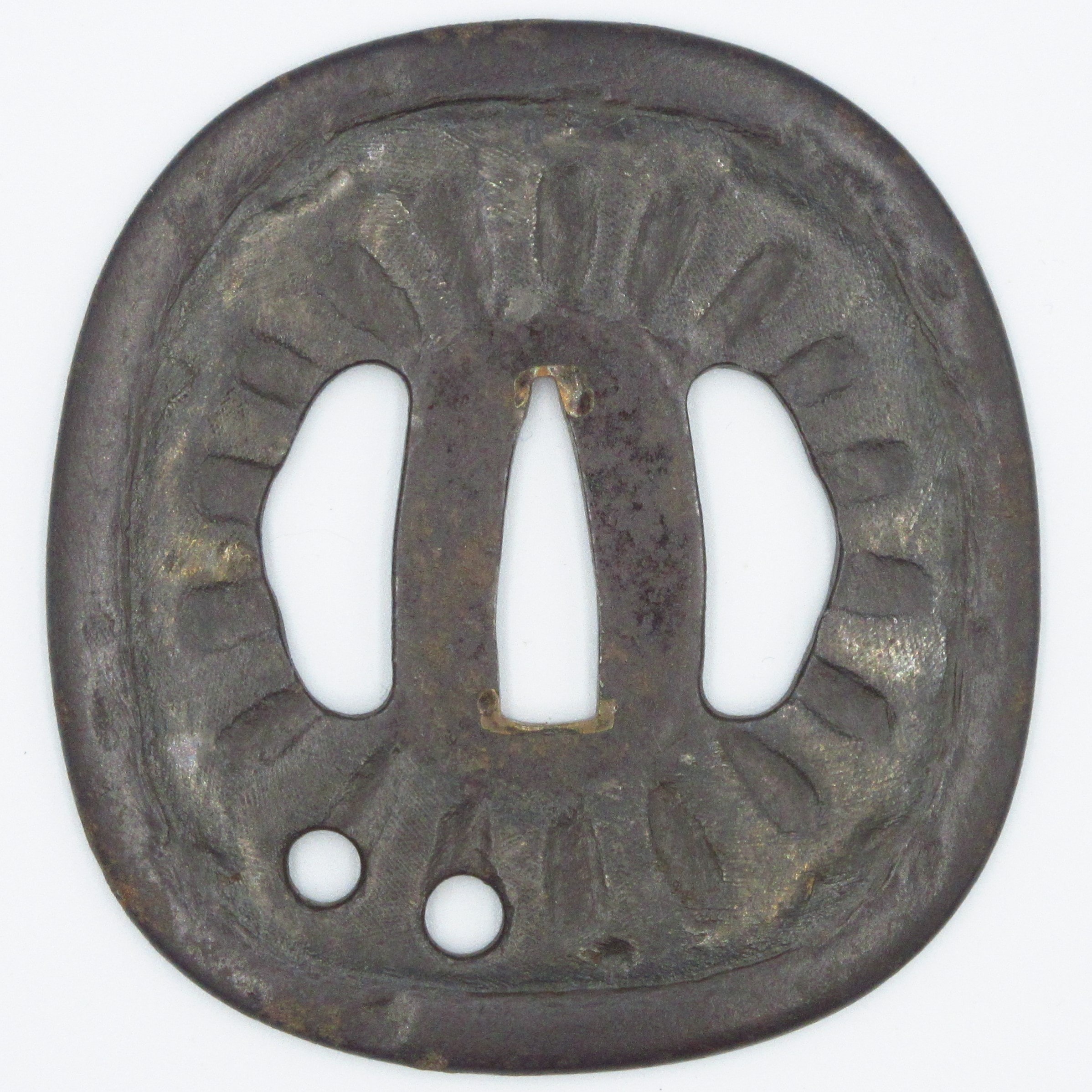
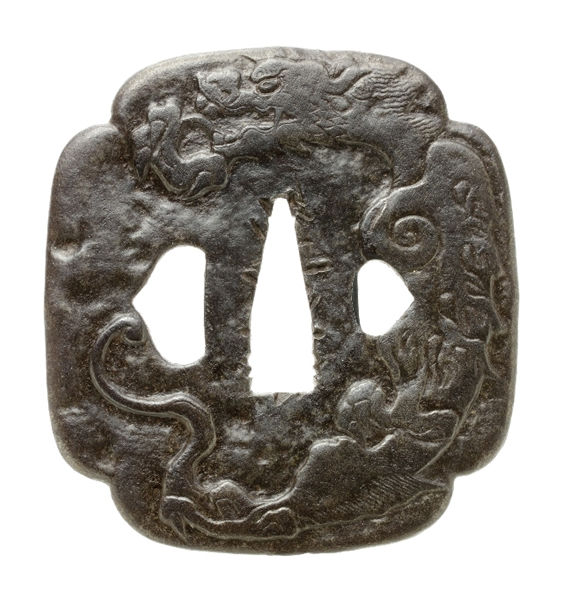
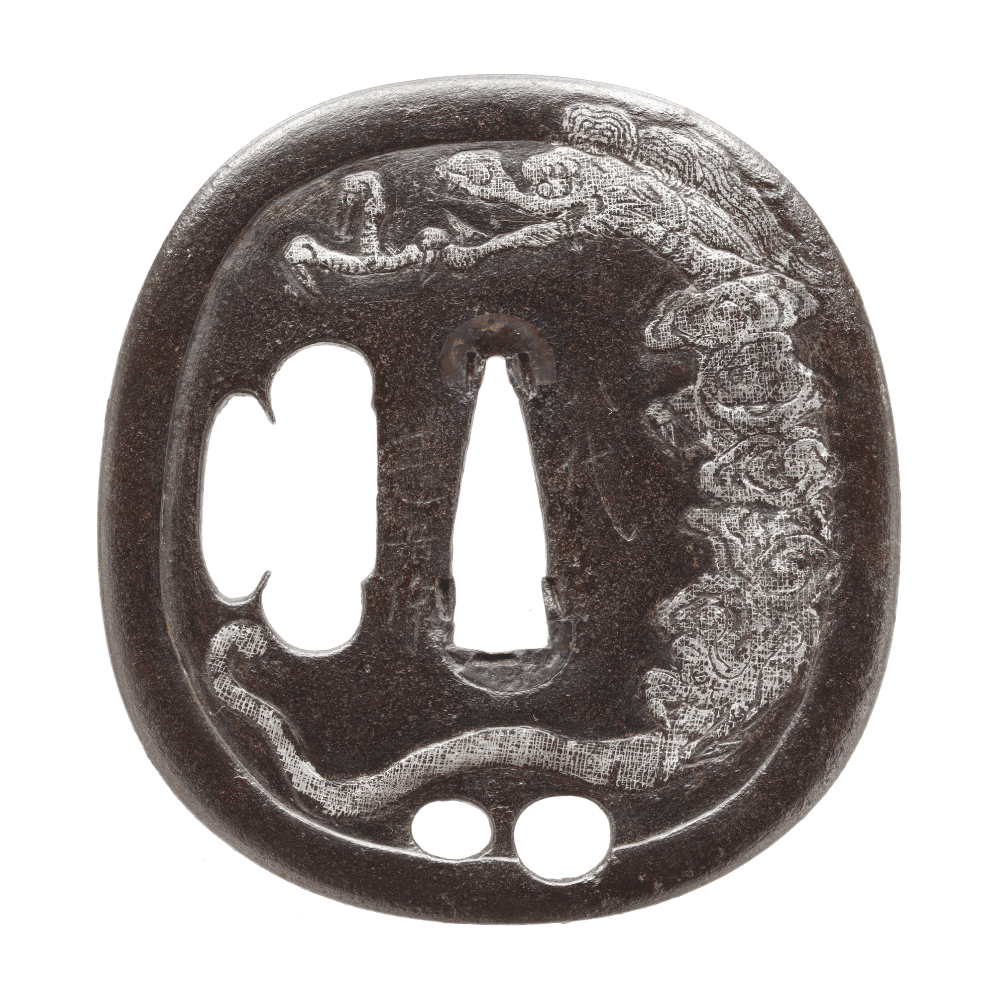
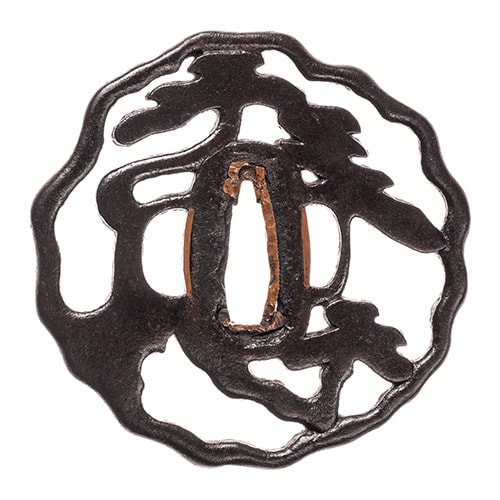
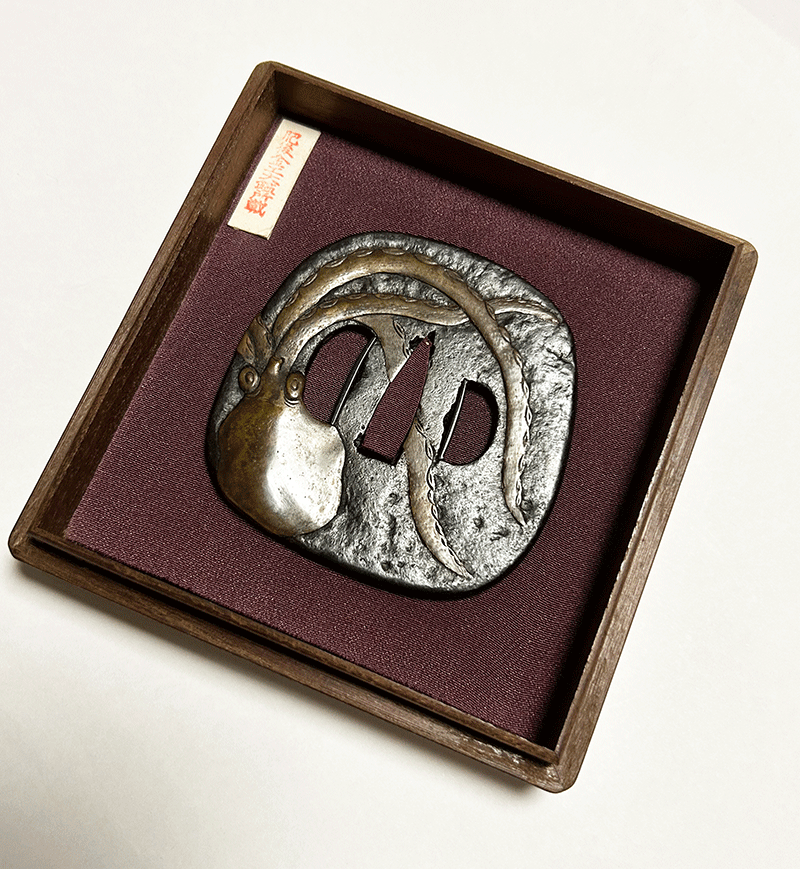
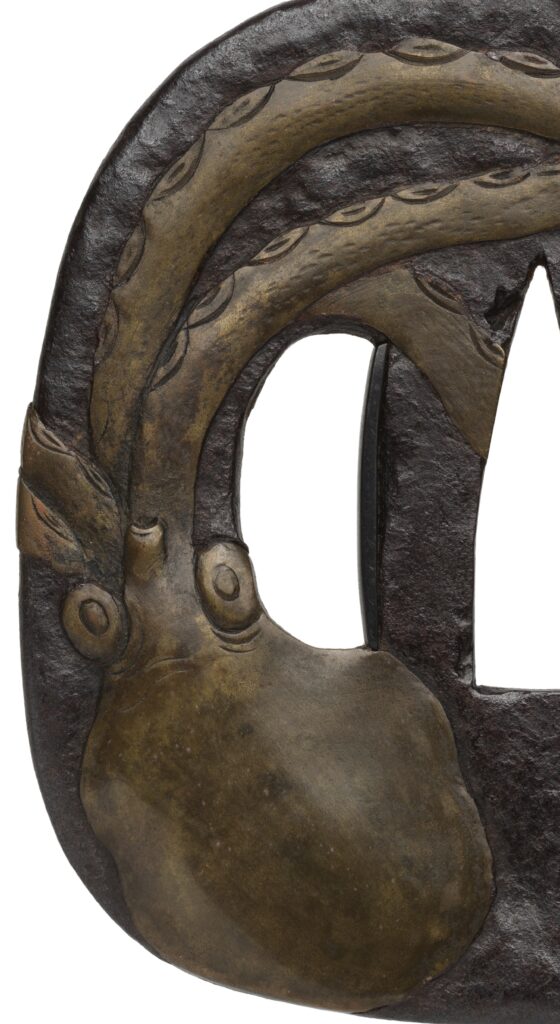
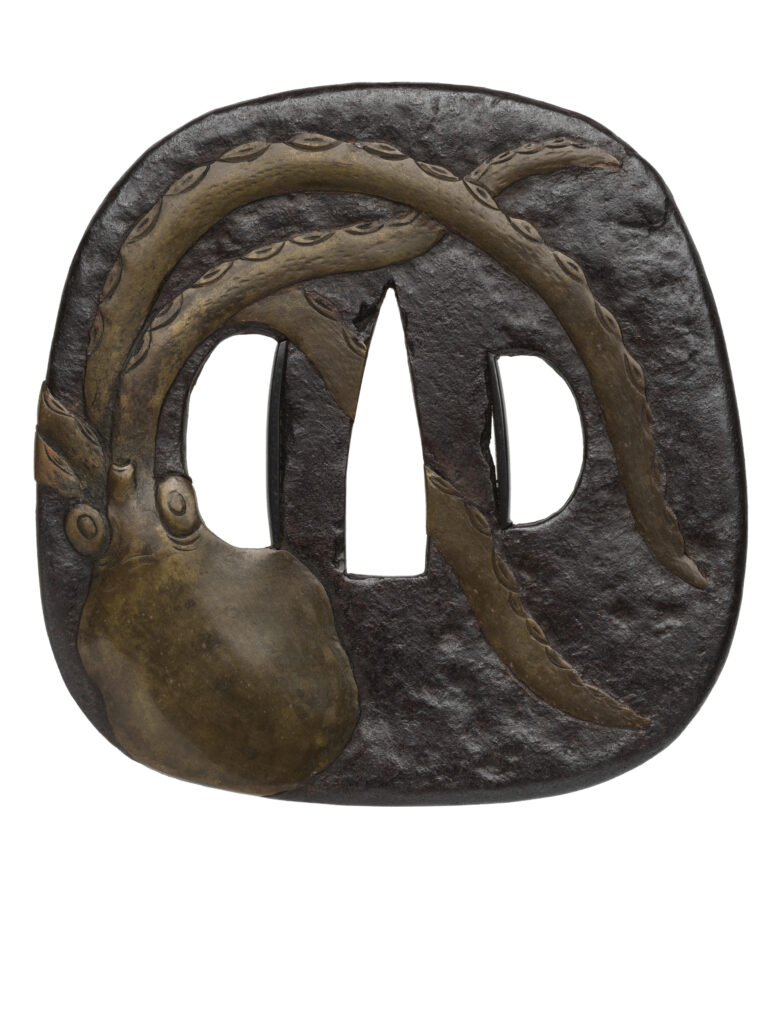
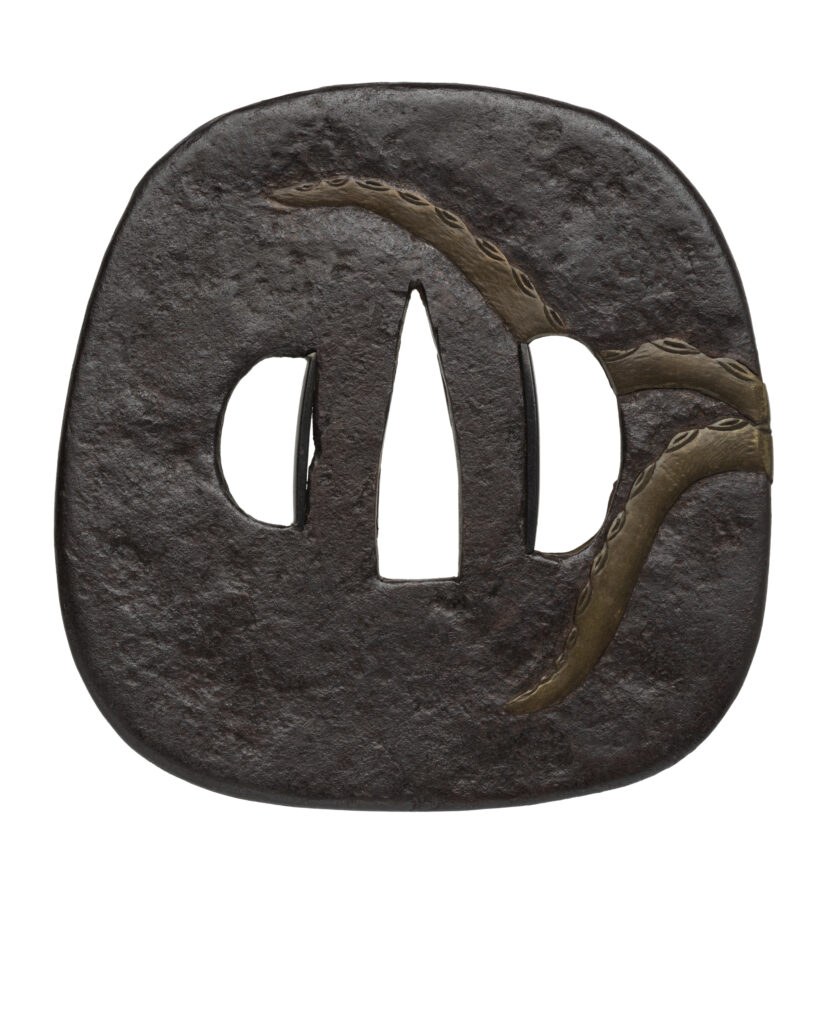
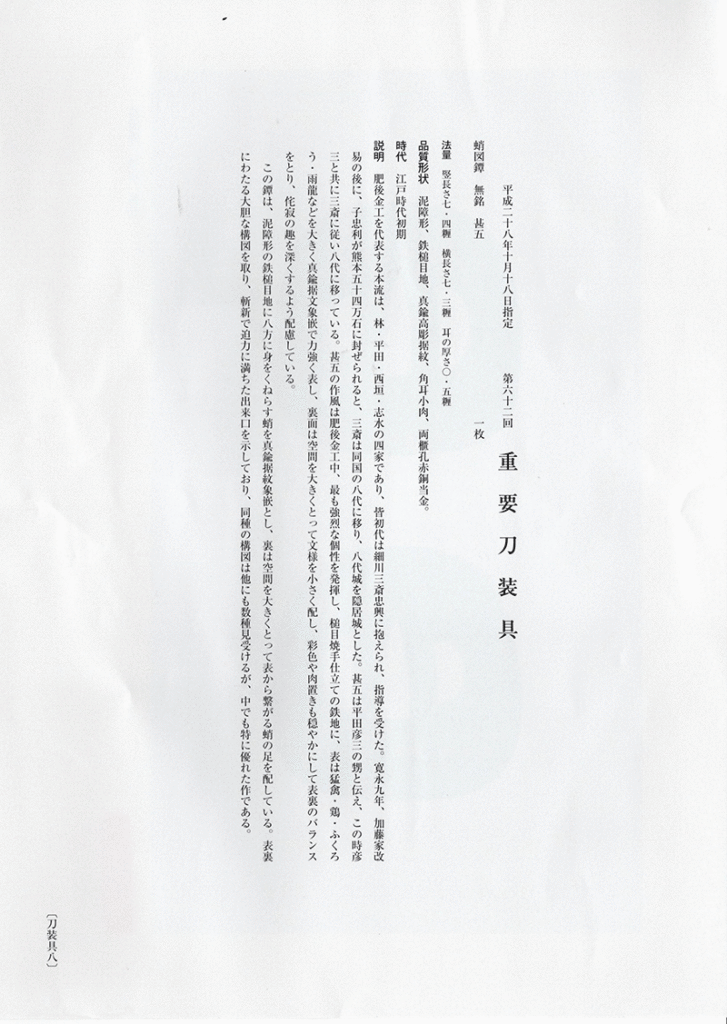
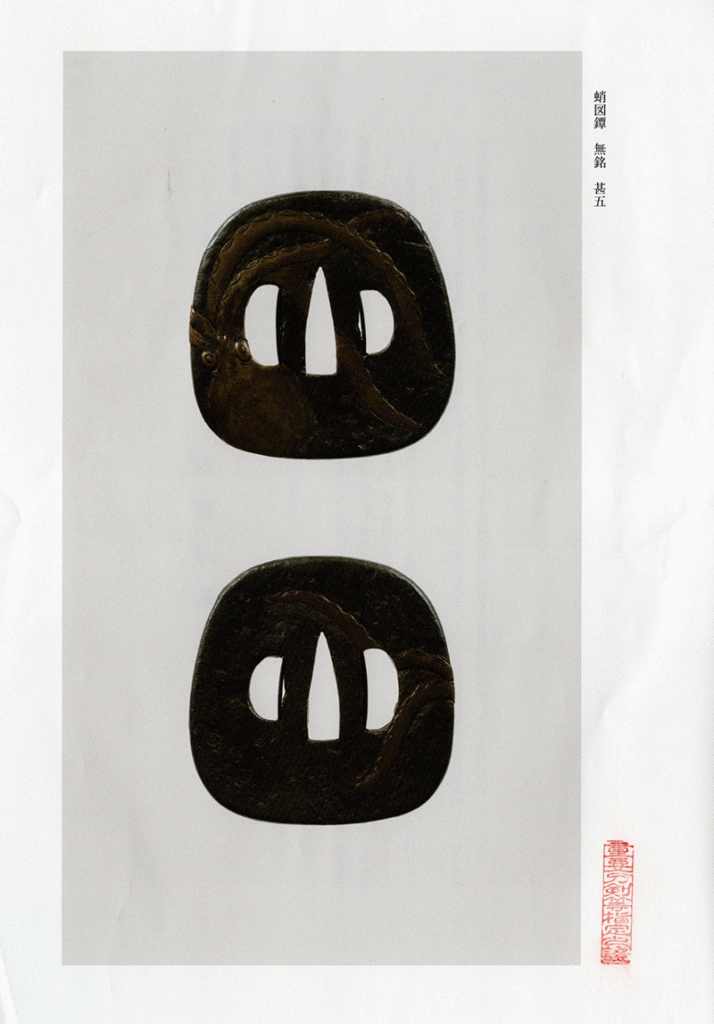
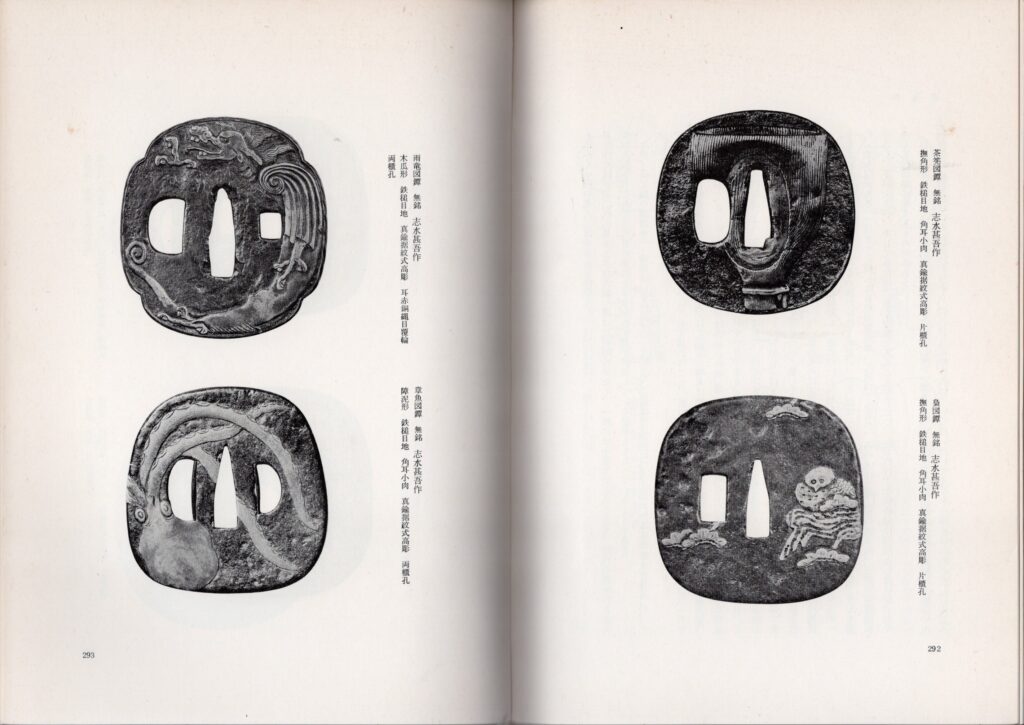
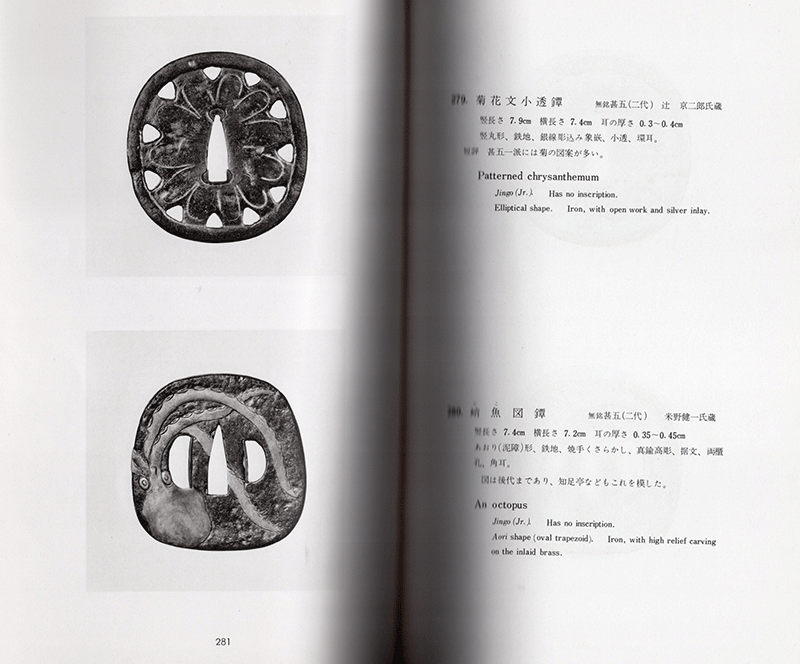
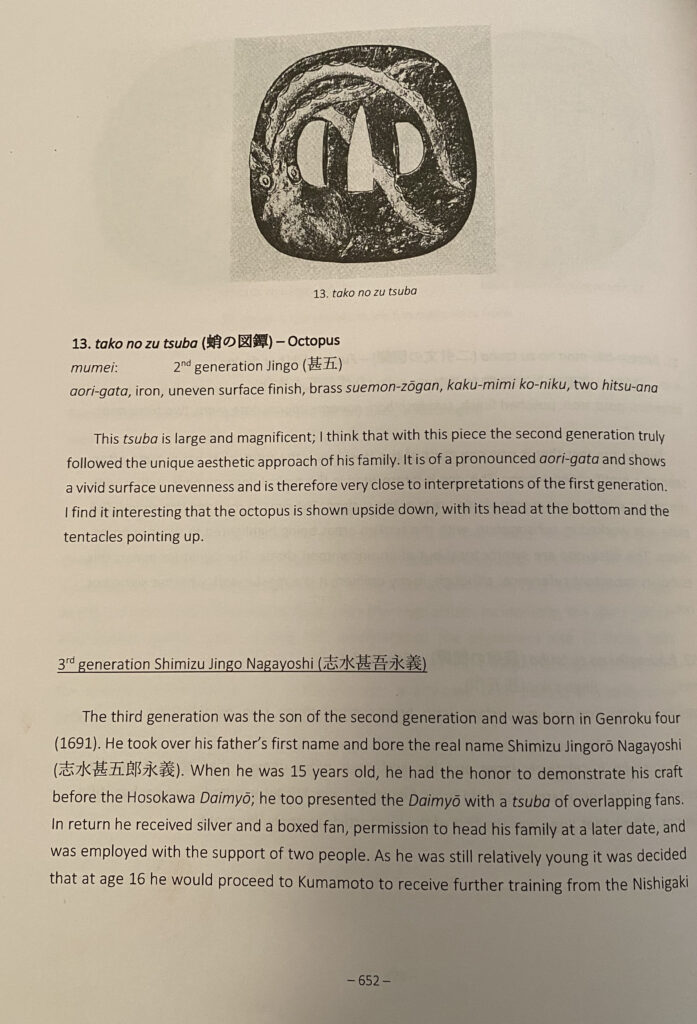
Description Form: doro-shō-gata (mud-guard form) Material: iron Construction: ; (hammer-textured ground) Design: an octopus writhing as its body twists outward in eight directions Decoration: brass (shinchu) high-relief, fixed-inlay ornament ( with -) Rim: with slight : two; fitted with (plugs) Signature: none
Artisan Jingo, a highly individual master among metalworkers
Era Early period
Explanation The principal “mainline” metalworkers are represented by four houses—Hayashi, Hirata, Nishigaki, and Shimizu. The founders of each were retained by Hosokawa Sansai Tadatoshi and received his guidance. In ’ei 9 (1632), following the forfeiture of the Katō domain, Hosokawa Tadatoshi was enfeoffed with 540,000 at Kumamoto. Sansai then moved to Yatsushiro within the province and made Yatsushiro Castle his retirement residence.
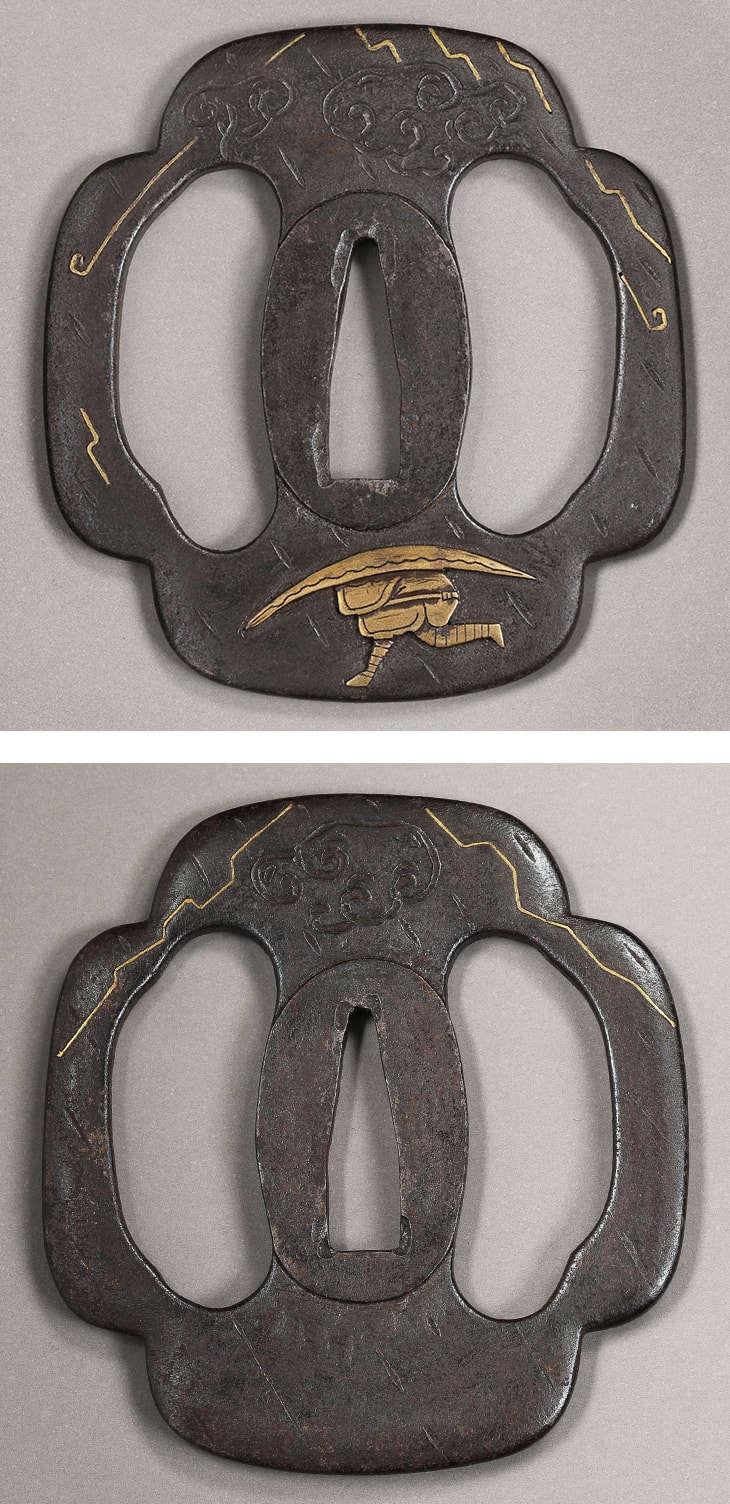
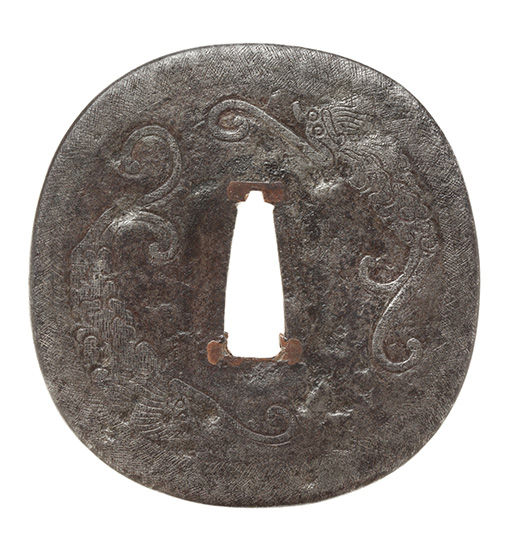
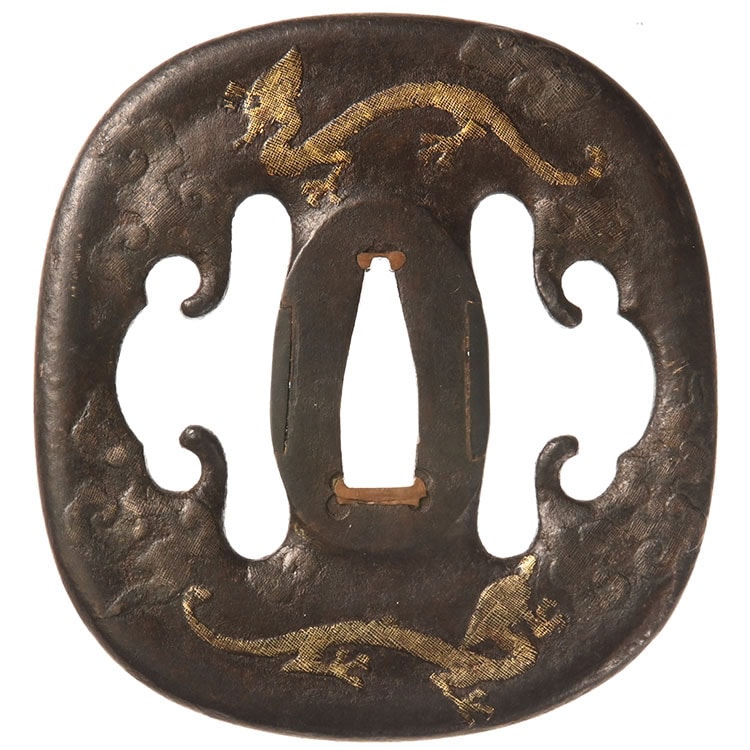
Jingo is traditionally said to have been a nephew of Hirata Hikozō, and it is transmitted that at this time he accompanied Hikozō in following Sansai to Yatsushiro. Among metalworkers, Jingo’s manner displays the most intense individuality. On iron plates finished in a hammered texture with a “” style surface, he powerfully renders large motifs on the front—such as birds of prey, roosters, owls, and ame-ryū (rain dragons)—using bold brass fixed-inlay ornament. On the reverse he opens up the space, placing smaller designs with calmer coloration and lower relief, thereby balancing front and back while deepening a quiet, subdued () feeling.
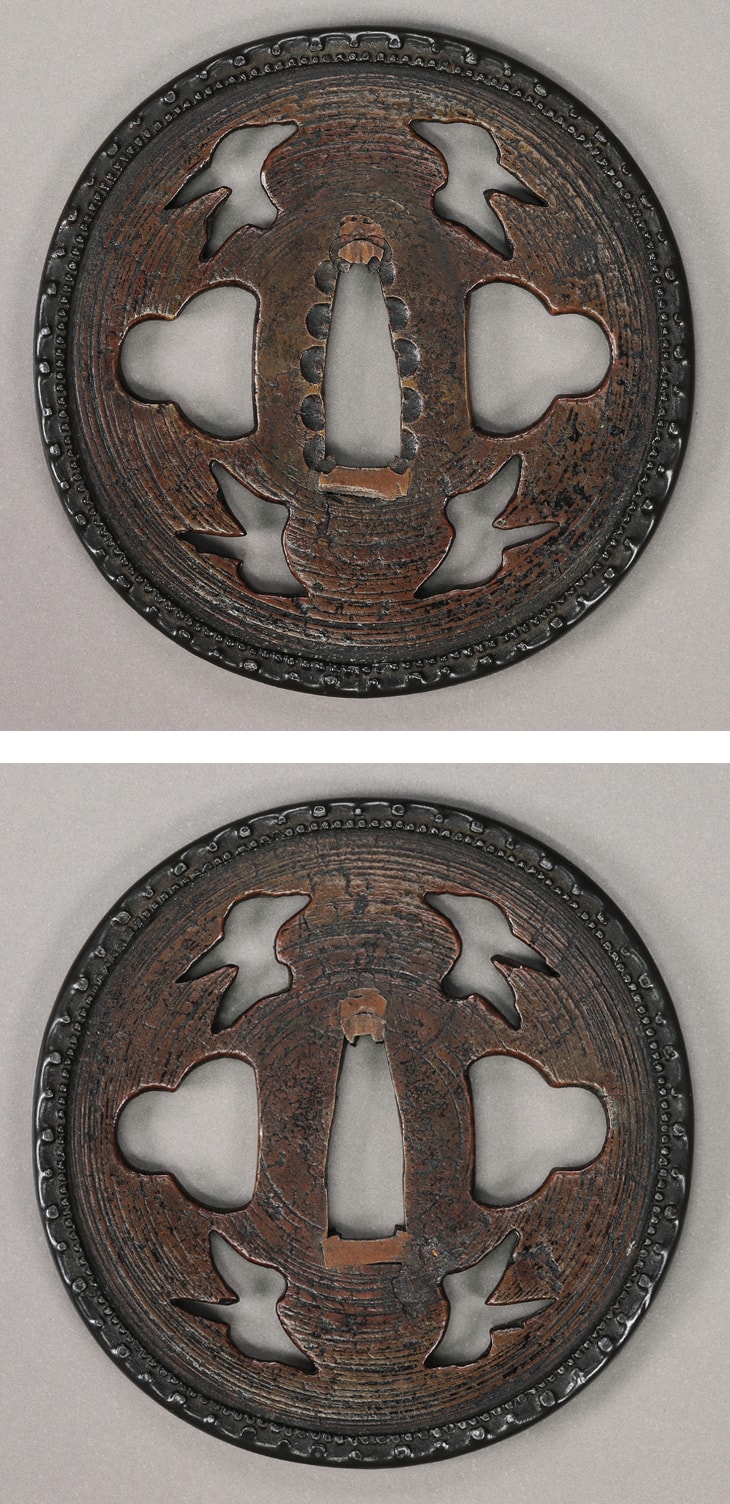
This presents an octopus on an iron doro-shō-gata plate with a hammered ground; the creature’s body twists outward in eight directions and is executed in brass fixed-inlay ornament. The reverse is given generous open space, into which are arranged the octopus’s legs continuing from the front. The work adopts a daring composition spanning both sides and demonstrates a fresh, highly impactful manner of execution. While several other examples with related compositions are known, this piece is particularly outstanding among them.