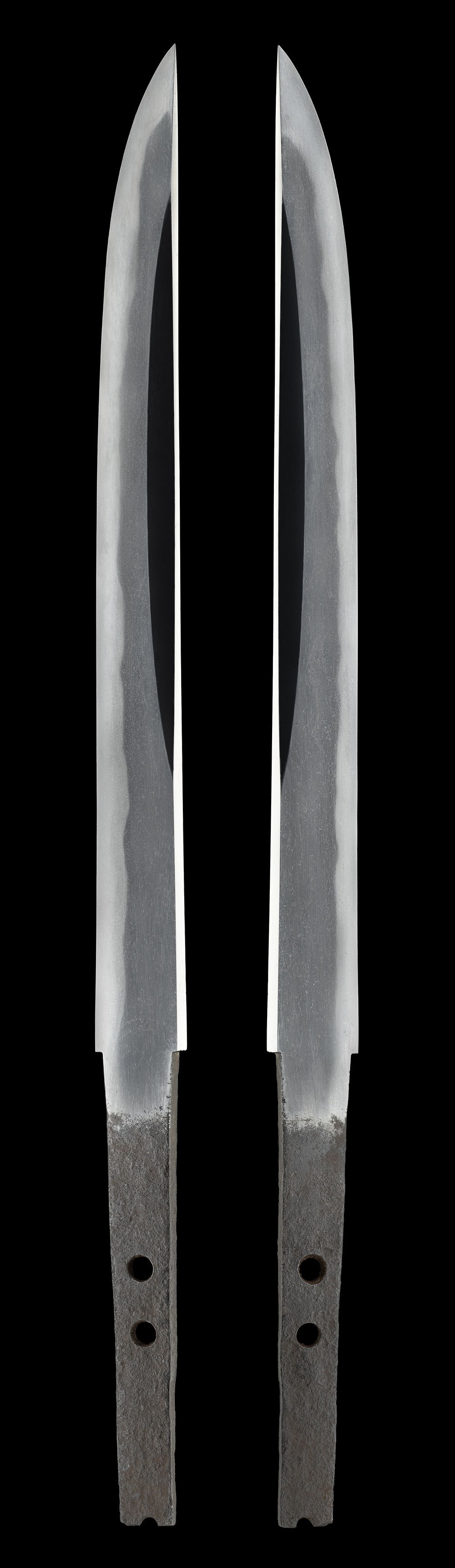
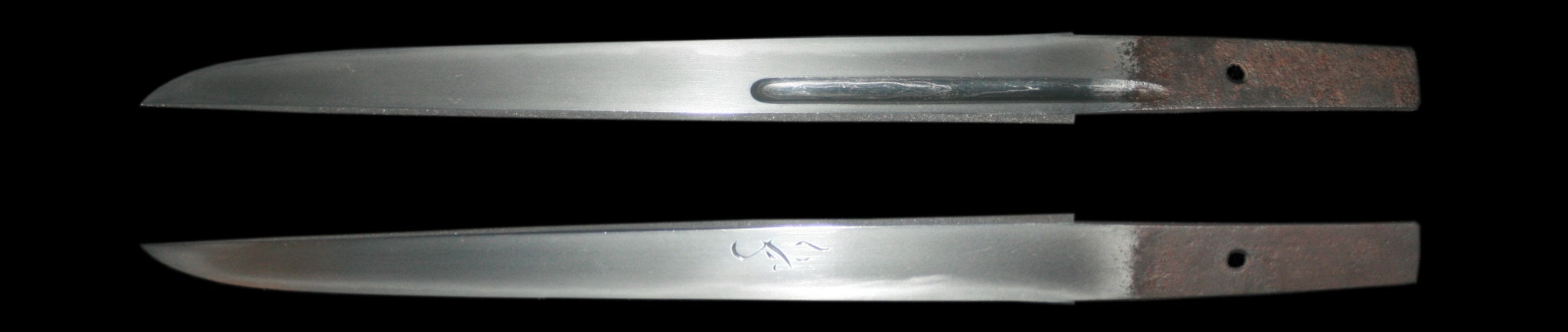
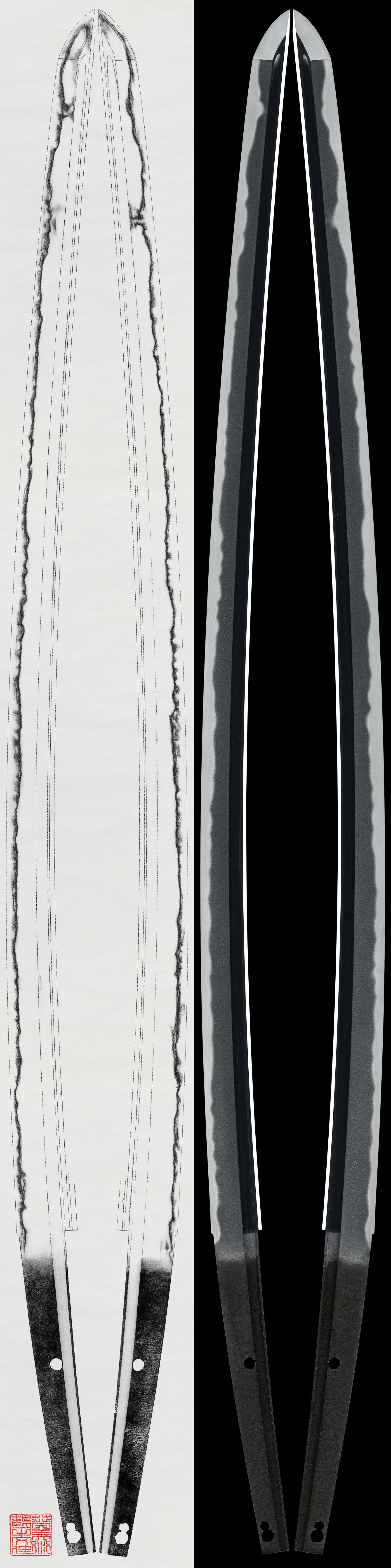
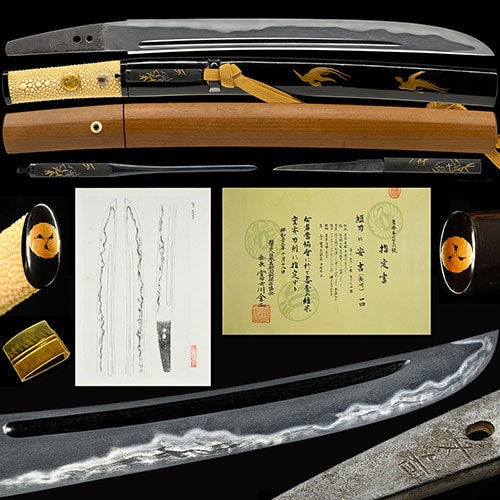
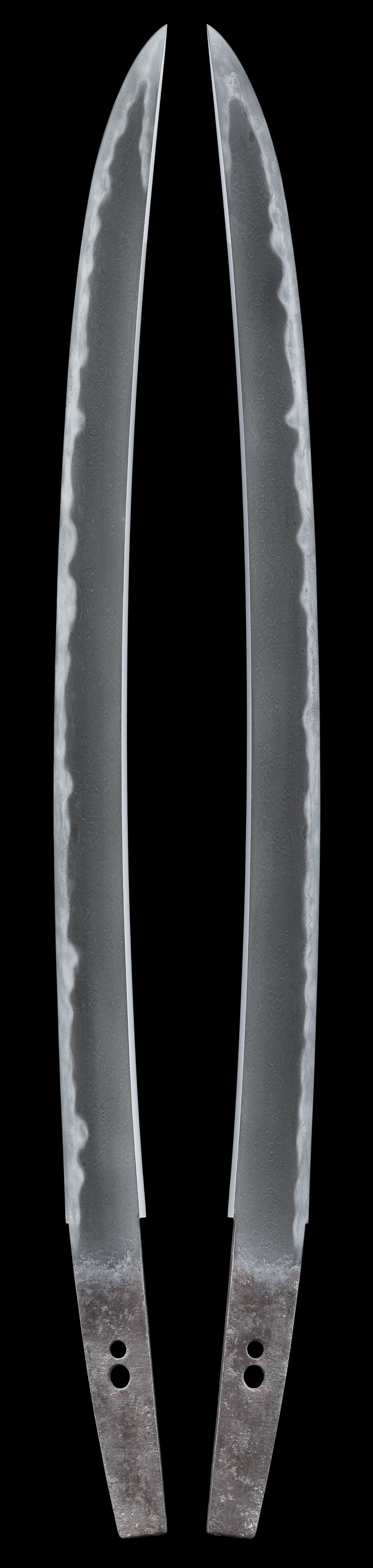
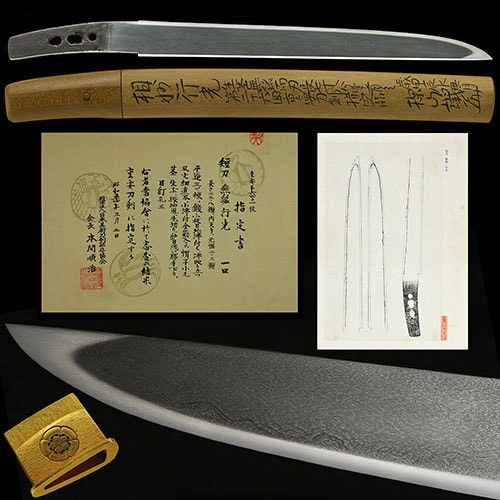
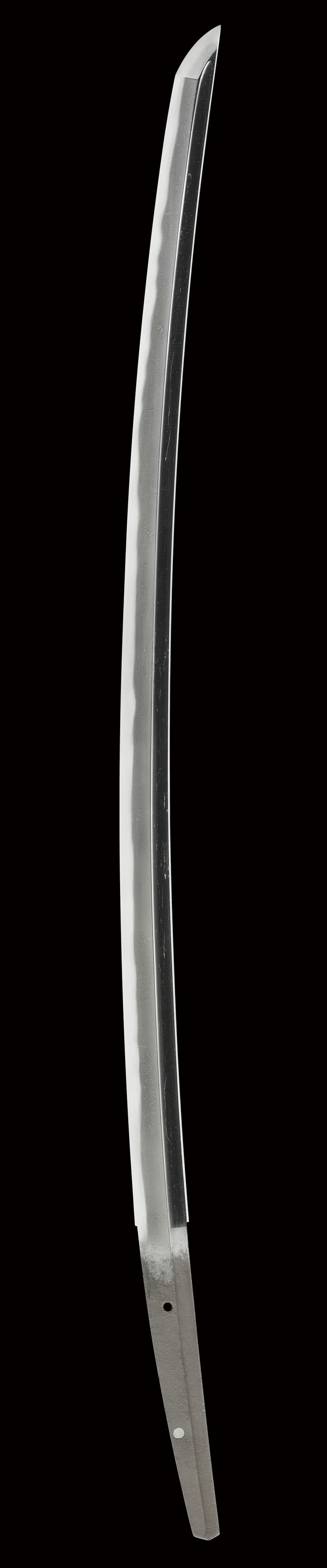
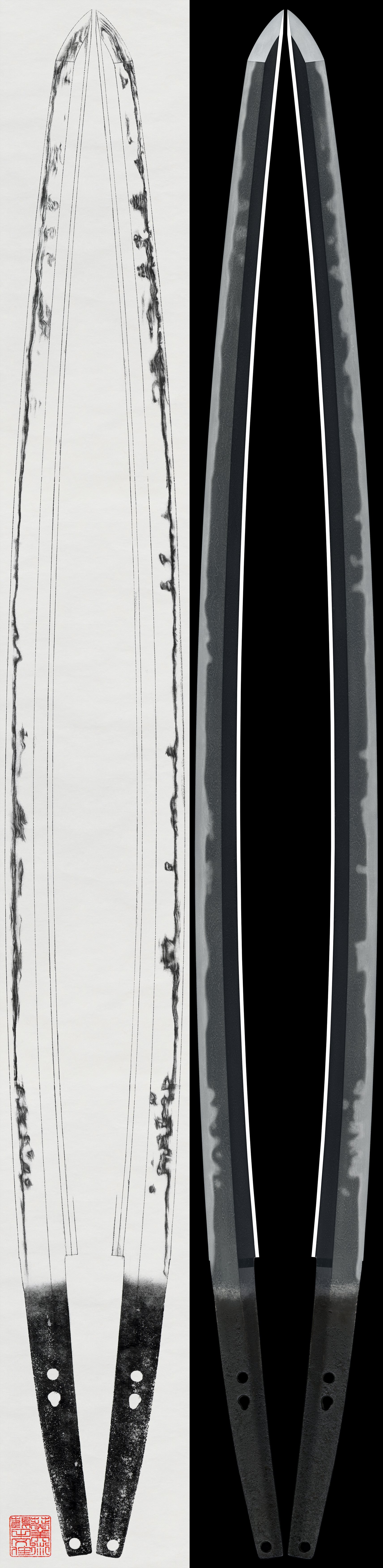
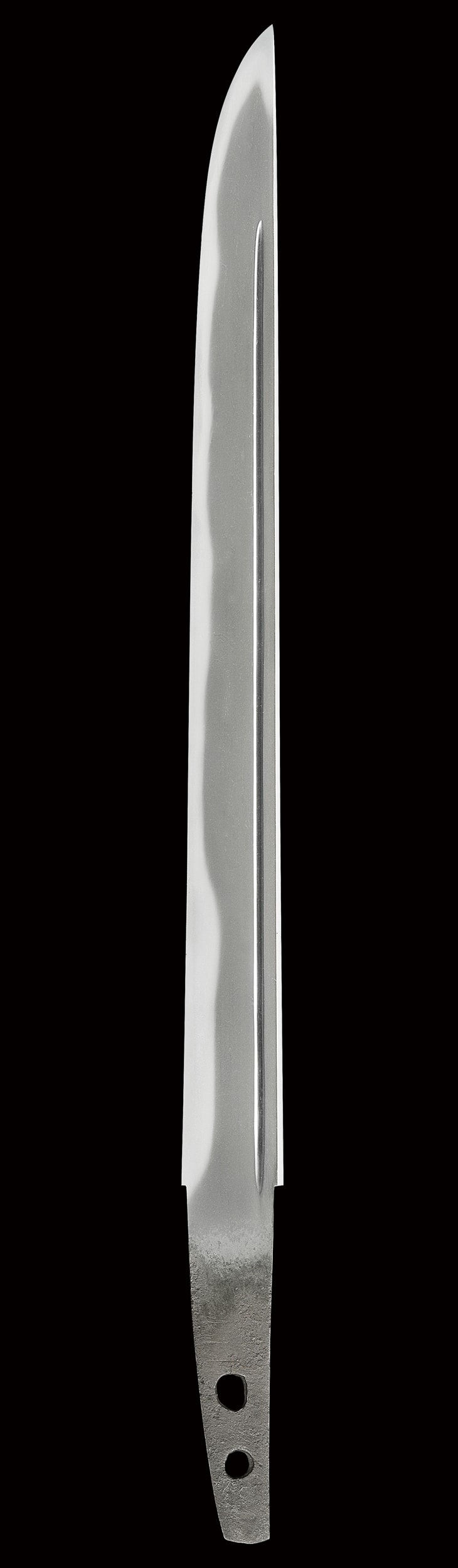
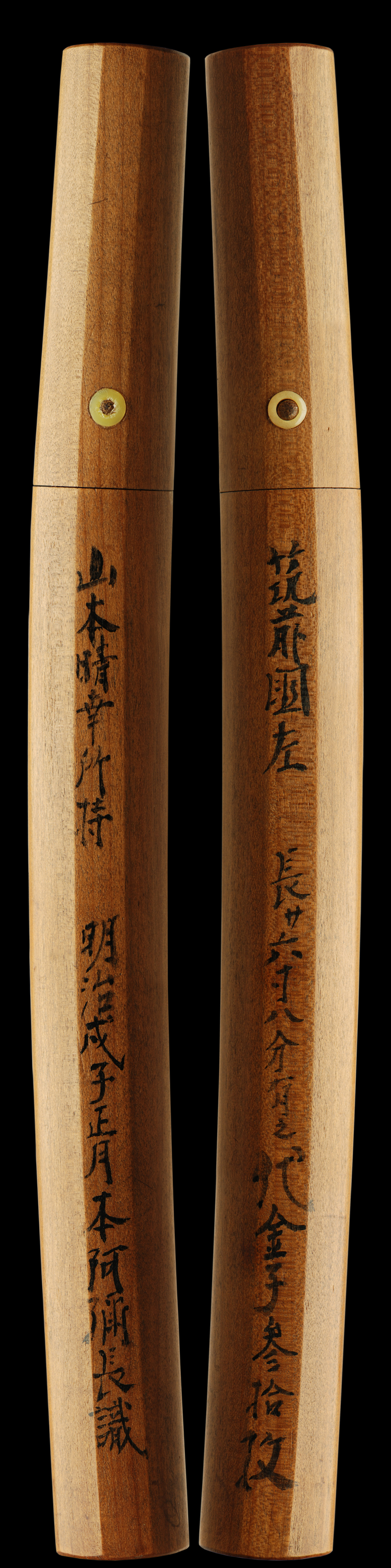
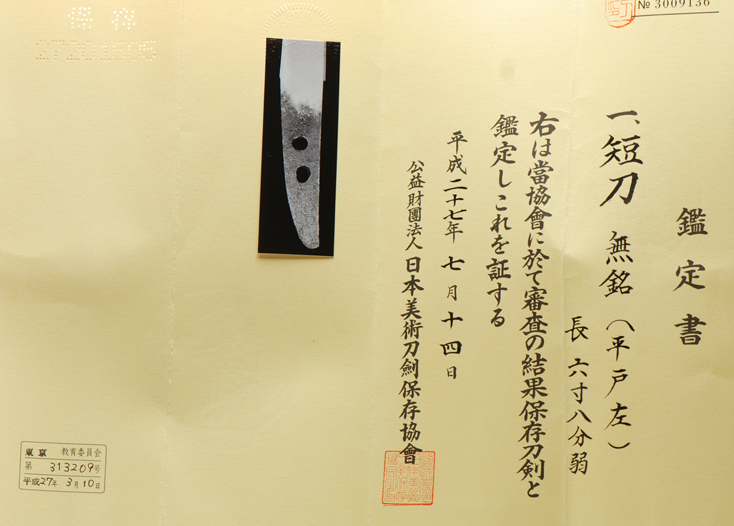
This is a beautiful tanto from the Hirado Sa school, dating back to the 1300s. The blade features gunome midare in itame with much ji-nie. It is a wide and thick tanto with a clear and refined jigane in the Soshu-den style.
 NihontoWatch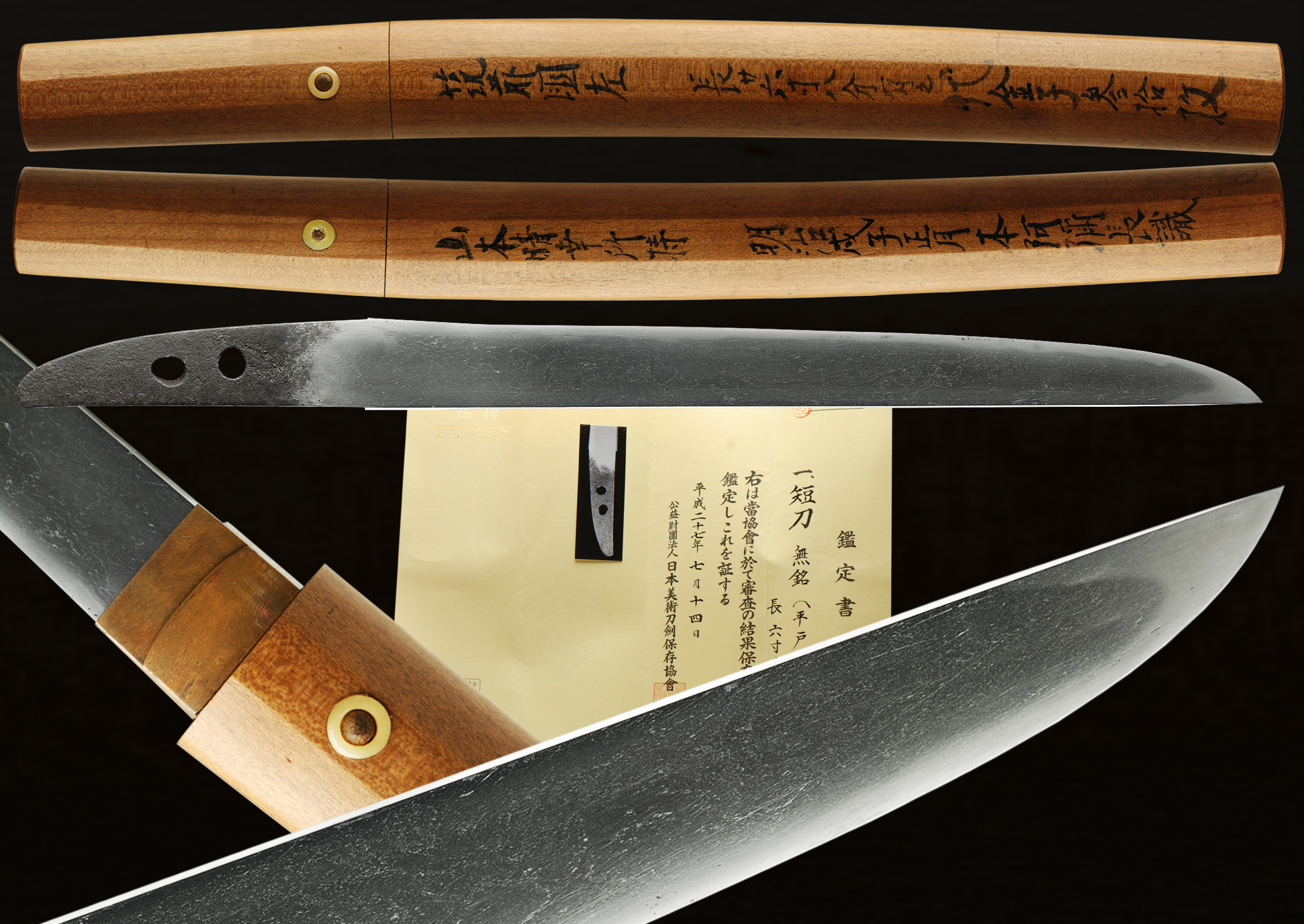

Soshu-den · Hizen
2 pieces on the market now
At Hirado in Hizen Province, a body of smiths carried the Sa (Samonji) line of Chikuzen northward and worked it on their own ground, and these are the makers the records group under the name Hirado Sa. The setsumei place their activity from the late Nanbokuchō into the early Muromachi period, with one tachi dated no earlier than Kenmu (1334) and no later than Meitoku (1394), and a tantō set around the Ōei era. The named hand at the head of the group is Shichirōsaburō Morihiro (盛広), transmitted as belonging to a branch of the Sa lineage and signing Hirado jū Morihiro saku; the meikan note that second and third generations worked under the same name. His son Moriyoshi (盛吉), recorded as the child of Morihiro, signs in two characters. Two further smiths appear in the corpus: Morisada (守貞), whose tachi carries a two-character mei, and Sadakiyo (貞清), whose tantō is signed Hirado Sa Sadakiyo. The shared manner reads as Soshu-den transplanted from the parent school. The kitae is itame, often drifting toward masame near the edge and at times opening into ō-itame with mokume; ji-nie forms throughout, chikei appears, and the ground frequently takes a whitish cast.
The temper rests on nie and ko-nie and runs through a vocabulary of shallow notare and ko-notare mixed with gunome, sometimes in a connected (tsure) manner, with ashi, deep nioi in places, and sunagashi worked vigorously; kinsuji, hotsure, and kuichigai-ba are noted on the more active blades. The bōshi varies but tends to midare-komi with a slightly pointed tip that turns back, and ranges to hakikake, a flame-like (kaen) form, and ko-maru. On the tantō by Moriyoshi the setsumei find aspects that recall Akikuni and Yukikuni of Chōshū, while elsewhere the work is read directly against the Sa line; recognition therefore rests on the Sa-school structure of itame with ji-nie carrying a nie-based notare-gunome. For kantei the standing point is this Sa-derived combination of a whitish ji-nie ground and a nie-laden, notare-tinged midareba with sunagashi, set against the group's Nanbokuchō-to-Muromachi dating; the long-signature tantō of Morihiro is singled out as extremely rare. One ō-suriage, mumei katana attributed den Hirado Sa carries a kinzōgan-mei reading Raikō (雷光) and a dedication of Meiji 14 (1881), recording its presentation by Yamaoka Tetsutarō to Koteda Yasusada, then Governor of Shiga Prefecture. The setsumei repeatedly treat these blades as reference material that fills gaps in the extant meikan record for the group, and the signed tachi and tantō in particular are valued as documentary evidence for a body of work whose signed examples are scarce. Learn more →
| Smith | Era | Designated |
|---|---|---|
| Sadahide貞秀 | 1368-1375 | 0 |
| Moriyuki盛行 | 1394-1428 | 0 |
| Moritsugu守次 | 1394-1428 | 0 |
| Moriyoshi盛吉 | 1444-1449 | 0 |
| Sa左 | 1368-1375 | 0 |
We could not find an authenticity certificate on the seller’s listing. Japanese swords and fittings are normally papered by the NBTHK (or the NTHK). Without one, the attribution is the seller’s own assessment and has not been independently verified — treat it with caution and ask the dealer about certification before buying.
We offer a 48 hour inspection period for all Antique items shipped within the United States only. If the item is not to your satisfaction, we will gladly refund your money less any shipping and handling fees. All sales are final after the 48 hour inspection period. Please note that all discounted items are a final sale and not returnable.
This is a beautiful tanto from the Hirado Sa school, dating back to the 1300s. The blade features gunome midare in itame with much ji-nie. It is a wide and thick tanto with a clear and refined jigane in the Soshu-den style.
NihontoWatchSoshu-den · Hizen
2 pieces on the market now
At Hirado in Hizen Province, a body of smiths carried the Sa (Samonji) line of Chikuzen northward and worked it on their own ground, and these are the makers the records group under the name Hirado Sa. The setsumei place their activity from the late Nanbokuchō into the early Muromachi period, with one tachi dated no earlier than Kenmu (1334) and no later than Meitoku (1394), and a tantō set around the Ōei era. The named hand at the head of the group is Shichirōsaburō Morihiro (盛広), transmitted as belonging to a branch of the Sa lineage and signing Hirado jū Morihiro saku; the meikan note that second and third generations worked under the same name. His son Moriyoshi (盛吉), recorded as the child of Morihiro, signs in two characters. Two further smiths appear in the corpus: Morisada (守貞), whose tachi carries a two-character mei, and Sadakiyo (貞清), whose tantō is signed Hirado Sa Sadakiyo. The shared manner reads as Soshu-den transplanted from the parent school. The kitae is itame, often drifting toward masame near the edge and at times opening into ō-itame with mokume; ji-nie forms throughout, chikei appears, and the ground frequently takes a whitish cast.
The temper rests on nie and ko-nie and runs through a vocabulary of shallow notare and ko-notare mixed with gunome, sometimes in a connected (tsure) manner, with ashi, deep nioi in places, and sunagashi worked vigorously; kinsuji, hotsure, and kuichigai-ba are noted on the more active blades. The bōshi varies but tends to midare-komi with a slightly pointed tip that turns back, and ranges to hakikake, a flame-like (kaen) form, and ko-maru. On the tantō by Moriyoshi the setsumei find aspects that recall Akikuni and Yukikuni of Chōshū, while elsewhere the work is read directly against the Sa line; recognition therefore rests on the Sa-school structure of itame with ji-nie carrying a nie-based notare-gunome. For kantei the standing point is this Sa-derived combination of a whitish ji-nie ground and a nie-laden, notare-tinged midareba with sunagashi, set against the group's Nanbokuchō-to-Muromachi dating; the long-signature tantō of Morihiro is singled out as extremely rare. One ō-suriage, mumei katana attributed den Hirado Sa carries a kinzōgan-mei reading Raikō (雷光) and a dedication of Meiji 14 (1881), recording its presentation by Yamaoka Tetsutarō to Koteda Yasusada, then Governor of Shiga Prefecture. The setsumei repeatedly treat these blades as reference material that fills gaps in the extant meikan record for the group, and the signed tachi and tantō in particular are valued as documentary evidence for a body of work whose signed examples are scarce. Learn more →
| Smith | Era | Designated |
|---|---|---|
| Sadahide貞秀 | 1368-1375 | 0 |
| Moriyuki盛行 | 1394-1428 | 0 |
| Moritsugu守次 | 1394-1428 | 0 |
| Moriyoshi盛吉 | 1444-1449 | 0 |
| Sa左 | 1368-1375 | 0 |
We could not find an authenticity certificate on the seller’s listing. Japanese swords and fittings are normally papered by the NBTHK (or the NTHK). Without one, the attribution is the seller’s own assessment and has not been independently verified — treat it with caution and ask the dealer about certification before buying.
We offer a 48 hour inspection period for all Antique items shipped within the United States only. If the item is not to your satisfaction, we will gladly refund your money less any shipping and handling fees. All sales are final after the 48 hour inspection period. Please note that all discounted items are a final sale and not returnable.