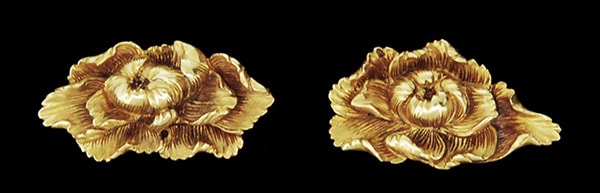
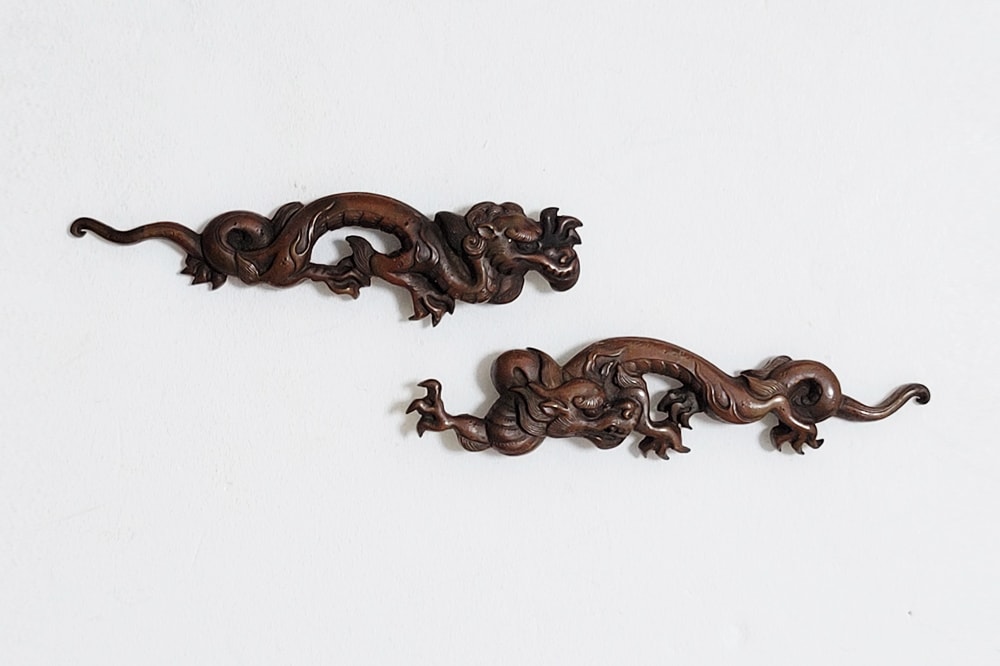
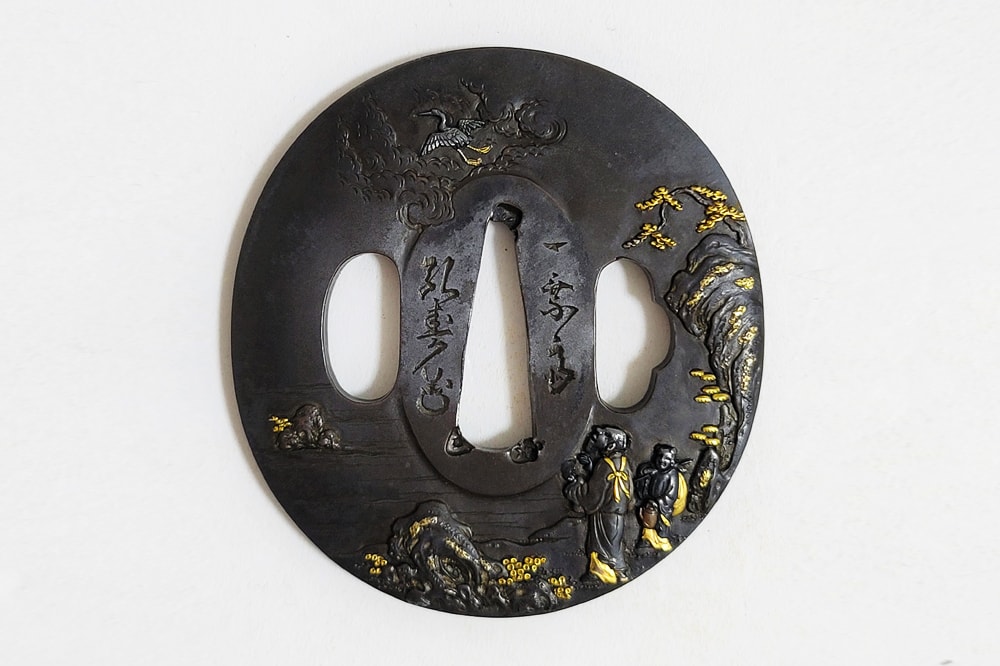
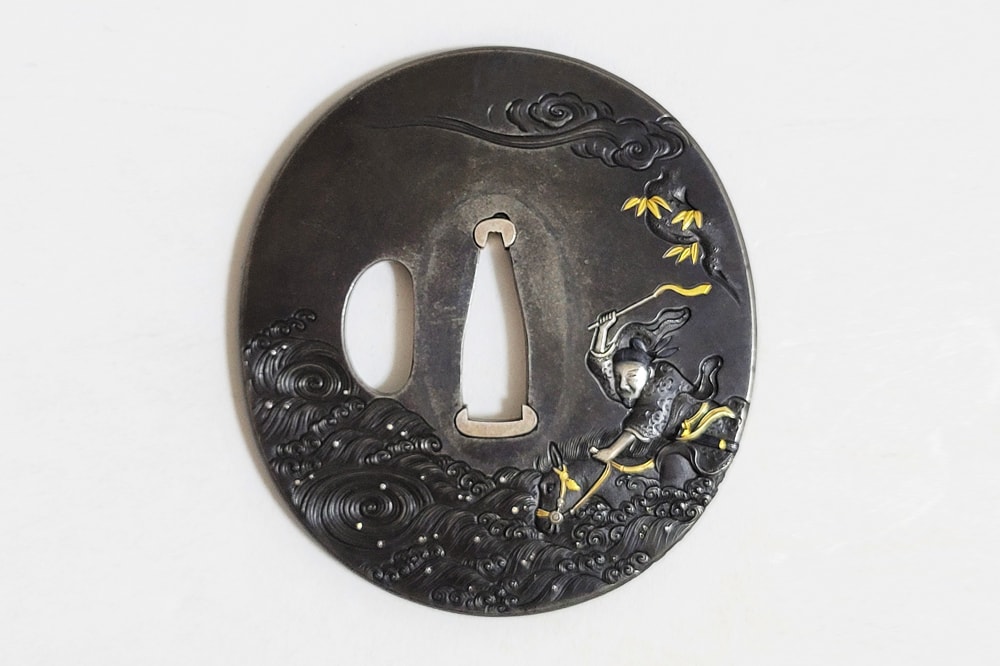
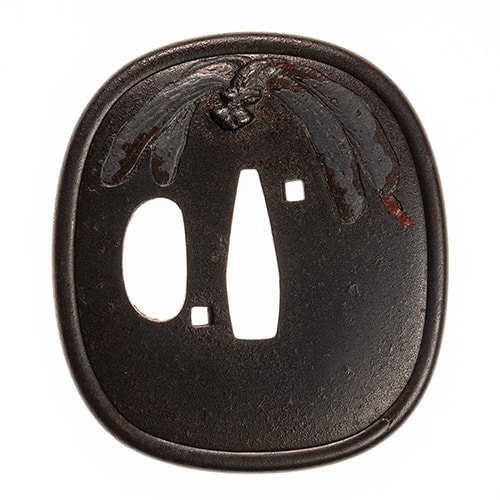
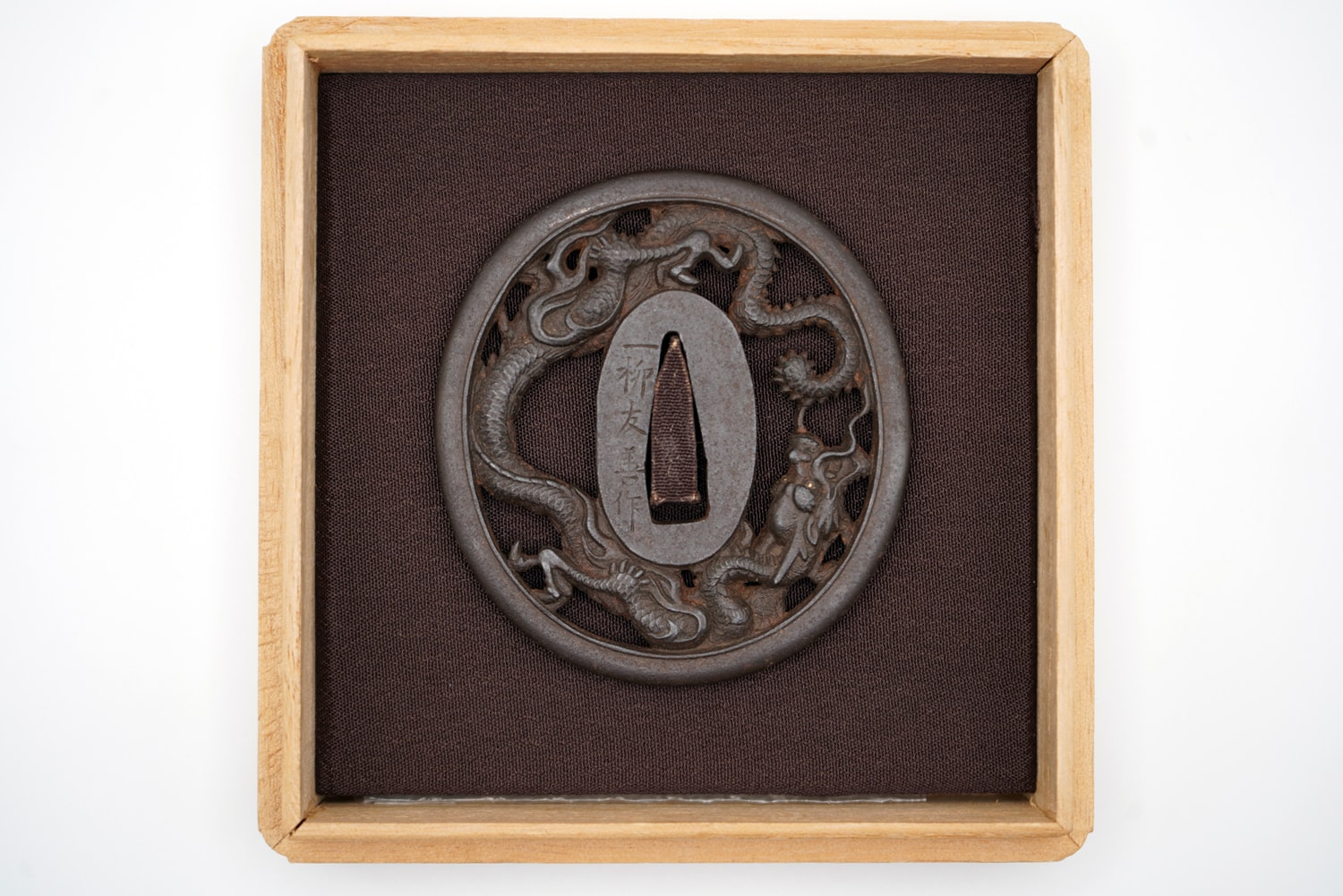
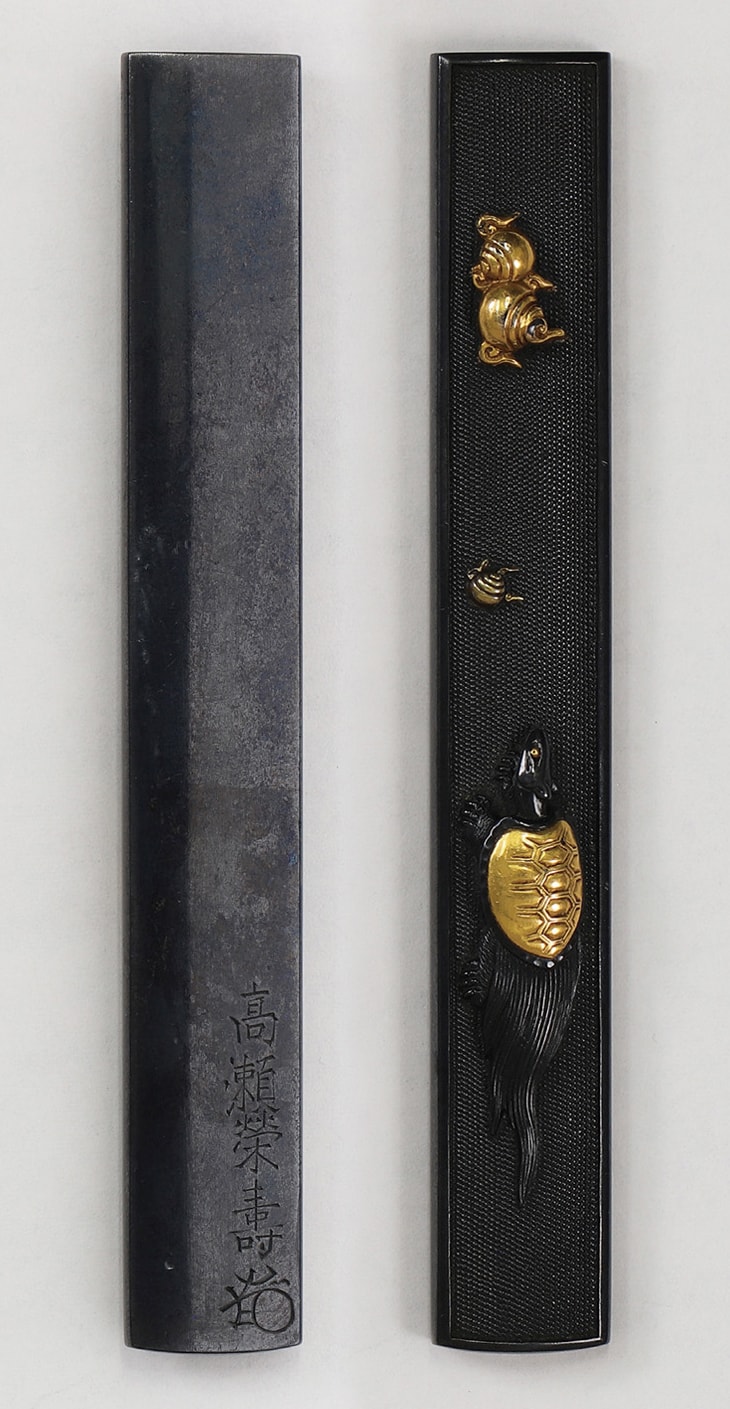
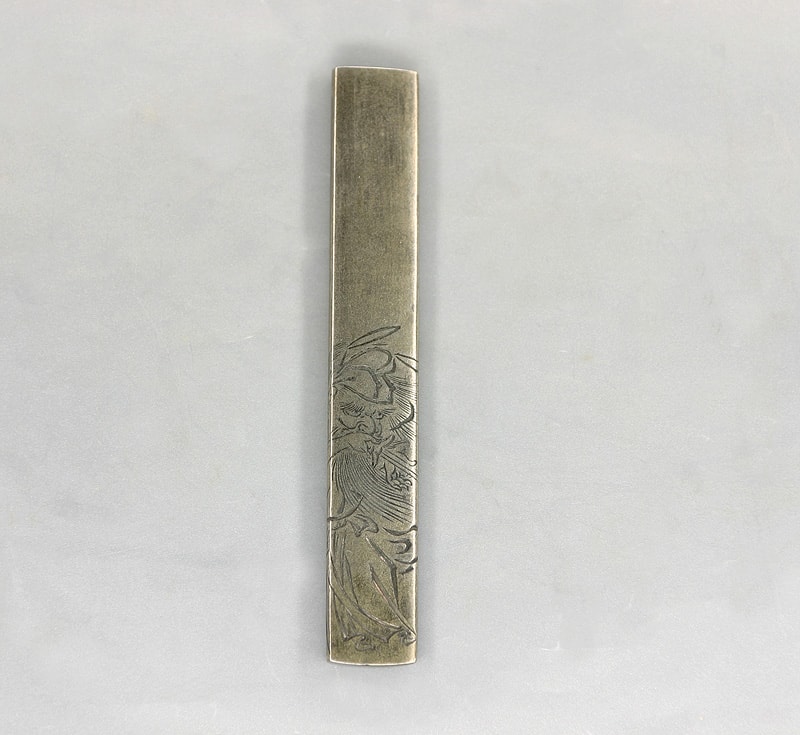
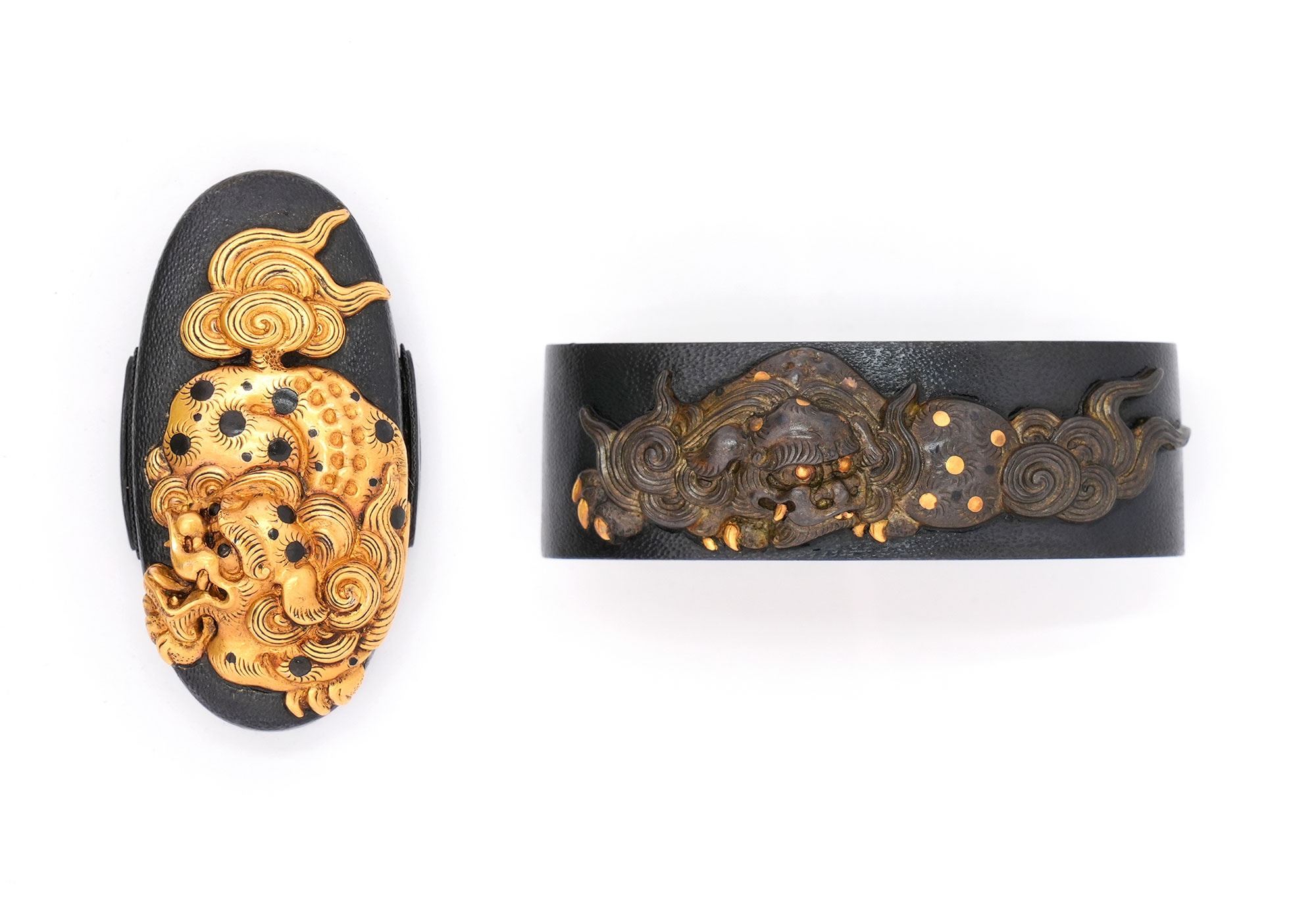
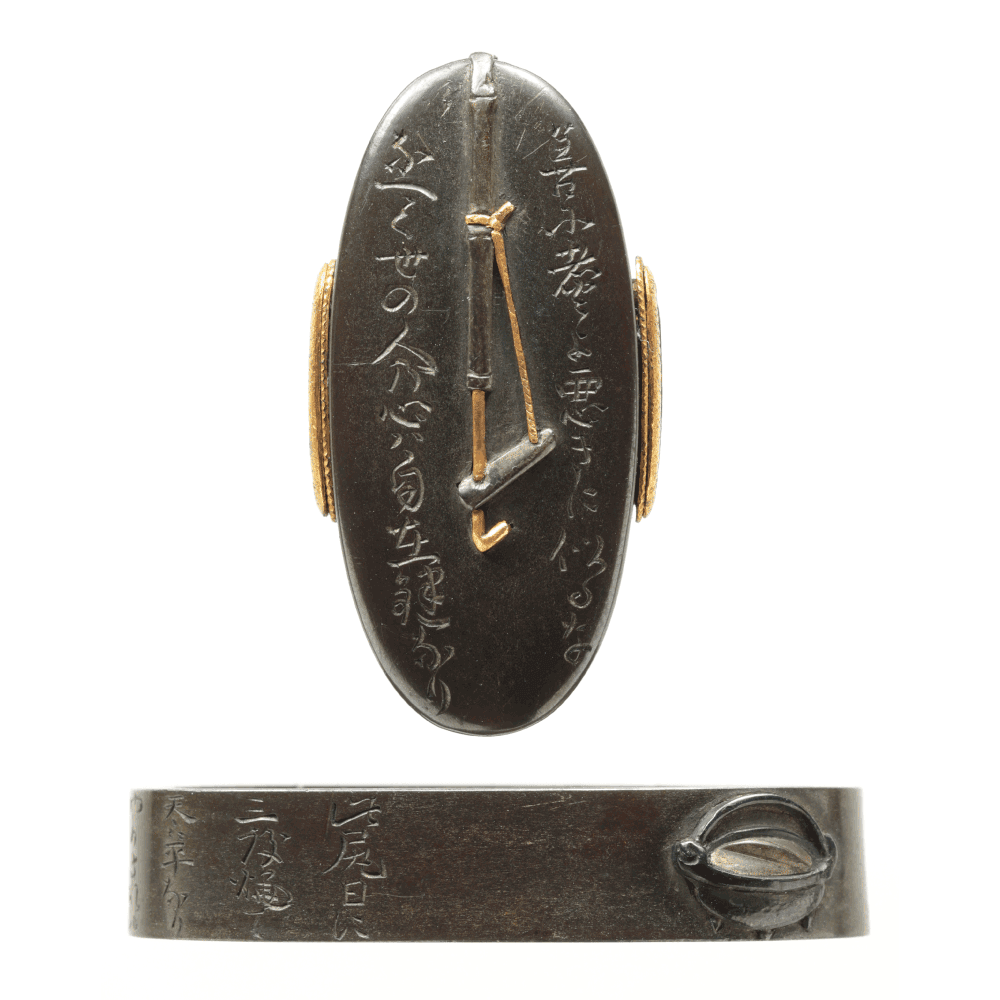
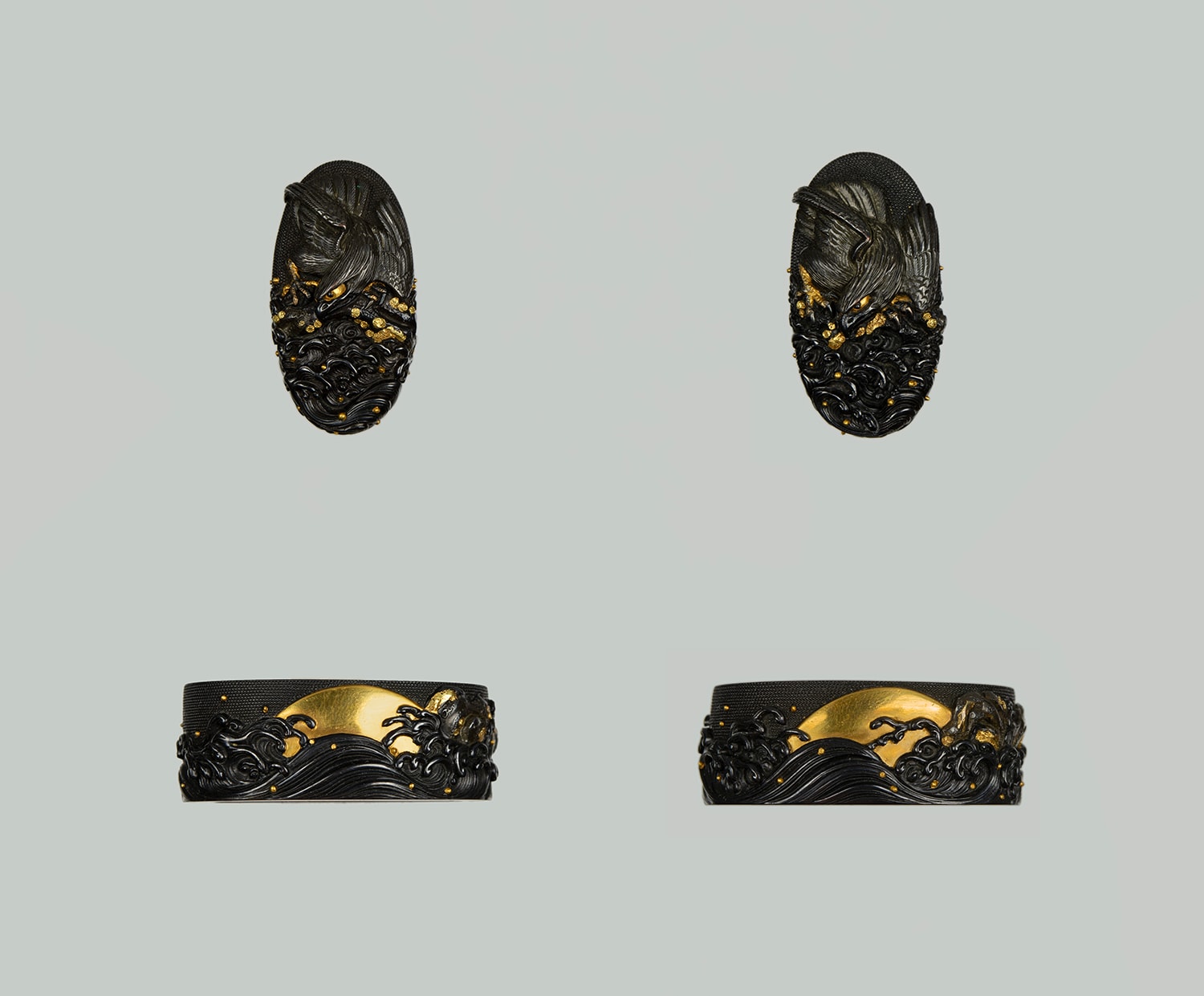
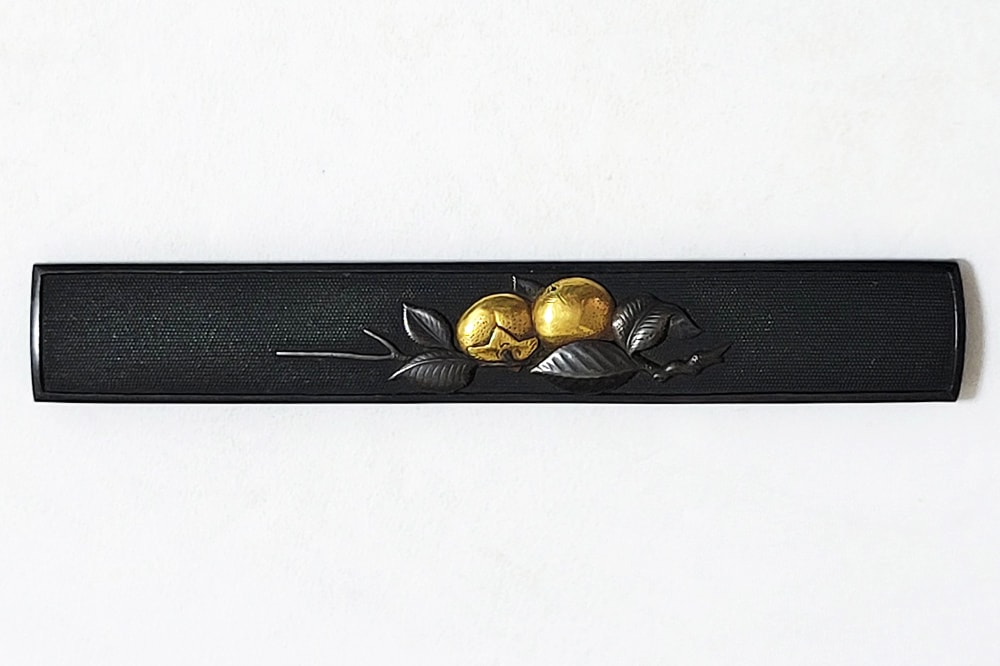
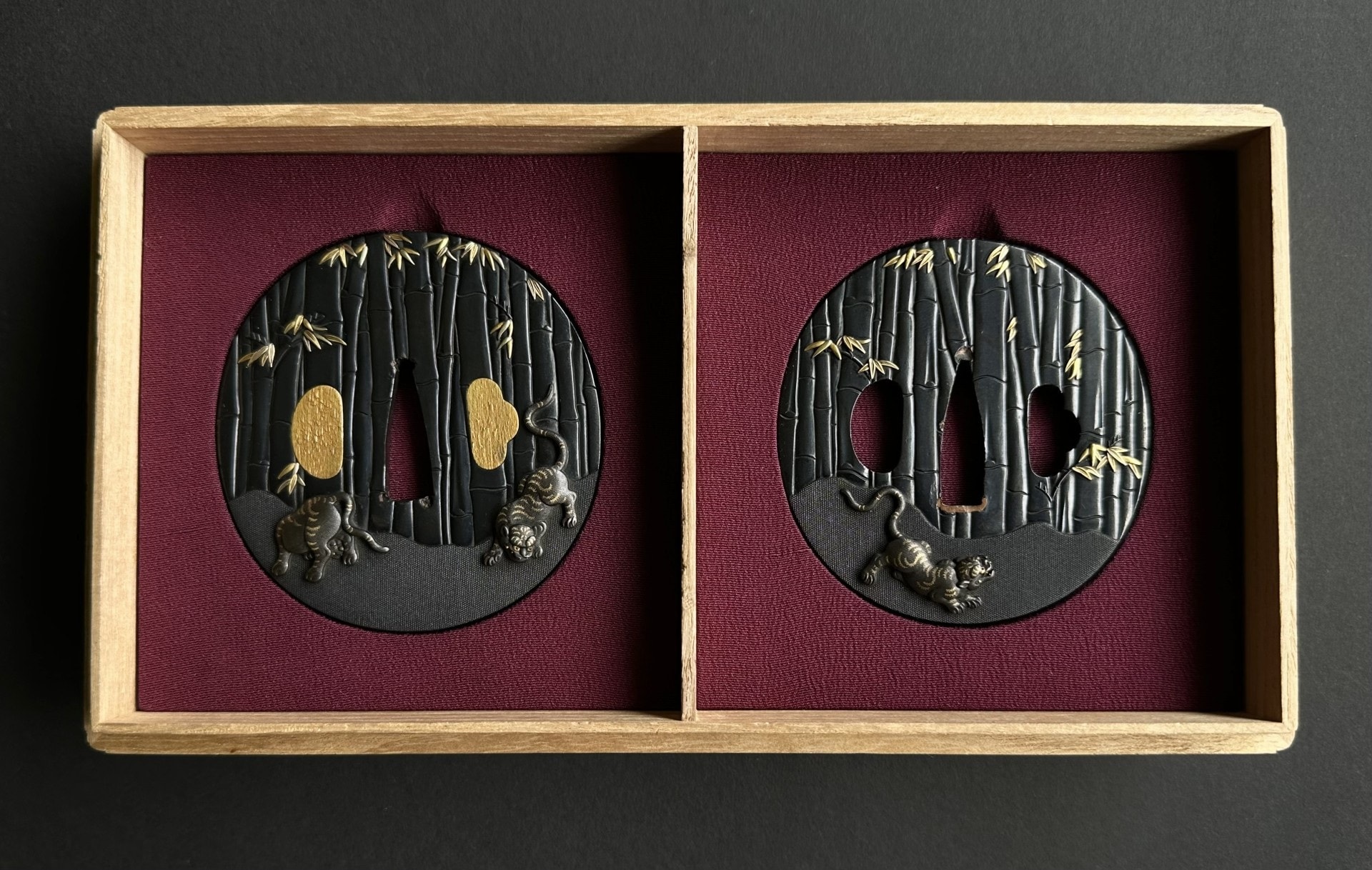
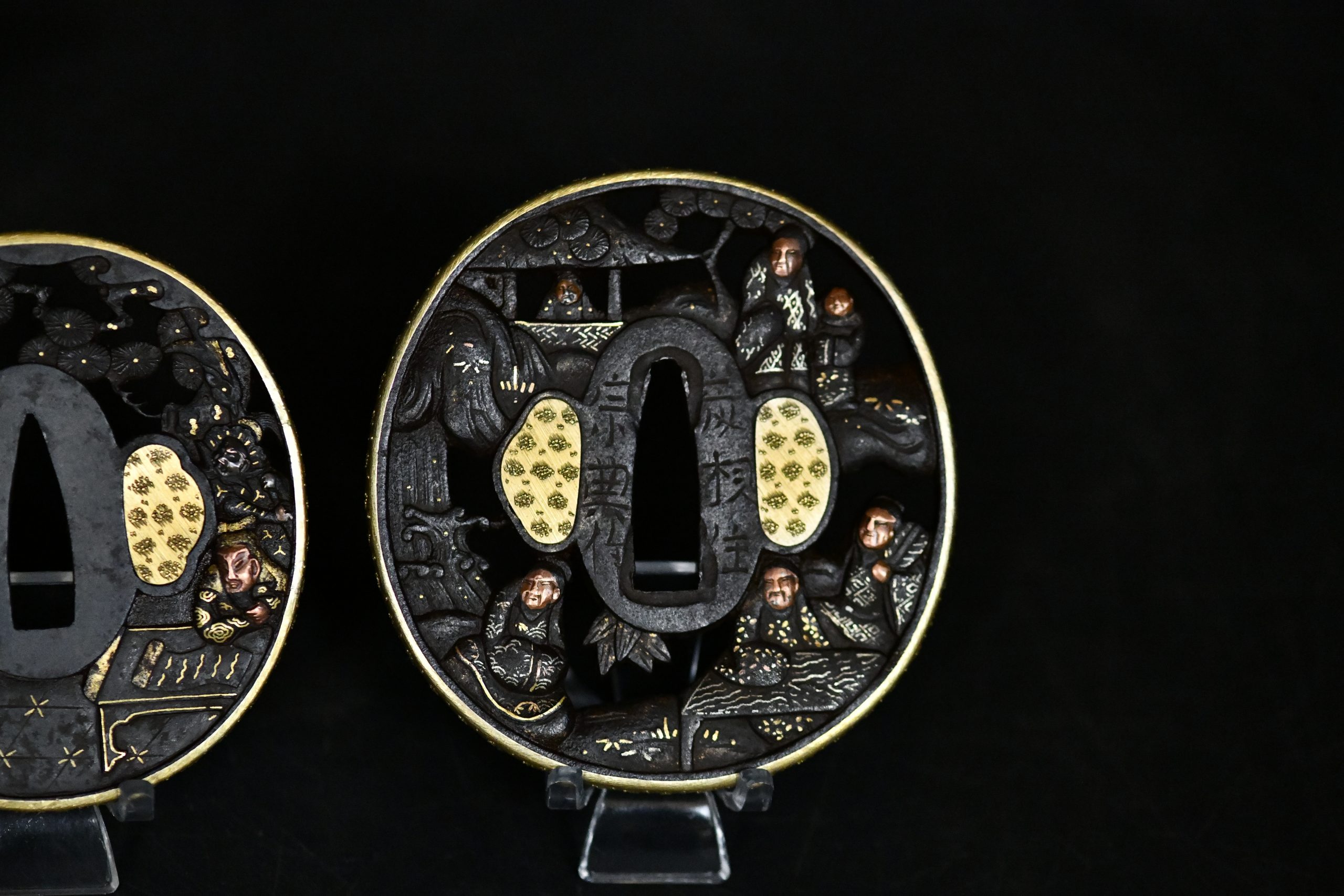
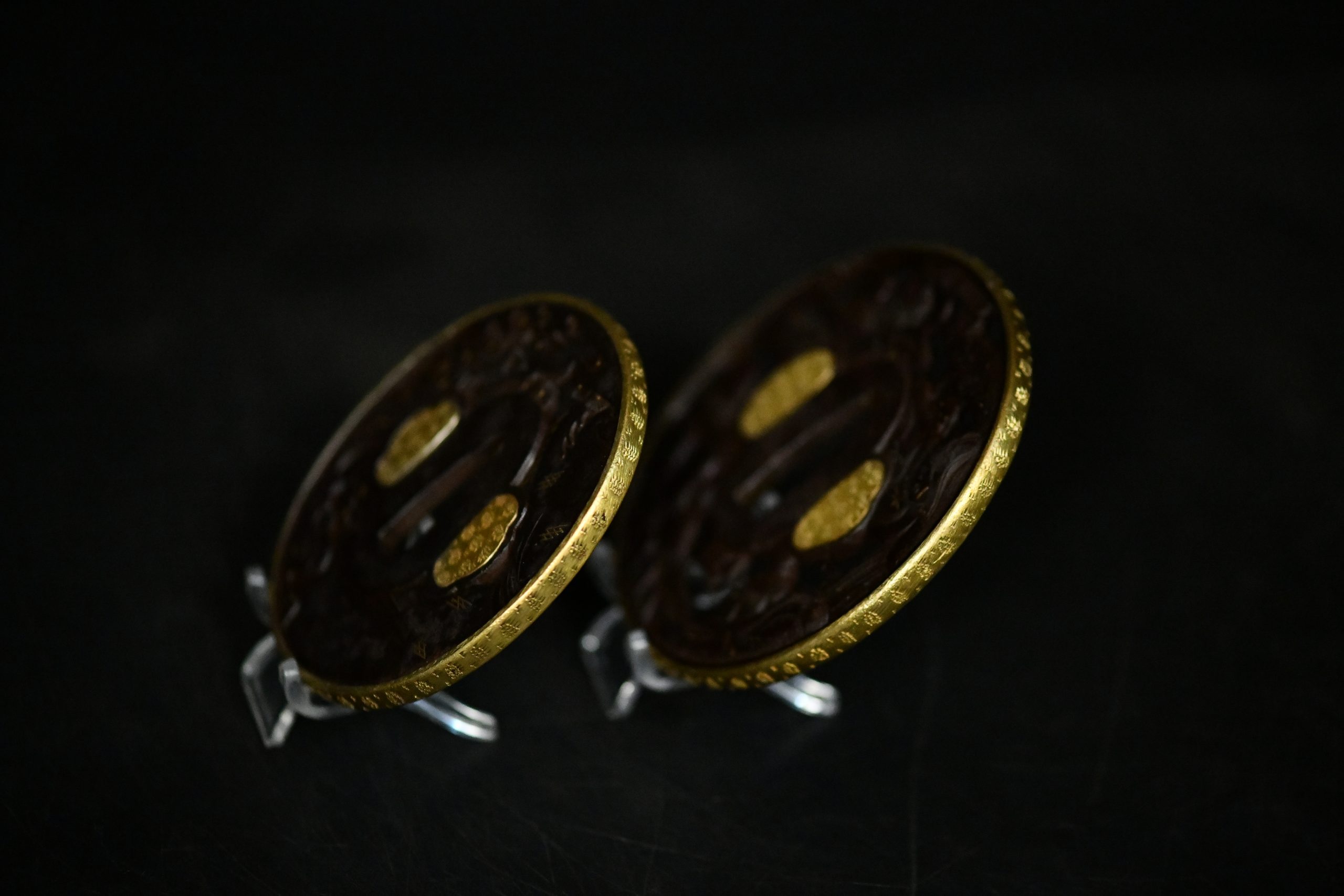
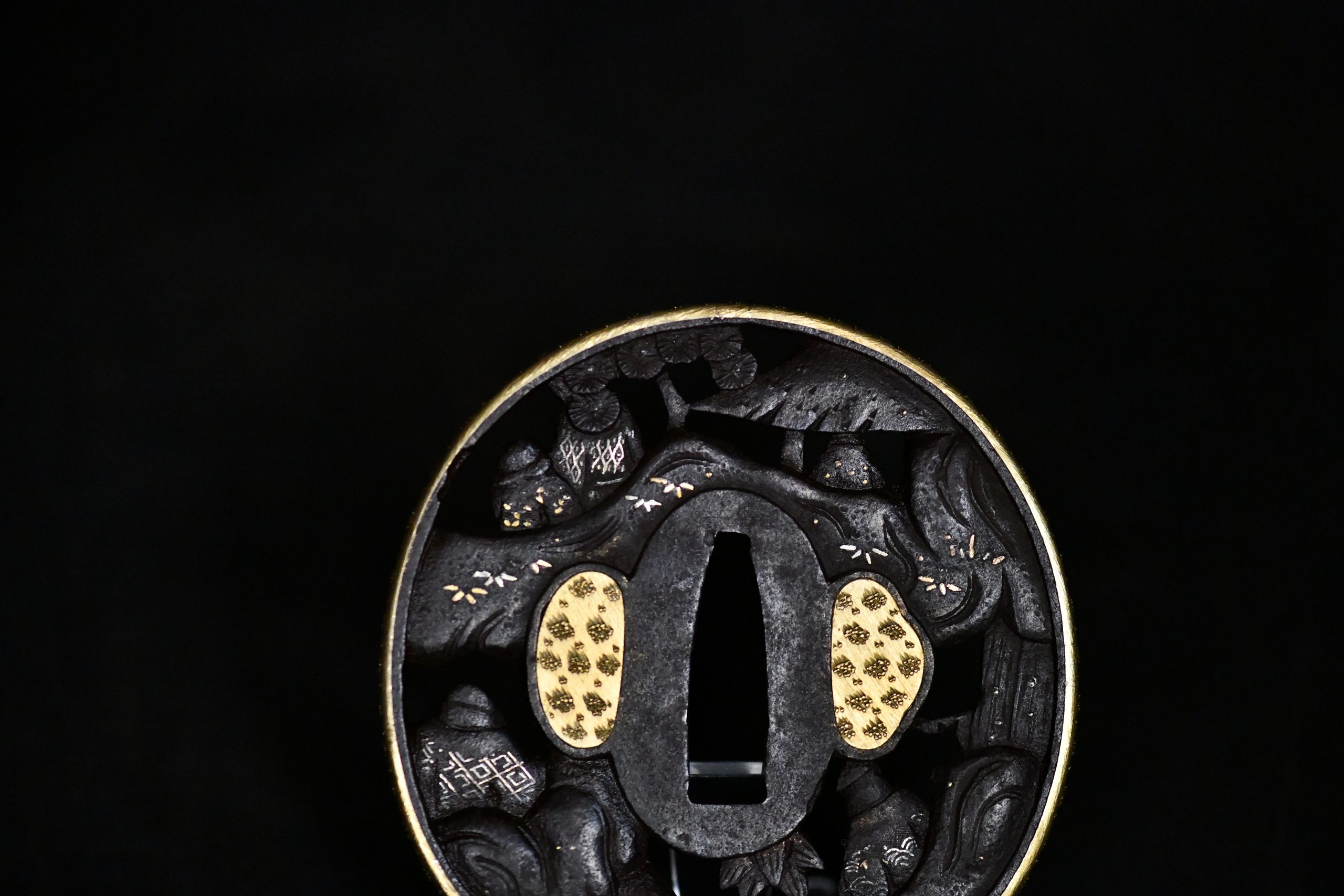
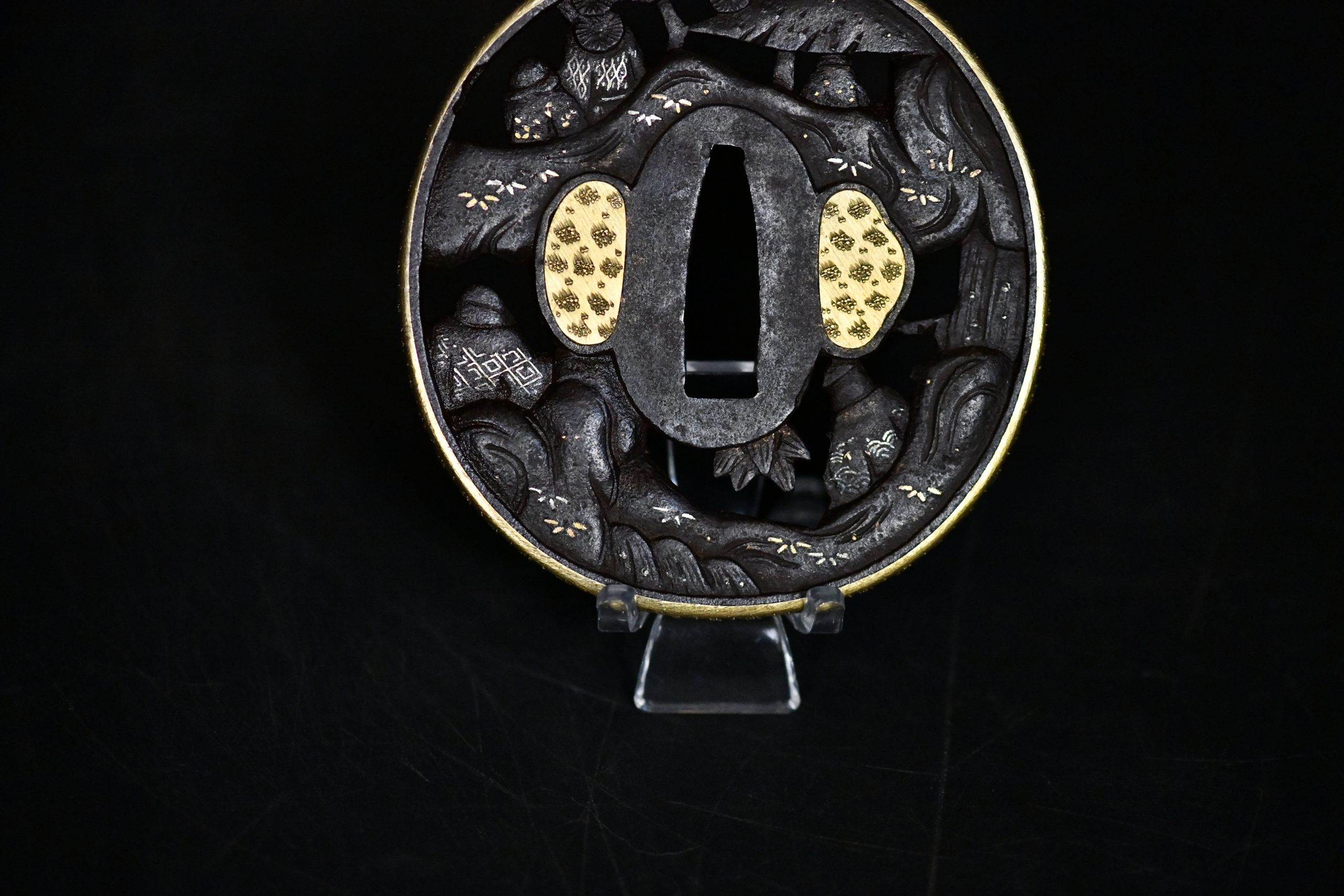
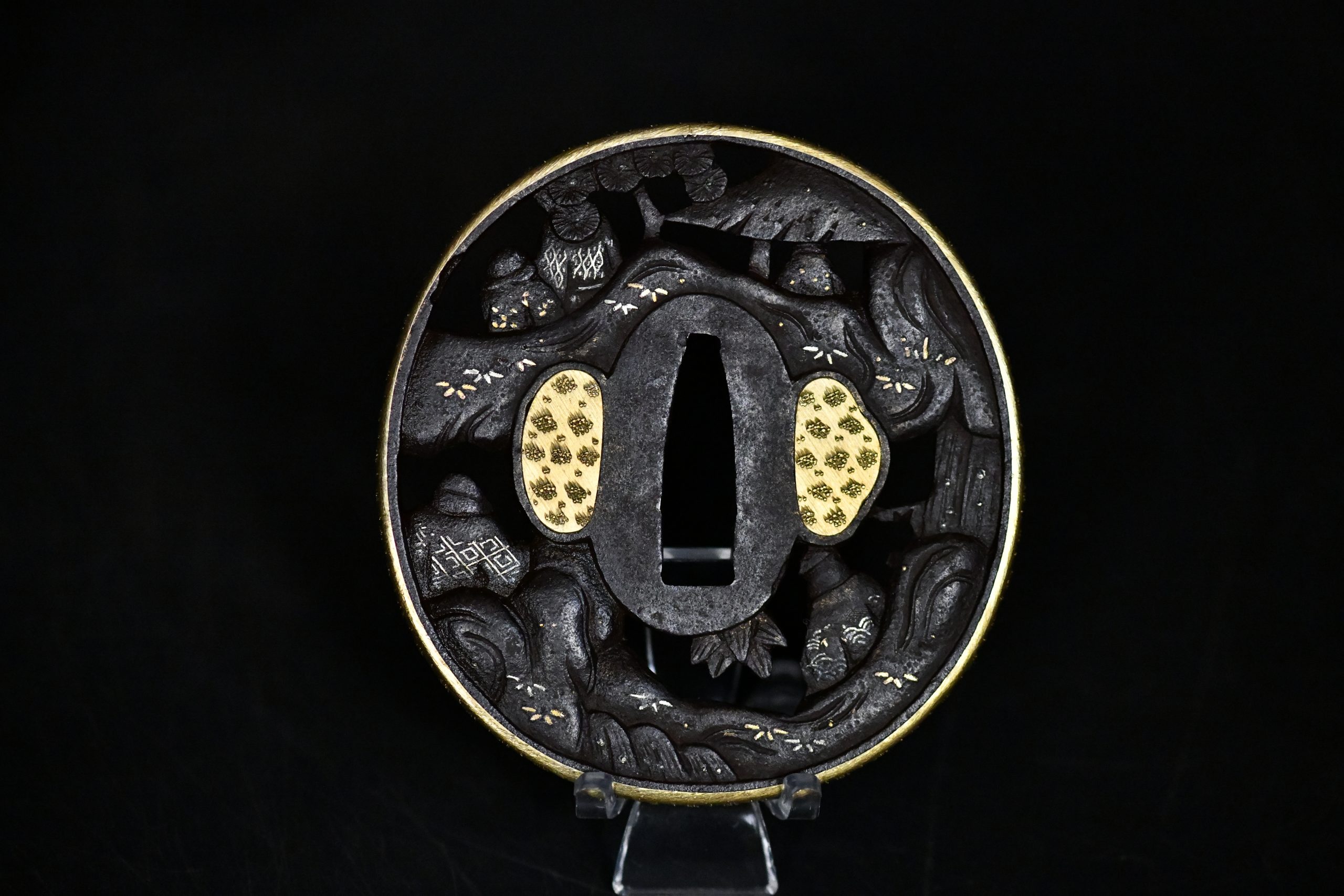
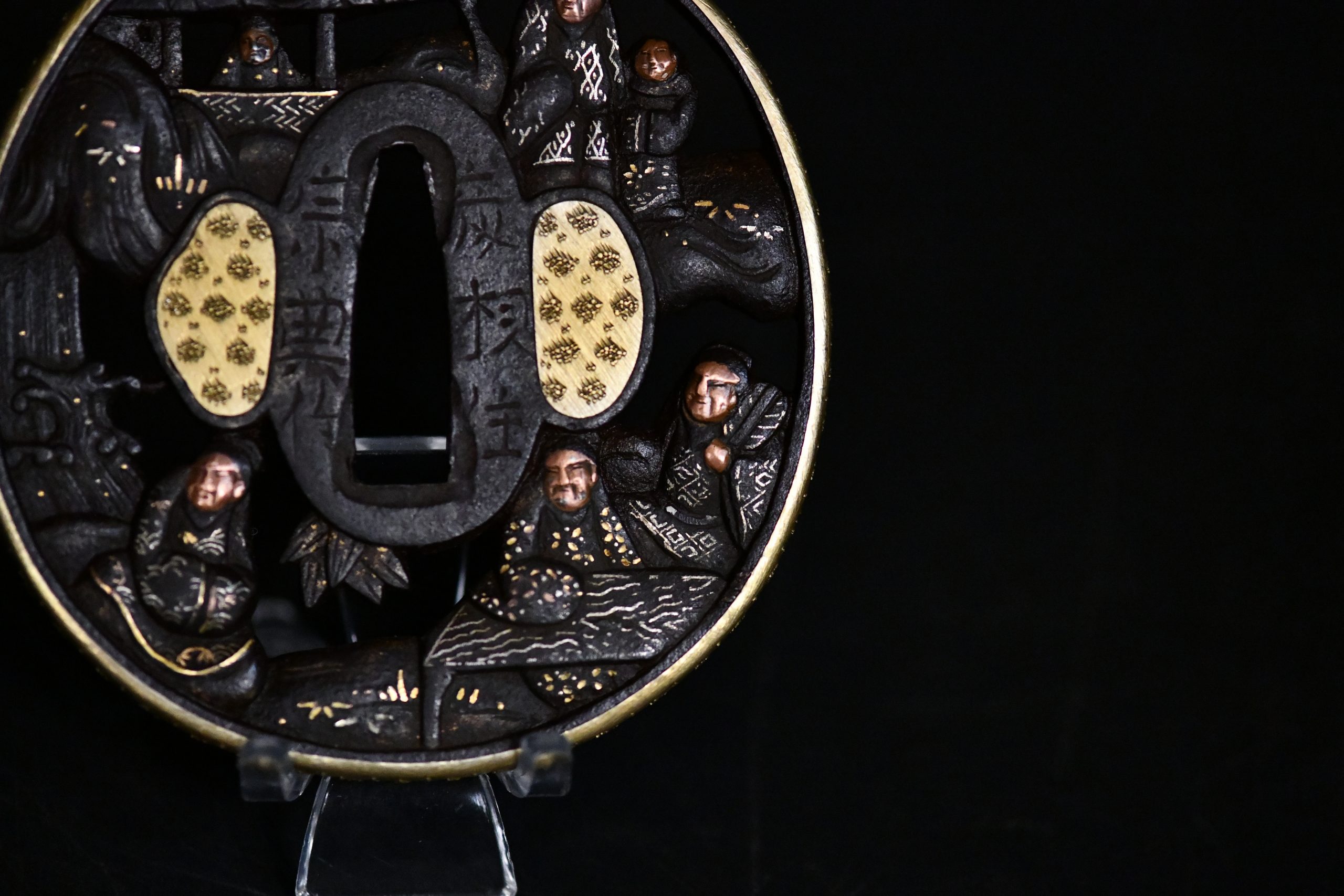
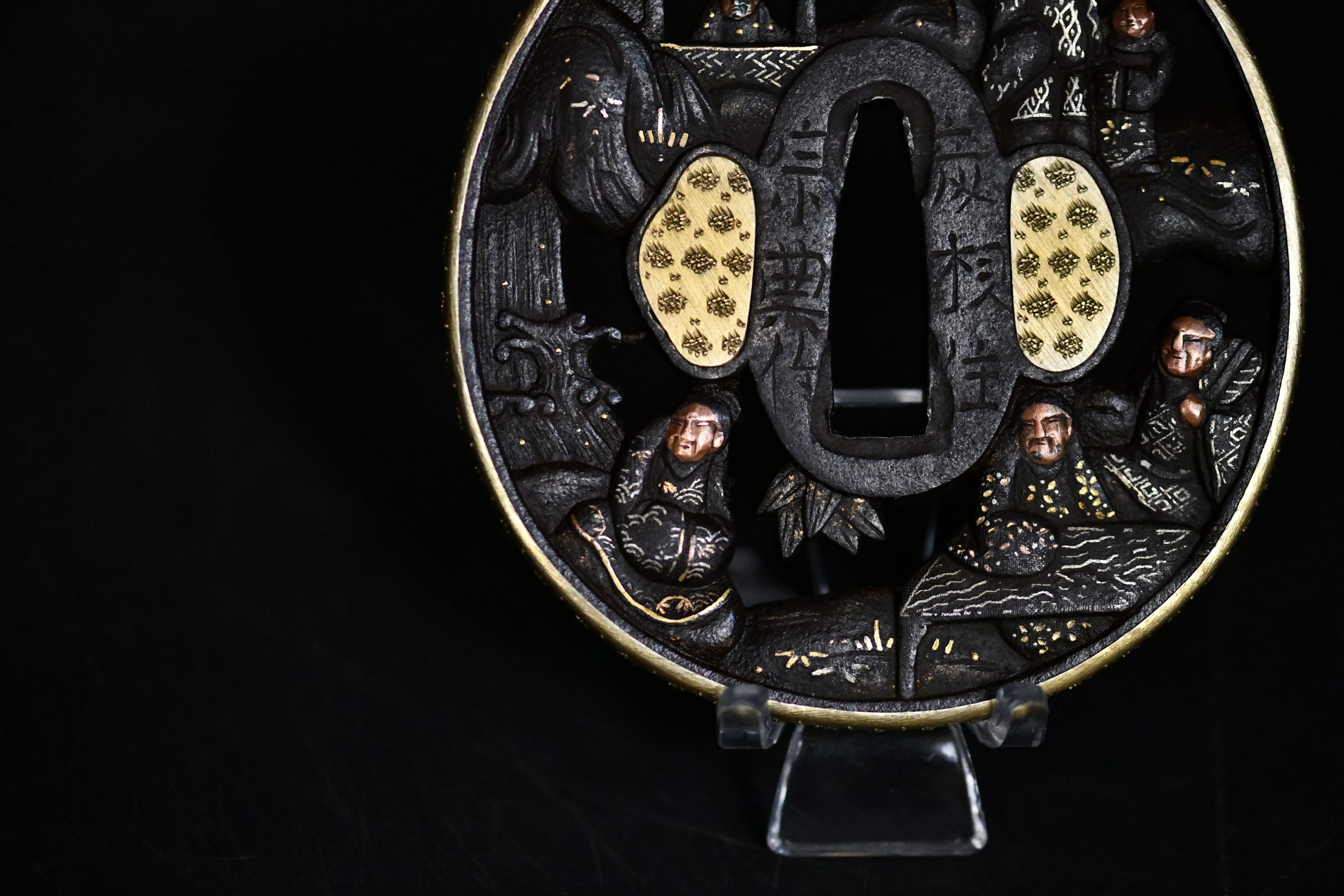
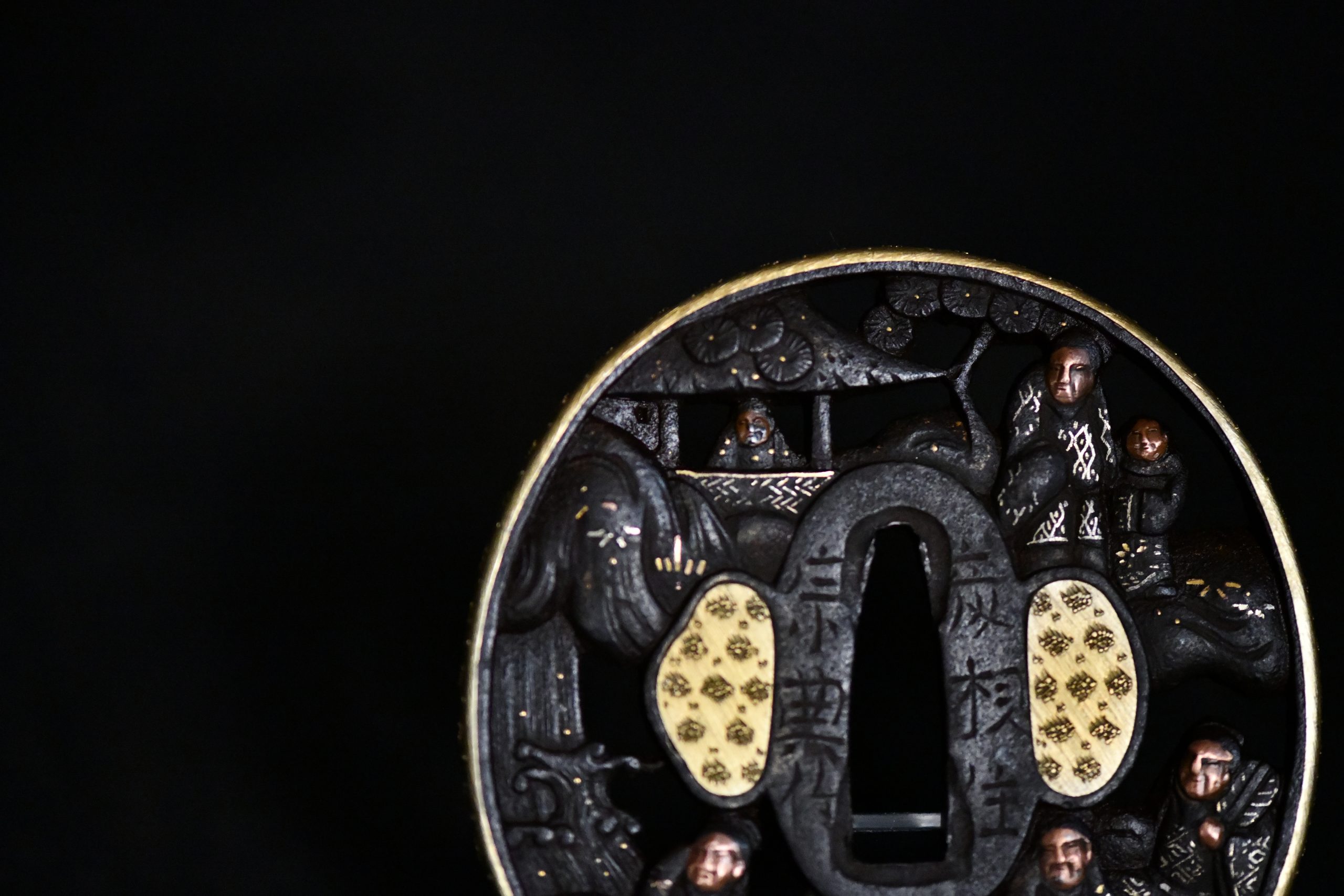
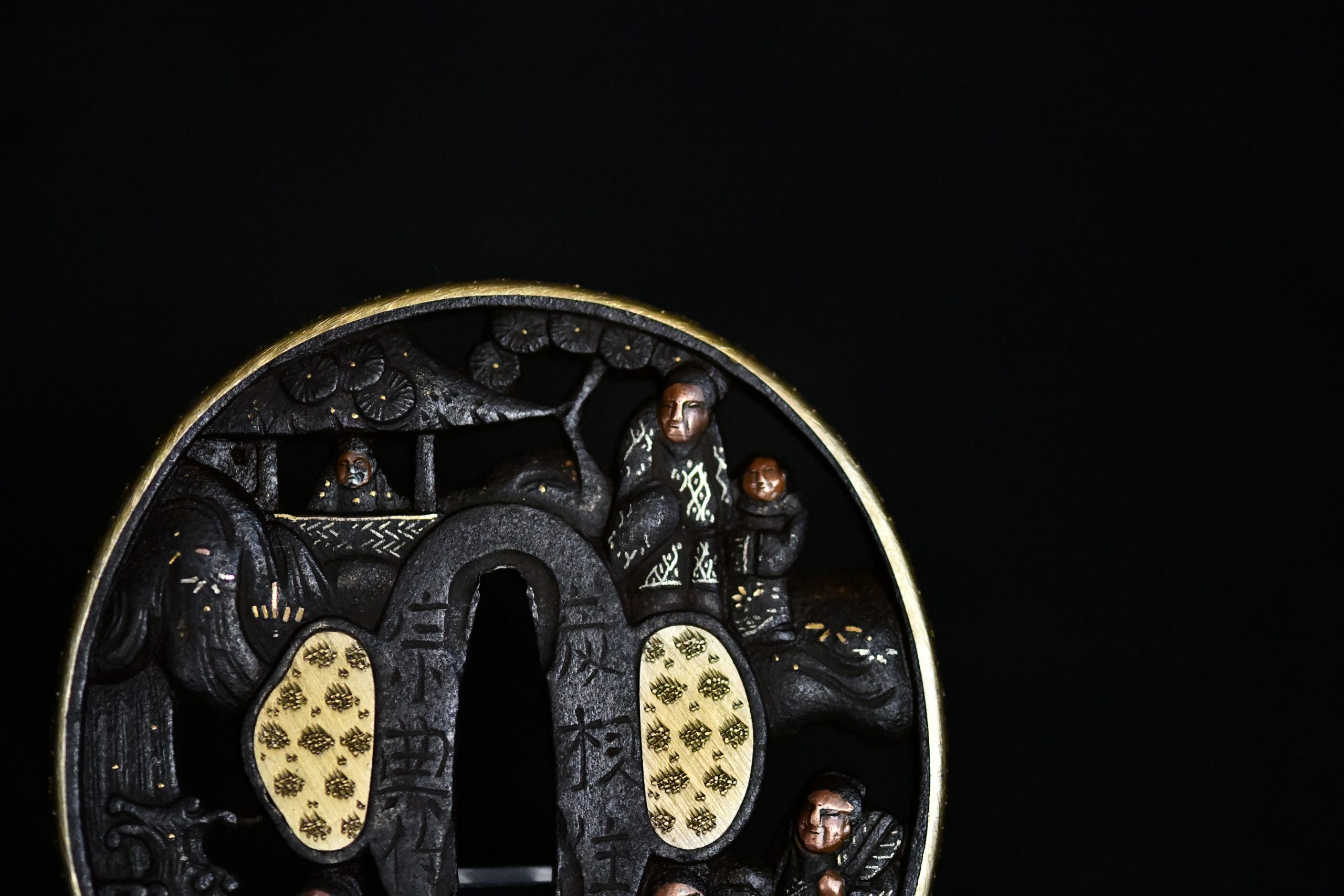
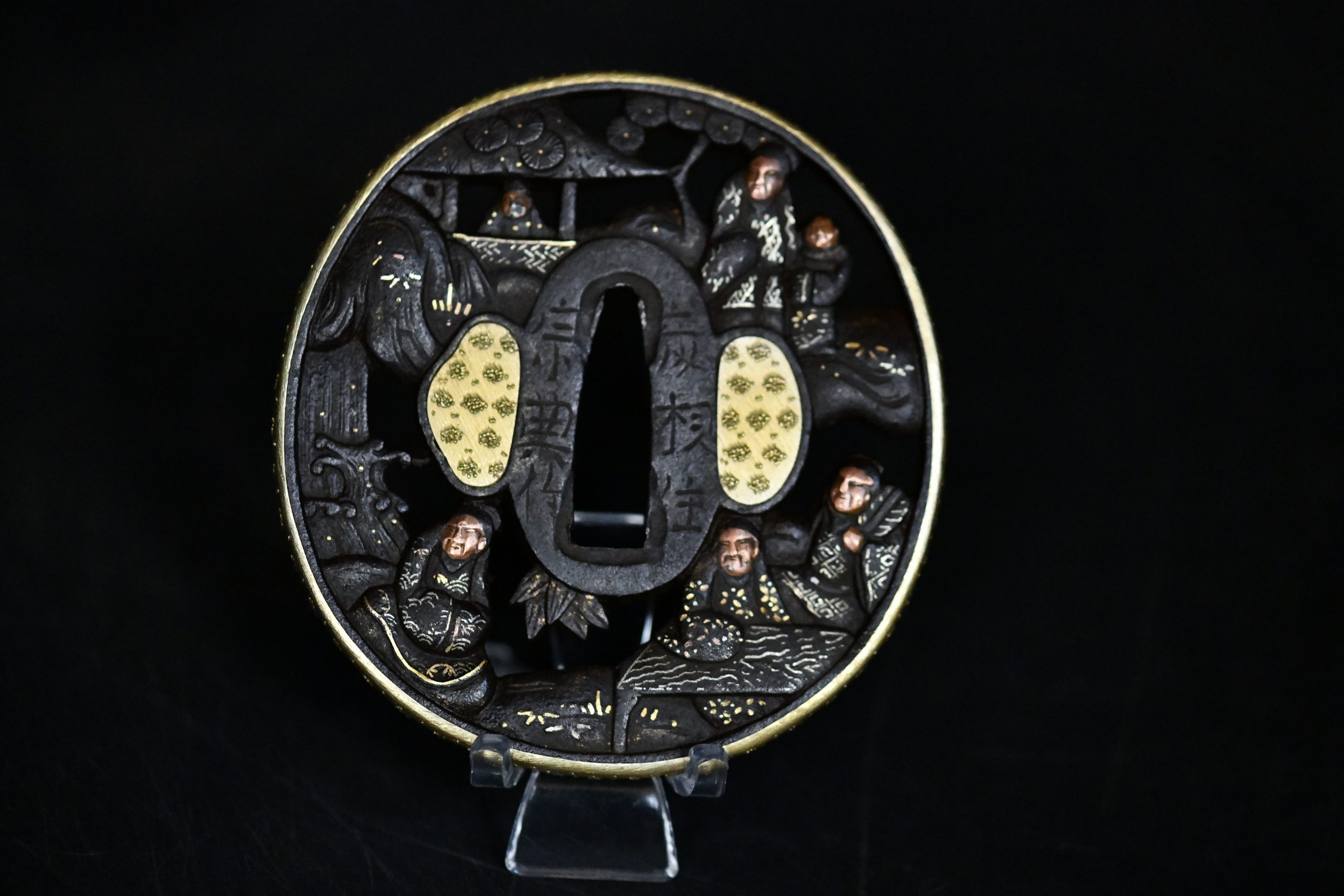
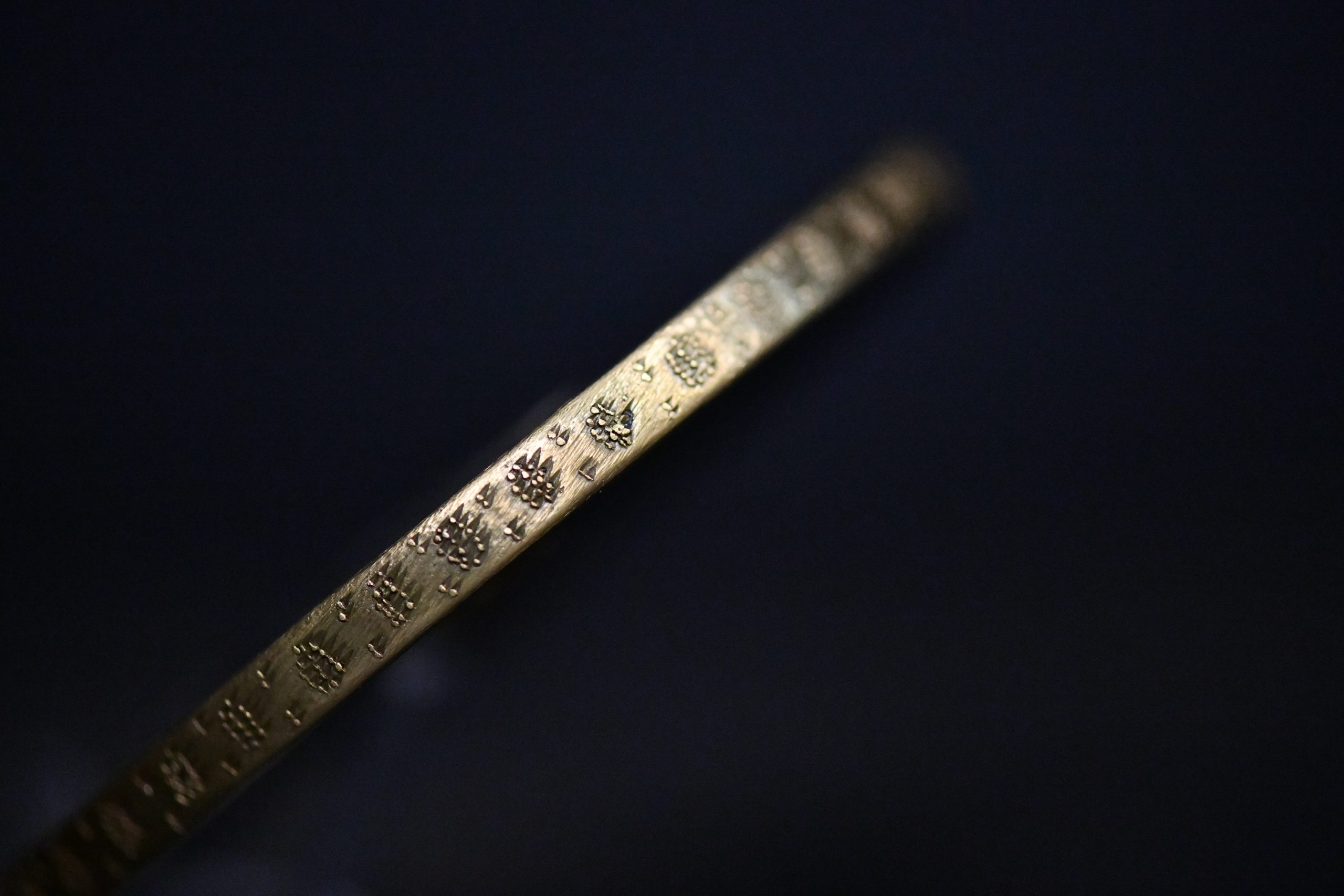
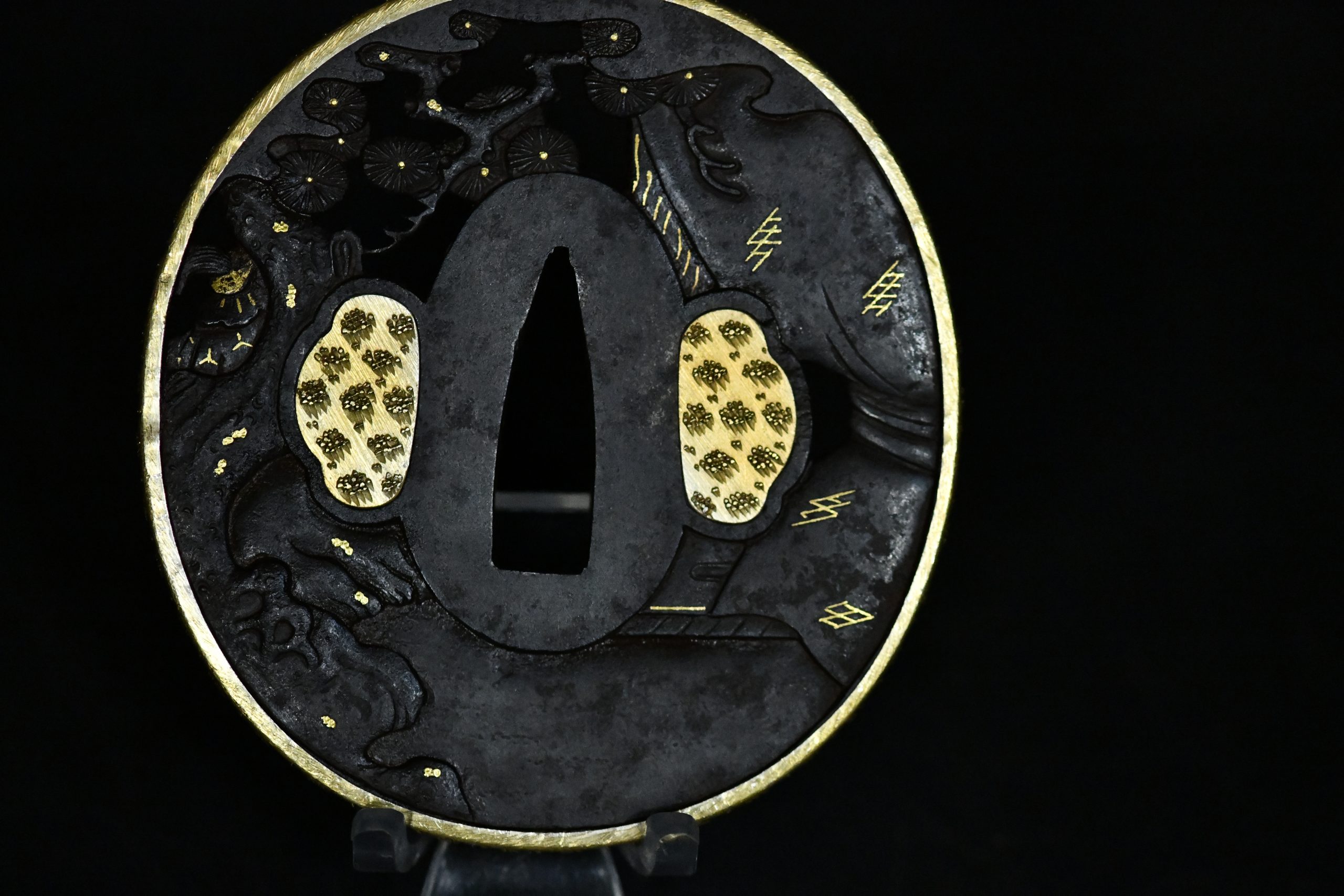
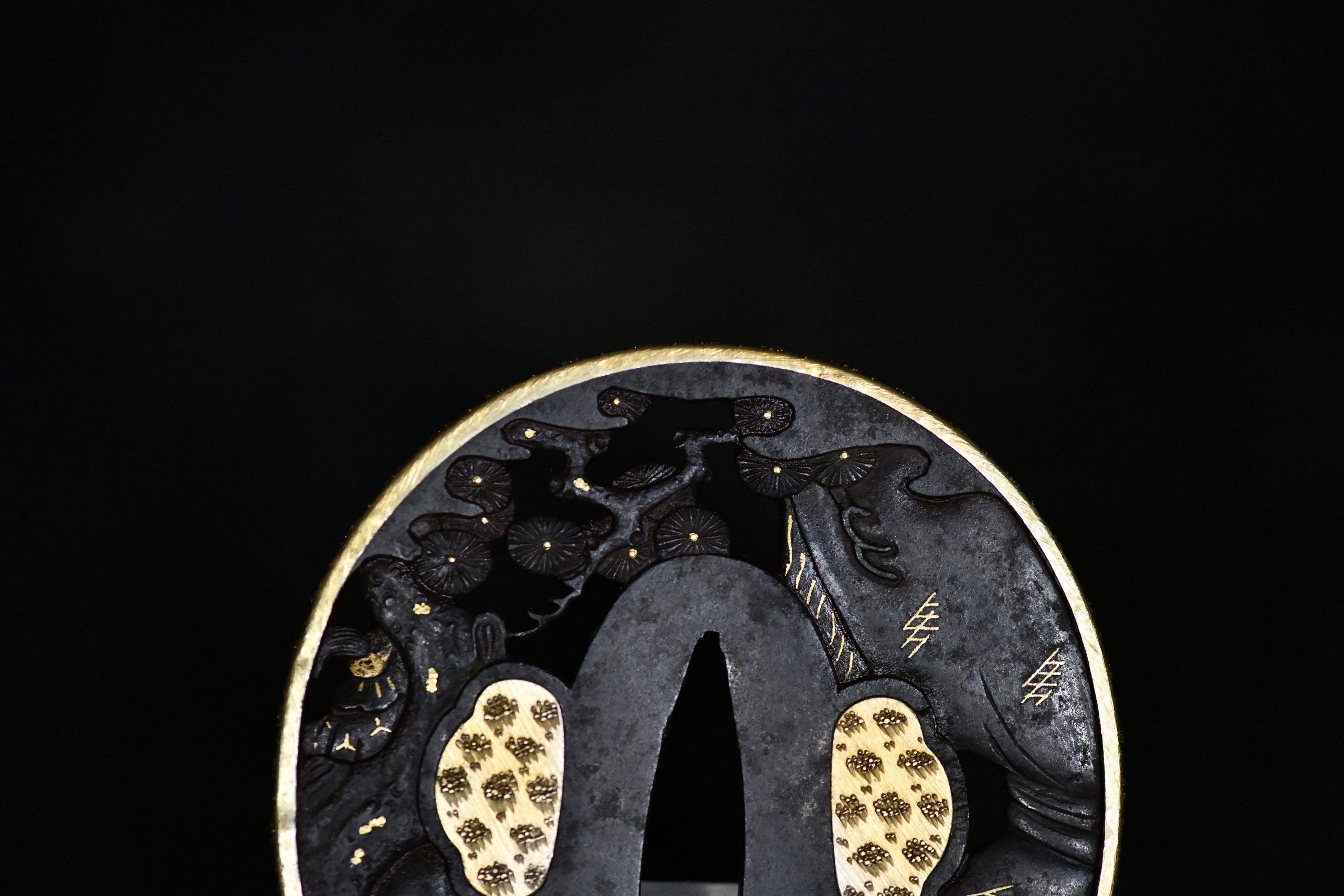
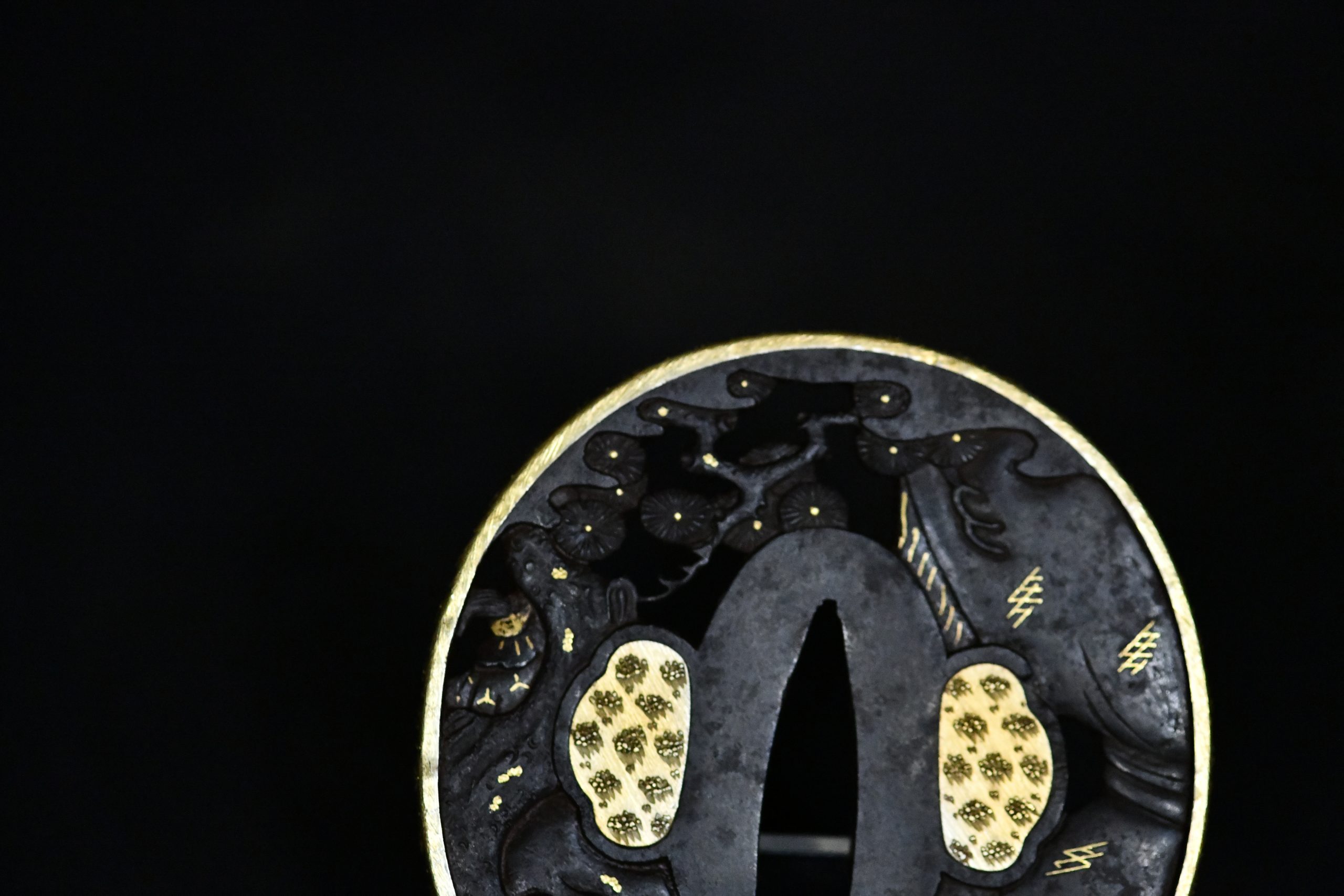
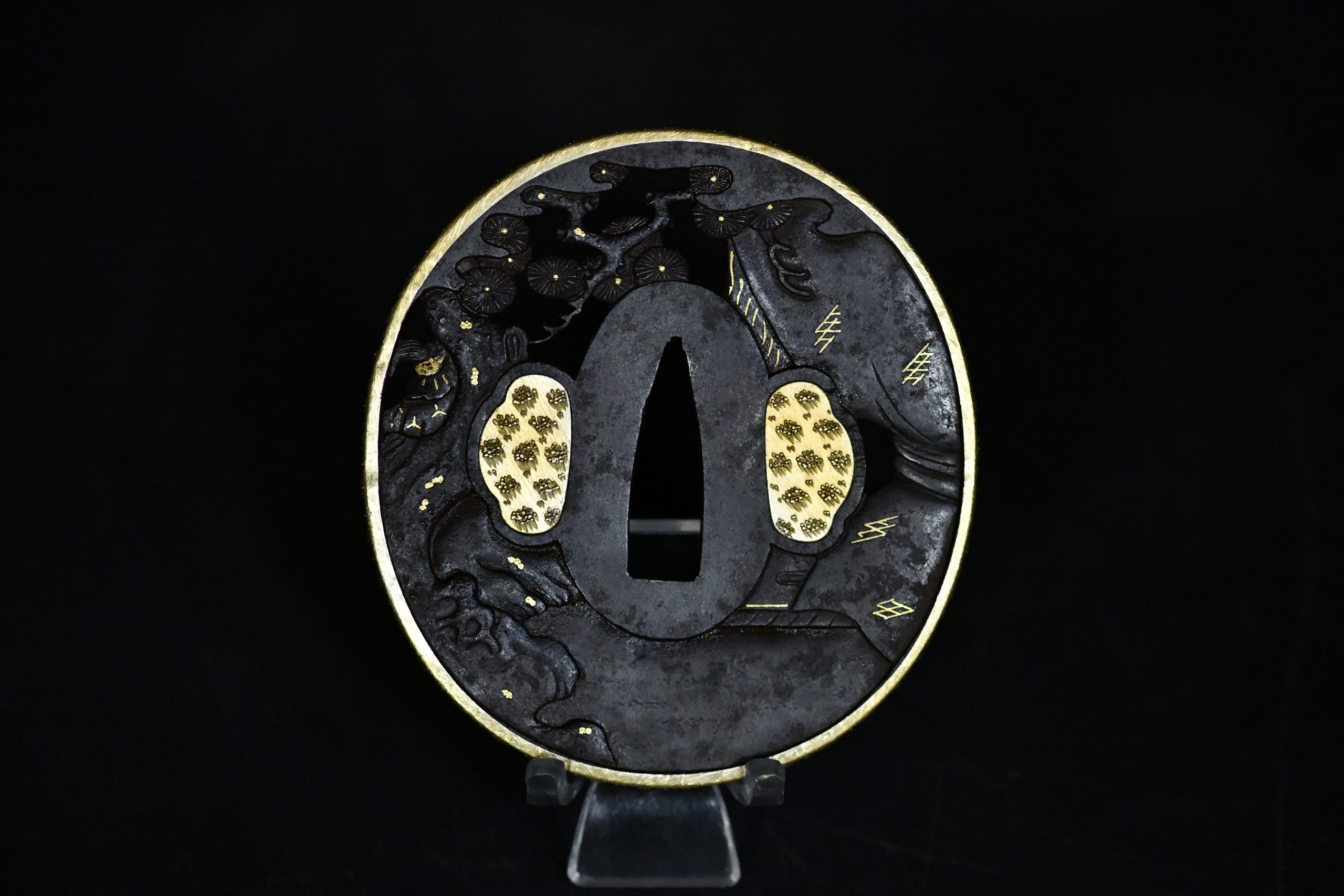
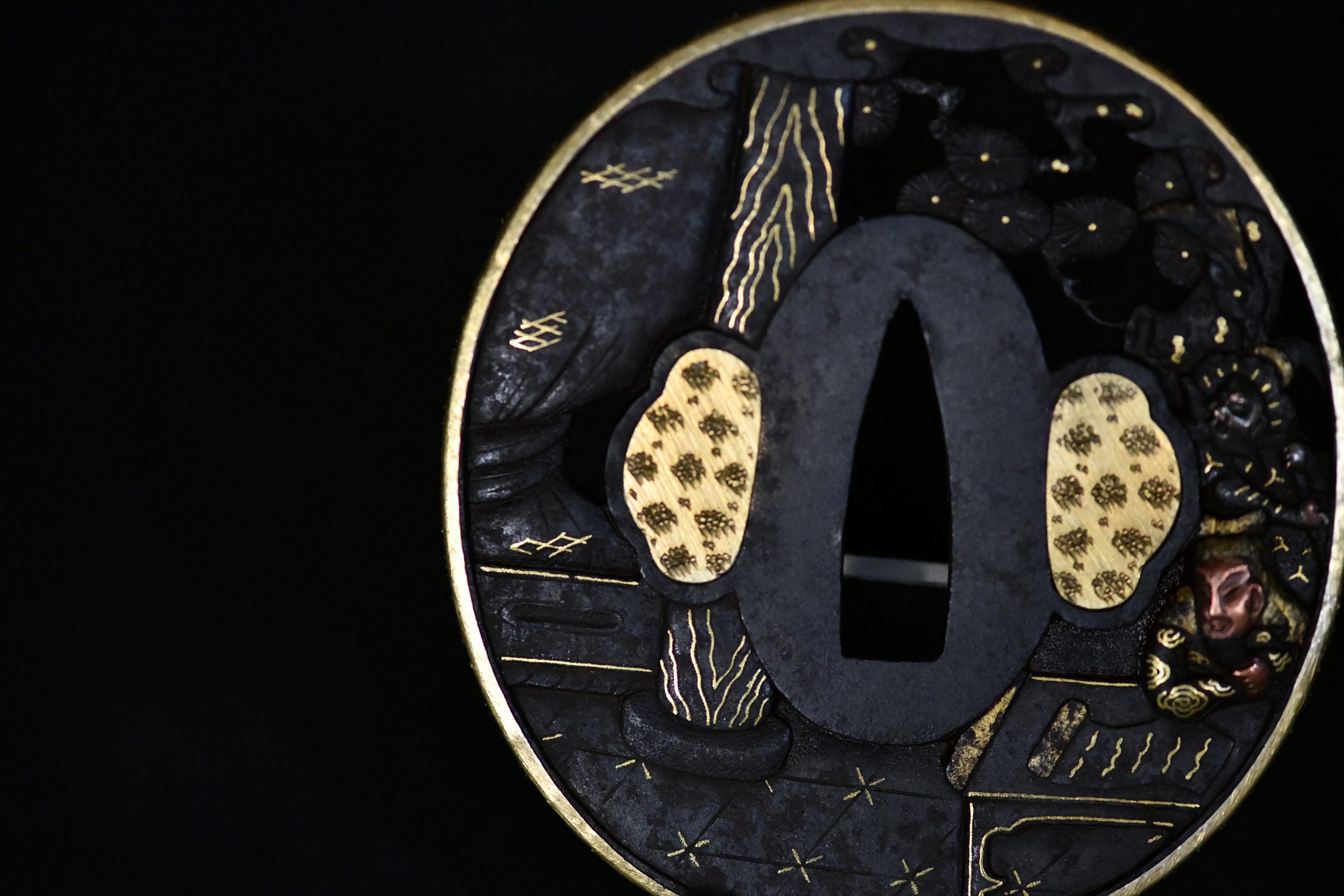
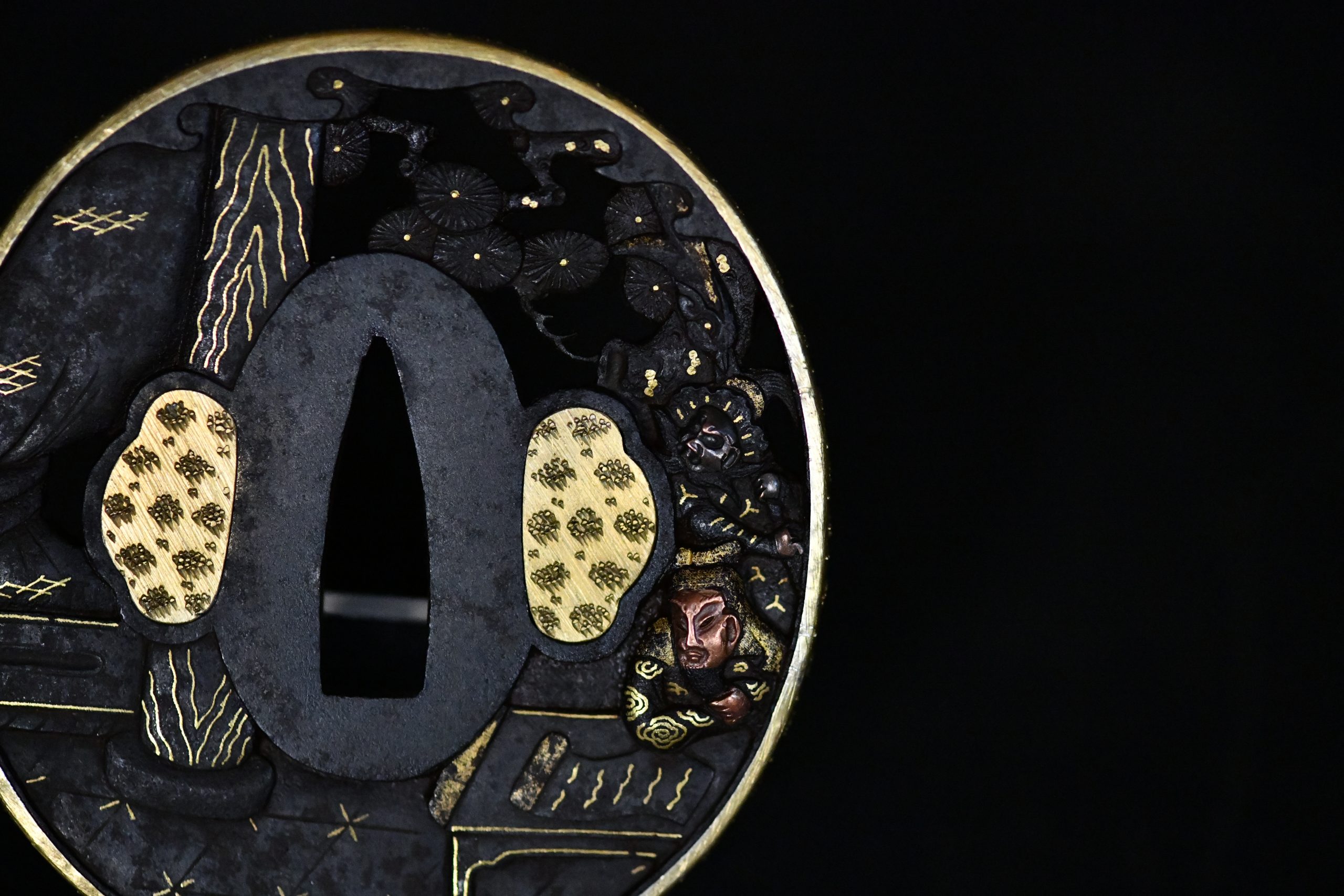
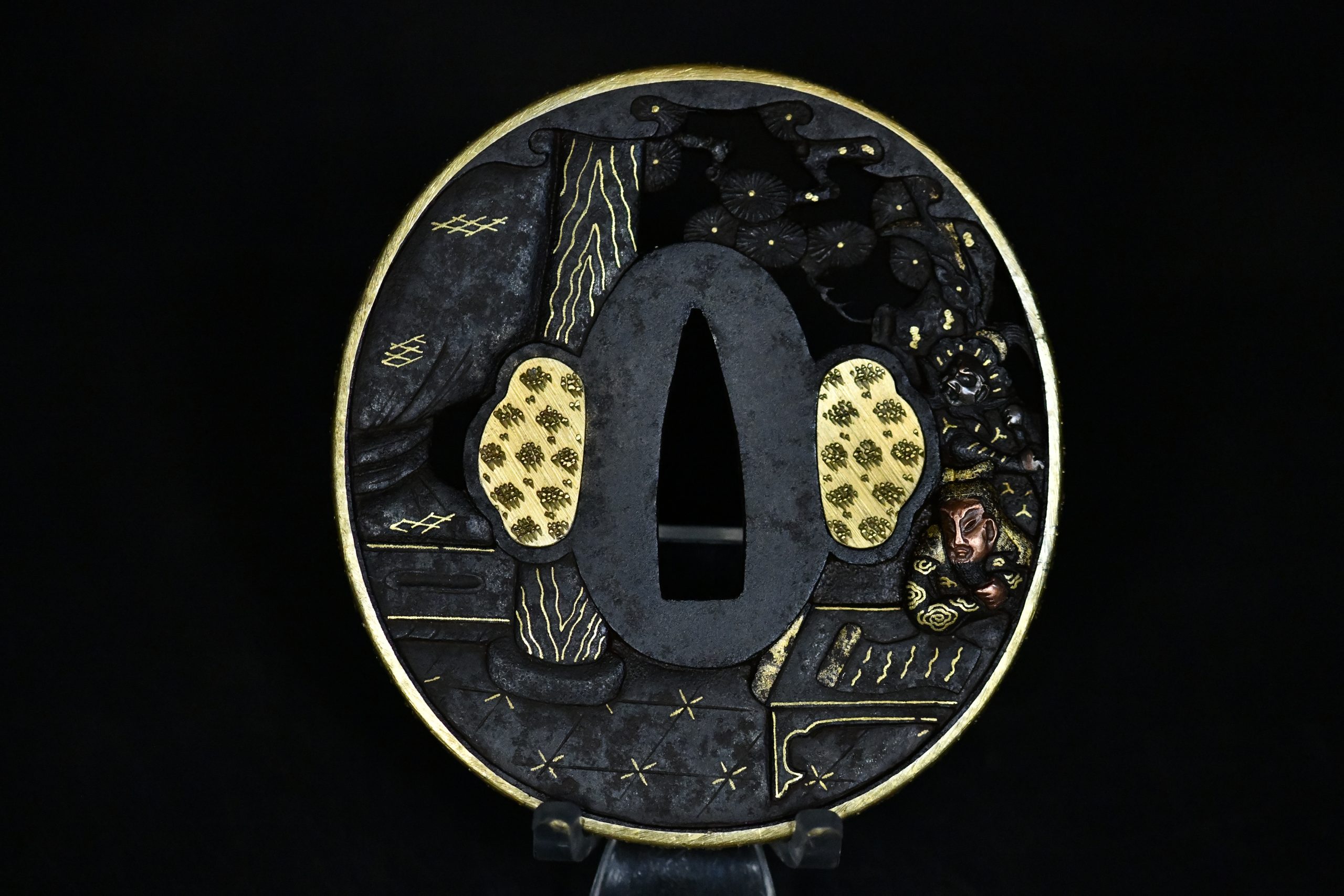
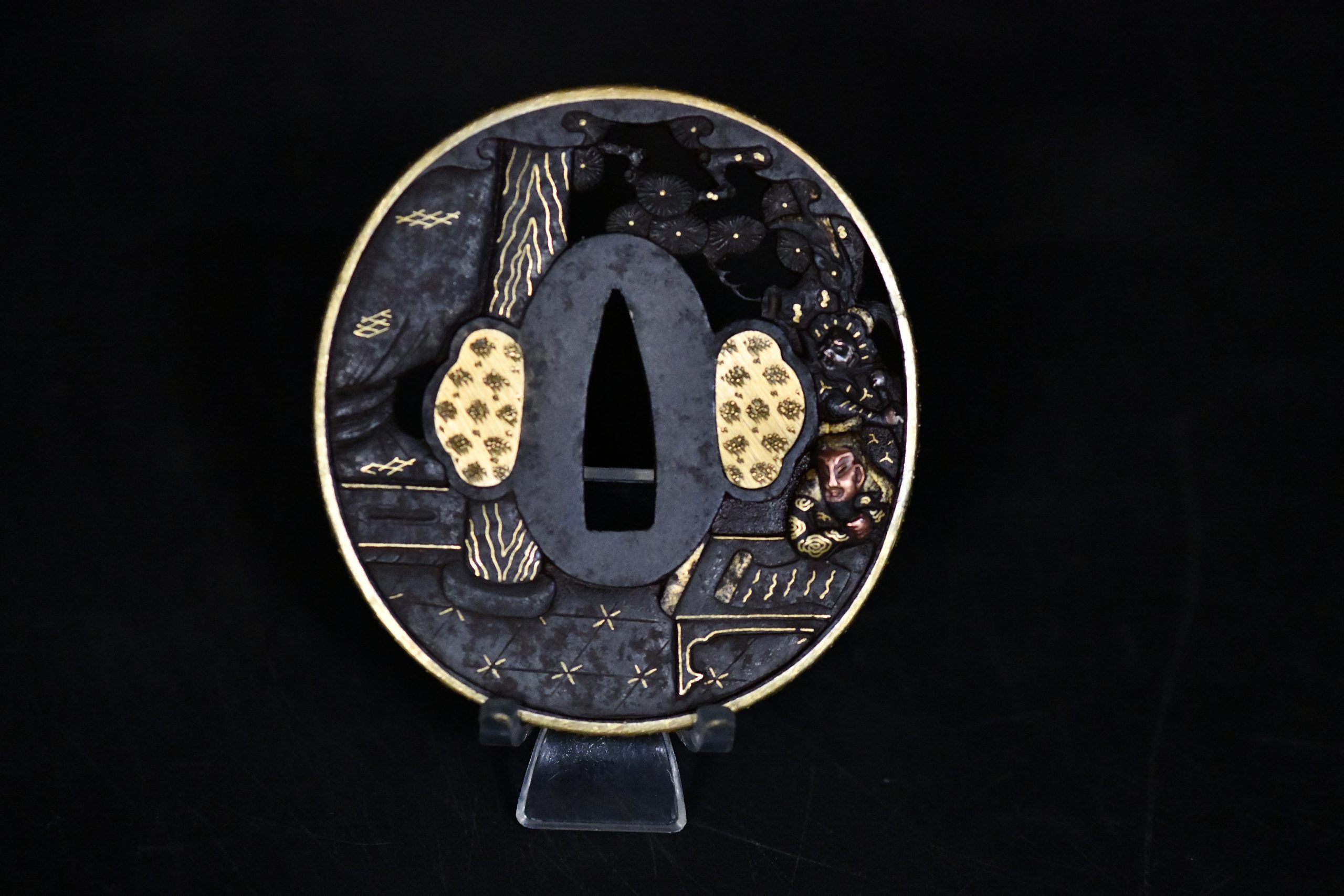
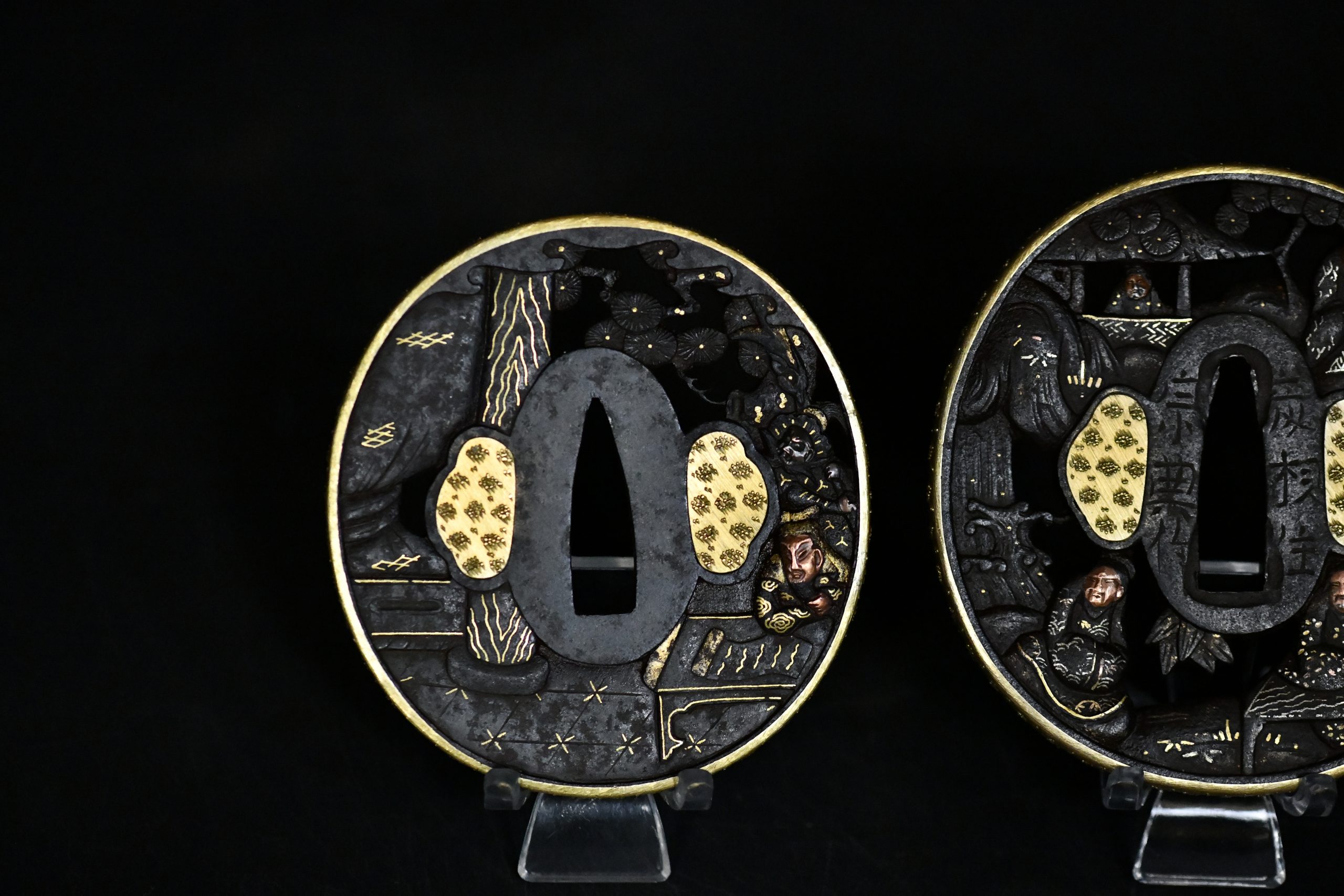
This listing is for a daisho (matched pair) of marugata (round) tsuba. The tsuba are signed, indicating the maker, and are crafted from iron. They represent the artistic and functional aspects of Japanese sword fittings.
 NihontoWatch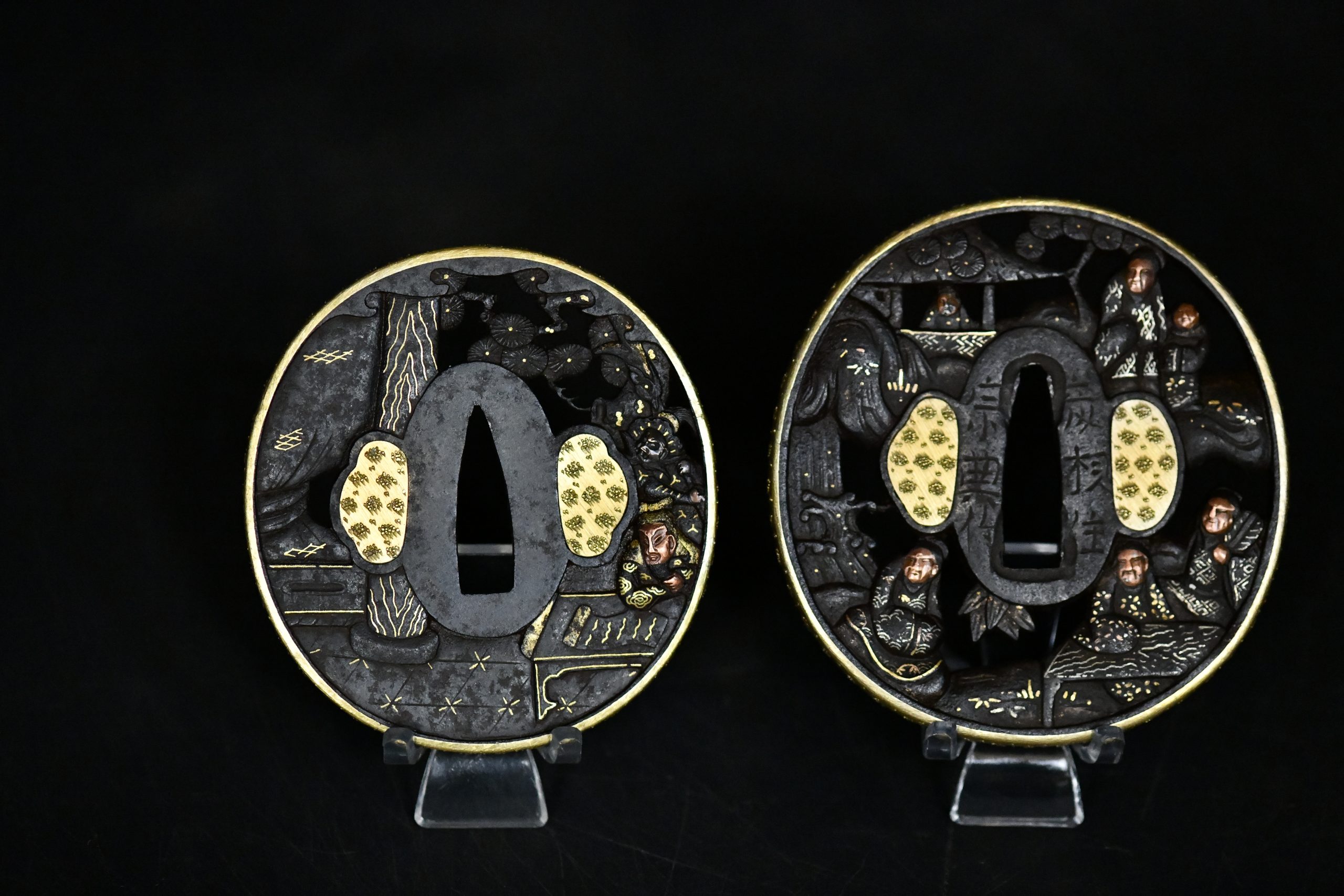
Mito School
Machibori · Hitachi
79 pieces on the market now
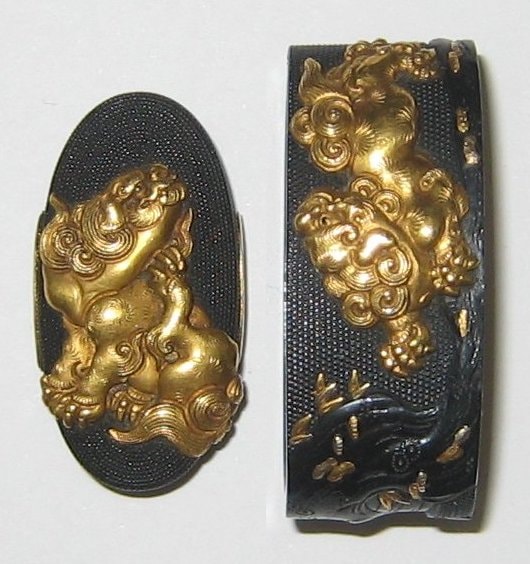
The Mito school of sword-fitting makers emerged as an officially sponsored tradition in the domains of the Tokugawa family's Mito branch, achieving particular prominence in the late Edo period. The school's lineage traces through Shinozaki Katsushige and his successors, who served as goyō horimonoshi (official engravers) to the domain. Unlike the privately patronized workshops of Edo and Kyoto, Mito metalworkers operated within a system of domain service, producing both presentation fittings for formal occasions and richly decorated works for commission. This institutional foundation fostered both technical rigor and stylistic continuity, as masters such as Hagiya Katsuhei and his pupils transmitted the school's methods through direct apprenticeship. The Mito aesthetic is characterized by meticulous shakudō nanako-ji grounds upon which high-relief carving (takabori) is combined with precise gold and silver iroe to yield compositions of exceptional textural depth. The school showed particular mastery in figural subjects—immortals, deities, and mythological beasts—rendered with close attention to anatomical realism and dynamic poses.
The nanako punch-work is notably disciplined, each grain laid in orderly arrangement, while the relief carving rises to striking heights, with elements such as lion manes and peony petals executed in fully three-dimensional chiselwork. Color inlays are applied with exacting accuracy, and thematic coordination across entire fitting sets demonstrates a sophisticated understanding of decorative unity. The Mito school's influence extended well into the Meiji period through the achievements of second-generation masters. Hagiya Katsuhei's circle produced such celebrated artists as Namekawa Sadakatsu and Unno Shōmin, who carried the school's technical standards and stylistic vocabulary into new contexts. The tradition's emphasis on figural carving, inherited from the Tamagawa lineage, and its adherence to orthodox forms for formal presentation fittings established the Mito school as one of the principal regional traditions of late-period Japanese sword-fitting production. Learn more →
| Smith | Era | Designated |
|---|---|---|
| Katsuhira勝平 | 1804-1886 | 13 |
| Shomin勝珉 | 1844-1915 | 11 |
| Teikan貞幹 | — | 5 |
| Katsutoshi勝寿 | — | 1 |
| Tomoyoshi友善 | 1716-c.1920 | 0 |
We could not find an authenticity certificate on the seller’s listing. Japanese swords and fittings are normally papered by the NBTHK (or the NTHK). Without one, the attribution is the seller’s own assessment and has not been independently verified — treat it with caution and ask the dealer about certification before buying.
14-day return if items arrive damaged or in unexpected condition; customer bears return shipping + insurance; items returned in original condition with all accessories; antique armour non-returnable; only regular priced items refundable; shipping costs non-refundable.
This listing is for a daisho (matched pair) of marugata (round) tsuba. The tsuba are signed, indicating the maker, and are crafted from iron. They represent the artistic and functional aspects of Japanese sword fittings.
NihontoWatchMito School
Machibori · Hitachi
79 pieces on the market now
The Mito school of sword-fitting makers emerged as an officially sponsored tradition in the domains of the Tokugawa family's Mito branch, achieving particular prominence in the late Edo period. The school's lineage traces through Shinozaki Katsushige and his successors, who served as goyō horimonoshi (official engravers) to the domain. Unlike the privately patronized workshops of Edo and Kyoto, Mito metalworkers operated within a system of domain service, producing both presentation fittings for formal occasions and richly decorated works for commission. This institutional foundation fostered both technical rigor and stylistic continuity, as masters such as Hagiya Katsuhei and his pupils transmitted the school's methods through direct apprenticeship. The Mito aesthetic is characterized by meticulous shakudō nanako-ji grounds upon which high-relief carving (takabori) is combined with precise gold and silver iroe to yield compositions of exceptional textural depth. The school showed particular mastery in figural subjects—immortals, deities, and mythological beasts—rendered with close attention to anatomical realism and dynamic poses.
The nanako punch-work is notably disciplined, each grain laid in orderly arrangement, while the relief carving rises to striking heights, with elements such as lion manes and peony petals executed in fully three-dimensional chiselwork. Color inlays are applied with exacting accuracy, and thematic coordination across entire fitting sets demonstrates a sophisticated understanding of decorative unity. The Mito school's influence extended well into the Meiji period through the achievements of second-generation masters. Hagiya Katsuhei's circle produced such celebrated artists as Namekawa Sadakatsu and Unno Shōmin, who carried the school's technical standards and stylistic vocabulary into new contexts. The tradition's emphasis on figural carving, inherited from the Tamagawa lineage, and its adherence to orthodox forms for formal presentation fittings established the Mito school as one of the principal regional traditions of late-period Japanese sword-fitting production. Learn more →
| Smith | Era | Designated |
|---|---|---|
| Katsuhira勝平 | 1804-1886 | 13 |
| Shomin勝珉 | 1844-1915 | 11 |
| Teikan貞幹 | — | 5 |
| Katsutoshi勝寿 | — | 1 |
| Tomoyoshi友善 | 1716-c.1920 | 0 |
We could not find an authenticity certificate on the seller’s listing. Japanese swords and fittings are normally papered by the NBTHK (or the NTHK). Without one, the attribution is the seller’s own assessment and has not been independently verified — treat it with caution and ask the dealer about certification before buying.
14-day return if items arrive damaged or in unexpected condition; customer bears return shipping + insurance; items returned in original condition with all accessories; antique armour non-returnable; only regular priced items refundable; shipping costs non-refundable.