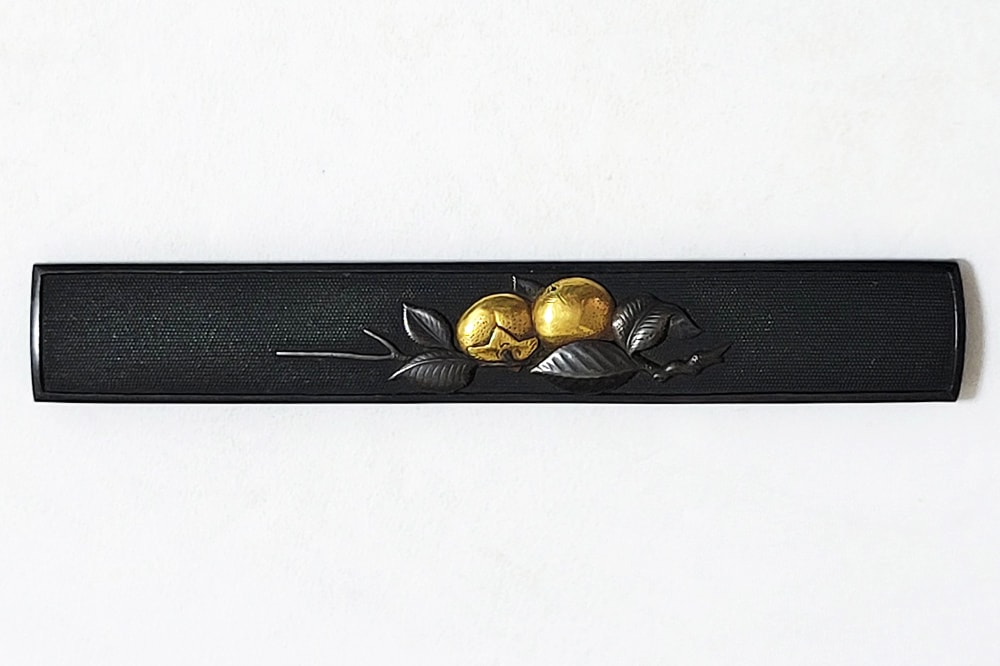
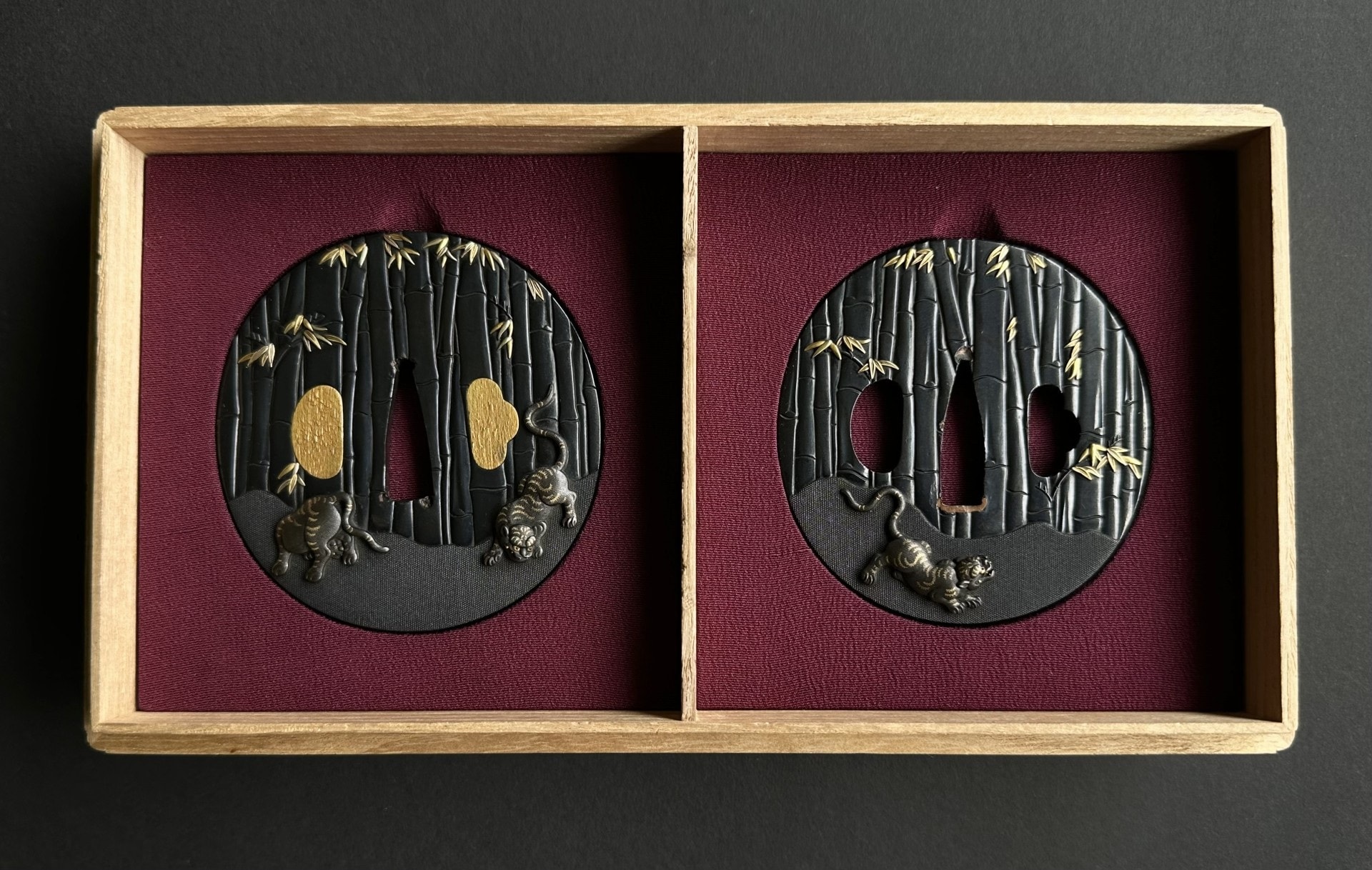
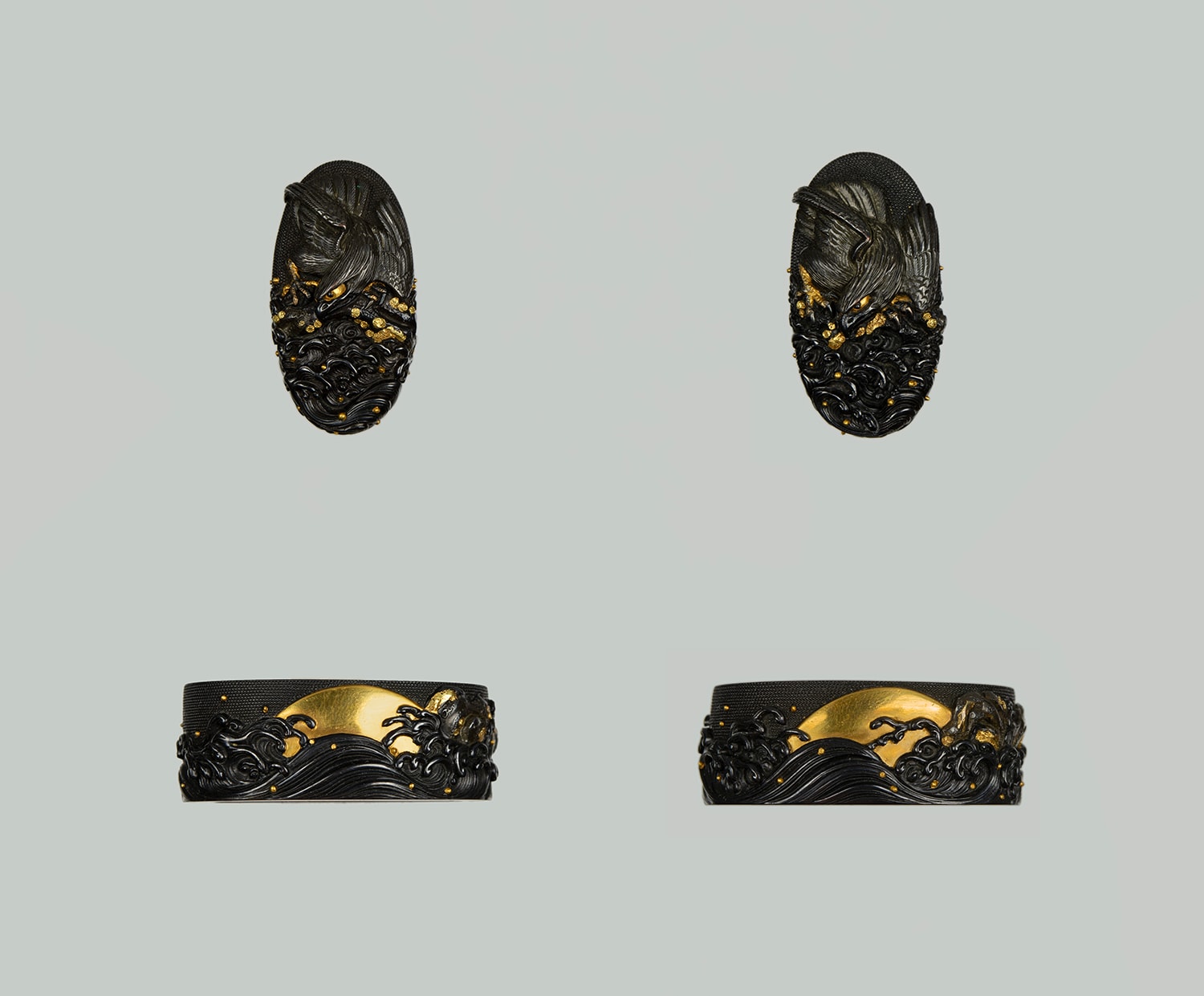
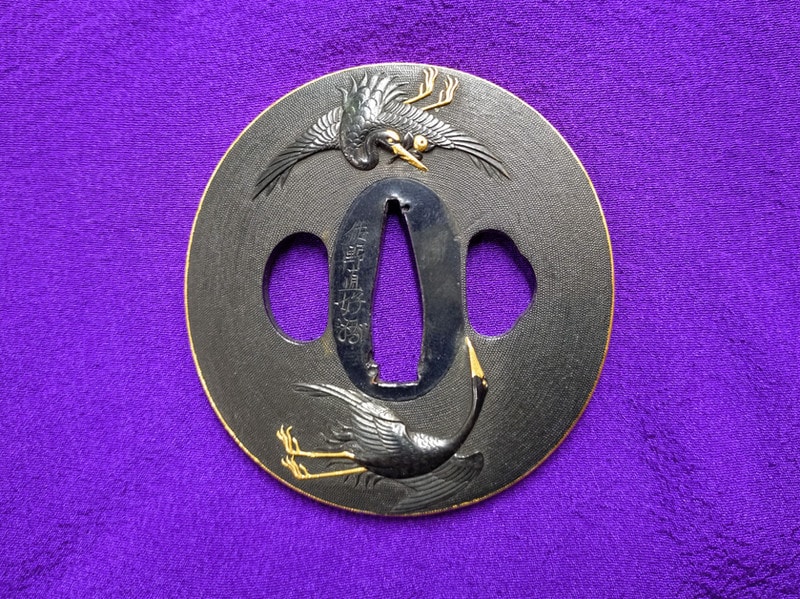
Okawa Sadakane, also known by the art-names Chikuzan-, Shiho, Kanshu, and Hoden, was born in Mito in Bunsei 11 (1828) as the son of Motosada, himself a leading figure among Mito metalworkers and a disciple of the first-generation Taizan Mototaka. Sadakane is said to have learned metal carving under his father, and he later became an officially retained craftsman of the Mito domain. After his father's death he went to and settled at Mukojima. In his signatures he sometimes prefixed names such as usetsu, uso, and rosetsu, and he adopted both Tachibana and Minamoto as surnames. Many of his dated works fall between the Keio and Meiji eras, and from extant pieces it is possible to confirm that he was still active around Meiji 30 (1897). He had a biological son, Sadatoshi, who succeeded him.
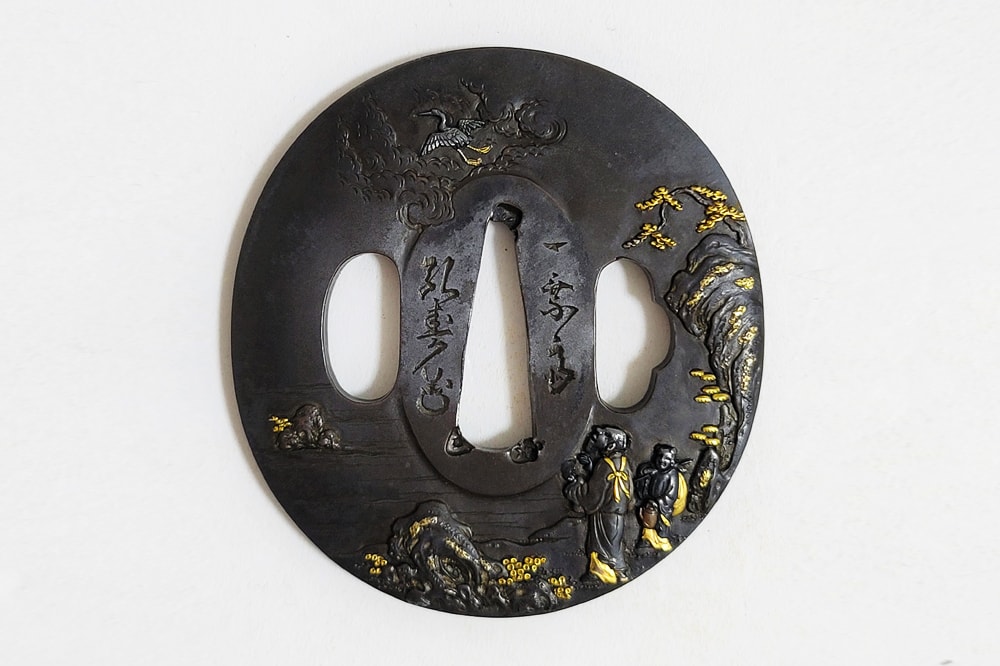
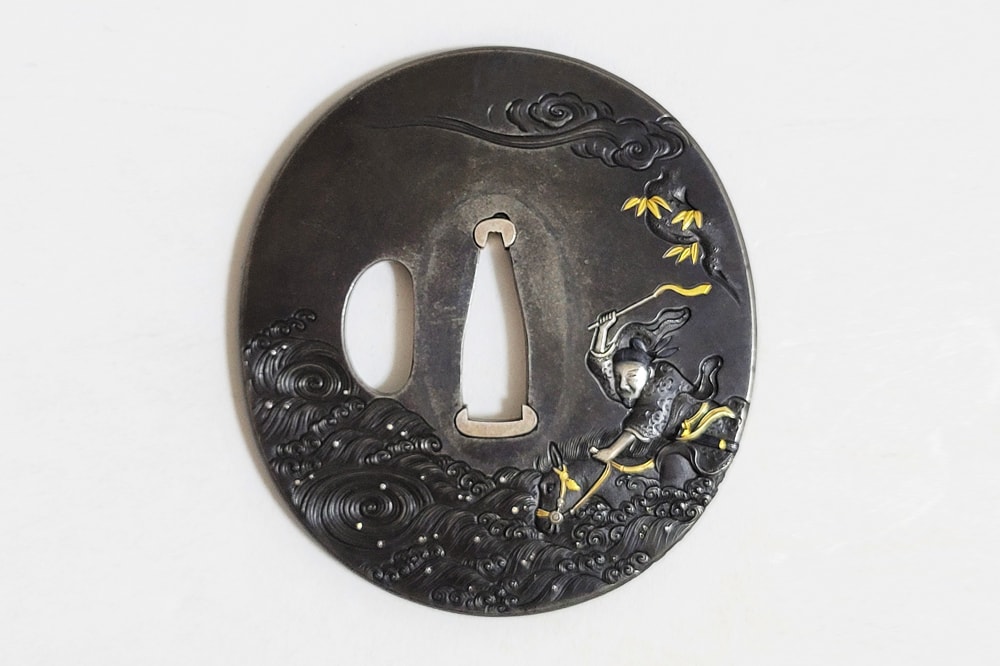
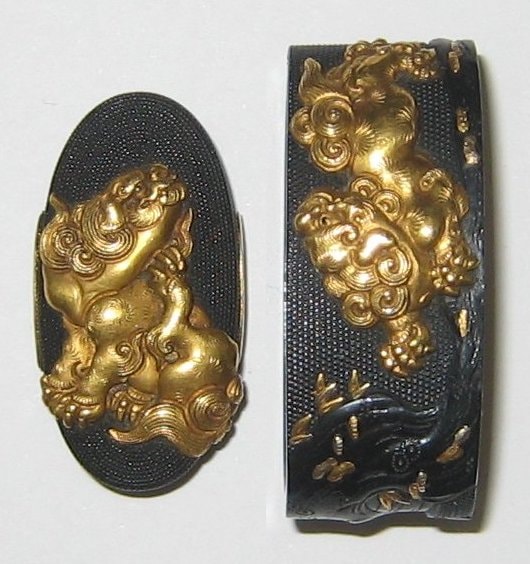
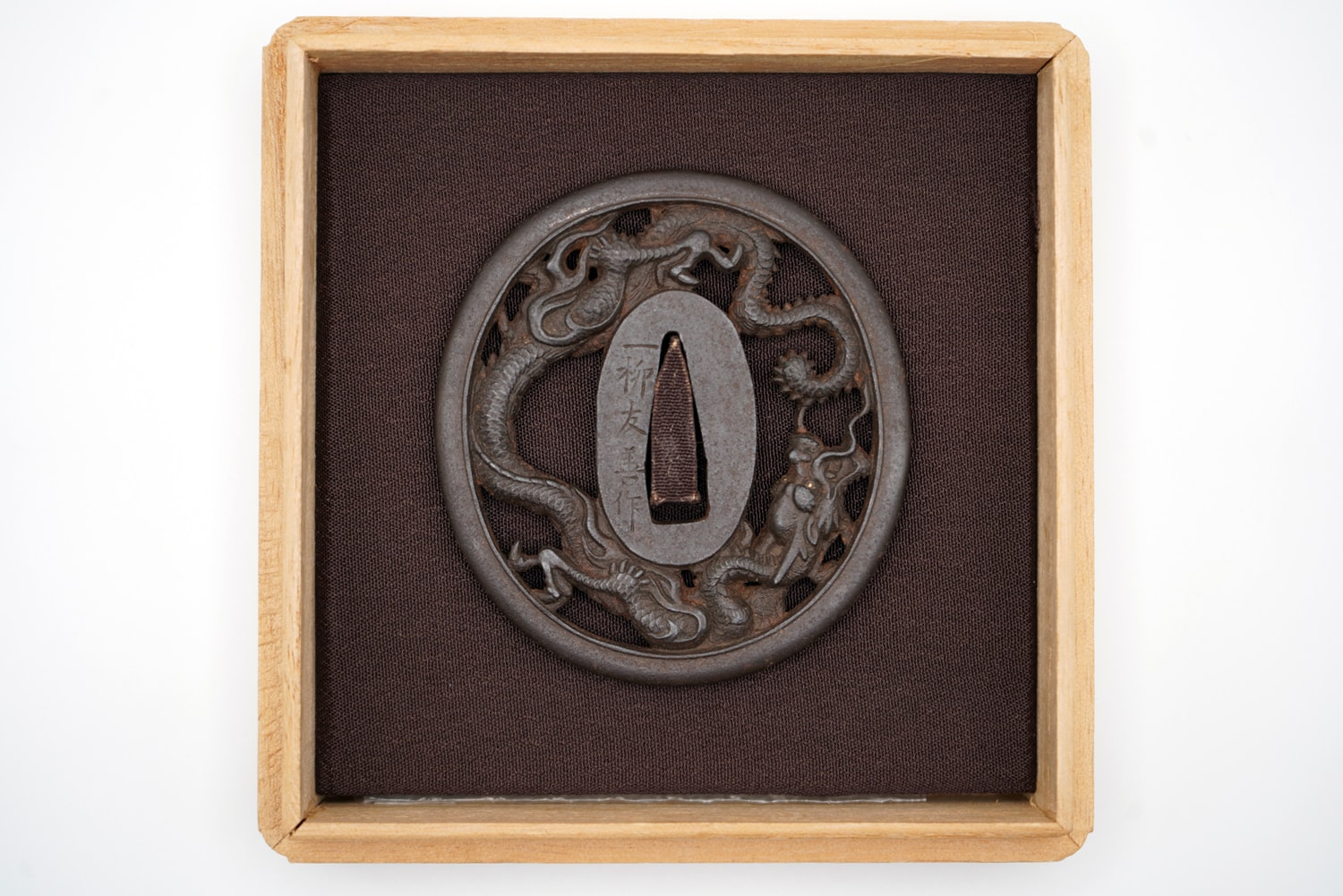
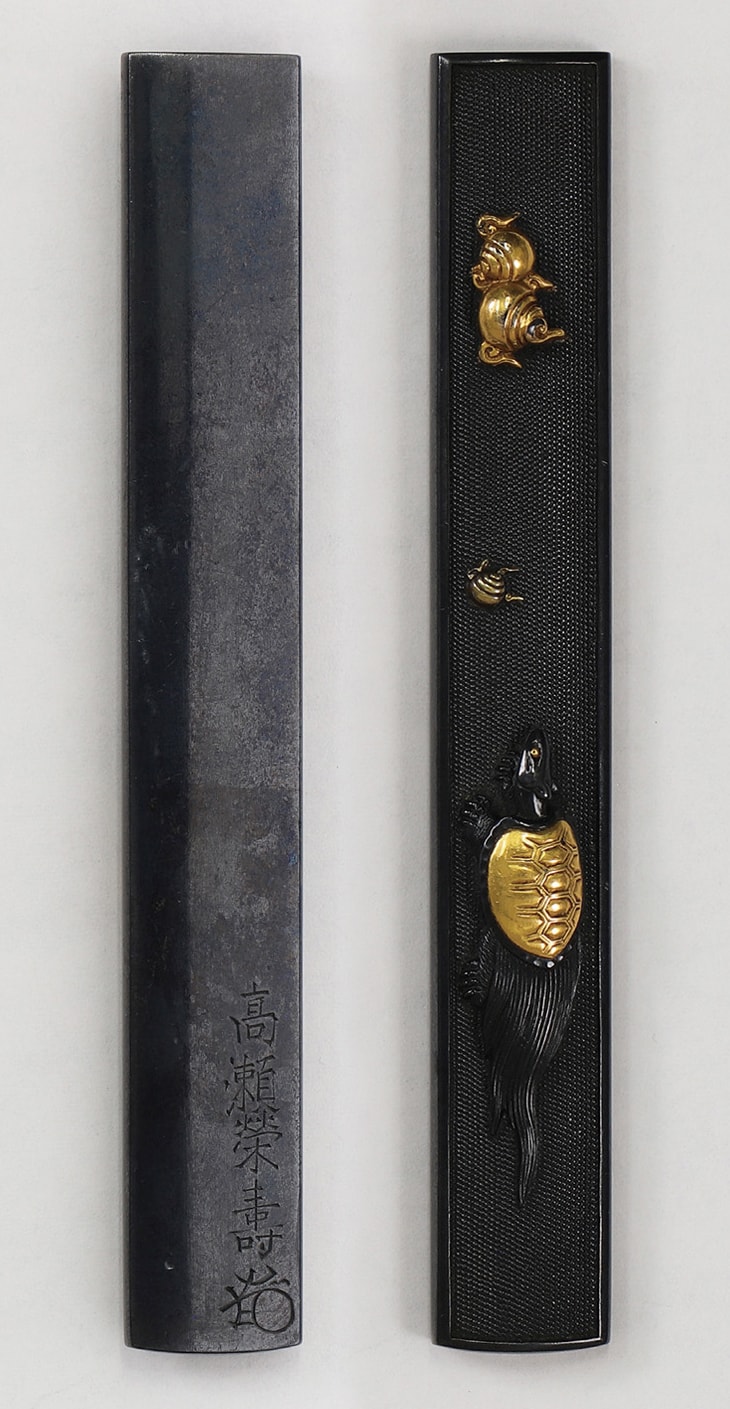
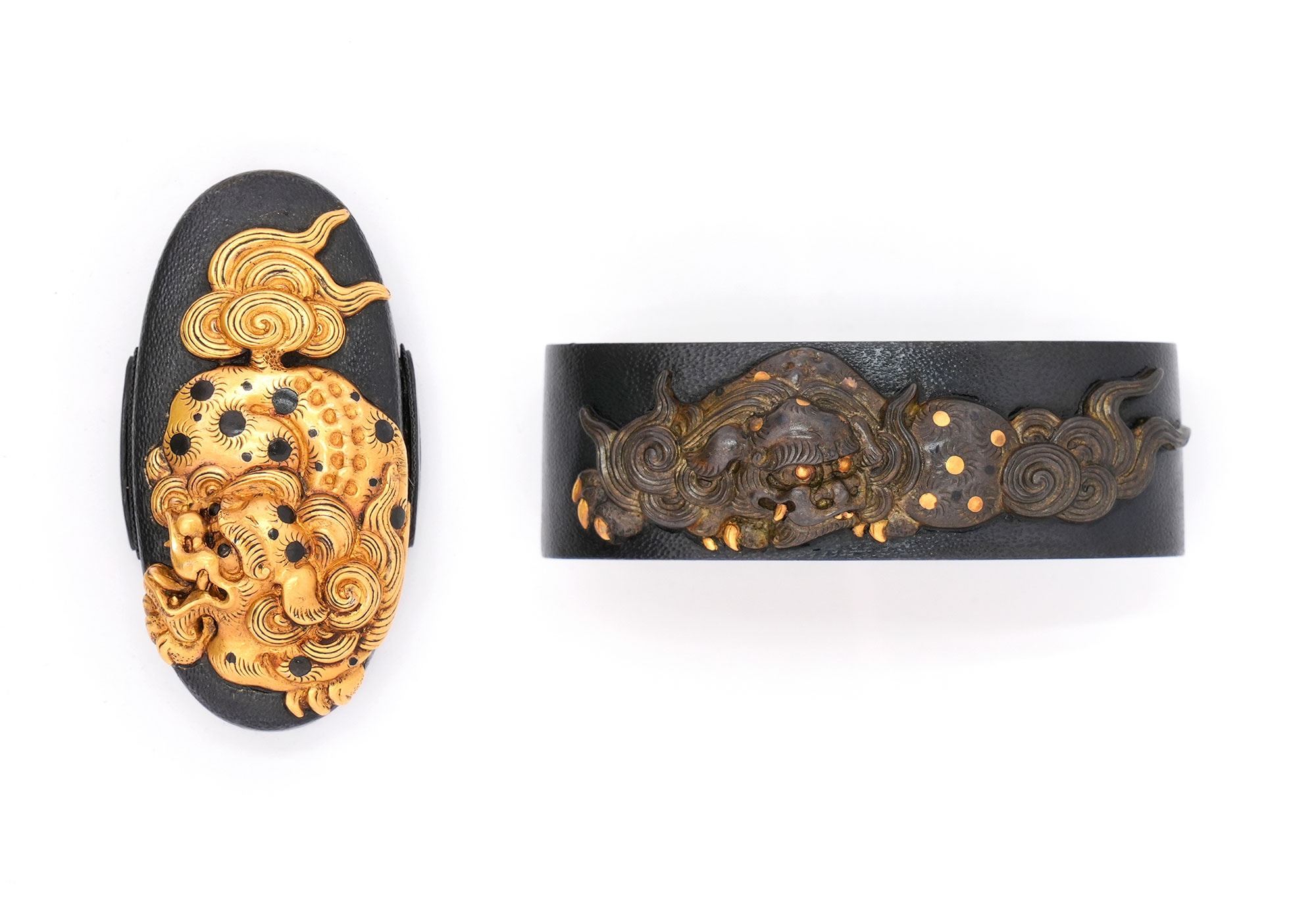
Sadakane demonstrated mastery across a broad range of carving techniques. His is filled with movement and compelling force, while his precision is fully evident in details down to each individual scale and the very tips of the claws. He handled grounds, polychrome in gold and silver, , nikubori, and gold with equal facility, distributing a variety of techniques freely throughout his ensembles. The commends his ability to organize the height differences between shallow carving and with striking accuracy, and notes that his figure portrayal is especially rich -- a hallmark of the core strengths of the Mito metalwork tradition.
His carving is widely esteemed for its absolute precision, described by the as unmatched. Whether rendering the dynamism of twin dragons in monochromatic , the narrative immediacy of the Twenty-four Filial Exemplars, or the seasonal refinement of floral-and-insect ensembles in solid gold, Sadakane consistently achieves works of notably elevated dignity. His capacity to produce faithful counterparts to the work of other masters -- as demonstrated in a commissioned for the Tomura family of Akita -- is also highly esteemed, and his oeuvre stands as representative of late -period Mito metalwork at its most accomplished.