NihontoWatch Mon

NihontoWatch

MarketAuctions
Encyclopedia
NihontoWatch Mon

NihontoWatch

MarketAuctions
Encyclopedia

Description

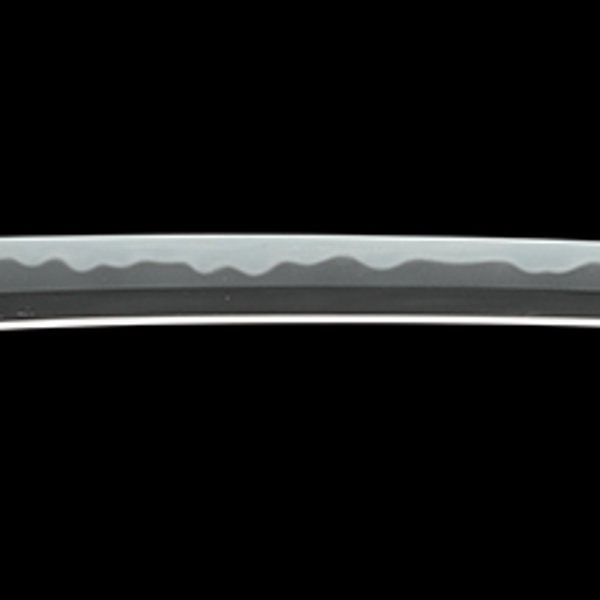
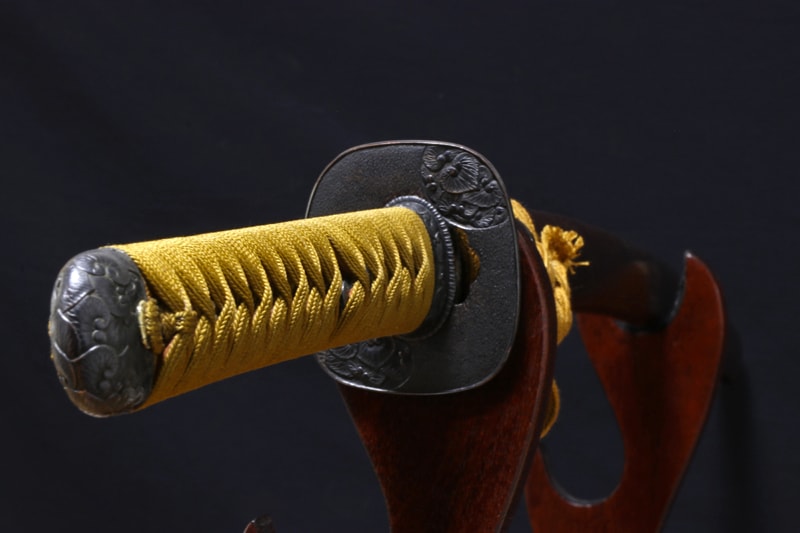
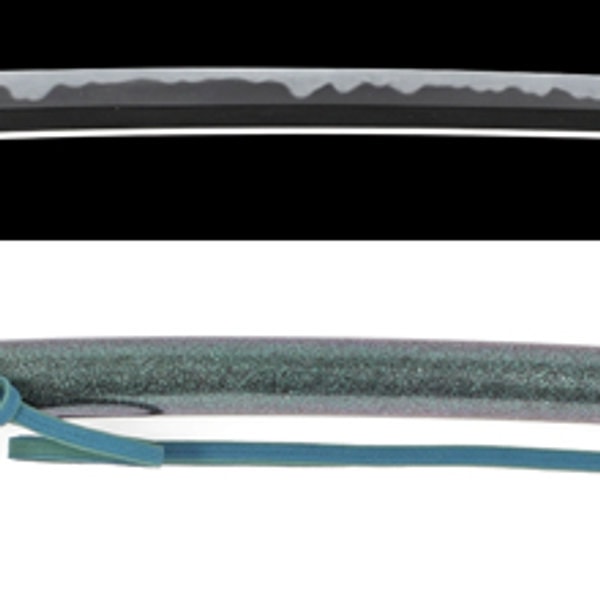
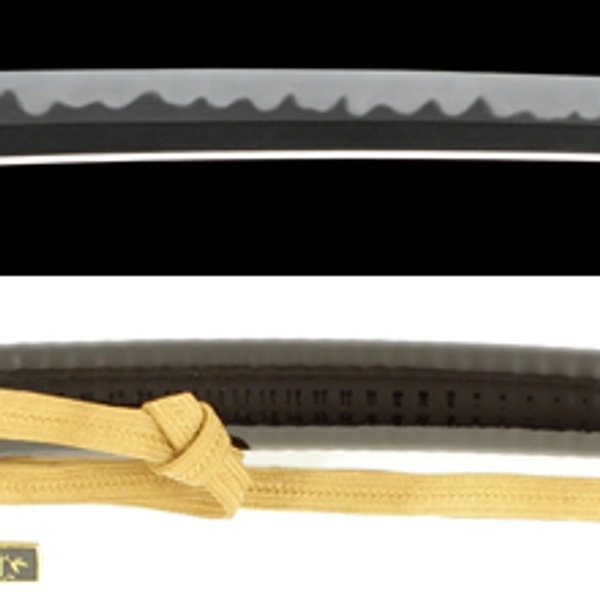
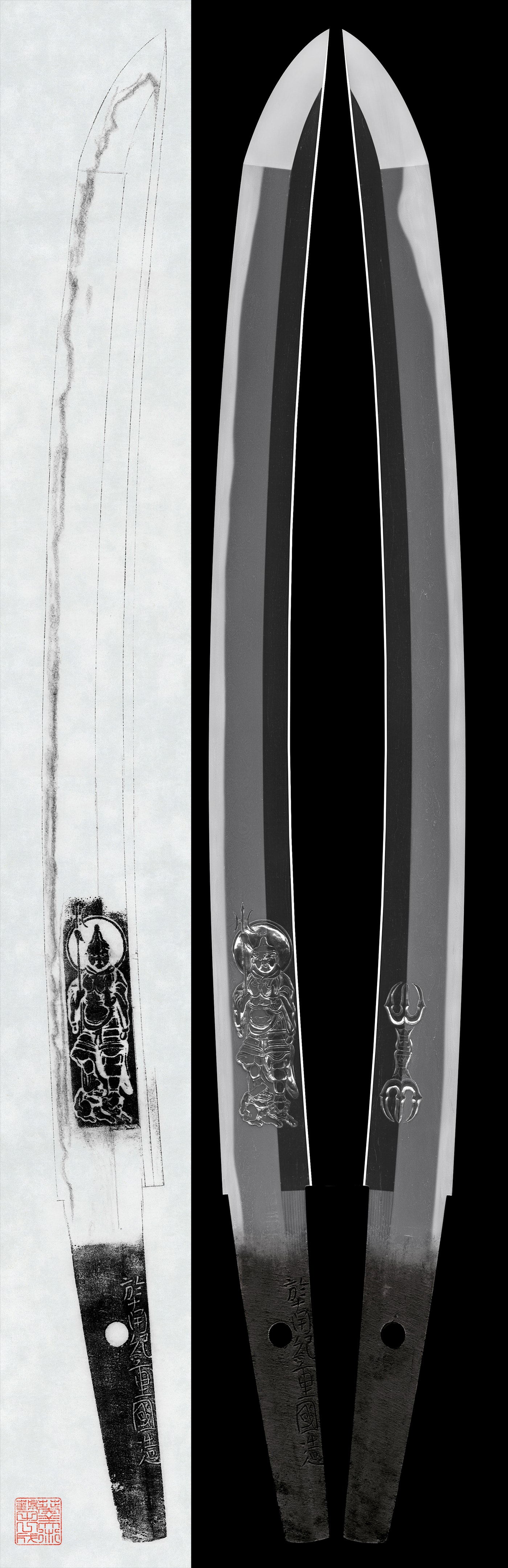
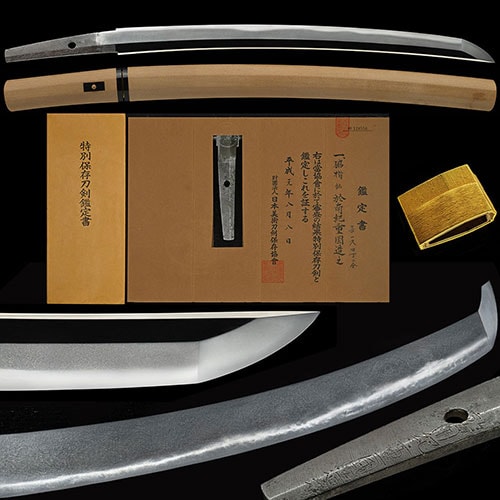
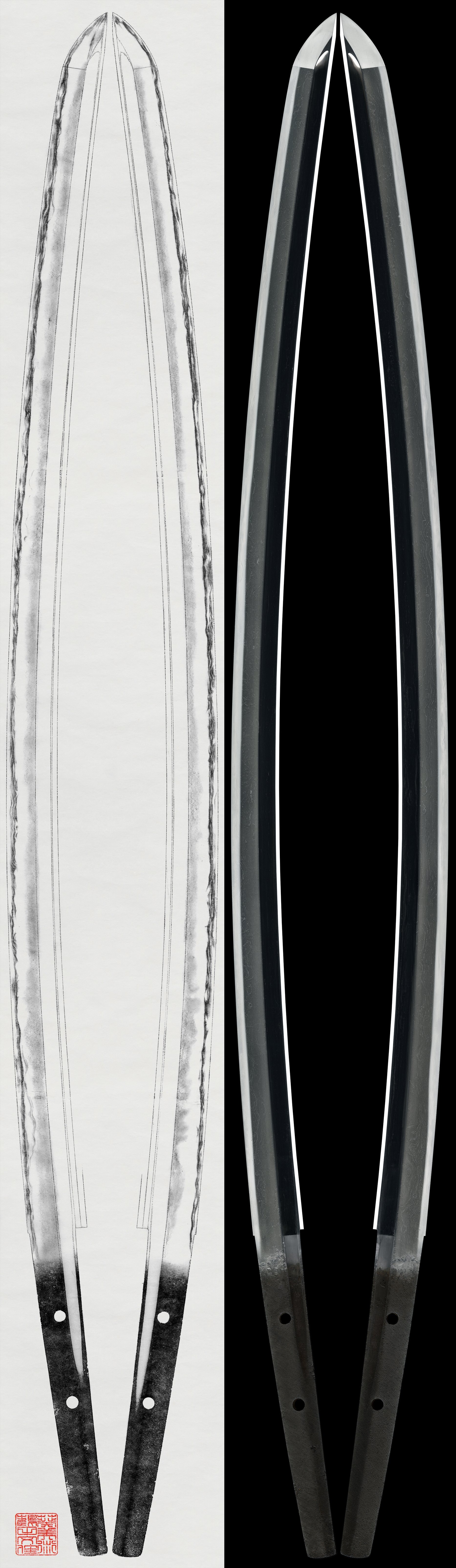
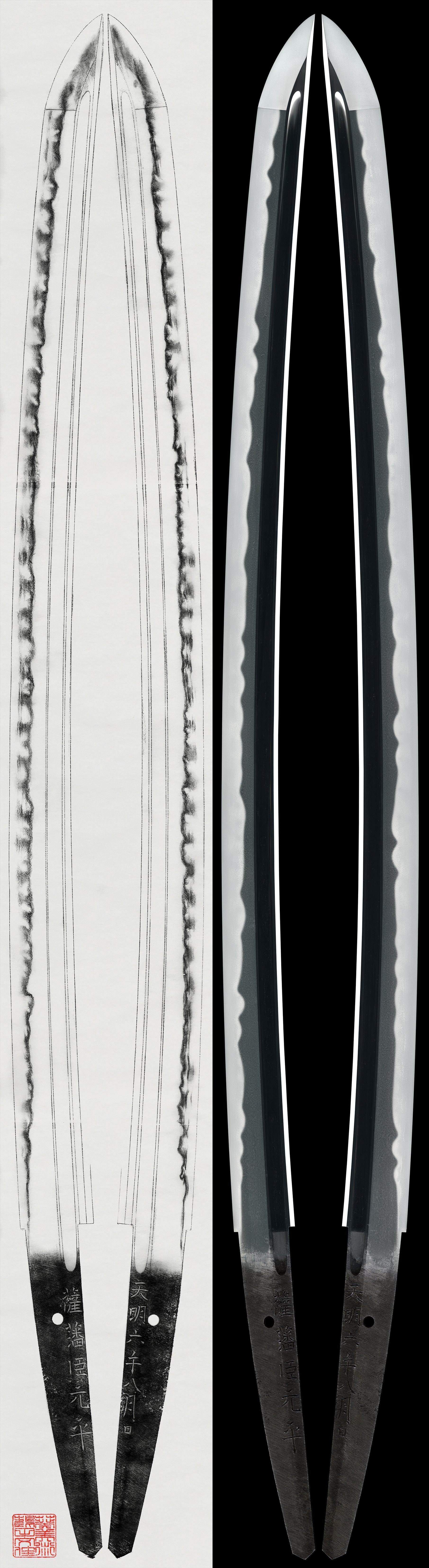
This is a katana made by Nanki Shigekuni (1st generation) during the Shinto period. It is a designated Juyo Token (Important Sword) and is described as a masterpiece of the Shinto period. The blade features a straight temper line with bright activity and comes with a shirasaya.

NBTHK Setsumei

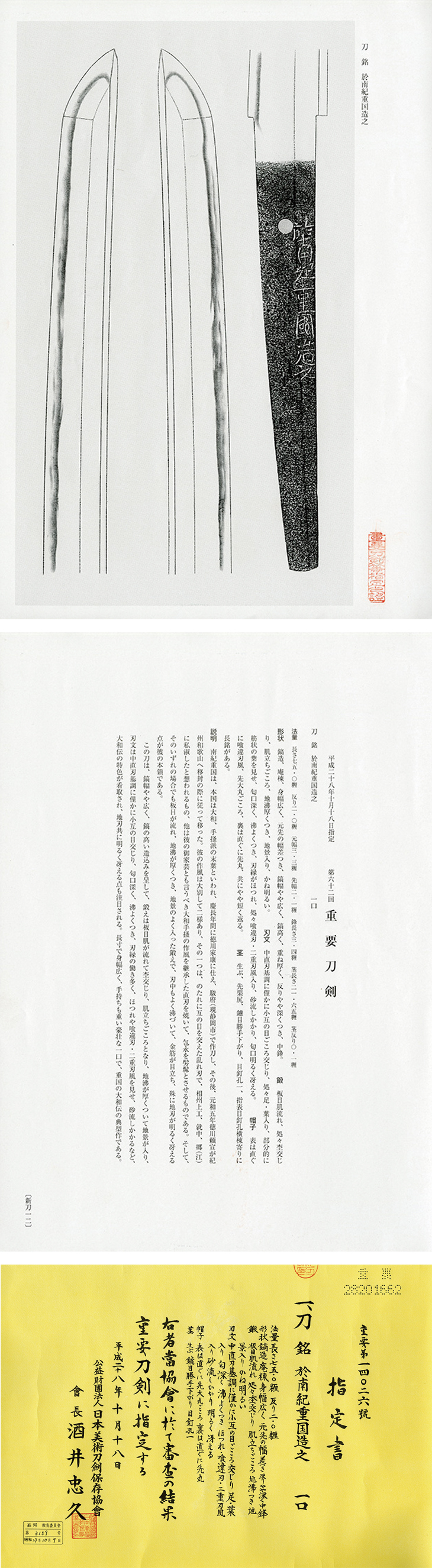
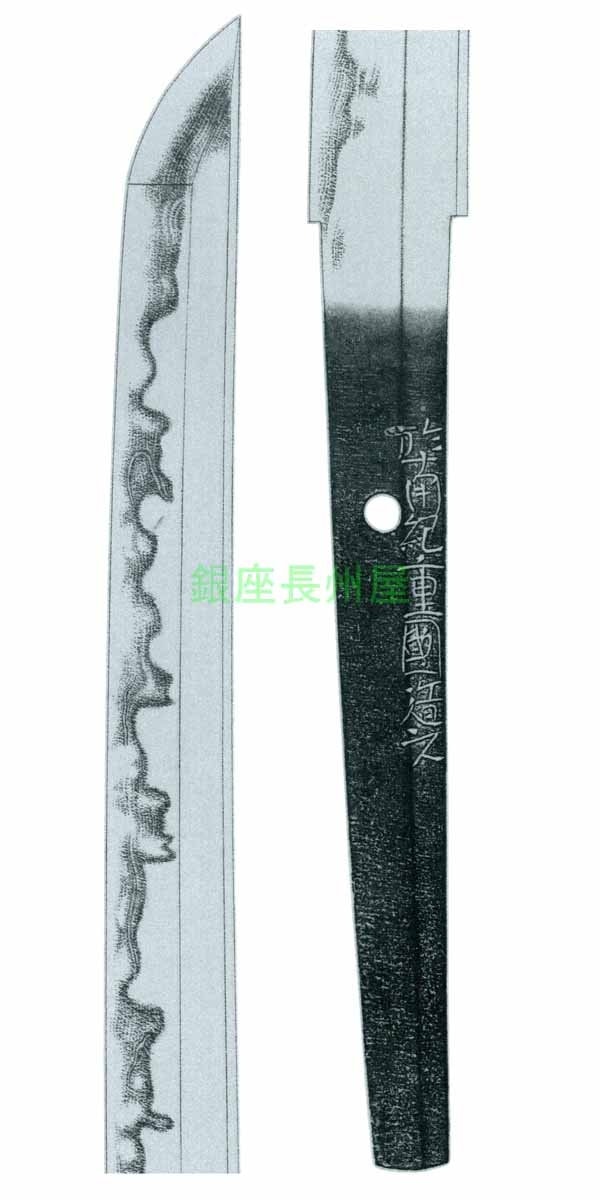
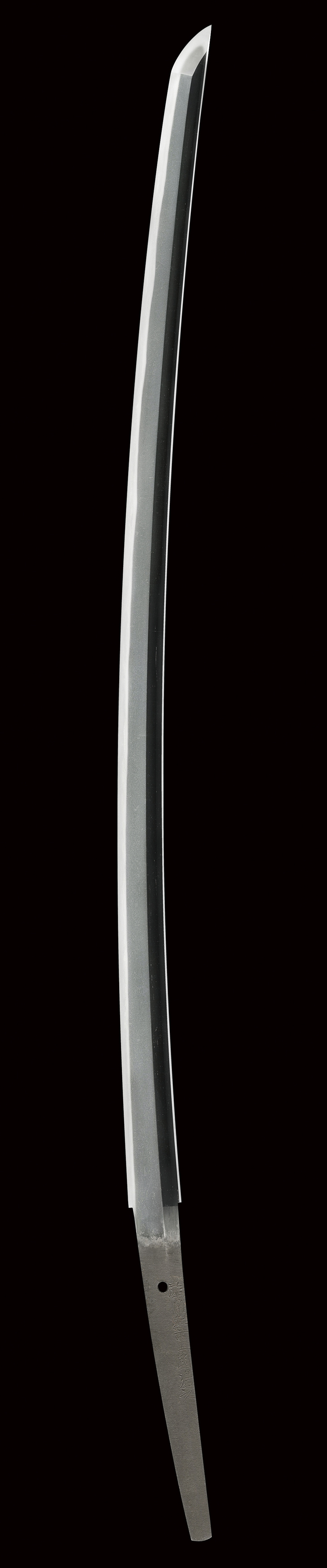
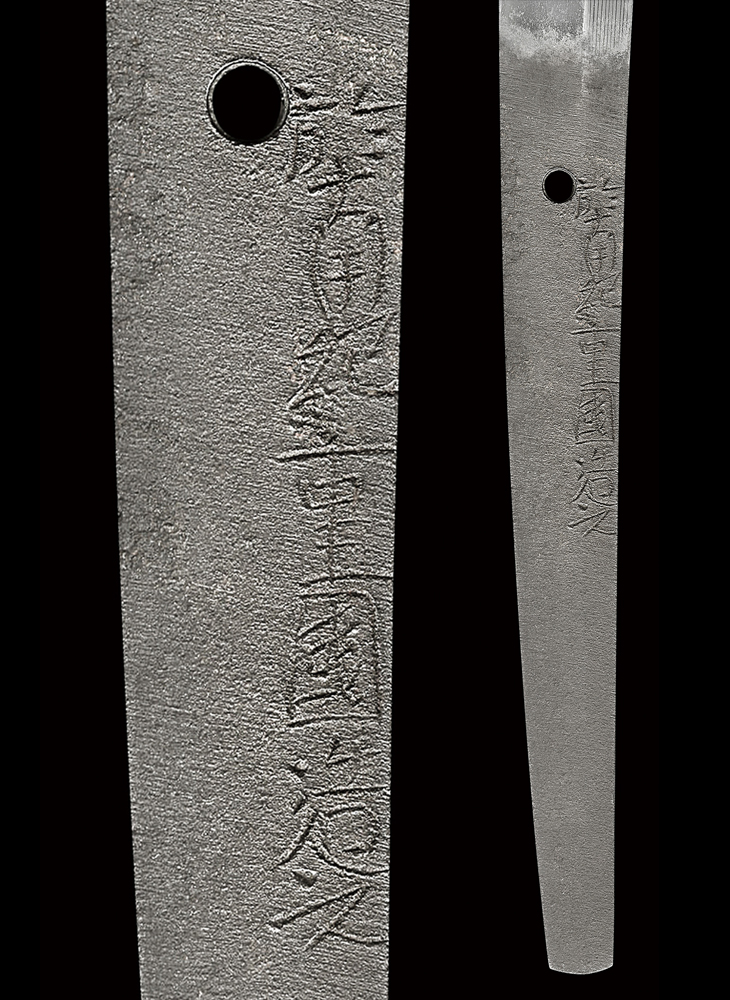
Jūyō-Tōken, 62nd Session — Designated October 18, 2016 Katana, mei: Nanki Shigekuni (南紀重国) Measurements Nagasa 75.0 cm, sori 2.0 cm, motohaba 3.3 cm, sakihaba 2.0 cm, kissaki-nagasa 3.4 cm, nakago-nagasa 21.65 cm, nakago-sori 0.1 cm Description Keijō: shinogi-zukuri with iori-mune; wide mihaba with noticeable taper from base to tip; shinogi-ji somewhat wide and the shinogi line high; thick kasane; rather deep sori; chū-kissaki. Kitae: Flowing itame-hada mixed in places with mokume; slightly hada-dachi; abundant ji-nie; chikei appears; the steel is bright. Hamon: Based on chū-suguha with a slight admixture of ko-gunome; ashi and yō appear here and there; in places shows streak-like yō; nioiguchi is deep; nie adheres well; the habuchi shows hotsure; in places kuichigai-ba and nijūba-like effects appear; with sunagashi; the nioiguchi is bright and clear. Bōshi: On the omote, sugu with a kuichigai-ba-like effect, turning to ō-maru tendency at the point; on the ura, sugu turning to maru; both return rather short. Horimono: None. Nakago: Ubu; kurijiri; katte-sagari yasurime; one mekugi-ana; on the sashi-omote, beside the mekugi-ana toward the mune, there is a long signature. Artisan Nanki Shigekuni (南紀重国) Era Early Edo period (Shintō), Keichō era onward Explanation Nanki Shigekuni is said to have originated in Yamato Province, as a later branch of the Tegai lineage. During the Keichō era (1596–1615) he entered the service of Tokugawa Ieyasu and forged in Sunpu (present-day Shizuoka City). Thereafter, when Tokugawa Yorinobu was transferred to Kii–Wakayama in Genna 5 (1619), Shigekuni accompanied him and moved accordingly. His manner of workmanship may broadly be divided into two types. One is a midareba in which notare is mixed with gunome—works thought to reflect admiration for the superior smiths of Sagami, and especially for Gō (in the sense of Sadamune). The other is a suguha that continues the Yamato Tegai family tradition—so characteristic of him as to be considered his “house style”—and which recalls Kanenaga (Kanenaga). In either approach, his forging is marked by flowing itame, thickly applied ji-nie, and plentiful chikei; within the hardened edge as well, nie forms richly and kinsuji stand out, and in particular, the clarity and brightness of both ji and ha represent his true strength. This katana shows a construction with somewhat wide shinogi-ji and a high shinogi line. The forging is a flowing itame-hada with mokume mixed in, tending toward hada-dachi, with thick ji-nie and chikei. The hamon is based on chū-suguha with a slight admixture of ko-gunome; the nioiguchi is deep and nie adheres well, while the edge displays abundant activity, including hotsure as well as kuichigai-ba and nijūba-like effects, with sunagashi applied. These features clearly reveal the characteristics of the Yamato tradition, and particular note should be made of the bright, clear quality seen in both ji and ha. With its long length, wide mihaba, and weighty handling, it is a powerfully built blade, and represents a typical example of Shigekuni’s Yamato-tradition work.

NihontoWatch MonNihontoWatch
MarketAuctionsEncyclopedia
Swords›Yamato-den›Monju›Shigekuni›Katana: Nanki Shigekuni (1st Gen.)
katanaJūyō
Monju Shigekuni

Katana: Nanki Shigekuni (1st Gen.)

mei · Keicho (1596-1615) · nagasa 75cm · sori 2cm

SOLD
Monju Shigekuni — 1 of 4
Monju Shigekuni — 2 of 4
Monju Shigekuni — 3 of 4
Monju Shigekuni — 4 of 4
1 / 4
1 / 4
Monju Shigekuni — 1 of 4Monju Shigekuni — 2 of 4Monju Shigekuni — 3 of 4Monju Shigekuni — 4 of 4
Measurements & details
Smith
Monju Shigekuni
Type
Katana
School
Monju
Period
Around 1596–1630(Keicho)
Province
Kii
Signature
Signed(100% of this smith's designated works are signed)
Measurements
Nagasa 75cmSori 2cmMotohaba 3.44cmSakihaba 2.24cmKasane 0.89cm
Description

This is a katana made by Nanki Shigekuni (1st generation) during the Shinto period. It is a designated Juyo Token (Important Sword) and is described as a masterpiece of the Shinto period. The blade features a straight temper line with bright activity and comes with a shirasaya.

NBTHK Zufu Commentary

Juyo #62

AI translation — may contain errors

-, 62nd Session — Designated October 18, 2016

, : Nanki Shigekuni (南紀重国)

Measurements 75.0 cm, 2.0 cm, 3.3 cm, 2.0 cm, 3.4 cm, 21.65 cm, 0.1 cm

Description Keijō: with ; wide with noticeable taper from base to tip; somewhat wide and the line high; thick ; rather deep ; . : Flowing mixed in places with ; slightly ; abundant ; appears; the steel is bright. : Based on with a slight admixture of ; and appear here and there; in places shows streak-like ; is deep; adheres well; the shows ; in places and -like effects appear; with ; the is bright and clear. : On the , with a -like effect, turning to tendency at the point; on the , turning to ; both return rather short. : None. : ; ; ; one ; on the , beside the toward the , there is a long signature.

Artisan Nanki Shigekuni (南紀重国)

Era Early period (), Keichō era onward

Explanation Nanki Shigekuni is said to have originated in Yamato Province, as a later branch of the lineage. During the Keichō era (1596–1615) he entered the service of Tokugawa Ieyasu and forged in Sunpu (present-day Shizuoka City). Thereafter, when Tokugawa Yorinobu was transferred to –Wakayama in Genna 5 (1619), Shigekuni accompanied him and moved accordingly.

His manner of workmanship may broadly be divided into two types. One is a in which is mixed with —works thought to reflect admiration for the superior smiths of , and especially for Gō (in the sense of Sadamune). The other is a that continues the Yamato family tradition—so characteristic of him as to be considered his “house style”—and which recalls naga (Kanenaga). In either approach, his forging is marked by flowing , thickly applied , and plentiful ; within the hardened edge as well, forms richly and stand out, and in particular, the clarity and brightness of both and represent his true strength.

This shows a construction with somewhat wide and a high line. The forging is a flowing with mixed in, tending toward , with thick and . The is based on with a slight admixture of ; the is deep and adheres well, while the edge displays abundant activity, including as well as and -like effects, with applied. These features clearly reveal the characteristics of the Yamato tradition, and particular note should be made of the bright, clear quality seen in both and .

With its long length, wide , and weighty handling, it is a powerfully built blade, and represents a typical example of Shigekuni’s Yamato-tradition work.

[ XII]

About the maker

Shigekuni

重國

Nanki / Monju (Yamato-Tegai descent, Kishu Shinto) · Kii · around 1596-1630

Fujishiro Sai-jo saku · Tōken Taikan top 5%

4 pieces on the market now

›

Nanki Shigekuni signs his blades "made at Nanki"[[c:1]], and the published sources read that signature as biography. He was, they record, a smith originally of Yamato Province, a later offshoot of the Tegai group; in the Keicho era he entered the service of Tokugawa Ieyasu and forged at Sunpu, and in Genna 5 (1619) he moved in attendance upon Tokugawa Yorinobu when that lord was enfeoffed at Wakayama in Kii. His common name was Kuro-saburo, and one signature reads from the Monju temple of Mt. Meiko in Kishu, Monju Kuro-saburo Shigekuni, tying the line back to its Yamato Monju root. The published commentary does not flatten this descent into one manner. "His workmanship divides broadly into two"[[c:2]], it says, and names the two blade after blade: a Soshu-revival midareba made in private admiration of the upper Soshu masters, Go Yoshihiro above all, and the hereditary Yamato-Tegai suguha he carried as "his house art"[[c:3]], which the sources say "calls up Kanenaga"[[c:4]].

The first of the two manners is the one the NBTHK names as his typical and outstanding work. Over a flowing itame that mixes mokume and stands somewhat into a hada that lifts, the ji-nie sits thick and the chikei enters frequently, the steel clear. Upon that jigane he forges a shallow notare or small notare, mixing in gunome and at times a pointed togari character, widening the temper distinctly from above the monouchi; the nioi is deep, the nie thick and at times breaking up, and across the whole of it the kinsuji and sunagashi run freely, the nioiguchi bright and clear. The boshi runs sugu and turns in a small maru or yakizume, swept with hakikake. Among the Tokugawa-house smiths who set out in these years to revive the Soshu manner, his is the most active edge: the kinsuji and sunagashi that cover his blades run heavier than in any of his fellows, and it is exactly this clear bright character of ji and ha that the published sources single out, "the bright clarity of ji and ha is in particular his true province"[[c:5]]. On one Juyo wakizashi the commentary notes the kinsuji turning in spirals through the edge, a tell it calls a recurring feature of his Soshu work.

In either manner the jigane is one flowing itame, the ji-nie thick and the chikei well entered, the steel clear; the published record returns to this jihada as the constant beneath both his hands. It is a standing, lifting grain, not a fine close ko-itame, and it carries flowing nagare-hada more heavily than anything else he makes, the genetic Yamato trait that persists through both manners. The suguha-side blades show the inheritance plainly: a suguha-cho, at times chu-suguha or hiro-suguha, with small gunome mixing above the monouchi and the habuchi fraying into hotsure, kuichigai-ba, nijuba and yubashiri, the boshi ending yakizume or sugu and swept with hakikake. The masame-lean grain and the yakizume boshi are the marks of the Tegai descent, near his ancestor Kanenaga and all but absent in the Echizen and Horikawa smiths who revived Soshu without that Yamato blood.

The scholarship reads beyond the two manners to a third, which is where Shigekuni becomes himself. Taking a Soshu-den base and adding the Yamato-den, the commentary records, he established on that a manner of his own; the finest of these the NBTHK calls his "hakubi"[[c:6]], the high point, singling out the excellence of the jigane and the bright clarity of ji and ha. The Soshu side it elsewhere calls a Go-utsushi, a copy in the manner of Go, "what is called a Go-utsushi"[[c:7]], a vigorous make whose jigane too is clear and superb. Almost all of his blades are signed, in two registers, the long signature on the Soshu pieces and a two-character Shigekuni cut with a fine chisel, the latter rare on first-generation work; the NBTHK lumps the later Nanki generations under one attribution, marking the explicit shodai pieces where it can. On one wakizashi whose midare mixes gunome and yahazu-like elements the commentary catches "a hint of the Monju manner"[[c:8]] and reads in it "a forerunner of the hamon of the second generation and after"[[c:9]], the line opening toward the Kishu Shinto that descends from him.

The sources draw his distinction by his own traits rather than by what his models lack. Against the Soshu masters he admired, the bright, heavily nie-laden ji and ha and the freely running kinsuji and sunagashi are read as his own register, vigorous and clear; one early short sword the commentary calls the finest jigane of this smith, the ha bright and the activity abundant. Against the Yamato of his descent the flowing nagare-hada, the masame-lean grain, the kuichigai-ba and the yakizume boshi declare the Tegai blood that surfaces in even his Soshu blades, where the wide high shinogi and the swept boshi betray, the sources say, his native Yamato temperament. Looking the other way, the NBTHK reads in his Soshu work, where the boshi is burned across the yokote and turns round, bright in ji and ha, a manner that "runs in one vein toward Kotetsu"[[c:10]], and supposes that Kotetsu drew upon this very class of his work; the resemblance, traced to a master of the next generation, closes his lineage forward as Go and Kanenaga close it back.

Fujishiro grades him Sai-jo saku, and the weight of designation behind his name sits high among Shinto smiths: one of his blades is an Important Cultural Property, with six in the Tokubetsu Juyo tier and a further forty-four at Juyo, some fifty in the Tokubetsu Juyo and Juyo ranks together, and the official record holds his work as wholly signed, fifty-nine pieces, none mumei. The provenance recorded against his blades runs back to the house he served: examples descended in the Kishu Tokugawa family at Wakayama, and the Tokugawa Ieyasu and Tokugawa Yorinobu under whom he forged stand in the histories of his swords, with the Imperial Family among later holders. Several dated Genna 8 (1622) wakizashi survive bearing the possessor marks of Yorinobu's senior retainers, one made to the order of Kageyama Tosa-no-kami Munenobu, an elder of the Kishu domain, another carrying the mark of Tsuzuki Toichi, "a senior retainer of Yorinobu since the Mikawa days"[[c:11]]. The published sources observe that his Soshu blades, "for some reason, are for the most part shortened"[[c:12]], so that an ubu nakago among them is rare and counted a point of value. A signed Shigekuni is not among the unobtainable names; an example reaches the market from time to time, more often a wakizashi than a katana, while most of what survives is held in old daimyo and private collections, a Kishu Shinto landmark when one appears.

Historical importance

Where Shigekuni stands among comparable artisans: across all of nihontō, and within tradition, era, and period. The tiers (Foremost · Leading · Major · Notable) weigh official designations from the NBTHK and Japan's Agency for Cultural Affairs, together with historical honors of lasting repute such as the Sansaku and Meibutsu-chō.

随一
Foremost
屈指
Leading
有数
Major
著名
Notable

Select a lens to see how it's measured.

Designation record
59 designated works
Jūyō Bunkazai
1
Jūyō Bijutsuhin
8
Gyobutsu (Imperial)
1
Tokubetsu Jūyō
6
Jūyō
43
4 works by Shigekuni on the market→
Shigekuni — full profileNanki / Monju (Yamato-Tegai descent, Kishu Shinto) school

Dated Works

Years he was demonstrably active, proven by signed-and-dated blades

Active period
1621–1630Editorial estimate: 1596–1630
5 of 57 designated works carry a date
1620
1630
1640
About the school

Monju

文珠

Yamato-den · Yamato

24 pieces on the market now

›

The setsumei of the Monju (文珠) line all gather around a single figure: Shigekuni (重国), the smith better known by the appellation Nanki Shigekuni (南紀重国). The records describe him as originally of Yamato Province and a late offshoot of the Tegai group (Tegai-ha)[[c:1]], whose common name was Kurōsaburō. Learn more →

5 recorded smiths65 designated works
Leading smiths
SmithEraDesignated
Shigekuni重國1596-163059
Shigekuni重國1655-16733
Masazane正真—1
Kanetsugu包次1596-16150
Kaneyasu包保1661-16730
Explore the Monju school →
NBTHK Certificate
Jūyō Tōken重要刀剣
Important Sword
›

A blade of top-grade workmanship and condition, formally judged to rank with a nationally recognized Important Art Object (Jūyō Bijutsuhin). Awarded only at the NBTHK’s competitive annual examination.

Of Japan’s roughly 2.5 million registered swords, only 12,307 (about 1 in 203) have ever attained Jūyō.

About the NBTHK›

The NBTHK (Nihon Bijutsu Tōken Hozon Kyōkai, the Society for the Preservation of Japanese Art Swords) is a public-interest incorporated foundation founded in 1948 and supervised by Japan’s Agency for Cultural Affairs (Bunkachō); it is based at the Japanese Sword Museum in Tokyo. Its expert panels physically examine each submitted work (shinsa) and issue a certificate (kanteishō) ranking it by artistic and historical merit. NBTHK papers are the most widely recognized standard of authentication for Japanese swords and fittings.

NBTHK official site→
Seller
S
Samurai Nippon
Established 1977 · 49 yrs on the market
🇯🇵Ships from Japan
›
✓Verified dealersamurai-nippon.net
✓Ships worldwide✓English supportWire transferPayPalCredit card
Return policy

For one-of-a-kind items such as swords, sword fittings, and antiques, please contact us about a return within 3 days of the item's arrival and ship it back within 8 days. Refunds are issued the same day the returned item arrives.

View all of Samurai Nippon’s listings→View this item on the dealer’s site→

More works by Monju Shigekuni

View all →
Eirakudo
Tokuho
Katana - Tokuho - by Monju Shigekuni - Nanki Shigekuni - Tokubetsu Hozon TokenKatana - Tokuho - by Monju Shigekuni - Nanki Shigekuni - Tokubetsu Hozon Token

Katana

ByMonju Shigekuni
¥5,500,000
Iida Koendo
Jūyō
Katana - Jūyō - by Monju Shigekuni - Nanki ShigekuniKatana - Jūyō - by Monju Shigekuni - Nanki Shigekuni

Katana

ByMonju Shigekuni
¥9,900,000
Choshuya
Wakizashi - by Monju Shigekuni - Japanese Sword for Sale | Ginza Choshuya | Signed: O Nanki Shigekuni Tsukuru Kore (Ryō Wazamono), 1579Wakizashi - by Monju Shigekuni - Japanese Sword for Sale | Ginza Choshuya | Signed: O Nanki Shigekuni Tsukuru Kore (Ryō Wazamono), 1579

Wakizashi

ByMonju Shigekuni
Ask
Eirakudo
Jūyō
Katana - Jūyō - by Monju Shigekuni - Nanki Shigekuni - Juyo TokenKatana - Jūyō - by Monju Shigekuni - Nanki Shigekuni - Juyo Token

Katana

ByMonju Shigekuni
¥9,000,000

Previously sold by Monju Shigekuni

Nipponto
Tokubetsu Kichō
Wakizashi - Tokubetsu Kichō - by Monju Shigekuni - Wakizashi, Mumei, Nanki ShigekuniWakizashi - Tokubetsu Kichō - by Monju Shigekuni - Wakizashi, Mumei, Nanki Shigekuni
Sold

Wakizashi

ByMonju Shigekuni
SOLD
Giheiya
Hozon
Wakizashi - Hozon - by Monju Shigekuni - Hozon Token: Wakizashi by Nanki Shigekuni with Uchi-gatana KoshiraeWakizashi - Hozon - by Monju Shigekuni - Hozon Token: Wakizashi by Nanki Shigekuni with Uchi-gatana Koshirae
Sold

Wakizashi

ByMonju Shigekuni
SOLD
Giheiya
Tokuho
Katana - Tokuho - by Monju Shigekuni - Nanki Shigekuni - Tokubetsu Hozon Token with Koshirae and ShirasayaKatana - Tokuho - by Monju Shigekuni - Nanki Shigekuni - Tokubetsu Hozon Token with Koshirae and Shirasaya
Sold

Katana

ByMonju Shigekuni
SOLD
Giheiya
Tokubetsu Kichō
Wakizashi - Tokubetsu Kichō - by Monju Shigekuni - Tokubetsu Kicho Token Wakizashi: Nanki Shigekuni - Shinto Saijosaku, 1 Shaku 4 Sun 9 Bu, in ShirasayaWakizashi - Tokubetsu Kichō - by Monju Shigekuni - Tokubetsu Kicho Token Wakizashi: Nanki Shigekuni - Shinto Saijosaku, 1 Shaku 4 Sun 9 Bu, in Shirasaya
Sold

Wakizashi

ByMonju Shigekuni
SOLD
Giheiya
Tokuho
Katana - Tokuho - by Monju Shigekuni - Nanki ShigekuniKatana - Tokuho - by Monju Shigekuni - Nanki Shigekuni
Sold

Katana

ByMonju Shigekuni
SOLD
Japanese Sword Books and Tsuba
Katana - by Monju Shigekuni - Nanki ShigekuniKatana - by Monju Shigekuni - Nanki Shigekuni
Sold

Katana

ByMonju Shigekuni
SOLD
Eirakudo
Jūyō
Katana - Jūyō - by Monju Shigekuni - Nanki Shigekuni - Juyo TokenKatana - Jūyō - by Monju Shigekuni - Nanki Shigekuni - Juyo Token
Sold

Katana

ByMonju Shigekuni
SOLD
Choshuya
Wakizashi - by Monju Shigekuni - Shigekuni (Ryowazamono)Wakizashi - by Monju Shigekuni - Shigekuni (Ryowazamono)
Sold

Wakizashi

ByMonju Shigekuni
SOLD

More from the Monju school

View all →
Choshuya
Tokuho
Katana - Tokuho - by Monju Kaneyasu - Mutsu no Kami Kaneyasu (Wazamono)Katana - Tokuho - by Monju Kaneyasu - Mutsu no Kami Kaneyasu (Wazamono)

Katana

ByMonju Kaneyasu
¥1,200,000
Aoi Art
Tokuho
Wakizashi - Tokuho - by Monju School - Monju Shigekuni Tsukuru KoreWakizashi - Tokuho - by Monju School - Monju Shigekuni Tsukuru Kore

Wakizashi

ByMonju School
¥500,000
Toyuukai
Tokuho
Wakizashi - Tokuho - by Monju School - Nanki ShigekuniWakizashi - Tokuho - by Monju School - Nanki Shigekuni

Wakizashi

ByMonju School
¥2,200,000
Toushin
Tokuho
Wakizashi - Tokuho - by Monju Masazane - Musashi ju Minamoto no MasasazaneWakizashi - Tokuho - by Monju Masazane - Musashi ju Minamoto no Masasazane

Wakizashi

ByMonju Masazane
¥660,000
Eirakudo
Tokuho
Wakizashi - Tokuho - by Monju School - Nanki Shigekuni - Tokubetsu Hozon TokenWakizashi - Tokuho - by Monju School - Nanki Shigekuni - Tokubetsu Hozon Token

Wakizashi

ByMonju School
¥2,000,000
Tokka Biz
Hozon
Katana - Hozon - by Monju Kaneyasu - Mutsu no Kami Kaneyasu (Hidari Mutsu)Katana - Hozon - by Monju Kaneyasu - Mutsu no Kami Kaneyasu (Hidari Mutsu)

Katana

ByMonju Kaneyasu
¥650,000
Japanese Sword Books and Tsuba
Tokuho
Wakizashi - Tokuho - by Monju School - Ko-wakizashi: Monju Shigekuni - Tokubetsu Hozon PaperWakizashi - Tokuho - by Monju School - Ko-wakizashi: Monju Shigekuni - Tokubetsu Hozon Paper

Wakizashi

ByMonju School
¥3,495
Toushin
Katana - by Monju Kaneyasu - Kaneyasu - Oite Osaka Washu juKatana - by Monju Kaneyasu - Kaneyasu - Oite Osaka Washu ju

Katana

ByMonju Kaneyasu
¥594,000

More from the Yamato tradition

View all →
Kusanagi
Tokuho
Katana - Tokuho - by Shikkake Norinaga - Shitagake School Founder, Oowazamono 1st Gen. "Shitagake Norinaga" - Tokubetsu Hozon Token AppraisalKatana - Tokuho - by Shikkake Norinaga - Shitagake School Founder, Oowazamono 1st Gen. "Shitagake Norinaga" - Tokubetsu Hozon Token Appraisal

Katana

ByShikkake Norinaga
¥1,280,000
Goushuya
Tokujū
Katana - Tokuju - by Satsuma Yasuyo - Tokubetsu Juyo Token (One-Leaf Aoi Mon) Shume no Kami Ichihei Fujiwara Ason Yasuyo, Made in Satsushu Kirei-gun on an Auspicious Day in March, Kyoho 12Katana - Tokuju - by Satsuma Yasuyo - Tokubetsu Juyo Token (One-Leaf Aoi Mon) Shume no Kami Ichihei Fujiwara Ason Yasuyo, Made in Satsushu Kirei-gun on an Auspicious Day in March, Kyoho 12

Katana

BySatsuma Yasuyo
Ask
Tsuruginoya
Jūyō
Katana - Jūyō - by Tegai Kanenaga - Tegai KanenagaKatana - Jūyō - by Tegai Kanenaga - Tegai Kanenaga

Katana

ByTegai Kanenaga
¥7,500,000
Aoi Art
Hozon
Wakizashi - Hozon - by Mihara School - Mumei (Mihara school)Wakizashi - Hozon - by Mihara School - Mumei (Mihara school)

Wakizashi

ByMihara School
Starting Bid¥250,000
Aoi Art
Jūyō
Katana - Jūyō - by Senjuin - Mumei (Senjuin)Katana - Jūyō - by Senjuin - Mumei (Senjuin)

Katana

BySenjuin
Starting Bid¥4,000,000
Aoi Art
Tokuho
Katana - Tokuho - by Tegai School - Mumei (Unsigned) (Tegai) (Koshirae: NBTHK Tokubetsu Kicho Tosogu)Katana - Tokuho - by Tegai School - Mumei (Unsigned) (Tegai) (Koshirae: NBTHK Tokubetsu Kicho Tosogu)

Katana

ByTegai School
¥2,500,000
Token-Net
Tokuho
Wakizashi - Tokuho - by Mino Senjuin School - Mumei (Echizen Kunihiro)Wakizashi - Tokuho - by Mino Senjuin School - Mumei (Echizen Kunihiro)

Wakizashi

ByMino Senjuin School
¥780,000
Choshuya
Jūyō
Katana - Jūyō - by Shikkake School - Unsigned (O-suriage), attributed to ShikkakeKatana - Jūyō - by Shikkake School - Unsigned (O-suriage), attributed to Shikkake

Katana

ByShikkake School
¥3,600,000

Swords

  • Katana
  • Wakizashi
  • Tantō
  • Tachi
  • Naginata
  • Yari

Fittings

  • Tsuba
  • Fuchi-Kashira
  • Kozuka
  • Menuki

By Certification

  • Tokujū
  • Jūyō
  • Tokuho
  • Hozon

Resources

  • Dealer Directory
  • Artist Directory
  • Glossary
  • Browse All
Nihontowatch© 2026
TermsPrivacyCookiesAbout

Description

This is a katana made by Nanki Shigekuni (1st generation) during the Shinto period. It is a designated Juyo Token (Important Sword) and is described as a masterpiece of the Shinto period. The blade features a straight temper line with bright activity and comes with a shirasaya.

NBTHK Setsumei

Jūyō-Tōken, 62nd Session — Designated October 18, 2016 Katana, mei: Nanki Shigekuni (南紀重国) Measurements Nagasa 75.0 cm, sori 2.0 cm, motohaba 3.3 cm, sakihaba 2.0 cm, kissaki-nagasa 3.4 cm, nakago-nagasa 21.65 cm, nakago-sori 0.1 cm Description Keijō: shinogi-zukuri with iori-mune; wide mihaba with noticeable taper from base to tip; shinogi-ji somewhat wide and the shinogi line high; thick kasane; rather deep sori; chū-kissaki. Kitae: Flowing itame-hada mixed in places with mokume; slightly hada-dachi; abundant ji-nie; chikei appears; the steel is bright. Hamon: Based on chū-suguha with a slight admixture of ko-gunome; ashi and yō appear here and there; in places shows streak-like yō; nioiguchi is deep; nie adheres well; the habuchi shows hotsure; in places kuichigai-ba and nijūba-like effects appear; with sunagashi; the nioiguchi is bright and clear. Bōshi: On the omote, sugu with a kuichigai-ba-like effect, turning to ō-maru tendency at the point; on the ura, sugu turning to maru; both return rather short. Horimono: None. Nakago: Ubu; kurijiri; katte-sagari yasurime; one mekugi-ana; on the sashi-omote, beside the mekugi-ana toward the mune, there is a long signature. Artisan Nanki Shigekuni (南紀重国) Era Early Edo period (Shintō), Keichō era onward Explanation Nanki Shigekuni is said to have originated in Yamato Province, as a later branch of the Tegai lineage. During the Keichō era (1596–1615) he entered the service of Tokugawa Ieyasu and forged in Sunpu (present-day Shizuoka City). Thereafter, when Tokugawa Yorinobu was transferred to Kii–Wakayama in Genna 5 (1619), Shigekuni accompanied him and moved accordingly. His manner of workmanship may broadly be divided into two types. One is a midareba in which notare is mixed with gunome—works thought to reflect admiration for the superior smiths of Sagami, and especially for Gō (in the sense of Sadamune). The other is a suguha that continues the Yamato Tegai family tradition—so characteristic of him as to be considered his “house style”—and which recalls Kanenaga (Kanenaga). In either approach, his forging is marked by flowing itame, thickly applied ji-nie, and plentiful chikei; within the hardened edge as well, nie forms richly and kinsuji stand out, and in particular, the clarity and brightness of both ji and ha represent his true strength. This katana shows a construction with somewhat wide shinogi-ji and a high shinogi line. The forging is a flowing itame-hada with mokume mixed in, tending toward hada-dachi, with thick ji-nie and chikei. The hamon is based on chū-suguha with a slight admixture of ko-gunome; the nioiguchi is deep and nie adheres well, while the edge displays abundant activity, including hotsure as well as kuichigai-ba and nijūba-like effects, with sunagashi applied. These features clearly reveal the characteristics of the Yamato tradition, and particular note should be made of the bright, clear quality seen in both ji and ha. With its long length, wide mihaba, and weighty handling, it is a powerfully built blade, and represents a typical example of Shigekuni’s Yamato-tradition work.

NihontoWatch MonNihontoWatch
MarketAuctionsEncyclopedia
Swords›Yamato-den›Monju›Shigekuni›Katana: Nanki Shigekuni (1st Gen.)
katanaJūyō
Monju Shigekuni

Katana: Nanki Shigekuni (1st Gen.)

mei · Keicho (1596-1615) · nagasa 75cm · sori 2cm

SOLD
Monju Shigekuni — 1 of 4
Monju Shigekuni — 2 of 4
Monju Shigekuni — 3 of 4
Monju Shigekuni — 4 of 4
1 / 4
1 / 4
Monju Shigekuni — 1 of 4Monju Shigekuni — 2 of 4Monju Shigekuni — 3 of 4Monju Shigekuni — 4 of 4
Measurements & details
Smith
Monju Shigekuni
Type
Katana
School
Monju
Period
Around 1596–1630(Keicho)
Province
Kii
Signature
Signed(100% of this smith's designated works are signed)
Measurements
Nagasa 75cmSori 2cmMotohaba 3.44cmSakihaba 2.24cmKasane 0.89cm
Description

This is a katana made by Nanki Shigekuni (1st generation) during the Shinto period. It is a designated Juyo Token (Important Sword) and is described as a masterpiece of the Shinto period. The blade features a straight temper line with bright activity and comes with a shirasaya.

NBTHK Zufu Commentary

Juyo #62

AI translation — may contain errors

-, 62nd Session — Designated October 18, 2016

, : Nanki Shigekuni (南紀重国)

Measurements 75.0 cm, 2.0 cm, 3.3 cm, 2.0 cm, 3.4 cm, 21.65 cm, 0.1 cm

Description Keijō: with ; wide with noticeable taper from base to tip; somewhat wide and the line high; thick ; rather deep ; . : Flowing mixed in places with ; slightly ; abundant ; appears; the steel is bright. : Based on with a slight admixture of ; and appear here and there; in places shows streak-like ; is deep; adheres well; the shows ; in places and -like effects appear; with ; the is bright and clear. : On the , with a -like effect, turning to tendency at the point; on the , turning to ; both return rather short. : None. : ; ; ; one ; on the , beside the toward the , there is a long signature.

Artisan Nanki Shigekuni (南紀重国)

Era Early period (), Keichō era onward

Explanation Nanki Shigekuni is said to have originated in Yamato Province, as a later branch of the lineage. During the Keichō era (1596–1615) he entered the service of Tokugawa Ieyasu and forged in Sunpu (present-day Shizuoka City). Thereafter, when Tokugawa Yorinobu was transferred to –Wakayama in Genna 5 (1619), Shigekuni accompanied him and moved accordingly.

His manner of workmanship may broadly be divided into two types. One is a in which is mixed with —works thought to reflect admiration for the superior smiths of , and especially for Gō (in the sense of Sadamune). The other is a that continues the Yamato family tradition—so characteristic of him as to be considered his “house style”—and which recalls naga (Kanenaga). In either approach, his forging is marked by flowing , thickly applied , and plentiful ; within the hardened edge as well, forms richly and stand out, and in particular, the clarity and brightness of both and represent his true strength.

This shows a construction with somewhat wide and a high line. The forging is a flowing with mixed in, tending toward , with thick and . The is based on with a slight admixture of ; the is deep and adheres well, while the edge displays abundant activity, including as well as and -like effects, with applied. These features clearly reveal the characteristics of the Yamato tradition, and particular note should be made of the bright, clear quality seen in both and .

With its long length, wide , and weighty handling, it is a powerfully built blade, and represents a typical example of Shigekuni’s Yamato-tradition work.

[ XII]

About the maker

Shigekuni

重國

Nanki / Monju (Yamato-Tegai descent, Kishu Shinto) · Kii · around 1596-1630

Fujishiro Sai-jo saku · Tōken Taikan top 5%

4 pieces on the market now

›

Nanki Shigekuni signs his blades "made at Nanki"[[c:1]], and the published sources read that signature as biography. He was, they record, a smith originally of Yamato Province, a later offshoot of the Tegai group; in the Keicho era he entered the service of Tokugawa Ieyasu and forged at Sunpu, and in Genna 5 (1619) he moved in attendance upon Tokugawa Yorinobu when that lord was enfeoffed at Wakayama in Kii. His common name was Kuro-saburo, and one signature reads from the Monju temple of Mt. Meiko in Kishu, Monju Kuro-saburo Shigekuni, tying the line back to its Yamato Monju root. The published commentary does not flatten this descent into one manner. "His workmanship divides broadly into two"[[c:2]], it says, and names the two blade after blade: a Soshu-revival midareba made in private admiration of the upper Soshu masters, Go Yoshihiro above all, and the hereditary Yamato-Tegai suguha he carried as "his house art"[[c:3]], which the sources say "calls up Kanenaga"[[c:4]].

The first of the two manners is the one the NBTHK names as his typical and outstanding work. Over a flowing itame that mixes mokume and stands somewhat into a hada that lifts, the ji-nie sits thick and the chikei enters frequently, the steel clear. Upon that jigane he forges a shallow notare or small notare, mixing in gunome and at times a pointed togari character, widening the temper distinctly from above the monouchi; the nioi is deep, the nie thick and at times breaking up, and across the whole of it the kinsuji and sunagashi run freely, the nioiguchi bright and clear. The boshi runs sugu and turns in a small maru or yakizume, swept with hakikake. Among the Tokugawa-house smiths who set out in these years to revive the Soshu manner, his is the most active edge: the kinsuji and sunagashi that cover his blades run heavier than in any of his fellows, and it is exactly this clear bright character of ji and ha that the published sources single out, "the bright clarity of ji and ha is in particular his true province"[[c:5]]. On one Juyo wakizashi the commentary notes the kinsuji turning in spirals through the edge, a tell it calls a recurring feature of his Soshu work.

In either manner the jigane is one flowing itame, the ji-nie thick and the chikei well entered, the steel clear; the published record returns to this jihada as the constant beneath both his hands. It is a standing, lifting grain, not a fine close ko-itame, and it carries flowing nagare-hada more heavily than anything else he makes, the genetic Yamato trait that persists through both manners. The suguha-side blades show the inheritance plainly: a suguha-cho, at times chu-suguha or hiro-suguha, with small gunome mixing above the monouchi and the habuchi fraying into hotsure, kuichigai-ba, nijuba and yubashiri, the boshi ending yakizume or sugu and swept with hakikake. The masame-lean grain and the yakizume boshi are the marks of the Tegai descent, near his ancestor Kanenaga and all but absent in the Echizen and Horikawa smiths who revived Soshu without that Yamato blood.

The scholarship reads beyond the two manners to a third, which is where Shigekuni becomes himself. Taking a Soshu-den base and adding the Yamato-den, the commentary records, he established on that a manner of his own; the finest of these the NBTHK calls his "hakubi"[[c:6]], the high point, singling out the excellence of the jigane and the bright clarity of ji and ha. The Soshu side it elsewhere calls a Go-utsushi, a copy in the manner of Go, "what is called a Go-utsushi"[[c:7]], a vigorous make whose jigane too is clear and superb. Almost all of his blades are signed, in two registers, the long signature on the Soshu pieces and a two-character Shigekuni cut with a fine chisel, the latter rare on first-generation work; the NBTHK lumps the later Nanki generations under one attribution, marking the explicit shodai pieces where it can. On one wakizashi whose midare mixes gunome and yahazu-like elements the commentary catches "a hint of the Monju manner"[[c:8]] and reads in it "a forerunner of the hamon of the second generation and after"[[c:9]], the line opening toward the Kishu Shinto that descends from him.

The sources draw his distinction by his own traits rather than by what his models lack. Against the Soshu masters he admired, the bright, heavily nie-laden ji and ha and the freely running kinsuji and sunagashi are read as his own register, vigorous and clear; one early short sword the commentary calls the finest jigane of this smith, the ha bright and the activity abundant. Against the Yamato of his descent the flowing nagare-hada, the masame-lean grain, the kuichigai-ba and the yakizume boshi declare the Tegai blood that surfaces in even his Soshu blades, where the wide high shinogi and the swept boshi betray, the sources say, his native Yamato temperament. Looking the other way, the NBTHK reads in his Soshu work, where the boshi is burned across the yokote and turns round, bright in ji and ha, a manner that "runs in one vein toward Kotetsu"[[c:10]], and supposes that Kotetsu drew upon this very class of his work; the resemblance, traced to a master of the next generation, closes his lineage forward as Go and Kanenaga close it back.

Fujishiro grades him Sai-jo saku, and the weight of designation behind his name sits high among Shinto smiths: one of his blades is an Important Cultural Property, with six in the Tokubetsu Juyo tier and a further forty-four at Juyo, some fifty in the Tokubetsu Juyo and Juyo ranks together, and the official record holds his work as wholly signed, fifty-nine pieces, none mumei. The provenance recorded against his blades runs back to the house he served: examples descended in the Kishu Tokugawa family at Wakayama, and the Tokugawa Ieyasu and Tokugawa Yorinobu under whom he forged stand in the histories of his swords, with the Imperial Family among later holders. Several dated Genna 8 (1622) wakizashi survive bearing the possessor marks of Yorinobu's senior retainers, one made to the order of Kageyama Tosa-no-kami Munenobu, an elder of the Kishu domain, another carrying the mark of Tsuzuki Toichi, "a senior retainer of Yorinobu since the Mikawa days"[[c:11]]. The published sources observe that his Soshu blades, "for some reason, are for the most part shortened"[[c:12]], so that an ubu nakago among them is rare and counted a point of value. A signed Shigekuni is not among the unobtainable names; an example reaches the market from time to time, more often a wakizashi than a katana, while most of what survives is held in old daimyo and private collections, a Kishu Shinto landmark when one appears.
Historical importance

Where Shigekuni stands among comparable artisans: across all of nihontō, and within tradition, era, and period. The tiers (Foremost · Leading · Major · Notable) weigh official designations from the NBTHK and Japan's Agency for Cultural Affairs, together with historical honors of lasting repute such as the Sansaku and Meibutsu-chō.

随一
Foremost
屈指
Leading
有数
Major
著名
Notable

Select a lens to see how it's measured.

Designation record
59 designated works
Jūyō Bunkazai
1
Jūyō Bijutsuhin
8
Gyobutsu (Imperial)
1
Tokubetsu Jūyō
6
Jūyō
43
4 works by Shigekuni on the market→
Shigekuni — full profileNanki / Monju (Yamato-Tegai descent, Kishu Shinto) school

Dated Works

Years he was demonstrably active, proven by signed-and-dated blades

Active period
1621–1630Editorial estimate: 1596–1630
5 of 57 designated works carry a date
1620
1630
1640
About the school

Monju

文珠

Yamato-den · Yamato

24 pieces on the market now

›

The setsumei of the Monju (文珠) line all gather around a single figure: Shigekuni (重国), the smith better known by the appellation Nanki Shigekuni (南紀重国). The records describe him as originally of Yamato Province and a late offshoot of the Tegai group (Tegai-ha)[[c:1]], whose common name was Kurōsaburō. Learn more →

5 recorded smiths65 designated works
Leading smiths
SmithEraDesignated
Shigekuni重國1596-163059
Shigekuni重國1655-16733
Masazane正真—1
Kanetsugu包次1596-16150
Kaneyasu包保1661-16730
Explore the Monju school →
NBTHK Certificate
Jūyō Tōken重要刀剣
Important Sword
›

A blade of top-grade workmanship and condition, formally judged to rank with a nationally recognized Important Art Object (Jūyō Bijutsuhin). Awarded only at the NBTHK’s competitive annual examination.

Of Japan’s roughly 2.5 million registered swords, only 12,307 (about 1 in 203) have ever attained Jūyō.

About the NBTHK›

The NBTHK (Nihon Bijutsu Tōken Hozon Kyōkai, the Society for the Preservation of Japanese Art Swords) is a public-interest incorporated foundation founded in 1948 and supervised by Japan’s Agency for Cultural Affairs (Bunkachō); it is based at the Japanese Sword Museum in Tokyo. Its expert panels physically examine each submitted work (shinsa) and issue a certificate (kanteishō) ranking it by artistic and historical merit. NBTHK papers are the most widely recognized standard of authentication for Japanese swords and fittings.

NBTHK official site→
Seller
S
Samurai Nippon
Established 1977 · 49 yrs on the market
🇯🇵Ships from Japan
›
✓Verified dealersamurai-nippon.net
✓Ships worldwide✓English supportWire transferPayPalCredit card
Return policy

For one-of-a-kind items such as swords, sword fittings, and antiques, please contact us about a return within 3 days of the item's arrival and ship it back within 8 days. Refunds are issued the same day the returned item arrives.

View all of Samurai Nippon’s listings→View this item on the dealer’s site→

More works by Monju Shigekuni

View all →
Eirakudo
Tokuho
Katana - Tokuho - by Monju Shigekuni - Nanki Shigekuni - Tokubetsu Hozon TokenKatana - Tokuho - by Monju Shigekuni - Nanki Shigekuni - Tokubetsu Hozon Token

Katana

ByMonju Shigekuni
¥5,500,000
Iida Koendo
Jūyō
Katana - Jūyō - by Monju Shigekuni - Nanki ShigekuniKatana - Jūyō - by Monju Shigekuni - Nanki Shigekuni

Katana

ByMonju Shigekuni
¥9,900,000
Choshuya
Wakizashi - by Monju Shigekuni - Japanese Sword for Sale | Ginza Choshuya | Signed: O Nanki Shigekuni Tsukuru Kore (Ryō Wazamono), 1579Wakizashi - by Monju Shigekuni - Japanese Sword for Sale | Ginza Choshuya | Signed: O Nanki Shigekuni Tsukuru Kore (Ryō Wazamono), 1579

Wakizashi

ByMonju Shigekuni
Ask
Eirakudo
Jūyō
Katana - Jūyō - by Monju Shigekuni - Nanki Shigekuni - Juyo TokenKatana - Jūyō - by Monju Shigekuni - Nanki Shigekuni - Juyo Token

Katana

ByMonju Shigekuni
¥9,000,000

Previously sold by Monju Shigekuni

Nipponto
Tokubetsu Kichō
Wakizashi - Tokubetsu Kichō - by Monju Shigekuni - Wakizashi, Mumei, Nanki ShigekuniWakizashi - Tokubetsu Kichō - by Monju Shigekuni - Wakizashi, Mumei, Nanki Shigekuni
Sold

Wakizashi

ByMonju Shigekuni
SOLD
Giheiya
Hozon
Wakizashi - Hozon - by Monju Shigekuni - Hozon Token: Wakizashi by Nanki Shigekuni with Uchi-gatana KoshiraeWakizashi - Hozon - by Monju Shigekuni - Hozon Token: Wakizashi by Nanki Shigekuni with Uchi-gatana Koshirae
Sold

Wakizashi

ByMonju Shigekuni
SOLD
Giheiya
Tokuho
Katana - Tokuho - by Monju Shigekuni - Nanki Shigekuni - Tokubetsu Hozon Token with Koshirae and ShirasayaKatana - Tokuho - by Monju Shigekuni - Nanki Shigekuni - Tokubetsu Hozon Token with Koshirae and Shirasaya
Sold

Katana

ByMonju Shigekuni
SOLD
Giheiya
Tokubetsu Kichō
Wakizashi - Tokubetsu Kichō - by Monju Shigekuni - Tokubetsu Kicho Token Wakizashi: Nanki Shigekuni - Shinto Saijosaku, 1 Shaku 4 Sun 9 Bu, in ShirasayaWakizashi - Tokubetsu Kichō - by Monju Shigekuni - Tokubetsu Kicho Token Wakizashi: Nanki Shigekuni - Shinto Saijosaku, 1 Shaku 4 Sun 9 Bu, in Shirasaya
Sold

Wakizashi

ByMonju Shigekuni
SOLD
Giheiya
Tokuho
Katana - Tokuho - by Monju Shigekuni - Nanki ShigekuniKatana - Tokuho - by Monju Shigekuni - Nanki Shigekuni
Sold

Katana

ByMonju Shigekuni
SOLD
Japanese Sword Books and Tsuba
Katana - by Monju Shigekuni - Nanki ShigekuniKatana - by Monju Shigekuni - Nanki Shigekuni
Sold

Katana

ByMonju Shigekuni
SOLD
Eirakudo
Jūyō
Katana - Jūyō - by Monju Shigekuni - Nanki Shigekuni - Juyo TokenKatana - Jūyō - by Monju Shigekuni - Nanki Shigekuni - Juyo Token
Sold

Katana

ByMonju Shigekuni
SOLD
Choshuya
Wakizashi - by Monju Shigekuni - Shigekuni (Ryowazamono)Wakizashi - by Monju Shigekuni - Shigekuni (Ryowazamono)
Sold

Wakizashi

ByMonju Shigekuni
SOLD

More from the Monju school

View all →
Choshuya
Tokuho
Katana - Tokuho - by Monju Kaneyasu - Mutsu no Kami Kaneyasu (Wazamono)Katana - Tokuho - by Monju Kaneyasu - Mutsu no Kami Kaneyasu (Wazamono)

Katana

ByMonju Kaneyasu
¥1,200,000
Aoi Art
Tokuho
Wakizashi - Tokuho - by Monju School - Monju Shigekuni Tsukuru KoreWakizashi - Tokuho - by Monju School - Monju Shigekuni Tsukuru Kore

Wakizashi

ByMonju School
¥500,000
Toyuukai
Tokuho
Wakizashi - Tokuho - by Monju School - Nanki ShigekuniWakizashi - Tokuho - by Monju School - Nanki Shigekuni

Wakizashi

ByMonju School
¥2,200,000
Toushin
Tokuho
Wakizashi - Tokuho - by Monju Masazane - Musashi ju Minamoto no MasasazaneWakizashi - Tokuho - by Monju Masazane - Musashi ju Minamoto no Masasazane

Wakizashi

ByMonju Masazane
¥660,000
Eirakudo
Tokuho
Wakizashi - Tokuho - by Monju School - Nanki Shigekuni - Tokubetsu Hozon TokenWakizashi - Tokuho - by Monju School - Nanki Shigekuni - Tokubetsu Hozon Token

Wakizashi

ByMonju School
¥2,000,000
Tokka Biz
Hozon
Katana - Hozon - by Monju Kaneyasu - Mutsu no Kami Kaneyasu (Hidari Mutsu)Katana - Hozon - by Monju Kaneyasu - Mutsu no Kami Kaneyasu (Hidari Mutsu)

Katana

ByMonju Kaneyasu
¥650,000
Japanese Sword Books and Tsuba
Tokuho
Wakizashi - Tokuho - by Monju School - Ko-wakizashi: Monju Shigekuni - Tokubetsu Hozon PaperWakizashi - Tokuho - by Monju School - Ko-wakizashi: Monju Shigekuni - Tokubetsu Hozon Paper

Wakizashi

ByMonju School
¥3,495
Toushin
Katana - by Monju Kaneyasu - Kaneyasu - Oite Osaka Washu juKatana - by Monju Kaneyasu - Kaneyasu - Oite Osaka Washu ju

Katana

ByMonju Kaneyasu
¥594,000

More from the Yamato tradition

View all →
Kusanagi
Tokuho
Katana - Tokuho - by Shikkake Norinaga - Shitagake School Founder, Oowazamono 1st Gen. "Shitagake Norinaga" - Tokubetsu Hozon Token AppraisalKatana - Tokuho - by Shikkake Norinaga - Shitagake School Founder, Oowazamono 1st Gen. "Shitagake Norinaga" - Tokubetsu Hozon Token Appraisal

Katana

ByShikkake Norinaga
¥1,280,000
Goushuya
Tokujū
Katana - Tokuju - by Satsuma Yasuyo - Tokubetsu Juyo Token (One-Leaf Aoi Mon) Shume no Kami Ichihei Fujiwara Ason Yasuyo, Made in Satsushu Kirei-gun on an Auspicious Day in March, Kyoho 12Katana - Tokuju - by Satsuma Yasuyo - Tokubetsu Juyo Token (One-Leaf Aoi Mon) Shume no Kami Ichihei Fujiwara Ason Yasuyo, Made in Satsushu Kirei-gun on an Auspicious Day in March, Kyoho 12

Katana

BySatsuma Yasuyo
Ask
Tsuruginoya
Jūyō
Katana - Jūyō - by Tegai Kanenaga - Tegai KanenagaKatana - Jūyō - by Tegai Kanenaga - Tegai Kanenaga

Katana

ByTegai Kanenaga
¥7,500,000
Aoi Art
Hozon
Wakizashi - Hozon - by Mihara School - Mumei (Mihara school)Wakizashi - Hozon - by Mihara School - Mumei (Mihara school)

Wakizashi

ByMihara School
Starting Bid¥250,000
Aoi Art
Jūyō
Katana - Jūyō - by Senjuin - Mumei (Senjuin)Katana - Jūyō - by Senjuin - Mumei (Senjuin)

Katana

BySenjuin
Starting Bid¥4,000,000
Aoi Art
Tokuho
Katana - Tokuho - by Tegai School - Mumei (Unsigned) (Tegai) (Koshirae: NBTHK Tokubetsu Kicho Tosogu)Katana - Tokuho - by Tegai School - Mumei (Unsigned) (Tegai) (Koshirae: NBTHK Tokubetsu Kicho Tosogu)

Katana

ByTegai School
¥2,500,000
Token-Net
Tokuho
Wakizashi - Tokuho - by Mino Senjuin School - Mumei (Echizen Kunihiro)Wakizashi - Tokuho - by Mino Senjuin School - Mumei (Echizen Kunihiro)

Wakizashi

ByMino Senjuin School
¥780,000
Choshuya
Jūyō
Katana - Jūyō - by Shikkake School - Unsigned (O-suriage), attributed to ShikkakeKatana - Jūyō - by Shikkake School - Unsigned (O-suriage), attributed to Shikkake

Katana

ByShikkake School
¥3,600,000

Swords

  • Katana
  • Wakizashi
  • Tantō
  • Tachi
  • Naginata
  • Yari

Fittings

  • Tsuba
  • Fuchi-Kashira
  • Kozuka
  • Menuki

By Certification

  • Tokujū
  • Jūyō
  • Tokuho
  • Hozon

Resources

  • Dealer Directory
  • Artist Directory
  • Glossary
  • Browse All
Nihontowatch© 2026
TermsPrivacyCookiesAbout
NihontoWatch Mon

NihontoWatch

MarketAuctions
Encyclopedia
NihontoWatch Mon

NihontoWatch

MarketAuctions
Encyclopedia