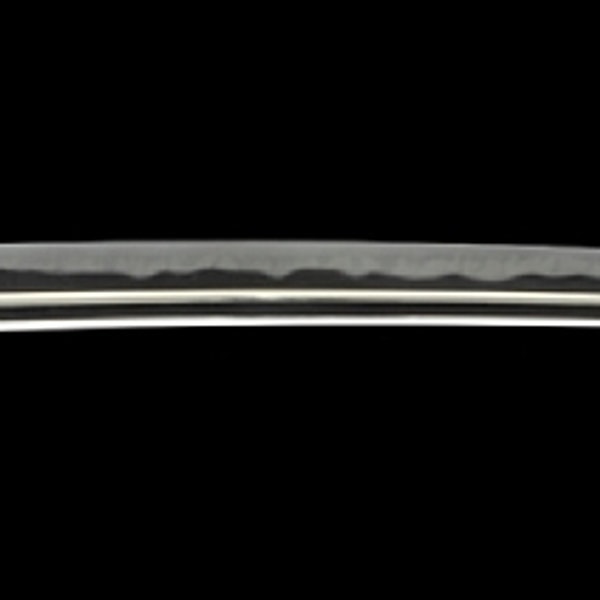
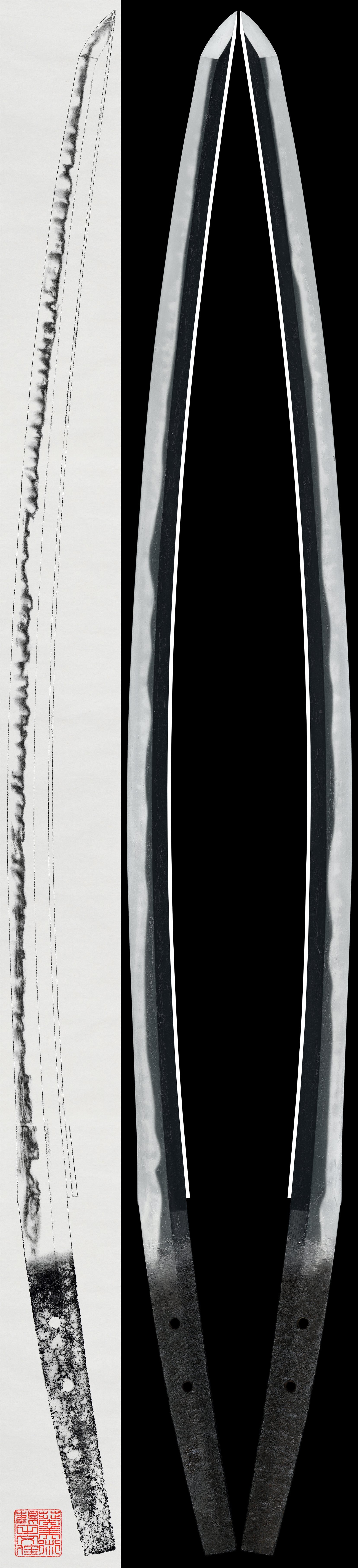
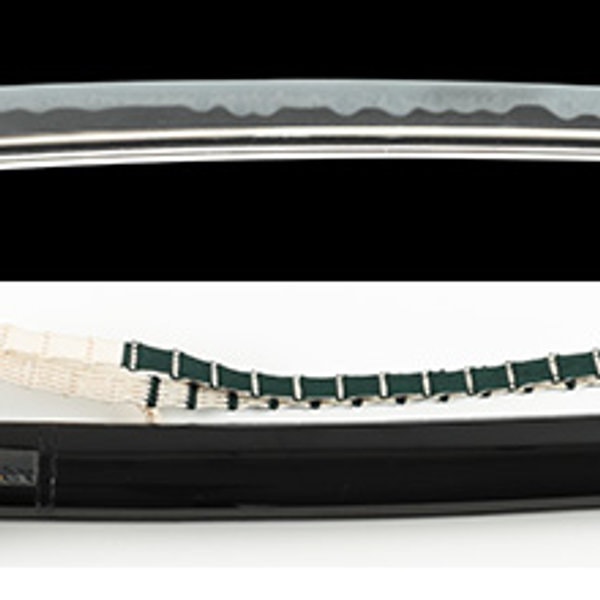
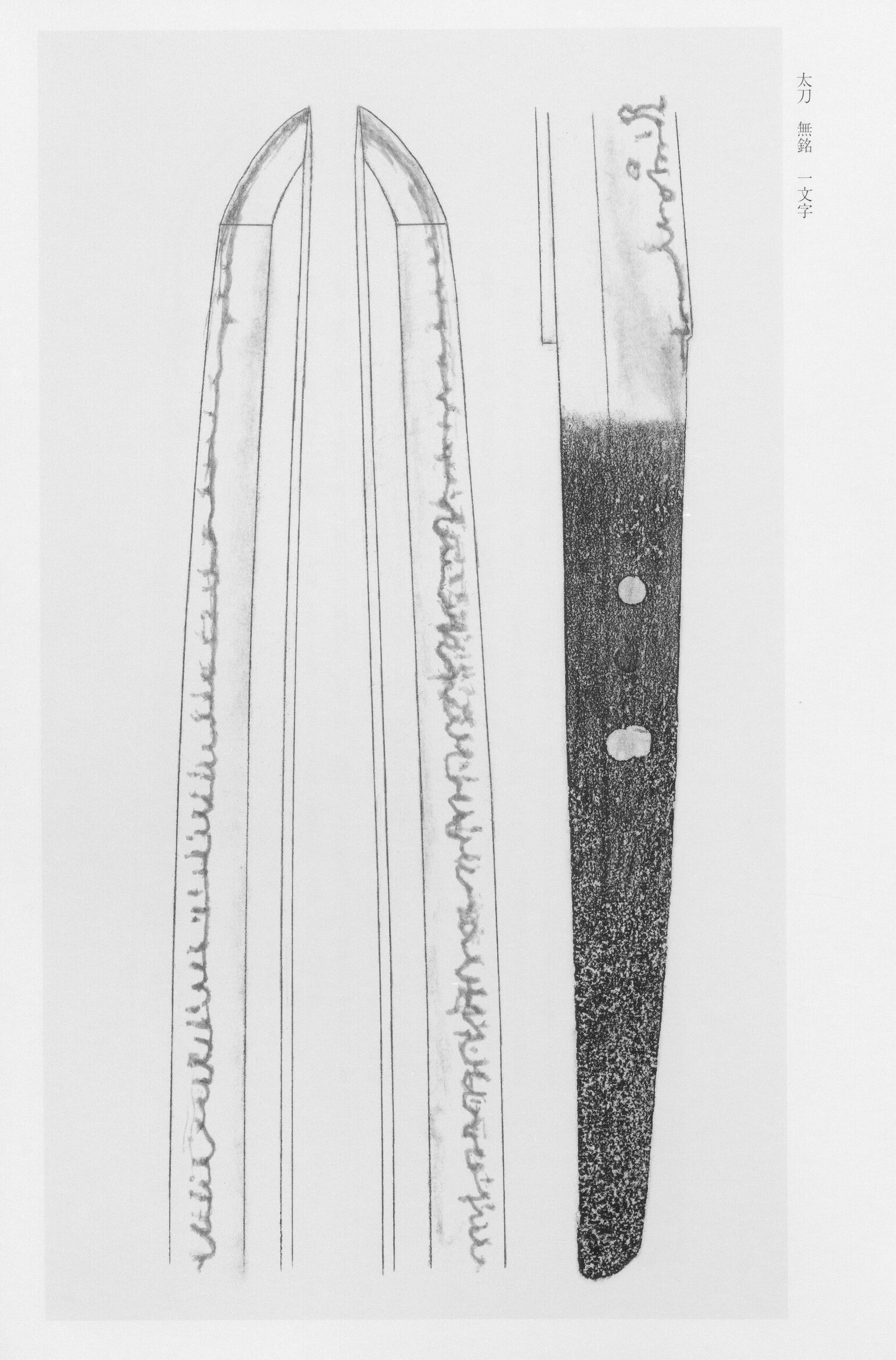
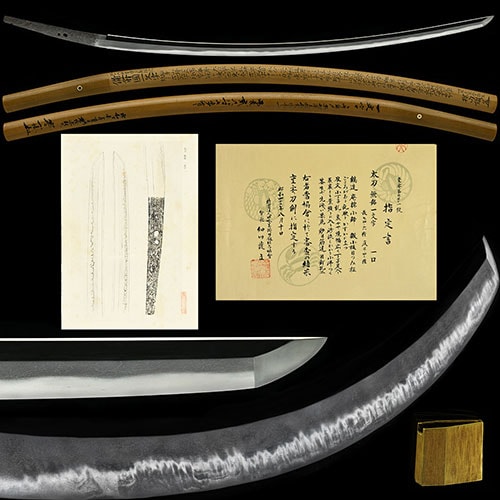
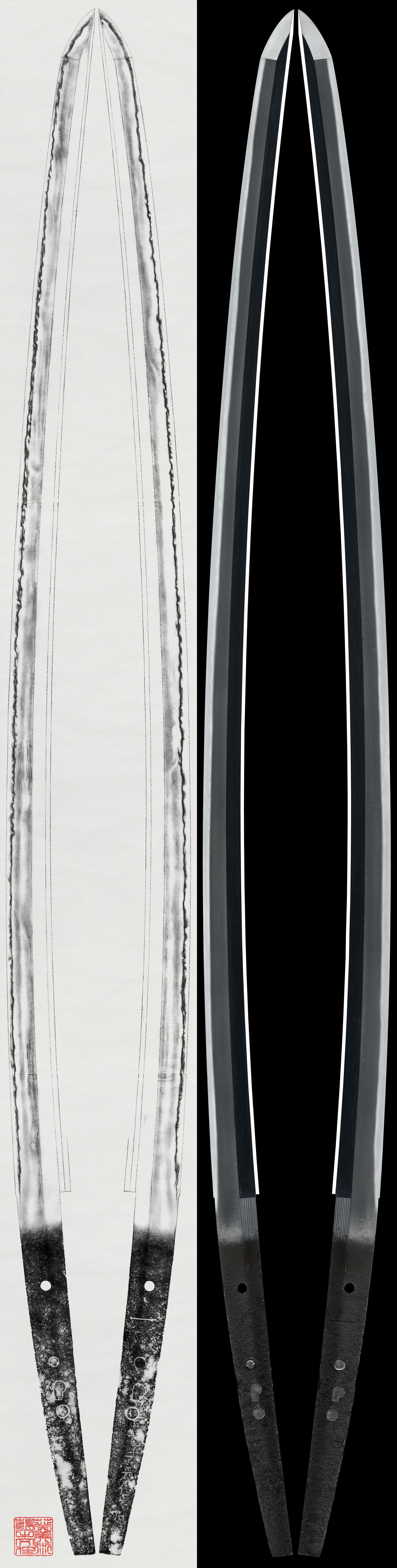
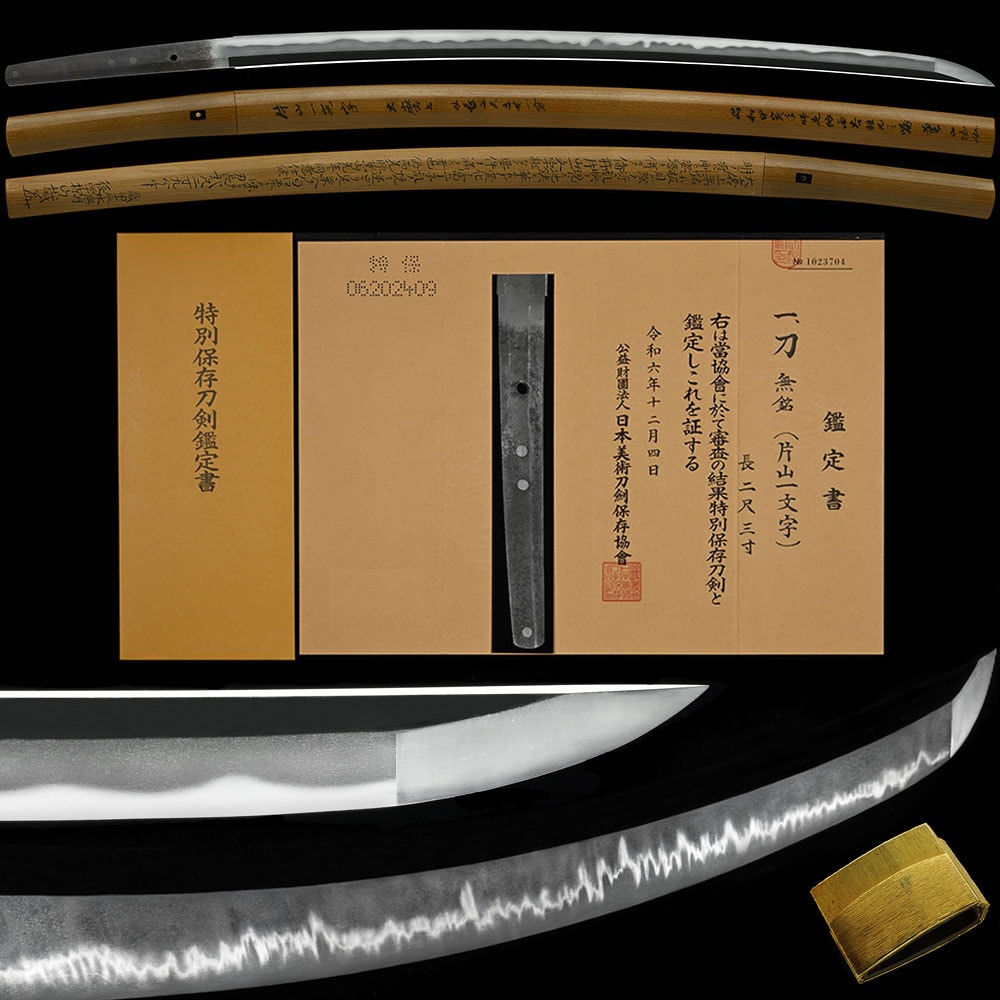
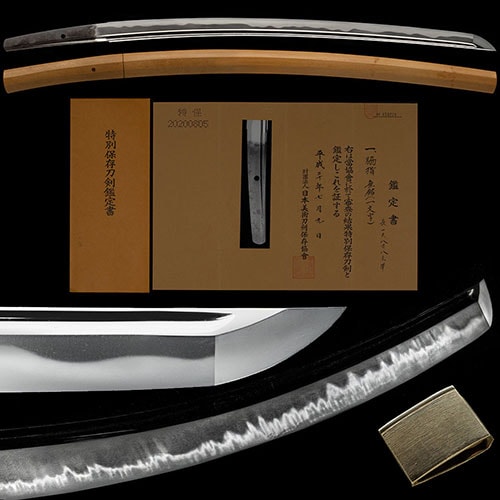
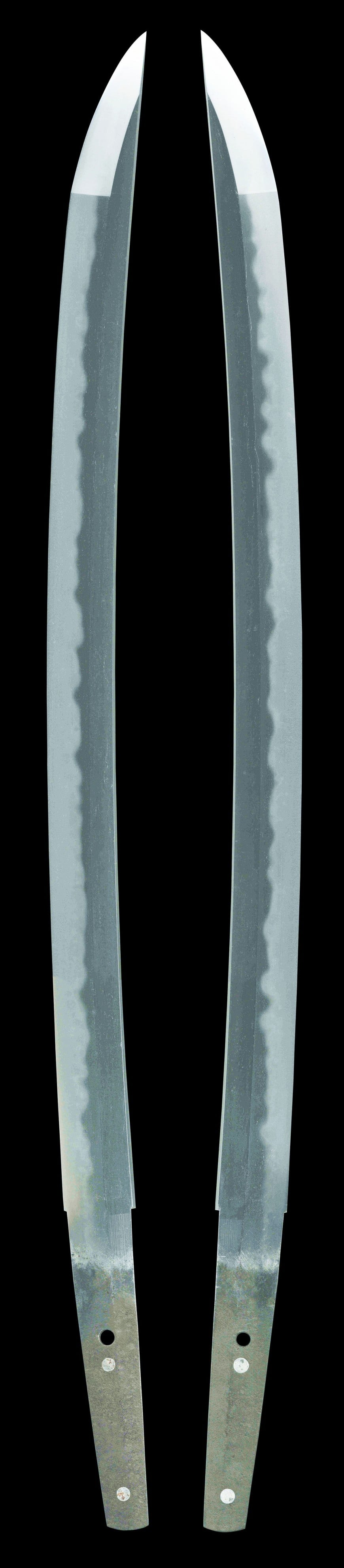
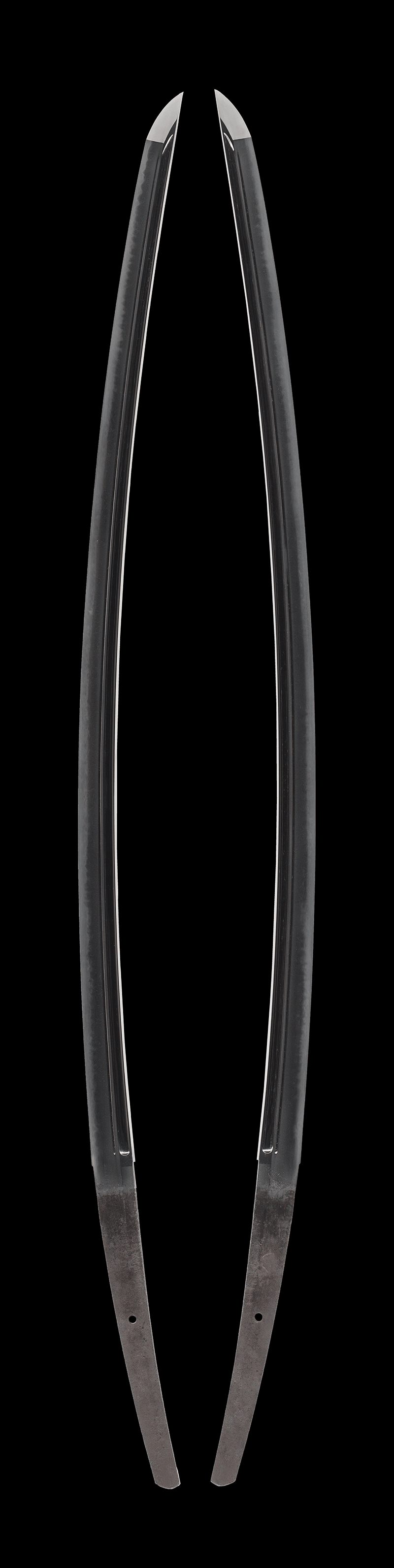
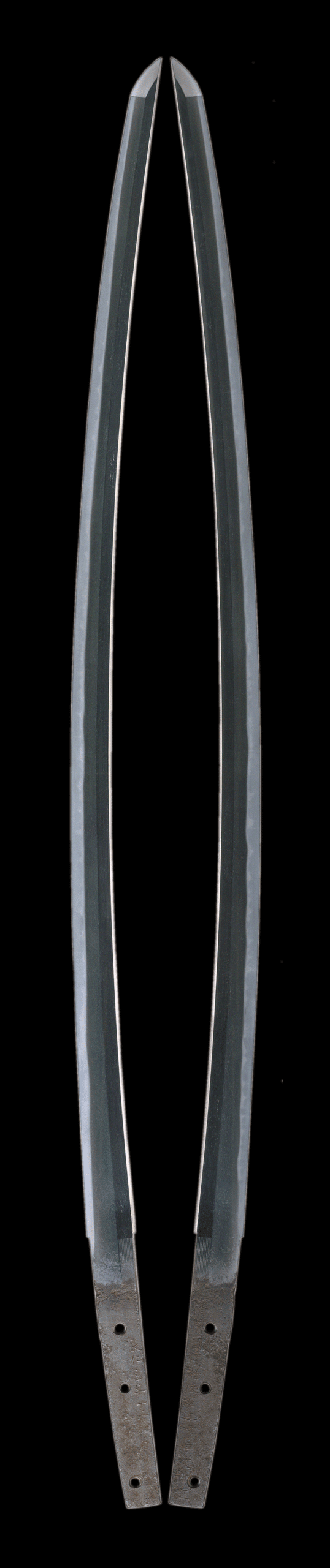
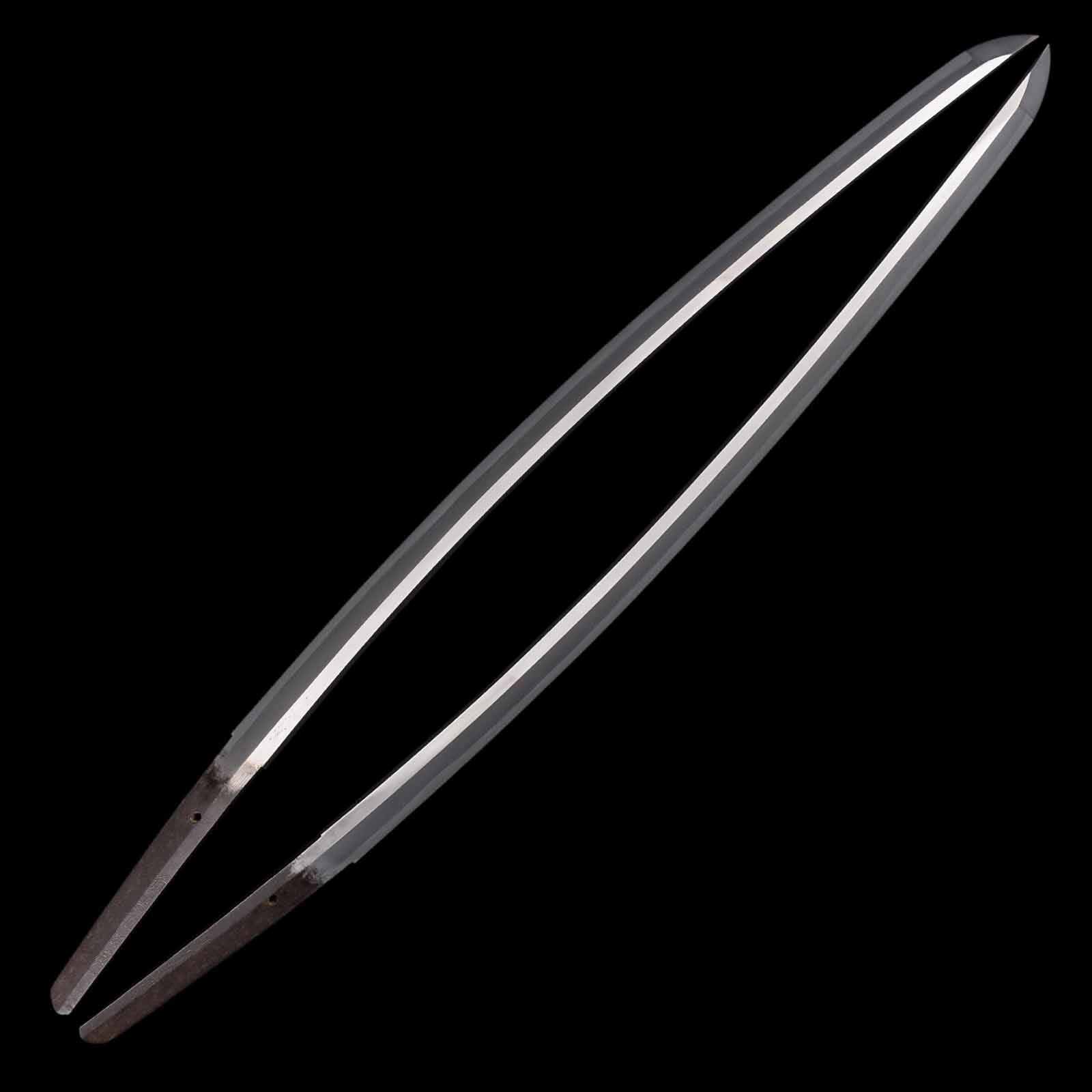
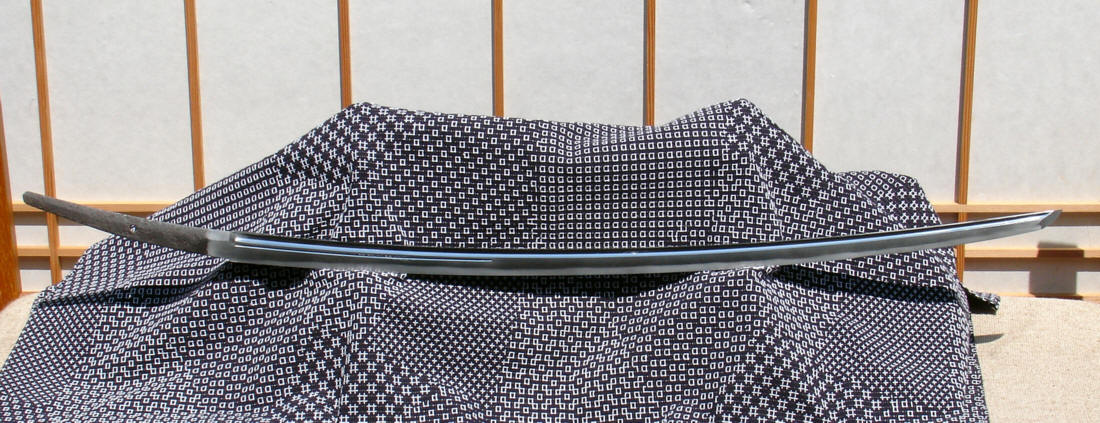
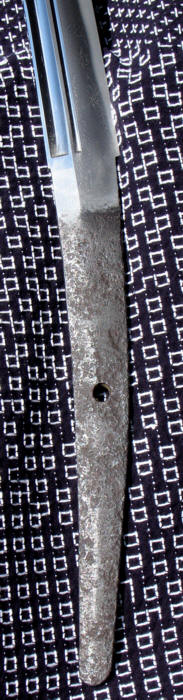
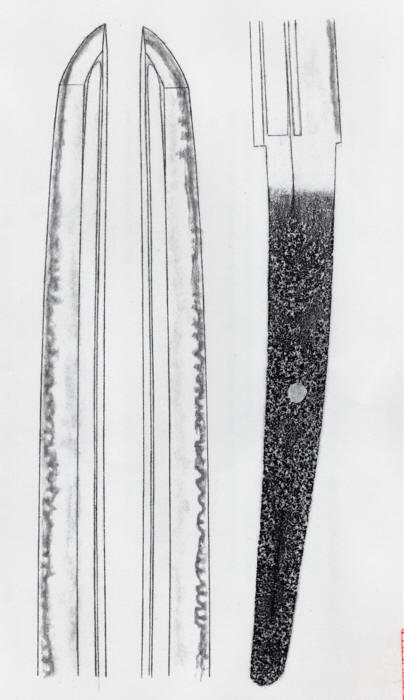
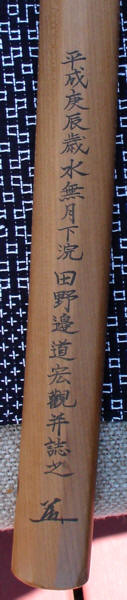
This is a graceful Ubu Ko Ichimonji Tachi. It features a sophisticated Ko Choji Midare with Kinsuji and Choji Midare Utsure. The sayagaki is by Tanobe Michihiro of The NBTHK.
 NihontoWatchBETA
ubu · Ichimonji · Kamakura · nagasa 76.3cm · sori 2.4cm


Bizen-den · Bizen
22 pieces on the market now
The Ichimonji school (Ichimonji-ha) represents one of the two paramount traditions of Bizen Province swordmaking during the Kamakura period, flourishing alongside the Osafune lineage from the early thirteenth century through the Nanbokuchō era. The school's name derives from the practice of carving the character ichi (一, "one") onto the nakago, though signatures varied considerably—some blades bear only this single ideograph, others append an individual maker's name beneath it, and still others carry personal names alone. Learn more →
| Smith | Era | Designated |
|---|---|---|
| Tsunetsugu恒次 | 1321-1324 | 11 |
| Chikatsugu親次 | 1306-1308 | 2 |
| Sukemasa資正 | 1469-1487 | 1 |
A blade of top-grade workmanship and condition, formally judged to rank with a nationally recognized Important Art Object (Jūyō Bijutsuhin). Awarded only at the NBTHK’s competitive annual examination.
Of Japan’s roughly 2.5 million registered swords, only 12,307 (about 1 in 203) have ever attained Jūyō.
The NBTHK (Nihon Bijutsu Tōken Hozon Kyōkai, the Society for the Preservation of Japanese Art Swords) is a public-interest incorporated foundation founded in 1948 and supervised by Japan’s Agency for Cultural Affairs (Bunkachō); it is based at the Japanese Sword Museum in Tokyo. Its expert panels physically examine each submitted work (shinsa) and issue a certificate (kanteishō) ranking it by artistic and historical merit. NBTHK papers are the most widely recognized standard of authentication for Japanese swords and fittings.
NBTHK official siteThree day, no penalty, inspection on every item. Returns must be in the same condition as shipped. Actual costs will be charged on returned items. No restocking fee. If you did not like the item is a good enough reason for return.
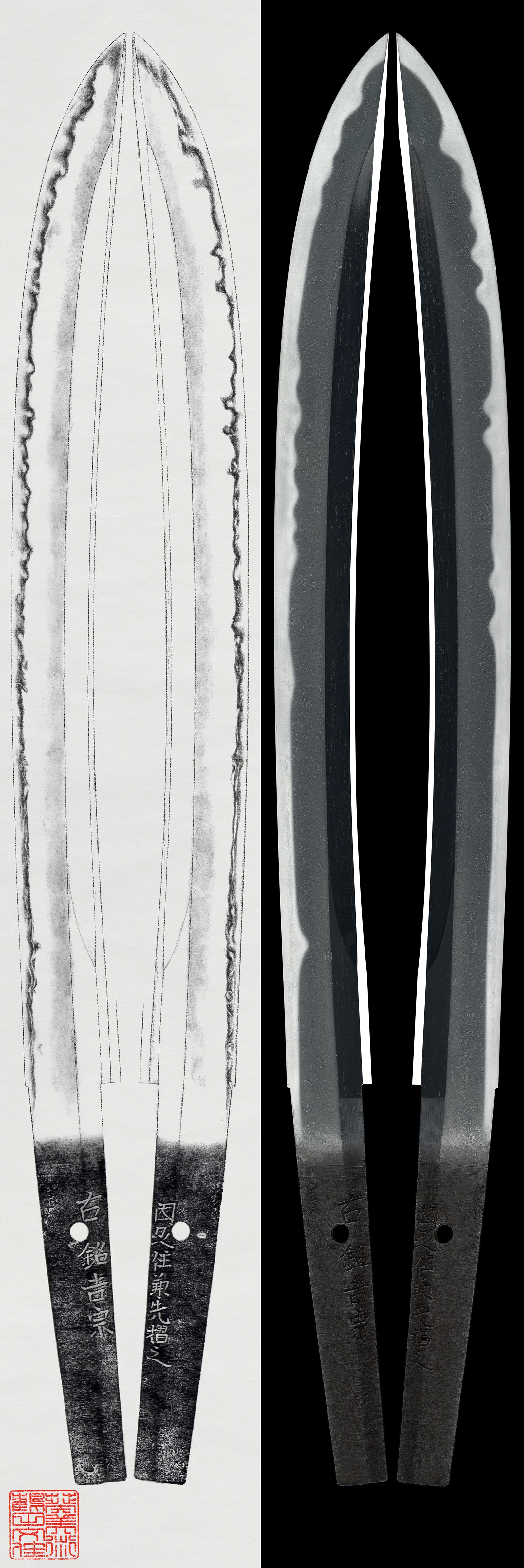
This is a graceful Ubu Ko Ichimonji Tachi. It features a sophisticated Ko Choji Midare with Kinsuji and Choji Midare Utsure. The sayagaki is by Tanobe Michihiro of The NBTHK.
NihontoWatchBETAubu · Ichimonji · Kamakura · nagasa 76.3cm · sori 2.4cm
Bizen-den · Bizen
22 pieces on the market now
The Ichimonji school (Ichimonji-ha) represents one of the two paramount traditions of Bizen Province swordmaking during the Kamakura period, flourishing alongside the Osafune lineage from the early thirteenth century through the Nanbokuchō era. The school's name derives from the practice of carving the character ichi (一, "one") onto the nakago, though signatures varied considerably—some blades bear only this single ideograph, others append an individual maker's name beneath it, and still others carry personal names alone. Learn more →
| Smith | Era | Designated |
|---|---|---|
| Tsunetsugu恒次 | 1321-1324 | 11 |
| Chikatsugu親次 | 1306-1308 | 2 |
| Sukemasa資正 | 1469-1487 | 1 |
A blade of top-grade workmanship and condition, formally judged to rank with a nationally recognized Important Art Object (Jūyō Bijutsuhin). Awarded only at the NBTHK’s competitive annual examination.
Of Japan’s roughly 2.5 million registered swords, only 12,307 (about 1 in 203) have ever attained Jūyō.
The NBTHK (Nihon Bijutsu Tōken Hozon Kyōkai, the Society for the Preservation of Japanese Art Swords) is a public-interest incorporated foundation founded in 1948 and supervised by Japan’s Agency for Cultural Affairs (Bunkachō); it is based at the Japanese Sword Museum in Tokyo. Its expert panels physically examine each submitted work (shinsa) and issue a certificate (kanteishō) ranking it by artistic and historical merit. NBTHK papers are the most widely recognized standard of authentication for Japanese swords and fittings.
NBTHK official siteThree day, no penalty, inspection on every item. Returns must be in the same condition as shipped. Actual costs will be charged on returned items. No restocking fee. If you did not like the item is a good enough reason for return.