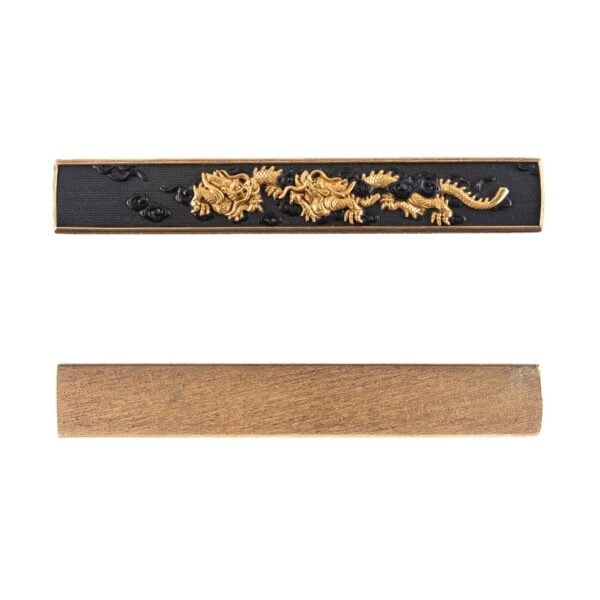
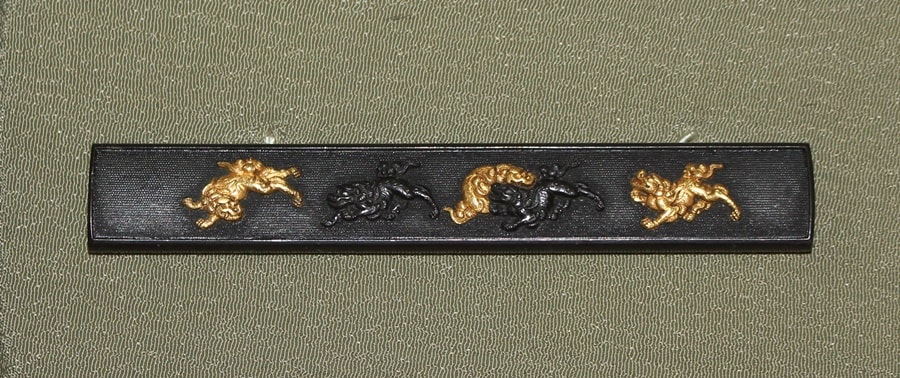
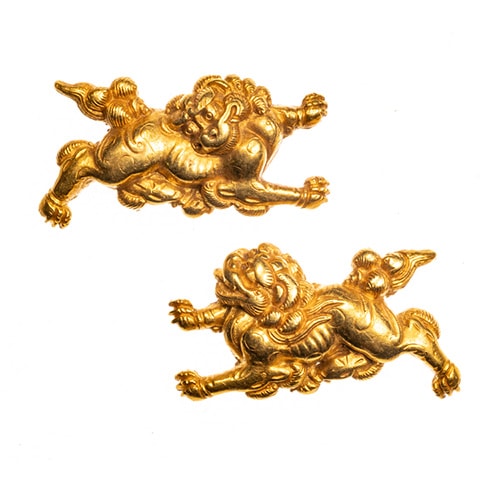
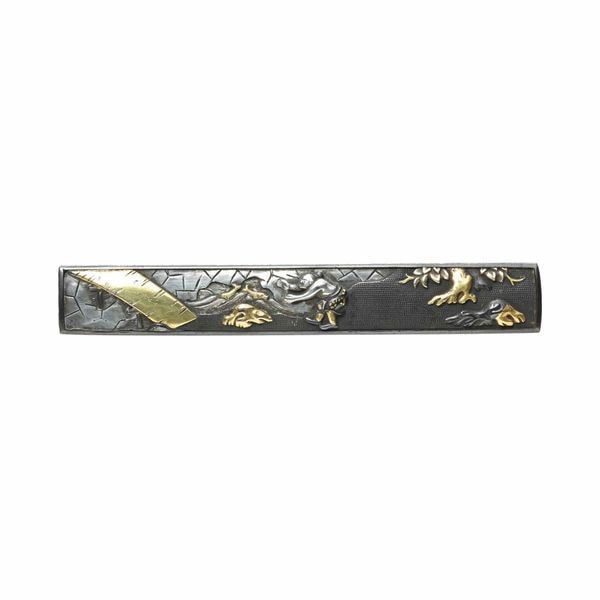
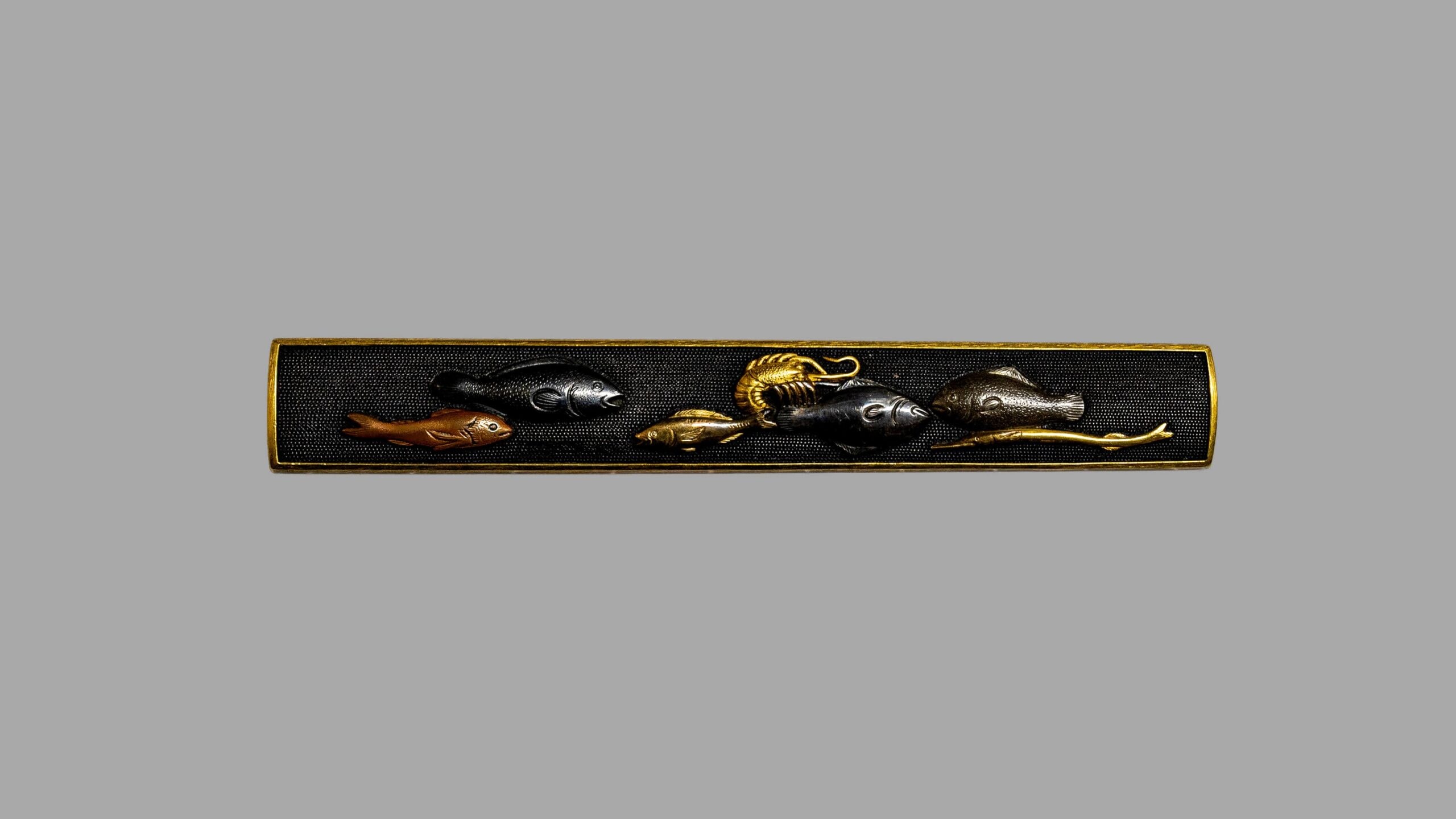
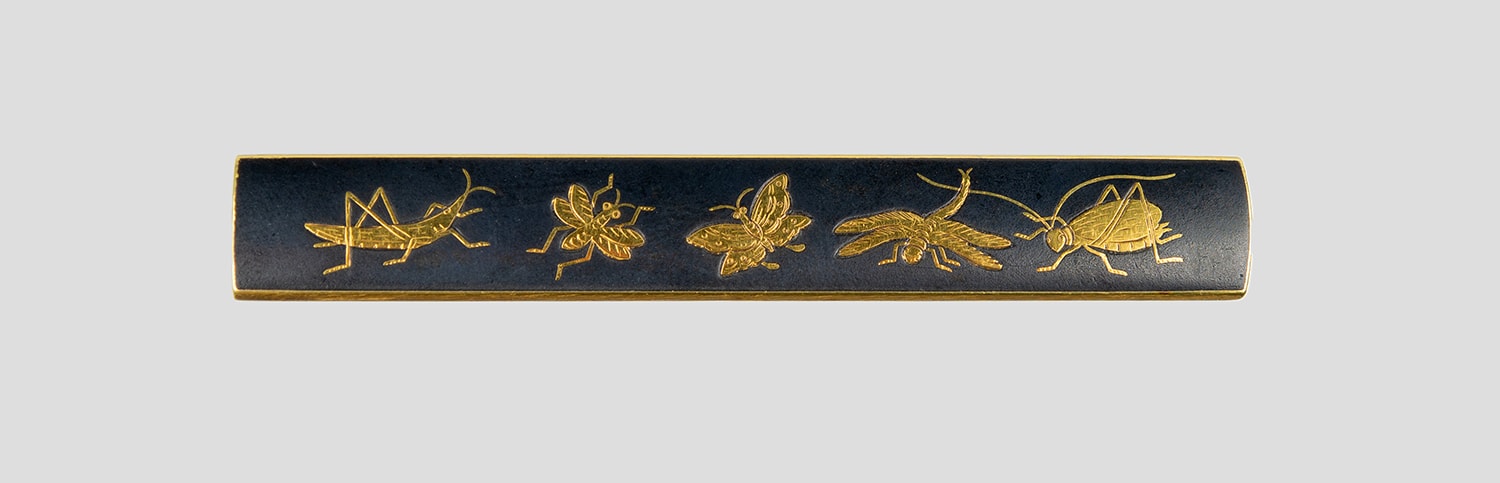
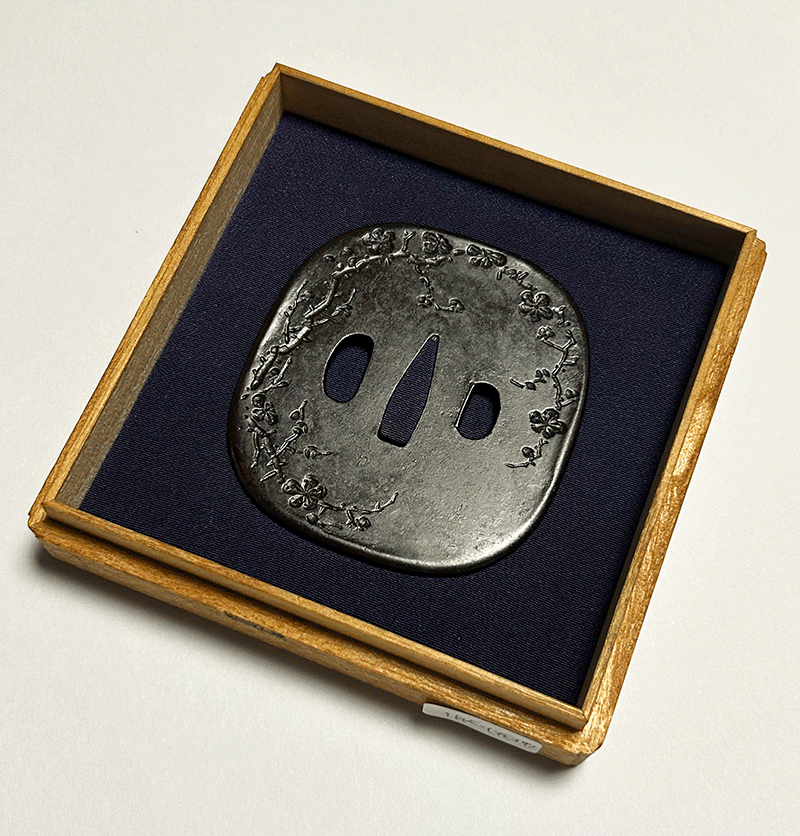
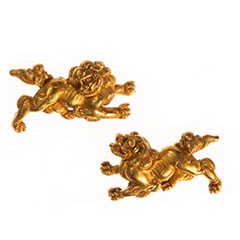
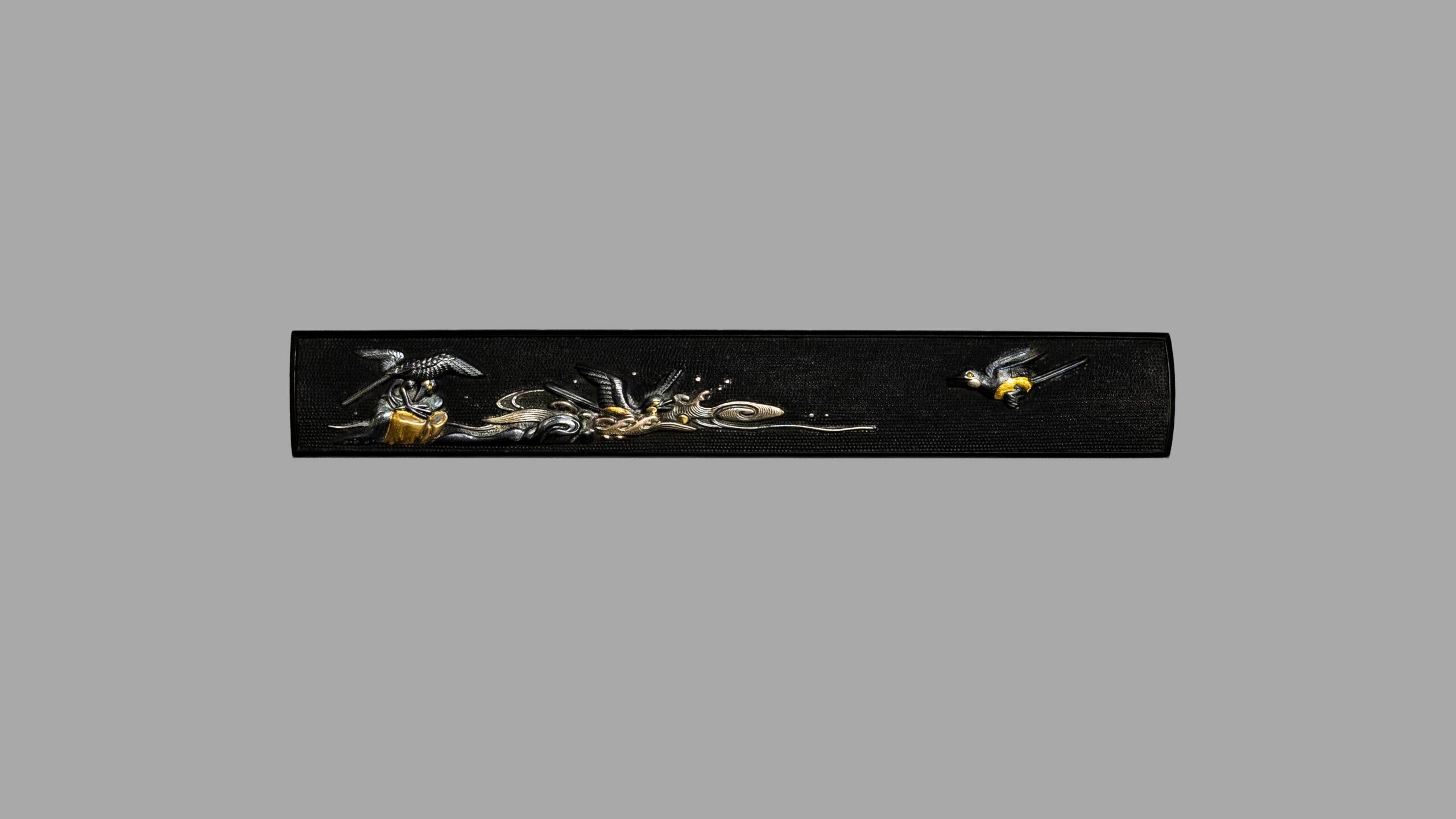
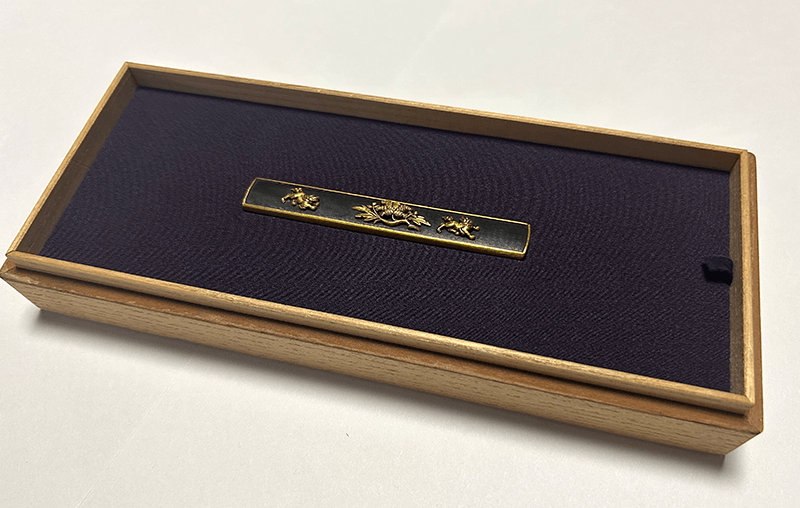
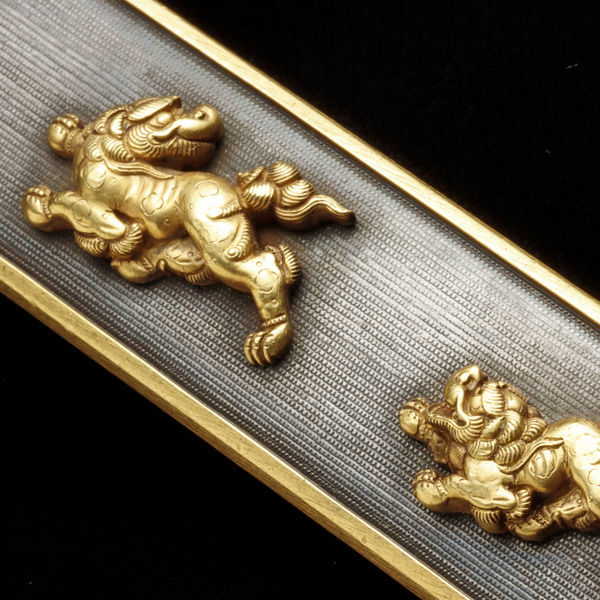
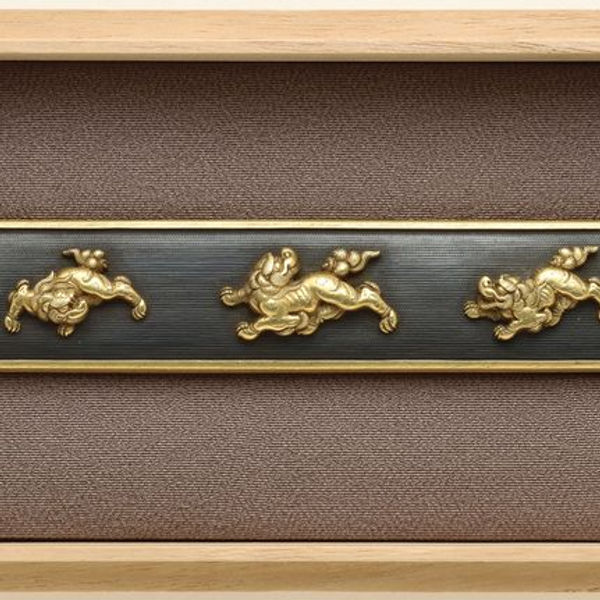
This kozuka features a design of three lions, attributed to the Kaga Goto school. It dates to the early Edo period and is made of shakudo nanako with gold takabori suemon and ura ita kin bukumi. The kozuka measures 123.2 mm in length and 23.6 mm in width and comes in a paulownia wood box.
 NihontoWatch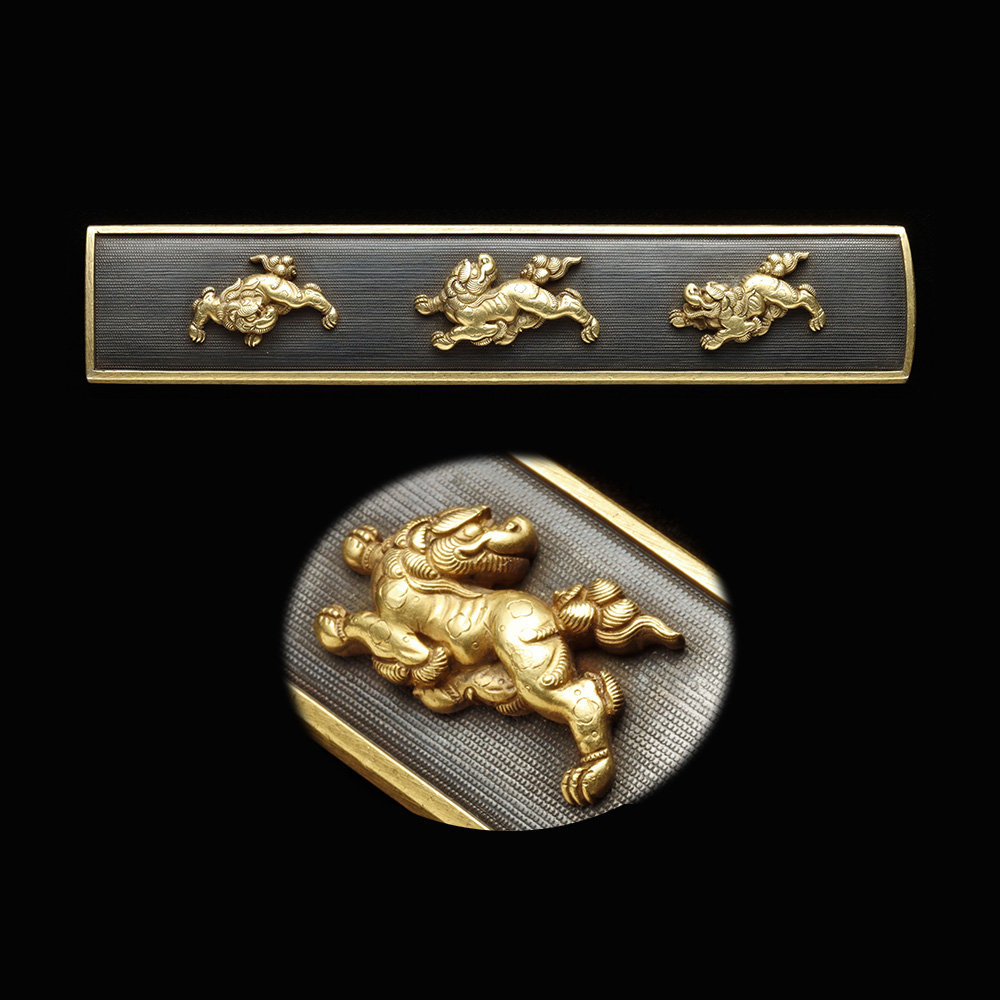
Kaga-Goto School
Edo
Kaga
Unsigned
Iebori · Kaga
24 pieces on the market now
The Kaga Goto (加賀後藤) school arose when the Maeda lords of Kaga Province drew masters of the Goto house from Kyoto into their direct service. The founding figure was Goto Kakujo Mitsunobu (覚乗光信), born in Kyoto in Tensho 17 (1589) as the second son of Chojo. By the directive of Tokugawa Ieyasu, the Goto family's closely guarded techniques, transmitted as an exclusive isshi soden (一子相伝) lineage, were conferred in full upon Kakujo of the Kanbei house, although it was not the main line. Retained by the Maeda at the extraordinary stipend of 150 koku, he was held in particular favour by Lord Maeda Toshitsune. The school's second principal figure was Goto Etsujo Mitsukuni (悦乗光邦), second son of Teijo, who strengthened the Rihei branch. Together with Enjo (演乗) of the Kanbei house, Etsujo alternated yearly between Kyoto and Kanazawa, training many disciples and devoting himself to the development of Kaga metalwork. The designated corpus reveals a body of work executed entirely in the orthodox Goto house manner (o-ie-ryu).
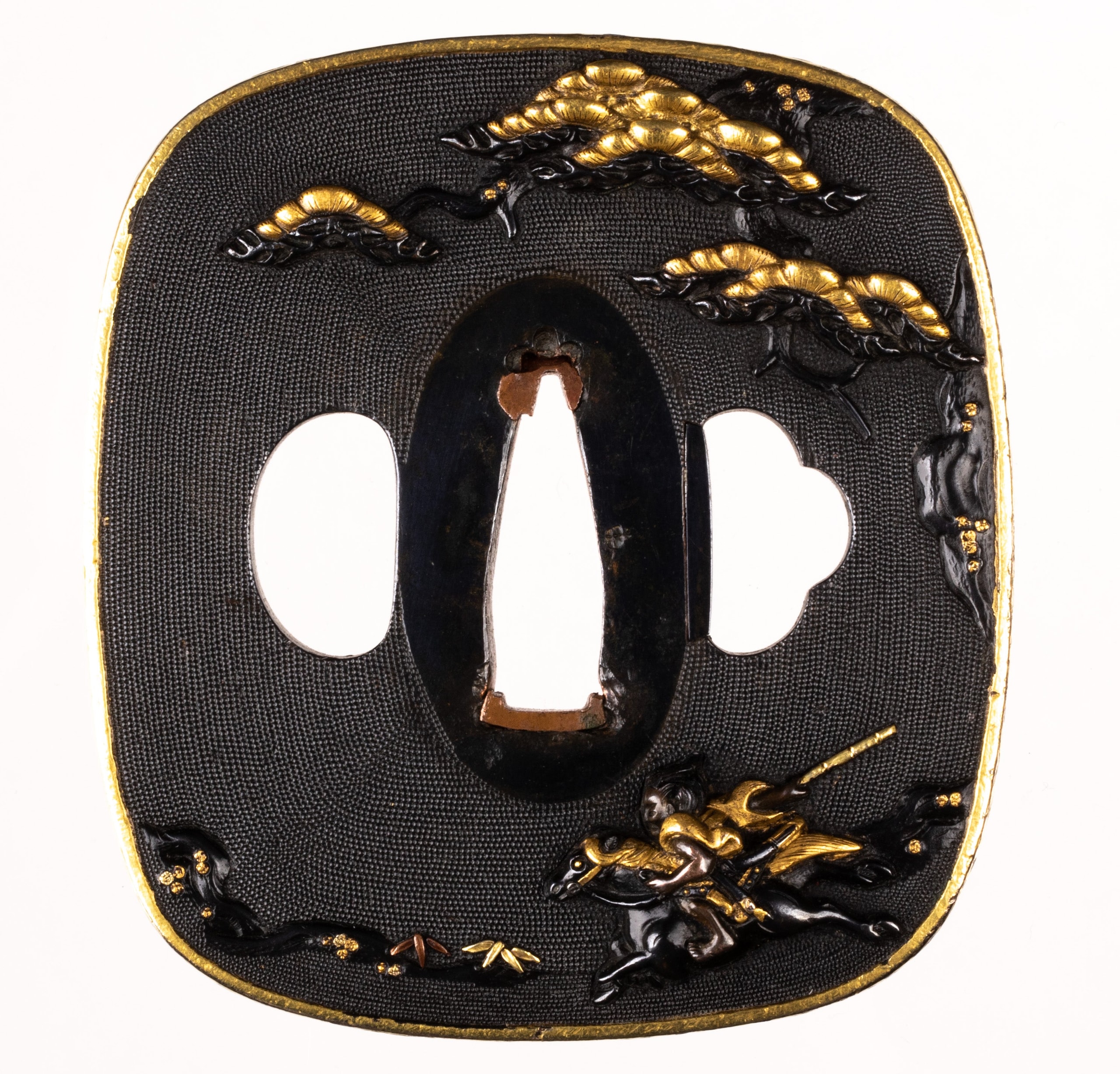
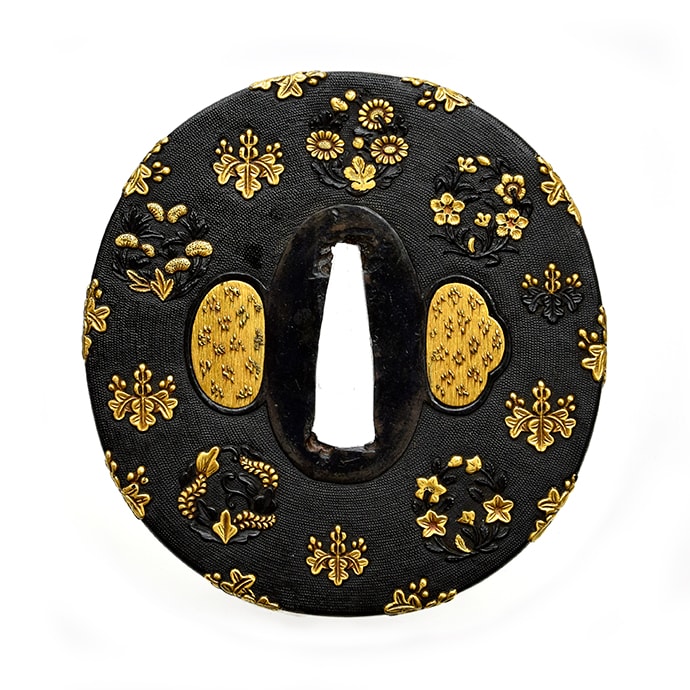
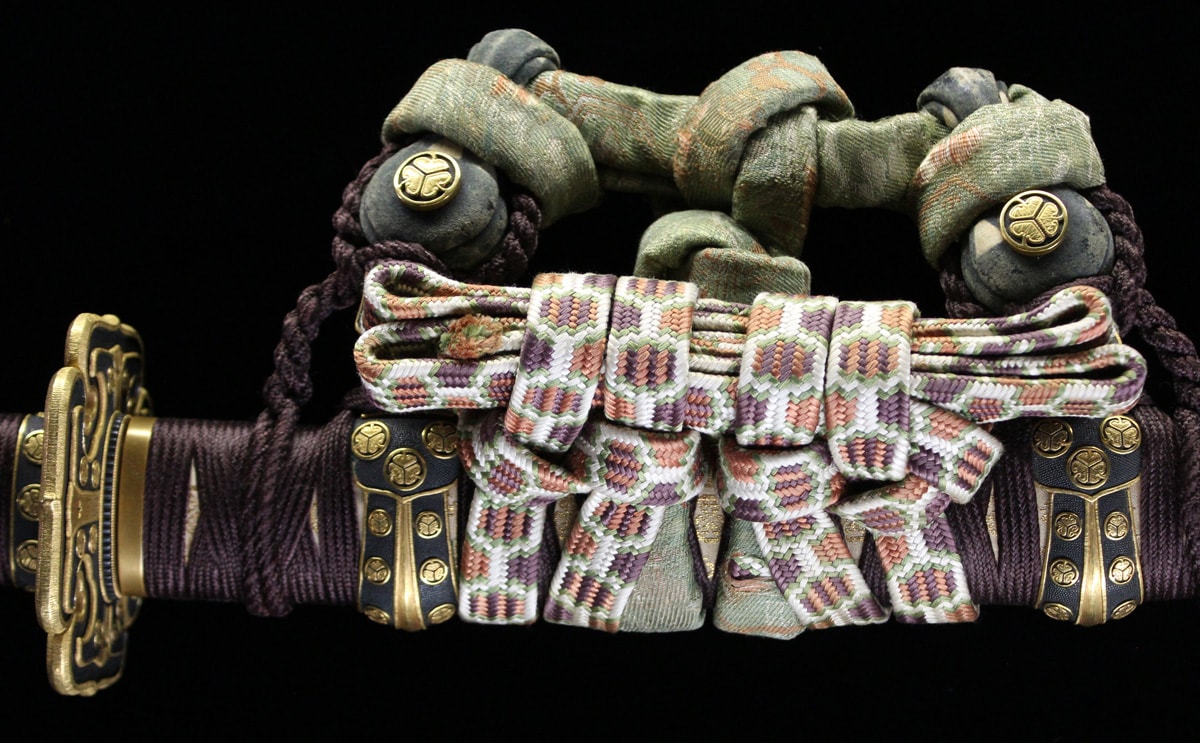
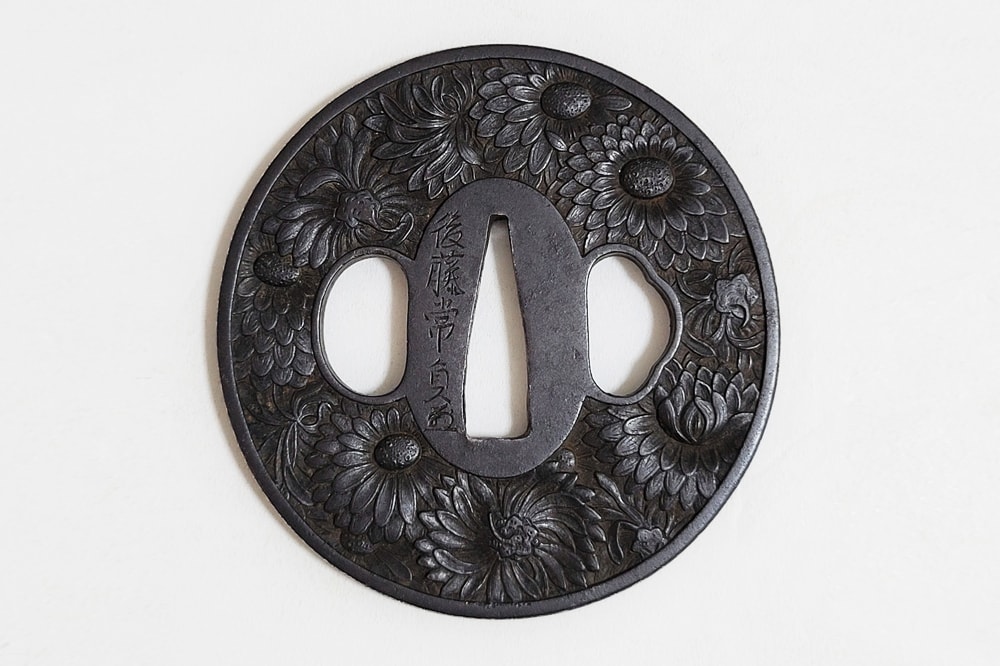
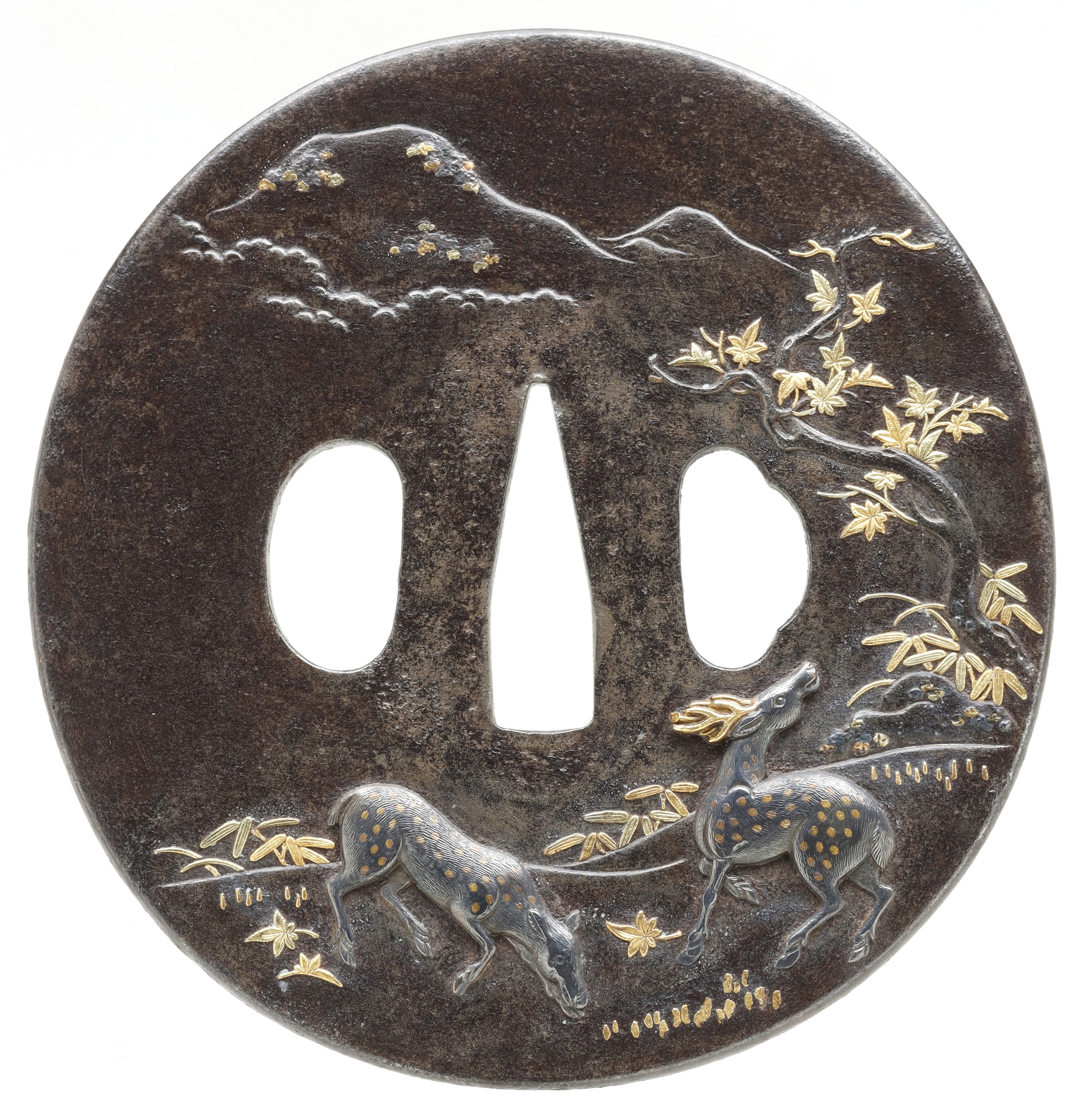
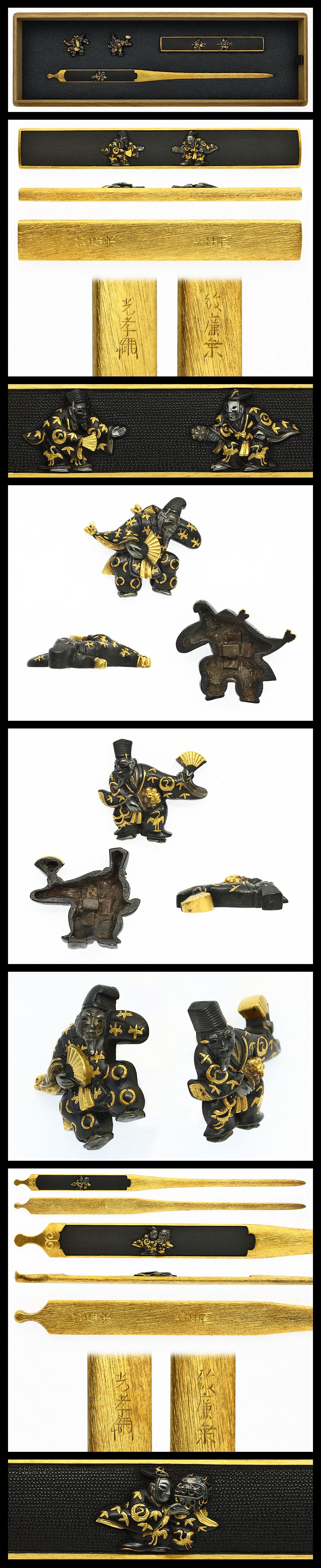
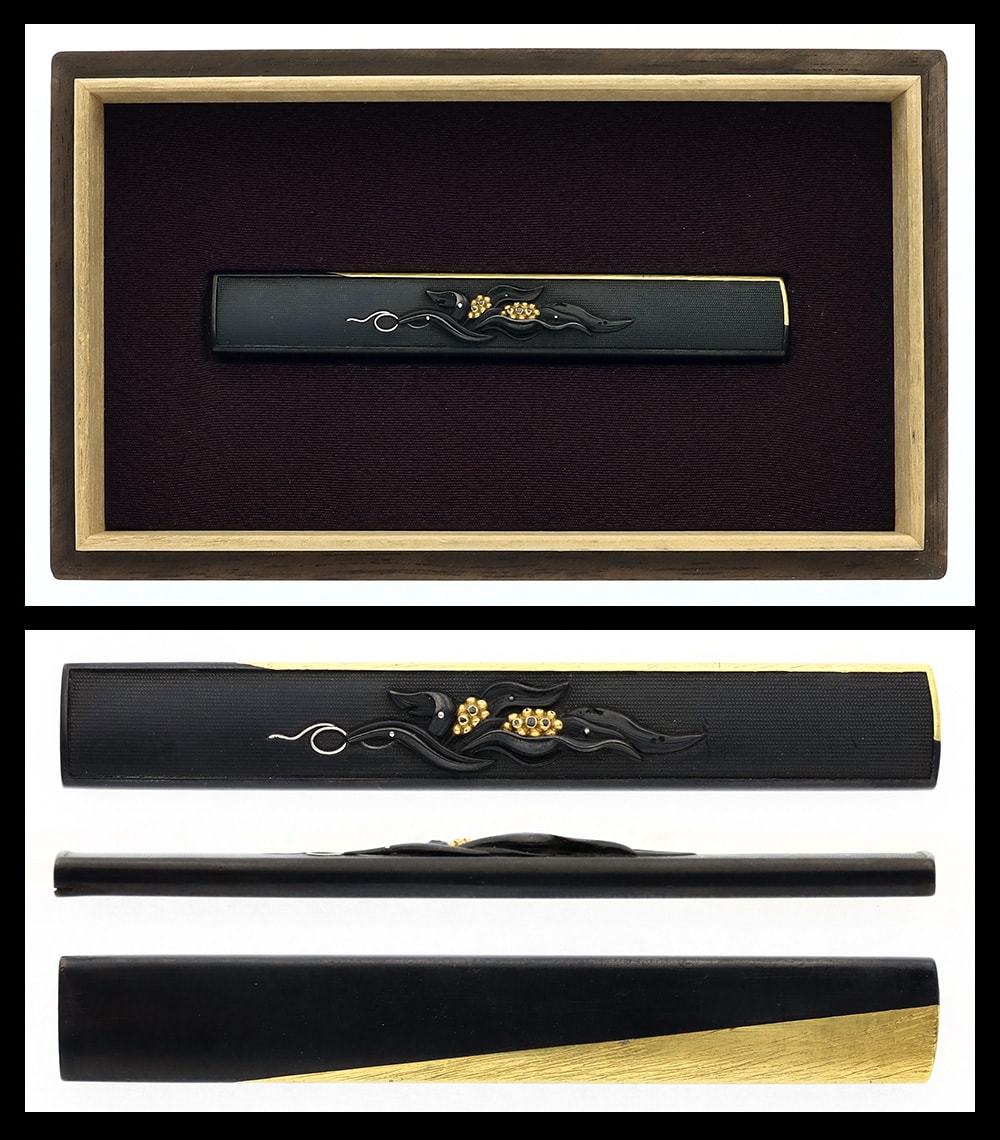
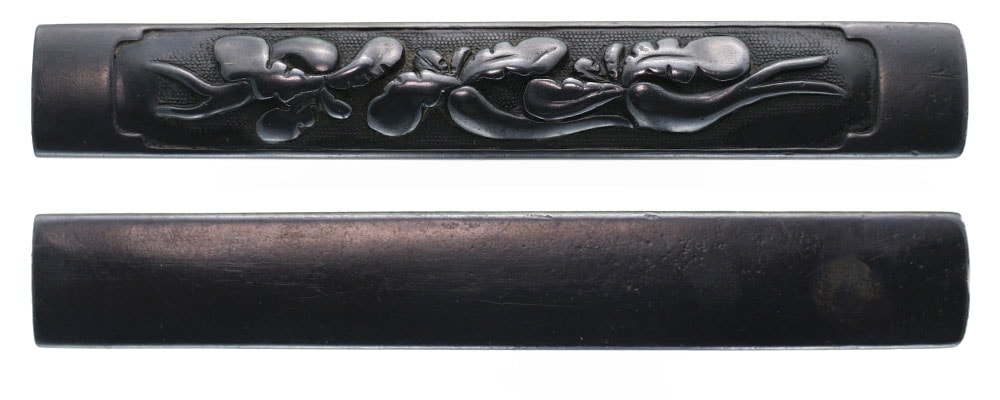
The prevailing ground is shakudo nanako-ji[[c:1]], upon which designs are rendered in takabori with gold iroe (金色絵) and, in polychrome compositions, gold, silver, and shakudo suemon. Gold nanako-ji grounds also appear, as in Kakujo's Kurikara futokoro-mono set upon a gold plate with polychrome accents. " In complete ito-maki tachi koshirae ensembles, the full suite of fittings is worked in shakudo nanako-ji scattered with the family crest in gold sukidashi takabori with kin-iroe, yielding mountings of courtly splendour. " The setsumei attest to the Kaga Goto's significance within the broader Goto tradition. Etsujo's workmanship adheres "exclusively to the orthodox Goto house style," with skill "in no way inferior to that of his father Teijo," and the construction and nikuoki of Mitsukuni's signed mitokoromono match Teijo's own work. " Their rarity, combined with the exceptional technical standard the corpus documents, underscores the Kaga Goto school's place within the Goto legacy and the Edo-period tosogu canon. Learn more →
We could not find an authenticity certificate on the seller’s listing. Japanese swords and fittings are normally papered by the NBTHK (or the NTHK). Without one, the attribution is the seller’s own assessment and has not been independently verified — treat it with caution and ask the dealer about certification before buying.
If, due to our fault, the item differs significantly from its proper condition, the item may be returned. Cooling-off is within one week of the item's arrival.
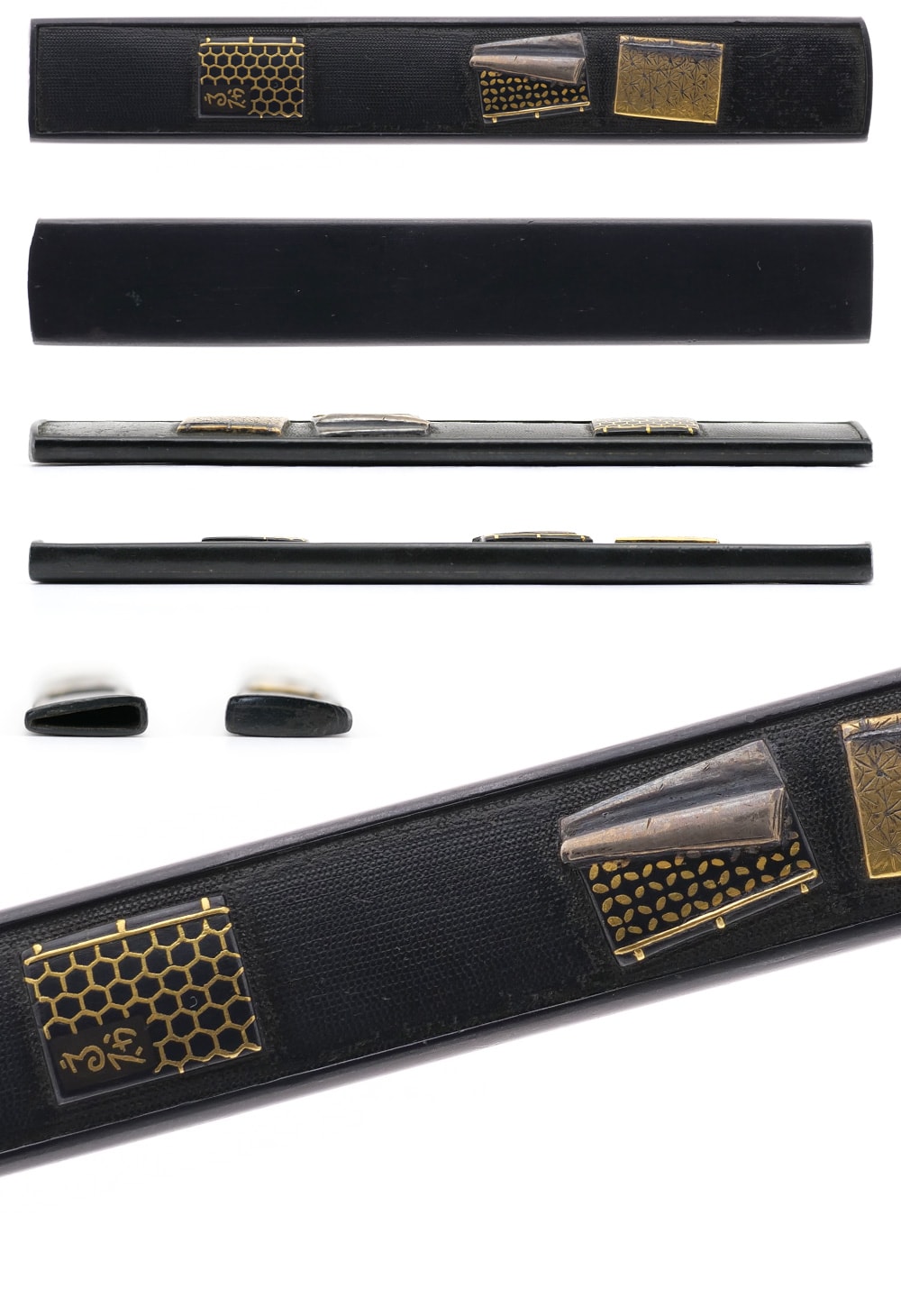
This kozuka features a design of three lions, attributed to the Kaga Goto school. It dates to the early Edo period and is made of shakudo nanako with gold takabori suemon and ura ita kin bukumi. The kozuka measures 123.2 mm in length and 23.6 mm in width and comes in a paulownia wood box.
NihontoWatchKaga-Goto School
Edo
Kaga
Unsigned
Iebori · Kaga
24 pieces on the market now
The Kaga Goto (加賀後藤) school arose when the Maeda lords of Kaga Province drew masters of the Goto house from Kyoto into their direct service. The founding figure was Goto Kakujo Mitsunobu (覚乗光信), born in Kyoto in Tensho 17 (1589) as the second son of Chojo. By the directive of Tokugawa Ieyasu, the Goto family's closely guarded techniques, transmitted as an exclusive isshi soden (一子相伝) lineage, were conferred in full upon Kakujo of the Kanbei house, although it was not the main line. Retained by the Maeda at the extraordinary stipend of 150 koku, he was held in particular favour by Lord Maeda Toshitsune. The school's second principal figure was Goto Etsujo Mitsukuni (悦乗光邦), second son of Teijo, who strengthened the Rihei branch. Together with Enjo (演乗) of the Kanbei house, Etsujo alternated yearly between Kyoto and Kanazawa, training many disciples and devoting himself to the development of Kaga metalwork. The designated corpus reveals a body of work executed entirely in the orthodox Goto house manner (o-ie-ryu).
The prevailing ground is shakudo nanako-ji[[c:1]], upon which designs are rendered in takabori with gold iroe (金色絵) and, in polychrome compositions, gold, silver, and shakudo suemon. Gold nanako-ji grounds also appear, as in Kakujo's Kurikara futokoro-mono set upon a gold plate with polychrome accents. " In complete ito-maki tachi koshirae ensembles, the full suite of fittings is worked in shakudo nanako-ji scattered with the family crest in gold sukidashi takabori with kin-iroe, yielding mountings of courtly splendour. " The setsumei attest to the Kaga Goto's significance within the broader Goto tradition. Etsujo's workmanship adheres "exclusively to the orthodox Goto house style," with skill "in no way inferior to that of his father Teijo," and the construction and nikuoki of Mitsukuni's signed mitokoromono match Teijo's own work. " Their rarity, combined with the exceptional technical standard the corpus documents, underscores the Kaga Goto school's place within the Goto legacy and the Edo-period tosogu canon. Learn more →
We could not find an authenticity certificate on the seller’s listing. Japanese swords and fittings are normally papered by the NBTHK (or the NTHK). Without one, the attribution is the seller’s own assessment and has not been independently verified — treat it with caution and ask the dealer about certification before buying.
If, due to our fault, the item differs significantly from its proper condition, the item may be returned. Cooling-off is within one week of the item's arrival.