 NihontoWatchNihontoWatch
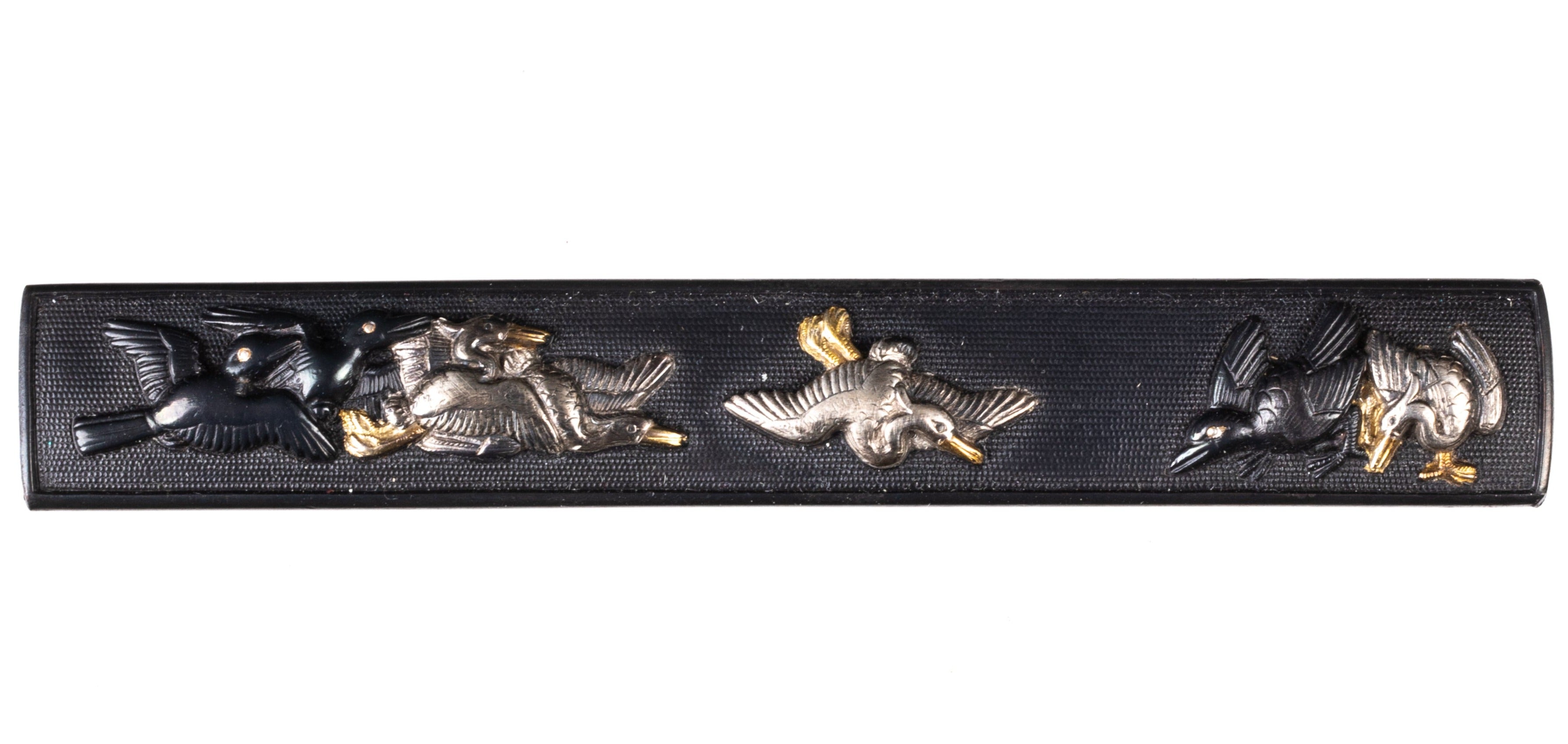
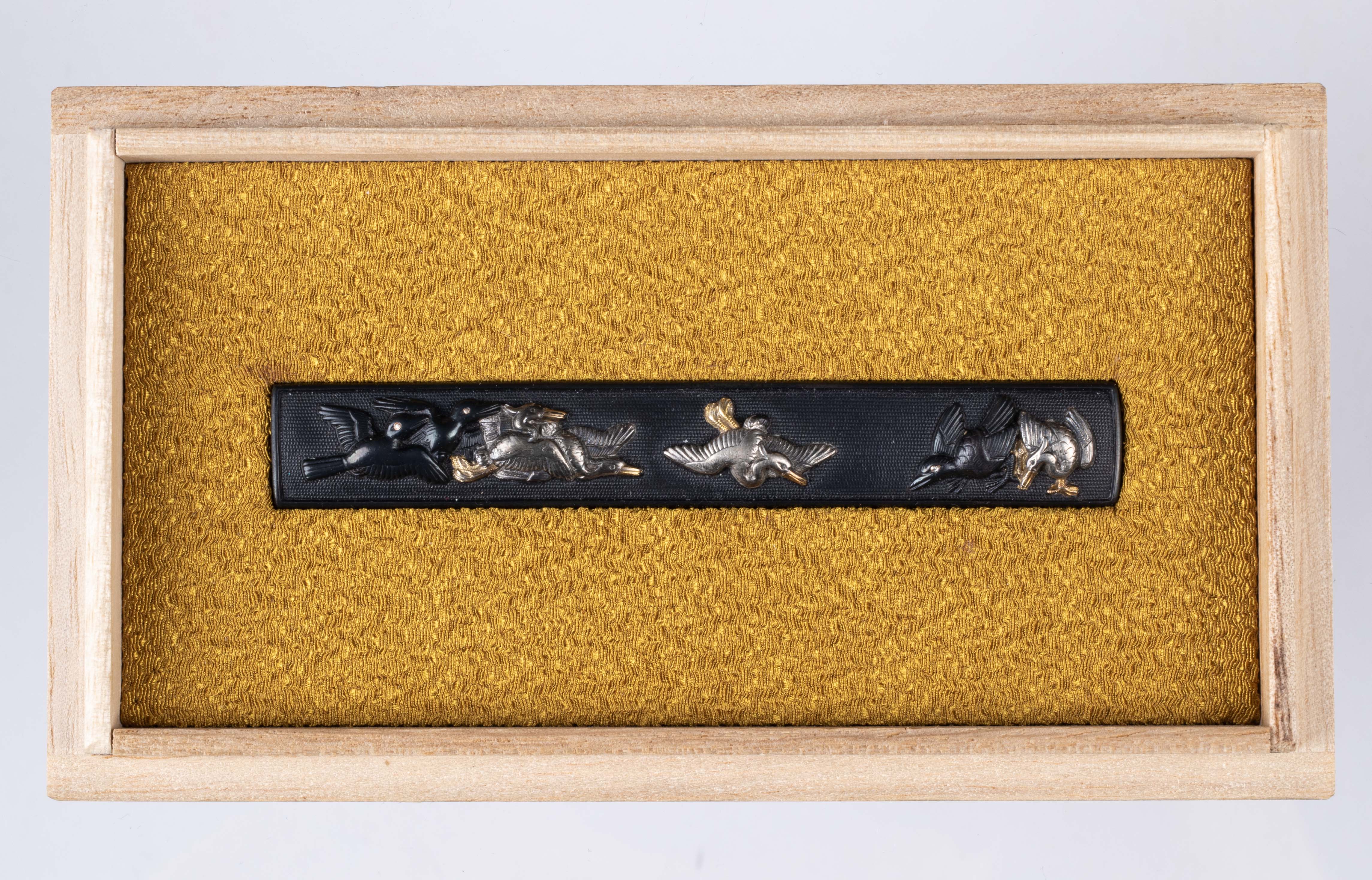
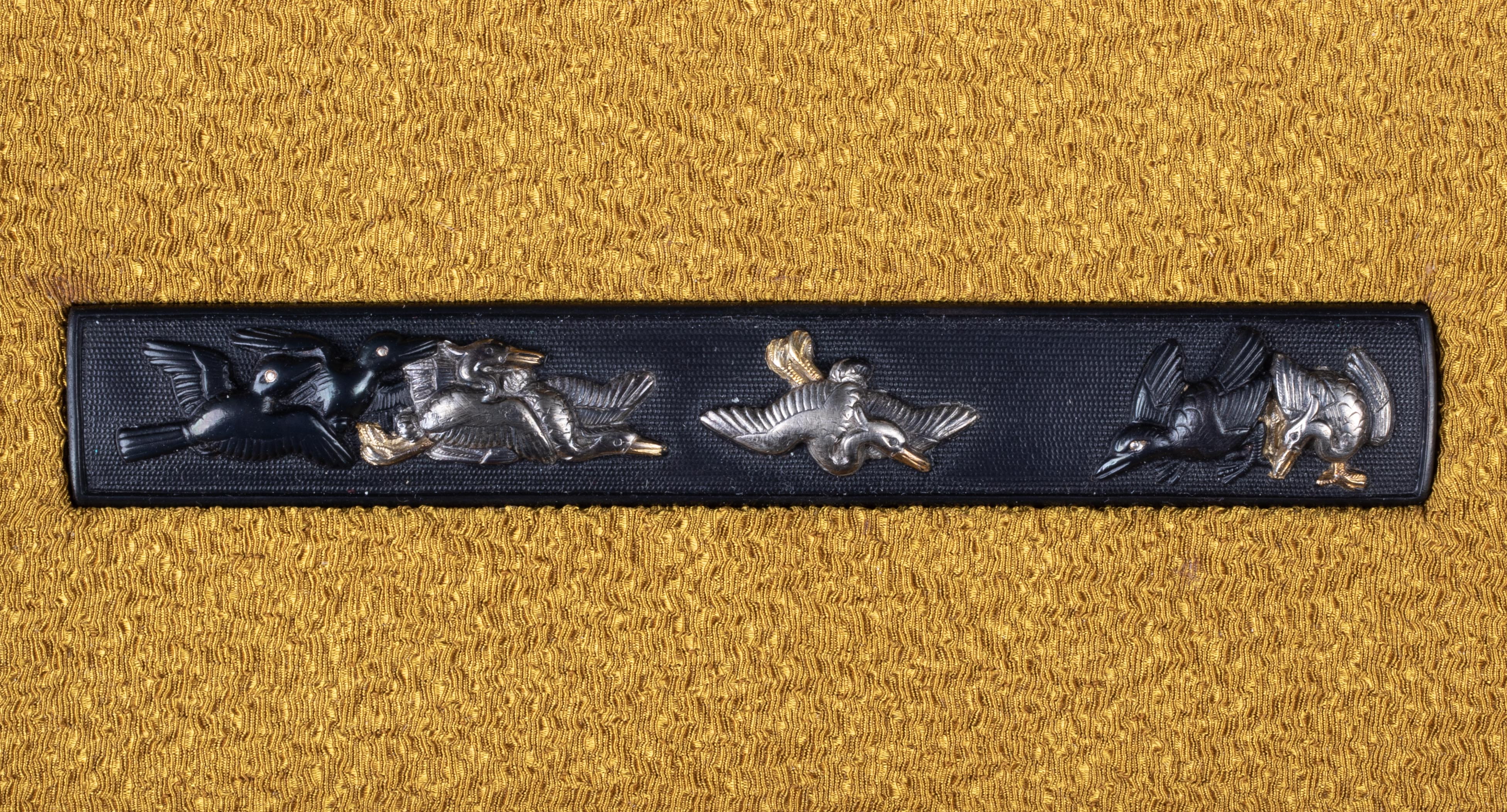
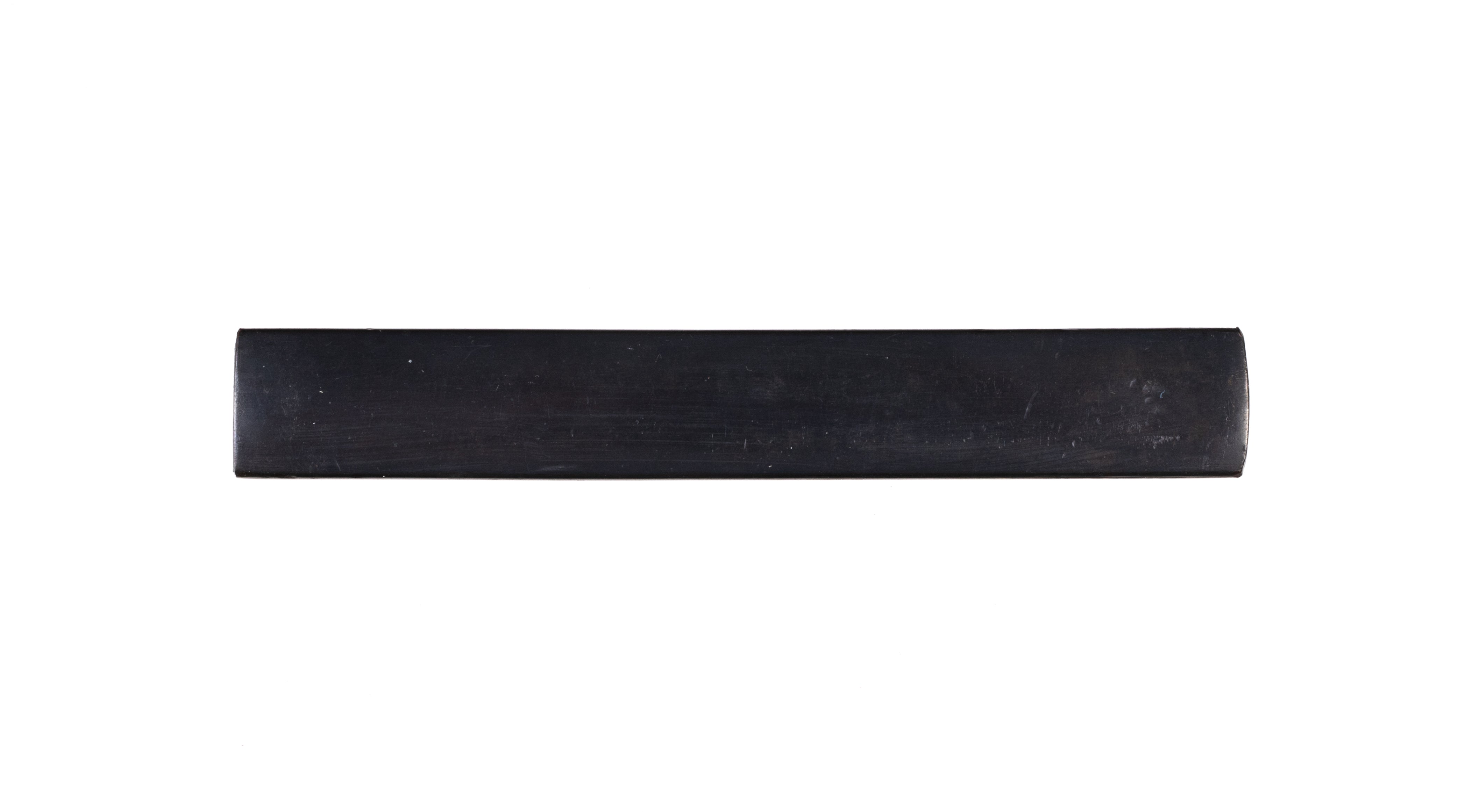
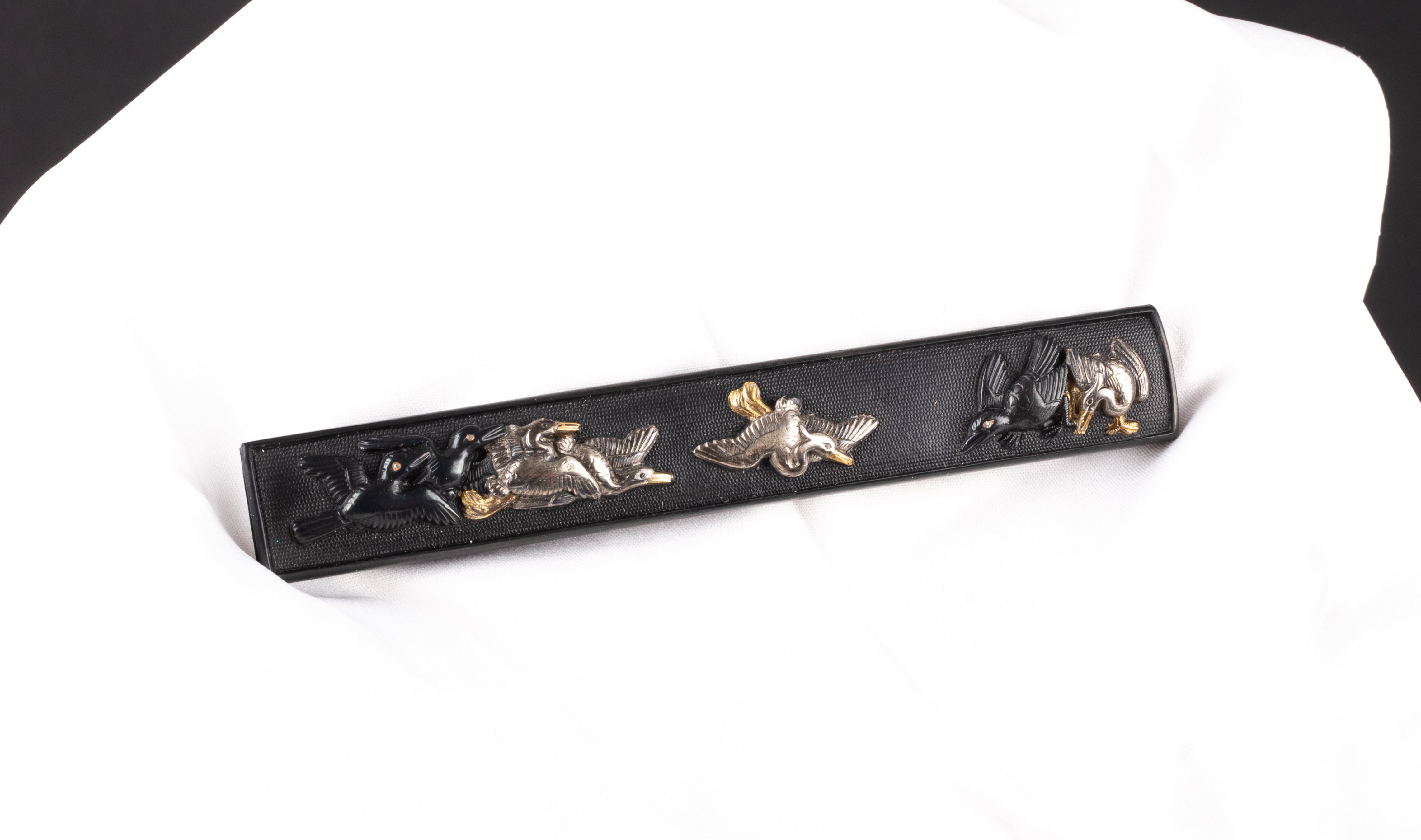
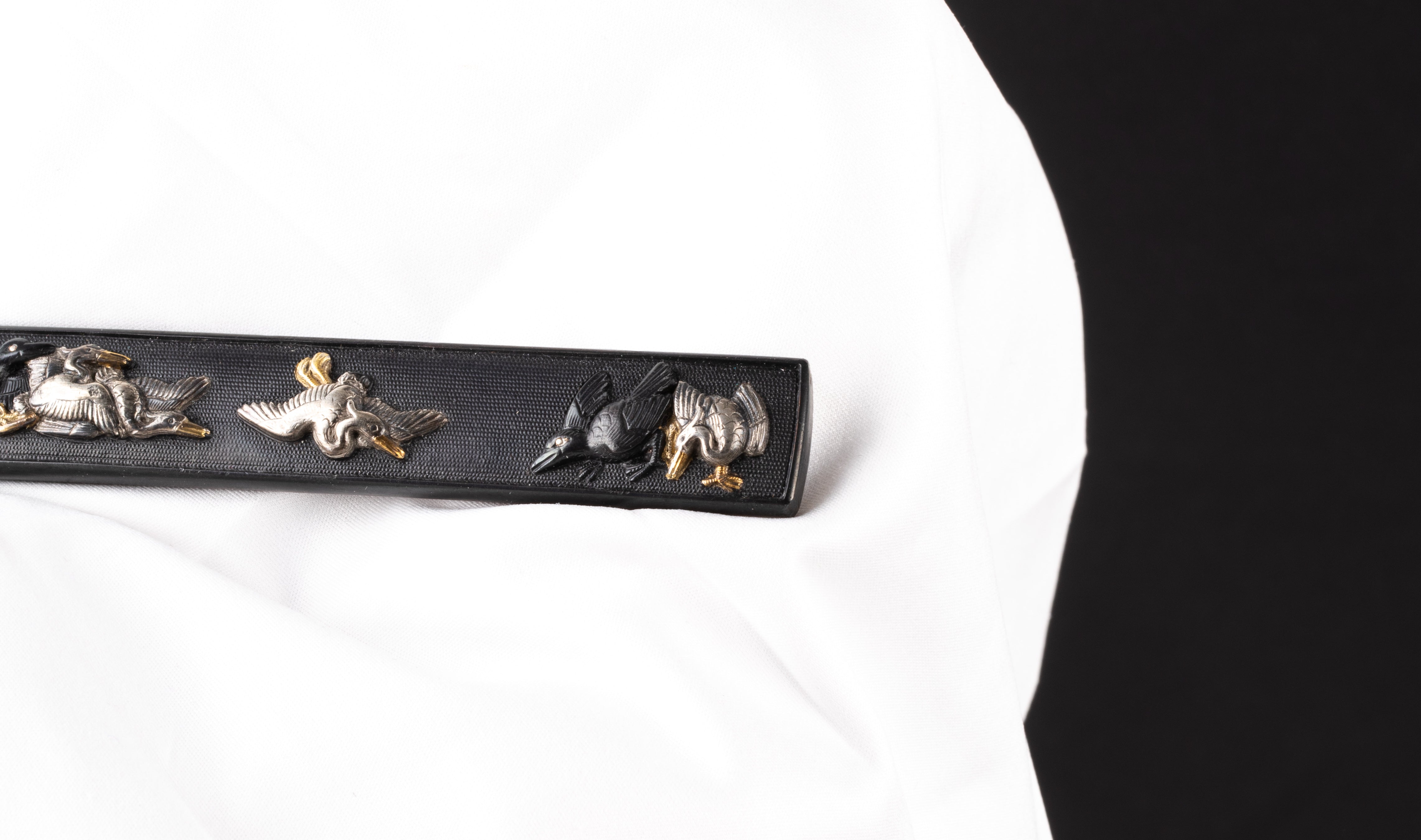
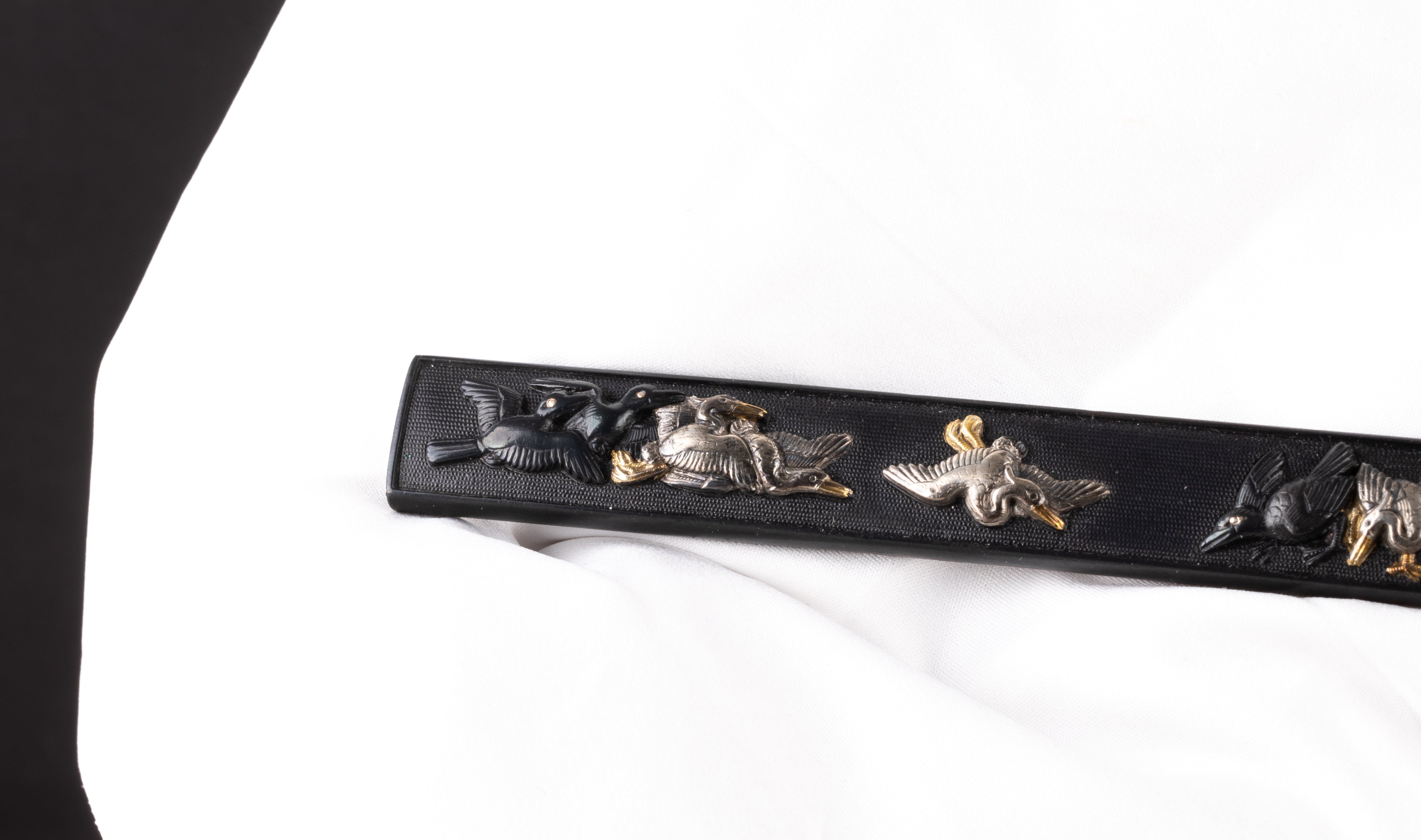
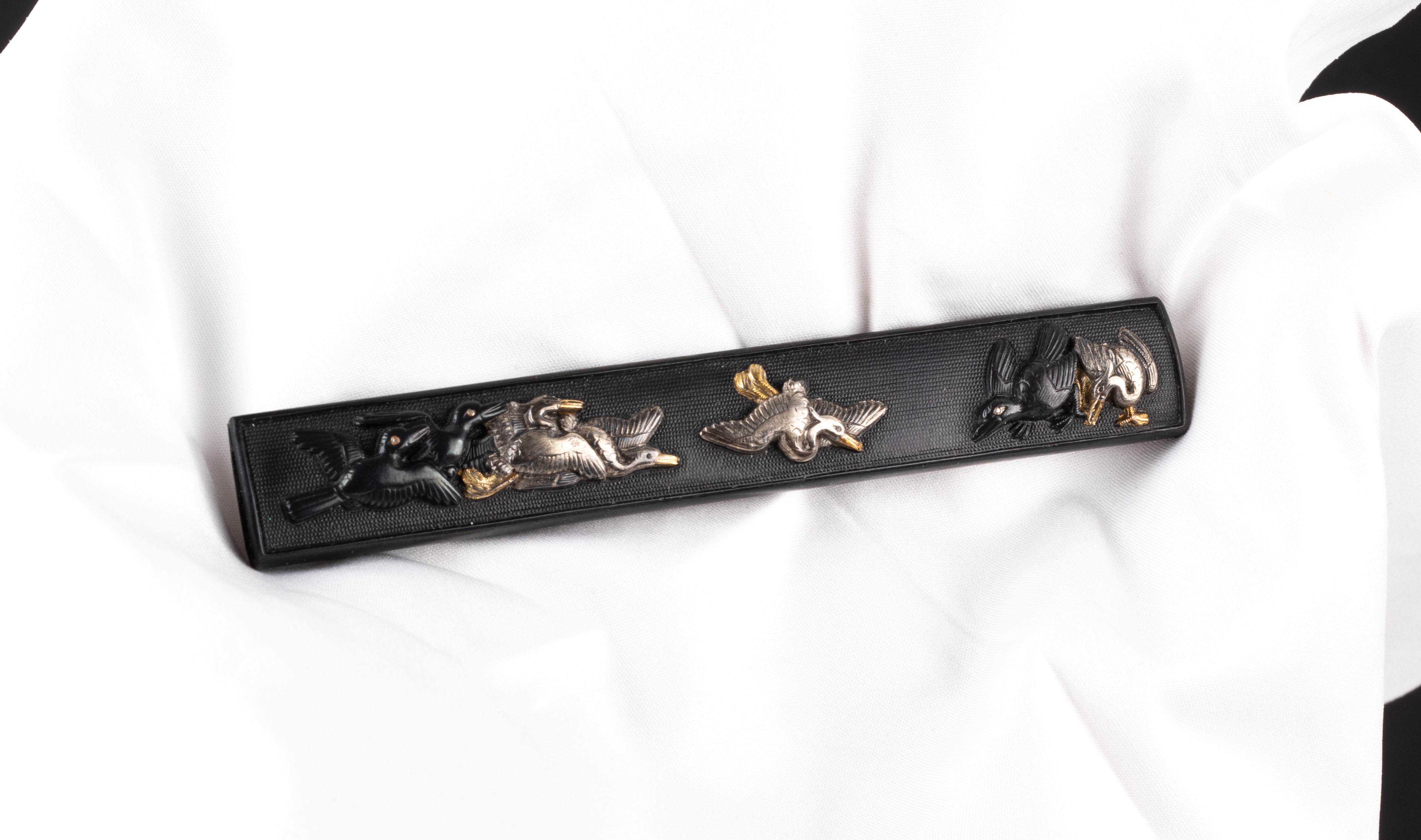
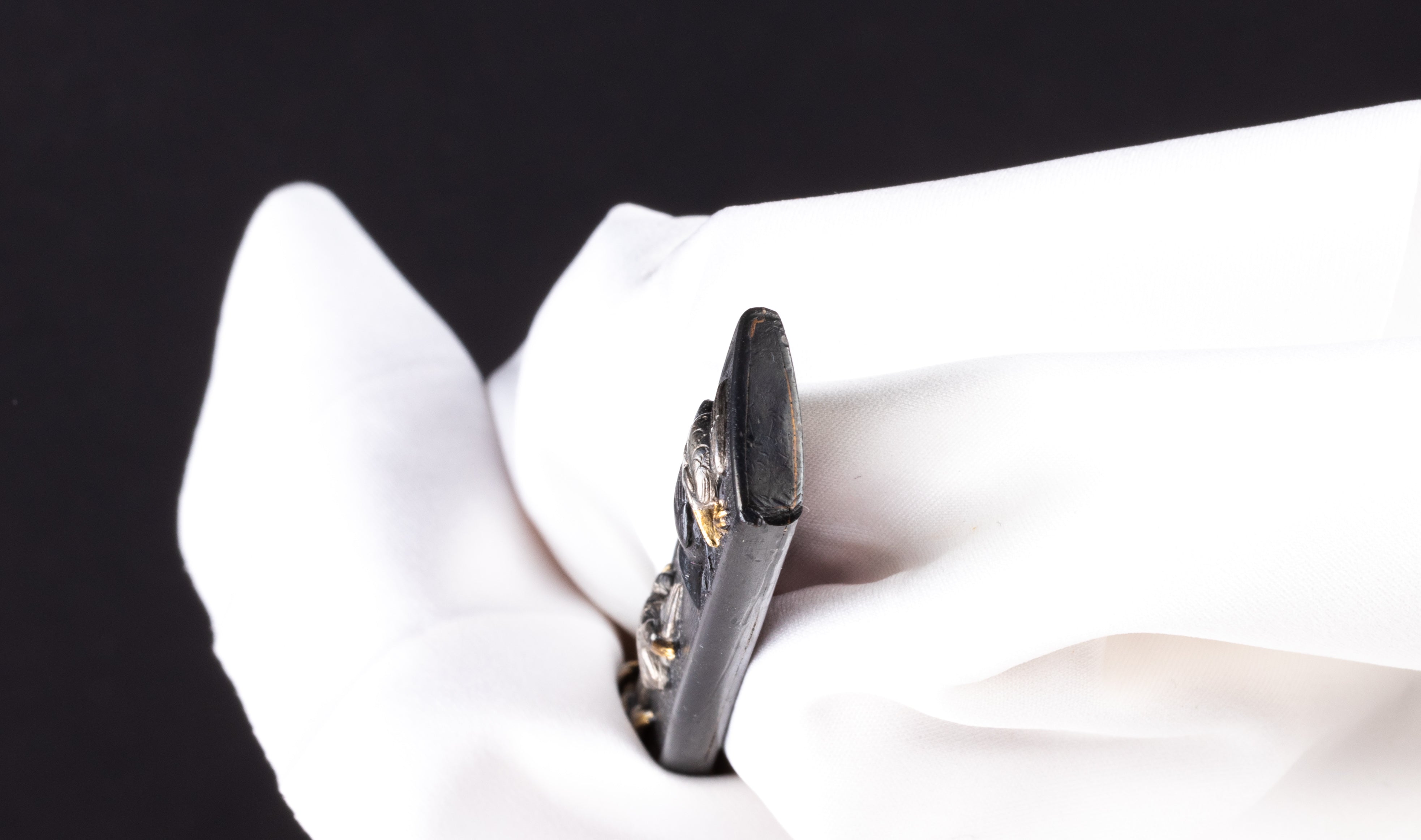
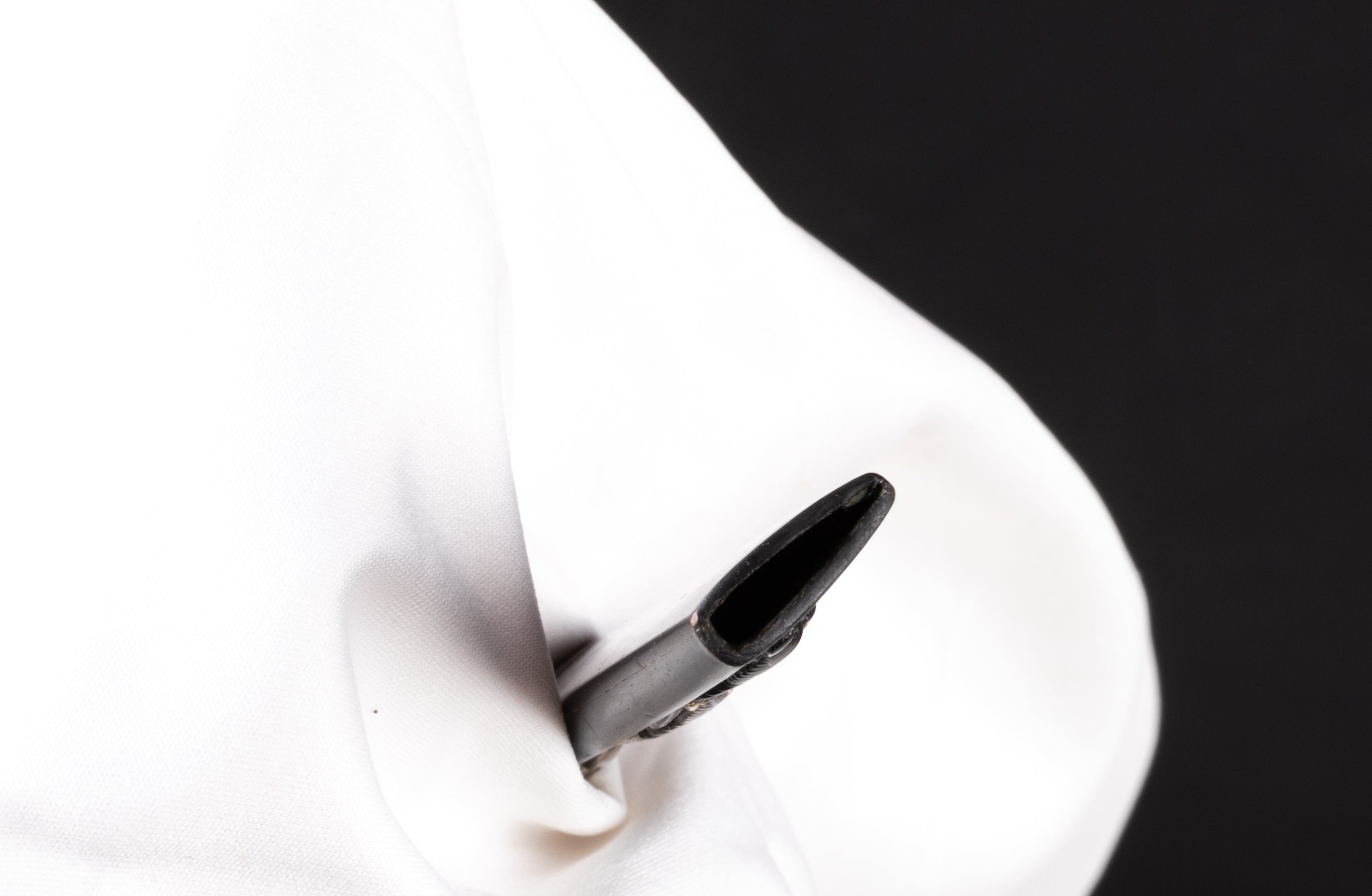
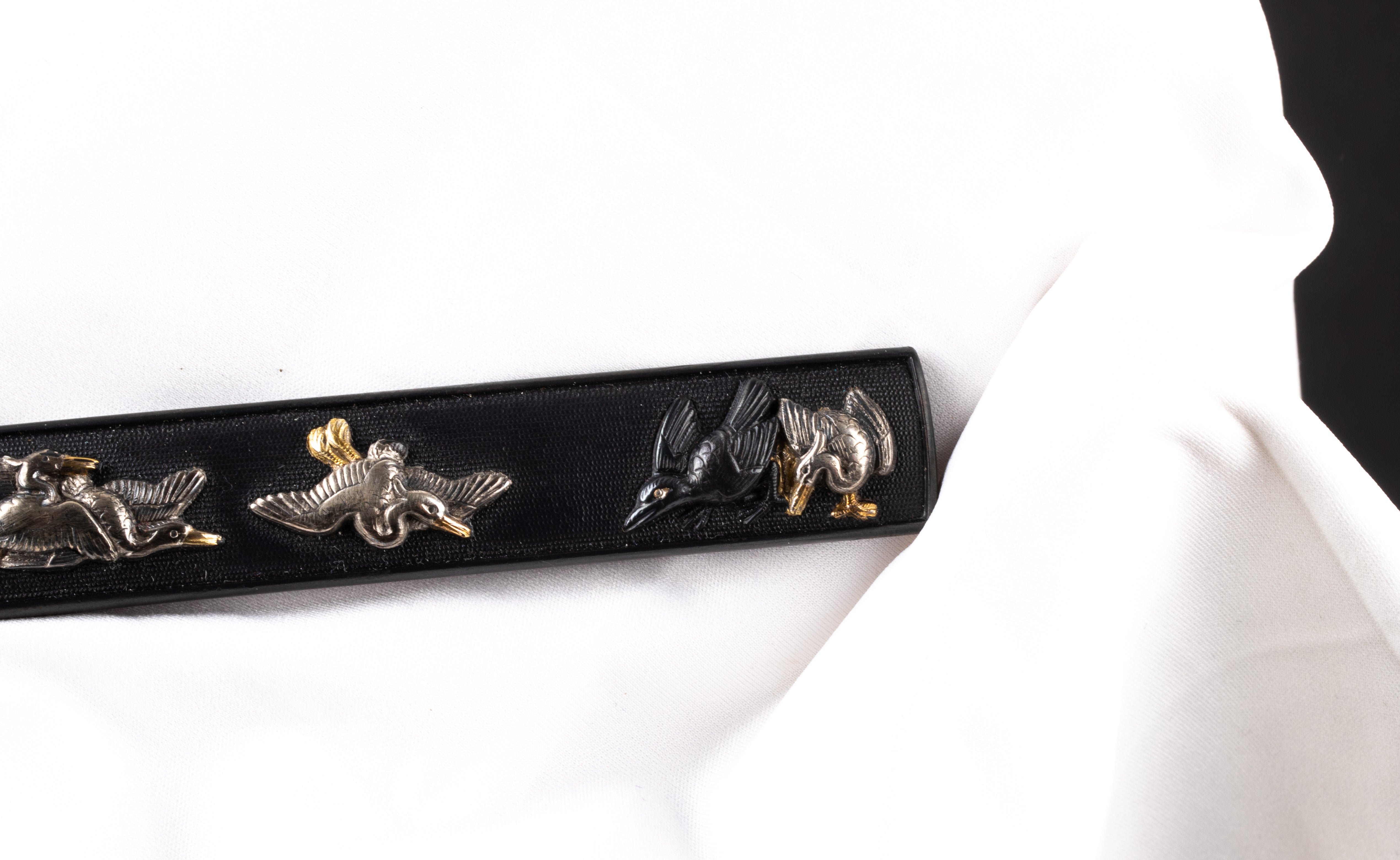
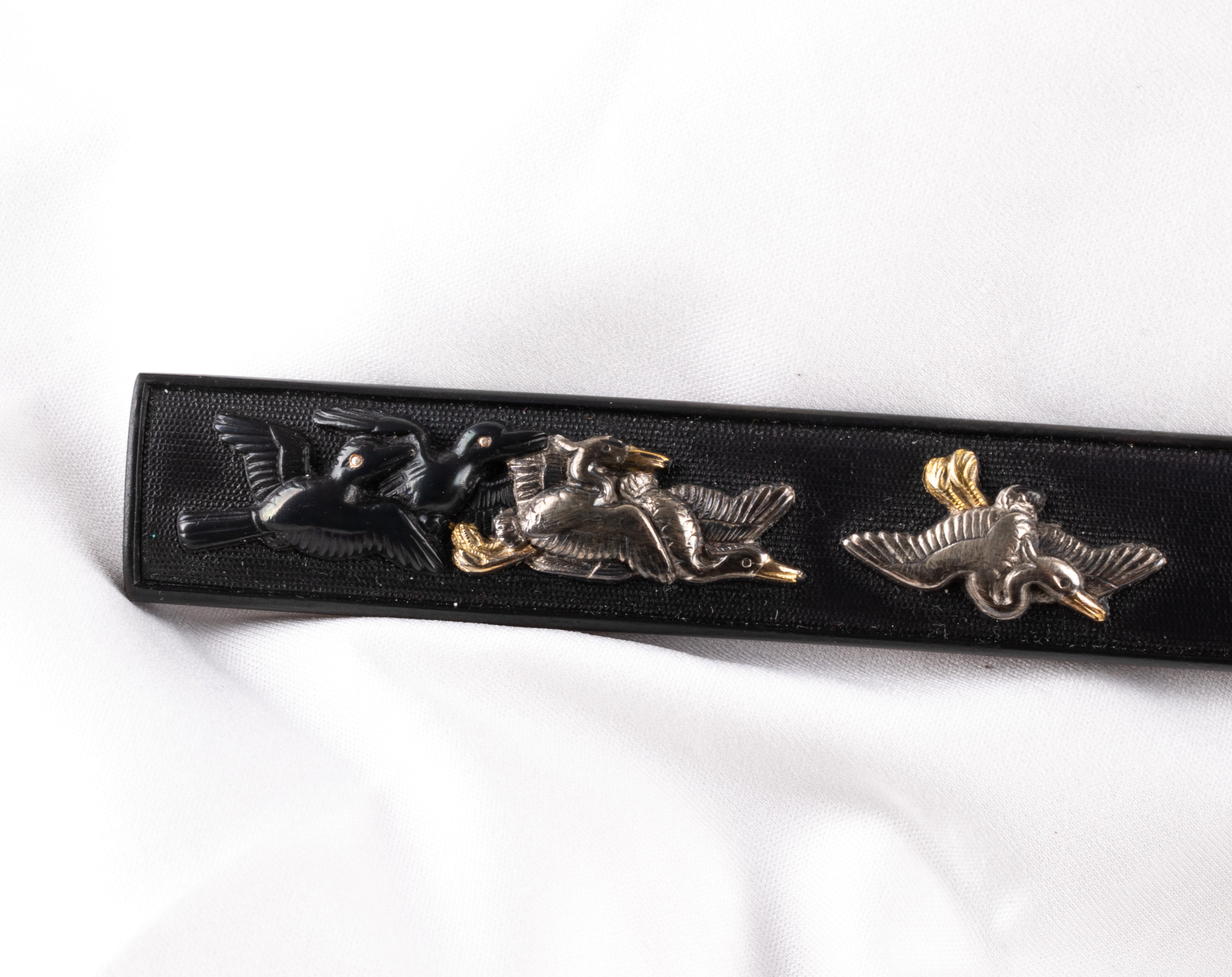
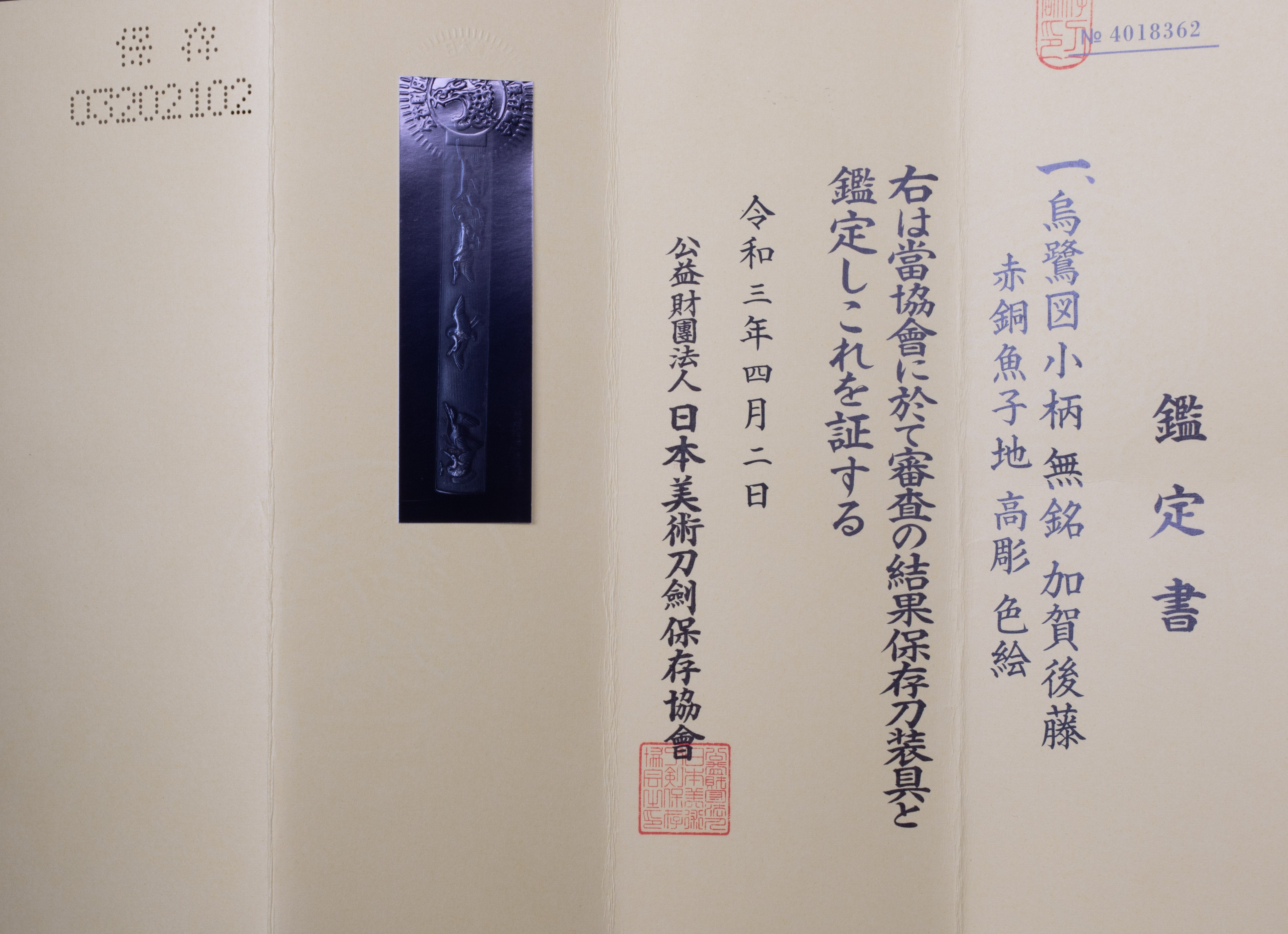
Shakudo nanako kozuka decorated with crows and herons. With NBTHK Hozon Tosogu, attributed to Kaga Goto School. This kozuka is decorated with crows and herons. To be precise NBTHK describe the motive as "Uro" which means crows and herons or black and white. It is written the same way as board game Go, played with black and white stones. In Japan crow is a symbol of rebirth and rejuvenation, while heron is symbol of good luck. Therefore this kozuka might mean good luck on the new path of life? Two of the most legendary castles in Japan have those birds in their names. Himeji castle is called white heron, while Matsumoto is called a Crow Castle. Kozuka made of shakudo with nanako ground. It looks like herons are made of inlaid solid silver, with inlaid shakudo eyes and gold iroe beaks and legs. On the other hand shakudo crows have eyes made of inlaid silver. Made in Edo period. Size: 98 mm x 15 mm x 7 mm
NihontoWatchKaga-Goto School加賀後藤派
Offered by Soryu
This piece has sold
16 on the market
Get an email when new Kaga-Goto School work hits the market.

Kaga-Goto School
Edo
Kaga
Unsigned
Hozon (NBTHK)
Iebori · Kaga
16 pieces on the market now
The Kaga Goto (加賀後藤) school arose when the Maeda lords of Kaga Province drew masters of the Goto house from Kyoto into their direct service. The founding figure was Goto Kakujo Mitsunobu (覚乗光信), born in Kyoto in Tensho 17 (1589) as the second son of Chojo. By the directive of Tokugawa Ieyasu, the Goto family's closely guarded techniques, transmitted as an exclusive isshi soden (一子相伝) lineage, were conferred in full upon Kakujo of the Kanbei house, although it was not the main line. Retained by the Maeda at the extraordinary stipend of 150 koku, he was held in particular favour by Lord Maeda Toshitsune. The school's second principal figure was Goto Etsujo Mitsukuni (悦乗光邦), second son of Teijo, who strengthened the Rihei branch. Together with Enjo (演乗) of the Kanbei house, Etsujo alternated yearly between Kyoto and Kanazawa, training many disciples and devoting himself to the development of Kaga metalwork. The designated corpus reveals a body of work executed entirely in the orthodox Goto house manner (o-ie-ryu).
The prevailing ground is shakudo nanako-ji[[c:1]], upon which designs are rendered in takabori with gold iroe (金色絵) and, in polychrome compositions, gold, silver, and shakudo suemon. Gold nanako-ji grounds also appear, as in Kakujo's Kurikara futokoro-mono set upon a gold plate with polychrome accents. " In complete ito-maki tachi koshirae ensembles, the full suite of fittings is worked in shakudo nanako-ji scattered with the family crest in gold sukidashi takabori with kin-iroe, yielding mountings of courtly splendour. " The setsumei attest to the Kaga Goto's significance within the broader Goto tradition. Etsujo's workmanship adheres "exclusively to the orthodox Goto house style," with skill "in no way inferior to that of his father Teijo," and the construction and nikuoki of Mitsukuni's signed mitokoromono match Teijo's own work. " Their rarity, combined with the exceptional technical standard the corpus documents, underscores the Kaga Goto school's place within the Goto legacy and the Edo-period tosogu canon. Learn more →
Certifies a genuine fitting worth preserving: a correct signature, or, if unsigned, an identifiable era and school, with recognized artistic and craft value.
The NBTHK (Nihon Bijutsu Tōken Hozon Kyōkai, the Society for the Preservation of Japanese Art Swords) is a public-interest incorporated foundation founded in 1948 and supervised by Japan’s Agency for Cultural Affairs (Bunkachō); it is based at the Japanese Sword Museum in Tokyo. Its expert panels physically examine each submitted work (shinsa) and issue a certificate (kanteishō) ranking it by artistic and historical merit. NBTHK papers are the most widely recognized standard of authentication for Japanese swords and fittings.
NBTHK official siteInspection period (per the shop's shipping policy): after receiving the item, each customer has two weeks for inspection. In that time you may decide to return it, and the item will be refunded in full. Shipping costs are not refunded. Returns (per the shop's refund policy): the policy lasts 30 days; once 30 days have passed since purchase, no refund or exchange is possible. To be eligible for a return, the item must be in the same condition in which it was received and in its original packaging. Customized products cannot be returned. In certain situations only a partial refund is granted. Return shipping is at the customer's expense, and shipping costs are non-refundable.