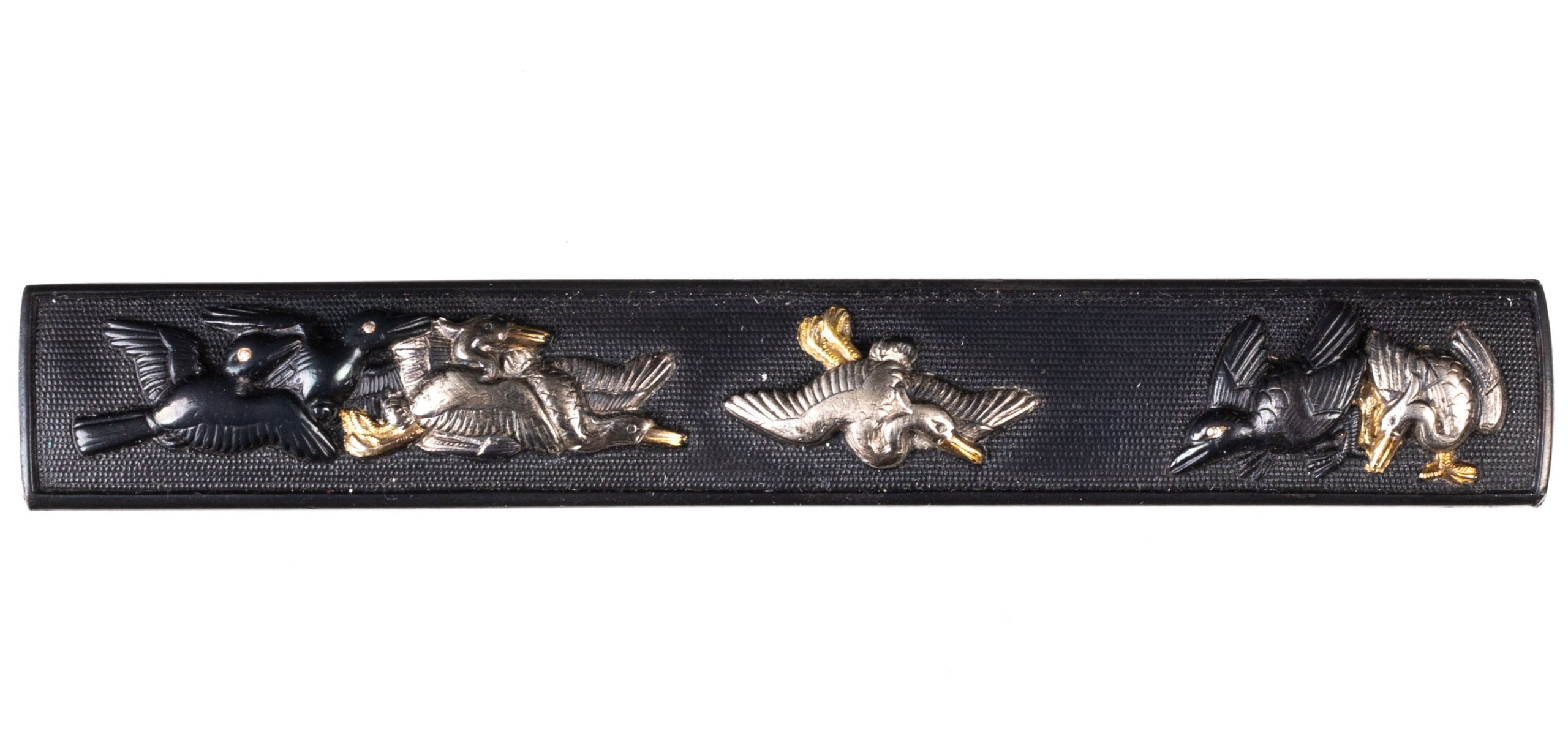
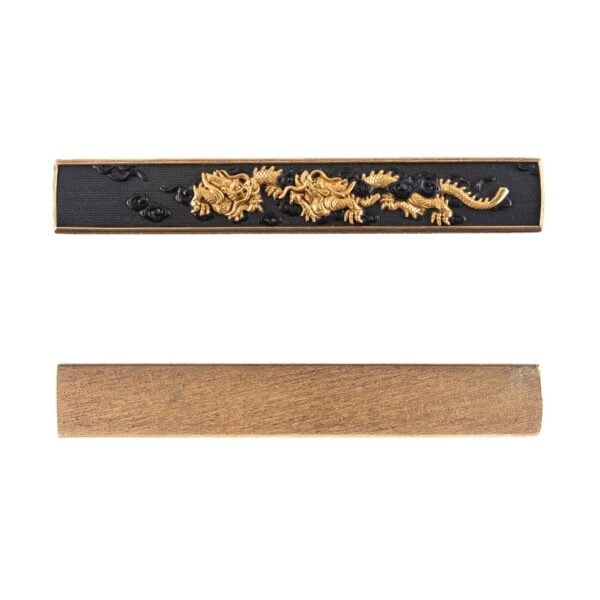
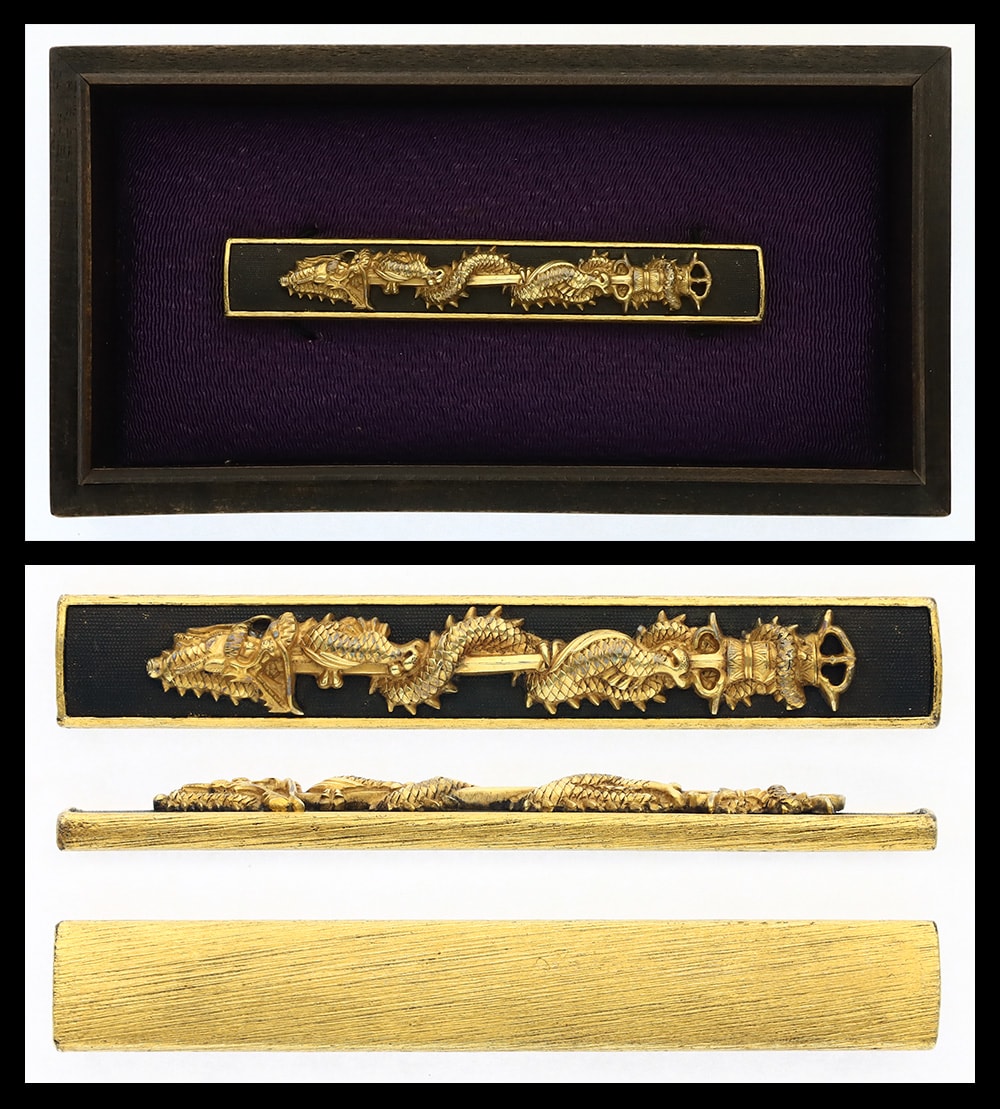
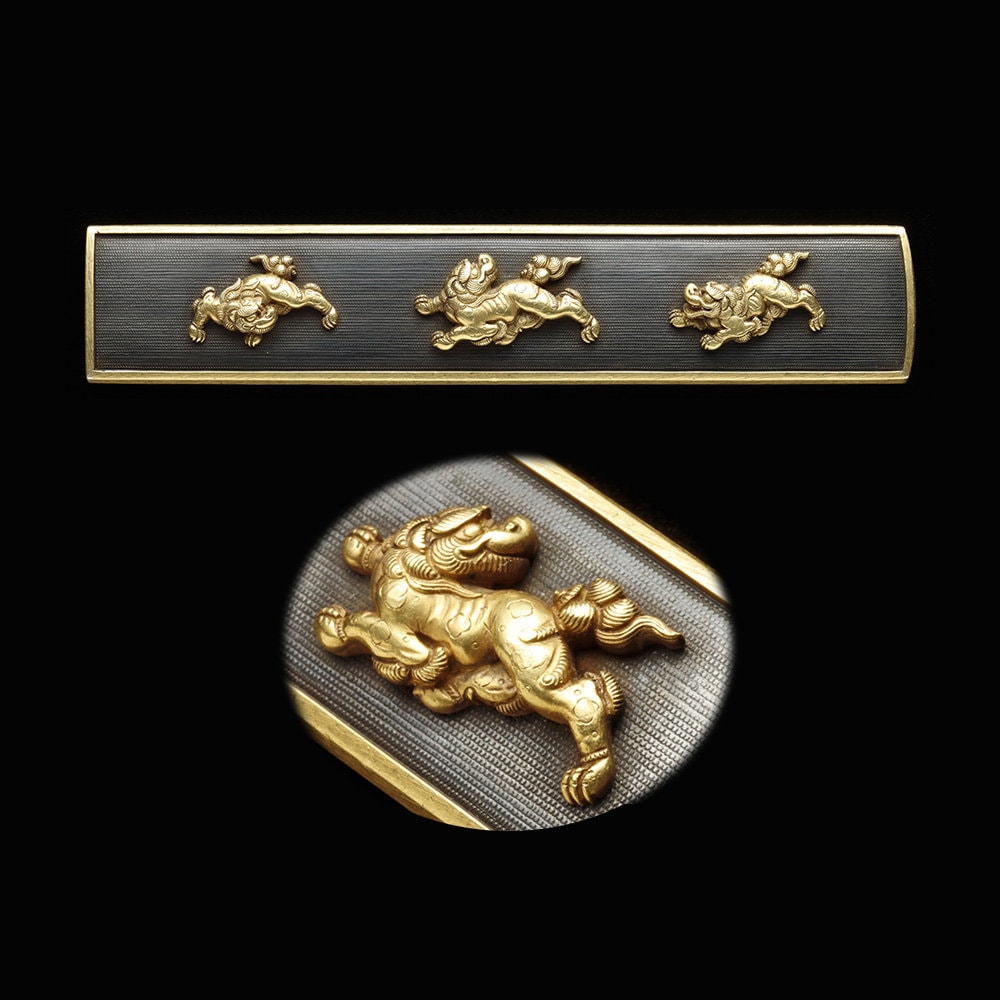
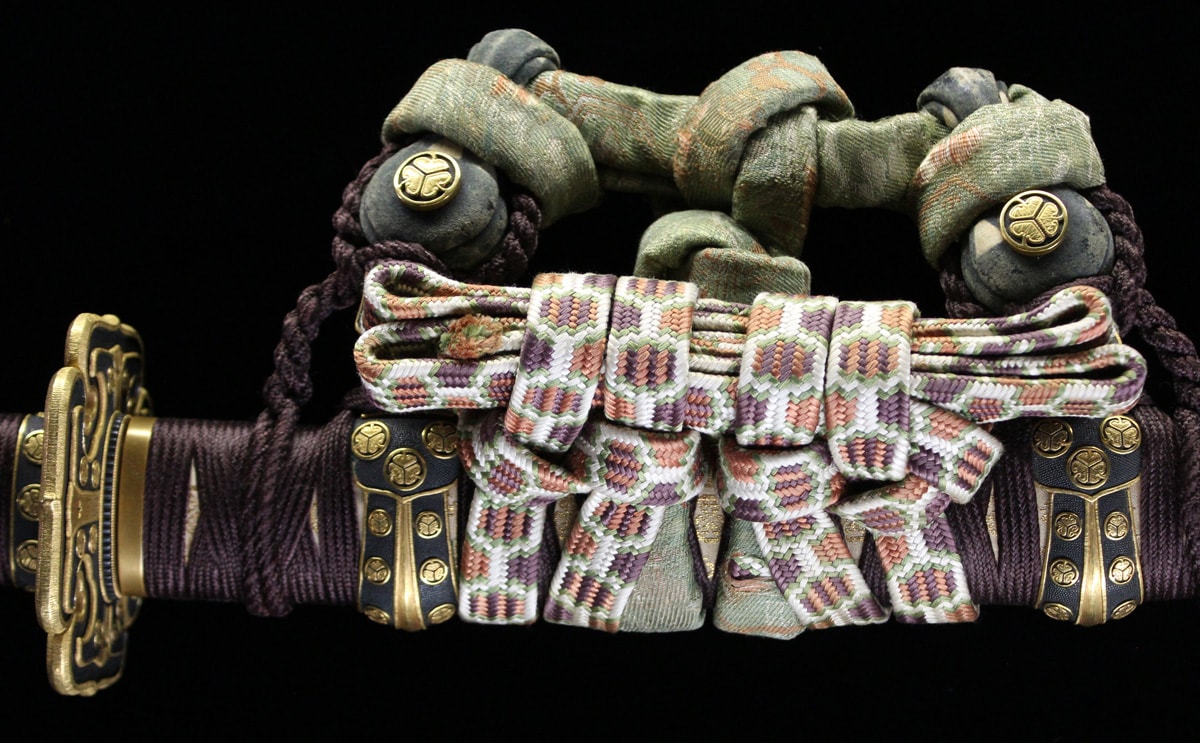
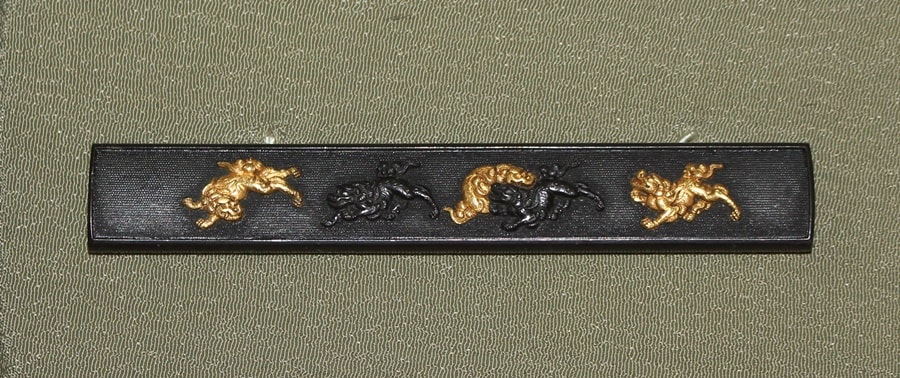
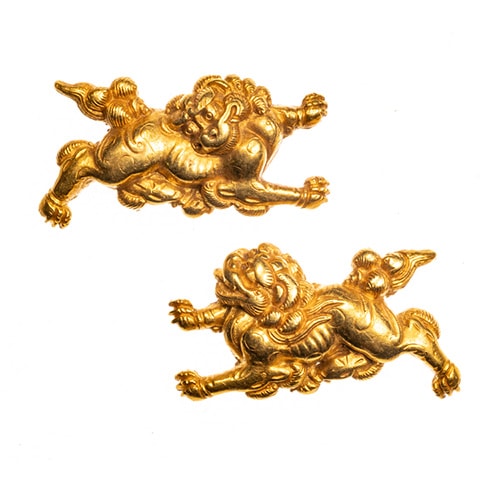
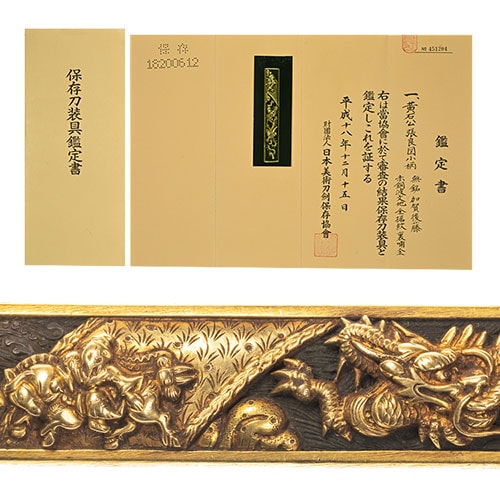
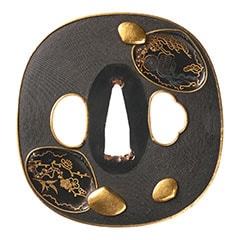
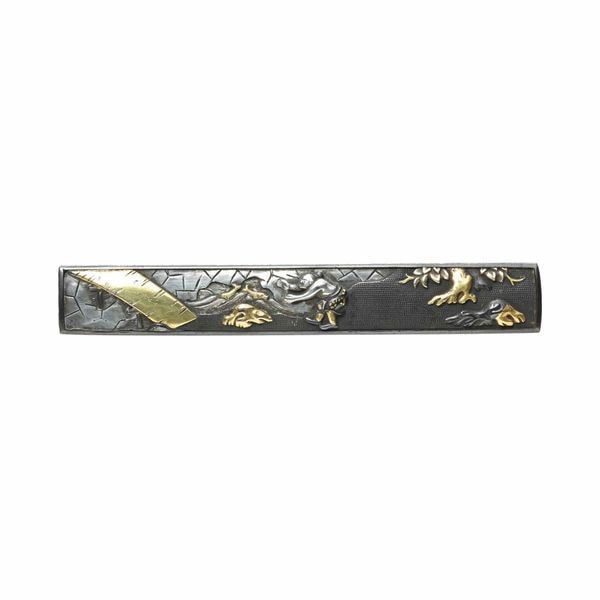
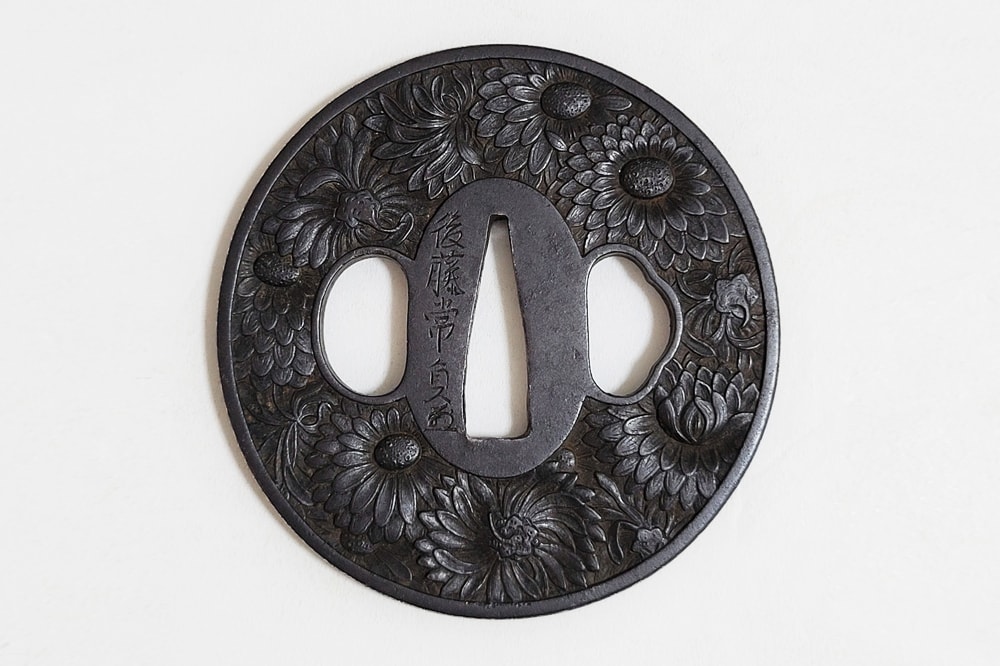
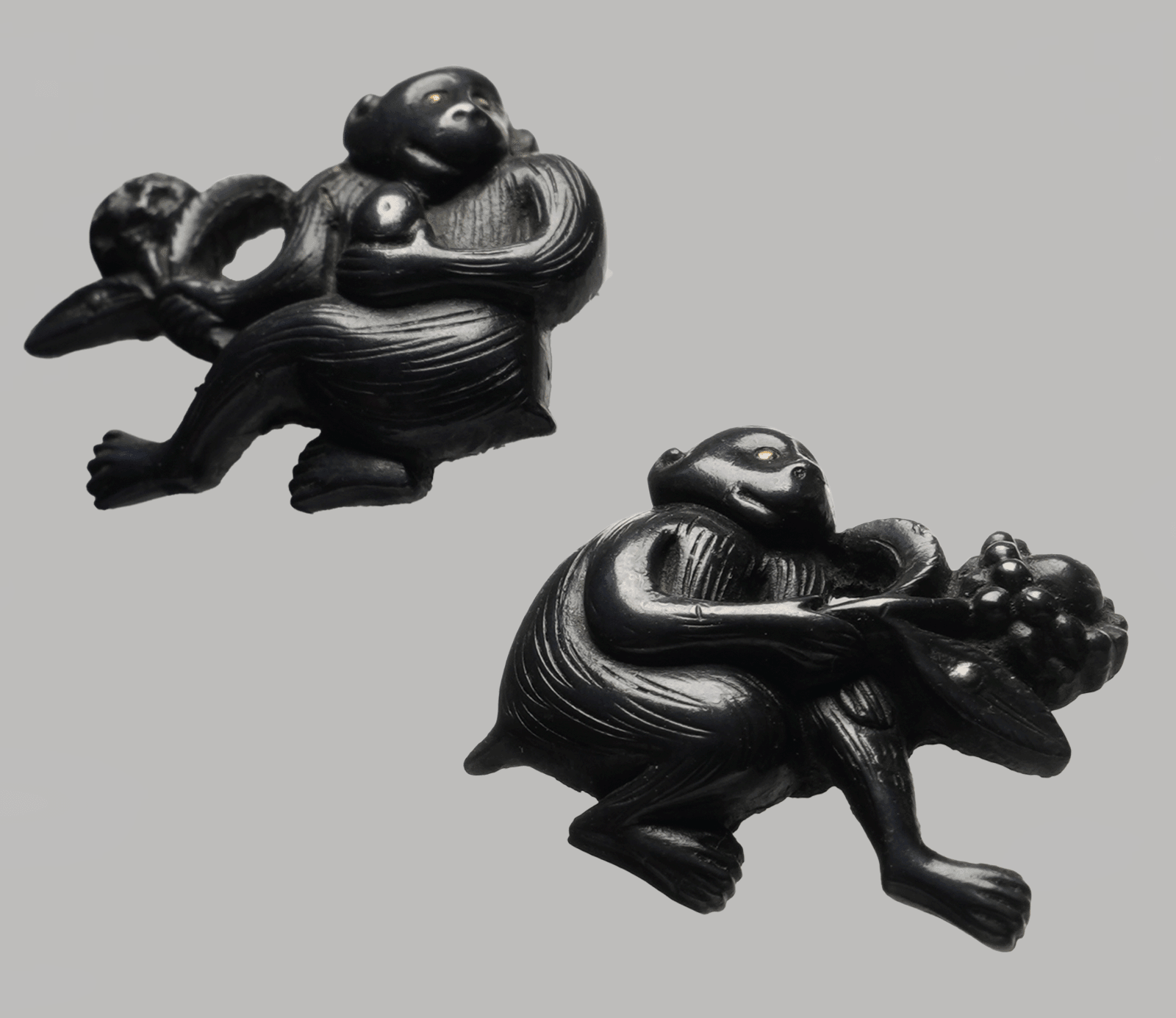
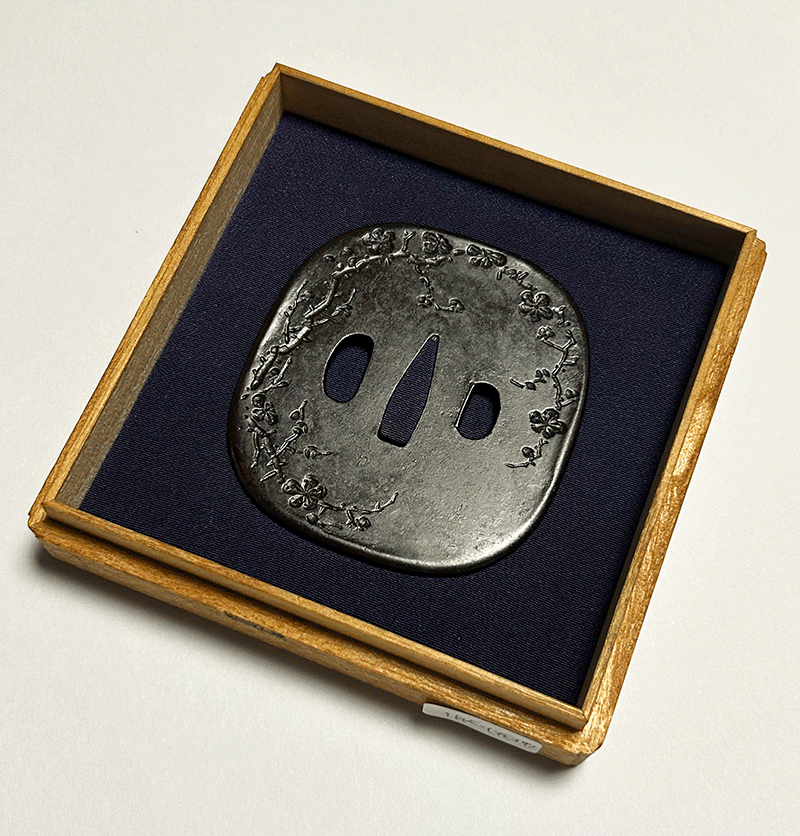
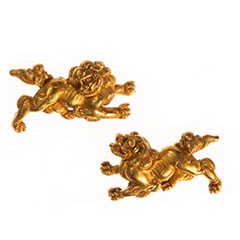
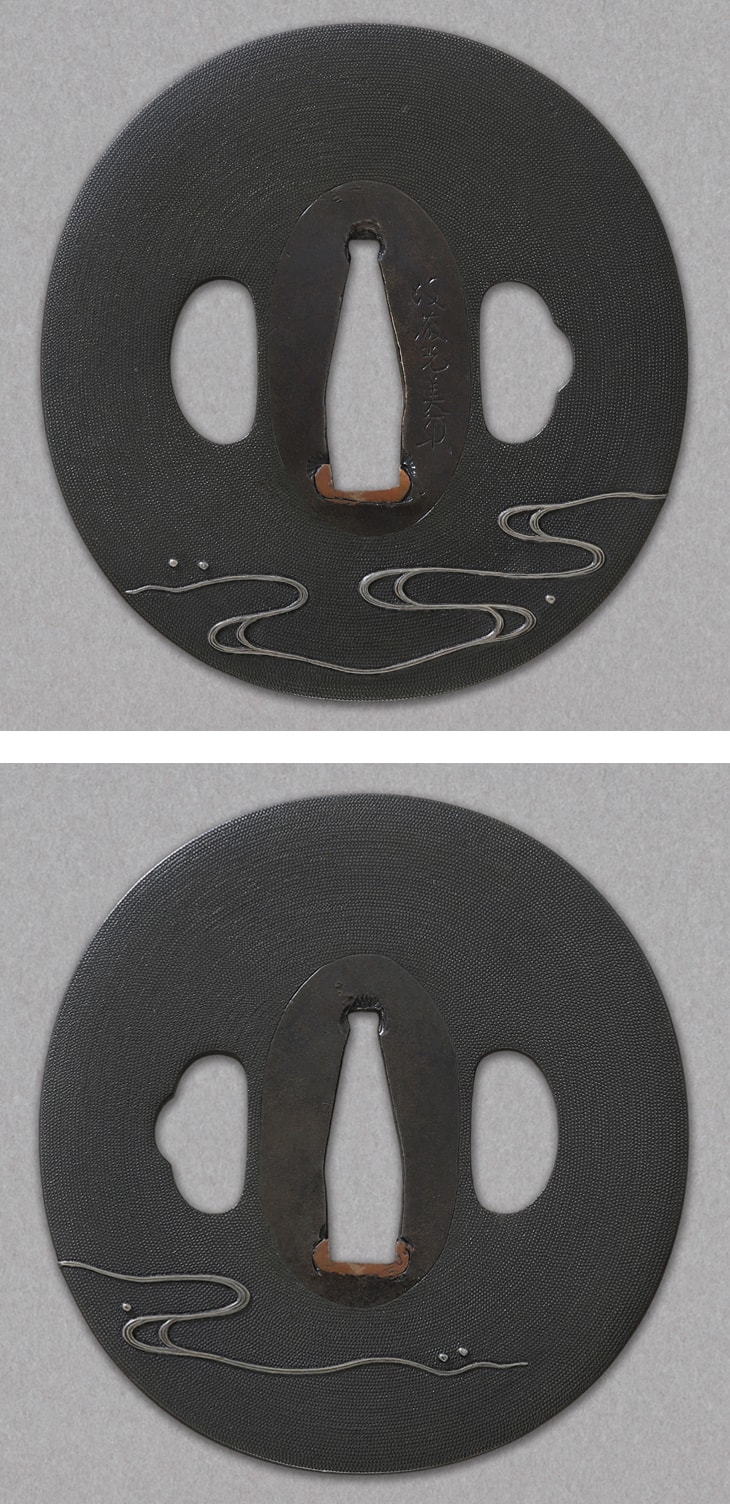
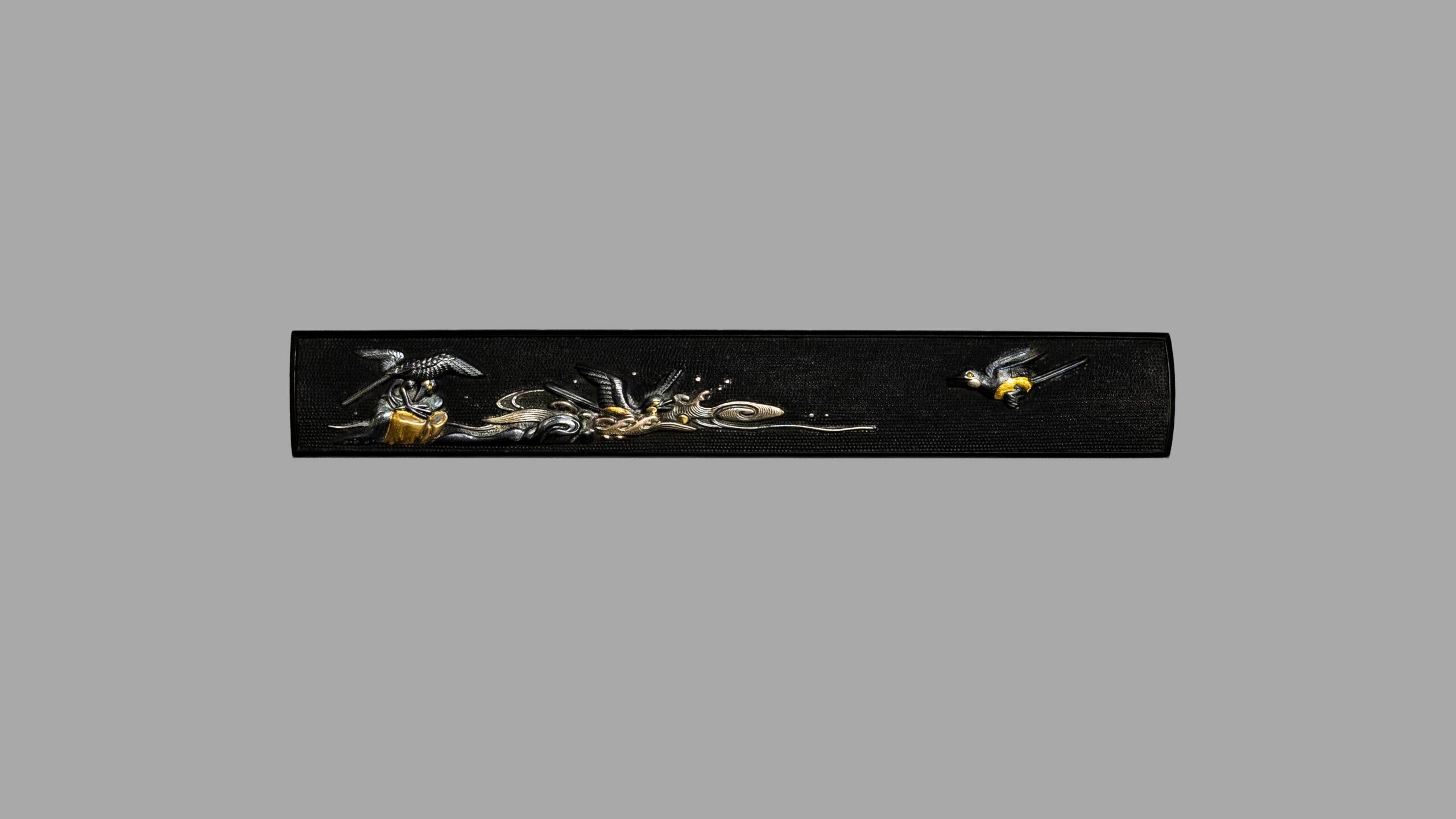
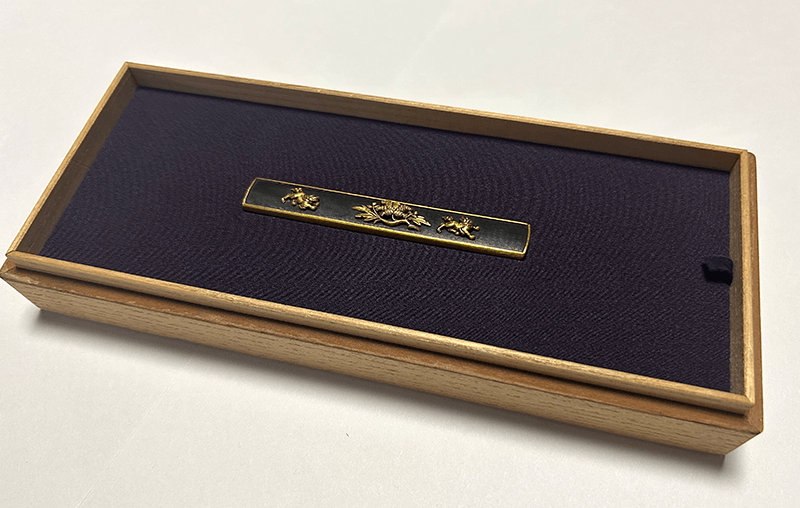
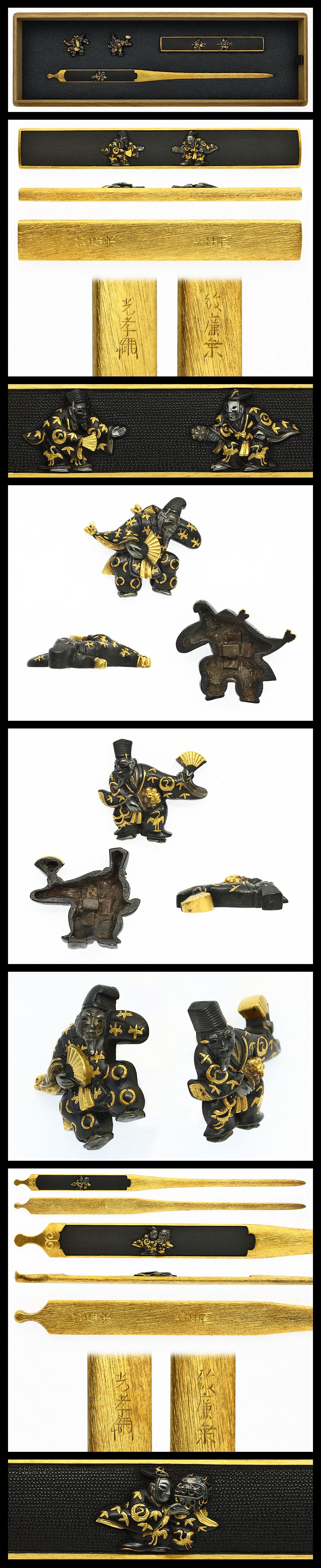
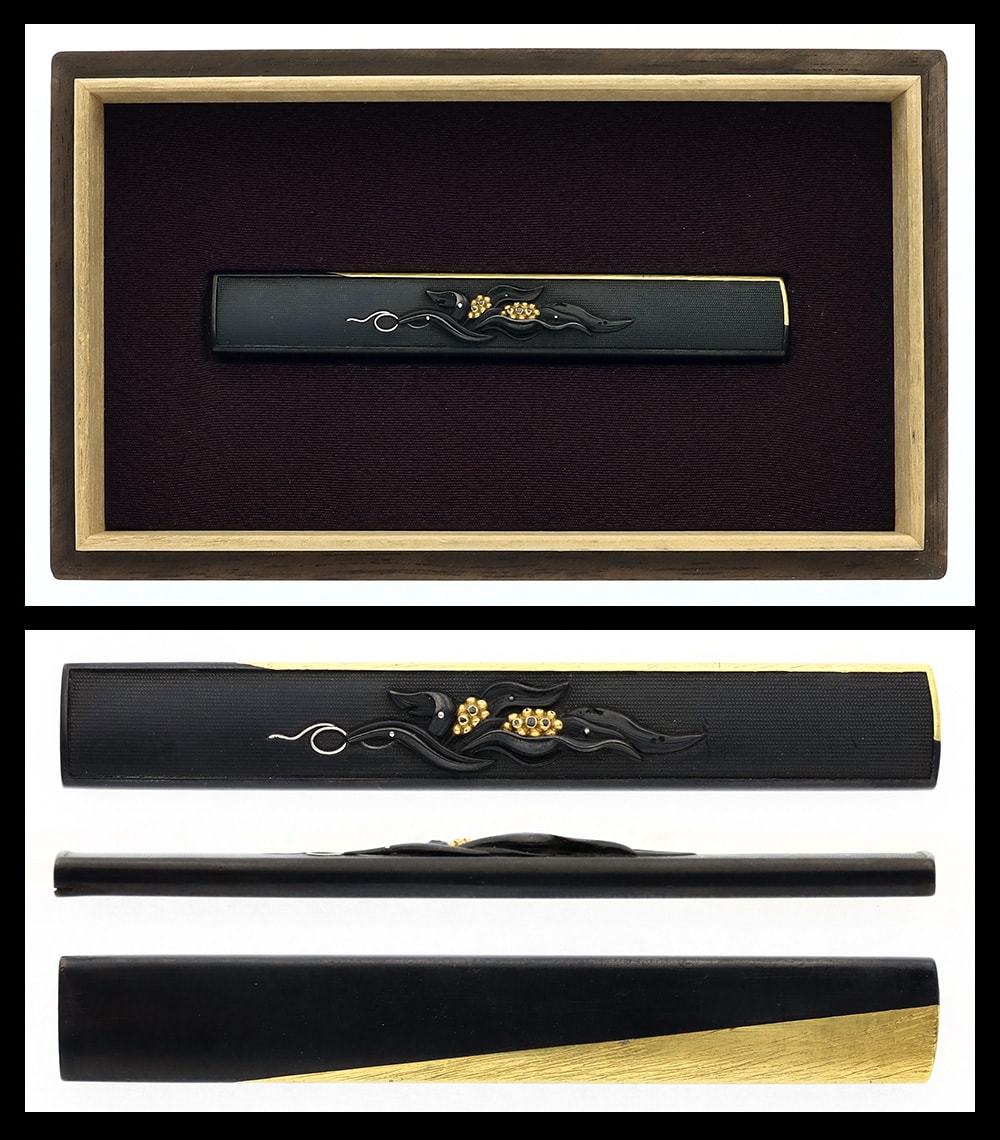
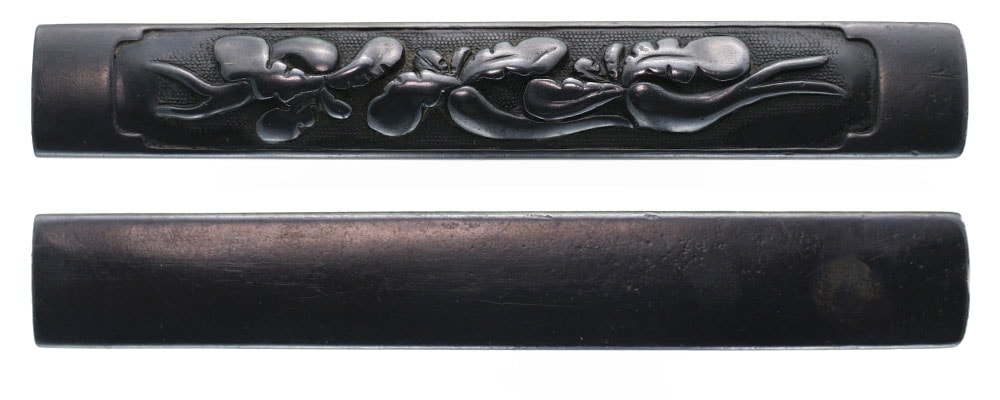
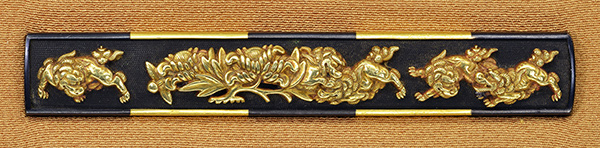
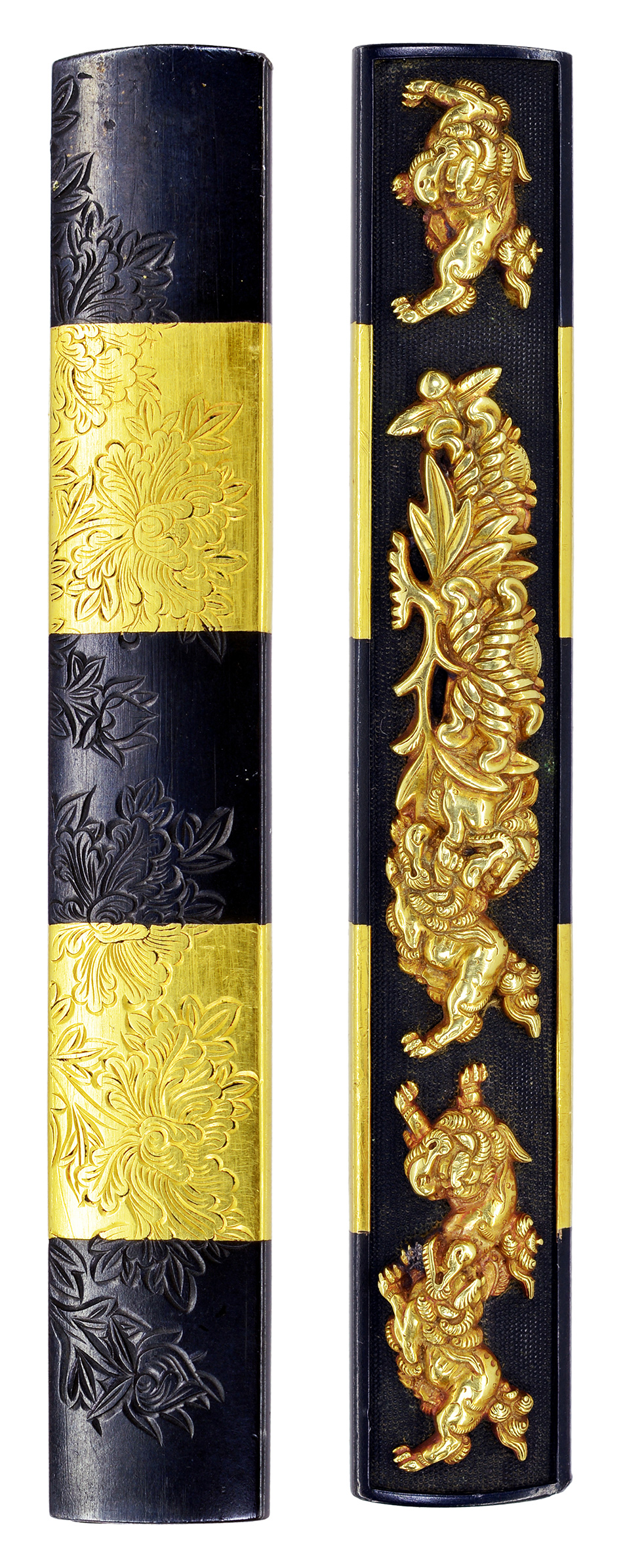
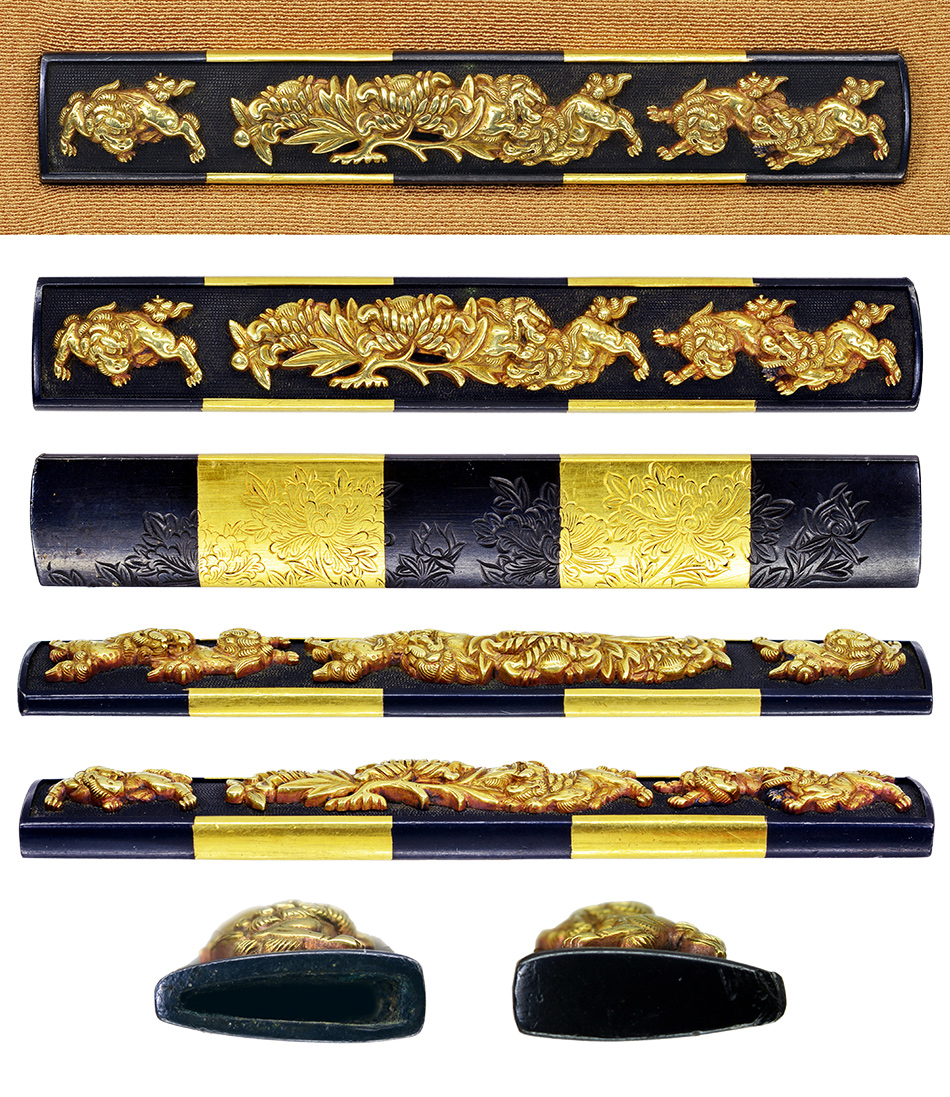
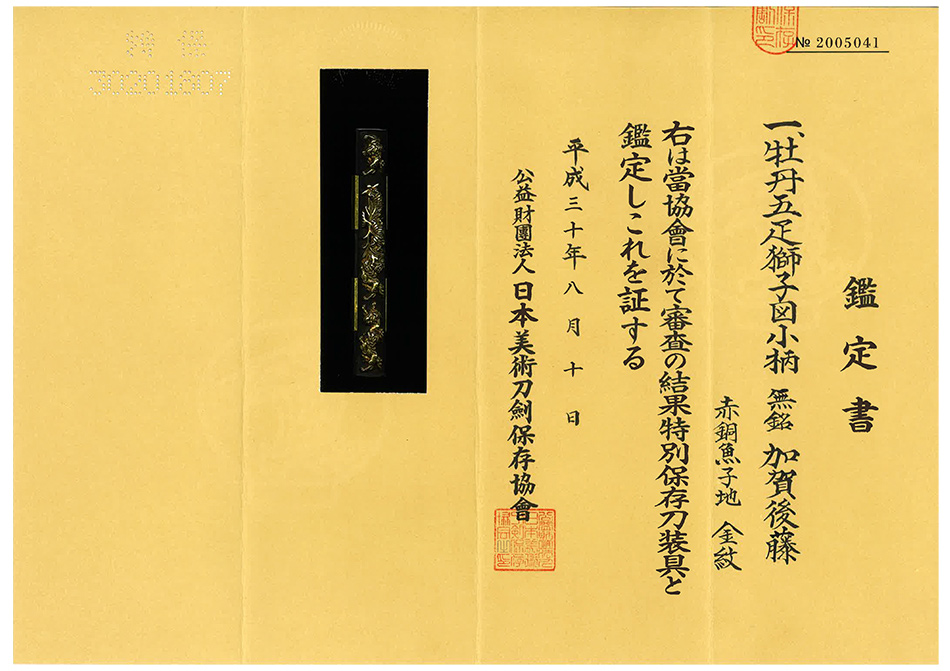
This is an unsigned kozuka attributed to the Kaga-Goto school, featuring a design of peonies and five lions. It is crafted from shakudo nanako ground with gold mon. The dynamic carving of the lions, particularly their eyes and powerful legs, is characteristic of the main Goto family. The reverse side shows a katakiribori peony design on red shakudo, a technique often seen in the Yokoya Somin school, suggesting a connection to Goto family teachings.
 NihontoWatch
mumei · Kaga-Goto · Edo
Kaga-Goto School
Edo
Kaga
Unsigned
Tokuho (NBTHK)
Iebori · Kaga
24 pieces on the market now
The Kaga Goto (加賀後藤) school arose when the Maeda lords of Kaga Province drew masters of the Goto house from Kyoto into their direct service. The founding figure was Goto Kakujo Mitsunobu (覚乗光信), born in Kyoto in Tensho 17 (1589) as the second son of Chojo. By the directive of Tokugawa Ieyasu, the Goto family's closely guarded techniques, transmitted as an exclusive isshi soden (一子相伝) lineage, were conferred in full upon Kakujo of the Kanbei house, although it was not the main line. Retained by the Maeda at the extraordinary stipend of 150 koku, he was held in particular favour by Lord Maeda Toshitsune. The school's second principal figure was Goto Etsujo Mitsukuni (悦乗光邦), second son of Teijo, who strengthened the Rihei branch. Together with Enjo (演乗) of the Kanbei house, Etsujo alternated yearly between Kyoto and Kanazawa, training many disciples and devoting himself to the development of Kaga metalwork. The designated corpus reveals a body of work executed entirely in the orthodox Goto house manner (o-ie-ryu).
The prevailing ground is shakudo nanako-ji[[c:1]], upon which designs are rendered in takabori with gold iroe (金色絵) and, in polychrome compositions, gold, silver, and shakudo suemon. Gold nanako-ji grounds also appear, as in Kakujo's Kurikara futokoro-mono set upon a gold plate with polychrome accents. " In complete ito-maki tachi koshirae ensembles, the full suite of fittings is worked in shakudo nanako-ji scattered with the family crest in gold sukidashi takabori with kin-iroe, yielding mountings of courtly splendour. " The setsumei attest to the Kaga Goto's significance within the broader Goto tradition. Etsujo's workmanship adheres "exclusively to the orthodox Goto house style," with skill "in no way inferior to that of his father Teijo," and the construction and nikuoki of Mitsukuni's signed mitokoromono match Teijo's own work. " Their rarity, combined with the exceptional technical standard the corpus documents, underscores the Kaga Goto school's place within the Goto legacy and the Edo-period tosogu canon. Learn more →
A Hozon-certified fitting of notably superior craftsmanship and condition, often with signature or workmanship of high reference value.
The NBTHK (Nihon Bijutsu Tōken Hozon Kyōkai, the Society for the Preservation of Japanese Art Swords) is a public-interest incorporated foundation founded in 1948 and supervised by Japan’s Agency for Cultural Affairs (Bunkachō); it is based at the Japanese Sword Museum in Tokyo. Its expert panels physically examine each submitted work (shinsa) and issue a certificate (kanteishō) ranking it by artistic and historical merit. NBTHK papers are the most widely recognized standard of authentication for Japanese swords and fittings.
NBTHK official siteNo cooling-off period or returns; refund only if the purchased sword is proven fake, capped at purchase price (excludes commission sales, accessories, auction items).
This is an unsigned kozuka attributed to the Kaga-Goto school, featuring a design of peonies and five lions. It is crafted from shakudo nanako ground with gold mon. The dynamic carving of the lions, particularly their eyes and powerful legs, is characteristic of the main Goto family. The reverse side shows a katakiribori peony design on red shakudo, a technique often seen in the Yokoya Somin school, suggesting a connection to Goto family teachings.
NihontoWatchmumei · Kaga-Goto · Edo
Kaga-Goto School
Edo
Kaga
Unsigned
Tokuho (NBTHK)
Iebori · Kaga
24 pieces on the market now
The Kaga Goto (加賀後藤) school arose when the Maeda lords of Kaga Province drew masters of the Goto house from Kyoto into their direct service. The founding figure was Goto Kakujo Mitsunobu (覚乗光信), born in Kyoto in Tensho 17 (1589) as the second son of Chojo. By the directive of Tokugawa Ieyasu, the Goto family's closely guarded techniques, transmitted as an exclusive isshi soden (一子相伝) lineage, were conferred in full upon Kakujo of the Kanbei house, although it was not the main line. Retained by the Maeda at the extraordinary stipend of 150 koku, he was held in particular favour by Lord Maeda Toshitsune. The school's second principal figure was Goto Etsujo Mitsukuni (悦乗光邦), second son of Teijo, who strengthened the Rihei branch. Together with Enjo (演乗) of the Kanbei house, Etsujo alternated yearly between Kyoto and Kanazawa, training many disciples and devoting himself to the development of Kaga metalwork. The designated corpus reveals a body of work executed entirely in the orthodox Goto house manner (o-ie-ryu).
The prevailing ground is shakudo nanako-ji[[c:1]], upon which designs are rendered in takabori with gold iroe (金色絵) and, in polychrome compositions, gold, silver, and shakudo suemon. Gold nanako-ji grounds also appear, as in Kakujo's Kurikara futokoro-mono set upon a gold plate with polychrome accents. " In complete ito-maki tachi koshirae ensembles, the full suite of fittings is worked in shakudo nanako-ji scattered with the family crest in gold sukidashi takabori with kin-iroe, yielding mountings of courtly splendour. " The setsumei attest to the Kaga Goto's significance within the broader Goto tradition. Etsujo's workmanship adheres "exclusively to the orthodox Goto house style," with skill "in no way inferior to that of his father Teijo," and the construction and nikuoki of Mitsukuni's signed mitokoromono match Teijo's own work. " Their rarity, combined with the exceptional technical standard the corpus documents, underscores the Kaga Goto school's place within the Goto legacy and the Edo-period tosogu canon. Learn more →
A Hozon-certified fitting of notably superior craftsmanship and condition, often with signature or workmanship of high reference value.
The NBTHK (Nihon Bijutsu Tōken Hozon Kyōkai, the Society for the Preservation of Japanese Art Swords) is a public-interest incorporated foundation founded in 1948 and supervised by Japan’s Agency for Cultural Affairs (Bunkachō); it is based at the Japanese Sword Museum in Tokyo. Its expert panels physically examine each submitted work (shinsa) and issue a certificate (kanteishō) ranking it by artistic and historical merit. NBTHK papers are the most widely recognized standard of authentication for Japanese swords and fittings.
NBTHK official siteNo cooling-off period or returns; refund only if the purchased sword is proven fake, capped at purchase price (excludes commission sales, accessories, auction items).