徳川の泰平のもと、大小は法度の定める身分の制服となり、需要は城下町、とりわけ江戸に集まった。工芸は二つに分かれる。目利きのための華やかな鑑賞の作と、截断の結果を金象嵌に刻む実証の刀である。
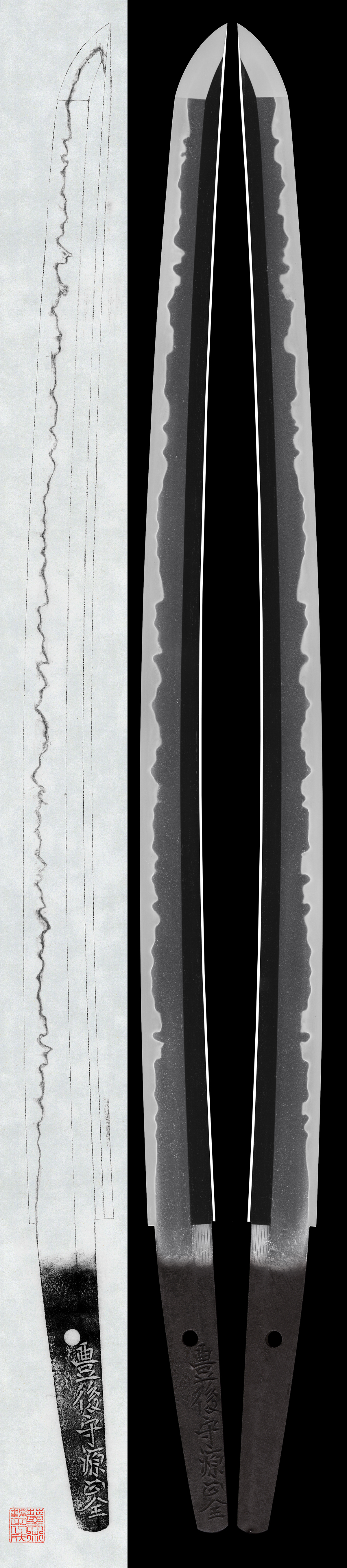
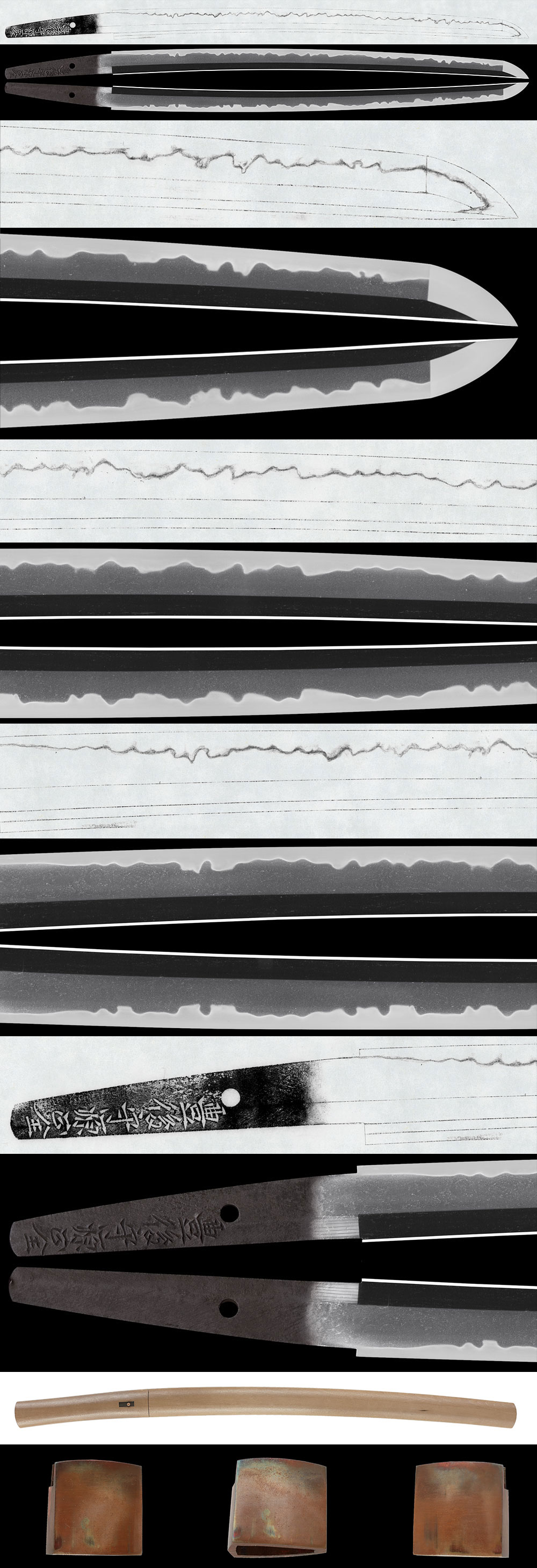
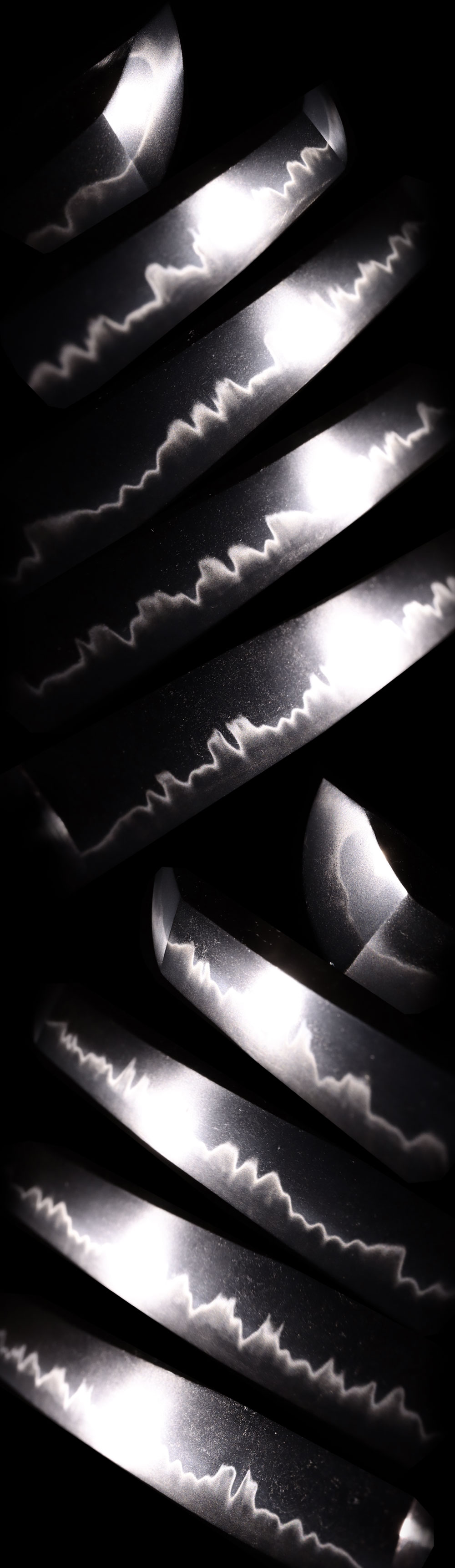
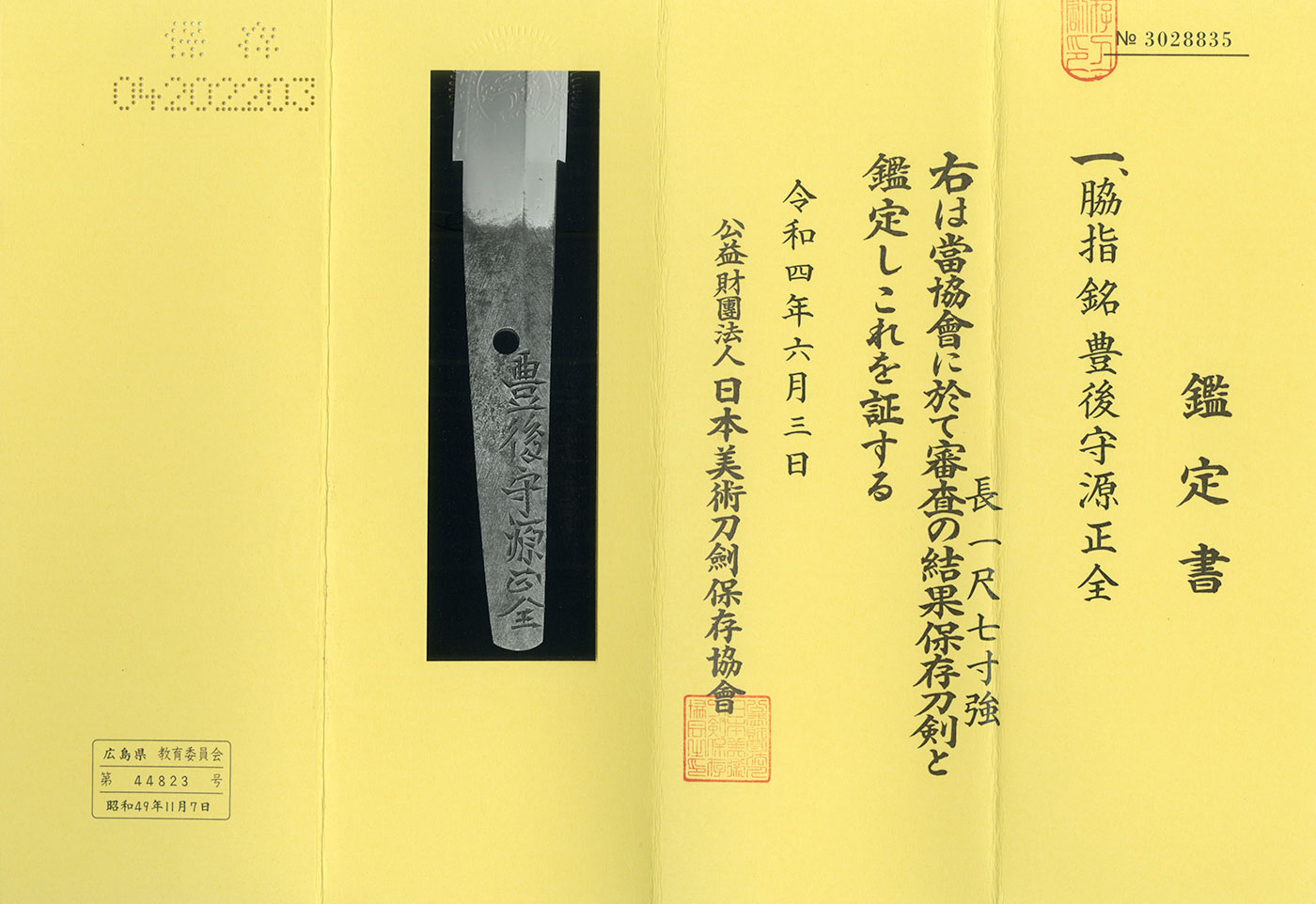
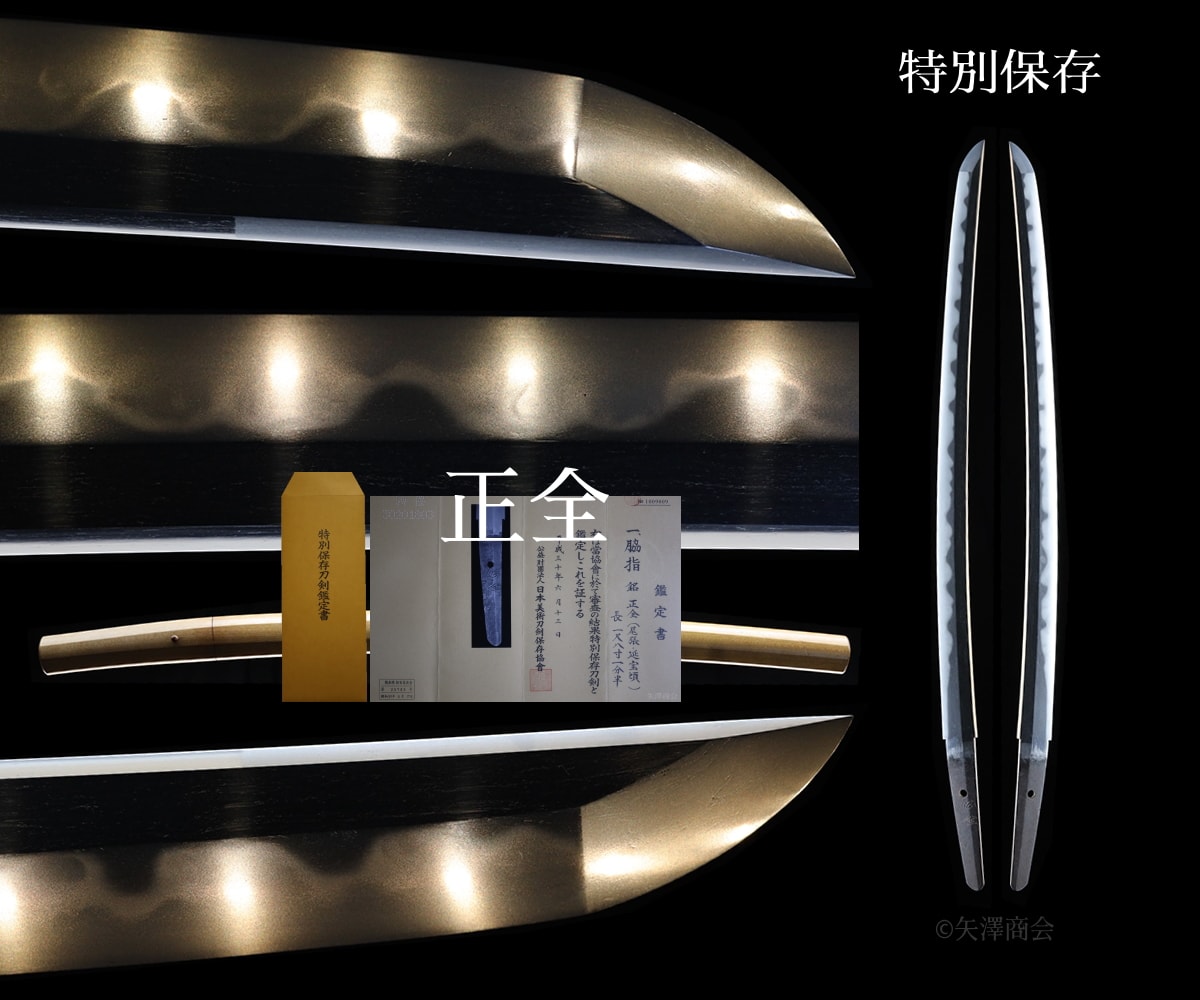
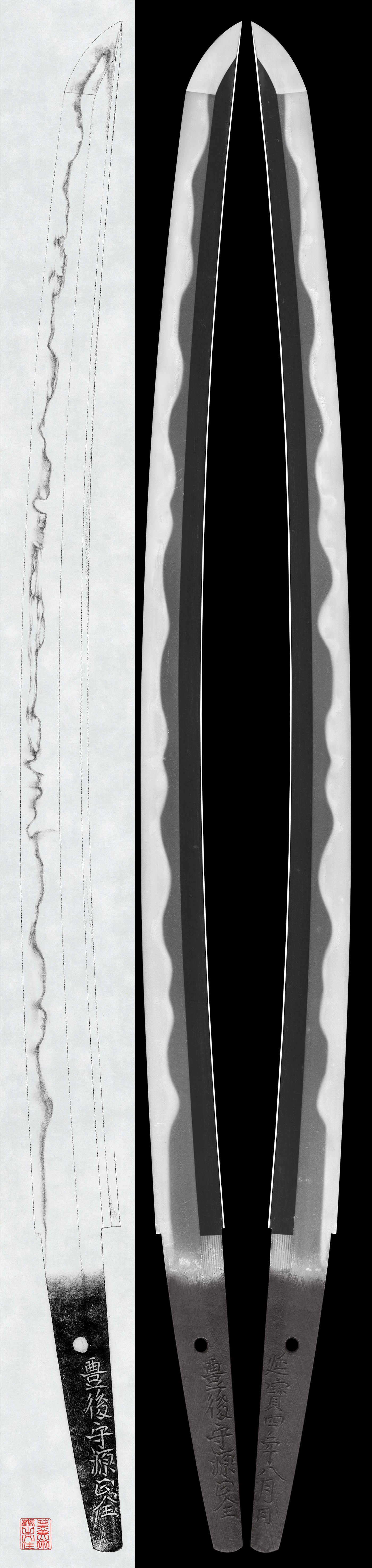
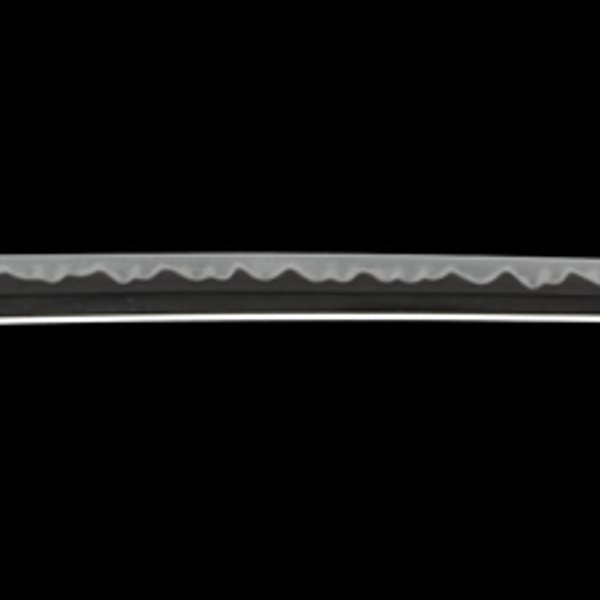
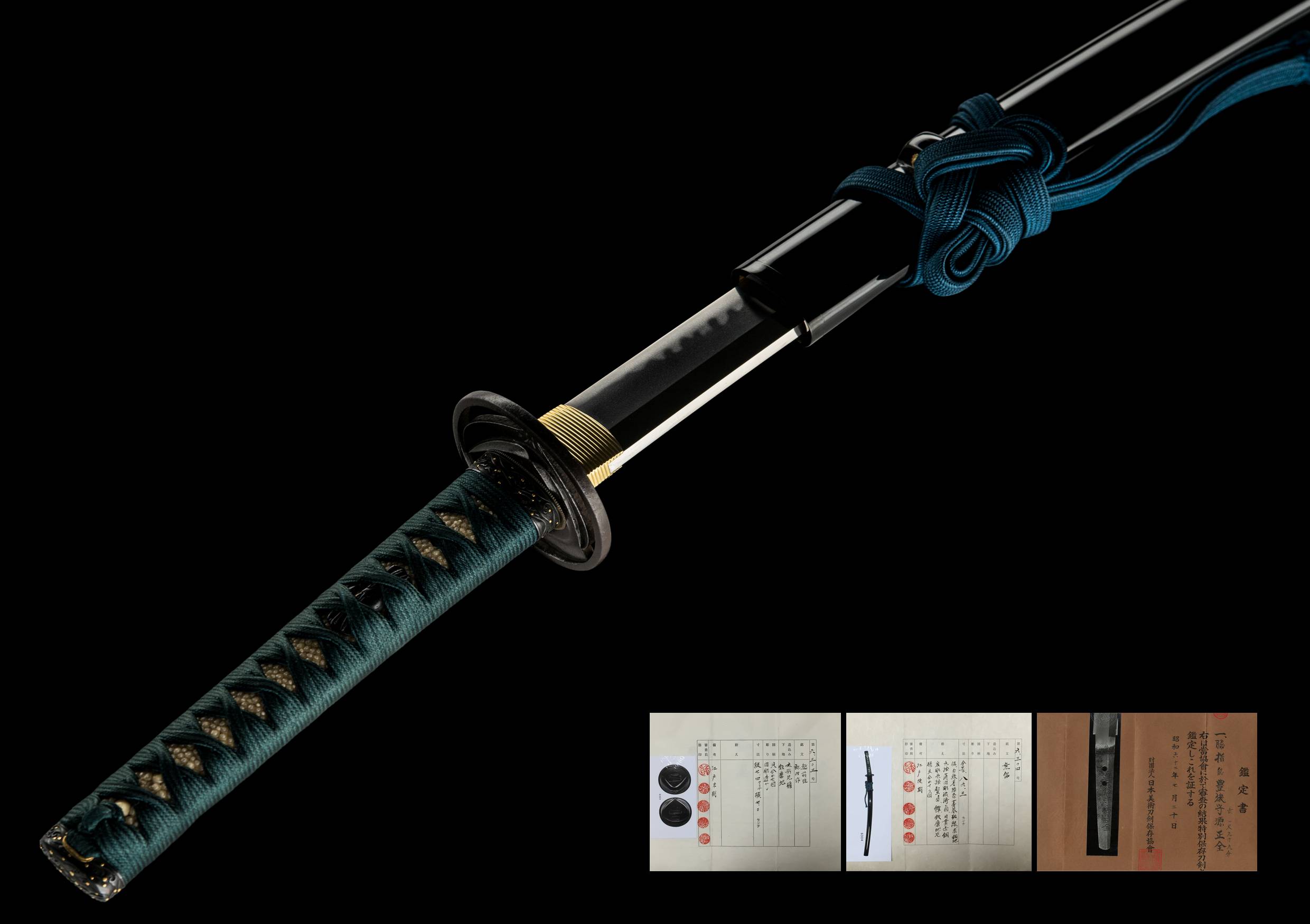
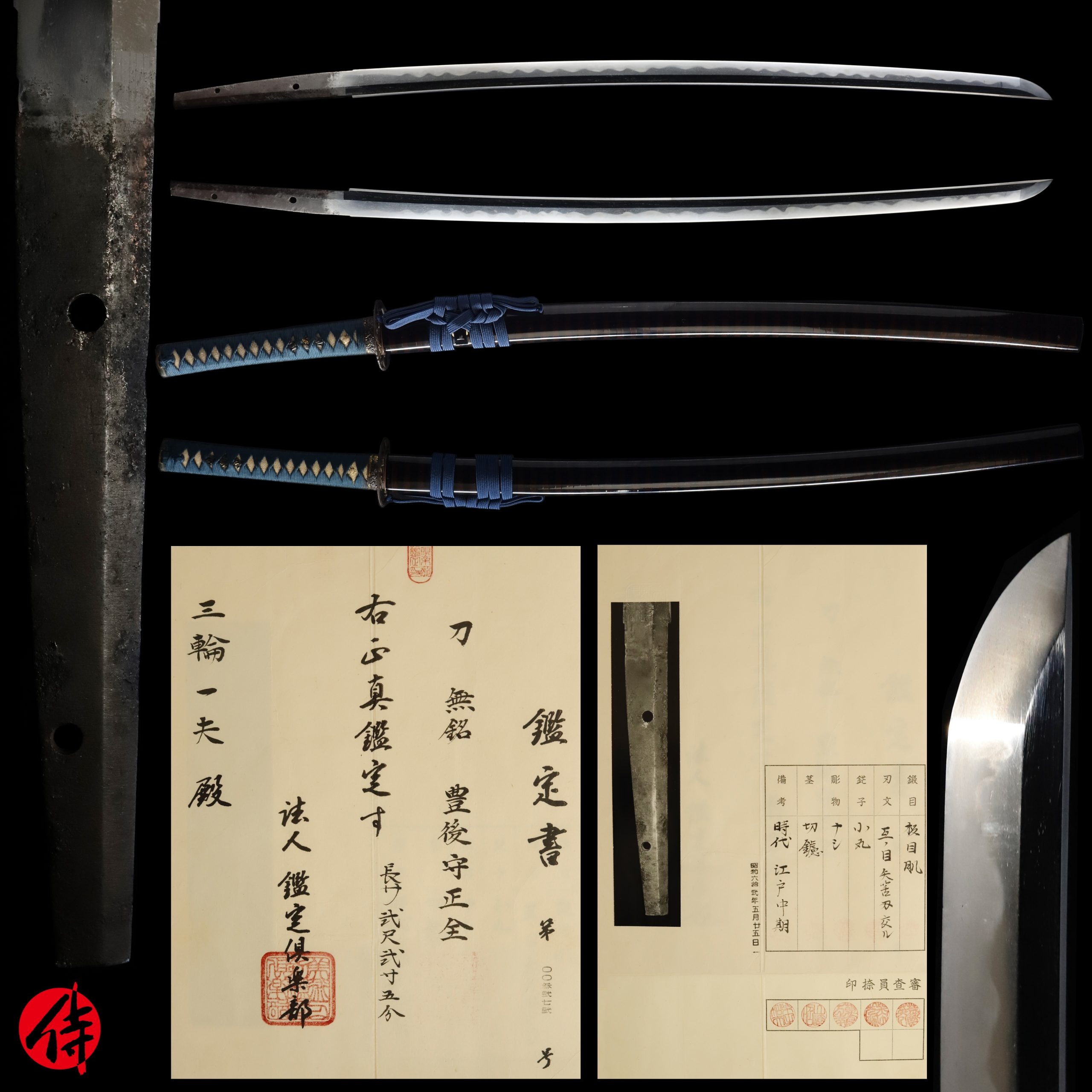
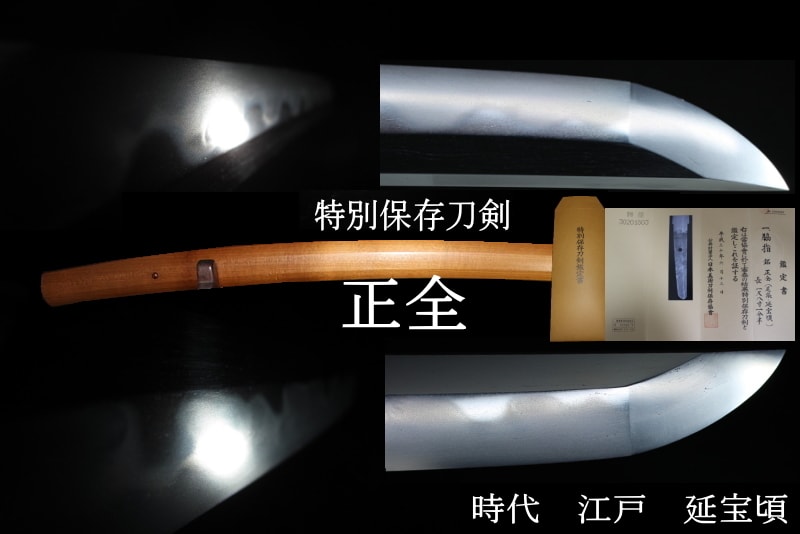
Ordering Number: AS26277Katana in Shirasaya (NBTHK Hozon Token)Signature: Bungo no Kami Minamoto Masayasu (also read as Masatomo)豊後守源正全(まさやす/まさとも)Shinto: Chujo Saku: Owari(We divide 4 sections for each sword as Saijyo Saku, Jyojyo Saku, Jyo Saku and Regular Saku).This blade is ranked as Jyo Saku among the works of Bungo no Kami Minamoto Masayasu.Habaki: Single copper.Blade Length: 51.7 cm (20.35 in).Curvature: 0.9 cm (0.35 in).Mekugi Hole: 1.Width at Base (Motohaba): 3.00 cm (1.18 in).Width at Yokote: 2.06 cm (0.81 in).Thickness of rim (Kasane): 0.75 cm (0.30 in).Sword Weight: 550 g.Era: Around the Kanbun era (1661–1673), Edo period.Shape: A solidly built blade with a wide mihaba, thick kasane, and a slightly broad kissaki.Jigane: Well-forged ko-itame hada producing a refined and high-quality jigane.Hamon: Beginning with gunome-midare from the hamachi. The blade has been polished in the sashikomi style, allowing the distinct hamon to stand out beautifully.Features: Bungo no Kami Minamoto Masayasu was a descendant of Itakura Seki Masatoshi of Mino Province. He was also known as Ishida Zenzaemon Masayasu and signed his works with inscriptions such as Bungo no Kami Minamoto Masayasu, Bishū no Jū Zenzaemon no Jō Masayasu, and Ishida Zenzaemon Masayasu Saku. He later moved from Mino to Owari, where he settled in Nagoya and produced his swords. His blades are reputed for their excellent cutting ability.Historical Background: The Kanbun era (1661–1673) marked a transitional period in the early Edo era when peace had become firmly established. In addition to a series of major natural disasters, including large earthquakes, the famous Date Disturbance (Kanbun Incident) took place in the Sendai Domain. During this period, nationwide land surveys and improvements to urban infrastructure also progressed.Aoi Art’s Comment: It is said that during the Kanbun period, the market for swords became increasingly difficult as Japan had entered an extended era of peace. As warfare disapp
Auction status: live on sword-auction.com.
 NihontoWatch
在銘 · 江戸 · 長さ 51.7cm · 反り 0.9cm
尾張 · 1673-1681頃
現在4点販売中
江戸時代
徳川の泰平のもと、大小は法度の定める身分の制服となり、需要は城下町、とりわけ江戸に集まった。工芸は二つに分かれる。目利きのための華やかな鑑賞の作と、截断の結果を金象嵌に刻む実証の刀である。
銘が正しい、または無銘でも年代・国・系統を確実に指摘できる、保存に値する真正の作と鑑定されたものです。
日本美術刀剣保存協会(NBTHK)は、1948年に設立され、文化庁の監督を受ける公益財団法人で、東京・刀剣博物館に本部を置きます。専門の審査員が出品作を直接審査し、美術的・歴史的価値に応じた鑑定書を発行します。NBTHKの鑑定書は、日本刀および刀装具の真正性を示す最も広く認知された基準です。
NBTHK公式サイト返品をご希望の場合、お客様が受領されてから3日以内にお知らせください。この期間を過ぎますとキャンセルはお受けできかねますので何卒ご了承ください。なお当社へのご返送は、5営業日以内の発送をお願いしております。なおキャンセルは販売した当時の状態がそのまま保持されている事が条件となりますのでお取り扱いには十分ご注意下さい。
Ordering Number: AS26277Katana in Shirasaya (NBTHK Hozon Token)Signature: Bungo no Kami Minamoto Masayasu (also read as Masatomo)豊後守源正全(まさやす/まさとも)Shinto: Chujo Saku: Owari(We divide 4 sections for each sword as Saijyo Saku, Jyojyo Saku, Jyo Saku and Regular Saku).This blade is ranked as Jyo Saku among the works of Bungo no Kami Minamoto Masayasu.Habaki: Single copper.Blade Length: 51.7 cm (20.35 in).Curvature: 0.9 cm (0.35 in).Mekugi Hole: 1.Width at Base (Motohaba): 3.00 cm (1.18 in).Width at Yokote: 2.06 cm (0.81 in).Thickness of rim (Kasane): 0.75 cm (0.30 in).Sword Weight: 550 g.Era: Around the Kanbun era (1661–1673), Edo period.Shape: A solidly built blade with a wide mihaba, thick kasane, and a slightly broad kissaki.Jigane: Well-forged ko-itame hada producing a refined and high-quality jigane.Hamon: Beginning with gunome-midare from the hamachi. The blade has been polished in the sashikomi style, allowing the distinct hamon to stand out beautifully.Features: Bungo no Kami Minamoto Masayasu was a descendant of Itakura Seki Masatoshi of Mino Province. He was also known as Ishida Zenzaemon Masayasu and signed his works with inscriptions such as Bungo no Kami Minamoto Masayasu, Bishū no Jū Zenzaemon no Jō Masayasu, and Ishida Zenzaemon Masayasu Saku. He later moved from Mino to Owari, where he settled in Nagoya and produced his swords. His blades are reputed for their excellent cutting ability.Historical Background: The Kanbun era (1661–1673) marked a transitional period in the early Edo era when peace had become firmly established. In addition to a series of major natural disasters, including large earthquakes, the famous Date Disturbance (Kanbun Incident) took place in the Sendai Domain. During this period, nationwide land surveys and improvements to urban infrastructure also progressed.Aoi Art’s Comment: It is said that during the Kanbun period, the market for swords became increasingly difficult as Japan had entered an extended era of peace. As warfare disapp
Auction status: live on sword-auction.com.
NihontoWatch在銘 · 江戸 · 長さ 51.7cm · 反り 0.9cm
尾張 · 1673-1681頃
現在4点販売中
江戸時代
徳川の泰平のもと、大小は法度の定める身分の制服となり、需要は城下町、とりわけ江戸に集まった。工芸は二つに分かれる。目利きのための華やかな鑑賞の作と、截断の結果を金象嵌に刻む実証の刀である。
銘が正しい、または無銘でも年代・国・系統を確実に指摘できる、保存に値する真正の作と鑑定されたものです。
日本美術刀剣保存協会(NBTHK)は、1948年に設立され、文化庁の監督を受ける公益財団法人で、東京・刀剣博物館に本部を置きます。専門の審査員が出品作を直接審査し、美術的・歴史的価値に応じた鑑定書を発行します。NBTHKの鑑定書は、日本刀および刀装具の真正性を示す最も広く認知された基準です。
NBTHK公式サイト返品をご希望の場合、お客様が受領されてから3日以内にお知らせください。この期間を過ぎますとキャンセルはお受けできかねますので何卒ご了承ください。なお当社へのご返送は、5営業日以内の発送をお願いしております。なおキャンセルは販売した当時の状態がそのまま保持されている事が条件となりますのでお取り扱いには十分ご注意下さい。

![Katana - Tokuho - 作 正全 - Katana [Bungo-no-kami Minamoto Masayasu][N.B.T.H.K]Tokubetsu Hozon Token](/_next/image?url=https%3A%2F%2Fitbhfhyptogxcjbjfzwx.supabase.co%2Fstorage%2Fv1%2Fobject%2Fpublic%2Flisting-images%2Fworld-seiyudo%2FL31391%2F00.jpg&w=2560&q=90)
![Katana - Tokuho - 作 正全 - Katana [Bungo-nokami Minamotono Masayasu (Syouzen)][N.B.T.H.K] Tokubetsu Hozon Token](/_next/image?url=https%3A%2F%2Fitbhfhyptogxcjbjfzwx.supabase.co%2Fstorage%2Fv1%2Fobject%2Fpublic%2Flisting-images%2Fworld-seiyudo%2FL32023%2F00.jpg&w=2560&q=90)