二つの朝廷、六十年の戦、そして刀剣史上もっとも劇的な姿。幅広の刀身、延びた切先、後代に磨上げられて雄大な刀となった大太刀。相州風がこの時代の様式であった。
 NihontoWatchNihontoWatch
Takada Tokiyuki (高田時行) was active in Bungo province from the Jôwa era (1345–1350) through to the Ôan era (1368–1375), a period when Kyûshû was a theatre of open war and the demand for exceptional blades was a matter of survival rather than ceremony. Said to be the son of Tomoyuki, founder of the Bungo-Takada school, and rumoured to have studied under the legendary Samonji of Chikuzen, Tokiyuki is recognised as one of the master smiths of ancient Kyûshû and a defining figure of the Ko-Takada tradition. His school represents the earliest and finest generation of Takada work, distinct from everything that followed. This blade belongs to that first and rarest chapter. What immediately distinguishes it from the grand, powerful forms typical of the Nanbokuchô period is its composure. The elongated chû-kissaki retains the full dignity and martial spirit of the era, yet the overall presence is one of quiet authority rather than aggression. It is a blade that has nothing left to prove. A kirikomi on the mune tells you it was once tested in the only way that truly counts. The jihada is an absolute pleasure to examine. A vivid nagare-hada flows with real purpose, mixed with mokume throughout, alive with ji-nie, carrying a faint misty shirake utsuri and a soft nioiguchi that are signatures of Ko-Takada never quite replicated by later generations. The hamon is a shallowly undulating ko-gunome mixed with suguha, ashi reaching toward the cutting edge with precision and life. A koshirae that truly understands the blade it protects. The deep glossy black of the kuro-ronuri saya, the handsome Nishigaki iron tsuba bearing the two-bar crest of the Hosokawa clan, the ayagata tsuka wrap that rewards a closer look, everything here has been chosen with quiet certainty. The shakudô fuchi-kashira attributed to Miyazaki Sukenori is the one moment of drama, sunflowers carved in bold relief against the dark ground, yet even this feels composed rather than decorative. The toma-bune menuki still carry their original gold, a last warm note beneath the silk. Serious, handsome, and completely coherent. All told, this is a katana of rare and balanced character, a dark horse that you’ll treasure in your collection.
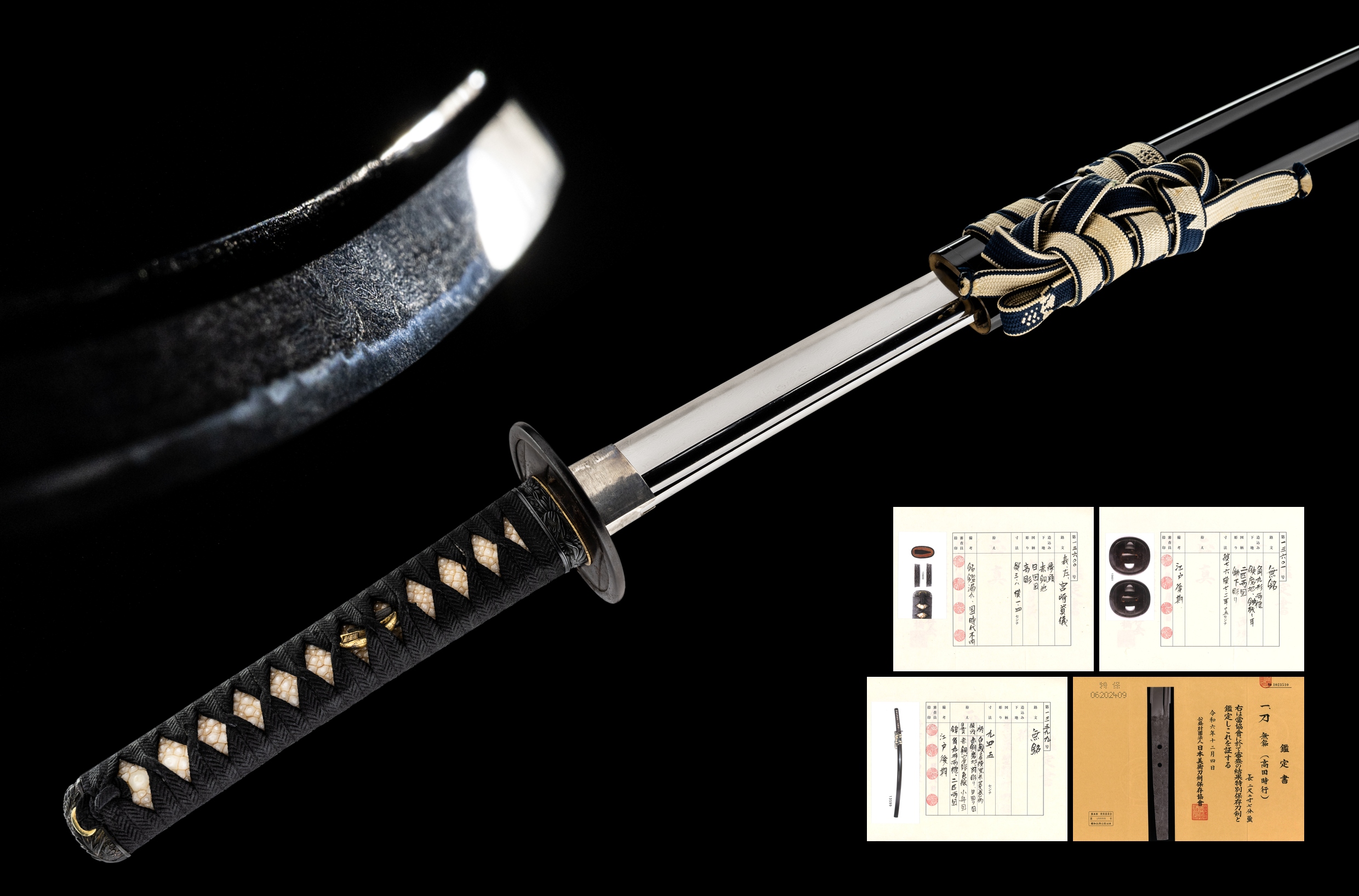
販売店の記載のまま
豊後 · 1368-1375頃
刀剣大鑑 上位23%
現在1点販売中
南北朝時代
二つの朝廷、六十年の戦、そして刀剣史上もっとも劇的な姿。幅広の刀身、延びた切先、後代に磨上げられて雄大な刀となった大太刀。相州風がこの時代の様式であった。
保存刀剣のうち、出来が一層優れ、保存状態も良好と認められたものです。再刃や、室町・江戸期の多くの無銘作は対象外となり、保存刀剣より高い基準が課されます。
日本美術刀剣保存協会(NBTHK)は、1948年に設立され、文化庁の監督を受ける公益財団法人で、東京・刀剣博物館に本部を置きます。専門の審査員が出品作を直接審査し、美術的・歴史的価値に応じた鑑定書を発行します。NBTHKの鑑定書は、日本刀および刀装具の真正性を示す最も広く認知された基準です。
NBTHK公式サイトAll swords come with a three-day inspection period beginning from the date of delivery. If not satisfied, the sword may be returned within this period for a full refund of the purchase price. Outside of this period, all sales are final. Swords purchased on a layaway payment plan are not eligible for the three-day inspection period.