NihontoWatch Mon

NihontoWatch

マーケットオークション
事典
NihontoWatch Mon

NihontoWatch

マーケットオークション
事典

説明

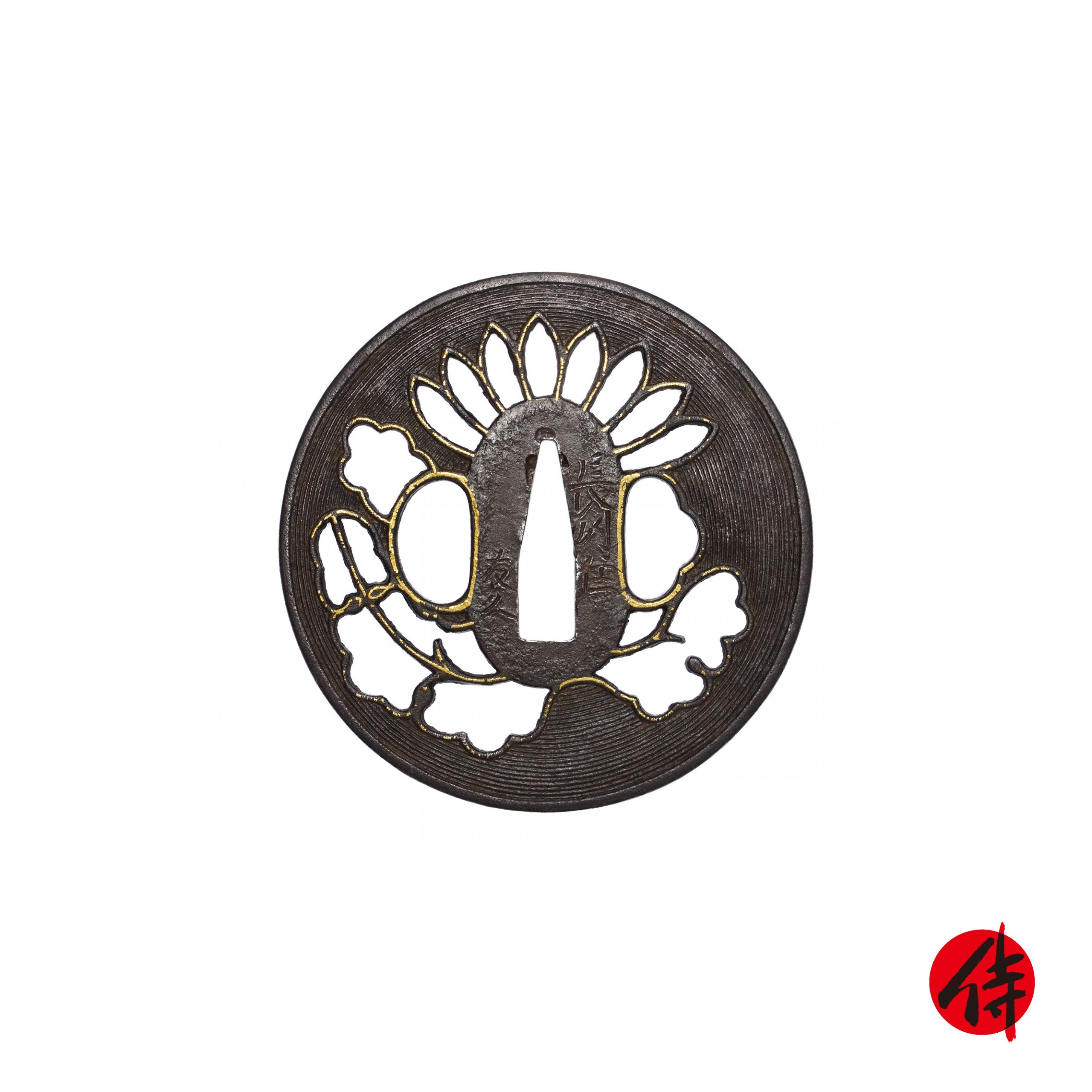
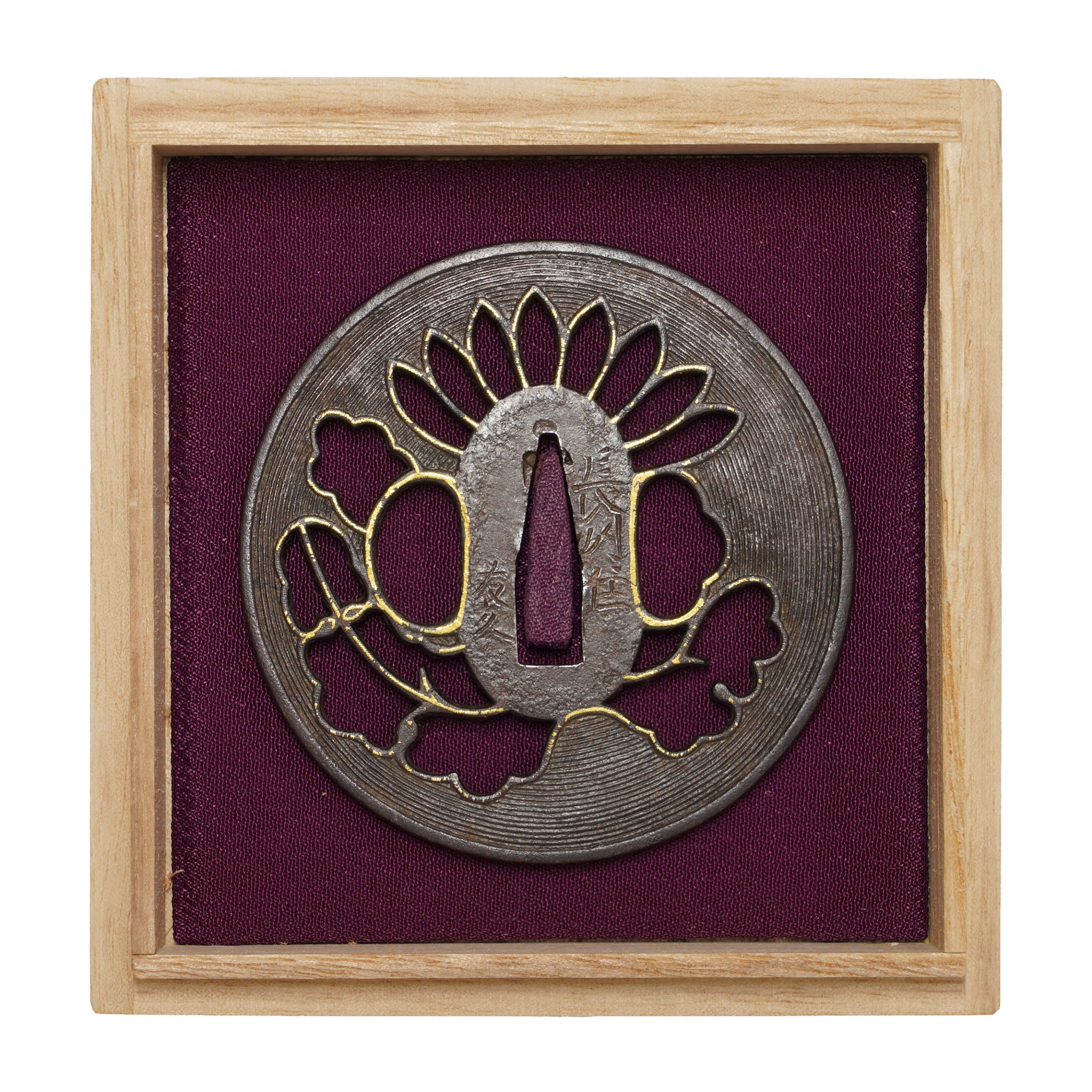
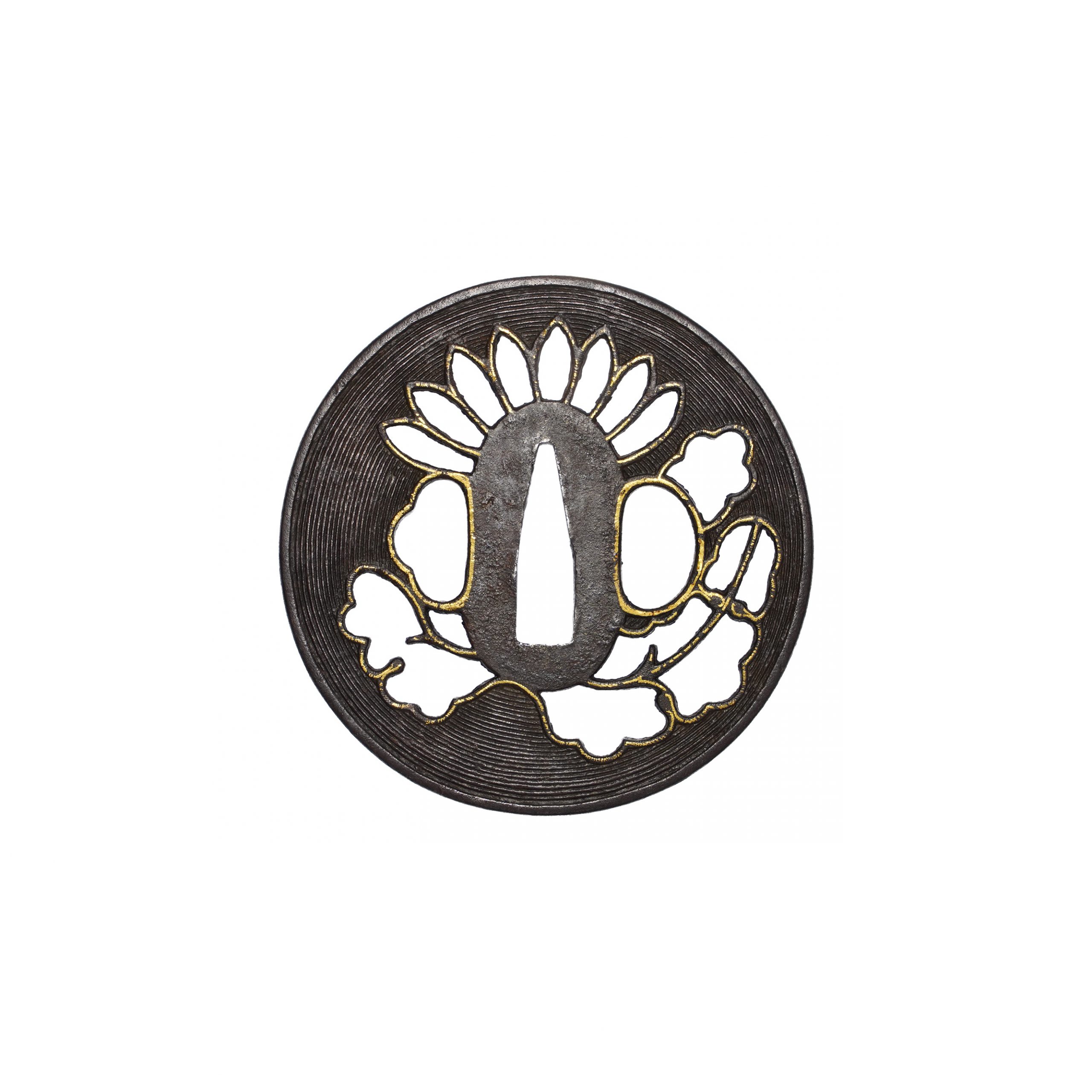
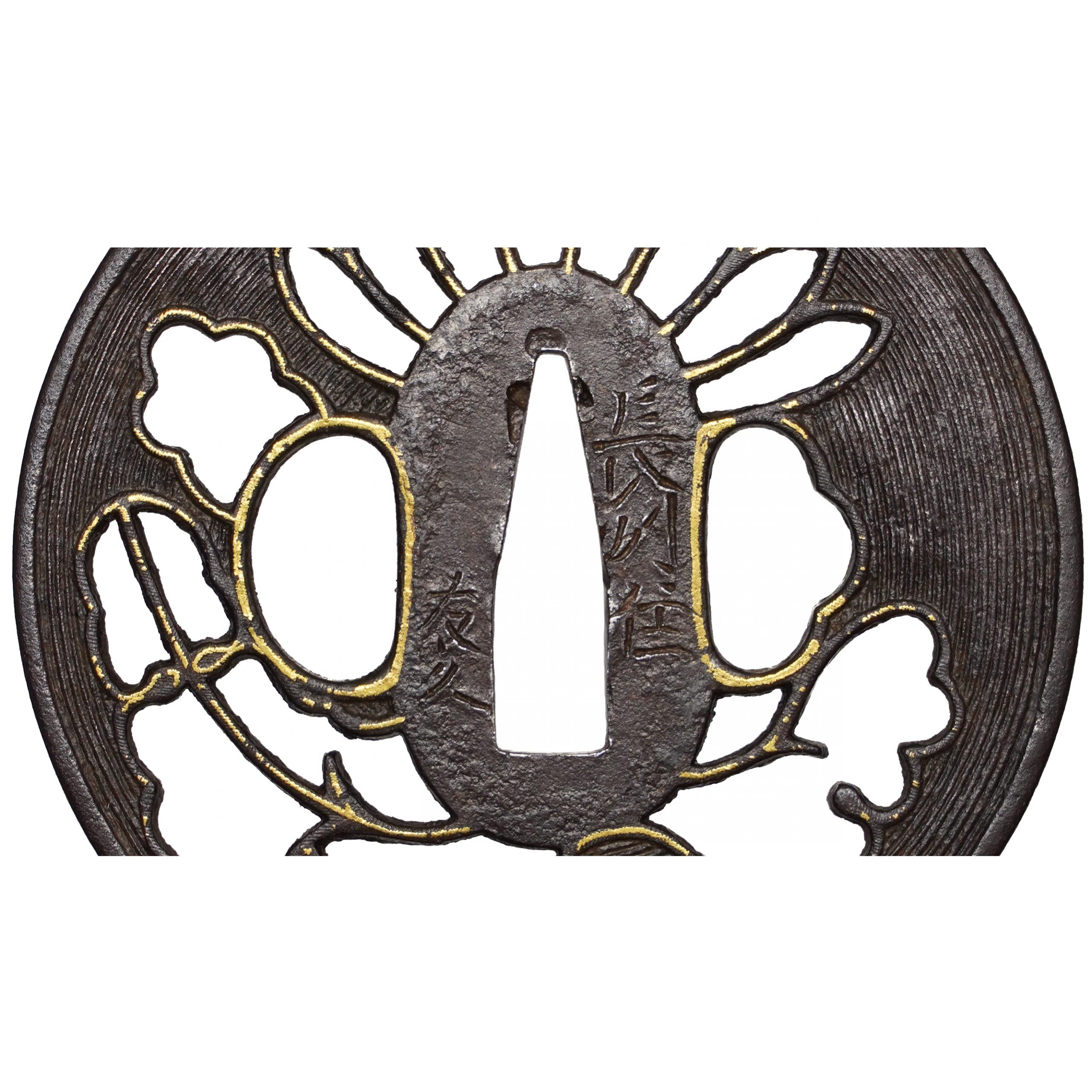
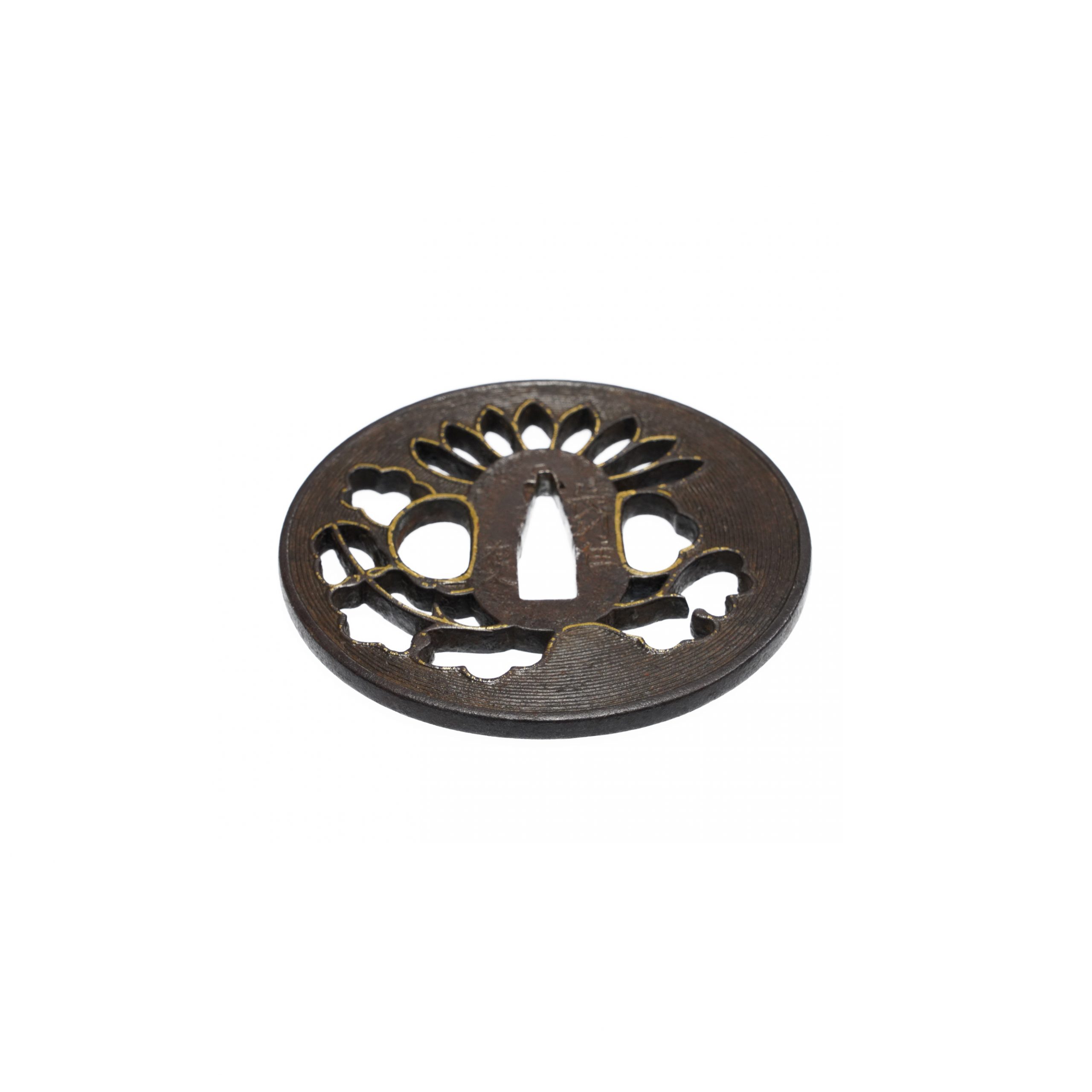
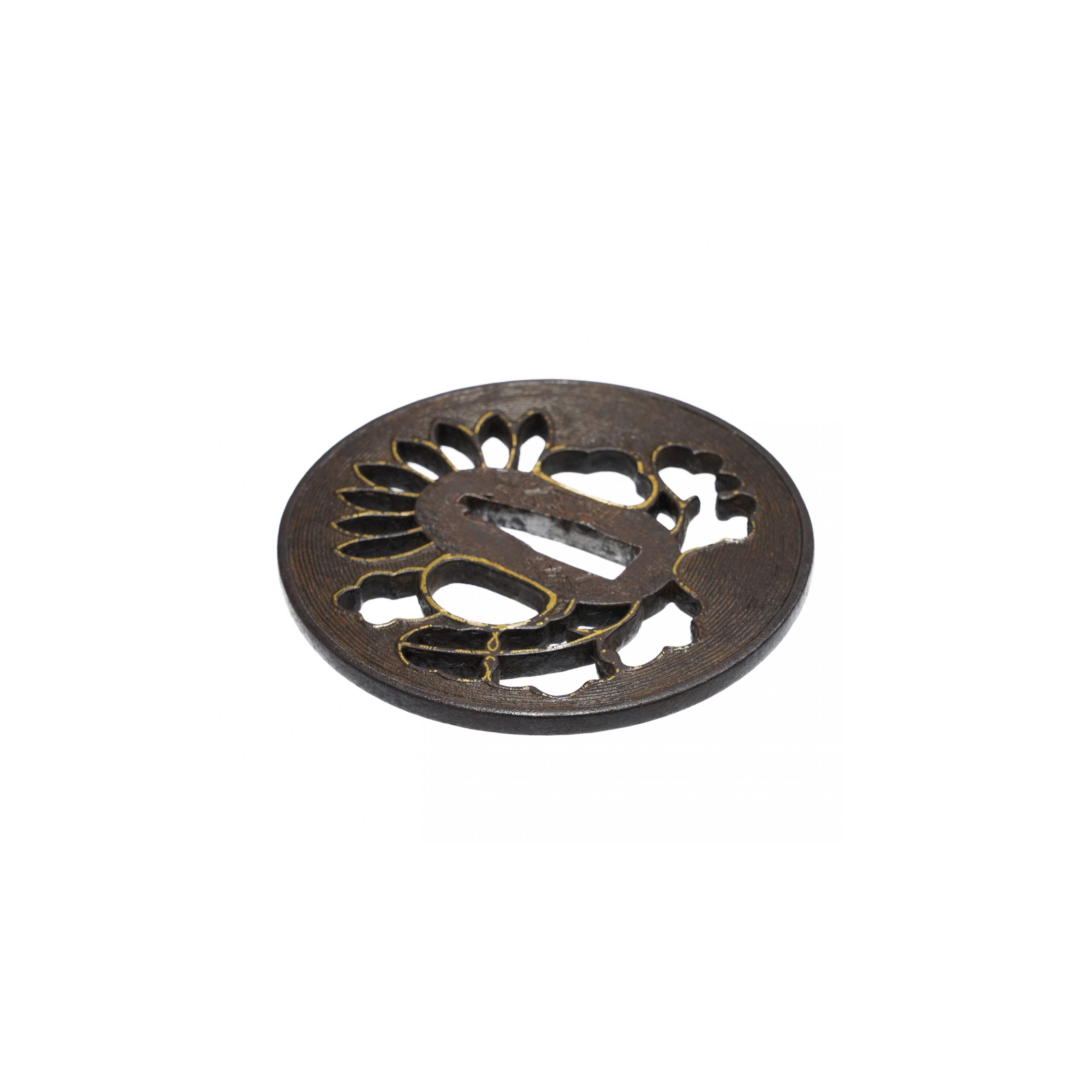
Title: Kiku Sukashi Tsuba Description Circle-shaped Tsuba that has Kozuka and Kougai holes. We would like to judge that the Kiku (菊, chrysanthemum) is designed, and it seems the gold (or brass) was initially applied to its outline. The flower is blooming, and its leaves are engraved on the lower side. A long time ago, the chrysanthemum was used as a medicine for obtaining a long life, and it was brought to Japan from the continent with this thought in the Nara period (648-781). Chrysanthemum symbolizes autumn, and Japanese people have appreciated it very much since ancient times. As its petals form radially, the chrysanthemum has been likened to the sun. That is why this flower pattern is treated as the symbol of perpetual youth and longevity or good health. Here we introduce stories about the chrysanthemum design to you. It would show you the deep relationship between this plant motif and the Samurai culture. From the Kamakura (1185-1333) period to the Warring States period (1467-1615), the chrysanthemum crest was rewarded from the then emperor to the warlords who made significant contributions. For example, Ashikaga Takauji (足利 尊氏, 1305-1358), who became the first Shogun of the Muromachi Shogunate, cooperated with Emperor Go-Daigo (後醍醐天皇, 1288-1339) to dissolve the Kamakura Shogunate. And Takauji was given a chrysanthemum crest. In addition, Toyotomi Hideyoshi (1537-1598) was also given a chrysanthemum crest by Emperor Goyouzei (後陽成天皇, 1571-1617). A theory says Hideyoshi was delighted and used this motif for furniture. At that time, the emperor was regarded as God. Therefore, it was an irreplaceable honor for Samurais to receive the family crest from the emperor. In this way, the chrysanthemum was one of the motifs closely related to the Samurais, and, understandably, it was often designed for sword mountings. It could be inferred that people have widely cherished this motif as an auspicious pattern and as a design that represents his achievements as a warrior. This Tsuba has the Mei (銘, engraved inscription). Please note that there is NO provenance or certificate that proves its signature’s authenticity. *As this item is an antique, please check each photo and ensure its condition. What is Tsuba? Tsuba is the hand-guard of the Japanese sword. High-class Samurai wore his Katana sword with its beautiful sword mountings such as Tsuba. Tsuba’s front design tends to be more decorative as this part was often seen by other Samurais when he was walking on the streets. Why is it that the sword mounting was important for Samurai? The sword mountings of the Japanese sword have many kinds of decorations such as handguards (Tsuba), sword hilt (Menuki), pommel (Fuchi Kashira). The Japanese sword worked as a weapon and as an object to show who he was. For example, it shows their personalities and beliefs. You could say that it is like decorations for smartphones today. We recommend you zoom in on the pictures of the sword fittings. When you do so, you can see the skill of Japanese metal engraving techniques. They are mainly made of iron and copper with inlays of gold, silver, and bronze. When it comes to handguard (Tsuba), each one has a different outline and weight. These sword fittings that have lived with Japanese swords of the same age might be worth as much as the Japanese swords. They are inconspicuous parts of the Japanese sword. Nevertheless, if you are knowledgeable or particular about it, you will become a connoisseur of the Samurai. 【About us】 Samurai Museum is located in Tokyo, Japan, exhibiting antique artifacts related to the Samurai history. Samurai Museum Shop is the place for those who are interested in Japanese culture and craftsmanship. We deal with antique Samurai swords/armor, traditional crafts made in Japan and so on. 【Payment method】 We accept payment through Stripe (Credit card), PayPal , Apple Pay or ChromePay, all of which are secure payment methods. Also, you don’t need to make an account on Stripe for the chec

NihontoWatch MonNihontoWatch
MarketAuctionsEncyclopedia
刀装具›友久›Edo period antique Tsuba for Samurai Sword (T-441)
鍔
友久

Edo period antique Tsuba for Samurai Sword (T-441)

在銘 · Choshu · 江戸

売却済
友久 — 1 of 6
友久 — 2 of 6
友久 — 3 of 6
友久 — 4 of 6
友久 — 5 of 6
友久 — 6 of 6
1 / 6
1 / 6
友久 — 1 of 6友久 — 2 of 6友久 — 3 of 6友久 — 4 of 6友久 — 5 of 6友久 — 6 of 6
法量・詳細
作者

友久

時代

江戸

国

長門

銘

在銘

説明

Title: Kiku Sukashi Tsuba Description Circle-shaped Tsuba that has Kozuka and Kougai holes. We would like to judge that the Kiku (菊, chrysanthemum) is designed, and it seems the gold (or brass) was initially applied to its outline. The flower is blooming, and its leaves are engraved on the lower side. A long time ago, the chrysanthemum was used as a medicine for obtaining a long life, and it was brought to Japan from the continent with this thought in the Nara period (648-781). Chrysanthemum symbolizes autumn, and Japanese people have appreciated it very much since ancient times. As its petals form radially, the chrysanthemum has been likened to the sun. That is why this flower pattern is treated as the symbol of perpetual youth and longevity or good health. Here we introduce stories about the chrysanthemum design to you. It would show you the deep relationship between this plant motif and the Samurai culture. From the Kamakura (1185-1333) period to the Warring States period (1467-1615), the chrysanthemum crest was rewarded from the then emperor to the warlords who made significant contributions. For example, Ashikaga Takauji (足利 尊氏, 1305-1358), who became the first Shogun of the Muromachi Shogunate, cooperated with Emperor Go-Daigo (後醍醐天皇, 1288-1339) to dissolve the Kamakura Shogunate. And Takauji was given a chrysanthemum crest. In addition, Toyotomi Hideyoshi (1537-1598) was also given a chrysanthemum crest by Emperor Goyouzei (後陽成天皇, 1571-1617). A theory says Hideyoshi was delighted and used this motif for furniture. At that time, the emperor was regarded as God. Therefore, it was an irreplaceable honor for Samurais to receive the family crest from the emperor. In this way, the chrysanthemum was one of the motifs closely related to the Samurais, and, understandably, it was often designed for sword mountings. It could be inferred that people have widely cherished this motif as an auspicious pattern and as a design that represents his achievements as a warrior. This Tsuba has the Mei (銘, engraved inscription). Please note that there is NO provenance or certificate that proves its signature’s authenticity. *As this item is an antique, please check each photo and ensure its condition. What is Tsuba? Tsuba is the hand-guard of the Japanese sword. High-class Samurai wore his Katana sword with its beautiful sword mountings such as Tsuba. Tsuba’s front design tends to be more decorative as this part was often seen by other Samurais when he was walking on the streets. Why is it that the sword mounting was important for Samurai? The sword mountings of the Japanese sword have many kinds of decorations such as handguards (Tsuba), sword hilt (Menuki), pommel (Fuchi Kashira). The Japanese sword worked as a weapon and as an object to show who he was. For example, it shows their personalities and beliefs. You could say that it is like decorations for smartphones today. We recommend you zoom in on the pictures of the sword fittings. When you do so, you can see the skill of Japanese metal engraving techniques. They are mainly made of iron and copper with inlays of gold, silver, and bronze. When it comes to handguard (Tsuba), each one has a different outline and weight. These sword fittings that have lived with Japanese swords of the same age might be worth as much as the Japanese swords. They are inconspicuous parts of the Japanese sword. Nevertheless, if you are knowledgeable or particular about it, you will become a connoisseur of the Samurai. 【About us】 Samurai Museum is located in Tokyo, Japan, exhibiting antique artifacts related to the Samurai history. Samurai Museum Shop is the place for those who are interested in Japanese culture and craftsmanship. We deal with antique Samurai swords/armor, traditional crafts made in Japan and so on. 【Payment method】 We accept payment through Stripe (Credit card), PayPal , Apple Pay or ChromePay, all of which are secure payment methods. Also, you don’t need to make an account on Stripe for the chec

作者について

友久

長門

現在2点販売中

›
友久の作 2点が現在販売中→
友久 — 詳細
ご注意 — 鑑定書が見つかりません

販売店の出品ページで鑑定書を確認できませんでした。日本刀および刀装具は通常、NBTHK(または NTHK)の鑑定を受けます。鑑定書がない場合、極めは販売店の見解にとどまり、第三者による確認は行われていません。ご購入前に販売店へ鑑定書の有無をお問い合わせのうえ、慎重にご判断ください。

販売店
サ
サムライミュージアム
🇯🇵日本から発送
›
✓認証販売店samuraimuseum.jp
✓海外発送可✓英語対応PayPalクレジットカード
返品ポリシー

Returns/exchanges limited to defects caused by shipping (except willful misconduct or gross negligence by the company); customers must contact within 72 hours of receiving the product.

サムライミュージアムの出品一覧を見る→販売店サイトでこの商品を見る→

友久の他の作

すべて見る →
刀心
保存
Tsuba - Hozon - by Tomohisa - 菊花透鐔 長州住友久Choshu ju Tomohisa 12-749Tsuba - Hozon - by Tomohisa - 菊花透鐔 長州住友久Choshu ju Tomohisa 12-749

鍔

作友久
江戸
¥198,000
刀心
Tsuba - by Tomohisa - 山水風景図鐔 長州萩住友久作Choshu Hagi ju 12-1401Tsuba - by Tomohisa - 山水風景図鐔 長州萩住友久作Choshu Hagi ju 12-1401

鍔

作友久
江戸
¥33,000

友久の売約済み

美術刀剣松本
特別保存
Tsuba - Tokuho - by Tomohisa - 水仙図Tsuba - Tokuho - by Tomohisa - 水仙図
売切れ

鍔

作友久
江戸
売却済
Japanese Sword Books and Tsuba
Tsuba - by Tomohisa - K145 長州友久Tsuba - by Tomohisa - K145 長州友久
売切れ

鍔

作友久
江戸
売却済
銀座誠友堂
保存
Tsuba - Hozon - by Tomohisa - Tsuba [Chosyu-hagi-jyu Tomohisa Haran-Soryu-zu-Tsuba][N.B.T.H.K] Hozon TousouguTsuba - Hozon - by Tomohisa - Tsuba [Chosyu-hagi-jyu Tomohisa Haran-Soryu-zu-Tsuba][N.B.T.H.K] Hozon Tousougu
売切れ

鍔

作友久
江戸
売却済
銀座長州屋
特別保存
Tsuba - Tokuho - by Tomohisa - 山水図鍔(鐔) 銘 長州萩住友久作Tsuba - Tokuho - by Tomohisa - 山水図鍔(鐔) 銘 長州萩住友久作
売切れ

鍔

作友久
江戸
売却済
銀座長州屋
特別保存
Tsuba - Tokuho - by Tomohisa - 波龍図鐔 銘 長州萩住友久Tsuba - Tokuho - by Tomohisa - 波龍図鐔 銘 長州萩住友久
売切れ

鍔

作友久
江戸
売却済
Japanese Sword Books and Tsuba
Tsuba - by Tomohisa - Q156. 長州友久 鍔 秀逸作Tsuba - by Tomohisa - Q156. 長州友久 鍔 秀逸作
売切れ

鍔

作友久
江戸
売却済
Japanese Sword Books and Tsuba
Tsuba - by Tomohisa - K144. 鉄地 鍔 長州住友久作Tsuba - by Tomohisa - K144. 鉄地 鍔 長州住友久作
売切れ

鍔

作友久
江戸
売却済

Choshu派の作

銀座誠友堂
特別保存
Tsuba - Tokuho - by Tomokata - 鍔 [長州岡具賢 雷龍図鍔][日本美術刀剣保存協会]特別保存刀装具Tsuba - Tokuho - by Tomokata - 鍔 [長州岡具賢 雷龍図鍔][日本美術刀剣保存協会]特別保存刀装具

鍔

作友賢
江戸
¥500,000
銀座長州屋
特別保存
Tsuba - Tokuho - by Yukihisa - 波に貝尽図鐔 銘 長州住中原幸久作Tsuba - Tokuho - by Yukihisa - 波に貝尽図鐔 銘 長州住中原幸久作

鍔

作幸久 (Yukinori
江戸
お問い合わせ
濃州堂
Tsuba - by Tomokiyo - 鍔 楼閣図 銘:長州萩住友清作Tsuba - by Tomokiyo - 鍔 楼閣図 銘:長州萩住友清作

鍔

作友清
江戸
¥108,000
刀心
特別保存
Tsuba - Tokuho - by Masatomi - 楼閣山水図鐔 長州萩住政富作Choshu Hagi ju 12-862Tsuba - Tokuho - by Masatomi - 楼閣山水図鐔 長州萩住政富作Choshu Hagi ju 12-862

鍔

作政富
江戸
¥440,000
刀心
Tsuba - by Masasada - 鉄線花図大小鐔 長州住正定Choshu ju Masasada 12-1368Tsuba - by Masasada - 鉄線花図大小鐔 長州住正定Choshu ju Masasada 12-1368

鍔

作正定
江戸
¥165,000
刀心
Tsuba - by Choshu School - 蓮透 長州正□ 12-843Tsuba - by Choshu School - 蓮透 長州正□ 12-843

鍔

作長州派
江戸
¥13,200
刀心
Tsuba - by Choshu School - 山水図大小鐔(大)長州萩住友久作 (小)友久(大)Choshu Hagi ju 12-1382Tsuba - by Choshu School - 山水図大小鐔(大)長州萩住友久作 (小)友久(大)Choshu Hagi ju 12-1382

鍔

作長州派
江戸
¥165,000
Toyuukai
保存
Fuchi-Kashira - Hozon - 枝菊図縁頭 無銘 長州 保存刀装具鑑定書付 品番:013Fuchi-Kashira - Hozon - 枝菊図縁頭 無銘 長州 保存刀装具鑑定書付 品番:013

縁頭

作Choshu
¥100,000

刀剣

  • 刀
  • 脇差
  • 短刀
  • 太刀
  • 薙刀
  • 槍

刀装具

  • 鍔
  • 縁頭
  • 小柄
  • 目貫

鑑定別

  • 特重
  • 重要
  • 特別保存
  • 保存

リソース

  • 刀剣商一覧
  • 刀工一覧
  • すべて見る
Nihontowatch© 2026
利用規約プライバシーCookie運営者情報

説明

Title: Kiku Sukashi Tsuba Description Circle-shaped Tsuba that has Kozuka and Kougai holes. We would like to judge that the Kiku (菊, chrysanthemum) is designed, and it seems the gold (or brass) was initially applied to its outline. The flower is blooming, and its leaves are engraved on the lower side. A long time ago, the chrysanthemum was used as a medicine for obtaining a long life, and it was brought to Japan from the continent with this thought in the Nara period (648-781). Chrysanthemum symbolizes autumn, and Japanese people have appreciated it very much since ancient times. As its petals form radially, the chrysanthemum has been likened to the sun. That is why this flower pattern is treated as the symbol of perpetual youth and longevity or good health. Here we introduce stories about the chrysanthemum design to you. It would show you the deep relationship between this plant motif and the Samurai culture. From the Kamakura (1185-1333) period to the Warring States period (1467-1615), the chrysanthemum crest was rewarded from the then emperor to the warlords who made significant contributions. For example, Ashikaga Takauji (足利 尊氏, 1305-1358), who became the first Shogun of the Muromachi Shogunate, cooperated with Emperor Go-Daigo (後醍醐天皇, 1288-1339) to dissolve the Kamakura Shogunate. And Takauji was given a chrysanthemum crest. In addition, Toyotomi Hideyoshi (1537-1598) was also given a chrysanthemum crest by Emperor Goyouzei (後陽成天皇, 1571-1617). A theory says Hideyoshi was delighted and used this motif for furniture. At that time, the emperor was regarded as God. Therefore, it was an irreplaceable honor for Samurais to receive the family crest from the emperor. In this way, the chrysanthemum was one of the motifs closely related to the Samurais, and, understandably, it was often designed for sword mountings. It could be inferred that people have widely cherished this motif as an auspicious pattern and as a design that represents his achievements as a warrior. This Tsuba has the Mei (銘, engraved inscription). Please note that there is NO provenance or certificate that proves its signature’s authenticity. *As this item is an antique, please check each photo and ensure its condition. What is Tsuba? Tsuba is the hand-guard of the Japanese sword. High-class Samurai wore his Katana sword with its beautiful sword mountings such as Tsuba. Tsuba’s front design tends to be more decorative as this part was often seen by other Samurais when he was walking on the streets. Why is it that the sword mounting was important for Samurai? The sword mountings of the Japanese sword have many kinds of decorations such as handguards (Tsuba), sword hilt (Menuki), pommel (Fuchi Kashira). The Japanese sword worked as a weapon and as an object to show who he was. For example, it shows their personalities and beliefs. You could say that it is like decorations for smartphones today. We recommend you zoom in on the pictures of the sword fittings. When you do so, you can see the skill of Japanese metal engraving techniques. They are mainly made of iron and copper with inlays of gold, silver, and bronze. When it comes to handguard (Tsuba), each one has a different outline and weight. These sword fittings that have lived with Japanese swords of the same age might be worth as much as the Japanese swords. They are inconspicuous parts of the Japanese sword. Nevertheless, if you are knowledgeable or particular about it, you will become a connoisseur of the Samurai. 【About us】 Samurai Museum is located in Tokyo, Japan, exhibiting antique artifacts related to the Samurai history. Samurai Museum Shop is the place for those who are interested in Japanese culture and craftsmanship. We deal with antique Samurai swords/armor, traditional crafts made in Japan and so on. 【Payment method】 We accept payment through Stripe (Credit card), PayPal , Apple Pay or ChromePay, all of which are secure payment methods. Also, you don’t need to make an account on Stripe for the chec

NihontoWatch MonNihontoWatch
MarketAuctionsEncyclopedia
刀装具›友久›Edo period antique Tsuba for Samurai Sword (T-441)
鍔
友久

Edo period antique Tsuba for Samurai Sword (T-441)

在銘 · Choshu · 江戸

売却済
友久 — 1 of 6
友久 — 2 of 6
友久 — 3 of 6
友久 — 4 of 6
友久 — 5 of 6
友久 — 6 of 6
1 / 6
1 / 6
友久 — 1 of 6友久 — 2 of 6友久 — 3 of 6友久 — 4 of 6友久 — 5 of 6友久 — 6 of 6
法量・詳細
作者

友久

時代

江戸

国

長門

銘

在銘

説明

Title: Kiku Sukashi Tsuba Description Circle-shaped Tsuba that has Kozuka and Kougai holes. We would like to judge that the Kiku (菊, chrysanthemum) is designed, and it seems the gold (or brass) was initially applied to its outline. The flower is blooming, and its leaves are engraved on the lower side. A long time ago, the chrysanthemum was used as a medicine for obtaining a long life, and it was brought to Japan from the continent with this thought in the Nara period (648-781). Chrysanthemum symbolizes autumn, and Japanese people have appreciated it very much since ancient times. As its petals form radially, the chrysanthemum has been likened to the sun. That is why this flower pattern is treated as the symbol of perpetual youth and longevity or good health. Here we introduce stories about the chrysanthemum design to you. It would show you the deep relationship between this plant motif and the Samurai culture. From the Kamakura (1185-1333) period to the Warring States period (1467-1615), the chrysanthemum crest was rewarded from the then emperor to the warlords who made significant contributions. For example, Ashikaga Takauji (足利 尊氏, 1305-1358), who became the first Shogun of the Muromachi Shogunate, cooperated with Emperor Go-Daigo (後醍醐天皇, 1288-1339) to dissolve the Kamakura Shogunate. And Takauji was given a chrysanthemum crest. In addition, Toyotomi Hideyoshi (1537-1598) was also given a chrysanthemum crest by Emperor Goyouzei (後陽成天皇, 1571-1617). A theory says Hideyoshi was delighted and used this motif for furniture. At that time, the emperor was regarded as God. Therefore, it was an irreplaceable honor for Samurais to receive the family crest from the emperor. In this way, the chrysanthemum was one of the motifs closely related to the Samurais, and, understandably, it was often designed for sword mountings. It could be inferred that people have widely cherished this motif as an auspicious pattern and as a design that represents his achievements as a warrior. This Tsuba has the Mei (銘, engraved inscription). Please note that there is NO provenance or certificate that proves its signature’s authenticity. *As this item is an antique, please check each photo and ensure its condition. What is Tsuba? Tsuba is the hand-guard of the Japanese sword. High-class Samurai wore his Katana sword with its beautiful sword mountings such as Tsuba. Tsuba’s front design tends to be more decorative as this part was often seen by other Samurais when he was walking on the streets. Why is it that the sword mounting was important for Samurai? The sword mountings of the Japanese sword have many kinds of decorations such as handguards (Tsuba), sword hilt (Menuki), pommel (Fuchi Kashira). The Japanese sword worked as a weapon and as an object to show who he was. For example, it shows their personalities and beliefs. You could say that it is like decorations for smartphones today. We recommend you zoom in on the pictures of the sword fittings. When you do so, you can see the skill of Japanese metal engraving techniques. They are mainly made of iron and copper with inlays of gold, silver, and bronze. When it comes to handguard (Tsuba), each one has a different outline and weight. These sword fittings that have lived with Japanese swords of the same age might be worth as much as the Japanese swords. They are inconspicuous parts of the Japanese sword. Nevertheless, if you are knowledgeable or particular about it, you will become a connoisseur of the Samurai. 【About us】 Samurai Museum is located in Tokyo, Japan, exhibiting antique artifacts related to the Samurai history. Samurai Museum Shop is the place for those who are interested in Japanese culture and craftsmanship. We deal with antique Samurai swords/armor, traditional crafts made in Japan and so on. 【Payment method】 We accept payment through Stripe (Credit card), PayPal , Apple Pay or ChromePay, all of which are secure payment methods. Also, you don’t need to make an account on Stripe for the chec

作者について

友久

長門

現在2点販売中

›
友久の作 2点が現在販売中→
友久 — 詳細
ご注意 — 鑑定書が見つかりません

販売店の出品ページで鑑定書を確認できませんでした。日本刀および刀装具は通常、NBTHK(または NTHK)の鑑定を受けます。鑑定書がない場合、極めは販売店の見解にとどまり、第三者による確認は行われていません。ご購入前に販売店へ鑑定書の有無をお問い合わせのうえ、慎重にご判断ください。

販売店
サ
サムライミュージアム
🇯🇵日本から発送
›
✓認証販売店samuraimuseum.jp
✓海外発送可✓英語対応PayPalクレジットカード
返品ポリシー

Returns/exchanges limited to defects caused by shipping (except willful misconduct or gross negligence by the company); customers must contact within 72 hours of receiving the product.

サムライミュージアムの出品一覧を見る→販売店サイトでこの商品を見る→

友久の他の作

すべて見る →
刀心
保存
Tsuba - Hozon - by Tomohisa - 菊花透鐔 長州住友久Choshu ju Tomohisa 12-749Tsuba - Hozon - by Tomohisa - 菊花透鐔 長州住友久Choshu ju Tomohisa 12-749

鍔

作友久
江戸
¥198,000
刀心
Tsuba - by Tomohisa - 山水風景図鐔 長州萩住友久作Choshu Hagi ju 12-1401Tsuba - by Tomohisa - 山水風景図鐔 長州萩住友久作Choshu Hagi ju 12-1401

鍔

作友久
江戸
¥33,000

友久の売約済み

美術刀剣松本
特別保存
Tsuba - Tokuho - by Tomohisa - 水仙図Tsuba - Tokuho - by Tomohisa - 水仙図
売切れ

鍔

作友久
江戸
売却済
Japanese Sword Books and Tsuba
Tsuba - by Tomohisa - K145 長州友久Tsuba - by Tomohisa - K145 長州友久
売切れ

鍔

作友久
江戸
売却済
銀座誠友堂
保存
Tsuba - Hozon - by Tomohisa - Tsuba [Chosyu-hagi-jyu Tomohisa Haran-Soryu-zu-Tsuba][N.B.T.H.K] Hozon TousouguTsuba - Hozon - by Tomohisa - Tsuba [Chosyu-hagi-jyu Tomohisa Haran-Soryu-zu-Tsuba][N.B.T.H.K] Hozon Tousougu
売切れ

鍔

作友久
江戸
売却済
銀座長州屋
特別保存
Tsuba - Tokuho - by Tomohisa - 山水図鍔(鐔) 銘 長州萩住友久作Tsuba - Tokuho - by Tomohisa - 山水図鍔(鐔) 銘 長州萩住友久作
売切れ

鍔

作友久
江戸
売却済
銀座長州屋
特別保存
Tsuba - Tokuho - by Tomohisa - 波龍図鐔 銘 長州萩住友久Tsuba - Tokuho - by Tomohisa - 波龍図鐔 銘 長州萩住友久
売切れ

鍔

作友久
江戸
売却済
Japanese Sword Books and Tsuba
Tsuba - by Tomohisa - Q156. 長州友久 鍔 秀逸作Tsuba - by Tomohisa - Q156. 長州友久 鍔 秀逸作
売切れ

鍔

作友久
江戸
売却済
Japanese Sword Books and Tsuba
Tsuba - by Tomohisa - K144. 鉄地 鍔 長州住友久作Tsuba - by Tomohisa - K144. 鉄地 鍔 長州住友久作
売切れ

鍔

作友久
江戸
売却済

Choshu派の作

銀座誠友堂
特別保存
Tsuba - Tokuho - by Tomokata - 鍔 [長州岡具賢 雷龍図鍔][日本美術刀剣保存協会]特別保存刀装具Tsuba - Tokuho - by Tomokata - 鍔 [長州岡具賢 雷龍図鍔][日本美術刀剣保存協会]特別保存刀装具

鍔

作友賢
江戸
¥500,000
銀座長州屋
特別保存
Tsuba - Tokuho - by Yukihisa - 波に貝尽図鐔 銘 長州住中原幸久作Tsuba - Tokuho - by Yukihisa - 波に貝尽図鐔 銘 長州住中原幸久作

鍔

作幸久 (Yukinori
江戸
お問い合わせ
濃州堂
Tsuba - by Tomokiyo - 鍔 楼閣図 銘:長州萩住友清作Tsuba - by Tomokiyo - 鍔 楼閣図 銘:長州萩住友清作

鍔

作友清
江戸
¥108,000
刀心
特別保存
Tsuba - Tokuho - by Masatomi - 楼閣山水図鐔 長州萩住政富作Choshu Hagi ju 12-862Tsuba - Tokuho - by Masatomi - 楼閣山水図鐔 長州萩住政富作Choshu Hagi ju 12-862

鍔

作政富
江戸
¥440,000
刀心
Tsuba - by Masasada - 鉄線花図大小鐔 長州住正定Choshu ju Masasada 12-1368Tsuba - by Masasada - 鉄線花図大小鐔 長州住正定Choshu ju Masasada 12-1368

鍔

作正定
江戸
¥165,000
刀心
Tsuba - by Choshu School - 蓮透 長州正□ 12-843Tsuba - by Choshu School - 蓮透 長州正□ 12-843

鍔

作長州派
江戸
¥13,200
刀心
Tsuba - by Choshu School - 山水図大小鐔(大)長州萩住友久作 (小)友久(大)Choshu Hagi ju 12-1382Tsuba - by Choshu School - 山水図大小鐔(大)長州萩住友久作 (小)友久(大)Choshu Hagi ju 12-1382

鍔

作長州派
江戸
¥165,000
Toyuukai
保存
Fuchi-Kashira - Hozon - 枝菊図縁頭 無銘 長州 保存刀装具鑑定書付 品番:013Fuchi-Kashira - Hozon - 枝菊図縁頭 無銘 長州 保存刀装具鑑定書付 品番:013

縁頭

作Choshu
¥100,000

刀剣

  • 刀
  • 脇差
  • 短刀
  • 太刀
  • 薙刀
  • 槍

刀装具

  • 鍔
  • 縁頭
  • 小柄
  • 目貫

鑑定別

  • 特重
  • 重要
  • 特別保存
  • 保存

リソース

  • 刀剣商一覧
  • 刀工一覧
  • すべて見る
Nihontowatch© 2026
利用規約プライバシーCookie運営者情報
NihontoWatch Mon

NihontoWatch

マーケットオークション
事典
NihontoWatch Mon

NihontoWatch

マーケットオークション
事典