江戸は刀の目利きの時代である。本阿弥の鑑定、1719年の享保名物帳、盛んな刀剣書が、戦で抜かれることのなくなった刀を学問の対象へと変えていった。
 NihontoWatchNihontoWatch
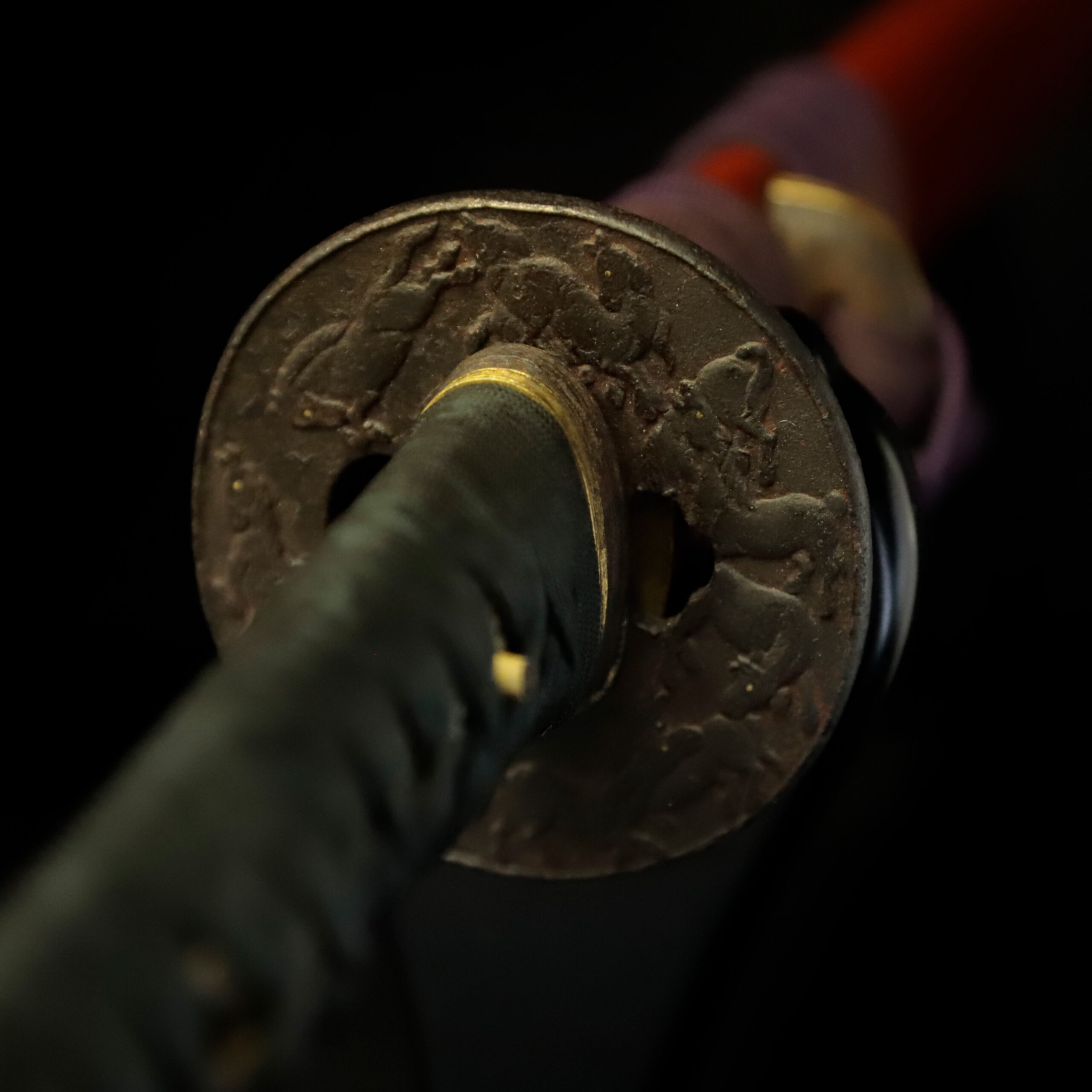
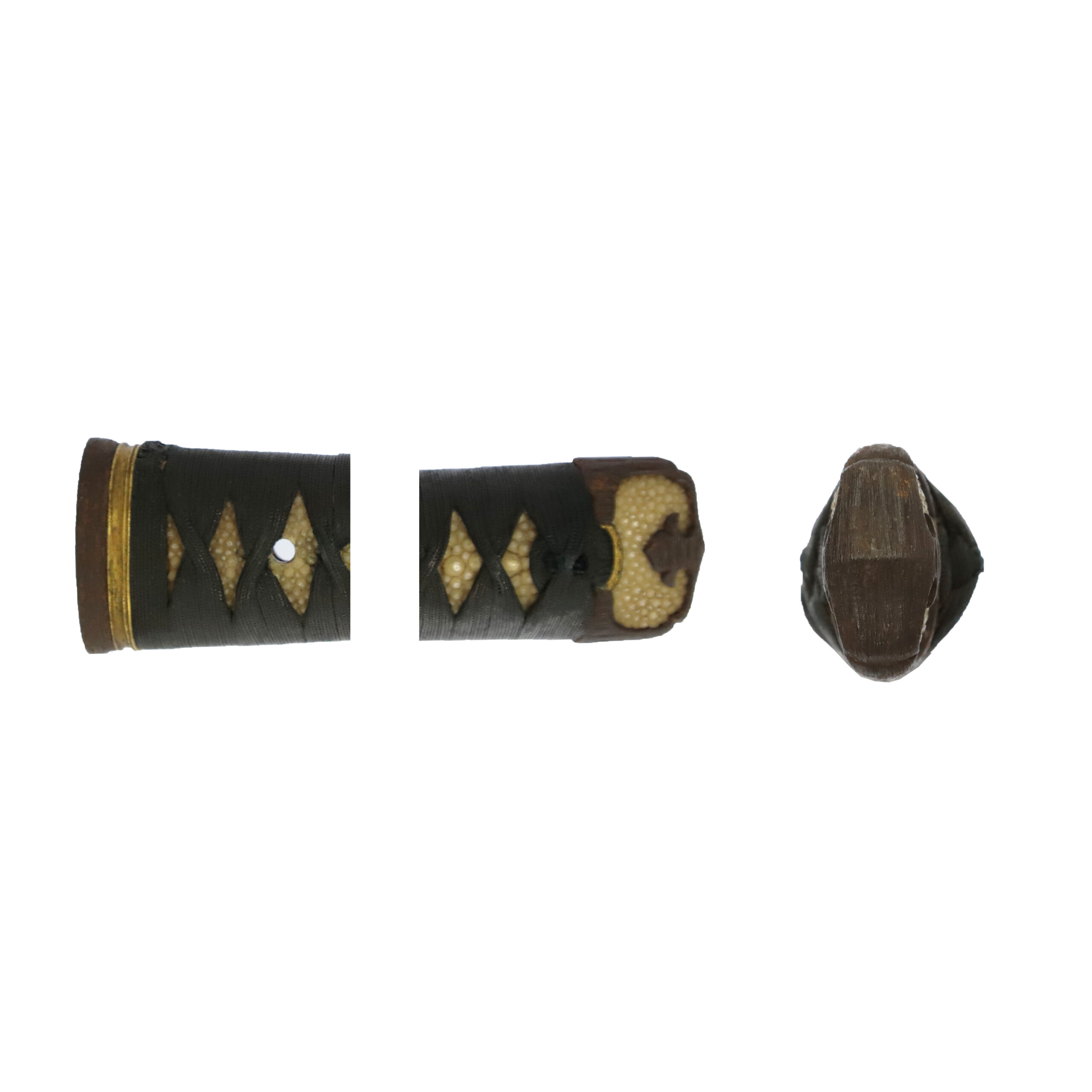
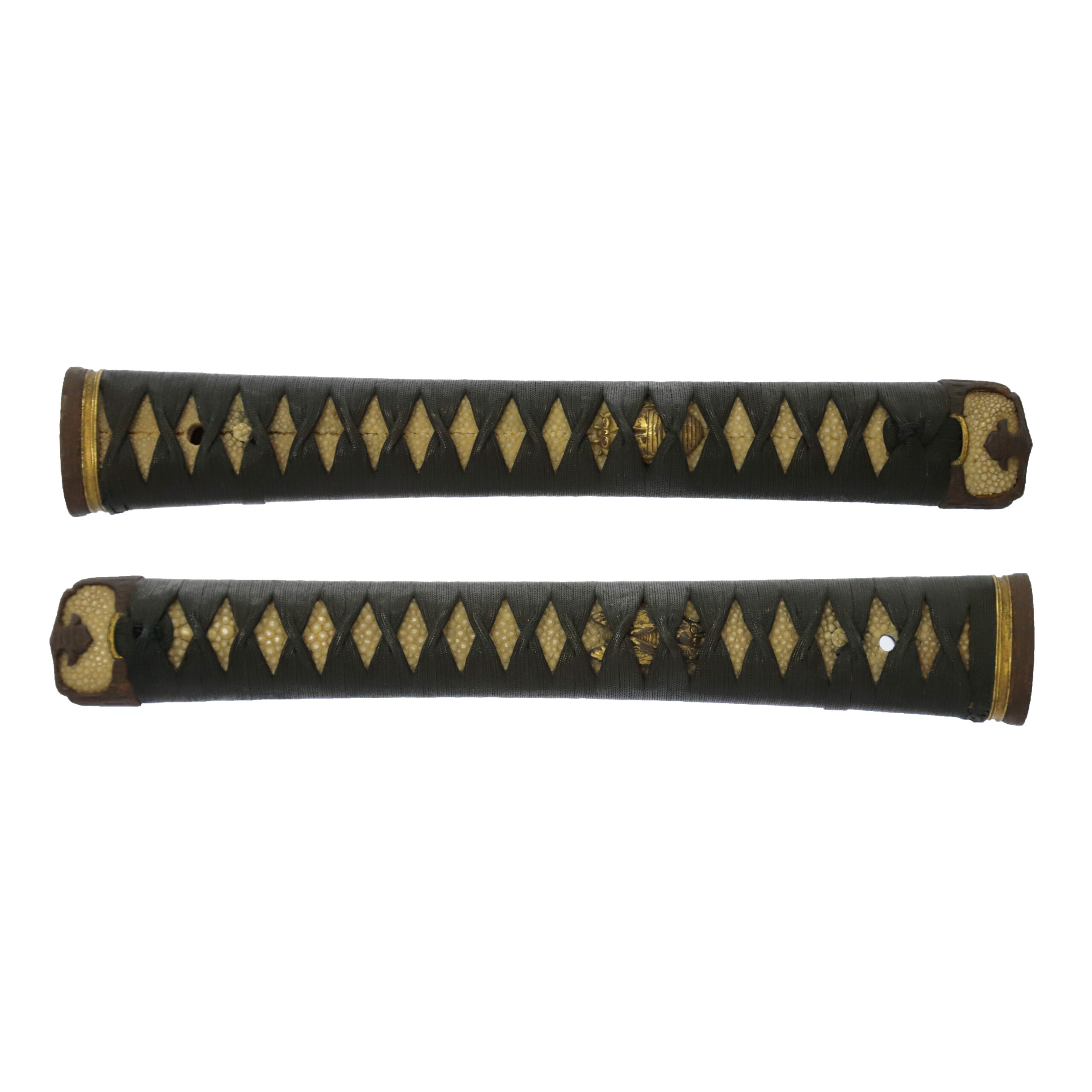
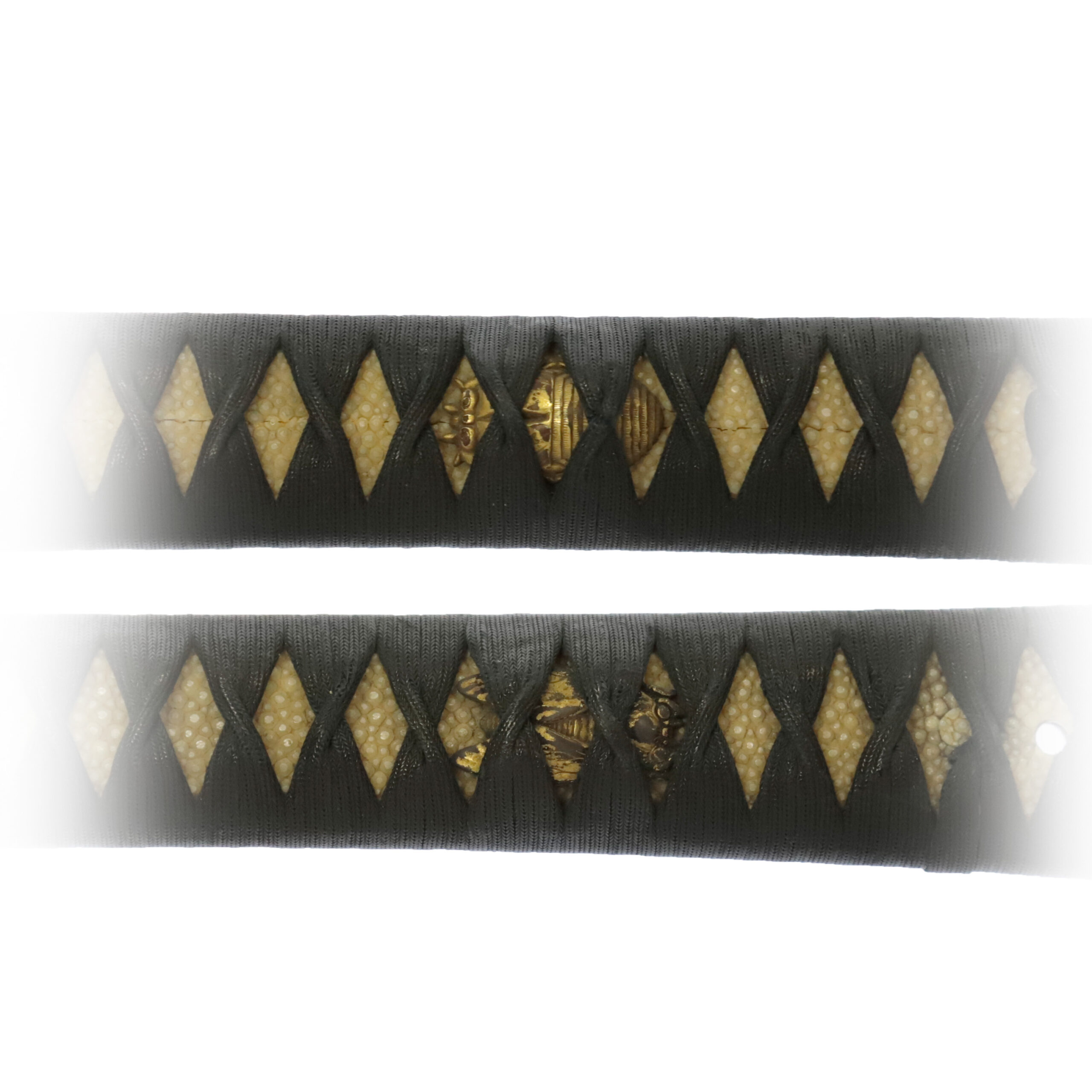
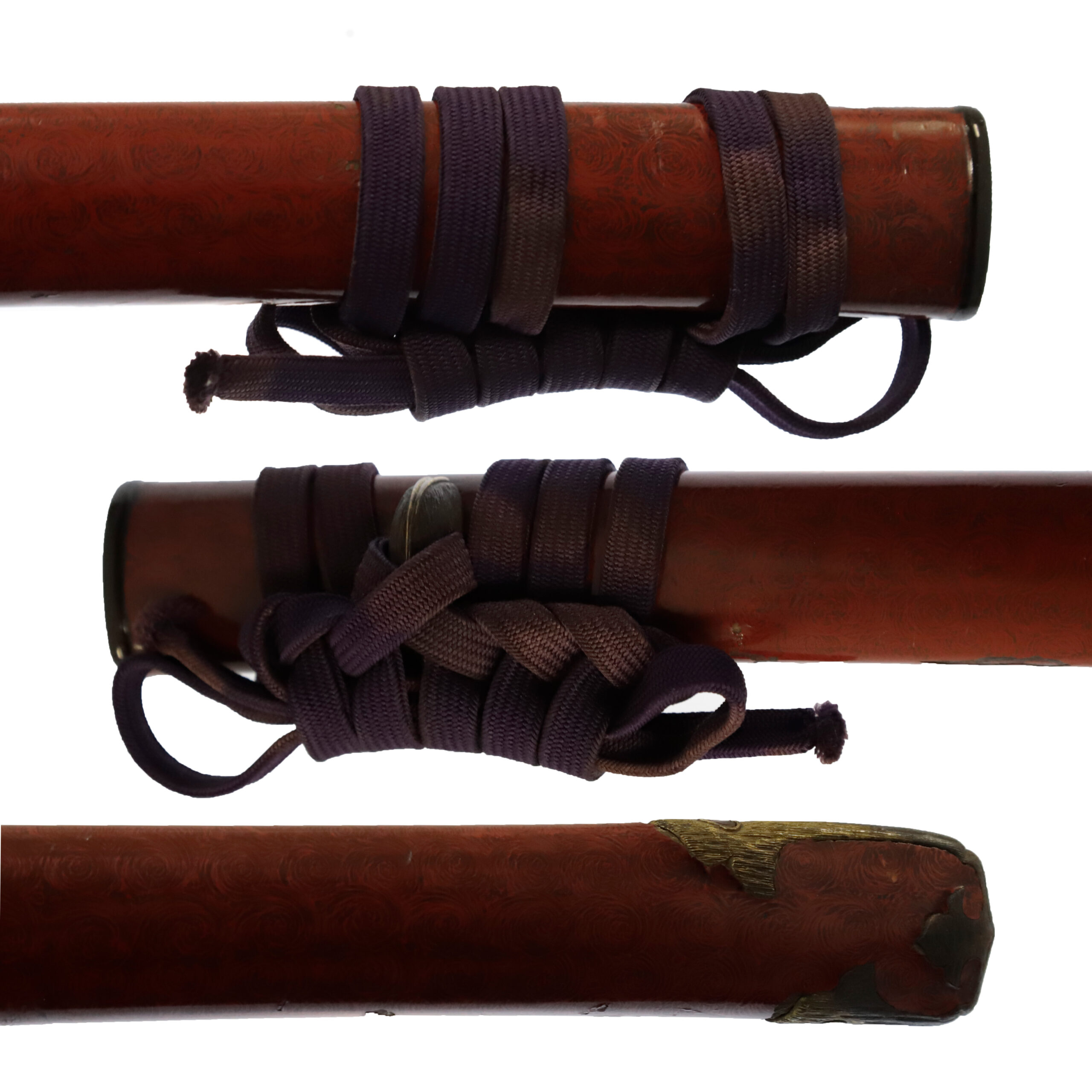
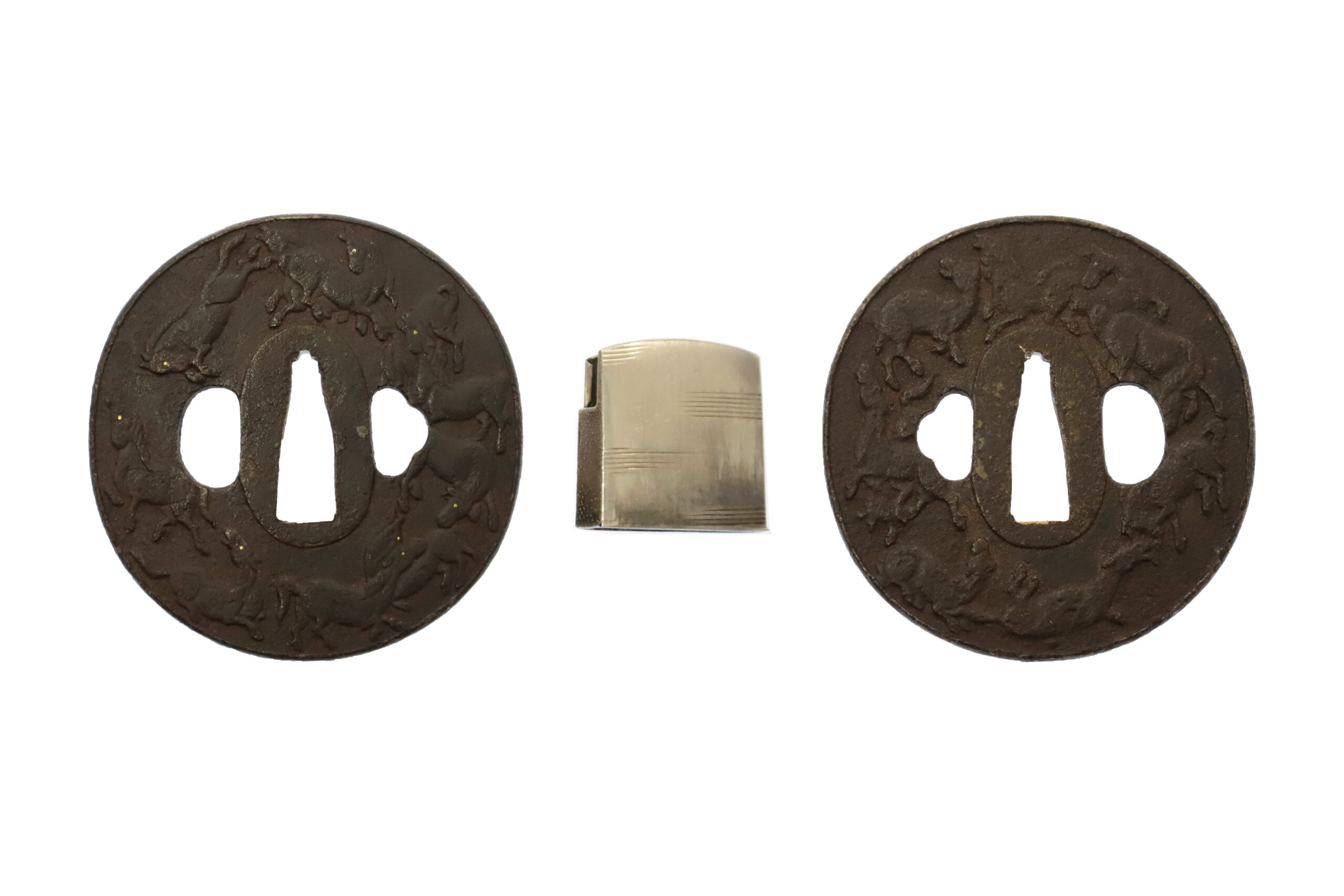
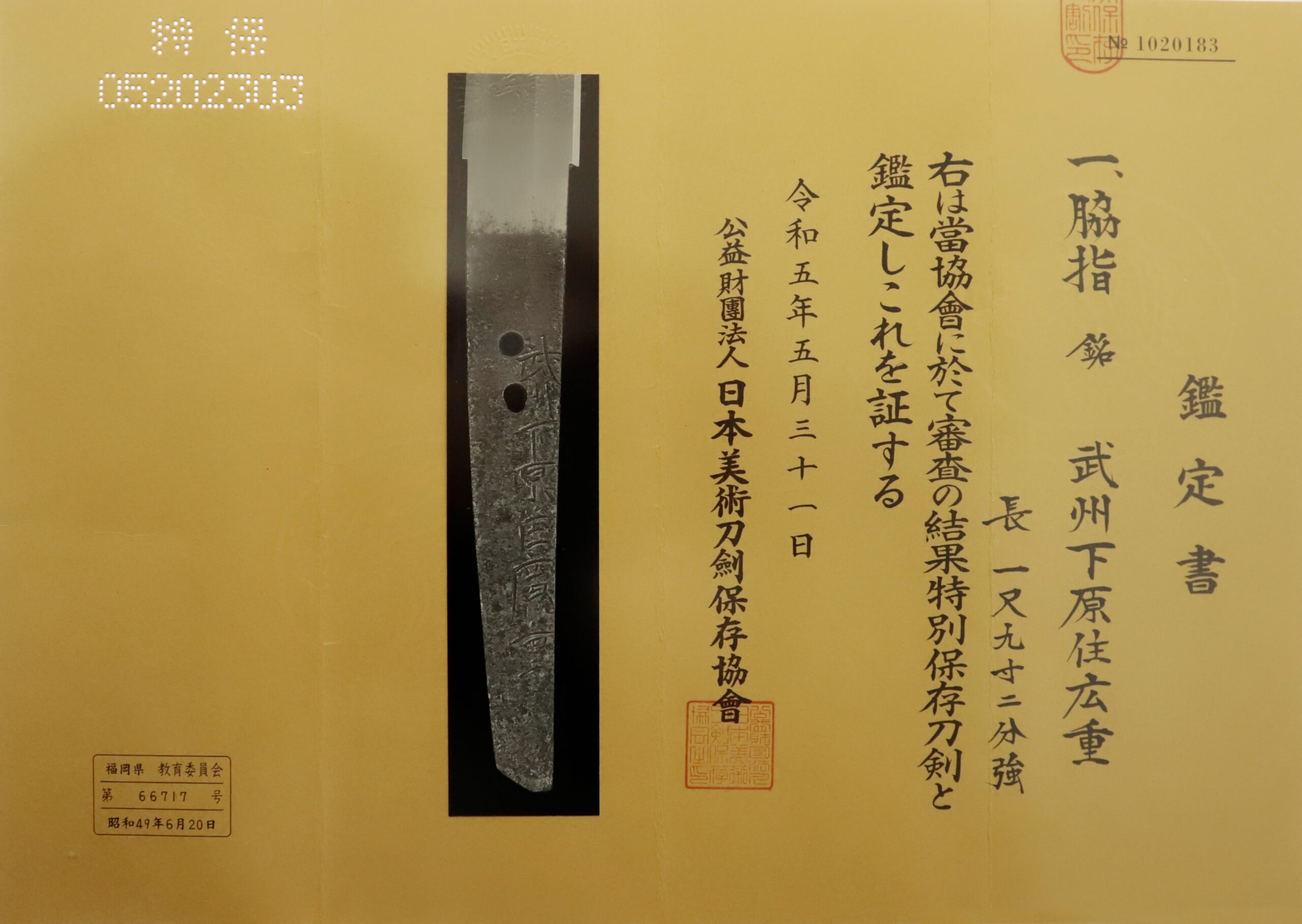
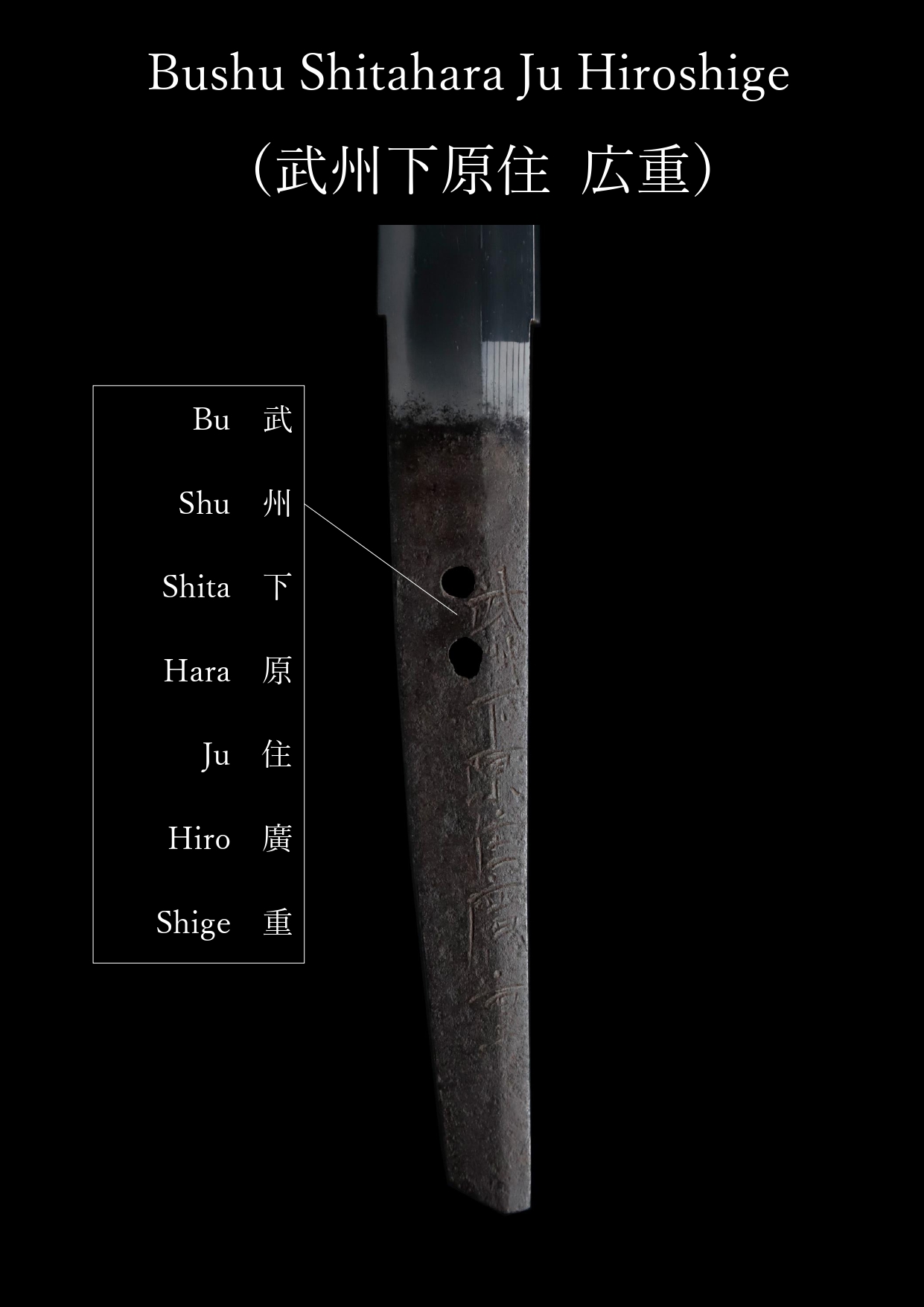
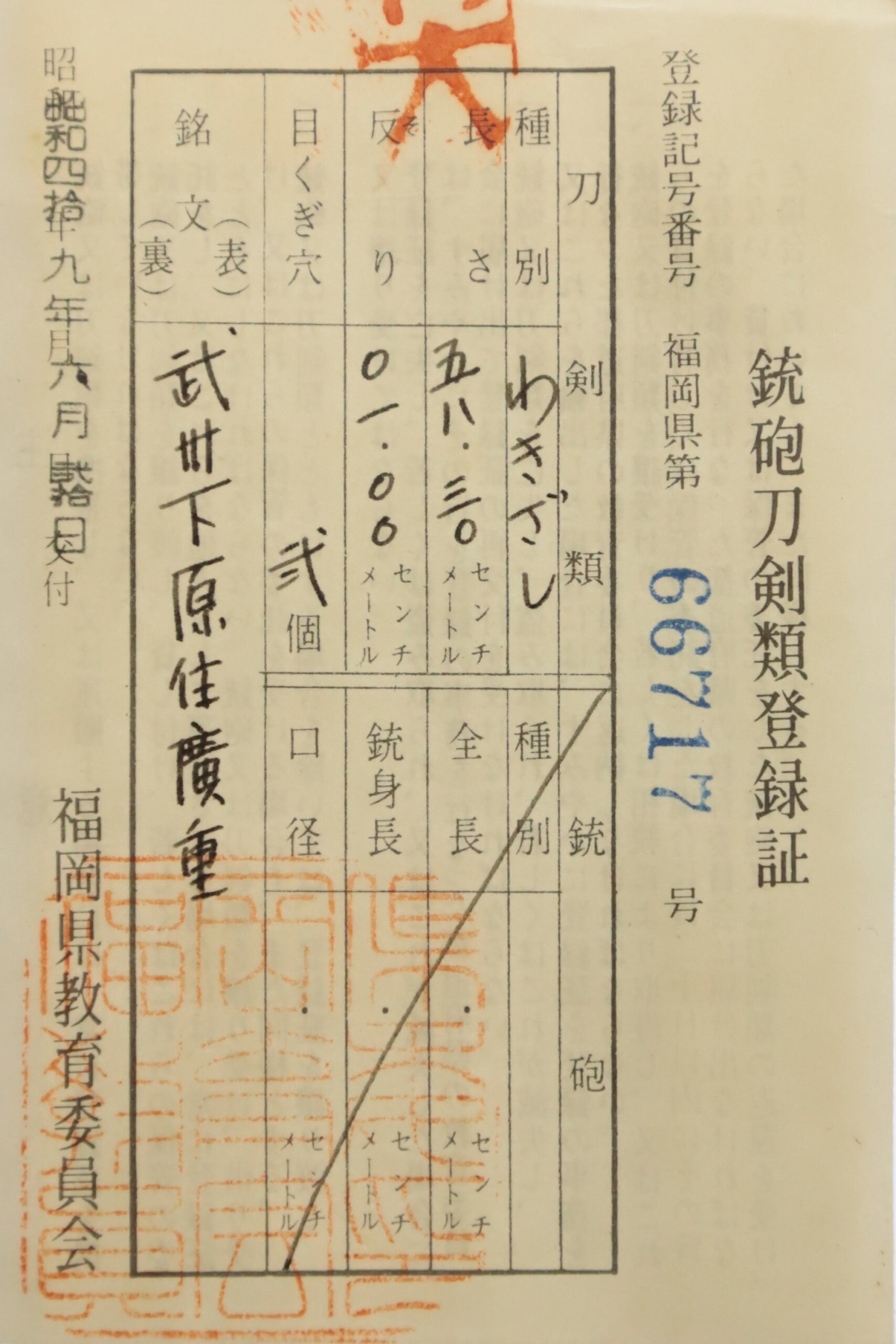
This blade was forged by Bushu Shitahara Jyu Hiroshige(武州下原住広重). Shitahara is the name of the area in Hachioji city in Tokyo area today where he created this blade. According to NBTHK that authenticated this blade, it was forged approximately in the early Edo period (Early-Mid 17th century). We made a phone call to them to confirm it. Hiroshige belonged to the Bushu Shitahara school, located in today’s Tokyo (Hachioji city). It is said that Yamamoto Norishige founded the school, and it thrived from the end of the Muromachi period to the late Edo period (Late 16th century to Late 19th century). Shitahara Kaji is the group of swordsmiths under the Hojo clan’s auspicious, powerful feudal line during the late Muromachi period. After the Toyotomi clan destroyed the Hojo clan in the Azuchi Momoyama period, Shitahara started to serve the Tokugawa clan as Okakae Kaji, swordsmiths exclusively working for a specific feudal family. Most of the Shitahara swordsmith’s real sir name was Yamamoto. They especially flourished during the late Muromachi period-early Edo period. They kept forging for the Tokugawa clan until the end of the Edo period. Among the Bushu Shitahara group, Hiroshige was one of the most famous ones. The maker’s name, Hiroshige, lasted for several generations. Homare Kizu (誉疵) We see what appears to be a Homare Kizu (誉疵), which tells us that this blade was used in a battle. Homare means honorable, and Homare Kizu is considered a good blade characteristic that tells us its history. This blade is appraised as a Tokubetsu Hozon Token(特別保存刀剣) issued by NBTHK(Nihon Bijutsu Touken Hozon Kyokai:日本美術刀剣保存協会). *Please keep in mind there is visible Kitae Kizu on the Mune (backbone of the blade). Tsuka and Menuki You would find the different insect-designed Menuki on each side of the handle. While most of the colorings have already faded due to aging, golden coloring is applied to these Menuki surfaces. We are unsure about the model of the upper Menuki. On the other side of this handle, its motif is a Semi (蝉, cicada). The cicada symbolizes immortality or life after death. Cicadas live underground as nymphs and change their shapes to become adults. When it happens, they will come out to the ground, grow wings, and fly in the sky. This series of situations was likened to the figure of people who became mountain hermits and ascended to the hermit world. This insect pattern has been appreciated for its honorable impression. Tsuba and Habaki It seems ten horses are engraved on the front of this Tsuba. On the other hand, it seems nine horses are engraved on its backside. In Japan, horses were thought of as vehicles for gods to be dedicated to shrines in ancient times. There are various horse designs. Among them, there is a design that composed of nine horses. In Japanese, there are horse-related words “馬九行久” and “馬九行駆.” Both these words are pronounced as Umakuiku (うまくいく). Uma (馬) is a horse, and Umakuiku itself means everything will go well. If we interpret the string of characters listed in Kanji (漢字) in a dictionary sense, it means that nine horses are going. However, it has long been said that the design combining nine horses brings the following nine fortunes: game luck, financial luck, career luck, family luck, love luck, health luck, prosperous business, plentiful harvest, and exam pass. Such auspicious meanings might have inspired this Tsuba’s design. We would also like to talk about horses from the perspective of Samurai culture. Horses had been used as a tool for rituals and festivals. After the age of the Samurai warriors appeared, wearing large armor or performing archery and riding a hose became martial arts. Equestrian tactics became the pillar of military action and security activities. According to a theory, that is the reason that the Japanese sword began to have a curve to make it suitable for slashing (the Japanese sword was straight in the beginning). Authentication Paper They authenticated the blade on May 31th in the 5th year of Reiwa (2023). They appraised it as Tokubetsu Hozon Touken, the blade especially worth preserving for Japanese society.

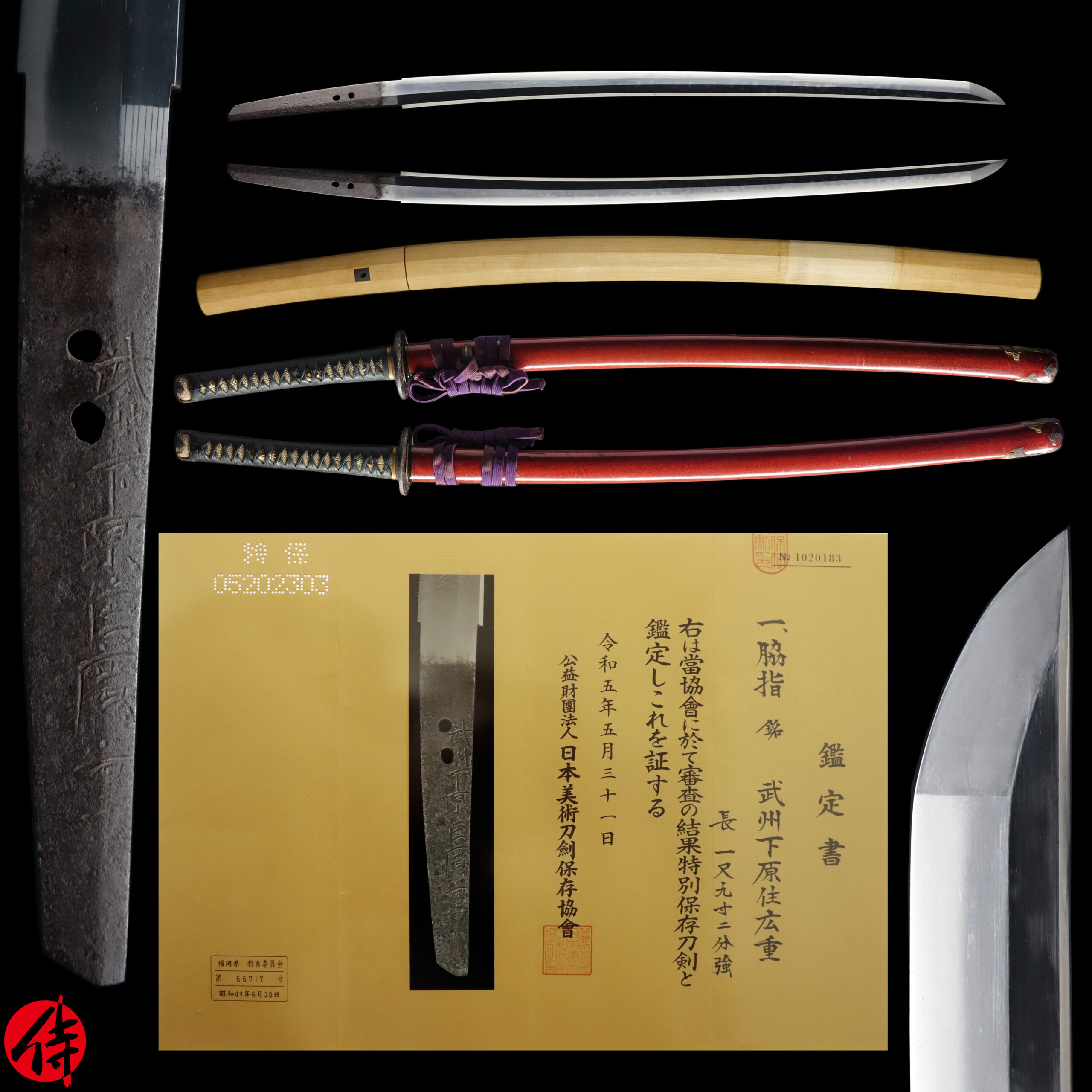
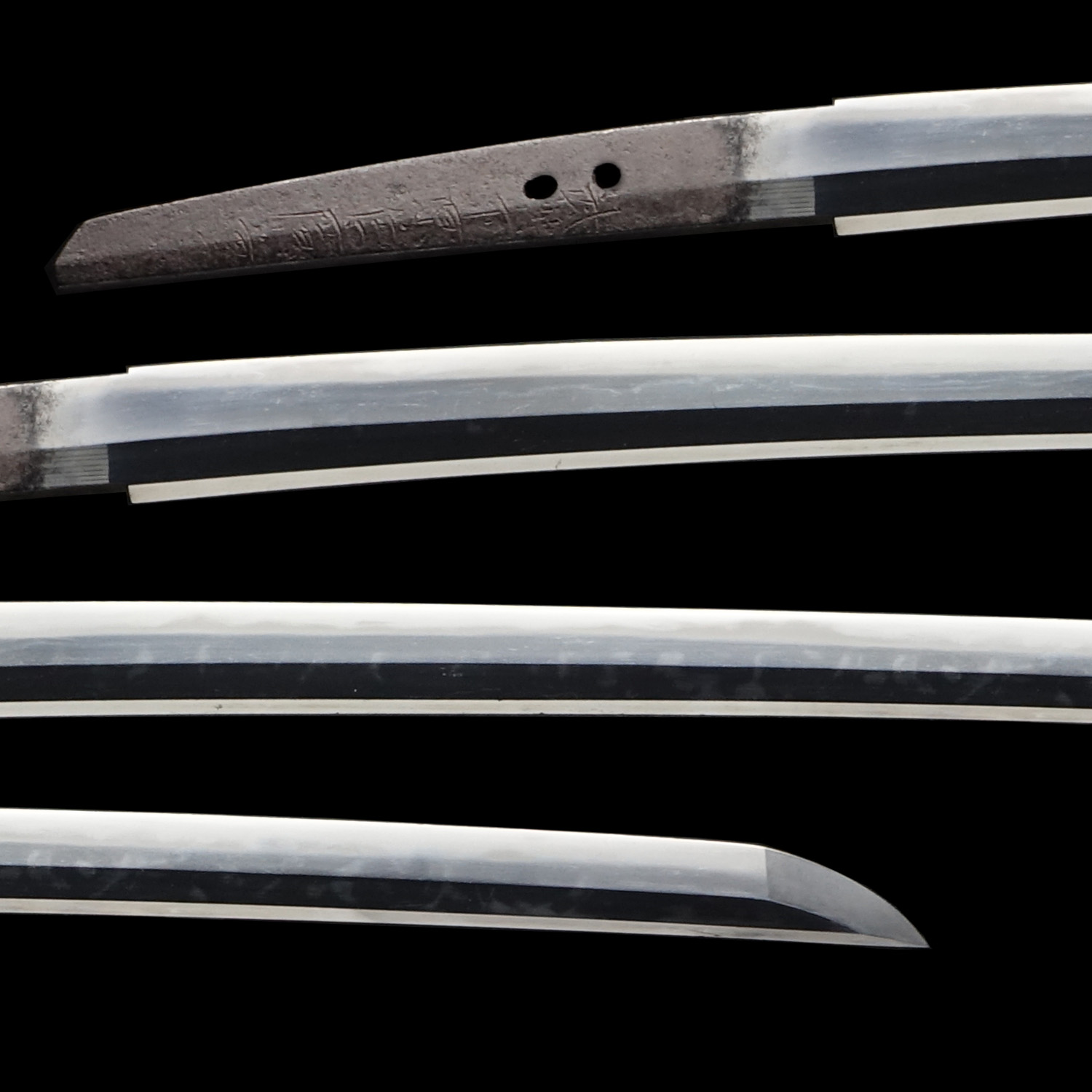
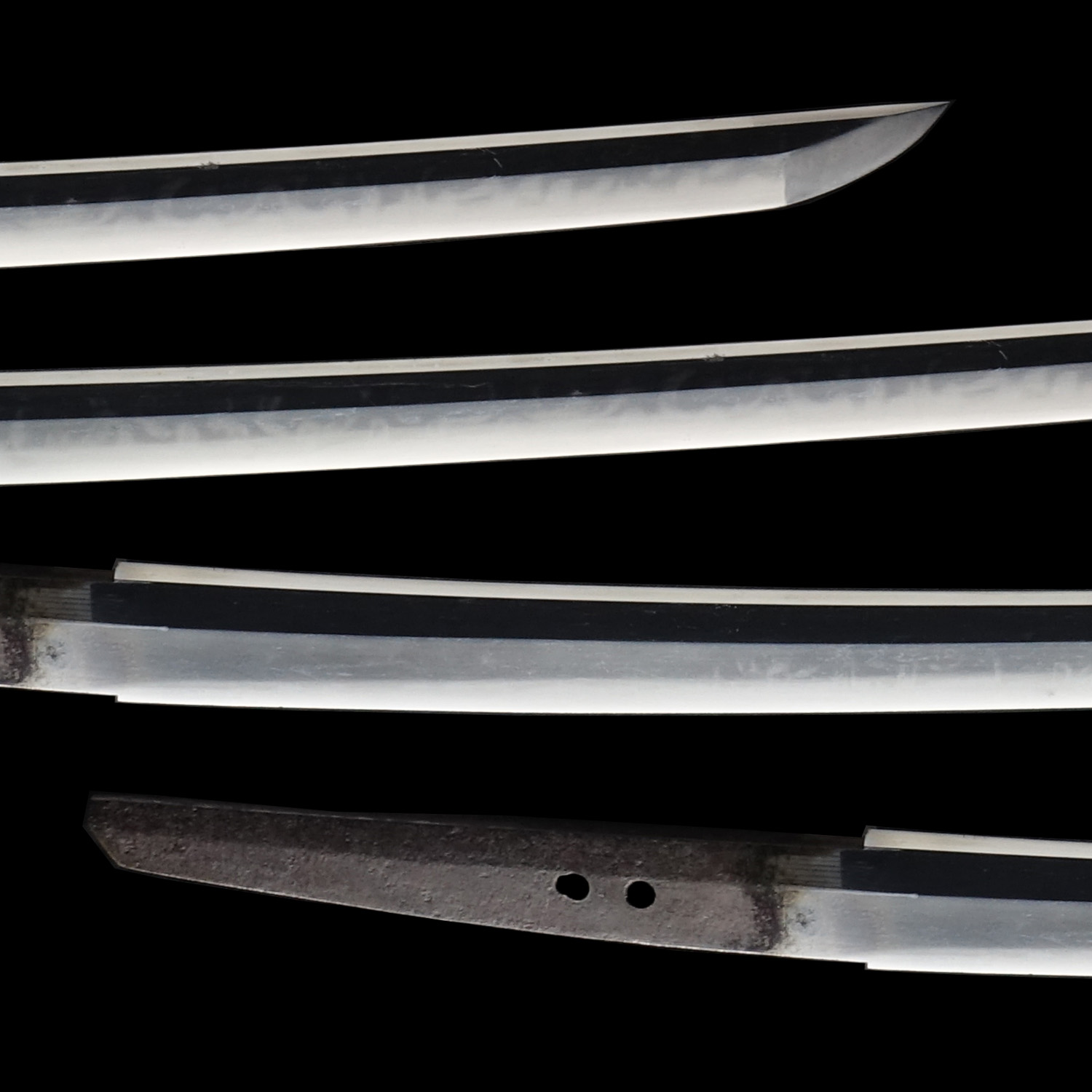
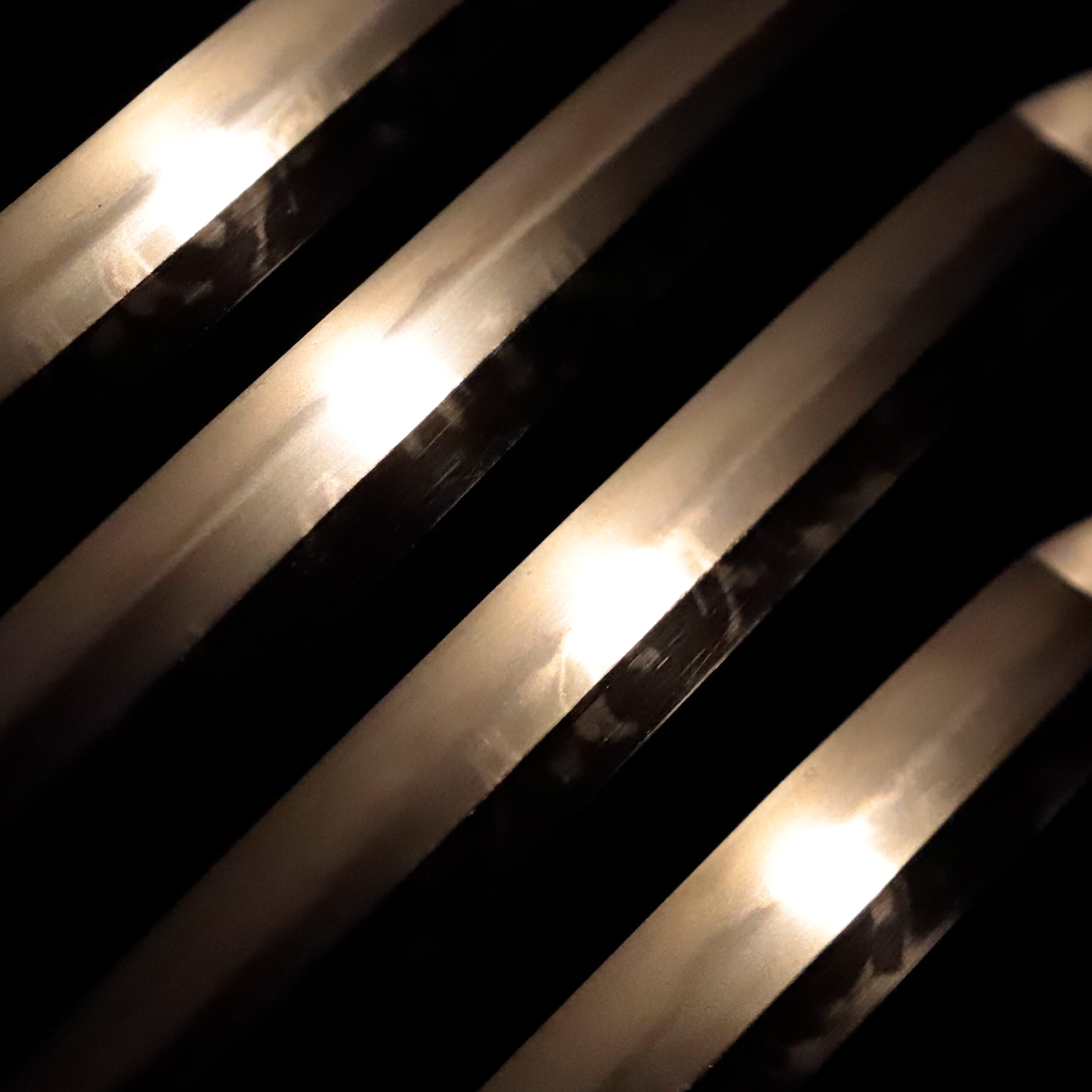
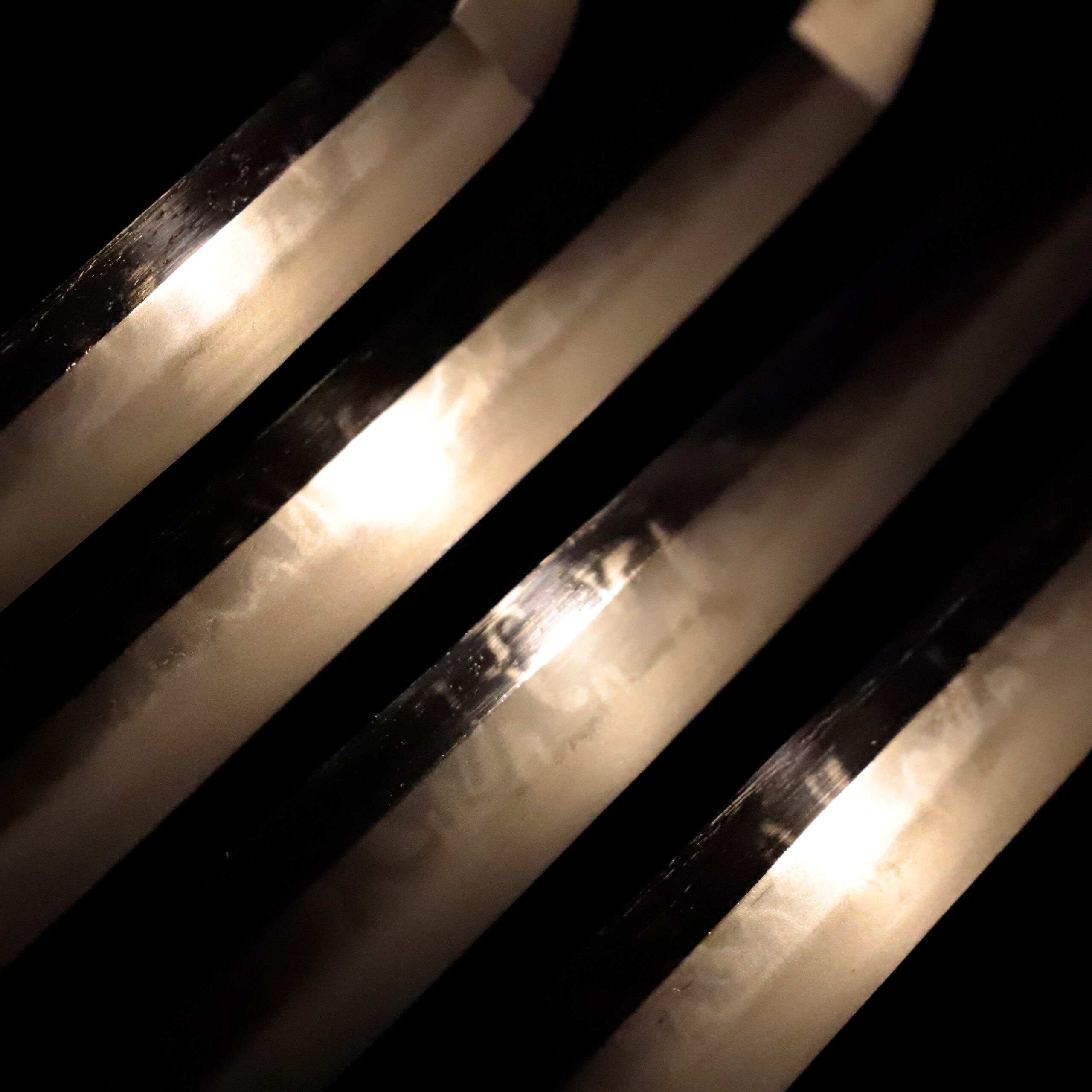
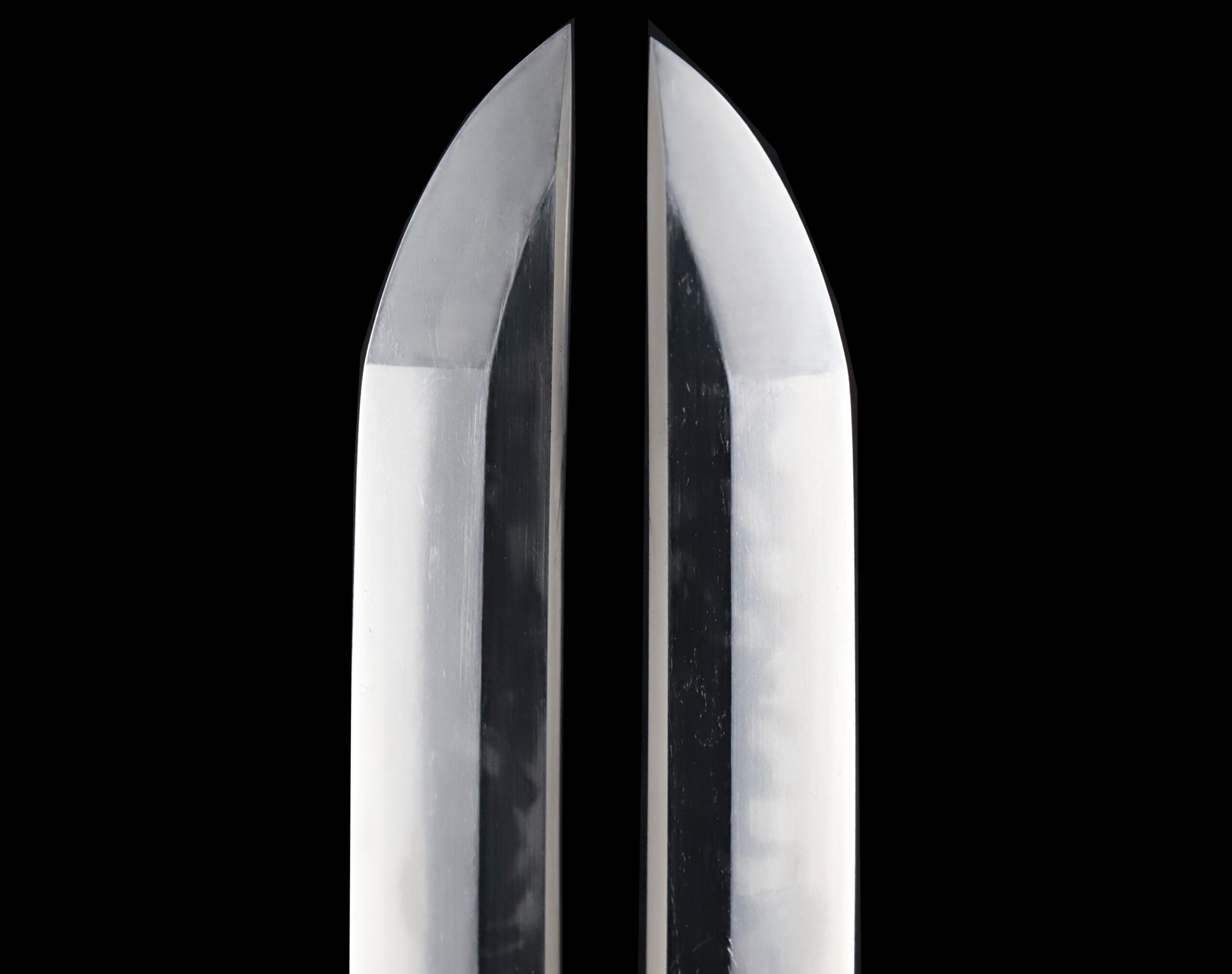
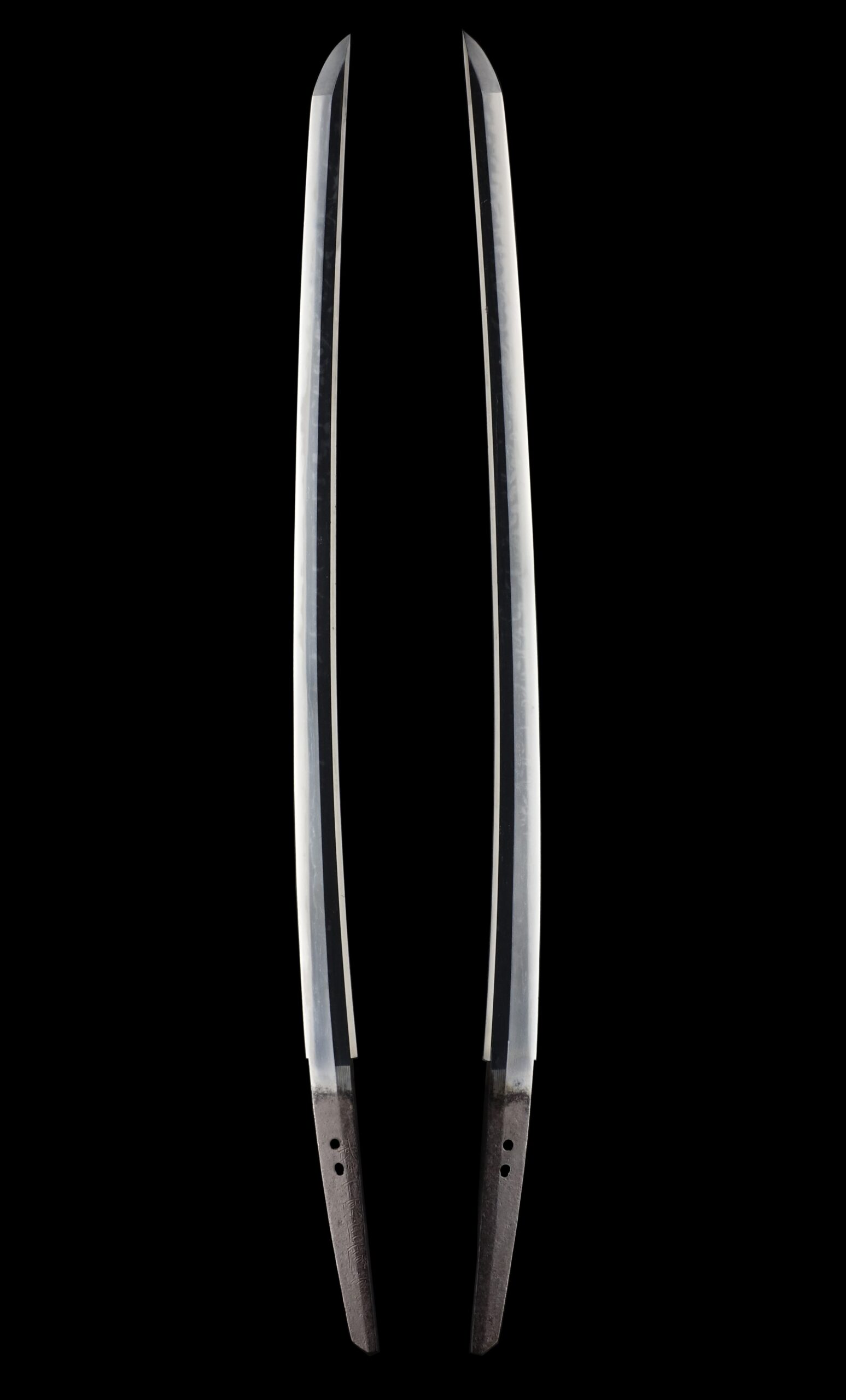
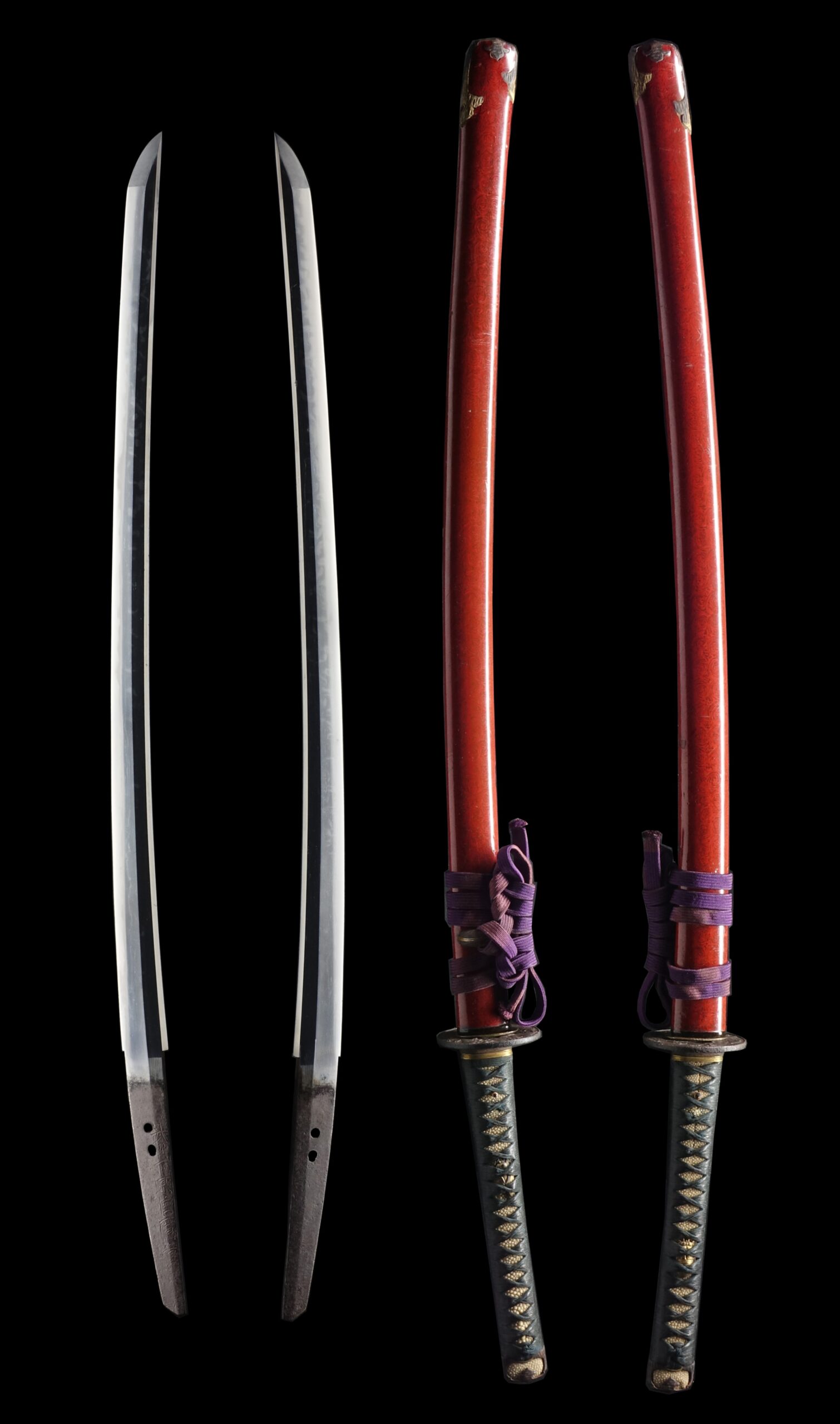
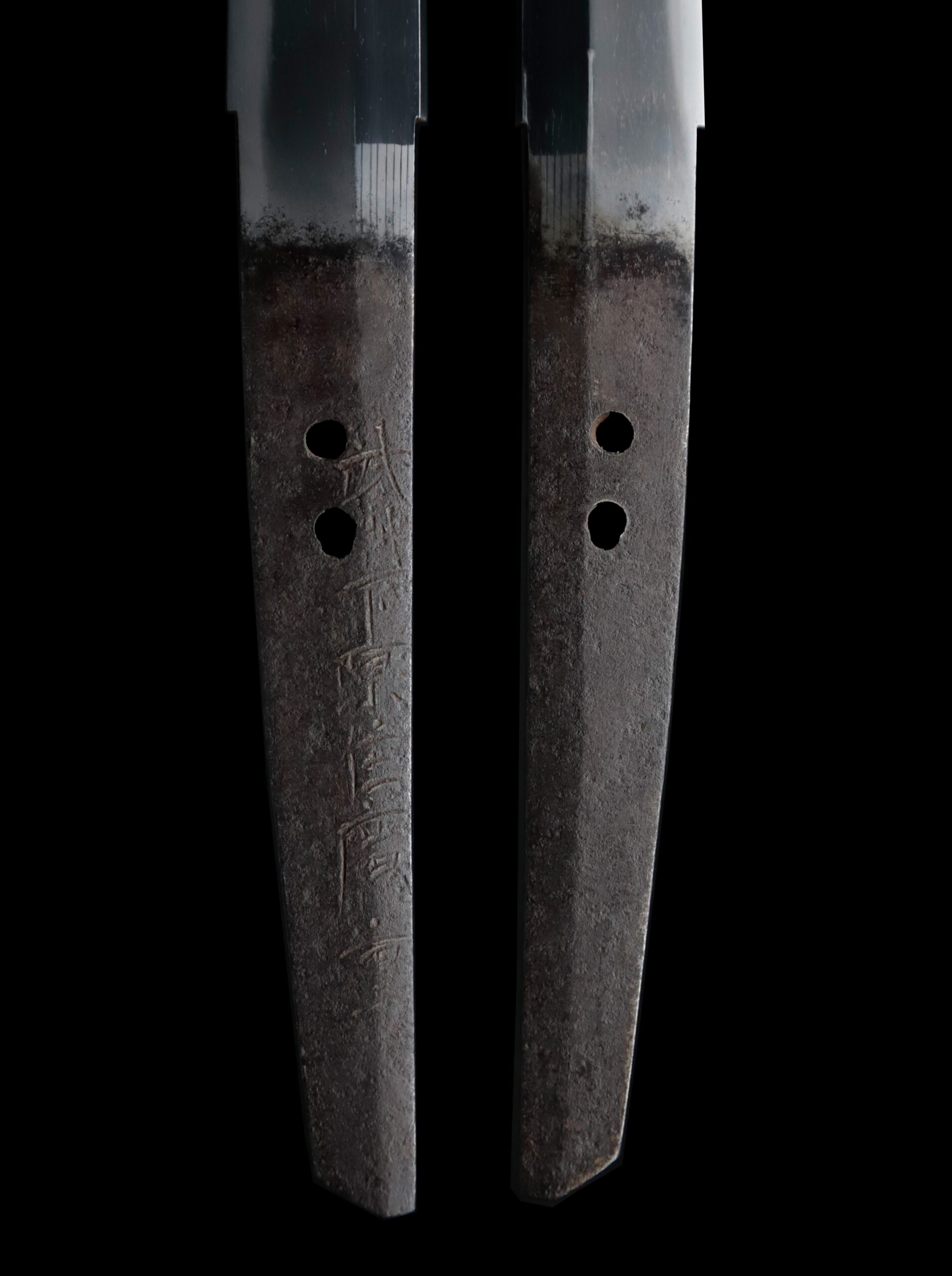
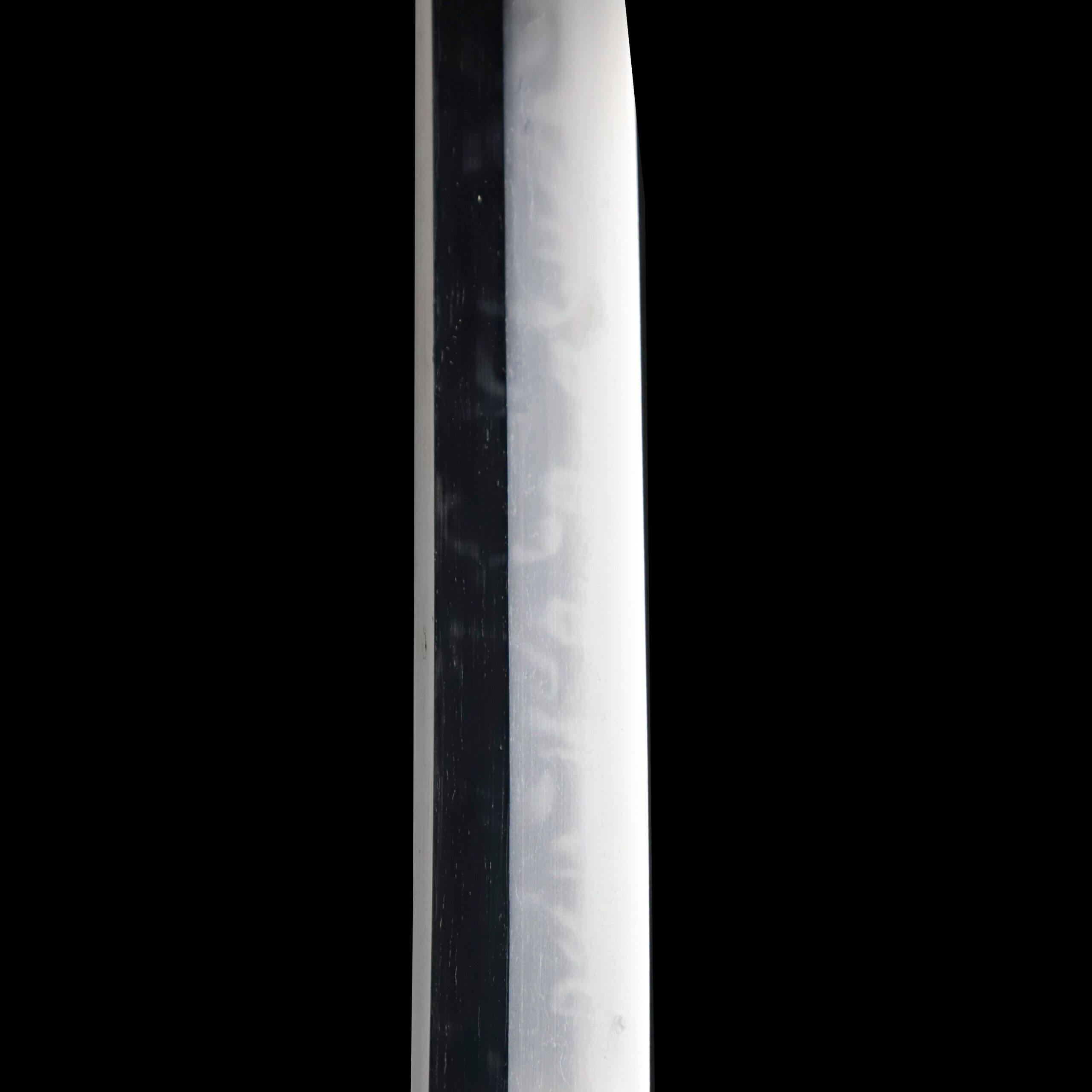
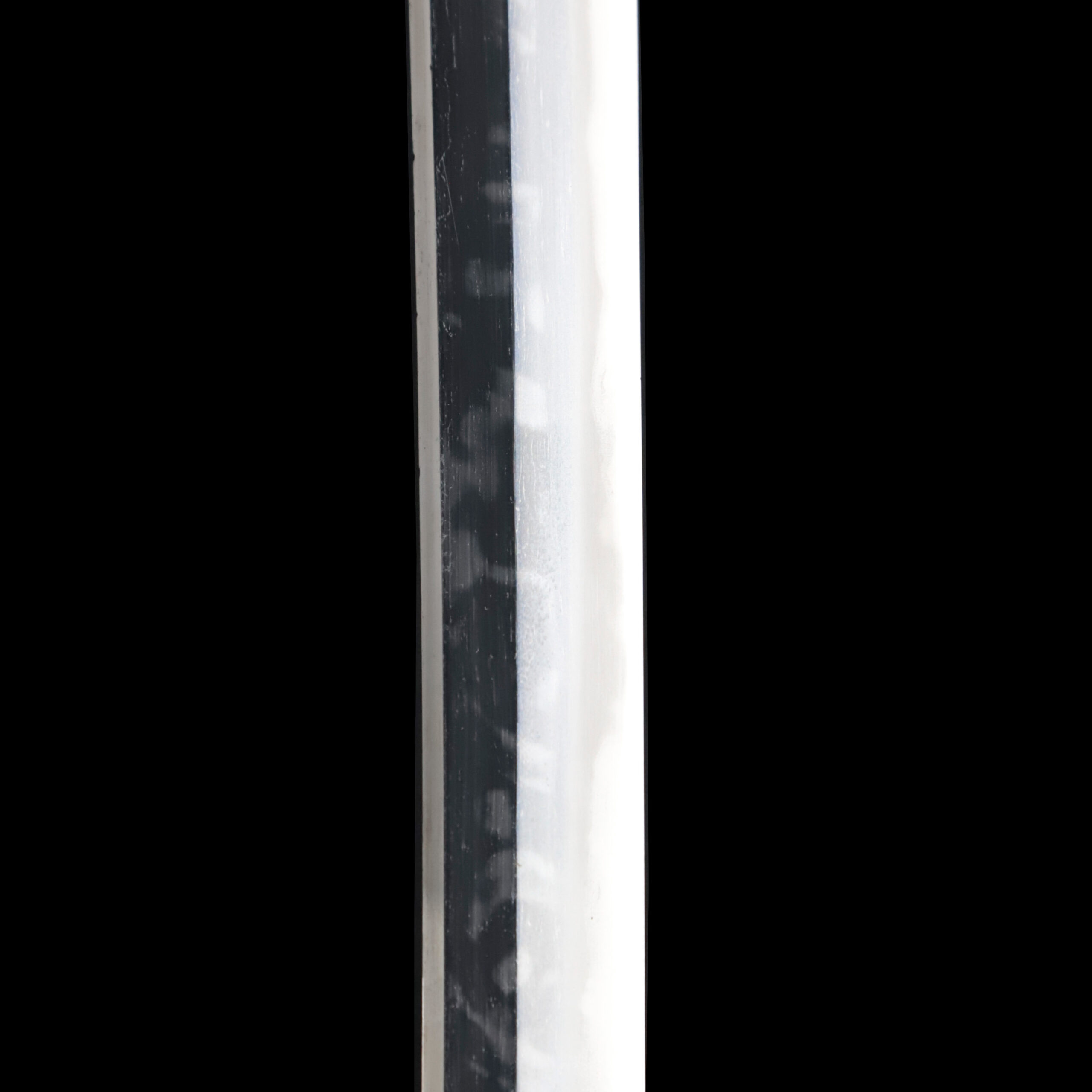
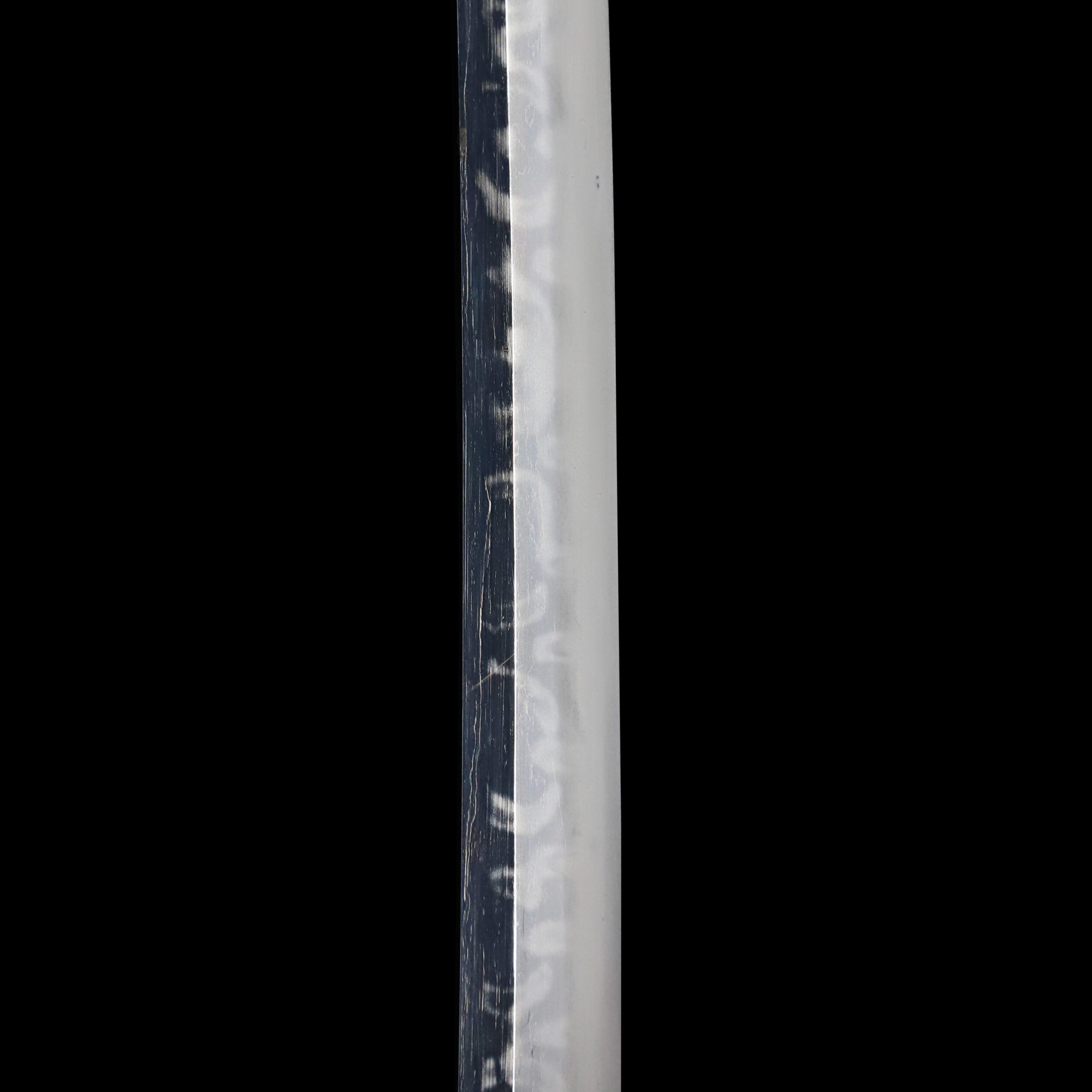
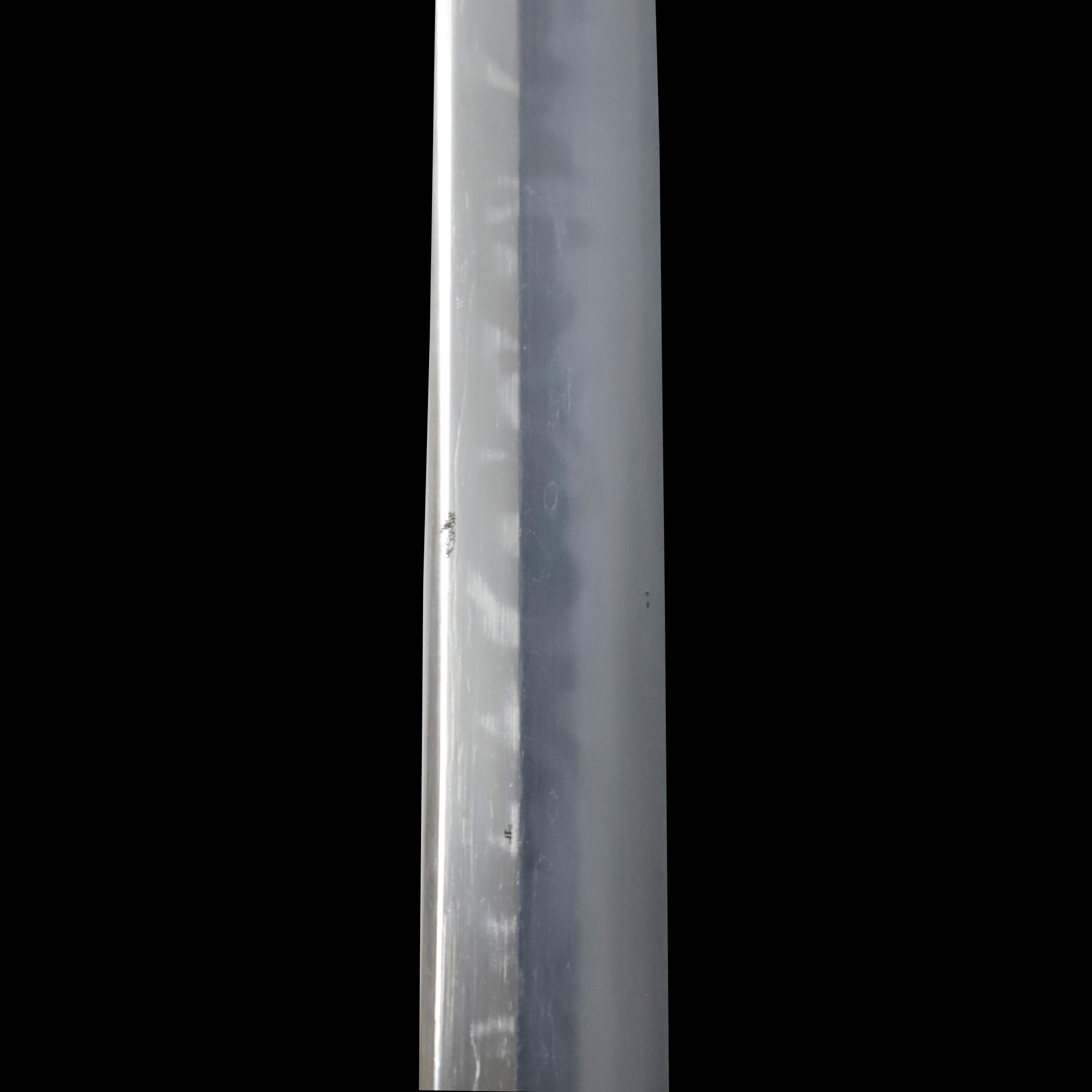
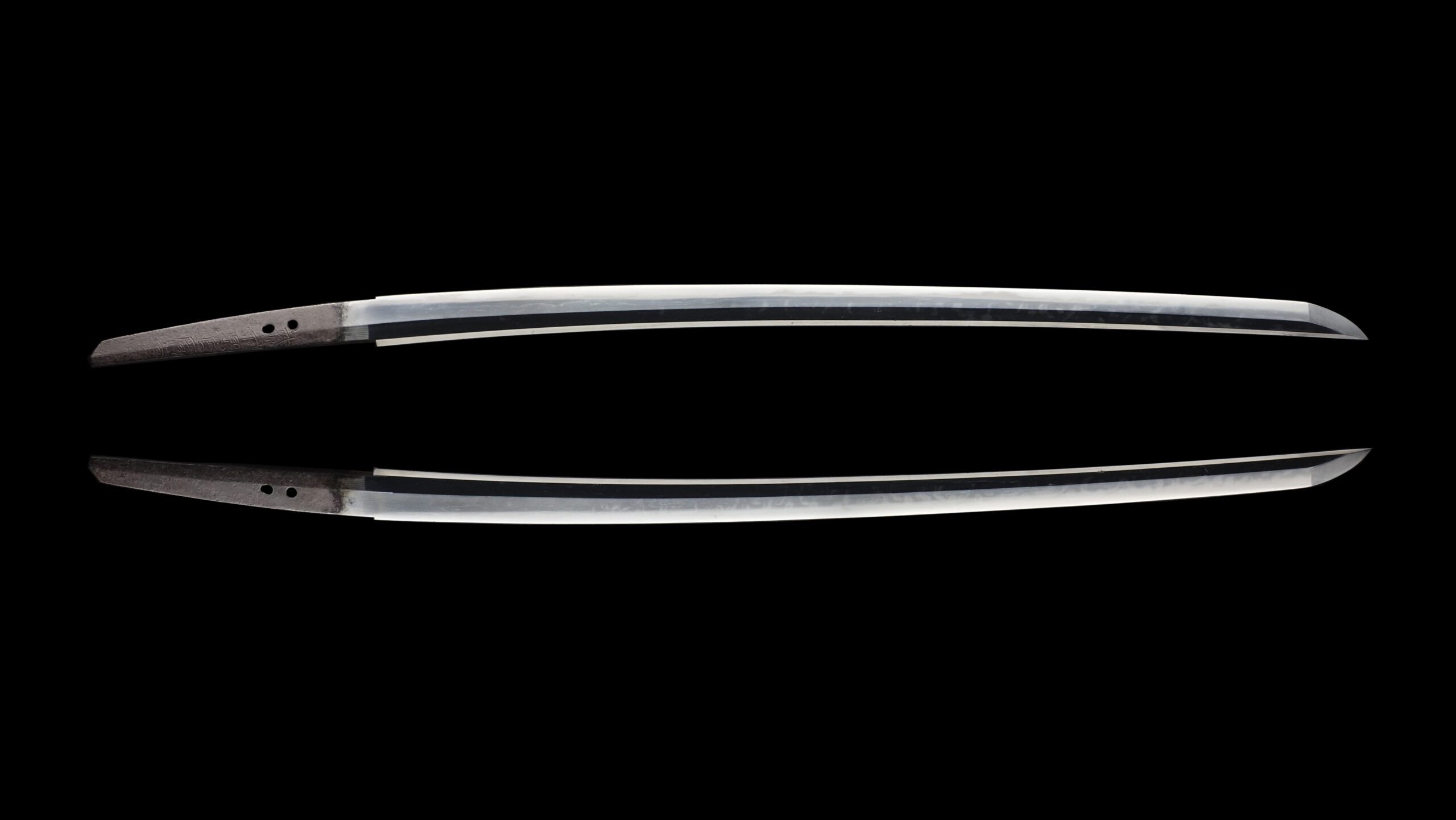
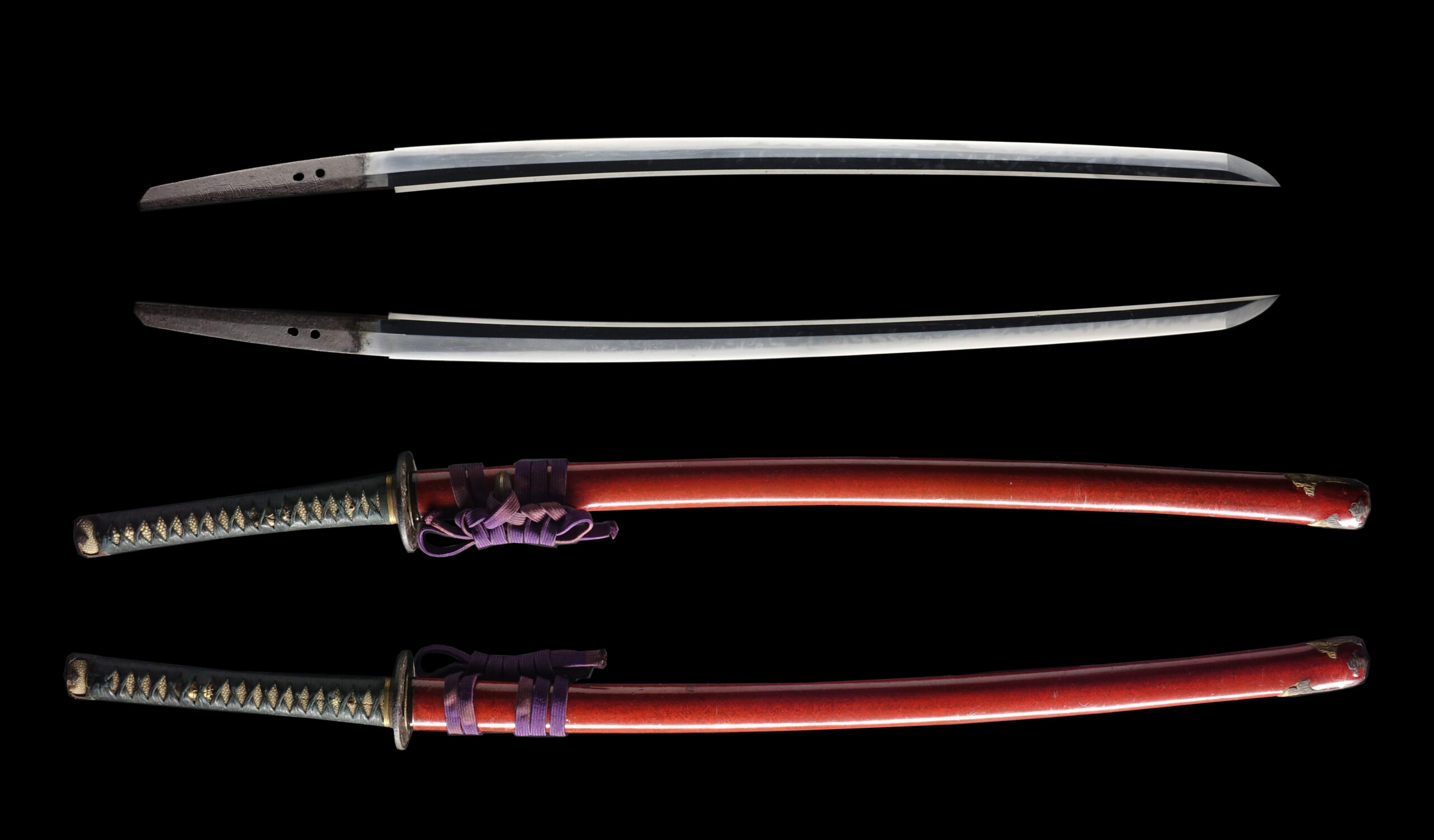
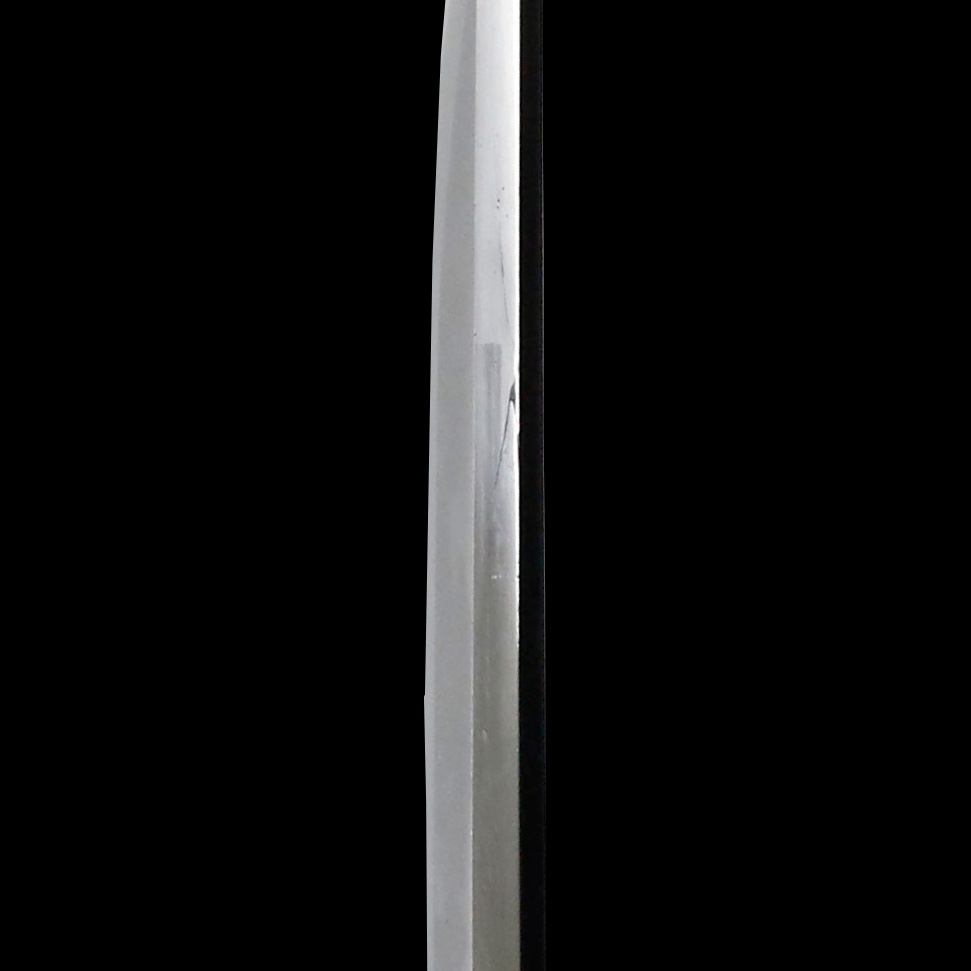
販売店の記載のまま
武蔵 · 1624-1644頃
藤代 上作 · 刀剣大鑑 上位60%
現在2点販売中
江戸時代
江戸は刀の目利きの時代である。本阿弥の鑑定、1719年の享保名物帳、盛んな刀剣書が、戦で抜かれることのなくなった刀を学問の対象へと変えていった。
保存刀剣のうち、出来が一層優れ、保存状態も良好と認められたものです。再刃や、室町・江戸期の多くの無銘作は対象外となり、保存刀剣より高い基準が課されます。
日本美術刀剣保存協会(NBTHK)は、1948年に設立され、文化庁の監督を受ける公益財団法人で、東京・刀剣博物館に本部を置きます。専門の審査員が出品作を直接審査し、美術的・歴史的価値に応じた鑑定書を発行します。NBTHKの鑑定書は、日本刀および刀装具の真正性を示す最も広く認知された基準です。
NBTHK公式サイトReturns/exchanges limited to defects caused by shipping (except willful misconduct or gross negligence by the company); customers must contact within 72 hours of receiving the product.