江戸は刀の目利きの時代である。本阿弥の鑑定、1719年の享保名物帳、盛んな刀剣書が、戦で抜かれることのなくなった刀を学問の対象へと変えていった。
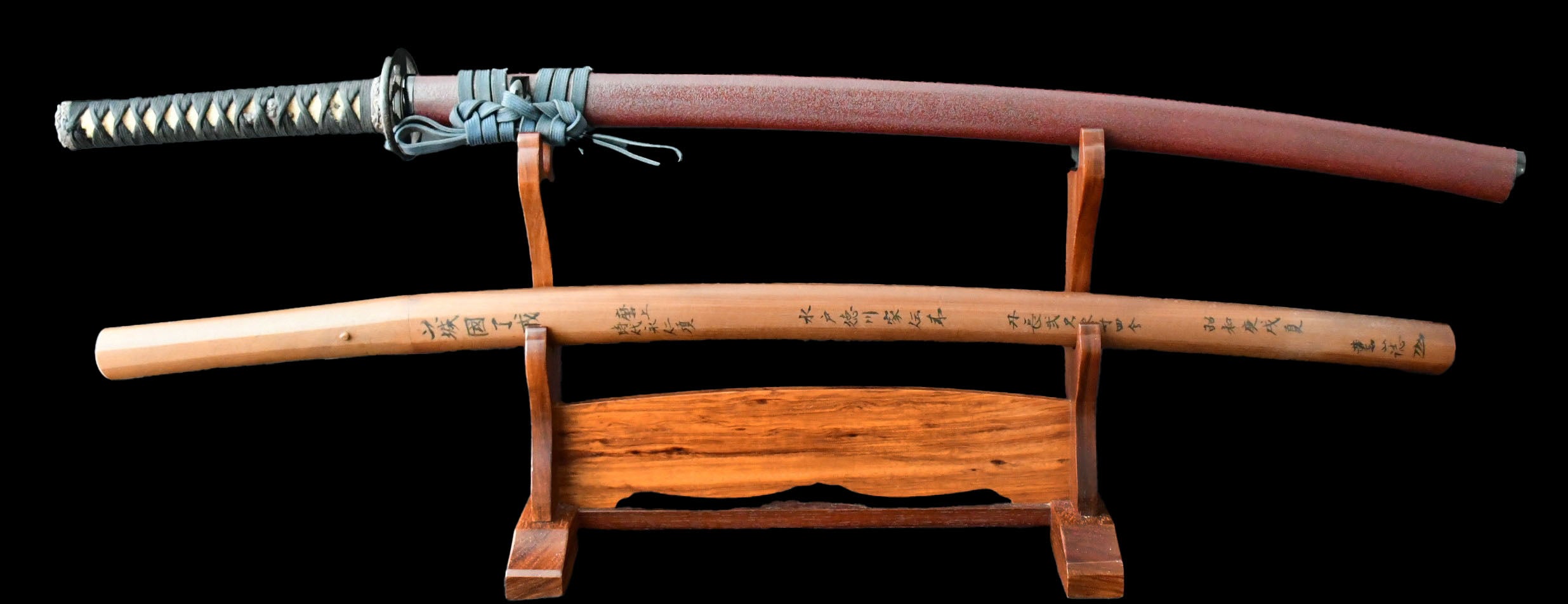
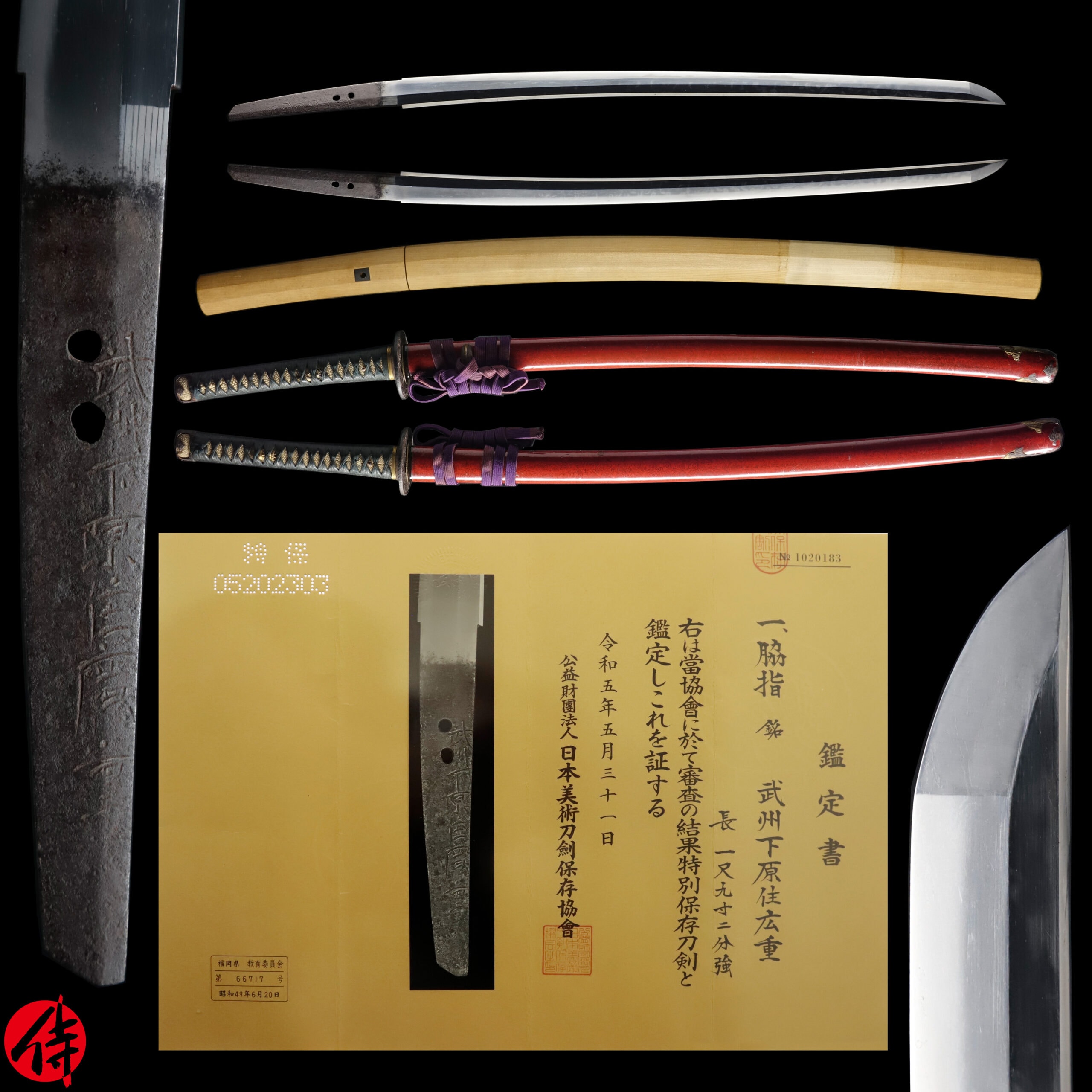
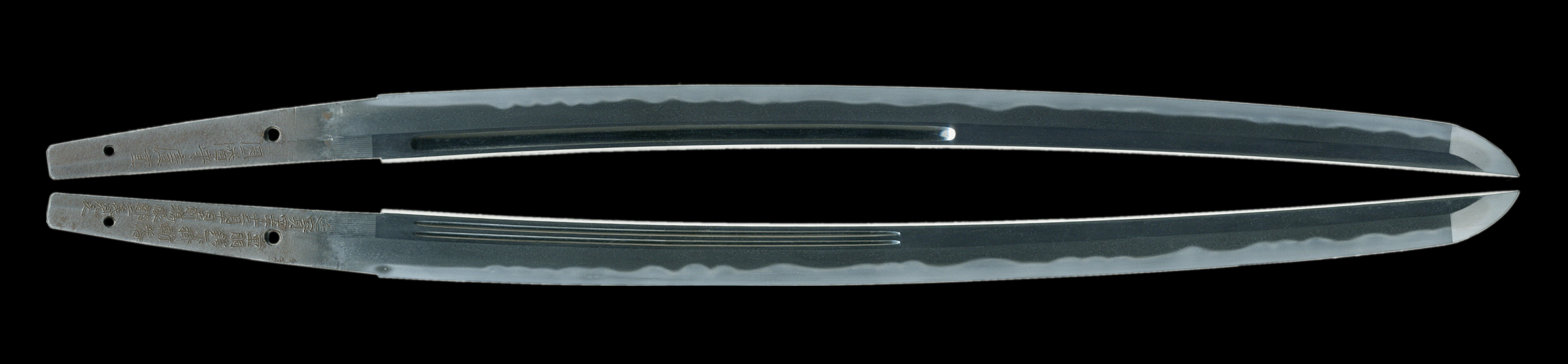
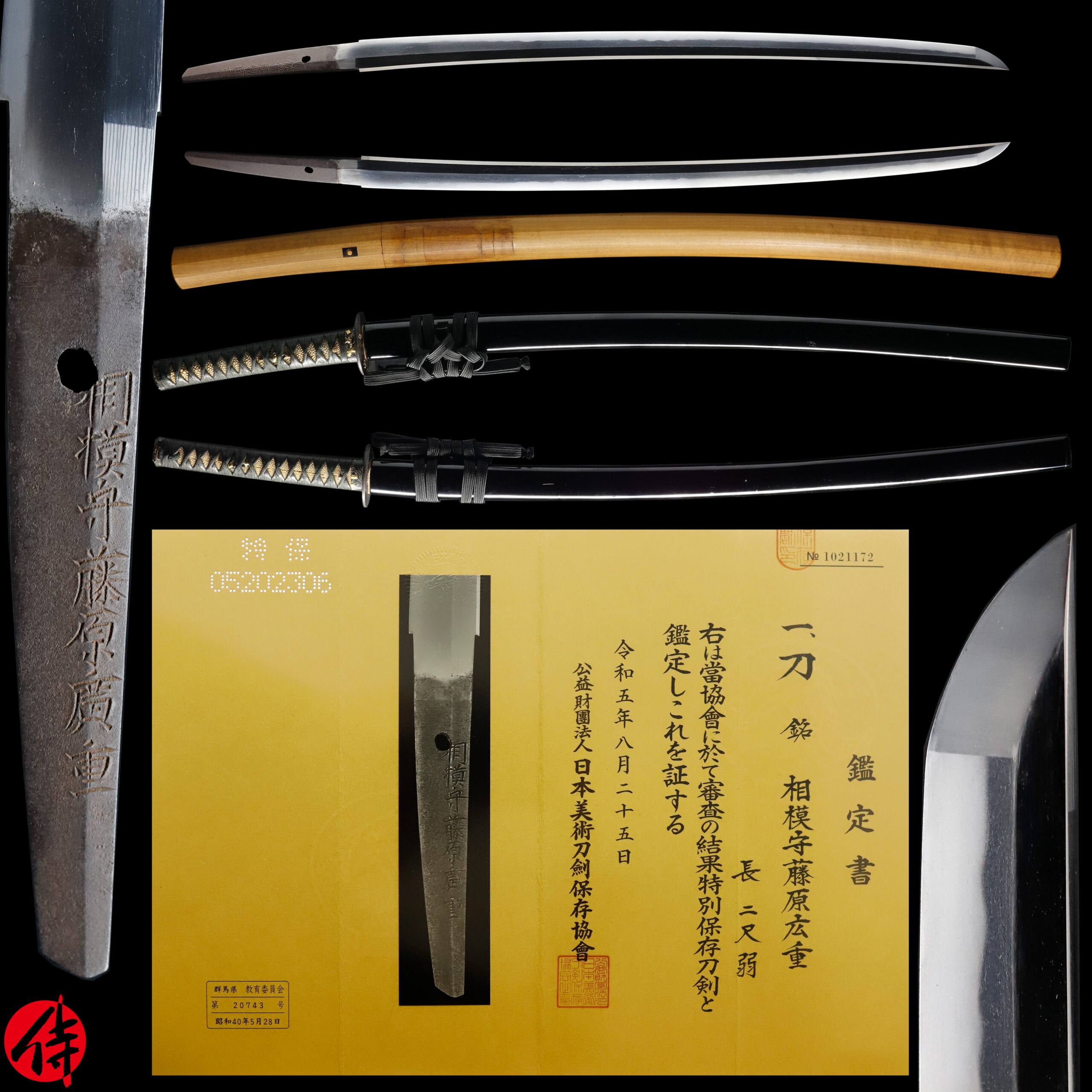
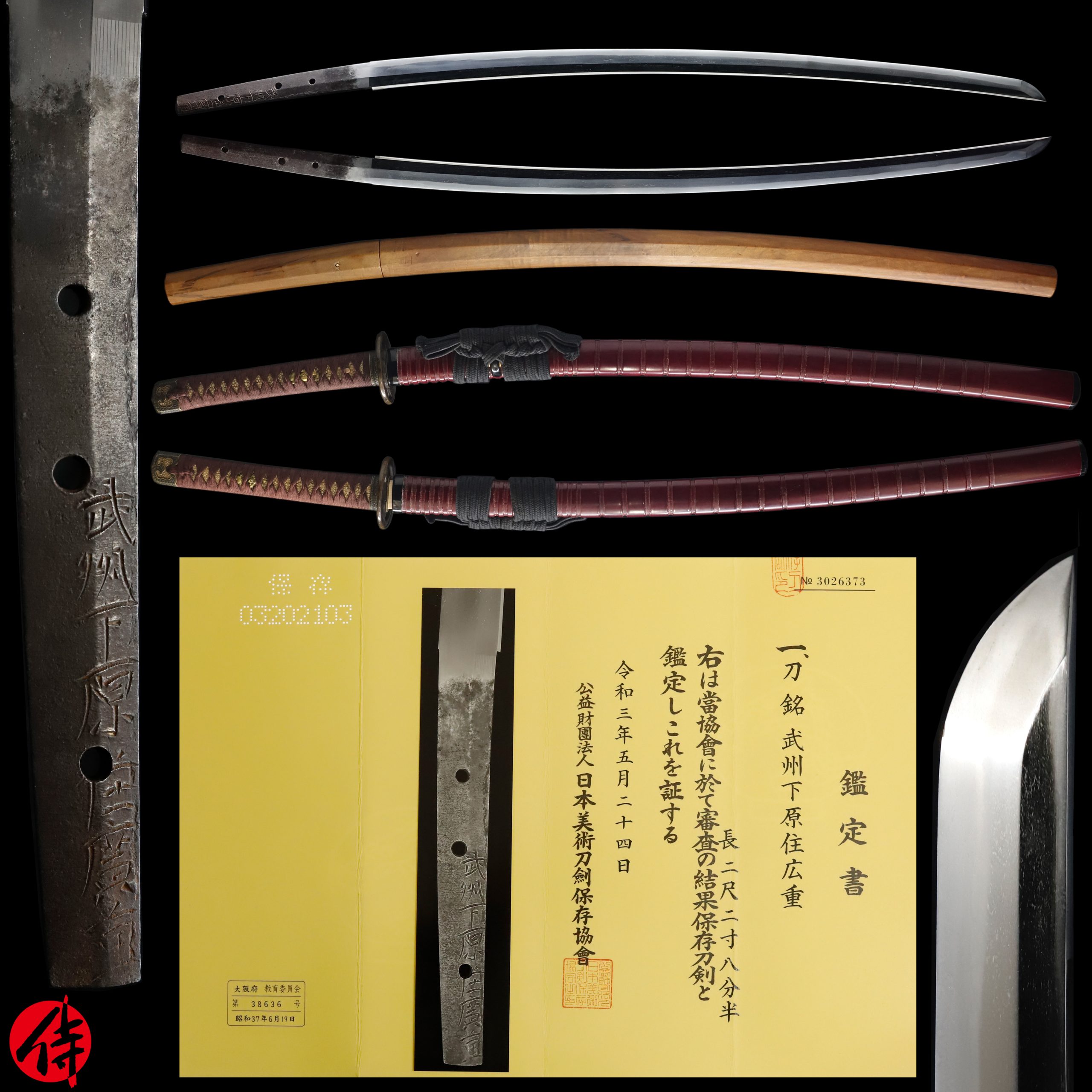
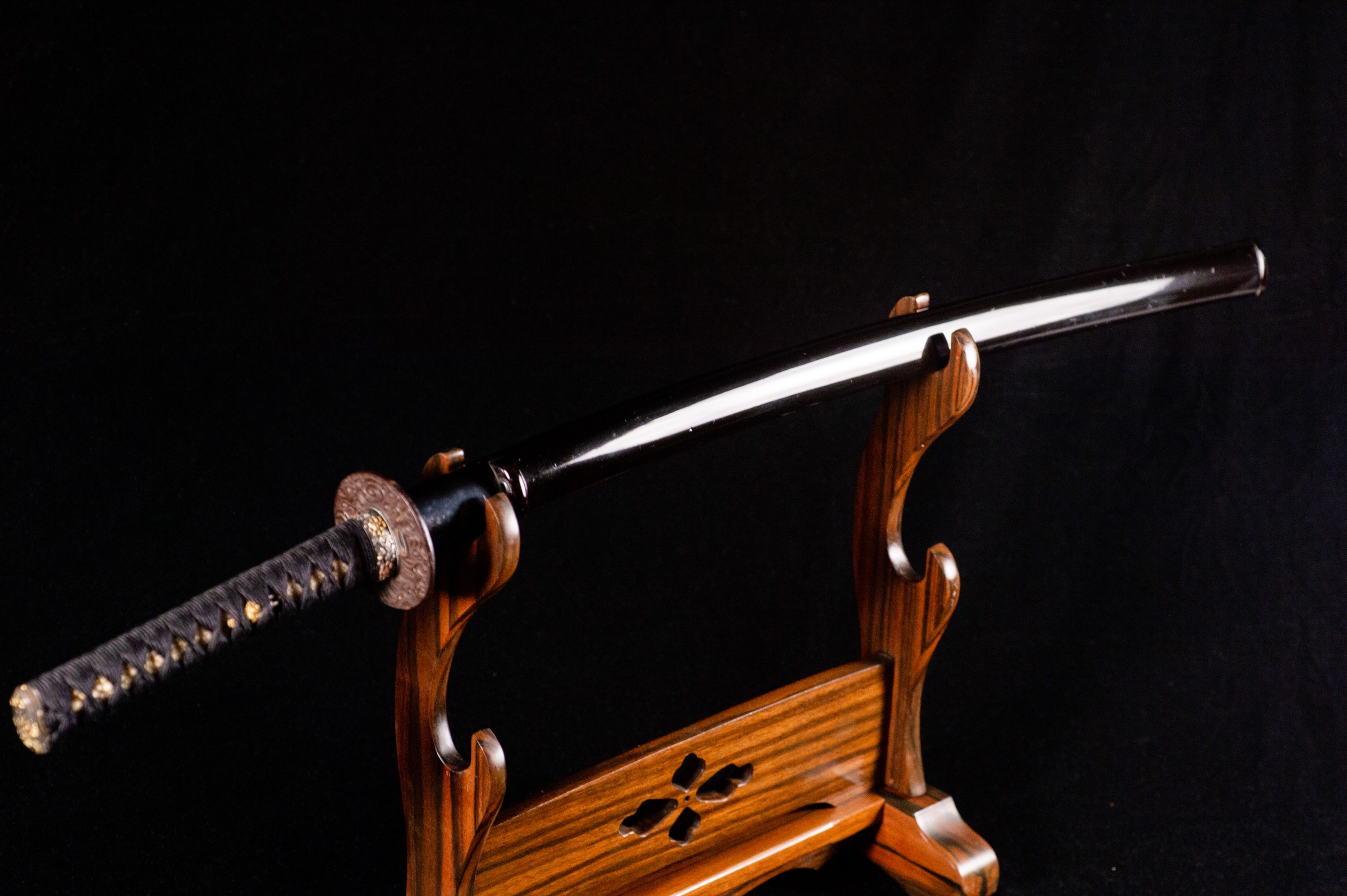
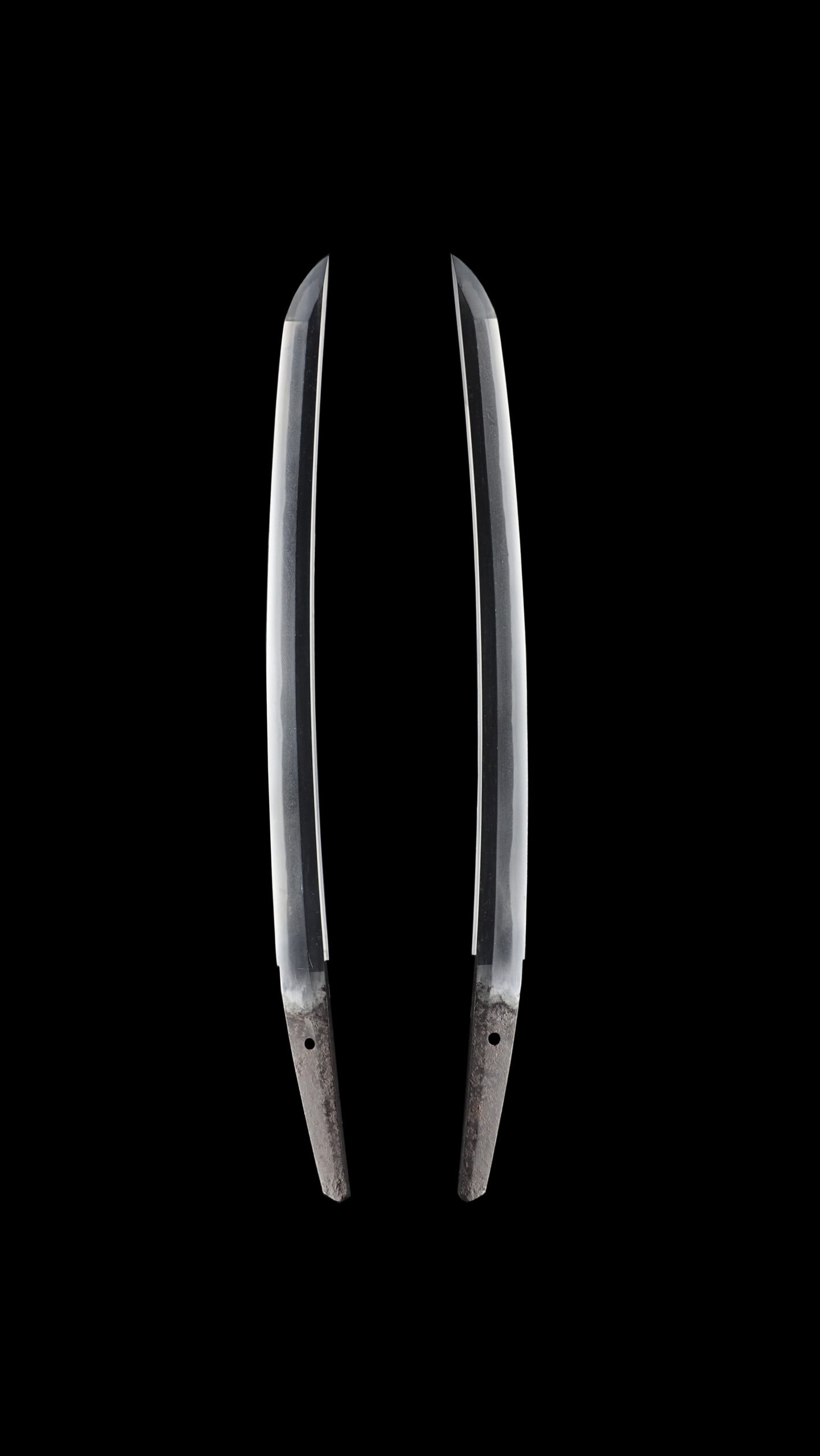
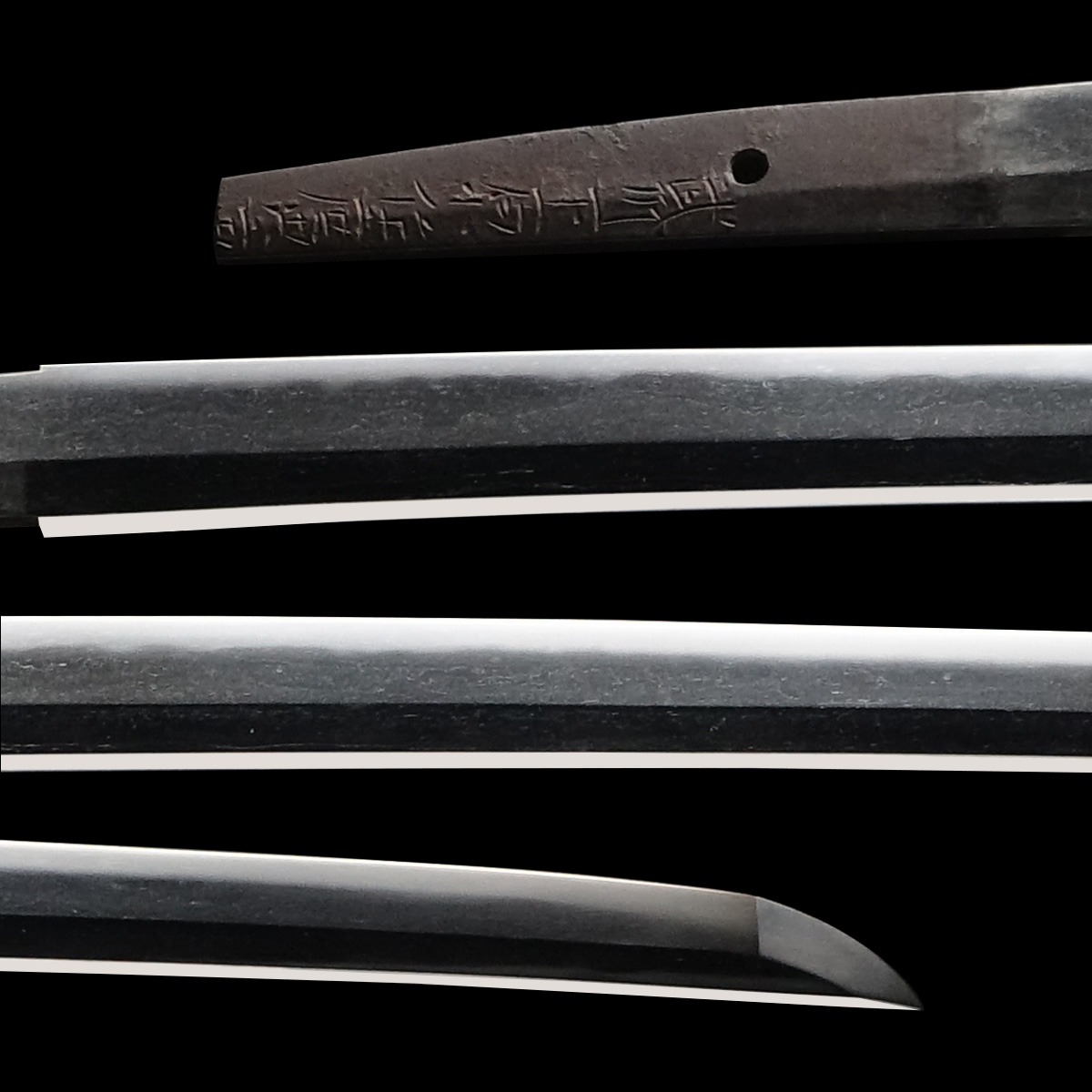
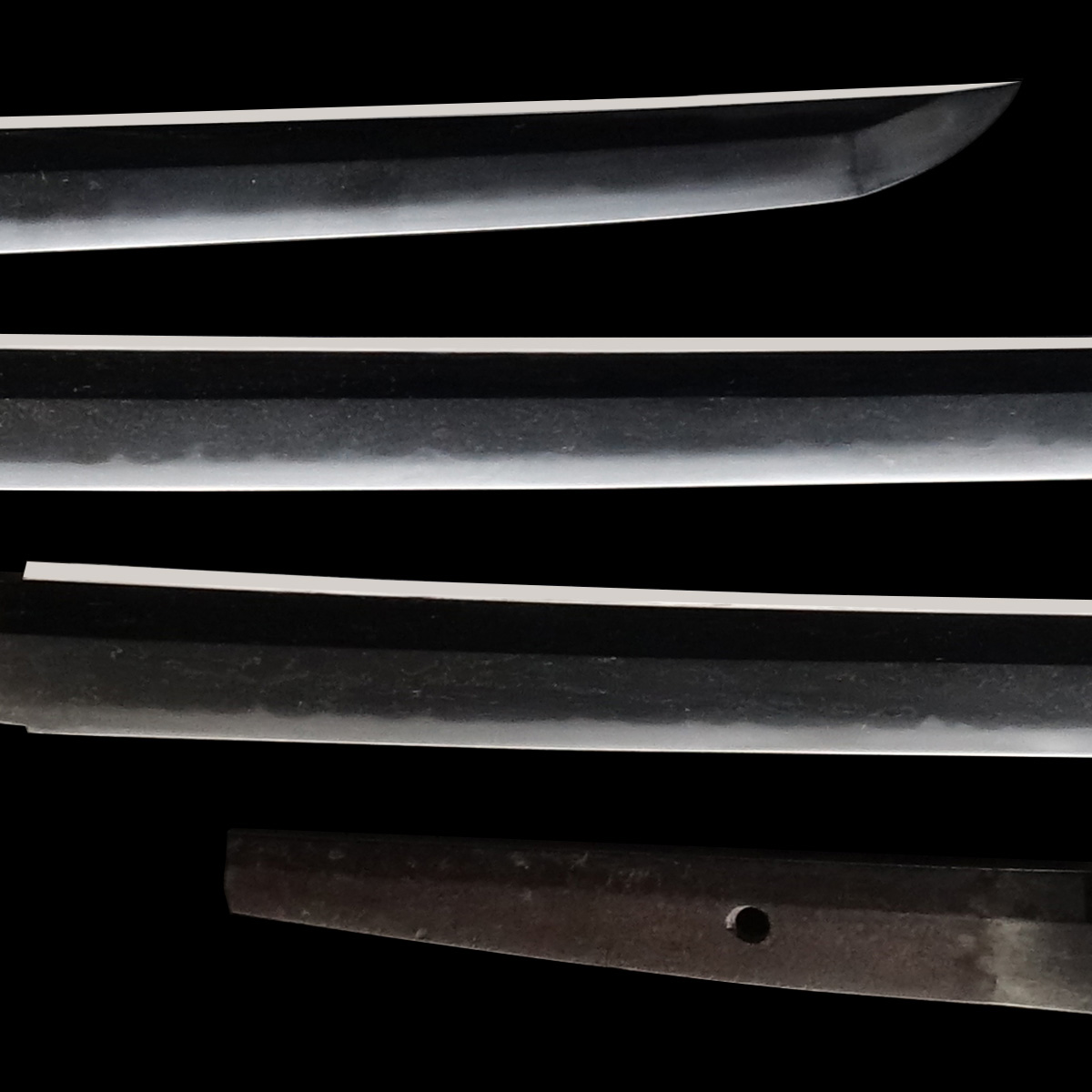
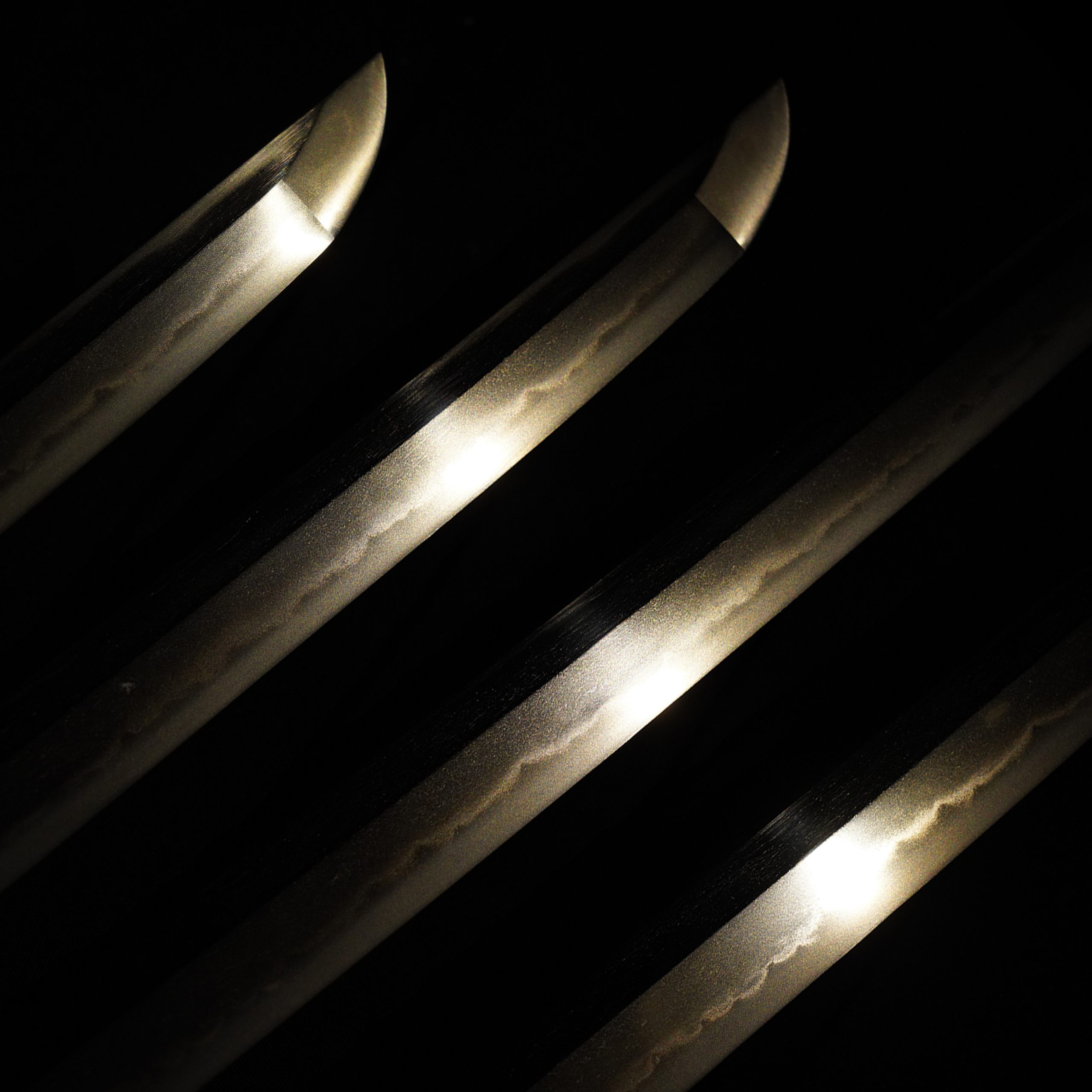
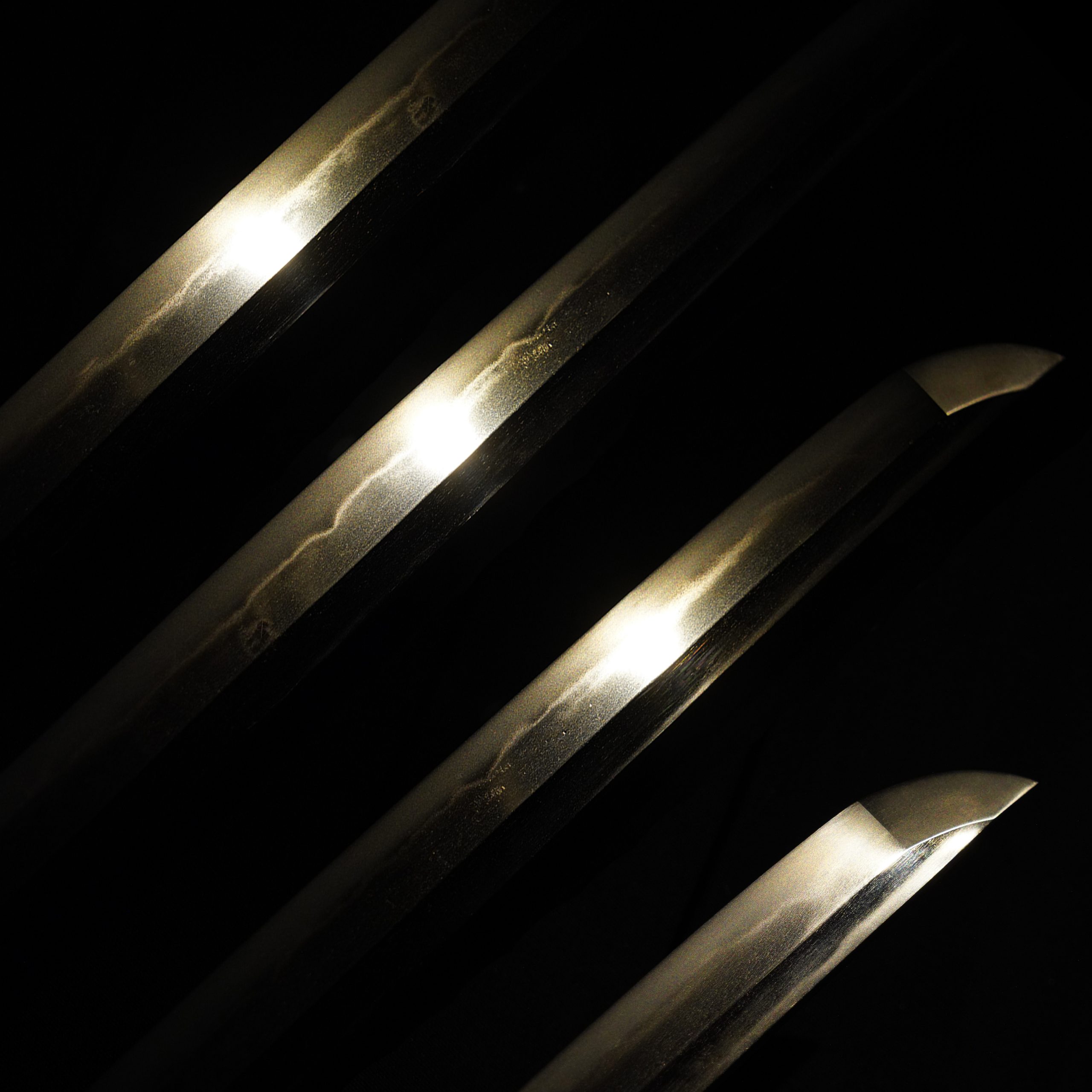
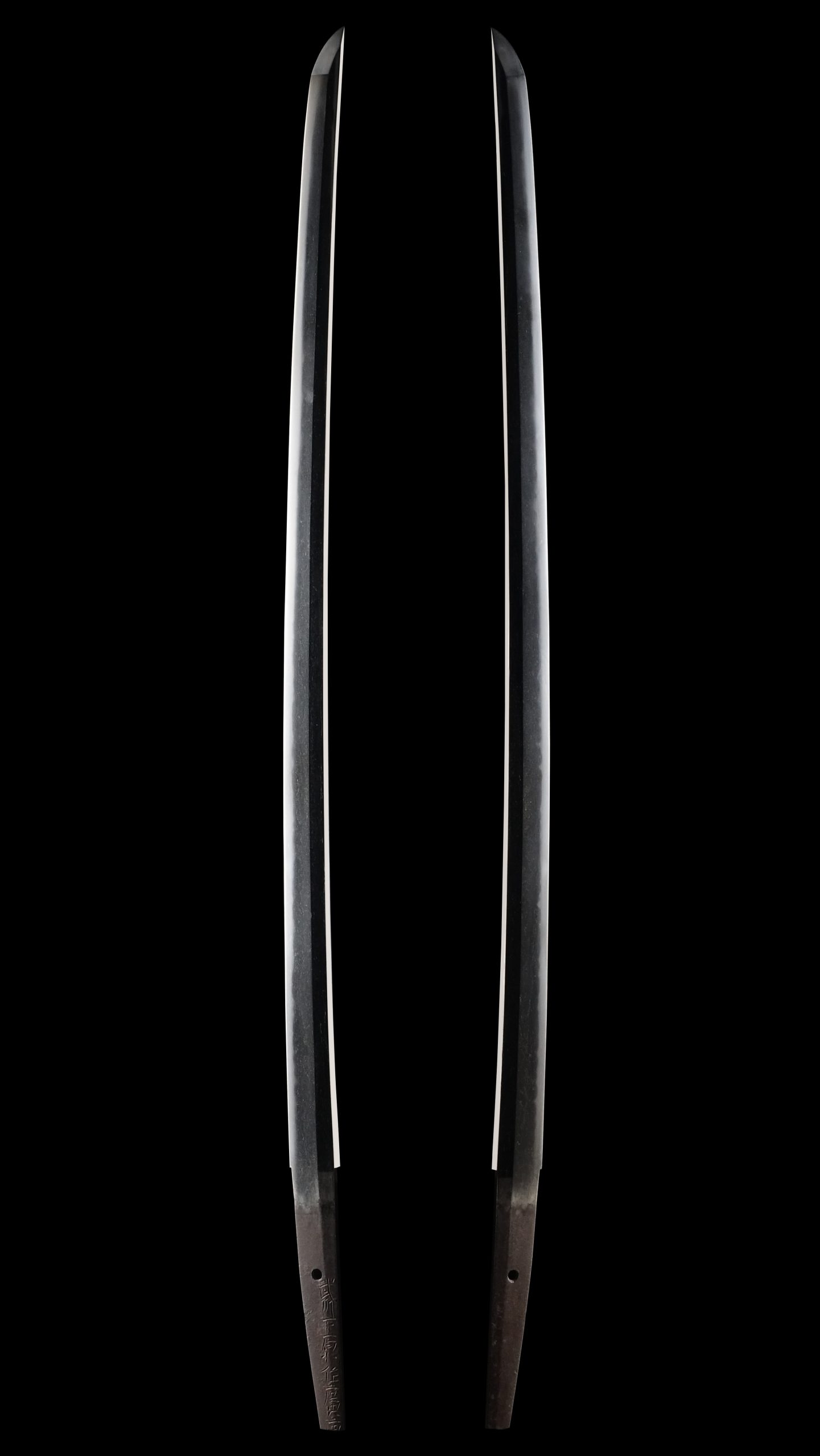
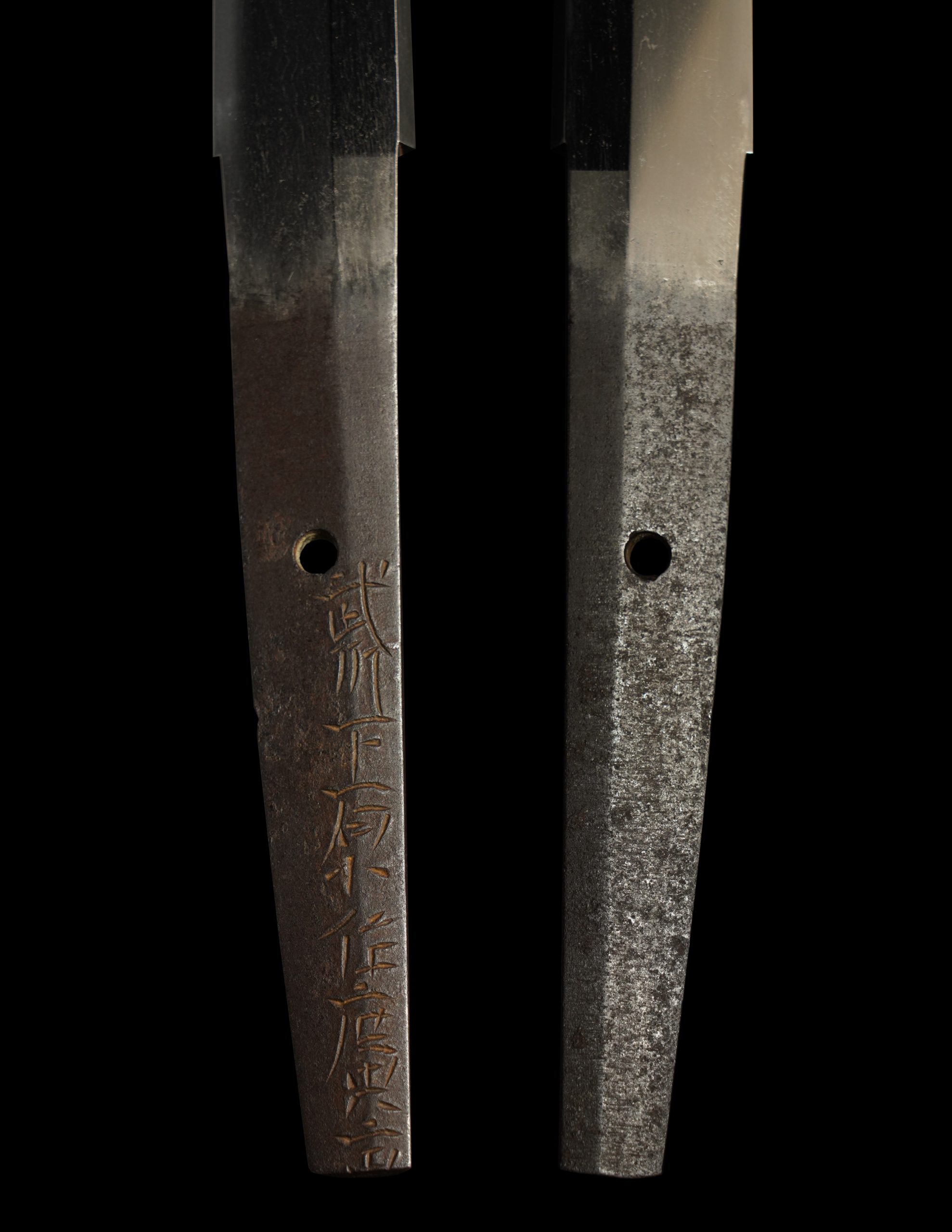
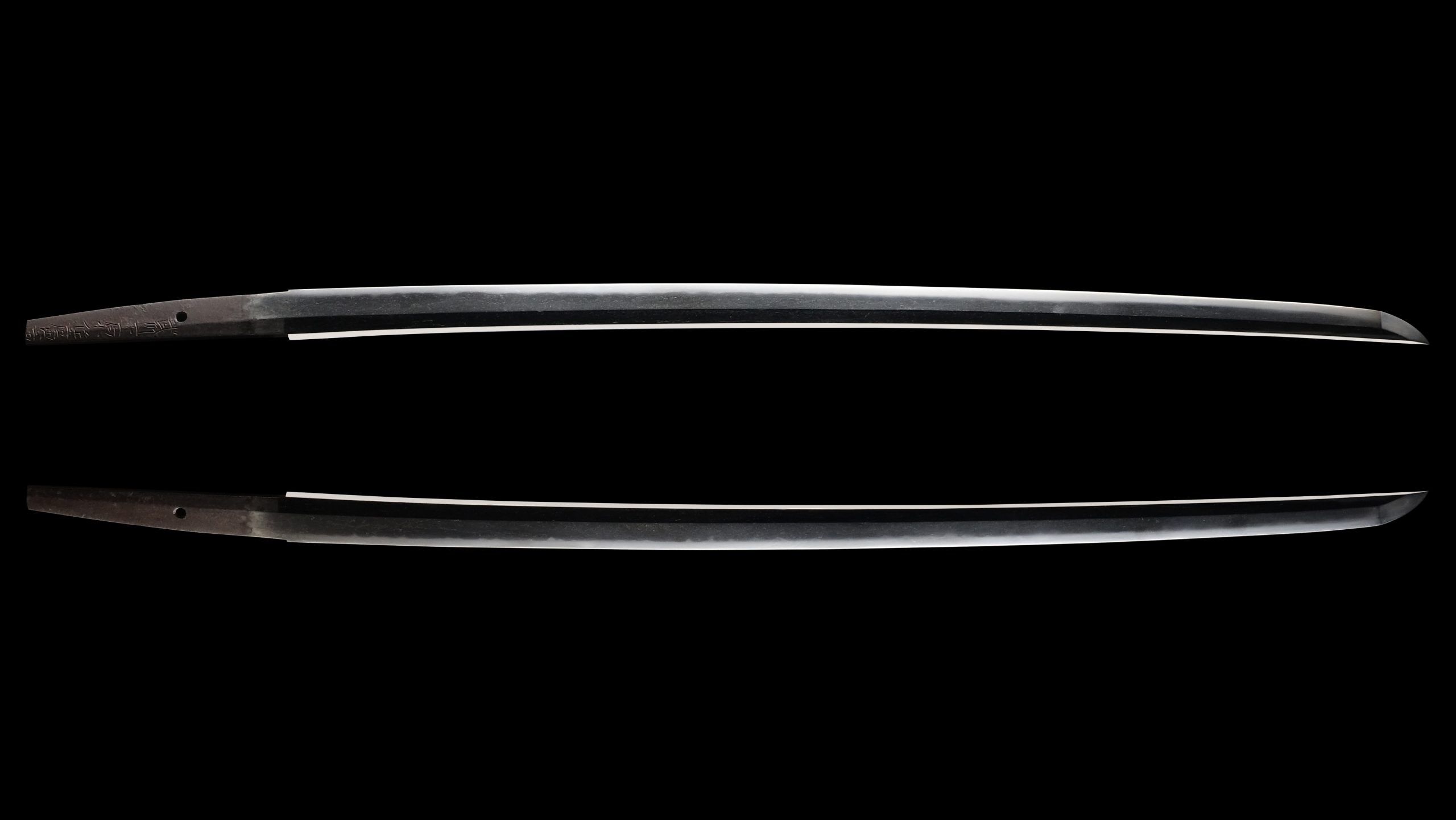
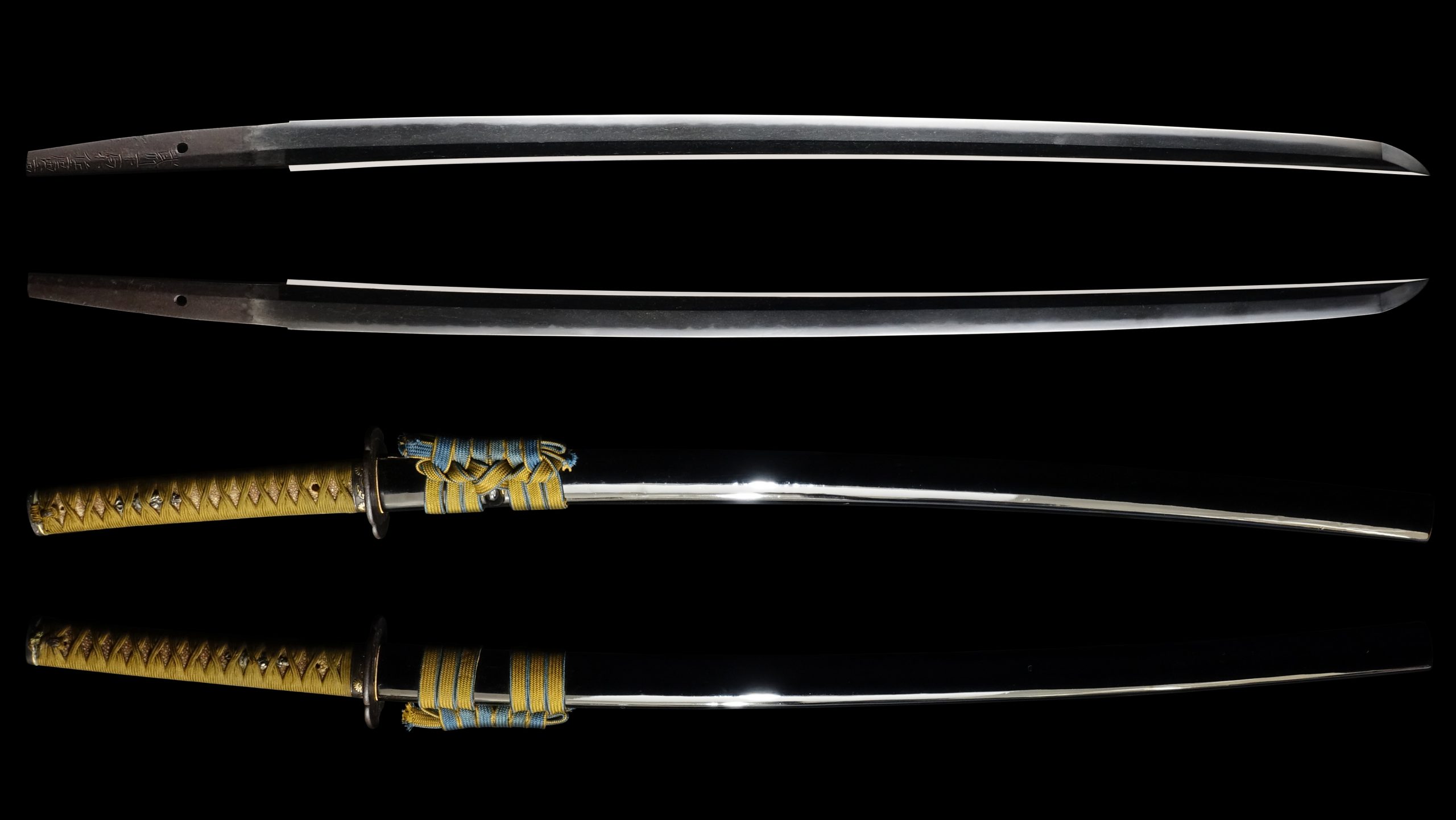
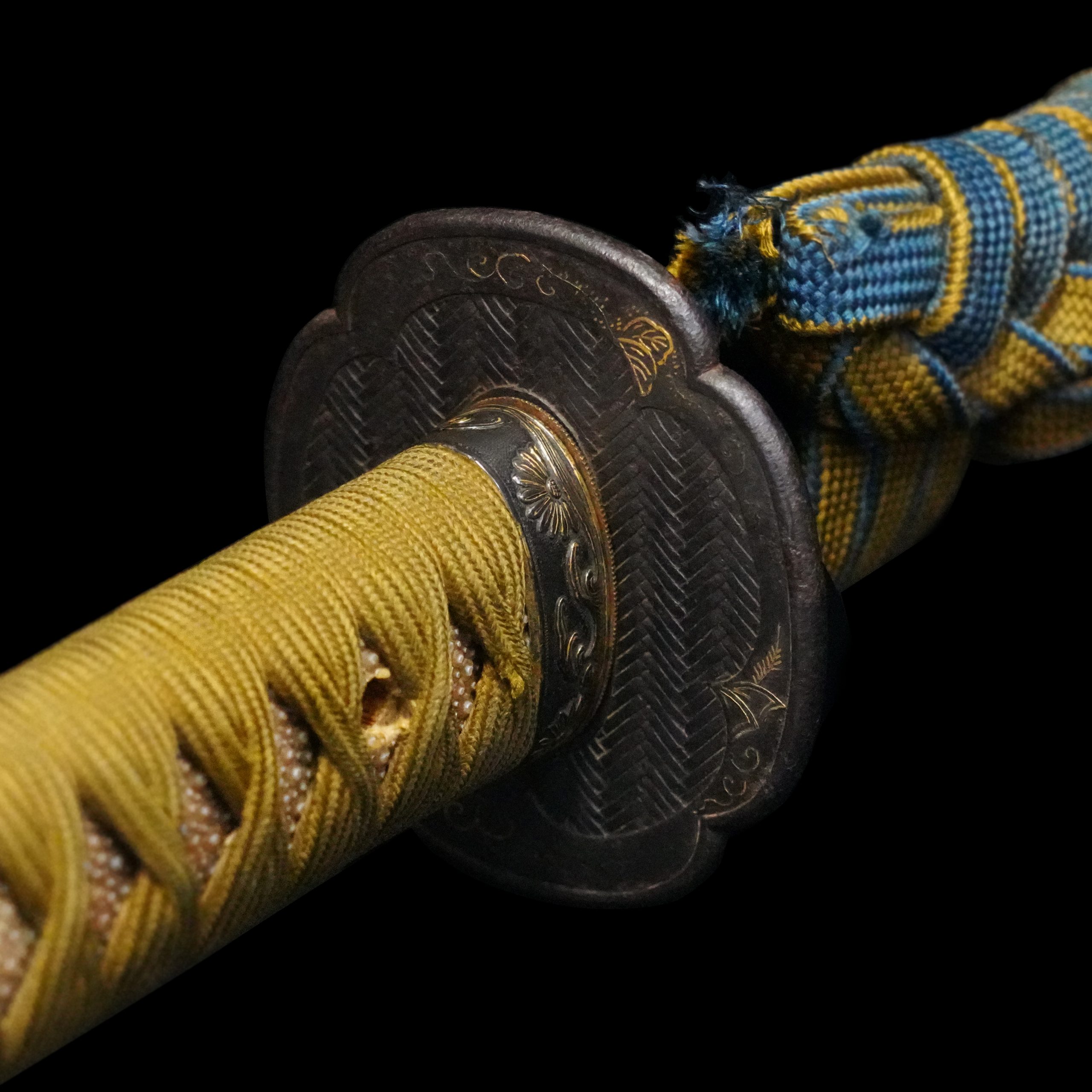
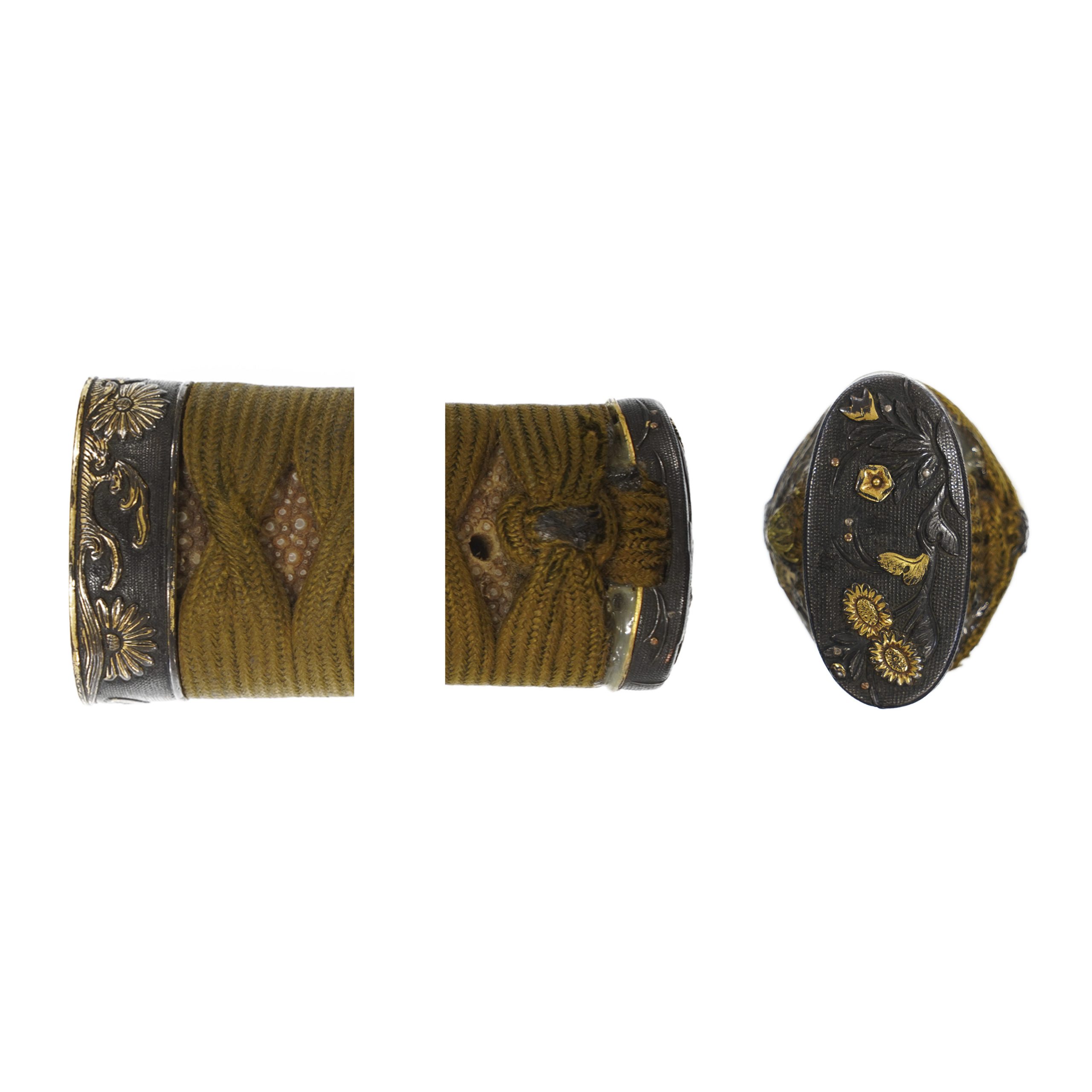
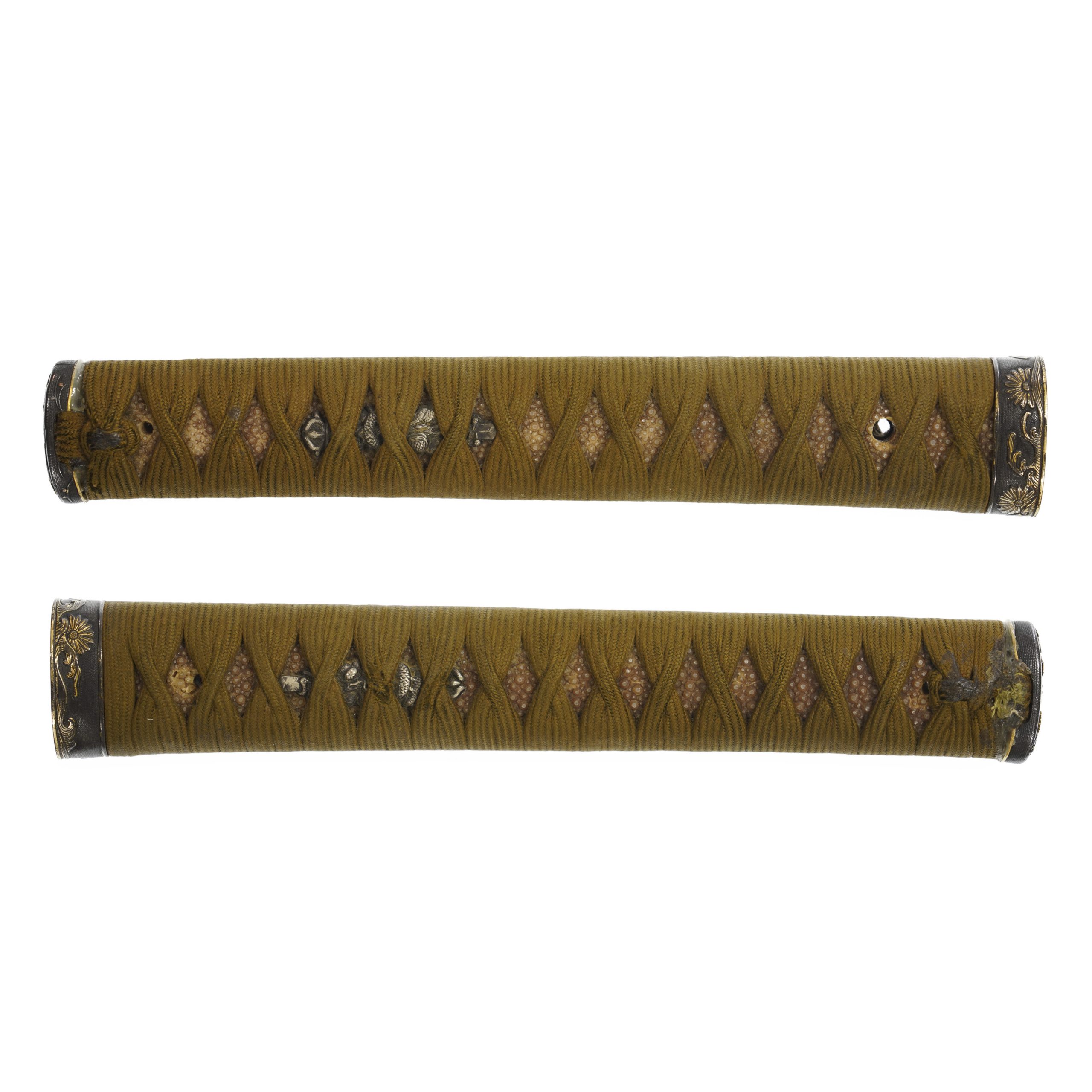
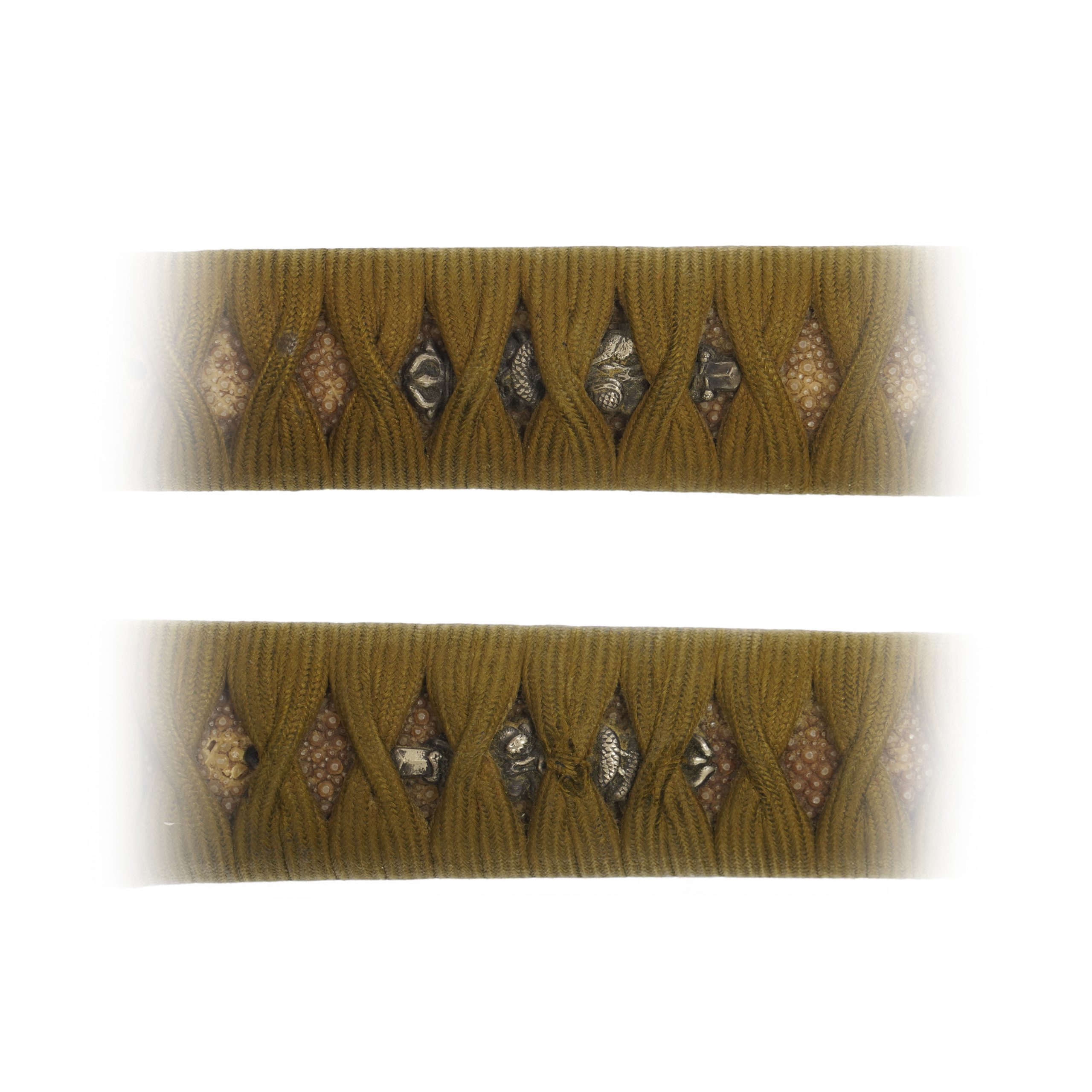
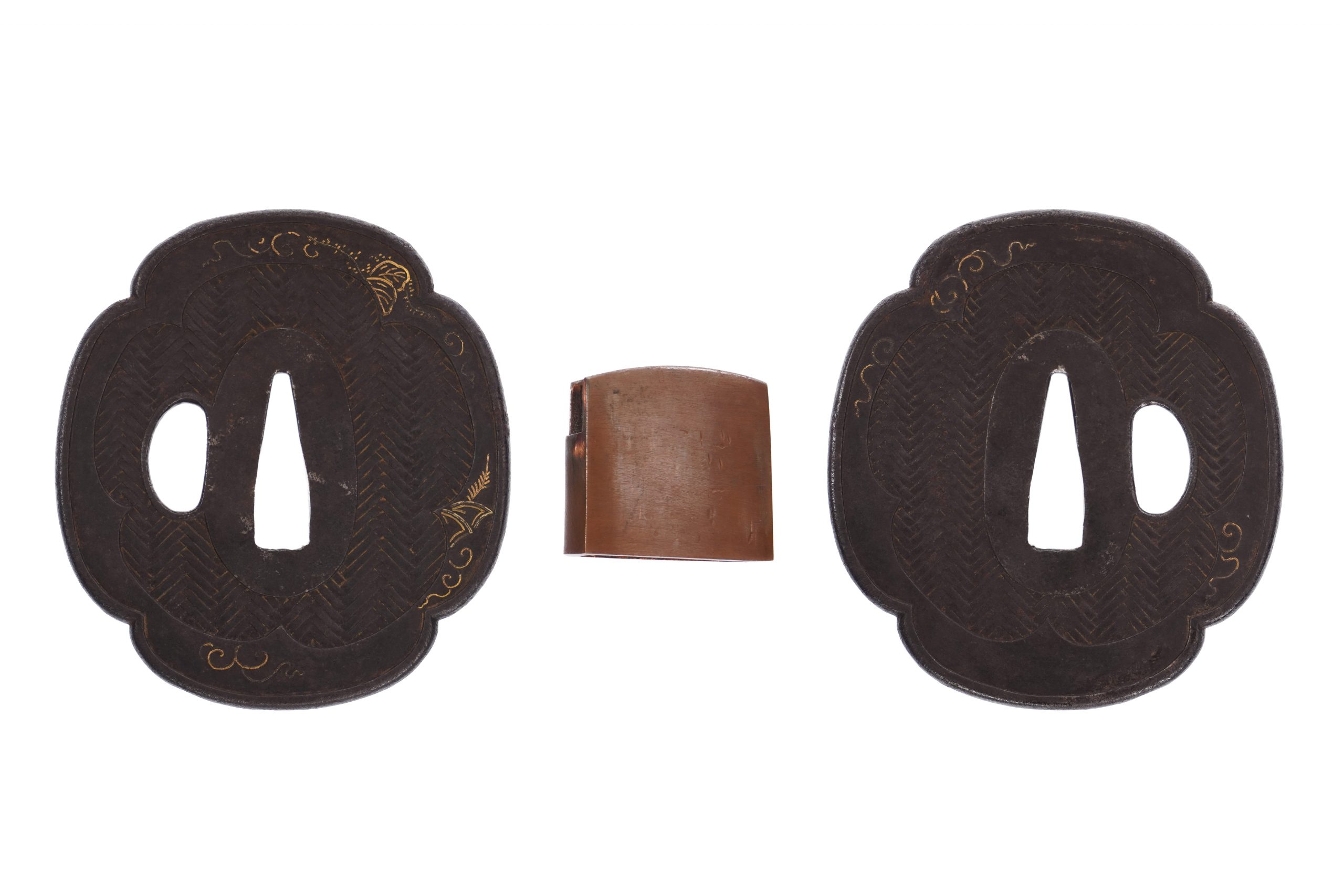
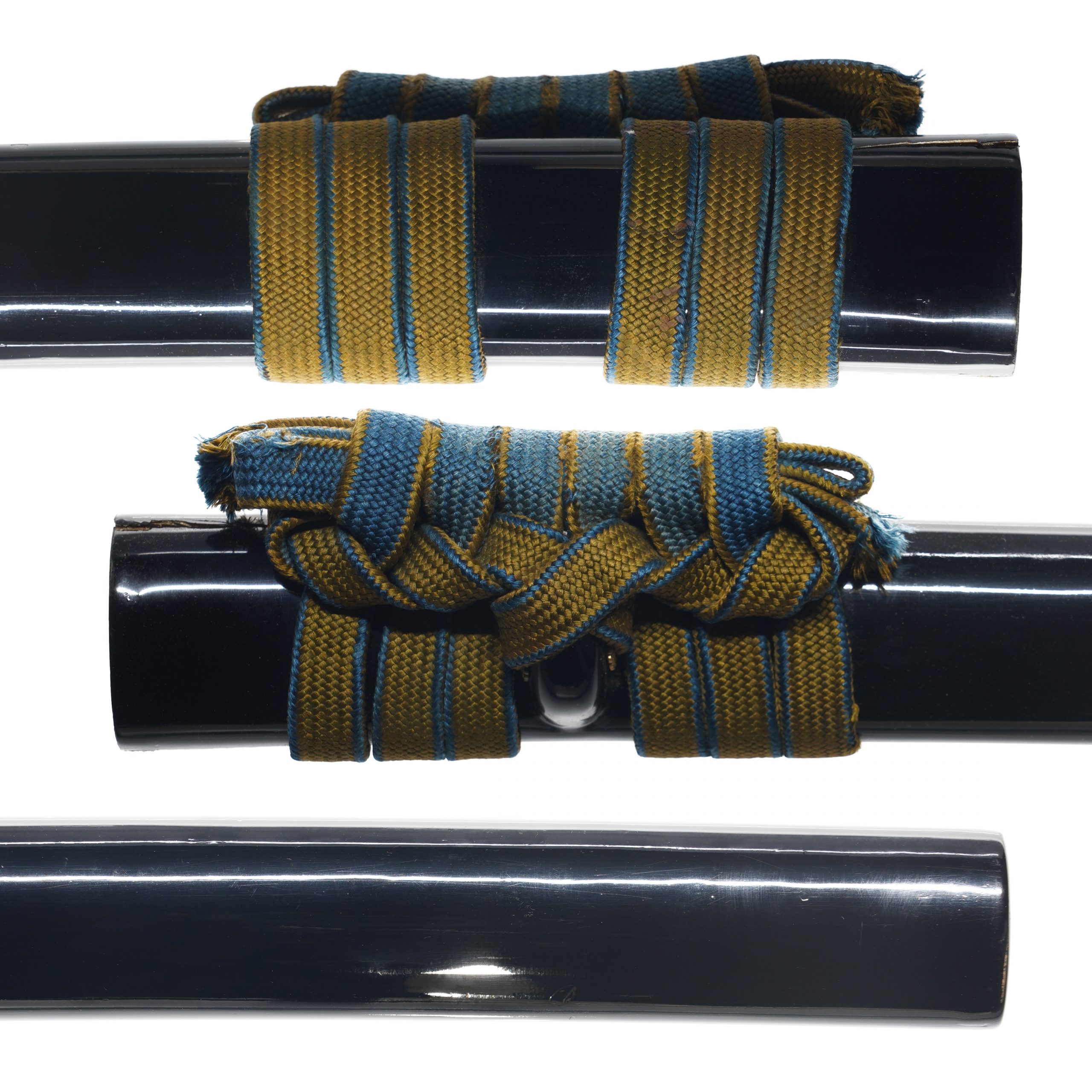
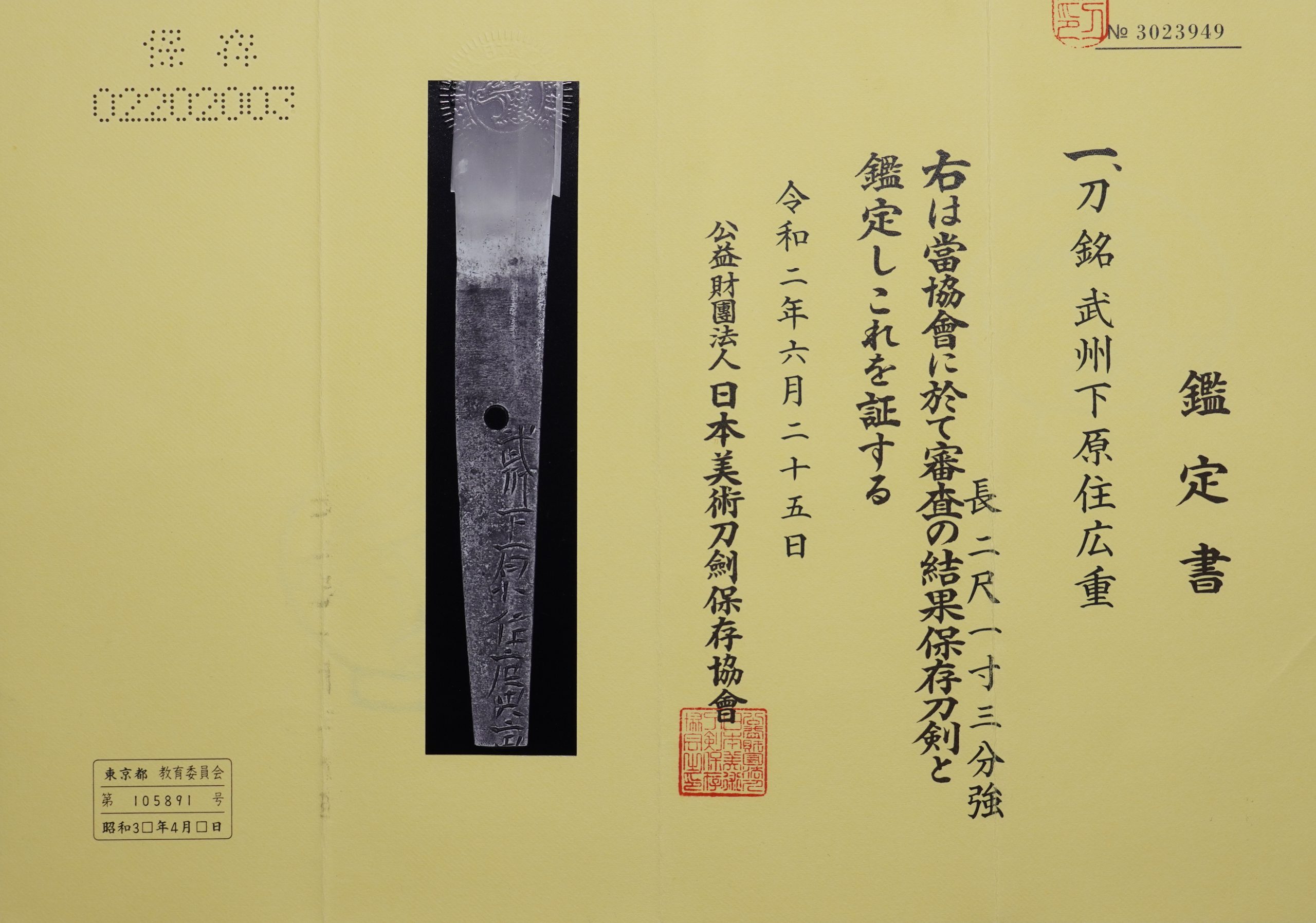
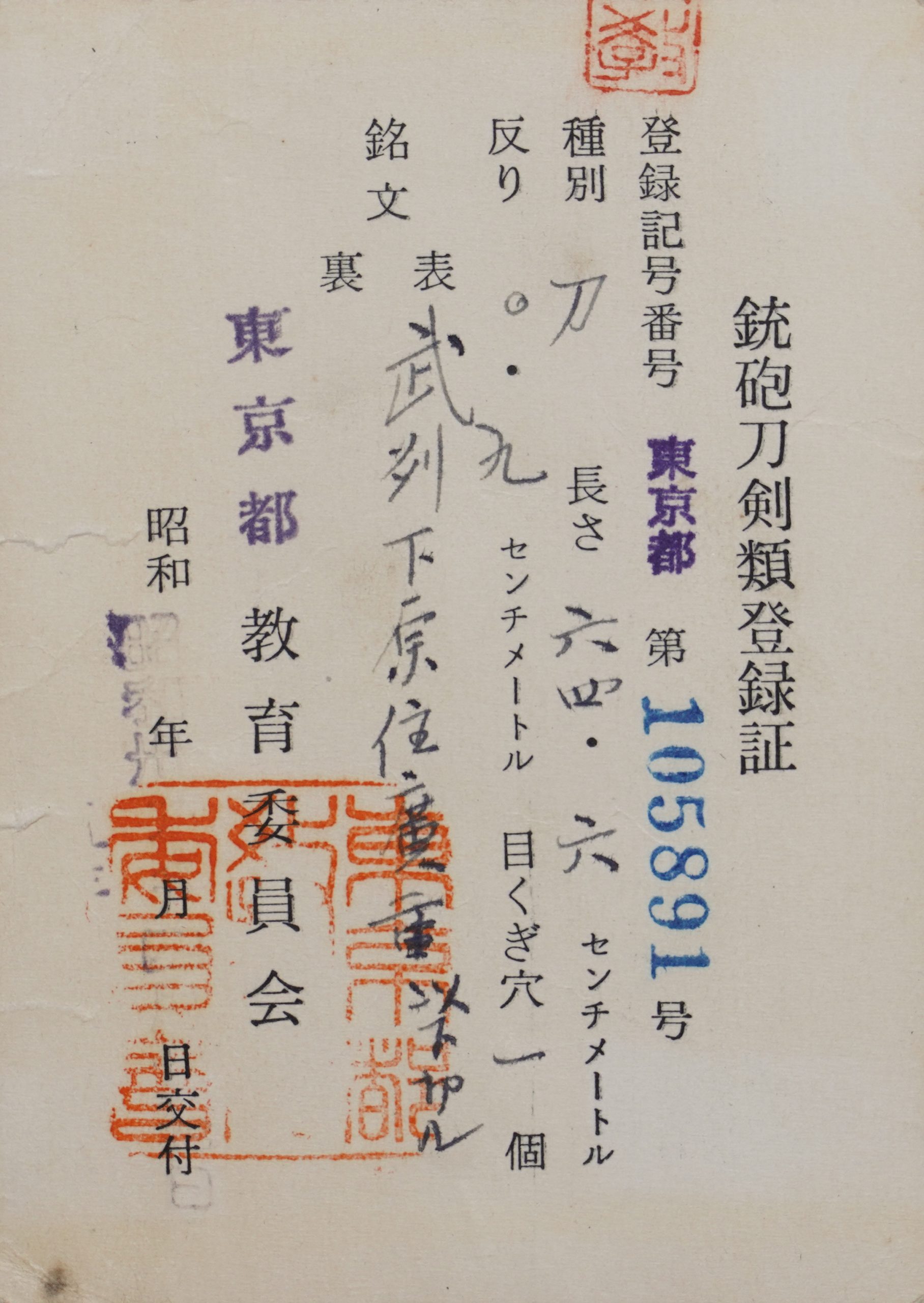
保存刀剣鑑定書付 刀:銘 武州下原住広重 【解説】 本作は、武州下原住広重(ぶしゅうしたはらじゅうひろしげ)の手による一振りです。武州下原とは現在の東京都八王子市付近を指し、同地で活躍した下原鍛冶の作品です。日本美術刀剣保存協会(日美刀保)による鑑定では、江戸時代初期の製作と極められております(当方にて協会へ確認済み)。 広重が属した下原学校は、山本周重を始祖と伝え、室町時代末期から江戸時代末期(16世紀後半〜19世紀後半)にかけて繁栄しました。 下原鍛冶は、室町後期には小田原北条氏の庇護下で勢力を伸ばしました。安土桃山時代に北条氏が滅亡した後は、徳川家の御用鍛冶(お抱え鍛冶)として仕えることとなります。下原鍛冶の多くは山本姓を名乗り、特に室町末期から江戸初期にかけて隆盛を極めました。 その後も幕末に至るまで徳川家に刀を納め続けましたが、歴代広重はその中でも特に高名な銘のひとつであり、数代にわたってその名が受け継がれました。 本作には、公益財団法人 日本美術刀剣保存協会より「保存刀剣」の鑑定書が発行されています。これは、日本の文化財として保存価値が高いと認められた真作の刀剣にのみ与えられる公的な証明です。 【刀身】 長さ(中心穴より):64.6 cm 反り:0.9 cm 刃文:焼入れによって刃先に現れる結晶構造 地鉄(肌):鍛錬の過程で現れる鋼の表面模様 茎(なかご):刀身の柄に収まる部分。 日本の刀工は、柄内での赤錆を防ぐために茎に黒錆を残します。この茎の錆色は時の経過とともに深まり、専門家が製作年代を推定する際の重要な指標となります。なお、本作は後世の磨上げ(サイズ調整)により、銘の一部が切れております。 【外装:拵】 拵(こしらえ)とは、鞘、柄、鍔などを含めた刀装具一式を指します。 縁頭(ふちがしら):柄の両端を保護し装飾する一対の金具。 本作の縁頭には花々が意匠され、金の色絵が施されています。地鉄には「魚子地(ななこじ)」の技法が用いられています。これは魚子地鏨(ななこじだがね)を用い、表面に魚の卵のような微細な突起を打ち出す高度な技術であり、作者の熟練した手腕が伺えます。 特に縁(ふち)の部分には「菊水紋(きくすいもん)」が見て取れます。これは流水に菊の花が浮かぶ様子を描いたものです。古来より中国の故事に基づき、菊の群生地から流れ出る水を飲むと長寿を得るという「延命長寿」の象徴として尊ばれてきました。 この文様は鎌倉時代より用いられ、家紋としても普及しました。特に楠木正成(1294?-1336)が用いたことで知られています。正成は鎌倉幕府打倒の功績により後醍醐天皇から菊紋を賜りましたが、天皇と同じ紋を用いるのは畏れ多いとして、菊の下半分に流水を配した「菊水紋」を用いたと伝えられています。この逸話は、当時の武士の忠義と謙虚さを象徴するものと言えるでしょう。
 NihontoWatch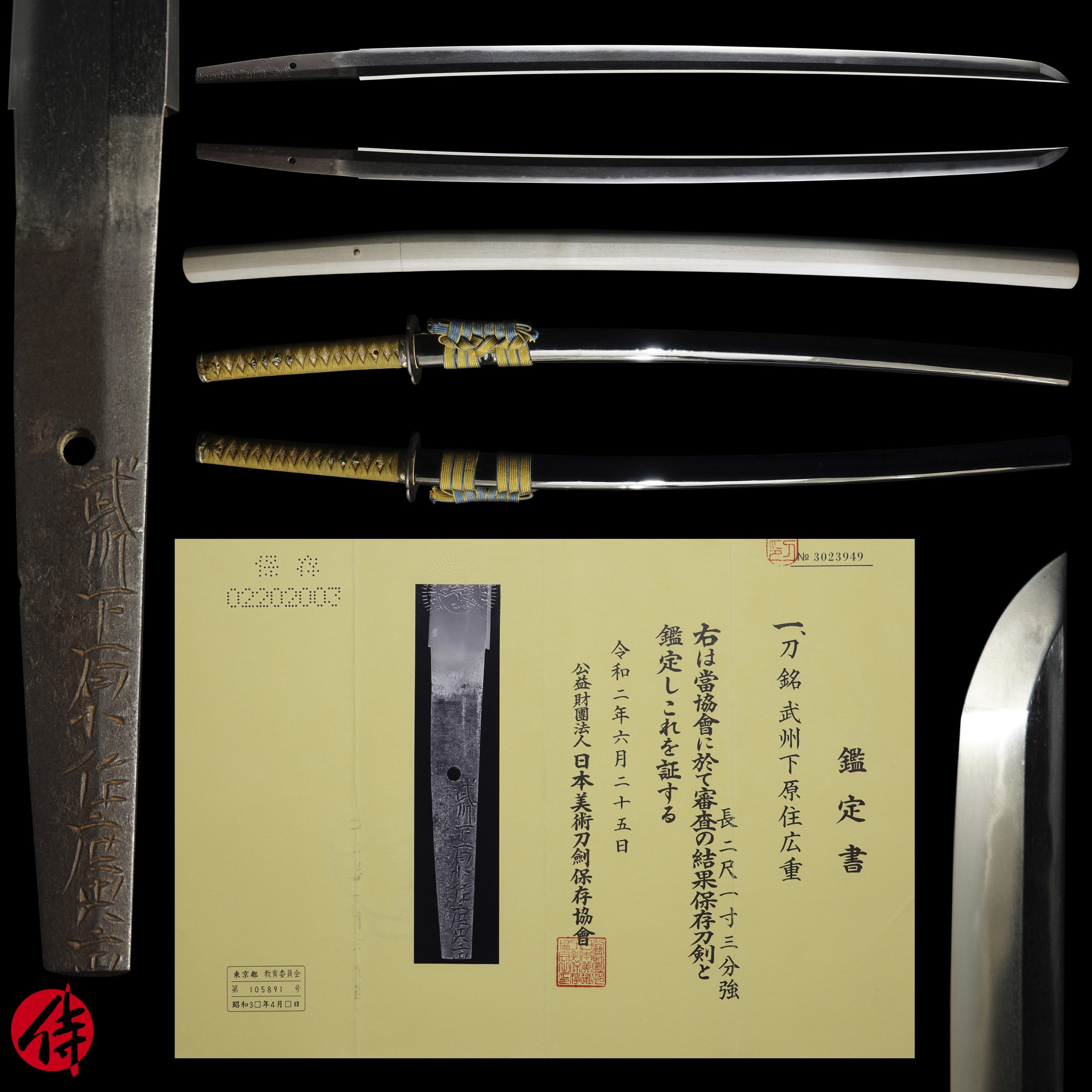
武蔵 · 1624-1644頃
藤代 Jo saku · 刀剣大鑑 上位60%
現在2点販売中
江戸時代
江戸は刀の目利きの時代である。本阿弥の鑑定、1719年の享保名物帳、盛んな刀剣書が、戦で抜かれることのなくなった刀を学問の対象へと変えていった。
銘が正しい、または無銘でも年代・国・系統を確実に指摘できる、保存に値する真正の作と鑑定されたものです。
日本美術刀剣保存協会(NBTHK)は、1948年に設立され、文化庁の監督を受ける公益財団法人で、東京・刀剣博物館に本部を置きます。専門の審査員が出品作を直接審査し、美術的・歴史的価値に応じた鑑定書を発行します。NBTHKの鑑定書は、日本刀および刀装具の真正性を示す最も広く認知された基準です。
NBTHK公式サイトReturns/exchanges limited to defects caused by shipping (except willful misconduct or gross negligence by the company); customers must contact within 72 hours of receiving the product.
保存刀剣鑑定書付 刀:銘 武州下原住広重 【解説】 本作は、武州下原住広重(ぶしゅうしたはらじゅうひろしげ)の手による一振りです。武州下原とは現在の東京都八王子市付近を指し、同地で活躍した下原鍛冶の作品です。日本美術刀剣保存協会(日美刀保)による鑑定では、江戸時代初期の製作と極められております(当方にて協会へ確認済み)。 広重が属した下原学校は、山本周重を始祖と伝え、室町時代末期から江戸時代末期(16世紀後半〜19世紀後半)にかけて繁栄しました。 下原鍛冶は、室町後期には小田原北条氏の庇護下で勢力を伸ばしました。安土桃山時代に北条氏が滅亡した後は、徳川家の御用鍛冶(お抱え鍛冶)として仕えることとなります。下原鍛冶の多くは山本姓を名乗り、特に室町末期から江戸初期にかけて隆盛を極めました。 その後も幕末に至るまで徳川家に刀を納め続けましたが、歴代広重はその中でも特に高名な銘のひとつであり、数代にわたってその名が受け継がれました。 本作には、公益財団法人 日本美術刀剣保存協会より「保存刀剣」の鑑定書が発行されています。これは、日本の文化財として保存価値が高いと認められた真作の刀剣にのみ与えられる公的な証明です。 【刀身】 長さ(中心穴より):64.6 cm 反り:0.9 cm 刃文:焼入れによって刃先に現れる結晶構造 地鉄(肌):鍛錬の過程で現れる鋼の表面模様 茎(なかご):刀身の柄に収まる部分。 日本の刀工は、柄内での赤錆を防ぐために茎に黒錆を残します。この茎の錆色は時の経過とともに深まり、専門家が製作年代を推定する際の重要な指標となります。なお、本作は後世の磨上げ(サイズ調整)により、銘の一部が切れております。 【外装:拵】 拵(こしらえ)とは、鞘、柄、鍔などを含めた刀装具一式を指します。 縁頭(ふちがしら):柄の両端を保護し装飾する一対の金具。 本作の縁頭には花々が意匠され、金の色絵が施されています。地鉄には「魚子地(ななこじ)」の技法が用いられています。これは魚子地鏨(ななこじだがね)を用い、表面に魚の卵のような微細な突起を打ち出す高度な技術であり、作者の熟練した手腕が伺えます。 特に縁(ふち)の部分には「菊水紋(きくすいもん)」が見て取れます。これは流水に菊の花が浮かぶ様子を描いたものです。古来より中国の故事に基づき、菊の群生地から流れ出る水を飲むと長寿を得るという「延命長寿」の象徴として尊ばれてきました。 この文様は鎌倉時代より用いられ、家紋としても普及しました。特に楠木正成(1294?-1336)が用いたことで知られています。正成は鎌倉幕府打倒の功績により後醍醐天皇から菊紋を賜りましたが、天皇と同じ紋を用いるのは畏れ多いとして、菊の下半分に流水を配した「菊水紋」を用いたと伝えられています。この逸話は、当時の武士の忠義と謙虚さを象徴するものと言えるでしょう。
NihontoWatch武蔵 · 1624-1644頃
藤代 Jo saku · 刀剣大鑑 上位60%
現在2点販売中
江戸時代
江戸は刀の目利きの時代である。本阿弥の鑑定、1719年の享保名物帳、盛んな刀剣書が、戦で抜かれることのなくなった刀を学問の対象へと変えていった。
銘が正しい、または無銘でも年代・国・系統を確実に指摘できる、保存に値する真正の作と鑑定されたものです。
日本美術刀剣保存協会(NBTHK)は、1948年に設立され、文化庁の監督を受ける公益財団法人で、東京・刀剣博物館に本部を置きます。専門の審査員が出品作を直接審査し、美術的・歴史的価値に応じた鑑定書を発行します。NBTHKの鑑定書は、日本刀および刀装具の真正性を示す最も広く認知された基準です。
NBTHK公式サイトReturns/exchanges limited to defects caused by shipping (except willful misconduct or gross negligence by the company); customers must contact within 72 hours of receiving the product.