江戸は刀の目利きの時代である。本阿弥の鑑定、1719年の享保名物帳、盛んな刀剣書が、戦で抜かれることのなくなった刀を学問の対象へと変えていった。
 NihontoWatchNihontoWatch
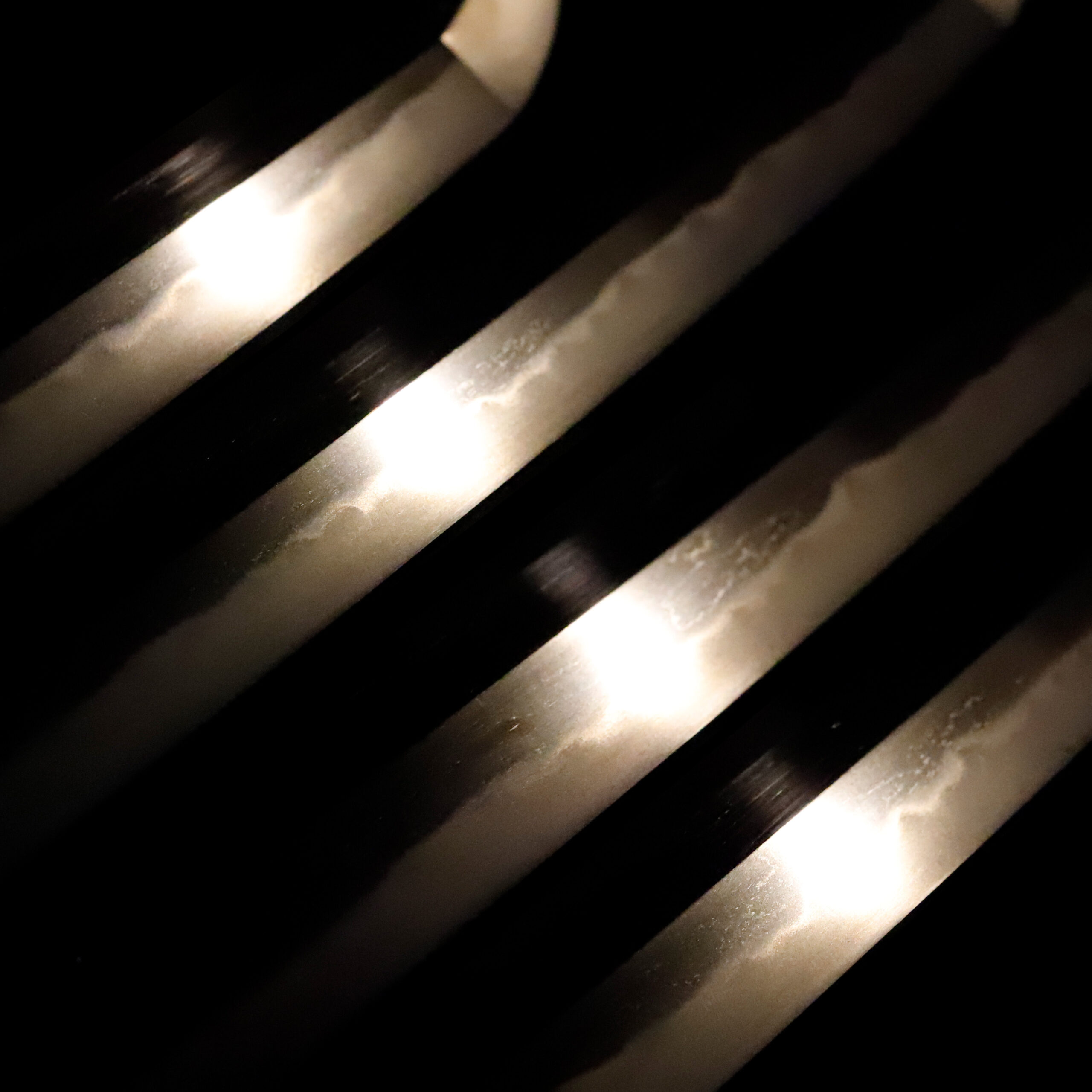
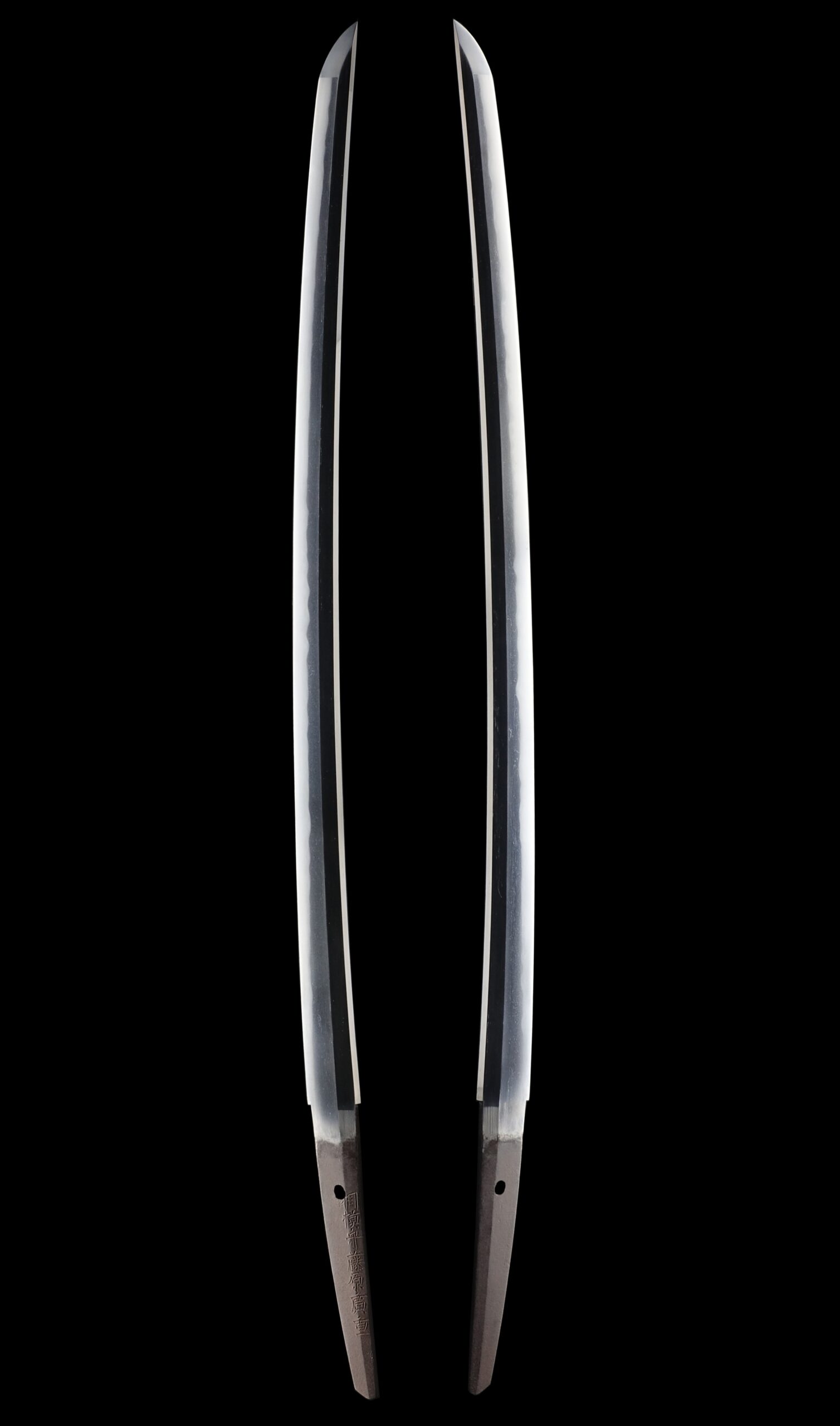
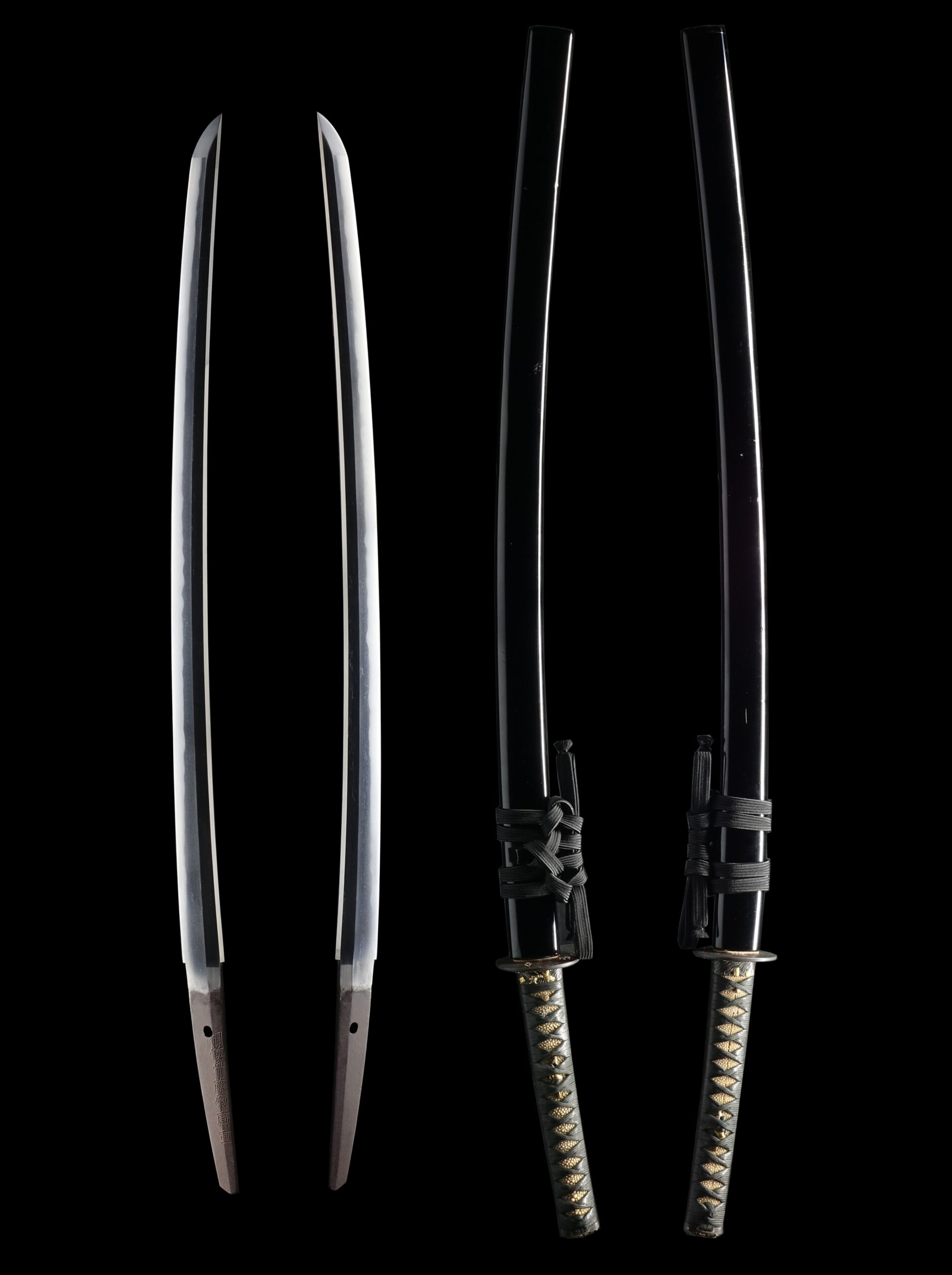
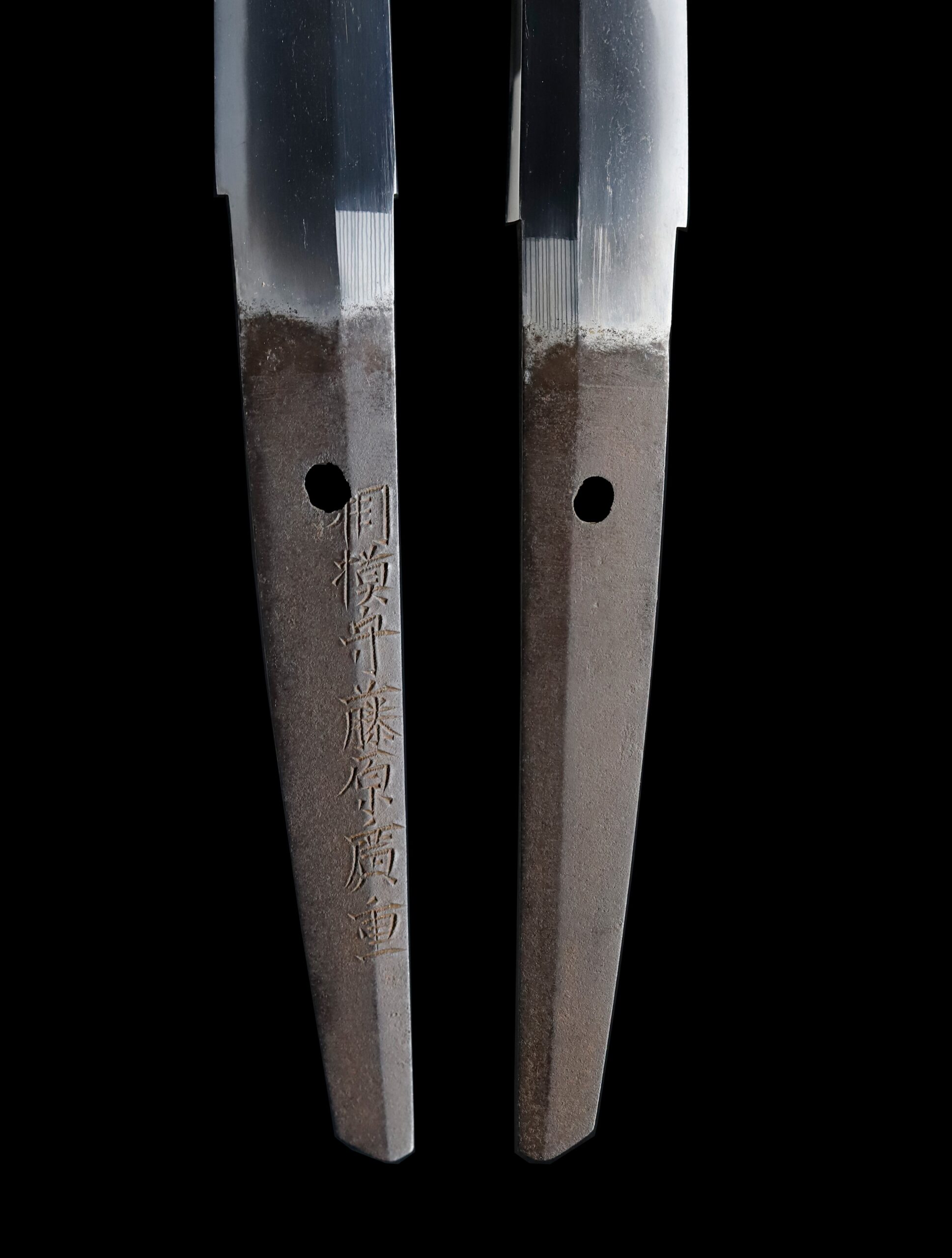
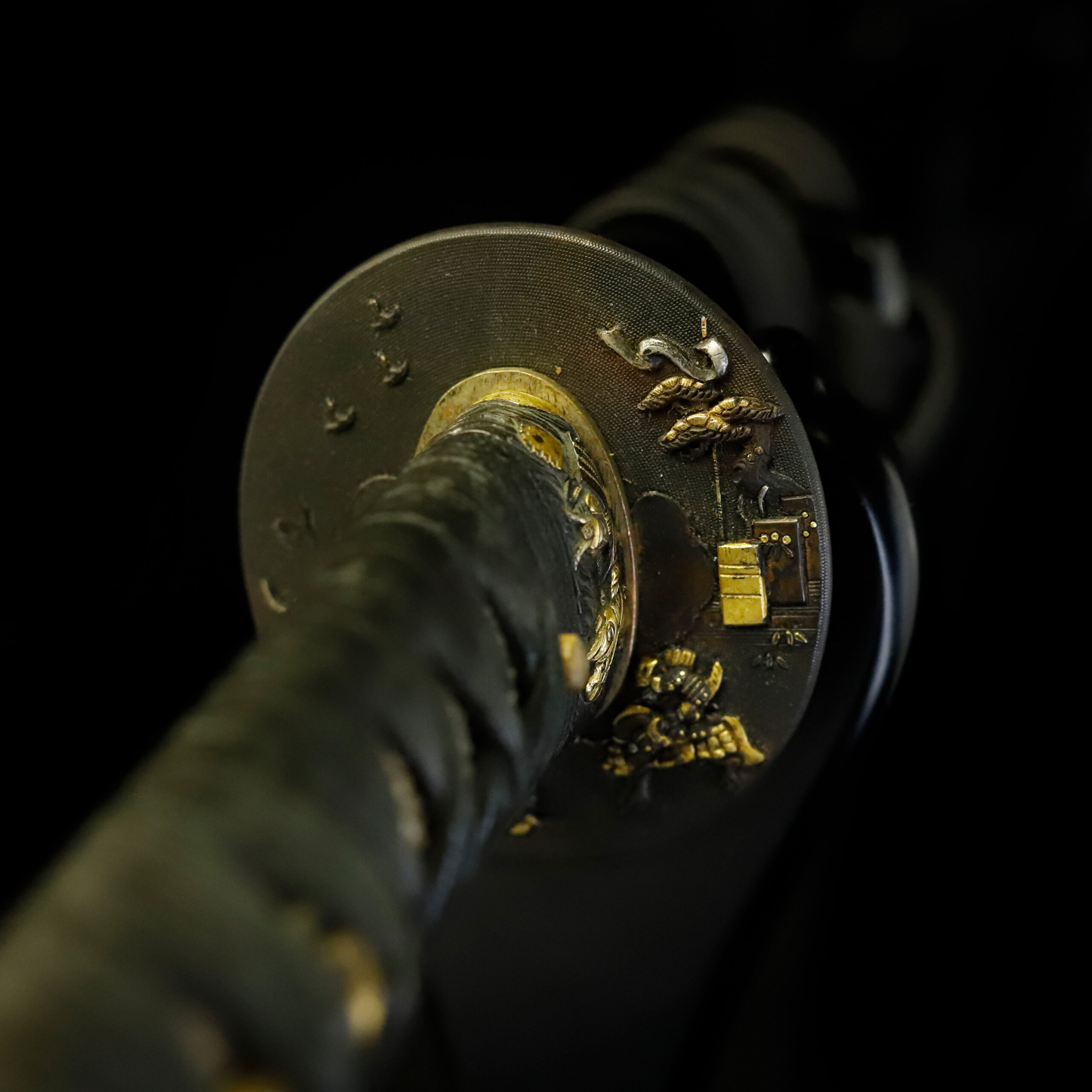
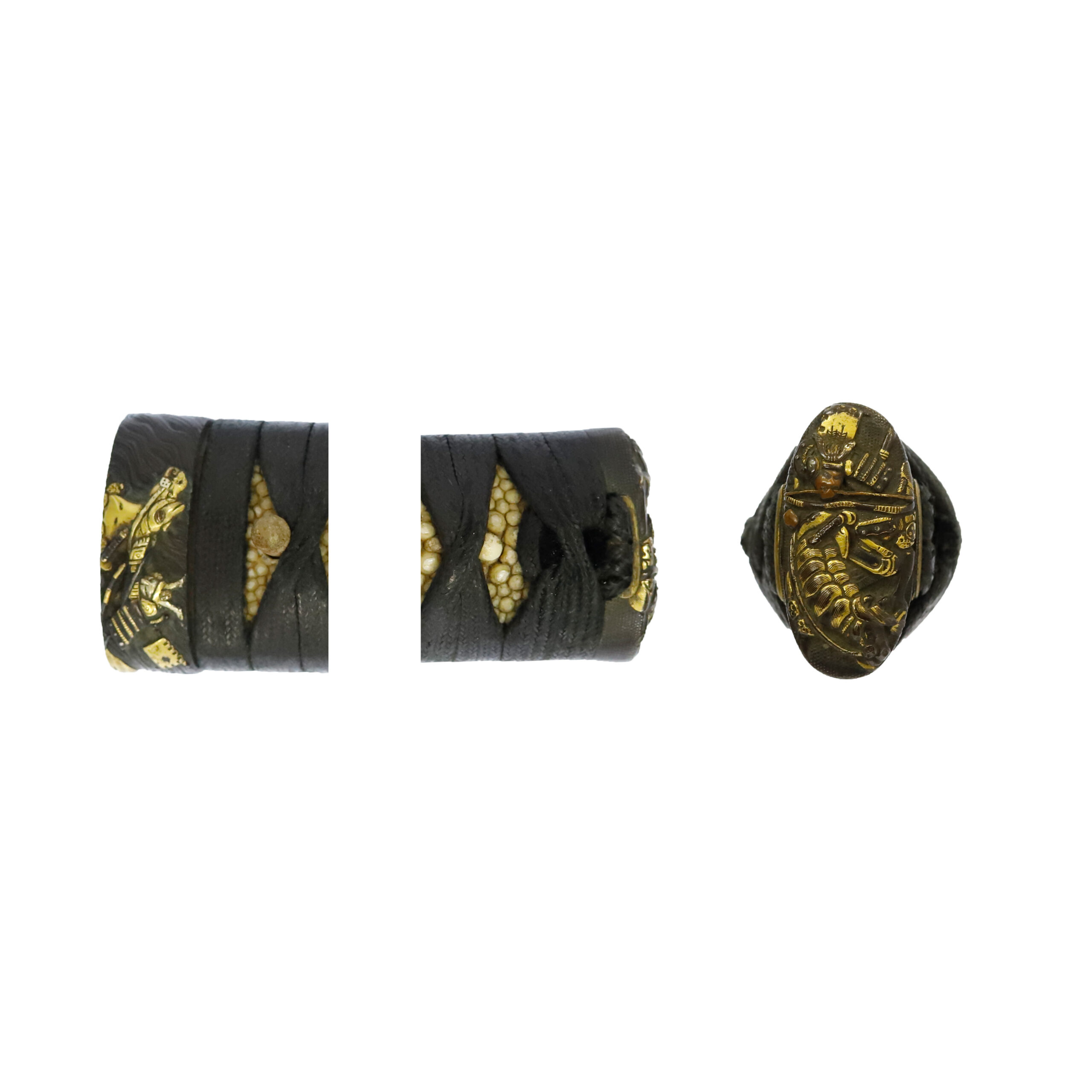
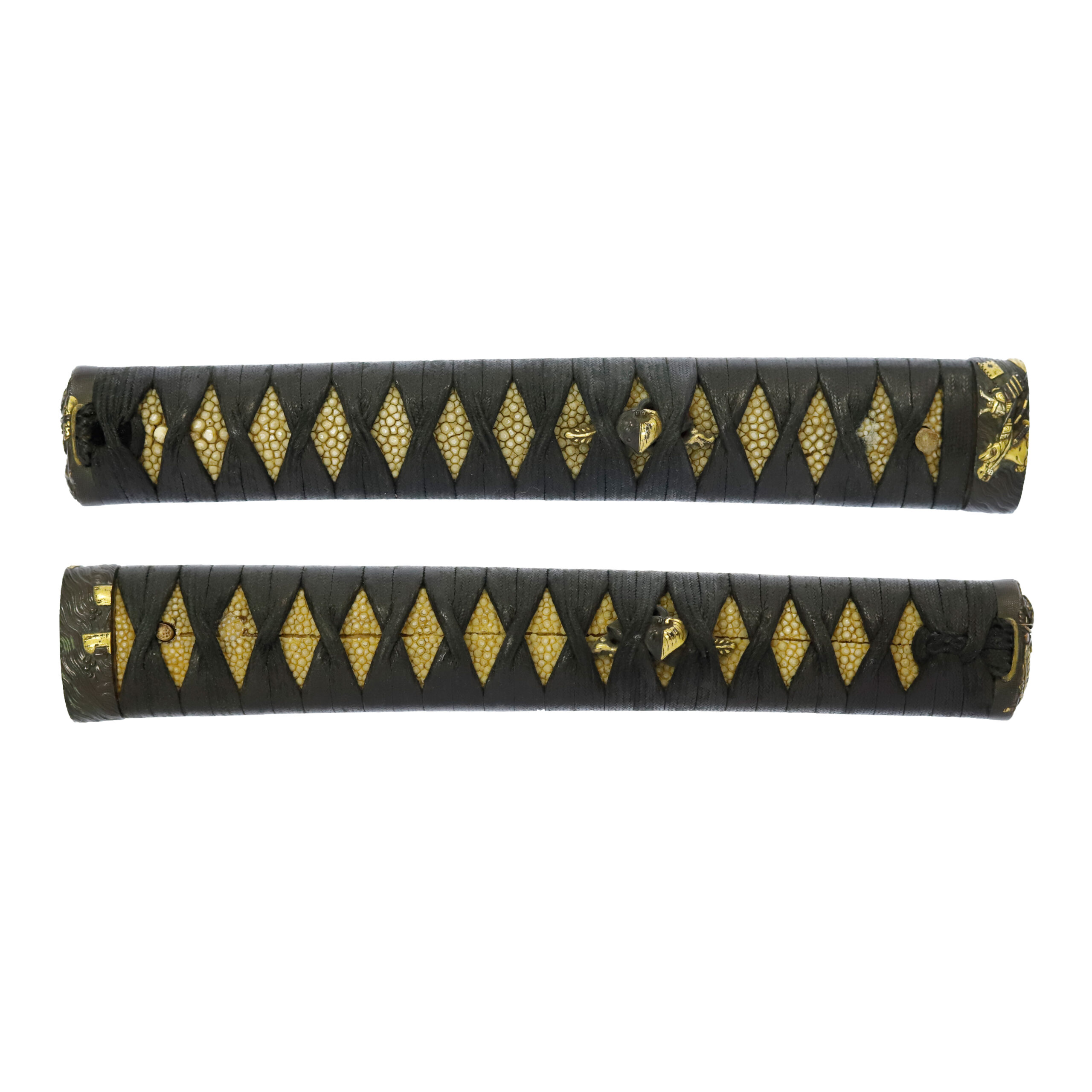
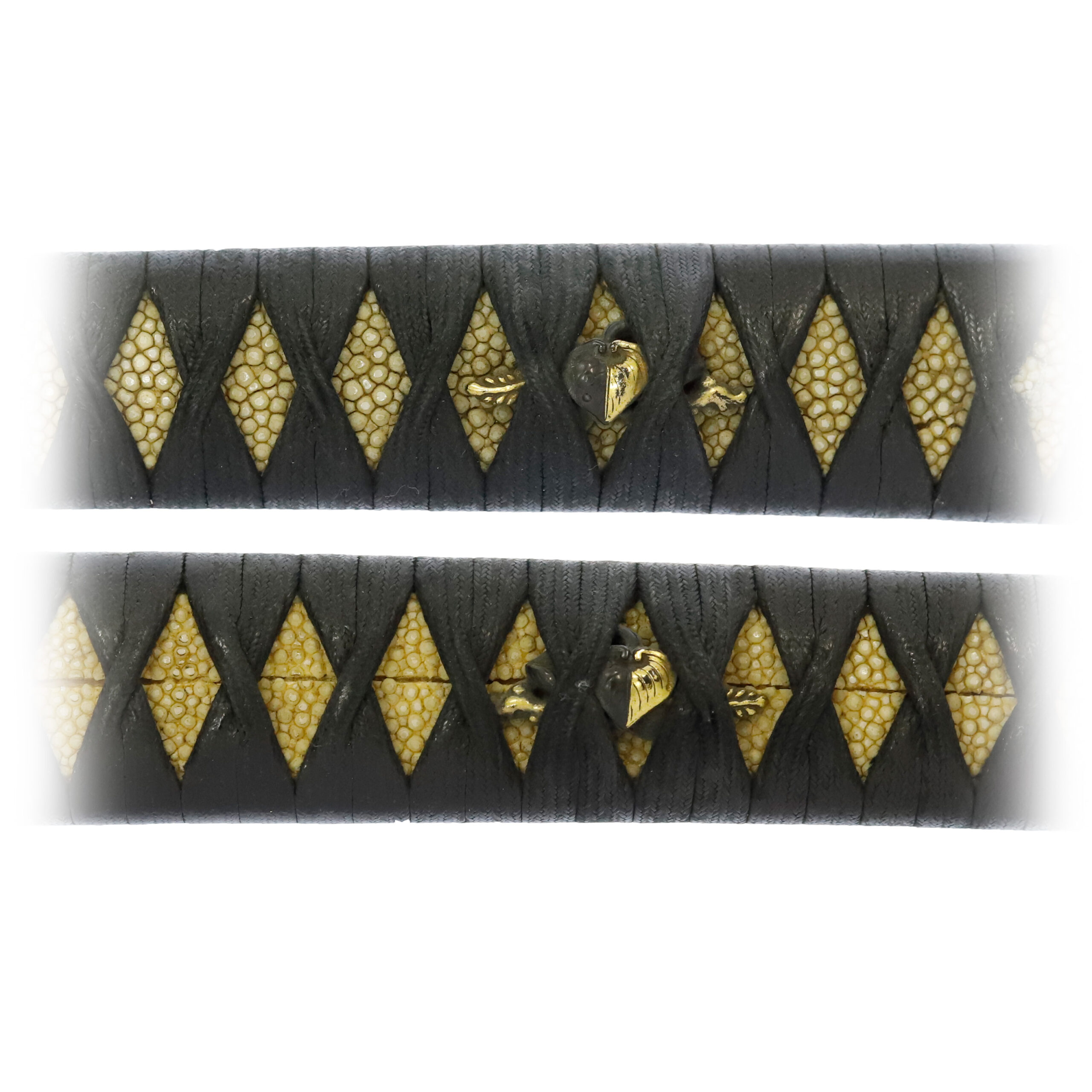
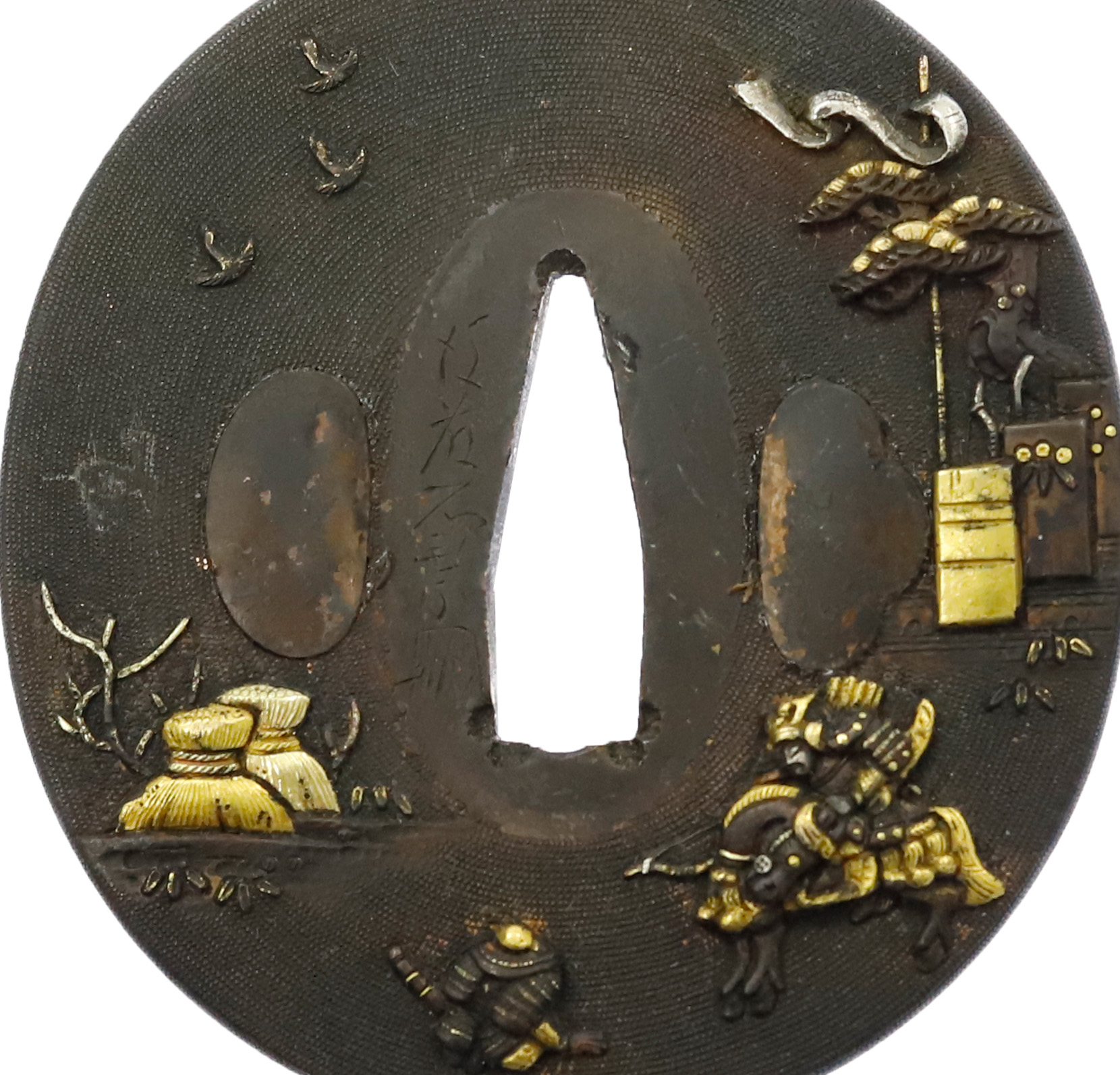
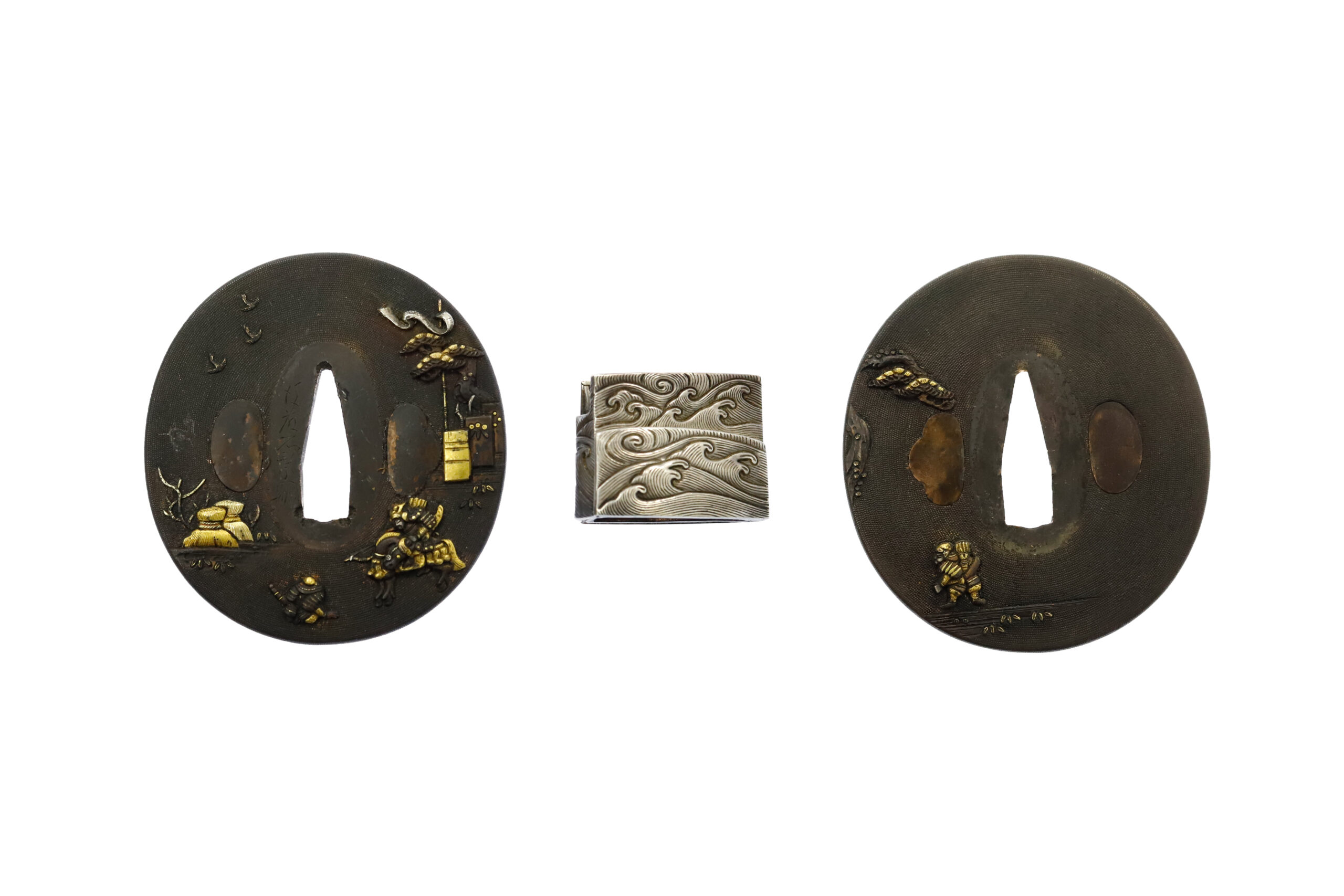
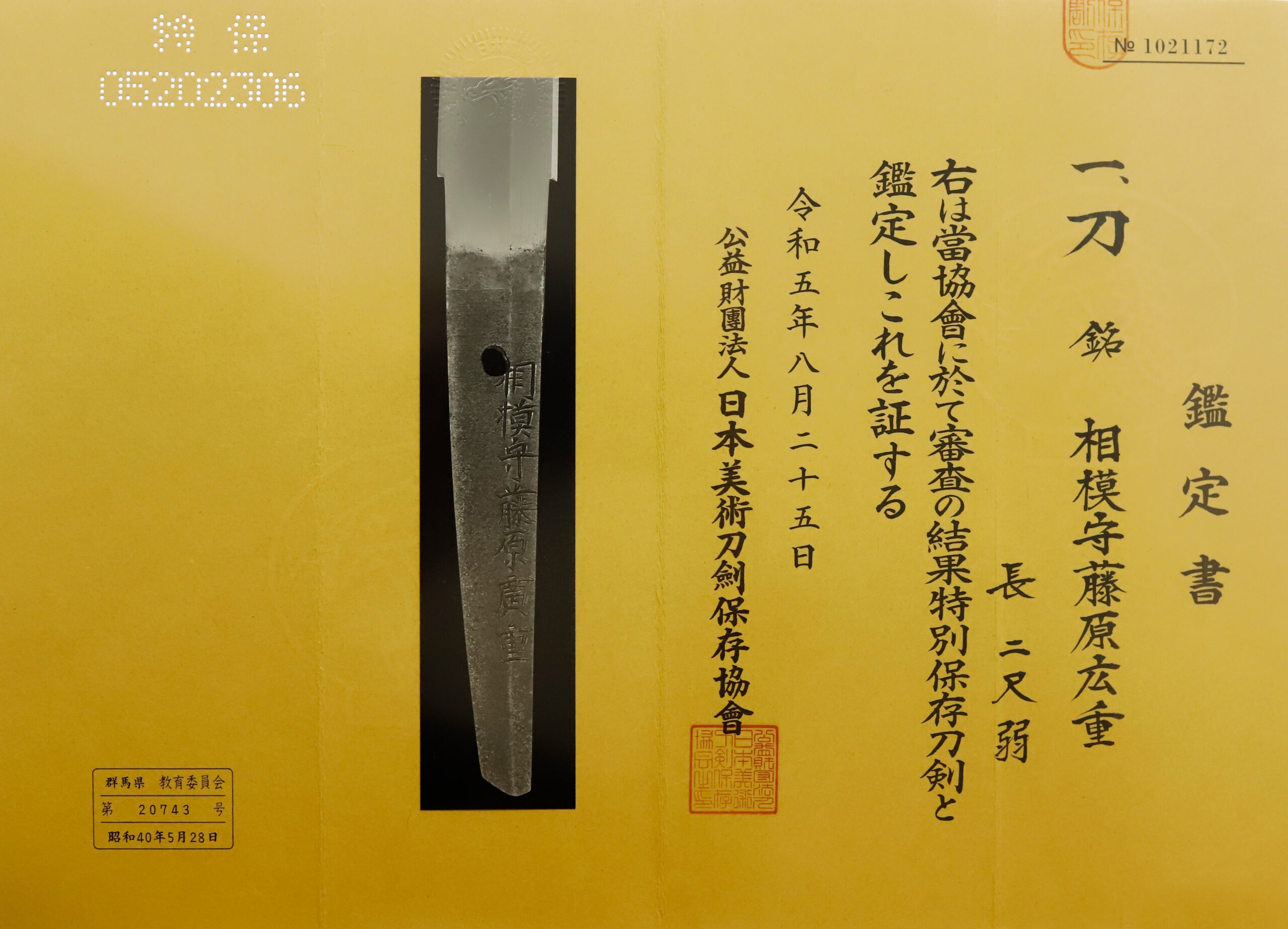
This blade was signed by Sagami no Kami Fujiwara Hiroshige (相模守藤原広重), who was active during the early Edo period (1624-1644). He was known as the second-gen Hiroshige. The first-gen Hiroshige, his father was the fourth son of the Terushige. Hiroshige belonged to the Bushu Shitahara school, located in today’s Tokyo (Hachioji city).It is said that Yamamoto Norishige founded the school, and it thrived from the end of the Muromachi period to the late Edo period (Late 16th century to Late 19th century). One of the famous apprentice who learned from this founder was Terushige. The first-gen Hiroshige first learned sword-forging techniques from his father and founded his own branch. Sagami no Kami Fujiwara Hiroshige was born as the first son and his birth name was Yamamoto Fujiemon. Shitahara school is the group of swordsmiths under the Hojo clan’s auspicious, powerful feudal line during the late Muromachi period. After the Toyotomi clan destroyed the Hojo clan in the Azuchi Momoyama period, Shitahara started to serve the Tokugawa clan as Okakae Kaji, swordsmiths exclusively working for a specific feudal family. Most of the Shitahara swordsmith’s real sir name was Yamamoto. They especially flourished during the late Muromachi period-early Edo period. They kept forging for the Tokugawa clan until the end of the Edo period. Among the Bushu Shitahara group, Hiroshige was one of the most famous ones. The maker’s name, Hiroshige, lasted for several generations. It is appraised as a Tokubetsu Hozon Token(特別保存刀剣) issued by NBTHK(Nihon Bijutsu Touken Hozon Kyokai:日本美術刀剣保存協会). Fuchi-Kashira We assume the theme of this Fuchi Kashira is the Kassen Zu (合戦図). You would find the figures of Samurai warriors riding their horses. So, this Fuchi Kashira depicts the scenery of a waterside battlefield. Since they wore luxurious armor and fought on horseback, we assumed they were Samurai of a certain high status. While some colorings have already faded due to aging, golden paint is applied here and there. The Kassen Zu is also seen in the Byoubu (屏風, folding screen) works. According to a theory, Kassen Zu designed folding screens that were made after the beginning of the Edo period. Therefore, many of them did not necessarily depict reality as it was. For that reason, we often find inconsistencies in Kassen Zu Byoubu based on historical research. The Kassen Zu was more concerned with showing authority than historical accuracy, and political intentions were involved. Tsuka and Menuki It seems this Menuki’s motif is a combination of the Kiri (桐, paulownia) flower and the Aoi (葵) leaf. The Kiri pattern is generally composed of three standing straight inflorescences and three leaves. The number of blooming flowers at each inflorescence means the ranks of this design. Since Aoi leaves have a habit of always facing the sun, and the word “Aoi” is taken as “Aogu (仰ぐ, looking up)” for the sun, people thought the Aoi pattern would bring good fortune. Also, this plant has a deep relationship with Samurai culture. There is a famous family crest called the Aoi-Domoe / Mitsuba-Aoi-no Mon (葵巴/三つ葉葵の紋 ). It is a plant pattern in which each stem branches and has characteristic heart-shaped leaves. Today, it is known as the family crest of the Tokugawa Shogunate family led by Tokugawa Ieyasu (徳川 家康, 1543-1616), a famous military commander of the Warring States period. Tsuba and Habaki The surface of this Tsuba is decorated with the Nanako-Ji (魚子地) technique. This process makes a uniform minimal protrusions pattern by hitting the Nanako-Ji Tagane (魚子地鏨, a chisel for this technique) on a metal surface. This decorative technique is often seen on sword mountings. This Tsuba’s design has a common theme with the Fuchi Kashira mentioned above. Now, please focus on the Habaki (鎺). The role of the Habaki is to securely tighten the base of the sword and support it so that the blade does not wobble and hit the scabbard. The wave pattern is engraved on this Habaki. As waves’ movements continue endlessly, the wave pattern represents eternity, immortality, longevity, birth, etcetera. Also, since tides repeatedly change the shape and terrain of rocks, some people hoped for a strong will by using this motif. People used this pattern, wishing for an indomitable spirit to rechallenge time and time without giving up. The combination of battlefield scenery and waves is the same as Fuchi Kashira’s design. Authentication Paper They authenticated the blade on August 25th in the 5th year of Reiwa (2023). They appraised it as Tokubetsu Hozon Touken, the blade especially worth preserving for Japanese society.

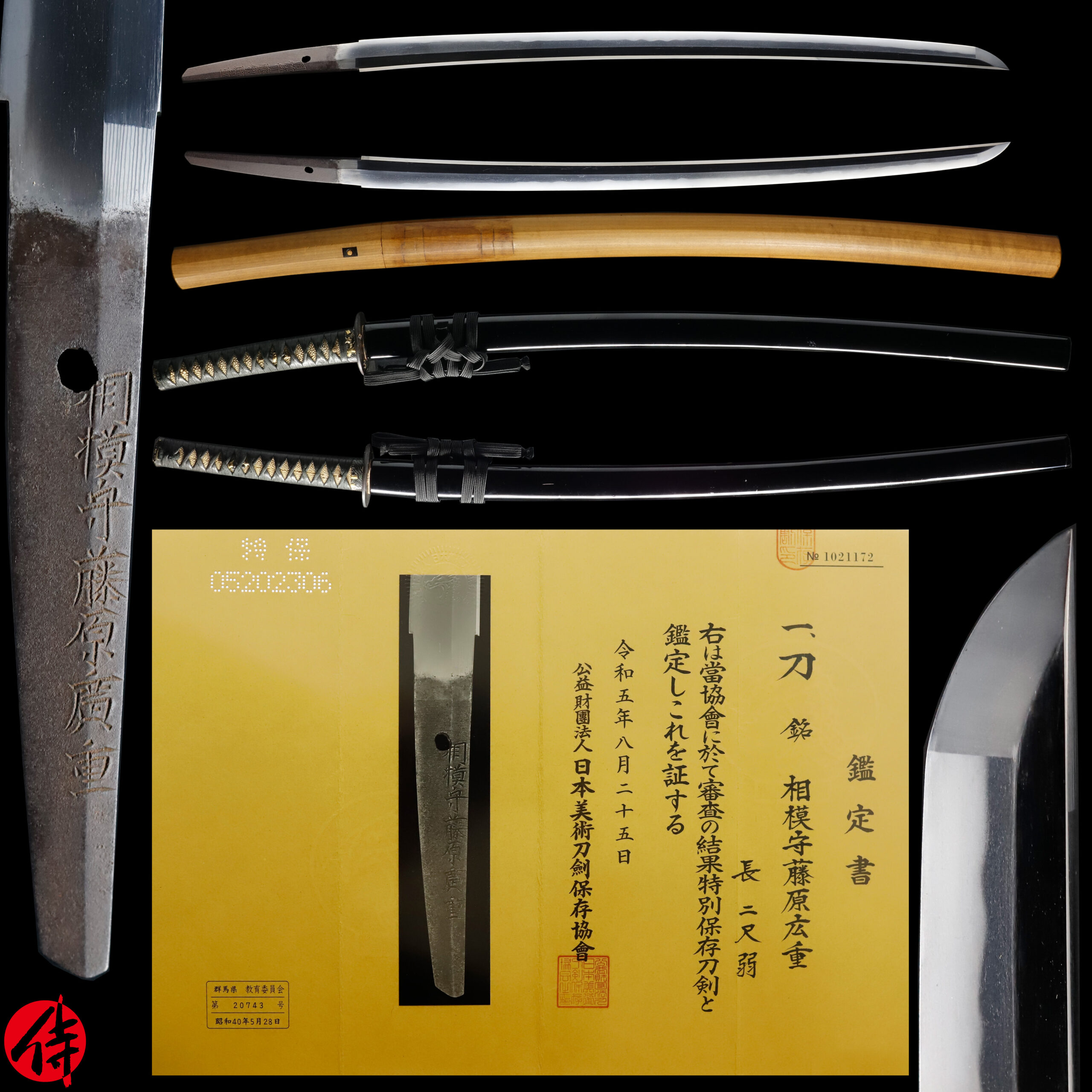
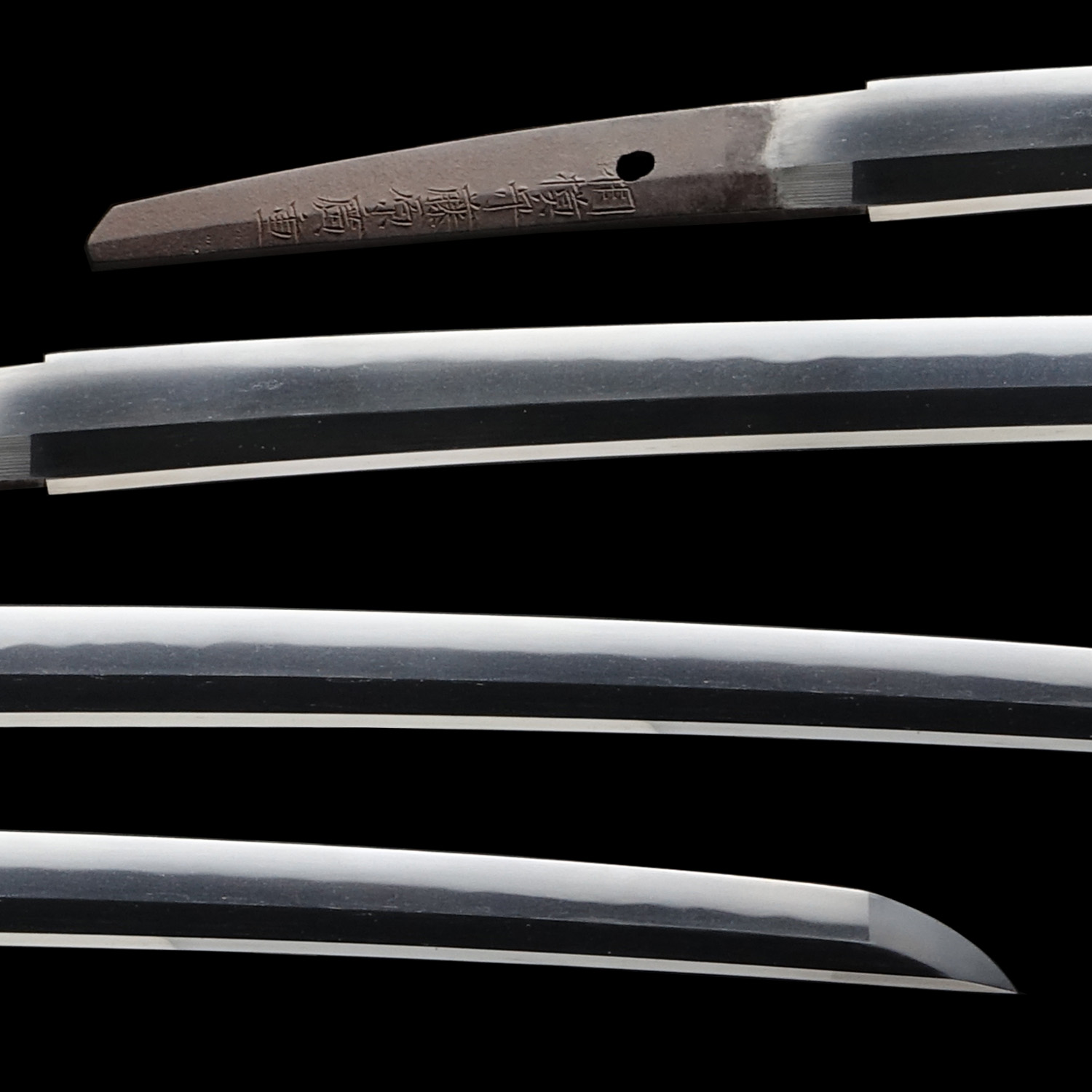
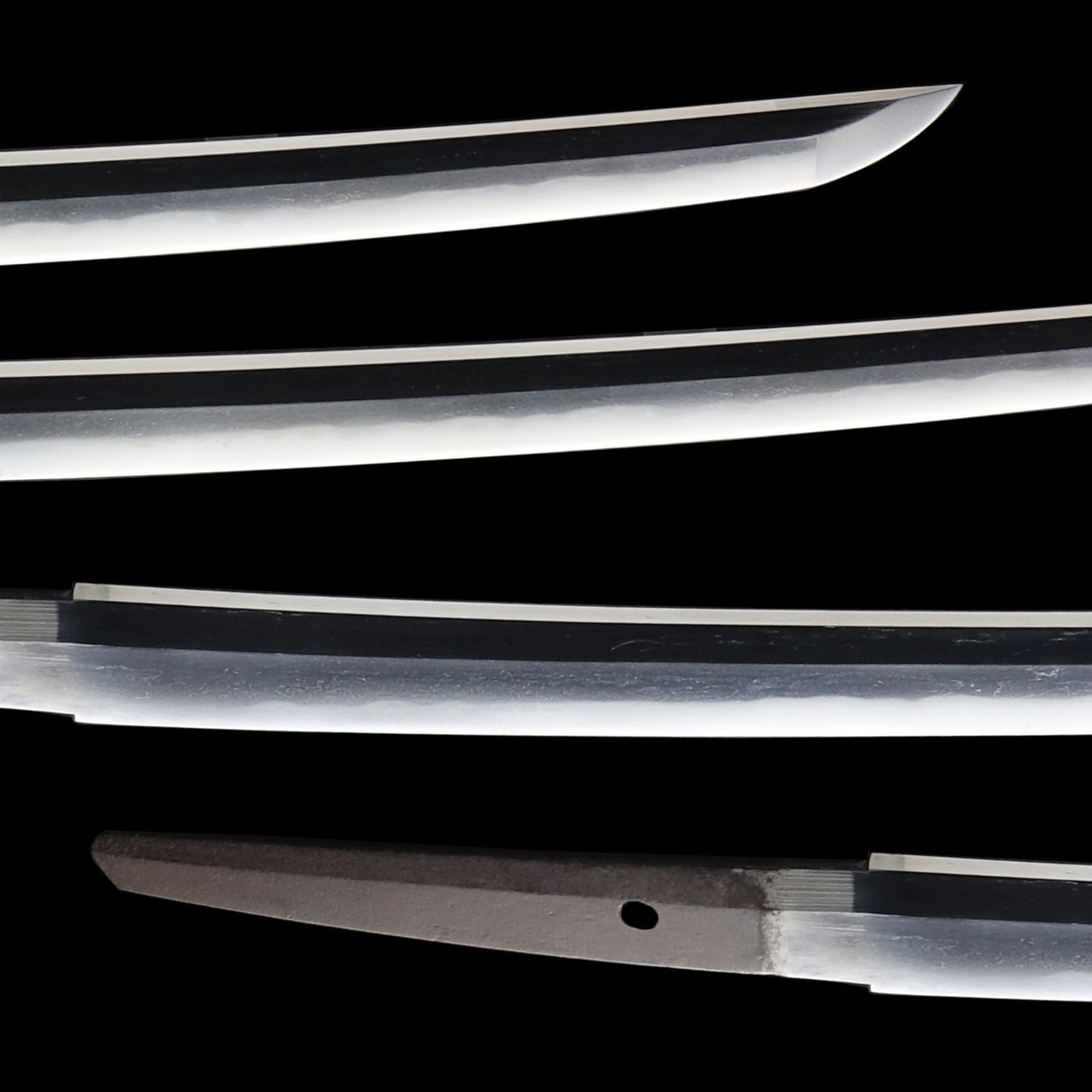
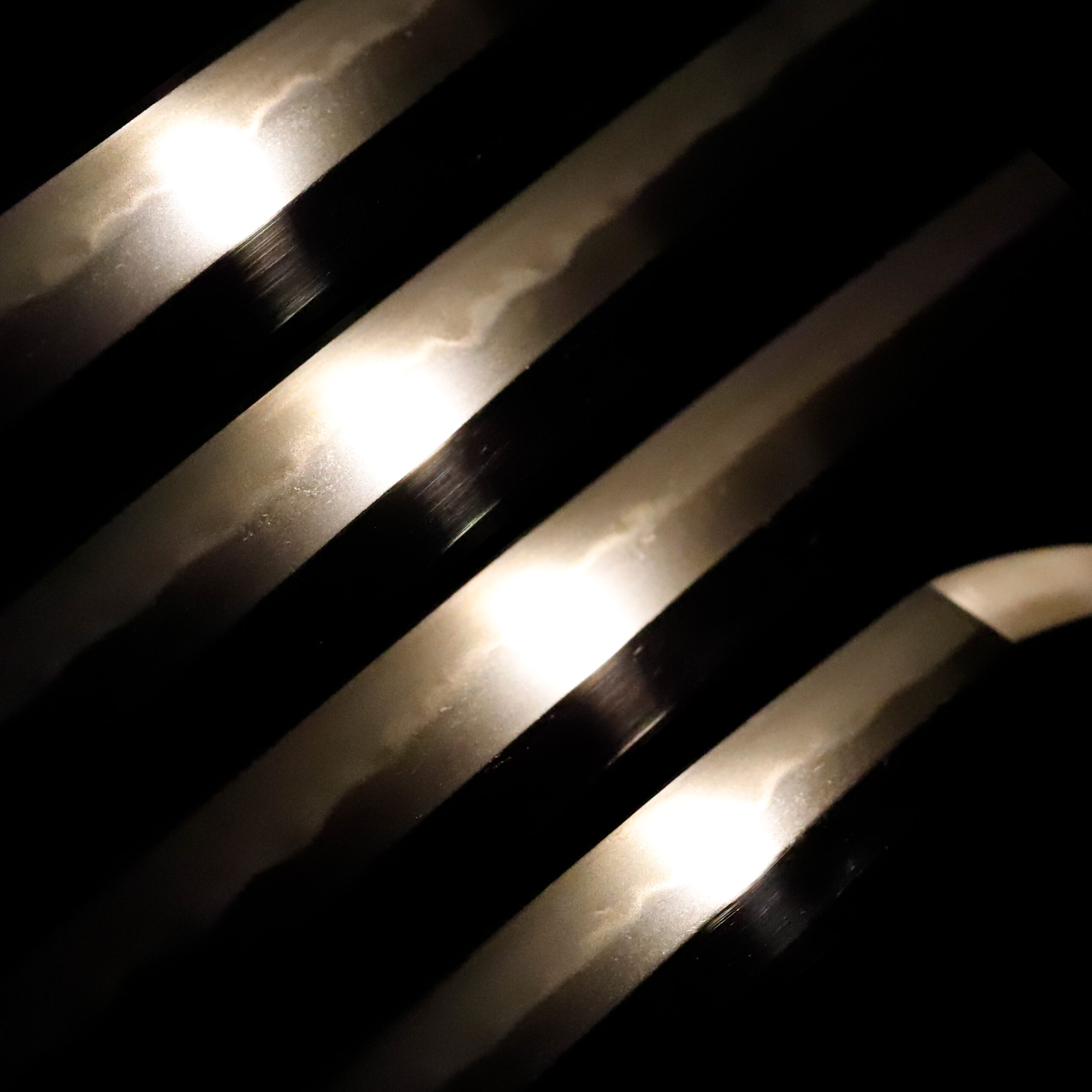
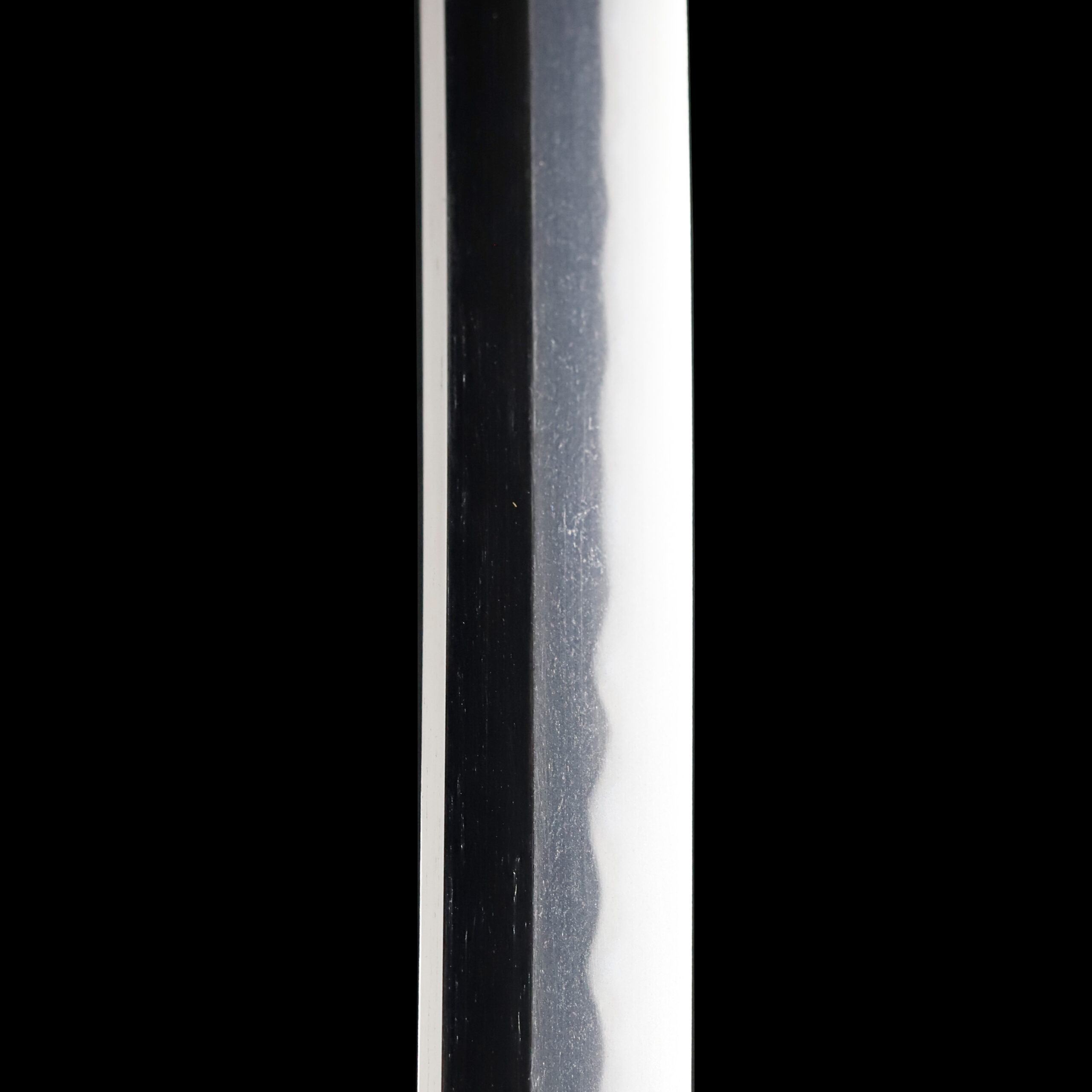
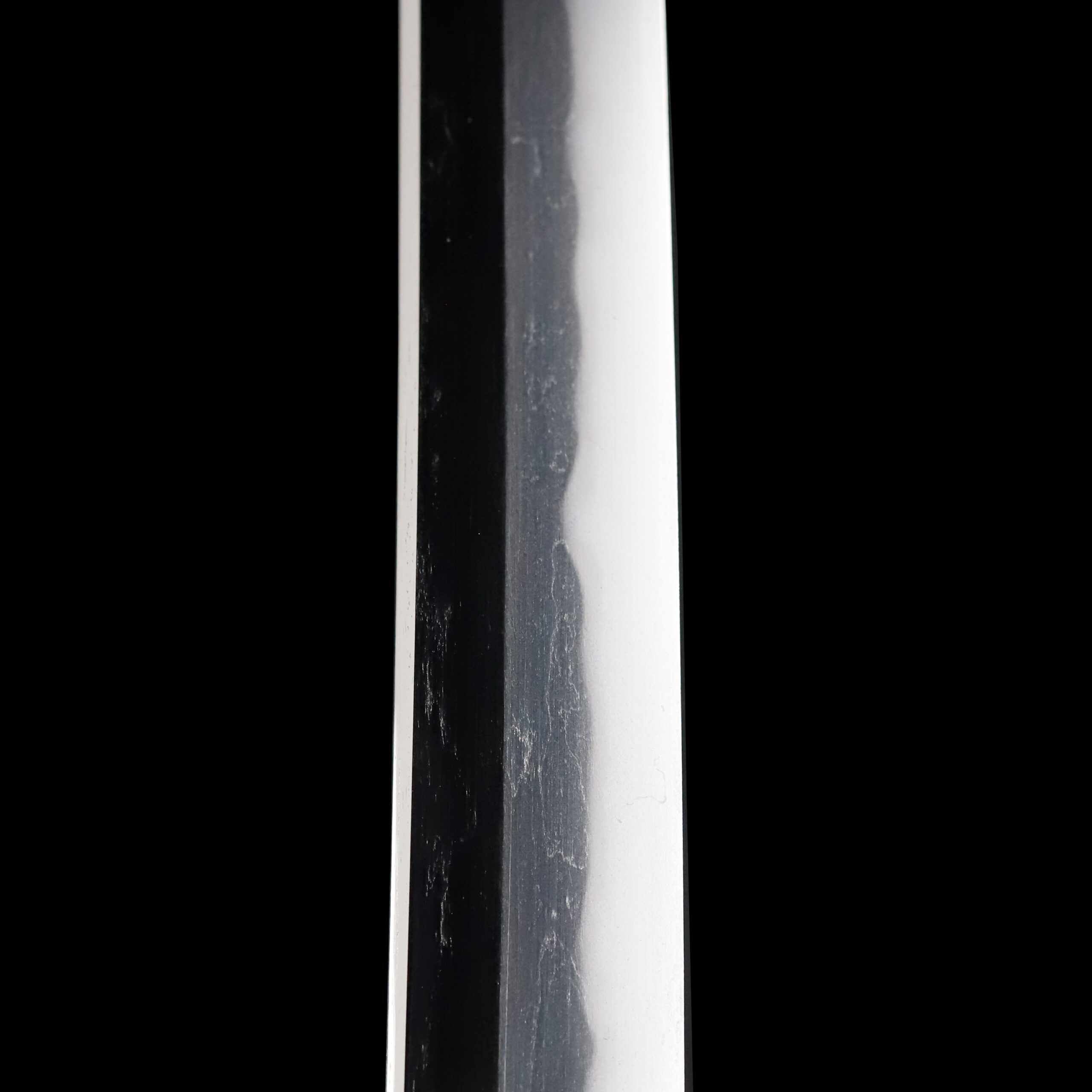
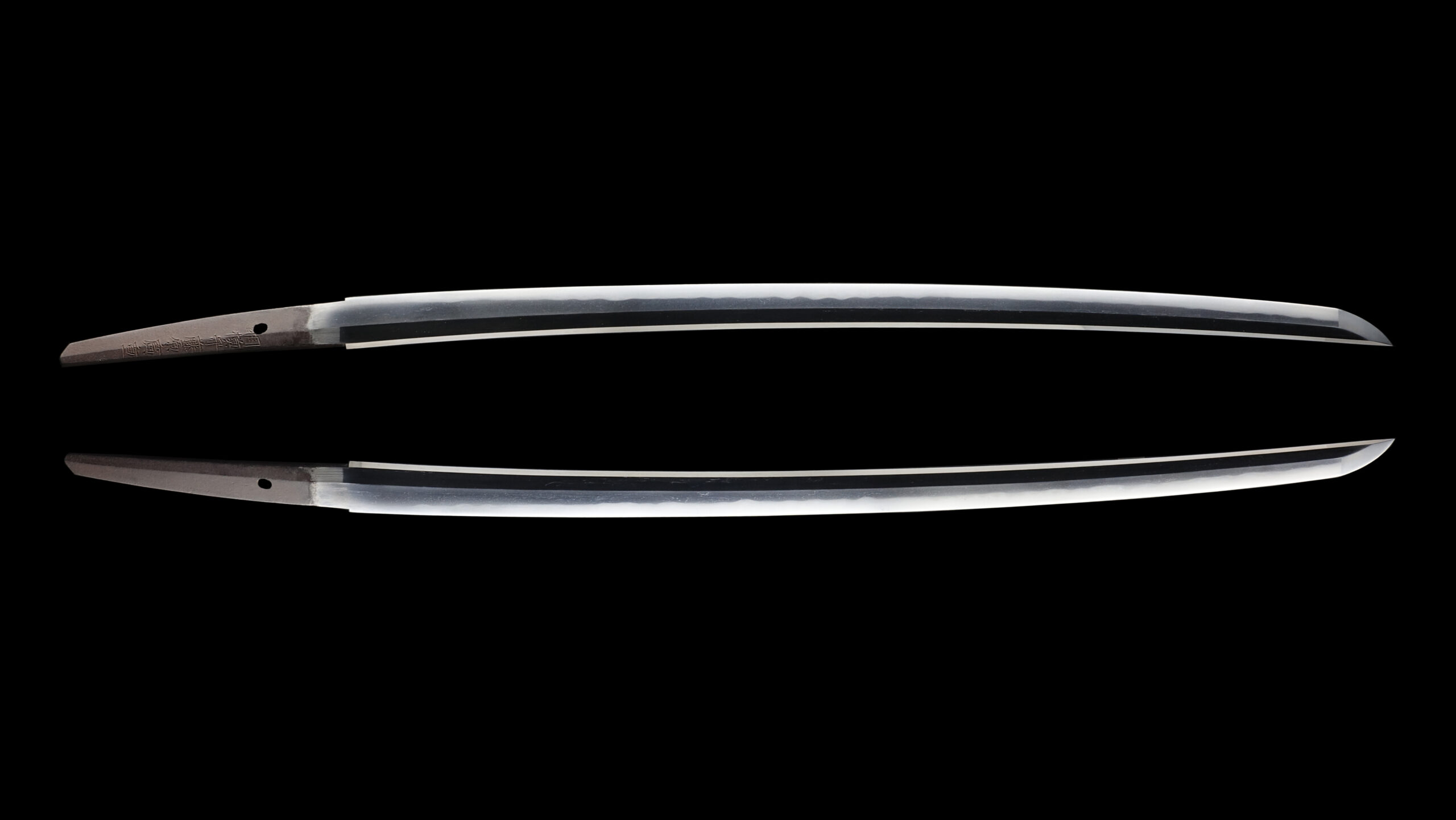
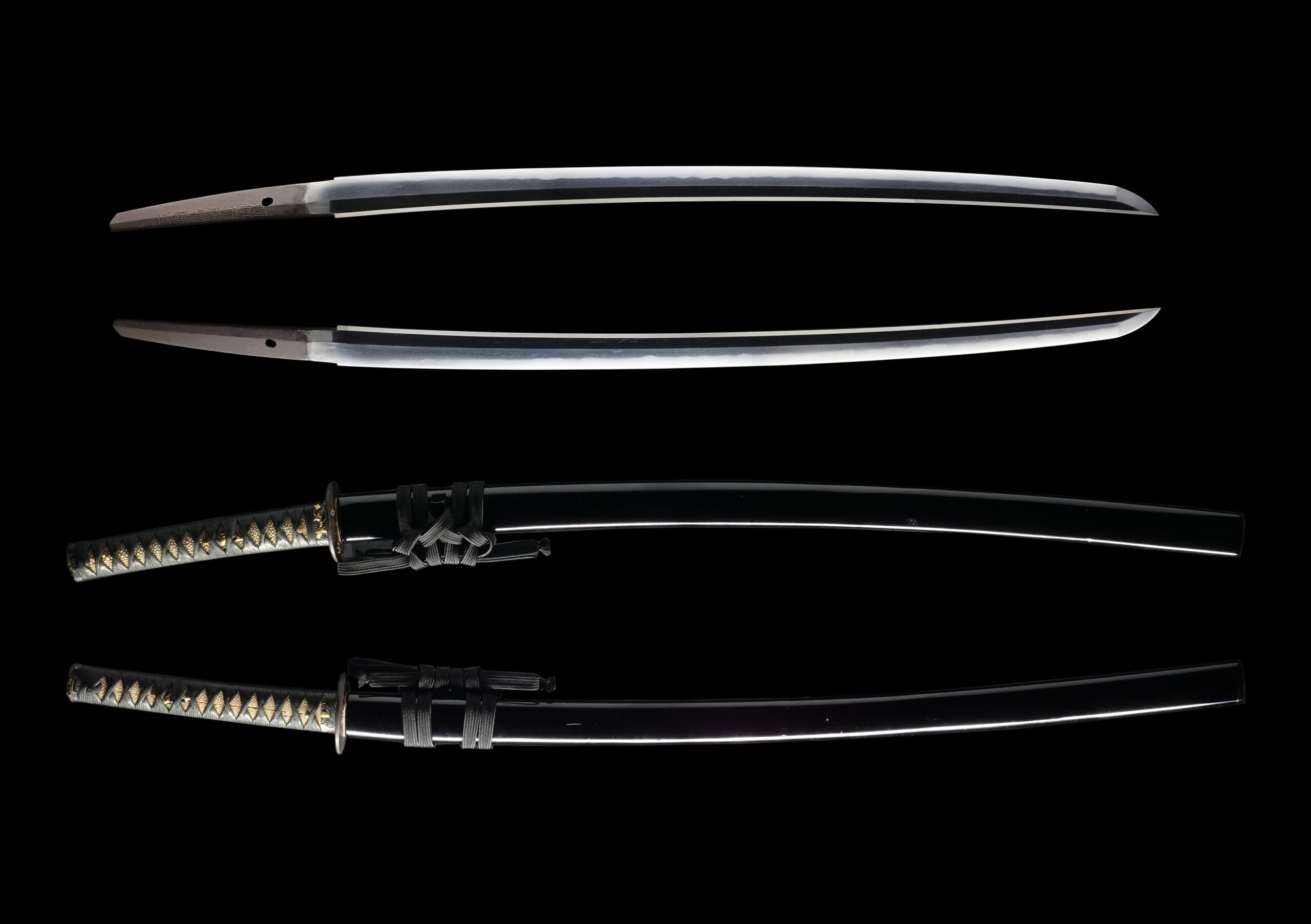
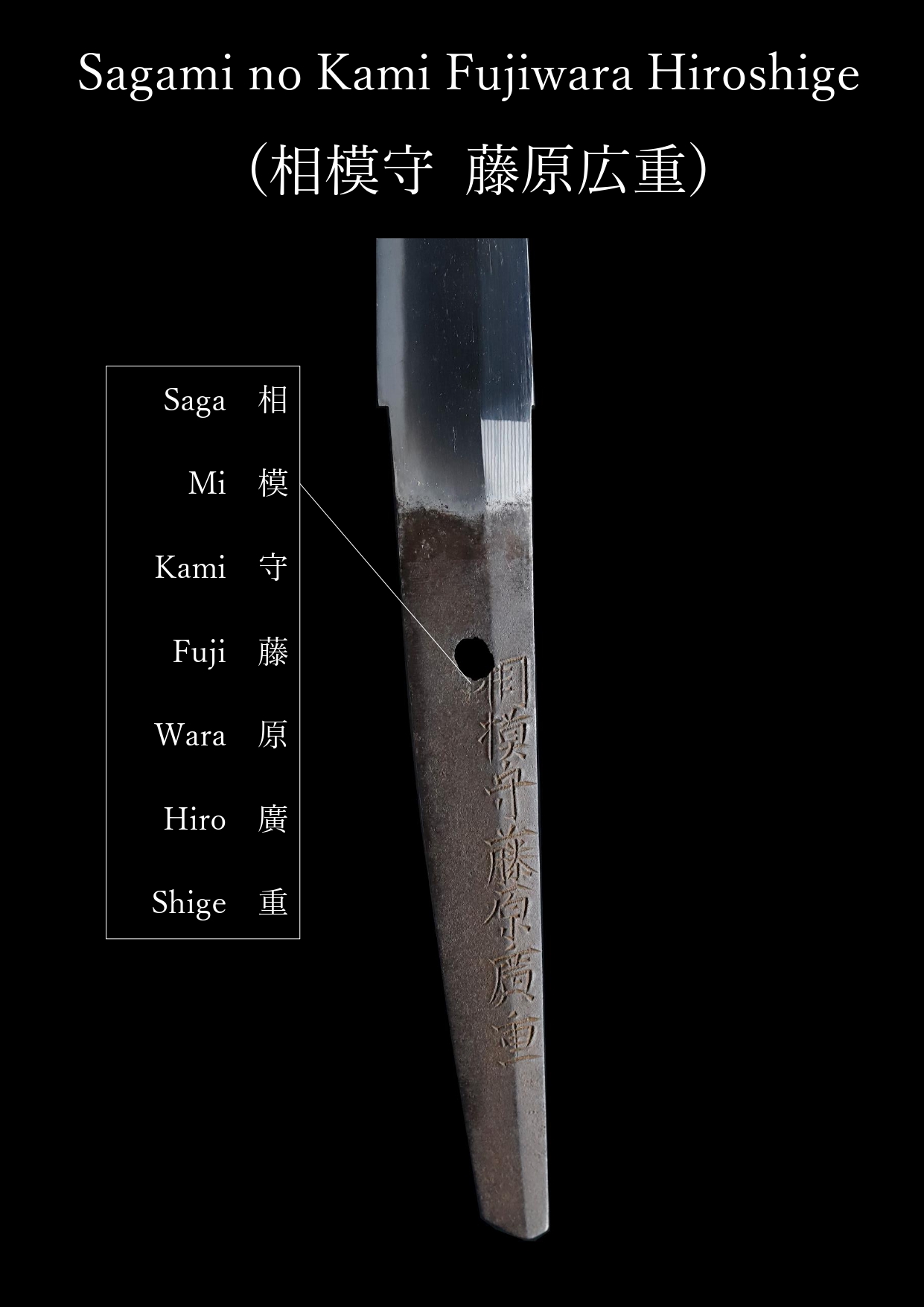
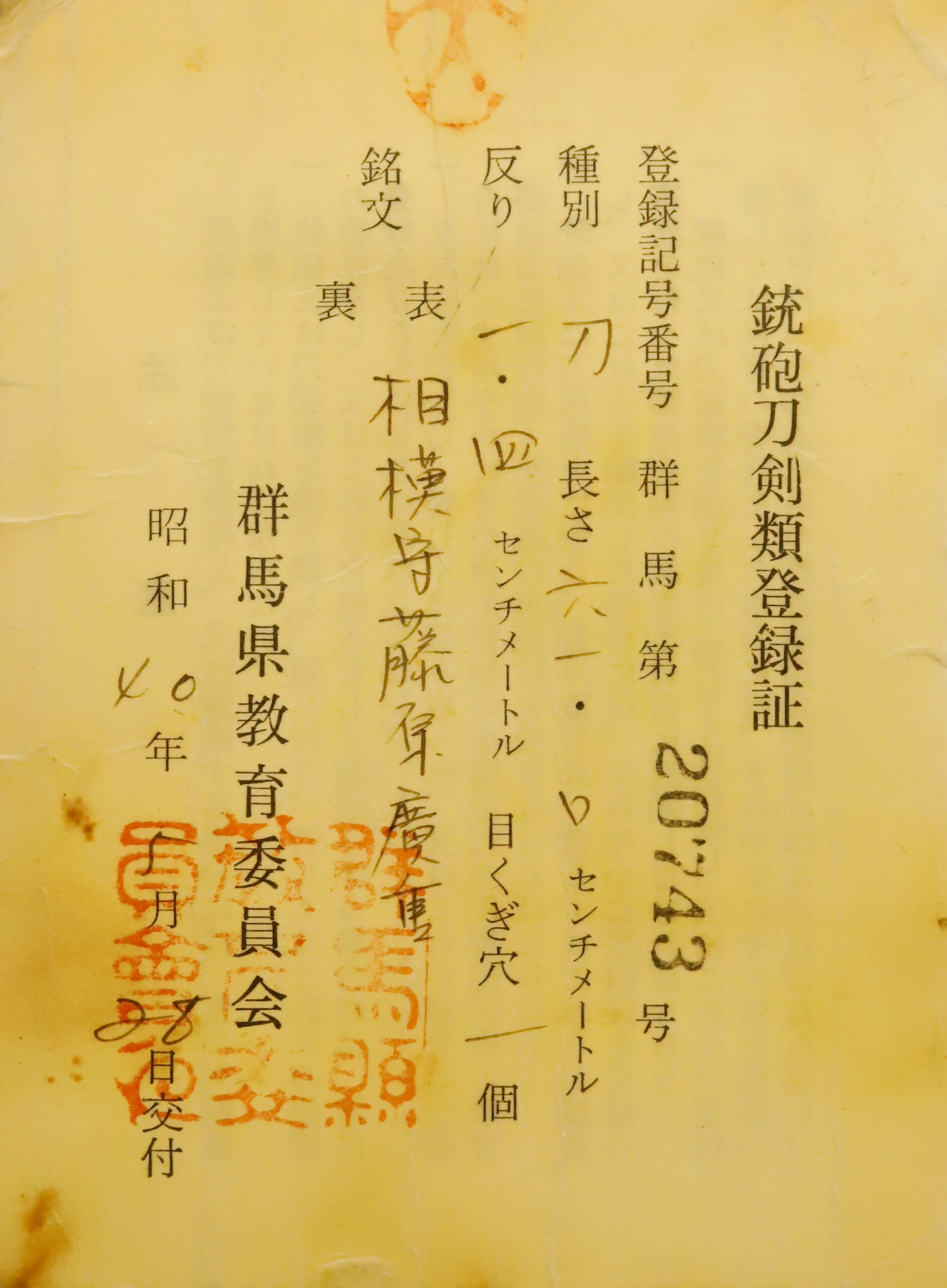
販売店の記載のまま
武蔵 · 1624-1644頃
藤代 上作 · 刀剣大鑑 上位60%
現在2点販売中
江戸時代
江戸は刀の目利きの時代である。本阿弥の鑑定、1719年の享保名物帳、盛んな刀剣書が、戦で抜かれることのなくなった刀を学問の対象へと変えていった。
保存刀剣のうち、出来が一層優れ、保存状態も良好と認められたものです。再刃や、室町・江戸期の多くの無銘作は対象外となり、保存刀剣より高い基準が課されます。
日本美術刀剣保存協会(NBTHK)は、1948年に設立され、文化庁の監督を受ける公益財団法人で、東京・刀剣博物館に本部を置きます。専門の審査員が出品作を直接審査し、美術的・歴史的価値に応じた鑑定書を発行します。NBTHKの鑑定書は、日本刀および刀装具の真正性を示す最も広く認知された基準です。
NBTHK公式サイトReturns/exchanges limited to defects caused by shipping (except willful misconduct or gross negligence by the company); customers must contact within 72 hours of receiving the product.