NihontoWatch MonNihontoWatch
マーケット
事典
鑑定

説明

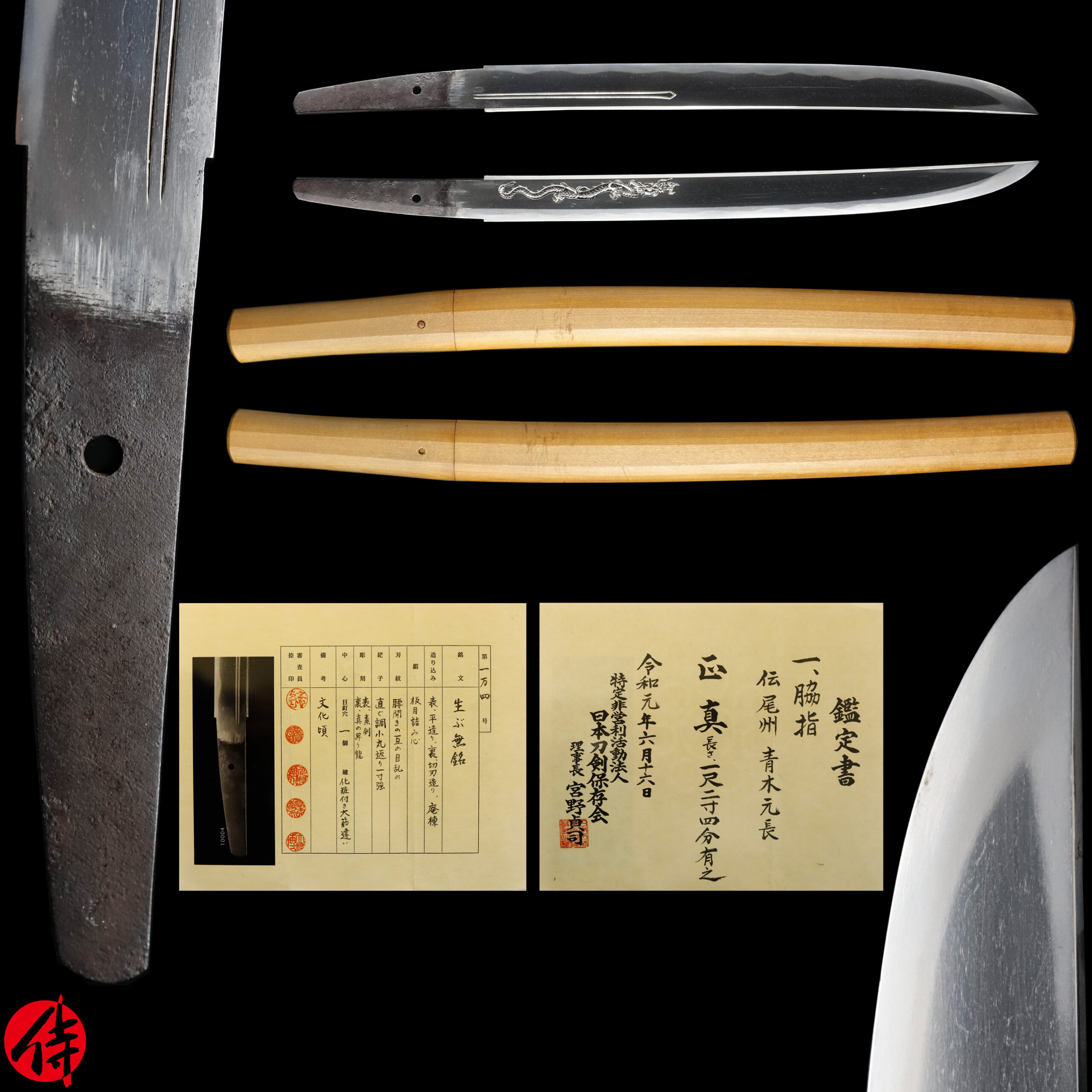
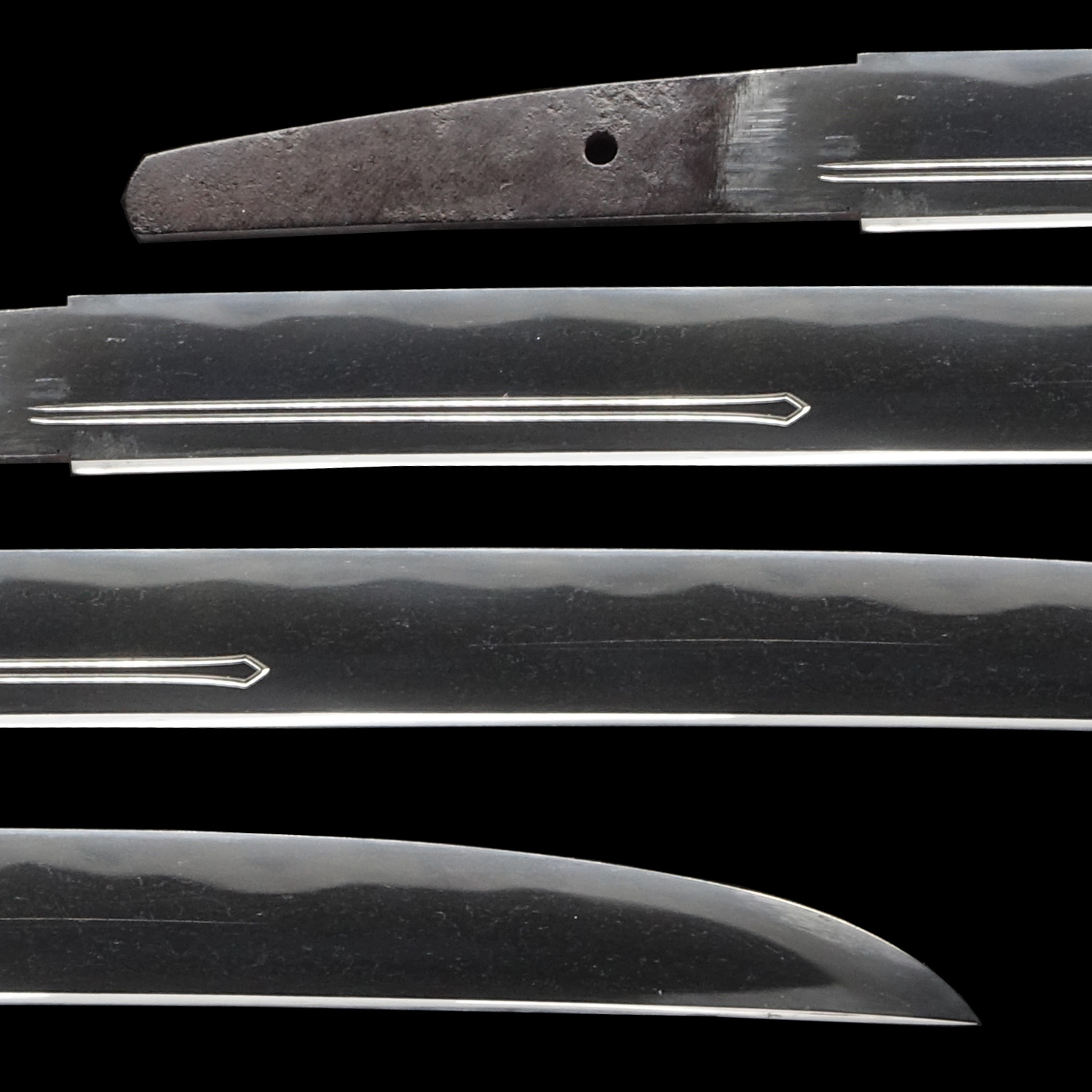
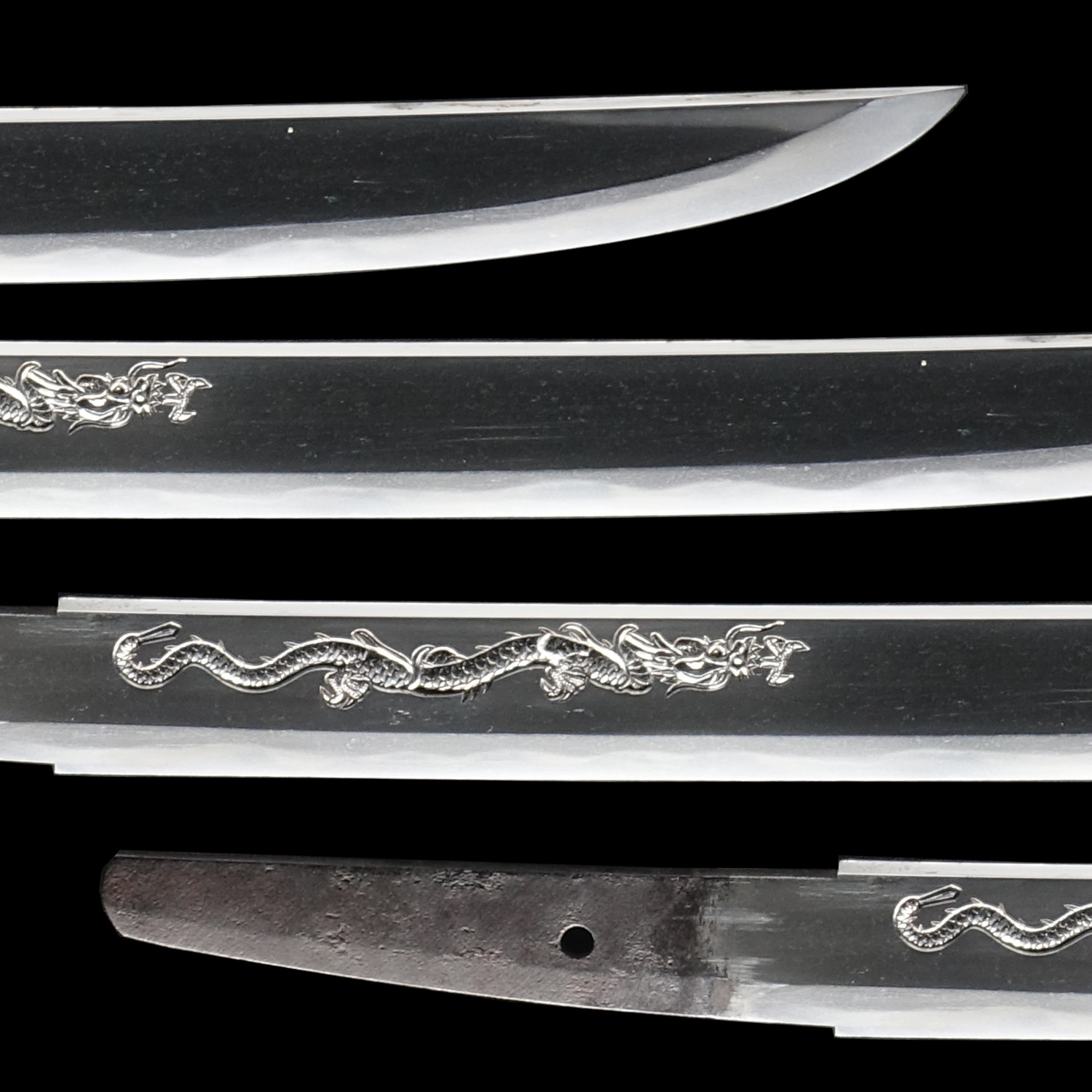
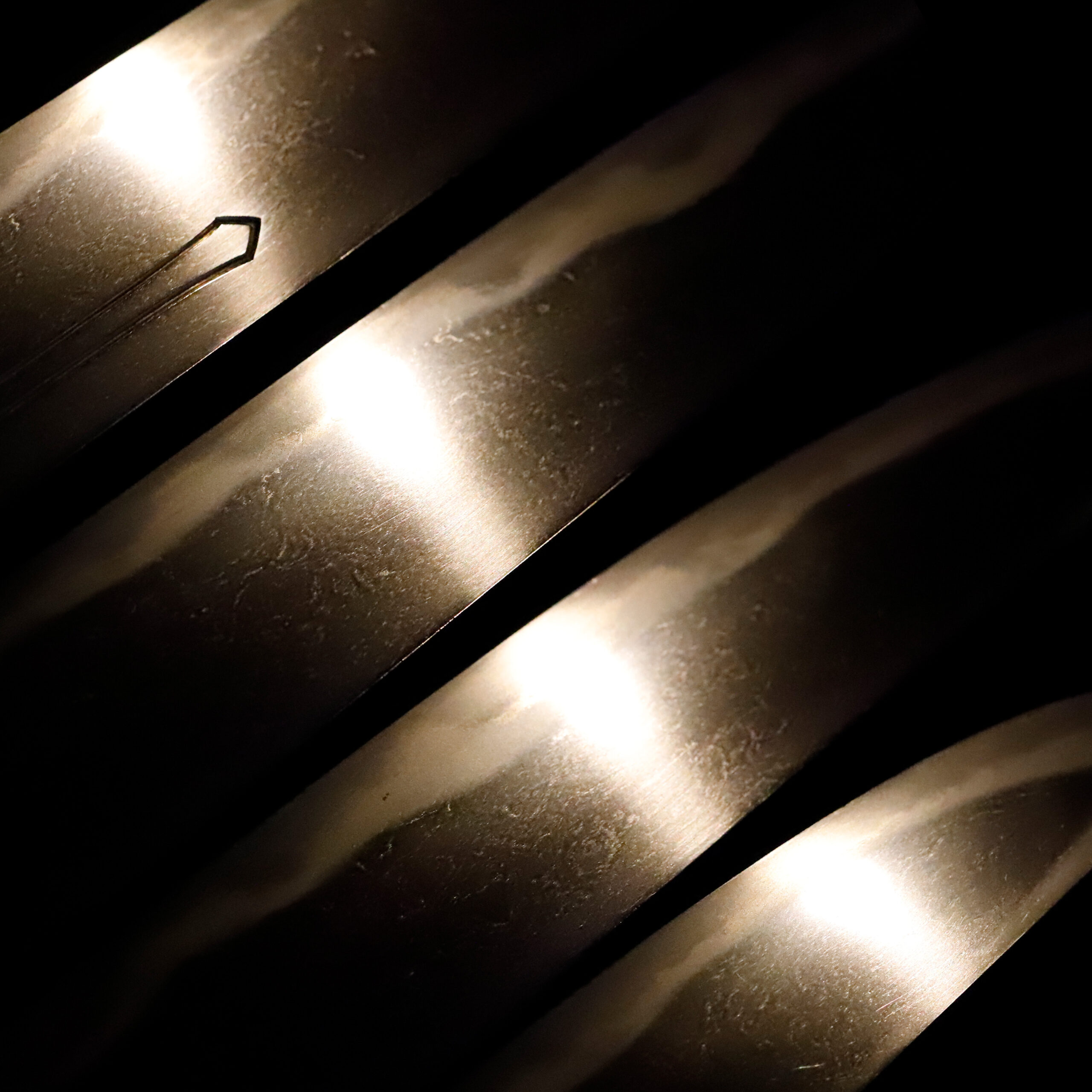
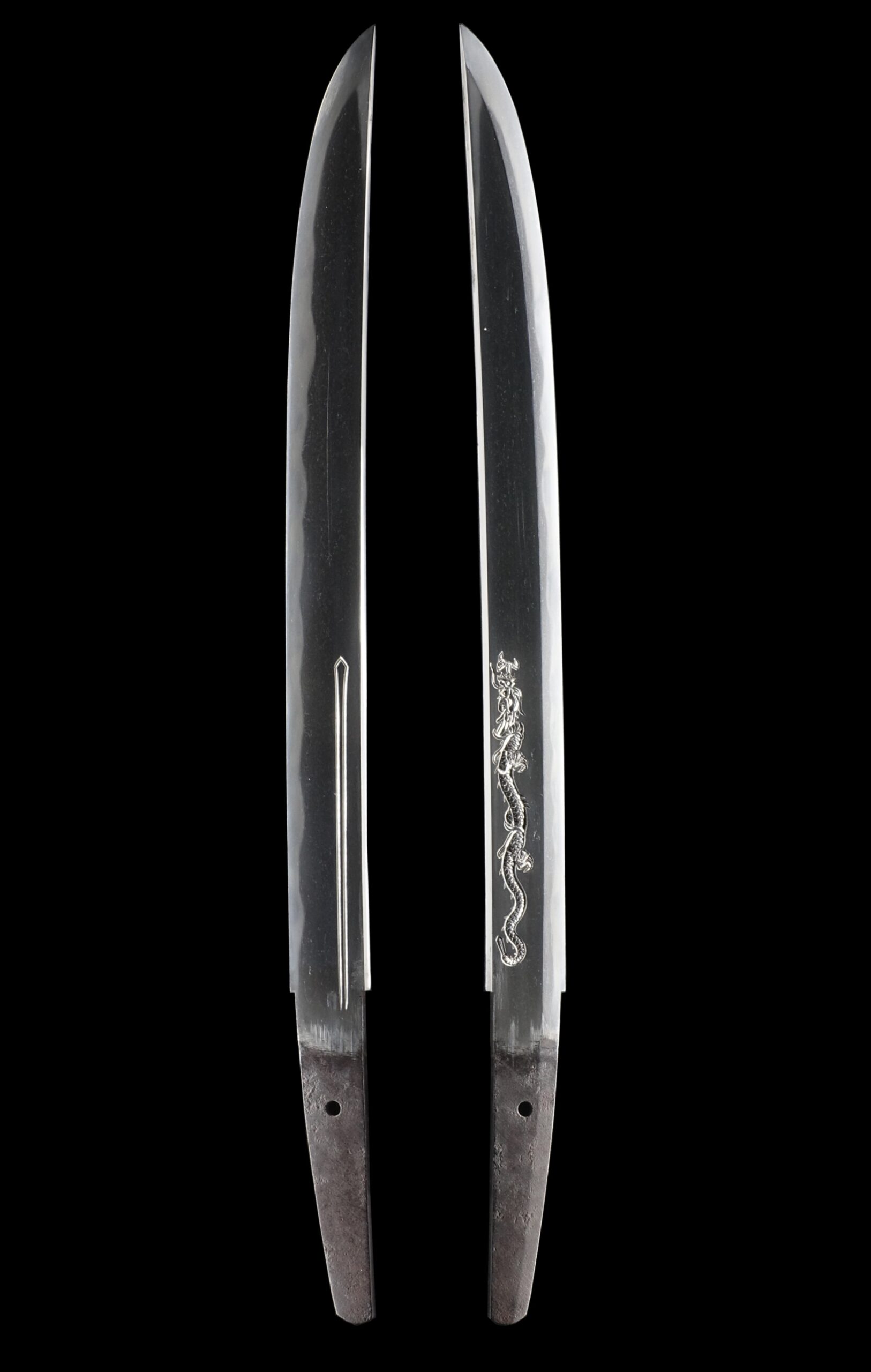
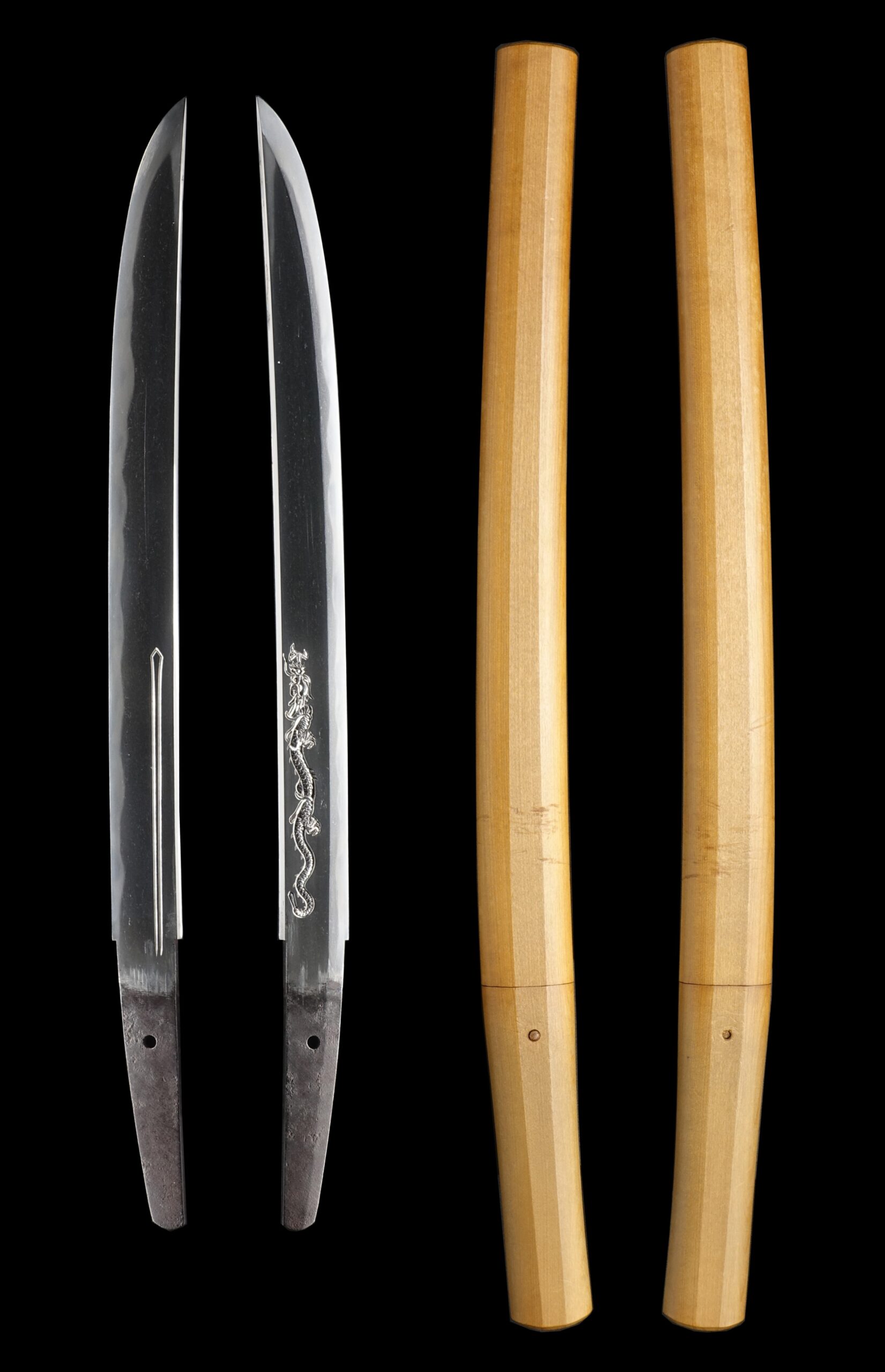
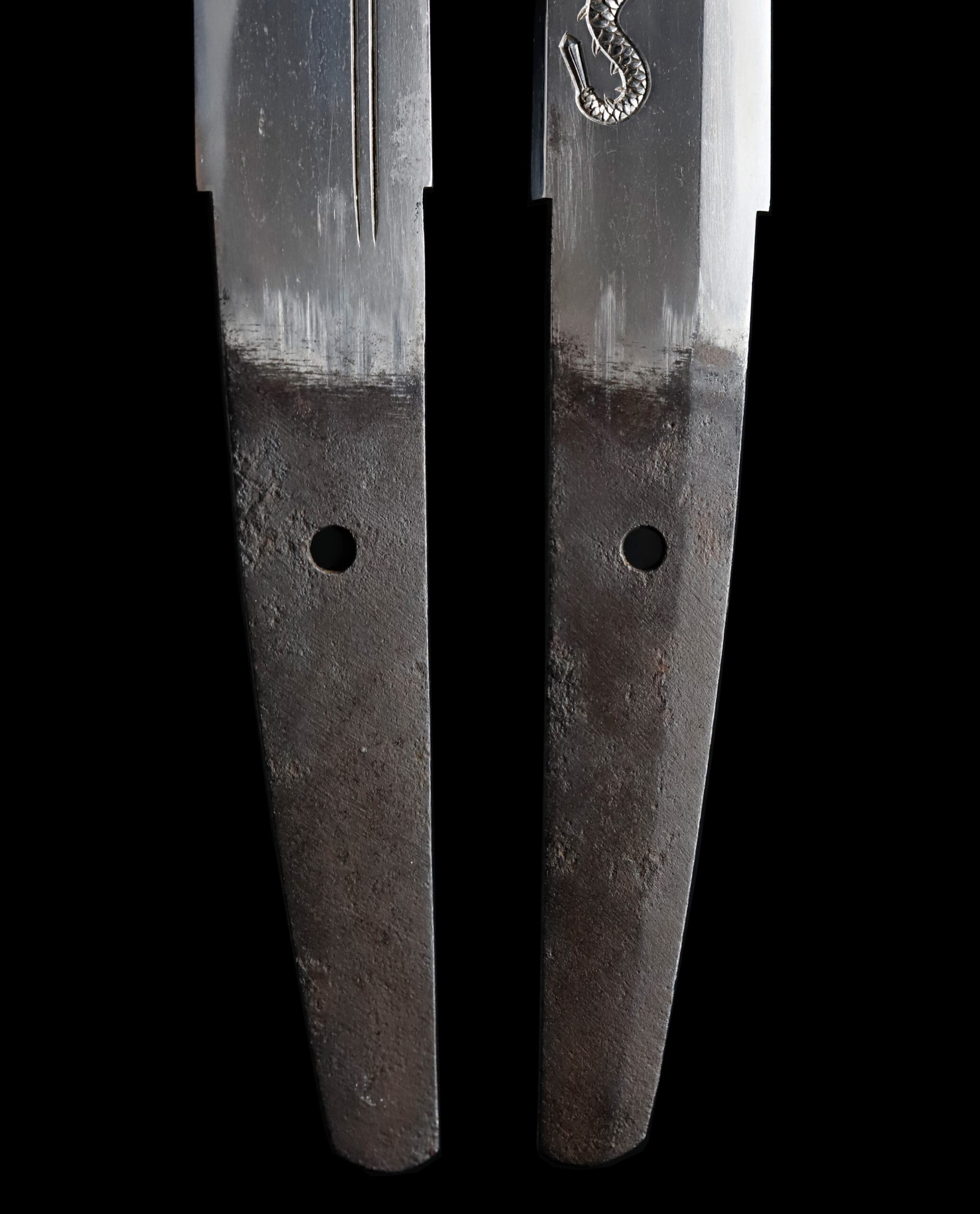
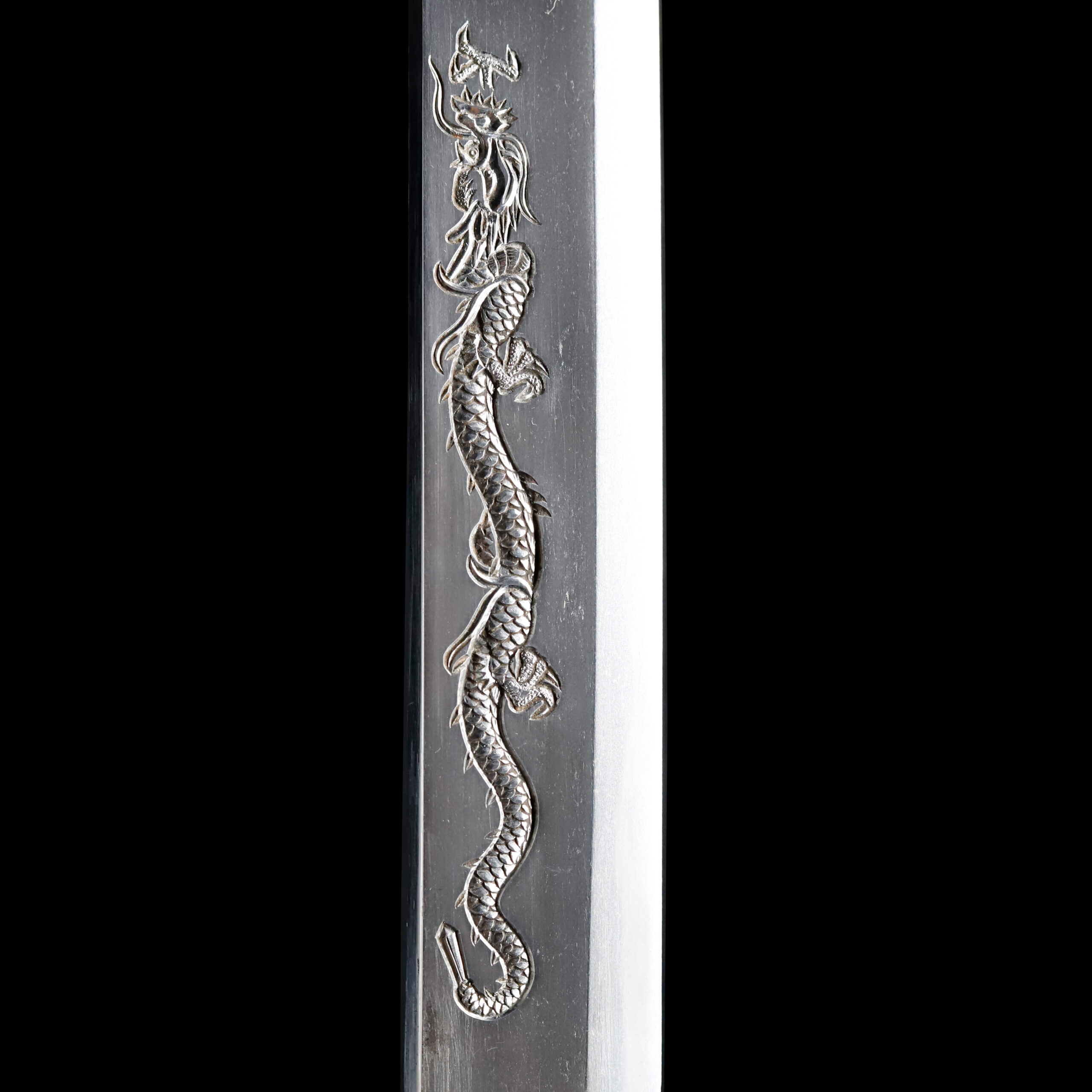
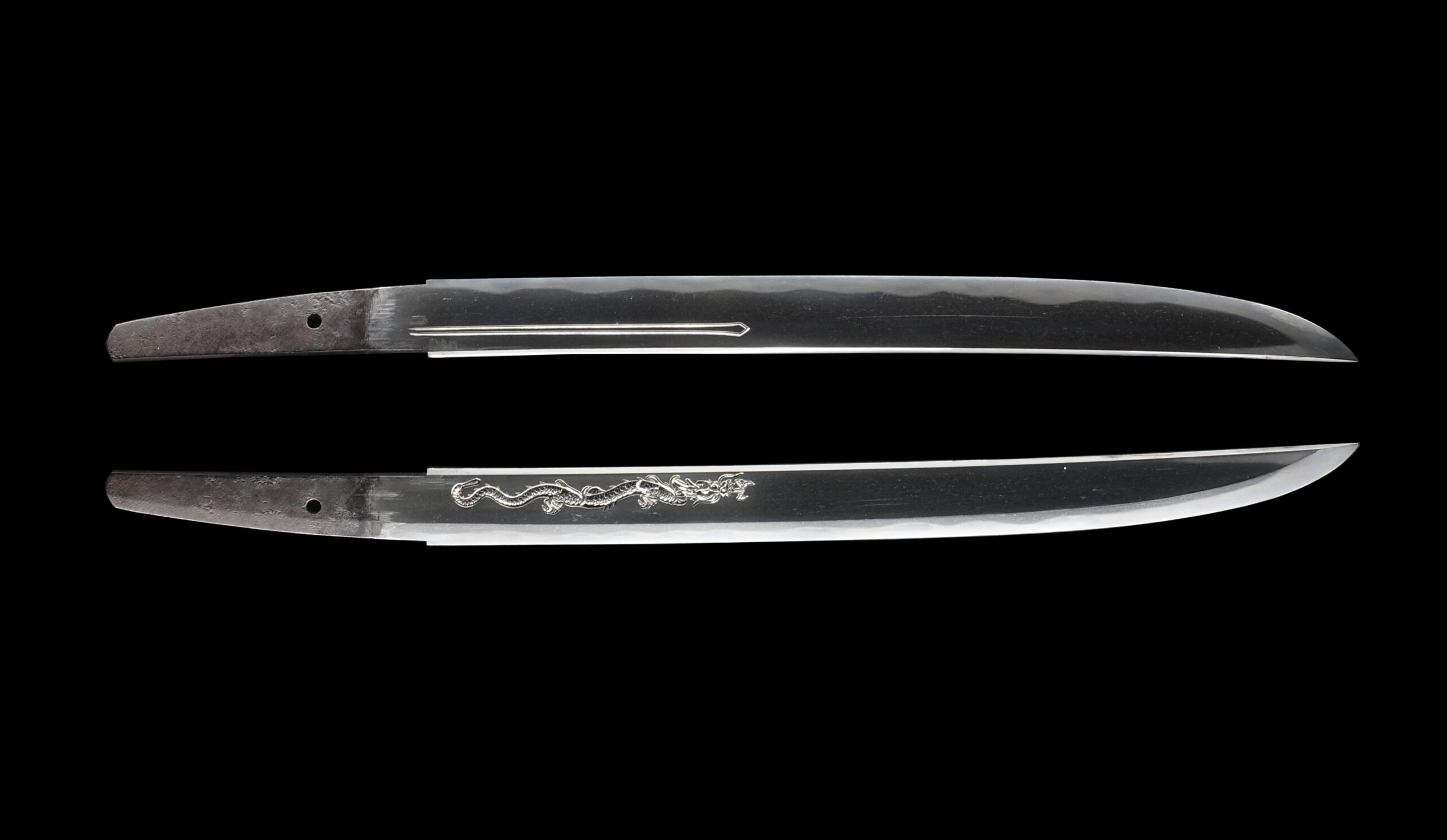
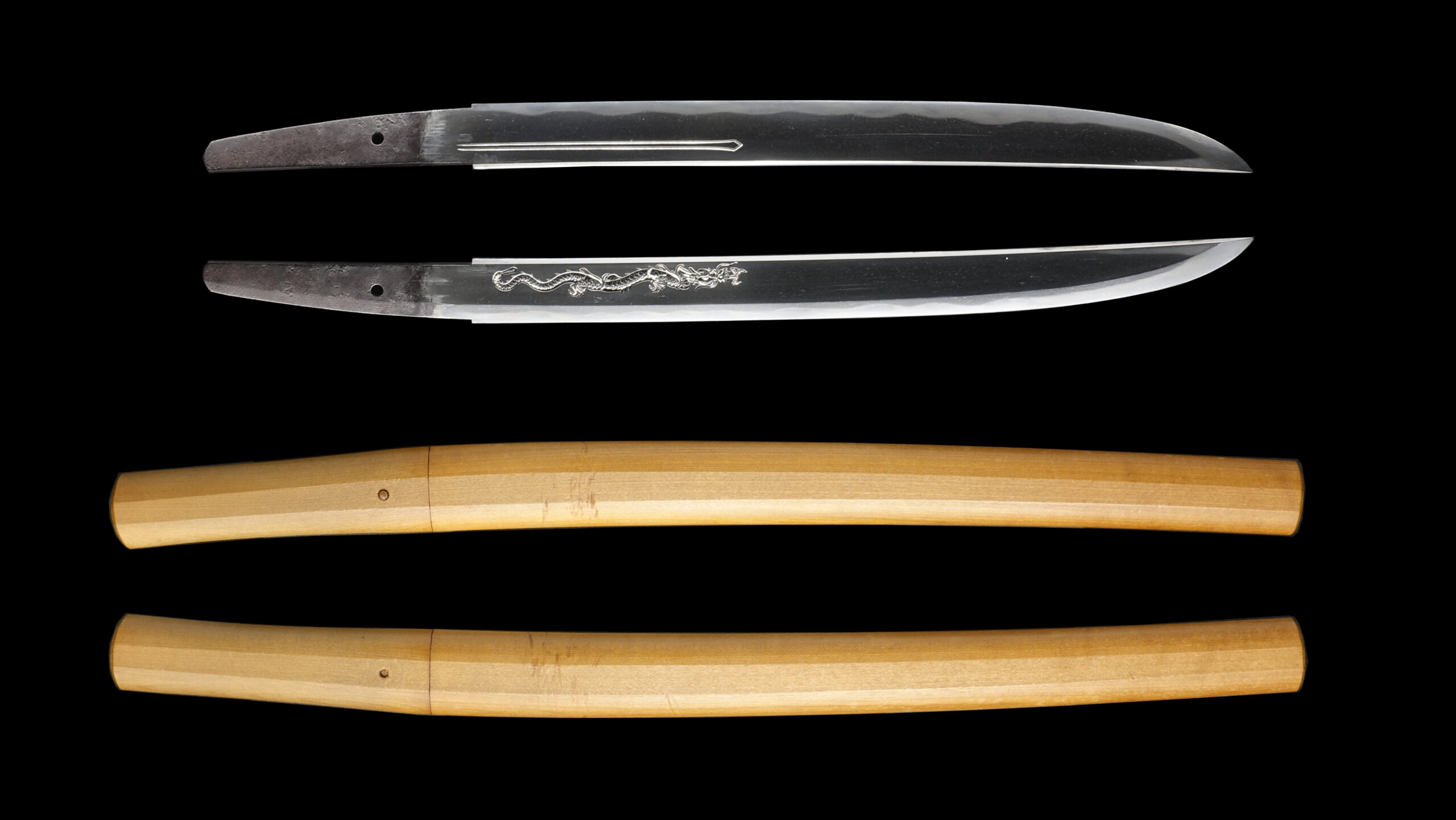
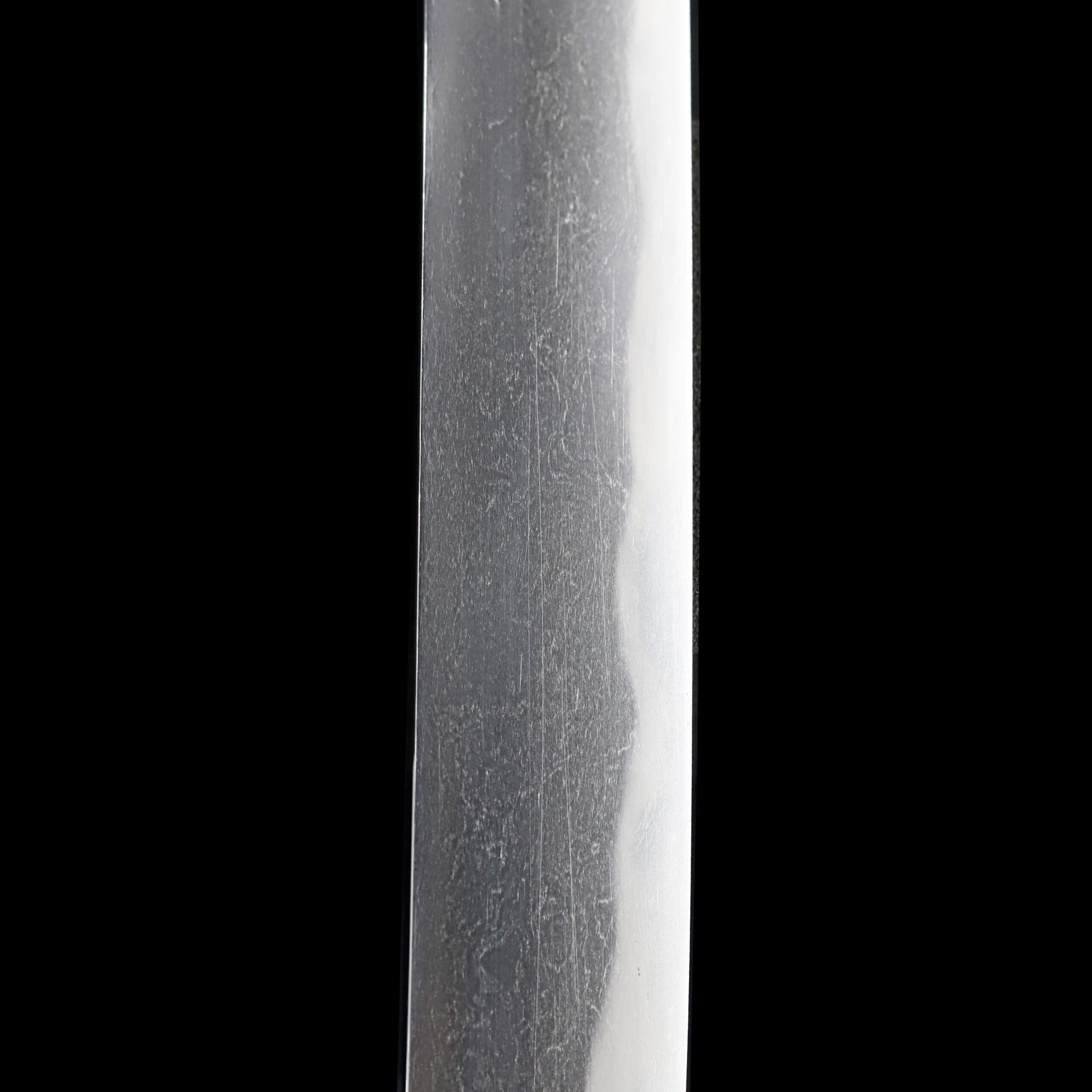
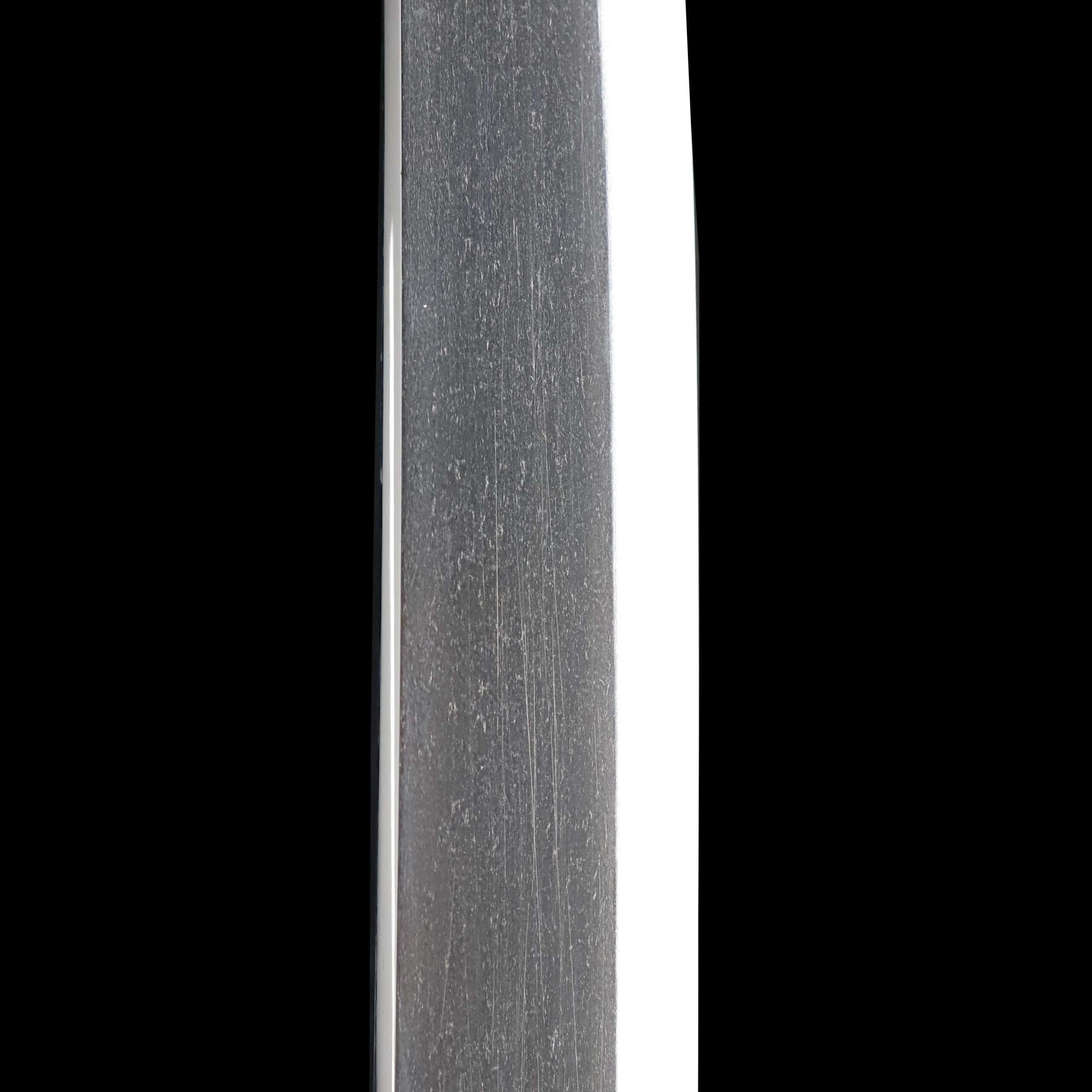
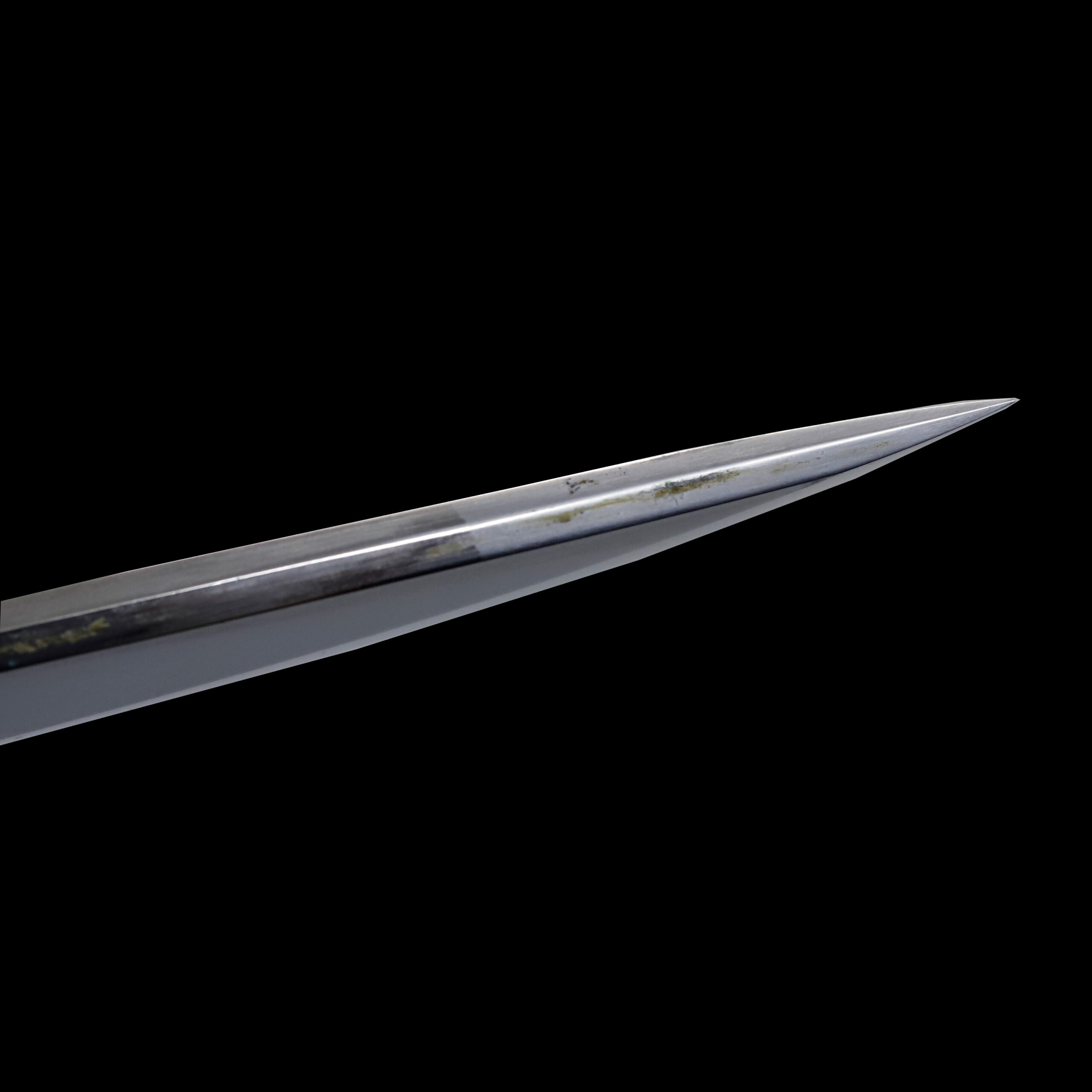
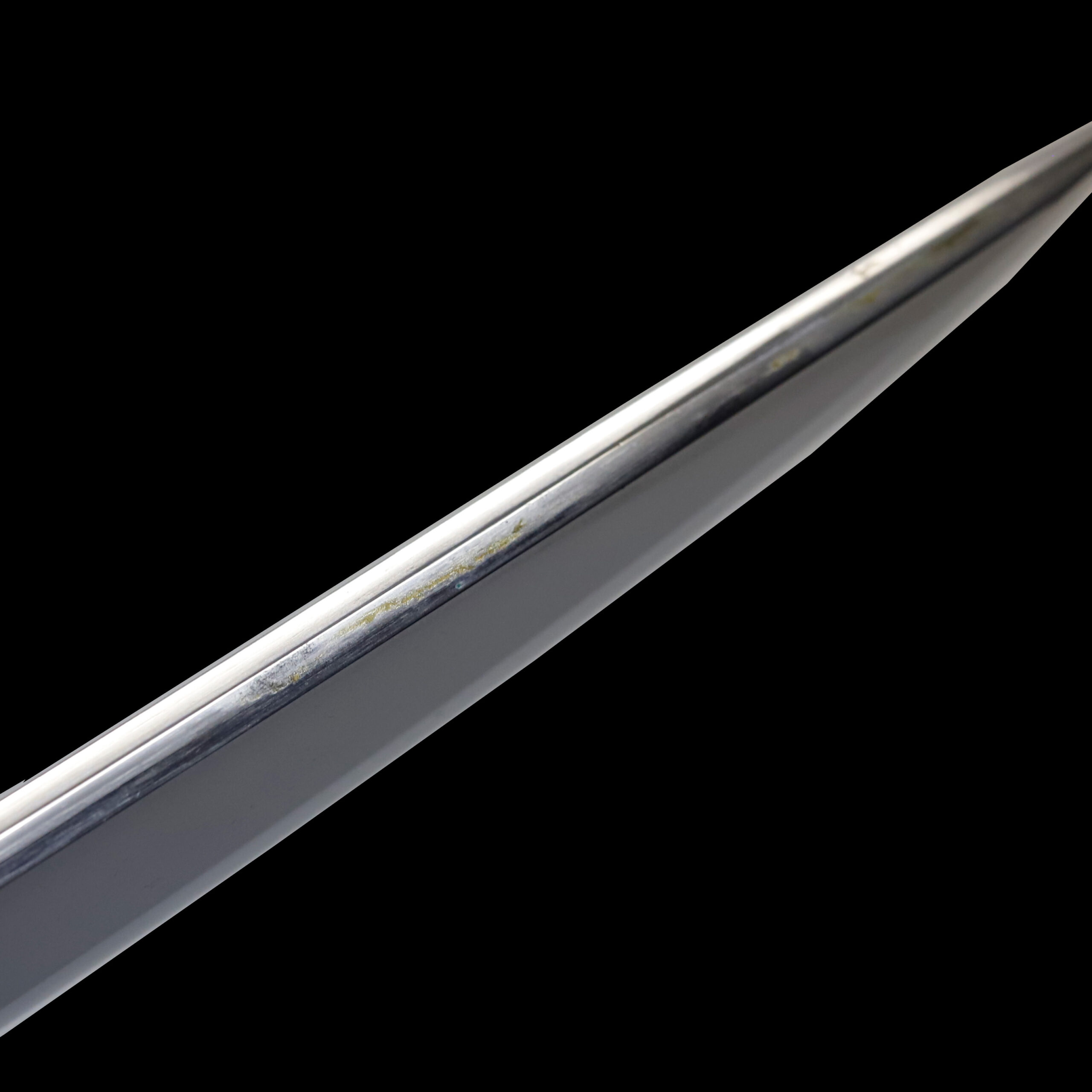
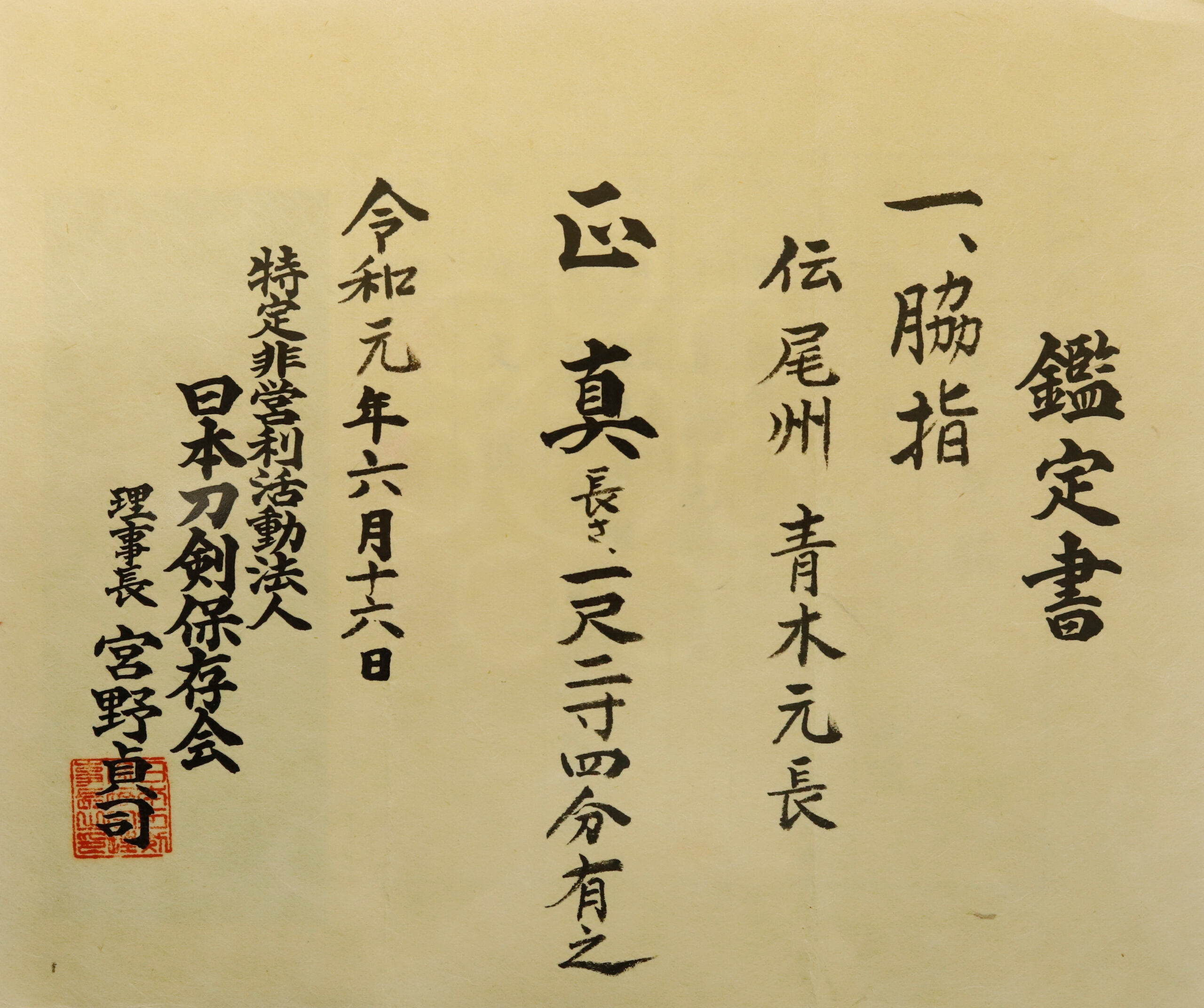
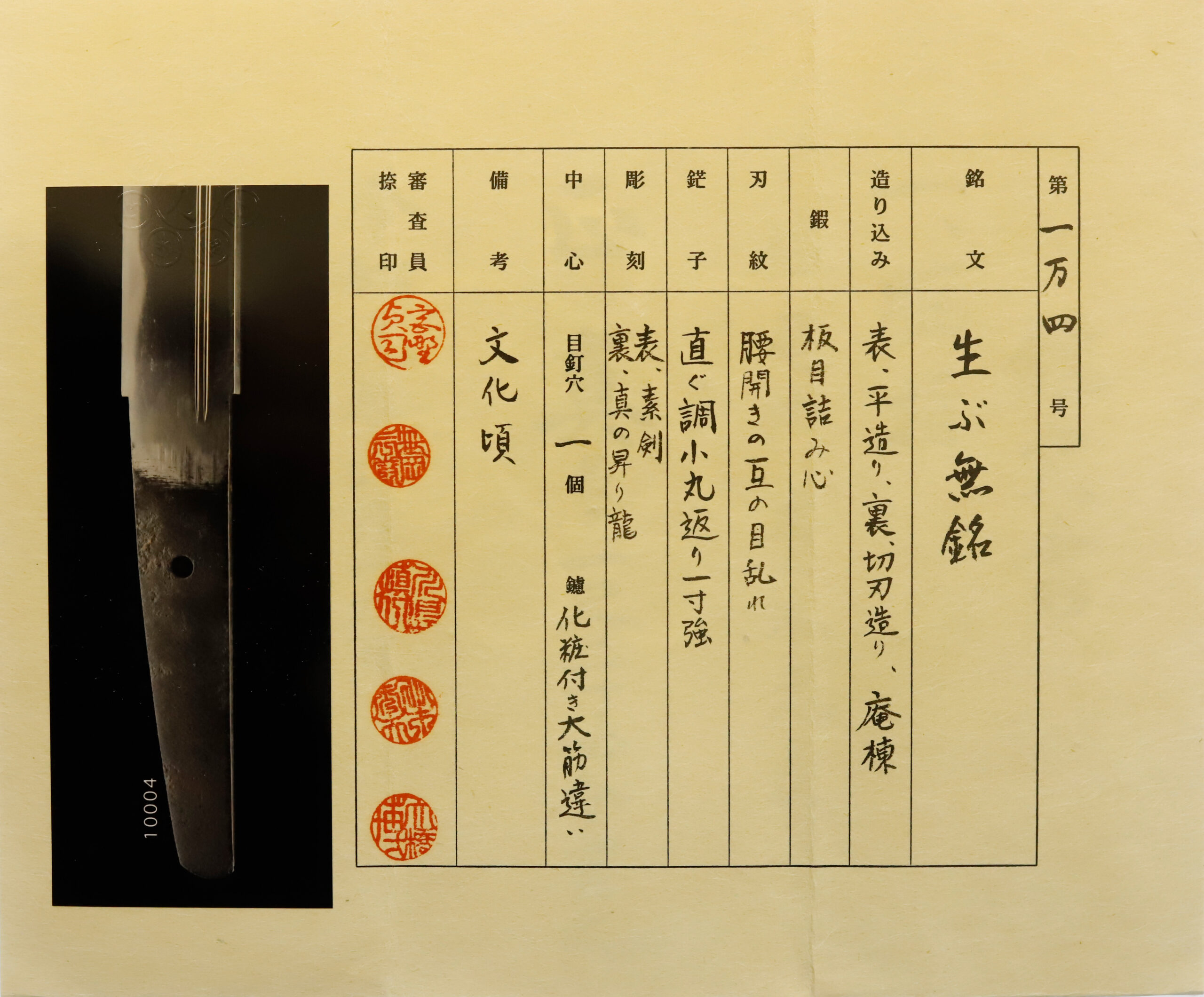
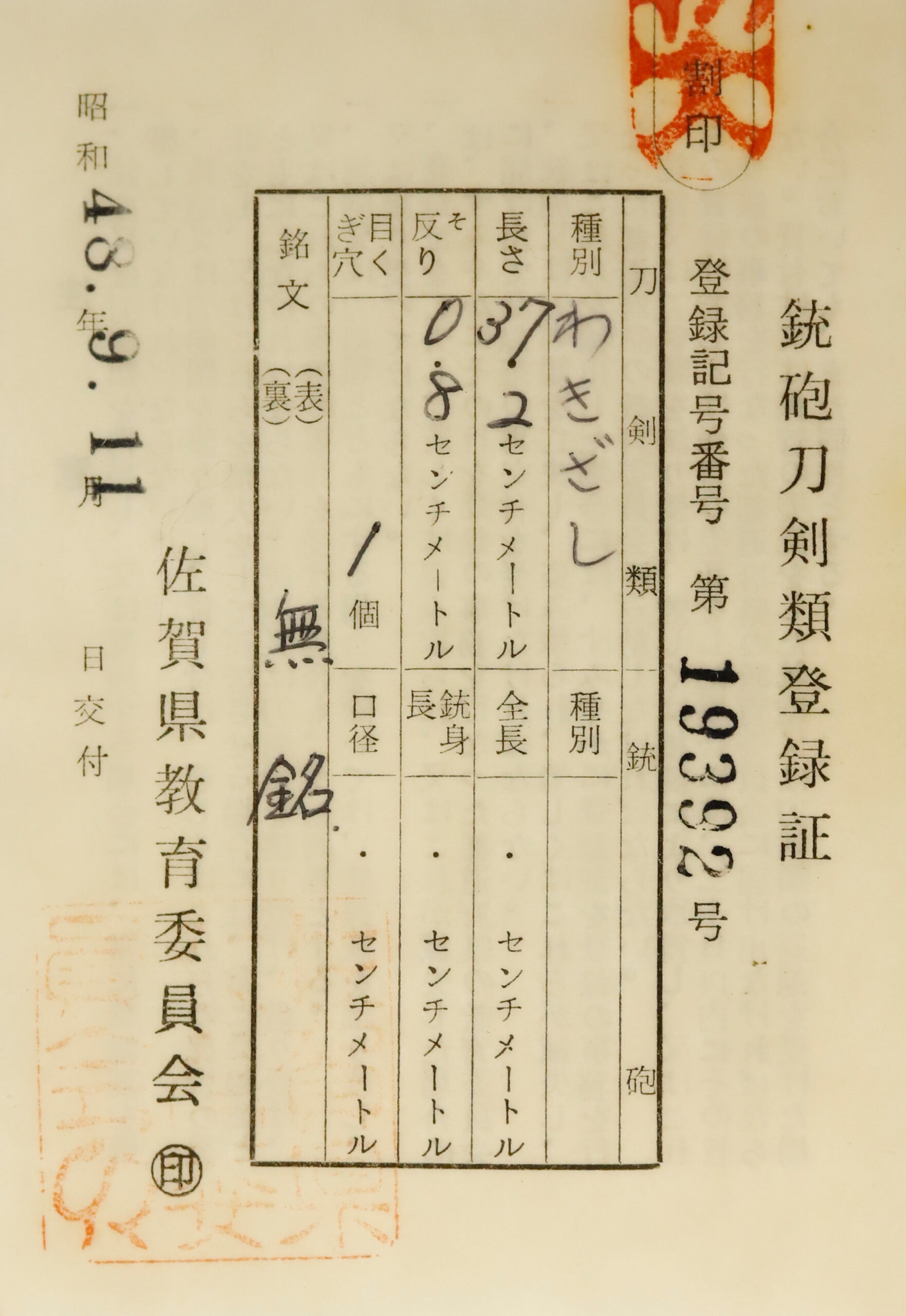
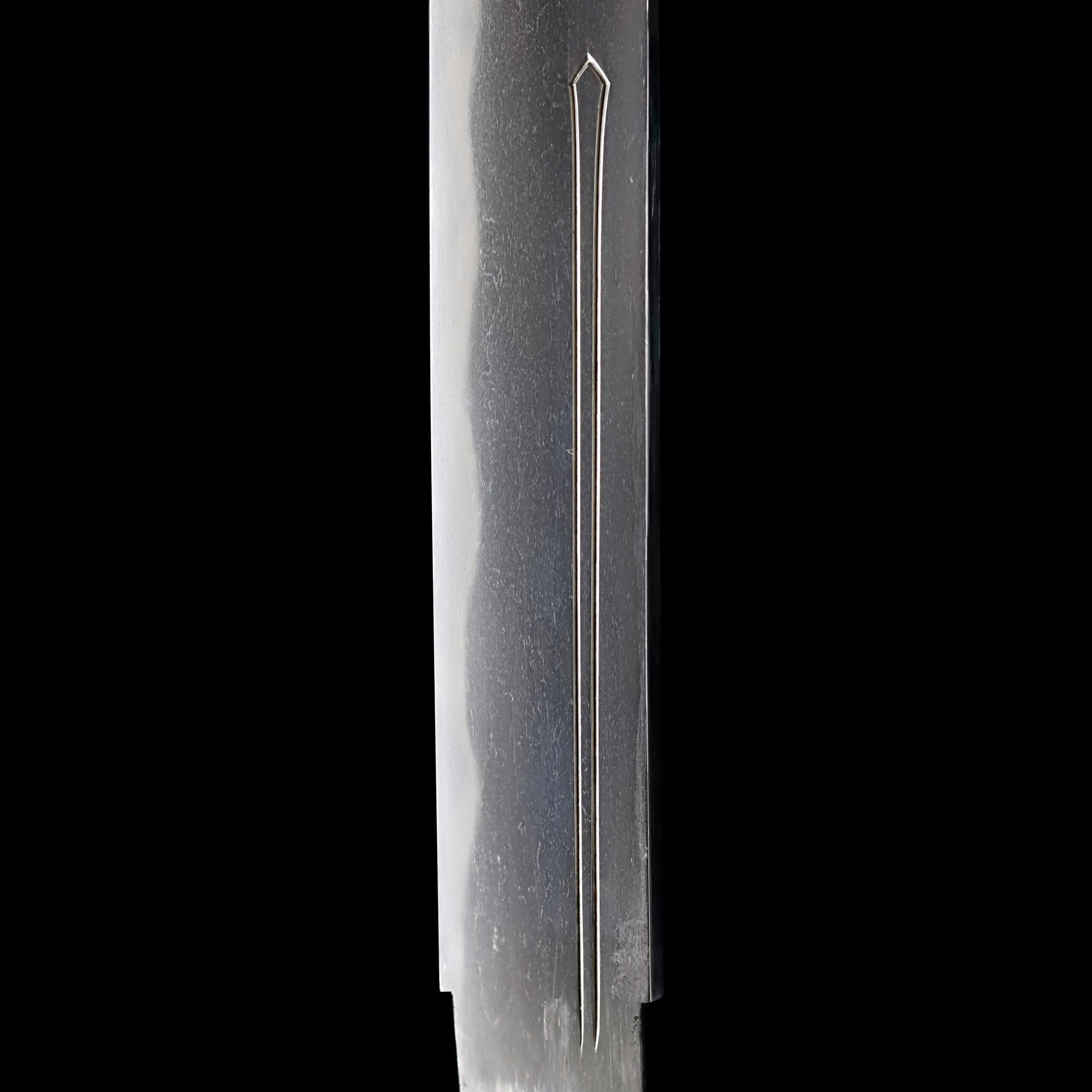
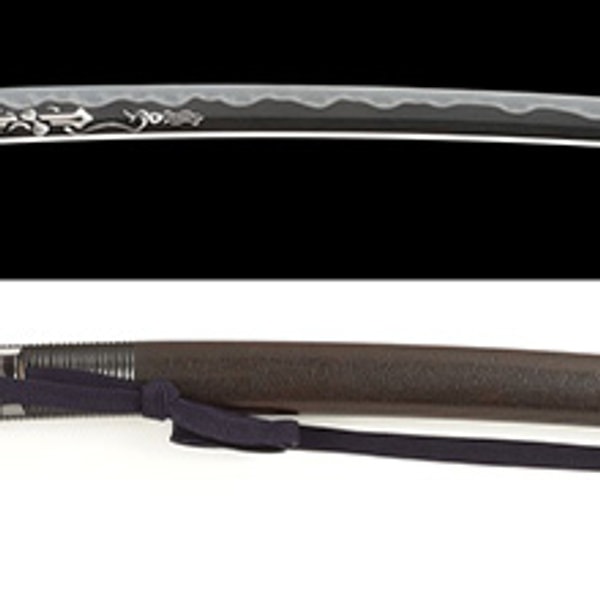
Antique Japanese Sword Wakizashi Attributed to Aoki Motonaga with NTHK Kanteisho Certificate 【Description】 Summary This blade is attributed to Bishu Aoki Motohira (尾州青木元長), who was active at the end of the Edo period (Bunka era: 1804-1818). Bishu is another name for Owari province. He learned sword-forging techniques from various masters, including the 6th-gen Nobutaka in Owari province (Today’s Aichi prefecture), Ozaki Suketaka in Settsu province (Today’s Osaka prefecture), Oku Motohira in Satsuma province (today’s Satsuma province). We assume he must have aspired to learn highly skilled craftsmanship from these masters. His birthname was Kiheibei, and he first signed Nobunao (信直) after becoming an apprentice of the 6th-gen Nobutaka (六代信高) during the Bunka era (1804-1818). We believe Motonaga was allowed to use one Kanji letter of his master’s name, Nobu (信), after being acknowledged by Nobutaka. After finishing his apprenticeship and gaining fame in Owari province, he moved to Osaka to learn sword-forging techniques from Ozaki Suketaka (尾崎助隆), who was famous for creating Toranba, a particular wavy tempering line. He was eager to master more intricate craftsmanship after staying in Osaka. In the third year of the Kyowa era (1803), he moved to Satsuma province and served Oku Motohira (奥元平), one of the most famous swordsmiths in the region back then. During his stay in the Satsuma province, he changed his name from Nobunao to Motonaga (元長). On this occasion, he also received a Moto (元) letter from his master. He learned various techniques from prestigious makers, and eventually, he settled near Nagoya castle in Aichi prefecture. Tsukuri (Structure) This blade has an interesting Tsukuri (structure). One side was made with Shinogi Zukuri, and the other side with Hira Zukuri. Shinogi Zukuri is the typical structure of the Japanese sword. A Japanese sword forged with the ridgeline near the Mune (backbone of the blade). There is Yokote in the Shinogi Zukuri Japanese swords. Yokote is the borderline between the tip and cutting edge. Hira Zukuri is a sword made flat on both sides without any ridgelines. This kind of Tsukuri was common in the Soshu tradition, one of the five Japanese sword-forging traditions. Horimono (Engraving) The Horimono (彫物, blade sculpture) is one of the elements of this blade’s beauty. Two different Horimos are engraved on each side. The one is the Suken (素剣) pattern. It is a simplified design of the Sanko-Duka-Ken (三鈷柄剣), which is a sword that the Fudo Myo-O (不動明王acalanātha, one of the objects of worship in Buddhism) brings. It is an esoteric Buddhist tool used for esoteric prayer, meditation, purification, and amulets. It is believed that this sword would exorcize evil spirits. The other side shows dragon. Initially, the dragon is an imaginary creature found in ancient Chinese traditions or myths. Furthermore, it is regarded as a symbolic beast of auspicious signs. Its body is likened to nine animals: antlers are deer, the head is a camel, eyes are demons, the neck is a snake, belly is Mizuchi (蛟, mythical animal in Japan which looks like a snake and have a horn and four legs), scales are fish, claws are falcons, palms are tigers, and ears are cows. It was thought that the dragon would reign at the top of all animals because of its odd-looking appearance. Also, in Japan, there is a belief that worships dragon as a water god and is called Ryujin Shinkou (竜神信仰). Since rice cultivation flourished in this country, water is always an essential resource. Therefore, the dragon motif has been familiar to Japanese people since a long time ago. * Please keep in mind that there is partial black rust on the blade while its overall condition great. For more detail, please feel free to contact us. 【 Blade】 Cutting Edge Length(Nagasa) : 37.2 cm (14.6inches) Curvature(Sori) : 0.8 cm (0.31 inches) Hamon : The crystalline structure which forms along the cutting edge of a blade as a result of the hardening process Jimon(Jihada)

NihontoWatch MonNihontoWatch
MarketEncyclopediaKantei
刀剣›元長›Antique Japanese Sword Wakizashi Attributed to Aoki Motonaga
脇差NTHK
元長

Antique Japanese Sword Wakizashi Attributed to Aoki Motonaga

無銘 · 元治 · 長さ 37.2cm · 反り 0.8cm
売却済
元長 · 元治販売中 1点 →
脇差
刀身だけで刀工を見抜けますか? 本日の鑑定 →
元長 — 1 of 20
元長 — 2 of 20
元長 — 3 of 20
元長 — 4 of 20
元長 — 5 of 20
元長 — 6 of 20
元長 — 7 of 20
元長 — 8 of 20
元長 — 9 of 20
元長 — 10 of 20
元長 — 11 of 20
元長 — 12 of 20
元長 — 13 of 20
元長 — 14 of 20
元長 — 15 of 20
元長 — 16 of 20
元長 — 17 of 20
元長 — 18 of 20
元長 — 19 of 20
元長 — 20 of 20
1 / 20
1 / 20
元長 — 1 of 20元長 — 2 of 20元長 — 3 of 20元長 — 4 of 20元長 — 5 of 20元長 — 6 of 20元長 — 7 of 20元長 — 8 of 20元長 — 9 of 20元長 — 10 of 20元長 — 11 of 20元長 — 12 of 20元長 — 13 of 20元長 — 14 of 20元長 — 15 of 20元長 — 16 of 20元長 — 17 of 20元長 — 18 of 20元長 — 19 of 20元長 — 20 of 20
元長 · 元治販売中 1点 →
脇差
刀身だけで刀工を見抜けますか? 本日の鑑定 →
法量・詳細
刀工
元長
種別
脇差
活動期
1801–1804年頃(享和)
国
尾張
銘
無銘
法量
長さ 37.2cm反り 0.8cm
説明

Antique Japanese Sword Wakizashi Attributed to Aoki Motonaga with NTHK Kanteisho Certificate 【Description】 Summary This blade is attributed to Bishu Aoki Motohira (尾州青木元長), who was active at the end of the Edo period (Bunka era: 1804-1818). Bishu is another name for Owari province. He learned sword-forging techniques from various masters, including the 6th-gen Nobutaka in Owari province (Today’s Aichi prefecture), Ozaki Suketaka in Settsu province (Today’s Osaka prefecture), Oku Motohira in Satsuma province (today’s Satsuma province). We assume he must have aspired to learn highly skilled craftsmanship from these masters. His birthname was Kiheibei, and he first signed Nobunao (信直) after becoming an apprentice of the 6th-gen Nobutaka (六代信高) during the Bunka era (1804-1818). We believe Motonaga was allowed to use one Kanji letter of his master’s name, Nobu (信), after being acknowledged by Nobutaka. After finishing his apprenticeship and gaining fame in Owari province, he moved to Osaka to learn sword-forging techniques from Ozaki Suketaka (尾崎助隆), who was famous for creating Toranba, a particular wavy tempering line. He was eager to master more intricate craftsmanship after staying in Osaka. In the third year of the Kyowa era (1803), he moved to Satsuma province and served Oku Motohira (奥元平), one of the most famous swordsmiths in the region back then. During his stay in the Satsuma province, he changed his name from Nobunao to Motonaga (元長). On this occasion, he also received a Moto (元) letter from his master. He learned various techniques from prestigious makers, and eventually, he settled near Nagoya castle in Aichi prefecture. Tsukuri (Structure) This blade has an interesting Tsukuri (structure). One side was made with Shinogi Zukuri, and the other side with Hira Zukuri. Shinogi Zukuri is the typical structure of the Japanese sword. A Japanese sword forged with the ridgeline near the Mune (backbone of the blade). There is Yokote in the Shinogi Zukuri Japanese swords. Yokote is the borderline between the tip and cutting edge. Hira Zukuri is a sword made flat on both sides without any ridgelines. This kind of Tsukuri was common in the Soshu tradition, one of the five Japanese sword-forging traditions. Horimono (Engraving) The Horimono (彫物, blade sculpture) is one of the elements of this blade’s beauty. Two different Horimos are engraved on each side. The one is the Suken (素剣) pattern. It is a simplified design of the Sanko-Duka-Ken (三鈷柄剣), which is a sword that the Fudo Myo-O (不動明王acalanātha, one of the objects of worship in Buddhism) brings. It is an esoteric Buddhist tool used for esoteric prayer, meditation, purification, and amulets. It is believed that this sword would exorcize evil spirits. The other side shows dragon. Initially, the dragon is an imaginary creature found in ancient Chinese traditions or myths. Furthermore, it is regarded as a symbolic beast of auspicious signs. Its body is likened to nine animals: antlers are deer, the head is a camel, eyes are demons, the neck is a snake, belly is Mizuchi (蛟, mythical animal in Japan which looks like a snake and have a horn and four legs), scales are fish, claws are falcons, palms are tigers, and ears are cows. It was thought that the dragon would reign at the top of all animals because of its odd-looking appearance. Also, in Japan, there is a belief that worships dragon as a water god and is called Ryujin Shinkou (竜神信仰). Since rice cultivation flourished in this country, water is always an essential resource. Therefore, the dragon motif has been familiar to Japanese people since a long time ago. * Please keep in mind that there is partial black rust on the blade while its overall condition great. For more detail, please feel free to contact us. 【 Blade】 Cutting Edge Length(Nagasa) : 37.2 cm (14.6inches) Curvature(Sori) : 0.8 cm (0.31 inches) Hamon : The crystalline structure which forms along the cutting edge of a blade as a result of the hardening process Jimon(Jihada)

作者について

元長

摂津 · 1801-1804頃

藤代 Chu-jo saku · 刀剣大鑑 上位76%

現在1点販売中

›
元長の作 1点が現在販売中→
元長 — 詳細

この作者について学ぶ →

歴史的背景

江戸時代

›

江戸は刀の目利きの時代である。本阿弥の鑑定、1719年の享保名物帳、盛んな刀剣書が、戦で抜かれることのなくなった刀を学問の対象へと変えていった。

江戸時代 →

NTHK(日本刀剣保存会)鑑定
鑑定書Kanteishō
›

NTHKの中心的な鑑定書で、相応の出来を備えた作に発行されます。在銘作は銘の正真を、無銘作は審査員による刀工・流派の極めを示します。点数を記す詳細な審査表が付されます。

NTHKについて›

NTHK(日本刀剣保存会)は、NBTHK(1948年設立)に先立つ1910年に創立された、日本で最も古い刀剣鑑定団体です。長く会を率いた会長の没後、NTHKとNTHK-NPOの二つに分かれ、いずれも審査を続けています。NTHKの鑑定書は、点数と審査員の所見を併記する詳細な審査表が特徴で、特に無銘作の極めに定評があります。

販売店
サ
サムライミュージアム
🇯🇵日本から発送
›
✓認証販売店samuraimuseum.jp
✓海外発送可✓英語対応PayPalクレジットカード
返品ポリシー

Returns/exchanges limited to defects caused by shipping (except willful misconduct or gross negligence by the company); customers must contact within 72 hours of receiving the product.

サムライミュージアムの出品一覧を見る→

元長の他の作

すべて見る →
サムライミュージアム
特別保存
Tanto - Tokuho - 作 元長 - 特別保存刀剣 青木元長 銘 短刀Tanto - Tokuho - 作 元長 - 特別保存刀剣 青木元長 銘 短刀

短刀

作元長
26.2cm·享和
¥980,000

元長の売約済み

すべて見る →
銀座長州屋
Katana - 作 元長 - 生ぶ茎無銘 青木元長Katana - 作 元長 - 生ぶ茎無銘 青木元長
売切れ

刀

作元長
元治
売却済

刀剣

  • 刀
  • 脇差
  • 短刀
  • 太刀
  • 薙刀
  • 槍
  • 日本刀の販売
  • サムライソード

刀装具

  • 鍔
  • 縁頭
  • 小柄
  • 目貫
  • 鍔(ソードガード)

甲冑武具

  • 兜
  • 甲冑
  • 甲冑・武具一覧

鑑定別

  • 特重
  • 重要
  • 特別保存
  • 保存

リソース

  • 刀剣商一覧
  • 刀工一覧
  • 誌上鑑定
  • すべて見る
Nihontowatch© 2026
利用規約プライバシーCookie運営者情報
売切れ
NihontoWatch MonNihontoWatch
マーケット
事典
鑑定