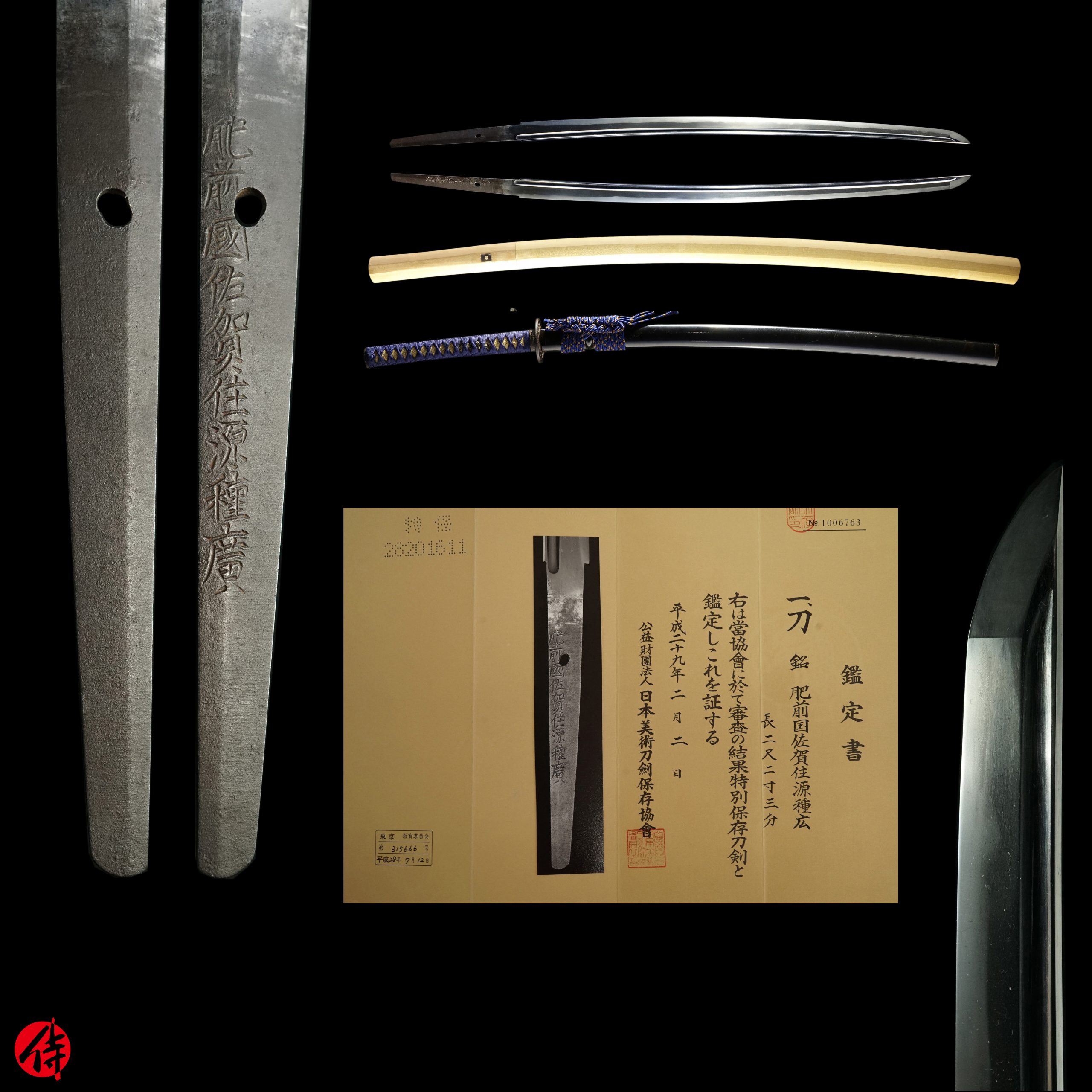
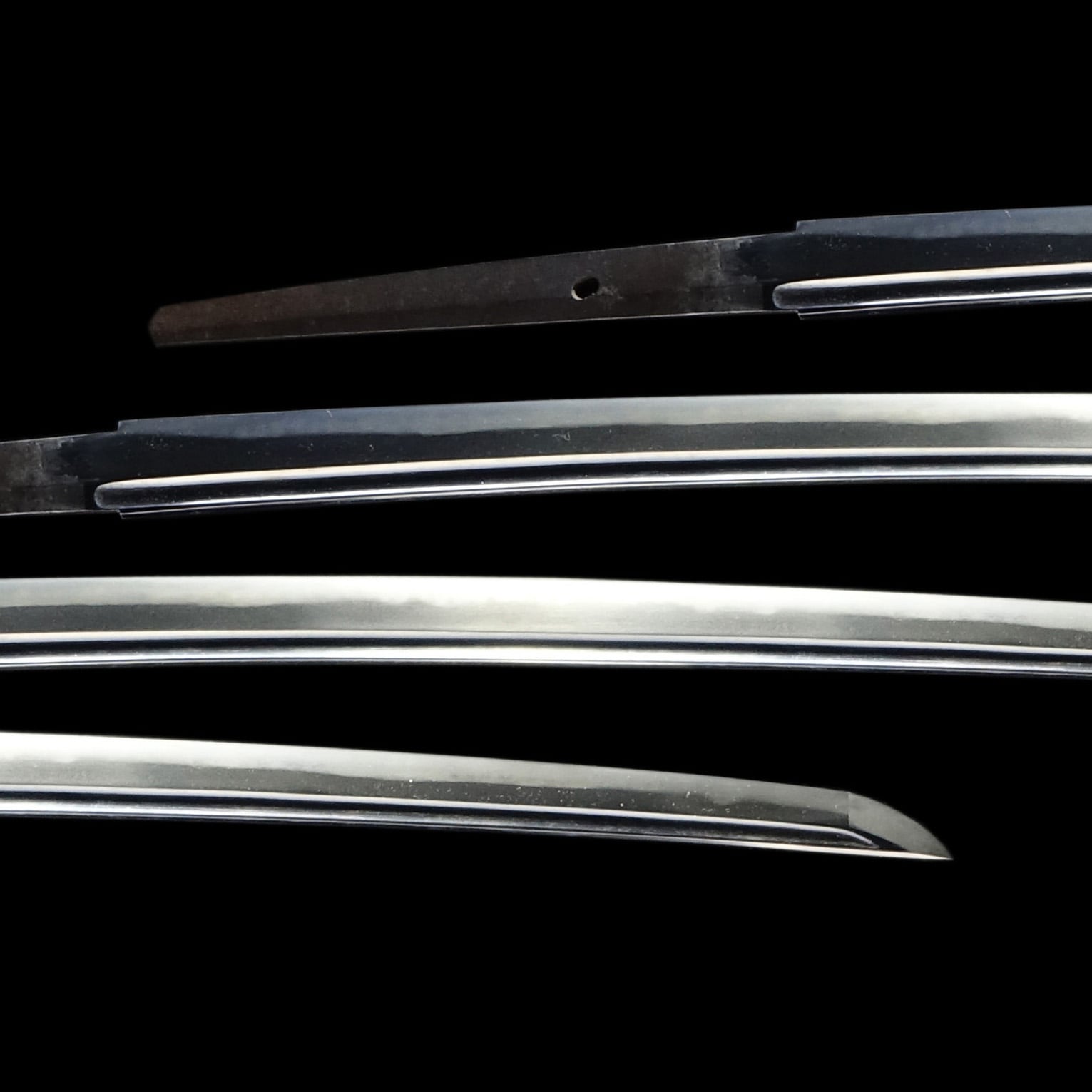
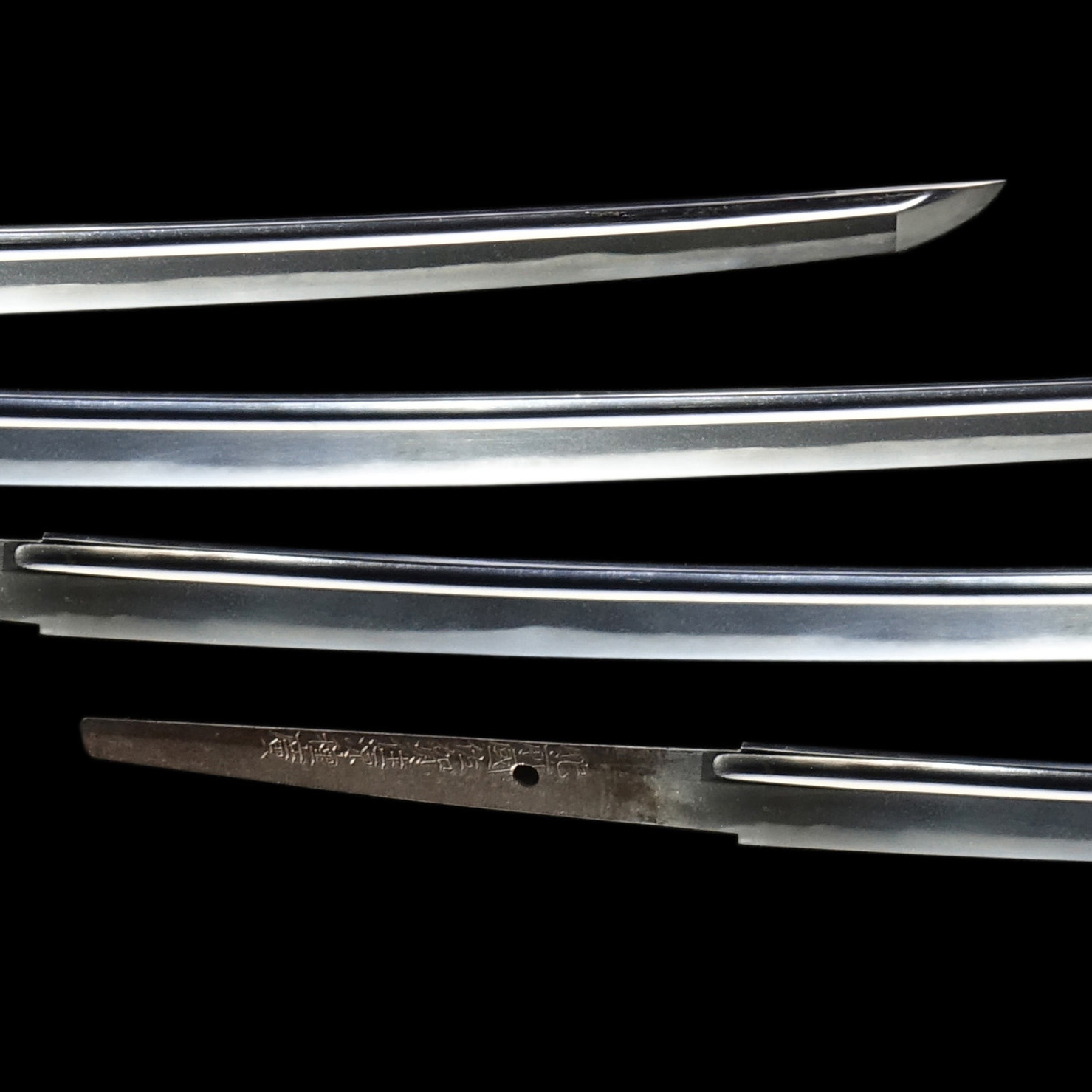
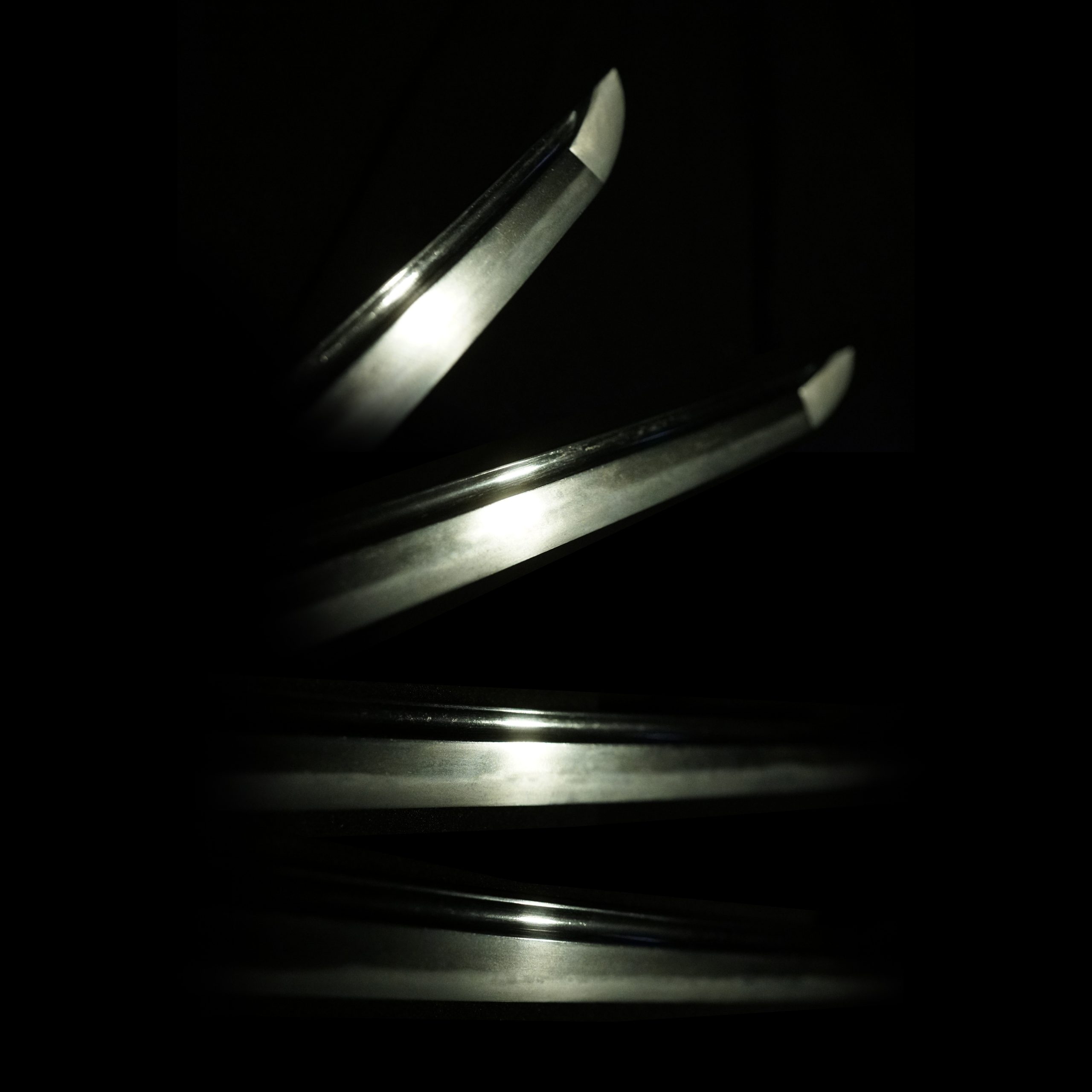
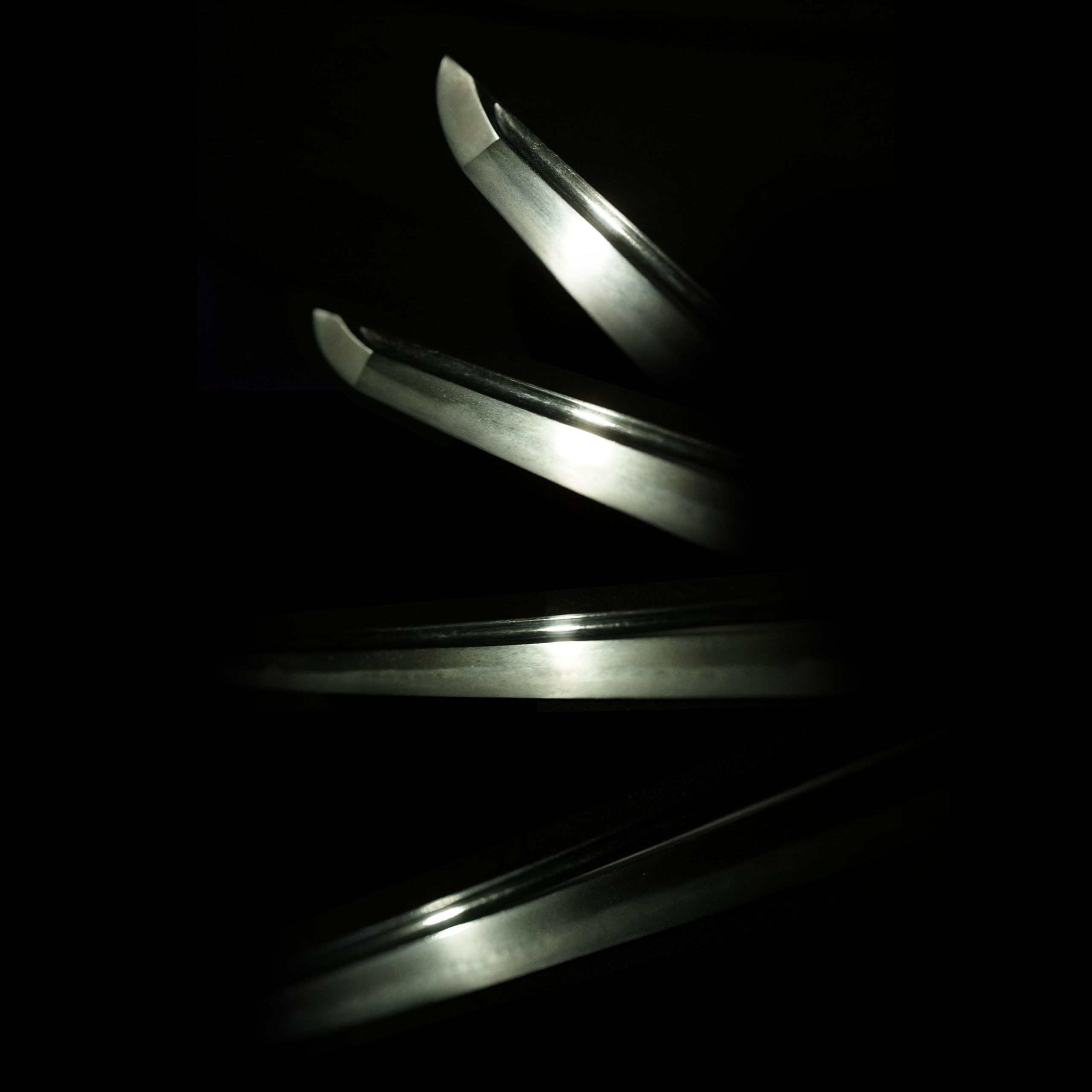
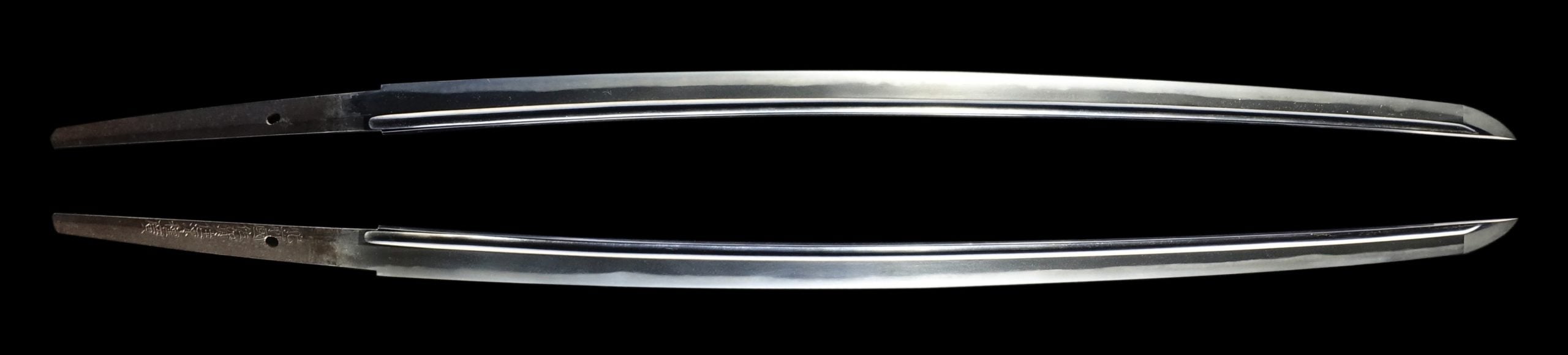
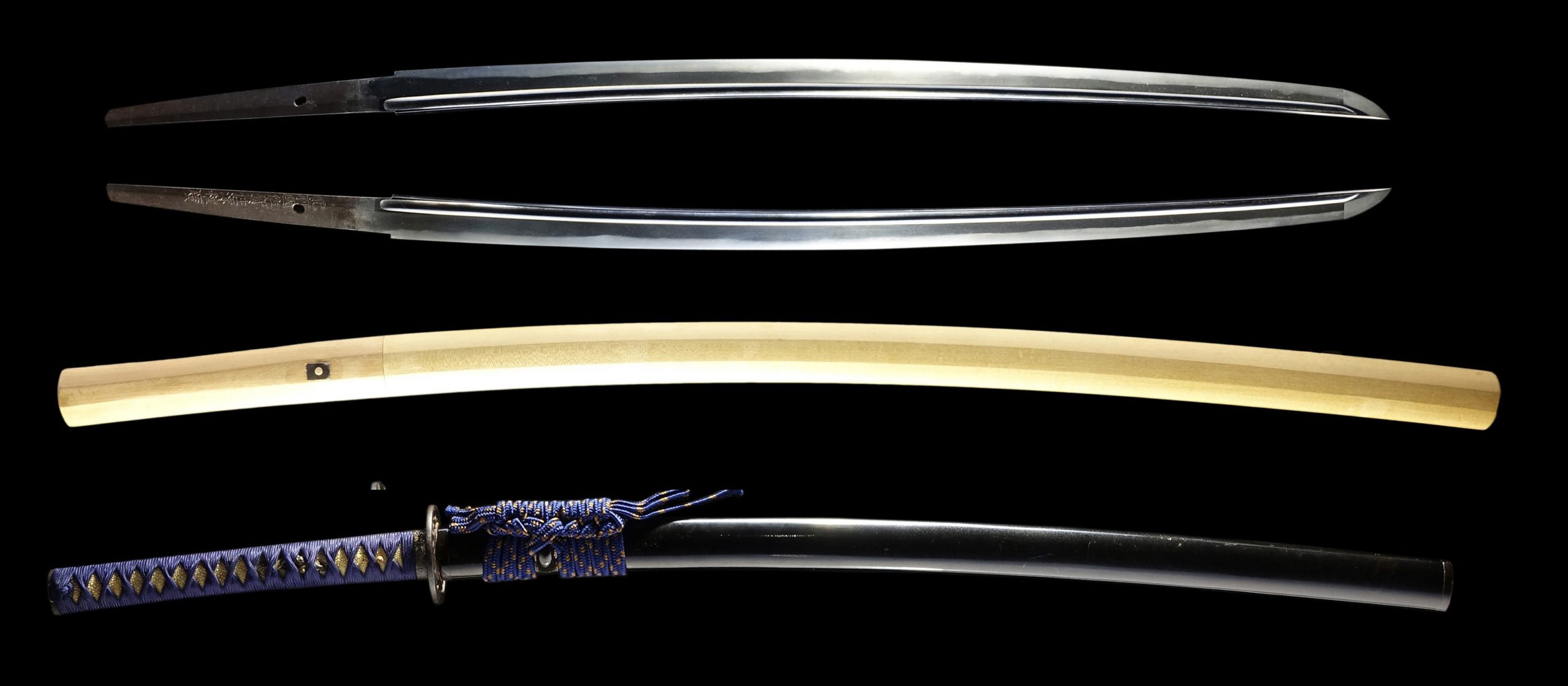
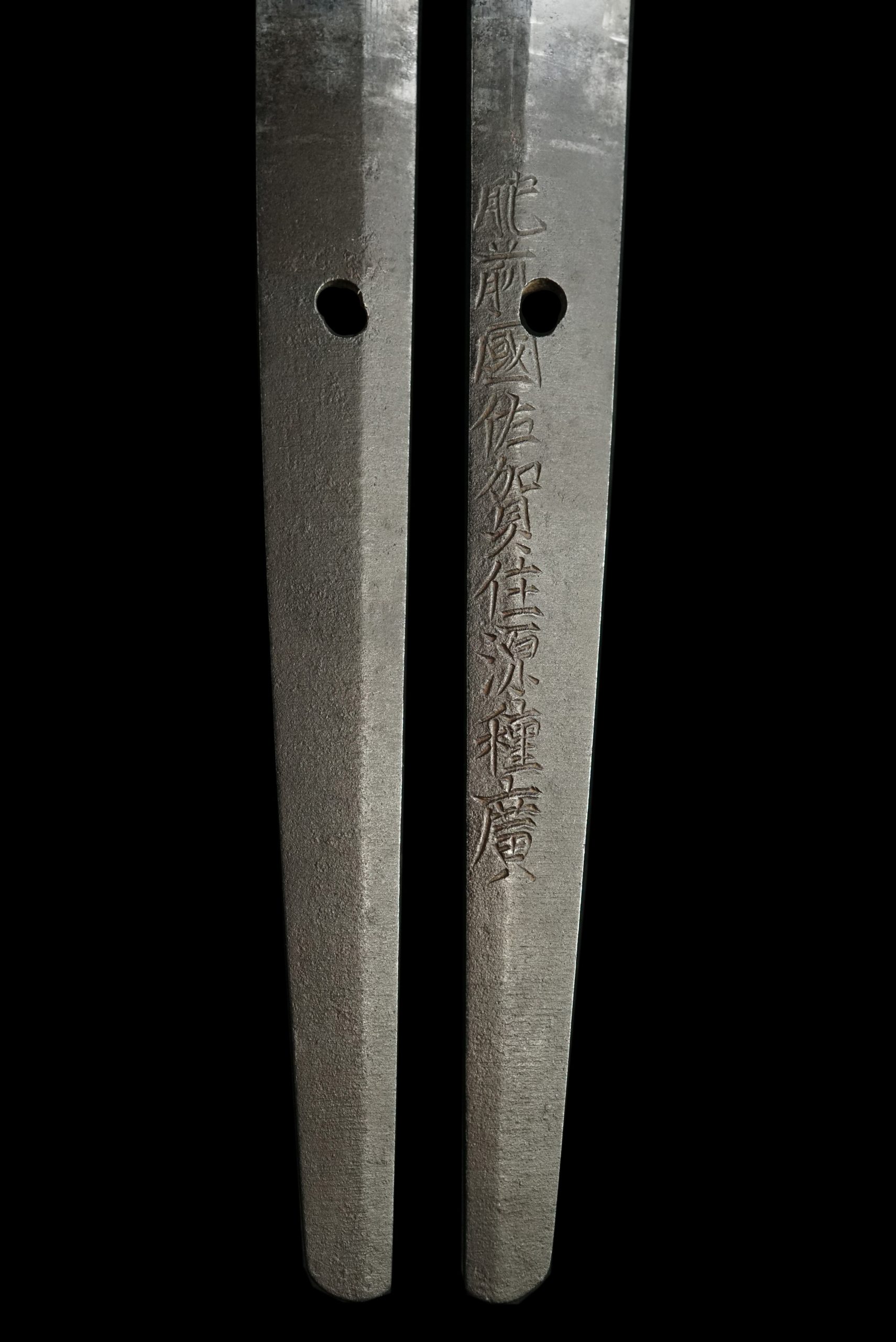
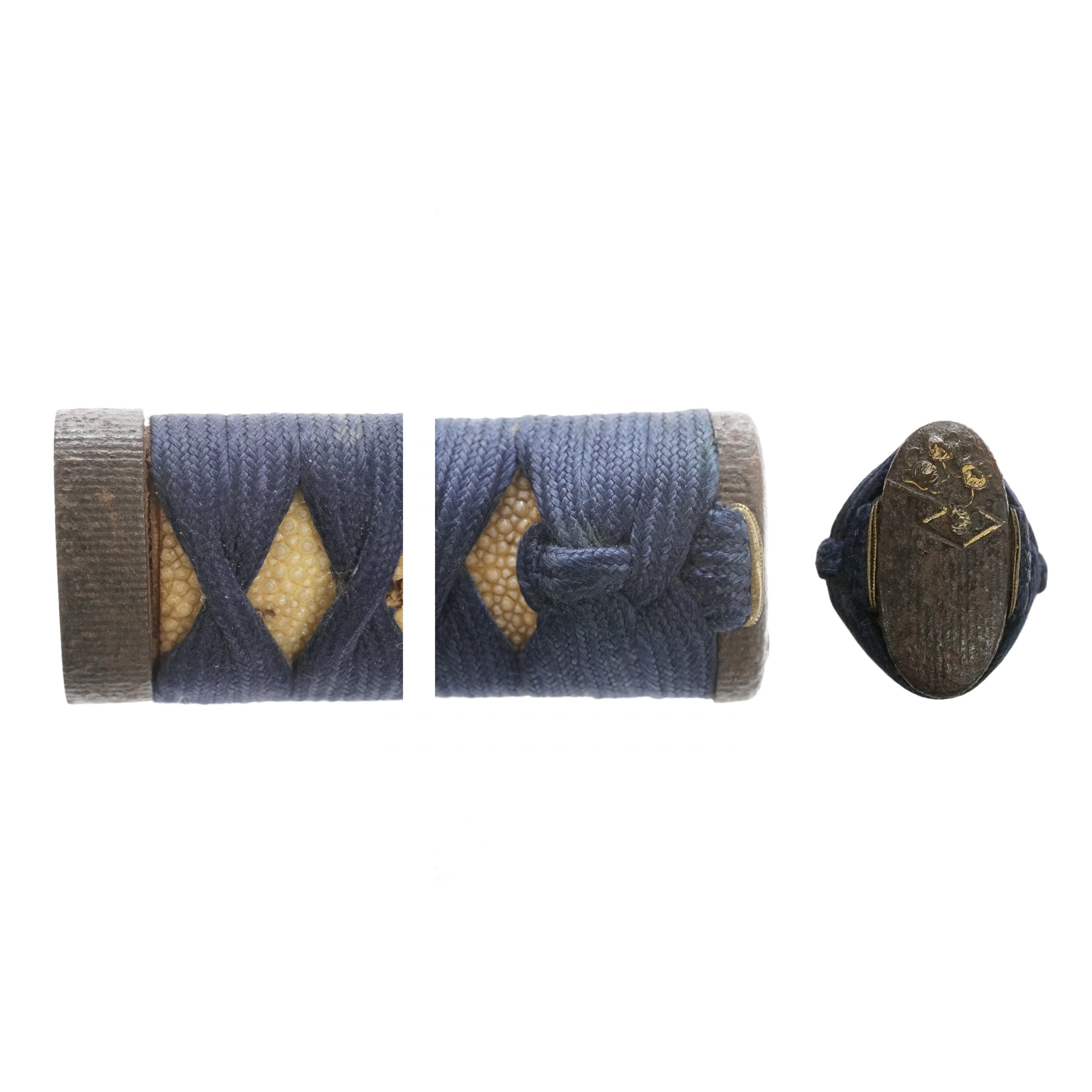
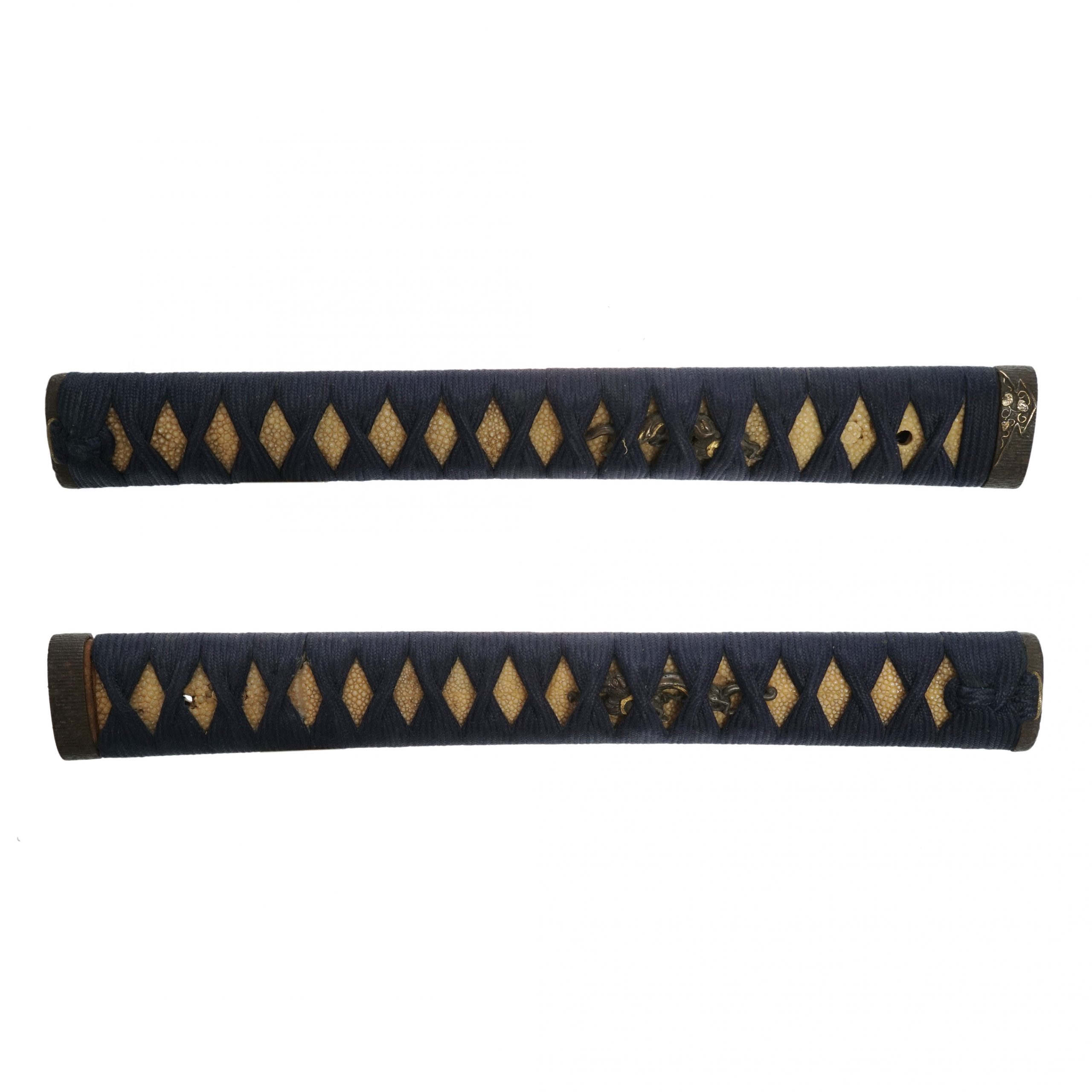
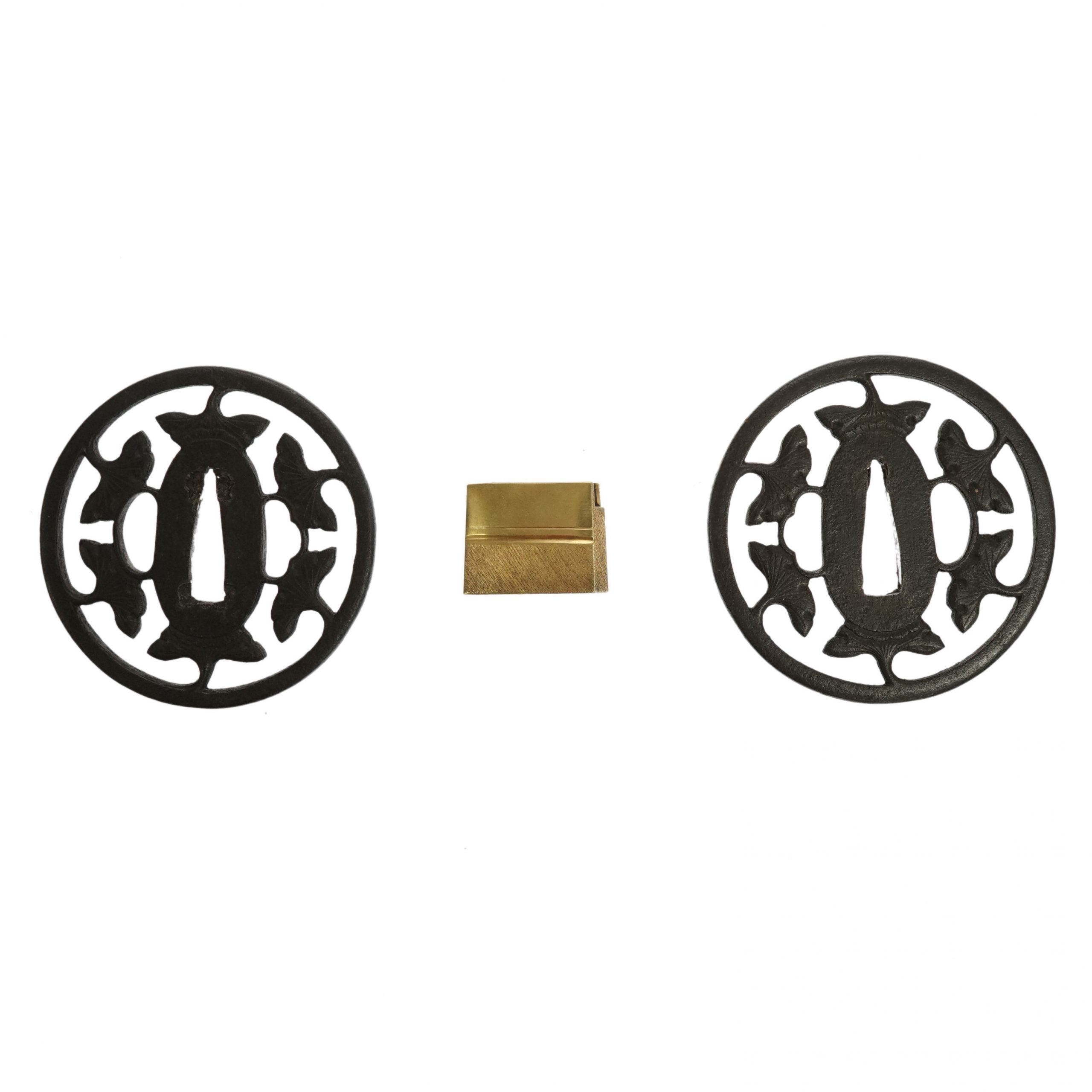
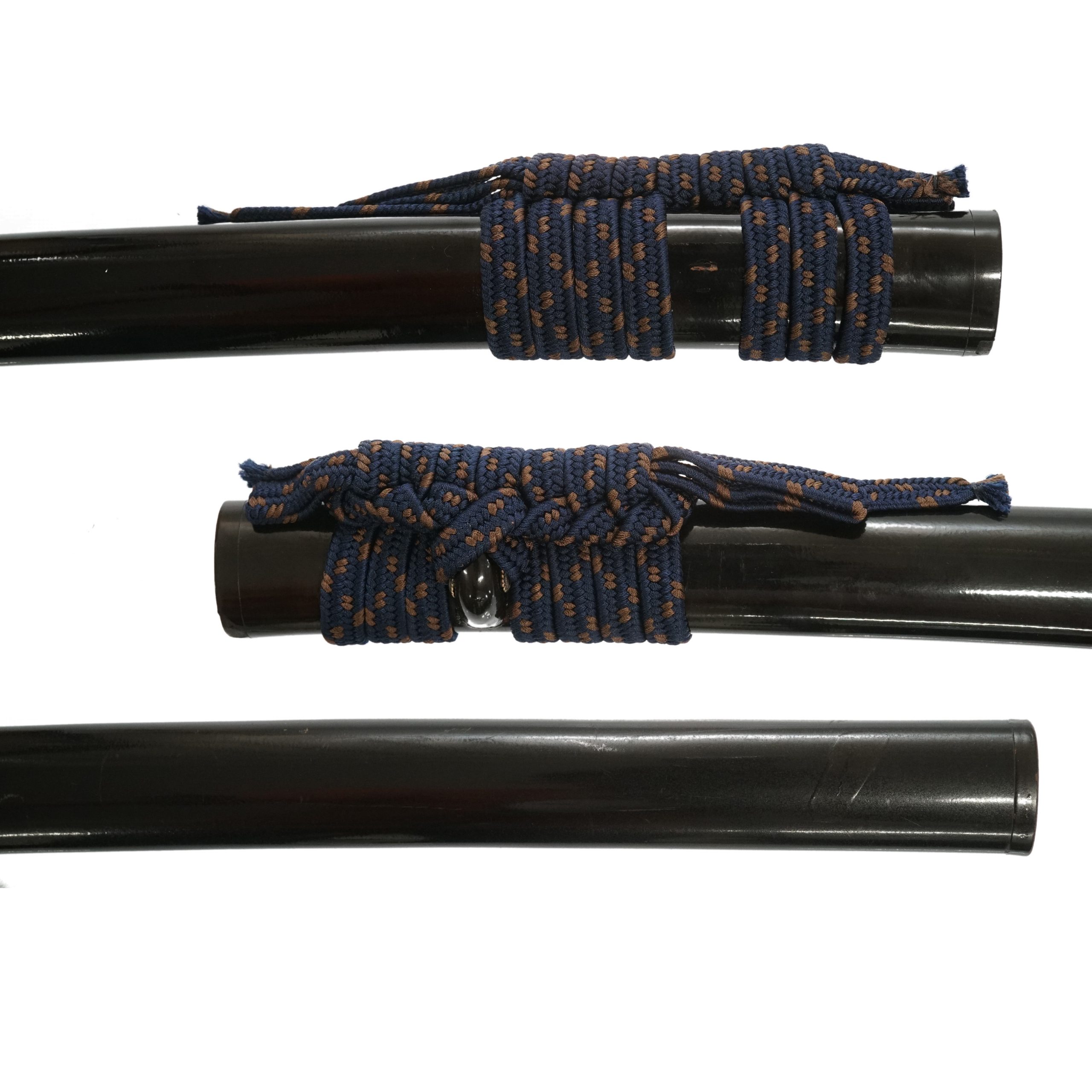
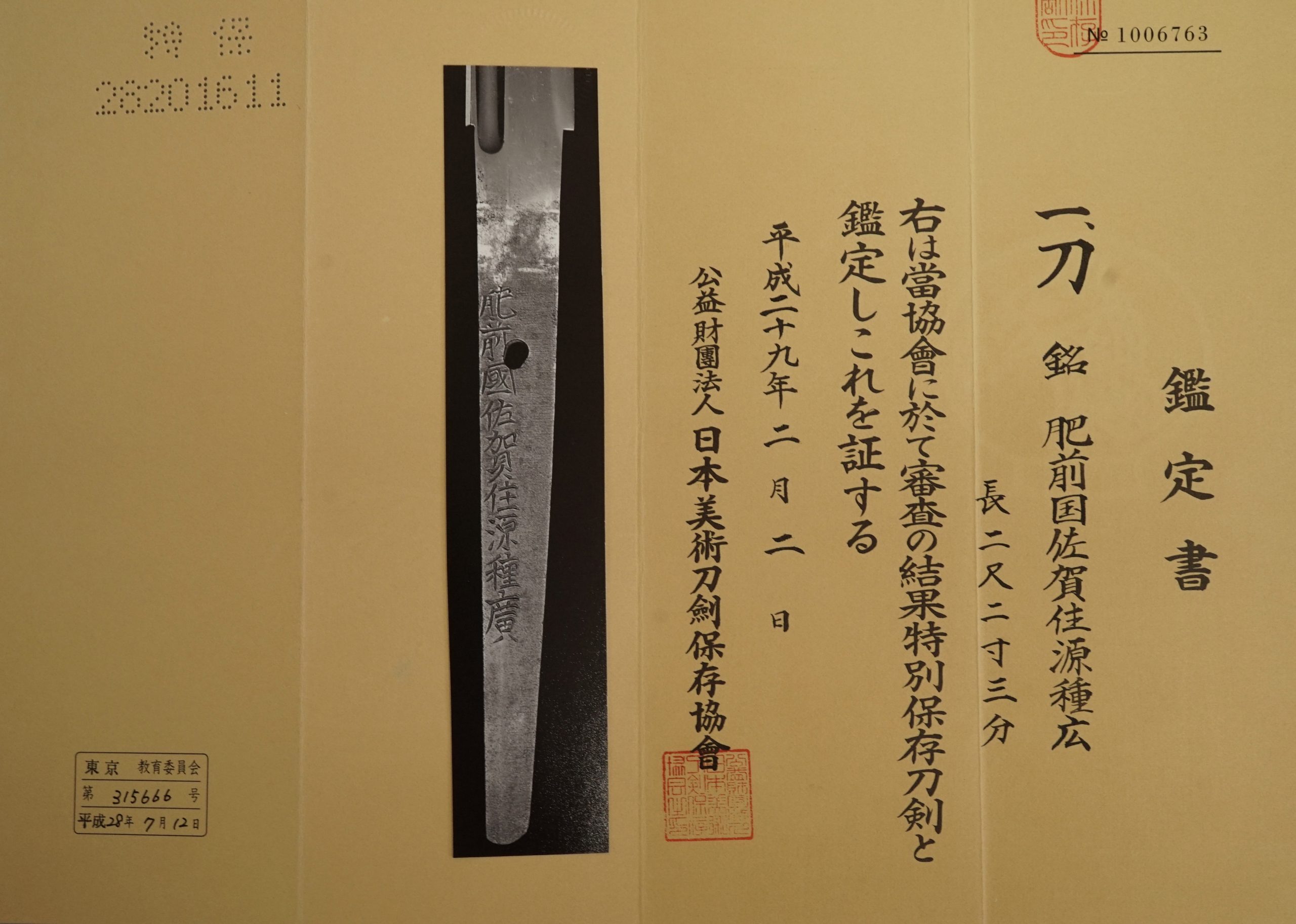
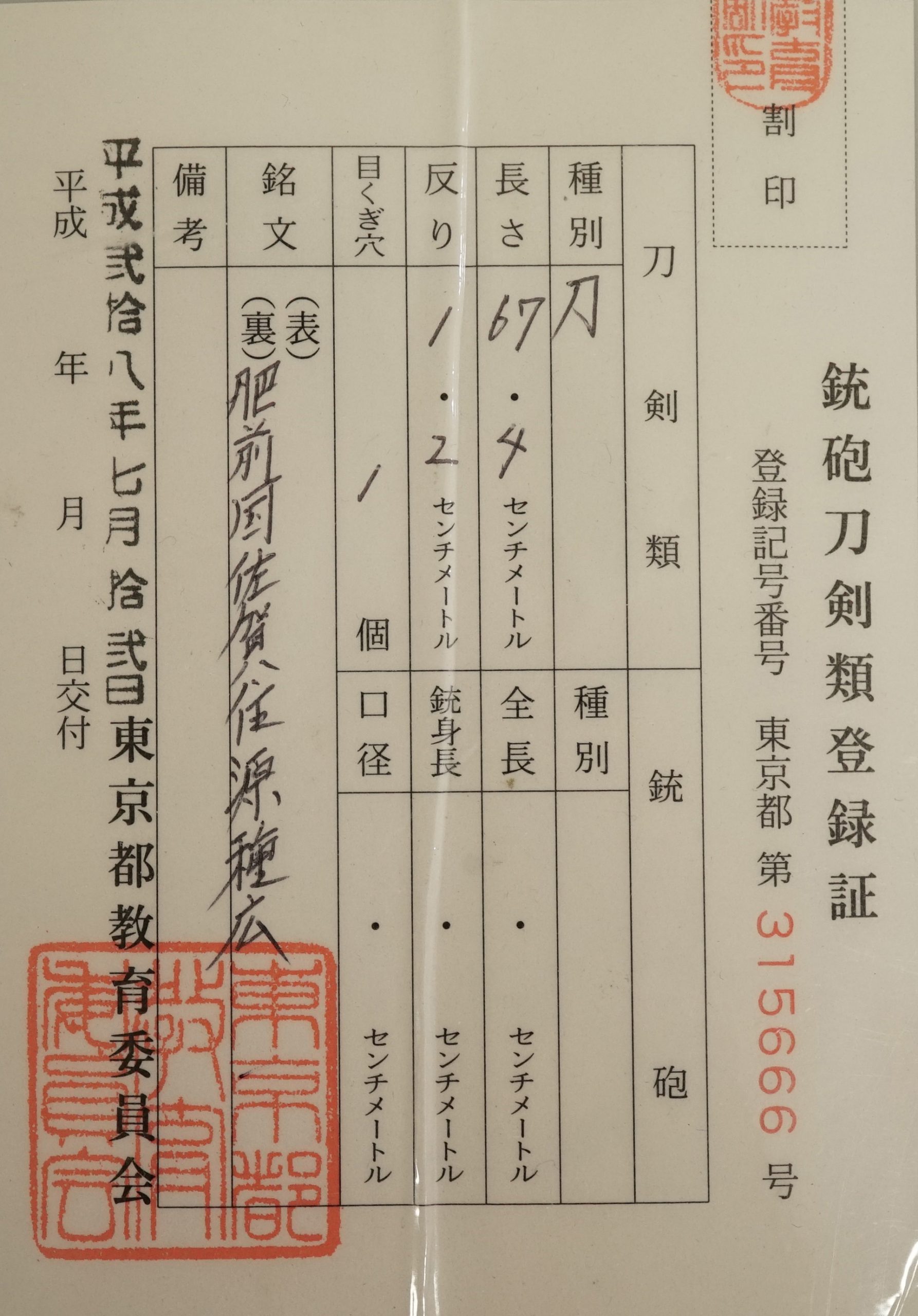
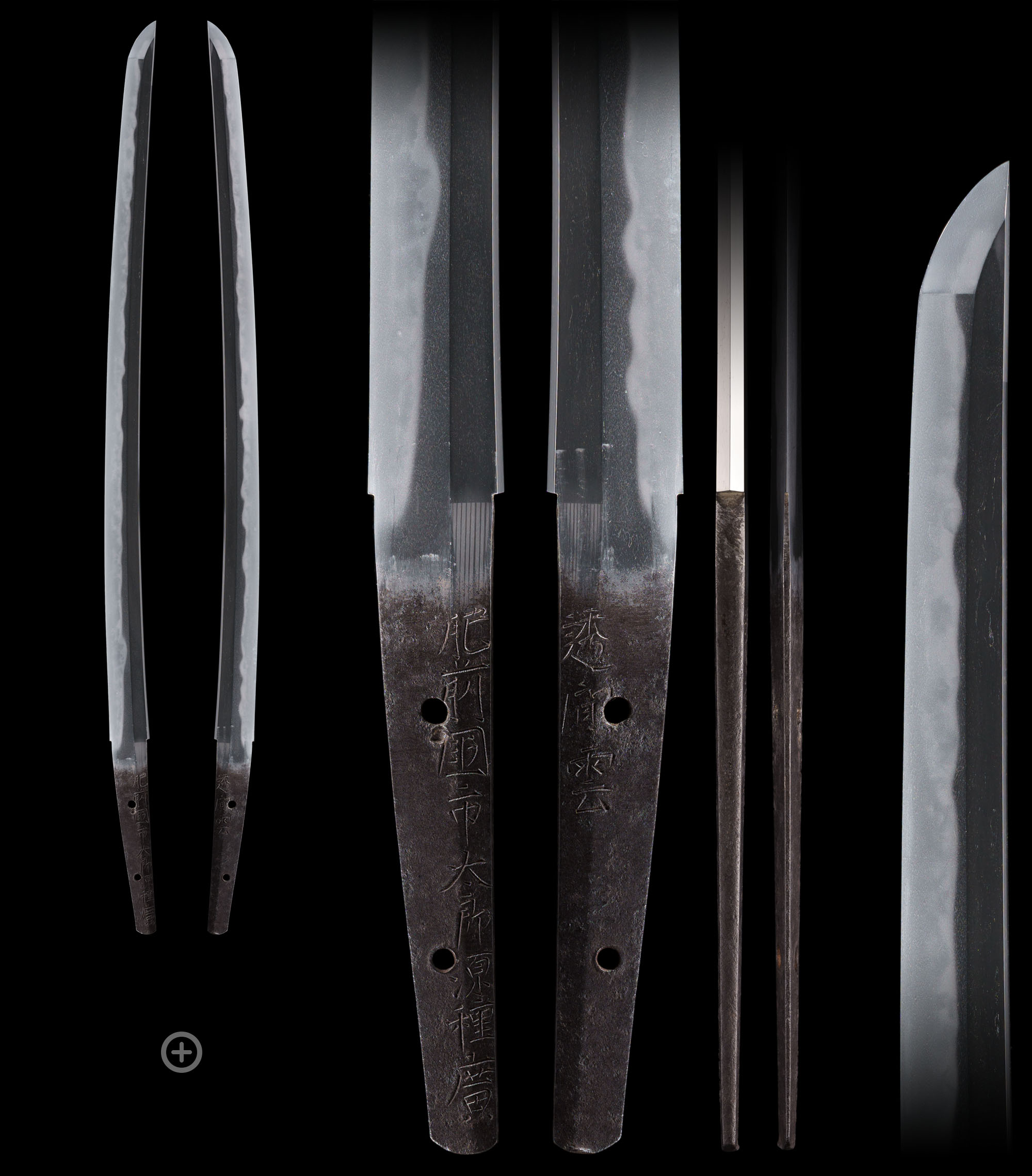
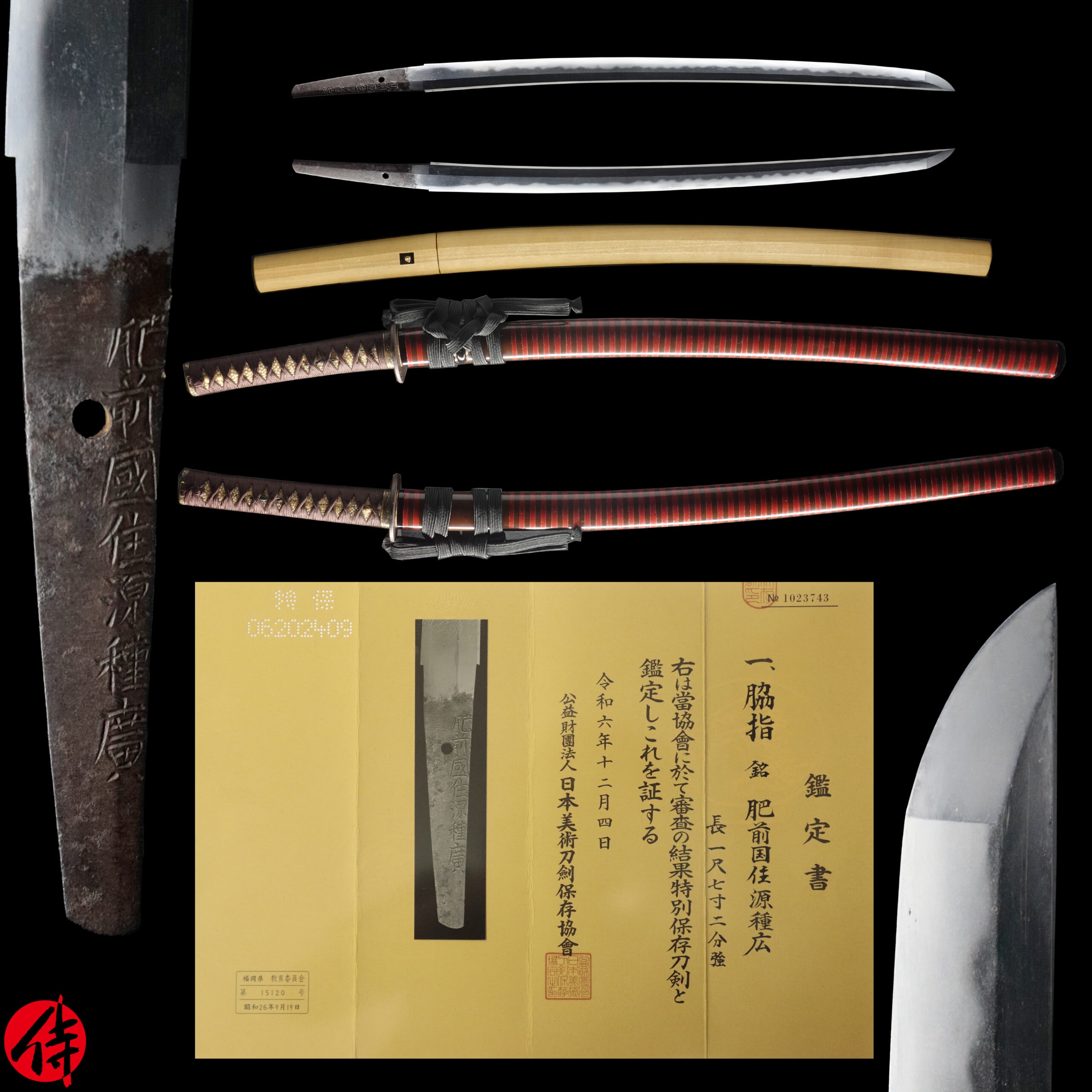
Antique Japanese Sword Katana Signed by Tanehiro with NBTHK Tokubetsu Hozon Certificate 【Description】 Hizenkoku Saga Jyu Minamoto Tanehiro( 肥前國佐賀住源種廣) is a Japanese swordsmith who forged swords in Hizen province in Saga prefecture, located in Kyushu island. Tanehiro might have had interaction with Tadayoshi school, one of the most prestigious schools in Hizen Province, based on his style. Tadayoshi school worked for the Nabeshima clan and lasted for generations. They prospered by having more than 100 swordsmiths through the Edo Period.The swords produced in Hizen province are called Hizen-To, which is famous for its beauty in Jigane. (Visible surface pattern on the steel) This sword has a Tokubetsu Hozon certificate issued by NBTHK. This authentication paper was only given to Japanese swords, especially worth preserving by Nihon Bijutsu Touken Hozon Kyokai(the Society for the Preservation of the Japan Art Sword). 【 Blade】 Cutting Length(Nagasa) : 67.4 cm(26.5 inches) Curvature(Sori) : 1.2 cm(0.5 inches) Hamon : The blade pattern created by the tempering process. It has Suguha(straight hamon) pattern. Jimon : Visible surface pattern on the steel Nakago : It has a signature that is inscribed 肥前國佐賀住源種廣(Hizenkoku Saga Jyu Minamoto Tanehiro). Fuchi-Kashira : A pair of matching sword fittings that cover the upper and bottom parts of its sword hilt. Gold inlay was applied on them. The plant pattern is designed. These leaves might be Aoi (hollyhock). Aoi pattern is also called Kamo-Aoi; it is used for the crest of the Kamo shrine in Kyoto prefecture. This plant once grew up on the back of the Kamo shrine, and it is considered Aoi is a good luck grass which would bring divine protection. Tokugawa family was Ujiko (Shinto-shrine parishioner) of the Kamo shrine and used Aoi pattern for their family crest. “Mitsuba Aoi Mon” is one of the most famous family crests in Japan. Tsuka and Menuki : Tsuka is the handle of the Japanese sword and Menuki is its decoration. Tsuka is coiled with Hishi-Maki technique, which is a general way to cover the Tsuka. Menuki is decorated with creature motifs. Because of their long and narrow body shapes, they might be dragons or lions. Sacred beasts have been appreciated to design for sword mountings because of their mystical powers. Tsuba and Habaki : Tsuba is the handguard for the Japanese Sword and Habaki is the equipment to make the blade not touch its scabbard inside.It prevents the blade from getting rusty and chipped. Iron Tsuba with Kozuka and Kougai holes. Ichou (ginkgo, maidenhair tree) pattern is engraved with Sukashi-Bori (openwork) technique. Ichou grows straight up to the sky and becomes a huge tree. It contains lots of water and secure against fire, and has a strong vitality that would not easily die even if it is burnt in flames. So, Ichou has a stable life, and it lives for a long time. Because of its nature, Ichou pattern has been treated like a good luck design. Also, as its name “Ichou (銀杏)” has the same pronunciation with another word “Ichou (異朝),” it is said this plant pattern represents the delight to welcome honored guests. Saya : Saya is the scabbard for the Japanese sword. Authentication Paper : NBTHK TOKUBETSU Hozon Certificate for the blade NBTHK, also known as Nihon Bijutsu Touken Hozon Kyokai (the Society for the Preservation of the Japan Art Sword), is one of the oldest Japanese sword appraising organizations in modern-day Japan. They authenticated the blade on Feb 2nd in the 29th year of Heisei(2017). They appraised it as Tokubetsu Hozon Touken, the blade especially worth preserving for Japanese society. The purchaser will receive this original certificate as well. Registration Number : Tokyo 315666 The Board of Education in Tokyo prefecture issued a registration paper for this sword . In order to obtain this paper, the sword needs to be traditionally hand forged. With this paper, its owner can legally own an authentic Japanese sword in Japan. —————————————————————– 【About us】 S
在銘 · Tadayoshi · 寛永 · 長さ 67.4cm · 反り 1.2cm


肥前 · 1624-1644頃
現在1点販売中
種廣の位置づけを、日本刀全体および伝統・時代・時期ごとに示します。各位(随一・屈指・有数・著名)は、NBTHK および文化庁による指定に加え、三作や名物帳などの歴史的栄誉を加味したものです。
各項目を選ぶと評価方法が表示されます。
保存刀剣のうち、出来が一層優れ、保存状態も良好と認められたものです。再刃や、室町・江戸期の多くの無銘作は対象外となり、保存刀剣より高い基準が課されます。
日本美術刀剣保存協会(NBTHK)は、1948年に設立され、文化庁の監督を受ける公益財団法人で、東京・刀剣博物館に本部を置きます。専門の審査員が出品作を直接審査し、美術的・歴史的価値に応じた鑑定書を発行します。NBTHKの鑑定書は、日本刀および刀装具の真正性を示す最も広く認知された基準です。
NBTHK公式サイトReturns/exchanges limited to defects caused by shipping (except willful misconduct or gross negligence by the company); customers must contact within 72 hours of receiving the product.
Antique Japanese Sword Katana Signed by Tanehiro with NBTHK Tokubetsu Hozon Certificate 【Description】 Hizenkoku Saga Jyu Minamoto Tanehiro( 肥前國佐賀住源種廣) is a Japanese swordsmith who forged swords in Hizen province in Saga prefecture, located in Kyushu island. Tanehiro might have had interaction with Tadayoshi school, one of the most prestigious schools in Hizen Province, based on his style. Tadayoshi school worked for the Nabeshima clan and lasted for generations. They prospered by having more than 100 swordsmiths through the Edo Period.The swords produced in Hizen province are called Hizen-To, which is famous for its beauty in Jigane. (Visible surface pattern on the steel) This sword has a Tokubetsu Hozon certificate issued by NBTHK. This authentication paper was only given to Japanese swords, especially worth preserving by Nihon Bijutsu Touken Hozon Kyokai(the Society for the Preservation of the Japan Art Sword). 【 Blade】 Cutting Length(Nagasa) : 67.4 cm(26.5 inches) Curvature(Sori) : 1.2 cm(0.5 inches) Hamon : The blade pattern created by the tempering process. It has Suguha(straight hamon) pattern. Jimon : Visible surface pattern on the steel Nakago : It has a signature that is inscribed 肥前國佐賀住源種廣(Hizenkoku Saga Jyu Minamoto Tanehiro). Fuchi-Kashira : A pair of matching sword fittings that cover the upper and bottom parts of its sword hilt. Gold inlay was applied on them. The plant pattern is designed. These leaves might be Aoi (hollyhock). Aoi pattern is also called Kamo-Aoi; it is used for the crest of the Kamo shrine in Kyoto prefecture. This plant once grew up on the back of the Kamo shrine, and it is considered Aoi is a good luck grass which would bring divine protection. Tokugawa family was Ujiko (Shinto-shrine parishioner) of the Kamo shrine and used Aoi pattern for their family crest. “Mitsuba Aoi Mon” is one of the most famous family crests in Japan. Tsuka and Menuki : Tsuka is the handle of the Japanese sword and Menuki is its decoration. Tsuka is coiled with Hishi-Maki technique, which is a general way to cover the Tsuka. Menuki is decorated with creature motifs. Because of their long and narrow body shapes, they might be dragons or lions. Sacred beasts have been appreciated to design for sword mountings because of their mystical powers. Tsuba and Habaki : Tsuba is the handguard for the Japanese Sword and Habaki is the equipment to make the blade not touch its scabbard inside.It prevents the blade from getting rusty and chipped. Iron Tsuba with Kozuka and Kougai holes. Ichou (ginkgo, maidenhair tree) pattern is engraved with Sukashi-Bori (openwork) technique. Ichou grows straight up to the sky and becomes a huge tree. It contains lots of water and secure against fire, and has a strong vitality that would not easily die even if it is burnt in flames. So, Ichou has a stable life, and it lives for a long time. Because of its nature, Ichou pattern has been treated like a good luck design. Also, as its name “Ichou (銀杏)” has the same pronunciation with another word “Ichou (異朝),” it is said this plant pattern represents the delight to welcome honored guests. Saya : Saya is the scabbard for the Japanese sword. Authentication Paper : NBTHK TOKUBETSU Hozon Certificate for the blade NBTHK, also known as Nihon Bijutsu Touken Hozon Kyokai (the Society for the Preservation of the Japan Art Sword), is one of the oldest Japanese sword appraising organizations in modern-day Japan. They authenticated the blade on Feb 2nd in the 29th year of Heisei(2017). They appraised it as Tokubetsu Hozon Touken, the blade especially worth preserving for Japanese society. The purchaser will receive this original certificate as well. Registration Number : Tokyo 315666 The Board of Education in Tokyo prefecture issued a registration paper for this sword . In order to obtain this paper, the sword needs to be traditionally hand forged. With this paper, its owner can legally own an authentic Japanese sword in Japan. —————————————————————– 【About us】 S
在銘 · Tadayoshi · 寛永 · 長さ 67.4cm · 反り 1.2cm


肥前 · 1624-1644頃
現在1点販売中
種廣の位置づけを、日本刀全体および伝統・時代・時期ごとに示します。各位(随一・屈指・有数・著名)は、NBTHK および文化庁による指定に加え、三作や名物帳などの歴史的栄誉を加味したものです。
各項目を選ぶと評価方法が表示されます。
保存刀剣のうち、出来が一層優れ、保存状態も良好と認められたものです。再刃や、室町・江戸期の多くの無銘作は対象外となり、保存刀剣より高い基準が課されます。
日本美術刀剣保存協会(NBTHK)は、1948年に設立され、文化庁の監督を受ける公益財団法人で、東京・刀剣博物館に本部を置きます。専門の審査員が出品作を直接審査し、美術的・歴史的価値に応じた鑑定書を発行します。NBTHKの鑑定書は、日本刀および刀装具の真正性を示す最も広く認知された基準です。
NBTHK公式サイトReturns/exchanges limited to defects caused by shipping (except willful misconduct or gross negligence by the company); customers must contact within 72 hours of receiving the product.