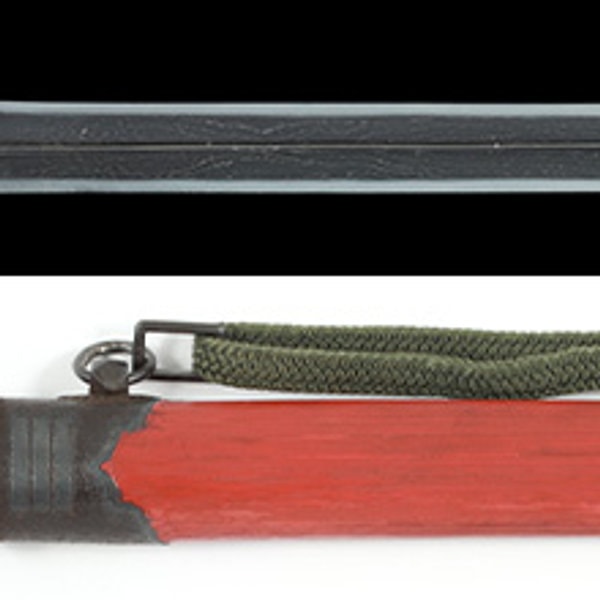
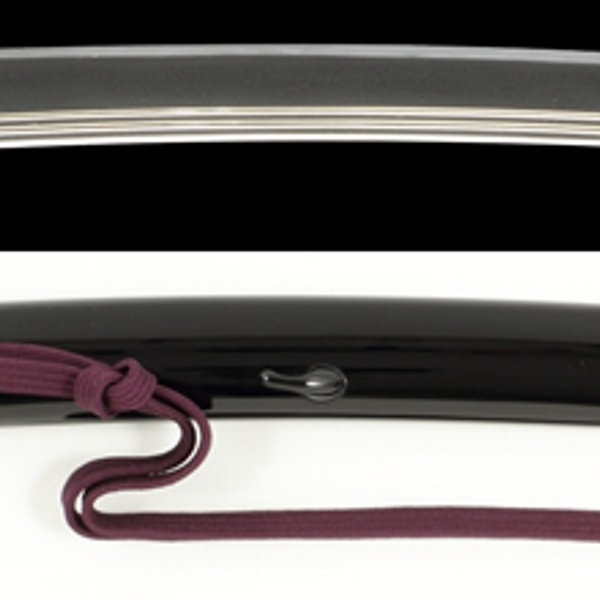
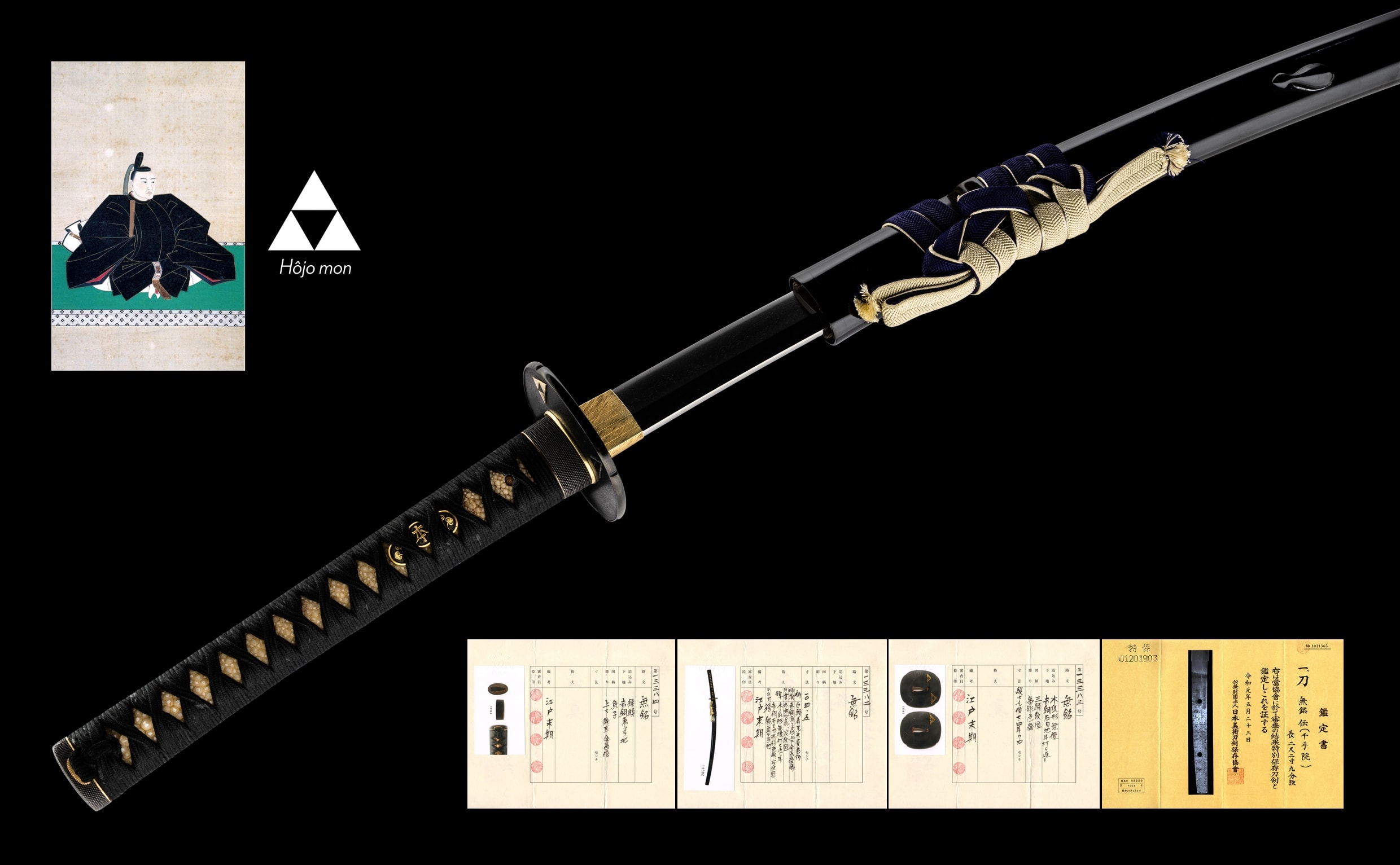
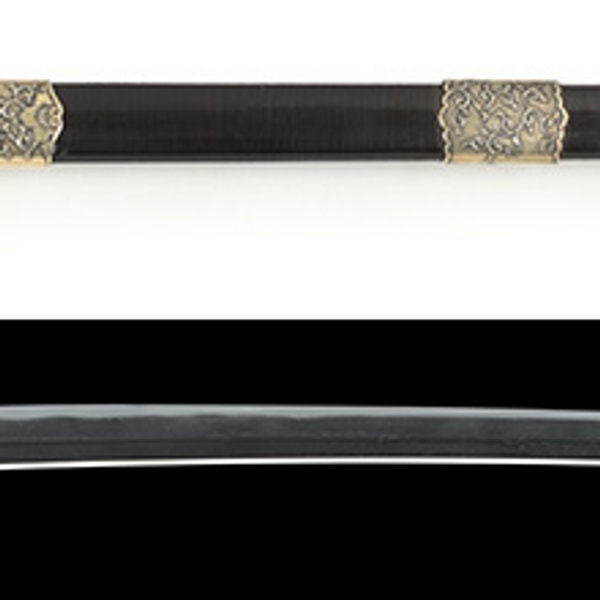
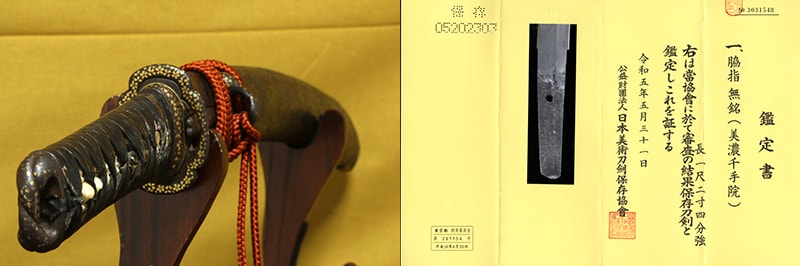
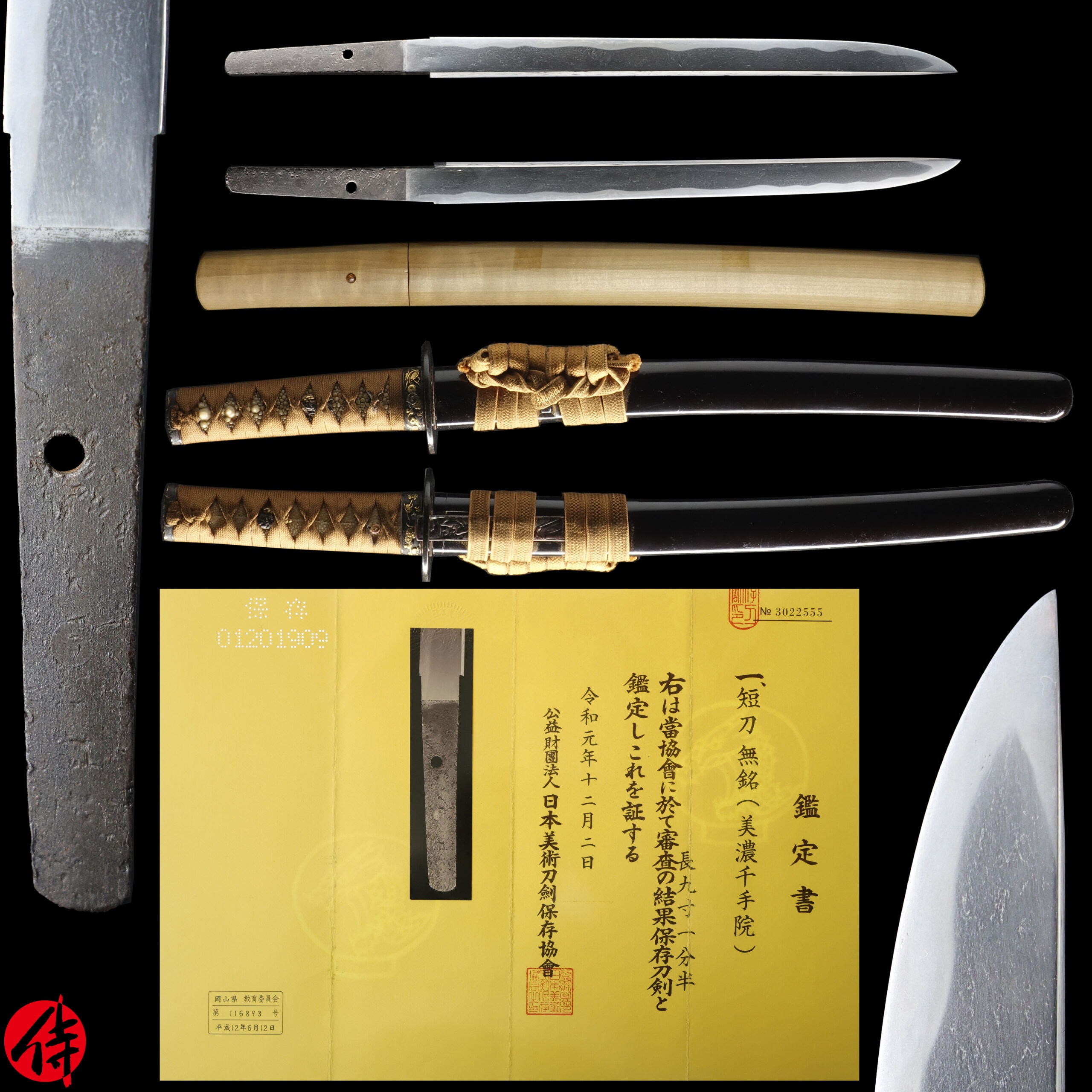
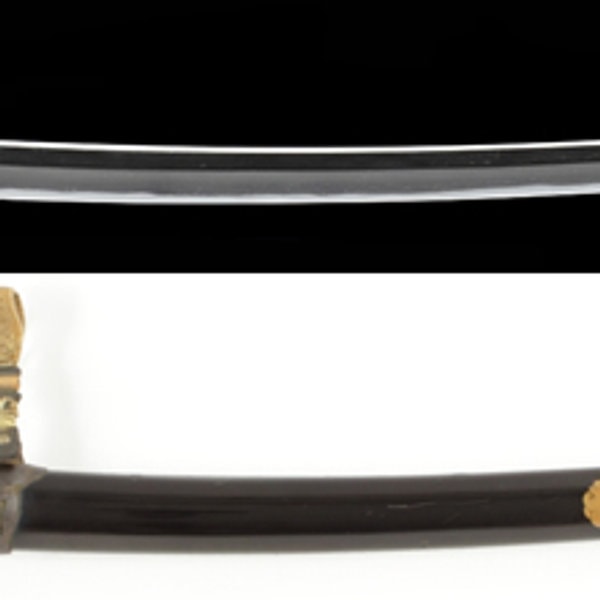
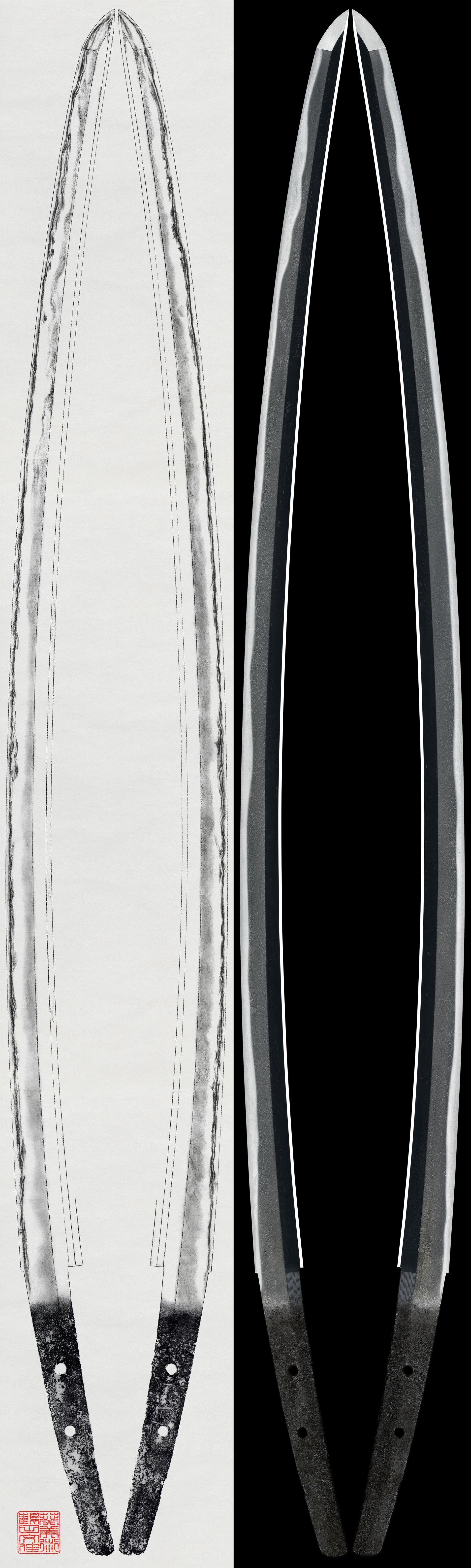
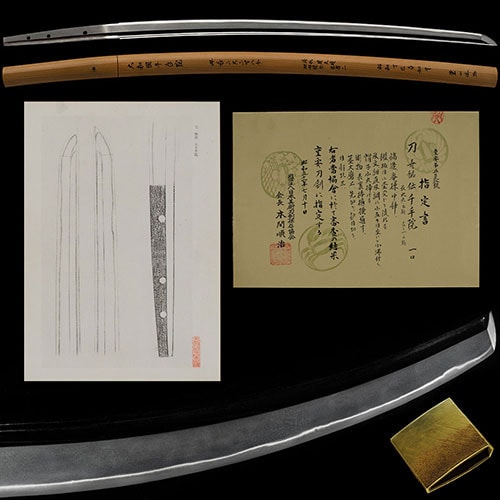
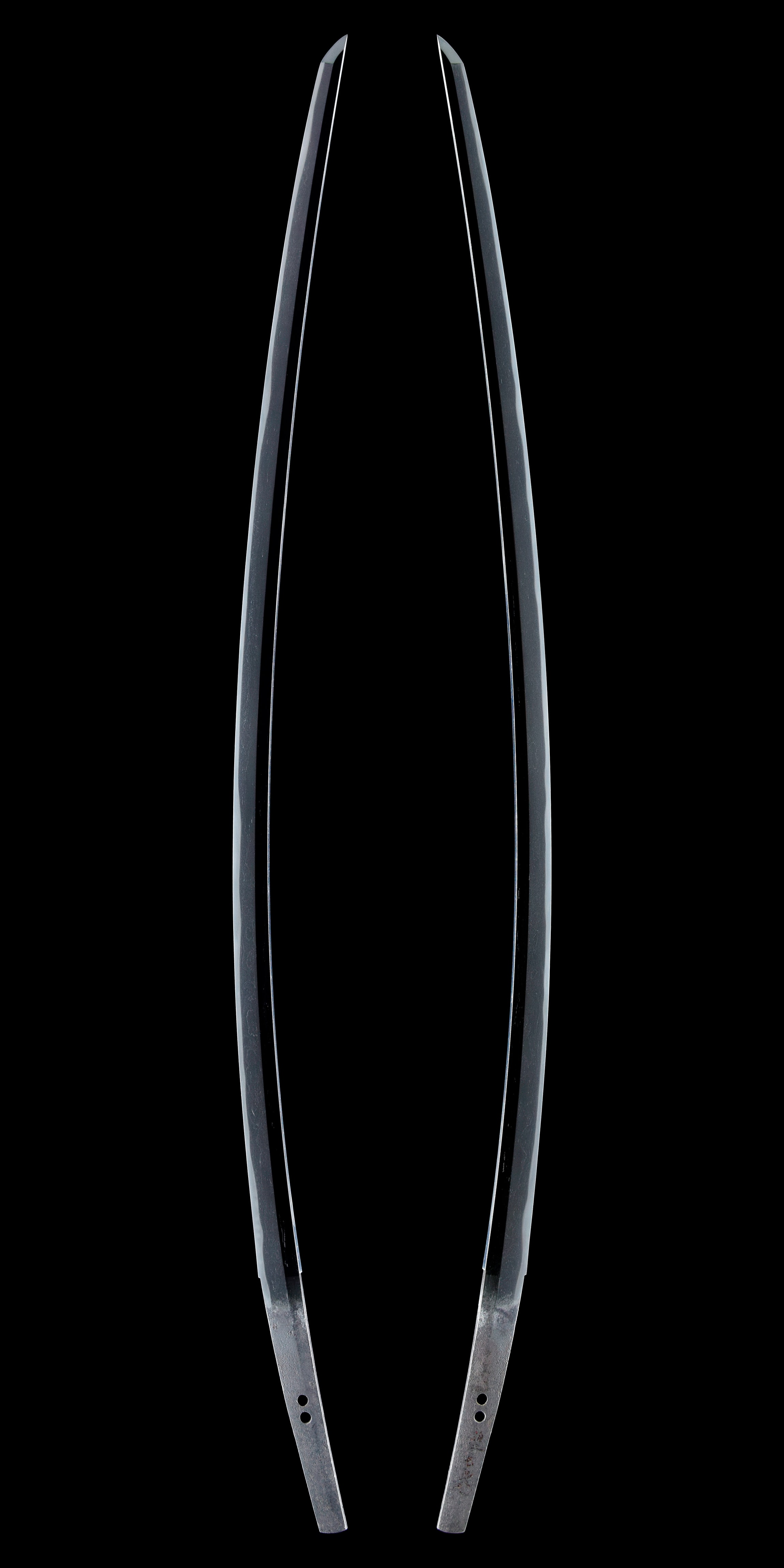
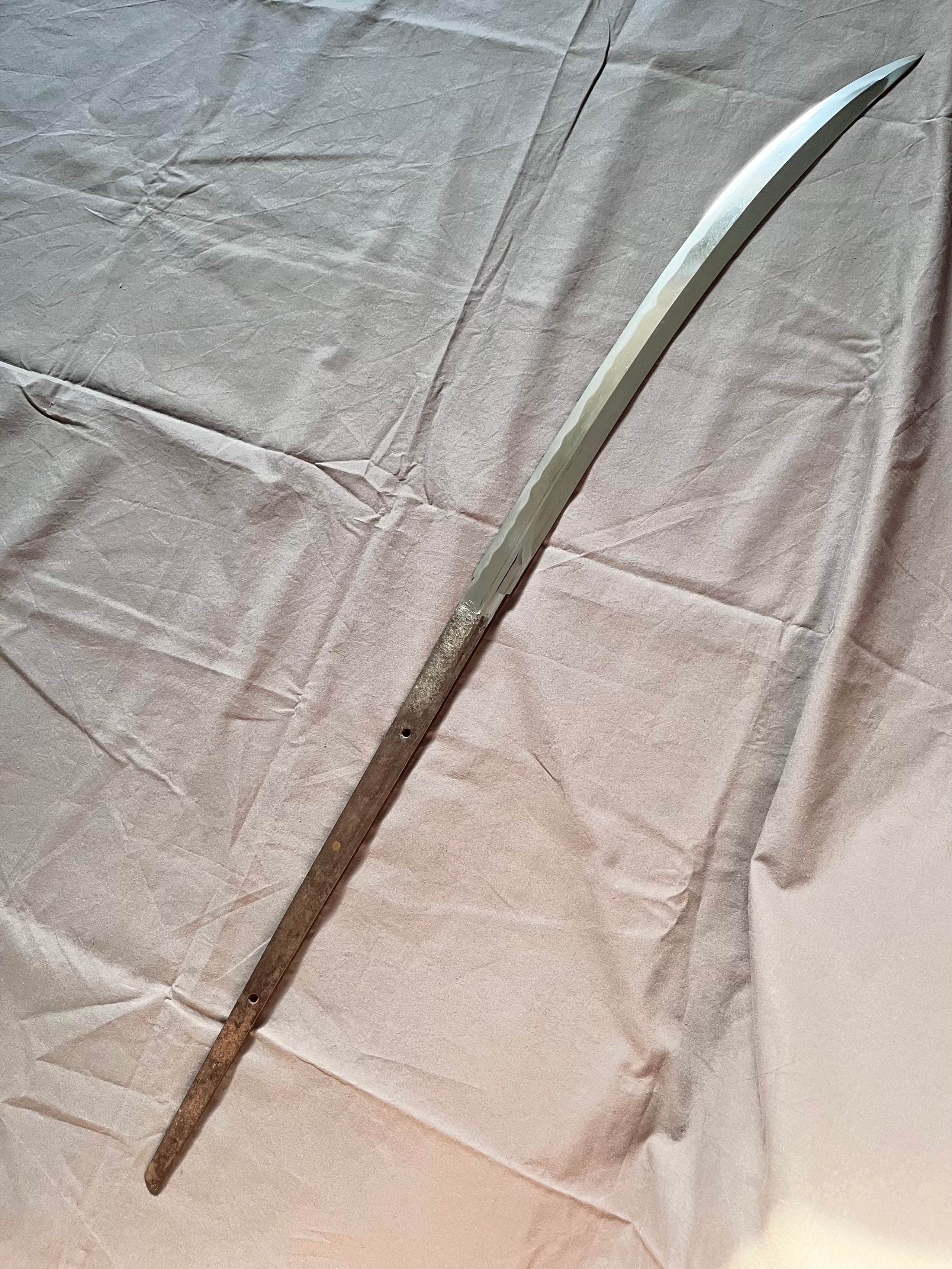
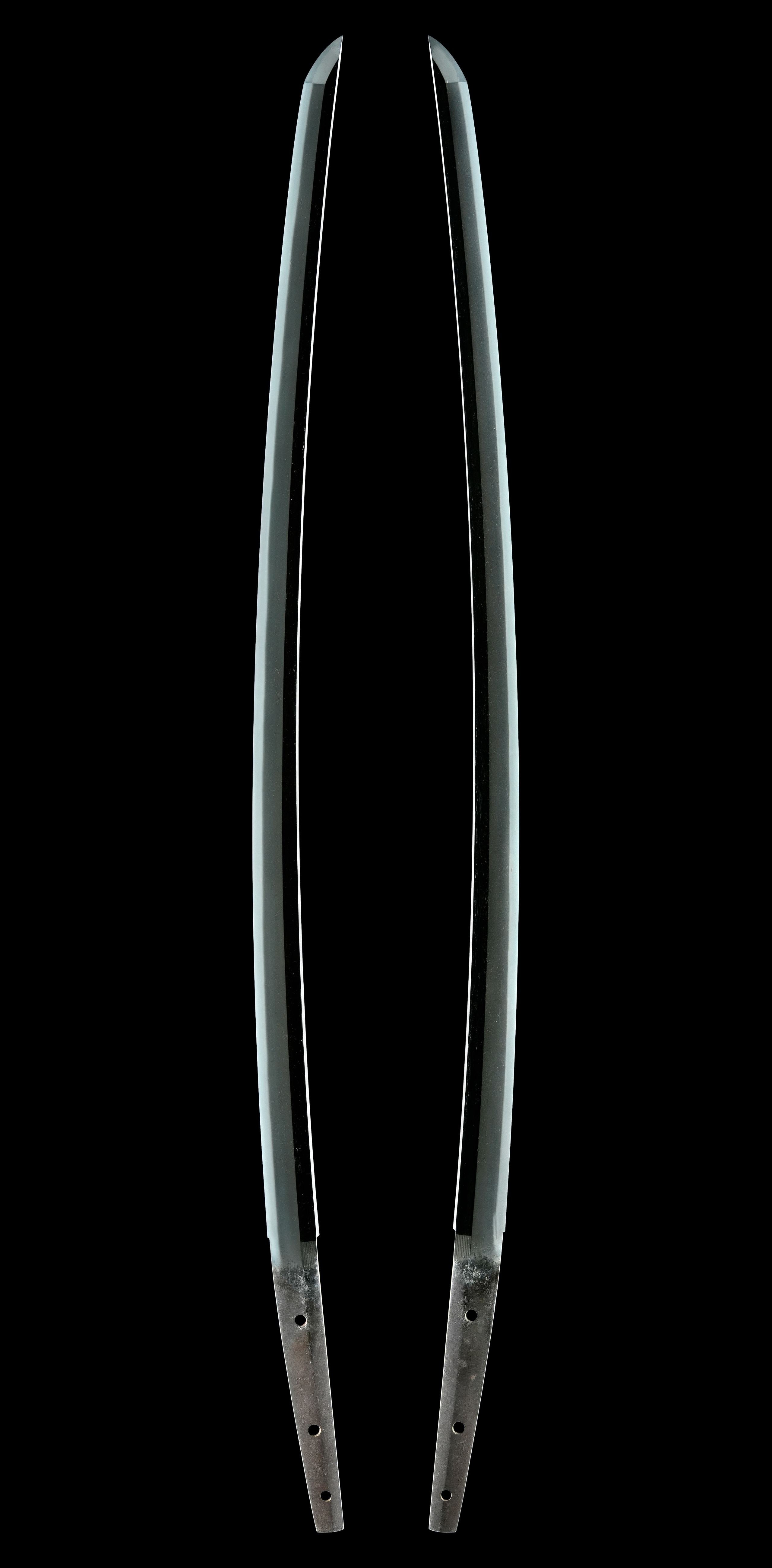
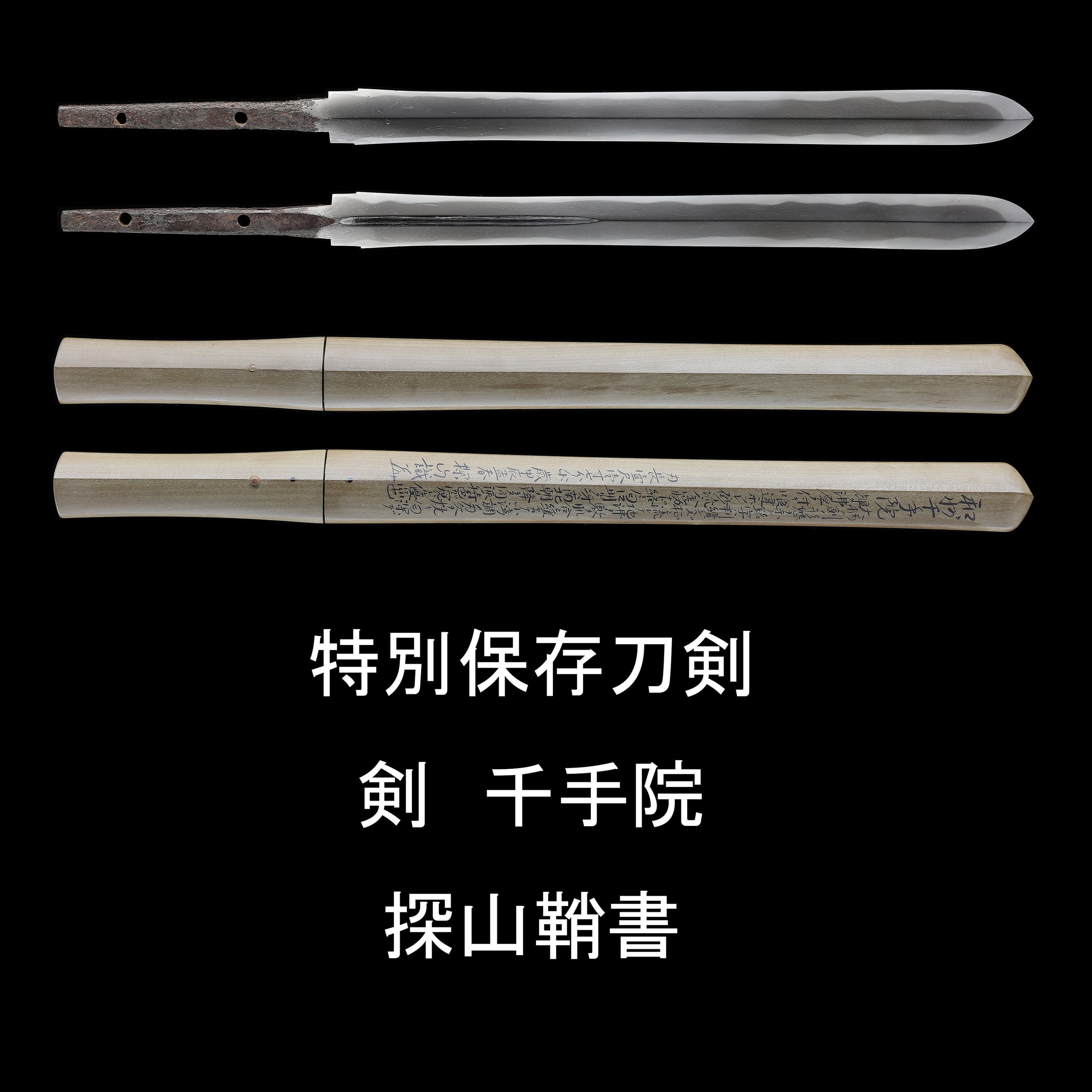
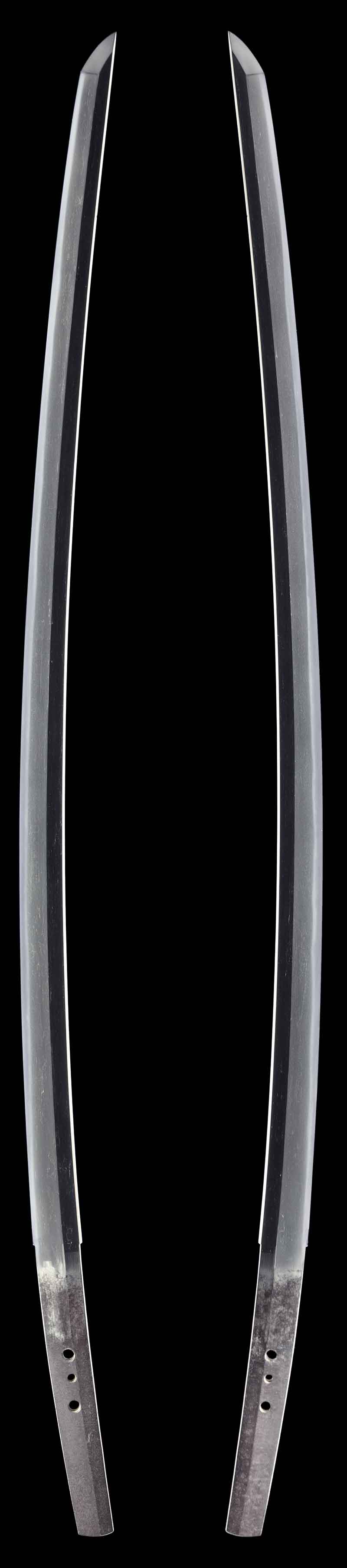
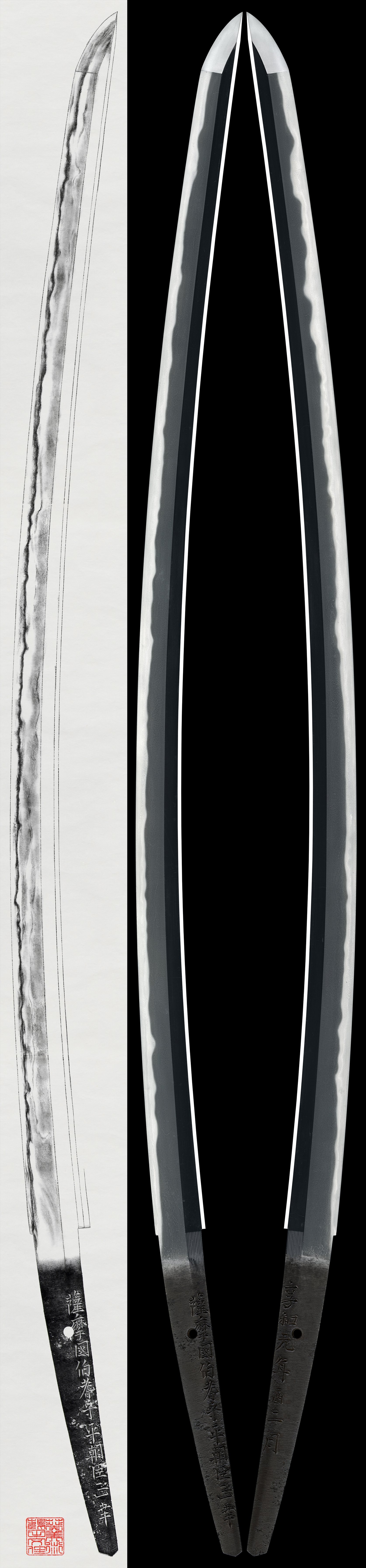
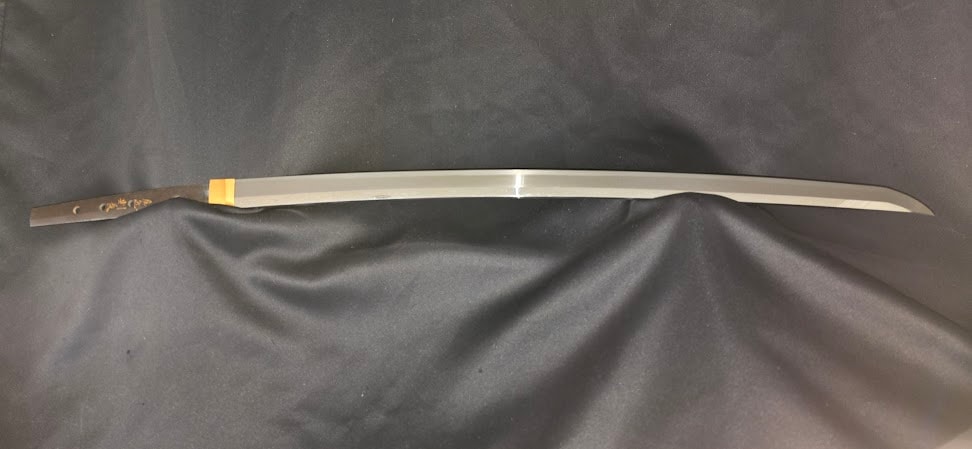
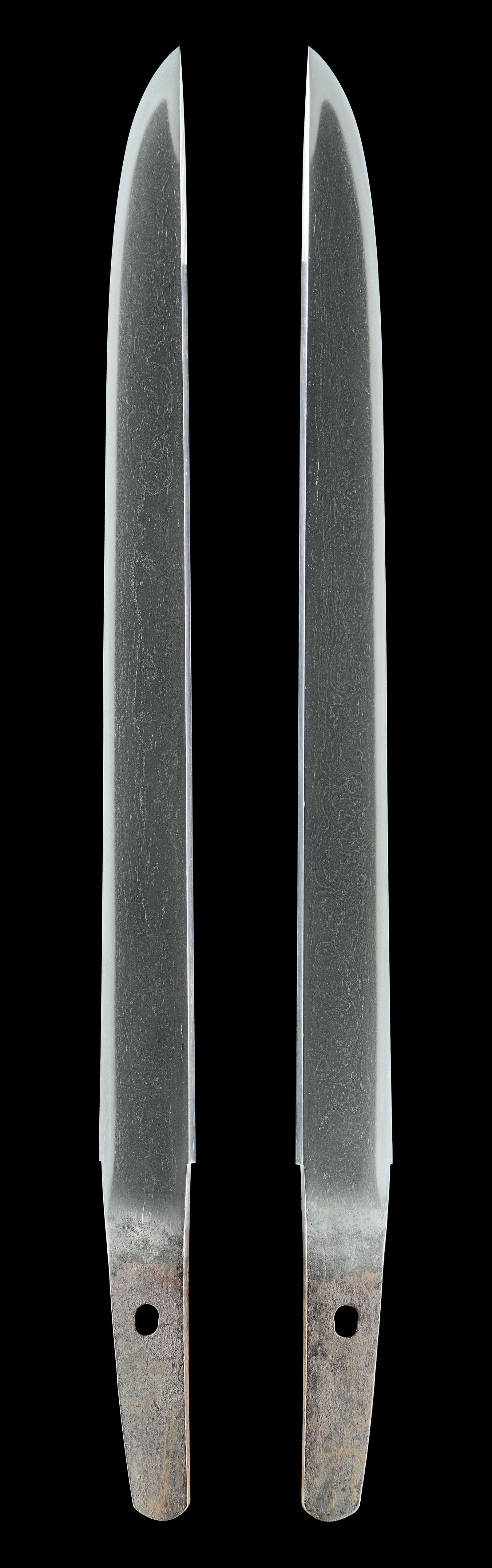
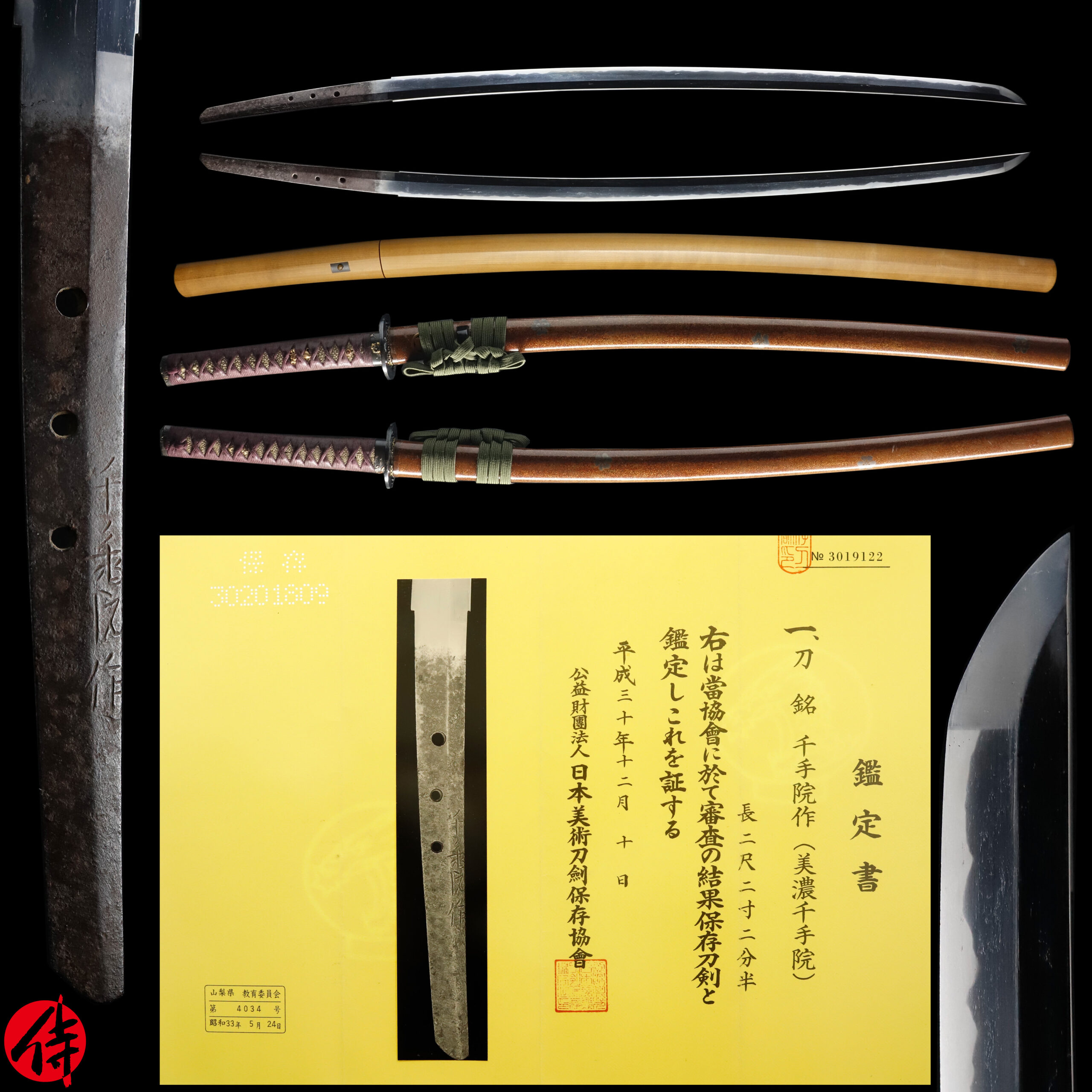
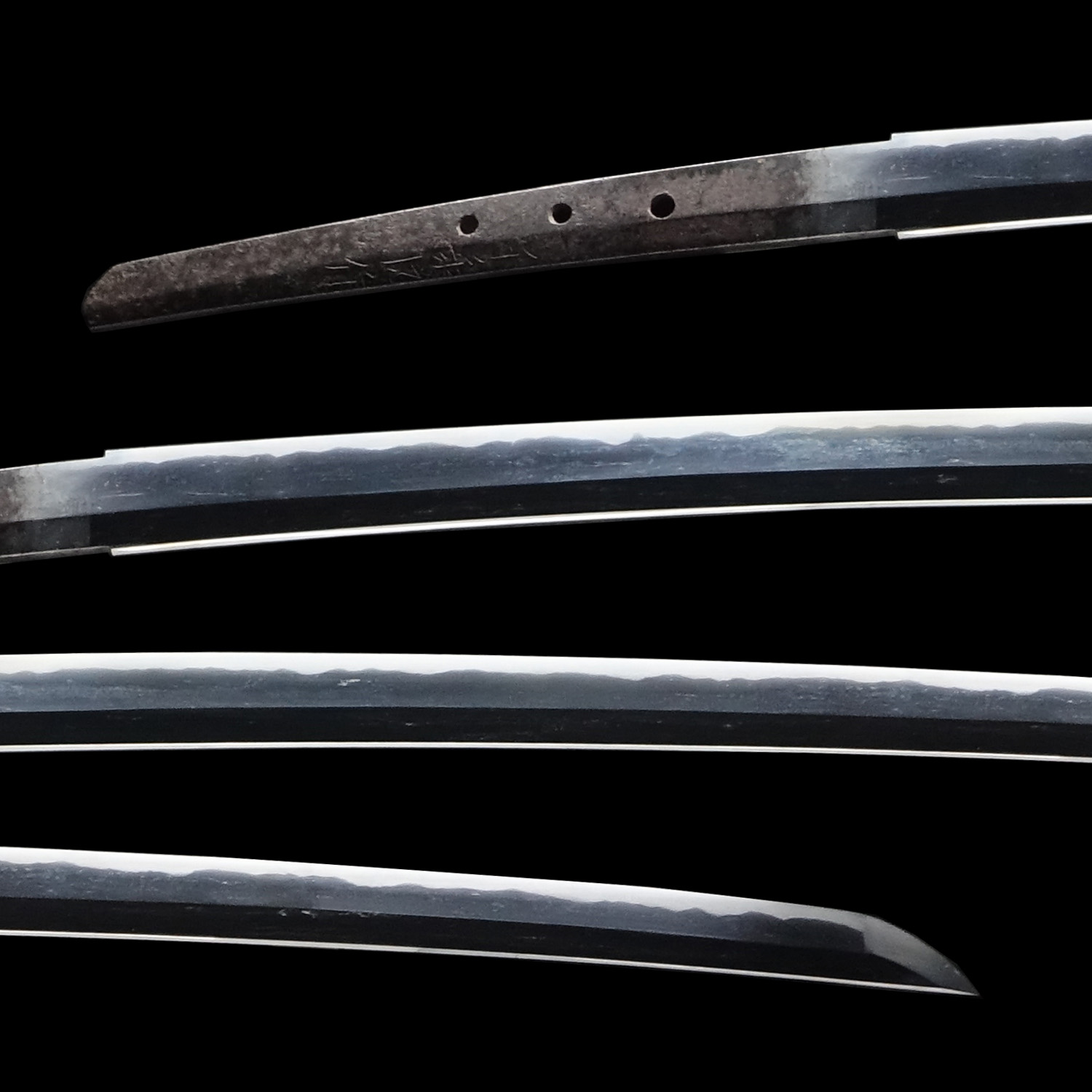
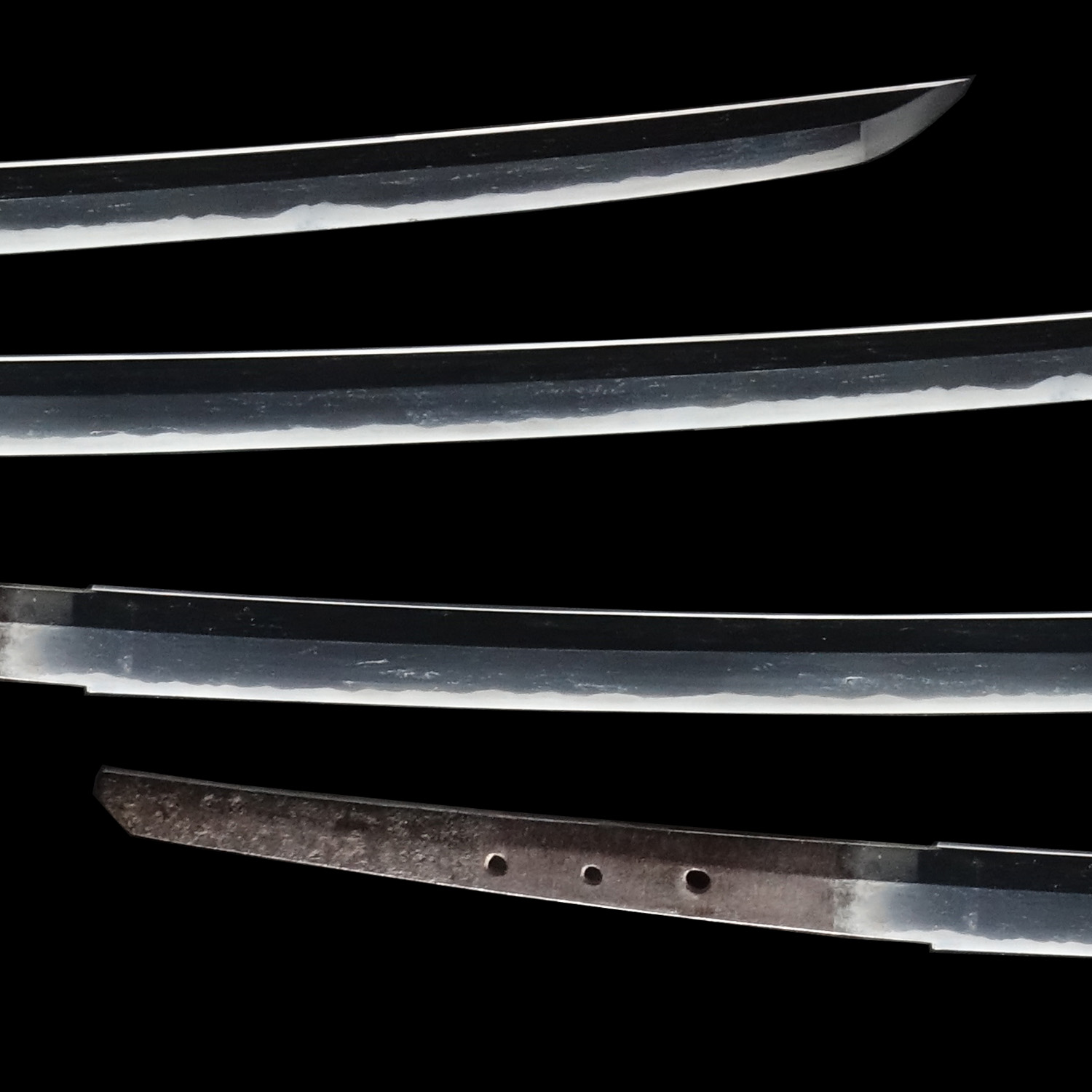
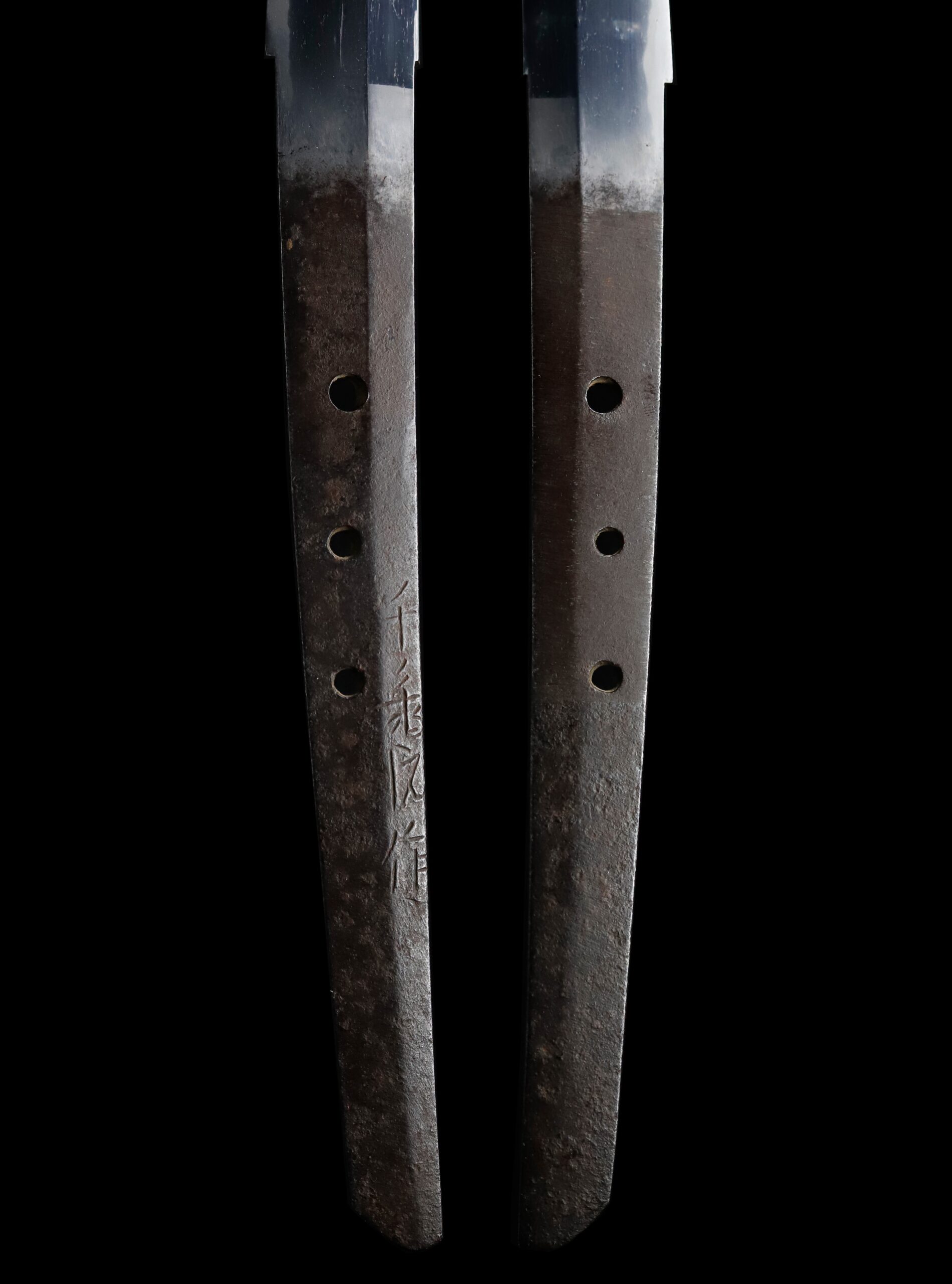
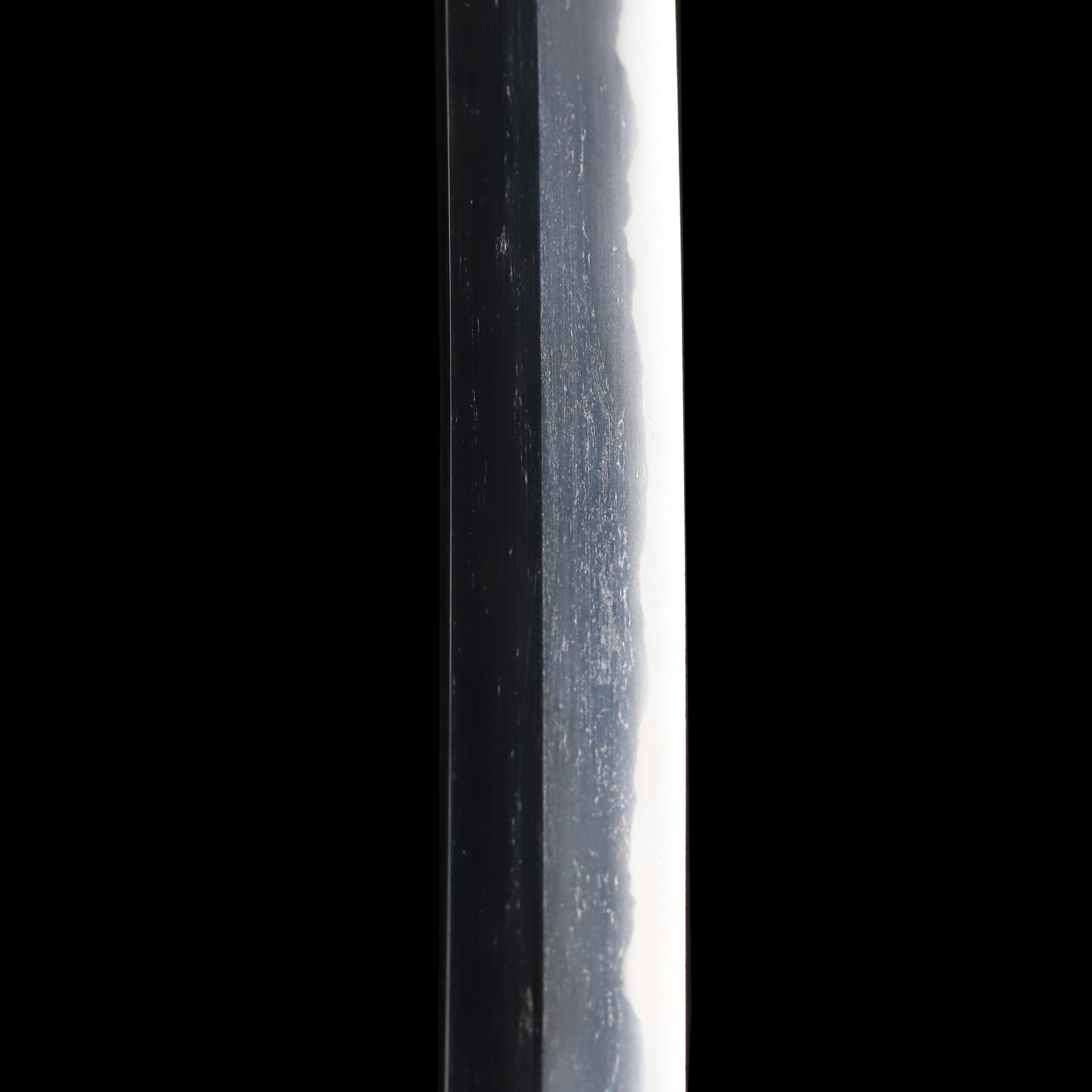
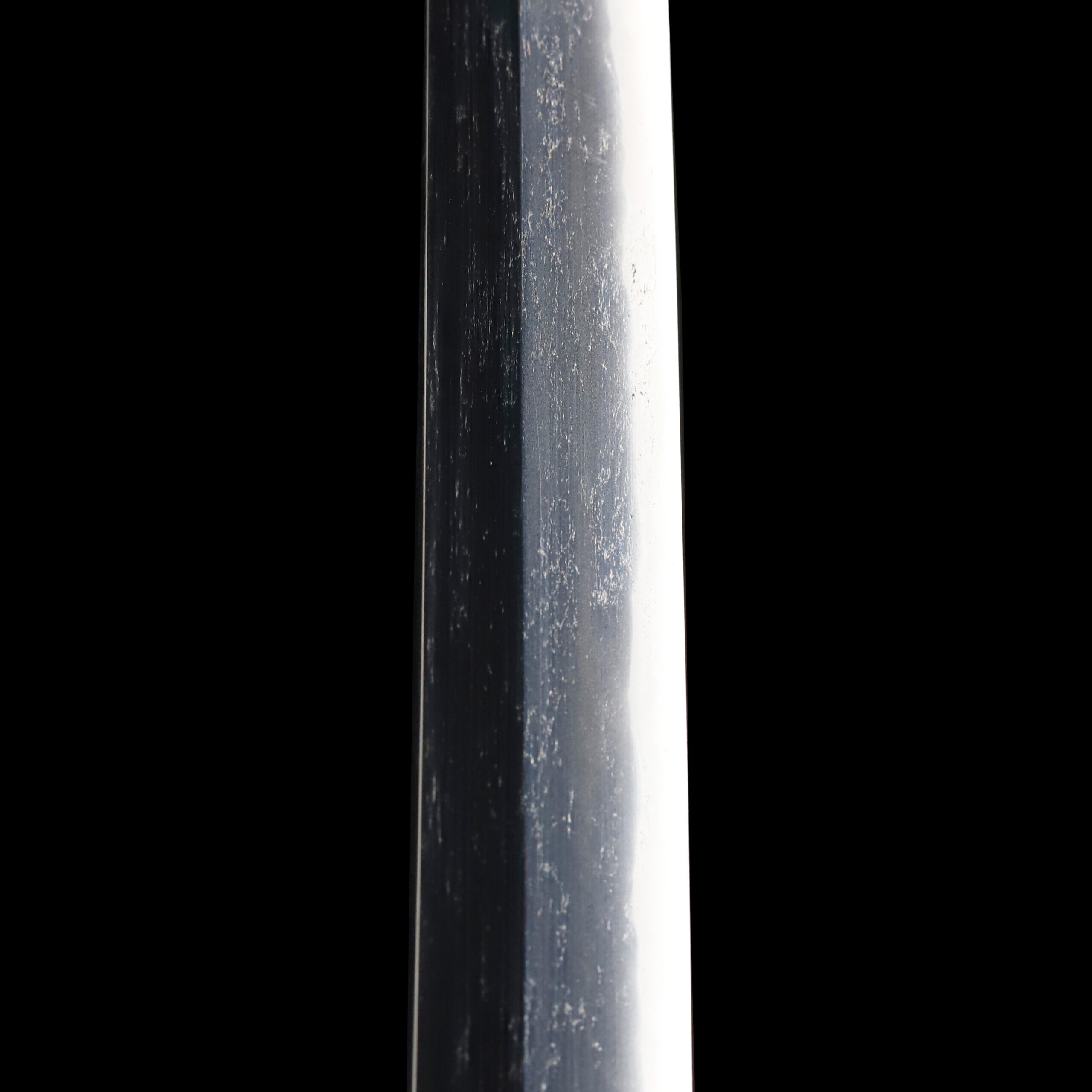
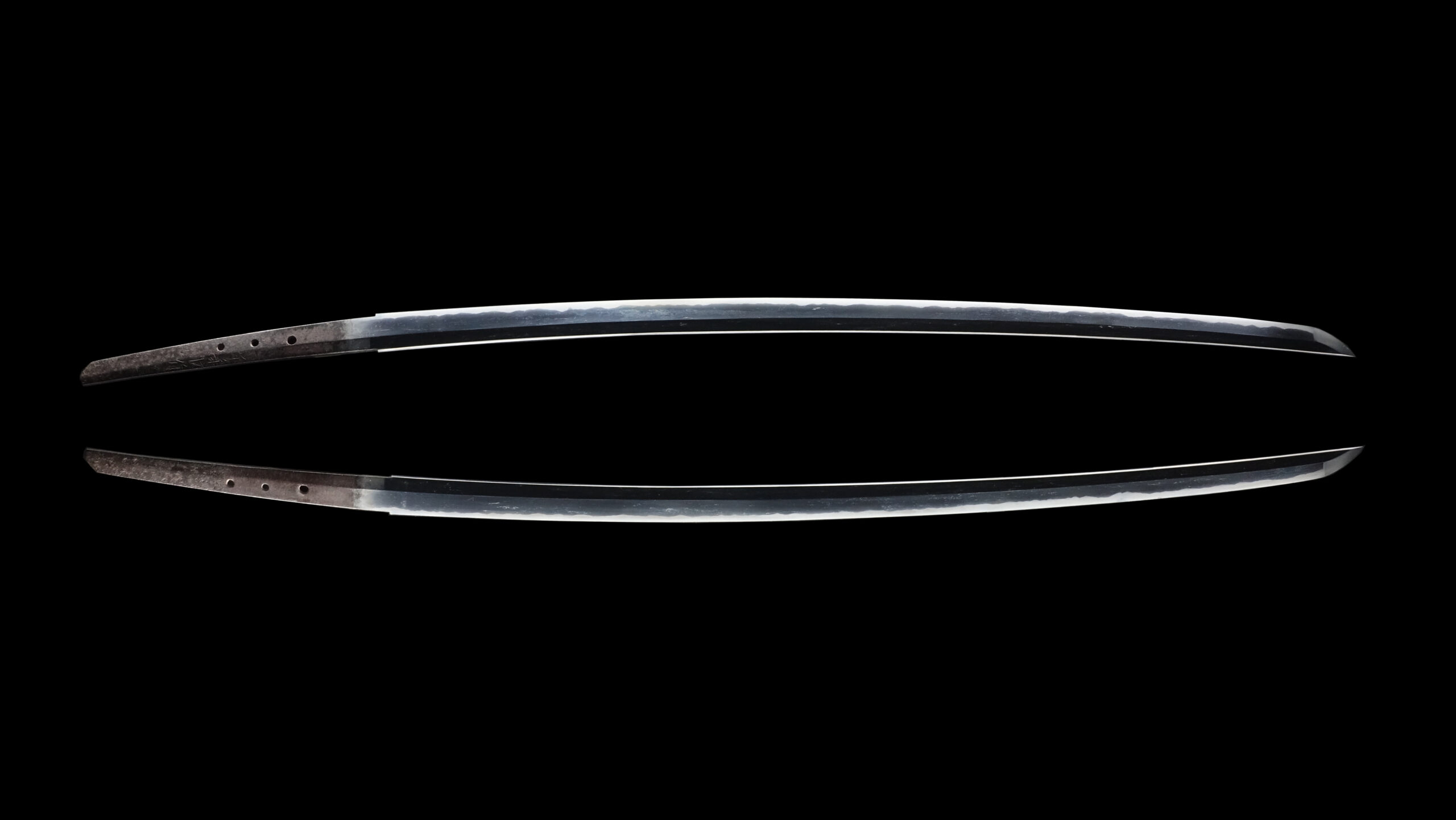
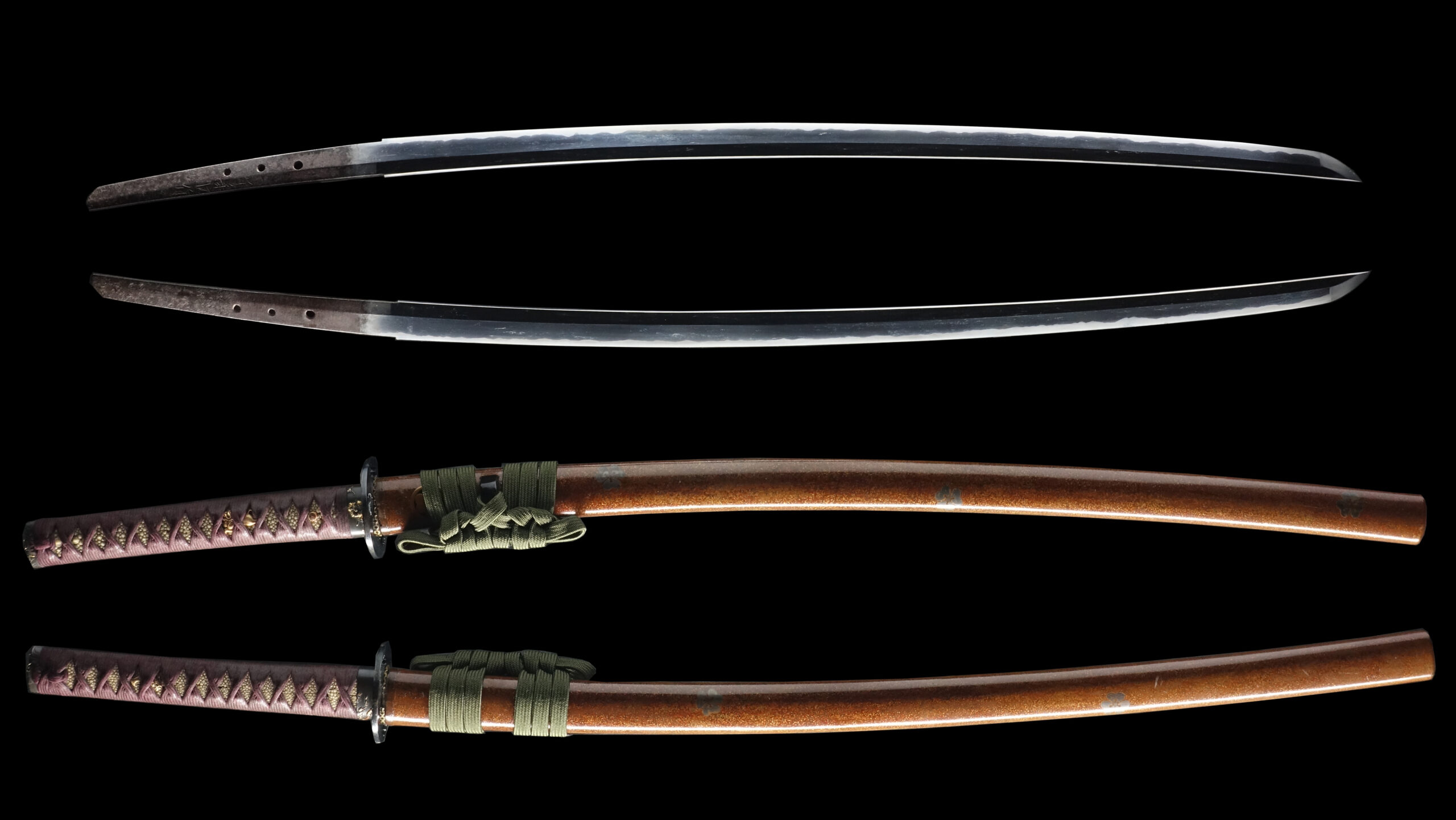
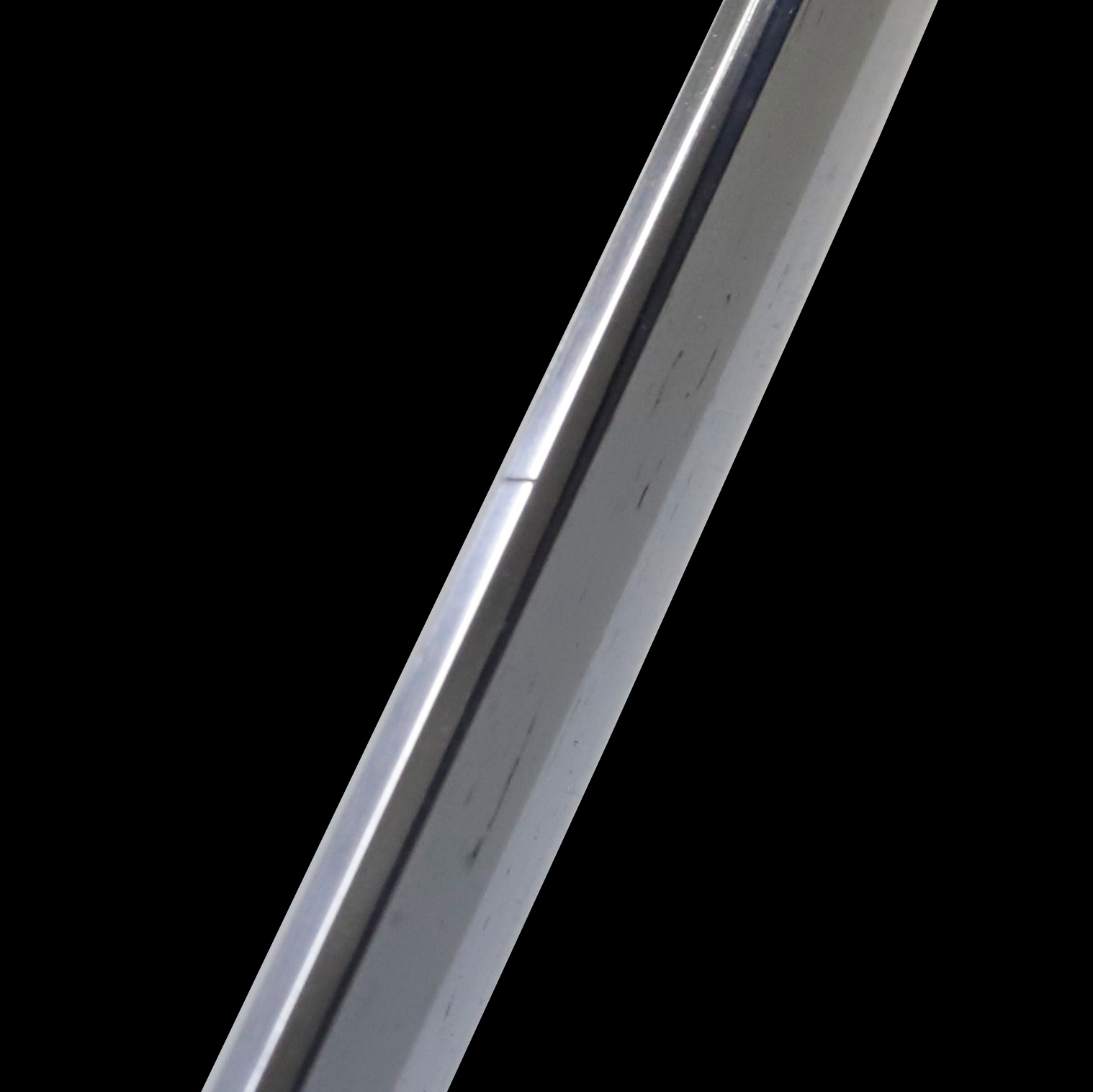
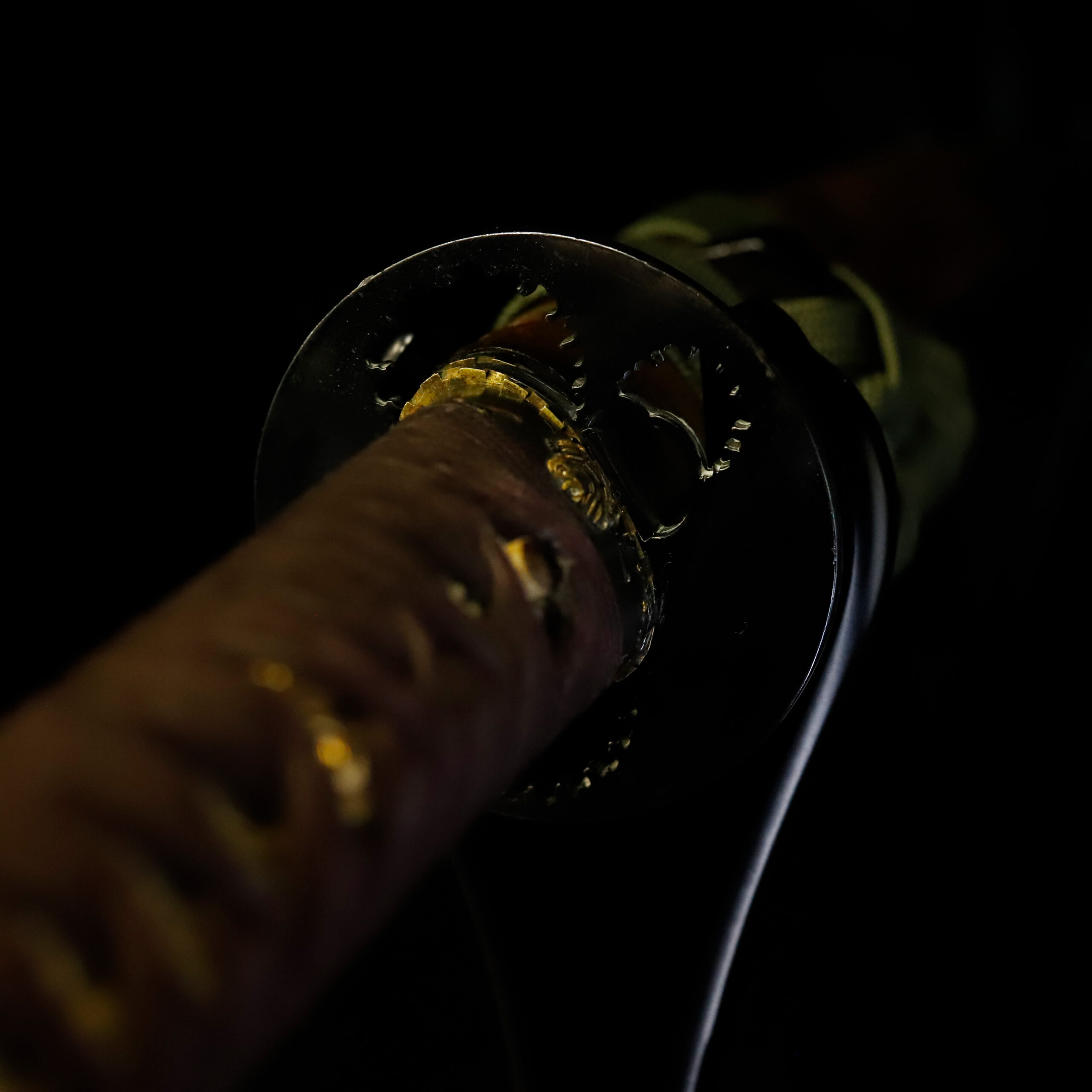
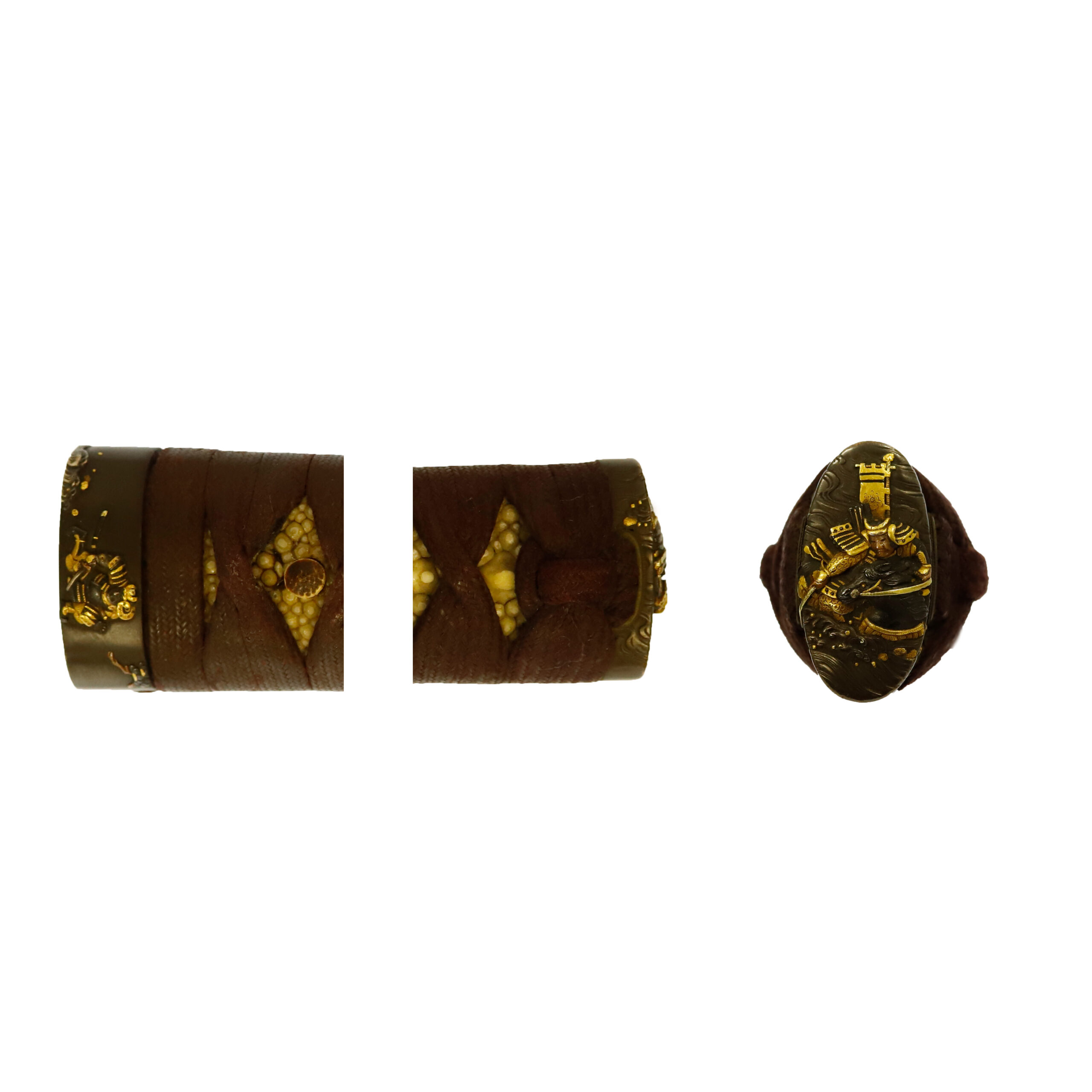
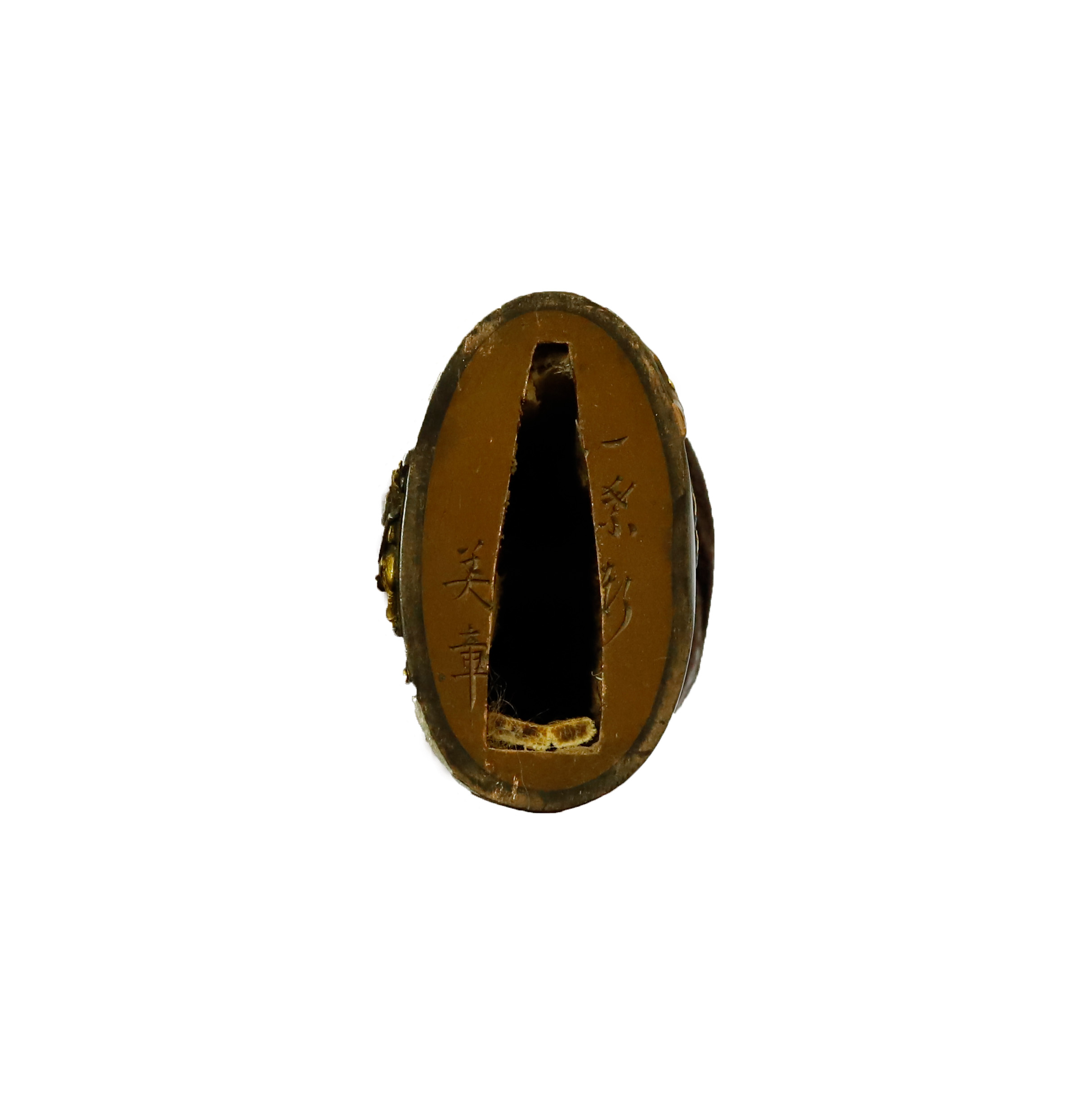
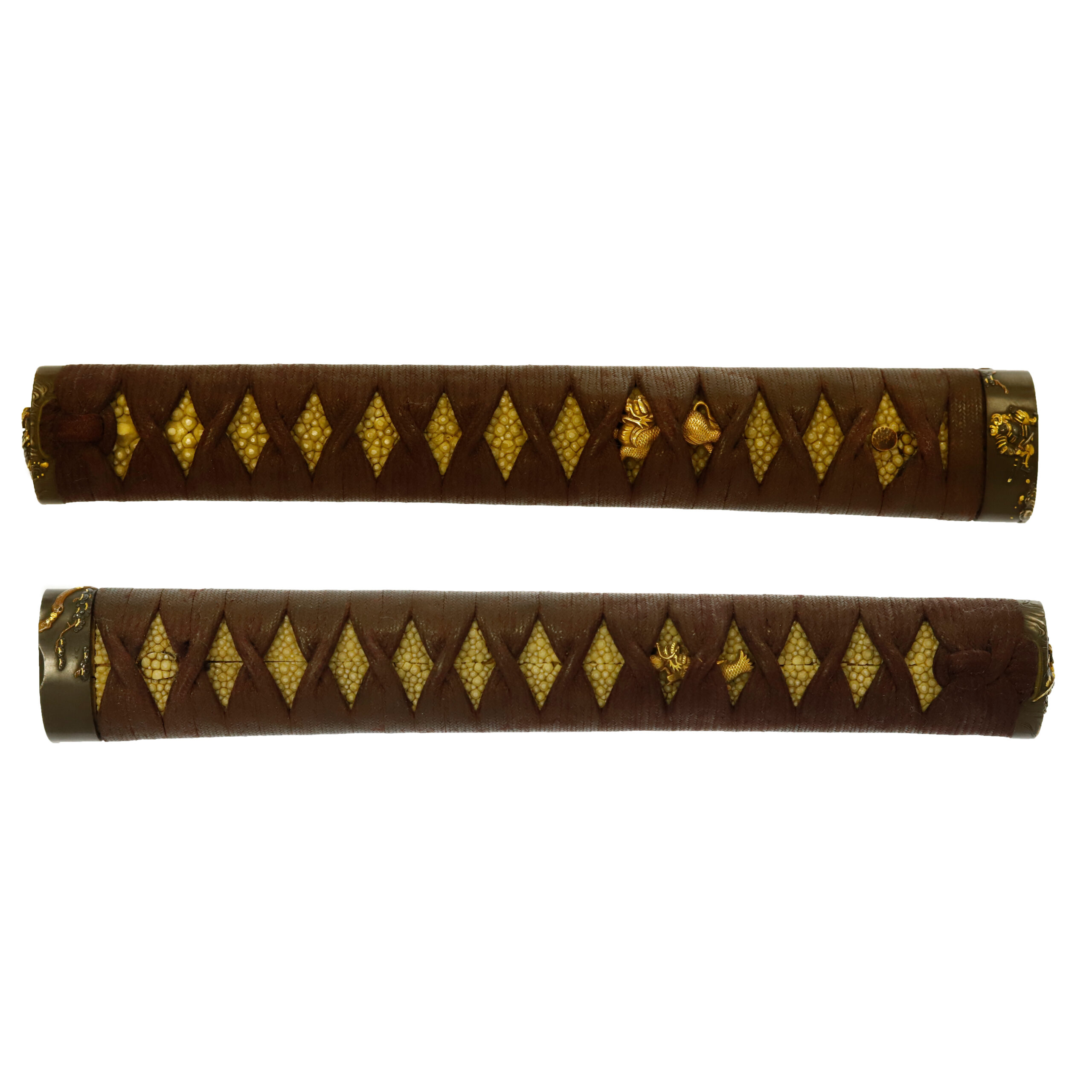
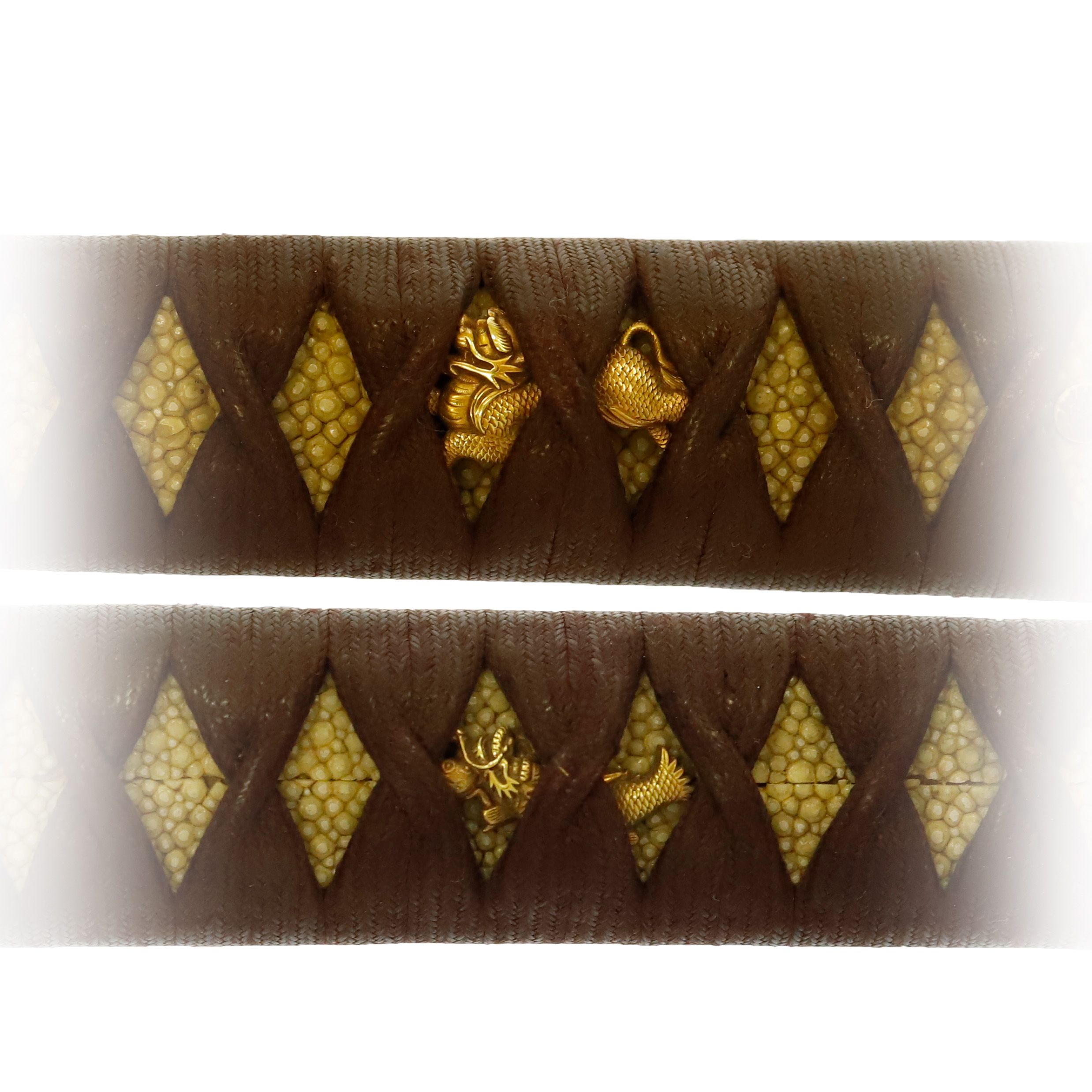
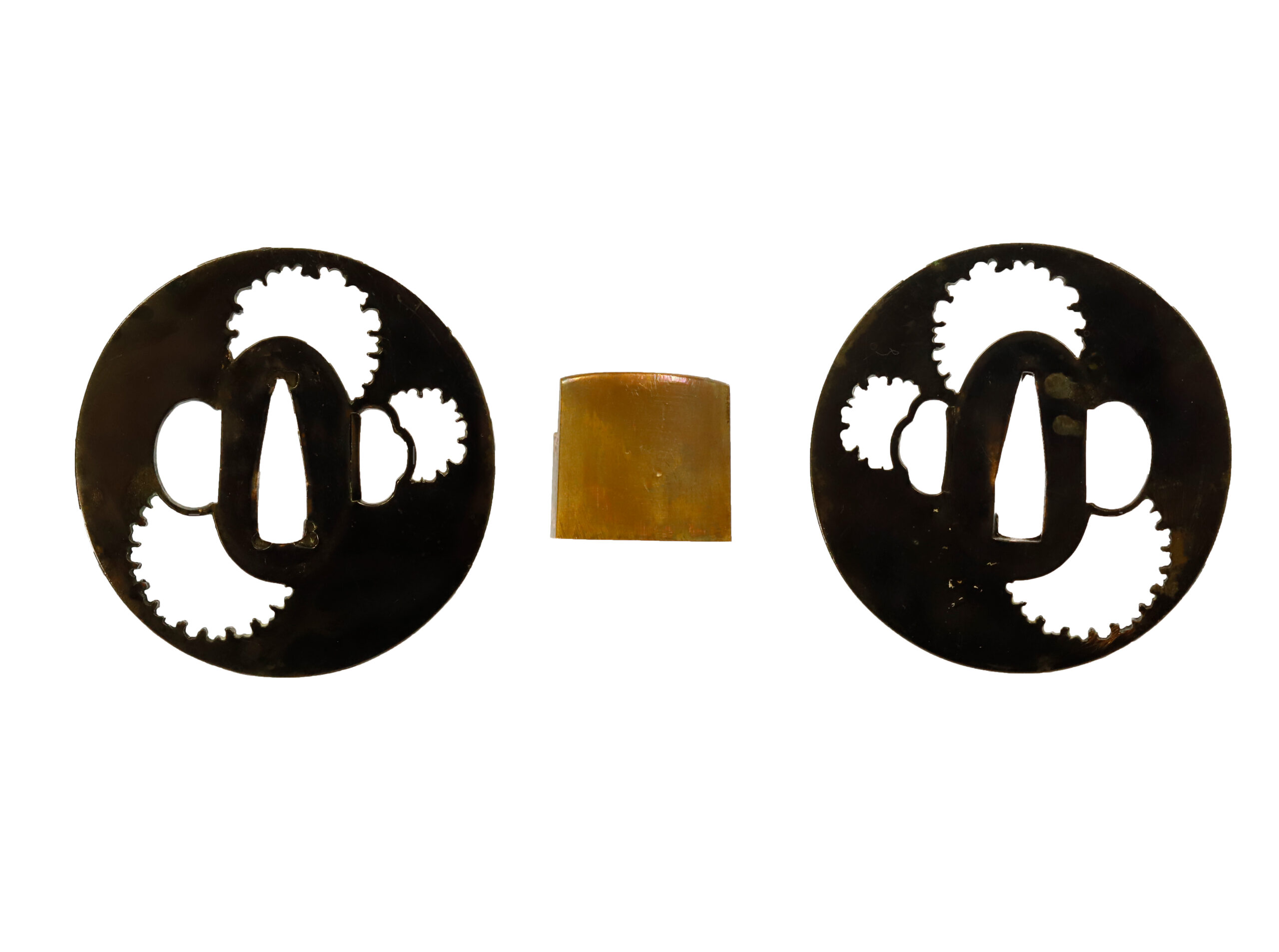
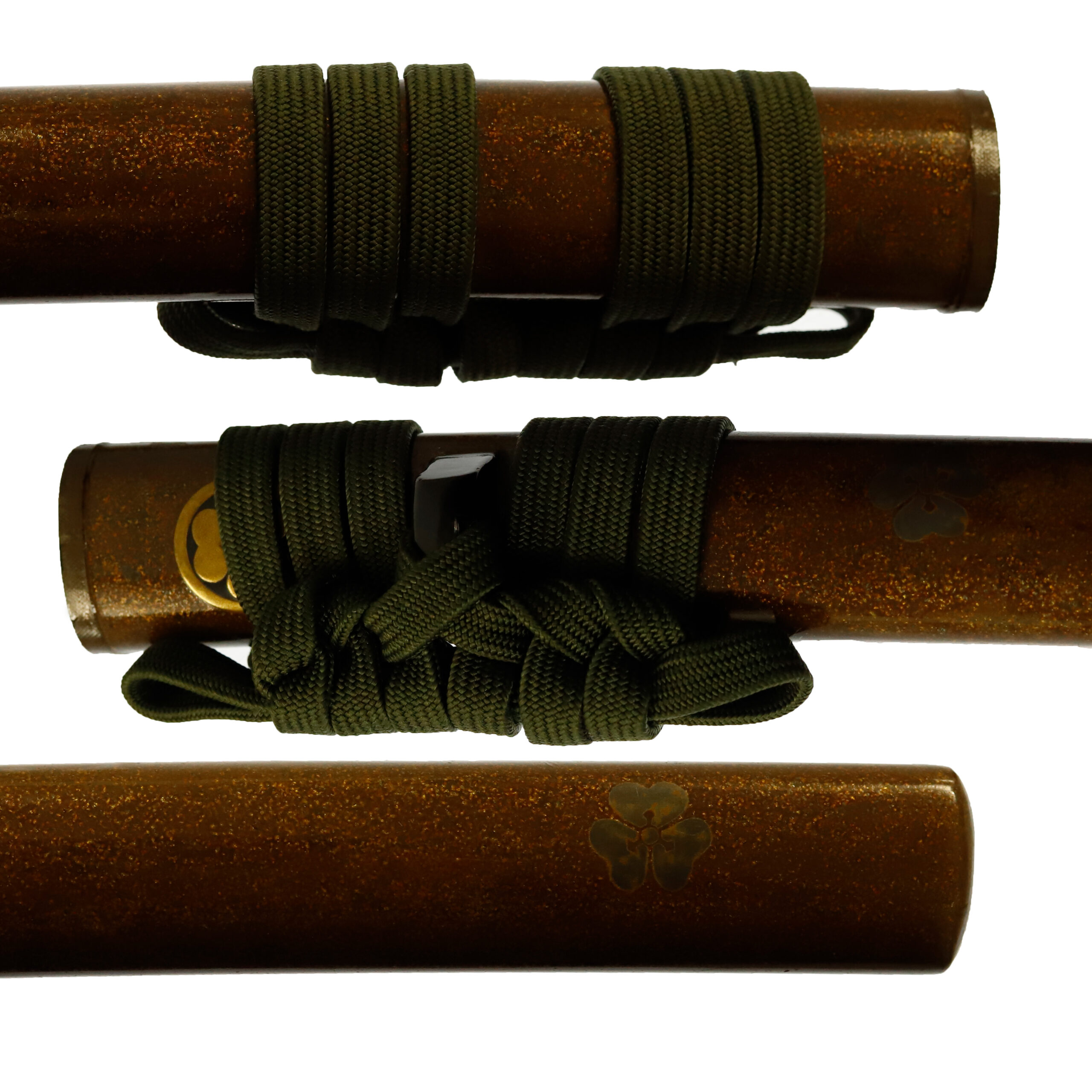
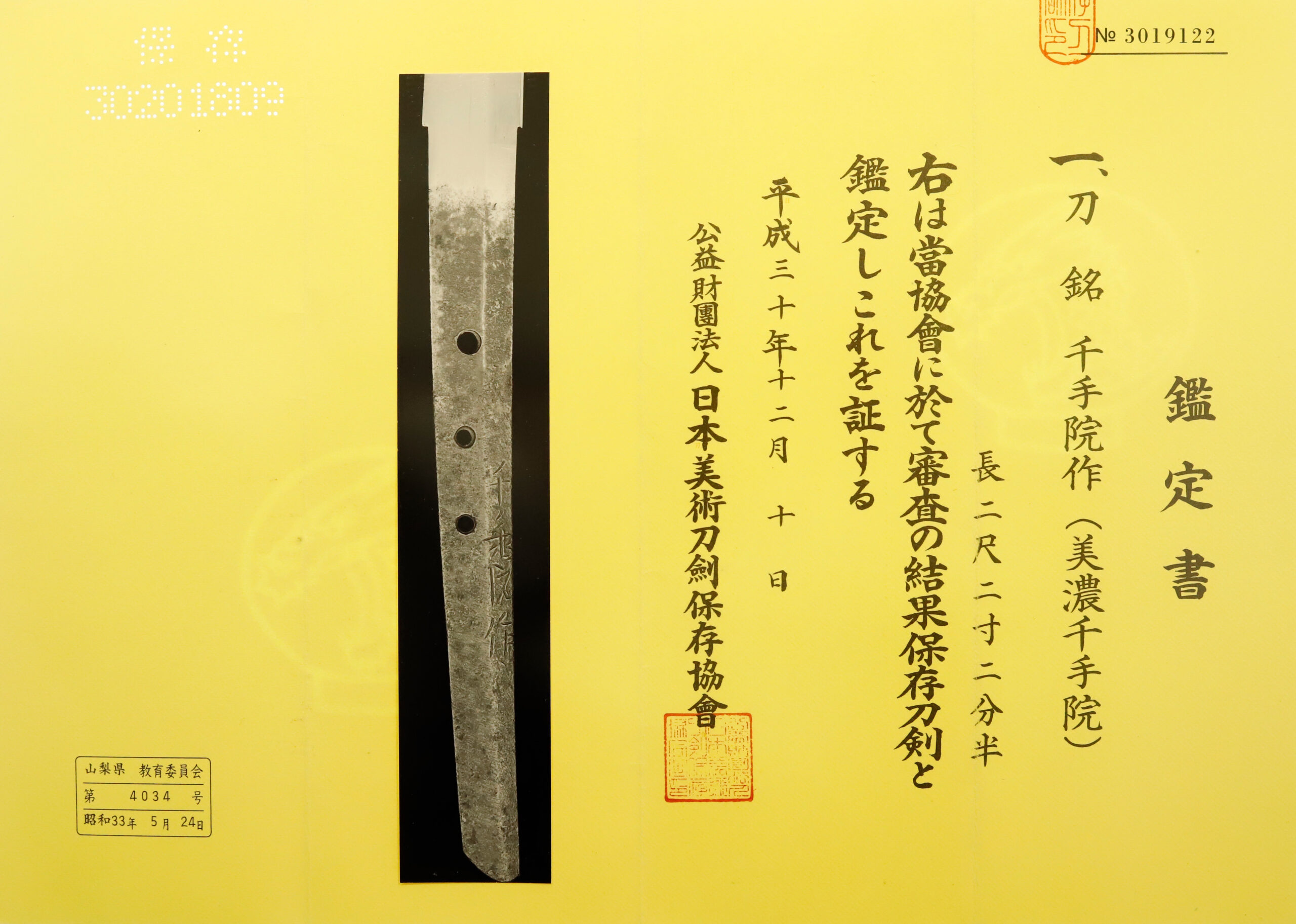
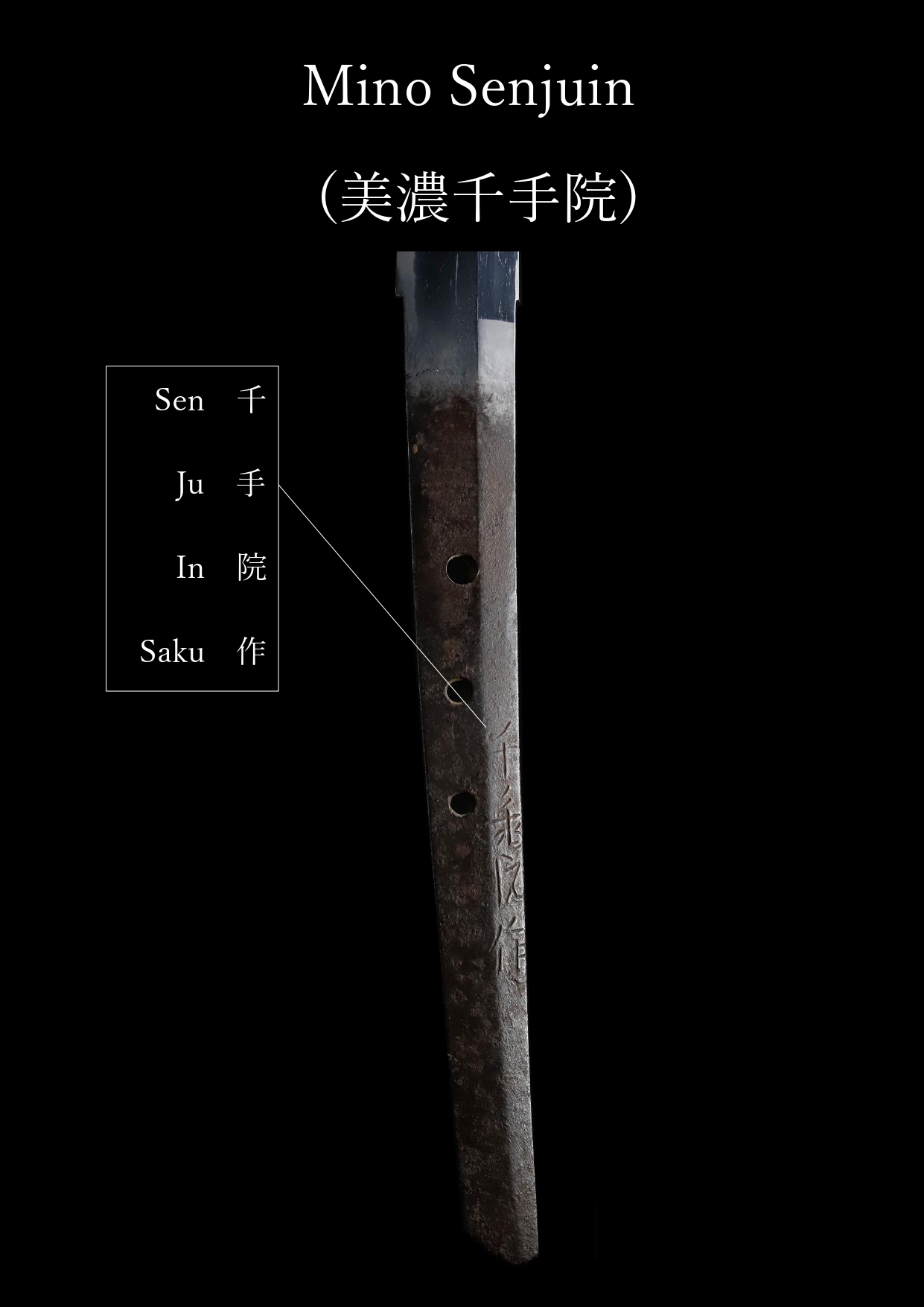
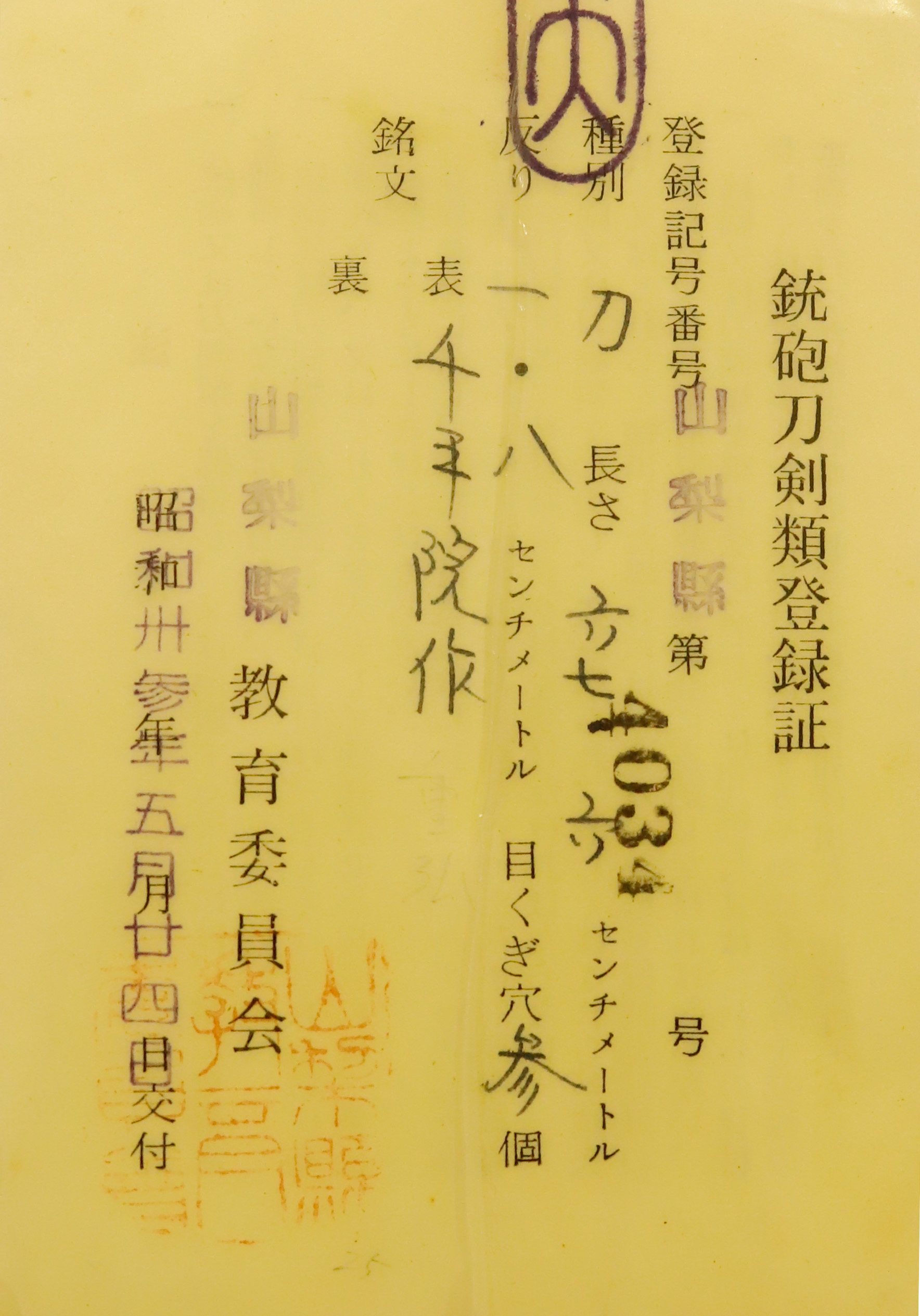
Antique Japanese Sword Katana signed by Mino Senjuin with Hozon Certificate 【Description】 This blade was signed by Mino Senjuin (美濃千手院), which is one of the most famous schools during the late Nanbokucho-late Muromachi period (Mid 14th-Early 16th century) in Mino province (today’s Gifu prefecture). According to NBTHK that appraised this blade, it was approximately made during the mid-late Muromachi period (Late 15th-Early 16th century). The school was located in Akasaka village near Sekigahara, an essential hub for transportation and military bases from ancient times. It is said that the Mino Senjuin school was founded by Sensui (泉水), the son of Yamato Koku Senjuin Shigehiro. Yamato region was one of the most famous sites for sword-forging during the late Heian-Kamakura period. Sensui moved from Yamato (today’s Nara prefecture) to Akasaka village in Mino province during the Nanbokucho period. Senjuin School in Yamato region There was a temple called Senjudo in Nara prefecture where Senju Kannon (Thousand arms) Budha statue was worshiped. And a group of swordsmiths who lived there was known as Senjuin (千手院). They belonged to Todaji temple. Senjuin School was founded by Yukinobu, who was the son of Yoshiyuki. Yukinonobu was originally a servant for Senjuin temple, a branch of Todaiji temple during the late Heian period (1086-1107), and eventually became an Okakae Kaji for the temple. This blade is appraised as a Hozon Token(保存刀剣) issued by NBTHK(Nihon Bijutsu Touken Hozon Kyokai:日本美術刀剣保存協会). This authentication paper was only given to authentic Japanese swords, well preserved with artistic value. *Please keep in mind that there are a couple of Kitae on this blade. If you like to see the detailed photos, please feel free to contact us. 【 Blade】 Cutting Edge Length(Nagasa) : 67.6 cm( 26.6 inches) Curvature(Sori) : 1.8 cm( 0.71 inches) Hamon : The crystalline structure which forms along the cutting edge of a blade as a result of the hardening process Jimon(Jihada) : visible steel surface pattern created by folding and hammering during forging process Nakago : Nakago is the tang of the Japanese sword. Japanese swordsmiths left the black rust on the tang because it prevents red rust while the tang is in its handle. And the discoloration of the tang was created over time, and it is a great indicator for a Japanese sword specialist to estimate when the sword was forged. Koshirae: Koshirae is the mounting of the Japanese sword. There are several parts that consist of Koshirae such as Saya(Scabbard), Tsuka(Handle), Tsuba(Handguard). Fuchi-Kashira : A pair of matching sword fittings that cover the upper and bottom parts of its sword hilt. About the theme of this Fuchi Kashira, we would categorize it as the Kassen Zu (合戦図). It depicts a scenery of a battlefield. Gold and silvery colorings add decorativeness to this work. Samurai warriors fighting at the water side are depicted. Especially on the Kashira part, the figure of the Samurai wielding his sword as he moves forward on horseback is impressive. The Samurai and the horse were sculpted with great detail; their facial expressions and gallant appearance on the battlefield inspire the viewer. Tsuka and Menuki : Tsuka is the handle of the Japanese sword and Menuki is its decoration. The figure of an animal whose body surface is covered with scales is designed as each Menuki. The upper side Menuki’s motif seems to be a dragon’s body that has been shortened and transformed into a four-legged animal, such as a dog. We estimate this surreal-looking creature might be the Kirin (麒麟, qílín), which is a kind of Zuiju (瑞獣, legendary animal) that appears in Chinese mythology. The Kirin is said to appear in a peaceful world. This sacred creature is considered the chief of the beasts and is often paired with the Houou (鳳凰, Fenghuang), the chief of the birds. Its shape resembles that of a deer, and its face resembles that of a dragon. It has the tail of an ox and the hooves of a horse and has horns. It
 NihontoWatchBETA
在銘 · Mino Senjuin · 室町 · 長さ 67.6cm · 反り 1.8cm
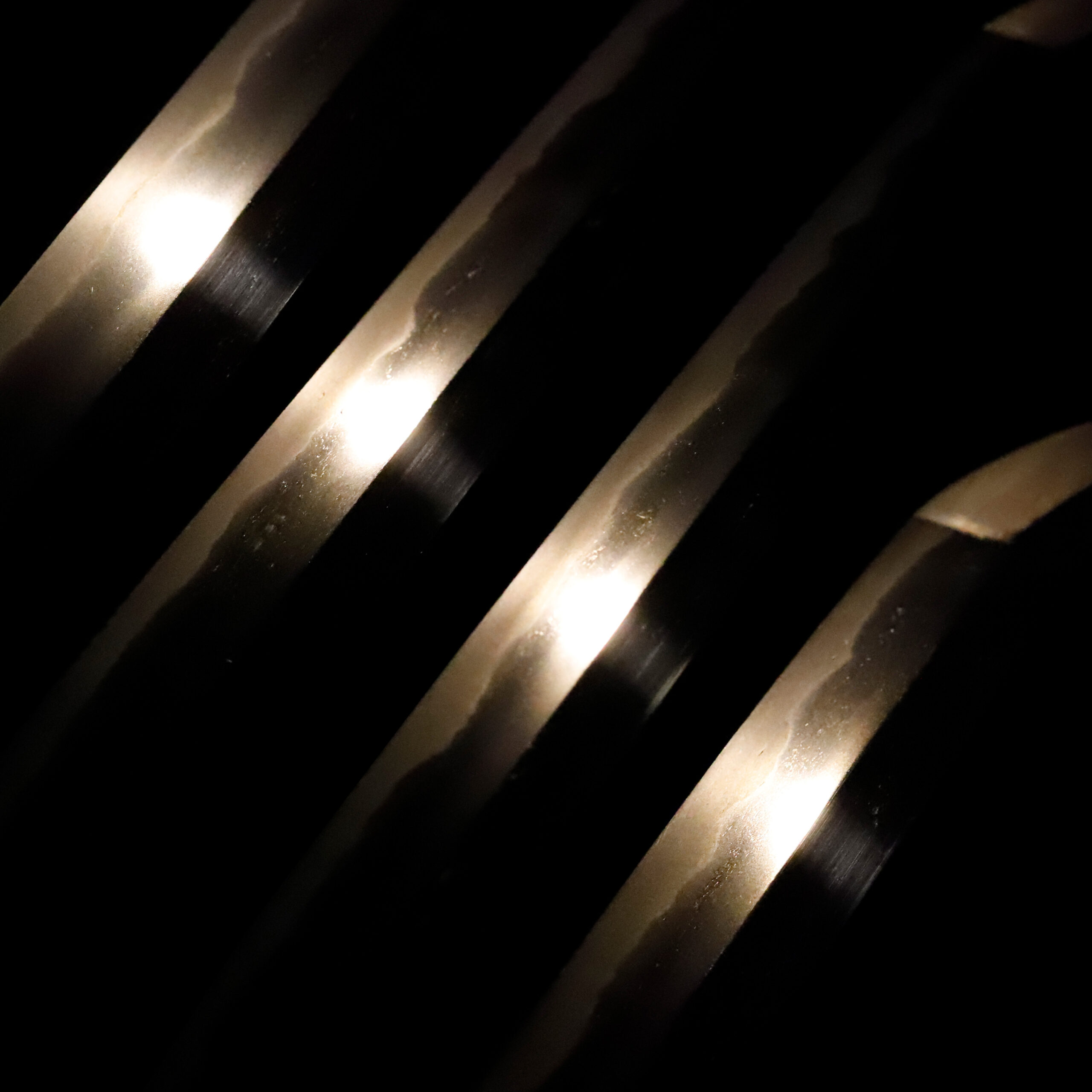
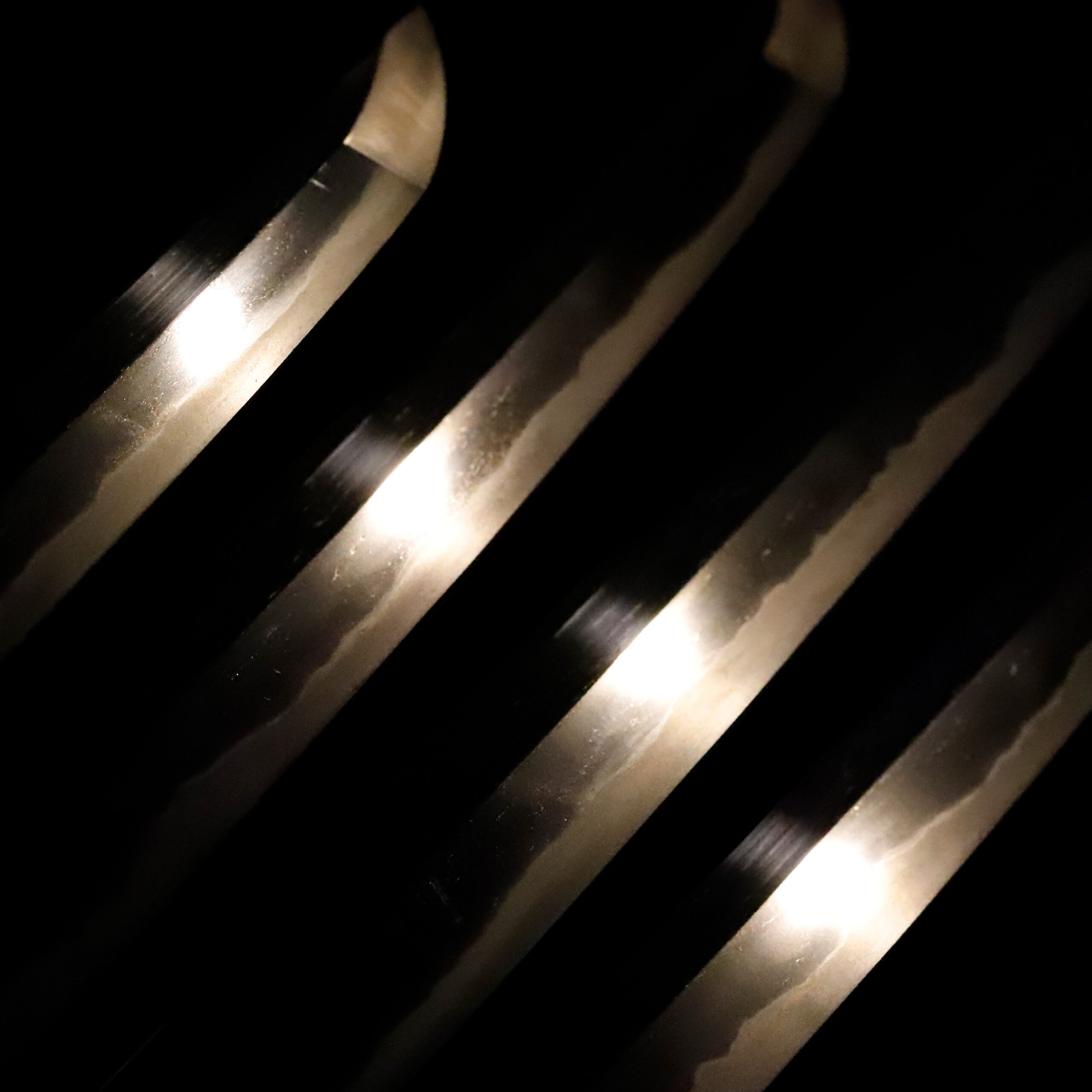
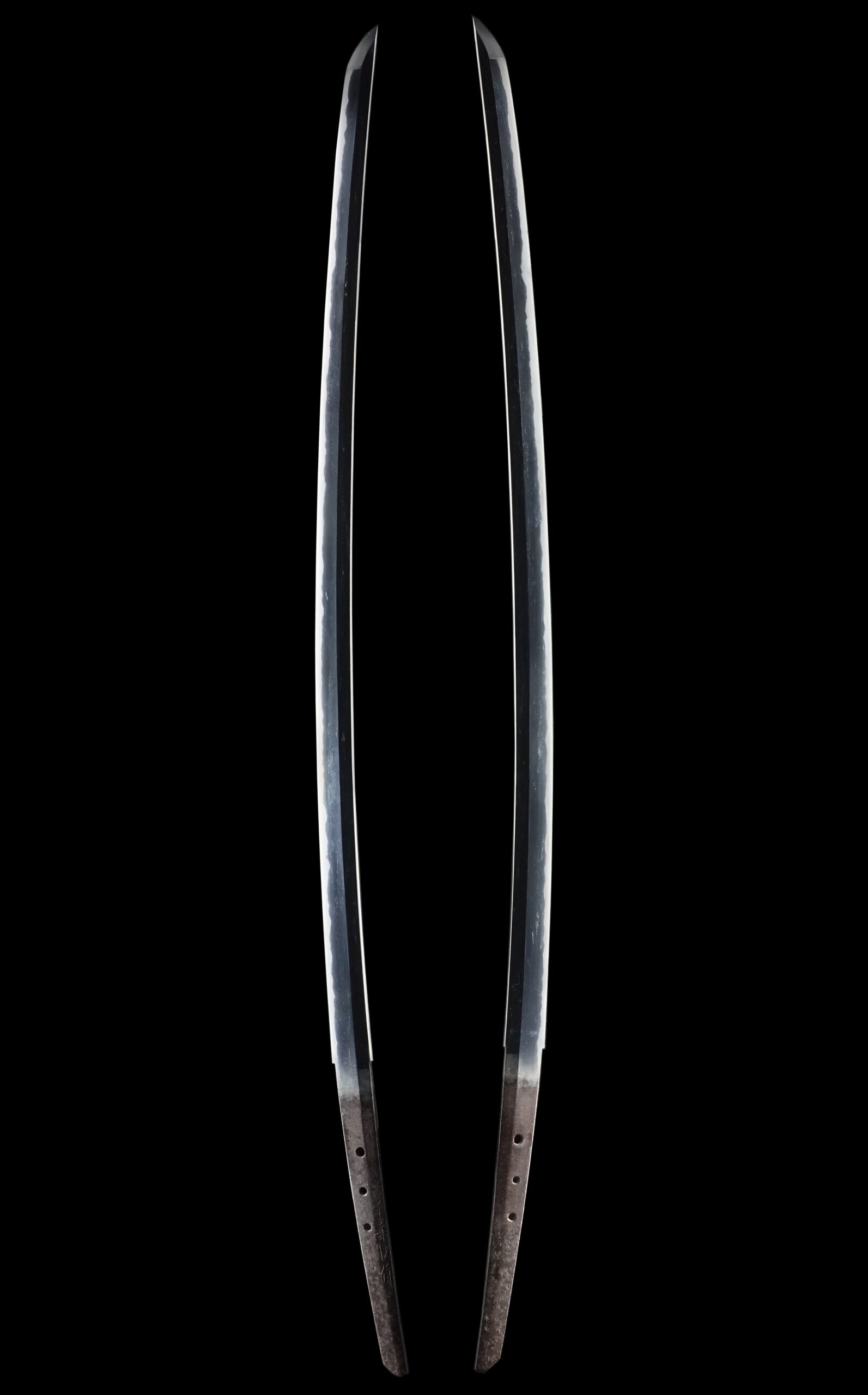
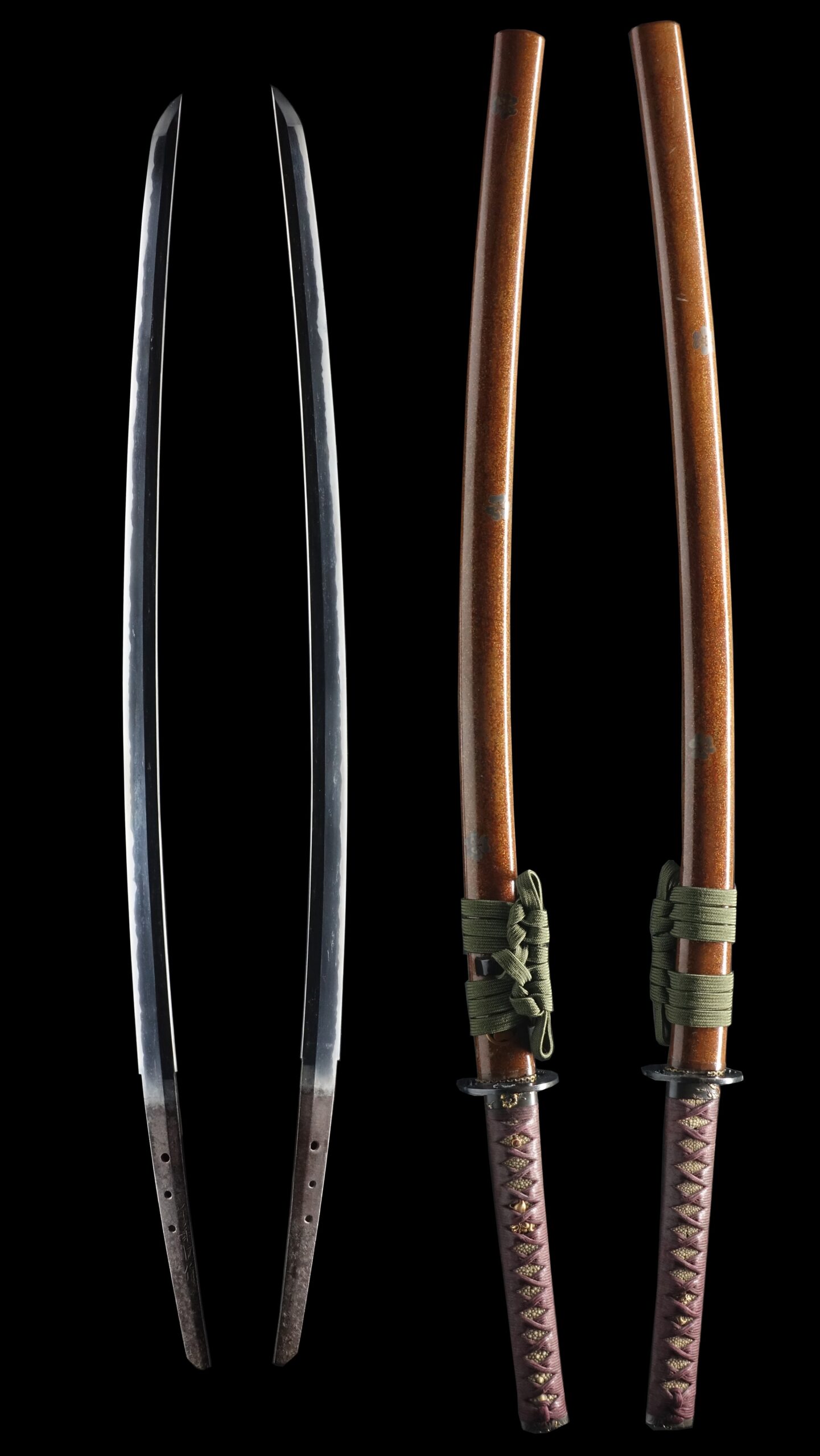
大和伝 · 大和
現在21点販売中
千手院派は大和五派の中で最も発祥が古いとされ、奈良の若草山の西山麓、千手観音を祀る千手堂のある千手谷と呼ばれる地に在住した刀工の一群に発する。寺院に拠るその出自は単なる来歴ではなく、在銘作が総じて少ないという一派の性格の根にあって、これは千手院を含む大和の鍛冶が寺院の僧兵の需要に応えて作刀したためと解されている。古伝書は平安時代後期に行信、重弘の二名工があったと伝えるが、いずれも確実な遺例は未見であり、鎌倉時代初期には三字に「千手院」と切った太刀が現存する。門流は鎌倉時代から南北朝時代にかけて存続し、その間も有銘作は乏しく、それゆえ吉野郡龍門荘に住して龍門延吉と通称された延吉や、正安三年の年紀をもつ助光、文和の年紀を切った吉弘のごとき年紀の遺る工は、無銘極めの多いこの一派において格別の資料的重みを負う。地理的にも時代的にも幅広いその活動は、古千手院と後代の別を含みつつ、奈良の寺工という共通の土壌に立つ。 作風は地鉄に大和伝の語法がまず読まれる。板目を基本に大板目、杢目、流れ柾を交え、刃寄りに流れて柾がかり、総体に肌立ちごころとなって、地沸が厚くつき、地景が頻りに入る。淡い沸映りの立つものがあり、なかには延吉の備前寄りの手のごとく鮮明な乱れ映りを示すものもあって、映りの有無はこの一派を貫く変数である。刃文は直刃を基調とし、浅くのたれて小互の目、小丁子、小乱れを交え、刃縁にほつれ、打のけ、喰違刃、二重刃が現れ、刃中に小足が入り、金筋、砂流しが頻りにかかって、刃中にもまた柾が通う。匂口は明るく冴え、小沸がよくつく。帽子は直ぐに掃きかけて焼詰め、あるいは小丸に短く返る。同じ大和の基盤の上に二様の振幅が見られるのが特徴で、延吉や助光には備前気質を帯びた賑やかな丁子足の手と、映りの立たぬ大和色の濃い渋い直刃の手とが並び、吉弘に至っては相州物を想わせる強い沸と大乱れの華やかな出来と、浅くのたれた穏やかな直刃とが同工のうちに共存する。姿は鎬造、庵棟で、鎬幅が広く鎬が高いもの、腰反りが高く踏張りがあって中鋒ないし小鋒となるものなどが見られ、総じて古調を示す。 鑑定の勘所は、まず柾がかって流れる地鉄と、掃きかけ焼詰めの帽子の下にほつれ、喰違刃、二重刃の働く明るい直刃に置かれる。本阿弥家では古来、大和物のうちで賑やかに乱れているものに千手院の極めをあてる傾向があったと説明書は記し、この一派の極めの幅の広さを伝える。大和の内部にあって、千手院は同じ五派の手掻、尻懸、当麻、保昌と並び称されつつ別をなす。沸の働きと造込みでより明確に手を絞り込み得る当麻や、強い柾立つ無地の直刃に拠る保昌とは地刃の質において分かれ、より素朴な手掻とも映りや備前気質の加味の点で分かれる。主要工としては、一口の国宝の太刀に担われ大和初期の名として重きをなす延吉、年紀の基準作を東京国立博物館に伝えて在銘作のごく僅かな助光、地刃の変化が大和諸工中で最も大きいと評される吉弘がそれぞれ独立した手を示し、ほかにも長吉、吉行、助平、助延、助吉のごとき同族の工が諸書に名を連ねるが、その多くは総称的に千手院として伝わる。在銘の確かな作が世に出ることは稀であり、現存する遺品の大半は大磨上無銘の極めものであって、鎬の高い造込み、流れて柾がかる鍛え、明るい直刃のみからもその極めは首肯される。伝来は、龍門延吉の国宝太刀が後水尾天皇御料と伝え、堀子爵家や犬養毅、仙台伊達家、上杉家の旧蔵に納まる一口があるほかは、神社や公的機関に伝わるものを除けば多くは所在の知れぬ私蔵にあって、市場に現れることは少ない。
銘が正しい、または無銘でも年代・国・系統を確実に指摘できる、保存に値する真正の作と鑑定されたものです。
日本美術刀剣保存協会(NBTHK)は、1948年に設立され、文化庁の監督を受ける公益財団法人で、東京・刀剣博物館に本部を置きます。専門の審査員が出品作を直接審査し、美術的・歴史的価値に応じた鑑定書を発行します。NBTHKの鑑定書は、日本刀および刀装具の真正性を示す最も広く認知された基準です。
NBTHK公式サイトReturns/exchanges limited to defects caused by shipping (except willful misconduct or gross negligence by the company); customers must contact within 72 hours of receiving the product.
Antique Japanese Sword Katana signed by Mino Senjuin with Hozon Certificate 【Description】 This blade was signed by Mino Senjuin (美濃千手院), which is one of the most famous schools during the late Nanbokucho-late Muromachi period (Mid 14th-Early 16th century) in Mino province (today’s Gifu prefecture). According to NBTHK that appraised this blade, it was approximately made during the mid-late Muromachi period (Late 15th-Early 16th century). The school was located in Akasaka village near Sekigahara, an essential hub for transportation and military bases from ancient times. It is said that the Mino Senjuin school was founded by Sensui (泉水), the son of Yamato Koku Senjuin Shigehiro. Yamato region was one of the most famous sites for sword-forging during the late Heian-Kamakura period. Sensui moved from Yamato (today’s Nara prefecture) to Akasaka village in Mino province during the Nanbokucho period. Senjuin School in Yamato region There was a temple called Senjudo in Nara prefecture where Senju Kannon (Thousand arms) Budha statue was worshiped. And a group of swordsmiths who lived there was known as Senjuin (千手院). They belonged to Todaji temple. Senjuin School was founded by Yukinobu, who was the son of Yoshiyuki. Yukinonobu was originally a servant for Senjuin temple, a branch of Todaiji temple during the late Heian period (1086-1107), and eventually became an Okakae Kaji for the temple. This blade is appraised as a Hozon Token(保存刀剣) issued by NBTHK(Nihon Bijutsu Touken Hozon Kyokai:日本美術刀剣保存協会). This authentication paper was only given to authentic Japanese swords, well preserved with artistic value. *Please keep in mind that there are a couple of Kitae on this blade. If you like to see the detailed photos, please feel free to contact us. 【 Blade】 Cutting Edge Length(Nagasa) : 67.6 cm( 26.6 inches) Curvature(Sori) : 1.8 cm( 0.71 inches) Hamon : The crystalline structure which forms along the cutting edge of a blade as a result of the hardening process Jimon(Jihada) : visible steel surface pattern created by folding and hammering during forging process Nakago : Nakago is the tang of the Japanese sword. Japanese swordsmiths left the black rust on the tang because it prevents red rust while the tang is in its handle. And the discoloration of the tang was created over time, and it is a great indicator for a Japanese sword specialist to estimate when the sword was forged. Koshirae: Koshirae is the mounting of the Japanese sword. There are several parts that consist of Koshirae such as Saya(Scabbard), Tsuka(Handle), Tsuba(Handguard). Fuchi-Kashira : A pair of matching sword fittings that cover the upper and bottom parts of its sword hilt. About the theme of this Fuchi Kashira, we would categorize it as the Kassen Zu (合戦図). It depicts a scenery of a battlefield. Gold and silvery colorings add decorativeness to this work. Samurai warriors fighting at the water side are depicted. Especially on the Kashira part, the figure of the Samurai wielding his sword as he moves forward on horseback is impressive. The Samurai and the horse were sculpted with great detail; their facial expressions and gallant appearance on the battlefield inspire the viewer. Tsuka and Menuki : Tsuka is the handle of the Japanese sword and Menuki is its decoration. The figure of an animal whose body surface is covered with scales is designed as each Menuki. The upper side Menuki’s motif seems to be a dragon’s body that has been shortened and transformed into a four-legged animal, such as a dog. We estimate this surreal-looking creature might be the Kirin (麒麟, qílín), which is a kind of Zuiju (瑞獣, legendary animal) that appears in Chinese mythology. The Kirin is said to appear in a peaceful world. This sacred creature is considered the chief of the beasts and is often paired with the Houou (鳳凰, Fenghuang), the chief of the birds. Its shape resembles that of a deer, and its face resembles that of a dragon. It has the tail of an ox and the hooves of a horse and has horns. It
NihontoWatchBETA在銘 · Mino Senjuin · 室町 · 長さ 67.6cm · 反り 1.8cm
大和伝 · 大和
現在21点販売中
千手院派は大和五派の中で最も発祥が古いとされ、奈良の若草山の西山麓、千手観音を祀る千手堂のある千手谷と呼ばれる地に在住した刀工の一群に発する。寺院に拠るその出自は単なる来歴ではなく、在銘作が総じて少ないという一派の性格の根にあって、これは千手院を含む大和の鍛冶が寺院の僧兵の需要に応えて作刀したためと解されている。古伝書は平安時代後期に行信、重弘の二名工があったと伝えるが、いずれも確実な遺例は未見であり、鎌倉時代初期には三字に「千手院」と切った太刀が現存する。門流は鎌倉時代から南北朝時代にかけて存続し、その間も有銘作は乏しく、それゆえ吉野郡龍門荘に住して龍門延吉と通称された延吉や、正安三年の年紀をもつ助光、文和の年紀を切った吉弘のごとき年紀の遺る工は、無銘極めの多いこの一派において格別の資料的重みを負う。地理的にも時代的にも幅広いその活動は、古千手院と後代の別を含みつつ、奈良の寺工という共通の土壌に立つ。 作風は地鉄に大和伝の語法がまず読まれる。板目を基本に大板目、杢目、流れ柾を交え、刃寄りに流れて柾がかり、総体に肌立ちごころとなって、地沸が厚くつき、地景が頻りに入る。淡い沸映りの立つものがあり、なかには延吉の備前寄りの手のごとく鮮明な乱れ映りを示すものもあって、映りの有無はこの一派を貫く変数である。刃文は直刃を基調とし、浅くのたれて小互の目、小丁子、小乱れを交え、刃縁にほつれ、打のけ、喰違刃、二重刃が現れ、刃中に小足が入り、金筋、砂流しが頻りにかかって、刃中にもまた柾が通う。匂口は明るく冴え、小沸がよくつく。帽子は直ぐに掃きかけて焼詰め、あるいは小丸に短く返る。同じ大和の基盤の上に二様の振幅が見られるのが特徴で、延吉や助光には備前気質を帯びた賑やかな丁子足の手と、映りの立たぬ大和色の濃い渋い直刃の手とが並び、吉弘に至っては相州物を想わせる強い沸と大乱れの華やかな出来と、浅くのたれた穏やかな直刃とが同工のうちに共存する。姿は鎬造、庵棟で、鎬幅が広く鎬が高いもの、腰反りが高く踏張りがあって中鋒ないし小鋒となるものなどが見られ、総じて古調を示す。 鑑定の勘所は、まず柾がかって流れる地鉄と、掃きかけ焼詰めの帽子の下にほつれ、喰違刃、二重刃の働く明るい直刃に置かれる。本阿弥家では古来、大和物のうちで賑やかに乱れているものに千手院の極めをあてる傾向があったと説明書は記し、この一派の極めの幅の広さを伝える。大和の内部にあって、千手院は同じ五派の手掻、尻懸、当麻、保昌と並び称されつつ別をなす。沸の働きと造込みでより明確に手を絞り込み得る当麻や、強い柾立つ無地の直刃に拠る保昌とは地刃の質において分かれ、より素朴な手掻とも映りや備前気質の加味の点で分かれる。主要工としては、一口の国宝の太刀に担われ大和初期の名として重きをなす延吉、年紀の基準作を東京国立博物館に伝えて在銘作のごく僅かな助光、地刃の変化が大和諸工中で最も大きいと評される吉弘がそれぞれ独立した手を示し、ほかにも長吉、吉行、助平、助延、助吉のごとき同族の工が諸書に名を連ねるが、その多くは総称的に千手院として伝わる。在銘の確かな作が世に出ることは稀であり、現存する遺品の大半は大磨上無銘の極めものであって、鎬の高い造込み、流れて柾がかる鍛え、明るい直刃のみからもその極めは首肯される。伝来は、龍門延吉の国宝太刀が後水尾天皇御料と伝え、堀子爵家や犬養毅、仙台伊達家、上杉家の旧蔵に納まる一口があるほかは、神社や公的機関に伝わるものを除けば多くは所在の知れぬ私蔵にあって、市場に現れることは少ない。
銘が正しい、または無銘でも年代・国・系統を確実に指摘できる、保存に値する真正の作と鑑定されたものです。
日本美術刀剣保存協会(NBTHK)は、1948年に設立され、文化庁の監督を受ける公益財団法人で、東京・刀剣博物館に本部を置きます。専門の審査員が出品作を直接審査し、美術的・歴史的価値に応じた鑑定書を発行します。NBTHKの鑑定書は、日本刀および刀装具の真正性を示す最も広く認知された基準です。
NBTHK公式サイトReturns/exchanges limited to defects caused by shipping (except willful misconduct or gross negligence by the company); customers must contact within 72 hours of receiving the product.