応仁の乱が足利の体制を砕いた後、戦国の一世紀はほとんどすべての国を武装させた。この時代は選ぶ目に報いる。並の作は多いが、その傍らには第一級の注文打ちが立っている。
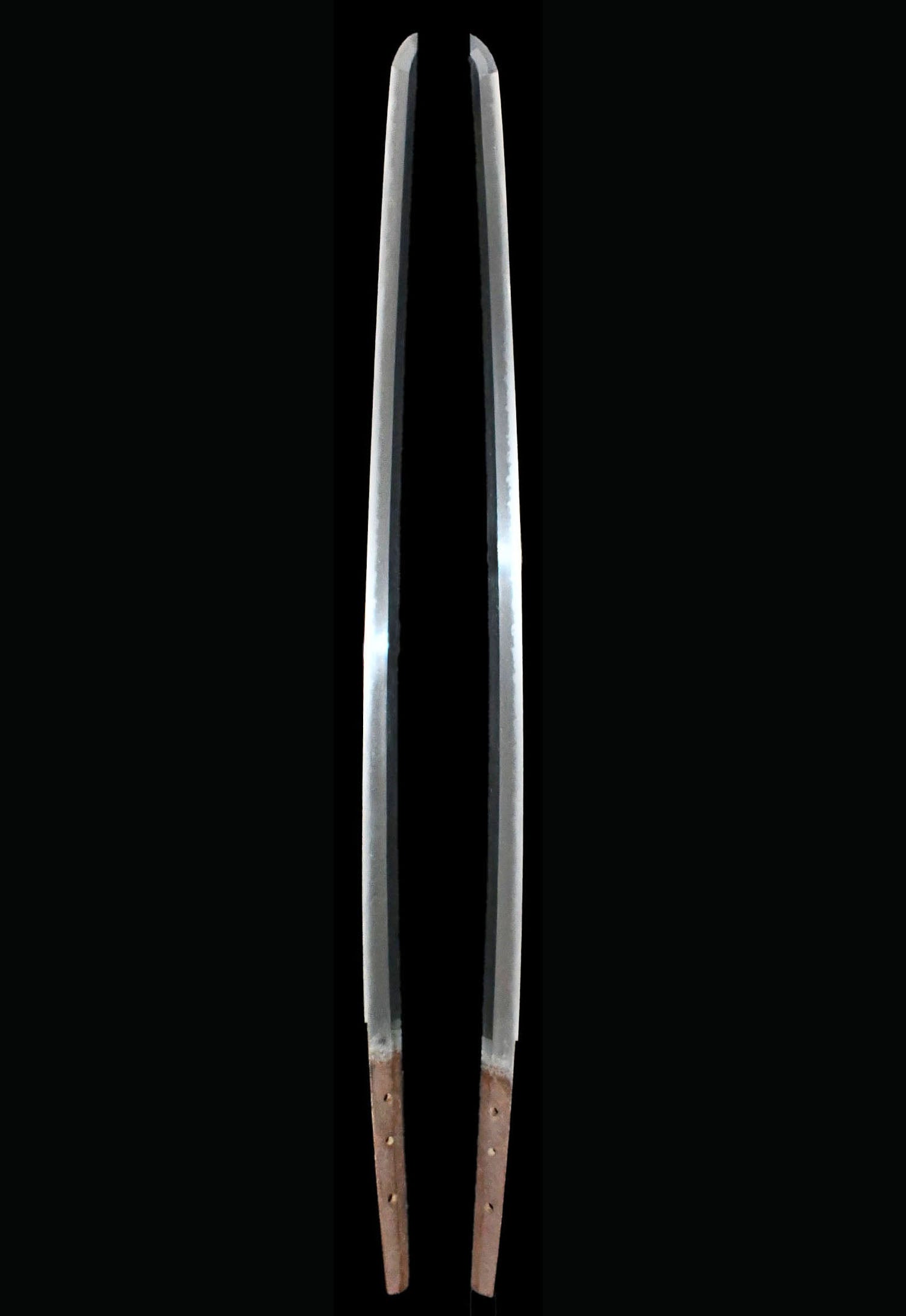
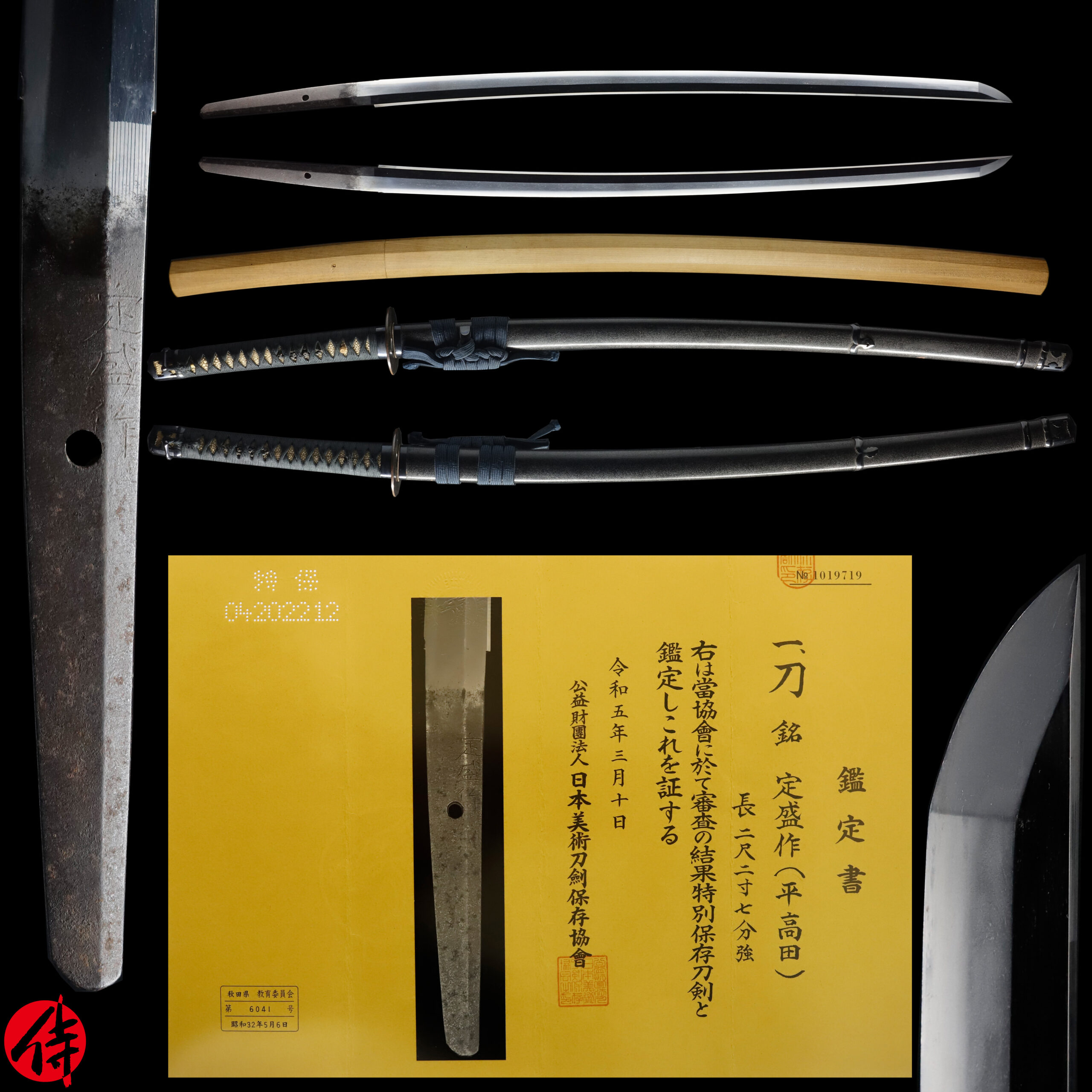
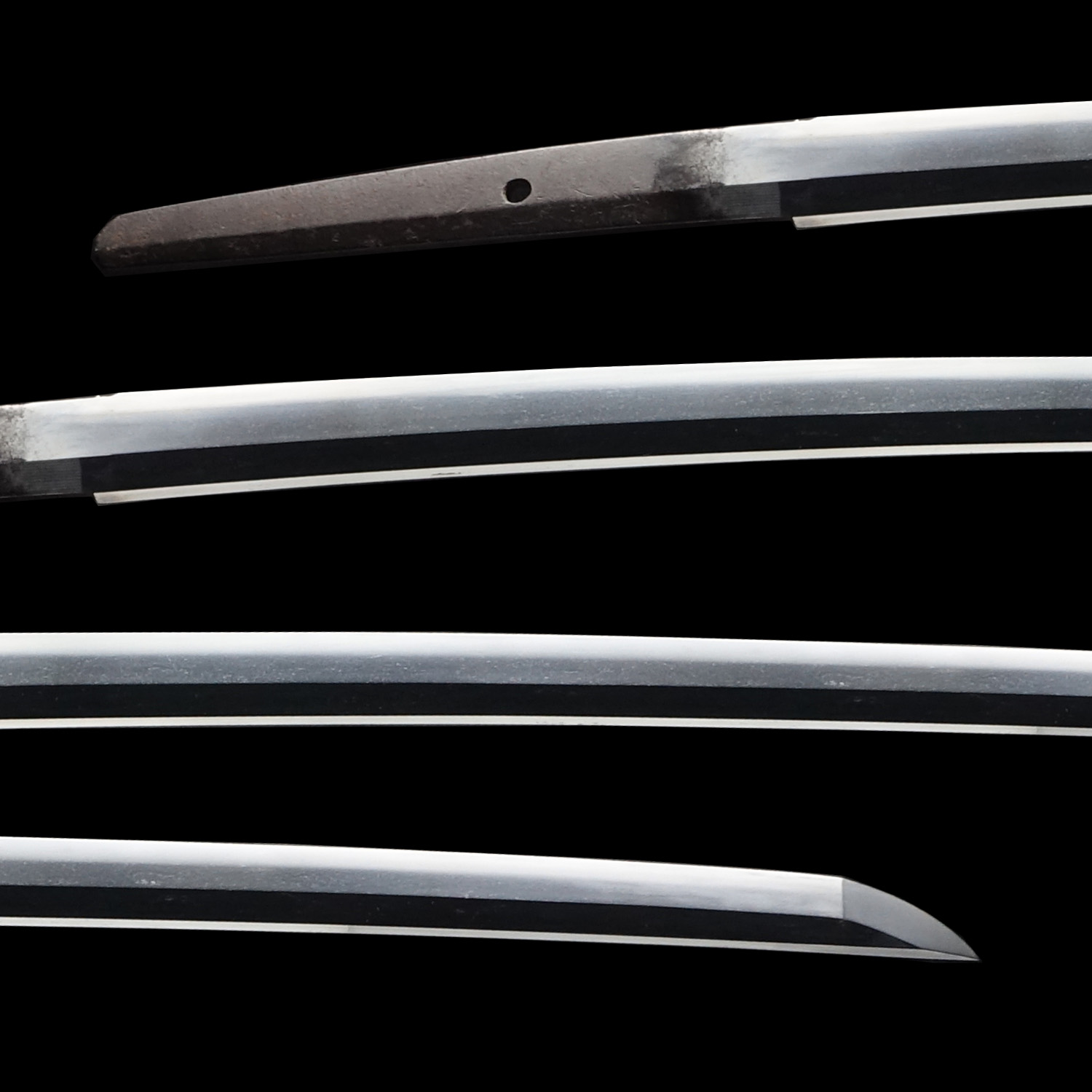
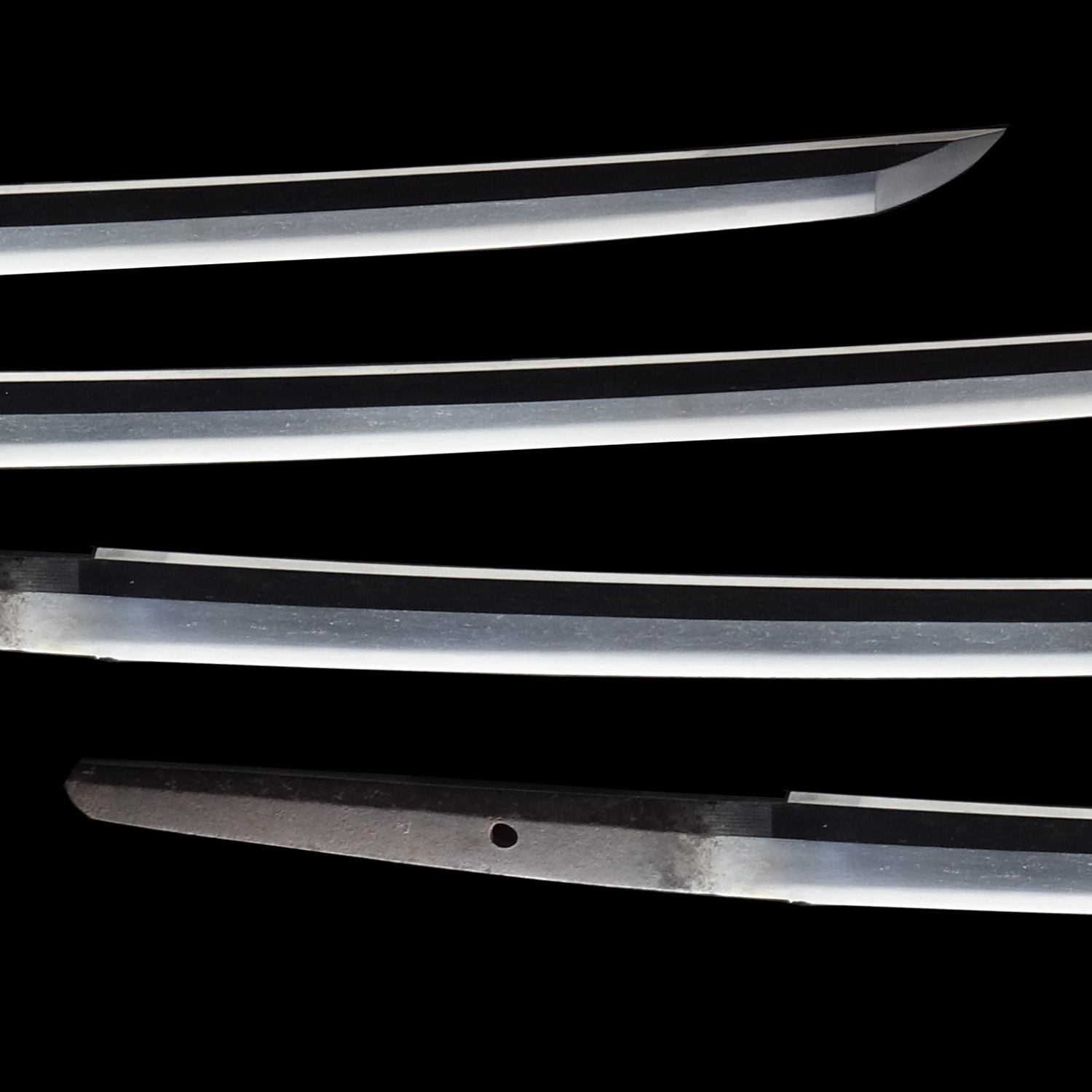
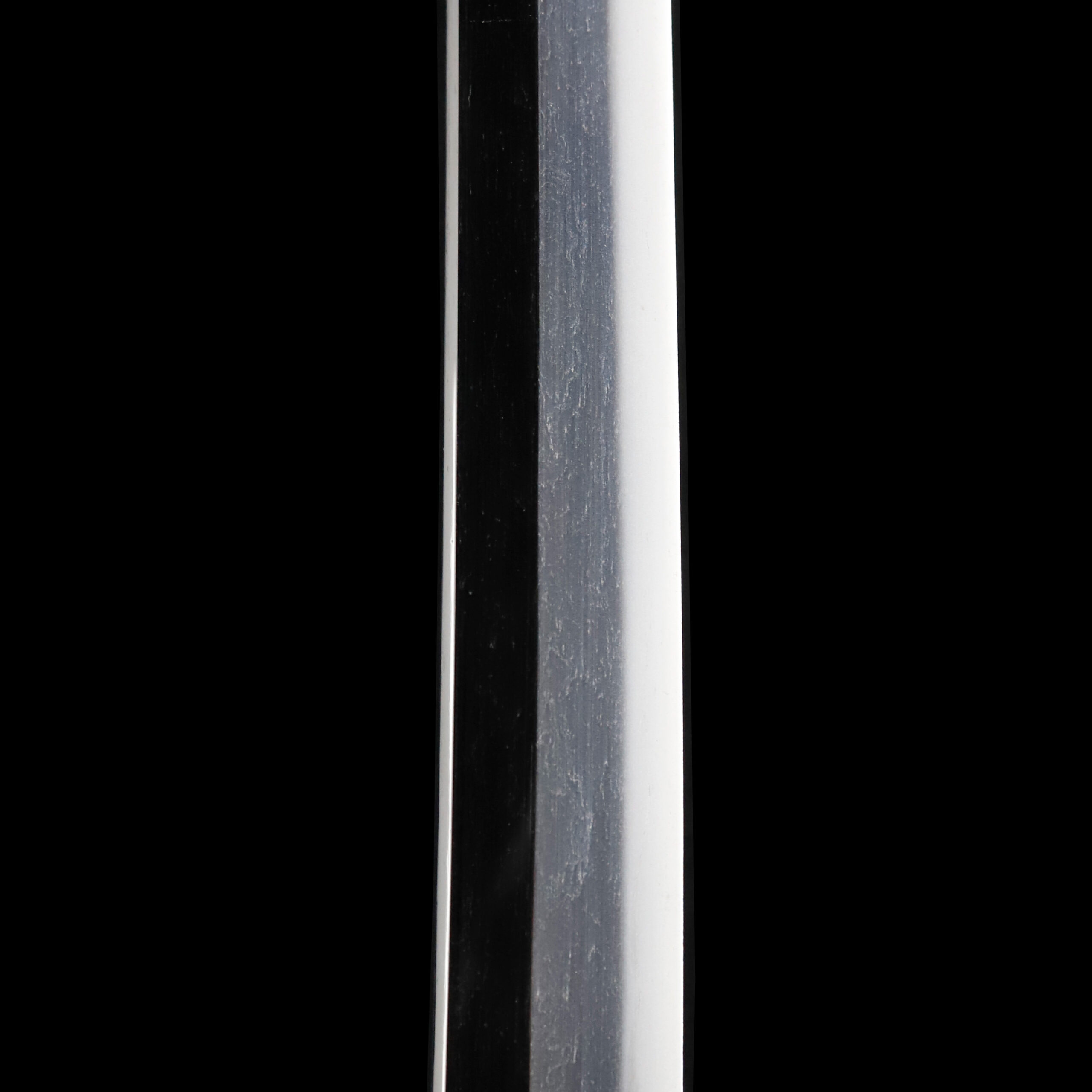
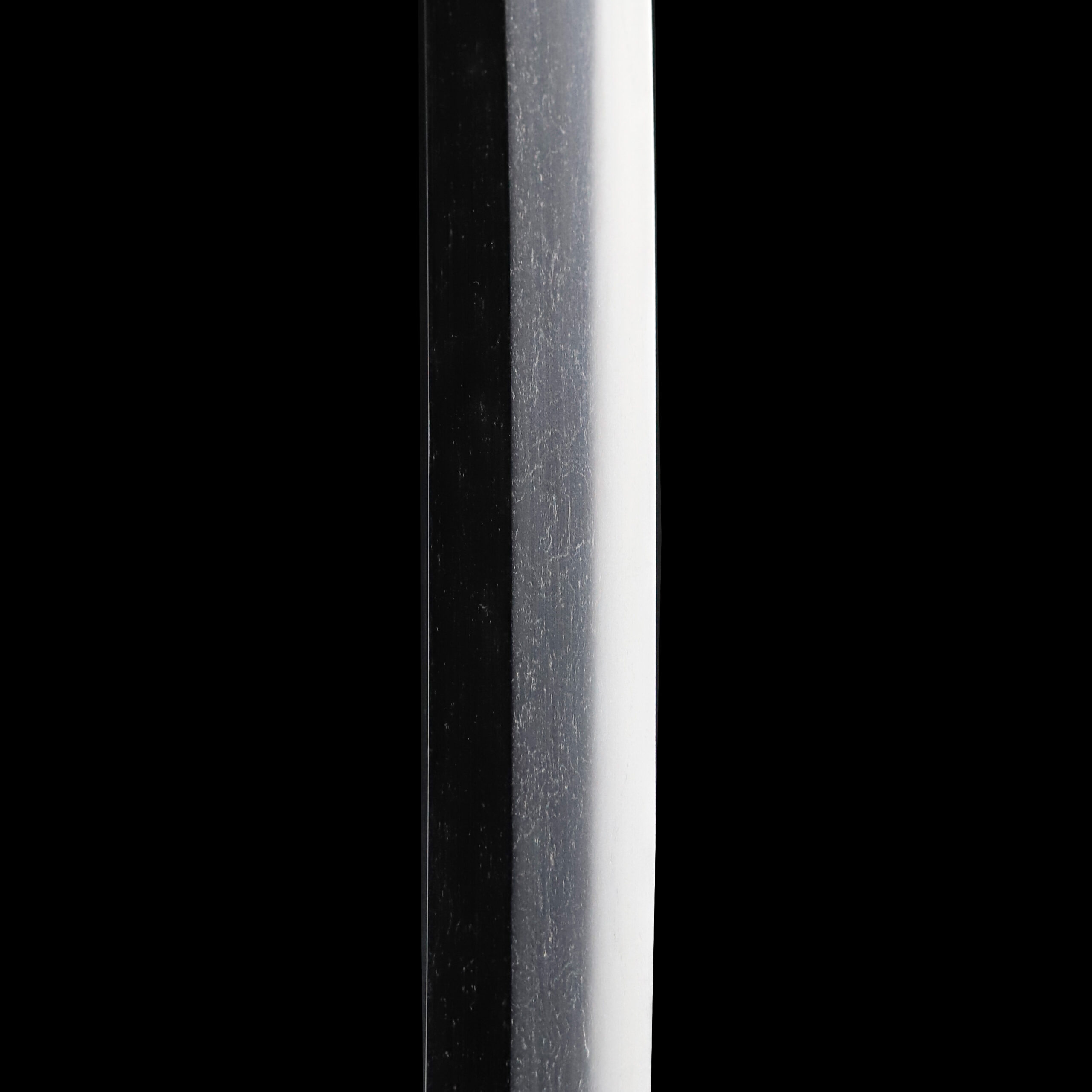
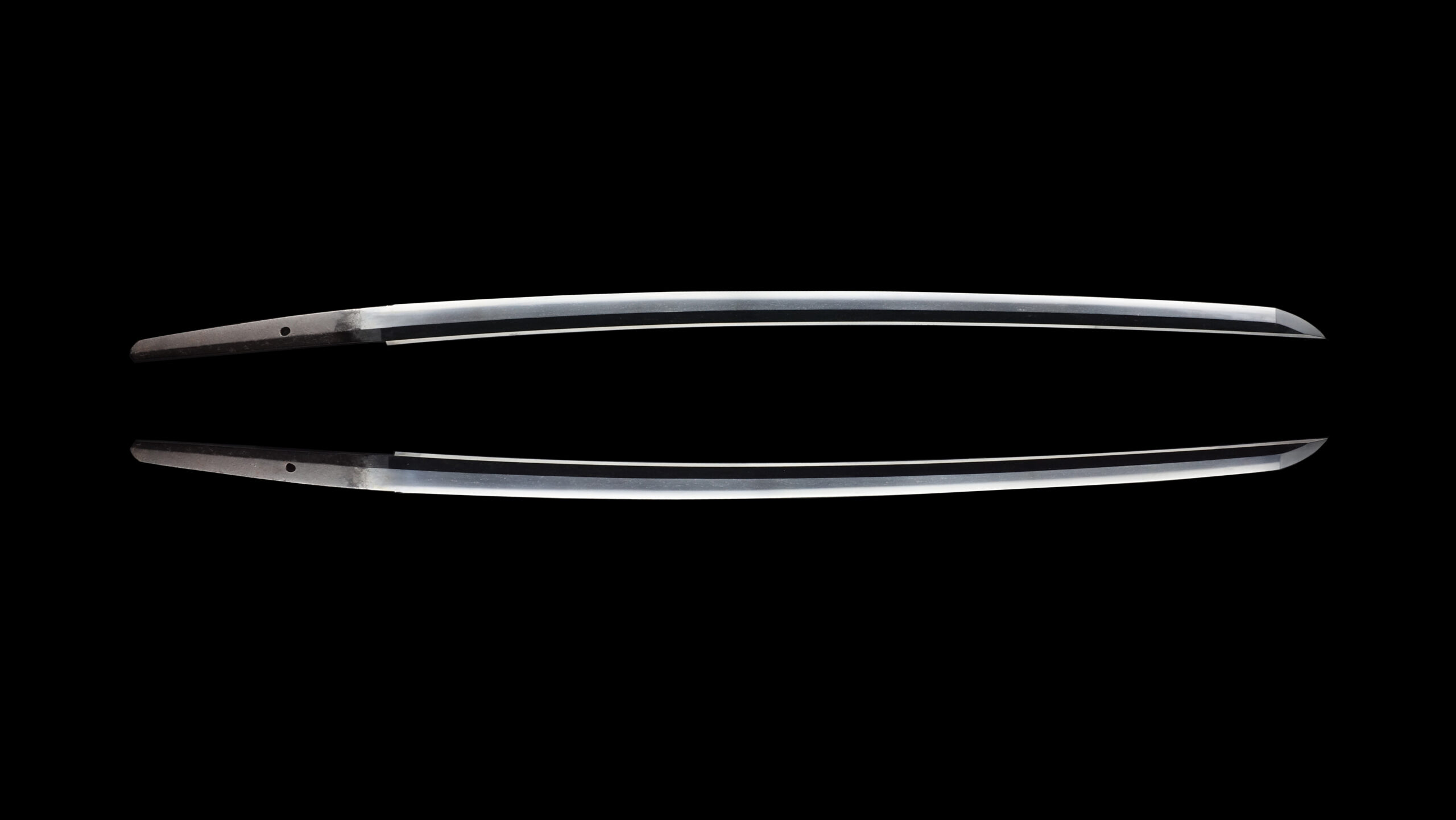
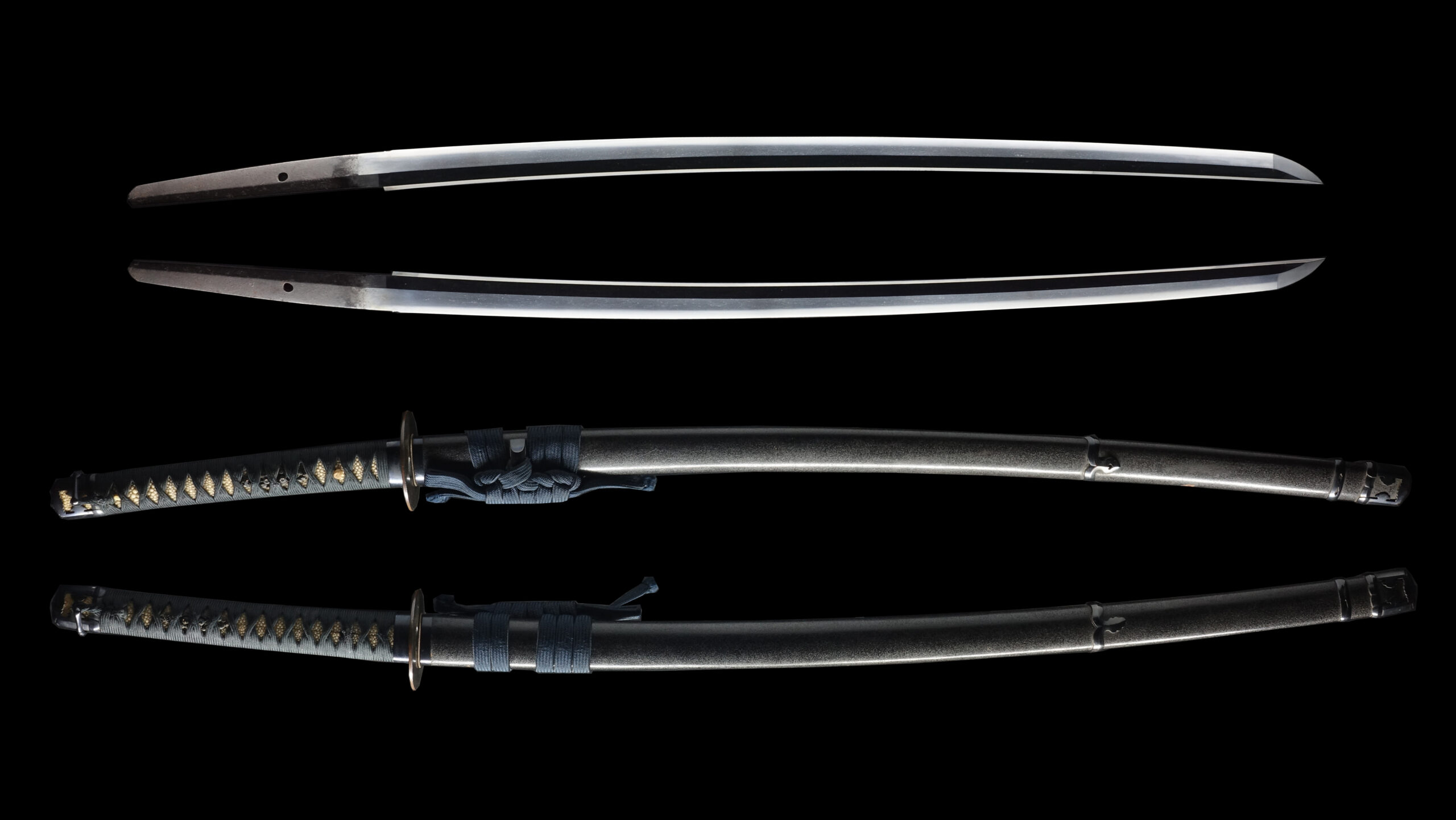
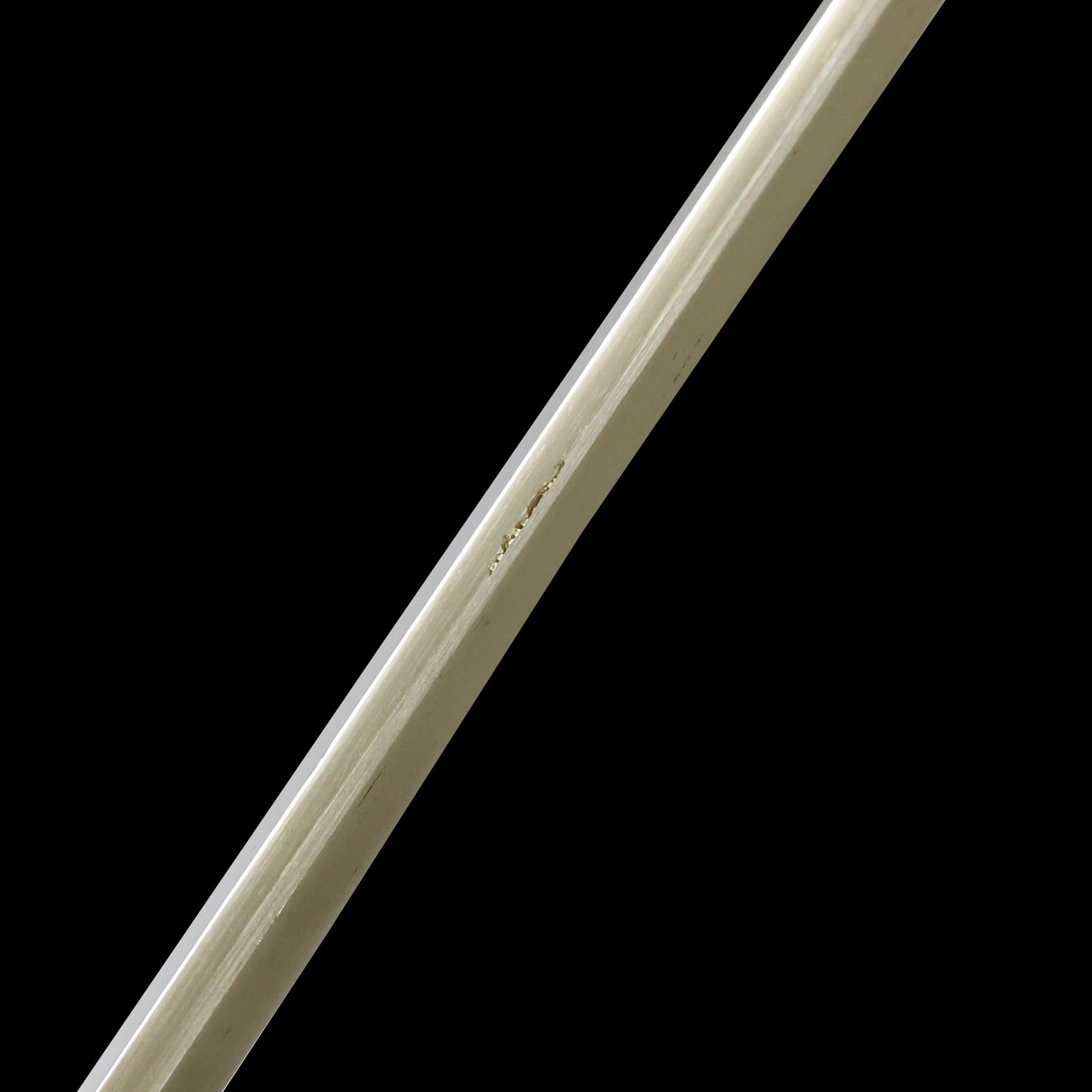
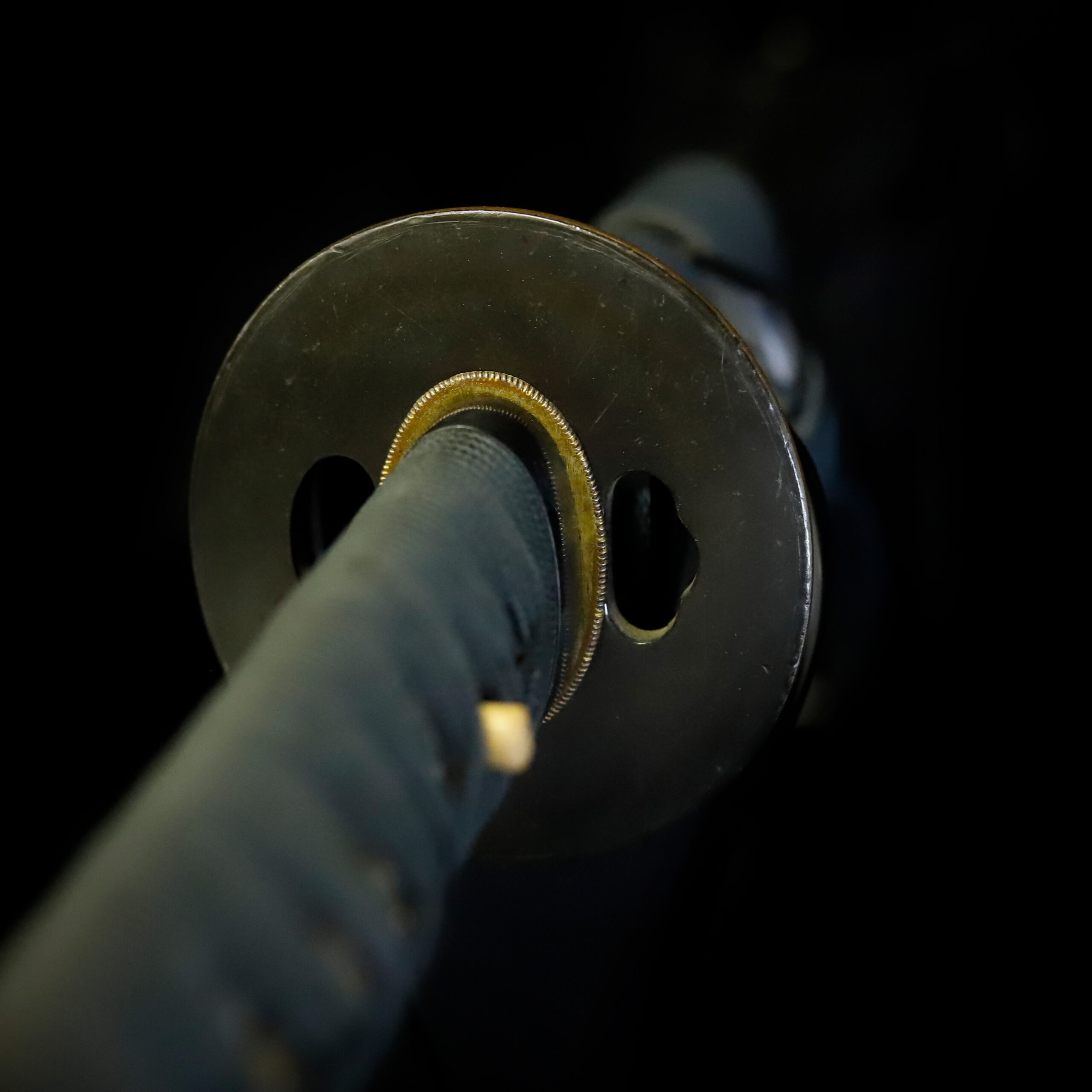
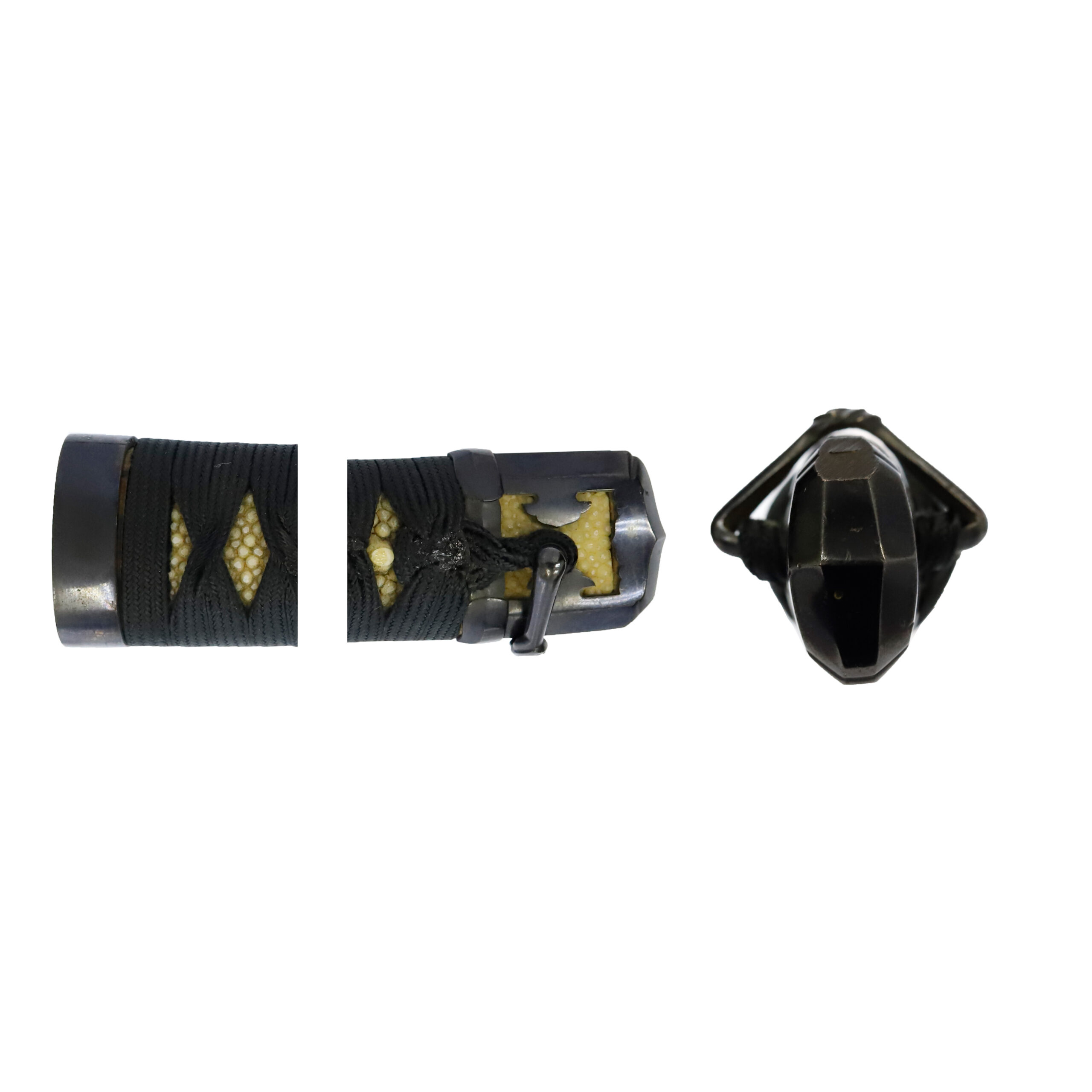
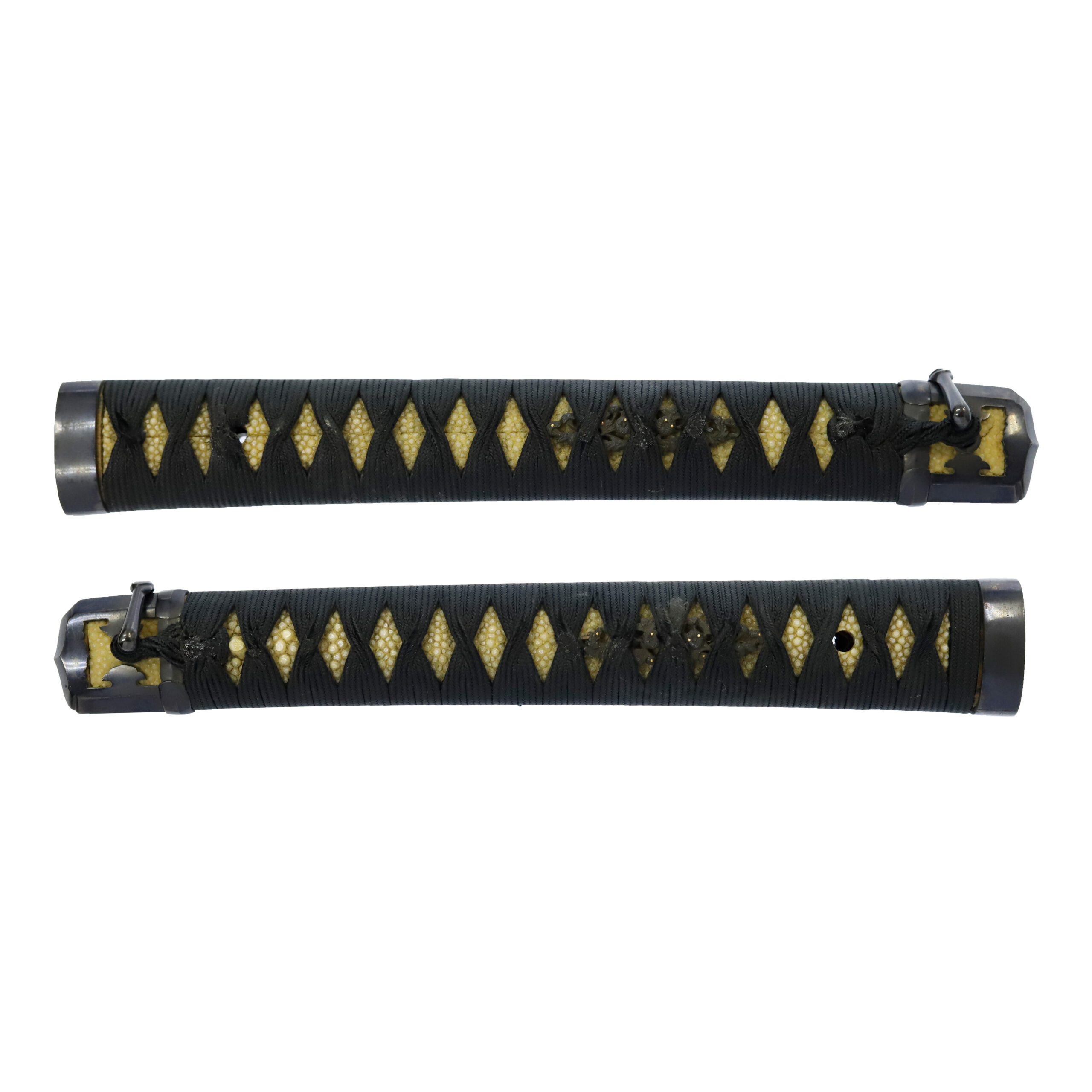
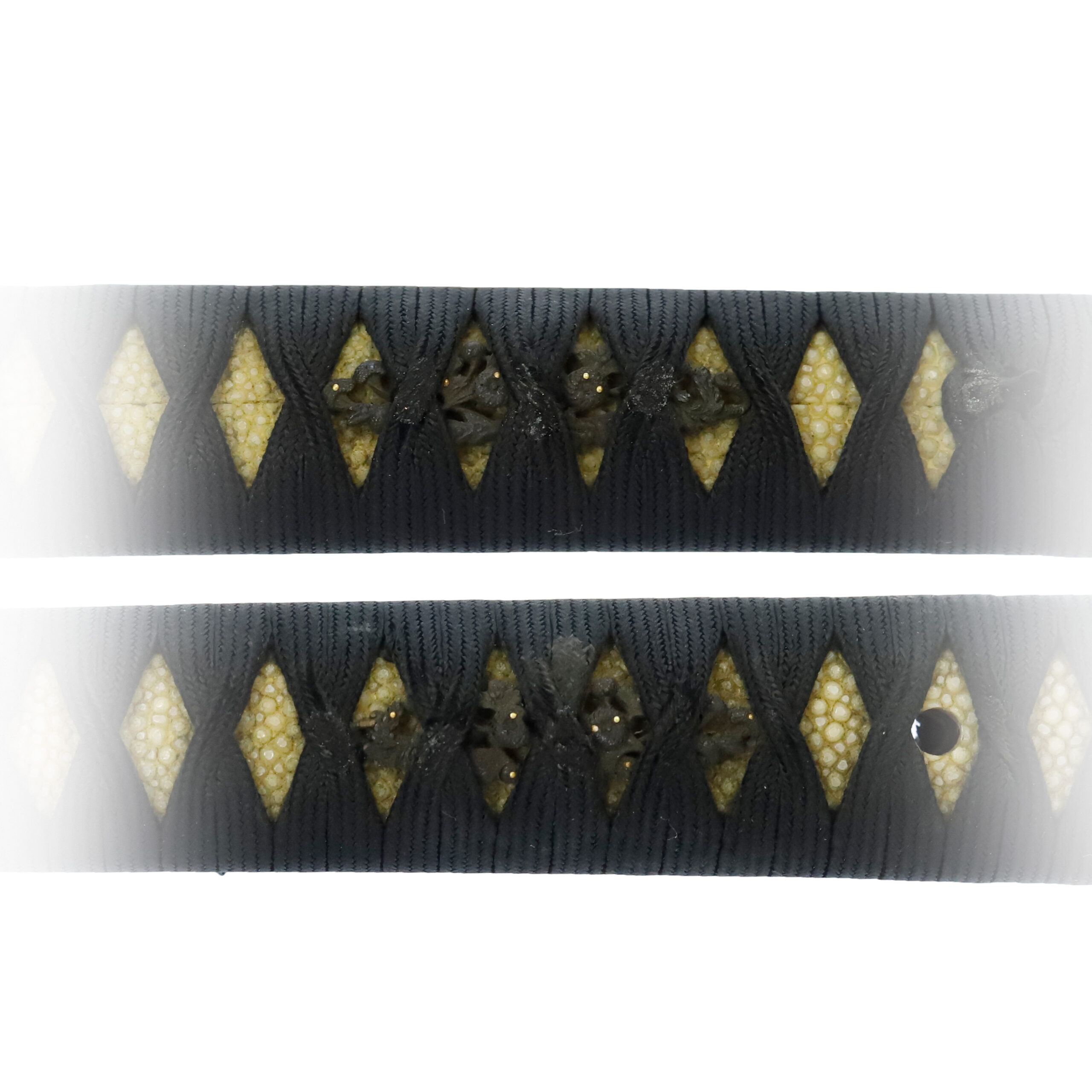
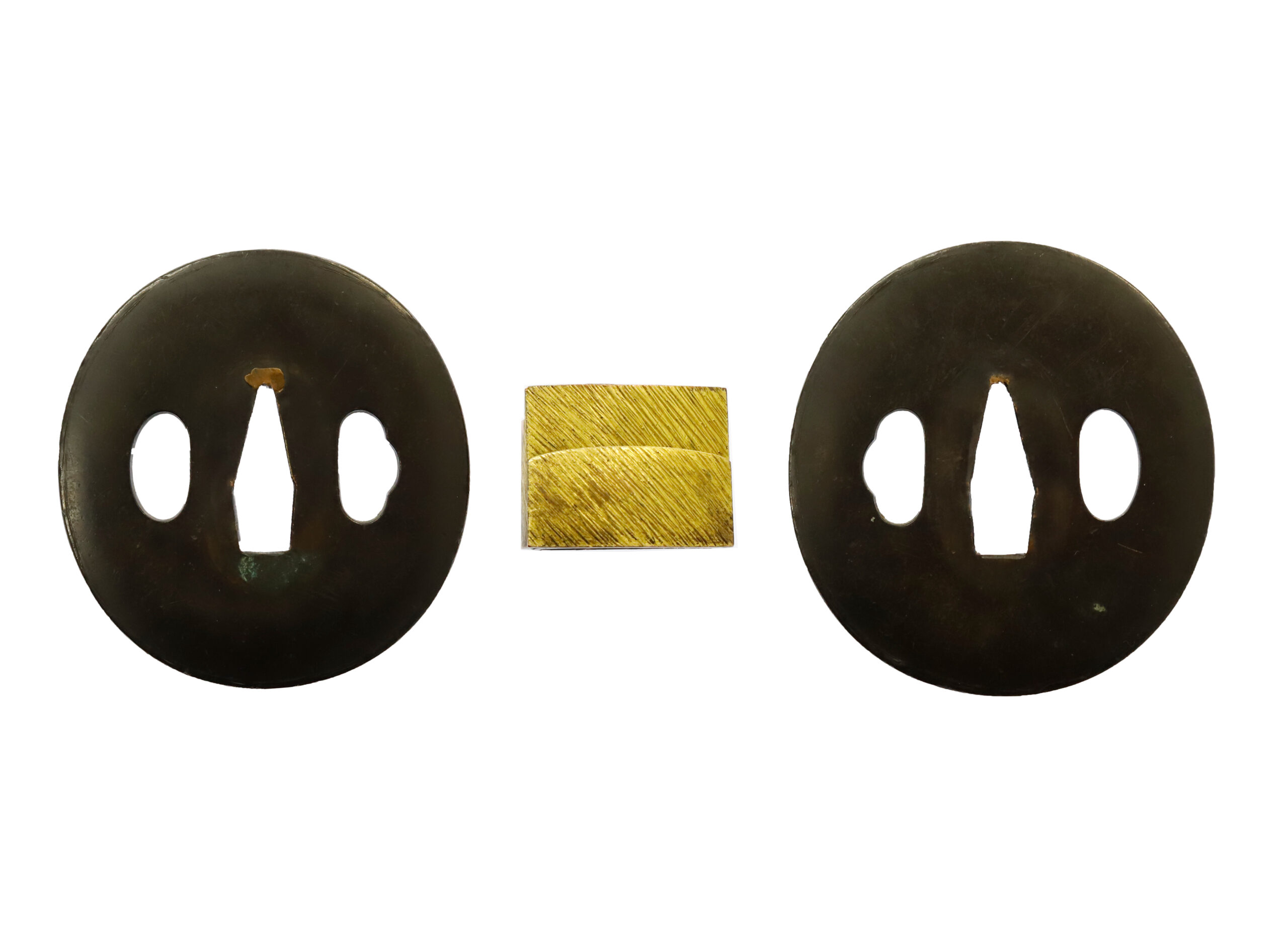
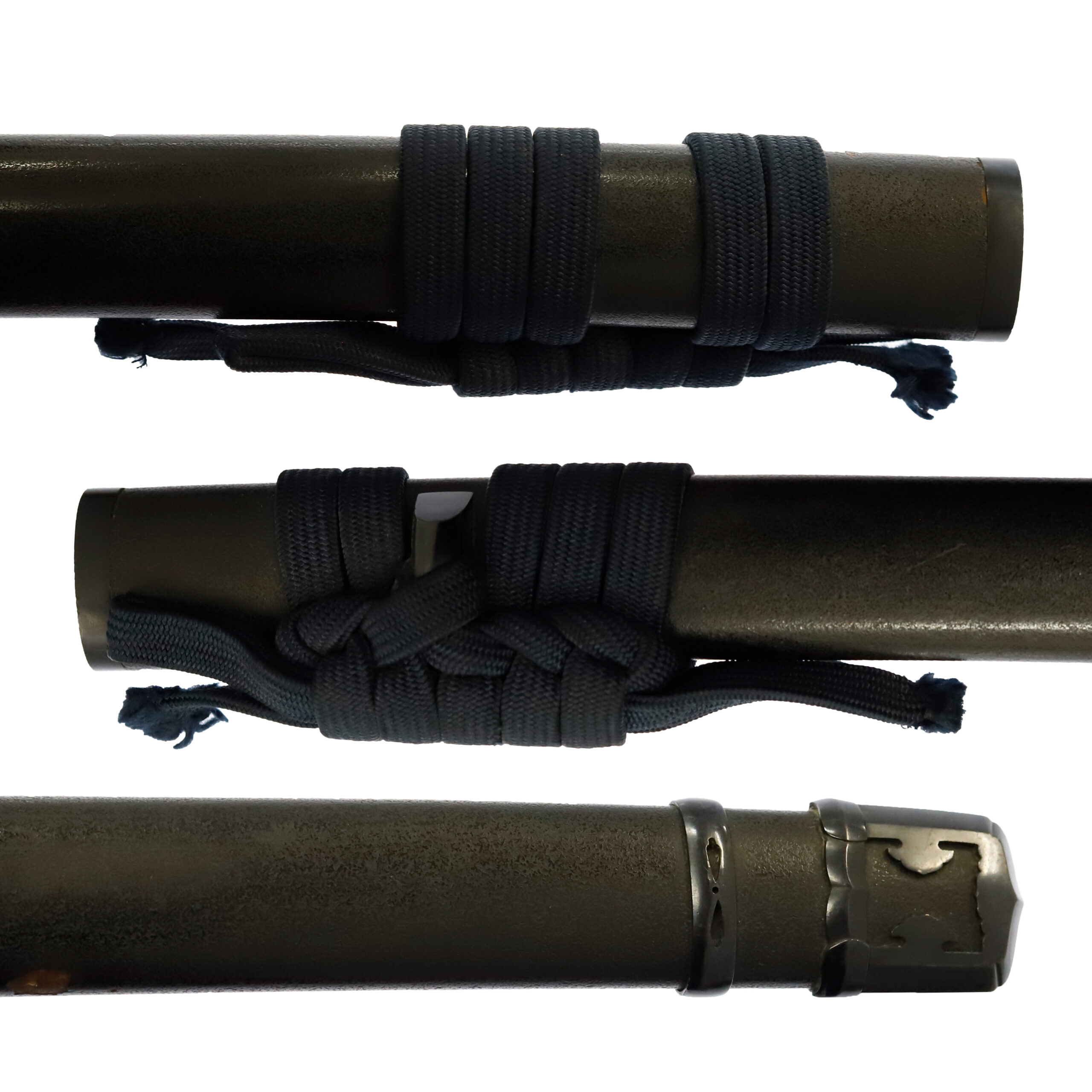
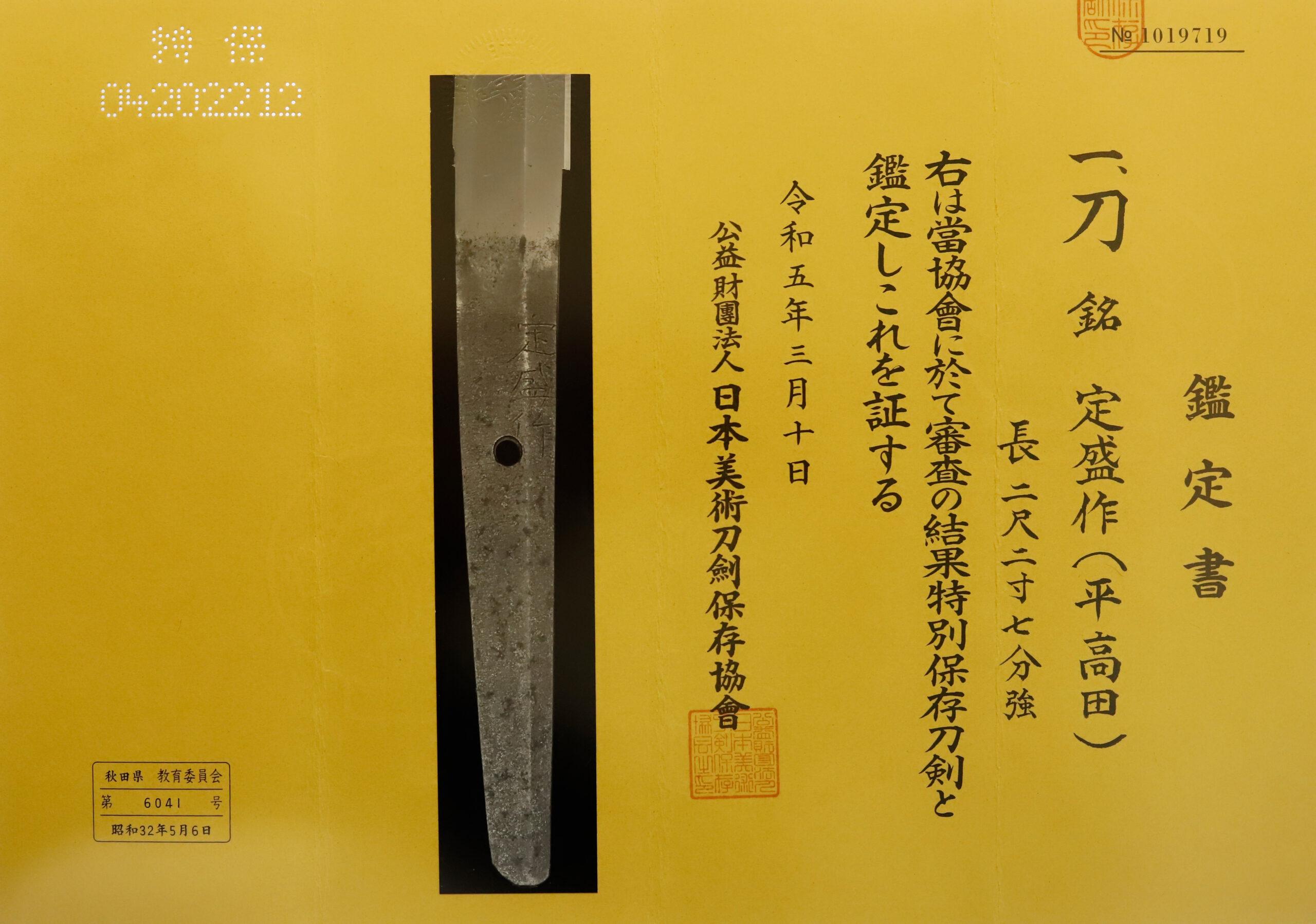
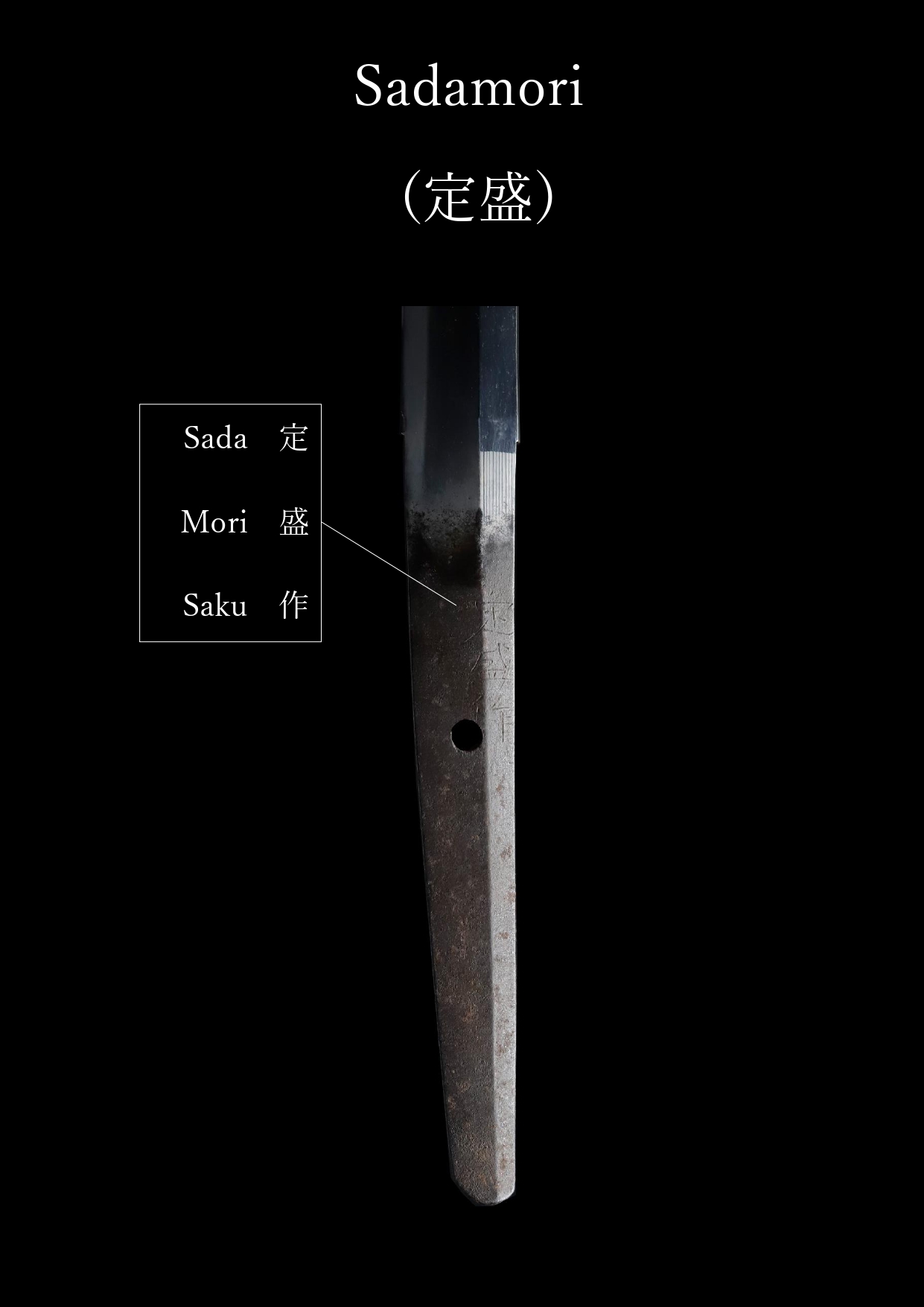
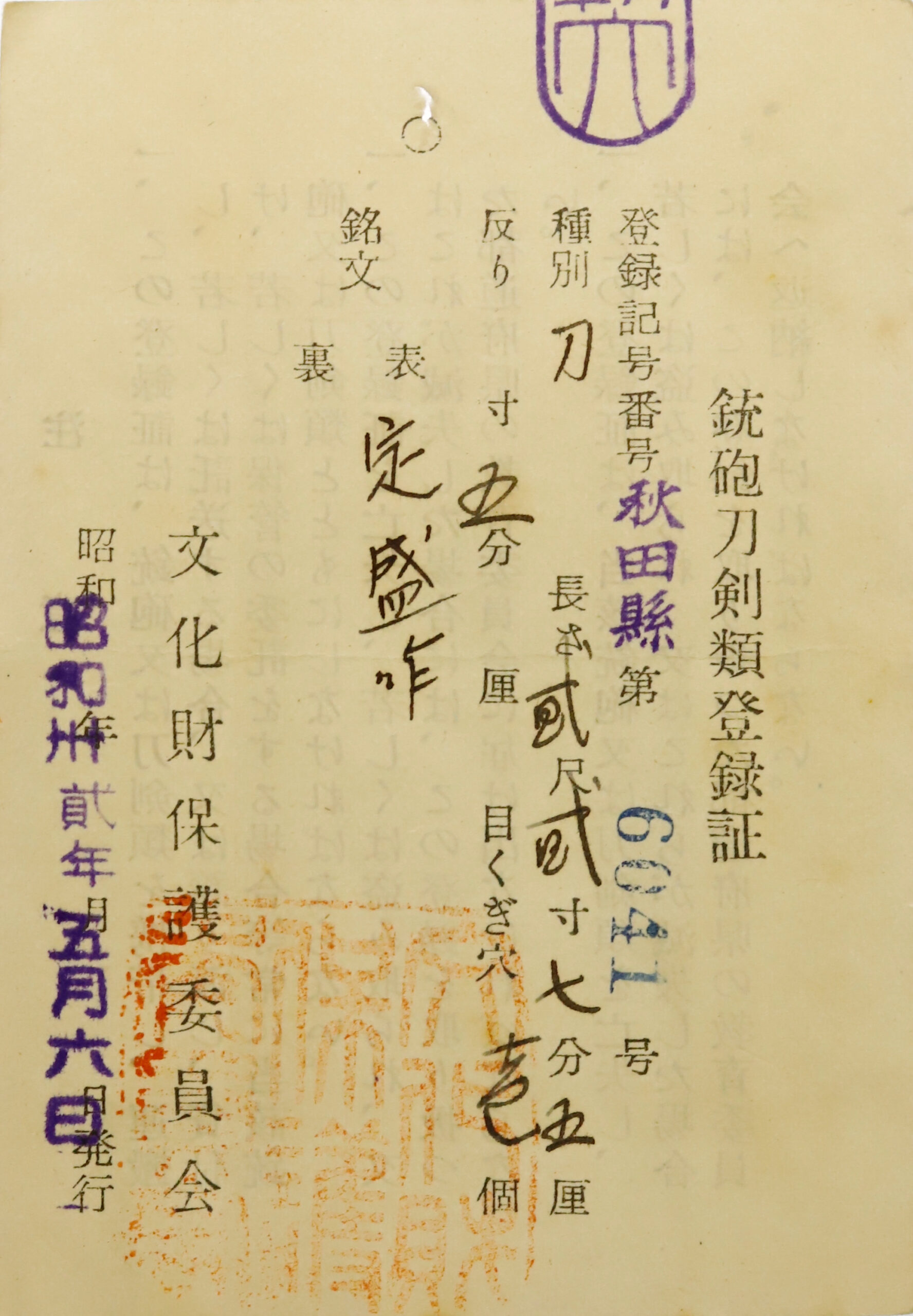
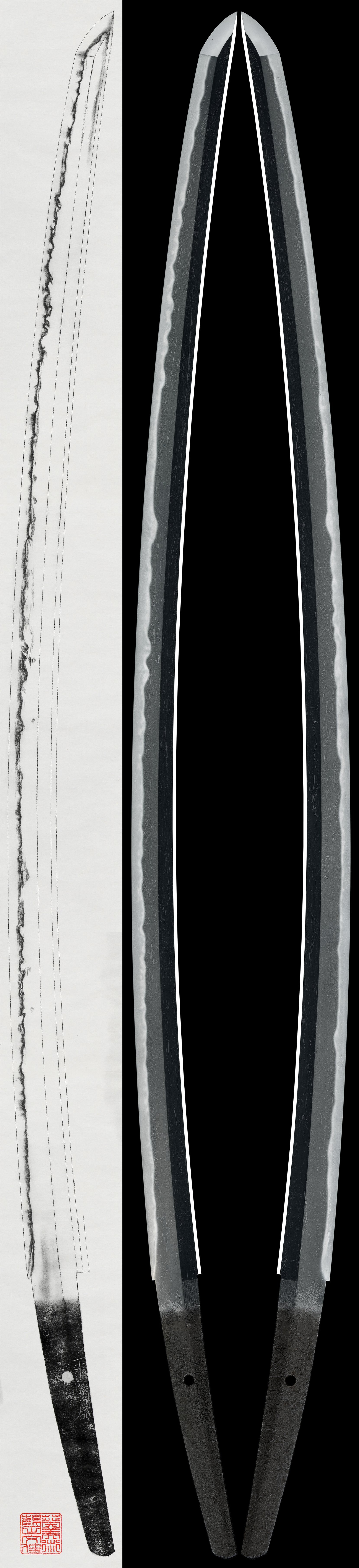
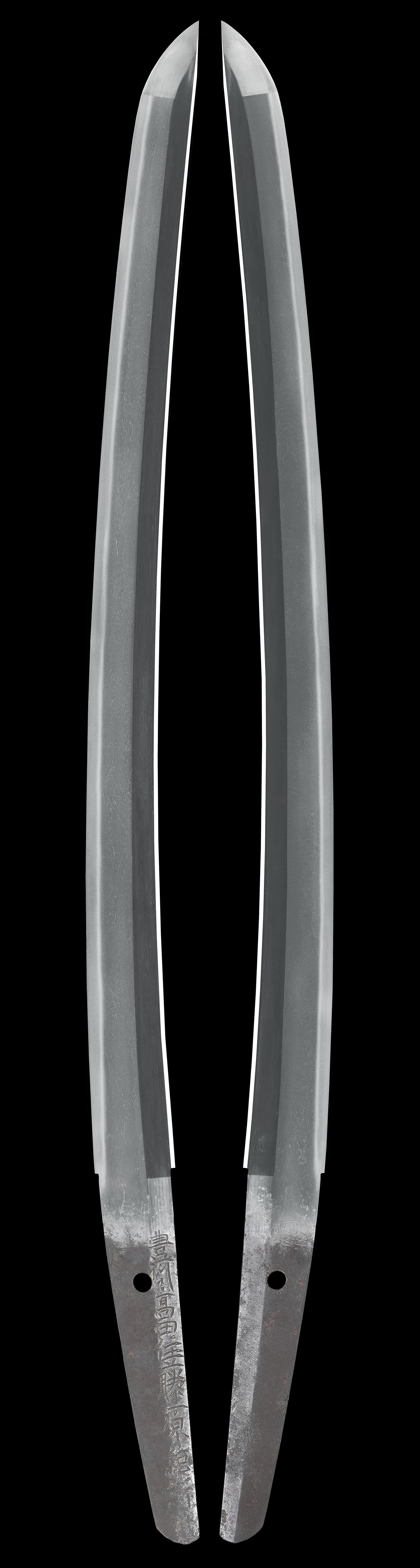
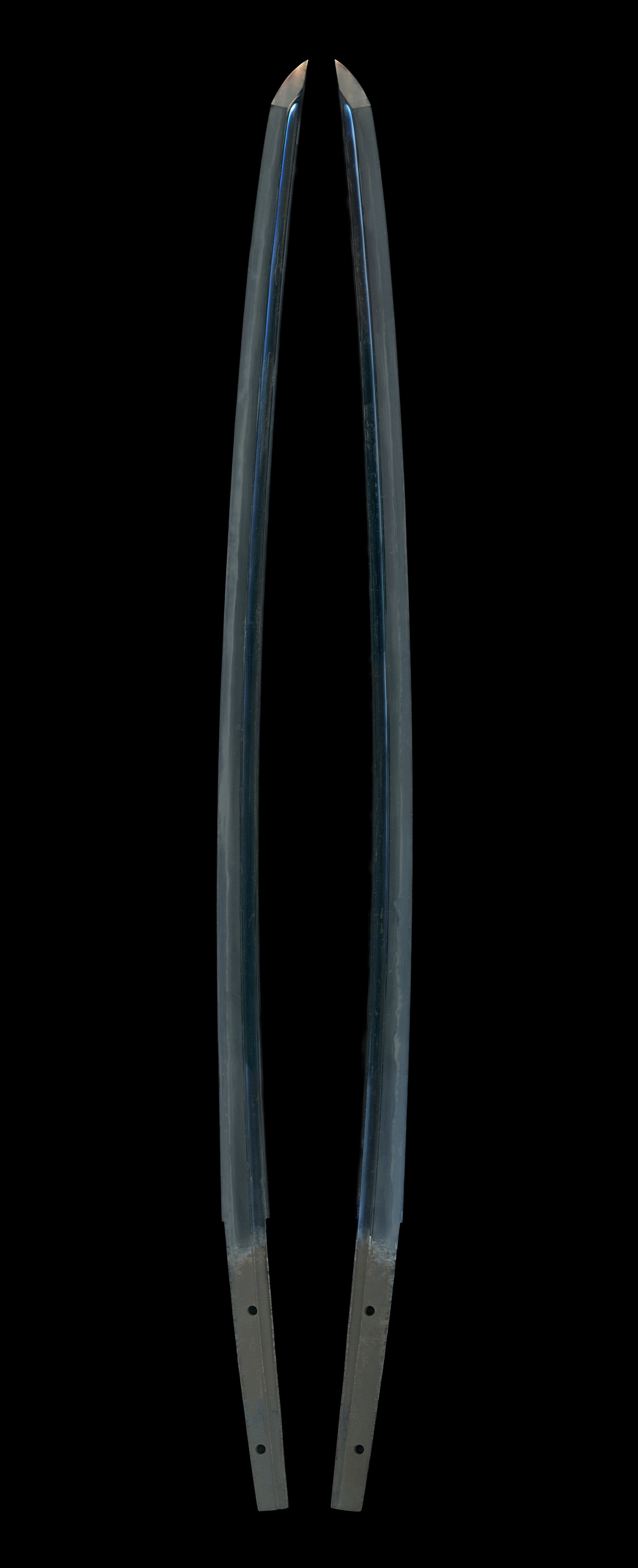
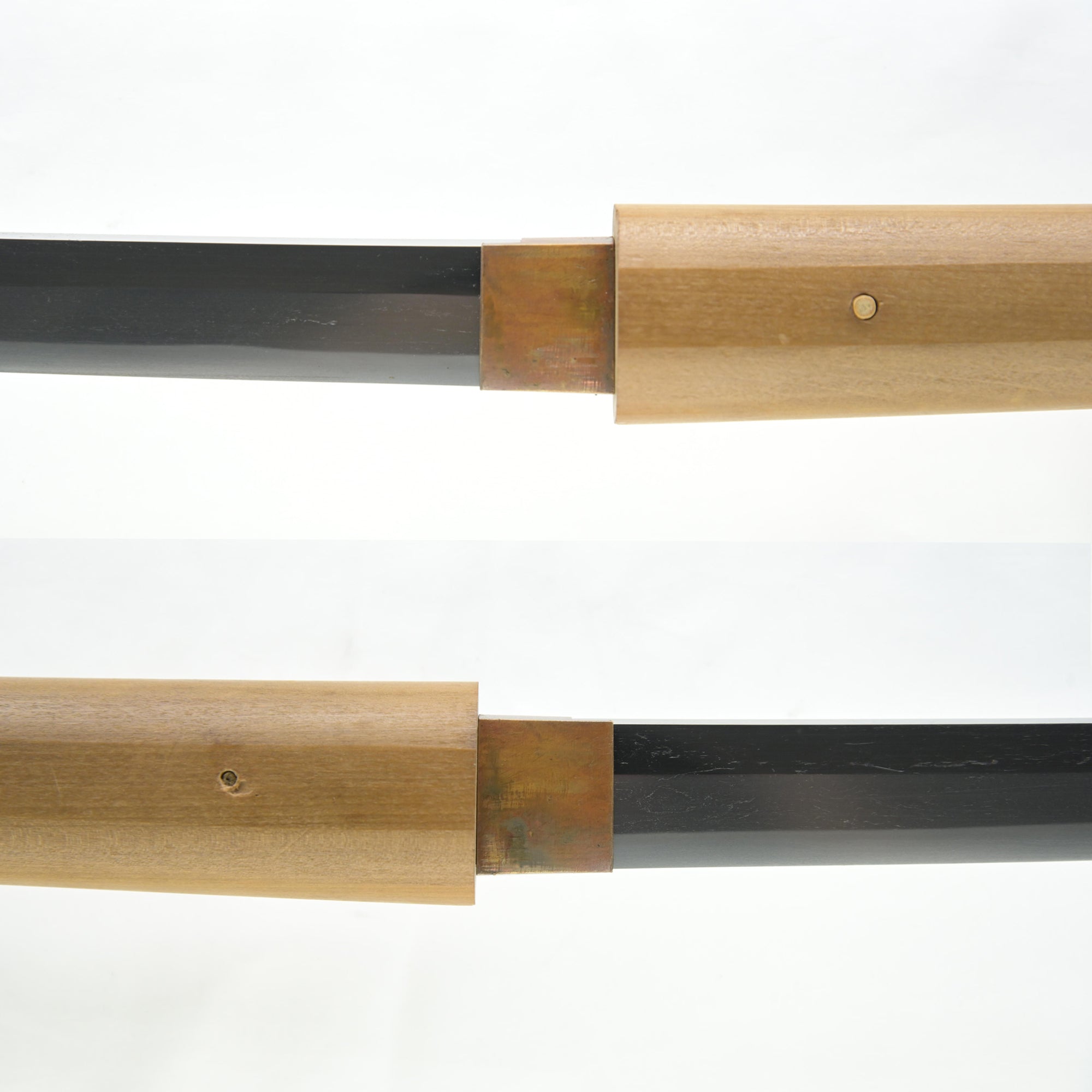
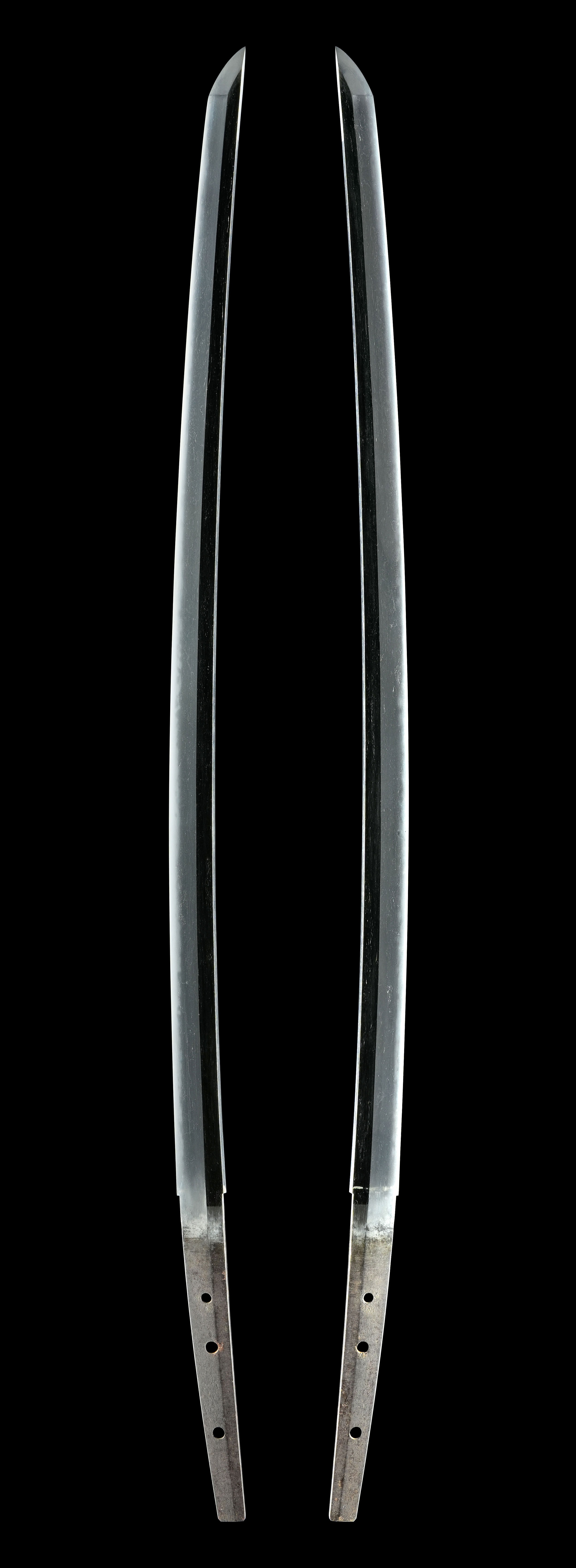
Antique Japanese Sword Katana Signed by Taira Takada Sadamori with Tokubetsu Hozon Certificate 【Description】 This blade was signed by Sadamori (定盛), who belonged to a prestigious school named Takada(高田). The maker’s name Sadamori lasted four generations from the Eisho to Kan-Ei era (1504-1644). We believe this blade was made by the first or second-gen Sadamori, who was active during the late Muromachi period (early-mid 16th century). The second-gen Sadamori was the son of Nagamori, one of the most prominent figures of the school. Takada school was founded by Takada Tomoyuki in Takada village, Bungo domain(Ohita prefecture), during the Nanbokucho period. (1334-1338 A.D). Takada Tomoyuki went to Bizen province(today’s Okayama prefecture) to master the sword-forging techniques of BIZEN and returned to the village and trained his apprentices. That is how Takada school started. Those who forged swords in Takada village before the Edo period were called Taira Takada and Fujiwara Takada during the Edo period. Based on the remaining work of Sadamori and the authentication paper, this blade is categorized as a Taira Takada sword. During Sengoku Period(the warring state period: from late 15 C to late 16 C), the Takada school forged many swords for many Samurais in Kyushu island. It is said that the reputation of the blades forged by Takada school was close to MINO or BIZEN swords, two of which are the most famous sword forging places. The Bungo domain was ruled by Otomo Yoshishige(Sorin) during the Sengoku period. Yoshishige and his domain built a strong military and political base there. Yoshishige was known as one of the most famous warlords on Kyushu island. It is said that Takada swordsmiths forged swords for those who served the Otomo clan. Generally speaking, Kyushu island was prosperous in sword-making because of its long trading history with Asian countries. Many feudal lords on this island fought against each other to gain an advantage in trading. Takada school received many orders as the demand increased among those lords. The material of Japanese swords(high-quality iron sand and charcoal) was abundant in mount Sobo Katamuki, located near Takada village. We believe Takada school prospered because of its geographic location and natural resources. It is appraised as a Tokubetsu Hozon Token (特別保存刀剣) issued by NBTHK(Nihon Bijutsu Touken Hozon Kyokai:日本美術刀剣保存協会). This authentication paper was only given to authentic Japanese swords, especially well preserved and high quality with artistic value. *Please keep in mind that there is partial black rust on the Mune (backbone of the blade). If you like to see the detailed condition, please feel free to contact us. 【 Blade】 Cutting Edge Length(Nagasa) : 68.9 cm (27.1 inches) Curvature(Sori) : 1.51 cm (0.59 inches) Hamon : The crystalline structure which forms along the cutting edge of a blade as a result of the hardening process Jimon(Jihada) : visible steel surface pattern created by folding and hammering during forging process Nakago : Nakago is the tang of the Japanese sword. Japanese swordsmiths left the black rust on the tang because it prevents red rust while the tang is in its handle. And the discoloration of the tang was created over time, and it is a great indicator for a Japanese sword specialist to estimate when the sword was forged. Koshirae: Koshirae is the mounting of the Japanese sword. There are several parts that consist of Koshirae such as Saya(Scabbard), Tsuka(Handle), Tsuba(Handguard). Fuchi-Kashira : A pair of matching sword fittings that cover the upper and bottom parts of its sword hilt. This Fuchi Kashira looks similar to the sword mountings of a Tachi Koshirae (太刀拵). We would say this is primarily due to the type of the Kashira part: a Sarute/ Sarude (猿手, ring-shaped metal fitting) is attached to this Kashira part. The Sarute is attached to the Kabutogane (冑金/兜金) in the Tachi Koshirae. The user of a sword passed the Udenukio (腕貫緒, a cord wrapped around the wrist
 NihontoWatch
在銘 · Takada · 室町 · 長さ 68.9cm · 反り 1.51cm

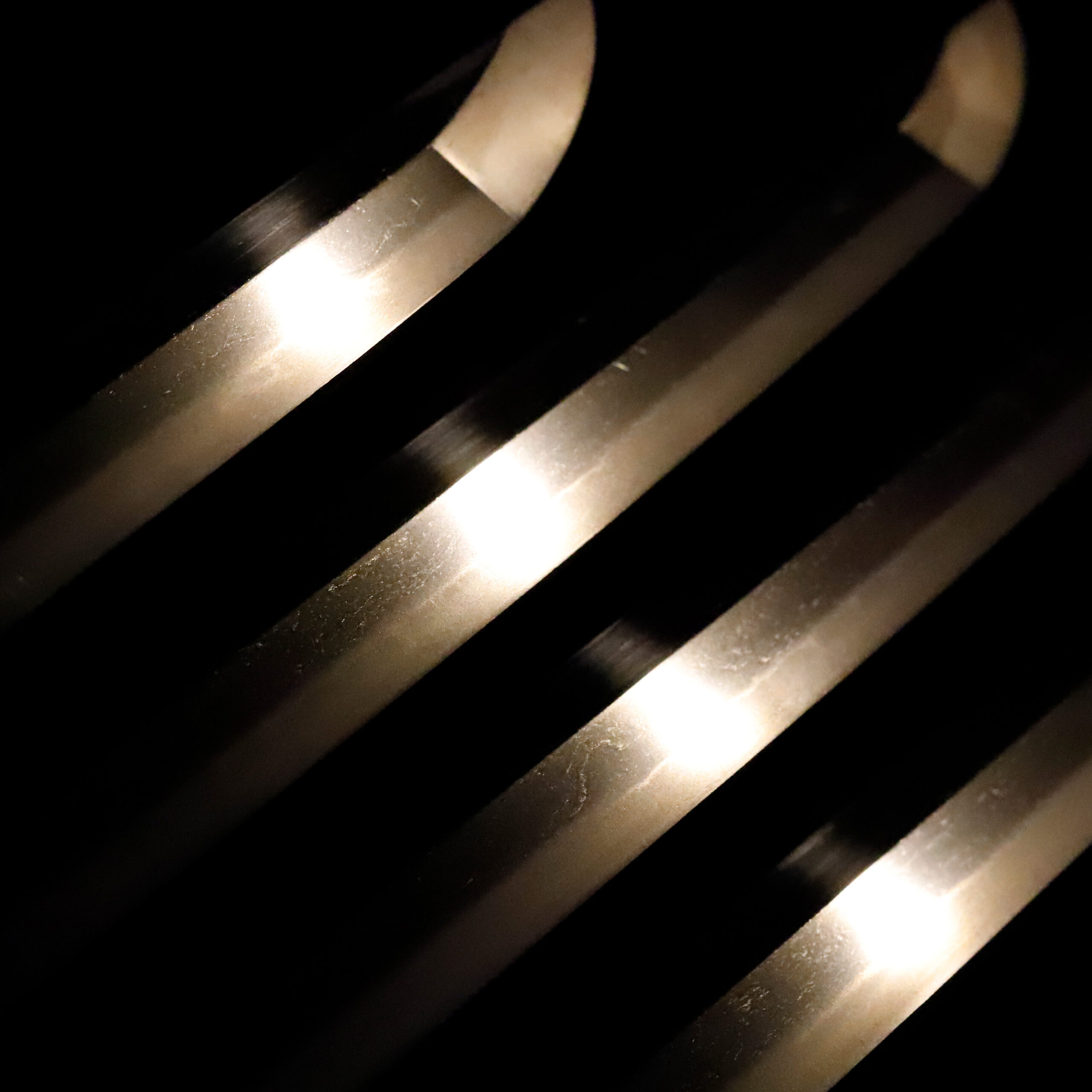
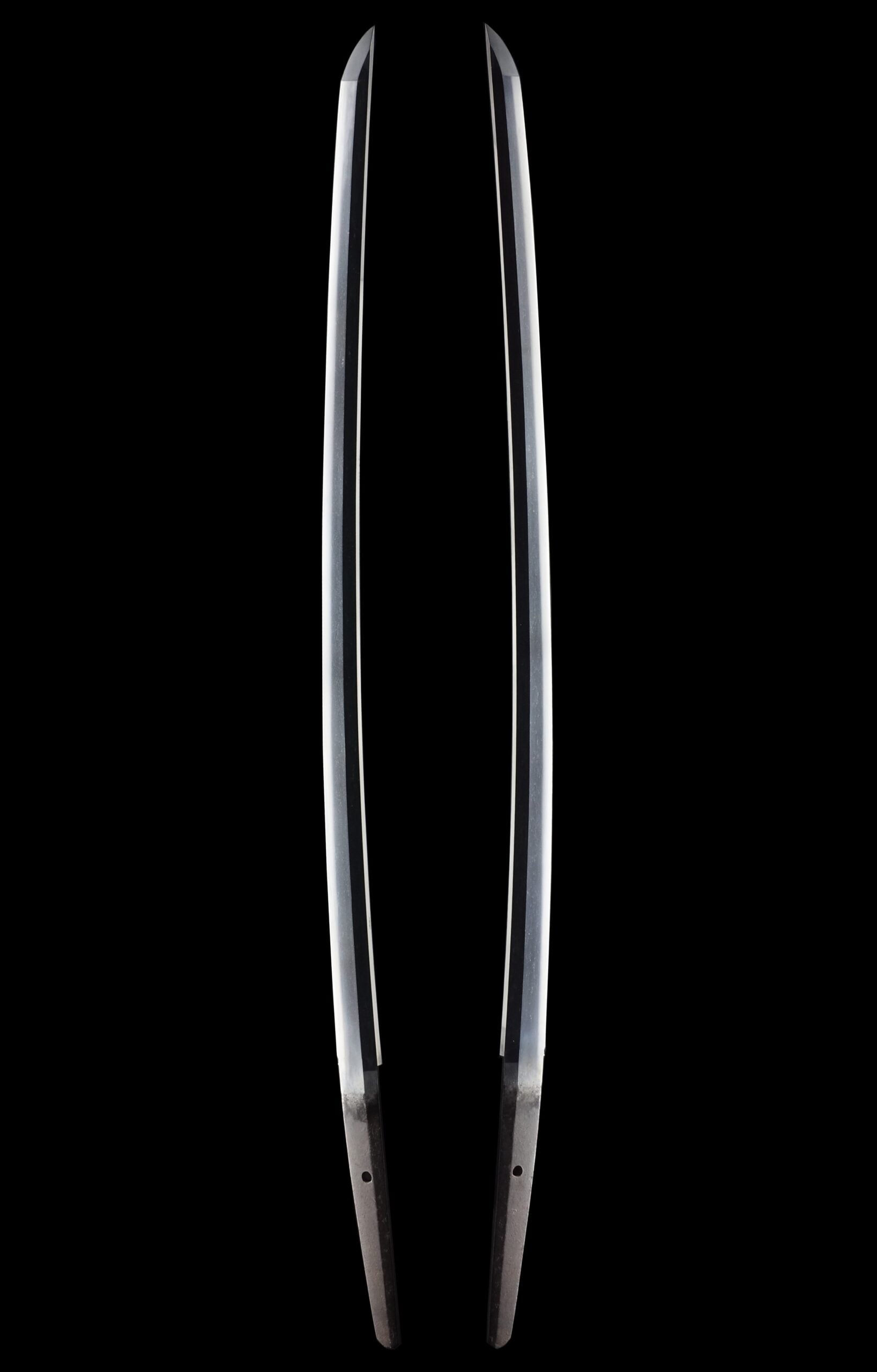
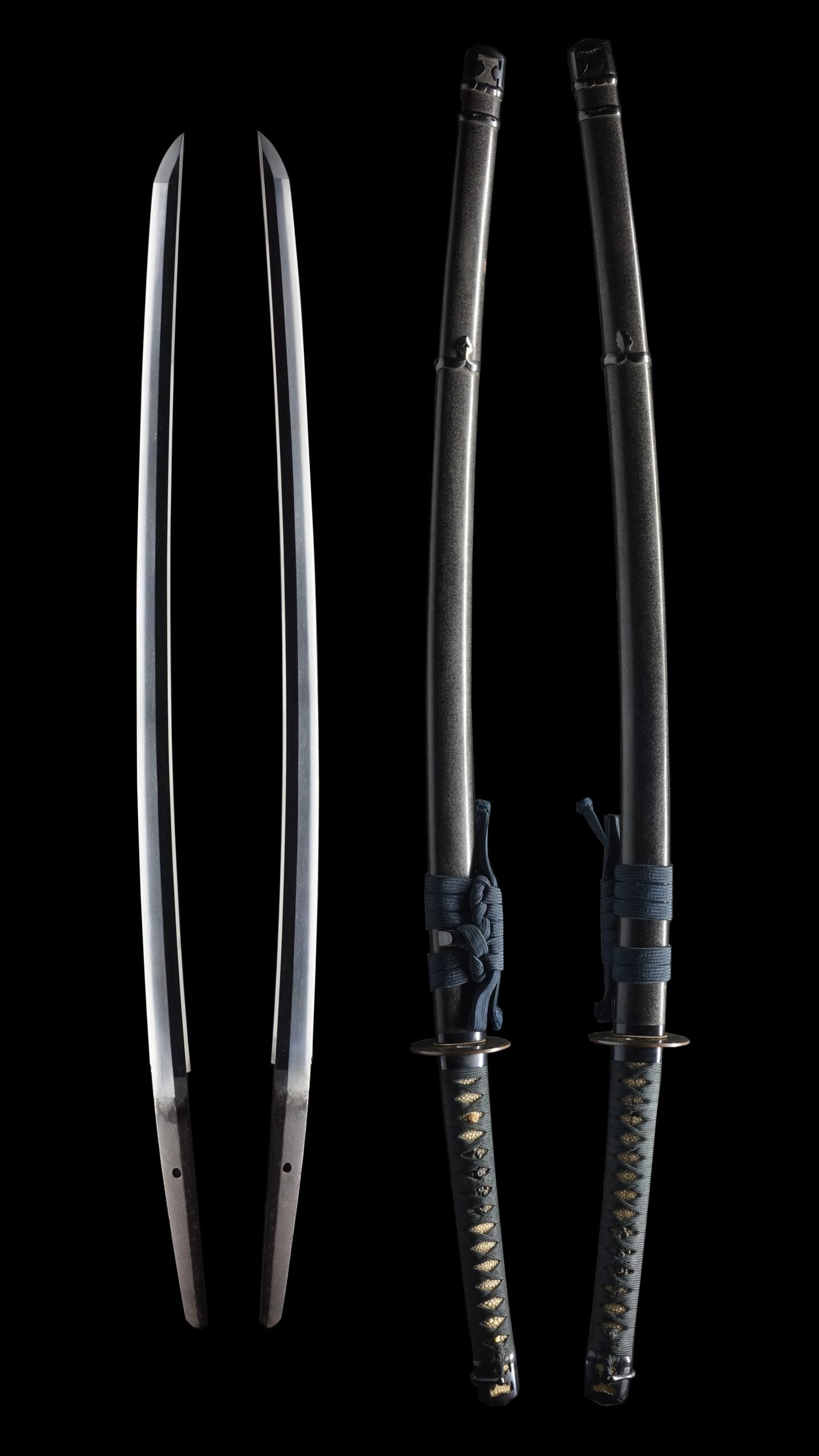
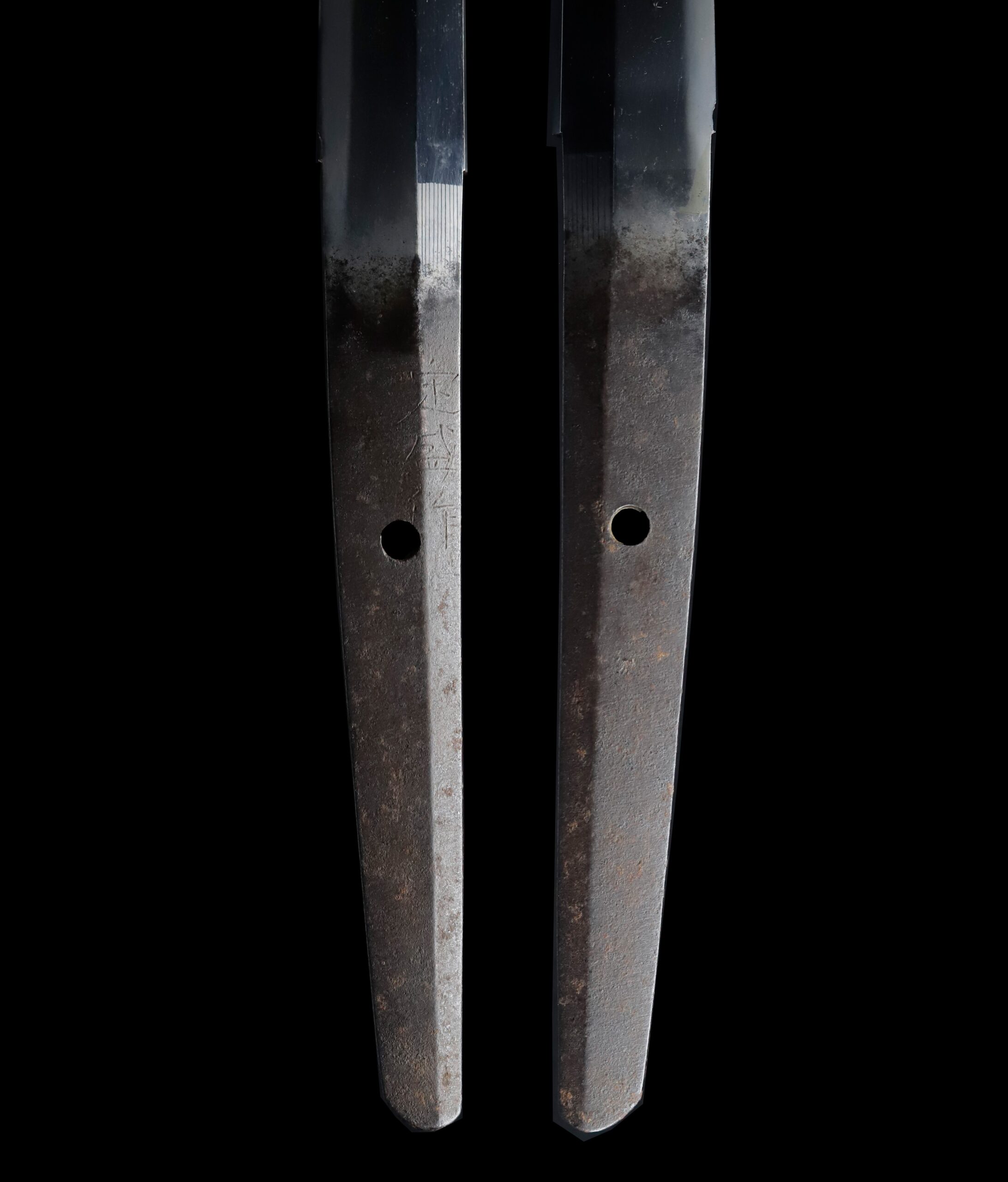
豊後 · 1532-1555頃
藤代 Chu-jo saku · 刀剣大鑑 上位76%
現在1点販売中
室町時代
応仁の乱が足利の体制を砕いた後、戦国の一世紀はほとんどすべての国を武装させた。この時代は選ぶ目に報いる。並の作は多いが、その傍らには第一級の注文打ちが立っている。
保存刀剣のうち、出来が一層優れ、保存状態も良好と認められたものです。再刃や、室町・江戸期の多くの無銘作は対象外となり、保存刀剣より高い基準が課されます。
日本美術刀剣保存協会(NBTHK)は、1948年に設立され、文化庁の監督を受ける公益財団法人で、東京・刀剣博物館に本部を置きます。専門の審査員が出品作を直接審査し、美術的・歴史的価値に応じた鑑定書を発行します。NBTHKの鑑定書は、日本刀および刀装具の真正性を示す最も広く認知された基準です。
NBTHK公式サイトReturns/exchanges limited to defects caused by shipping (except willful misconduct or gross negligence by the company); customers must contact within 72 hours of receiving the product.

![Wakizashi - Hozon - 作 統景 - 脇差[藤原宗景][日本美術刀剣保存協会]保存刀剣](/_next/image?url=https%3A%2F%2Fitbhfhyptogxcjbjfzwx.supabase.co%2Fstorage%2Fv1%2Fobject%2Fpublic%2Flisting-images%2Fworld-seiyudo%2FL986178%2F01.jpg&w=2560&q=90)