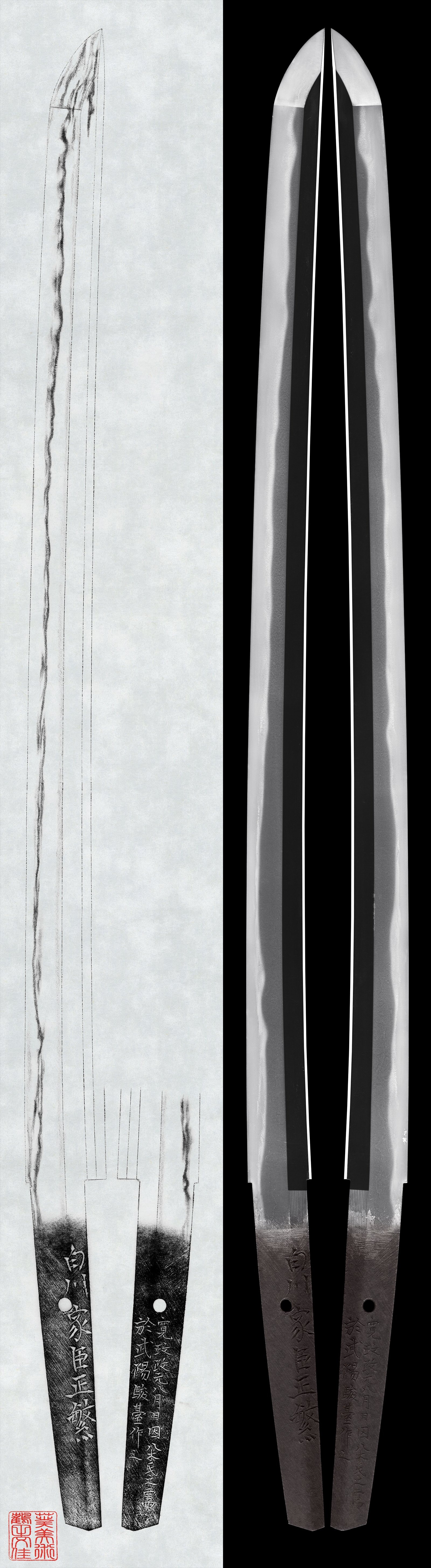
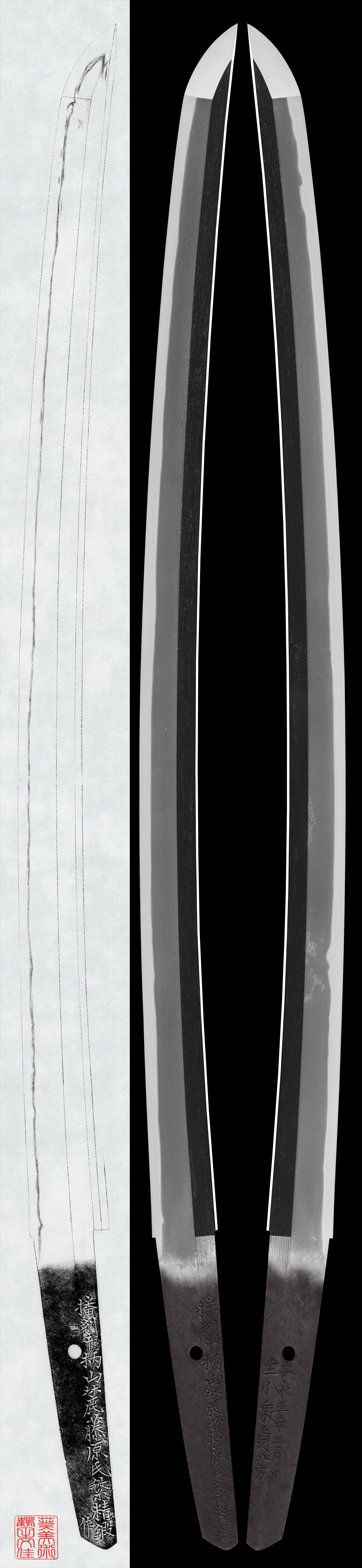
1800年前後、水心子正秀は著述をもって、鍛刀は古作の法に立ち返るべしと説いた。復古刀の運動である。最大の後継者直胤は、数百年絶えていた備前伝と相州伝を確信をもって再現した。
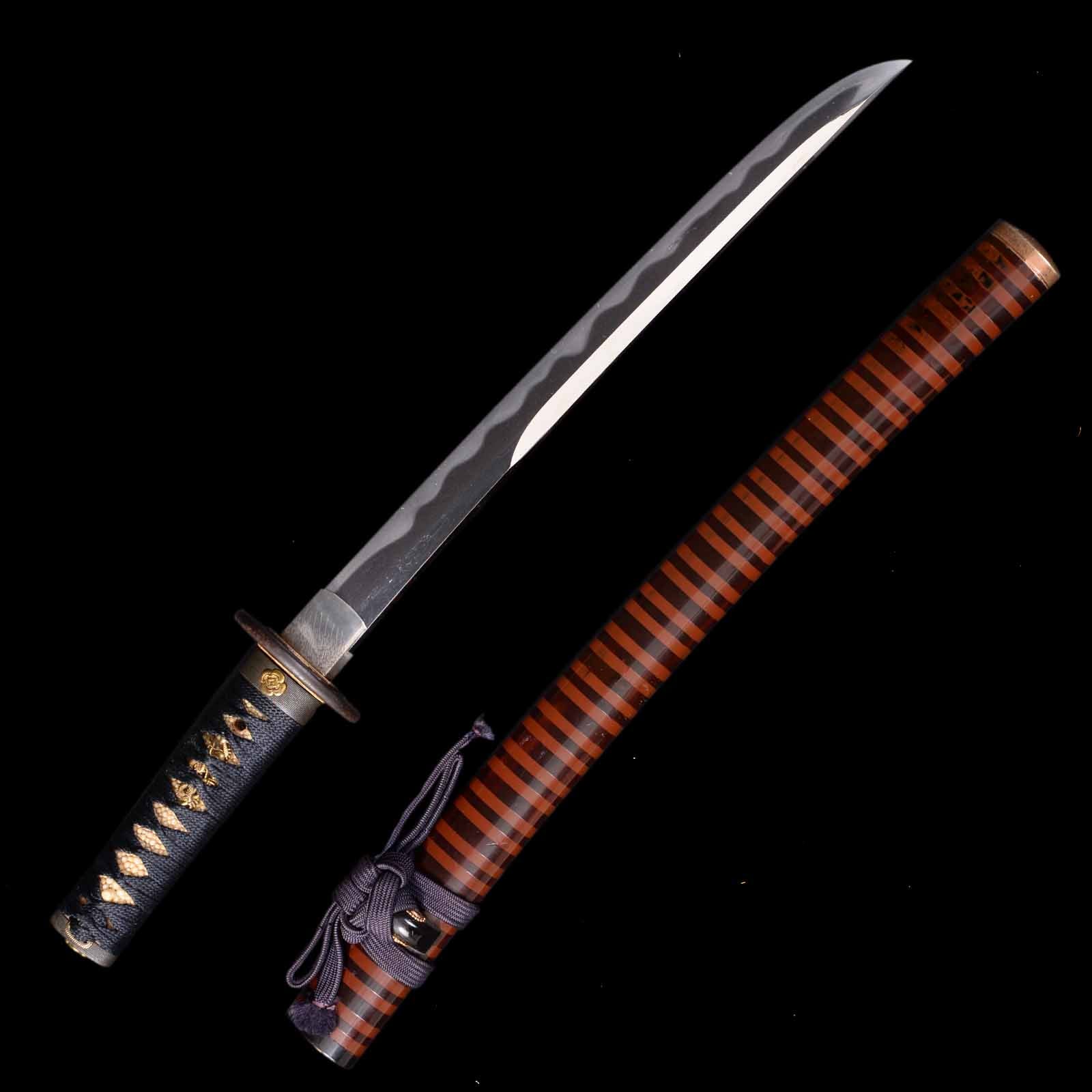
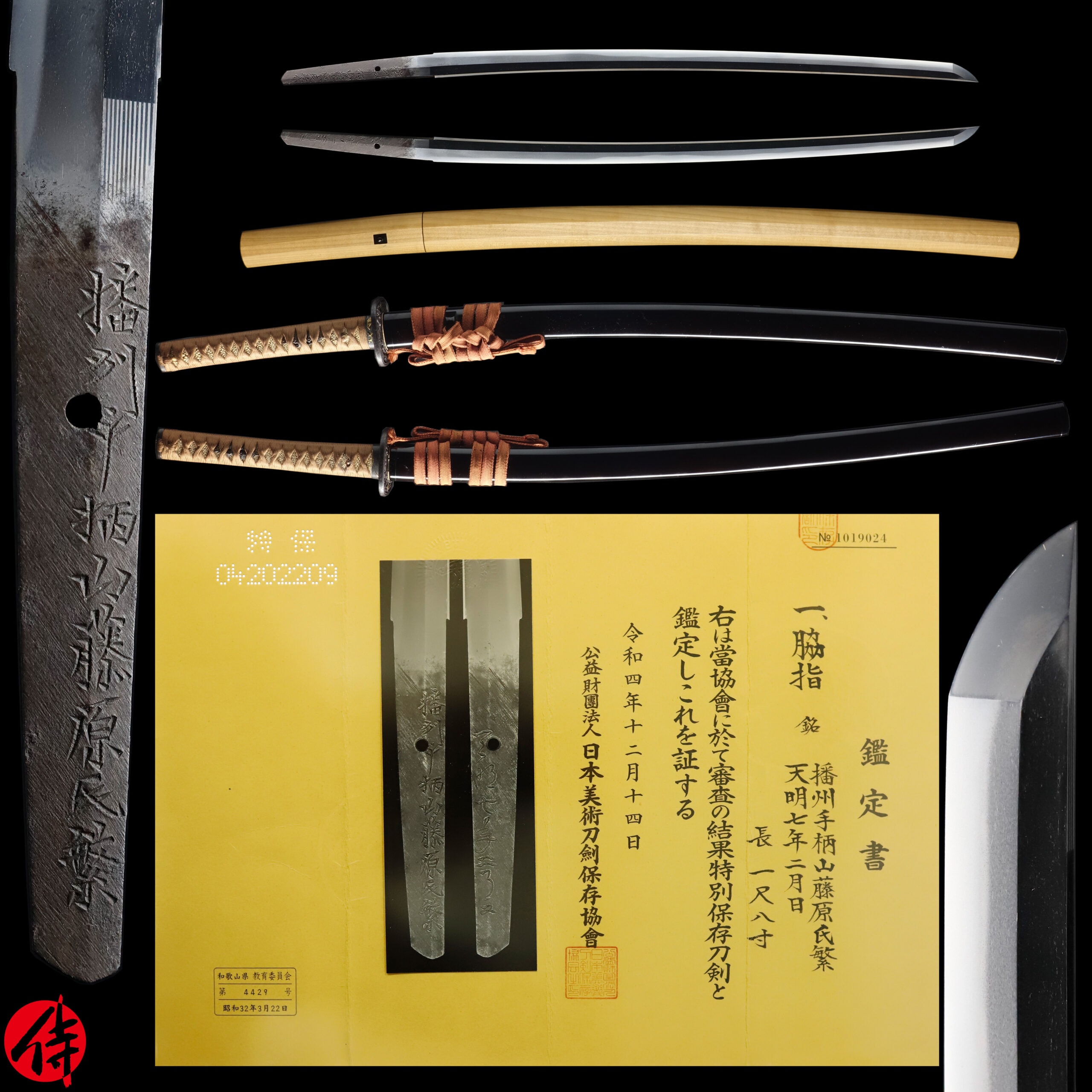
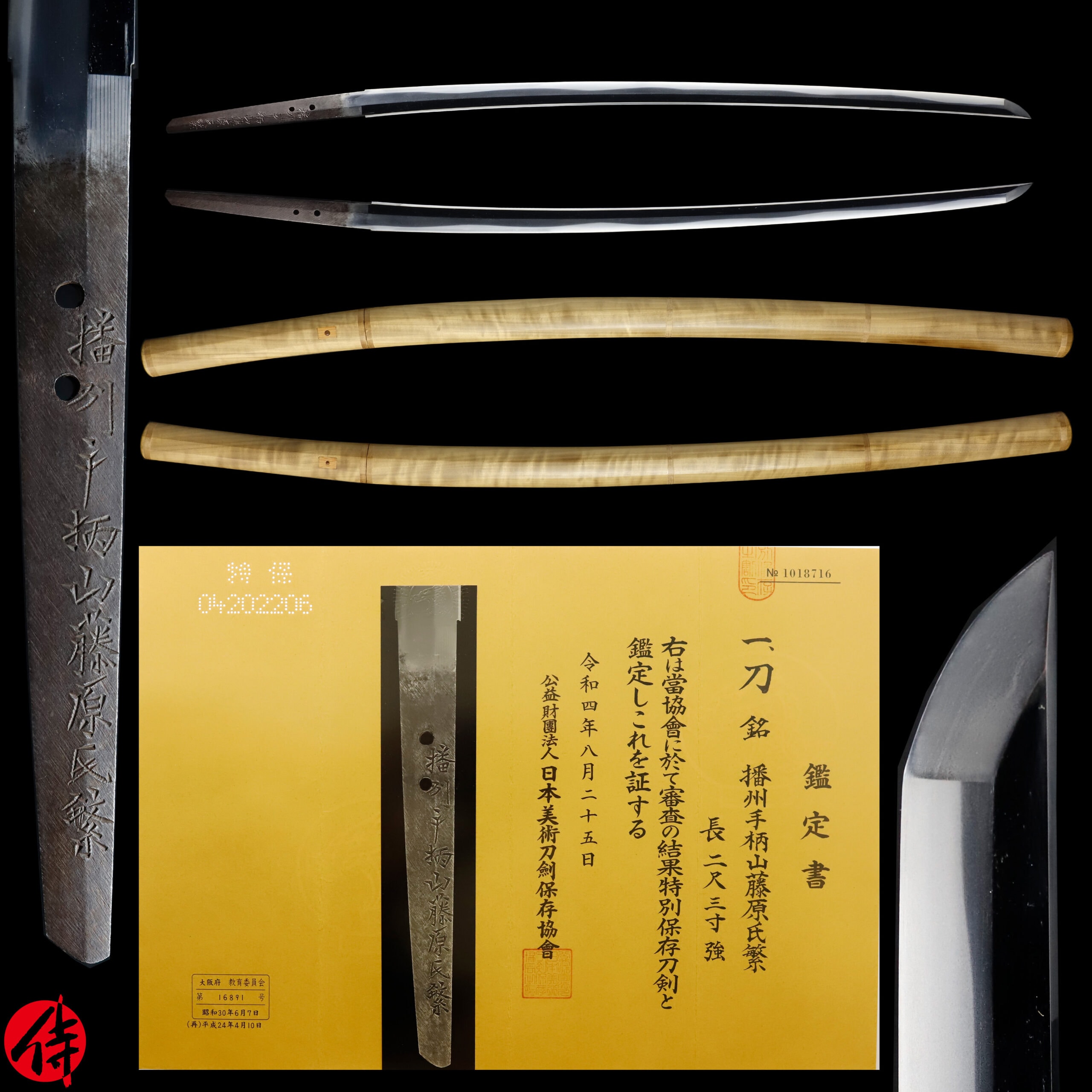
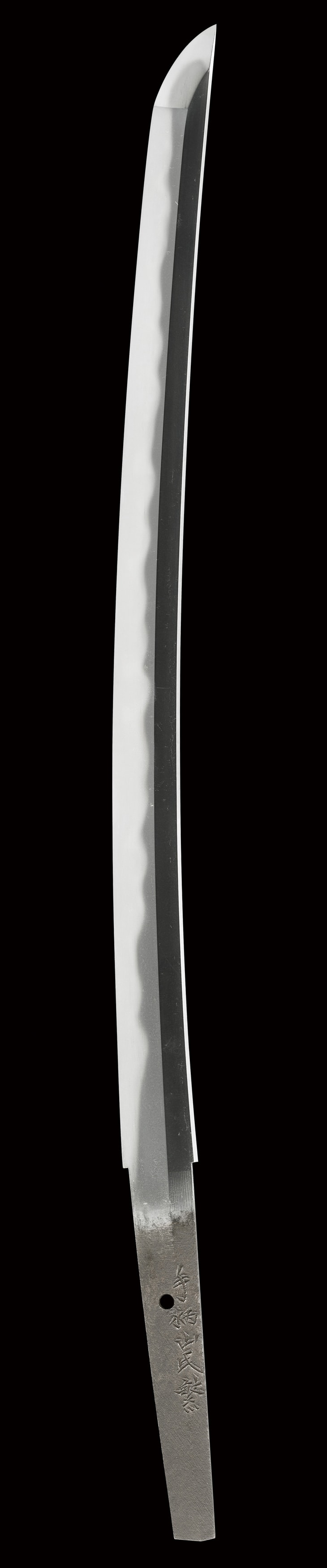
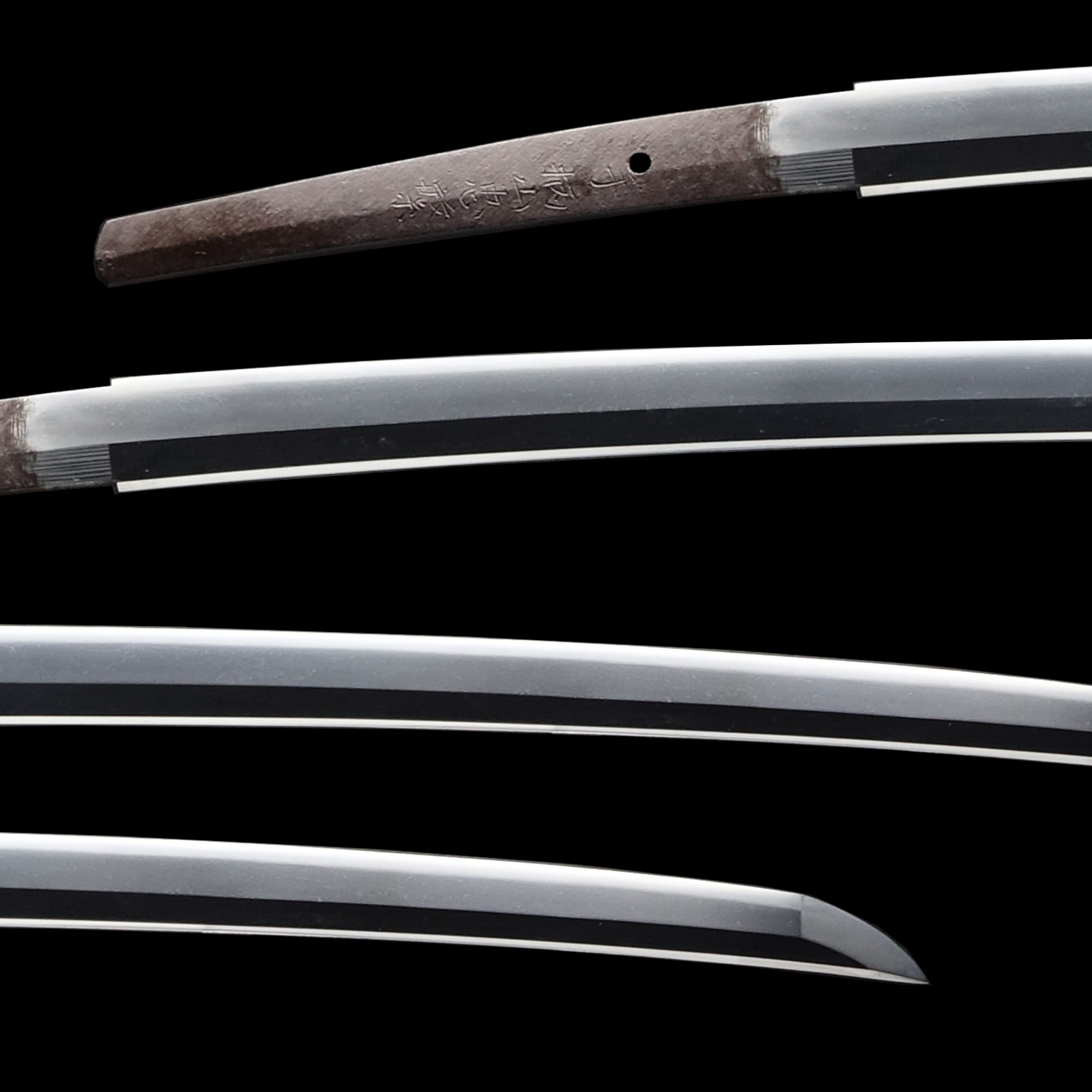
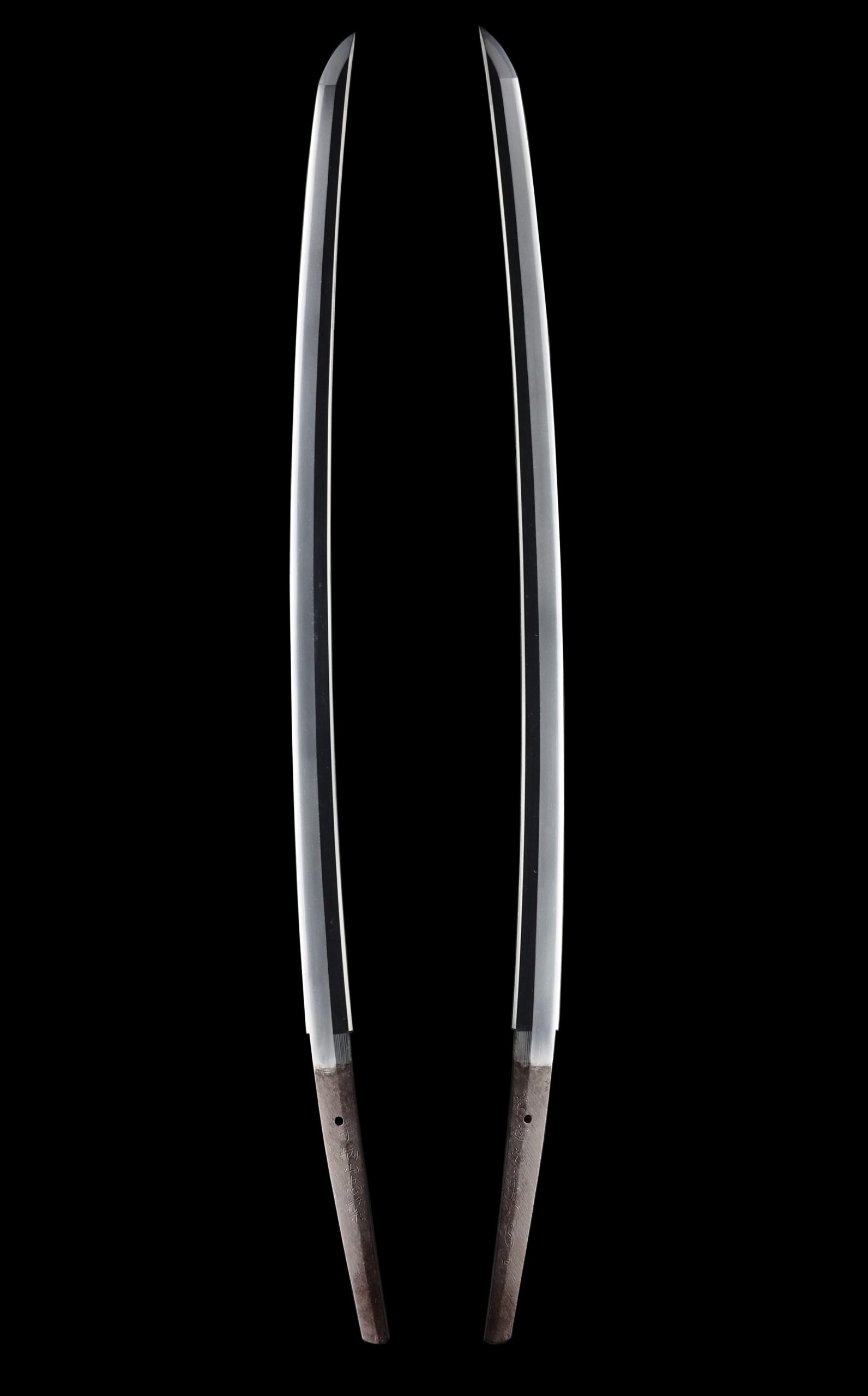
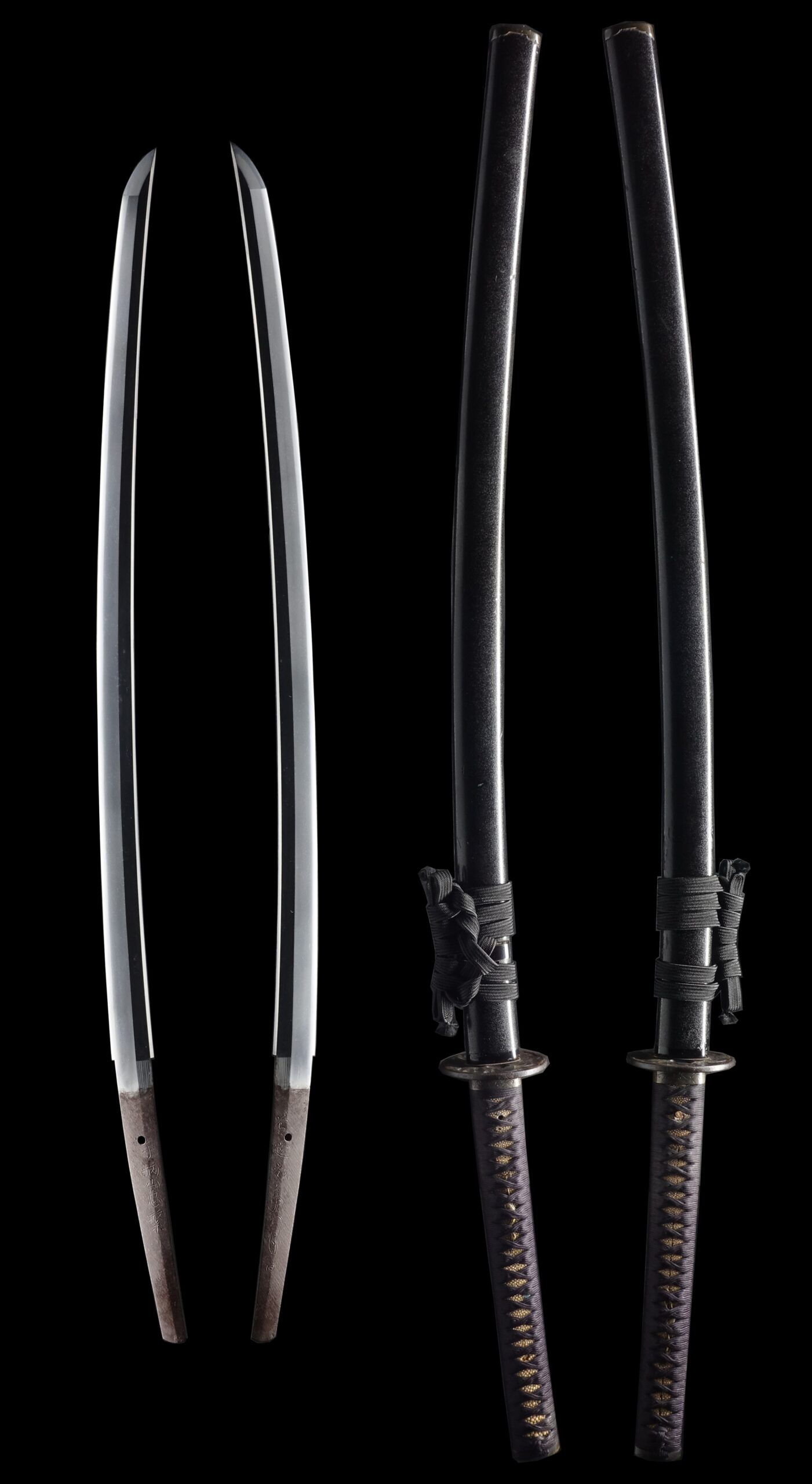
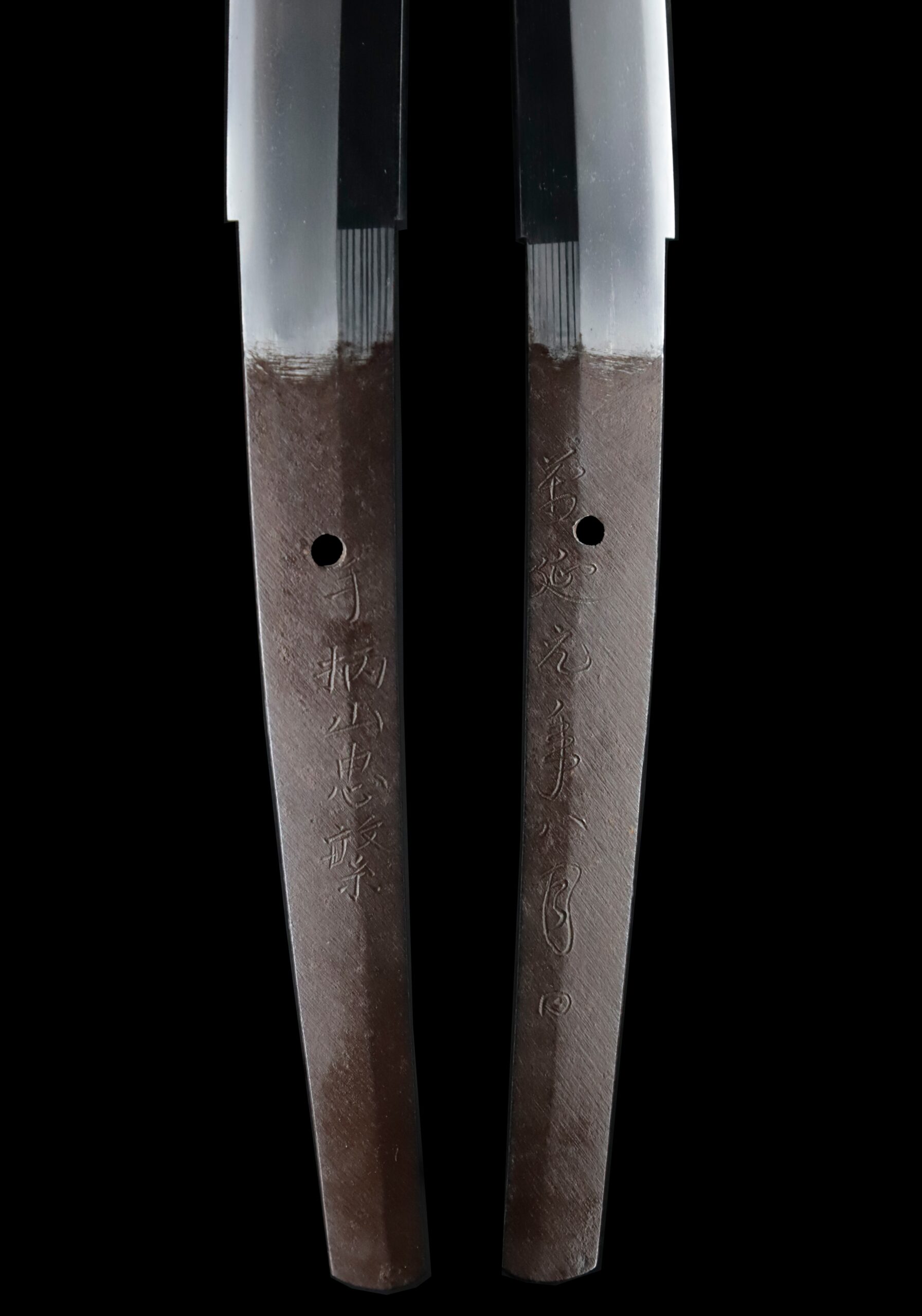
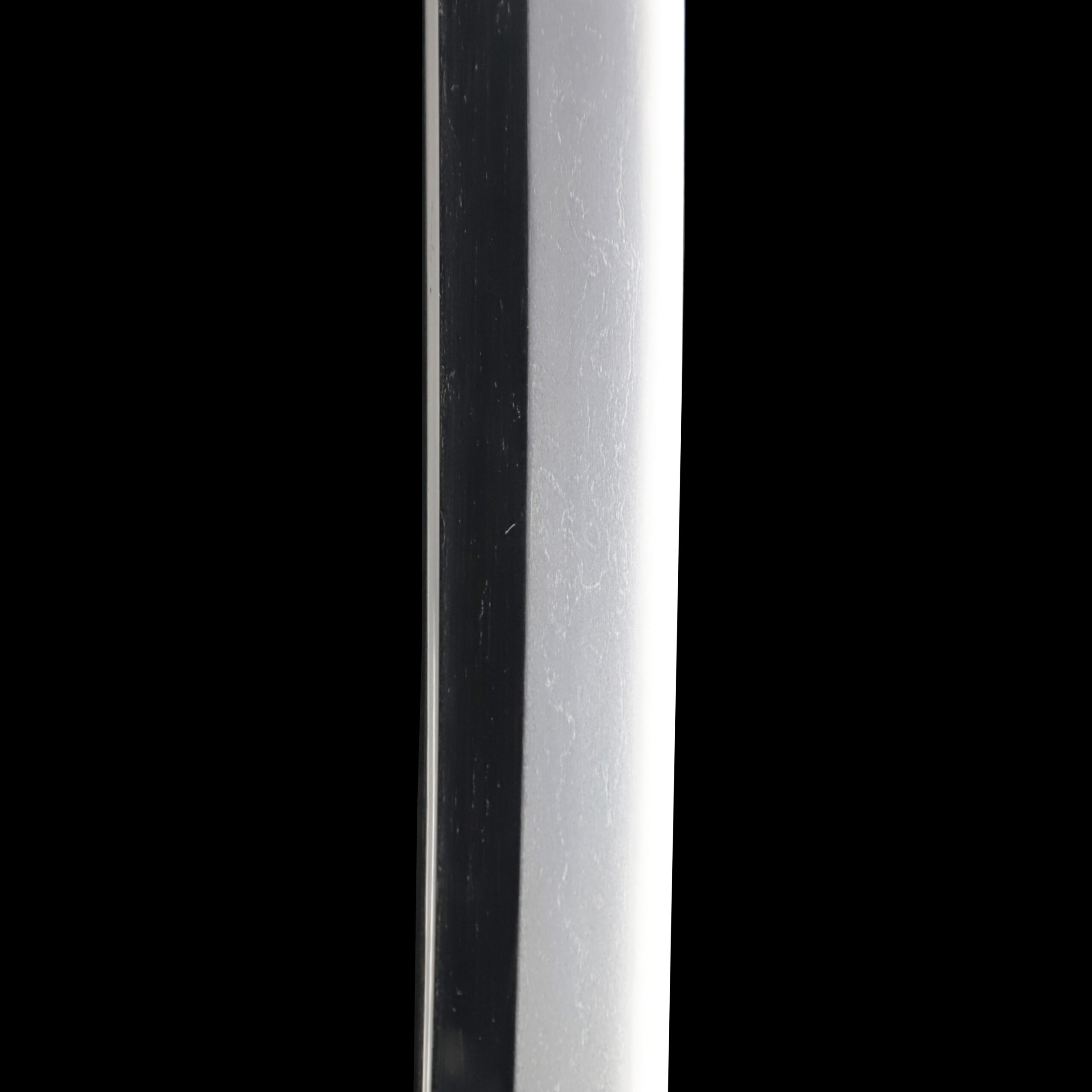
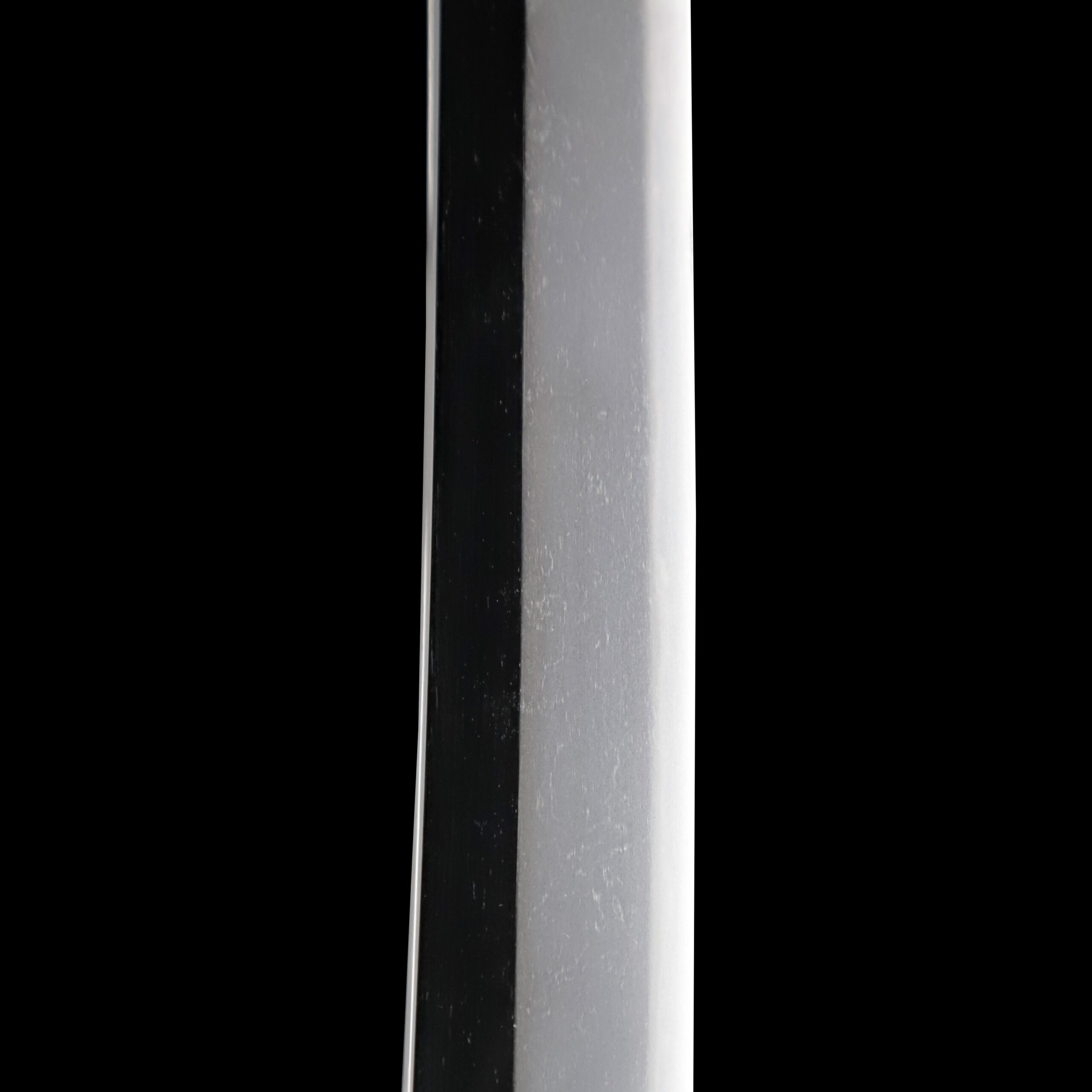
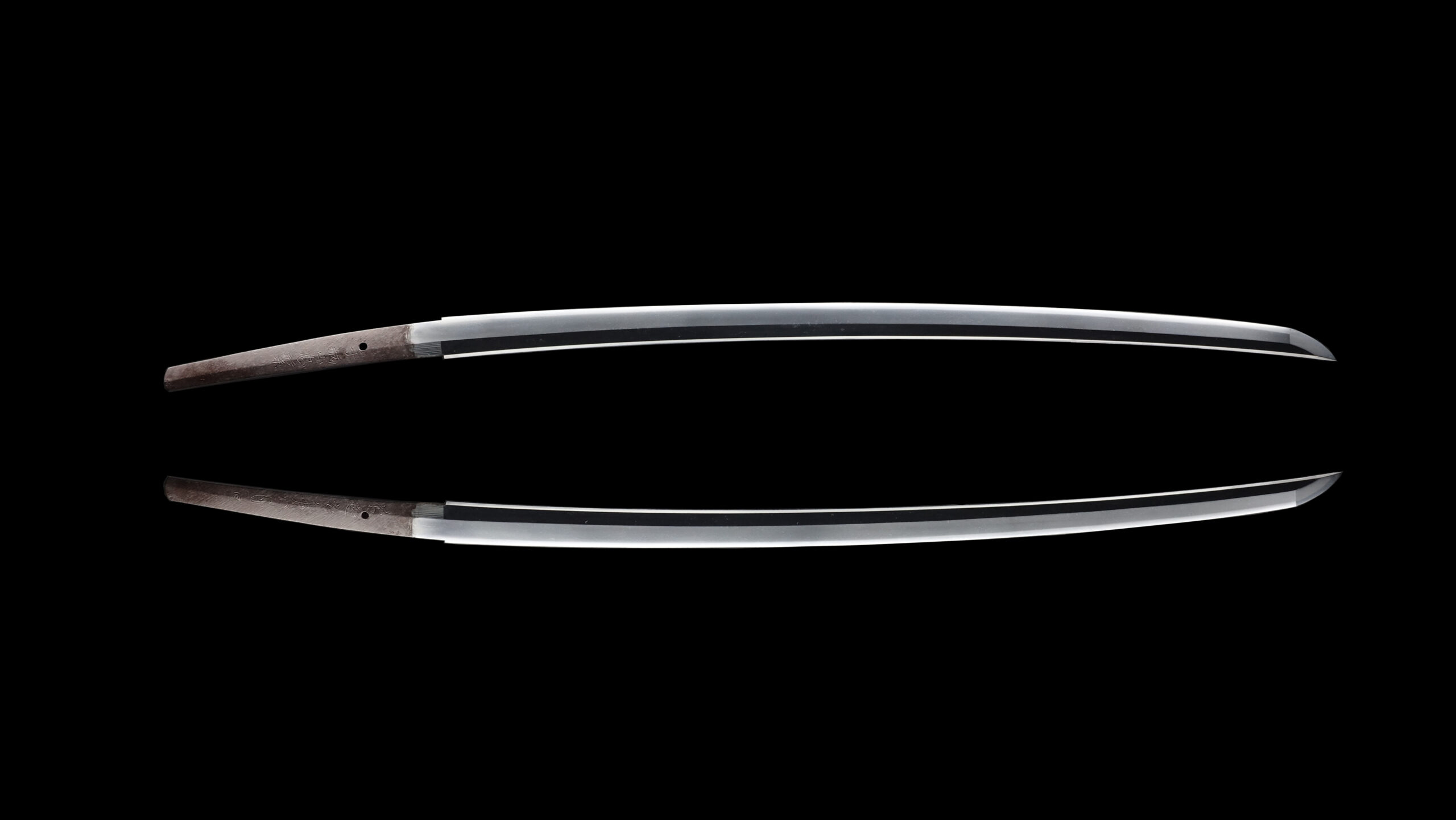
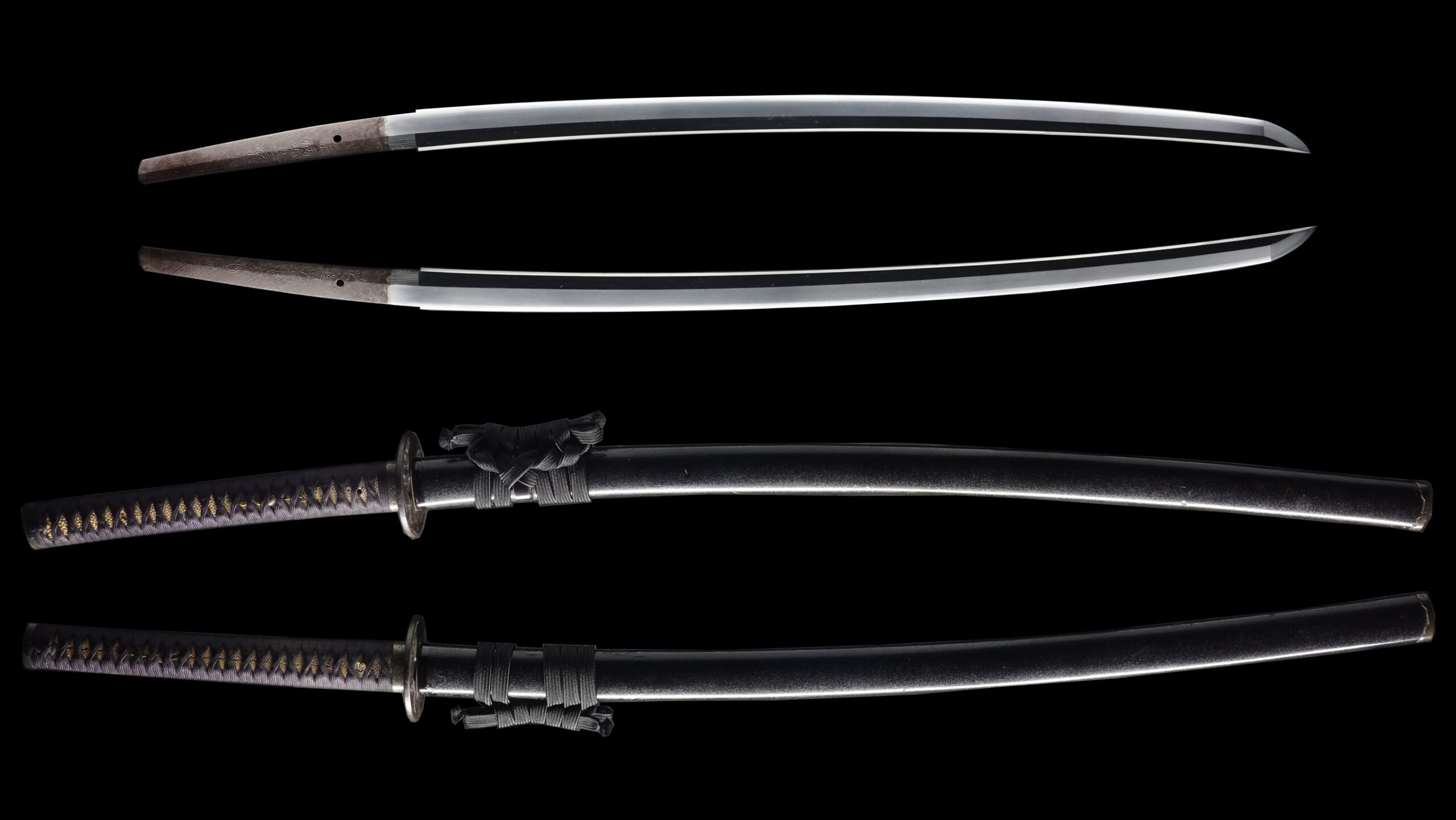
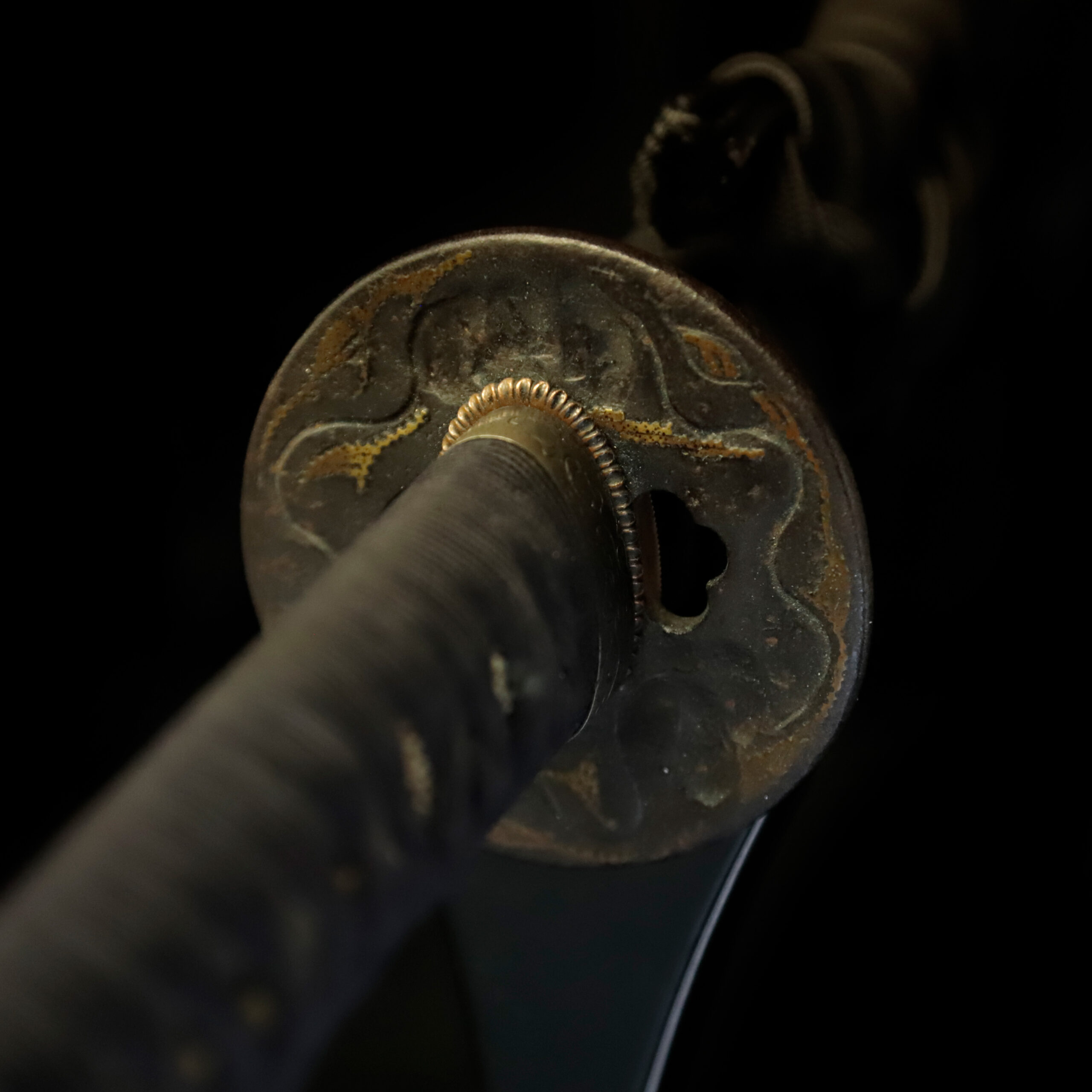
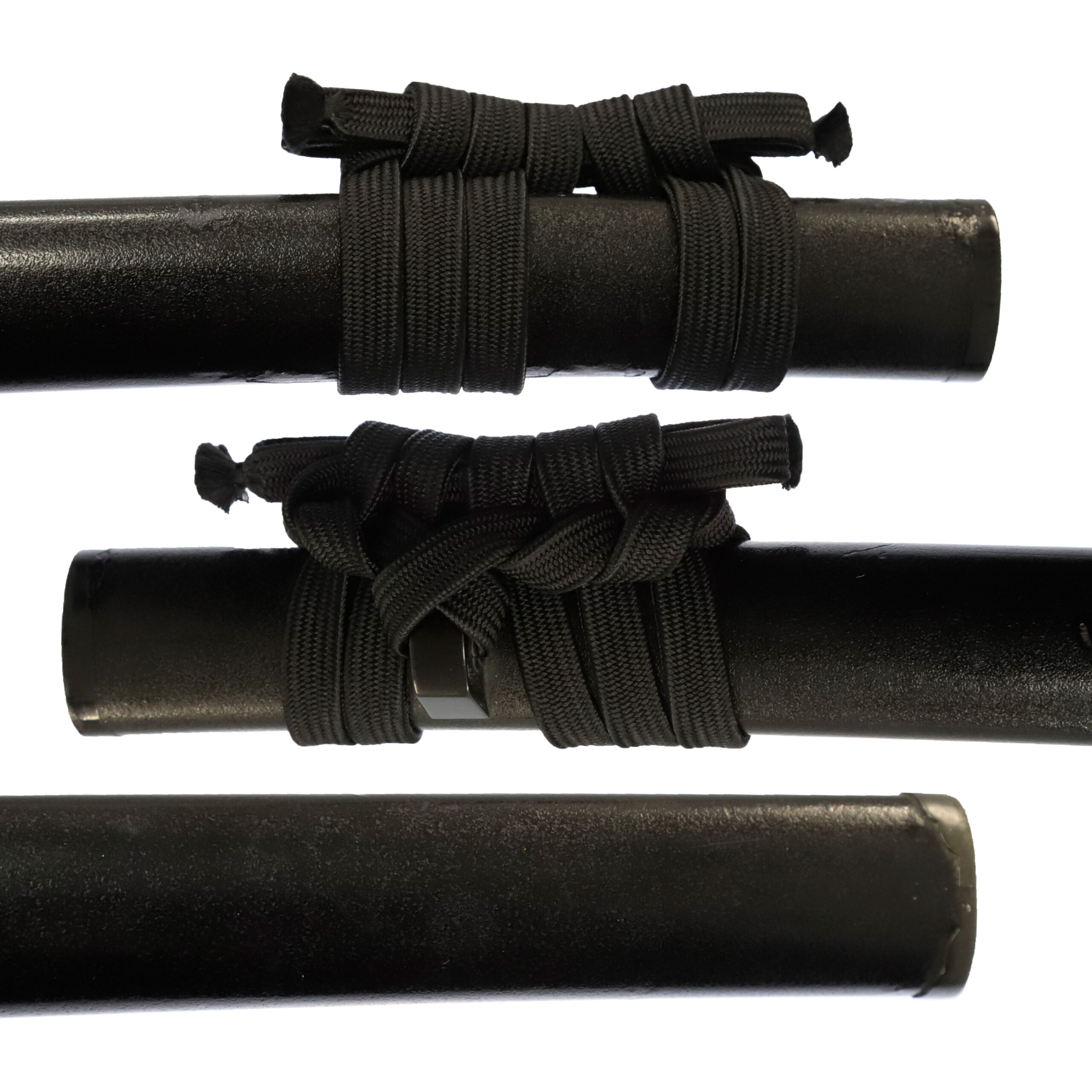
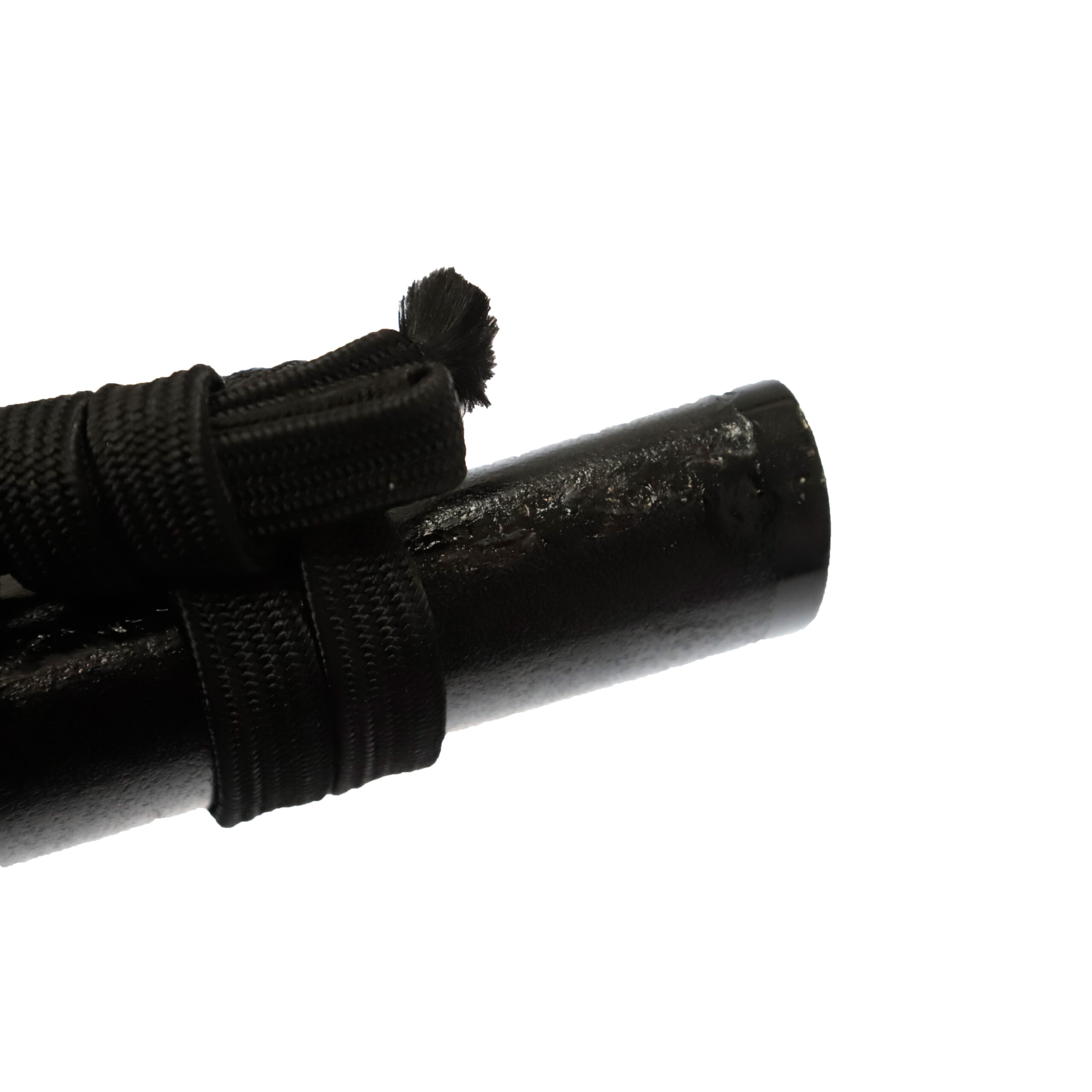
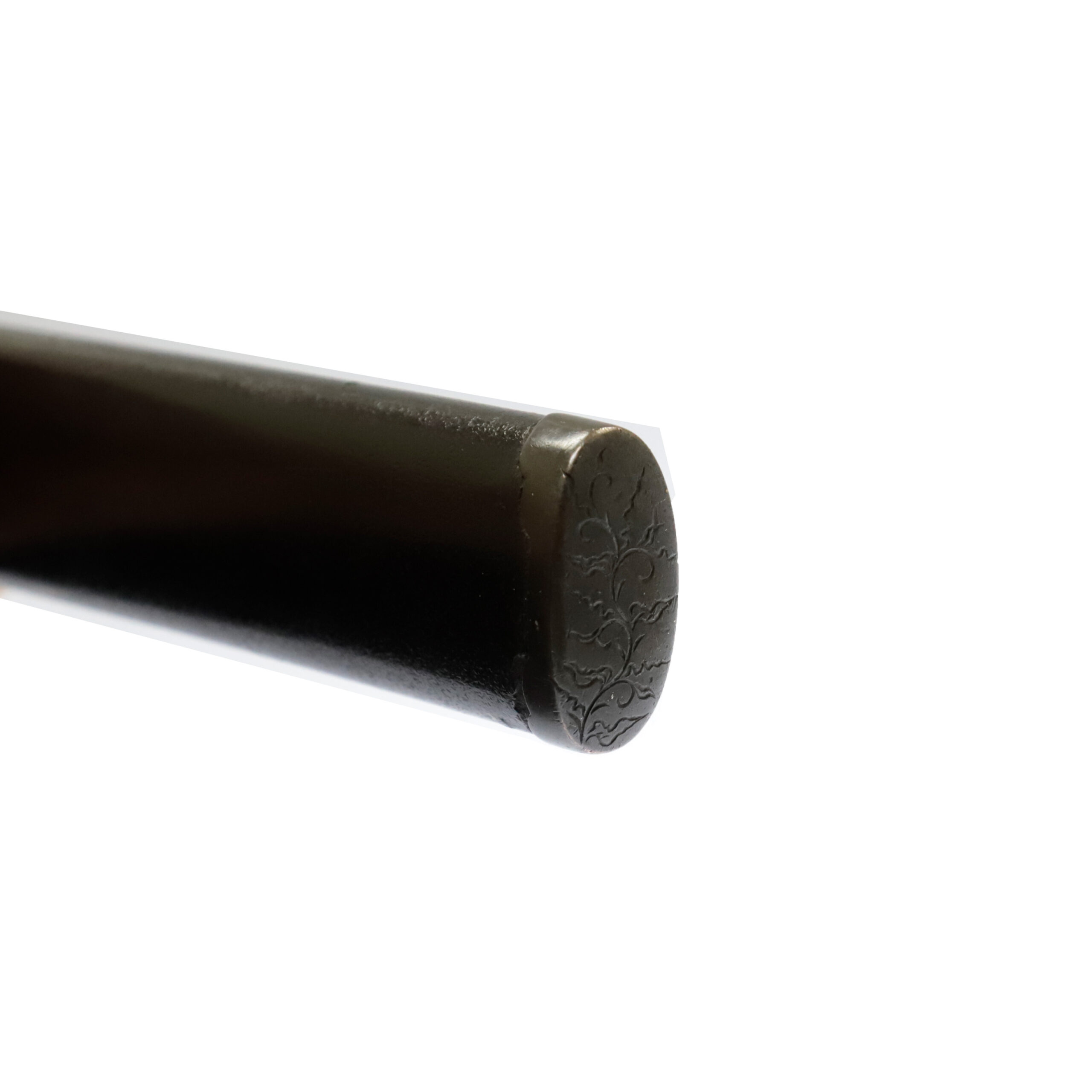
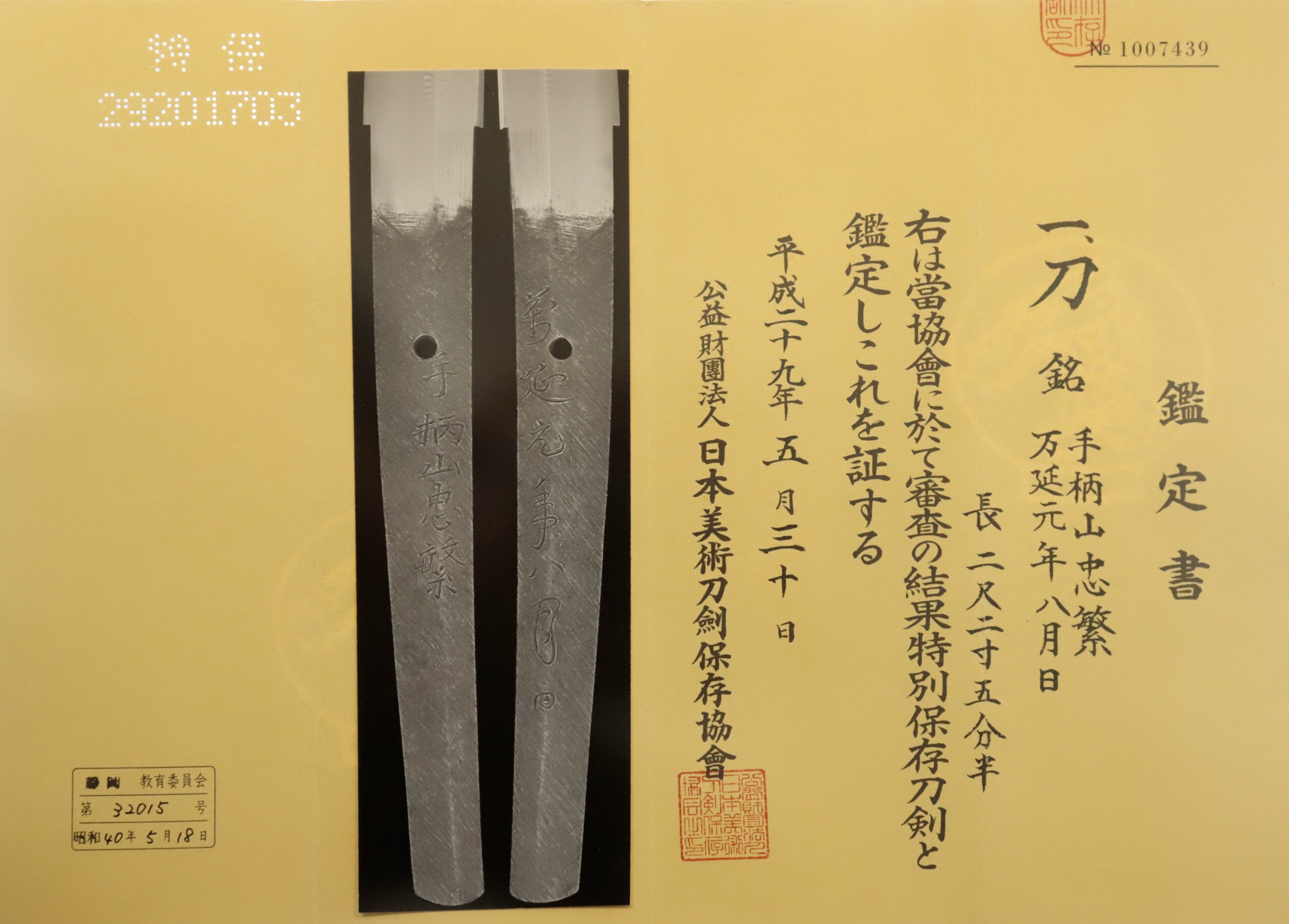
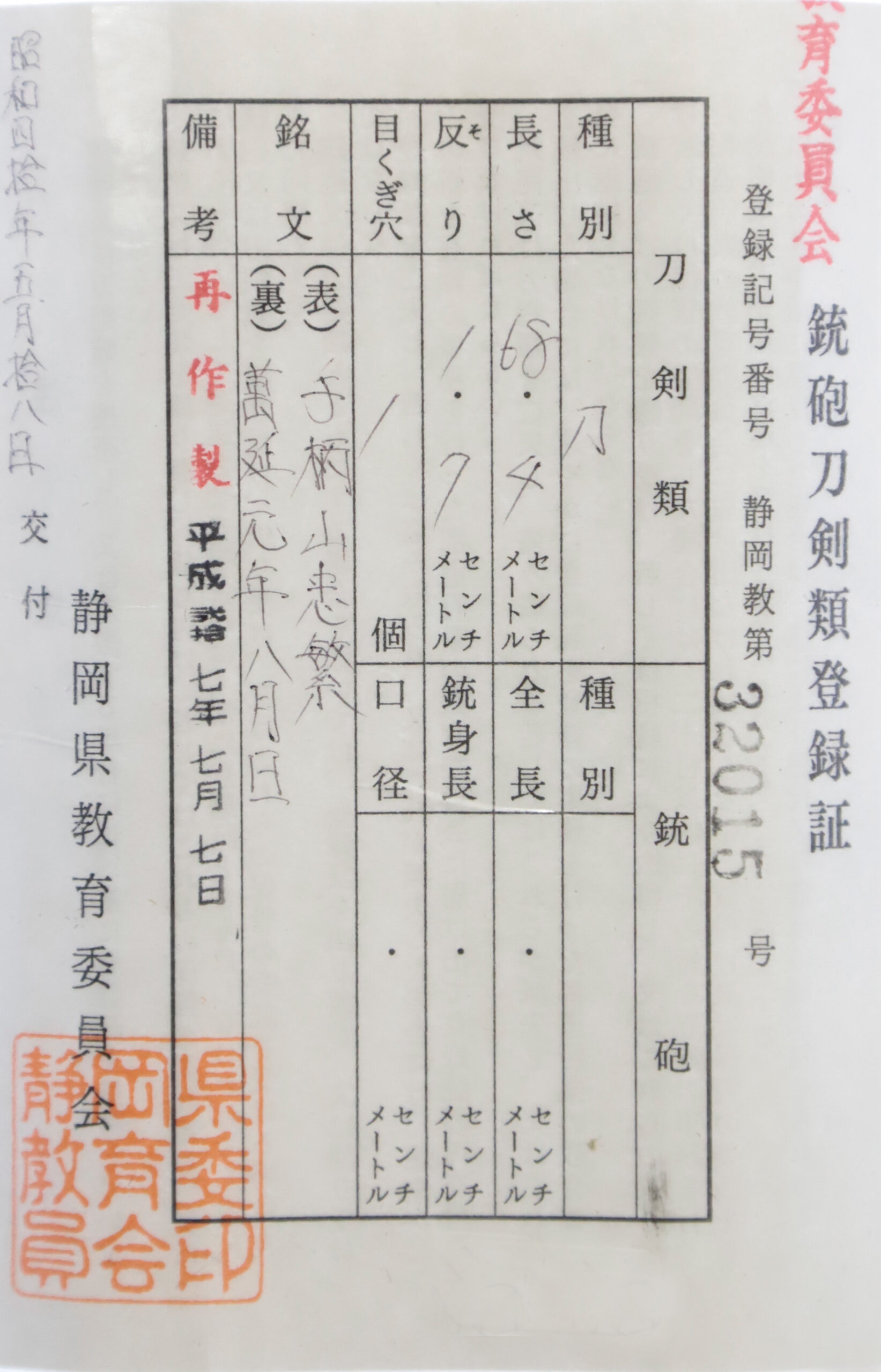
特別保存刀剣鑑定書付 手柄山忠繁(万延元年) 【解説】 概要 本作は万延元年(1860年)、幕末期に手柄山忠繁(てがらやま ただしげ)によって打たれた一振りです。播州は現在の兵庫県にあたる播磨国の別称であり、手柄山は忠繁が属した一派の名称です。この流派の開祖は氏重(うじしげ)であり、その名は数代にわたって受け継がれました。 師系(手柄山氏重)について 当初、氏重の銘は「氏重」と表記されていました。初代から三代まではこの字を用い、その優れた技量から朝廷より「大和大掾」の受領名を授かっています。しかし、四代目氏重の代に播磨藩の命により「氏繁」へと改銘しました。天明八年(1788年)、四代氏繁は白河藩(福島県)三代藩主・松平定信公に御抱え鍛冶として召し抱えられ、江戸でも作刀を行いました。享和三年(1803年)には定信公の推挙により「甲斐守」を受領しています。 また、新選組の永倉新八が四代氏繁の刀を所持していたと伝えられていることでも知られています。 「手柄山」という派名は、播磨の手柄山の麓で作刀したことに由来します。「手柄」という言葉が武功を意味する瑞祥名であることから、手柄山一派の刀は高位の武士の間で大変重宝されました。 時代背景 江戸時代初期から中期(1600年代〜1760年代)にかけて、徳川幕府による統治と経済の安定により、日本は比較的平和な時代を享受しました。この間、武士が戦場で刀を振るう機会は激減し、刀剣は次第に社会的身分を象徴する役割を強めていきました。戦国時代に比べ、武器としての需要は落ち着きを見せていました。 しかし、幕末(1764年〜1876年頃)に入ると、刀剣の役割は劇的に変化します。国内の困窮による騒乱や、外国からの開国要求という外圧に晒され、動乱の時代を生き抜くための実戦的で力強い刀が求められるようになりました。忠繁を含む当時の鍛冶たちは、主君のために実用性に優れた高品位な刀を打つべく心血を注ぎました。 幕府軍と新政府軍が衝突した幕末の動乱期、この刀の旧蔵者もまた、武士の時代の終焉という歴史的転換点を目撃していたのかもしれません。本作は当時の需要を反映した力強い姿をしており、実戦を強く意識した造りとなっています。 本刀は、日本美術刀剣保存協会(NBTHK)により「特別保存刀剣」に鑑定されています。これは保存状態が極めて良く、かつ美術的価値の高い真作の日本剣に対してのみ与えられる証です。 ※切先に極めて微細な零れ(こぼれ)がございます。詳細な状態については、お気軽にお問い合わせください。 【刀身諸元】 長さ(長短) : 68.4 cm 反り : 1.7 cm 刃文(はもん) : 焼入れによって刃先に現れる結晶構造の模様 地文(地肌) : 折り返し鍛錬によって現れる鋼の表面模様 切先(きっさき) : 刀身の先端部分 茎(なかご) : 柄に収まる刀身の持ち手部分。日本の刀工はここに銘を刻みます。
 NihontoWatch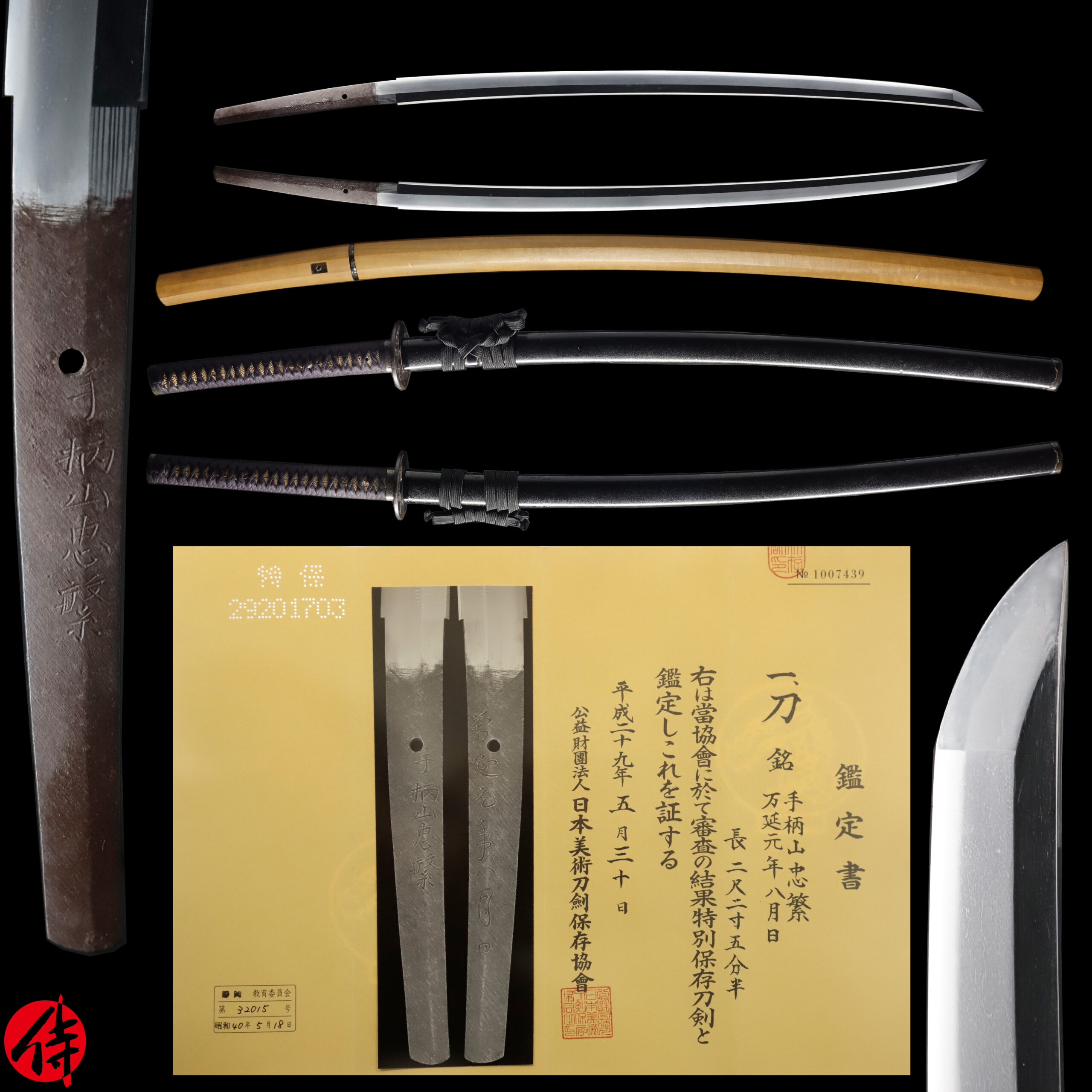
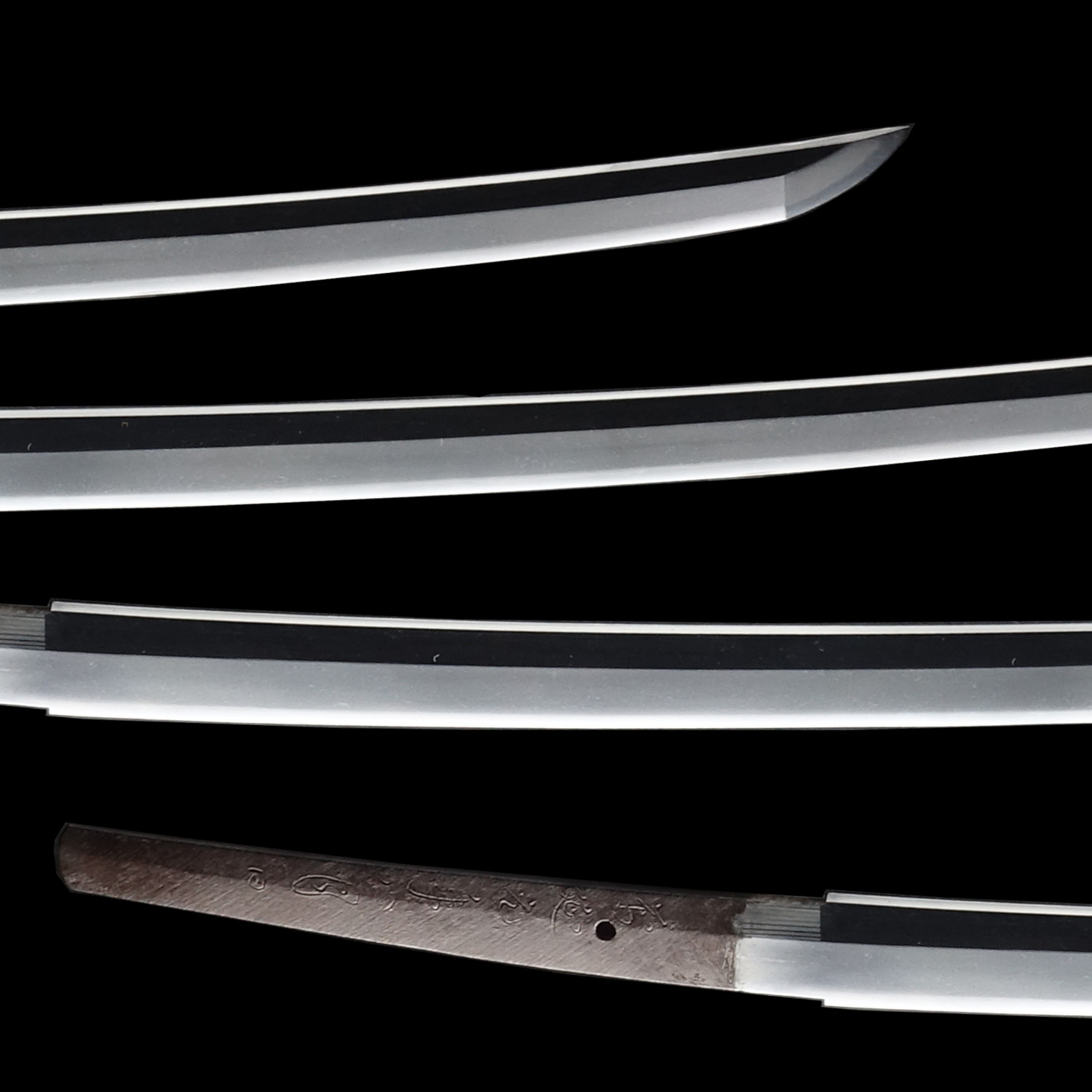
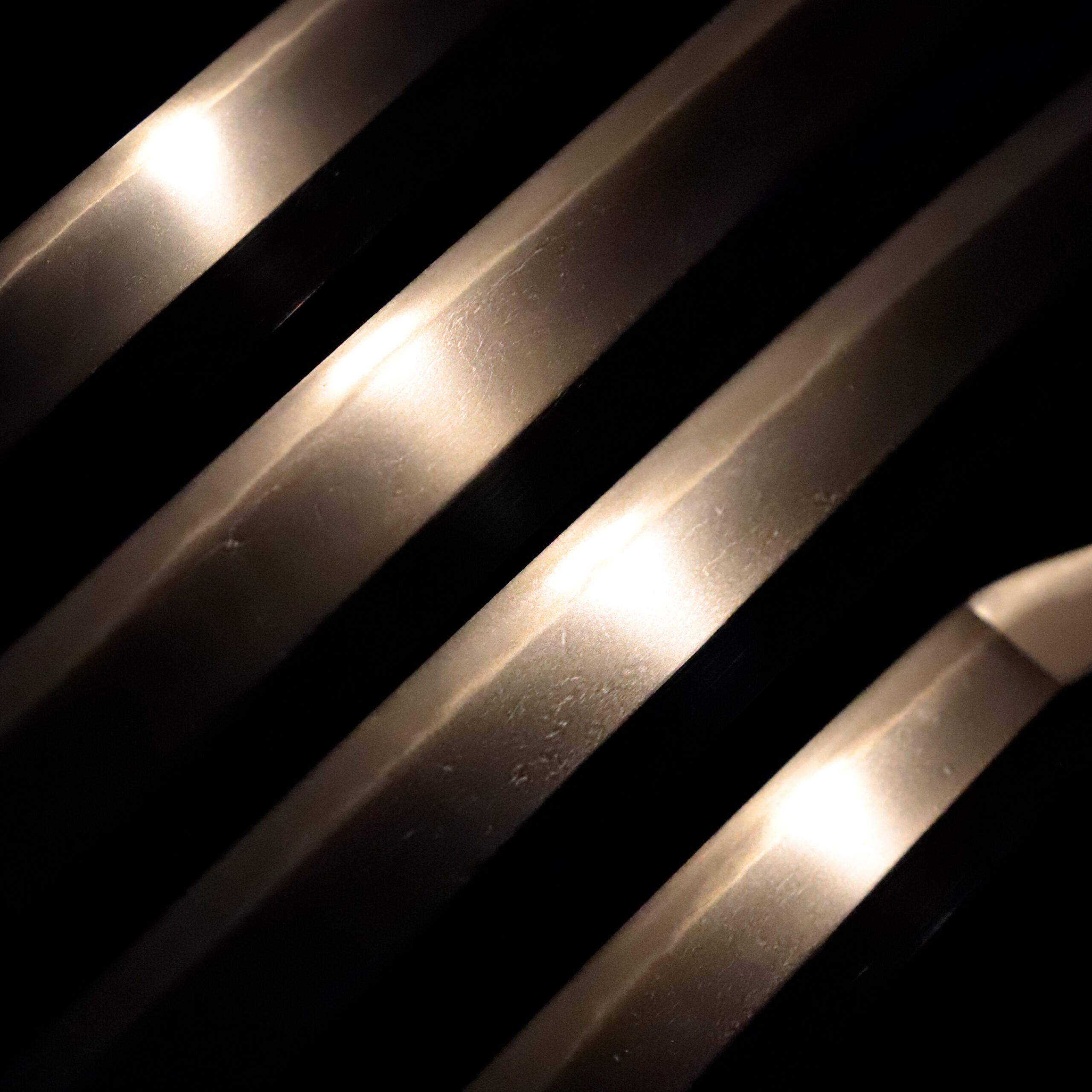
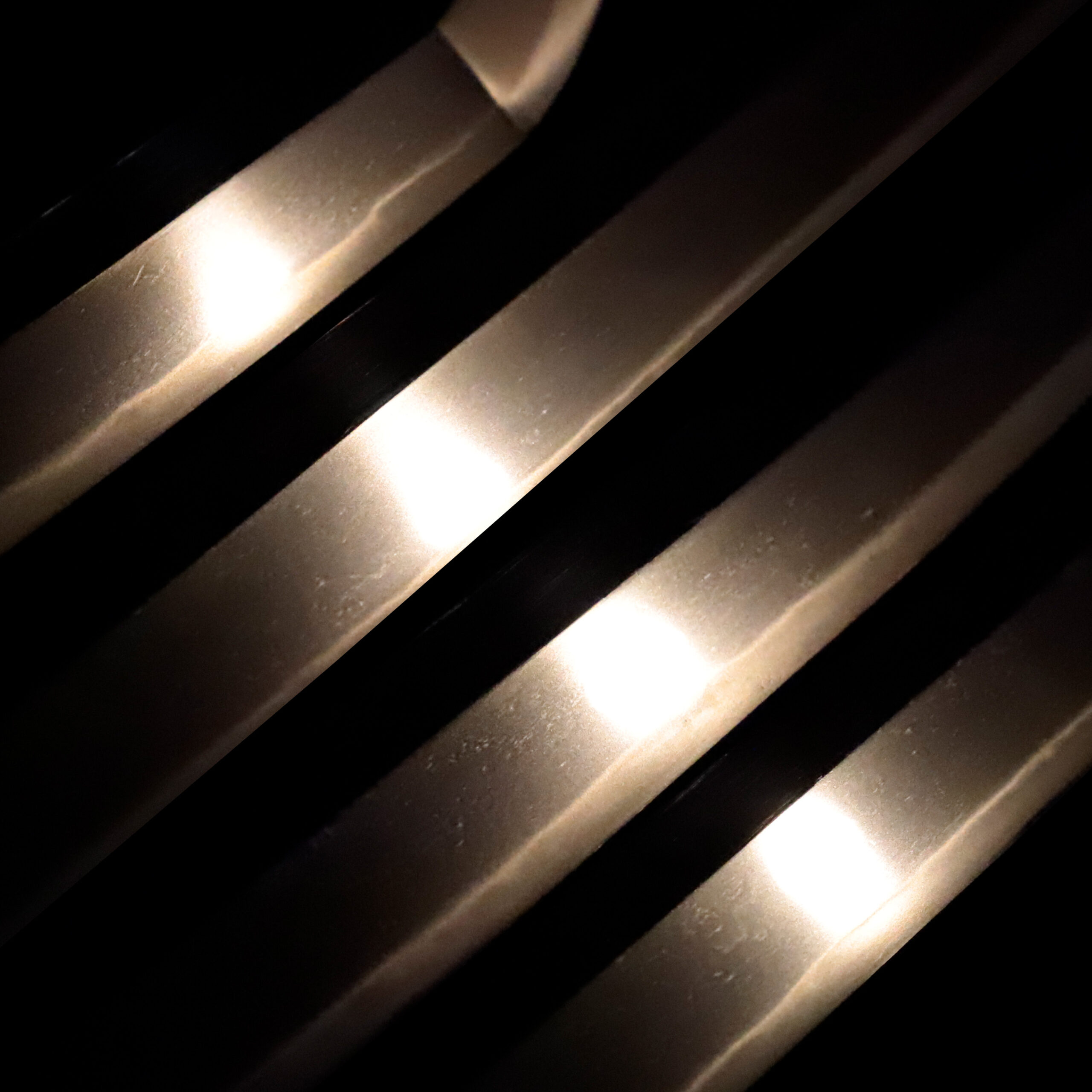
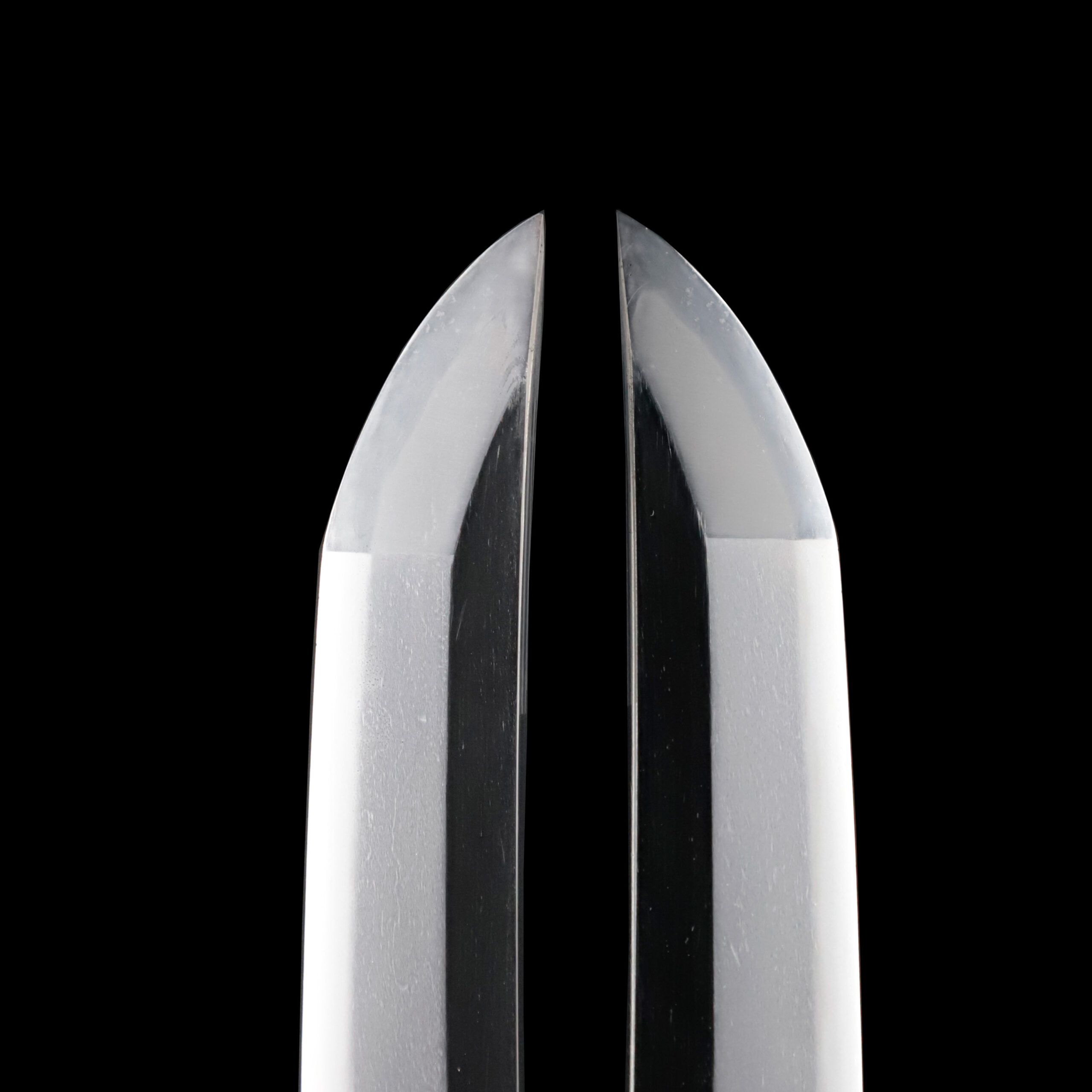
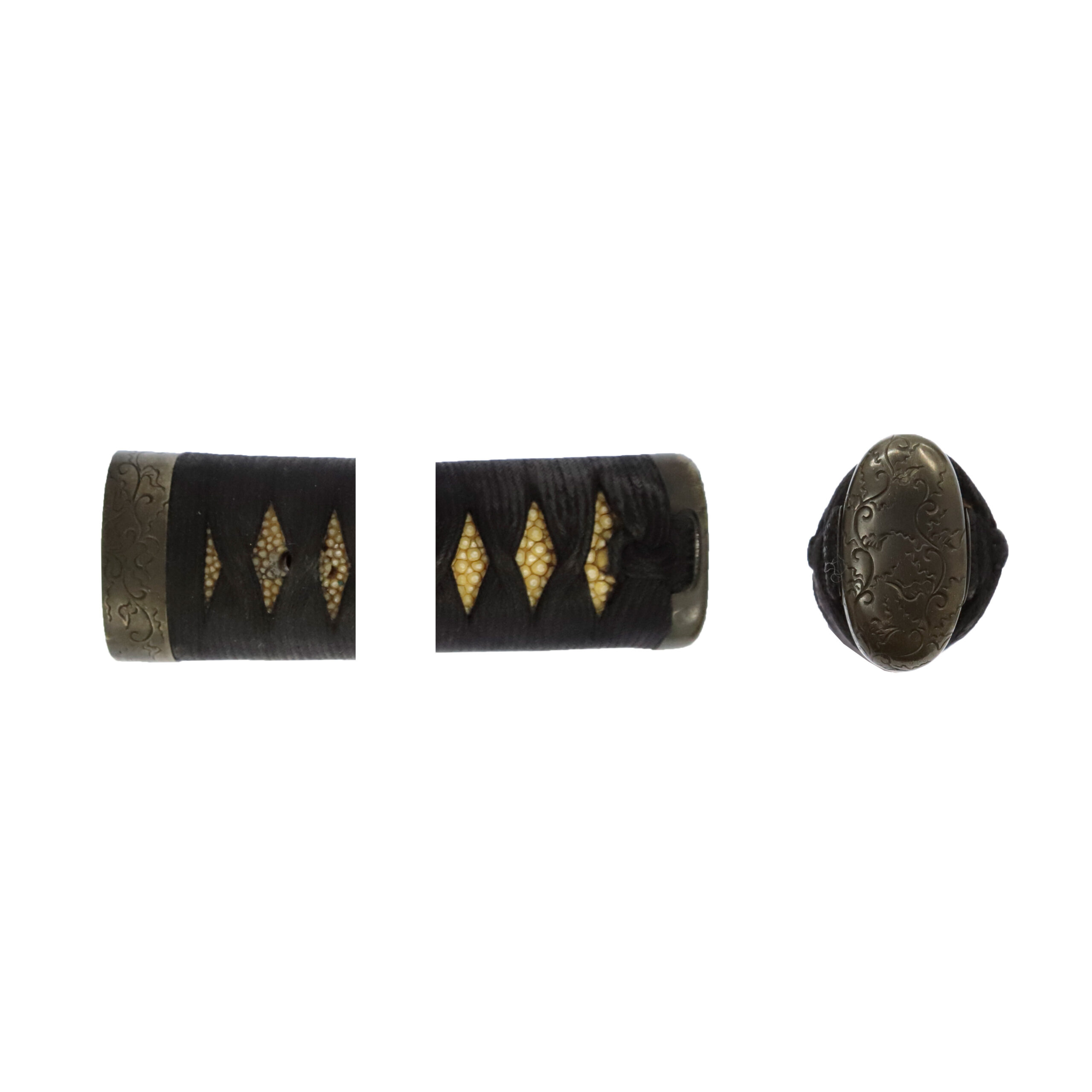
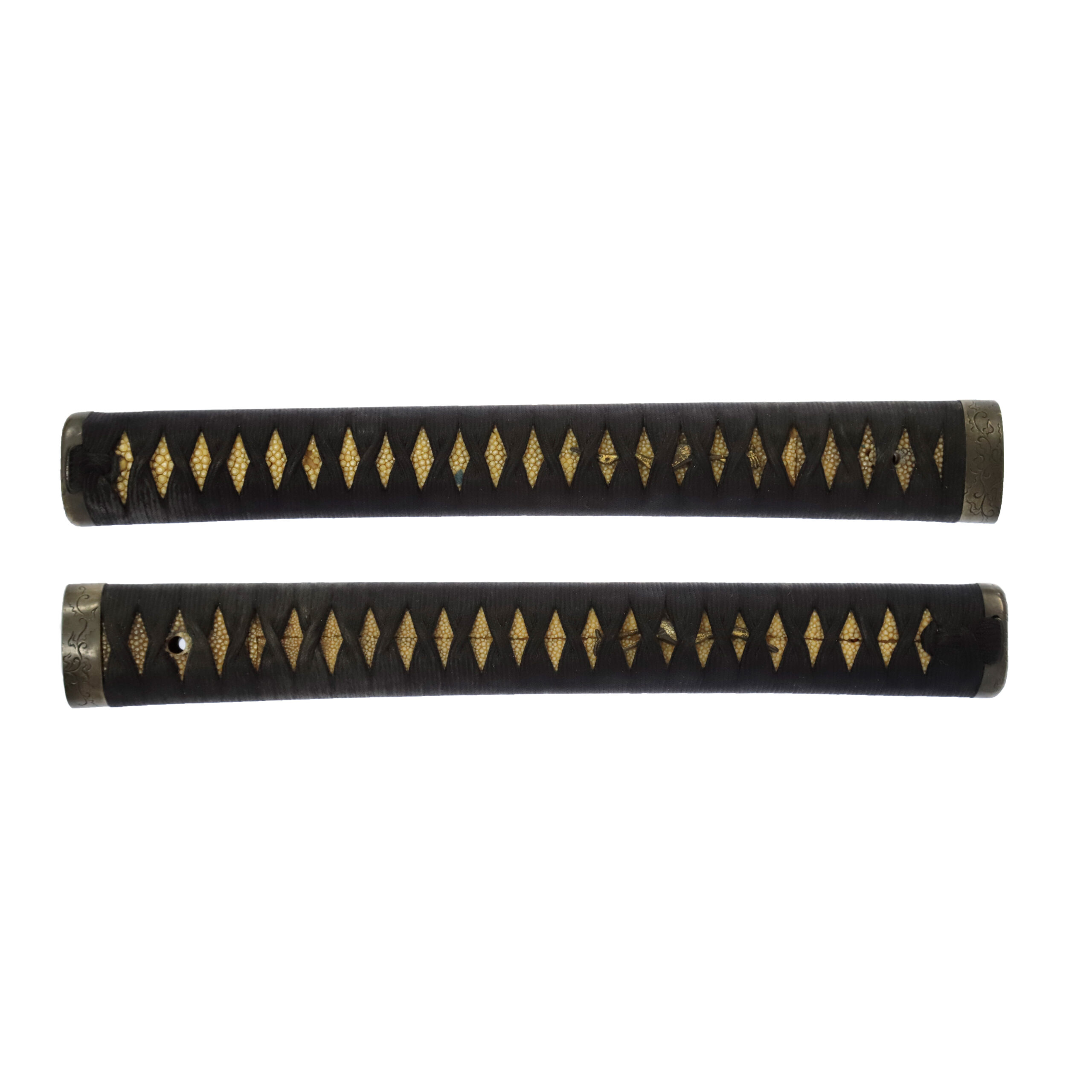
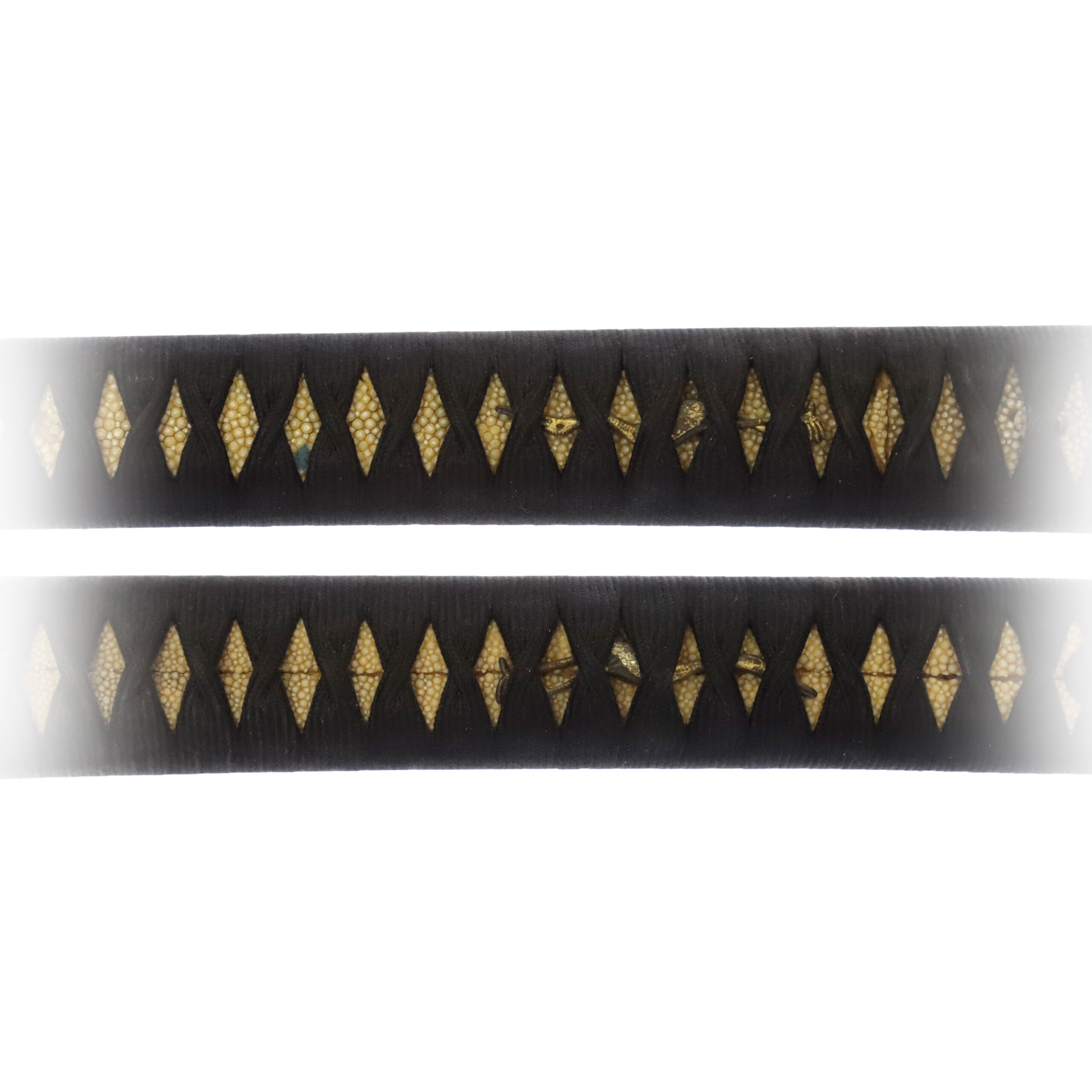
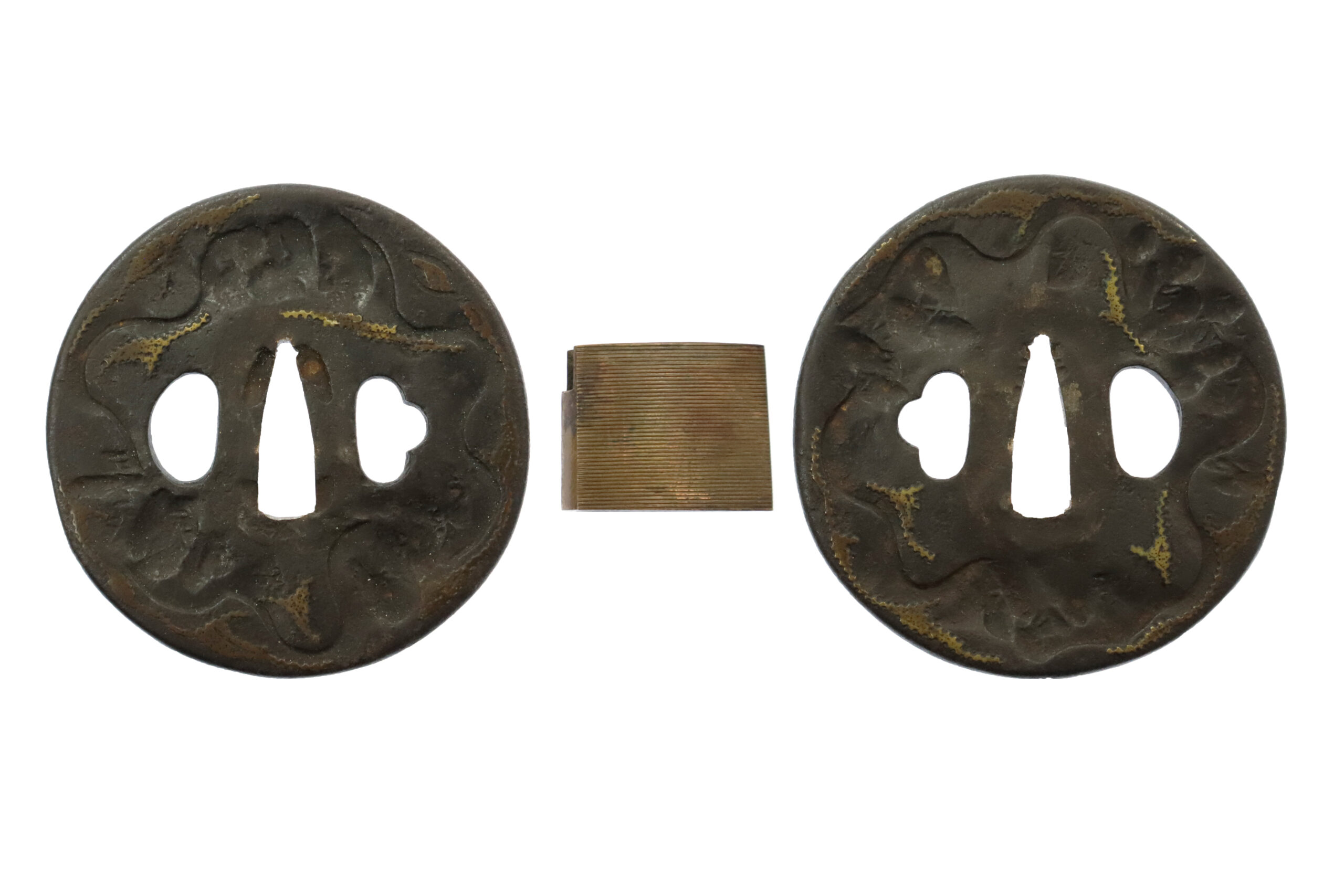
新々刀 · 播磨
現在8点販売中
手柄山は播磨国姫路を本拠とする新々刀期の一門で、説示によれば手柄山の麓に住したことから代々その地名を姓としたという。一門の中心となる正繁は、通称を朝七といい丹霞斎と号した工で、三代目手柄山氏繁の弟にあたり、初め四代目氏繁を襲名したのち正繁と改めている。初代大和大掾氏重の末葉であると記され、播州姫路に系譜を引く家系であることがうかがえる。天明八年、奥州白川(白河)の藩主松平定信の抱え鍛冶となって江戸に移り住み、神田駿台を作刀の地とした。享和三年四月には甲斐守を受領し、文政の初年頃には一時大坂でも鍛刀したのち再び江戸に戻っている。晩年には楽翁すなわち松平定信から「神妙」の二字を賜り、会心の作にこれをきったと伝える。一説に江戸に出て水心子正秀に学んだとも記され、姫路に発した手柄山の鍛冶が藩公の抱え工として江戸へ展開していった経緯が説示の各所に共通して語られる。 作風は、説示が一様に記すとおり、津田越前守助広に私淑した濤瀾風の大互の目乱れを本領とする。鍛えは小板目肌がよくつみ、地沸が厚くつき、地景が細かに入って地鉄の冴える点が共通して挙げられる。刃文は元を直ぐに焼き出し、その上にのたれや大互の目を交えて濤瀾状の乱れを焼き、足・葉が入り、匂深く小沸がむらなく厚くつくものが多い。処々で強く沸づき、飛焼・湯走り・棟焼・島刃を見せ、砂流しがかかり金筋が頻りに入って、匂口が明るく冴えるのを特色とする。帽子はおおむね直ぐに小丸へ結び、掃きかけのかかるものもある。乱れの間に尖りごころの刃を交えるのは同工の特色と説示が指摘しており、また矢筈風の刃を交える作も認められる。濤瀾乱を主調としながら、説示にいう浅いのたれや直刃の作域も併せ持つ。茎は生ぶで先を浅い入山形とし、鑢目を大筋違に化粧をかけ、指表棟寄りに太鏨大振りの長銘を、裏に年紀や作刀地・注文者銘をきる構成が、見分けの手がかりとして繰り返し記されている。 鑑定の要点は、整然と崩れず焼かれた大互の目を主調とする濤瀾乱、むらなく厚くつく小沸、明るく冴える地刃の働き、そして尖りごころの刃という同工の癖にある。説示には、珠追龍や梵字・三鈷柄剣、昇龍といった刀身彫刻を正繁自身が手がけた作が挙げられ、茎にその旨を記すものもあって資料的価値が高いとされる。年紀のあるものは寛政から享和に及び、東武駿台・武陽駿岱と記す江戸作のほか、石州出羽の鉄を用いたと銘するものや、古河藩士小杉為長、渡辺崎右衛門美政らの注文に応じた作が伝わる。松平定信の抱え工として江戸に出て助広風の濤瀾乱を得意とした上手の工として、説示は手柄山正繁を新々刀の一典型に位置づけている。[[c:1]] 詳しく見る →
新々刀 復古の運動
1800年前後、水心子正秀は著述をもって、鍛刀は古作の法に立ち返るべしと説いた。復古刀の運動である。最大の後継者直胤は、数百年絶えていた備前伝と相州伝を確信をもって再現した。
保存刀剣のうち、出来が一層優れ、保存状態も良好と認められたものです。再刃や、室町・江戸期の多くの無銘作は対象外となり、保存刀剣より高い基準が課されます。
日本美術刀剣保存協会(NBTHK)は、1948年に設立され、文化庁の監督を受ける公益財団法人で、東京・刀剣博物館に本部を置きます。専門の審査員が出品作を直接審査し、美術的・歴史的価値に応じた鑑定書を発行します。NBTHKの鑑定書は、日本刀および刀装具の真正性を示す最も広く認知された基準です。
NBTHK公式サイトReturns/exchanges limited to defects caused by shipping (except willful misconduct or gross negligence by the company); customers must contact within 72 hours of receiving the product.