1800年前後、水心子正秀は著述をもって、鍛刀は古作の法に立ち返るべしと説いた。復古刀の運動である。最大の後継者直胤は、数百年絶えていた備前伝と相州伝を確信をもって再現した。
 NihontoWatchNihontoWatch
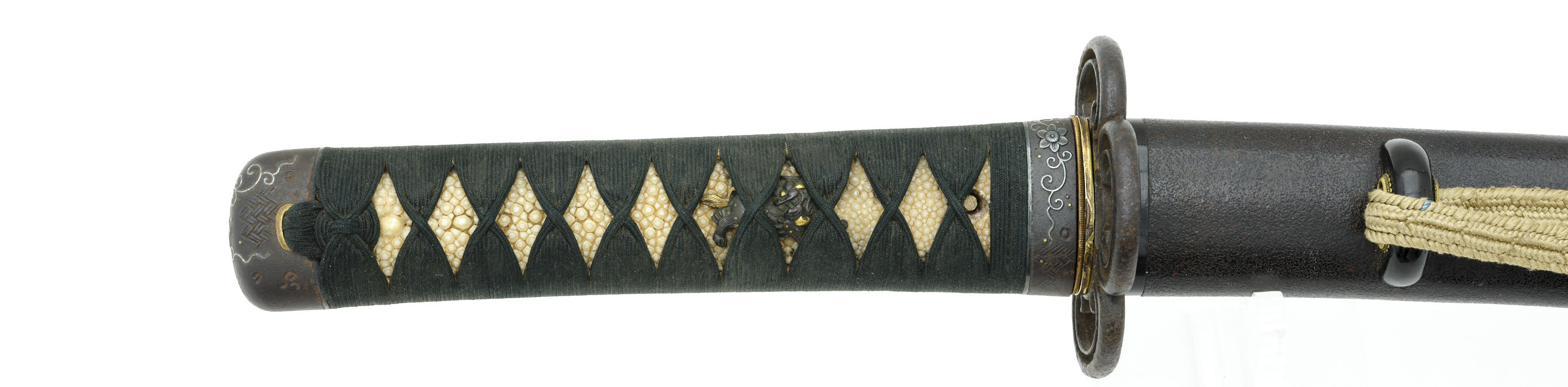
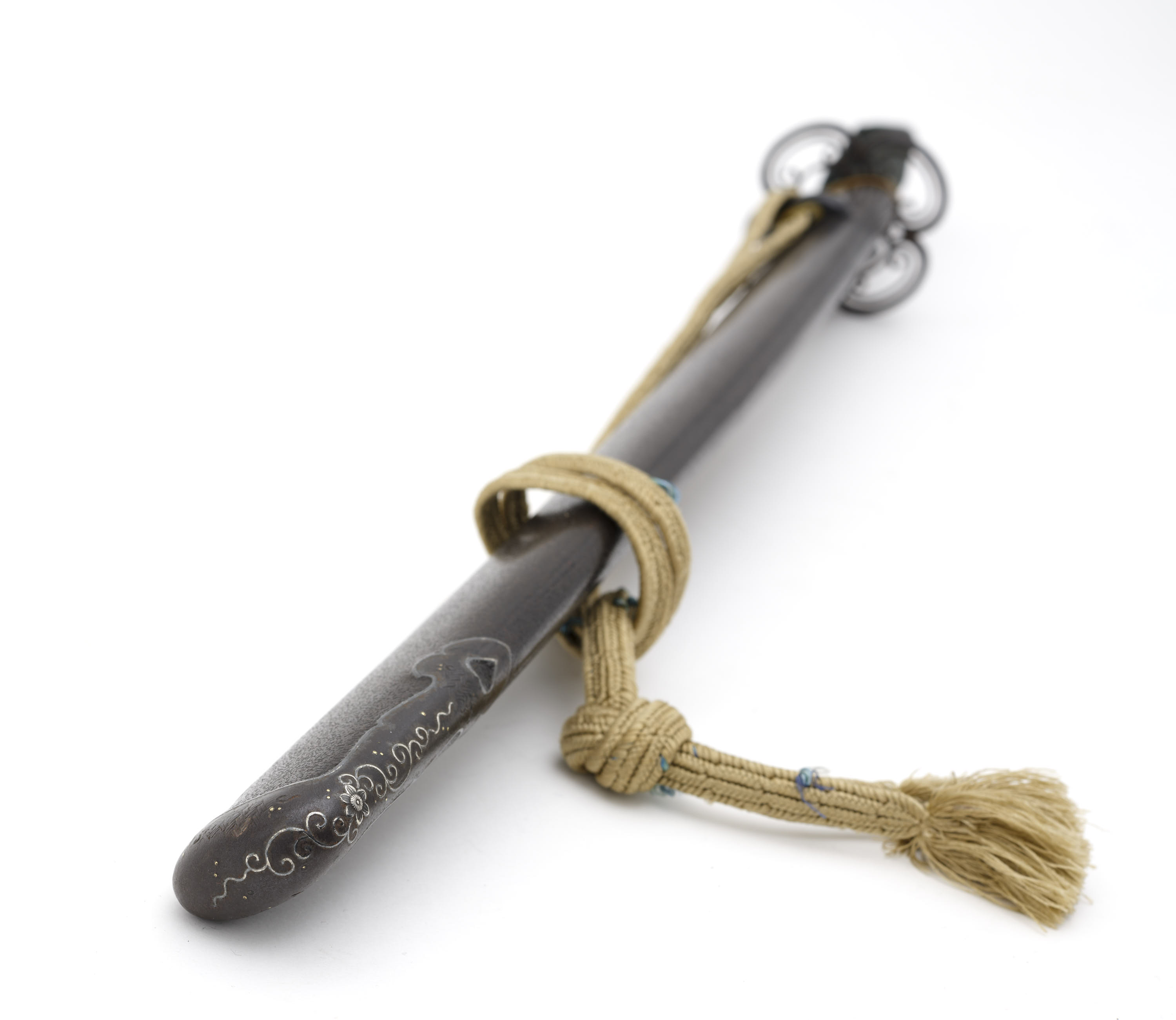
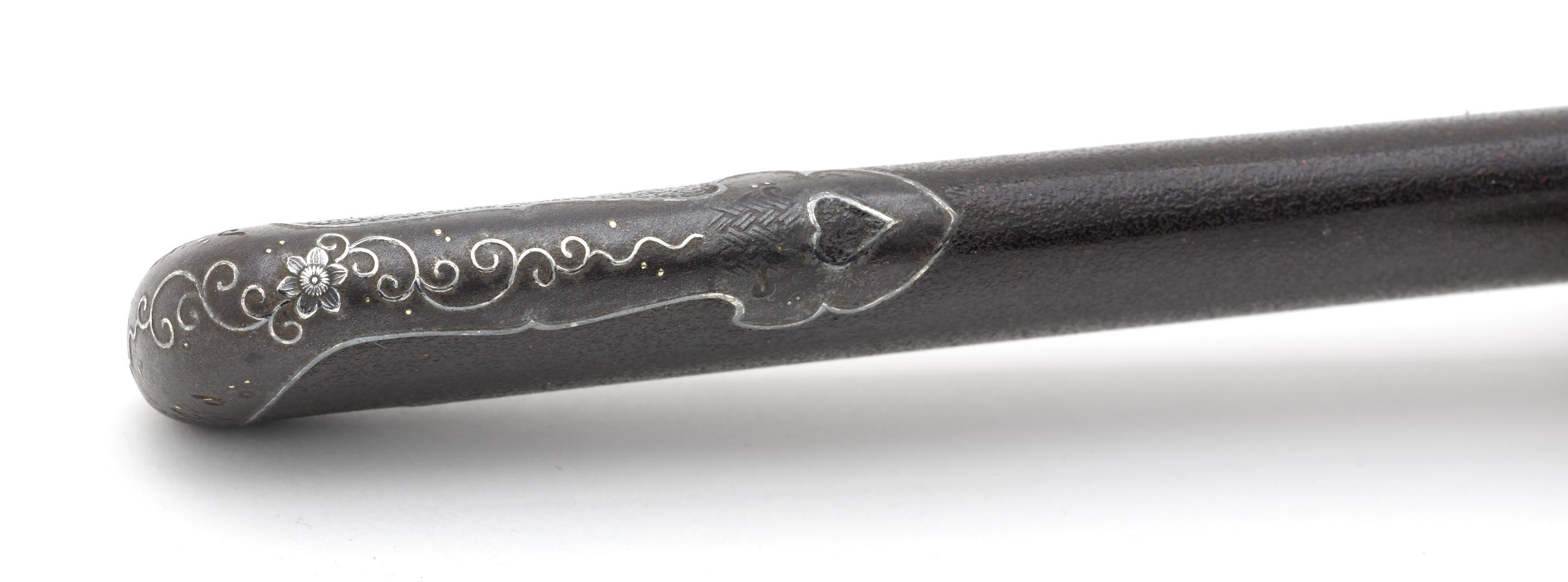
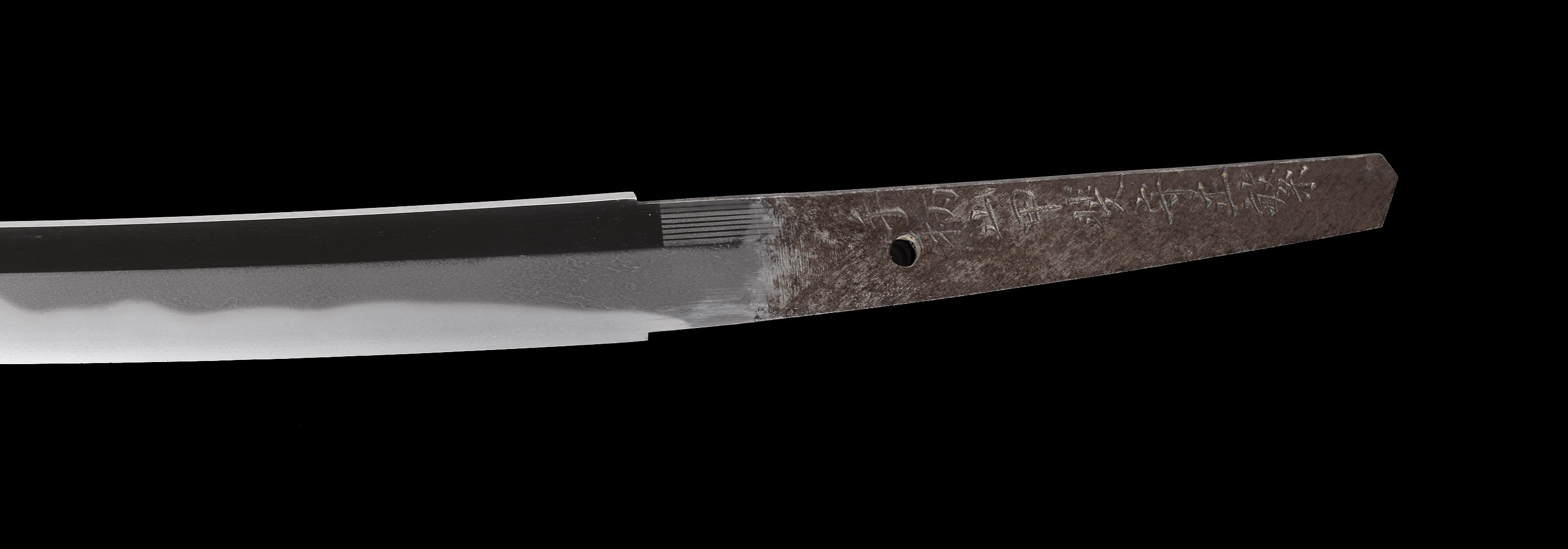
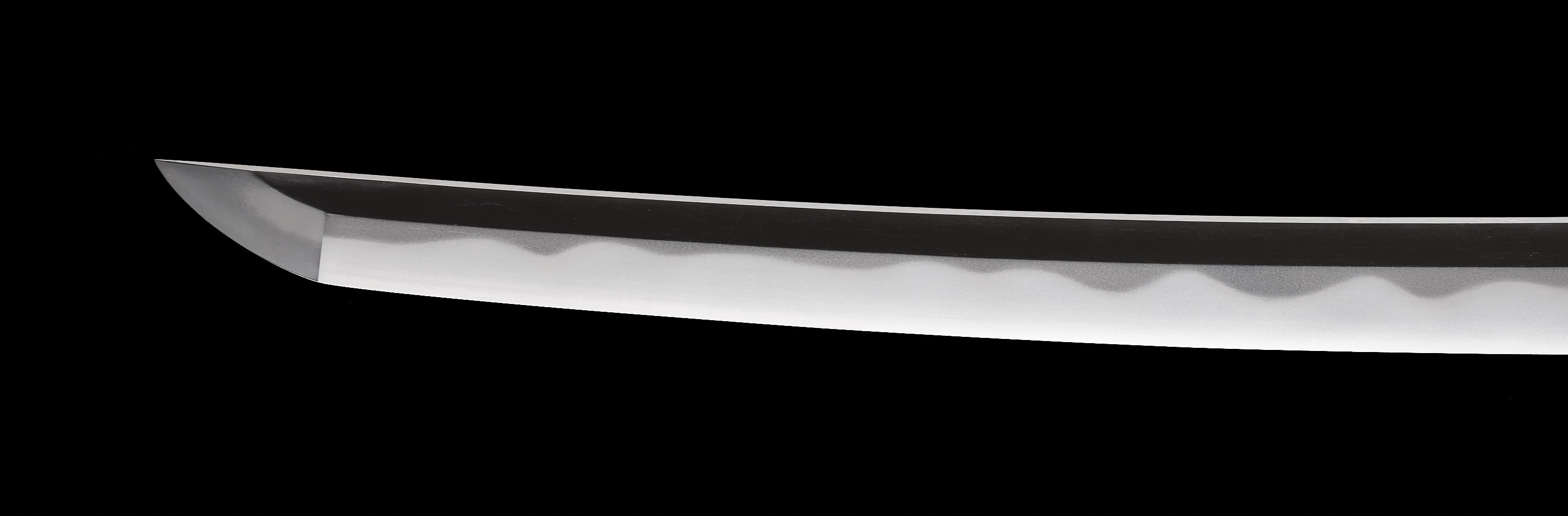
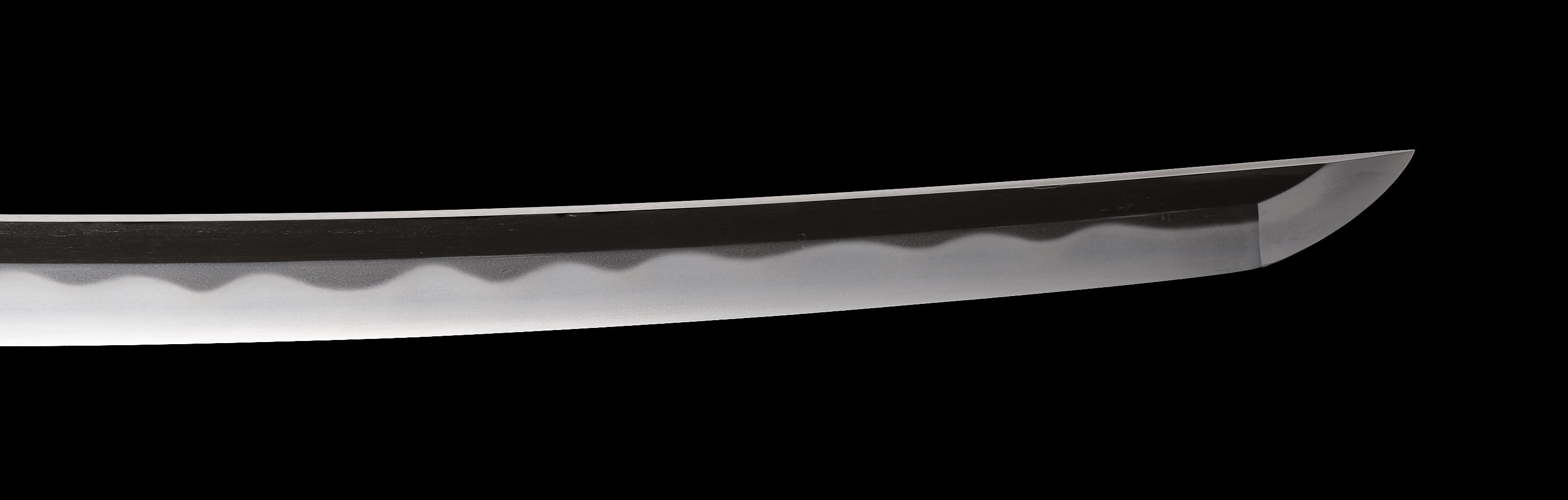
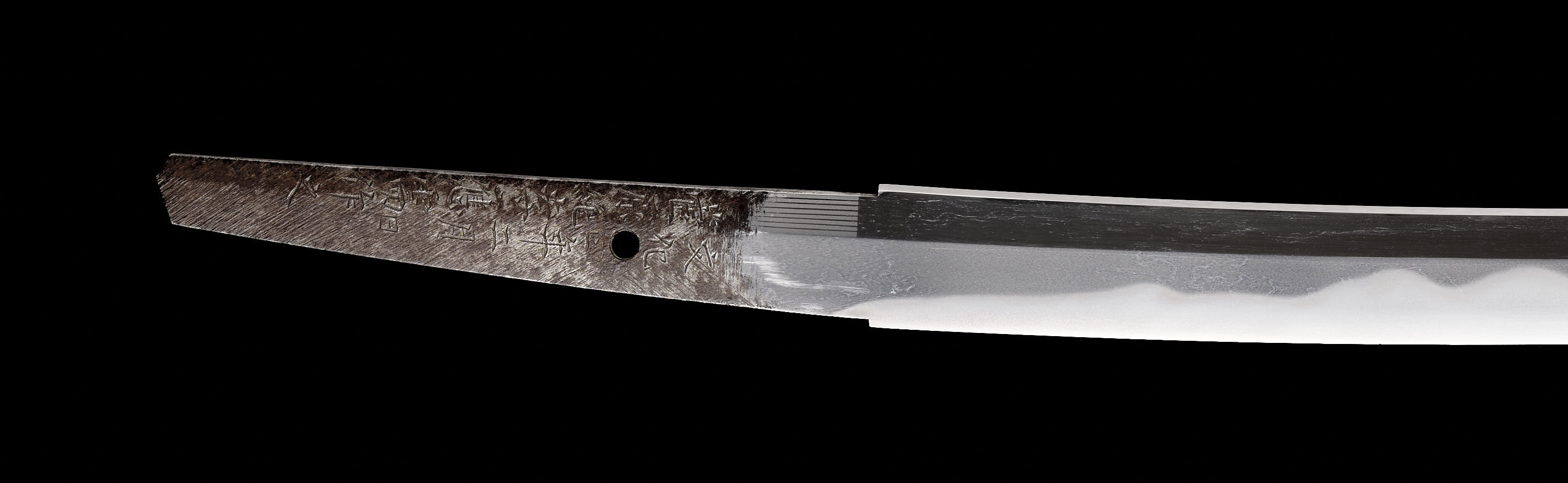
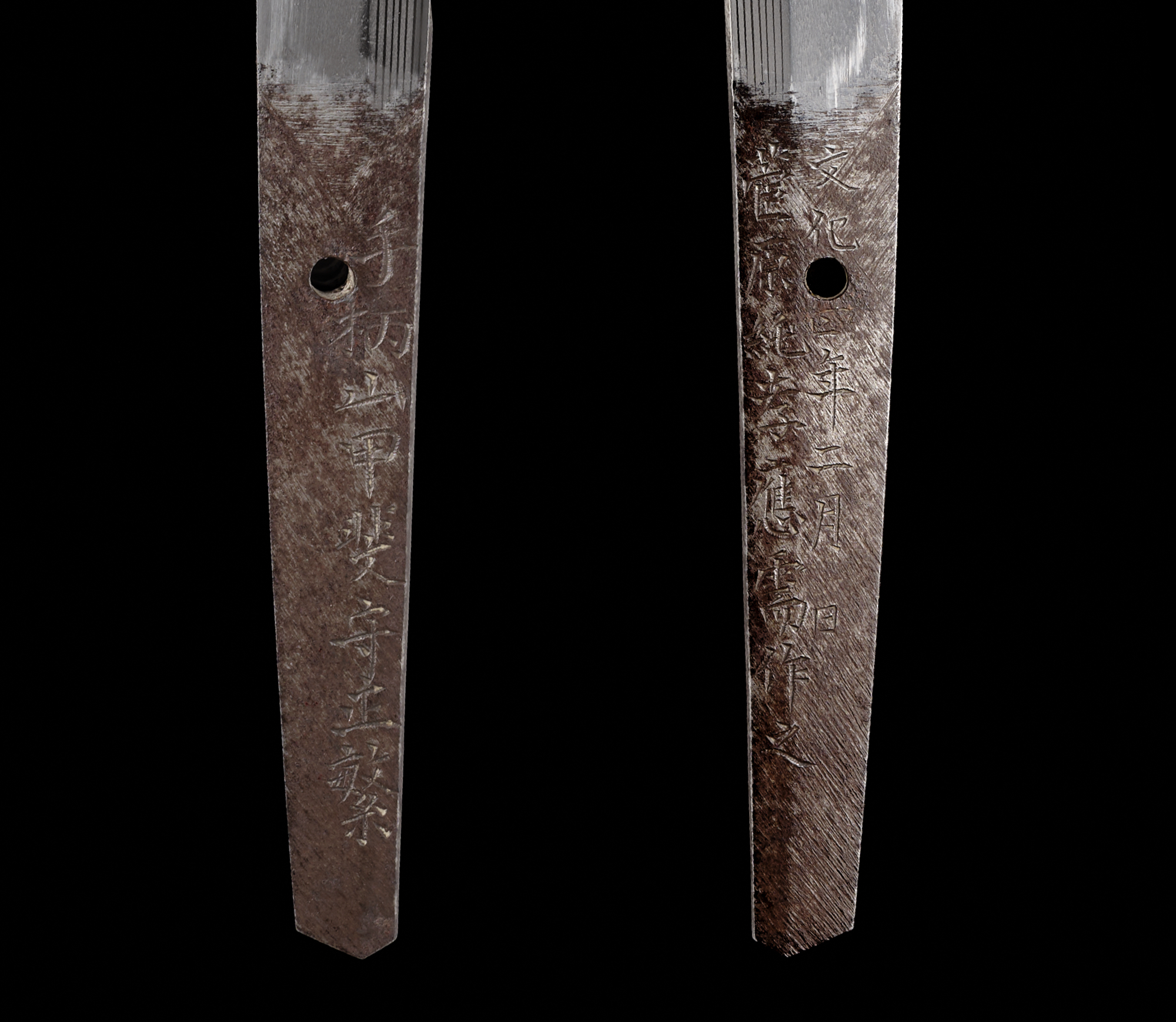
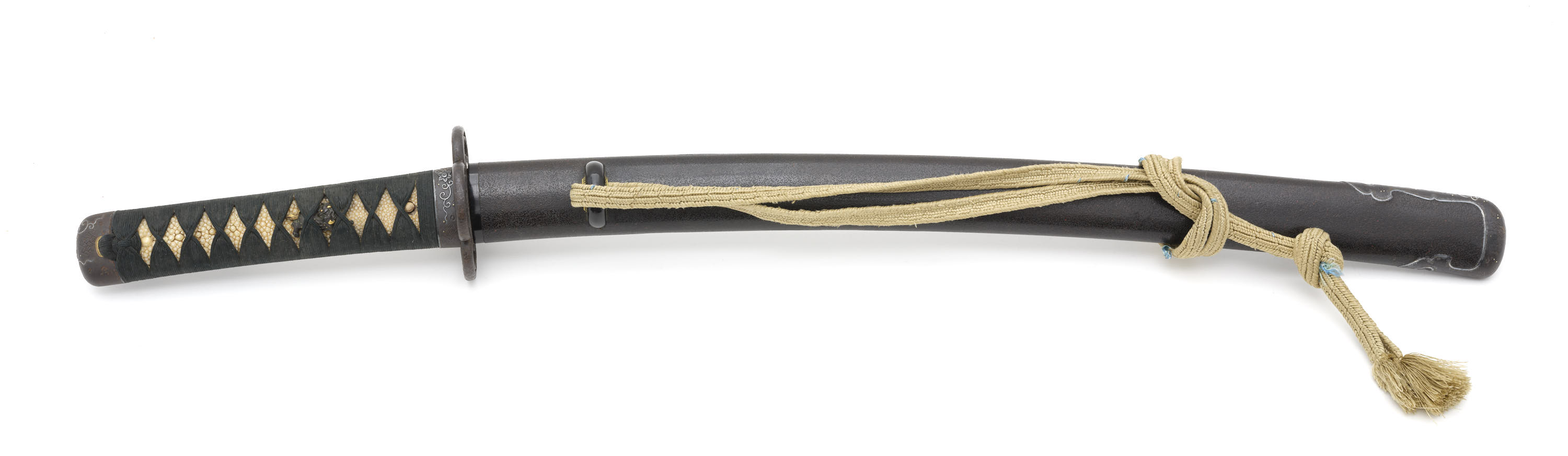
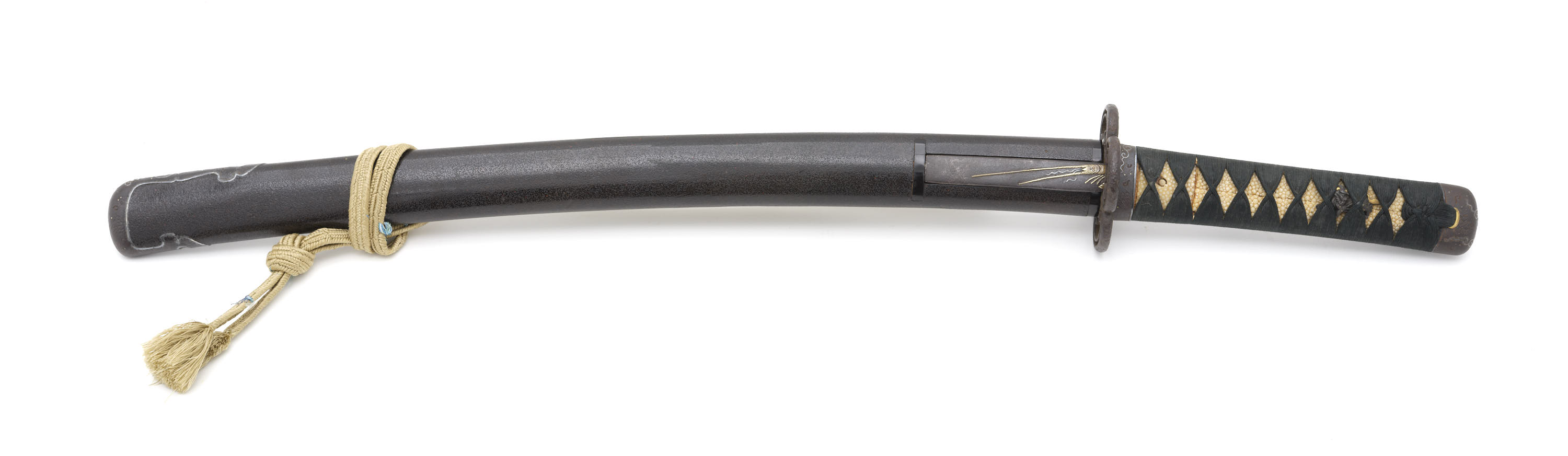
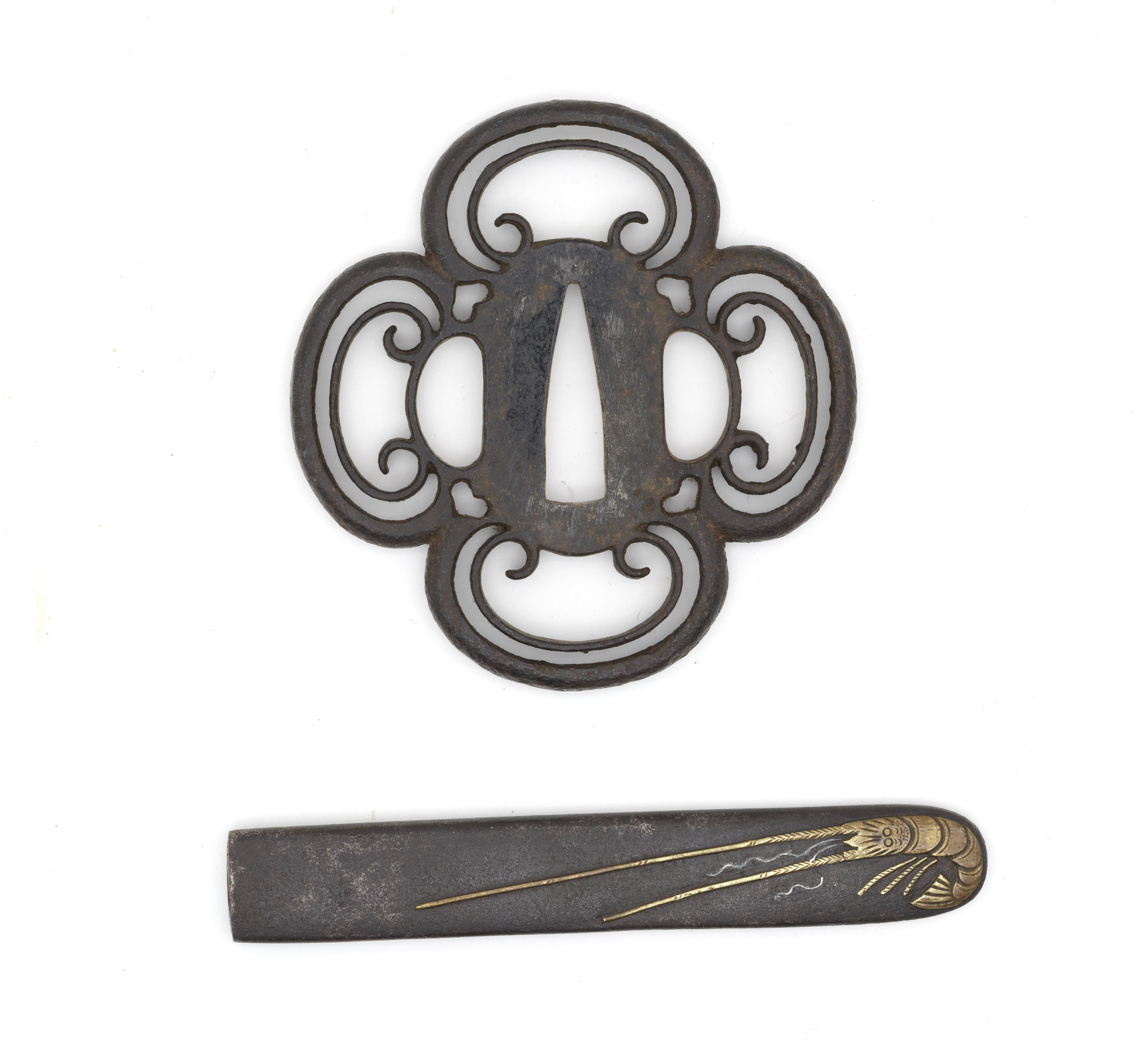
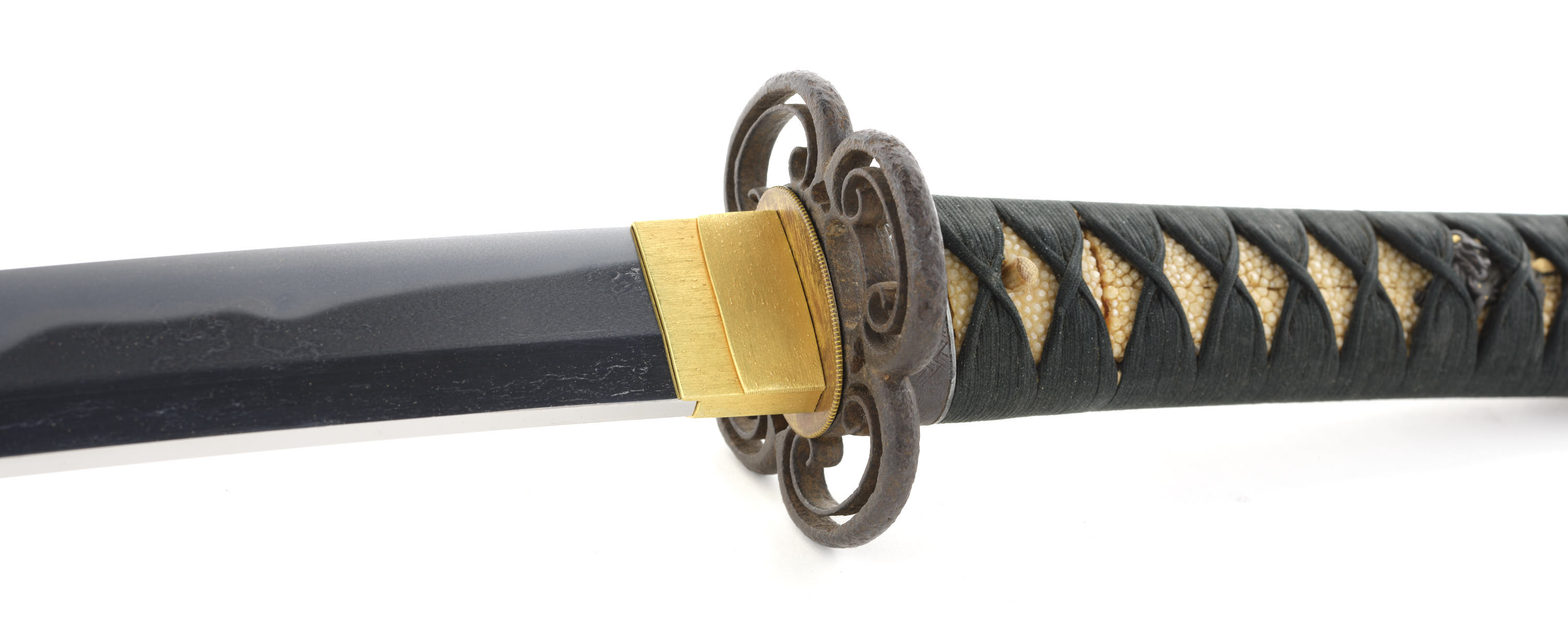
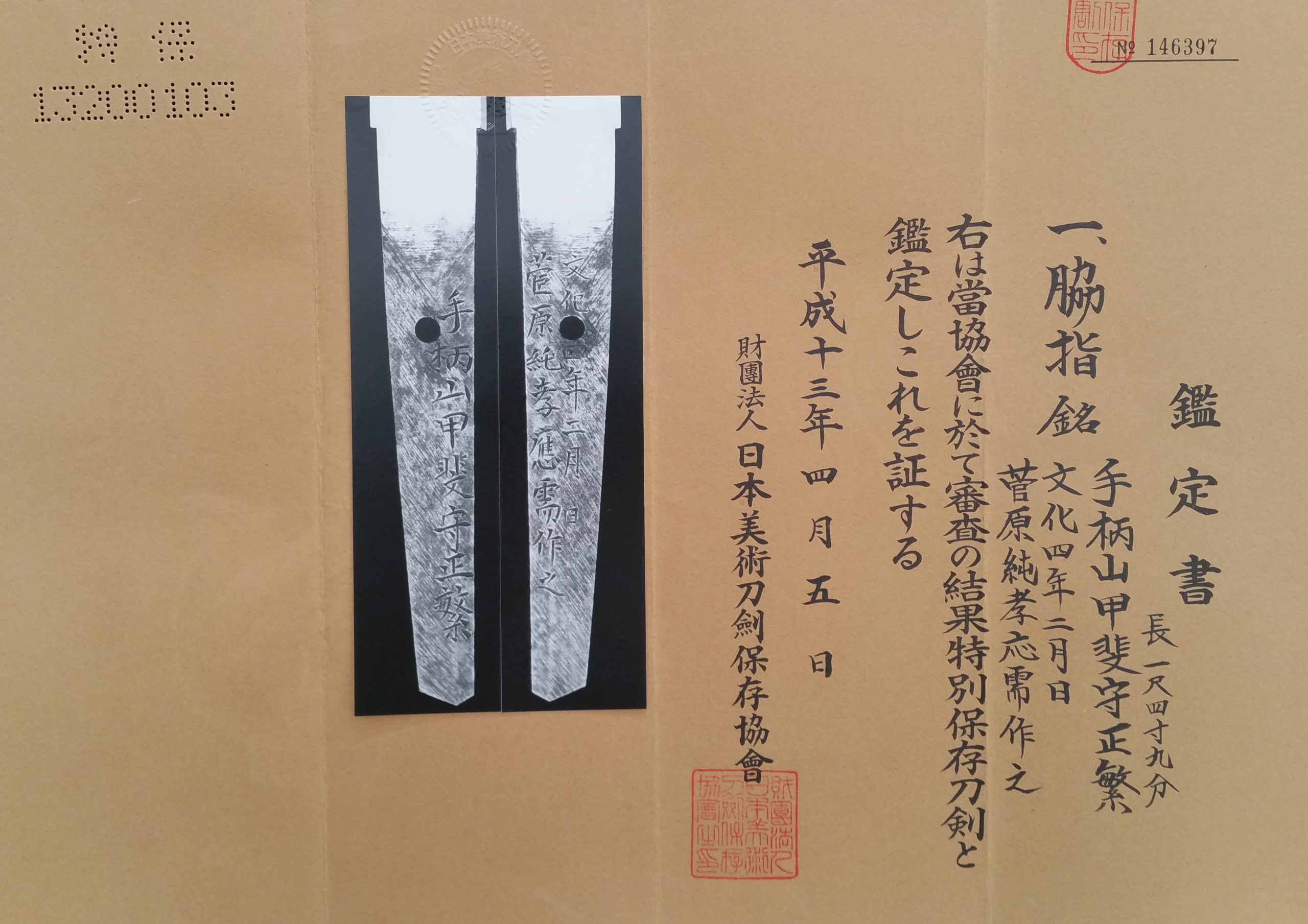
Description Masashige (1760-1830) was a swordsmith originally from the castle town of Himeji, Harima Province. His real name was Miki Asashichi (三木朝七). He was the second son of the 2nd generation Ujishige (氏繁), and due to the untimely death of his older brother who was the 3rd generation, he briefly took over the name as the 4th generation Ujishige. In the 1780s he moved to Osaka and was hired by Matsudaira Yorinobu, the daimyō of Mutsu ́s Shirakawa fief, for whom he moved to Edo to continue working there. In 1803 he received the honorary title Kai no Kami (甲斐守) or "Lord of Kai Province." His lord also granted him the two characters Shinmyō (神妙) which means something like “especially capable and laudable.” It is said that he only signed his best works with this supplement, and sometimes used the pseudonym Tangasai (丹霞斎). It is also said that he studied under shinshinto grandmaster Suishinshi Masahide (水心子正秀). He typically forged wide blades with a dense ko-itame hada. The hamon is a gunome-midare mixed with ō-gunome that is also known as tōranba (濤乱刃) or "large surging waves edge." Ashi, nie and pointed yahazu elements also appear. The jiba is bright and clear and the nioiguchi is broad.1 Fujishiro rates this smith jōjō-saku, his second-highest rating.2 Notes 1. Markus Sesko; Swordsmiths of Japan A-Z. Lulu, 2014. Page 559. 2. Fujishiro Matsuo; Nihon Tōkō Jiten. 1961. Blade attributes (With plain English below) Sugata: shinogi-zukuri, iori mune. Tori-zori (Shape: ridged sides, ridged spine. Even curvature) Kissaki: chu kissaki (Tip: medium-sized tip) Hada: ko-itame hada with ji-nie (Forging structure: small-dimensioned wood grain with many martensite crystals embedded in the surface) Hamon: gunome midare tōranba with thick nioiguchi, ashi and yahazu (Temperline: wavy with round and peaked elements, like large surging waves, thick temperline with into the hardened edge zone legs and forked elements) Bōshi: ko-maru with long kaeri (Temperline in tip: small round with long line at spine) Nakago: ubu, keshō yasurime with o-sujikai, iriyamagata (Tang: unaltered, ornamental file lines on top with steep right handed slanting lines, triangular tang end with longer side on edge Signature Facing side: 手柄山甲斐守正繁 Tegarayama kai (no) kami Masashige Reverse: 文化四年二月日 Bunka sei shi nen ni gatsu hi "One day in the second month of the fourth year of Bunka" (February 1807) 菅原純孝応需作之 Sugawara Sumitaka [no] ōju kore o tsukuru “Made this at the request of Sugawara Sumitaka” I have not been able to find any more information about this Sugawara Sumitaka. NBTHK Tokubetsu Hozon papers The blade was awarded Tokubetsu Hozon or "Especially Worthy of Preservation" by the NBTHK in 2001. Koshirae Comes with a nice koshirae with textured black lacquered scabbard, and iron mounts with silver inlays. The tsuka is covered with white stingray-skin and is elaborately wrapped with dark green cord over shakudō shishi lion menuki with golden highlights. The saya is a good fit, but on the tight side. The tsuba appears to be older than most of the koshirae and is a beautifully made sukashi (openwork) style with four-lobed design. It is not a perfect fit to the nakago which indicates a swap at some point in time. That said, it complements the current set nicely. The kozuka has no blade. It is made of iron and decorated with a spiny lobster in brass. Comes with a gold foil two-piece habaki. Shirasaya and tsunagi present. More photos Due to time constraints, I did not include full photography of the blade (yet). For serious buyers, they are available upon request.



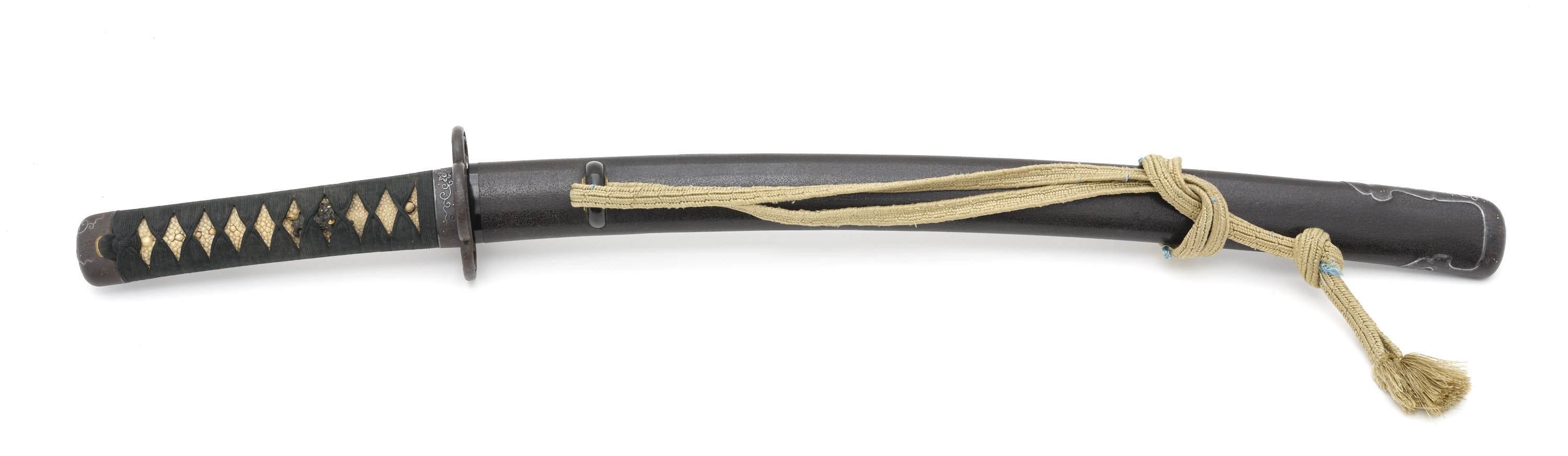
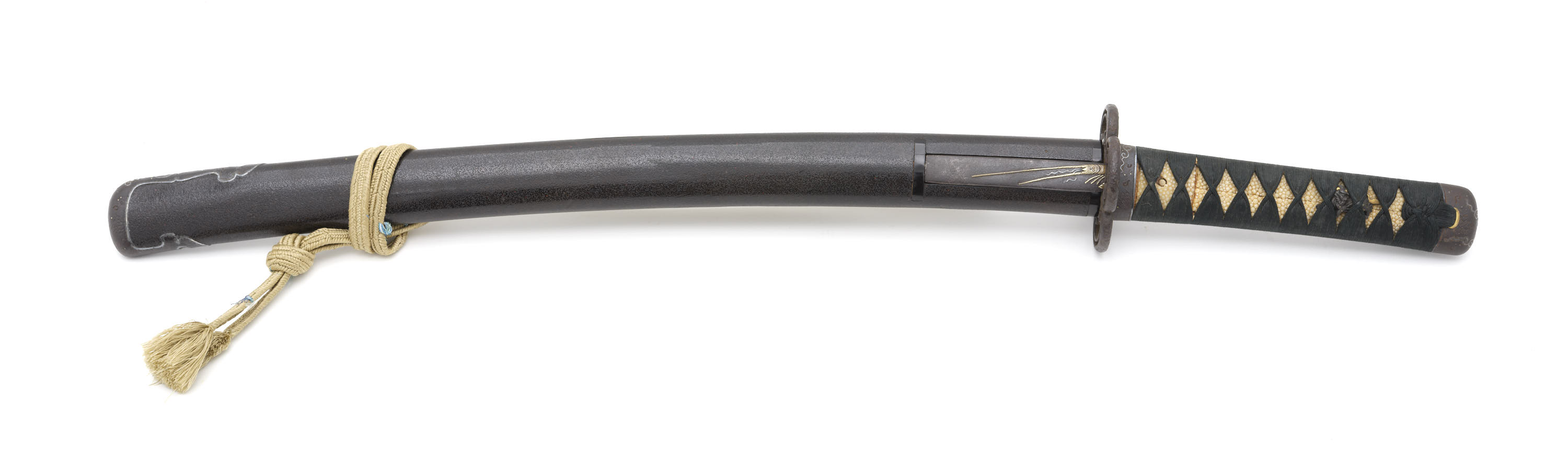
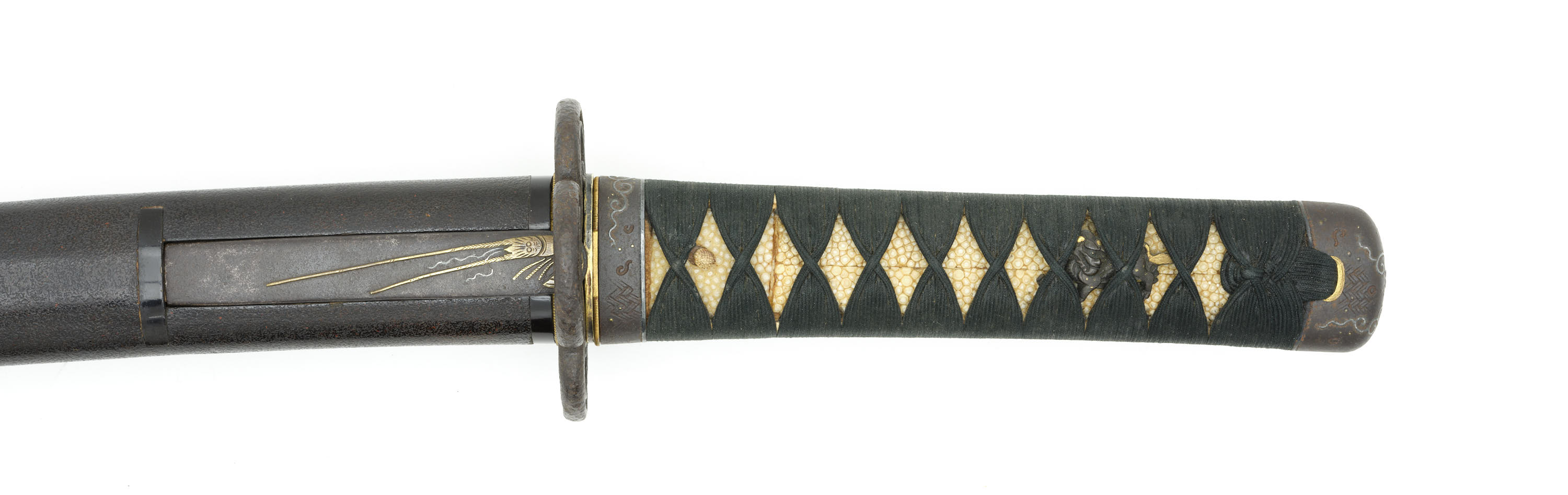
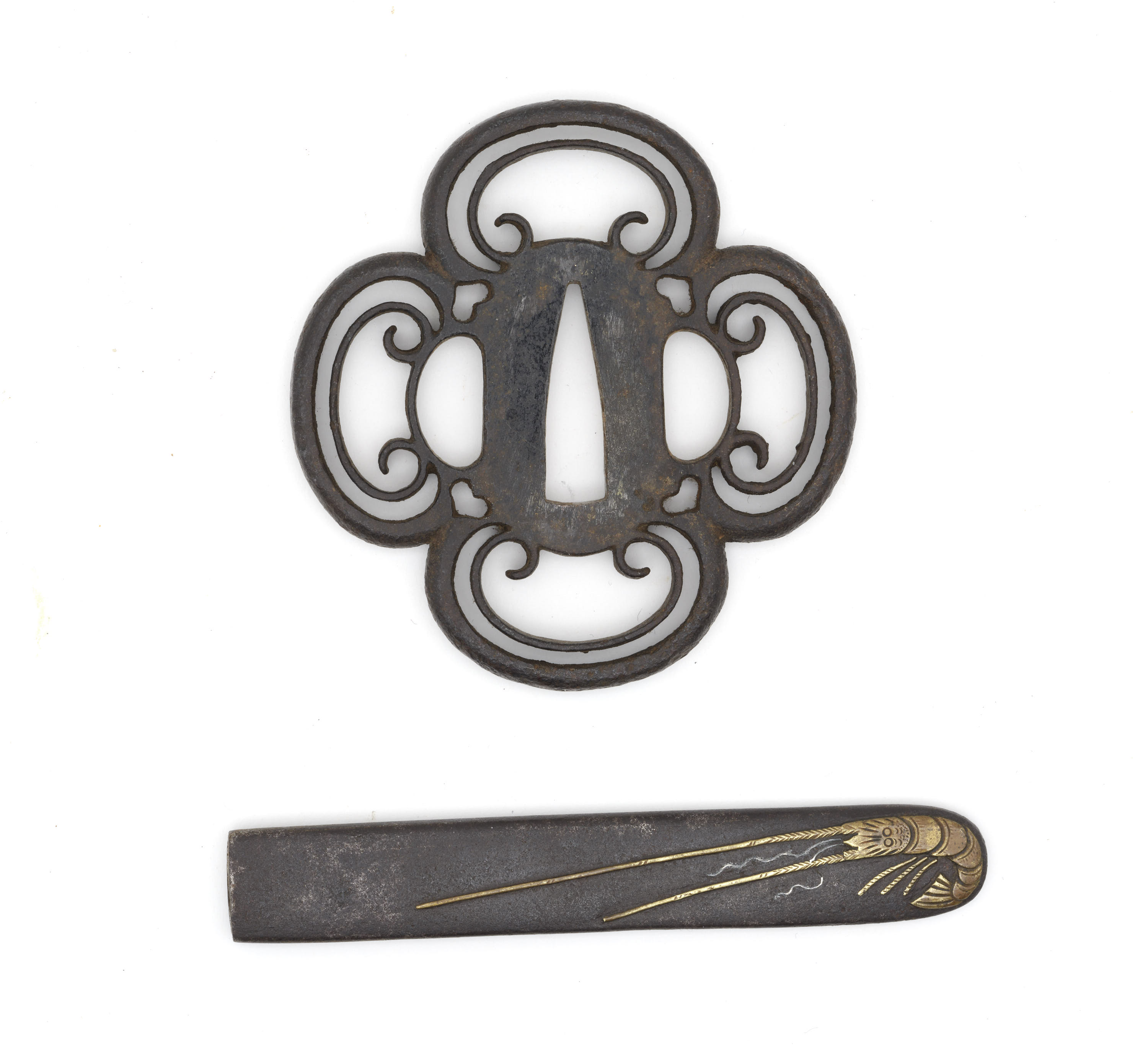


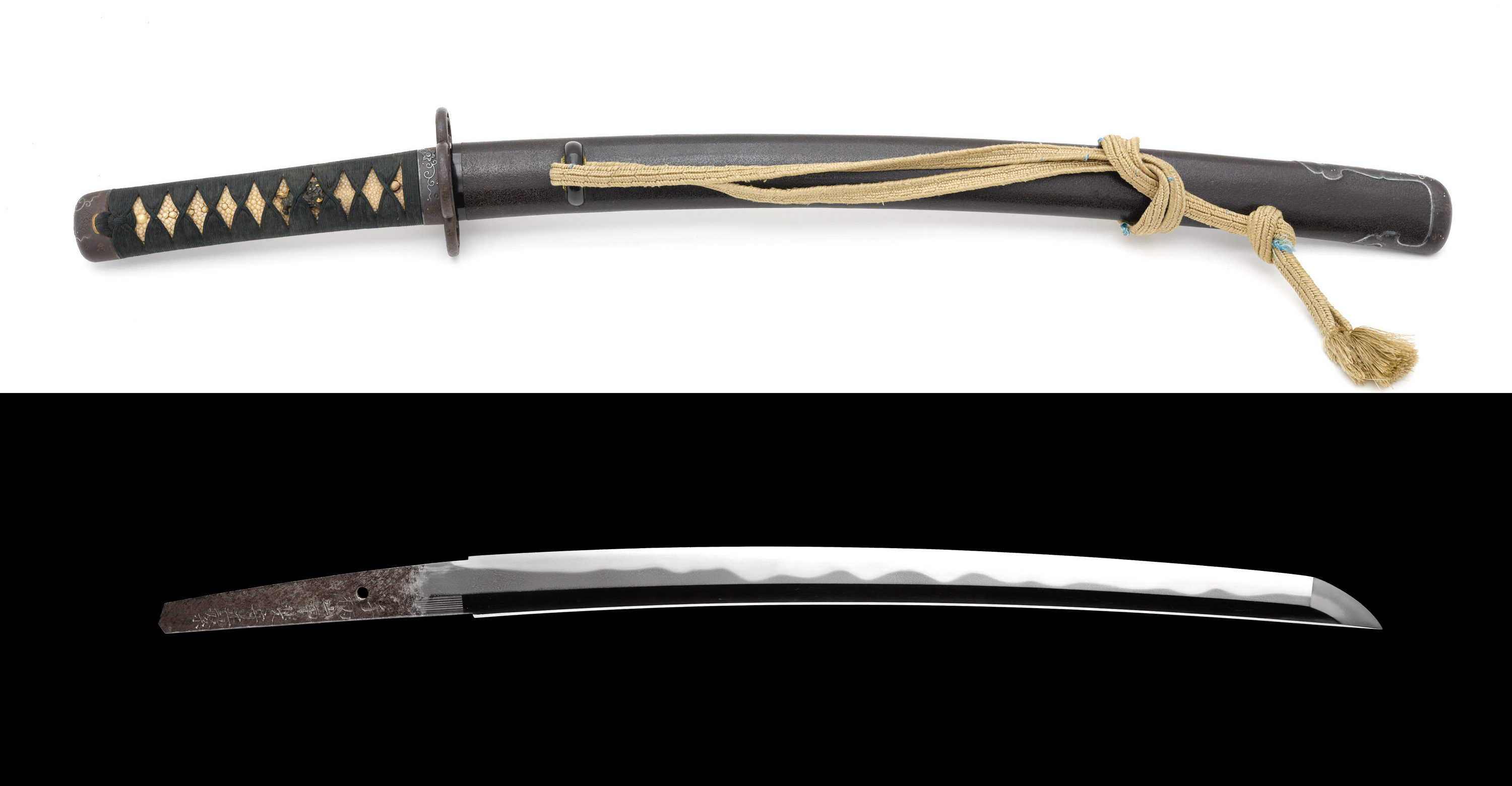
販売店の記載のまま
(翻訳なし)
新々刀 · 播磨
現在9点販売中
手柄山は播磨国姫路を本拠とする新々刀期の一門で、説示によれば手柄山の麓に住したことから代々その地名を姓としたという。一門の中心となる正繁は、通称を朝七といい丹霞斎と号した工で、三代目手柄山氏繁の弟にあたり、初め四代目氏繁を襲名したのち正繁と改めている。初代大和大掾氏重の末葉であると記され、播州姫路に系譜を引く家系であることがうかがえる。天明八年、奥州白川(白河)の藩主松平定信の抱え鍛冶となって江戸に移り住み、神田駿台を作刀の地とした。享和三年四月には甲斐守を受領し、文政の初年頃には一時大坂でも鍛刀したのち再び江戸に戻っている。晩年には楽翁すなわち松平定信から「神妙」の二字を賜り、会心の作にこれをきったと伝える。一説に江戸に出て水心子正秀に学んだとも記され、姫路に発した手柄山の鍛冶が藩公の抱え工として江戸へ展開していった経緯が説示の各所に共通して語られる。 作風は、説示が一様に記すとおり、津田越前守助広に私淑した濤瀾風の大互の目乱れを本領とする。鍛えは小板目肌がよくつみ、地沸が厚くつき、地景が細かに入って地鉄の冴える点が共通して挙げられる。刃文は元を直ぐに焼き出し、その上にのたれや大互の目を交えて濤瀾状の乱れを焼き、足・葉が入り、匂深く小沸がむらなく厚くつくものが多い。処々で強く沸づき、飛焼・湯走り・棟焼・島刃を見せ、砂流しがかかり金筋が頻りに入って、匂口が明るく冴えるのを特色とする。帽子はおおむね直ぐに小丸へ結び、掃きかけのかかるものもある。乱れの間に尖りごころの刃を交えるのは同工の特色と説示が指摘しており、また矢筈風の刃を交える作も認められる。濤瀾乱を主調としながら、説示にいう浅いのたれや直刃の作域も併せ持つ。茎は生ぶで先を浅い入山形とし、鑢目を大筋違に化粧をかけ、指表棟寄りに太鏨大振りの長銘を、裏に年紀や作刀地・注文者銘をきる構成が、見分けの手がかりとして繰り返し記されている。 鑑定の要点は、整然と崩れず焼かれた大互の目を主調とする濤瀾乱、むらなく厚くつく小沸、明るく冴える地刃の働き、そして尖りごころの刃という同工の癖にある。説示には、珠追龍や梵字・三鈷柄剣、昇龍といった刀身彫刻を正繁自身が手がけた作が挙げられ、茎にその旨を記すものもあって資料的価値が高いとされる。年紀のあるものは寛政から享和に及び、東武駿台・武陽駿岱と記す江戸作のほか、石州出羽の鉄を用いたと銘するものや、古河藩士小杉為長、渡辺崎右衛門美政らの注文に応じた作が伝わる。松平定信の抱え工として江戸に出て助広風の濤瀾乱を得意とした上手の工として、説示は手柄山正繁を新々刀の一典型に位置づけている。[[c:1]] 詳しく見る →
新々刀 復古の運動
1800年前後、水心子正秀は著述をもって、鍛刀は古作の法に立ち返るべしと説いた。復古刀の運動である。最大の後継者直胤は、数百年絶えていた備前伝と相州伝を確信をもって再現した。
保存刀剣のうち、出来が一層優れ、保存状態も良好と認められたものです。再刃や、室町・江戸期の多くの無銘作は対象外となり、保存刀剣より高い基準が課されます。
日本美術刀剣保存協会(NBTHK)は、1948年に設立され、文化庁の監督を受ける公益財団法人で、東京・刀剣博物館に本部を置きます。専門の審査員が出品作を直接審査し、美術的・歴史的価値に応じた鑑定書を発行します。NBTHKの鑑定書は、日本刀および刀装具の真正性を示す最も広く認知された基準です。
NBTHK公式サイト
当サイトでご注文いただいた商品が、掲載されている画像や説明と異なる場合、返品を承ります。返品をご希望の際は、商品到着後7日以内にメールにてご連絡ください。返金額は、購入代金から送料、銀行手数料、および通貨換算にかかる費用を差し引いた金額となります。分割払いで購入された商品、および現物を確認された商品の返品・交換は一切お受けできません。
€10,000
Certificate reading — 銘 手柄山甲斐守正繁 文化四年二月日 菅原純孝応需作之