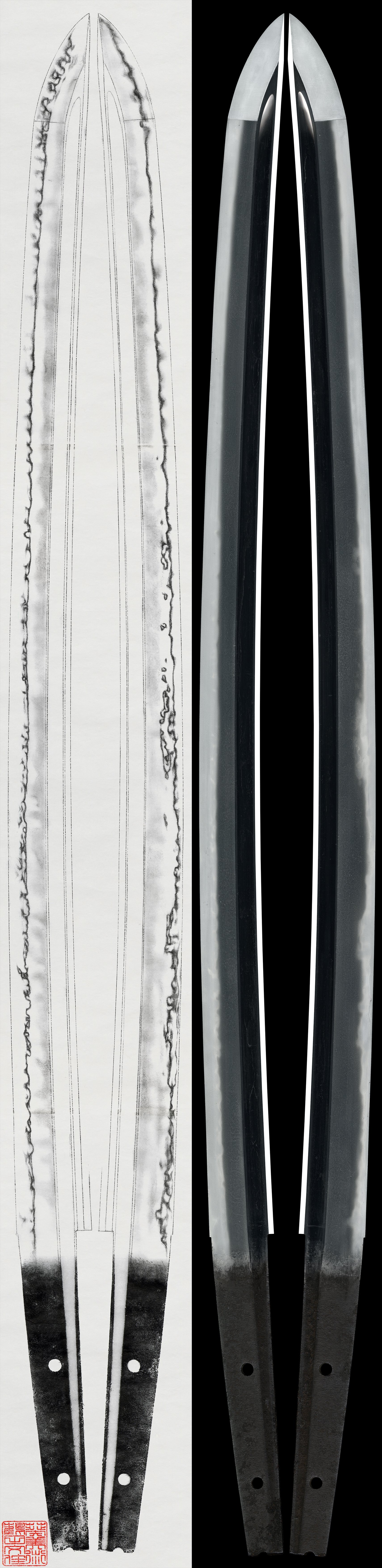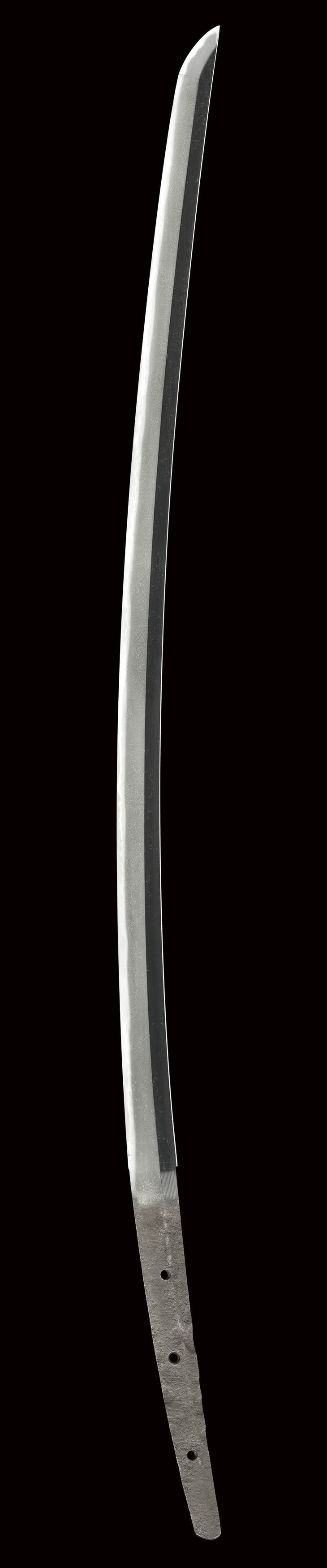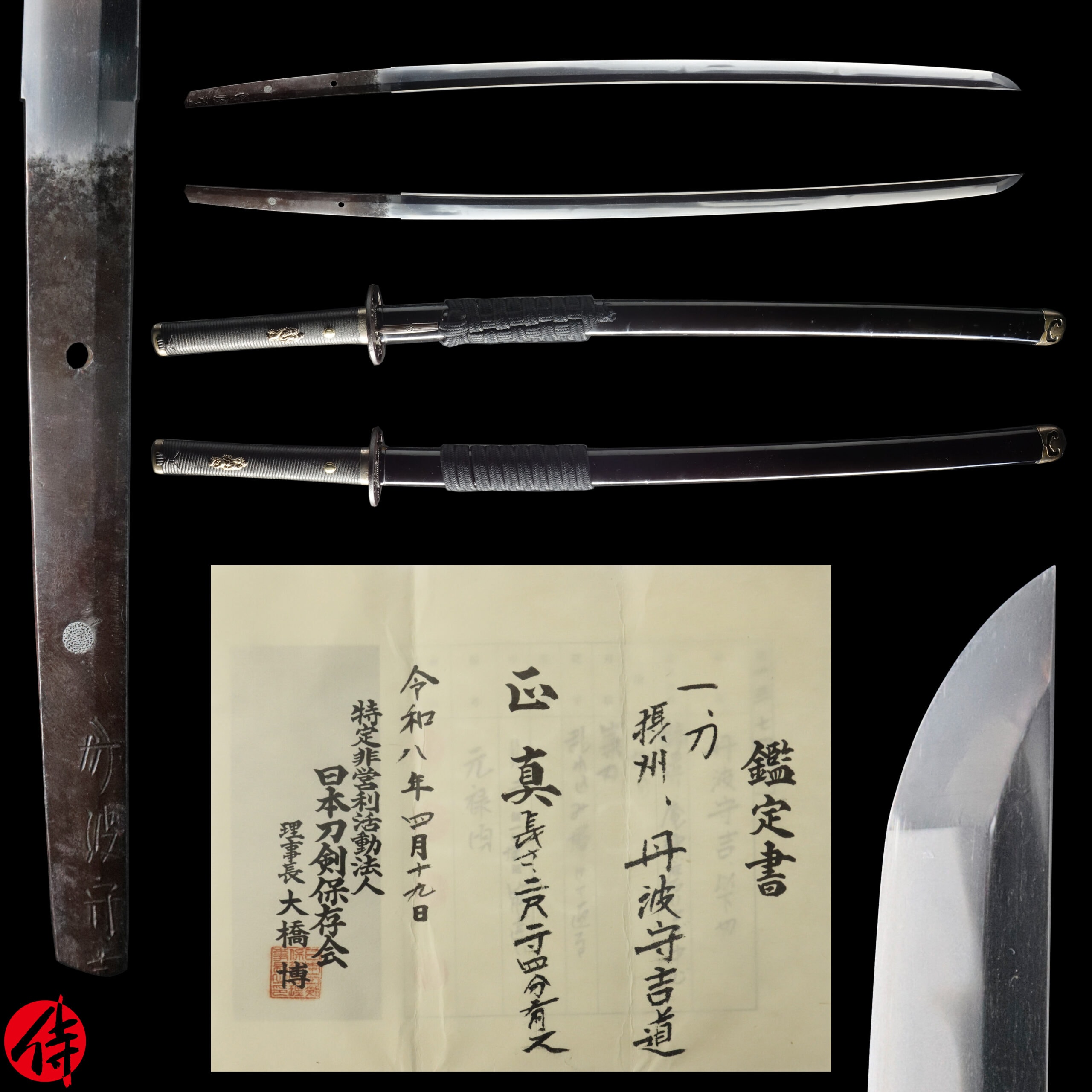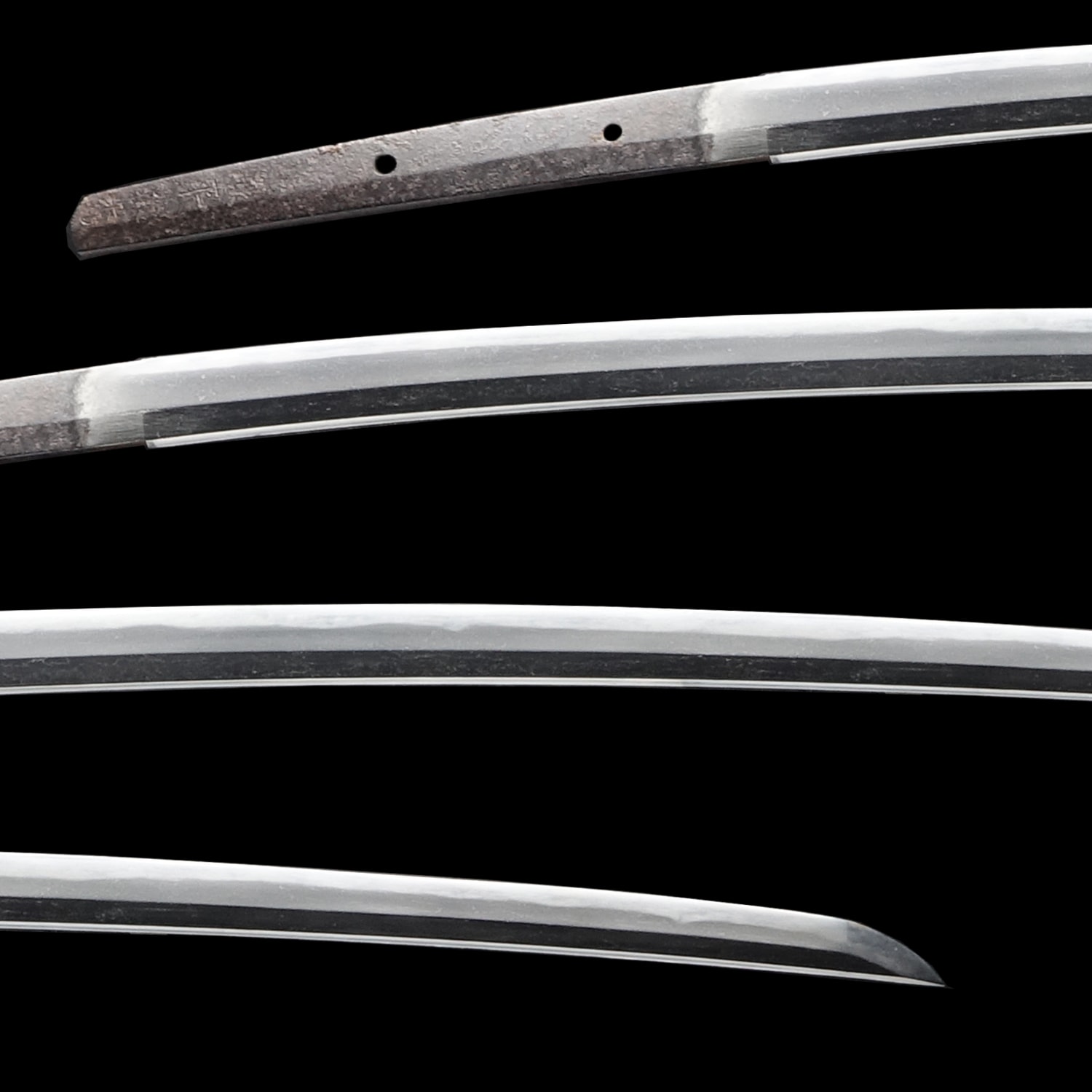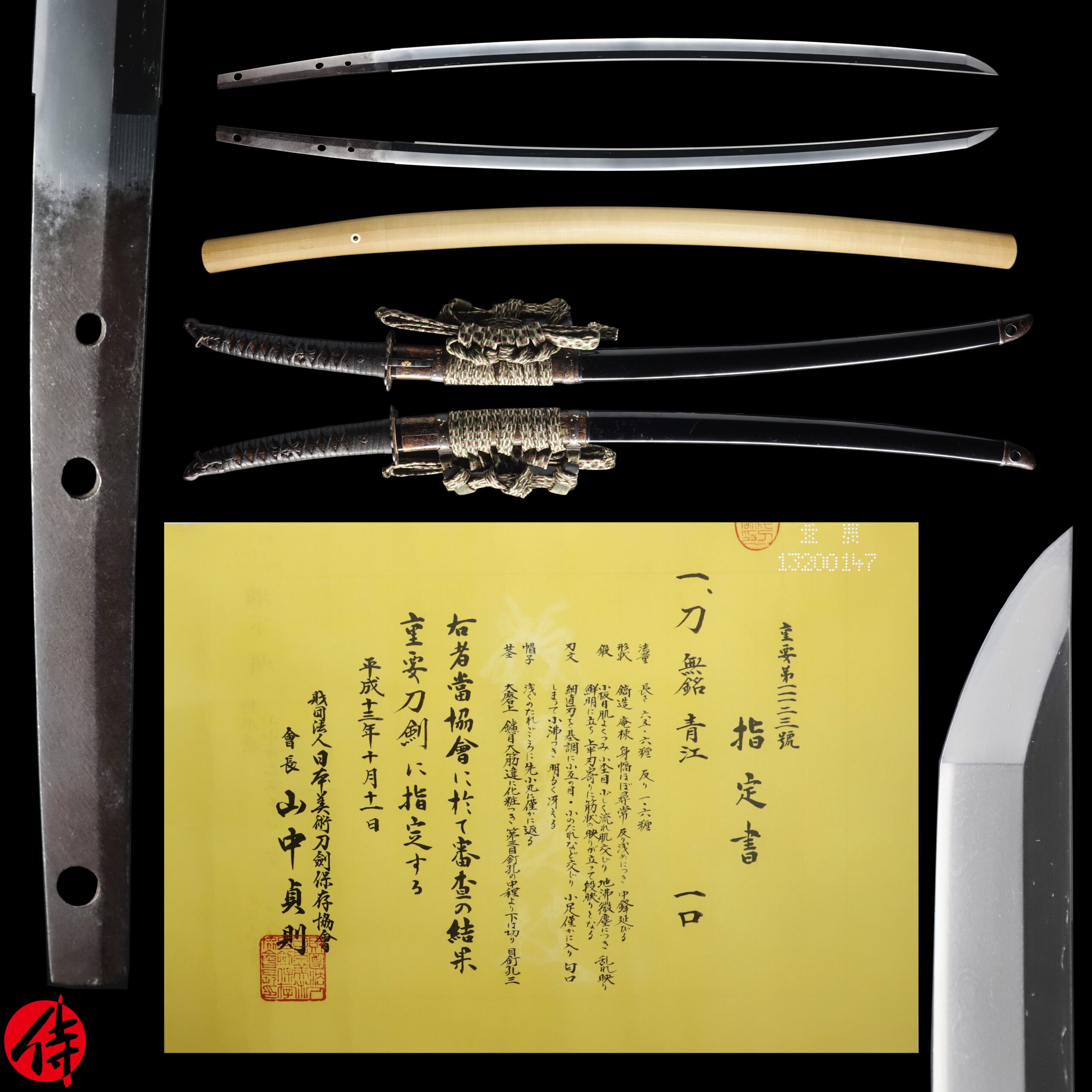
JUYO TOKEN Katana attributed to Aoe for sale | Samurai Museum Shop E-mail FB Messenger Skip to content Menu Close Samurai Museum Shop Products Antique Japanese Sword Katana Attributed to Aoe NBTHK JUYO TOKEN Certificate Updated: 21 Jun 2026 SOLD Antique Japanese Sword Katana Attributed to Aoe NBTHK JUYO TOKEN Certificate $ 0.00 DELIVERY TIME : Approx. 1-1.5 months *We ship from Tokyo, Japan. There might be delay in shipment depending on countries. SHIPPING TO : USA, Canada, Mexico, Germany , Belgium, France, Finland, Hong Kong, Australia *Please contact us prior to purchase if your country isn’t listed. INCLUDED : NBTHK JUYO TOKEN Certificate, Shirasaya Case, Koshirae Case, Traditional Sword Carrying Case, Sword Maintenance Kit, Full Exportation Support Category Katana (KOTO) Age Late Kamakura-early Nanbokucho period Swordsmith attributed to Aoe (青江: Unsigned) Certificate NBTHK JUYO TOKEN Certificate Location Bitchu province (Today’s Okayama prefecture) Blade Size Cutting Edge Length : 65.6 cm (25.8 inches) Curvature: 1.6 cm (0.63 inches) Thank you for visiting our website. This sword was sold as each antique Japanese sword is one of a kind. However, we might be able to show you something similar because we have various types of swords available. Also, there are ones that aren’t listed on the website yet. Our customer service will help you find your ideal blade you will cherish for generations. Please feel free to contact us or check the list of swords . We will be more than happy to help you. SOLD Add to wishlist SKU: Tochigi 48809 Categories: Katana(刀) , Authentic Japanese Sword / Katana , Japanese Sword / Katana , Featured Japanese Sword Tags: Ko-To , Kamakura Period , Nanbokucho Period , Juyo Token Description Antique Japanese Sword Katana attributed to Aoe with NBTHK JUYO TOKEN Certificate 【Description】 Summary This blade is attributed to Aoe (青江) during the late Kamakura-early Nanbokucho period. Aoe school was founded by Yasutsugu (安次) during the late Heian period (Early 12th century), and it was located in today’s Kurashiki town, Okayama prefecture. In Bitchu province, there were two prestigious schools during that time. One is Aoe school, and the other is Seno school, established by Noritaka (則高). Aoe school was prosperous from the late Heian to the late Nanbokucho period. Aoe school is divided into three categories in Japanese sword terminology depending on the period. When the blade is from the late Heian-mid Kamakura period, it is called *Ko-Aoe (Old Mihara). It is called Chu Aoe (Middle Aoe) for those forged in the mid Kamakura-early Nanbokucho period. Finally, Sue-Aoe (Late Aoe) is used for the late Nanbokucho period or later. One of the most famous figures in Aoe school is Moritsugu, who trained Sadatsugu, Tsuguie, and Tsunetsugu. These three swordsmiths were famous for Gobankaji (御番鍛冶). Gobankaji is a unique system created by the retired emperor Go-Toba (後鳥羽上皇), who was enthusiastic about the Japanese sword-forging. He summoned twelve of the finest swordsmiths nationwide, and one swordsmith forged a blade for the emperor each month. Bitchu is located near the Chugoku Mountains, where iron sands, one of the essential materials for making Japanese Japanese swords, were abundant. Furthermore, BIZEN swordsmiths had close access to the Takahashi River, where they could find water and charcoal. This geological location contributed to the swordsmiths forging high-quality refined blades. When Aoe school flourished in the Nanbokucho period, Japan was tumultuous because the imperial court was split into two sides(south and north). There were many conflicts, and many Samurai were deployed. The Aoe school must have dedicated itself to forging high-quality blades for those Samurai who fought in battles. It is said that they were land owners and Samurai as well. They served the southern imperial court, which ended up losing the battle against the northern imperial court. After the southern side was lost, the school’s property was ended. However, the descendants of a member of Aoe school established another school called Mizuta school in the Muromachi period, and lasted during the Edo period. Tachi Koshirae Tachi was originally worn by high-class court novels that belonged to the imperial court. It mainly used by an armored Samurai with one hand on horseback from the Heian period (794-1185 A.D.) until the early Muromachi period later. TACHI was suspended loosely on the left waist with its edge facing the ground so that you could draw it faster to cut down soldiers on the ground. Because of its gorgeous looking, having a Tachi-style sword mounting became a social status among Samurai. Appraisal This blade is appraised as a JUYO TOKEN (重要刀剣) issued by NBTHK (Nihon Bijutsu Touken Hozon Kyokai: 日本美術刀剣保存協会). This authentication paper was only given to authentic Japanese swords, exceptionally well preserved and of high quality with artistic value. JUYO is one rank higher than Tokubetsu Hozon. To be eligible for a Juyo Token, it needs to be appraised as a Tokubetsu Hozon Token first. It is extremely rare for an antique Japanese sword to be appraised as JUYO TOKEN, and it is highly desirable among Japanese sword collectors. *Please keep in mind that there are a couple of noticeable Kitae Kizu on this blade. If you like to see the detailed condition, please feel free to contact us. 【 Blade】 Cutting Edge Length (Nagasa) : 65.6 cm (25.8 inches) Curvature (Sori) : 1.6 cm (0.63 inches) Hamon : The crystalline structure which forms along the cutting edge of a blade as a result of the hardening process. Jimon (Jihada) : Visible steel surface pattern created by folding and hammering during forging process. Nakago : Nakago is the tang of the Japanese sword. Japanese swordsmiths left the black rust on the tang because it prevents red rust while the tang is in its handle. And the discoloration of the tang was created over time, and it is a great indicator for a Japanese sword specialist to estimate when the sword was forged. Koshirae : Koshirae is the mounting of the Japanese sword. There are several parts that consist of Koshirae such as Saya (Scabbard), Tsuka (Handle), Tsuba (Handguard). Fuchi-Kashira : A pair of matching sword fittings that cover the upper and bottom parts of its sword hilt. Tsuka and Menuki : Tsuka is the handle of the Japanese sword and Menuki is its decoration. Dragonfly is the theme of this Menki. Dragonflies have been inhabited in Japan for a long time. Since they prey quickly, their heroic figure was sometimes the object of belief. The dragonfly was called the Kachimushi (勝ち虫, winning insect) during the Warring States period because of its fearless character. Dragonflies fly around fast to catch pests, moving only forward, not backward. Therefore, people thought the behaviors of this insect showed the spirit of Futaiten (不退転); it is a state of mind or a state in which a person has some conviction and does not give in to difficulties. It is very persuasive that Samurai warriors cherished this design as an auspicious motif because of the spirit that Samurai should be prepared for the battlefields. Not only for sword mountings, dragonfly patterns were also incorporated into various items such as helmets, armor, battle coats, etcetera. Tsuba and Habaki : Tsuba is the handguard for the Japanese Sword and Habaki is the equipment to make the blade not touch its scabbard inside. It prevents the blade from getting rusty and chipped. Various family crests are designed on this Tsuba. One of them is The Suishi Mon (水車紋). The Suisha (水車, waterwheel) has also been used as a design. The Suisha Mon (水車紋) is a wheel-shaped pattern in which several ladles are attached to the ring. The waterwheel was developed as a familiar tool for daily life and was often used as a design for the Kosodes (小袖, a kind of traditional Japanese costume) in the Edo period. The Tsuchi (槌, hammer), which is similar to the Hishaku (柄杓, ladle), began to be drawn in the early Edo period. The wa
売却済
世界81社の刀剣商を横断追跡 · 価格履歴 · 売却アーカイブ
仕様
65.6 cm
1.6 cm
流派について
Aoe School青江派
青江派は備中国に興った刀工集団で、承安頃の安次を祖と伝え、高梁川下流域の子位荘・万寿荘を拠点に平安時代末期から南北朝時代後期に至るまで大いに繁栄した。十一世紀初頭の往来物『新猿楽記』が諸国の名産物として「備中ノ刀」を挙げていることは夙に知られ、その高い評価を受け継ぐ刀工群として歴史に名を刻む。鎌倉時代中期頃までのものを特に古青江と称し、それ以降南北朝期にかけてのものを青江と汎称して大別される。南北朝期には次直・次吉・守次・直次等の良工が輩出し、一派の技量は頂点に達した。 作風は時代によって明確な変遷を示す。古青江は小沸出来で匂口のやや沈んだ直刃仕立てに小乱れを交えたものが多く、鍛えには杢目が目立ってやや肌立ち、いわゆる縮緬肌状の肌合となり、地斑の交じるものが多い。同時代の備前物に比すると幾分地味で渋い味わいを醸す点に独自の風趣がある。鎌倉時代後期になると沸づきが穏やかとなり、さらに南北朝期に至ると匂口が締まり、明るく冴えた直刃、或いは延文頃に完成された特色ある逆丁子乱れの二様を見せるようになる。この期の他国の刀工が相州伝の影響を受けて沸出来をあらわしているのに対し、匂出来である点が興味深い。地鉄は小板目に小杢目を交えてよくつみ、地沸が微塵に厚くつき、地景が細かに入り、地斑状の肌合や乱れ映りが立ち、刃寄りには二重三重の筋状の映りを形成していわゆる段映りの態を見せるなど、鍛えに独特の景色を呈する。刃文は直刃を基調に小互の目・小丁子・角がかった刃などが交じり、足・逆足・葉がよく入り、匂口が締まって明るく冴え、帽子は突き上げて尖りごころとなり、やや長く返るものが多い。 青江派は地刃共に明るく冴え渡る精美な出来口をもって知られ、指定品には「同派極めの中でも出色の出来映え」「青江極めの白眉」と称される逸品が少なくない。縮緬肌に地斑と映りが交錯する鍛えの妙味、匂口の締まった冴えやかな直刃、そして逆がかった刃に飛焼が火焔の如く乱れる華やかな作域に至るまで、備中鍛冶の伝統を脈々と受け継ぐ一派の技と風格が遺憾なく示されている。
![刀 無銘 (青江)第 51 回重要刀剣 Katana No signature Aoe [ NBTHK : Juyo ]](/_next/image?url=https%3A%2F%2Fitbhfhyptogxcjbjfzwx.supabase.co%2Fstorage%2Fv1%2Fobject%2Fpublic%2Flisting-images%2Ftoyuukai%2FL398660%2F00.jpg&w=2560&q=90)